 Reading Time: 21 minutes
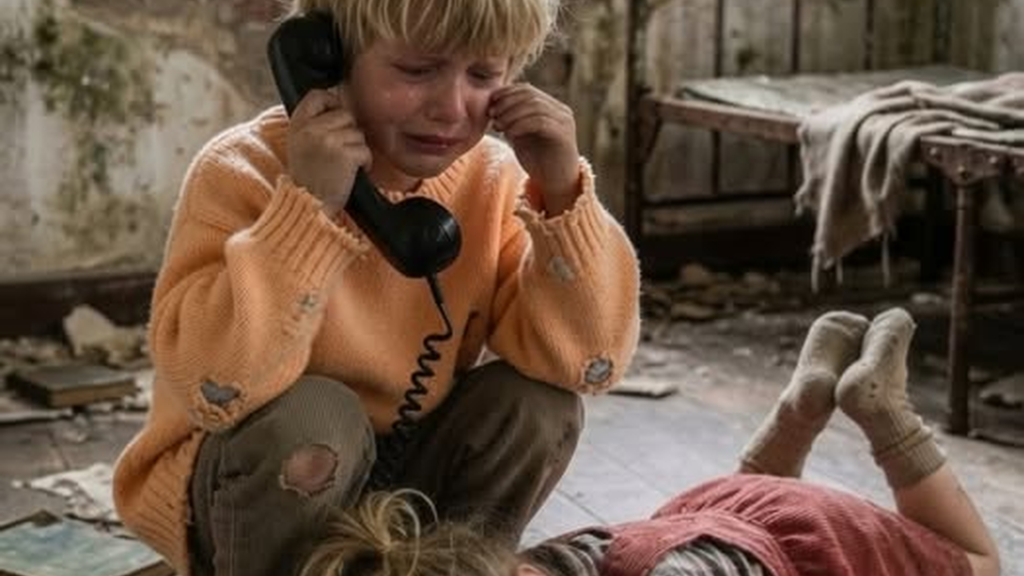
“Dad… my little sister won’t wake up. We haven’t eaten in three days,” the boy whispered. Panic hit instantly as Rowan Mercer rushed his children to the hospital. But nothing could prepare him for what he was about to discover about their mother. Or why she had really disappeared.
The Phone Call. Rowan Mercer was deep in a tense corporate meeting in downtown Nashville when an unknown number flashed across his phone screen. He almost ignored it.
There were twelve people around the conference table, a quarterly report projected on the wall, and his regional director was halfway through explaining why one of their largest accounts was threatening to leave.
Normally, Rowan would never have answered.

But something made him look at the number twice.
He picked up.
“Hello?”
Static hissed through the receiver.
Then came frantic rustling.
Finally, a tiny voice.
“Dad?”
Rowan pushed his chair backward.
His heart recognized the voice before his mind did.
“Micah?”
His six-year-old son sniffled.
“Dad… Elsie won’t wake up.”
Rowan stood.
“What do you mean she won’t wake up?”
“She’s sleeping, but she’s really hot. I tried giving her water.”
Rowan was already walking toward the conference-room door.
“Where’s Mom?”
Silence.
“Micah?”
“I don’t know.”
Rowan stopped.
“What do you mean you don’t know?”
“She left.”
“When?”
Micah’s answer nearly stopped his heart.
“I think three sleeps ago.”
Three days.
Rowan gripped the phone.
“Is there another adult there?”
“No.”
“Have you eaten?”
Micah began crying.
“We don’t have anything left. I gave Elsie the last crackers yesterday.”
The conference room disappeared from Rowan’s mind.
Nothing existed except his son’s voice.
“Listen carefully. Where are you?”
“At Mom’s house.”
Rowan’s blood turned cold.
His ex-wife, Delaney, had told him she was taking the children to a cabin near Center Hill Lake.
She had specifically warned him that cellular service might be unreliable.
Rowan had believed her.
“Micah, how are you calling me?”
“I went outside and asked the mailman. He let me use his phone.”
Rowan closed his eyes.
His six-year-old son had walked outside alone searching for someone who could save his sister.
“I’m coming.”
“Please hurry.”
“I will. Stay inside with Elsie. If the mailman is still there, ask him to stay near you.”
“Okay.”
“And Micah?”
“Yeah?”
“You did exactly the right thing.”
Rowan ran.
He didn’t explain anything to his colleagues.
He grabbed his keys and called Delaney.
Voicemail.
Again.
Voicemail.
Again.
Nothing.
He called her sister.
No answer.
Her mother.
No answer.
By the time Rowan reached the parking garage, his hands were trembling so badly he dropped his keys.
He picked them up and drove.
Every traffic light felt personal.
Every slow car seemed deliberately placed in his path.
When he finally reached Delaney’s East Nashville rental, he barely put the vehicle in park.
The front yard was empty.
The curtains were closed.
A postal truck was parked near the curb.
A middle-aged mail carrier stood on the sidewalk.
“You Rowan?”
“Yes.”
“Your boy came running out barefoot.”
Rowan looked toward the house.
Barefoot.
“Thank you.”
“He said his sister was sick. I offered to call an ambulance, but he kept saying you were coming.”
Rowan ran up the steps.
“Micah!”
He pounded on the door.
“It’s Dad!”
No response.
He twisted the handle.
Unlocked.
The smell inside hit him immediately.
Stale air.
Old food.
Unwashed dishes.
Something sour.
Then he saw Micah.
His son sat on the floor beside the sofa, hugging a pillow.
His blond hair was tangled.
His cheeks were pale.
His shirt was stained.
He looked impossibly small.
Micah raised his eyes.
“I thought you weren’t coming.”
Rowan dropped to his knees and pulled him close.
“I’m here.”
Micah’s arms locked around his neck.
“Where’s Elsie?”
Micah pointed.
Two-year-old Elsie lay beneath a thin blanket.
Her cheeks were bright red.
Her breathing was shallow.
Rowan touched her forehead.
She was burning.
“Elsie?”
Nothing.
He lifted her.
Her head fell against his shoulder.
Rowan felt terror unlike anything he had experienced before.
“Micah, shoes. Now.”
Micah scrambled toward the hallway.
Rowan looked toward the kitchen.
An empty cereal box sat open.
Several cracker wrappers were scattered across the counter.
The refrigerator contained ketchup, mustard, an old jar of pickles and almost nothing else.
Three days.
His children had been here for three days.
Alone.
He carried Elsie outside.
The mail carrier was already calling emergency services.
Rowan realized driving her himself would waste precious time if her condition deteriorated.
Within minutes, sirens approached.
Paramedics took Elsie.
One examined Micah and immediately decided he needed evaluation too.
Rowan climbed into the ambulance with his children.
As they raced toward the hospital, Micah looked at him.
“Is Mom going to be mad?”
Rowan stared at his son.
“For what?”
“Calling you.”
Something inside Rowan broke.
“No.”
Micah looked uncertain.
“Mom said we weren’t supposed to bother you.”
“Buddy, you can always call me.”
“But she said your job was more important.”
Rowan looked away.
He didn’t want Micah to see his expression.
“That isn’t true.”
Micah’s lip trembled.
“I tried to make Elsie eat crackers.”
“You helped save her.”
“I put water on her face too.”
“You did everything you could.”
“Is she going to die?”
Rowan took his son’s hand.
“No one is giving up on your sister.”
He couldn’t promise anything more.
The Hospital
The emergency department moved faster than Rowan could process.
Elsie disappeared through double doors surrounded by nurses.
Micah was taken into another room.
Questions came from every direction.
How long had Elsie been sick?
Rowan didn’t know.
When had she last eaten?
He didn’t know.
Had she vomited?
He didn’t know.
How much had she been drinking?
He didn’t know.
Every “I don’t know” felt like an accusation.
Finally, Rowan said, “They were with their mother.”
The physician paused.
“Where is their mother?”
“I don’t know.”
That answer changed everything.
Within twenty minutes, a hospital social worker appeared.
Then a police officer.
Rowan expected it.
He welcomed it.
“Find her,” he said.
Officer Grant studied him.
“You haven’t heard from Ms. Mercer?”
“Delaney Shaw. We divorced two years ago.”
“When did you last speak?”
“Three days ago.”
“What did she say?”
“That she was taking the children to a lake cabin.”
“But they never went?”
“No.”
Officer Grant wrote something down.
“Did she tell you which cabin?”
“She sent me an address.”
“Show me.”
Rowan pulled up their messages.
Officer Grant copied the information.
Then Rowan noticed something he had overlooked.
Delaney’s last message had arrived at 8:13 Friday morning.
Taking off now. Kids excited. Service might be bad. Don’t panic if we’re unreachable.
Rowan stared at it.
The message suddenly looked different.
Not casual.
Calculated.
A warning designed to keep him from checking.
A doctor entered.
“Mr. Mercer?”
Rowan stood.
“How is she?”
“Your daughter is severely dehydrated. She also has a significant bacterial infection and a high fever. We’re giving her IV fluids and antibiotics.”
“Is she going to be okay?”
“We believe you got her here in time.”
Rowan gripped the back of the chair.
In time.
Two words.
They were comforting and horrifying simultaneously.
“How close?”
The doctor hesitated.
“Another day without treatment could have been very dangerous.”
Rowan sat down.
Micah had saved her.
A six-year-old boy had saved his little sister because the adults responsible for protecting him had failed.
Including Rowan.
That thought hurt most.
He had trusted an arrangement instead of checking on his children.
He had accepted Delaney’s story.
He had been busy.
He had been reasonable.
He had followed the custody agreement.
None of those explanations mattered when his daughter was lying behind a hospital curtain with an IV in her tiny arm.
“Can I see her?”
“Soon.”
The social worker approached.
“Mr. Mercer, I need to speak with Micah privately.”
Rowan’s instinct was immediate.
“No.”
“I understand.”
“He’s terrified.”
“You can remain nearby. But we need to understand what happened in the home.”
Rowan looked through the doorway.
Micah was eating applesauce.
He was taking tiny spoonfuls, almost suspiciously, as though someone might take the food away.
That sight destroyed Rowan.
“Okay.”
What Micah Remembered
The interview lasted twenty-seven minutes.
For Rowan, it felt like hours.
When the social worker emerged, her expression had changed.
“Your son says his mother left Friday morning.”
“Yes.”
“He says she told him she was going to buy groceries.”
Rowan stared at her.
“She never came back?”
“No.”
“He says she packed a suitcase.”
That didn’t make sense.
“Why would she pack a suitcase to buy groceries?”
“That’s one of the questions law enforcement will need to answer.”
“Did Micah see anyone with her?”
The social worker paused.
“He remembers a man waiting in a black SUV.”
Rowan felt his stomach tighten.
“What man?”
“He doesn’t know.”
“Did he describe him?”
“He said he’d seen him before.”
Rowan went still.
“Where?”
“At their house.”
The social worker continued carefully.
“Apparently the man sometimes came over after the children were supposed to be asleep.”
Rowan closed his eyes.
Delaney having a boyfriend didn’t matter.
They were divorced.
She was entitled to a relationship.
But leaving their children alone for three days mattered.
“Micah also said something else.”
“What?”
“His mother told him that if she wasn’t back before bedtime, he should put Elsie to bed himself.”
Rowan stared at her.
“She planned to leave them alone.”
“We don’t know what she planned.”
“She packed a suitcase.”
The social worker didn’t argue.
Rowan walked into Micah’s room.
His son looked up immediately.
“Dad?”
“I’m here.”
“Can we go home?”
“Yes.”
“To your house?”
Rowan sat beside him.
“To my house.”
“Both of us?”
“Both.”
Micah seemed relieved.
Then he whispered, “Forever?”
Rowan couldn’t answer that yet.
So he said the only thing he could guarantee.
“For as long as you need me.”
The First Lie Unravels
Officer Grant returned two hours later.
“We checked the cabin.”
“And?”
“Empty.”
“Was Delaney there?”
“No.”
“Had she been there?”
“The property owner says the reservation was canceled Thursday night.”
The night before Delaney supposedly left for the lake.
“Who canceled it?”
“Delaney.”
Rowan felt his anger rising.
“So she knew she wasn’t taking them.”
“Yes.”
“Have you found her?”
“Her vehicle is at Nashville International Airport.”
The room became silent.
“The airport?”
“Parking records show it entered Friday at 9:06 a.m.”
Rowan remembered Micah.
Black SUV.
Suitcase.
Delaney had apparently left the children, gotten into someone else’s vehicle, and then gone to the airport.
“Where did she fly?”
“We’re working on that.”
Officer Grant looked toward Elsie’s room.
“This is now being treated as a child-neglect investigation.”
Rowan almost laughed from disbelief.
“Investigation? My daughter nearly died.”
“I understand.”
“No, you don’t.”
“Mr. Mercer—”
“Three days. They had no adult for three days.”
“I know.”
“My six-year-old son was rationing crackers.”
Officer Grant let him finish.
Then he said quietly, “That’s why we’re taking this seriously.”
Rowan sat down.
His phone rang.
Delaney.
He stared at her name.
Officer Grant noticed.
“Answer it.”
Rowan put the call on speaker.
“Where are you?”
Delaney sounded irritated.
“Why are you answering like that?”
“Where are you?”
“I’m dealing with something.”
“Where?”
“Rowan, I don’t have time for one of your interrogations.”
He looked at Officer Grant.
“Elsie is in the hospital.”
Silence.
Then Delaney inhaled sharply.
“What?”
“Micah called me because Elsie wouldn’t wake up.”
“Oh my God.”
“Where are you?”
“I—”
“Where are you, Delaney?”
“I had an emergency.”
“What emergency?”
“My friend needed me.”
“For three days?”
“It wasn’t supposed to be three days.”
Rowan felt sick.
“So you admit leaving them alone.”
“No! That’s not what I mean.”
“What do you mean?”
“I arranged for someone to check on them.”
“Who?”
Silence.
“Who, Delaney?”
“My neighbor.”
Officer Grant wrote something.
“Name.”
“Why are you acting like a detective?”
“Because the police are sitting beside me.”
The call went silent.
Then disconnected.
Officer Grant immediately requested a trace through proper channels.
Rowan stared at the dead screen.
“She didn’t even ask whether Elsie was okay.”
That realization was worse than the excuses.
The Neighbor
The neighbor was a seventy-four-year-old widow named Judith.
She was horrified when police questioned her.
Delaney had never asked her to watch the children.
In fact, Judith believed the family had gone to the lake because Delaney had mentioned the trip on Thursday afternoon.
That was lie number two.
Police then checked doorbell cameras from neighboring houses.
At 8:41 Friday morning, Delaney appeared on video wheeling a large suitcase down the driveway.
She hugged no children goodbye.
She did not look distressed.
A black SUV pulled up.
A man stepped out and placed her suitcase inside.
Delaney climbed into the passenger seat.
They drove away.
The vehicle belonged to Caleb Voss.
Thirty-nine.
Married.
Vice president of a medical technology company headquartered in Nashville.
Rowan knew the name.
Not personally.
Professionally.
Caleb’s company had negotiated a contract with Rowan’s employer the previous year.
Then another detail emerged.
Caleb had booked two airline tickets.
Destination: Miami.
From Miami, records indicated they had continued to the Bahamas.
Rowan stared at Officer Grant.
“She left my children without food to go on vacation?”
The officer didn’t answer.
He didn’t need to.
But the worst revelation had not arrived yet.
The Woman in the Waiting Room
Late that evening, a woman Rowan had never seen entered the pediatric floor.
She looked to be around forty.
Her hands were shaking.
“Rowan Mercer?”
“Yes?”
“My name is Hannah Voss.”
The surname registered immediately.
“Caleb’s wife.”
She nodded.
“I think our spouses have been lying to both of us.”
“Delaney isn’t my spouse anymore.”
“I’m sorry.”
Hannah sat across from him.
“I got a call from police because Caleb’s vehicle was connected to your children’s case.”
Rowan didn’t know what to say.
Hannah continued.
“Caleb told me he was attending a medical conference in Atlanta.”
“There’s no conference.”
“I know that now.”
She swallowed.
“But there’s something else you should know.”
Rowan waited.
“Caleb and Delaney have been seeing each other for almost a year.”
Rowan’s immediate emotion wasn’t jealousy.
It was confusion.
“How do you know?”
“I found messages months ago.”
“Why didn’t you confront him?”
“I did.”
Hannah looked ashamed.
“He said it was over.”
Apparently, it wasn’t.
Then Hannah pulled out her phone.
“There were financial messages too.”
“What kind?”
“Delaney kept asking Caleb for money.”
Rowan frowned.
“For what?”
“She told him you were refusing to pay child support.”
Rowan almost stood.
“What?”
“She said you abandoned the children financially.”
“That is completely false.”
“I believe you.”
Rowan paid every court-ordered payment automatically.
He also covered health insurance, school expenses, extracurricular activities and half of childcare costs.
Hannah showed him screenshots.
Delaney had told Caleb she was struggling.
That Rowan was wealthy and cruel.
That he used money to control her.
That the children sometimes went hungry because Rowan withheld support.
Rowan stared at the messages.
Meanwhile, he had transferred more than $4,000 to Delaney that month alone.
“Why would she say this?”
Hannah’s expression became uneasy.
“Because Caleb gave her money.”
“How much?”
“At least forty thousand dollars.”
Rowan stared at her.
The story was becoming something larger than an affair.
Elsie Wakes
At 2:17 the next morning, Elsie opened her eyes.
Rowan was beside her.
Her tiny eyelids fluttered.
“Daddy?”
He nearly collapsed.
“Hey, sweetheart.”
She looked confused.
“Where Micah?”
“Right here.”
Micah had fallen asleep curled on a chair beneath a hospital blanket.
Elsie looked toward him.
“Hungry.”
Rowan laughed and cried at the same time.
“You’re hungry?”
She nodded weakly.
It was the most beautiful word Rowan had ever heard.
A nurse helped with fluids first and later a small amount of food.
Micah woke and immediately rushed over.
“Elsie!”
She smiled faintly.
Micah started crying.
Rowan pulled him onto his lap.
For several minutes, the three of them simply stayed together.
That was when Rowan made a promise silently.
Whatever happened next, his children would never wonder again whether someone was coming.
The Emergency Custody Order
By Monday afternoon, Rowan’s attorney had filed for emergency custody.
The evidence was overwhelming.
Medical reports.
Police documentation.
The neighbor’s statement.
Airport records.
Video footage.
Micah’s account.
The judge issued a temporary emergency order placing both children exclusively with Rowan pending further proceedings.
Delaney still hadn’t returned.
Her attorney claimed she had experienced an “unexpected personal crisis.”
Rowan’s attorney read that phrase aloud and stared at him.
“Do not respond publicly.”
“I wasn’t planning to.”
“Do not post anything online.”
“I won’t.”
“Do not contact Caleb.”
“I don’t care about Caleb.”
“Good.”
“I care about my kids.”
“That is exactly what the court needs to see.”
Rowan took them home Tuesday.
Micah walked into Rowan’s house carrying a small hospital bag.
He stopped in the kitchen.
Rowan had gone shopping that morning.
The refrigerator was full.
Milk.
Eggs.
Yogurt.
Fruit.
Cheese.
Vegetables.
Juice.
Micah opened the pantry.
Cereal.
Crackers.
Bread.
Peanut butter.
Pasta.
Soup.
He stared.
“You bought all this?”
“Yes.”
“For us?”
“Yes.”
Micah touched a box of crackers.
“Can I have some?”
“Anytime you’re hungry.”
Micah looked at him suspiciously.
“Without asking?”
Rowan crouched.
“You should tell me when you’re hungry so I can help you get something. But food isn’t something you have to earn.”
Micah nodded.
That night Rowan found three granola bars beneath his son’s pillow.
He sat on the edge of the bed.
“Buddy?”
Micah froze.
Rowan held up one bar.
“Saving these?”
Micah’s eyes filled with fear.
“Don’t throw them away.”
“I won’t.”
“Please.”
Rowan put them back.
“Keep them tonight.”
Micah relaxed.
The next morning, Rowan bought a small basket and placed it on Micah’s bedside table.
He filled it with sealed snacks.
“This is your emergency basket.”
Micah stared at him.
“If you’re ever scared there won’t be food, you can look here.”
“Will you refill it?”
“Every time.”
Micah hugged him.
Rowan held his son and realized healing would take far longer than a hospital stay.
Delaney Comes Home
Delaney returned Wednesday.
Five days after leaving.
Police met her at the airport.
She was questioned and later released while prosecutors reviewed the case.
That evening, she called Rowan.
He almost didn’t answer.
His attorney had advised him to communicate only about the children and preferably in writing.
Then a message arrived.
Please. Five minutes. I need to explain.
Rowan responded:
Explain through your attorney.
Her reply came immediately.
Caleb lied to me.
Rowan stared at the screen.
Then another.
I thought Judith was checking the kids.
Another.
I never meant for this to happen.
Then:
Please don’t take my babies away.
Rowan put down the phone.
For the first time, he understood something important.
Delaney’s explanation no longer mattered as much as he once thought it would.
There was no explanation capable of changing what Micah had endured.
The Hospital’s Second Discovery
Two days later, Rowan received an unexpected call from Elsie’s pediatric specialist.
Her infection was responding well.
But blood tests had revealed something else.
Not a disease.
Malnutrition indicators.
Not severe enough to suggest prolonged starvation, but concerning enough to raise questions about her diet during recent weeks.
Micah’s tests showed similar deficiencies.
Rowan felt numb.
“Are you saying this started before those three days?”
“We can’t determine exactly when,” the doctor explained. “But some findings are unlikely to result from only a short period without proper meals.”
Rowan immediately contacted the social worker.
Investigators began examining bank records.
What they discovered transformed the case.
Rowan’s child-support payments had been arriving.
Regularly.
Delaney simply hadn’t been using much of that money on the children.
During the previous six months, she had spent thousands on designer clothing, restaurants, hotel rooms, cosmetic treatments and travel.
Meanwhile, school records showed Micah frequently arrived without lunch.
A teacher had begun keeping snacks in her desk for him.
Daycare records showed Delaney owed several months of fees despite Rowan separately reimbursing his share.
Then investigators discovered something stranger.
Delaney had been receiving money from Caleb while simultaneously telling him she was desperate.
She wasn’t merely having an affair.
She had constructed different versions of her life for different people.
To Caleb, she was an abandoned single mother.
To Rowan, she was financially responsible but overwhelmed.
To her family, Rowan was controlling.
To Rowan’s family, she claimed she wanted peaceful co-parenting.
Every version served one purpose.
Keeping questions away.
The Real Reason for the Trip
Hannah Voss uncovered the final piece.
Caleb hadn’t taken Delaney to the Bahamas merely for a romantic getaway.
He planned to end his marriage.
At least, that was what Delaney believed.
She thought Caleb was about to propose.
Hannah found a receipt for an expensive ring.
But the ring wasn’t for Delaney.
Caleb had purchased it as an anniversary gift for Hannah, hoping to repair their marriage after claiming his affair had ended.
During the Bahamas trip, Delaney apparently discovered the truth.
Caleb had no intention of leaving his wife.
According to messages later obtained during the investigation, the two spent much of the trip arguing.
Delaney demanded repayment for money she claimed she had spent preparing for their future.
Caleb accused her of manipulating him.
Their secret relationship collapsed inside a luxury hotel while two children sat hungry in a locked, silent house hundreds of miles away.
That was the truth Rowan struggled hardest to understand.
Not the affair.
Not the money.
The choice.
At any point, Delaney could have called.
She could have contacted Rowan.
Her mother.
Her sister.
A neighbor.
A babysitter.
Police.
Anyone.
Instead, she remained away because returning home would mean admitting her romantic fantasy had collapsed.
Her pride had outweighed her children’s safety.
“Did Mom Forget Us?”
One evening, Micah asked the question Rowan had feared.
They were sitting on the back porch.
Elsie was asleep upstairs.
“Dad?”
“Yeah?”
“Did Mom forget us?”
Rowan looked at his son.
He wanted to protect him.
He also didn’t want to lie.
“No.”
“Then why didn’t she come?”
Rowan took his time.
“Your mom made some very bad decisions.”
“Because of us?”
“No.”
“Because Elsie got sick?”
“No.”
Micah stared at the yard.
“I thought maybe I did something.”
Rowan moved closer.
“Look at me.”
Micah did.
“You were six years old.”
“I still am six.”
Rowan almost smiled.
“You’re right. You are six. Which means adults are supposed to take care of you. You are never responsible for an adult leaving you without help.”
Micah nodded slowly.
“Is Mom bad?”
That question was harder.
“I think your mom did something very wrong.”
“That’s not what I asked.”
Rowan realized children often saw through language adults used to protect themselves.
“I know.”
“Do you hate her?”
Rowan thought carefully.
“No.”
That surprised even him.
He had been furious.
But hatred required energy he no longer wanted to spend.
“I hate what happened to you.”
Micah leaned against him.
“Can I stay here?”
“Yes.”
“Even when I’m seven?”
“Yes.”
“Eight?”
“Yes.”
“Nine?”
Rowan smiled.
“We don’t need to negotiate one birthday at a time.”
Micah finally laughed.
The Courtroom
The custody hearing occurred several months later.
By then, Elsie had fully recovered physically.
Micah had begun seeing a child therapist.
He no longer hid food beneath his pillow every night.
But he still checked the refrigerator each morning.
Rowan never commented on it.
He simply kept it full.
Delaney entered the courtroom wearing a conservative navy dress.
She looked thinner.
Tired.
For a brief moment, Rowan remembered the woman he had once married.
The woman who used to dance barefoot in their first apartment.
The woman who cried when Micah was born.
The woman who once drove across Nashville at midnight because Elsie had developed a cough.
Rowan had spent months trying to reconcile that woman with the one who had rolled a suitcase down the driveway while her children remained inside.
He finally accepted that both versions could exist in the same person.
People did not become monsters in one dramatic moment.
Sometimes they simply made selfish decisions repeatedly until someone else paid the price.
Delaney’s attorney argued that she had made a catastrophic mistake during an emotional crisis.
Rowan’s attorney presented the timeline.
Friday, 8:41 a.m.
Delaney leaves.
Friday afternoon.
No caregiver arrives.
Saturday.
Children remain alone.
Sunday.
Still alone.
Monday morning.
Elsie’s fever worsens.
Micah searches for help.
The judge listened silently.
Then came the photographs of the kitchen.
The nearly empty refrigerator.
The medical reports.
The teacher’s testimony about Micah coming to school hungry.
Financial records.
Canceled cabin reservation.
Airport parking records.
Hotel records.
Messages.
Delaney eventually testified.
She cried.
“I love my children.”
Rowan believed her.
That was perhaps the saddest part.
Love alone had not protected them.
Her attorney asked, “Did you intend to leave your children without supervision for several days?”
“No.”
“What did you believe would happen?”
“I believed my neighbor would check on them.”
The opposing attorney stood.
“Did Judith agree to do that?”
Delaney lowered her eyes.
“No.”
“Did you ask her?”
“I thought I had.”
“Yes or no.”
“No.”
“Did you arrange any adult caregiver?”
“No.”
“Did you leave enough food for three days?”
“I thought there was food.”
“Did you check?”
Silence.
“No.”
“Did you call your children Friday night?”
“No.”
“Saturday?”
“No.”
“Sunday?”
“No.”
“Why?”
Delaney began crying.
“My phone was off.”
“Hotels have phones.”
No answer.
“You had access to Mr. Voss’s phone.”
No answer.
“You posted photographs online Saturday evening.”
Delaney’s head snapped upward.
Her attorney objected.
The judge allowed the evidence.
A private social-media account showed a photograph uploaded Saturday at 7:42 p.m.
Ocean.
Palm trees.
Two champagne glasses.
The caption read:
Finally choosing myself.
Rowan stared at those words.
Finally choosing myself.
At almost that exact time, Micah had later told investigators, he was splitting the final package of crackers with Elsie.
The Decision
The judge returned after recess.
Rowan held his breath.
“Children need more than declarations of love,” the judge said. “They need consistent protection, supervision, nourishment and responsible decision-making.”
Primary physical and legal custody was awarded to Rowan.
Delaney would receive no unsupervised visitation until she completed court-required counseling, parenting education and additional evaluations.
Any future expansion of visitation would depend on professional recommendations and the children’s welfare.
Rowan felt no triumph.
Only relief.
Outside the courtroom, Delaney approached him.
Their attorneys remained nearby.
“Rowan.”
He stopped.
She looked at him.
“I’m sorry.”
He said nothing.
“I know that doesn’t fix it.”
“No.”
“I never thought Elsie would get sick.”
“That isn’t the point.”
“I know.”
“You left them alone.”
“I know.”
“Micah thought she was dying.”
Delaney covered her mouth.
“He thought it was his job to save her.”
Tears streamed down her cheeks.
“Please stop.”
“I can’t stop. He can’t stop remembering it.”
She looked toward the floor.
“I ruined everything.”
Rowan shook his head.
“No. But you changed everything.”
She looked up.
“Do they hate me?”
“Elsie asks about you.”
Delaney began crying harder.
“And Micah?”
“He’s confused.”
“Will you tell him I love him?”
“I already do.”
That surprised her.
Rowan continued.
“I will never teach our children to hate you. But I will also never lie to them about what happened.”
Delaney nodded.
“That is the best I can offer.”
She whispered, “Thank you.”
Rowan walked away.
One Year Later
The refrigerator stayed full.
That became a quiet family joke eventually.
Rowan learned quickly that raising two children full-time while maintaining a demanding career required surrendering his illusion that everything could be controlled.
He changed positions at work.
The new role paid slightly less but allowed more flexibility.
He stopped caring.
He learned how Elsie liked her sandwiches cut.
Triangles.
Never rectangles.
He learned that Micah hated bananas unless they were blended into smoothies.
He learned how to braid hair badly.
Then less badly.
He learned to keep children’s fever medicine stocked.
He learned which stuffed animal had to travel everywhere.
He learned that six-year-olds sometimes asked profound questions while brushing their teeth.
Most importantly, he learned that being present wasn’t something children should have to request.
It was something adults were supposed to provide before they were asked.
Micah changed too.
His therapist helped him understand that the three days alone had not been his responsibility.
For months, whenever Elsie coughed, Micah rushed toward her.
Whenever she slept longer than usual, he checked whether she was breathing.
Eventually, that faded.
One Saturday morning, Rowan found him sitting at the kitchen counter eating cereal.
The pantry was open.
Rowan noticed something.
The emergency snack basket from Micah’s bedroom was sitting beside the trash.
“What’s that doing here?”
Micah shrugged.
“Don’t need it anymore.”
Rowan stopped pouring coffee.
“You sure?”
“Yeah.”
“Want me to keep it somewhere?”
Micah shook his head.
“There’s always food.”
Three simple words.
Rowan turned toward the refrigerator so his son wouldn’t see his eyes filling with tears.
There’s always food.
To anyone else, it would have meant nothing.
To Rowan, it meant his son finally believed he was safe.
Delaney’s Visits
Delaney eventually earned supervised visitation.
The first visit lasted one hour.
Rowan didn’t attend.
A family specialist supervised it.
When Micah returned, he was quiet.
Rowan didn’t interrogate him.
At bedtime, Micah finally spoke.
“Mom cried.”
“Okay.”
“She said sorry.”
“How did that make you feel?”
“I don’t know.”
“That’s allowed.”
“She brought me a huge toy.”
Rowan smiled faintly.
“Did you like it?”
“Yeah.”
Another pause.
“But I wanted her to answer something.”
“What?”
“I asked why she didn’t call you.”
Rowan sat beside him.
“What did she say?”
“She said she was ashamed.”
That answer was probably the closest thing to truth Delaney had offered.
Micah frowned.
“Being ashamed doesn’t make phones stop working.”
Rowan looked at his son.
“No.”
“So that wasn’t a reason.”
“No.”
Micah nodded.
“Okay.”
Children sometimes understood accountability better than adults.
Two Years Later
On the second anniversary of the phone call, Rowan received an unexpected package.
It came from the mail carrier who had lent Micah his phone.
His name was Walter Greene.
Inside was a small red toy mail truck.
There was a note.
Rowan read it twice.
Walter explained that he had thought about Micah often.
He remembered seeing the little boy standing barefoot near the mailbox, waving both arms.
At first Walter assumed Micah wanted to hand him a letter.
Then the child said:
“Can I borrow your phone? My sister won’t wake up and my daddy always answers.”
Rowan had never heard that exact sentence before.
My daddy always answers.
He sat at the kitchen table.
For two years, he had punished himself for almost ignoring the unknown number.
He had replayed that moment hundreds of times.
What if he hadn’t answered?
What if he had silenced the call?
What if he had waited until the meeting ended?
But now he understood something else.
Micah had believed he would answer.
Somewhere beneath the fear and everything Delaney had told him, his son still believed his father would come.
Rowan placed the toy truck on a shelf in Micah’s room.
It stayed there for years.
Five Years Later
By eleven, Micah barely remembered some details of those three days.
Trauma had softened around the edges.
He remembered crackers.
He remembered Elsie’s hot forehead.
He remembered Walter’s blue postal shirt.
And he remembered Rowan coming through the front door.
Elsie remembered almost nothing.
She knew the story because the adults had explained it gradually in age-appropriate ways.
Delaney remained part of their lives.
Not in the way she once had been.
But she did the work the court required.
She attended counseling.
She maintained employment.
She repaid debts.
She stopped seeing Caleb.
His marriage to Hannah ended anyway.
Over time, Delaney earned longer visits.
Eventually unsupervised daytime visits were allowed.
Rowan had mixed feelings.
But he followed the recommendations of the professionals working with the children.
He did not use custody as revenge.
He used it for what custody was supposed to provide.
Safety.
One evening, years after everything happened, Delaney stood on Rowan’s porch after dropping off the children.
“Can I ask you something?”
“Sure.”
“Why didn’t you turn them against me?”
Rowan leaned against the doorway.
“Because they’re your children too.”
“I gave you every reason.”
“You gave me reasons to protect them from your decisions. That’s different from teaching them to hate you.”
She looked toward the driveway.
“I don’t think I understood that then.”
“No.”
“I thought winning meant getting what I wanted.”
Rowan said nothing.
“I lost almost everything.”
“You nearly lost more than that.”
She nodded.
“Elsie.”
“And Micah.”
Delaney wiped her eyes.
“I know.”
For once, there were no excuses.
That mattered.
Not enough to erase anything.
But enough to acknowledge reality.
The Call That Changed Everything
Years later, Rowan still kept the number from that unknown call saved in his phone.
Walter Greene.
The mail carrier.
The stranger who stopped long enough to listen to a frightened child.
Sometimes Rowan wondered how many lives were changed because one ordinary person decided not to keep walking.
Walter could have told Micah to find his mother.
He could have assumed another adult was inside.
He could have called someone else and continued his route.
Instead, he stayed.
Micah had done the same thing for Elsie.
A six-year-old boy had been hungry and terrified.
But he gave his sister the last crackers.
He brought her water.
Covered her with a blanket.
Sat beside her.
And when she stopped responding, he went searching for help.
Rowan once thought heroism looked dramatic.
He had been wrong.
Sometimes heroism was a barefoot child standing beside a mailbox asking a stranger for a phone.
Sometimes it was a postal worker deciding his schedule could wait.
Sometimes it was a father leaving a conference room without explaining himself.
And sometimes it was simply keeping the refrigerator full long enough for a frightened child to believe it would never be empty again.
On Micah’s twelfth birthday, Rowan watched him help Elsie decorate cupcakes.
She stole frosting from his bowl.
“Dad!” Micah complained. “She’s doing it again.”
Elsie laughed and ran.
Rowan stood near the kitchen doorway.
Sunlight filled the room.
School bags rested beside the stairs.
Dinner was cooking.
The refrigerator was covered with drawings, report cards and crooked family photographs.
One photograph showed Rowan with both children at the lake.
Ironically, they had eventually gone to the same lake Delaney once claimed she was taking them to.
They had spent a weekend fishing, swimming and burning marshmallows over a campfire.
Nothing extraordinary happened.
That was what made the memory beautiful.
Micah walked over.
“Dad?”
“Yeah?”
“You’re staring again.”
Rowan smiled.
“Just thinking.”
“About what?”
“Nothing important.”
Micah rolled his eyes.
“You always say that when it’s obviously something important.”
Rowan laughed.
His son was right.
So he told him.
“I was thinking about how lucky I am.”
Micah glanced toward Elsie, who was attempting to hide behind the counter with stolen frosting.
“You sure?”
“Very.”
Micah laughed.
Then he returned to his sister.
Rowan watched them.
For years, he had thought the worst memory of his life was that phone call.
But age had changed the way he understood it.
The worst part wasn’t the call.
The worst part was what had happened before it.
The silence.
The hunger.
The fever.
The waiting.
The call itself was something different.
The call was the moment the waiting ended.
It was the moment Micah stopped being alone.
It was the moment Rowan discovered the truth.
It was the moment Elsie began moving toward survival.
It was the moment their family, shattered as it was, began rebuilding itself around something stronger than appearances.
Trust.
Not blind trust.
Earned trust.
The kind created by showing up again and again until a frightened child no longer needs emergency crackers beneath his pillow.
Rowan walked into the kitchen.
Elsie immediately pointed at Micah.
“He ate frosting!”
“You ate frosting first!” Micah protested.
Rowan opened the refrigerator.
“Anyone hungry?”
Both children answered simultaneously.
“Yes!”
He smiled.
There was plenty.
There would always be plenty.
And whenever his children called, whether from upstairs, from school, from college someday, or from an unknown number flashing across his screen, Rowan knew exactly what he would do.
He would answer.
Because a long time ago, a frightened six-year-old boy had taught him that sometimes answering a phone wasn’t merely answering a phone.
Sometimes it meant telling someone, without saying the words:
You are not alone.
I heard you.
I’m coming.
And this time, someone will always come.
THE END — THANK YOU FOR READING.