 Reading Time: 33 minutes
“Before you open those letters, please promise me one thing.” Daniel’s voice was so quiet that I almost didn’t hear him. The restaurant had gone strangely silent.
Somewhere beyond the private dining room, glasses clinked, silverware scraped against plates, and people laughed over conversations that suddenly seemed to belong to another world.
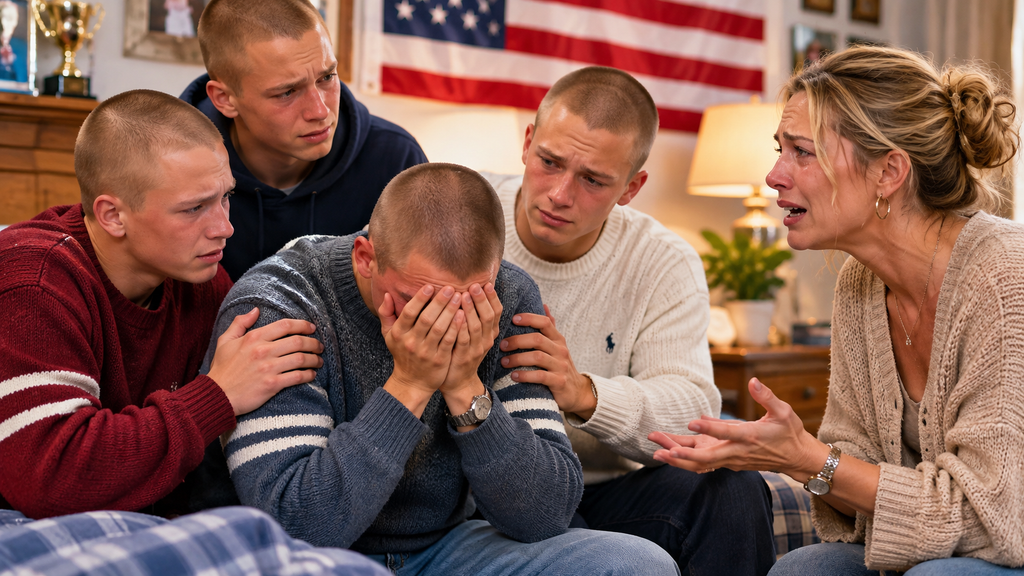
But at our table, nobody moved.
Jake leaned forward.
“Daniel, you’re scaring us.”
Daniel swallowed.
“I know.”
Ryan reached across the table and rested his hand beside the envelopes.
“Whatever it is, just tell us, man. We’re here.”
Daniel looked at him.
Then at Jake.
Finally, his eyes settled on me.
“I need you to promise that whatever happens after tonight, you won’t spend the rest of your lives remembering me as somebody you couldn’t save.”
My heart seemed to stop.
“What are you talking about?” I whispered.
Daniel took a slow breath.
“Six months ago, I went to the hospital because I couldn’t catch my breath.”
Nobody interrupted.
“I thought I was out of shape. Maybe stressed. I’d been getting tired more easily, and sometimes my chest felt strange when I climbed stairs.”
He gave a humorless little laugh.
“I actually bought a gym membership. Imagine that.”
Jake didn’t smile.
Daniel continued.
“One morning, I woke up with my ankles swollen and my heart racing. Sarah took one look at me and insisted we go to the emergency room.”
Sarah was Daniel’s wife.
They’d married three years earlier.
I’d attended their wedding.
I’d danced with his mother.
I’d hugged Daniel at the reception and promised we’d get together more often.
We never did.
“At first, the doctors thought it might be something temporary,” Daniel said.
He looked down at his trembling hands.
“Then they started asking questions about my childhood cancer treatments.”
A cold feeling spread through my chest.
“What did they find?” Ryan asked.
Daniel closed his eyes.
“My heart is failing.”
For several seconds, none of us spoke.
Then Jake shook his head.
“No.”
Daniel opened his eyes.
“The chemotherapy that saved my life seventeen years ago damaged my heart. The doctors explained that certain treatments can cause problems many years later.”
He pressed his palm against his chest.
“Mine has become serious.”
Ryan stared at him.
“But they can treat that, right?”
“They’re treating it.”
“Then what are we talking about here?”
Daniel hesitated.
“I’m being evaluated for a heart transplant.”
The words struck our table like a physical blow.
I could hear the air-conditioning.
I could hear somebody laughing outside.
I could hear my own breathing.
But I couldn’t make sense of what Daniel had just said.
A heart transplant.
At thirty years old.
The same boy who had survived cancer at thirteen was facing another fight for his life.
Jake pushed his chair backward.
“Why didn’t you tell us?”
Daniel looked miserable.
“Because I knew what would happen.”
“What does that mean?”
“You’d drop everything. You’d drive across the country. You’d start rearranging your lives.”
“You’re damn right we would!” Jake snapped.
Daniel flinched.
Jake immediately lowered his voice.
“Sorry. But Daniel, we’re your brothers.”
“I know.”
“Then why did you keep this from us?”
Daniel looked at the three envelopes.
“Because the last time I was seriously ill, I watched everybody around me become frightened.”
His voice cracked.
“My mother cried when she thought I was asleep. Teachers looked at me like I was already gone. People stopped talking to me about normal things.”
He wiped his cheek.
“And I hated it.”
I felt my throat tighten.
“Daniel…”
“I didn’t want to become the sick boy again.”
He looked directly at me.
“Not in your eyes.”
That was the moment I realized how badly we’d misunderstood something about our childhood.
We had always believed shaving our heads had made Daniel feel brave.
But perhaps we’d never understood what he had been afraid of losing.
Not his hair.
Not even his childhood.
He had been terrified of losing his place among us.
And now, seventeen years later, he was afraid of the same thing.
Ryan stood so abruptly that his chair scraped across the floor.
He walked around the table.
Then he crouched beside Daniel.
“Look at me.”
Daniel reluctantly raised his head.
“You’re not the sick boy.”
Ryan’s voice trembled.
“You’re the idiot who once tried to microwave a frozen pizza with the cardboard underneath it.”
A tiny smile appeared on Daniel’s face.
“That was one time.”
“You’re the guy who cried during that animated movie about the old man and the balloons.”
“Everybody cried during that movie.”
“You’re the guy who proposed to Sarah three times because the first two attempts went wrong.”
Daniel laughed weakly.
“And you’re the guy who owes me sixty dollars from our senior year.”
“Seventy,” Jake corrected automatically.
For the first time that evening, we laughed.
Not because anything was funny.
Because for a brief moment, Daniel was simply Daniel again.
Ryan placed a hand on his shoulder.
“You’re not a diagnosis, brother.”
Daniel covered his face.
And cried.
We eventually ordered dinner.
Nobody was particularly hungry.
Daniel had barely touched his water.
Jake kept asking medical questions.
Ryan kept looking toward the door as though he expected a doctor to walk in and announce that everything had been a mistake.
I sat quietly.
Trying to understand how six months could pass while someone I loved suffered without my knowing.
Finally, I asked the question that frightened me most.
“How much time do you have?”
Daniel looked up.
“Nobody can give me an exact answer.”
“But what did they say?”
“They said my heart function is severely reduced. Medication is helping, but not enough. The transplant team is deciding what kind of support I may need while I wait.”
He paused.
“They’ve discussed a mechanical pump if things get worse.”
Jake rubbed his face.
“And if they can’t find a heart?”
Daniel didn’t answer immediately.
That silence told us enough.
Then he looked at the envelopes.
“That’s why I wrote these.”
My eyes burned.
“Are they goodbye letters?”
Daniel gave a sad smile.
“They started that way.”
Nobody reached for them.
He noticed.
“Please. Open them.”
Jake was first.
He carefully slid his finger beneath the flap.
Ryan followed.
I stared at my name, written in the same crooked handwriting Daniel had used since seventh grade.
Then I opened mine.
Inside were three things.
A photograph.
A folded piece of notebook paper.
And a handwritten letter.
The photograph was seventeen years old.
Four thirteen-year-old boys stood outside a school building.
Three had badly shaved heads.
The fourth was noticeably thinner, wearing an oversized sweatshirt and smiling so widely that his cheeks almost disappeared.
I remembered that photograph.
Daniel’s mother had taken it on his first day back at school.
But I had never seen this particular copy.
Across the bottom, in faded blue ink, somebody had written:
The first day I wasn’t afraid to be seen.
My hands began shaking.
I unfolded the notebook paper.
It was yellowed with age.
The writing was clumsy.
The spelling was terrible.
But I recognized it immediately.
It was Daniel’s handwriting from when we were children.
At the top were four words.
THINGS I WANT TO DO.
Below them was a short list.
Go to high school.
Learn to drive.
Go camping with the guys.
Have a girlfriend.
See the ocean.
Get married.
Live long enough to turn thirty.
I stopped reading.
My vision blurred.
At the bottom of the page was one final sentence.
If I get better, I want to make somebody else feel less scared.
I looked at Daniel.
“Where did you find this?”
“My mother kept it.”
“All these years?”
He nodded.
“She found it while cleaning out some old boxes last Christmas. She gave it to me a few days before I went to the hospital.”
He smiled faintly.
“Funny timing, huh?”
I couldn’t speak.
He pointed toward the letter.
“Keep reading.”
I unfolded the final page.
And saw my name.
Dear Evan,
I don’t know how to write a letter like this without sounding dramatic, so I’m just going to tell you something I’ve never told you.
When we were thirteen, you once sat beside me on the school bus when everybody else was afraid to come near me.
You didn’t give me a speech.
You didn’t tell me to be brave.
You just asked whether I had finished our science homework.
Then you complained about the cafeteria meatloaf for twenty minutes.
That conversation was one of the happiest moments of my entire childhood.
I covered my mouth.
I remembered the bus ride.
Barely.
To me, it had been an ordinary Tuesday.
To Daniel, apparently, it had been something else entirely.
I continued.
When people are hurting, we sometimes think we need the perfect words.
But you taught me that showing up is often enough.
I know we don’t talk as much anymore.
I know you’ve been working too hard and missing things with your family.
Please don’t spend your life waiting until you have more time to love the people who matter.
Time is a terrible thing to gamble with.
And if I don’t make it through this, I don’t want you blaming yourself for all the ordinary days we didn’t spend together.
Because you gave me seventeen more years of them.
Your brother, always.
Daniel.
The paper shook in my hands.
I was thirty years old.
I had a wife named Melissa.
A seven-year-old son named Oliver.
A job that required me to travel almost every week.
I had missed Oliver’s school play the previous month.
I’d promised I’d attend the next one.
I had forgotten my wedding anniversary two years earlier.
I’d missed three of Daniel’s birthdays.
And somehow, the person facing the possibility of death was worried about how I was living.
I began crying.
Not quietly.
Not politely.
I bent forward, pressed the letter against my chest, and sobbed.
Across the table, Jake was crying too.
He held an old photograph of himself and Daniel standing beside a fishing pond.
I remembered that afternoon.
Jake’s father had promised to take him fishing.
Then canceled at the last minute.
Daniel had barely finished another round of treatment, but he’d persuaded his mother to drive us all to the pond anyway.
We caught nothing.
Jake had complained for hours.
Daniel had fallen asleep in a folding chair.
But they had laughed about that trip for years.
Jake’s letter said something I hadn’t known.
Daniel had overheard Jake crying behind the school gym after his father left the family.
He had wanted to help but hadn’t known what to say.
So he’d given Jake the only thing he understood.
Company.
You spent months making sure I never sat alone, Daniel had written.
I hope you remember that you never have to sit alone either.
Jake pressed the letter against his forehead.
Ryan’s envelope contained a photograph from our eighth-grade talent show.
The four of us had performed a terrible comedy routine.
Ryan had written the jokes.
Daniel had forgotten half his lines.
We’d been booed by three kids in the front row.
And afterward, Daniel had laughed until he couldn’t breathe.
Ryan’s letter was shorter.
But its final words broke him.
You made me laugh when I thought my life was over.
Please keep making people laugh.
And please remember that the people who make everybody else smile are allowed to cry too.
Ryan read that sentence three times.
Then he stood.
He walked to Daniel and wrapped both arms around him.
“I’m not losing you,” he whispered.
Daniel held him tightly.
“You might.”
“No.”
“Ryan…”
“No. I refuse.”
Daniel’s tears fell onto Ryan’s shoulder.
“That’s what I need you to understand.”
Ryan pulled back.
Daniel looked around the table.
“I need you to promise you’ll keep living if I don’t.”
We stared at him.
“I want you to take your kids camping. Go on trips. Celebrate birthdays. Fix things with people you’ve stopped talking to.”
He swallowed.
“And I don’t want my illness to become the reason you forget how to be happy.”
My chest hurt.
Daniel reached for his glass.
“But there’s another reason I asked you here.”
Jake wiped his face.
“What?”
Daniel looked almost embarrassed.
“Six months ago, after the doctors told me about my heart, I started thinking about that last sentence on my childhood list.”
He pointed to the yellow paper in my hand.
If I get better, I want to make somebody else feel less scared.
“I realized I’d never really done it.”
“Daniel, that’s ridiculous,” I said.
“No, listen.”
He leaned forward.
“I’ve had a good life. I got married. I traveled. I worked. I bought a house. But I kept telling myself I’d find some big way to give back someday.”
He glanced at Jake.
“And then I found out that someday isn’t guaranteed.”
Ryan frowned.
“What did you do?”
Daniel’s smile returned.
A real smile this time.
“I started something.”
He reached into his jacket again.
And took out a fourth envelope.
This one was larger.
White.
Official-looking.
He placed it in the middle of the table.
Across the front were three words.
THE FOURTH CHAIR.
I stared at the envelope.
“What’s that?”
Daniel pushed it toward me.
“Open it.”
Inside was a folder containing several photographs, a small proposal, and a letter from the children’s hospital where Daniel had once received treatment.
The photographs showed a room with pale green walls.
A couch.
A bookshelf.
A small refrigerator.
A table with four chairs.
The room wasn’t fancy.
But it looked warm.
Safe.
Almost like somebody’s living room.
Daniel watched our faces.
“When I was thirteen, there were plenty of doctors looking after my body.”
He paused.
“But there were days when I was so lonely that I couldn’t stand it.”
I looked up.
He continued.
“Some children spend months going back and forth to hospitals. Their parents are exhausted. Their friends don’t always understand. Sometimes everybody is trying so hard to keep them alive that nobody notices how desperately they want to feel normal.”
His voice steadied.
“So I started working with the hospital’s family support team.”
Jake studied the papers.
“You built this room?”
“I helped pay for it. Sarah helped me raise money. The hospital provided the space and approved the program.”
He pointed to the photograph.
“It’s a place where children undergoing treatment can spend time with friends, siblings, or volunteers. They can play games, watch movies, do homework, or just talk about something other than being sick.”
Ryan looked stunned.
“And you did this while you were getting sick?”
Daniel nodded.
“Some of the planning was done from my couch.”
“Why didn’t you tell us?”
Daniel laughed softly.
“Because I wanted to surprise you.”
He turned another page.
There was a photograph of four boys sitting around the little table.
One wore a knit cap.
Another had a hospital bracelet.
All four were laughing over a board game.
I stared at the photograph.
It looked so familiar.
Almost painfully familiar.
Daniel pointed to one boy.
“His name is Lucas. He’s thirteen. He’s been receiving treatment for leukemia.”
Jake leaned closer.
“And the others?”
“His friends.”
Daniel smiled.
“His mother told me they started visiting every Friday after school.”
He took a breath.
“And a few weeks ago, they asked whether they could shave their heads.”
I closed my eyes.
Seventeen years.
An entire lifetime.
And somewhere in a hospital room, another group of boys had made the same decision we’d made.
Ryan whispered, “You’ve got to be kidding me.”
Daniel shook his head.
“No.”
He reached into the envelope and removed one final photograph.
Four boys.
Four shaved heads.
Four enormous smiles.
Across the bottom, somebody had written:
Brothers don’t let brothers fight alone.
Jake started crying again.
This time, none of us tried to stop him.
Daniel let us sit with the photographs for a while.
Then he explained the part that frightened him.
“The hospital has people who can run the program. But I want it to grow.”
He looked around the table.
“More volunteers. More activities. More families having somewhere to go when the walls of a hospital room start closing in.”
Ryan nodded slowly.
“You want us to help?”
“Only if you want to.”
“Of course we want to.”
Daniel shook his head.
“I need you to understand something. I’m not asking you to give up your jobs or sacrifice your families.”
He glanced at each of us.
“I don’t want you to save the program out of guilt.”
I looked down at the photograph in my hand.
“What do you want, then?”
Daniel smiled.
“I want you to be the same ridiculous boys who showed up at my house seventeen years ago.”
Jake laughed through his tears.
“We’re not boys anymore.”
“No,” Daniel replied.
“You’re older. You’ve got responsibilities. One of you has terrible knees.”
Ryan immediately pointed at Jake.
“That’s him.”
“Shut up.”
“And one of you,” Daniel added, looking at me, “has apparently forgotten how to take a day off.”
I smiled weakly.
He grew serious.
“But you’re still those boys.”
He pointed toward the four chairs around us.
“Look at this table.”
We looked.
“Four chairs. That’s all it took to make me feel like I belonged somewhere.”
Daniel’s voice broke.
“I just want other kids to have that feeling.”
For a long moment, nobody spoke.
Then Jake reached into his pocket.
He removed his car keys and placed them on the table.
“Well,” he said, “I’m not good with speeches.”
Ryan laughed.
“That’s an understatement.”
Jake ignored him.
“But I own a small construction company. I can build shelves. Repair things. Help with whatever the hospital approves.”
Daniel blinked.
“Jake…”
“And I’ve got six employees who pretend they hate volunteering but actually love it.”
Ryan leaned forward.
“I teach middle school music. I know enough teachers to organize game nights, art projects, and whatever else the program needs.”
He paused.
“Once everybody’s properly cleared, obviously.”
Daniel smiled.
Then they both looked at me.
I took a breath.
“I handle operations for a living. Scheduling. Budgets. Fundraising events. I can help organize the practical stuff.”
Daniel stared at us.
“Guys, you don’t have to decide tonight.”
Jake held up a hand.
“Seventeen years ago, you didn’t get to vote when we shaved our heads.”
Ryan nodded.
“That’s right.”
I smiled.
“So you don’t get to vote now.”
Daniel lowered his head.
His shoulders began shaking.
And for several minutes, three grown men sat around their oldest friend while he cried.
Eventually, the waitress appeared with a birthday cake.
Chocolate.
Thirty little candles.
Daniel stared at it.
Then he laughed.
“Oh, Sarah.”
“Your wife arranged it?” I asked.
“Apparently.”
The waitress smiled.
“She called earlier and told us you absolutely had to have the cake.”
Ryan stood and began singing.
Loudly.
Terribly.
Jake joined him.
I joined too.
Daniel covered his face, embarrassed.
For one extraordinary moment, we weren’t four frightened adults discussing heart failure.
We were thirteen again.
Laughing at our own foolishness.
When the song ended, Daniel stared at the flames.
“What’d you wish for?” Jake asked.
Daniel smiled.
“Same thing I wished for when I was thirteen.”
He leaned forward and blew out the candles.
All thirty.
But then something happened that I would remember for the rest of my life.
As we began cutting the cake, Daniel suddenly stopped smiling.
He pressed one hand against the edge of the table.
His face had turned pale.
“Daniel?” I asked.
He shook his head.
“Just dizzy.”
Sarah had warned him to be careful about overexertion.
He’d mentioned it earlier.
But this looked different.
Ryan stood.
“Are you okay?”
Daniel tried to answer.
Then his eyes rolled backward.
His body slumped sideways.
And the birthday cake crashed onto the floor.
“CALL AN AMBULANCE!”
I don’t remember which of us shouted.
I remember Jake catching Daniel before his head struck the table.
I remember Ryan fumbling for his phone.
I remember pushing chairs aside while the waitress stood frozen in the doorway.
Daniel was breathing.
But he wasn’t responding.
“Daniel!”
I knelt beside him.
“Brother, come on. Open your eyes.”
His skin looked gray.
Jake kept saying his name.
Over and over.
“Come on, buddy. Stay with us.”
The emergency dispatcher guided us through what to do while we waited.
Ryan gave the address.
I called Sarah.
She answered on the second ring.
“Evan?”
“Sarah, it’s Daniel.”
There was a pause.
“What happened?”
“He collapsed. We’re at the restaurant. An ambulance is coming.”
For one terrible second, she said nothing.
Then I heard her inhale sharply.
“I’m on my way.”
“Sarah…”
“Please stay with him.”
Her voice broke.
“Please don’t let him be alone.”
I looked at the man lying on the floor.
Seventeen years earlier, we’d made a promise to that frightened little boy.
And now, kneeling beside him in a restaurant, I realized the promise hadn’t expired.
“He’s not alone,” I whispered.
“Not for one second.”
The ambulance arrived within minutes.
Daniel had begun responding by then, but he was weak and confused.
The paramedics examined him and moved him onto a stretcher.
One of them asked whether anyone knew his medical history.
All three of us answered at once.
The paramedic listened carefully.
Then he asked who would be meeting Daniel at the hospital.
“His wife,” I said.
“And us.”
The ride to the emergency department felt endless.
Jake followed the ambulance in his truck.
Ryan rode with me.
Nobody spoke much.
At a red light, Ryan suddenly said, “I should’ve called him.”
I looked at him.
“What?”
“Last month. I thought about calling him.”
He stared through the windshield.
“I was putting together shelves in my daughter’s room, and I found a picture from our graduation.”
His voice trembled.
“I thought, I should call Daniel this weekend.”
He wiped his face.
“And I didn’t.”
I tightened my grip on the steering wheel.
“I missed his birthday last year.”
Ryan turned toward me.
“I sent him a stupid thumbs-up emoji.”
Neither of us spoke for several seconds.
Then Ryan whispered, “When did we become the kind of people who have to schedule time for their best friends?”
I had no answer.
Because I’d been asking myself the same question.
Sarah was waiting when we reached the hospital.
She came rushing toward us.
Her hair was pulled into a messy ponytail.
She wore slippers.
She looked as though she’d left home without even checking the weather.
“Where is he?”
“They’re examining him,” I said.
She covered her mouth.
“Oh, God.”
Jake gently took her hand.
“He’s awake. He was talking when they brought him in.”
Sarah nodded.
Then she started crying.
“I’m sorry,” she whispered.
I frowned.
“Sorry for what?”
“For not telling you.”
We stared at her.
She wiped her cheeks.
“Daniel asked me not to. He said he needed to find the right way.”
Ryan shook his head.
“You don’t have to apologize.”
Sarah looked at us.
“He was so excited about tonight.”
She gave a broken laugh.
“He tried on four different shirts.”
Jake stared at her.
“Daniel?”
“He kept asking whether the restaurant was too fancy. Whether you would like the food. Whether you might think the envelopes were strange.”
Her voice cracked.
“He wanted everything to be perfect.”
I looked toward the closed emergency department doors.
The cake on the floor flashed through my mind.
Thirty candles.
Thirty wishes.
And the terrible thought that Daniel might never celebrate thirty-one.
Sarah sank into a chair.
“He told me this morning he finally felt ready.”
I sat beside her.
“Ready for what?”
“To stop pretending he wasn’t afraid.”
She looked at me.
“He said he didn’t need to be brave around you boys.”
My eyes filled.
“He was right.”
Daniel remained in the hospital.
His doctors explained that his heart condition had become unstable and that the fainting episode required careful investigation and treatment.
Over the following days, his team adjusted medications, performed tests, and discussed the safest way to support him while awaiting a transplant.
There were no easy promises.
No magic cure.
No doctor who walked into the room and announced that everything would be fine.
Some days Daniel felt better.
Other days, he could barely sit up without becoming exhausted.
His heart wasn’t working the way it needed to.
And every conversation seemed to contain frightening words.
Risk.
Monitoring.
Procedure.
Waiting.
Transplant.
I learned to hate the word waiting.
Waiting for results.
Waiting for updates.
Waiting for Daniel to feel well enough to joke.
Waiting for someone to tell us how much time remained.
But slowly, something else began happening.
Jake rearranged his work schedule so he could visit regularly.
Ryan drove in on weekends.
I spoke with my boss and reduced my travel commitments.
Not because Daniel had demanded it.
Because I’d finally understood how much of my life I’d been spending on things that could wait.
Melissa noticed the change immediately.
One evening, while I was sitting at our kitchen table reviewing a volunteer schedule, she placed a cup of coffee beside me.
“You’ve been different since the dinner.”
I looked up.
“Different how?”
“More present.”
I frowned.
She sat opposite me.
“You’ve asked Oliver about school every day this week. You came to dinner without your phone. You actually watched a movie with us.”
I looked away.
“I should have been doing those things all along.”
Melissa reached across the table.
“Maybe. But you’re doing them now.”
I thought about Daniel’s letter.
Please don’t spend your life waiting until you have more time to love the people who matter.
That night, after Oliver went to bed, I opened my calendar.
I canceled two unnecessary trips.
I scheduled a family weekend.
Then I called my mother.
We talked for forty-five minutes.
About nothing important.
And everything important.
Three weeks after the birthday dinner, Daniel called me from the hospital.
“Hey, brother.”
His voice sounded tired.
But cheerful.
“How’s the world’s most expensive hotel?” I asked.
“Terrible. Food’s awful. Room service keeps waking me up.”
I laughed.
Then he became quiet.
“Evan?”
“Yeah?”
“They’ve decided I need the pump.”
I sat down.
“The mechanical heart pump?”
“Yeah. A ventricular assist device. They think it’ll give me a better chance while I’m waiting.”
I didn’t know what to say.
“Are you scared?”
Daniel laughed softly.
“Absolutely terrified.”
That answer startled me.
For most of my life, I’d remembered Daniel as the bravest person I knew.
He had survived cancer.
Endured treatments.
Watched other children suffer.
But now he was simply telling the truth.
He was frightened.
And he trusted me enough to admit it.
“Do you want me there?” I asked.
There was a long silence.
Then he whispered, “More than anything.”
“Then I’ll be there.”
“Your work…”
“Can wait.”
“Your family…”
“Melissa already told me to pack a bag.”
Daniel laughed.
“She’s smarter than you.”
“Everybody knows that.”
Then he said something I wasn’t expecting.
“Evan?”
“Yeah?”
“Remember that bus ride?”
The one from his letter.
“Of course.”
“Can we do that again sometime?”
I smiled.
“Ride a bus?”
“No.”
His voice softened.
“Just sit together and talk about stupid things.”
My eyes burned.
“Anytime, brother.”
The morning of Daniel’s procedure was cold and rainy.
The kind of morning when the sky seems too low.
I arrived at the hospital before sunrise.
Jake and Ryan were already there.
Sarah sat between them.
Daniel’s mother, Mrs. Whitaker, stood beside the window with her arms crossed tightly over her chest.
Seventeen years had changed her.
Her once-dark hair was almost entirely gray.
The woman who had opened the door to three bald thirteen-year-olds now looked smaller.
More fragile.
When she saw us, she began crying.
“Oh, my boys.”
She pulled us into her arms.
For a moment, I was thirteen again.
Standing in her hallway.
Holding the clippers we’d borrowed from my father.
Trying desperately to do something good for her son.
She looked at our faces.
“He’s been talking about you all morning.”
Jake forced a smile.
“Good things, I hope.”
She laughed.
“Mostly.”
Then her expression changed.
“There’s something I need to tell you.”
We waited.
She looked toward Daniel’s room.
“When he was thirteen, there was a night after one of his treatments when he told me he didn’t want to go back to school.”
My chest tightened.
“He said everyone would look at him differently. That nobody would want to sit beside him.”
Her eyes filled.
“I tried to explain that his friends loved him.”
She swallowed.
“But he didn’t believe me.”
I remembered the morning we’d shaved our heads.
The silence when Daniel first saw us.
The way he’d started crying.
His mother continued.
“The night before you came over, he asked me whether he’d ever be normal again.”
She pressed her fingers against her lips.
“And I didn’t know what to tell him.”
Ryan looked down.
Mrs. Whitaker smiled through her tears.
“Then the next morning, my doorbell rang.”
She looked at all three of us.
“And there you were.”
Jake laughed softly.
“Looking ridiculous.”
“Absolutely ridiculous,” she agreed.
Then she reached into her handbag.
And pulled out something wrapped in an old kitchen towel.
My heart jumped.
I knew what it was before she uncovered it.
A pair of electric hair clippers.
Old.
Gray.
With a cracked plastic casing.
I stared.
“Those can’t be…”
She nodded.
“Your father’s clippers.”
I looked at her in disbelief.
“He gave them to you?”
“Years ago. After Daniel finished treatment, your father said maybe one day you’d all want to remember.”
She brushed her thumb across the worn handle.
“I kept them.”
Ryan laughed through his tears.
“Those things nearly took my ear off.”
“Because you wouldn’t sit still,” Jake said.
Mrs. Whitaker held the clippers against her chest.
“Daniel asked me to bring them today.”
“Why?” I whispered.
She smiled sadly.
“He said if he ever started feeling like that frightened little boy again, he wanted something to remind him he wasn’t alone.”
I turned away.
Because I couldn’t stop crying.
The procedure lasted hours.
We sat together in the waiting room.
Nobody pretended to be calm.
Sarah held Daniel’s wedding ring in her palm.
Jake paced.
Ryan stared at his phone without reading anything.
I sat beside Mrs. Whitaker.
At one point, she looked at me.
“Do you know what I used to pray for?”
I shook my head.
“When Daniel had cancer, I prayed he’d reach fourteen.”
Her eyes remained fixed on the hallway.
“Then fifteen. Then sixteen.”
She smiled faintly.
“When he graduated, I thought I’d witnessed a miracle.”
Her voice broke.
“And when he got married, I finally stopped counting.”
I reached for her hand.
“He’s still here.”
She nodded.
“I know.”
Then she whispered, “But mothers never stop being afraid.”
We waited.
The clock moved.
Nurses passed.
Families came and went.
Finally, a surgeon entered the waiting area.
Sarah stood so quickly that her chair nearly fell.
The doctor approached us.
“The procedure is finished.”
Nobody breathed.
“The device has been implanted, and Daniel is being closely monitored in intensive care.”
Sarah covered her mouth.
“Is he okay?”
“He’s stable right now. He has a long recovery ahead, and there are risks we need to watch for.”
I felt my knees weaken.
The doctor continued explaining what the next several days might involve.
But one thing remained clear.
Daniel had made it through the procedure.
He was still fighting.
And the four chairs in the restaurant hadn’t become a final memory.
Not yet.
Recovery was not easy.
There were complications.
Long nights.
Setbacks that frightened all of us.
Daniel had to learn how to live with the mechanical device supporting his circulation.
He had to understand its equipment, medications, and precautions.
There were days when he was too frustrated to speak.
One afternoon, I found him staring out his hospital window.
He barely acknowledged me.
I pulled up a chair.
“Bad day?”
He shrugged.
I waited.
Finally, he whispered, “I’m tired of being grateful.”
I looked at him.
“What?”
“Everybody keeps telling me how lucky I am.”
His eyes filled.
“How lucky I was to survive cancer. How lucky I am that they could put this device in.”
He stared at his hands.
“I know they’re right. I know people are trying to help.”
His voice cracked.
“But sometimes I want to be angry.”
I said nothing.
“I want to be thirty and complain about my mortgage. I want to take Sarah on vacation without planning around hospitals. I want to climb a flight of stairs without thinking about my heart.”
He covered his face.
“I want an ordinary life.”
I felt something twist inside me.
For months, we’d been calling him brave.
Strong.
Inspirational.
But perhaps he’d grown tired of being an inspiration.
Perhaps he just wanted someone to let him be angry.
So I sat beside him.
And said, “This really sucks.”
Daniel looked at me.
Then he laughed.
A surprised, exhausted laugh.
“Yeah.”
“It really, really sucks.”
He nodded.
And then he cried.
I didn’t tell him to stay positive.
I didn’t remind him how lucky he was.
I just sat there.
Exactly as he’d taught me to do seventeen years earlier.
Meanwhile, The Fourth Chair began growing.
Not quickly.
Not magically.
But steadily.
Jake built new bookshelves for the hospital room after getting permission from the facilities team.
Ryan recruited teachers for approved activities.
I helped coordinate volunteers, donations, and schedules with the hospital staff.
Sarah became the heart of the project.
Daniel remained involved whenever his health allowed.
He reviewed photographs.
Suggested games.
Wrote little encouragement cards.
Sometimes, he joined a supervised video call with children who wanted to speak with someone who had survived cancer as a teenager.
He never promised them they’d get better.
He never told them everything happened for a reason.
He simply listened.
One afternoon, Lucas—the thirteen-year-old boy in the photograph—asked Daniel a question.
“Did you ever get mad when you were sick?”
Daniel smiled.
“All the time.”
“Even at your friends?”
“Especially at my friends.”
Lucas looked surprised.
“Why?”
“Because sometimes they got to do things I couldn’t.”
Daniel paused.
“And sometimes I thought they felt sorry for me.”
Lucas nodded slowly.
“What did you do?”
Daniel thought for a moment.
“Mostly, I complained.”
The boy laughed.
“Did they get tired of you?”
Daniel glanced toward the camera.
“Probably.”
I was sitting beside him.
I immediately protested.
“Definitely.”
Lucas burst out laughing.
Daniel grinned.
“But they kept showing up.”
The boy was quiet for several seconds.
Then he whispered, “My friends shaved their heads.”
Daniel nodded.
“I heard.”
“They look stupid.”
Daniel laughed.
“Mine did too.”
Lucas smiled.
Then his expression became serious.
“But I think they really love me.”
Daniel’s eyes filled.
“Yeah, buddy.”
He glanced at the old photograph hanging on the wall behind us.
“I think they do.”
Months passed.
Daniel grew stronger with the support of his medical team, though life with the device remained demanding.
He attended appointments.
Followed strict instructions.
Learned to recognize warning signs.
Some days were good.
Some were difficult.
His doctors continued managing his condition and his place in the transplant process.
We learned not to treat every good day as proof that everything was fixed.
And not to treat every bad day as the end.
We simply learned to show up.
In October, The Fourth Chair organized its first small family gathering.
Nothing extravagant.
Just food, games, and an afternoon of laughter for children receiving treatment and their families.
Daniel attended with Sarah after his doctors cleared the visit.
He moved carefully.
He tired easily.
But his eyes shone when he walked into the room.
The walls were decorated with drawings.
Photographs covered a bulletin board.
And in the center stood a table with four chairs.
Lucas was there.
He was wearing a blue baseball cap.
When he saw Daniel, he hurried toward him.
“Mr. Daniel!”
Daniel smiled.
“Hey, buddy.”
Lucas stopped a few feet away, suddenly shy.
“I wanted to show you something.”
He removed his cap.
Short hair had begun growing back.
Daniel grinned.
“Looking good.”
Lucas beamed.
“Mom says I look like a porcupine.”
“She’s right.”
Lucas laughed.
Then he reached into his pocket.
He pulled out a folded photograph.
Four bald boys.
The same picture we’d seen at Daniel’s birthday dinner.
Only now, the boys had written their names on the back.
Lucas handed it to Daniel.
“For you.”
Daniel stared.
“What’s this for?”
Lucas shrugged.
“Because you made this place.”
Daniel shook his head.
“A lot of people helped make this place.”
“Yeah, but you thought of it.”
The boy hesitated.
Then he added, “And I wanted you to know I’m not scared of coming here anymore.”
Daniel’s face changed.
He pressed his lips together.
His eyes filled.
For several seconds, he couldn’t speak.
Finally, he knelt carefully so he could look Lucas in the eye.
“Can I tell you something?”
Lucas nodded.
“When I was your age, I was terrified.”
“Really?”
“Really.”
“What helped?”
Daniel looked across the room.
At Jake.
At Ryan.
At me.
Then back at Lucas.
“My friends.”
Lucas smiled.
“Mine too.”
Daniel pulled him into a gentle hug.
And I watched seventeen years of love travel from one frightened child to another.
The phone call came on a Thursday morning.
I remember the exact time.
5:42 a.m.
My phone rang beside the bed.
I saw Sarah’s name.
For one horrible second, I couldn’t move.
Then I answered.
“Sarah?”
She was crying.
My stomach dropped.
“What’s happened?”
“Evan…”
I sat upright.
“Is Daniel okay?”
She tried to speak.
Couldn’t.
Then she said five words I’ll never forget.
“They have a heart.”
I froze.
“What?”
“The hospital called. They have a donor heart that may be suitable. Daniel’s going in.”
My hand flew to my mouth.
“Are you serious?”
“Yes.”
I could hear Daniel in the background.
He was speaking to someone.
His voice sounded frightened.
And hopeful.
Sarah continued.
“They still have to make sure everything is right. The doctors said things can change. But they want him at the hospital.”
I was already getting out of bed.
“I’m coming.”
“Evan…”
“I’m coming, Sarah.”
She began crying again.
“Please hurry.”
Jake arrived first.
Ryan came an hour later.
I reached the hospital just before eight.
Daniel was sitting in bed wearing a hospital gown.
His face was pale.
Sarah held his hand.
When he saw us, he smiled.
“Well, look what the cat dragged in.”
Jake immediately pointed at him.
“Don’t start.”
Daniel laughed.
“Somebody has to keep you idiots entertained.”
But the laughter faded quickly.
The room felt heavy with things nobody wanted to say.
Finally, Daniel looked at us.
“Remember that promise I asked you to make?”
Ryan nodded.
“Yeah.”
“I meant it.”
Jake stepped closer.
“Daniel…”
“No. Let me finish.”
He swallowed.
“If this doesn’t go the way we hope, I need you to look after Sarah and Mom.”
“Of course,” I whispered.
“And I need you to keep The Fourth Chair going.”
Ryan nodded.
“And…”
Daniel stopped.
His eyes filled.
“I need you to know something.”
We waited.
He looked around the room.
“I don’t regret being thirteen and getting sick.”
Sarah squeezed his hand.
Daniel shook his head.
“I wouldn’t wish cancer on anybody. And I hate what it did to my body.”
He took a breath.
“But if I hadn’t gone through that, I might never have learned what it feels like to be loved by people who choose to stay.”
My eyes burned.
He smiled at us.
“I got seventeen incredible years because I survived.”
His voice cracked.
“And you made every single one of them better.”
Jake stepped forward.
“You’re going to have more.”
Daniel looked at him.
“I hope so.”
Then Ryan reached into his backpack.
“Actually, before they take you anywhere, we brought something.”
Daniel frowned.
“What?”
Ryan unzipped the bag.
And pulled out a small framed photograph.
Four boys.
Three with freshly shaved heads.
One smiling in the middle.
Our original photograph.
Beneath it, Ryan had added a sentence.
SEVENTEEN YEARS LATER, WE’RE STILL HERE.
Daniel stared at it.
Then he whispered, “You guys…”
Jake put a hand on his shoulder.
“We told you.”
I stood beside them.
“Brothers forever.”
And once again, four friends stood together in a hospital room.
Only this time, we were old enough to understand just how precious that promise was.
The hours that followed were among the longest of my life.
Daniel’s medical team completed the necessary preparations and checks.
The donor heart was accepted.
The operation went ahead.
And we waited.
Sarah prayed.
Mrs. Whitaker held her son’s childhood photograph.
Jake paced until Ryan told him he was wearing a hole in the floor.
I stared at the clock.
Every time a door opened, my heart jumped.
I tried not to imagine terrible outcomes.
But fear has a way of filling the spaces where certainty should be.
At one point, Sarah sat beside me.
“Do you think he’ll make it?”
I looked at her.
I wanted to say yes.
I wanted to promise her everything.
But I remembered what Daniel had taught me.
Love didn’t always mean finding the perfect words.
Sometimes it meant telling the truth.
“I don’t know,” I whispered.
Sarah began crying.
I took her hand.
“But whatever happens, you’re not going through it alone.”
She leaned against my shoulder.
And we waited together.
Late that evening, a surgeon came toward us.
We stood.
All of us.
The doctor looked tired.
Serious.
My stomach twisted.
Then he spoke.
“Daniel has come through the transplant surgery.”
Sarah gasped.
The doctor continued.
“The new heart is functioning, and he’s being transferred to intensive care. He’s still critically ill, and the next several days are very important.”
Sarah covered her mouth.
Tears spilled down her face.
Mrs. Whitaker gripped my arm so tightly that it hurt.
Jake bent forward with his hands on his knees.
Ryan turned toward the wall.
I stood frozen.
Daniel had survived the operation.
The boy we’d nearly lost at thirteen.
The man we’d almost lost at thirty.
He was still here.
We knew that the surgery wasn’t the end of the danger.
There would be medications.
Monitoring.
Possible rejection.
Infections.
A lifetime of medical care.
But that night, we allowed ourselves one precious moment of relief.
Because our brother had been given another chance.
And somewhere, another family was grieving someone they loved.
That truth stayed with us.
Even in our joy.
A heart had reached Daniel because someone else’s life had ended.
We would never know everything that family had endured.
But we knew we had received something beyond price.
Daniel’s recovery took time.
There were frightening days.
Uncomfortable procedures.
Medications that made him feel miserable.
And moments when he wondered whether he’d ever feel like himself again.
But gradually, he improved.
He began walking farther.
Eating better.
Laughing more.
The first time he walked down the hospital corridor without needing to stop, he called me afterward.
“Guess what?”
“What?”
“I just walked farther than Jake does when he’s looking for a parking space.”
I laughed.
“That isn’t saying much.”
“Still counts.”
A few weeks later, he was discharged with detailed instructions and a mountain of follow-up appointments.
Sarah took him home.
We gave them space to settle into their new routine.
But we never disappeared.
Some evenings, we visited.
Sometimes we brought dinner.
Sometimes we watched old movies.
Sometimes we just sat around the kitchen table talking about work, children, football, and all the ordinary things Daniel had missed.
He still had difficult days.
But gradually, those days became part of his life rather than the entirety of it.
And through it all, the little program at the hospital continued.
Three months after Daniel’s transplant, I received a package in the mail.
Inside was a photograph.
Daniel stood beside the table in The Fourth Chair room.
He looked stronger.
A little heavier.
His color had returned.
Beside him stood Lucas and three other boys.
All smiling.
On the back, Daniel had written:
Evan,
Seventeen years ago, you taught me that an ordinary Tuesday could change somebody’s life.
Today, I got to spend another ordinary Tuesday with these kids.
I think I’m finally doing what thirteen-year-old me promised.
Love you, brother.
I sat at my kitchen table holding that photograph for a long time.
Then Oliver wandered into the room.
“Dad?”
I looked up.
“Yeah, buddy?”
“Why are you crying?”
I smiled.
“Happy tears.”
He climbed onto my lap.
“What’s the picture?”
I showed him.
“That’s Uncle Daniel.”
Oliver studied it.
“Is that the friend who was sick when you were little?”
“That’s him.”
“Is he better now?”
I thought carefully.
“He’s doing much better. He’ll always need doctors to help take care of his new heart.”
Oliver nodded.
Then he asked something that made my throat tighten.
“Dad, why did you shave your head for him?”
I looked down at my son.
For seventeen years, people had called that gesture brave.
Kind.
Selfless.
But the truth was simpler.
“We didn’t want him to feel alone.”
Oliver considered that.
Then he asked, “Did it work?”
I looked at Daniel’s smile in the photograph.
“Yeah, buddy.”
I kissed the top of his head.
“I think it did.”
A little more than a year after his transplant, Daniel invited us to dinner again.
The invitation arrived in our group chat.
Same restaurant.
Same private room.
Same four idiots.
And please, Ryan, don’t sing.
Ryan replied immediately.
No promises.
Jake sent a laughing emoji.
I wrote:
Wouldn’t miss it for the world.
This time, when I entered the restaurant, the room looked different.
The table was still set for four.
The candles were glowing.
Soft music played in the background.
But the atmosphere felt lighter.
And there was Daniel.
Standing beside the window.
Smiling.
He was thirty-two now.
His hair was longer.
His face was fuller.
And although he still moved with the careful awareness of someone who’d been through major surgery, he looked happier than I had seen him in years.
When he saw us, he opened his arms.
“My brothers!”
We hugged him.
Hard.
Jake held on the longest.
Ryan started crying before we’d even sat down.
I laughed at him.
“Seriously?”
He wiped his eyes.
“Shut up.”
Daniel grinned.
“Still the emotional one.”
We sat.
Ordered food.
Talked about our families.
Jake told us about his daughter’s first soccer game.
Ryan complained about a disastrous school concert.
I showed them pictures from Oliver’s latest camping trip.
For almost an hour, nobody mentioned hospitals.
Or heart failure.
Or transplants.
We talked about ordinary things.
Wonderful, ridiculous, ordinary things.
Then Daniel stood.
“I’ve got something for you.”
Ryan groaned.
“Oh, no. Not more envelopes.”
Daniel laughed.
“Actually…”
He reached into his jacket.
And pulled out three envelopes.
Again.
We stared at him.
Jake shook his head.
“You’re kidding.”
“Nope.”
Daniel placed them in front of us.
I looked at mine.
Same handwriting.
Same careful lettering.
But this time, beneath my name, he’d written:
Open when you’re ready to laugh.
I opened it.
Inside was a photograph.
Four grown men.
Standing in a bathroom.
All with shaved heads.
I burst out laughing.
“Where did you get this?”
Jake turned his photograph over.
Ryan nearly fell out of his chair.
Daniel was laughing so hard that he had to sit down.
The picture had been taken a few months after his transplant.
We’d been talking about the old days when Ryan joked that we should shave our heads again.
So we’d done it.
At Jake’s house.
With the same old clippers.
It had been a terrible idea.
Jake had accidentally shaved one side of his head shorter than the other.
Ryan looked like a retired wrestler.
I’d discovered that I had considerably less hair than I remembered.
And Daniel had laughed harder than any of us.
But he hadn’t shaved his head.
He’d been the photographer.
At the time, I’d assumed it was just another ridiculous afternoon.
Now, looking at the photograph, I understood why he’d wanted to remember it.
Across the bottom, he’d written:
WE DIDN’T NEED TO SHAVE OUR HEADS AGAIN. WE JUST NEEDED TO SHOW UP.
I looked at him.
Daniel’s eyes glistened.
“That’s what I finally figured out.”
He leaned back.
“When we were thirteen, I thought you saved me because you were willing to look different.”
He smiled.
“But it wasn’t really about the hair.”
Jake nodded slowly.
Daniel looked around the table.
“It was about knowing that when something frightening happened, I wouldn’t have to face it alone.”
He took a breath.
“And when I got sick again, you proved that nothing had changed.”
Ryan wiped his face.
“Except your hairline.”
Daniel burst out laughing.
“Except my hairline.”
After dinner, Daniel asked us to come outside.
The evening was cool.
The streetlights cast long shadows across the sidewalk.
We stood beside our cars, reluctant to say goodbye.
Daniel looked at the three of us.
“There’s one last thing.”
Jake groaned.
“If you pull out another envelope, I’m calling the police.”
Daniel laughed.
“No more envelopes.”
He reached into his pocket.
And removed a folded piece of paper.
I recognized it.
The childhood list.
The one he’d written at thirteen.
Go to high school.
Learn to drive.
Go camping with the guys.
Have a girlfriend.
See the ocean.
Get married.
Live long enough to turn thirty.
Daniel unfolded it carefully.
“I’ve carried this around for months.”
He traced the final line with his finger.
If I get better, I want to make somebody else feel less scared.
Then he looked up.
“Sarah and I are updating it.”
Ryan smiled.
“Updating it how?”
Daniel took out a pen.
He crossed out the words If I get better.
Then he wrote something new.
He turned the paper toward us.
It now read:
AS LONG AS I’M HERE, I WANT TO MAKE SOMEBODY ELSE FEEL LESS SCARED.
Nobody spoke.
Daniel smiled.
“That’s the difference.”
I stared at the words.
He continued.
“I spent so much of my life waiting to be completely healthy before I started living the way I wanted.”
He looked at us.
“But I’m never going to have a life without uncertainty.”
His hand moved gently toward his chest.
“My doctors will keep watching this heart. I’ll keep taking my medication. I’ll have good days and hard days.”
Then he smiled.
“But I can still love people.”
His voice grew unsteady.
“I can still be someone’s friend.”
He looked directly at me.
“And I can still make an ordinary Tuesday matter.”
I stepped forward.
Wrapped my arms around him.
And held on.
That was not the last time we cried together.
It wasn’t the last time Daniel had a frightening medical appointment.
It wasn’t the last time Sarah called us worried about something.
Life didn’t suddenly become perfect.
But something important had changed.
We no longer waited for special occasions to see one another.
Every month, we made time.
Sometimes all four of us met.
Sometimes only two could manage it.
Sometimes we gathered with our wives and children.
Sometimes we just talked on the phone while driving home from work.
And once every year, close to Daniel’s birthday, we returned to the restaurant.
The same private room.
The same table.
Four chairs.
We called it Brothers’ Night.
There was one rule.
Nobody was allowed to cancel because they were “too busy” without making a real effort to find another date.
It wasn’t about guilt.
It was about remembering.
Remembering that friendship is not measured by how much you love someone in your heart.
It’s measured, in part, by whether you make room for them in your life.
The Fourth Chair also continued.
More volunteers joined.
More families used the room.
The hospital’s staff helped keep the program safe and properly organized.
And a photograph of four bald thirteen-year-old boys hung near the entrance.
Underneath it was a simple message.
You don’t have to face the hard days alone.
Daniel insisted that the photograph wasn’t about us.
“It belongs to everybody who ever showed up for somebody,” he said.
One afternoon, a little girl receiving treatment stood in front of it.
She studied the boys.
Then turned to her mother.
“Why did they all shave their heads?”
Her mother knelt beside her.
“Because one of their friends was sick.”
The little girl looked at the photograph again.
Then asked, “Did the sick boy get better?”
Her mother nodded toward a man sitting across the room.
“Why don’t you ask him?”
Daniel looked up.
The little girl approached shyly.
“Excuse me?”
He smiled.
“Hey there.”
She pointed at the photograph.
“Are you the sick boy?”
Daniel glanced at the picture.
His expression softened.
“Yep. That’s me.”
She stared at him.
“But you have hair now.”
He laughed.
“Quite a lot, actually.”
She smiled.
Then she asked, “Were you scared?”
Daniel’s eyes filled.
“Very.”
“What made you feel better?”
He looked toward the photograph.
Then toward the table where Jake, Ryan, and I sat waiting for him.
He smiled.
“My friends.”
The little girl thought about that.
Then whispered, “I’m scared too.”
Daniel nodded.
“That’s okay.”
She looked surprised.
“It is?”
“Absolutely.”
He leaned forward.
“Being scared doesn’t mean you’re not brave.”
The girl glanced at the table.
“Are those your friends?”
Daniel smiled.
“Yep.”
“All three?”
“All three.”
She considered that.
Then said something that made every one of us stop breathing.
“You’re lucky.”
Daniel’s eyes filled with tears.
He looked at us.
And whispered, “I know.”
Seventeen years ago, three thirteen-year-old boys shaved their heads because they couldn’t bear the thought of their friend feeling different.
We didn’t have money.
We didn’t have medical knowledge.
We couldn’t make his cancer disappear.
We were just children.
Armed with a pair of old clippers and a friendship we barely understood.
We thought we were making him laugh.
We thought we were helping him get through one difficult day.
We never imagined that seventeen years later, he would invite us to his thirtieth birthday dinner and reveal that his life was in danger again.
We never imagined that three envelopes would force us to confront how much time we’d wasted.
We never imagined we’d find ourselves in another hospital waiting room, praying for another chance.
And we certainly never imagined that a silly gesture from childhood would become the beginning of something that helped other frightened children feel less alone.
But it did.
And here’s what I’ve come to understand.
There are people who enter your life for a season.
People who teach you lessons.
People who make you laugh.
People who help you through difficult moments.
And then, if you’re very fortunate, there are people who become part of who you are.
People who remember the person you were before the world made you careful.
People who can look at you at your worst and still see the same friend they’ve always loved.
Daniel was that person for us.
And somehow, we had become those people for him.
We didn’t save his life by shaving our heads.
Doctors, nurses, treatments, a donor, and years of medical care gave him chances we could never have given.
But we helped him feel less alone while he fought.
And when life brought us back to another frightening moment, he taught us that the greatest gift we can offer one another is not a promise that everything will be okay.
It’s the promise that whatever happens, we will keep showing up.
I still have Daniel’s first letter.
It’s folded inside the top drawer of my desk.
Sometimes, when work becomes overwhelming or I catch myself saying, “I’ll call them next week,” I take it out.
I read the part about the school bus.
About the meatloaf.
About the ordinary Tuesday he’d never forgotten.
Then I pick up my phone.
I call my mother.
Or Jake.
Or Ryan.
Or Daniel.
Sometimes I just walk into the living room, sit beside Melissa and Oliver, and listen to them tell me about their day.
Because I’ve learned something I wish I’d understood when I was thirteen.
You don’t always get a warning before life changes.
You don’t always get one more birthday.
One more dinner.
One more chance to say what somebody means to you.
And the people you love shouldn’t have to become seriously ill before you make time for them.
Last Sunday, Daniel called me.
I was outside washing my car.
His name appeared on the screen.
I answered immediately.
“Hey, brother.”
“Hey, Evan.”
“Everything okay?”
“Everything’s fine.”
He paused.
“Just wanted to ask you something.”
“What’s up?”
He laughed.
“Do you remember how terrible the cafeteria meatloaf was?”
I froze.
Then I started laughing.
Seventeen years.
Hospitals.
Letters.
A failing heart.
A second chance.
And there he was.
Still talking about meatloaf.
“Daniel,” I said, wiping my eyes, “that stuff was practically a crime.”
He laughed so hard I could hear Sarah asking what was funny in the background.
And for the next twenty minutes, we talked about absolutely nothing important.
Old teachers.
Terrible school lunches.
Jake’s embarrassing haircut.
Ryan’s disastrous attempt to become a drummer.
We laughed until our sides hurt.
Before hanging up, Daniel grew quiet.
“Evan?”
“Yeah?”
“Thanks for answering.”
I smiled.
“Always, brother.”
He paused.
Then he said the same words I’d spoken to him seventeen years earlier.
“We’re in this together.”
I stood in my driveway holding the phone against my ear.
And for a moment, I could see us again.
Four thirteen-year-old boys.
Three badly shaved heads.
One frightened friend.
All of us standing in a little bedroom, believing with all our hearts that friendship could make the world less frightening.
Maybe we were right.
Not because friendship can prevent heartbreak.
Not because love guarantees a happy ending.
But because when the hardest days come, knowing someone will sit beside you can make those days a little easier to bear.
Daniel is still here.
We’re still brothers.
And every time I see those four chairs, I remember the most important lesson he ever taught me.
Sometimes, the smallest act of kindness becomes the greatest gift of someone’s life.
And sometimes, seventeen years later, that kindness comes back to remind you what truly matters.
THE END.
THE END! THANK YOU FOR READING!❤️