 Reading Time: 30 minutes
THE WEDDING NIGHT THAT EXPOSED EVERYTHING “I found something.” Those three words stopped me from ending the call.
I sat upright in my childhood bed, gripping the phone so tightly that my fingers began to ache. Outside my parents’ house, the morning sunlight fell across the quiet garden. Somewhere downstairs, my mother was making coffee. Everything looked ordinary.
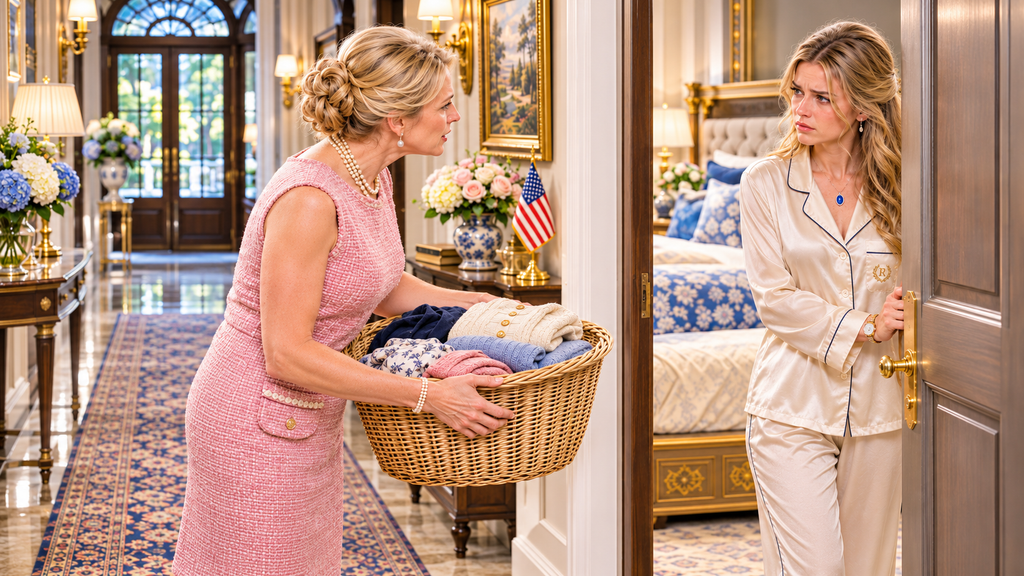
But nothing about my life felt ordinary anymore.
“What did you find, Nolan?”
He didn’t answer immediately.
Instead, I heard footsteps, a door closing, and the faint sound of someone turning a lock.
“I’m in the garage,” he whispered. “Mom doesn’t know I’m calling you.”
A cold feeling crept down my spine.
“Why are you hiding from your own mother?”
“Because I found a folder in her desk.”
I stared at the wall.
“What folder?”
He took a shaky breath.
“It has your name on it.”
“What’s inside?”
“Bank statements. Copies of documents. Information about your business.”
My heart started beating faster.
“Why would your mother have information about my business?”
“I don’t know.”
“Nolan, stop saying that.”
“I swear, Tessa, I didn’t know about all of this.”
“All of what?”
He went silent again.
Then he said something that made my blood run cold.
“There’s a document here showing that Mom was planning to use your house as security for a loan.”
For several seconds, I couldn’t speak.
My house.
Not the house Nolan and I had once talked about buying together.
My house.
The little three-bedroom property in Haw Creek that I’d purchased four years before meeting him.
The house I’d saved for while working two jobs.
The house where I’d spent countless weekends painting walls, replacing broken fixtures, and learning how to repair things because hiring contractors wasn’t always possible.
I’d rented it temporarily while completing renovations and preparing for our marriage.
It was the one thing in the world that belonged entirely to me.
“What did you just say?”
Nolan’s voice trembled.
“Mom has some kind of loan application. Your house is listed on it.”
“Send me a picture.”
“Tessa—”
“Now.”
Thirty seconds later, three photographs appeared on my phone.
The first showed a document titled:
PIERCE FAMILY PROPERTY RESTRUCTURING PROPOSAL.
The second listed my home address, an estimated property value, and the equity I had accumulated.
The third contained a section marked:
PROPOSED CONTRIBUTING ASSET OWNER: TESSA MORGAN PIERCE.
Below that heading was a signature.
My signature.
Except I had never signed it.
I stared at the photograph until the letters blurred.
“Nolan,” I whispered, “that’s not my handwriting.”
“I know.”
“No. You don’t understand. Somebody signed my name.”
He didn’t respond.
And suddenly, another thought struck me.
“How did your mother know how much equity I have in my house?”
The silence that followed was almost unbearable.
“Nolan?”
Finally, he spoke.
“I told her.”
Something inside my chest seemed to collapse.
“You told her?”
“She asked about our finances before the wedding.”
“And you gave her information about property that belongs to me?”
“I thought she was helping us plan.”
“Helping us do what?”
He hesitated.
That hesitation told me more than any answer could.
“Nolan, what were you planning?”
He began crying.
I’d known him for three years.
I’d seen him upset, frightened, disappointed, and frustrated.
But I’d never heard him cry like that.
“Mom said we could all benefit if we combined some of our resources.”
I closed my eyes.
“Combined our resources.”
“Tessa, please listen.”
“No. You listen.”
My voice was remarkably steady.
“You had access to my trust. You had my love. I was planning to spend the rest of my life with you. And while I was choosing flowers and writing wedding vows, you were discussing my property with your mother?”
“It wasn’t supposed to happen like this.”
“Then tell me exactly how it was supposed to happen.”
He said nothing.
I waited.
Finally, he whispered, “She said you would understand after we were married.”
That was when I realized the laundry hadn’t been the beginning.
It had been the final test.
And I had failed it.
Thank God.
At 8:46 that morning, I walked into my parents’ kitchen carrying the blue folder.
My father, Daniel Morgan, was sitting at the table with his reading glasses perched on his nose.
My mother, Evelyn, looked up when she saw my expression.
“Tessa?”
I placed my phone in front of them.
“Look at these.”
My father studied the photographs carefully.
His expression changed as he reached the third image.
“Where did this come from?”
“Marlene’s desk.”
He looked up sharply.
“Your mother-in-law?”
I nodded.
He enlarged the photograph of the signature.
Then he took off his glasses.
“This isn’t yours.”
“No.”
My mother moved closer.
“What’s happening?”
I explained everything Nolan had told me.
The financial proposal.
The house.
The forged signature.
The discussions that had apparently taken place without my knowledge.
When I finished, my father stood and walked to the window.
He remained there for almost a full minute.
Then he turned around.
“Do you remember what I told you when you bought that little house?”
I nodded slowly.
“You said never let anyone make me feel guilty for owning something I’d earned.”
He gave a sad smile.
“I also told you something else.”
I remembered.
“Love someone with your whole heart, but don’t hand them your ability to survive.”
His eyes filled with tears.
“I hoped you’d never need that advice.”
My mother reached across the table and took my hand.
“We need to speak to someone who understands property documents.”
My father nodded.
“I’m calling Miriam.”
Miriam Ellis was an attorney my parents had known for more than twenty years.
She’d helped them with estate planning after my grandmother died.
She was practical, sharp-minded, and completely unimpressed by people who mistook aggression for authority.
When my father called, she listened to his explanation.
Then she asked to speak directly with me.
“Tessa, are you somewhere safe?”
“Yes.”
“Do you have the original documents showing ownership of your house?”
“Yes.”
“Do you have evidence that the signature on this proposal isn’t yours?”
“I have the photographs Nolan sent.”
“Good. Don’t confront anyone alone. Don’t sign anything. And don’t delete a single message.”
Then she asked a question I hadn’t considered.
“Has anyone besides you ever had access to the keys to your house?”
My stomach tightened.
Nolan.
Of course.
I’d given Nolan a spare key six months before the wedding.
It was supposed to symbolize trust.
A small, ordinary gesture between two people planning a life together.
But now I couldn’t remember the last time I’d seen that key.
“Nolan has one.”
Miriam paused.
“Do you know whether he made copies?”
“No.”
“Then we’re going to address that too.”
By eleven o’clock, I was sitting in Miriam’s office with my parents beside me.
For the first time since leaving the Pierce house, I began to understand that the danger wasn’t simply emotional.
Someone had been making plans involving my property.
Someone had gathered personal financial information.
And someone had signed my name to a document I had never seen.
Miriam carefully examined every page.
Then she looked at me.
“This may be an attempt to obtain financing through misrepresentation. We need to find out whether these papers were submitted anywhere.”
I swallowed.
“Could they take my house?”
“Not simply because someone wrote your name on a proposal,” she answered. “But we shouldn’t assume the matter ends with that document. We need to investigate and protect your accounts.”
For the first time that morning, I could breathe.
Then Miriam turned to another page.
Her forehead tightened.
“Tessa, where did this number come from?”
She pointed at the estimated balance of my personal savings account.
It was almost exact.
Fifty-two thousand, six hundred dollars.
The amount I’d spent fourteen years accumulating.
I stared at the page.
Only three people knew that figure.
My accountant.
My father.
And Nolan.
I felt sick.
“He told her everything.”
At 12:38 p.m., my phone rang.
It wasn’t Nolan.
It was Kendra.
My new sister-in-law.
We’d never been particularly close.
Kendra was twenty-six, quiet, and generally seemed uncomfortable around her mother’s stronger personality.
During wedding preparations, she’d helped me arrange centerpieces and quietly warned me that Marlene could be “particular.”
At the time, I’d thought she meant demanding.
Now I wondered whether she’d been trying to tell me something much worse.
I answered.
“Hello?”
“Tessa?”
Her voice was barely audible.
“Can you talk?”
“Yes.”
“Are you alone?”
I glanced toward Miriam, who was reviewing paperwork across the room.
“I’m with my attorney.”
Kendra breathed out sharply.
“Oh, thank God.”
I straightened.
“Kendra, what’s going on?”
She started speaking quickly.
“Mom is furious. She’s screaming at Nolan. Dad keeps asking what’s happening, and nobody will answer him.”
“Why are you calling me?”
“Because there’s something you need to know.”
I waited.
“Mom didn’t just plan the laundry.”
The room seemed to grow silent around me.
“What do you mean?”
Kendra’s voice shook.
“On Thursday night, before the wedding, I heard her talking to Nolan in the kitchen.”
I closed my eyes.
“About what?”
“You.”
My fingers tightened around the phone.
“She said you’d gotten too independent. That you were used to making your own decisions because you lived alone and had your business.”
I remembered Marlene’s words.
You work from home.
Kendra continued.
“She said marriage would change that.”
“What else?”
“She told Nolan that if he let you keep separate finances and make all your own decisions, you’d never become a proper Pierce wife.”
I almost laughed.
Not because anything was funny.
Because the arrogance was unbelievable.
Kendra hesitated.
“Then she said something about the wedding night.”
My breathing slowed.
“What?”
“She said she was going to give you a small responsibility immediately after the reception. Something ordinary. Something you wouldn’t have a real excuse to refuse.”
The laundry.
I could almost see those baskets again.
The underwear.
The work shirts.
The masking tape bearing my name.
“What did Nolan say?”
Kendra began crying.
“He told her you wouldn’t like it.”
My eyes filled.
“And?”
“She said that was exactly the point.”
I stared at the ceiling.
Kendra whispered, “She told him that if you complied without making a scene, you’d probably sign the financial arrangements later.”
I pressed one hand against my mouth.
There it was.
The missing piece.
Marlene hadn’t wanted clean clothing.
She’d wanted proof that she could control me.
And my husband had known a test was coming.
Maybe not every detail.
Maybe not the forged documents.
But enough.
Enough to warn me.
Enough to stop it.
Enough to tell his mother that I wasn’t an employee being hired into her household.
Instead, he’d sat beside me on our wedding night and said:
Just see what she wants.
Kendra continued.
“There’s more.”
My stomach twisted.
“How much more?”
“Mom has been telling people that you’re going to sell your house.”
I stopped breathing for a moment.
“What?”
“She told Aunt Lorraine that once you and Nolan were married, your place would be sold and the proceeds would help renovate this property.”
I looked at Miriam.
She had stopped writing.
I put the phone on speaker.
“Kendra, repeat that.”
Kendra did.
Then she added something that made my mother’s face turn white.
“Mom said the eighteen thousand dollars your parents gave you would become the first contribution.”
My mother gripped the edge of the desk.
“That money was for my daughter.”
Kendra fell silent.
Then she whispered, “I know.”
Miriam leaned closer.
“Kendra, this is Miriam Ellis. I’m representing Tessa. Do you have anything supporting what you’ve told us?”
Kendra hesitated.
“Yes.”
“What?”
“A recording.”
Nobody spoke.
Then Kendra said, “Mom doesn’t know I recorded it. I was frightened because she was talking about documents with Tessa’s name, and I thought something was wrong.”
Miriam’s expression sharpened.
“Don’t alter or share that recording casually. Preserve the original. We’ll discuss how to handle it appropriately.”
Kendra sniffled.
“Okay.”
Then she said something I hadn’t expected.
“Tessa?”
“Yes?”
“I’m sorry I didn’t warn you before the wedding.”
For the first time that day, my voice cracked.
“You were the only person in that house who even tried.”
By two that afternoon, we had enough information to understand Marlene’s motivation.
But we didn’t yet understand the full extent of what she’d attempted.
That changed when Miriam contacted the financing company named on the proposal.
After speaking with its fraud department, she asked me to join the call and verify my identity.
The representative confirmed that a preliminary financing inquiry had been received.
It described a proposed arrangement involving the Pierce family property and additional assets attributed to me.
The application had not resulted in any approved loan.
No money had been released.
But my name and financial information had been included in documents submitted for review.
When the representative asked whether I’d authorized the inquiry, my answer was immediate.
“No.”
“Did you provide permission for anyone to use your property information?”
“No.”
“Did you sign the supporting documents?”
“Absolutely not.”
The representative explained that the matter would be flagged for investigation.
Miriam asked for written confirmation.
Then she arranged for us to review my bank accounts and property records.
By late afternoon, I’d updated passwords, requested additional safeguards, and begun documenting everything.
The practical work helped.
Every phone call gave me one small piece of control back.
But while I was protecting my finances, something else was happening inside me.
I was mourning a marriage that had barely survived its first night.
At 4:17 p.m., Nolan sent a message.
I need to see you. Mom says you’re trying to destroy our family.
I stared at those words.
Then I typed:
Your mother tried to use my property without my permission. Which part of that is my fault?
Three dots appeared.
Disappeared.
Appeared again.
Finally, he replied.
You don’t understand how much pressure she’s under.
I put down the phone.
For a moment, I genuinely wondered whether he’d lost his mind.
Pressure?
His mother had spent months planning to control my money.
She’d tried to obtain information about my property.
She’d orchestrated a humiliating confrontation on my wedding night.
And somehow, Nolan still believed her stress was the problem.
I picked up the phone again.
Then explain it.
His answer arrived two minutes later.
Dad’s business is in trouble.
I stared at the message.
How much trouble?
A long pause.
Then:
We owe almost ninety thousand dollars.
I read the number twice.
Ninety thousand.
Suddenly, everything began fitting together.
Marlene’s sudden interest in our future house.
Her questions about my savings.
Her comments about how fortunate Nolan was to marry a woman who owned property.
Her insistence that we temporarily stay in the family home after the wedding, even though I’d suggested renting a small apartment until my tenant moved out.
I’d assumed she wanted us nearby.
Now I understood.
She wanted me inside her house.
Inside her rules.
Inside a situation where saying no might become increasingly difficult.
But ninety thousand dollars was only the beginning.
Because ten minutes later, Kendra sent me another message.
Please ask Nolan about the meeting he had with Mom in February.
February.
That was two months before our wedding.
And one month before Nolan proposed.
The following morning, Nolan came to Miriam’s office.
He looked terrible.
His face was pale, his hair uncombed, and the charcoal sweater I’d bought him for Christmas hung loosely from his shoulders.
For one painful instant, I wanted to stand and embrace him.
That was the hardest part.
Love doesn’t disappear simply because someone has betrayed it.
It lingers in the smallest things.
The shape of a familiar face.
The sound of a voice.
The memory of someone holding you during an ordinary, happy moment.
But I stayed seated.
Miriam sat beside me.
Nolan looked uncomfortable.
“Do we really need an attorney here?”
“Yes,” I answered.
He lowered his eyes.
“I just wanted to talk to my wife.”
“Then tell your wife the truth.”
He flinched.
I placed a printed copy of the financial proposal on the table.
“Did you know about this?”
He looked down.
“Yes.”
The answer landed like a stone.
I had expected denial.
Instead, he admitted it immediately.
“How long?”
“Since February.”
My throat tightened.
“Before you proposed?”
He nodded.
I stared at him.
The diamond ring on my finger suddenly felt impossibly heavy.
“Nolan, why?”
He rubbed his face.
“Dad’s woodworking business has been struggling for nearly two years. They expanded too quickly, bought equipment they couldn’t afford, and then lost two major contracts.”
“Why didn’t you tell me?”
“Mom didn’t want anyone knowing.”
“But she wanted my money.”
He looked ashamed.
“She thought the family could recover if we had access to more capital.”
“Whose capital?”
He didn’t answer.
“Mine,” I said. “You mean mine.”
“Tessa, it wasn’t supposed to be permanent.”
I laughed bitterly.
“You were planning to borrow against my house without telling me, and you’re explaining that it wasn’t supposed to be permanent?”
“No. I never agreed to the forged signature.”
“Then what did you agree to?”
He swallowed.
“Mom wanted us to put your house into a family property arrangement after the wedding.”
I stared at him.
“What arrangement?”
“She thought if we combined the assets, the bank might consider refinancing the family property.”
“And where would we live?”
“At Mom and Dad’s, temporarily.”
“How temporarily?”
He hesitated.
I leaned forward.
“Nolan.”
“Until the debts were handled.”
I shook my head.
“That could take years.”
He looked down.
“I know.”
There was silence.
Then I asked the question I had been afraid to ask since Kendra’s phone call.
“Did you propose to me because of my money?”
His head jerked up.
“No!”
“Then why was your mother planning to use my house before you proposed?”
He opened his mouth.
Nothing came out.
I felt tears gathering, but I forced myself to remain still.
“Answer me.”
“I loved you.”
“That’s not an answer.”
“I do love you.”
“Then why did you let her turn our marriage into a financial transaction?”
His eyes filled.
“Because I thought we could help everyone.”
“Everyone except me.”
“Tessa—”
“You weren’t planning to ask whether I wanted to help. You were planning to put me in a position where saying no would make me the villain.”
He stared at the table.
I slowly removed my wedding ring.
The tiny diamond caught the light.
I remembered Nolan choosing it.
He’d taken me to a small jewelry store in downtown Asheville and told me he didn’t need an extravagant wedding.
He just wanted me.
I’d believed him.
Now I wondered how many of our beautiful moments had been shadowed by conversations I never heard.
I placed the ring on the table.
Nolan began shaking his head.
“Please don’t.”
I pushed it toward him.
“Why didn’t you stand up for me on our wedding night?”
His face crumpled.
“Because Mom said if I took your side, she’d know you’d never agree to the arrangement.”
The truth was almost too painful to absorb.
“So you let her humiliate me.”
He nodded.
“Because you needed me to pass her test.”
His tears fell onto the table.
“I thought you’d just do the laundry and we could talk about everything later.”
I stared at him for a long time.
Then I said quietly, “The worst part isn’t that your mother wanted my money.”
He looked up.
“It’s that you knew she was testing whether I could be controlled, and you hoped I’d pass.”
At eleven the next morning, Marlene arrived at my parents’ house.
Uninvited.
I was sitting at the kitchen table when the doorbell rang.
My father answered it.
Marlene stood on the porch wearing a cream-colored coat and carrying a designer handbag.
Her hair was perfectly styled.
Her expression was severe.
“Daniel. I need to speak with Tessa.”
My father didn’t move.
“Is she expecting you?”
“This is a family matter.”
“My daughter is family.”
Marlene gave an impatient sigh.
“Please don’t make this difficult.”
My father looked at her for several seconds.
Then he said, “That’s an interesting request coming from you.”
I walked into the hallway.
“It’s okay, Dad.”
Marlene’s gaze landed on me.
“There you are.”
As though I were a missing employee who’d finally reported for duty.
She stepped forward.
“We need to settle this nonsense before it gets any uglier.”
I folded my arms.
“What nonsense?”
She glanced at my father.
“Privately, please.”
“No.”
Her eyes narrowed.
“Tessa, I am trying to preserve your marriage.”
“You should have thought about that before bringing laundry to our bedroom.”
She waved one hand dismissively.
“Oh, for heaven’s sake. Are we still discussing that?”
“No. We’re discussing the financial documents you prepared using my name.”
For the first time, her composure faltered.
Only slightly.
But I saw it.
“What documents?”
I held up a copy of the proposal.
Her eyes flickered toward it.
Then she smiled.
“Oh, those. Preliminary paperwork. Nothing serious.”
“Did you sign my name?”
Her expression hardened.
“Don’t be ridiculous.”
“Did you?”
“You’re being very dramatic.”
My father stepped closer.
“Answer the question, Marlene.”
She turned toward him.
“Daniel, your daughter has always been independent. That’s admirable in business, perhaps, but marriage requires cooperation.”
I felt an unexpected surge of anger.
“Cooperation isn’t taking someone else’s property.”
She ignored me.
“The Pierce family has obligations. We’re a family that looks after its own.”
“Then you should have looked after your own finances.”
Her face flushed.
“Excuse me?”
“You heard me.”
She took a step forward.
“Nolan has supported you emotionally for three years. We’ve welcomed you into our family. We hosted your wedding reception at our home. And now you’re refusing to help during a financial emergency?”
I stared at her.
“You didn’t ask me for help.”
She opened her mouth.
“You gathered my financial information behind my back. You drafted documents using my property. Then you tested whether I’d obey you before you intended to put those papers in front of me.”
Marlene’s eyes widened.
“Who told you that?”
There it was.
Not denial.
Concern about how much I knew.
I said nothing.
She looked from me to my father.
“Was it Kendra?”
My stomach tightened.
Marlene gave a sharp laugh.
“That girl has always been too emotional.”
“Leave Kendra out of this.”
“Oh, so now she’s interfering in her brother’s marriage?”
“No,” I replied. “She’s doing something Nolan should have done. Telling the truth.”
Marlene’s voice rose.
“You have no idea what this family has sacrificed!”
My mother appeared beside me.
“Then tell us.”
Marlene turned.
“Evelyn—”
“No. Tell us exactly what you sacrificed that entitled you to eighteen thousand dollars we gave our daughter.”
Marlene’s mouth tightened.
“That money was meant to help the newlyweds establish themselves.”
“It was given to Tessa,” my mother said firmly. “We made that clear in writing.”
“Once people are married, everything becomes shared.”
Miriam had already explained that Marlene’s understanding of property rights was dangerously convenient.
I shook my head.
“You don’t get to decide that.”
Marlene’s expression changed.
The polished, injured mother-in-law vanished.
In her place stood someone furious that the person she expected to dominate was refusing to bend.
“You think you’re so clever because you have a little business and a little house?”
My father straightened.
“Marlene.”
She ignored him.
“You think you’re too important to help your husband’s family? Too good to wash a few clothes?”
I stared at her.
“No.”
Then I spoke the words I’d been carrying since the wedding night.
“I think I’m too valuable to be treated like property.”
For a moment, nobody moved.
Marlene’s eyes filled with something that looked like hatred.
Then she reached into her handbag.
She withdrew a folded paper and threw it onto the table beside the hallway.
“Fine. If you want to make this legal, then perhaps you should understand what marriage means.”
I picked up the paper.
It was a photocopy of our marriage certificate.
She pointed at it.
“You’re his wife now. You can’t simply walk away whenever you dislike a chore.”
I looked at the certificate.
Then at her.
“You’re right about one thing.”
She smiled triumphantly.
“Finally.”
“Marriage is serious.”
I folded the paper carefully.
“That’s why I won’t remain in one built on lies.”
Her smile disappeared.
Then she leaned toward me.
“You’ll regret humiliating this family.”
My father opened the front door.
“It’s time for you to leave.”
Marlene stared at him.
“You can’t throw me out.”
He held the door open.
“Watch me.”
I thought that would be the end of Marlene’s attempts to pressure me.
I was wrong.
That evening, at 7:26, my phone began vibrating continuously.
Messages.
Calls.
Notifications.
I opened Facebook and discovered that Marlene had published a lengthy post.
She didn’t mention my name.
She didn’t have to.
She wrote about a young bride who had abandoned her husband over “a simple request to contribute to family life.”
She described herself as a heartbroken mother.
She said her son was devastated.
She claimed certain people cared more about money and possessions than loyalty.
Then came the sentence that made my stomach turn.
Some women enter marriage expecting to receive everything while refusing to give anything in return.
More than sixty people had commented.
Some expressed sympathy.
Others criticized the unnamed bride.
A few relatives clearly understood who she meant.
I read several comments before closing the app.
My hands were shaking.
I had spent years building a quiet, respectable life.
My bookkeeping clients trusted me with private financial information.
My reputation mattered.
And now my mother-in-law was publicly suggesting that I was selfish, greedy, and unwilling to contribute to a marriage.
I wanted to respond.
I wanted to publish every document.
Every message.
Every humiliating detail.
But then my phone rang.
Miriam.
“Tessa, I’ve seen the post.”
“How?”
“Your father called me.”
I sat on the edge of the bed.
“She’s making me look like a monster.”
“I know.”
“I want to tell everyone what she did.”
“You have every right to defend yourself. But we need to be careful about what information is shared while we’re addressing the documents.”
I wiped my cheeks.
“So I just stay silent?”
“Not forever. But don’t let her push you into reacting before you’ve decided what will actually protect you.”
I looked at the wedding photograph sitting on my childhood dresser.
My mother had placed it there before I came home.
In the picture, Nolan was smiling at me beneath an archway covered in white flowers.
I looked happy.
Completely, beautifully unaware.
“I don’t know how to make this stop,” I whispered.
Miriam’s voice softened.
“You don’t have to solve your entire marriage tonight. Just focus on protecting yourself and preserving the truth.”
After we ended the call, I stared at the phone.
Then another message appeared.
It was from Harold.
Nolan’s father.
Tessa, please don’t respond to Marlene’s post. I need to speak with you. There’s something I should have told you a long time ago.
My heart began pounding.
A minute later, a second message arrived.
I have the original paperwork.
Harold met us at Miriam’s office the following morning.
He looked ten years older than he had at the wedding.
His shoulders were slumped.
His eyes were bloodshot.
He carried a battered brown briefcase.
Unlike Marlene, he didn’t begin with accusations.
He simply sat down, looked at me, and said, “I’m sorry.”
I said nothing.
He opened the briefcase.
Inside were business statements, invoices, correspondence from lenders, and several folders secured with rubber bands.
He pushed one toward Miriam.
“I thought my wife was handling negotiations to refinance our business equipment.”
Miriam examined the documents.
Harold continued.
“I knew we were in trouble. I didn’t know she’d involved Tessa’s property.”
I studied his face.
“Did you know she wanted my money?”
He lowered his eyes.
“I knew she hoped Nolan’s marriage would improve our situation.”
My chest tightened.
“And you didn’t think that was something I deserved to know?”
He nodded miserably.
“You did.”
“Then why didn’t you tell me?”
He sat silent for a long moment.
“Because I was ashamed.”
Those four words surprised me.
Harold wiped his face.
“I spent thirty-six years building that company. I was proud of it. I wanted Nolan to inherit something worth having.”
His voice trembled.
“When the contracts disappeared, I kept telling myself I could recover. Marlene said she had a plan. I was foolish enough to let her manage things I should have examined myself.”
He opened another folder.
Then he slid a document across the table.
It was an email printed on three pages.
The first message was dated February 11.
The sender was Marlene.
The recipient was Nolan.
The subject line read:
Our Family’s Future.
I began reading.
At first, the language sounded ordinary.
Marlene talked about the importance of marriage.
She discussed responsibility, loyalty, and supporting aging parents.
Then I reached the second paragraph.
My stomach twisted.
With Tessa’s property, her savings, and the wedding contribution from her parents, there should be more than enough financial strength to stabilize things.
I looked at Nolan’s reply beneath it.
I haven’t discussed using her house with her yet.
Marlene had responded:
You don’t need to discuss every detail before the ceremony. Once you’re married, she’ll understand that helping your family is part of her responsibility.
I kept reading.
The final paragraph made my hands go numb.
We need to make sure she doesn’t insist on remaining completely separate. Marriage is supposed to change priorities. If you let her continue behaving as though every dollar and every decision belongs only to her, this arrangement will never work.
Beneath that, Nolan had written:
I’ll handle it.
Two words.
I’ll handle it.
I remembered him standing beside me in the jewelry store.
I remembered the proposal.
The candlelit dinner.
His nervous smile.
His trembling hands as he opened the ring box.
All those memories now existed beside an email in which he promised his mother he would “handle” me.
My vision blurred.
Harold spoke softly.
“There’s another page.”
I looked up.
He hesitated.
“Marlene prepared a timeline.”
Miriam took the paper.
I leaned closer.
It was a typed document labeled:
POST-WEDDING FAMILY TRANSITION.
Below the heading was a list.
Week one: Establish household expectations.
Week two: Review family accounts and consolidate necessary expenses.
Week three: Arrange property consultation.
Week four: Complete financial restructuring paperwork.
I stared at the words.
It was as though someone had written a schedule for dismantling my independence.
Then I noticed a handwritten note in the margin.
Do not present everything at once.
I felt physically ill.
Harold cleared his throat.
“I found this after Marlene left for your parents’ house yesterday. It was with the business documents.”
I looked at him.
“Why are you giving it to me?”
He stared at the floor.
“Because my wife crossed a line. And I crossed one by refusing to see what was happening.”
I wanted to be angry with him.
Part of me was.
He’d watched his wife belittle me during family dinners.
He’d said nothing when she criticized my work.
He’d laughed awkwardly when she called me “the little bookkeeper.”
But now he was here.
Not defending her.
Not asking for my money.
He was telling the truth.
“Thank you,” I whispered.
He nodded.
Then he said something I never expected.
“I’ve asked Marlene to leave the house for a while.”
I stared at him.
“What?”
“I told her she cannot stay there while she keeps treating everyone as though they’re pieces on a board.”
His eyes filled.
“I don’t know whether our marriage can survive this either.”
Three days later, another secret came to light.
This time, it involved the keys to my house.
I’d arranged for a locksmith to change the locks as soon as my tenant’s occupancy ended and I could lawfully regain possession.
But before that appointment, I received an unexpected phone call.
“Is this Tessa Pierce?”
“Yes.”
“My name is Rachel Bell. I’m a real estate agent here in Asheville.”
My stomach tightened.
“How can I help you?”
She hesitated.
“I’m calling because I received information suggesting you may be preparing to sell your home in Haw Creek.”
I sat upright.
“Who told you that?”
“A woman named Marlene Pierce contacted our office.”
I closed my eyes.
Of course.
“She indicated she was helping coordinate a family property transaction.”
“Did she tell you I authorized that?”
There was a pause.
“She said you were recently married and that your family had been discussing the sale.”
“I haven’t authorized any sale.”
Rachel sounded genuinely concerned.
“Then I’m glad I contacted you directly.”
I felt a chill.
“What exactly did she ask you to do?”
“She wanted an estimated market price, information about potential buyers, and a timeline for listing.”
I gripped the phone.
“Did she provide any paperwork?”
“She sent a preliminary authorization form, but it wasn’t sufficient for us to proceed. That’s why I wanted to speak with you.”
My mouth went dry.
“Did it have my signature?”
Another pause.
“Yes.”
I closed my eyes.
There it was again.
My name.
My property.
A signature I hadn’t provided.
After Rachel agreed to preserve the documents and send them to Miriam, I ended the call.
Then I sat in silence.
Marlene hadn’t merely been dreaming about what she could do with my house.
She’d been taking steps.
Quietly.
Carefully.
While smiling in my wedding photographs.
While accepting compliments about our beautiful ceremony.
While telling everyone how delighted she was to welcome me into the Pierce family.
That afternoon, Miriam helped me make a formal report concerning the suspected document forgery and unauthorized use of my financial information.
She also continued contacting the relevant institutions.
There were no dramatic arrests.
No miraculous overnight resolution.
Just statements.
Copies.
Records.
Conversations that had to be documented.
It was slow and exhausting.
But it was real.
And for the first time, Marlene’s plans were being examined by people she couldn’t intimidate into silence.
A week after the wedding, Nolan came to see me one final time.
We met at a small café in Asheville.
I chose a table near the window.
He arrived carrying a paper bag.
Inside was the jewelry box that had held my wedding ring.
He set it carefully on the table.
“I brought this back.”
I looked at it.
Then at him.
“Why?”
“Because it belongs to you.”
I shook my head.
“I don’t want it.”
He swallowed.
“Then keep it until you decide.”
For a while, neither of us spoke.
Around us, people were going about their ordinary lives.
A young couple laughed over coffee.
An elderly man read the newspaper.
Two women discussed weekend plans.
It felt strange that the world could keep turning while mine had come apart.
Finally, Nolan spoke.
“I moved out of Mom and Dad’s house.”
I looked up.
“Where are you staying?”
“With a friend.”
I nodded.
He rubbed his hands together.
“Mom keeps calling.”
“I’m sure she does.”
“She says you manipulated everyone against her.”
I almost smiled.
“Did she mention the forged signatures?”
He looked down.
“She says she was only trying to help.”
“Nolan, we’ve already had this conversation.”
“I know.”
His eyes filled with tears.
“I finally told her no.”
I studied him.
“About what?”
“She wanted me to call you and convince you to stop pursuing the documents.”
I waited.
“She said we could still save the family business if you agreed to help.”
“And what did you tell her?”
He swallowed.
“That she needs to stop.”
For a moment, I felt something close to relief.
Not enough to erase what he’d done.
But enough to recognize that, perhaps for the first time, Nolan had made a decision his mother didn’t control.
Then he leaned forward.
“Tessa, I want another chance.”
My heart ached.
“I know.”
“I’ll go to counseling. I’ll move wherever you want. I’ll keep our finances separate. I’ll never let Mom interfere again.”
I looked at him.
“Why didn’t you say any of those things before we got married?”
He began crying.
“Because I was afraid of losing my family.”
I felt tears slipping down my own cheeks.
“And instead, you lost me.”
He covered his face.
I wanted to reach for him.
But I didn’t.
After a long silence, he said, “I really did love you.”
I nodded.
“I believe you.”
He looked up, startled.
“You do?”
“Yes.”
“Then why can’t we try?”
I took a slow breath.
“Because loving me wasn’t enough to make you protect me.”
His expression crumpled.
I continued.
“You knew what your mother was planning. Maybe you didn’t know every document she’d prepare. Maybe you didn’t expect her to go as far as she did. But you knew she wanted control over things that belonged to me.”
He nodded.
“And when you had to choose between telling me the truth and keeping her happy, you chose silence.”
Tears rolled down his face.
“I made a terrible mistake.”
“Yes,” I whispered. “You did.”
He reached across the table.
“Please. We just got married.”
I looked at his hand.
Then I gently moved mine away.
“We had a wedding, Nolan. But marriage requires something we never had.”
“What?”
“Honesty.”
He began sobbing quietly.
I sat with him for several minutes.
Not because I was reconsidering.
But because three years of love deserved a goodbye that wasn’t shouted across a hallway.
Finally, I stood.
Nolan looked up.
“Is this really the end?”
I swallowed hard.
“Yes.”
He closed his eyes.
I left the ring box on the table.
Then I walked outside.
The afternoon air was cool.
I reached my car before the tears overwhelmed me.
And for almost twenty minutes, I sat behind the steering wheel and cried for the future I’d believed we were going to have.
The little dinners.
The holidays.
The mornings drinking coffee together.
The children we’d discussed having someday.
The ordinary life I’d wanted so badly.
None of those dreams had been extravagant.
I hadn’t wanted a mansion.
I hadn’t wanted status.
I’d wanted a partner.
Someone who would stand beside me when life became difficult.
Someone who wouldn’t treat my independence as an obstacle.
Someone who understood that marriage was not a transfer of ownership.
And as painful as it was, I finally accepted that Nolan wasn’t that person.
The weeks that followed weren’t easy.
There were legal appointments.
Financial reviews.
Conversations with banks and other institutions.
Miriam helped me understand my options regarding the marriage, the questionable documents, and the protection of my property.
My house remained mine.
My savings remained under my control.
The proposed financing arrangement never moved forward.
But the emotional damage was harder to measure.
Sometimes I woke in the middle of the night reaching toward the empty side of the bed.
Sometimes I’d see a photograph from our wedding and feel as though I couldn’t breathe.
Once, while grocery shopping, I heard a man laughing in the next aisle.
For one terrible second, I thought it was Nolan.
I abandoned my cart and went outside.
Healing wasn’t graceful.
It wasn’t a straight line.
It involved anger, sadness, embarrassment, and moments when I wondered whether I had overreacted.
Then I’d remember those laundry baskets.
Not the clothes themselves.
The expectation.
The certainty in Marlene’s expression when she stood outside our bedroom.
She hadn’t knocked to ask for help.
She’d arrived to give orders.
And Nolan had allowed it because he believed obedience was the price I should pay to belong.
That memory always brought me back to the truth.
I hadn’t walked away because of laundry.
I’d walked away because I could see the life they were preparing for me.
And I refused to live it.
Two months later, Kendra called.
She sounded different.
Lighter.
More confident.
“I wanted you to hear something from me before anyone else tells you.”
I smiled slightly.
“What happened?”
“I got an apartment.”
I sat up.
“You did?”
“Across town. Near my job.”
“Kendra, that’s wonderful.”
She laughed nervously.
“Mom says I’m abandoning her.”
“I’m sure she does.”
“She told me good daughters don’t leave when their family is struggling.”
I leaned back in my chair.
“And what did you tell her?”
Kendra took a breath.
“I told her good mothers don’t use guilt to keep their daughters trapped.”
My eyes filled.
For a moment, neither of us spoke.
Then she whispered, “I learned that from you.”
I shook my head, smiling through tears.
“You learned that yourself.”
“No,” she said softly. “I watched you walk out that night. I’d never seen anyone tell Mom no and actually leave.”
My throat tightened.
“I was terrified.”
“I know,” she replied. “That’s what made it matter.”
After our call, I stood at the kitchen window for a long time.
I’d spent weeks believing my wedding night had been nothing but a disaster.
But Kendra’s words made me realize something.
Maybe walking away hadn’t only saved me.
Maybe it had shown someone else that she could leave too.
Four months after the wedding, Harold’s family business was sold.
Not for the price he’d hoped.
Not in the way he’d imagined.
The proceeds, along with other assets, went toward resolving its obligations.
The beautiful Pierce family property was eventually put on the market.
Marlene blamed everyone except herself.
She blamed the economy.
She blamed Harold.
She blamed Nolan.
And, naturally, she blamed me.
According to Kendra, Marlene continued telling relatives that I’d destroyed the family.
But the story began changing when people asked questions.
Why had Marlene contacted a real estate agent about a house she didn’t own?
Why were financial proposals prepared before I married Nolan?
Why did documents contain signatures I disputed?
Why had she described my savings as a family resource without asking me?
Questions are inconvenient things when someone has built a reputation on never being challenged.
I didn’t publish the evidence online.
I didn’t organize a campaign against her.
I let the appropriate people handle the documentation.
The investigation into the disputed paperwork took time, and I refused to pretend that everything had been resolved simply because the truth was becoming clearer.
But Marlene could no longer insist that nothing had happened.
She had to respond to the actual documents.
And for a woman who had always controlled conversations by speaking louder than everyone else, that was its own kind of consequence.
Fourteen months after our wedding, the divorce was finalized.
I remember the exact moment I realized the marriage was legally over.
I was sitting in Miriam’s office.
She placed the final paperwork in front of me and explained that everything had been completed.
I stared at the documents.
Fourteen months earlier, I’d stood beneath white flowers and promised a man that I would share my life with him.
Now I was sitting beneath fluorescent lights, signing the final papers required to end that promise.
I expected to feel triumphant.
Instead, I felt quiet.
Sad.
Relieved.
And strangely exhausted.
Miriam watched me for a moment.
“Are you all right?”
I nodded.
“I think so.”
She smiled gently.
“You’ve been through a great deal.”
I looked down at the papers.
“Did I make the right decision?”
Miriam didn’t answer immediately.
Then she said, “I can’t decide that for you. But I can tell you that you were entitled to make your own decision about your property, your finances, and your marriage.”
I let those words settle.
For more than a year, I’d been fighting to reclaim things I’d never willingly surrendered.
My name.
My money.
My home.
My peace.
And now, finally, I could begin looking forward without wondering what the Pierce family would demand next.
That autumn, I moved back into my little house in Haw Creek.
The tenant had moved out months earlier, and I’d spent the summer completing the renovations I’d postponed during wedding preparations.
The old kitchen cabinets were painted a soft green.
The living room had new curtains.
I planted lavender beneath the front windows and replaced the crooked mailbox at the end of the driveway.
It wasn’t a fancy house.
The floors creaked in the hallway.
The upstairs bathroom still needed work.
The backyard fence leaned slightly toward the neighbor’s garden.
But every room belonged to a life I had chosen.
One Saturday morning, my parents came over for breakfast.
My father brought pastries.
My mother carried a large cardboard box.
“What’s that?” I asked.
She smiled.
“Something I thought you might want.”
Inside was my old wedding dress.
I’d left it at their house after the ceremony.
For months, I couldn’t bear to look at it.
The ivory fabric was carefully folded.
Tiny pearls decorated the sleeves.
I ran my fingers over the lace.
My mother watched me.
“We can put it away if you’re not ready.”
I shook my head.
“No.”
I lifted the dress from the box.
For a moment, I remembered standing before the mirror on my wedding morning.
My mother fastening the buttons.
My father knocking on the bedroom door.
Nolan waiting at the end of the aisle.
I remembered how happy I’d been.
And I realized something that surprised me.
I didn’t regret loving him.
I regretted that he hadn’t been brave enough to love me with honesty.
But those were different things.
I carefully folded the dress again.
Then I smiled at my mother.
“There’s a local organization that accepts formal gowns for charitable events. Maybe someone else can use it.”
My mother’s eyes filled.
“Are you sure?”
I nodded.
“Someone should get a happy memory from it.”
She embraced me.
And for the first time, that dress felt like fabric instead of grief.
The following spring, I received a letter.
There was no return address.
But I recognized the handwriting immediately.
Marlene.
I almost threw it away.
Instead, I opened it.
It contained two pages.
The first was filled with explanations.
She wrote about financial pressure.
About feeling desperate.
About the shame of losing the family business.
She claimed she’d believed everything she did was necessary to protect her husband and children.
There were still excuses.
Still attempts to make herself sound misunderstood.
But halfway down the second page, something changed.
I thought that because you were marrying Nolan, the things you owned should become available to our family.
I stopped reading.
Then continued.
I was wrong to believe that. I was wrong to make plans without your permission. I was wrong to treat your refusal as disrespect.
I sat very still.
The final paragraph read:
I don’t expect you to forgive me. But I understand now that the night you left, you weren’t trying to punish us. You were trying to protect yourself.
I folded the letter.
For a long time, I stared through the window.
I didn’t know whether Marlene had changed.
I didn’t know how much of her apology came from remorse and how much came from the consequences of her actions.
And I no longer needed to know.
I placed the letter in a drawer.
I didn’t respond.
Forgiveness, if it ever came, would be something I chose for my own peace.
It wasn’t an invitation for her to return to my life.
One evening, nearly two years after the wedding, I was folding laundry in my living room.
Ordinary laundry.
My laundry.
Fresh towels.
A few shirts.
A soft blue sweater I’d bought myself that winter.
The television played quietly in the background.
Rain tapped against the windows.
And suddenly, for no particular reason, I remembered the night Marlene had stood outside our bedroom.
The pounding.
The baskets.
The command.
“Tessa! Get up. There’s laundry downstairs.”
I stopped folding.
For a moment, I could almost smell the flowers from my wedding reception.
I could hear the rustle of my silk robe.
I could see Nolan looking at his phone while I waited for him to defend me.
But this time, the memory didn’t make me cry.
I looked around my living room.
At the books on the shelf.
At the plants near the windows.
At the photographs of my parents.
At the home I’d nearly allowed someone else to use as a solution to problems I hadn’t created.
Then I laughed softly.
Because the irony was almost unbelievable.
Marlene had been so determined to teach me what marriage meant.
She’d insisted that a good wife sacrificed.
That a good wife obeyed.
That a good wife put the family first.
Yet the most important lesson I’d learned during that marriage had come from refusing her very first demand.
A marriage should never require someone to surrender their dignity to prove their devotion.
Love should not need a test of obedience.
And family should never be another word for ownership.
My phone chimed.
It was a message from Kendra.
A photograph of her new apartment.
Sunlight streamed through the windows.
A small plant sat on the kitchen counter.
Underneath, she’d written:
Finally bought my own washing machine. Mom doesn’t have a key. Thought you’d appreciate that.
I laughed so hard that tears came to my eyes.
Then I replied:
I’m proud of you. And don’t forget to use the gentle cycle.
A moment later, she sent a row of laughing faces.
I put down my phone and continued folding.
Outside, the rain grew heavier.
Inside, my little house was warm.
And as I carried the clean towels upstairs, I thought about the woman I’d been on my wedding night.
Exhausted.
Confused.
Heartbroken.
Standing beside a suitcase while the people who were supposed to love me demanded that I prove I deserved to belong.
I wished I could reach back through time and embrace her.
I wished I could tell her that leaving would hurt.
That she would cry over Nolan.
That she would miss him even after discovering the truth.
That her divorce would be painful.
That there would be mornings when she questioned herself.
But I would also tell her something else.
The door you walked out of wasn’t the end of your life. It was the beginning of getting it back.
I placed the last towel in the linen closet.
Then I switched off the hallway light.
No one shouted my name.
No one demanded that I come downstairs.
No one told me that my time, my money, or my home belonged to them.
And for the first time in a very long time, the silence felt beautiful.
On my wedding night, my mother-in-law had brought me dirty laundry because she wanted to find out whether I would obey.
She’d planned to reach far beyond those baskets.
Into my savings.
Into my house.
Into my marriage.
She believed that once I’d accepted the smallest humiliation, the larger sacrifices would follow.
But she made one mistake.
She assumed a woman who loved deeply would never be willing to leave.
She was wrong.
Because I had spent fourteen years building a life before Nolan entered it.
I had worked for my savings.
I had earned my home.
I had built my business.
And I had never needed anyone else’s permission to respect myself.
I lost my marriage after one night. But I saved the rest of my life.
And if I could return to that evening at 10:17 p.m., when Marlene Pierce pounded on our bedroom door and demanded that I wash her family’s dirty clothes, I wouldn’t change a single thing about my decision.
I’d still open my suitcase.
I’d still pack my belongings.
I’d still look at Nolan and ask whether he wanted a wife or his mother’s household servant.
And when he failed to answer, I’d still walk down those stairs.
Past the laundry bags bearing my name.
Past the woman who thought she owned my future.
Through the front door.
Into the darkness.
Because sometimes the bravest thing a woman can do isn’t to stay and prove how much she can endure.
Sometimes it’s to recognize the moment when love is being used against her.
And leave before the people demanding everything take the one thing she cannot afford to lose.
Herself.
THE END.
THE END! THANK YOU FOR READING!❤️