 Reading Time: 63 minutes
My Sister Stole My Parents’ Money for Fifteen Years, But She Never Imagined What I Would Discover After Selling My Farm for $39 Million
The phone rang again. Nobody moved. The sound seemed impossibly loud in my parents’ kitchen. My father sat frozen at the head of the table, holding a loan agreement that carried my name.
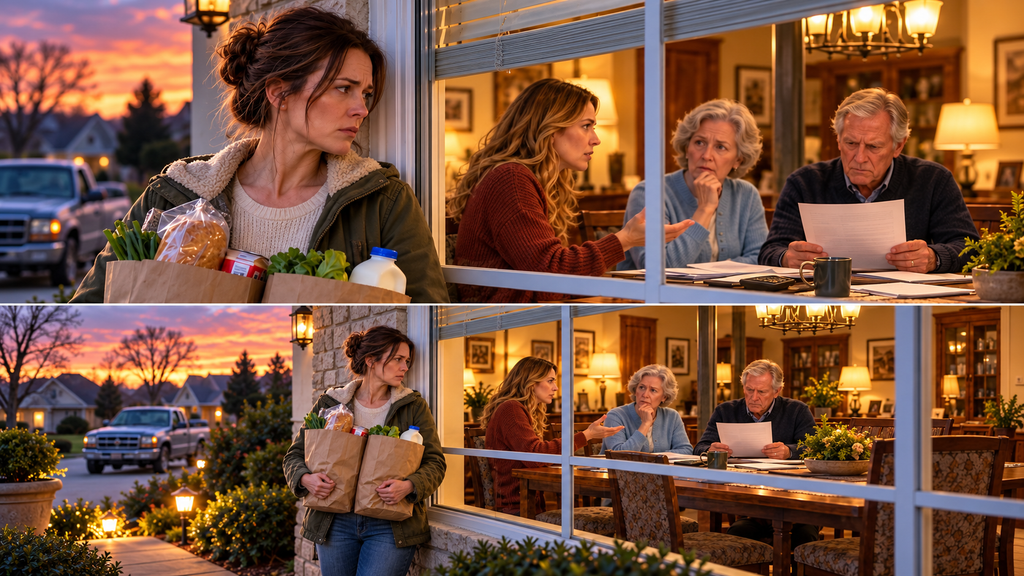
My mother had both hands pressed against her mouth.
Desmond stood beside the sink, staring at his wife as though he had just discovered he was married to a stranger.
And Ranata…
Ranata was looking at my phone.
Not at me.
Not at the papers.
At my phone.
Her face had lost every trace of color.
I glanced at the screen.
The caller identified himself as Special Agent Daniel Mercer of the Federal Bureau of Investigation.
I had spoken to him once before.
Forty-eight hours earlier.
But I had never expected him to call while my entire family was gathered around the same kitchen table.
I answered.
“Agent Mercer?”
“Ms. Bennett, I apologize for calling this late. Are you somewhere private?”
My eyes traveled around the room.
“No,” I said quietly. “But I think the people who need to hear this are already here.”
There was a pause.
“Is your sister present?”
Ranata made a small choking sound.
I looked directly at her.
“Yes.”
“Then I need you to listen very carefully. Do not confront her about the documents we discussed. We have reason to believe someone attempted to access your financial accounts this afternoon.”
My fingers tightened around the phone.
“What?”
“At approximately 4:36 p.m., an individual submitted documents requesting a transfer from an account associated with your former agricultural property.”
I stopped breathing.
4:36.
That was only minutes after I had stood outside my parents’ house listening to Ranata describe the money she supposedly gave me.
Agent Mercer continued.
“The request included what appears to be your signature.”
I looked at the forged loan agreement in Dad’s hands.
“How much money?”
“Eight million, four hundred thousand dollars.”
My mother gasped.
Ranata grabbed the edge of the kitchen island.
And my father slowly stood.
“What did he say?” Dad whispered.
I put the phone on speaker.
“Agent Mercer, please repeat that.”
His voice filled the kitchen.
“Someone attempted to transfer $8.4 million using authorization documents that appear to have been falsified. The request was rejected and the account was secured. We also have new information connecting that attempt to a series of transactions involving your family.”
Ranata shook her head.
“No.”
Nobody answered her.
“No, no, no. This is ridiculous.”
Agent Mercer stopped speaking.
“Ms. Bennett, who was that?”
“My sister.”
Another pause.
Then the agent said something I would remember for the rest of my life.
“Ms. Bennett, your sister may want to consult an attorney. And whatever happens tonight, do not allow anyone to destroy those papers.”
I stared at the loan agreement.
My name was written across the bottom.
Fay Elizabeth Bennett.
The signature looked convincing.
Almost perfect.
But there was one thing the person who forged it had not known.
And that tiny mistake was about to unravel fifteen years of lies.
My father was the first person to speak after the call ended.
“Eight million dollars?”
His voice sounded older than it had an hour earlier.
“Fay, what is going on?”
I took a slow breath.
“I was hoping someone at this table could tell me.”
Ranata suddenly pushed her chair backward.
“This is insane. You’re all acting like I committed some horrible crime.”
Desmond turned toward her.
“Ranata.”
“What?”
“Sit down.”
She stared at him.
He had never spoken to her like that in front of us.
Not once in the twelve years they had been married.
“I said sit down.”
Something in his expression made her obey.
I pulled the loan agreement closer.
The document claimed that I had borrowed $620,000 from a private lending company.
The collateral was my farm.
The borrower was listed as Fay Elizabeth Bennett.
The guarantors were my parents.
And the witness signature belonged to my sister.
Ranata Bennett-Cole.
I looked at the date.
April 17.
Seven years earlier.
I remembered that day.
Not because of any loan.
Because I had been in the hospital following a tractor accident.
A fractured wrist.
Three broken ribs.
A concussion.
I had spent two nights under observation.
I still had the scar running along the inside of my right forearm.
I turned the paper toward my father.
“This date.”
He leaned forward.
“What about it?”
“I was in the hospital.”
Ranata looked up sharply.
“That doesn’t prove anything.”
I met her eyes.
“I was unconscious for part of that afternoon.”
“You could have signed before—”
“I couldn’t hold a pen.”
The room fell silent.
I lifted my right hand.
“My wrist was in a cast.”
Mom began shaking her head.
“Oh, my God.”
I looked down at the signature again.
“It isn’t mine.”
Ranata crossed her arms.
“You’re making accusations without knowing the facts.”
Desmond gave a bitter laugh.
“The facts?”
She turned toward him.
“Don’t start.”
He stepped away from the sink.
“Ranata, I found the folder.”
For the first time, she looked frightened of her own husband.
“What folder?”
“The one in the locked cabinet in your office.”
Her eyes widened.
“You went through my things?”
“I went looking for our mortgage documents.”
“You had no right!”
Desmond stared at her.
“Neither did you.”
His voice broke.
“Neither did you, Ranata.”
I watched the exchange, feeling as though I had walked into the middle of a conversation that had begun long before I arrived.
Dad looked between them.
“What folder?”
Desmond reached inside his jacket.
He pulled out a thick envelope.
Then he placed it on the table.
“Your money,” he said quietly.
“That’s what this is about.”
Mom stared at the envelope.
“What money?”
Desmond swallowed.
“All the money you thought you were sending to Fay.”
He looked at me.
“And a lot more.”
I had spent fifteen years believing my sister was simply embarrassed by the way I lived.
Ranata loved expensive things.
Beautiful houses.
Designer handbags.
Luxury vacations.
The kind of restaurants where the menu didn’t list prices.
She had always cared about appearances.
Even as children, she wanted the bigger bedroom, the prettier bicycle, the new school clothes.
I was different.
I liked being outside.
I liked fixing things.
I liked knowing that a piece of machinery worked because I had taken it apart and put it back together with my own hands.
When I was twelve, Dad gave us each a hundred dollars for helping him paint the garage.
Ranata spent hers on a pair of boots before the weekend ended.
I bought a used toolbox at an estate sale.
She laughed at me.
“Why would you waste money on rusty tools?”
I still had that toolbox.
It sat in the workshop on my farm.
And those rusty tools had helped me build a life.
But somewhere along the way, Ranata had stopped laughing at my choices and started using them.
Every old shirt became proof that I was struggling.
Every repaired tractor became evidence that I was broke.
Every Christmas gift I made by hand became another example of how little money I supposedly had.
And whenever I refused to discuss my finances, she filled the silence with stories of her own.
I had assumed the stories were harmless.
Annoying, yes.
Cruel sometimes.
But harmless.
Now I was sitting in my childhood kitchen, staring at documents that suggested my silence had allowed someone to construct an entirely different financial identity around me.
One that belonged to my sister.
One that had borrowed money.
Needed help.
Signed agreements.
Accepted family support.
And apparently placed my farm at risk.
I turned to Desmond.
“Tell me everything.”
He looked at Ranata.
She shook her head slowly.
A warning.
He looked away from her.
“I didn’t know at first.”
“Know what?”
“That your parents were sending money.”
My father leaned forward.
“How much?”
Desmond rubbed both hands over his face.
“According to the records I found, it started with small transfers. Five hundred dollars. A thousand. Two thousand.”
Dad’s expression hardened.
“That was fifteen years ago.”
Desmond nodded.
“Then the amounts increased.”
“How much?” Dad repeated.
Desmond’s eyes filled with tears.
“I found transfers totaling almost nine hundred thousand dollars.”
My mother’s coffee mug slipped from her fingers.
It struck the floor and shattered.
Nobody moved to clean it.
“Nine hundred thousand?” she whispered.
Desmond nodded.
“Eight hundred and ninety-six thousand, four hundred dollars.”
Dad gripped the table.
I could see him doing the arithmetic in his head.
I knew what that money represented.
My father had been a school principal for thirty-two years.
My mother had worked as a nurse.
They had saved carefully.
They had never been wealthy.
Their retirement was supposed to be comfortable, not extravagant.
They had spent decades building it.
And my sister had apparently taken nearly a million dollars from them by convincing them it was going to me.
But that was not the part that frightened me most.
“What happened to the money?” I asked.
Desmond closed his eyes.
“That’s what I tried to find out.”
Ranata whispered, “Desmond, please.”
He ignored her.
“I found a company account.”
“What company?”
“Harvest Ridge Consulting.”
I stared at him.
The name meant nothing to me.
Then I looked at the forged loan.
The lender was listed as Harvest Ridge Capital Partners.
My pulse quickened.
“Are they connected?”
Desmond nodded.
“I think so.”
Ranata suddenly stood again.
“This conversation is over.”
My father slammed his palm against the table.
“Sit down!”
The sound made all of us jump.
I had never heard Dad shout at her like that.
Ranata froze.
His face was red.
His hands trembled.
“For fifteen years,” he said, “your mother and I have worried ourselves sick about your sister.”
Ranata opened her mouth.
He raised one finger.
“Not another word until I finish.”
She sat.
Dad looked toward me.
“We thought you were too proud to ask for help, Fay. We thought you were sleeping in a freezing farmhouse, skipping meals, trying to keep that land from being taken away.”
My throat tightened.
“I never told you that.”
“I know.”
His eyes glistened.
“I know that now.”
He turned back toward Ranata.
“And every time we asked whether we should speak to Fay directly, you told us not to embarrass her.”
Mom began crying quietly.
“You said she would be humiliated if she knew we were helping.”
Ranata looked at the floor.
Dad’s voice dropped.
“Was any of it true?”
My sister said nothing.
“Was any of it true, Ranata?”
Finally, she whispered, “I was trying to help everybody.”
Desmond laughed again.
It was a terrible sound.
A laugh without humor.
“Then why did you open a loan in Fay’s name?”
She lifted her head.
And what she said next changed the entire direction of the night.
“Because the farm was supposed to be mine.”
I stared at her.
“What?”
Ranata looked toward our father.
Her voice grew louder.
“You heard me. That land was supposed to be mine.”
Dad frowned.
“What are you talking about?”
She pointed at me.
“She knows.”
“I don’t,” I said.
“Oh, please.”
She gave a short, bitter laugh.
“Don’t stand there pretending you don’t know.”
I felt anger beginning to replace the shock.
“Ranata, I bought that farm.”
“You bought it with money from Grandpa.”
I went still.
Our grandfather had died sixteen years earlier.
He left each of us a small inheritance.
Not a fortune.
Just enough to make a difference if we were careful.
I had received $42,000.
I used most of it as the down payment on my eighty acres.
Ranata had received the same amount.
She bought a sports car.
Within two years, she had sold it.
I remembered the day Grandpa’s attorney read the will.
I remembered Ranata complaining that the inheritance wasn’t larger.
And I remembered something else.
Grandpa had taken me to look at the farm before he died.
He had stood beside me at the fence line, wearing his old brown hat, and said, “Land doesn’t promise to make you rich, Fay. But if you take care of it, it’ll give you something worth having.”
I loved that farm long before I ever owned it.
But Grandpa had not given it to me.
I had bought it.
I had paid the mortgage.
I had paid the taxes.
I had carried the losses.
And I had taken the risks.
I looked at Ranata.
“Grandpa gave us equal inheritances.”
“He knew you were going to buy the land.”
“Yes.”
“He helped you.”
“He helped both of us.”
Her mouth tightened.
“You always got the meaningful things.”
I blinked.
“What?”
“You got his time. His attention. His advice.”
I stared at her.
She was talking about the same grandfather who had offered to teach her how to garden, repair a bicycle, and care for horses.
She had refused every time.
She preferred shopping trips with Grandma.
And nobody had judged her for it.
But now, fifteen years later, she had transformed our different interests into an injustice.
“You got the farm,” she continued. “I got nothing.”
I felt something cold settle in my chest.
“You got exactly what I got, Ranata. The difference is what we did with it.”
Her eyes flashed.
“You think you’re better than me.”
“No.”
“You always have.”
“No,” I repeated. “But I think you wanted everyone to believe I was worse than you.”
That silenced her.
For a moment, I saw something in her face I had never noticed before.
Not embarrassment.
Not guilt.
Resentment.
Deep, old resentment.
As though my existence had been an insult she spent her entire adult life trying to correct.
Dad looked exhausted.
“Ranata, your sister’s farm was never yours.”
She turned toward him.
“You promised me you’d always look after me.”
“And I did.”
“You said family takes care of family.”
Dad’s eyes filled.
“I didn’t know taking care of you meant destroying your sister.”
Ranata looked away.
Then she said something so quietly I almost missed it.
“I wasn’t trying to destroy her.”
Desmond answered.
“Then what did you think would happen when the loan came due?”
My sister went completely still.
I turned toward him.
“What loan?”
He looked at the agreement.
“The $620,000 loan was only the beginning.”
The air in the kitchen seemed to disappear.
Desmond reached into the envelope again.
He removed four additional documents.
Different dates.
Different amounts.
Different lenders.
But all of them carried my name.
My farm.
My supposed signature.
I read the figures.
$620,000.
$480,000.
$750,000.
$1.2 million.
I added them in my head.
More than three million dollars.
My hands grew numb.
“These are all supposed to be loans against my property?”
Desmond nodded.
“At least on paper.”
I looked toward Ranata.
Her lips were pressed together.
“Did you receive this money?”
She said nothing.
“Ranata.”
She looked at me.
“I was going to pay it back.”
I felt as though the floor had shifted.
“You borrowed three million dollars using my identity?”
“It wasn’t that simple.”
“Then make it simple.”
She rubbed her forehead.
“You wouldn’t understand.”
“Try me.”
Her expression changed.
The tears vanished.
The familiar condescension returned.
“You spent your entire adult life driving tractors. You don’t understand business finance.”
For one extraordinary moment, I almost smiled.
Even now.
Even surrounded by evidence of what she had done.
She still believed I was the foolish little sister.
I leaned forward.
“Ranata, three days ago I negotiated and closed a thirty-nine-million-dollar commercial land sale with a team of attorneys, tax advisers, surveyors, engineers, and corporate executives. I reviewed every page before I signed. I understand business finance well enough to recognize fraud.”
Her mouth opened.
Then closed.
I continued.
“What I don’t understand is how you managed to convince yourself that stealing from our parents and forging my name was somehow your right.”
She looked down.
Desmond placed another paper in front of me.
“This one is different.”
It was a notice from a title company.
The date was six months earlier.
The document referred to a pending claim involving the farm.
I recognized the legal description of my property immediately.
But the company name was unfamiliar.
Blackstone Agricultural Holdings.
I stared at it.
“What is this?”
Desmond took a breath.
“Ranata believed that if the loans weren’t repaid, one of the companies involved could claim an interest in your land.”
I looked at her.
My voice sounded strangely distant.
“You were trying to take my farm?”
She began shaking her head.
“No. I was trying to get what I was owed.”
“By whom?”
She didn’t answer.
“By whom, Ranata?”
Her eyes filled again.
“Life.”
The word hung between us.
I stared at my sister.
And suddenly, so many things made sense.
The endless criticism.
The remarks about my truck.
The way she always asked whether I was planning to sell.
The sudden interest in land prices.
The casual suggestions that I should let her handle my finances.
She had not simply been trying to convince our parents I was struggling.
She had been building a financial trap around the thing I owned.
My farm.
The land Grandpa had loved.
The place I had spent fifteen years turning into something valuable.
And if the sale had not happened when it did, I might never have known.
At least, that was what I believed in that moment.
Then Agent Mercer’s name flashed on my phone again.
I answered immediately.
“Agent Mercer?”
“Ms. Bennett, I need to ask you a question.”
“Go ahead.”
“Did anyone in your family know the exact closing date of your land sale?”
“No.”
“Not even your parents?”
“No.”
“Your sister?”
“Absolutely not.”
A pause.
“Then we have another problem.”
My stomach tightened.
“What problem?”
“Someone obtained information about the closing before the transaction was publicly recorded.”
I looked at Ranata.
She was watching me.
“Who?”
“We’re still determining that. But someone associated with the disputed loan accounts contacted one of the parties involved in the sale and demanded that the proceeds be held.”
I frowned.
“When?”
“Two days before closing.”
I stopped breathing.
The sale had closed three days earlier.
Someone had tried to interfere with it before the money ever reached me.
Agent Mercer continued.
“Fortunately, your legal team had already identified inconsistencies involving the recorded claims. Those issues were addressed before closing, and the buyer’s title insurer accepted the resolution.”
I closed my eyes.
My attorney, Margaret Ellis, had mentioned several unusual documents during the final weeks.
She had called them attempted encumbrances.
Claims against the property that required additional review.
I remembered sitting across from her while she explained that certain signatures did not match verified samples.
She had asked whether I had ever borrowed money against the farm.
I had told her no.
Not once.
She had asked whether I had authorized anyone to act on my behalf.
Again, no.
I remembered her expression.
The way she had written something in the margin of her notes.
And the strange phone call I received the next day from a financial investigator.
That had been my first conversation with Agent Mercer.
At the time, I had believed it was a precaution connected to the property transaction.
Now I realized it had been much more.
Agent Mercer spoke again.
“Ms. Bennett, one of the disputed documents names a person we believe may have assisted with the fraudulent filings.”
“Who?”
I heard papers moving on his end.
“Martin Vale.”
Desmond made a sharp sound.
Ranata closed her eyes.
I looked between them.
“Who is Martin Vale?”
Desmond whispered, “Ranata’s business partner.”
Agent Mercer heard him.
“Mr. Cole, is that you?”
Desmond stepped closer.
“Yes.”
“We may need to speak with you tomorrow.”
“I’ll tell you whatever I know.”
Ranata jumped to her feet.
“Desmond!”
He ignored her.
Agent Mercer continued.
“Ms. Bennett, please preserve the papers. We will coordinate the next steps through your attorney. Do not attempt to investigate the other parties yourself.”
“I understand.”
“And one more thing.”
My chest tightened.
“Yes?”
“The attempted $8.4 million transfer appears to have been supported by a document purporting to give your sister authority to act for you.”
I stared at Ranata.
“What kind of document?”
“A power of attorney.”
The room fell silent.
I had never given my sister power of attorney.
Not once.
Not for a day.
Not for an hour.
Not for a single transaction.
I spoke slowly.
“That’s impossible.”
Agent Mercer replied, “We believe the document may be fraudulent.”
Then he added, “The signature was notarized by a person who died four years before the date shown on the document.”
For several seconds, nobody spoke.
The silence was so complete I could hear the refrigerator humming.
My sister sank back into her chair.
Desmond stared at her.
My father slowly removed his glasses.
Mom whispered, “Ranata, what have you done?”
But my sister didn’t answer.
She was looking at the wall.
I knew that expression.
I had seen it when we were children.
Whenever Ranata was caught doing something wrong, she would become very still.
Then she would wait.
Wait for Mom to soften.
Wait for Dad to get tired.
Wait for someone else to make the discomfort disappear.
It had worked when we were little.
A broken vase became an accident.
A missing twenty-dollar bill became a misunderstanding.
A school suspension became the teacher’s fault.
And somehow, I had always been expected to move on.
To forgive.
To stop making things difficult.
But this wasn’t a broken vase.
This was fifteen years of stolen money.
Forged signatures.
Millions of dollars in suspicious loans.
And an attempt to reach the proceeds of a property sale worth thirty-nine million dollars.
I looked at my sister.
“Who is Martin Vale?”
She didn’t answer.
“Ranata.”
“He’s an investor.”
“In what?”
“Several things.”
Desmond shook his head.
“Tell her about the development company.”
My sister glared at him.
“Shut up.”
Dad stood.
“Don’t speak to your husband like that.”
Ranata turned on him.
“Oh, now you’re going to defend Desmond?”
Dad’s expression hardened.
“I’m going to defend the truth. Something I should have done years ago.”
Desmond walked to the table.
“Martin approached Ranata eight years ago,” he said. “He told her he had connections with commercial developers. They started buying options on rural properties.”
I frowned.
“Options?”
“Agreements giving their company the right to purchase land later at a set price.”
That caught my attention.
Because I knew something about land options.
A great deal, actually.
The company that had purchased my farm had initially approached me with one.
I refused.
I wanted a direct sale at a price supported by independent valuation, not an agreement that could tie up the land while someone else speculated on its future value.
Desmond continued.
“Ranata and Martin wanted to control parcels near the expansion corridor before the project became public.”
I stared at him.
“The industrial expansion?”
He nodded.
My pulse quickened.
“The same expansion that made my farm valuable?”
“Yes.”
I turned toward Ranata.
“Did you know?”
She looked down.
“Ranata, did you know my land was going to increase in value?”
Her silence answered me.
I leaned back.
For fifteen years, I had thought my sister underestimated my farm.
Now I understood.
For at least eight of those years, she had known it might become worth a fortune.
And she had tried to position herself to take it.
My father stared at her.
“You knew Fay’s property had value?”
Ranata whispered, “It was a possibility.”
“Then why did you keep telling us she was going broke?”
She looked at him.
“Because she wouldn’t sell.”
I felt my heart thudding.
“You asked me to sell?”
“Over and over.”
I remembered.
The Christmas dinner when she told me farming was a dead-end life.
The birthday lunch when she suggested I move closer to our parents.
The afternoon she offered to introduce me to a buyer.
I had declined each time.
Not because I knew the future.
But because I loved the land.
Ranata leaned forward.
“Martin said we could get you a fair offer.”
“How much?”
She hesitated.
“How much, Ranata?”
“One point eight million.”
I almost couldn’t believe what I was hearing.
She had wanted me to sell the property for $1.8 million.
The same property I eventually sold for $39 million.
I stared at her.
“And what were you going to do with it?”
She said nothing.
Desmond answered.
“Martin already had a buyer lined up for the option rights.”
“How much?”
He swallowed.
“Fourteen million.”
Mom made a small sound.
Dad lowered himself into his chair.
I looked at Ranata.
“You were going to convince me to sell my farm for less than two million dollars, then profit from its future resale?”
She shook her head.
“It wasn’t guaranteed.”
“But you planned it.”
“It was business.”
I laughed.
Not because anything was funny.
Because the alternative was screaming.
“You spent years telling everyone I didn’t understand business while you were trying to turn my life into your investment.”
Ranata looked away.
And then she said the sentence that finally broke something inside me.
“You would have wasted the money anyway.”
I didn’t shout.
I didn’t cry.
I didn’t throw the papers.
I simply stood.
My chair scraped against the floor.
My sister watched me.
“What are you doing?”
I looked at my parents.
“I’m going home.”
Mom reached toward me.
“Fay, please.”
“I can’t do this tonight.”
Dad stood slowly.
“Sweetheart—”
I shook my head.
“Not tonight, Dad.”
My throat tightened.
“I need to understand how you could believe all of this without ever asking me.”
His face crumpled.
“I thought we were protecting your dignity.”
I nodded.
That answer hurt more than anger would have.
“Did you ever consider that I had a voice?”
He didn’t answer.
“Fifteen years,” I whispered. “You thought I was desperate for fifteen years, and you never once asked me whether it was true.”
Mom began crying harder.
“We were afraid you’d be embarrassed.”
I looked at her.
“Mom, being embarrassed would have been easier than this.”
She covered her face.
I picked up my brown folder.
Then I looked at Ranata.
She was sitting with her arms crossed.
Still defensive.
Still angry.
Still waiting for the room to find a reason to excuse her.
I felt a strange sadness.
Because for one brief moment, I remembered the girl who used to braid my hair before school.
The sister who held my hand when I broke my ankle at nine.
The teenager who sneaked into my room after I had a nightmare and stayed until I fell asleep.
I remembered loving her.
Without suspicion.
Without competition.
Without any idea that one day she would look at everything I had built and believe it belonged to her.
I swallowed.
“I would have helped you if you’d asked.”
She looked up.
For a second, something flickered across her face.
Then she hardened again.
“You always say that when it’s too late.”
I shook my head.
“No, Ranata.”
I turned toward the door.
“It became too late when you decided stealing was easier than telling the truth.”
I walked out.
Nobody followed.
And for the second time that Saturday, I left my parents’ house without taking anything from it.
But this time, I knew exactly what had been stolen.
The drive home took twenty-eight minutes.
I remember every mile.
The road curved past a church, a closed gas station, and the old feed store where I had bought supplies for years.
I passed fields already turning golden beneath the autumn sky.
A cold wind had begun to move through the trees.
I rolled down the driver’s window.
The air smelled like leaves and damp earth.
It should have comforted me.
Usually, it did.
That night, nothing felt familiar.
I reached the farm shortly after ten.
The gate still carried the wooden sign I had made fifteen years earlier.
BENNETT FARM.
The paint was peeling.
One corner had split during a storm.
I had been meaning to repair it for months.
Now the sign belonged to land I no longer owned.
The buyer had given me ninety days to vacate the residential portion and remove my personal property.
I had already begun looking for somewhere new.
A smaller place.
A house with a porch.
Enough land for a garden.
Maybe a few horses.
Nothing extravagant.
I had imagined that selling the farm would feel like freedom.
Instead, I was grieving two things at once.
The place that had been my home.
And the family I thought I understood.
I parked beside the farmhouse.
For a long time, I sat behind the wheel.
Then I remembered Grandpa.
He used to say that money made people louder but rarely made them wiser.
I wondered what he would think of everything that had happened.
I wondered whether he had ever noticed Ranata’s resentment.
Whether he had tried to warn me.
And whether I had spent fifteen years ignoring signs that were obvious to everyone else.
My phone buzzed.
A message from Margaret Ellis.
My attorney.
Please call me as soon as you are safely home. There is an important development involving the attempted transfer.
I stared at the screen.
Then I called her.
She answered immediately.
“Fay.”
“I’m home.”
“Are you alone?”
“Yes.”
“Good.”
I walked into the house and switched on the kitchen light.
“What’s happening?”
Margaret took a breath.
“I spoke with Agent Mercer. We believe the attempted transfer was not simply a theft attempt.”
I leaned against the counter.
“What else could it be?”
“A distraction.”
I frowned.
“From what?”
“Another transaction.”
My stomach dropped.
“What transaction?”
She hesitated.
“Fay, I need you to think carefully. Did your sister ever ask you to sign something related to your parents’ estate planning?”
I stared at the window.
For several seconds, I said nothing.
Then a memory surfaced.
Five years earlier.
Thanksgiving.
Ranata had arrived with a stack of papers.
She said Mom and Dad were updating their wills.
She wanted me to sign an acknowledgment confirming I had received information about the family arrangements.
I remembered refusing to sign without reading everything.
Ranata had become irritated.
“You’re making this complicated for no reason.”
I had taken the pages home.
Read them.
And discovered a paragraph authorizing a broad family financial representative to make certain decisions on behalf of named relatives.
I didn’t like it.
I crossed out the section.
Signed only the receipt acknowledging that I had received a copy.
Then returned the papers.
Ranata was furious.
I told Margaret.
She went quiet.
“Do you still have your copy?”
I looked toward my office.
“Yes.”
“Find it.”
“Why?”
“Because a different version of that document was submitted to a financial institution two weeks ago.”
My heart began pounding.
“What different version?”
“One that appears to contain the original authorization language.”
I closed my eyes.
“And my signature?”
“Yes.”
I opened them again.
“Forged?”
“That is what we’re investigating.”
I felt sick.
Margaret continued.
“But there is another problem.”
I gripped the phone.
“What?”
“Your parents’ estate.”
I swallowed.
“What about it?”
“The documents appear to have been used to support transactions involving assets held for their benefit.”
I stood very still.
“Margaret, tell me exactly what you’re saying.”
She spoke carefully.
“We have reason to believe your sister may have been attempting to place claims not only against your farm, but against assets your parents believed were safely held for retirement.”
I thought about the nine hundred thousand dollars.
The forged loans.
The suspicious business accounts.
And my father sitting at the kitchen table with trembling hands.
“How much?”
“We don’t know yet.”
I stared into the darkness beyond the window.
Then Margaret said something that made the hair rise on my arms.
“Fay, your father may have been the target from the beginning.”
I didn’t sleep.
I tried.
I showered.
Changed into pajamas.
Made tea.
Turned off the lights.
But every time I closed my eyes, I saw my father’s face.
He had looked so confused.
So ashamed.
He was seventy-one.
He had spent his life believing that if you worked hard, kept your promises, and treated people fairly, things would generally turn out all right.
He wasn’t naive.
He was decent.
And someone had used that decency against him.
Someone he loved.
By two in the morning, I was sitting in my office with boxes of old paperwork spread across the floor.
Farm documents.
Tax returns.
Insurance statements.
Correspondence.
Birthday cards.
School photographs.
Everything I had kept because I could never quite bring myself to throw away pieces of the past.
At the bottom of one box, I found a blue folder.
Thanksgiving.
Five years earlier.
Inside was the estate acknowledgment I had refused to sign in its original form.
My handwritten notes were still in the margin.
I had crossed out the financial authority section.
Beside it, I had written:
I do not authorize anyone to act financially on my behalf.
I photographed every page.
Sent the images to Margaret.
Then I leaned back in my chair.
My hands were shaking.
I should have felt relieved.
I had evidence.
A clear record of my refusal.
But I was beginning to realize that the problem wasn’t one forged document.
It was the sheer number of them.
Someone had spent years building a paper trail around my identity.
And whoever that person was, they had believed I would never look closely enough to discover it.
At 2:47 a.m., a text arrived.
Unknown number.
You need to stop asking questions about Harvest Ridge. There are people involved who won’t be as forgiving as your sister.
I stared at it.
Then another message appeared.
Take your money and disappear.
My pulse quickened.
I took screenshots.
Forwarded them to Margaret and Agent Mercer.
Then I locked the office door.
Not because I believed a lock would solve anything.
But because, for the first time in fifteen years, my farm no longer felt completely safe.
At six the next morning, a truck pulled into my driveway.
I was already awake.
Standing at the kitchen sink.
Watching daylight creep across the fields.
The truck was dark blue.
I recognized it immediately.
Dad.
He parked beside my pickup.
For a moment, he sat behind the wheel.
Then he climbed out slowly.
He looked as though he had aged ten years overnight.
I opened the front door before he knocked.
“Dad.”
He stopped at the bottom of the porch steps.
“Can I come in?”
I nodded.
He climbed the stairs carefully.
I noticed he wasn’t carrying anything.
That was unusual.
My father never arrived empty-handed.
Sometimes he brought tomatoes.
Sometimes a newspaper.
Sometimes a small bag of candy he pretended was for himself.
Today, he brought nothing.
We sat at the kitchen table.
The same table where I had eaten thousands of meals.
The table Grandpa helped me repair after one of its legs cracked.
Dad looked around.
“I haven’t been here in a long time.”
“No.”
He swallowed.
“I should have visited more.”
I didn’t answer.
He looked at the window.
“You’ve taken good care of this place.”
“Thank you.”
A long silence followed.
Then he put his hands on the table.
“Fay, I owe you an apology.”
I looked at him.
He took a breath.
“Not for the money. That isn’t your responsibility. I owe you an apology for believing things about you without ever giving you the chance to speak for yourself.”
My throat tightened.
He continued.
“I let your sister tell me who you were.”
I looked down.
“I know.”
“And I think part of the reason I believed her was because I didn’t understand your life.”
His voice trembled.
“You chose a path I didn’t know how to measure.”
I blinked.
“What do you mean?”
He gave a sad smile.
“When Ranata bought a nice house, I understood that. When she wore expensive clothes, I understood that. When she talked about investments and business meetings, it sounded like success.”
He glanced toward the window.
“But you came home with dirt on your boots. You fixed your own equipment. You drove an old truck. I saw those things and assumed you were barely managing.”
I swallowed.
“Dad, I was managing.”
“I know.”
“No,” I whispered. “I mean even before the sale. I wasn’t rich then. But I had built something I was proud of.”
His eyes filled.
“And I never asked enough questions to understand it.”
I felt tears burning behind my eyes.
For years, I had told myself I didn’t need his approval.
That I was grown.
Independent.
Capable of living my life without anyone’s applause.
And all of that was true.
But hearing him acknowledge my work touched a part of me I had buried a long time ago.
Dad looked at the table.
“I remember your first winter here.”
I smiled faintly.
“The pipes froze.”
“Three times.”
“And the roof leaked.”
“And you called me because the furnace wouldn’t start.”
I nodded.
He looked at me.
“I remember coming over with my tools. You were standing in the kitchen wearing two coats, and you had a pot of soup on the stove.”
I laughed through my tears.
“I remember.”
He swallowed.
“You were so determined.”
“I had to be.”
“No,” he said softly. “You chose to be.”
Then he reached across the table.
“I should have been proud of you.”
That broke me.
Not loudly.
Not dramatically.
My eyes simply filled.
And for the first time since hearing Ranata’s voice through the closed blinds, I began to cry.
Dad moved around the table and wrapped his arms around me.
I held him.
And for a few minutes, we were not discussing forged documents or missing money.
We were simply father and daughter.
Two people trying to find their way back to each other.
But then he pulled away.
And I saw something in his face that told me the conversation wasn’t finished.
“Fay,” he said, “there’s something else.”
My stomach tightened.
“What?”
He reached into his coat.
Pulled out an envelope.
And placed it on the table.
“I found this in your mother’s desk.”
The envelope was yellowed with age.
My name was written across the front.
In Grandpa’s handwriting.
I stared at the envelope.
For a moment, I couldn’t move.
Grandpa had been dead sixteen years.
The sight of his handwriting brought back memories so vivid I could almost smell his tobacco and peppermint candy.
“Where did this come from?”
Dad looked ashamed.
“Your mother found it among some old estate papers several years ago.”
“Why didn’t she give it to me?”
He hesitated.
“Ranata told her it was probably just a copy of something you’d already received.”
I closed my eyes.
Of course she had.
Dad continued.
“Mom forgot about it. Last night, after you left, she started going through everything. She found it again.”
I picked it up.
The paper felt fragile beneath my fingers.
There was no stamp.
No address.
Just my name.
Fay.
I opened it carefully.
Inside was a handwritten letter.
And a smaller folded document.
My hands trembled as I read.
My dear Fay,
If you’re reading this, it means I’m no longer around to say the things I should have said more often.
You have always been the one who notices what other people overlook.
You see value in broken tools, tired animals, and land nobody else wants.
That’s a rare gift.
But I worry about something.
You believe loving people means giving them the benefit of the doubt, even when they’ve done nothing to earn it.
Be careful, sweetheart.
Kindness is a strength. But it must never become permission for someone to hurt you.
I stopped.
Tears blurred the page.
Dad looked away.
I kept reading.
I have watched you and your sister grow into very different people.
I love you both.
But love does not require blindness.
There may come a day when someone tells you that you owe them something simply because they are family.
Remember this: you are allowed to say no.
You are allowed to protect what you’ve built.
And you are allowed to be proud of a life that doesn’t look impressive to people who measure everything by appearances.
The farm you’ve been talking about is good land. I hope you buy it if that’s still your dream.
But whether it makes you rich or keeps you humble, don’t confuse its price with its worth.
And don’t let anyone else make that mistake either.
Love always,
Grandpa.
I pressed the paper against my chest.
For a long time, I couldn’t speak.
Dad waited.
Finally, I unfolded the second document.
It was an old map.
A hand-drawn sketch of the farm and surrounding roads.
Grandpa had marked several places in red pencil.
The creek.
The old barn.
The eastern ridge.
And a narrow strip of land along the northern boundary.
Beside the strip, he had written:
Check the original county survey. The boundary may be wrong.
I stared.
My heart began beating faster.
I knew that strip.
It was the same area the development company’s surveyors had questioned two years earlier.
The discrepancy that led to the expanded valuation.
The discrepancy that eventually helped reveal the full development potential of my property.
Grandpa had noticed something fifteen years before the surveyors did.
I looked at Dad.
“Did you know about this?”
He shook his head.
“No.”
I studied the map again.
Then I noticed writing on the back.
Three words.
Ask Walter Pierce.
I frowned.
Walter Pierce.
The name sounded familiar.
Very familiar.
Then I remembered.
He was an old surveyor who had worked with Grandpa decades earlier.
I had met him as a teenager.
He lived in a small house outside town.
Or at least, he used to.
I looked at Dad.
“Is Walter Pierce still alive?”
Dad nodded slowly.
“He’s eighty-six now. Lives with his daughter near Cedar Falls.”
I stared at the map.
Something about Grandpa’s note bothered me.
Because if he had already suspected a boundary issue, then the potential value of the property might not have been as surprising as I had believed.
And if someone else had known…
I looked at Dad.
“Did Ranata ever speak to Walter?”
He frowned.
“I don’t know.”
Then his expression changed.
“Wait.”
“What?”
“About eight years ago, she asked me for Grandpa’s old address book.”
My stomach tightened.
“Why?”
“She said she was trying to find someone who had done land surveys.”
I stared at him.
Eight years ago.
Around the same time she became involved with Martin Vale.
Around the same time her questions about my property became more persistent.
I looked down at Grandpa’s map.
And suddenly, a new possibility took shape.
Ranata hadn’t discovered the farm’s potential by accident.
She had been looking for it.
By Monday morning, Margaret had arranged a meeting at her office.
Agent Mercer attended with another investigator, Special Agent Lena Ortiz.
My father came with me.
Mom stayed home.
She had barely slept and was suffering from a terrible headache.
Desmond arrived separately.
Ranata did not come.
According to him, she had left their home before sunrise.
She took two suitcases.
Her passport.
And several folders from her office.
When he tried to call her, she didn’t answer.
I felt a knot form in my stomach.
Margaret’s office overlooked the courthouse square.
Normally, I liked the view.
That morning, I barely noticed it.
We sat around a conference table while Agent Ortiz laid out a timeline.
She was direct.
Calm.
Careful with every word.
“We’re investigating several transactions involving entities associated with Harvest Ridge Consulting and Harvest Ridge Capital Partners,” she explained.
She looked at me.
“Your sister appears to have been involved in preparing or submitting some of the documents.”
“Appears?” Dad repeated.
Agent Ortiz nodded.
“We need to distinguish what we suspect from what we can prove.”
I appreciated that.
I had spent the past forty-eight hours surrounded by accusations.
I wanted facts.
Evidence.
Something solid enough that nobody could twist it into another family misunderstanding.
Agent Mercer slid a chart toward me.
There were company names.
Accounts.
Dates.
And arrows connecting them.
Harvest Ridge Consulting.
Harvest Ridge Capital Partners.
Blackstone Agricultural Holdings.
Cedar Creek Development Services.
Martin Vale.
Ranata Bennett-Cole.
Several names were unfamiliar.
But my farm’s legal description appeared repeatedly.
I felt sick.
“How long has this been happening?”
Agent Mercer looked at the chart.
“Based on the records we currently have, at least eight years.”
I rubbed my forehead.
“And my parents’ money?”
Agent Ortiz turned a page.
“We’re still tracing the transfers. Some appear to have gone into business operating accounts. Some went to personal expenses. Some were used to service earlier debts.”
Dad looked confused.
“Service debts?”
“Make payments on existing loans.”
He closed his eyes.
“So we were sending money to help Fay…”
“And the money may have been used to support financial obligations unrelated to her,” Agent Ortiz finished.
Dad stared at the table.
I saw the shame returning to his face.
I reached for his hand.
He squeezed mine.
Agent Mercer continued.
“We also found something unusual in the attempted transfer from Ms. Bennett’s sale proceeds.”
I looked up.
“What?”
“The destination account.”
He placed another page in front of me.
The account was held by a company called Northstar Land Recovery.
I frowned.
“Never heard of it.”
“Neither had we until recently.”
Agent Ortiz spoke.
“Northstar was created six weeks before your land sale closed.”
I stared at her.
“Six weeks?”
“Yes.”
I looked at the account information.
“Who owns it?”
Agent Mercer hesitated.
“We’re still working to establish the beneficial ownership structure.”
I knew what that meant.
The company existed behind layers of other entities.
Someone had worked hard to conceal who ultimately controlled it.
But the next sentence made my skin go cold.
“We have reason to believe the account was intended to receive funds quickly and move them through several additional accounts.”
I sat back.
“So the money would disappear.”
“That may have been the goal.”
Dad spoke quietly.
“How did they know Fay had that kind of money?”
Agent Mercer looked toward me.
“That’s one of the questions we’re trying to answer.”
I thought about the closing.
The attorneys.
The title company.
The buyer.
The surveyors.
The appraisers.
The bankers.
There had been dozens of people involved.
Any one of them might have known enough to pass information along.
But then I remembered something.
A phone call.
Three weeks before closing.
Ranata had called me unexpectedly.
She asked whether I was still working the eastern field.
I told her no.
She asked whether I had sold any equipment.
I said I was considering it.
Then she asked a strange question.
“Are those corporate people still coming around?”
I had been surprised.
“What corporate people?”
She laughed.
“Oh, somebody at the country club mentioned surveyors.”
I had brushed it off.
Now I told Agent Mercer.
He wrote it down.
“Do you remember who she said mentioned it?”
“No.”
“Did she name anyone?”
I shook my head.
“Just somebody at the country club.”
Agent Ortiz looked at Desmond.
“Was your wife a member of a country club?”
He nodded.
“Cedar Grove.”
“Did Martin Vale belong?”
Desmond hesitated.
“Yes.”
Agent Mercer exchanged a glance with his colleague.
Then he asked a question that made Desmond go pale.
“Mr. Cole, did you know Martin Vale was employed as a consultant by one of the development companies involved in Ms. Bennett’s sale?”
Desmond stared at him.
“What?”
“He worked on preliminary land acquisition research.”
I felt my stomach drop.
The room seemed to tilt.
Martin Vale.
Ranata’s business partner.
A man connected to entities attempting to claim my property.
Had also worked for a company involved in identifying land for the expansion.
I looked at Margaret.
She was already writing something.
Then I looked back at Agent Mercer.
“Was he involved in my transaction?”
“Not directly in the final negotiations, as far as we’ve established.”
“But he may have known about it?”
“Yes.”
I stared at the chart.
For years, Ranata had tried to convince me that my farm was a failure.
Meanwhile, she and her business partner had been watching its value rise.
And when they realized I was selling it, they had apparently tried to position themselves to intercept the money.
The betrayal was no longer merely personal.
It had become a carefully constructed financial scheme.
And the person I had once trusted enough to share my childhood secrets with was at its center.
After the meeting, Desmond asked whether he could speak with me privately.
We stood outside Margaret’s office beneath a gray sky.
The courthouse clock struck eleven.
He looked exhausted.
His shirt was wrinkled.
His eyes were red.
“Fay,” he said, “I’m sorry.”
I studied him.
“Did you know?”
He lowered his head.
“Not about the forged documents.”
“That wasn’t my question.”
He looked up.
I repeated it.
“Did you know Ranata was taking money from my parents?”
His face tightened.
“I knew she helped manage some family expenses. She told me your parents were supporting you.”
“And you believed her?”
He nodded.
“For a while.”
I crossed my arms.
“What changed?”
He looked toward the street.
“Three years ago, I found a bank statement.”
I waited.
“There was a transfer from your father’s account into a company account. Then, two days later, almost the same amount went toward a payment on our house.”
My chest tightened.
“How much?”
“Twenty-two thousand dollars.”
I stared at him.
“Desmond.”
“I asked her about it.”
“What did she say?”
“She told me your parents had given us a temporary loan.”
“And you accepted that?”
He swallowed.
“I wanted to.”
Those four words carried more truth than any excuse he could have offered.
He had wanted to believe his wife.
Wanted to preserve his marriage.
Wanted to avoid a confrontation that might destroy the life they had built.
And his willingness to look away had helped the lie continue.
“I should have asked your father,” he whispered.
“Yes,” I said.
He nodded.
“I know.”
For a moment, I felt anger rise.
Not just toward Ranata.
Toward everyone who had allowed her stories to become facts without verification.
But Desmond looked at me with such visible shame that my anger turned into exhaustion.
“Why are you telling me now?”
He reached into his jacket.
“I found something else.”
He handed me a photograph.
It showed Ranata standing beside Martin Vale.
They were outside a restaurant.
The date stamp read eight months earlier.
“What am I looking at?”
Desmond took a breath.
“Look at the man behind them.”
I studied the photograph.
There were several people on the restaurant patio.
One man stood near the entrance.
Gray hair.
Dark jacket.
A folder tucked beneath his arm.
I looked closer.
Then my stomach dropped.
I recognized him.
He was one of the men who had visited my farm during the early land valuation process.
His name was Charles Whitcomb.
He worked for a regional development advisory firm.
I had met him twice.
Once when the buyer was still exploring the project.
And once during a preliminary site review.
I looked at Desmond.
“Where did this picture come from?”
“It was in Ranata’s cloud photo library on our shared tablet.”
“Why were they together?”
He shook his head.
“I don’t know.”
I stared at the photograph.
Then I noticed something else.
Ranata was smiling.
Not the tight, performative smile she wore at family dinners.
A broad, confident smile.
She looked like someone celebrating a victory.
“What happened eight months ago?” I asked.
Desmond swallowed.
“That was when Martin told her they were close to securing a major land deal.”
I felt cold.
Because eight months earlier, I had received the first formal offer that valued my property above twenty million dollars.
And somehow, my sister had known enough to begin celebrating.
I forwarded the photograph to Agent Mercer.
Then I drove home.
The road seemed longer than usual.
Every familiar landmark reminded me of a life that had existed before Saturday afternoon.
Before the groceries.
Before the closed blinds.
Before I learned that my sister had spent years turning my family’s concern into a source of money.
I stopped at Miller’s Feed and Supply on the way.
I needed a new latch for one of the outbuildings.
It was a simple errand.
The kind of task that normally made me feel grounded.
Inside, old Mr. Miller stood behind the counter.
He had known me since I bought the farm.
He looked at my face and frowned.
“Rough weekend?”
I smiled weakly.
“You could say that.”
He rang up the latch.
Then he leaned on the counter.
“Heard you’re moving.”
My pulse quickened.
“Who told you?”
“Somebody said the industrial folks bought the property.”
I nodded.
“That’s true.”
He smiled.
“Well, I’ll be sorry to see you go.”
“Thank you.”
He looked toward the window.
“You know, your granddad would have been proud.”
I swallowed.
“People keep saying that.”
“He knew what that land was worth.”
I froze.
“What?”
Mr. Miller frowned.
“Not the money, necessarily. The location. The access. The old boundary.”
My fingers tightened around the paper bag.
“What do you know about the boundary?”
He looked surprised.
“Not much. Just something Walter Pierce mentioned years ago.”
My heart began pounding.
“Walter?”
“Sure. Your granddad and Walter spent a whole summer arguing with county maps.”
I stared at him.
“When?”
“Oh, goodness. Must’ve been twenty years ago.”
I leaned closer.
“Did they find something?”
Mr. Miller shrugged.
“I don’t know all the details. Walter said some old easement records had been filed incorrectly.”
An easement.
A legal right to use land for a specific purpose.
I knew those mattered in commercial development.
Sometimes enormously.
“Do you know where Walter lives now?”
He gave me the name of Walter’s daughter.
I thanked him and walked out.
But as I climbed into my truck, a thought occurred to me.
What if my farm’s value hadn’t been discovered two years earlier?
What if the critical information had existed for decades?
And what if someone had been trying to obtain it long before the expansion became public?
I looked at Grandpa’s letter resting on the passenger seat.
Then I made a decision.
I was going to speak to Walter Pierce.
Walter lived in a modest ranch house outside Cedar Falls.
His daughter, Elaine, opened the door.
She looked surprised when I introduced myself.
“Fay Bennett?”
“Yes.”
Her face softened.
“Daddy has talked about your grandfather for years.”
She invited me inside.
Walter sat beside a window overlooking a small garden.
He was eighty-six.
Thin.
White-haired.
His hands were spotted with age.
But his eyes were sharp.
When he saw me, he smiled.
“Well, if it isn’t little Fay.”
I laughed.
“Not so little anymore.”
“Nobody ever is.”
He reached for my hand.
“You look like your granddad.”
The words nearly undid me.
We talked for several minutes about ordinary things.
The weather.
The farm.
The old days.
Then I placed Grandpa’s map on the table.
Walter’s expression changed.
He leaned forward.
“Where did you get that?”
“Grandpa left it for me.”
Walter traced the red pencil marks with one finger.
For a long time, he said nothing.
Then he whispered, “Well, I’ll be.”
My pulse quickened.
“You recognize it?”
“Of course I do.”
He looked at me.
“Your granddad and I spent months on this.”
“What were you looking for?”
Walter leaned back.
“The original access corridor.”
I frowned.
“Access to what?”
“The old freight route.”
I stared at him.
There had once been a proposed rail spur near the northern edge of the property.
The project was abandoned decades earlier.
I knew that.
But Walter was talking about something else.
“Years ago,” he continued, “the county planned a service corridor through that area. Utilities, drainage, future road access. A lot of records got mixed up when the county reorganized its survey files.”
I nodded slowly.
“And Grandpa noticed?”
“He noticed that the recorded boundary didn’t match the older field notes.”
“What did that mean?”
Walter looked at the map.
“It meant the parcel was more useful than people understood.”
I stared at him.
“How much more useful?”
He smiled faintly.
“Enough that a big development company would care.”
I felt my stomach tighten.
“Did anyone else know?”
Walter hesitated.
Then his expression darkened.
“Your sister came to see me.”
I stopped breathing.
“When?”
“Eight years ago. Maybe a little more.”
I closed my eyes.
“Was she alone?”
“No.”
“Who was with her?”
“A man.”
I pulled out my phone and showed him Martin Vale’s photograph.
Walter’s expression hardened.
“Him.”
I felt a chill.
“What did they want?”
Walter stared at the map.
“They wanted copies of the old notes.”
“Did you give them any?”
He shook his head.
“No.”
I exhaled.
Then he added, “But I told them where the originals were filed.”
My stomach dropped.
“Where?”
“The county archive.”
I stared at him.
Walter looked troubled.
“Your sister said she was helping you research the land.”
I closed my eyes.
Of course she had.
She used my name.
My supposed needs.
My supposed financial difficulties.
The same story she had told our parents.
Walter continued.
“I asked why you hadn’t come yourself. She said you were overwhelmed with farm debt.”
I felt tears gathering.
“Walter, I wasn’t in debt.”
His face softened.
“I figured that out later.”
“How?”
He gave a small smile.
“Because when the county sent the corrected survey notice, you were the one who came in and asked all the right questions.”
I stared at him.
He leaned forward.
“Fay, your sister may have known something about the land. But knowing something and doing the work are different things.”
I swallowed.
He touched Grandpa’s map.
“Your granddad understood that.”
Then he said something I would carry with me long after the investigation ended.
“He never wanted you to get rich from that farm. He wanted you to have a place where nobody could tell you what you were worth.”
I sat with Walter for nearly two hours.
Before I left, he showed me copies of some old survey notes.
There was nothing hidden or magical about them.
No secret treasure.
No mysterious ownership clause.
Just technical information.
Boundary descriptions.
Access measurements.
Old easement references.
Details that most people would have overlooked.
But in the right location, at the right time, those details could change the commercial potential of a property.
My sister had recognized that possibility.
Then she had spent years trying to exploit it.
I thanked Walter.
He squeezed my hand.
“Don’t let this make you bitter, Fay.”
I looked down.
“I’m trying.”
He nodded.
“Good. Because bitter people end up living in the very prison they wanted someone else to occupy.”
I carried those words home with me.
That evening, Margaret called.
She had received the photograph of Ranata, Martin Vale, and Charles Whitcomb.
The investigators were reviewing it.
But she had another development.
“Fay, I need to prepare you for something.”
I sat down.
“What?”
“Your sister has retained an attorney.”
I closed my eyes.
“That doesn’t surprise me.”
“She has also filed a civil claim.”
I opened them.
“Against whom?”
“You.”
I stared at the wall.
“Me?”
“Yes.”
“For what?”
Margaret hesitated.
“She alleges that she had an agreement with you regarding the future development value of the property.”
I almost laughed.
“What agreement?”
“She claims that she contributed business research and introduced potential buyers.”
I felt anger rising.
“She tried to convince me to sell for less than two million dollars!”
“I know.”
“And I never signed anything with her.”
“That’s important.”
I rubbed my forehead.
“What does she want?”
Margaret was silent for a moment.
Then she said, “A share of the sale proceeds.”
My stomach tightened.
“How much?”
“Fifteen million dollars.”
I stared at the ceiling.
Fifteen million.
My sister was under investigation for suspected financial fraud.
My parents were confronting the loss of nearly a million dollars.
Her own husband had discovered suspicious records.
And she had responded by suing me for fifteen million dollars.
I couldn’t speak.
Margaret continued.
“Her claim is weak based on what we’ve seen, but we will respond properly.”
I closed my eyes.
“Margaret, how can someone do this?”
Her voice softened.
“Some people are more afraid of losing control than they are of losing relationships.”
I sat very still.
Because that was exactly what Ranata had been doing.
Trying to control the story.
The money.
The family.
My reputation.
And now that the truth was slipping beyond her reach, she was trying to seize control through another route.
Margaret added, “There’s one more thing.”
I almost didn’t want to hear it.
“What?”
“Her attorney attached a copy of an alleged agreement.”
My pulse quickened.
“Signed by me?”
“Yes.”
I closed my eyes.
“Another forgery.”
“We’ll examine it.”
I opened my eyes.
“Send it.”
“Fay—”
“Please.”
A minute later, the document appeared in my inbox.
I opened it.
My signature was at the bottom.
The date was eleven years earlier.
I stared.
Then I smiled.
A slow, disbelieving smile.
Because my sister had made another mistake.
A very big one.
And this time, I knew exactly how to prove it.
The agreement claimed I had signed it on September 12, eleven years earlier.
According to the document, I had promised Ranata a share of any future commercial development profits from the farm.
It included language about her business advice.
Her research.
Her supposed contribution to increasing the property’s value.
There was only one problem.
On September 12 of that year, I had been in Canada.
Not on vacation.
Not visiting friends.
I had been attending an agricultural equipment training conference in Alberta.
My employer at the time had paid for the trip.
I had flight records.
Hotel receipts.
Conference registration.
Photographs.
And a certificate showing I had completed the training.
I called Margaret.
“I have proof.”
“Proof of what?”
“That I wasn’t in the country when I supposedly signed this.”
She went quiet.
“Are you certain?”
“Absolutely.”
“Find the records.”
I smiled without humor.
“Already know where they are.”
My filing system wasn’t glamorous.
It involved labeled boxes, folders, and a small metal cabinet.
Ranata had made fun of it for years.
She called me old-fashioned.
Said normal people kept everything in the cloud.
But I had learned something from farming.
You didn’t throw away records just because they were boring.
Receipts mattered.
Maintenance logs mattered.
Insurance documents mattered.
And sometimes, a forgotten boarding pass mattered more than anyone could imagine.
Within twenty minutes, I had scanned the conference records.
I sent them to Margaret.
Then I searched my old email account.
I found messages from the conference organizer.
A photograph of myself standing beside a tractor simulator.
And an email I had sent Dad from Edmonton that same evening.
Made it safely. The course is harder than I expected, but I’m learning a lot. Love you.
I forwarded everything.
Margaret called back.
Her voice sounded different.
“This is excellent evidence.”
I leaned against my desk.
“Will it stop the lawsuit?”
“It gives us a strong basis to challenge the document and the claim. But we still have to follow the legal process.”
I nodded.
“I understand.”
Then she paused.
“Fay?”
“Yes?”
“There’s something important about the timing.”
“What?”
“Your sister filed this lawsuit very quickly after the attempted transfer failed.”
I felt a chill.
“She was desperate.”
“Possibly.”
Margaret continued.
“And desperate people sometimes make mistakes.”
I stared at the fraudulent agreement.
Ranata had spent fifteen years making sure I looked careless.
Poor.
Uneducated about business.
Financially dependent.
Now she was discovering something she had never bothered to learn.
I kept records.
Very good records.
Three days later, my parents asked to meet me again.
This time, I chose the location.
A small diner outside town.
Neutral ground.
No family photographs on the walls.
No familiar kitchen table.
No history pressing down on us from every corner.
Mom and Dad were already seated when I arrived.
Mom looked tired.
Her hair, usually carefully styled, was pulled into a loose clip.
Dad had dark circles beneath his eyes.
I sat across from them.
For a moment, nobody spoke.
Then Mom reached across the table.
“Fay, I’ve been trying to find the right words.”
I looked at her.
She swallowed.
“I don’t think there are any.”
I nodded.
“Probably not.”
Her eyes filled.
“I believed Ranata because she was so convincing.”
I looked down at the menu.
“She always has been.”
Mom took a breath.
“But that doesn’t excuse me.”
I looked up.
She continued.
“Your father and I should have asked you directly. We should have respected you enough to believe you could speak for yourself.”
I felt my throat tighten.
Dad nodded.
“We’re not asking you to forgive us today.”
That surprised me.
He looked at me steadily.
“We just want you to know we finally understand how badly we failed you.”
I sat in silence.
The waitress arrived.
We ordered coffee.
Nobody touched the menus.
Finally, I asked, “How much money do you have left?”
Mom looked away.
Dad exhaled.
“We’ve been reviewing everything with an attorney and a financial adviser.”
“How bad is it?”
He hesitated.
“We’re still determining the full loss.”
“Dad.”
He met my eyes.
“We have enough for our basic needs. The house is paid off. But a substantial part of our retirement savings is gone.”
I felt pain move through my chest.
Not because of the amount.
Because of what it represented.
Years of early mornings.
Extra shifts.
Skipped vacations.
Careful budgeting.
The quiet discipline of two people who had worked hard to make sure they would never become a burden to their children.
I looked at Mom.
“Did you ever use your savings to help yourselves?”
She gave a small, sad smile.
“Sometimes.”
I shook my head.
“No, I mean really help yourselves. Take the trip to Italy you always talked about. Fix the upstairs bathroom. Replace Dad’s old car.”
She looked down.
“We were saving.”
“For what?”
Her eyes filled.
“For emergencies.”
I stared at her.
And I realized something devastating.
My parents had spent years sacrificing their own comfort because they believed I was an emergency that never ended.
A daughter constantly in need.
A daughter whose farm was supposedly failing.
A daughter they were secretly supporting.
My sister hadn’t just stolen money.
She had stolen experiences.
Peace of mind.
Years of retirement.
She had turned my parents’ love into an obligation they couldn’t question without feeling guilty.
I pressed my hands together beneath the table.
Then Dad said something unexpected.
“Fay, we don’t want your money.”
I blinked.
“What?”
He looked directly at me.
“We know what your farm sold for. But we aren’t sitting here because we expect you to fix this.”
Mom nodded.
“We won’t take anything from you.”
I stared at them.
They looked so earnest.
So frightened of becoming another version of Ranata.
And suddenly, I loved them fiercely.
Not because they had been perfect.
They hadn’t.
Not because they had apologized.
Words were only a beginning.
But because, for the first time in years, they were seeing me as a person rather than a problem.
I reached across the table.
“Mom. Dad.”
They looked at me.
“I know you don’t want my money.”
I swallowed.
“But I do want to help you.”
Dad immediately shook his head.
“Fay—”
“Please listen.”
He stopped.
“I can’t buy back the years you spent worrying. I can’t undo what Ranata did. And I can’t pretend none of this happened.”
My voice trembled.
“But I can make sure you don’t spend the rest of your lives afraid of medical bills or groceries.”
Mom began crying.
I squeezed her hand.
“That isn’t paying you back for money I never received.”
I looked at Dad.
“It’s something I choose to do because I love you.”
He covered his eyes.
For a long time, we sat there quietly.
Then Dad whispered, “I don’t deserve a daughter like you.”
I shook my head.
“Dad, don’t make this about deserving.”
He looked at me.
“Then what’s it about?”
I took a breath.
“Doing better from here.”
The following week, Margaret helped me set up a carefully structured plan to support my parents.
Not a large check handed across the table.
Not an open account anyone could access.
Not another arrangement built on assumptions.
We worked with an independent financial adviser and an estate-planning attorney chosen by my parents.
The support would be transparent.
Documented.
Protected.
My parents retained control over their own decisions.
And no one—not even me—would be allowed to manage their assets without clear authorization and independent oversight.
I wanted them secure.
I did not want them dependent.
There was a difference.
A very important one.
But the investigation continued.
And Ranata was becoming increasingly desperate.
She called me seventeen times in two days.
I didn’t answer.
She sent messages.
First angry.
Then pleading.
Then angry again.
You are ruining my life.
You don’t understand what Martin made me do.
We can settle this privately.
Think about Mom and Dad.
You have thirty-nine million dollars. Why are you doing this over money?
That last message stopped me.
I read it three times.
Then I typed a reply.
Because it was never just about money.
I stared at the words.
Sent them.
And blocked her number.
For the first time in my adult life, I didn’t feel guilty about setting that boundary.
I felt sad.
But sadness and guilt were not the same thing.
Two weeks after the first confrontation, Desmond called.
His voice was strained.
“Fay, I need to tell you something.”
I was packing books in the farmhouse.
“What happened?”
“Ranata came home.”
I stopped.
“Is she okay?”
“Yes.”
I hated that my first instinct was still concern.
He continued.
“But she’s frightened.”
“Of the investigation?”
“Of Martin.”
My stomach tightened.
“What do you mean?”
Desmond hesitated.
“She told me he has documents that could destroy her.”
I sat down.
“What documents?”
“I don’t know. But she said Martin has been threatening her.”
I thought about the anonymous messages.
The warning to stop asking questions.
“Desmond, have you told Agent Mercer?”
“Yes.”
“Good.”
He went quiet.
Then he said, “Fay, Ranata wants to talk to you.”
I closed my eyes.
“No.”
“Please. Just hear me out.”
“Desmond.”
“She says she can explain what happened.”
I looked around the farmhouse.
At the boxes.
The empty bookshelves.
The familiar walls.
“She’s had fifteen years to explain.”
“I know.”
“She’s had every chance to tell the truth.”
“I know.”
“And when she finally got caught, she sued me for fifteen million dollars.”
He said nothing.
I took a breath.
“If Ranata has information about Martin, she needs to tell the investigators and her attorney.”
Desmond sighed.
“That’s what I told her.”
“Then she knows what to do.”
I was about to hang up when he spoke again.
“Fay?”
“Yes?”
“There’s something I’ve never told anyone.”
I froze.
“What?”
His voice dropped.
“Three years ago, I heard Ranata and Martin arguing about your farm.”
I gripped the phone.
“What were they saying?”
“Martin told her she had to get you to sign before the corridor became public.”
My heart began pounding.
“What did Ranata say?”
Desmond paused.
“She said you were too stubborn.”
I closed my eyes.
He continued.
“Then Martin said something strange.”
“What?”
“He said, ‘If she won’t sign, we can make sure she doesn’t have a choice.’”
The room seemed to grow cold.
I sat completely still.
“Desmond.”
“Yes?”
“Why didn’t you tell me?”
His voice cracked.
“Because I didn’t want to believe what it meant.”
I stared at the wall.
There it was again.
The truth nobody wanted to face.
People hadn’t failed to notice the signs.
They had noticed.
And looked away.
I called Agent Mercer immediately.
He listened carefully.
Asked questions.
Took notes.
Then he told me something that changed the urgency of the investigation.
“Ms. Bennett, we’ve been looking into the people involved in the attempted claims.”
I gripped the phone.
“And?”
“Martin Vale appears to have worked with several individuals who used similar documents in disputes over other properties.”
My stomach tightened.
“Other farms?”
“Some agricultural. Some residential. We’re still identifying potential victims.”
I stared out at the fields.
“How many?”
“We don’t have a confirmed total.”
I thought about other families.
Other people who had worked for decades to own their homes or land.
Other elderly parents convinced they were helping loved ones.
Other forged signatures.
Other lies.
A terrible thought occurred to me.
“Was I the only target?”
Agent Mercer paused.
“We don’t believe so.”
I closed my eyes.
For weeks, I had been trying to understand what Ranata had done to me.
Now I realized the scheme might extend far beyond our family.
Martin Vale had not simply been helping one resentful sister.
He appeared to have been involved in a broader pattern of questionable property transactions.
And my farm’s sudden value had made it an especially attractive target.
I asked, “What happens now?”
“We continue collecting evidence.”
“And Ranata?”
“Her attorney has been in contact with us.”
I hesitated.
“Is she cooperating?”
Agent Mercer spoke carefully.
“I’m not able to discuss the details of her communications.”
I understood.
But something in his tone told me the situation was changing.
Then he added, “Ms. Bennett, please continue documenting any contact or threats. And don’t meet with anyone connected to these transactions without your attorney’s knowledge.”
“I won’t.”
I meant it.
I was done walking into rooms where everyone else knew the rules and expected me to remain quiet.
The next major twist came from the most ordinary place imaginable.
My mailbox.
A padded envelope arrived without a return address.
Inside was a small USB drive.
And a handwritten note.
Your sister isn’t the only person who knew. Ask your father about November 3, eight years ago.
I stared at it.
My pulse began pounding.
Dad?
I read the note again.
Ask your father.
For several seconds, I felt the old fear return.
The fear that every person I loved might be hiding something.
I called Margaret.
She told me not to insert the USB drive into my computer.
Instead, I delivered it to her office so it could be handled safely and provided to the investigators.
I also sent her a photograph of the note.
Then I called Dad.
He answered on the second ring.
“Hi, sweetheart.”
I closed my eyes.
His voice sounded normal.
Warm.
Familiar.
And suddenly, I was terrified of what I might hear.
“Dad, do you remember November third, eight years ago?”
A pause.
“Why?”
My stomach dropped.
“Do you remember it?”
He was silent.
Then he said, “Fay, what happened?”
“I got a note.”
“What kind of note?”
“One telling me to ask you about that date.”
Another silence.
Then Dad sighed.
A long, tired sigh.
“I was hoping we wouldn’t have to revisit that.”
I felt tears gather.
“Dad.”
“Sweetheart, please don’t misunderstand—”
“What happened?”
He was quiet for several seconds.
Then he whispered, “I signed something.”
I closed my eyes.
“What?”
“Ranata brought papers to the house.”
My heart sank.
“She said you needed help.”
I pressed my hand against my forehead.
“What papers?”
“A guarantee.”
I went still.
“For a loan?”
“Yes.”
I stared into the empty room.
“Dad, why didn’t you tell me?”
His voice broke.
“Because I was ashamed.”
I swallowed.
“Did you know the loan was in my name?”
“I thought you had asked Ranata to help arrange it.”
I felt a terrible sadness.
“Dad.”
“She said you were too embarrassed to speak to me.”
I closed my eyes.
The same story.
Again and again.
Different documents.
Different years.
Always the same lie.
I was too proud.
Too embarrassed.
Too desperate.
Too stubborn.
And everyone else had to act quietly for my own good.
I took a breath.
“Did you ever see my signature?”
“Yes.”
“Did you watch me sign?”
“No.”
“Did you ever ask me?”
He began crying.
“No.”
I sat down.
For a long time, neither of us spoke.
Then Dad said something that hurt more than I expected.
“I thought I was saving your farm.”
I stared at the ceiling.
He continued.
“I thought if I refused, they’d take it.”
My eyes filled.
“Dad, nobody was taking it.”
“I know that now.”
I swallowed.
“But you didn’t know because you never asked me.”
“No.”
His voice was barely audible.
“And I am so sorry.”
I wiped my cheeks.
Then I said something I had been afraid to say.
“Dad, I love you. But I need you to tell the investigators everything. Even the parts that make you look foolish.”
“I will.”
“Everything.”
“I promise.”
I closed my eyes.
Because for the first time, the truth was beginning to matter more than protecting appearances.
And that was the only way any of us were going to survive what came next.
The USB drive contained copies of correspondence, transaction summaries, and internal notes concerning several properties.
The investigators did not tell me everything immediately.
They needed to verify the records.
Determine who had created them.
And establish whether they were genuine.
But a week later, Agent Mercer called.
“Ms. Bennett, we’ve identified the likely source of the envelope.”
I sat down.
“Who?”
“A former employee of Martin Vale.”
My stomach tightened.
“Why send it to me?”
“He says he became concerned about the transactions and wanted the information preserved.”
I stared at the desk.
“Does it involve my father?”
“Yes.”
I closed my eyes.
Agent Mercer continued.
“Your father signed a guarantee that appears to have been presented to him under false pretenses.”
I exhaled.
“Does that make him responsible?”
“That’s a legal question that will depend on the circumstances and applicable law. But evidence of deception is important.”
I nodded.
Then he said, “There’s another document.”
My stomach tightened.
“What?”
“An internal memorandum.”
“About my farm?”
“Yes.”
I waited.
Agent Mercer spoke slowly.
“It describes a strategy for obtaining financial leverage over you through family pressure.”
The words seemed to strike me physically.
Financial leverage.
Family pressure.
My sister had not merely spread rumors about me.
Someone had written down a strategy.
A plan.
A way to use my family against me.
I gripped the edge of the desk.
“What did it say?”
He paused.
“I can summarize the part relevant to you. It proposed increasing pressure through your family’s belief that you were experiencing financial difficulties.”
I closed my eyes.
For years, I had wondered why Ranata never stopped talking about my supposed struggles.
Why she kept telling our parents I needed help.
Why she repeatedly asked me to sell.
Why she became angry whenever I insisted I was fine.
Now I knew.
My financial hardship was not merely a story.
It had become part of a plan.
If my parents believed I was struggling, they might pressure me to sell.
If they guaranteed loans, my name could become entangled in obligations I knew nothing about.
If enough claims surrounded the farm, I might eventually become exhausted enough to accept a low offer.
And if I resisted?
There were forged documents.
Legal threats.
Financial pressure.
I felt sick.
Agent Mercer spoke again.
“Ms. Bennett, are you still there?”
“Yes.”
“Are you all right?”
I looked out the window.
The trees were moving in the wind.
The farm looked peaceful.
Exactly as it always had.
“No,” I whispered.
Then I took a breath.
“But I will be.”
The first court hearing connected to Ranata’s civil claim was held several weeks later.
It was not the dramatic trial I had imagined.
There was no packed courtroom.
No shouting.
No sudden confession.
Just lawyers.
Documents.
Procedural arguments.
And a judge who wanted clear answers.
But sometimes the quiet moments reveal more than the loud ones.
Ranata sat across the aisle from me.
She wore a pale blue suit.
Her hair was perfect.
Her makeup carefully applied.
She looked exactly like the successful older sister everyone had known for years.
For a moment, I wondered whether she truly believed she could smile her way out of everything.
Then the court began reviewing the disputed agreement.
Margaret presented evidence that I had been outside the country on the date shown.
Travel records.
Conference registration.
Hotel receipts.
And the email I had sent Dad.
Ranata’s attorney requested time to review the evidence.
The judge allowed the case to proceed through the appropriate process, with additional scrutiny of the document’s authenticity.
There was no instant victory.
No gavel striking to announce that my sister had been exposed forever.
But something important happened.
The judge looked directly at the lawyers and made it clear that allegations involving false signatures would be taken seriously.
I watched Ranata.
For the first time, she seemed to understand that the papers were not just props in another family argument.
They were evidence.
And evidence didn’t care how confidently she spoke.
After the hearing, she approached me in the courthouse hallway.
“Fay.”
I stopped.
Margaret stood beside me.
Ranata glanced at her.
“Can I speak to my sister alone?”
Margaret answered calmly.
“Fay can decide whether she wants to speak with you.”
I looked at Ranata.
“What do you want?”
Her face tightened.
“Really? You’re going to talk to me like I’m a stranger?”
I felt a familiar ache.
“Ranata, you’ve made yourself very difficult to recognize.”
She flinched.
Then her eyes filled.
“I never wanted things to go this far.”
I stared at her.
“You filed a lawsuit against me.”
“I was scared.”
“You forged documents.”
She looked away.
“Martin handled most of that.”
“Did you know?”
She said nothing.
I took a breath.
“Ranata, did you know my name was being used?”
Her lips trembled.
Then she whispered, “Yes.”
The admission was quiet.
Almost swallowed by the noise of the courthouse hallway.
But it landed harder than any scream.
I felt tears burning.
“Why?”
She looked at me.
And for the first time, I saw no performance.
No carefully prepared explanation.
Just a woman whose life was collapsing around her.
“Because I thought you would never know.”
I stared at her.
She began crying.
“I thought we’d make the money, pay everything back, and nobody would ever find out.”
I swallowed.
“And if I lost my farm?”
She looked away.
“Martin said it wouldn’t happen.”
I shook my head.
“You were willing to risk it.”
She started crying harder.
“Fay, please.”
I stepped back.
“No.”
Her face crumpled.
“I need my sister.”
I looked at her for a long moment.
Then I said the hardest thing I had ever said to her.
“You needed your sister fifteen years ago. You chose to use her instead.”
I turned and walked away.
Winter arrived early that year.
The first frost covered the fields before Thanksgiving.
By then, the farmhouse was mostly empty.
I had moved into a smaller property about forty minutes away.
A beautiful old house with a wraparound porch, a workshop, and twelve acres of land.
It wasn’t worth thirty-nine million dollars.
It wasn’t intended to impress anyone.
It simply felt like home.
I kept my old truck.
I bought a newer vehicle for longer trips, but the pickup remained parked beside the workshop.
I had driven it through fifteen years of work.
It had carried fencing supplies, seed bags, injured animals, and every imaginable tool.
It had been with me when I was broke.
When I was comfortable.
And when I became wealthy.
I wasn’t going to get rid of it merely because my bank account had changed.
The new house had a large kitchen window overlooking a meadow.
Every morning, I made coffee and watched the sunrise.
Some days, I felt peaceful.
Other days, I woke with a tightness in my chest, remembering another message, another forged signature, another betrayal.
Healing wasn’t a straight line.
It came in small moments.
A quiet breakfast.
A conversation with Mom.
A walk through the trees.
The sound of Dad laughing at something ordinary.
And sometimes, it came through anger.
Anger that reminded me I had been wronged.
Anger that helped me hold boundaries I once would have abandoned.
I had begun seeing a counselor.
At first, I felt ridiculous.
I had survived failed crops.
Equipment accidents.
Debt.
Long winters.
Loneliness.
I was used to fixing problems with practical steps.
But betrayal wasn’t a broken tractor.
There was no manual.
No replacement part.
No clear set of instructions.
The counselor helped me understand something important.
I could grieve the sister I thought I had without excusing the sister she had become.
I could love my parents while acknowledging their mistakes.
I could be generous without making myself available for exploitation.
And I could be wealthy without allowing money to define every relationship in my life.
Those lessons were harder than any farming season.
But they mattered more.
By December, the investigation had expanded.
Martin Vale was facing federal charges connected to alleged wire fraud, identity-related offenses, and financial transactions involving several properties.
Ranata was also charged in connection with her role in certain transactions.
The allegations would still have to be proved through the legal process.
I reminded myself of that often.
Not because I doubted what I had experienced.
But because I had spent too many years watching my family confuse belief with proof.
I would not make the same mistake.
The civil claim Ranata had brought against me eventually unraveled under the weight of the records.
Her attorneys withdrew the disputed agreement after its authenticity was challenged.
The claim did not result in her receiving any portion of my land sale proceeds.
My money remained protected.
The $8.4 million transfer had never gone through.
And the $39 million sale was secure.
But there was one part of the story that remained unresolved.
My parents’ money.
Investigators and financial professionals were still tracing the transfers.
Some funds had passed through business accounts.
Some had been used to cover personal expenses.
Others had been moved through transactions that required additional review.
We did not know how much would ever be recovered.
And I had to accept that some answers might take a long time.
That was difficult for me.
I liked problems with solutions.
Fields that needed planting.
Fences that needed repair.
Machinery that needed fixing.
This was different.
The legal process moved according to evidence and procedure, not my need for emotional closure.
Eventually, I stopped checking for updates every hour.
I began living again.
But just before Christmas, something happened that none of us expected.
Mom called on a Tuesday afternoon.
I was hanging lights along my porch.
“Fay, could you come over for dinner?”
I smiled.
“Sure.”
She hesitated.
“There’s something your father wants to tell you.”
My stomach tightened.
“Is he okay?”
“Yes. He’s fine.”
“Mom.”
She sighed.
“It isn’t bad news, sweetheart.”
I closed my eyes.
After months of revelations, I had forgotten what ordinary good news sounded like.
That evening, I drove to my parents’ house.
The blinds were open.
I noticed that immediately.
Warm light spilled through the windows.
A Christmas wreath hung on the front door.
Mom had made pot roast.
Dad was setting the table.
For a moment, I stood in the doorway, overwhelmed by how familiar everything looked.
So much had changed.
And yet the kitchen still smelled like my childhood.
Mom hugged me.
Dad kissed my forehead.
We ate dinner.
Talked about the weather.
Discussed the neighbor’s new dog.
And for the first time in months, nobody mentioned lawyers.
Or loans.
Or Ranata.
After dessert, Dad cleared his throat.
“Fay, your mother and I have made a decision.”
I set down my fork.
“Okay.”
Mom smiled nervously.
“We’re going to Italy.”
I blinked.
“What?”
Dad grinned.
“Three weeks.”
I stared at them.
Mom began laughing.
“Rome. Florence. Venice.”
I felt my face break into a smile.
“Mom!”
She laughed harder.
“We’ve wanted to go for thirty years.”
Dad reached for her hand.
“And we’re tired of waiting for the perfect time.”
I felt tears gathering.
“That’s wonderful.”
Mom’s smile softened.
“We realized something.”
I looked at her.
“For years, we kept saying we’d live our lives later.”
Dad nodded.
“After the next emergency. After the next problem. After everyone else was okay.”
He took a breath.
“There’s always another problem.”
I smiled through my tears.
Mom squeezed his hand.
“So we’re going now.”
I laughed.
“Good.”
Dad looked at me.
“And before you say anything, we’re paying for the trip ourselves.”
I raised both hands.
“I wasn’t going to say anything.”
He gave me a skeptical look.
I smiled.
“Okay, maybe I was.”
We laughed.
Real laughter.
The kind that comes from somewhere deep.
The kind I had been afraid our family had lost.
Then Dad grew serious.
“Fay, there’s something else.”
I looked at him.
He reached into a drawer and removed a small wooden box.
I recognized it immediately.
Grandpa’s box.
He had kept old photographs and letters inside.
Dad placed it in front of me.
“We’ve been going through family things.”
I opened the lid.
Inside were photographs.
Grandpa standing beside an old tractor.
Grandma holding a basket of apples.
Mom as a young woman.
Dad in his wedding suit.
And a picture of me at twelve years old, sitting on Grandpa’s porch with my rusty toolbox.
I laughed softly.
“I remember this.”
Dad smiled.
“You were so proud of that thing.”
“I still have it.”
He nodded.
“I know.”
Then he handed me another photograph.
It showed Grandpa and me standing in front of the farm.
I was twenty-one.
The land was still overgrown.
The barn needed repairs.
The fences were falling down.
But I was smiling so widely my eyes were almost closed.
On the back, Grandpa had written:
Fay found her place.
I stared at the words.
My throat closed.
Dad watched me.
“I used to look at that picture and think he was wrong.”
I looked up.
He swallowed.
“I thought you’d chosen a difficult life when you could have had something easier.”
I wiped my eyes.
He continued.
“But I understand now.”
He smiled.
“You didn’t just buy land.”
I looked at him.
“You built yourself a life.”
I began crying.
Dad reached for my hand.
“And I’m proud of you, Fay.”
I closed my eyes.
For a long time, I had told myself those words didn’t matter.
But they did.
They mattered more than the number in my bank account.
More than the sale.
More than every expensive thing I could now afford.
Because what I had wanted all along wasn’t admiration.
It was to be seen.
Christmas morning was quiet.
I woke before sunrise.
Made coffee.
And sat on the porch wrapped in a thick blanket.
The meadow glittered with frost.
My old truck stood beside the workshop.
A red bow hung from its mirror.
Dad had tied it there the day before.
He said the truck deserved a Christmas present too.
I laughed every time I looked at it.
Inside, the tree glowed softly.
There were only a few presents beneath it.
I had invited Mom and Dad for dinner.
A couple of friends were coming.
Walter Pierce and his daughter had accepted an invitation for dessert.
And for the first time, I wasn’t organizing my day around what Ranata might say or do.
Then my phone buzzed.
A message from an unfamiliar number.
I stared at it.
My heart tightened.
It was from Ranata.
Merry Christmas, Fay. I know I don’t deserve a reply. I just wanted you to know I’m sorry.
I read it once.
Then again.
For a long time, I sat with the phone in my hands.
Part of me wanted to respond.
Part of me wanted to ask a thousand questions.
Was she sorry because she had hurt me?
Or because she had been caught?
Did she understand what she had done to our parents?
Did she regret the years of lies?
Or only the consequences?
I didn’t know.
And I realized I didn’t have to know that morning.
I set the phone down.
Watched the sunrise.
And let the message remain unanswered.
That was not cruelty.
It was a boundary.
The months that followed brought more difficult truths.
Ranata eventually entered into an agreement with prosecutors concerning some of the charges against her.
She acknowledged participating in fraudulent financial transactions and providing false information in connection with the loan documents.
The case against Martin Vale continued separately.
Other property owners came forward.
Some had lost money.
Some had faced liens or claims they did not understand.
A few had spent years fighting transactions involving signatures they insisted were not theirs.
Listening to their stories changed me.
For months, I had seen myself as the center of the disaster.
The betrayed sister.
The daughter whose name had been used.
The farmer who almost lost control of her land.
But I wasn’t the only person who had been hurt.
And unlike some of the others, I had been fortunate.
My sale had closed.
My money was secure.
I could afford excellent legal representation.
I had records.
Resources.
Options.
Not everyone had those advantages.
So I made another decision.
I created a charitable fund.
Not a grand monument with my name on a building.
Not a publicity campaign.
A practical program designed to help people facing suspected property fraud obtain access to qualified legal guidance, document review, and financial education.
We partnered with established organizations that already understood the work.
I didn’t try to run it myself.
I had learned enough to know that good intentions weren’t a substitute for expertise.
The fund was not about revenge.
It was about making sure other people had somewhere to turn before a questionable signature cost them their homes.
When I told Dad, he was quiet for a long time.
Then he said, “Your grandfather would have liked that.”
I smiled.
“I hope so.”
Dad shook his head.
“He would have loved it.”
Nearly a year after that Saturday afternoon on my parents’ porch, I received a letter.
It arrived through Ranata’s attorney.
Unlike the Christmas message, it was several pages long.
I recognized her handwriting immediately.
I almost put it aside.
But after speaking with Margaret, I decided to read it.
I sat at my kitchen table.
The same table I had brought from the farm.
The morning sunlight warmed the wood.
And I unfolded the pages.
Fay,
I’ve started this letter more times than I can count.
Every version begins with an excuse.
Martin pressured me.
I was scared.
I was in debt.
I thought I could fix everything.
Some of those things are true, but none of them changes what I did.
I stopped.
Then continued.
I lied about you because I was jealous.
There. I’ve finally written it.
Not jealous of your money. At least, not at first.
I was jealous of how certain you seemed.
You knew what you loved.
You knew what kind of life you wanted.
You didn’t seem to care whether anyone was impressed.
I spent my entire life trying to look successful, and you were actually happy.
My eyes filled.
When you bought the farm, I told myself you were foolish.
Then every year you kept it, every year you improved it, every year you seemed more settled, I became angrier.
I wanted to believe you were struggling because the alternative meant accepting that you had made a brave choice and I had spent my life chasing approval.
I pressed my hand against my mouth.
When Martin showed me the development plans, I saw a chance to finally be the successful one.
I convinced myself I deserved part of what you had because I was the one who understood its potential.
But the truth is, I didn’t build the farm.
I didn’t repair the fences.
I didn’t work through the winters.
I didn’t take the risks.
You did.
Tears fell onto the page.
I wiped them away.
The worst thing I did wasn’t taking money.
It was making Mom and Dad afraid for you.
I knew they loved you.
I used that love.
And every time they asked whether they should call you, I stopped them because I knew one honest conversation would expose everything.
I closed my eyes.
That sentence hurt.
Because it confirmed what I had suspected.
The distance between me and my parents had not been an accident.
It had been maintained.
Carefully.
Deliberately.
I don’t expect forgiveness.
I don’t expect you to visit.
I don’t expect you to help me.
I just want you to know that I finally understand something you told me in the courthouse.
You said I needed my sister fifteen years ago and chose to use her instead.
You were right.
I wish I could go back.
I can’t.
I’m sorry, Fay.
Ranata.
I sat at the table for a long time.
The letter lay open in front of me.
I didn’t know whether every word was sincere.
I didn’t know whether Ranata had truly changed.
Those questions could only be answered by years of behavior.
Not one letter.
Not one apology.
Not one emotional moment.
But I did know something.
For the first time, she had described what she did without blaming me for it.
That mattered.
It didn’t erase the damage.
But it mattered.
I folded the letter.
Placed it in a drawer.
And went outside.
Spring had arrived.
The meadow was green.
The first flowers were blooming along the fence.
I walked toward the workshop.
My old toolbox sat on a shelf.
The metal was scratched.
The hinges squeaked.
One corner was dented.
I opened it.
Inside were the same wrenches and screwdrivers I had bought when I was twelve.
Some had been replaced over the years.
Others were original.
I picked up an old wrench.
And suddenly, I remembered Grandpa’s voice.
“Take care of your tools, Fay. They’re what help you build things.”
I smiled through my tears.
I thought about everything I had lost.
The farm.
The illusion of a perfect family.
The sister I believed I knew.
Years of easy trust.
Then I thought about what I still had.
My parents.
Imperfect, but trying.
Friends who knew me before the money.
The ability to build something new.
The peace of knowing my life belonged to me.
And the freedom to decide what came next.
For the first time in months, I felt something loosen inside my chest.
Not forgiveness.
Not exactly.
But release.
I no longer needed Ranata to understand my worth.
I no longer needed everyone in town to know how successful I had become.
I no longer needed to prove that the old pickup and faded flannel shirts had never meant failure.
The truth was already there.
It had always been there.
That summer, Mom and Dad came over for a barbecue.
Dad brought tomatoes from his garden.
Mom brought a peach pie.
Walter Pierce’s daughter stopped by with homemade lemonade.
A few neighbors joined us.
We sat beneath the trees as the sun began to set.
Dad told stories.
Mom laughed.
Someone asked whether I planned to buy another farm.
I looked toward the meadow.
“Maybe someday.”
Dad smiled.
“You miss it?”
I nodded.
“Every day.”
He looked surprised.
“Even after everything?”
I smiled.
“Especially after everything.”
He was quiet.
Then he asked, “What do you miss most?”
I thought for a moment.
“The mornings.”
He nodded.
“The quiet?”
“The quiet. The work. Knowing what needed to be done.”
I looked at my hands.
“I miss having a problem I could solve with a wrench.”
Dad laughed softly.
Then he reached into his pocket.
“Speaking of wrenches…”
He pulled out a small key.
I frowned.
“What’s that?”
He smiled.
“Come with me.”
We walked toward the workshop.
Behind it stood a small wooden shed I had been meaning to repair.
Dad opened the door.
Inside was a workbench.
A new set of shelves.
Fresh lighting.
And a wooden sign mounted above the tools.
FAY’S WORKSHOP — BUILT WITH PURPOSE
I stared.
Dad stood beside me.
“I know you don’t need me to buy you anything.”
My throat tightened.
“But I thought maybe I could help you build something again.”
I touched the workbench.
The wood was smooth.
Carefully sanded.
Every joint fitted neatly.
Dad had made it himself.
With the same hands that had once helped me repair my first farmhouse roof.
I began crying.
He looked embarrassed.
“It’s not much.”
I shook my head.
“Dad.”
He smiled uncertainly.
“Do you like it?”
I wrapped my arms around him.
“I love it.”
And I did.
More than any luxury vehicle.
More than any expensive gift.
More than anything a person could purchase simply because they had money.
Because this was something different.
This was my father finally understanding what made me happy.
One evening in early autumn, exactly one year after I heard my sister talking behind those closed blinds, I drove past my old farm.
The industrial development was underway.
Construction equipment stood where my fields had once stretched toward the horizon.
The old barn was gone.
The fences had been removed.
The house had been demolished.
I had known it would happen.
It was part of the sale.
Still, seeing the empty space hurt.
I pulled over where it was safe.
Turned off the engine.
And sat there for a while.
Thirty-nine million dollars.
That was what the land had sold for.
A number so large that people who heard it often forgot to ask about anything else.
They imagined a mansion.
A private jet.
Luxury cars.
Expensive vacations.
A woman transformed overnight by sudden wealth.
But I hadn’t become someone new.
I was still Fay.
The girl who loved old tools.
The woman who preferred sunrise to applause.
The farmer who could still recognize the smell of rain before the first drops fell.
The daughter who had wanted her father to be proud.
The sister who had believed that love meant trusting people.
The difference was that I had learned trust needed more than blood.
It needed honesty.
Respect.
Accountability.
And boundaries strong enough to protect the things that mattered.
I looked toward the land.
The fields were gone.
But the work I had done there had not vanished.
It had changed me.
Made me patient.
Stubborn.
Practical.
Strong.
And no amount of money could replace those lessons.
My phone buzzed.
A message from Dad.
Your mother made dinner. Are you coming?
I smiled.
Then another message appeared.
And bring that old truck. I need help moving something heavy tomorrow.
I laughed.
A real laugh.
The kind that fills your whole chest.
I typed back.
On my way.
Then I started the engine.
But before I pulled onto the road, I looked at the old property one last time.
“Thank you,” I whispered.
Not to the buyer.
Not to the money.
Not to the people who had tried to take it from me.
To the land.
To Grandpa.
To the younger version of myself who had stood there fifteen years earlier with a dream, a used toolbox, and barely enough money for the down payment.
She hadn’t known what the future would bring.
She hadn’t known about the thirty-nine million dollars.
The betrayal.
The investigation.
The courtroom.
The broken relationships.
Or the unexpected healing.
She had simply believed she could build something worthwhile.
And she had.
There was one final thing I decided to do.
Several months after reading Ranata’s letter, I wrote back.
Not because anyone pressured me.
Not because Mom asked.
Not because Dad hoped we would reconcile.
I wrote because I wanted to say what I had carried inside me for years.
I sat at my kitchen table on a quiet Sunday morning.
And I began.
Ranata,
I received your letter.
I have read it more than once.
There are things I appreciate about what you wrote, especially your willingness to acknowledge what happened without asking me to pretend it was harmless.
But I need you to understand something.
You didn’t hurt me because I had money.
You hurt me when you believed I had none.
You told our parents I was failing.
You used my silence as proof.
You made my independence look like desperation.
And you turned their love into a way to get what you wanted.
The thirty-nine million dollars didn’t change what you did.
It only made the truth impossible to ignore.
I stopped.
Took a breath.
And continued.
I remember us as children.
I remember the good things.
I remember when you took care of me.
I remember laughing together.
I remember believing that no matter what happened, I would always have my big sister.
Those memories are real.
So is what happened afterward.
I won’t pretend one cancels out the other.
I hope you continue taking responsibility.
I hope you become someone who no longer needs to diminish others to feel valuable.
I hope you learn that love isn’t a resource you have to steal.
And I hope one day you can look at your life without measuring it against mine.
But I am not ready to rebuild our relationship.
I don’t know whether I ever will be.
If that changes, it will happen through trust earned over time, not guilt or pressure.
I wish you the courage to become better.
Fay.
I read the letter once.
Then again.
I didn’t add an apology.
I didn’t offer money.
I didn’t promise a visit.
I signed my name.
The same name she had forged.
The same name she had used to obtain loans.
The same name she had spent years trying to make small.
Fay Elizabeth Bennett.
This time, the signature was mine.
And the decision behind it belonged entirely to me.
On the anniversary of Grandpa’s birthday, I invited Mom and Dad to my house.
We planted an oak tree near the eastern edge of the meadow.
Dad dug the hole.
I positioned the roots.
Mom brought water.
We worked together beneath a bright autumn sky.
When we finished, Dad stepped back.
“Think it’ll grow?”
I smiled.
“If we take care of it.”
Mom brushed soil from her hands.
“Your granddad loved oak trees.”
“I know.”
We stood in silence for a moment.
Then Dad looked at me.
“Fay, can I ask you something?”
“Of course.”
He hesitated.
“Do you ever wish you hadn’t sold the farm?”
I looked toward the new tree.
For a moment, I thought about the old barn.
The cold winters.
The long summer evenings.
The sound of rain on the farmhouse roof.
I thought about Grandpa.
And I thought about the day I saw thirty-nine million dollars appear in my account.
Then I shook my head.
“No.”
Dad looked surprised.
“Really?”
I smiled.
“I miss it. But I don’t regret it.”
“Why?”
I glanced at the oak tree.
“Because the farm gave me what it was supposed to give me.”
He frowned.
“What was that?”
I took a breath.
“A life I built myself.”
My father smiled.
Then he put his arm around my shoulders.
And for the first time in many years, I didn’t feel like the disappointing daughter.
I didn’t feel like the family failure.
I didn’t feel like the woman everyone had secretly been rescuing.
I felt like myself.
That was enough.
Sometimes people ask me what I did with the thirty-nine million dollars.
They expect an exciting answer.
A mansion.
A yacht.
A collection of expensive cars.
Some enormous act of revenge that left my sister humiliated and my parents begging for forgiveness.
But the truth is quieter.
I protected the money.
Paid the taxes and professional fees.
Invested carefully.
Made sure my parents would be safe without surrendering their independence.
Supported people facing the kind of fraud my family had experienced.
Bought a home I loved.
Kept my old truck.
And learned to sleep peacefully again.
The most important thing I bought wasn’t a house.
It wasn’t land.
It wasn’t financial security.
Those things mattered.
Of course they did.
But the most important thing I gained was the freedom to stop explaining myself to people who had already decided who I was.
For fifteen years, my sister told everyone I was poor.
Then she told them I was desperate.
Then she told them I was too proud to ask for help.
And when the truth finally came out, she tried to convince them she deserved the money I had earned.
But here’s what I learned.
People who need you to look small will never be satisfied by how much you accomplish.
They’ll simply find a new reason to diminish it.
You cannot build your life around winning their approval.
You cannot keep sacrificing your peace to preserve their version of the story.
And you cannot make someone love you honestly by letting them take whatever they want.
Sometimes the most powerful thing you can do is stop arguing.
Stop explaining.
Stop trying to convince them.
And let the truth stand on its own.
I used to think wealth meant having enough money that nobody could tell me what to do.
Now I understand it differently.
Real wealth is being able to sit on your porch at sunrise without wondering whose approval you need to earn.
It’s having people around you who are happy when you succeed.
It’s knowing your generosity is a choice rather than an obligation.
It’s being able to say no without apologizing for existing.
And it’s understanding that your worth was never determined by the number in your bank account.
Because on the day I sold my farm, I had thirty-nine million dollars.
But three days later, standing outside my parents’ house with two bags of groceries, I discovered something far more valuable.
The truth.
And although that truth nearly broke my heart, it also gave me back something I hadn’t realized I’d lost.
My own voice.
Last Sunday, I drove to my parents’ house for dinner.
Mom had asked me to bring milk, bread, coffee, and her cinnamon creamer.
The same groceries she requested on that Saturday afternoon when everything began.
I laughed when I saw the list.
Then I went to the store.
Bought everything.
And drove over.
When I pulled into the driveway, Dad was sitting on the porch.
The blinds were open.
The front door stood slightly ajar.
He smiled when he saw my old truck.
“Still driving that thing?”
I climbed out.
“Still runs.”
He laughed.
I picked up the grocery bags.
Walked toward the house.
And stopped at the porch steps.
For one brief moment, the memory returned.
Ranata’s voice behind the door.
My name spoken like a burden.
The question about money.
The feeling of realizing that my family had been living inside a lie.
Dad noticed my expression.
“You okay, sweetheart?”
I looked at him.
Then at the groceries.
Then at the open door.
And I smiled.
“Yeah, Dad.”
I climbed the steps.
“I’m okay.”
He took one of the bags from my hand.
Together, we walked inside.
Mom was waiting in the kitchen.
Dinner was almost ready.
The house smelled like rosemary and warm bread.
And nobody was whispering about me behind a closed door.
Nobody was deciding what I needed without asking.
Nobody was treating me like a secret problem to be managed.
We were simply a family.
Not the same family we had once been.
Something more honest.
Something still healing.
Something worth protecting.
As Dad put the groceries on the counter, he turned toward me.
“Fay?”
“Yes?”
He smiled.
“I hope you know how proud I am of you.”
I felt my throat tighten.
But this time, the tears came with a smile.
“I know, Dad.”
And I did.
I finally did.
Because the thirty-nine million dollars had changed my circumstances.
But the truth had changed my life.
And if there is one thing I would tell the younger woman who bought eighty acres with a small inheritance, an old toolbox, and a stubborn dream, it would be this:
Never let someone else’s lies convince you that the life you’ve built has no value.
The people who truly love you won’t need you to fail so they can feel successful.
And the greatest inheritance you can ever give yourself is the courage to walk away from anyone who mistakes your kindness for weakness.
I lost a farm.
I lost the sister I thought I knew.
I lost fifteen years of illusions.
But I found my voice.
I found peace.
And I found my way home.
THE END! THANK YOU FOR READING!❤️