 Reading Time: 60 minutes
The first time my brother tried to steal my husband’s company, I caught him sitting behind Ethan’s desk. The second time, he tried to steal my entire life.
And the third time, he left my ten-year-old daughter and me in the wilderness, apparently believing that two missing people would be much easier to control than two living ones.
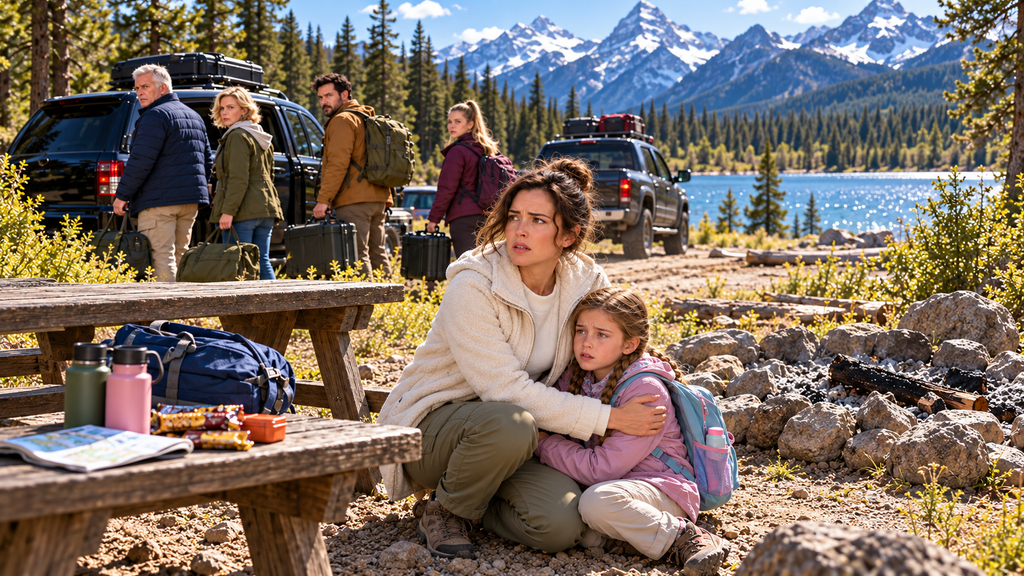
What Nolan hadn’t counted on was something my husband had taught our daughter just six months before he died.
Something so small that the rest of my family had laughed when he taught it to her.
A simple lesson about surviving when the people you trusted were no longer there.
That lesson would eventually save our lives.
But it wouldn’t be the last gift Ethan left us.
Because ten days after our disappearance, when a rescue helicopter finally carried Emma and me out of those mountains, I learned something that made the suffering we’d endured seem like only the beginning.
While we were missing, my family had begun dismantling everything Ethan and I had built.
They had presented documents bearing my signature.
They had informed our employees that I was mentally unstable.
They had attempted to transfer control of our company.
And my mother had done something so unforgivable that even the detectives investigating our disappearance struggled to understand it.
But the most terrible truth wasn’t hidden in the financial records.
It was hidden in a letter.
A letter Ethan had written before his death.
A letter my mother had stolen.
And when I finally read it, I understood that my husband’s death might not have been the tragedy I’d believed it was.
Three days after Ethan’s funeral, I found my older brother Nolan sitting behind his desk.
He wasn’t simply looking at papers.
He had Ethan’s laptop open, his feet resting on the bottom rung of Ethan’s chair, and a stack of folders arranged neatly in front of him.
For one dreadful second, I could almost imagine Ethan sitting there instead.
Then Nolan looked up.
“Oh,” he said. “You’re here.”
I stood in the doorway.
“Why are you sitting in my husband’s office?”
He gave me the indulgent smile he’d used since childhood whenever he believed I was being foolish.
“Someone needs to keep things moving, Claire.”
I hadn’t heard my name spoken with that particular mixture of pity and superiority since we were teenagers.
“Get out of his chair.”
His smile faded.
“Excuse me?”
“That is Ethan’s chair. And this is my office now. Get up.”
Nolan sighed.
“You’re making everything difficult.”
“My husband has been dead for three days.”
“Exactly. You shouldn’t be making major decisions right now.”
I walked to the desk and closed the laptop.
His hand shot forward.
“Hey!”
“Where did you get his password?”
Nolan went very still.
Then he leaned back.
“Dad gave it to me.”
That was the first lie I recognized.
My father barely knew how to operate his own email account.
Ethan had used a password manager and security keys for the company’s sensitive systems. He wouldn’t have shared them with my father.
“Get out,” I repeated.
Nolan stood slowly.
“I was trying to help.”
“Then help by leaving.”
He brushed past me, but at the doorway he stopped.
“You’re going to regret treating the only people who care about you like enemies.”
At the time, I thought he was simply angry.
I didn’t realize he was giving me a warning.
Ethan and I had started Cedar & Steam fourteen years earlier with one coffee cart and a secondhand espresso machine.
We met when I was twenty-four.
He was twenty-six, impossibly optimistic, and convinced the world needed a place where tired people could feel welcome for fifteen minutes.
I was practical.
He was a dreamer.
He came up with the name.
I figured out how to pay the rent.
Together, we built our first café in a narrow storefront with crooked wooden floors and a heating system that failed every winter.
We worked sixteen-hour days.
Sometimes longer.
Our first Christmas as business owners, we couldn’t afford gifts.
Ethan wrapped a coffee mug in newspaper and wrote CEO across it with a permanent marker.
“One day,” he promised, “you’ll have an office big enough to get lost in.”
I laughed.
“I don’t want a big office.”
“What do you want?”
I thought for a moment.
“A home. A family. Enough money that we never have to choose between groceries and electricity.”
He kissed my forehead.
“Then we’ll build exactly that.”
When Emma was born, he cried so hard the nurse brought him tissues.
He held our daughter against his chest and whispered, “I don’t care how successful this company becomes. This is the best thing we’ve ever made.”
He meant it.
Even when Cedar & Steam expanded beyond anything we’d imagined, Ethan never forgot his priorities.
He worked hard.
But he came home.
He attended Emma’s school performances.
He burned pancakes every Sunday.
And once a year, he took us camping.
He said the stars reminded him how small our problems really were.
Then, eight weeks before the camping trip that almost killed us, Ethan died.
He was driving home from a meeting on a rainy Thursday evening when his vehicle left the highway and struck a concrete barrier.
The police initially described it as a tragic accident.
The weather had been terrible.
The road was slick.
And the investigators found no evidence of another vehicle directly causing the crash.
I accepted their findings because I couldn’t bear the alternative.
For weeks, I moved through life as though I were underwater.
Emma slept in my bed.
I wore Ethan’s sweaters.
Sometimes I woke in the middle of the night and reached for someone who wasn’t there.
And my family stepped into the empty spaces he’d left.
At first, I welcomed them.
I thought they were helping.
My mother brought meals.
My father handled small household repairs.
Nolan offered to assist with the company.
His wife, Denise, volunteered to coordinate family gatherings.
But their help gradually changed.
Mom began saying I looked exhausted.
Dad questioned every financial decision I made.
Nolan started referring to Cedar & Steam as “our family business.”
It wasn’t.
My parents had never invested in it.
My brother had never worked for it.
But somehow, within weeks of Ethan’s death, they began speaking as though the company belonged to them.
When I resisted, they called me ungrateful.
When I established boundaries, they said grief was making me suspicious.
And when I refused Nolan’s offer to become acting chief executive, my mother cried.
“Your husband is gone, Claire,” she said. “You can’t keep pretending everything is normal.”
I stared at her.
“I’m not pretending anything is normal.”
“Then let your brother protect you.”
“From what?”
She didn’t answer.
I would spend ten terrible days in the mountains wondering whether she’d already known the answer.
On the morning I discovered the empty campsite, I didn’t immediately understand how carefully everything had been arranged.
I understood only that we were alone.
Emma was barefoot.
Her hair was tangled.
Her cheeks were pink from the cold.
She watched me search the surrounding trees with wide, frightened eyes.
“Mommy?”
“Yes, baby?”
“Did Grandma forget us?”
I wanted to tell her yes.
I wanted to invent an explanation involving an emergency, a misunderstanding, or some ridiculous mistake.
But every tent was gone.
Both vehicles were gone.
All the phones were gone.
They had even removed the folding chairs.
No one accidentally packed an entire campsite while leaving a mother and child behind.
“No,” I whispered. “I don’t think she forgot.”
Emma stared at me.
Then she began to cry.
Not loudly.
Not dramatically.
Just a small, devastated sound.
“Did we do something bad?”
I dropped to my knees.
“No. Absolutely not.”
“But why would they leave?”
I pulled her close.
“Whatever happened, sweetheart, it is not because of you.”
She buried her face in my shoulder.
I held her until her trembling eased.
Then I made myself stand.
Because grief had already taught me one cruel lesson.
Sometimes the world didn’t stop when your heart did.
Sometimes you had to keep moving even when you had no idea how.
I examined the remaining supplies.
Two small bottles of water.
Three granola bars.
A disposable lighter.
Emma’s purple backpack.
A crumpled rain poncho.
And, tucked into a side pocket, the tiny whistle Ethan had attached to her bag before her last school field trip.
I almost laughed when I found it.
Emma noticed.
“Daddy said I should always keep that.”
“I remember.”
“He said if I ever got lost, three whistle blows meant I needed help.”
My eyes burned.
“That’s right.”
She took it from my hand.
“Then I still have him helping me.”
For a moment, I couldn’t speak.
I simply nodded.
“Yes, sweetheart. You do.”
We started walking shortly after sunrise.
I knew enough about wilderness safety to understand that wandering blindly could be dangerous.
But staying at the campsite without shelter, communication, or any reliable knowledge of when someone might return was frightening too.
The gravel road appeared to be our best chance of reaching help.
Nolan had chosen the campsite.
He’d told us the nearest town was less than an hour away by vehicle.
He hadn’t told us that the road branched repeatedly through a vast network of abandoned logging routes.
Or that a landslide had closed the main access road farther down the mountain.
Or that the area had almost no cellular coverage.
By noon, the sun had disappeared behind thick clouds.
Emma’s feet hurt.
She had been sleeping in socks when our family removed the tents.
I gave her my shoes.
They were much too big.
I tied the laces tightly and wrapped strips torn from the rain poncho around her ankles to keep them from slipping.
I walked in socks.
Every stone pressed into my feet.
Every step reminded me how vulnerable we were.
“Mom?”
“Yes?”
“Are we going to die?”
I stopped so suddenly she nearly bumped into me.
I wanted to say no.
I wanted to promise her that mothers always knew how to save their children.
But I had already made too many promises I couldn’t keep.
I had promised Ethan would come home from work.
I had promised his accident was just a terrible mistake.
I had promised Grandma and Grandpa would help us feel better.
So I crouched in front of her.
“We’re going to work very hard to stay safe,” I said. “And I’m not going to stop looking for help.”
Emma nodded.
“Okay.”
“Can you be brave with me?”
Her lower lip trembled.
“I’m scared.”
“So am I.”
She looked surprised.
“You’re scared too?”
“Very.”
Then she reached out and squeezed my hand.
“It’s okay, Mommy. We can be scared together.”
I kissed her forehead.
And we kept walking.
The first night was the worst.
Rain began shortly after sunset.
Cold droplets soaked through our clothing.
We found a shallow overhang beside a rocky embankment, but it offered only partial shelter.
I spread the rain poncho beneath Emma and wrapped my arms around her.
She was shivering.
Her teeth clicked together.
I rubbed her arms.
I told her stories.
I described the camping trips we’d taken with Ethan.
I reminded her of the summer he’d accidentally dropped an entire bag of marshmallows into a lake.
She smiled weakly.
“Daddy said the fish would get cavities.”
“That’s exactly what he said.”
“Do you think he can see us?”
The question broke something inside me.
“I don’t know, sweetheart.”
“I hope he can.”
“Why?”
“Because then he knows we didn’t leave him.”
I pressed my face into her hair.
I couldn’t tell her that I sometimes feared she’d felt abandoned by her father.
Not because Ethan had wanted to leave.
But because death rarely explained itself to children.
“He knew you loved him,” I whispered.
“Even at the hospital?”
“Especially then.”
She was quiet for a moment.
Then she said, “I wish he was here.”
I closed my eyes.
“So do I.”
Outside our shelter, the rain continued.
And somewhere in the darkness, a branch cracked.
I lifted my head.
Another sound followed.
A low rustling from the trees.
Emma gripped my arm.
“Mommy?”
“Stay very still.”
I listened.
The sound grew closer.
Then stopped.
I couldn’t see anything beyond the wet branches.
For several minutes, neither of us moved.
Eventually the rustling faded.
It might have been a deer.
It might have been some other animal.
I never knew.
But I knew I couldn’t let Emma see how terrified I was.
So I held her tighter.
And waited for morning.
By the second day, my feet were bleeding.
Emma was weak from hunger.
We ate half a granola bar each and saved the rest.
I rationed the bottled water while searching for a reliable source of fresh water.
The road had led us to a washout that made continuing dangerous.
There was a steep drop to one side and loose rock to the other.
We turned back toward higher ground, hoping to find a safer route or a visible clearing where rescuers might eventually spot us.
At approximately three in the afternoon, Emma suddenly said something that made me stop.
“Mom?”
“Yes?”
“Uncle Nolan said we wouldn’t need our phones.”
I looked down at her.
“When?”
“Before we went camping.”
“What exactly did he say?”
She frowned, concentrating.
“He said it was going to be like one of Daddy’s adventures. He said there wouldn’t be any screens.”
“Anything else?”
Emma hesitated.
“Mommy, am I in trouble?”
“No.”
“Promise?”
“Promise.”
She looked at the ground.
“Grandma told Aunt Denise to make sure you drank your tea.”
My stomach tightened.
“What tea?”
“The one by the campfire.”
I remembered.
Denise had brought me a mug of herbal tea after dinner.
She’d said it would help me sleep.
I normally disliked herbal tea, but my mother insisted I needed rest.
I drank it.
Twenty minutes later, the world felt strangely heavy.
My eyelids drooped.
My thoughts became slow.
I remembered asking Ethan where he’d put the extra blankets.
Then remembering Ethan wasn’t there.
I remembered my mother touching my shoulder.
And whispering, “I’m sorry.”
I looked at Emma.
“Did you drink anything Aunt Denise gave you?”
She shook her head.
“She gave me lemonade, but I spilled it.”
A terrible coldness spread through me.
“Was she upset?”
Emma nodded.
“She told me I was clumsy.”
I closed my eyes.
For the first time, I considered that my family might not simply have abandoned us.
They might have drugged us first.
I felt sick.
But I couldn’t afford to collapse.
Not yet.
I opened my eyes.
“Emma, I need you to listen carefully.”
“Okay.”
“Whatever you remember about that night, tell me. Even if it seems unimportant.”
She thought for a moment.
Then she said, “Grandpa was angry.”
“Why?”
“He told Uncle Nolan the plan was supposed to be safe.”
I stopped breathing.
“What did Nolan say?”
Emma’s voice became small.
“He said sometimes people have to get scared before they do the right thing.”
The forest seemed to go silent.
I stared at my daughter.
Then I asked the question I was already afraid to hear answered.
“Did Grandma say anything?”
Emma nodded.
“She said, ‘Claire will sign when she comes back.'”
I felt the ground shift beneath me.
When she comes back.
They had expected us to survive.
Or at least, they’d claimed to.
Perhaps they’d planned to return after frightening me.
Perhaps they believed I would be so terrified that I would surrender the company.
But why remove our food?
Why take our phones?
Why leave a ten-year-old child?
And why hadn’t anyone come back?
On the third day, we found the first sign that something was wrong beyond our campsite.
A weathered wooden sign stood at the edge of the logging road.
The paint had faded, but I could still read the warning.
ROAD CLOSED — BRIDGE UNSAFE
The sign was old.
The damaged bridge was farther downhill.
And beyond it lay the route Nolan had told us would lead to town.
I stared at the sign.
We’d already walked miles.
Our supplies were nearly gone.
Emma was exhausted.
And the only route I knew toward civilization had been closed long before our family brought us there.
Suddenly, my brother’s decision to choose this location felt even more deliberate.
I wondered how much research he had done.
How long he had planned the trip.
Whether he had visited the site beforehand.
And whether he knew that the campground was effectively isolated.
I didn’t know the answers.
But I was beginning to understand something horrifying.
Our family had not simply driven away from a convenient campsite.
Someone had selected a place where escape would be difficult.
I sat beside Emma under a cedar tree.
“We need a different plan,” I told her.
She looked frightened.
“Are we lost?”
“Not completely. We know the road leads toward the campsite. We know where the ridge is. We just need to stay somewhere safe and make ourselves easy to find.”
She nodded.
Then she reached into her backpack.
“Mommy, Daddy taught me something.”
I looked at her.
“What?”
She pulled out the whistle.
“He said if you’re lost, you shouldn’t always keep walking. He said you should find a safe place and make a signal.”
I stared at the whistle.
Ethan had taught Emma basic outdoor safety on our last family camping trip.
I remembered him making her practice.
Three short blasts.
Wait.
Three more.
He’d also shown her how to make a large symbol with branches in an open clearing.
At the time, I’d teased him.
“She’s ten, Ethan. Not training for a wilderness expedition.”
He’d laughed.
“Better to know something you never need than need something you never learned.”
Now his words came back so clearly that for one impossible second I thought I could hear him speaking beside me.
I began to cry.
Emma touched my cheek.
“Mommy?”
“Nothing’s wrong, sweetheart.”
She tilted her head.
“Then why are you crying?”
“Because Daddy was a very smart man.”
Emma smiled.
“I know.”
We spent the next several days near a rocky clearing above the damaged road.
I chose it because it provided better visibility and some shelter from the wind.
There was a small creek within cautious walking distance.
I knew untreated water carried risks, but dehydration was becoming an immediate threat. We used the lighter and a small metal cup we’d found among old litter near the clearing to boil what we could.
We conserved our strength.
We arranged large fallen branches in the shape of SOS.
We hung the bright purple rain poncho where it could be seen from above.
We used Emma’s whistle periodically.
And every day, I watched the sky.
Hoping.
Praying.
Listening for an engine.
Sometimes I thought I heard one.
Sometimes I imagined voices.
Once, I became so certain a helicopter was approaching that I ran into the clearing waving both arms.
But the sound faded.
It was only the wind moving through the ridge.
Emma watched me return.
“No one?”
I shook my head.
She nodded without complaining.
That quiet acceptance hurt more than anything.
Children should never have to become accustomed to disappointment that quickly.
On the fifth day, Emma developed a fever.
At first, I told myself it was exhaustion.
She was cold.
Hungry.
Dehydrated.
But by afternoon, her skin felt frighteningly hot.
She lay beneath the overhang, barely speaking.
I dampened a piece of cloth and placed it against her forehead.
“Sweetheart, look at me.”
Her eyes fluttered open.
“Mommy?”
“I’m here.”
“My legs hurt.”
“I know.”
“Can we go home?”
I smiled even though tears filled my eyes.
“We’re going to.”
“When?”
I couldn’t answer.
She turned her face toward the rock.
“Grandma promised we’d make pancakes.”
My throat tightened.
“What?”
“Before we left. She said after camping she’d make blueberry pancakes.”
I remembered that conversation.
My mother had stood in our kitchen, telling Emma how wonderful the trip would be.
She’d promised campfire stories.
Morning pancakes.
Fresh mountain air.
And now my daughter was lying on cold ground, feverish and weak, asking for a breakfast that might never come.
I whispered, “I’ll make you pancakes myself.”
“With the little chocolate chips?”
“With as many as you want.”
She smiled faintly.
“That’s too many.”
I laughed.
The sound came out broken.
Then Emma reached for my hand.
“Mom?”
“Yes?”
“If I see Daddy first, will you be mad?”
Every part of me seemed to freeze.
“No.”
Her eyes filled with tears.
“I’m tired.”
I pulled her against me.
“Listen to me, Emma. You are staying right here with me. We still have so many things to do.”
She didn’t answer.
“We haven’t gone to the ocean this year.”
Her breathing remained shallow.
“We haven’t finished reading our book.”
I kissed her hair.
“And you promised me you’d teach me how to make those bracelets with the colored strings.”
She opened her eyes.
“Friendship bracelets.”
“Exactly.”
“You always make the knots wrong.”
“Then you have to stay and teach me.”
For a moment, she looked at me.
Then she whispered, “Okay.”
I held her for the rest of the night.
I didn’t sleep.
I listened to every breath.
And when morning finally came, I thanked God for the simple fact that she was still breathing.
On the sixth day, I found something that changed everything.
A tire track.
Not on the main road.
On a narrow service path above the clearing.
At first, I assumed it was old.
But the soil had been disturbed recently, and several small branches had been crushed.
Someone had driven along that track after the last rainfall.
I followed it for a short distance while Emma rested within calling range.
The path curved toward an old forestry gate.
Beyond the gate, someone had dropped a cigarette packet.
I recognized the brand.
My father smoked those cigarettes.
I picked it up.
The packet was damp but not completely ruined.
On one side, written in blue ink, was a short sequence of numbers.
I didn’t know what they meant.
But my father had a habit of writing phone numbers, gate codes, and reminders on whatever paper happened to be nearby.
My pulse quickened.
Had he come back?
Had someone returned to check on us?
I called his name.
“Dad!”
My voice echoed through the trees.
“DAD!”
Nothing.
I looked at the cigarette packet again.
Then I found another sign.
A boot print.
Deep in the mud.
The heel carried a distinctive triangular pattern.
Nolan owned a pair of hiking boots with that same pattern.
He’d worn them the first evening of the camping trip.
I felt a surge of hope so powerful it nearly knocked me over.
Maybe they had returned.
Maybe they were searching for us.
Then another thought followed.
What if they’d returned and left again?
I took the cigarette packet back to our shelter.
Emma was sitting up when I arrived.
“Did you find help?”
I couldn’t bear to tell her what I suspected.
“Not yet.”
She watched me carefully.
“Mommy, you look angry.”
I sat beside her.
“I’m trying to figure something out.”
She reached for my hand.
“About Grandma?”
I nodded.
Emma looked down.
Then she said something I would remember for the rest of my life.
“Mommy, if Grandma comes back, do we have to go with her?”
I stared at my daughter.
“No.”
“Even if she says sorry?”
“Even then.”
Emma leaned against me.
“Good.”
What I didn’t know was that while Emma and I struggled to survive, Nolan was sitting in a conference room at Cedar & Steam headquarters.
And he was telling our employees a carefully prepared lie.
“Claire has suffered an acute psychological crisis following Ethan’s death,” he announced.
He spoke to senior managers, regional directors, and members of our advisory board.
My father sat beside him.
My mother wore black.
Denise handled the paperwork.
According to the recordings I later obtained, Nolan placed a folder on the conference table.
“My sister has been experiencing severe emotional instability,” he continued. “For the safety of the company, we’ve arranged for her to receive private treatment.”
Our operations director, a woman named Ruth Callahan, immediately asked where I was.
Nolan smiled.
“She’s resting.”
“Where?”
“That’s private.”
Ruth had worked with Ethan and me for eleven years.
She was not easily intimidated.
“Claire was supposed to attend a meeting with me on Monday,” she said. “She hasn’t answered any calls.”
Nolan nodded sympathetically.
“Exactly. Her condition has deteriorated.”
Then he produced the document.
An emergency management authorization.
It appeared to transfer temporary operational control of Cedar & Steam to him.
It bore my name.
My signature.
And the date of the camping trip.
Ruth stared at it.
“She signed this?”
“Of course.”
“When?”
“Before leaving.”
Ruth examined the page.
Then she said, “I want to speak to Claire.”
Nolan’s smile vanished.
“That’s not appropriate right now.”
“She’s the controlling shareholder.”
“She’s my sister.”
“And she’s my CEO.”
My father leaned forward.
“Ruth, this is a family matter.”
Ruth looked directly at him.
“No. This is a corporate governance matter.”
That was the moment Nolan began to understand that not everyone would accept his story.
He’d expected frightened employees.
He hadn’t expected loyalty.
Especially loyalty to me.
On the seventh day, the temperature dropped.
We had no proper blankets.
Our clothing was filthy.
My feet were swollen and painful.
Emma could walk only short distances.
I tried not to calculate how long it had been since she’d eaten a real meal.
Instead, I told her about home.
I described her yellow bedroom.
The drawings taped beside her bed.
Her stuffed rabbit named Oliver.
The smell of cinnamon rolls from our neighborhood bakery.
I described ordinary things because ordinary things had become the most beautiful things I could imagine.
At sunset, Emma asked me a question.
“Do you think Uncle Nolan knows we’re hungry?”
I looked at her.
“I don’t know.”
She was quiet.
Then she said, “Maybe he forgot to come back.”
I didn’t answer.
“Maybe everybody forgot.”
I pulled her close.
“Not everybody.”
“Who didn’t?”
I touched the whistle hanging around her neck.
“Daddy didn’t forget to teach you how to stay safe.”
She considered that.
Then she nodded.
“And you didn’t forget me.”
I kissed her forehead.
“Never.”
On the eighth day, I nearly made a terrible mistake.
I heard an engine.
A real one.
Not wind.
Not imagination.
The unmistakable sound of a vehicle struggling uphill.
I stood so quickly my vision blurred.
“Emma!”
She lifted her head.
“Someone’s coming!”
I grabbed the rain poncho and stumbled toward the clearing.
The engine grew louder.
Then I saw a dark vehicle moving along the service road far above us.
I waved.
I screamed.
“HELP!”
The vehicle slowed.
For one extraordinary moment, I believed our nightmare was ending.
Then it stopped.
I could see only part of it through the trees.
A dark SUV.
A roof rack.
And something white hanging from the rearview mirror.
My father’s SUV had a small white cross hanging from its mirror.
He’d kept it there for years.
I froze.
The driver’s door opened.
A man stepped out.
He was too far away for me to see his face clearly.
But he stood with his left shoulder slightly raised.
Just like Nolan.
My heart slammed against my ribs.
“NOLAN!”
The man turned.
I waved both arms.
“WE’RE HERE!”
For a second, he remained motionless.
Then he got back into the SUV.
The engine roared.
And the vehicle drove away.
I stood there in the cold.
Watching the dust settle.
Unable to understand what I had just witnessed.
Had it really been my brother?
Could he have heard me?
Had he seen me?
The questions came so quickly they blurred together.
Then Emma called from behind me.
“Mommy?”
I turned.
She was standing near the shelter.
“Did they see us?”
I swallowed.
“I don’t know.”
She looked toward the empty road.
“Why didn’t they stop?”
I couldn’t answer.
That night, I sat awake and thought about the words Nolan had written on the picnic table.
This is a necessary reset. Trust me.
For the first time, I wondered whether my family had ever intended to bring us home.
On the ninth day, I began to lose hope.
Not all at once.
Hope rarely disappears that cleanly.
It fades in small, humiliating pieces.
In the sound of your child’s stomach growling.
In the moment you realize you’re too weak to stand without holding a tree.
In the sight of another empty sky.
In the silence after another unanswered whistle.
I had always believed I was a strong person.
I’d negotiated business loans.
I’d survived financial crises.
I’d held Ethan’s hand while doctors told me there was nothing more they could do.
But none of those experiences prepared me for watching my daughter become too tired to cry.
Emma lay with her head in my lap.
“Mommy?”
“Yes?”
“Tell me the story.”
“Which story?”
“The coffee shop story.”
I smiled weakly.
“You’ve heard it a hundred times.”
“Tell it again.”
So I did.
I told her how Ethan and I opened our first café.
How the espresso machine broke on opening morning.
How I cried in the storage room because I thought we’d lose everything.
How Ethan found me sitting on a sack of coffee beans.
And how he’d said, “Claire, if the worst thing that happens today is that we serve bad coffee, we’re doing pretty well.”
Emma giggled.
“Daddy was silly.”
“He was.”
“Then what happened?”
“We borrowed another machine. We made terrible coffee. And somehow people came back anyway.”
“Why?”
“Because your dad remembered everyone’s name.”
Emma smiled.
“He remembered everything.”
I stroked her hair.
“Almost everything.”
She closed her eyes.
Then she whispered, “He remembered us.”
My throat closed.
“Yes.”
For a long time, I watched her sleep.
Then I looked toward the sky.
And I did something I hadn’t done since Ethan’s funeral.
I became angry with him.
“Why did you leave us?” I whispered.
The words came out harsh.
Unfair.
Desperate.
“Why aren’t you here?”
The wind moved through the trees.
I waited for an answer I knew would never come.
Instead, I heard the sound of Emma’s breathing.
And I realized that Ethan had left me one reason to keep fighting.
I bent over our daughter.
“I won’t let them take you too,” I whispered.
Then I stood.
And began rebuilding our signal.
On the tenth morning, I heard a helicopter.
At first, I didn’t move.
I’d imagined that sound too many times.
But then Emma opened her eyes.
“Mom?”
I held my breath.
The sound grew louder.
A deep mechanical thudding rolled across the ridge.
I scrambled into the clearing.
Above the trees, a helicopter moved slowly through the clouds.
I screamed.
Waved the bright rain poncho.
Blew Emma’s whistle three times.
Again.
And again.
The helicopter continued forward.
For one terrible second, I thought it would pass us.
Then it turned.
I watched its nose swing toward the clearing.
A spotlight moved across the trees.
And a voice crackled through a loudspeaker.
“WE SEE YOU!”
I fell to my knees.
I didn’t remember making a sound.
But Emma later told me I screamed her father’s name.
The helicopter couldn’t land directly in the clearing, so the rescue team coordinated a ground approach from a safer location.
I remember the first rescuer reaching us.
A woman in a bright jacket.
She knelt beside me.
“Ma’am, can you tell me your name?”
“Claire.”
“Claire, is that your little girl?”
I nodded.
“Her name is Emma.”
“Okay. We’re going to help both of you.”
I grabbed the woman’s sleeve.
“Please take her first.”
“We’re taking care of her.”
“She’s ten.”
“I know.”
“She’s been sick.”
“We have medical personnel here.”
I began to sob.
“Please don’t leave her.”
The rescuer placed her hand over mine.
“Claire, listen to me. We’re not leaving either of you.”
Those words were the first thing anyone had said in ten days that I truly believed.
The hospital smelled like antiseptic and warm blankets.
I remember that because I couldn’t stop crying when the nurse placed a blanket over Emma.
A blanket.
Something I’d taken for granted my entire life.
Emma was treated for dehydration, exhaustion, nutritional deprivation, and a respiratory infection.
I had injuries to both feet, severe dehydration, and signs of prolonged exposure.
The doctors told me we’d been lucky.
I knew that.
But luck didn’t feel like the right word.
Not when my daughter’s ribs showed beneath her hospital gown.
Not when she flinched whenever a door opened.
Not when she asked three times whether the nurses would disappear while she slept.
A social worker stayed with us during the first evening.
Her name was Maya.
She spoke gently.
She didn’t rush us.
And when Emma finally fell asleep, Maya pulled a chair beside my bed.
“Claire,” she said, “there are some questions the investigators will need to ask.”
I nodded.
“Where’s my family?”
Her expression changed.
“They’ve been contacted.”
“Do they know we’re alive?”
“Yes.”
I watched her carefully.
“What did they say?”
Maya hesitated.
“Your mother asked whether she could visit.”
I almost laughed.
“She asked to visit?”
“Yes.”
“After leaving us in the woods for ten days?”
Maya’s eyes softened.
“I understand why that would be upsetting.”
“No,” I said quietly. “I don’t think you do.”
She didn’t argue.
Then she reached into a folder.
“There’s something else. A police detective would like to speak with you tonight, if you’re medically able.”
“About what?”
“Your disappearance.”
I looked at Emma sleeping beside me.
Then back at Maya.
“Tell him to come.”
Detective Samuel Reed arrived shortly after eight.
He was in his late forties, with tired eyes and a calm voice.
He introduced himself, sat beside the bed, and asked me to explain what had happened.
I told him everything.
The family camping trip.
The collected phones.
The herbal tea.
The empty campsite.
The note.
The missing supplies.
The cigarette packet.
The possible sighting of Nolan’s vehicle.
I watched Reed’s expression grow increasingly serious.
When I finished, he asked, “Have you had any recent disputes with your family?”
I almost laughed again.
“Only about a multimillion-dollar company.”
He leaned forward.
“Tell me about that.”
For the next forty minutes, I explained Cedar & Steam.
Ethan’s death.
Nolan’s demands.
My father’s pressure.
My mother’s insistence that I was too unstable to manage the business.
Reed took notes.
Then he looked up.
“Claire, I need to ask you something difficult.”
“Go ahead.”
“Is there any possibility your relatives believed you were voluntarily entering a treatment program?”
“No.”
“Did you sign any documents authorizing them to act on your behalf?”
“No.”
“Did you tell anyone you intended to disappear?”
“Absolutely not.”
He paused.
Then he said, “We’ve received a very different account from your family.”
My stomach tightened.
“What account?”
Reed opened his notebook.
“Your brother told investigators that you had experienced a psychological breakdown. He claimed you requested isolation and later left the group voluntarily with your daughter.”
I stared at him.
“He said what?”
“According to his statement, you asked the others to leave.”
“That’s insane.”
“He also claimed you were carrying camping supplies, a satellite communication device, and enough food for several days.”
I looked toward Emma.
She was asleep.
Her small hands rested above the blanket.
I turned back to Reed.
“My daughter almost died.”
“I understand.”
“No. My brother wants you to believe I took my child into the wilderness for ten days because I needed quiet?”
“I’m telling you what he said.”
I closed my eyes.
Then I remembered something.
“The note.”
Reed looked up.
“What note?”
“The one Nolan left on the picnic table.”
I recited it.
“This is a necessary reset. Trust me.”
Reed wrote it down.
Then he asked, “Do you still have it?”
My heart sank.
“No. I put it in Emma’s backpack, but the backpack was soaked during the rain. I don’t know if it’s still there.”
“We recovered your belongings,” he said. “We’ll check.”
He closed his notebook.
Then he looked directly at me.
“Claire, there’s another reason I came.”
Something in his voice made my blood run cold.
“What?”
“While you were missing, several unusual financial activities were reported involving your company.”
I sat up.
“What activities?”
“Someone attempted to use documents bearing your signature to change control of the business.”
I stared at him.
Then I whispered, “Nolan.”
Reed didn’t answer.
He didn’t have to.
The next morning, my mother arrived at the hospital.
I didn’t invite her.
She came anyway.
I was sitting beside Emma’s bed when I heard a familiar voice at the nurses’ station.
“She’s my daughter!”
I went cold.
“Ma’am, you can’t enter without permission.”
“I need to see my granddaughter!”
My stomach twisted.
Then my mother appeared in the doorway.
She wore a cream cardigan.
Her hair was perfectly styled.
And her eyes filled with tears the moment she saw me.
“Claire!”
She rushed forward.
I stood between her and Emma.
“Stop.”
She froze.
“Oh, sweetheart.”
“Don’t come any closer.”
Her face crumpled.
“We’ve been so worried.”
I stared at her.
Worried.
After abandoning us with almost no supplies.
After taking our phones.
After leaving a child exposed to cold, hunger, and illness.
“You were worried?” I repeated.
“Of course!”
“Then where were you for ten days?”
She began crying.
“Claire, it was all a terrible misunderstanding.”
I felt something inside me become very still.
“A misunderstanding?”
“Your brother said he had arranged everything.”
“Arranged what?”
She glanced toward Emma.
“Perhaps we should discuss this privately.”
“No.”
“Claire—”
“Tell me what you arranged.”
My mother’s lips trembled.
“We thought you needed time to realize how serious things had become.”
I stared at her.
“Things?”
“Your behavior after Ethan died.”
I took one step closer.
“My daughter had a fever in the mountains. She couldn’t walk. She asked me if she was going to die.”
My mother’s expression changed.
“Oh, darling.”
“Don’t.”
“We never wanted that.”
“Then what did you want?”
She looked away.
And in that moment, I knew.
She wasn’t sorry because we’d suffered.
She was sorry because we’d survived and could tell people what had happened.
“Get out,” I said.
“Claire, please.”
“Get out.”
She clasped her hands.
“You’re my daughter.”
I felt tears sting my eyes.
“And she’s your granddaughter.”
Mom looked at Emma.
For the first time, she seemed to notice how small our little girl looked beneath the hospital blanket.
Her face tightened.
“I love her.”
I shook my head.
“Whatever you feel, it didn’t protect her.”
My mother started sobbing.
Then she whispered, “Nolan said you wouldn’t be in danger.”
I froze.
“What?”
She covered her mouth.
Too late.
I moved closer.
“What did Nolan say?”
My mother stared at me.
“He said the ranger station would be notified.”
I felt dizzy.
“What ranger station?”
“He said someone would find you by morning.”
I swallowed.
“And did you check?”
She said nothing.
“Did you call anyone?”
“Claire—”
“Did you make sure your granddaughter was safe?”
Tears streamed down her face.
“No.”
I stepped backward.
The answer hurt more than I expected.
Not because I hadn’t suspected it.
Because some tiny, foolish part of me had still hoped my mother would have stopped them.
A nurse appeared beside the doorway.
“Ma’am, you need to leave.”
Mom reached for me.
“Please forgive me.”
I looked at her hand.
Then at her face.
“Not today.”
After my mother left, I called Ruth.
Or rather, the hospital social worker helped me reach her.
My company phone was still missing.
My personal accounts were temporarily inaccessible because someone had attempted to reset their security credentials.
When Ruth answered, she began crying.
“Claire?”
“Hi, Ruth.”
“Oh my God.”
For a moment, neither of us could speak.
Then she said, “I knew something was wrong.”
I closed my eyes.
“Tell me everything.”
She took a breath.
“Nolan came into headquarters the day after your family said you’d gone away for treatment.”
“Treatment?”
“That’s what he called it.”
“What did he do?”
“He held an emergency meeting. He said you were no longer capable of making decisions.”
I gripped the phone.
“Did anyone believe him?”
“Some people did.”
My stomach sank.
“But I didn’t,” she added. “Neither did Marcus from legal.”
Marcus Vale was our longtime company attorney.
He’d helped Ethan and me open our second location.
He was one of the few people I trusted completely.
“What happened?”
Ruth lowered her voice.
“Nolan presented a document supposedly signed by you.”
“What kind of document?”
“A temporary management authorization.”
“I didn’t sign anything.”
“I know.”
I closed my eyes.
She continued.
“He tried to access our financial accounts. He wanted emergency control over payroll and vendor payments.”
“Did he get it?”
“Not fully. We stopped several requests pending verification.”
Relief rushed through me.
But Ruth wasn’t finished.
“Claire, there’s more.”
I tightened my grip.
“What?”
“He tried to arrange a sale.”
The room seemed to tilt.
“A sale of what?”
“Cedar & Steam.”
I stared at the wall.
“To whom?”
“A private investment group called Northstar Equity Partners.”
I’d heard the name before.
Months earlier, Northstar had approached Ethan about acquiring a controlling stake in the company.
Ethan refused.
He said their restructuring plans would destroy everything that made Cedar & Steam special.
They wanted to close lower-performing community locations.
Reduce employee benefits.
Replace experienced staff.
Cut supplier contracts.
And extract value from the company’s real estate holdings.
Ethan had walked away from negotiations.
Now Nolan was apparently trying to bring them back.
“How much?” I asked.
Ruth hesitated.
“Thirty-eight million dollars.”
I nearly dropped the phone.
Cedar & Steam was worth considerably more.
The proposed transaction wasn’t just a sale.
It was a fire sale.
“Who authorized that?”
“Nolan claims you did.”
I closed my eyes.
Then I heard Ruth take a shaky breath.
“Claire, there’s one more thing.”
I felt sick.
“What now?”
“Your brother said Ethan had already approved the transaction before he died.”
For a moment, I couldn’t speak.
Then I whispered, “That’s impossible.”
“I know.”
“Ethan hated that offer.”
“I know.”
“Ruth, he told me he’d never sell to Northstar.”
“I remember.”
I sat in silence.
Then she said, “Marcus has been investigating the documents.”
“Tell him I need to see him.”
“He’ll be there.”
Before hanging up, Ruth said something I would never forget.
“Claire?”
“Yes?”
“Your husband built this company with you. We weren’t going to hand it over just because someone showed up carrying your last name.”
I began to cry.
“Thank you.”
“No,” she said. “Thank you for coming back.”
Marcus arrived that afternoon with a thick folder.
He looked exhausted.
His tie was crooked.
His hair was disheveled.
He hugged me carefully, then sat beside the hospital bed.
“First,” he said, “I’m glad you’re alive.”
“Second?”
He sighed.
“Second, your brother has been very busy.”
He placed several documents on the table.
The first was the management authorization.
My name appeared at the bottom.
So did a signature that looked almost perfect.
Almost.
I stared at it.
“That’s not mine.”
Marcus nodded.
“I agree.”
“How can you tell?”
He pointed to the final letter of my surname.
“Your handwriting changed after your wrist surgery three years ago. Your signature has a slight upward stroke here.”
I looked closer.
He was right.
The signature resembled my older one.
The one I’d used before an injury changed how I held a pen.
“Where did he get that?”
Marcus opened another folder.
“We think he copied it from archived paperwork.”
Then he handed me a second page.
An affidavit describing my supposed mental incapacity.
My stomach turned.
At the bottom were two witness signatures.
My father’s.
And my mother’s.
I looked at them for a long time.
Then I whispered, “They signed this.”
Marcus nodded.
“Yes.”
“They told people I was mentally unstable?”
“Yes.”
“And they did it while I was missing?”
His expression hardened.
“Yes.”
I looked toward Emma.
She was drawing quietly in bed.
A purple house.
A yellow sun.
Three stick figures.
Me.
Emma.
And Ethan.
I looked back at Marcus.
“What happens now?”
He took a breath.
“We fight.”
I expected the police investigation to focus entirely on the camping trip.
Instead, the case grew larger almost every day.
Detective Reed interviewed my parents.
Then Nolan.
Then Denise.
He obtained records from the campground reservation system.
He requested toll camera footage and vehicle location data through appropriate legal process.
He collected statements from company employees.
And he examined the financial documents Nolan had submitted during our disappearance.
What investigators discovered about the campsite selection was disturbing.
Nolan had visited the area twice before the trip.
The first visit occurred nineteen days before Ethan’s death.
The second occurred just four days before we went camping.
He had researched road closures.
He’d photographed the old forestry gate.
And he’d downloaded a map showing the abandoned logging roads.
At first, I couldn’t understand why he would have researched the area before Ethan died.
Then the date struck me.
Nineteen days before my husband’s death.
Nolan had been planning something before I became a widow.
I stared at the report.
“Detective, does this mean—”
Reed raised one hand.
“It means we need to investigate further.”
“Do you think he had something to do with Ethan’s accident?”
“We don’t know.”
I felt tears rising.
“Please find out.”
He nodded.
“We intend to.”
Two days later, the first real crack appeared in my family’s story.
Denise asked to speak with investigators without Nolan present.
She had hired an attorney.
And she was frightened.
According to the statement later shared with the prosecution, Denise admitted she’d given me the herbal tea on the night of the camping trip.
She said Nolan had supplied a packet of powder, claiming it was a mild sleep aid.
She insisted she’d believed it was harmless.
But she also admitted she’d been instructed to make sure I drank the entire mug.
Investigators obtained records showing Nolan had purchased a sedating medication under false pretenses.
The remaining substance was eventually recovered from the family’s camping supplies.
I remembered how heavy my body had felt.
How slowly my thoughts had moved.
How I hadn’t awakened while they dismantled an entire campsite around me.
For days, I had wondered whether exhaustion and grief had made me sleep unusually deeply.
Now I understood.
I’d been incapacitated.
And my family had used that vulnerability to abandon us.
But Denise’s statement contained something even worse.
She claimed the original plan had been to leave Emma with my mother.
I stared at Reed when he told me.
“What?”
“Nolan apparently wanted you alone at the campsite.”
I felt a chill.
“But Emma was with me.”
“Yes.”
“Why?”
Reed hesitated.
“According to Denise, Emma woke while they were packing.”
I imagined my daughter opening her eyes in the darkness.
Watching her grandmother carry supplies toward the vehicles.
Watching her uncle remove the tents.
And perhaps asking where everyone was going.
“She refused to leave you,” Reed continued.
My eyes filled.
“What did she do?”
“Denise says Emma became upset and insisted on staying with her mother.”
I covered my mouth.
“Then what?”
“Your mother argued that they should abandon the plan.”
For one brief second, hope rose inside me.
Perhaps Mom had tried to protect us.
Perhaps she’d finally chosen her granddaughter.
Then Reed continued.
“But Nolan said bringing Emma back would complicate the story. He insisted she’d be safe with you until help arrived.”
I closed my eyes.
“Mom agreed?”
“According to Denise.”
I thought about Emma lying feverish beneath the rocks.
About her asking if Grandma had forgotten her.
About the way she’d shared her last granola bar with me.
My voice came out barely audible.
“She let them leave her.”
Reed didn’t answer.
He didn’t need to.
The next revelation arrived through an unexpected source.
My father’s younger sister, Aunt Louise.
She was seventy-one, sharp-tongued, and had never particularly liked Nolan.
She called the hospital after hearing we had been rescued.
“Claire,” she said, “I need to tell you something.”
I was sitting beside Emma, watching her color.
“What is it?”
“Your mother came to see me the week before the camping trip.”
I frowned.
“Why?”
“She wanted me to sign a statement.”
My stomach tightened.
“What kind of statement?”
“Something about you being unable to make decisions.”
I closed my eyes.
“What did you say?”
“I told her to get out of my kitchen.”
Despite everything, I almost smiled.
Louise continued.
“Then she started crying. Said your brother was trying to save the company.”
“What company? He never owned any part of it.”
“That’s what I said.”
I heard her take a breath.
“Then she said something strange.”
“What?”
“She said Ethan had left instructions.”
I sat very still.
“What instructions?”
“I don’t know. She wouldn’t explain.”
“Did she say anything else?”
Louise hesitated.
“She said if you knew what Ethan had discovered, you’d never forgive any of them.”
My entire body went cold.
“What did Ethan discover?”
“I wish I knew, honey.”
I stared at the wall.
For weeks, I’d believed my family’s behavior began after my husband’s death.
But Nolan’s earlier visits to the campsite suggested otherwise.
And now my aunt was telling me Ethan had discovered something before he died.
Something my mother knew.
Something connected to the company.
I thanked Louise and ended the call.
Then I immediately contacted Detective Reed.
The investigators returned to Ethan’s final weeks.
They reviewed his emails.
His calendar.
His business travel.
His financial records.
And the events leading up to his accident.
Much of that information was protected behind security systems Ethan had designed himself.
The company maintained encrypted backups.
Certain files required dual authorization.
Some confidential documents could be accessed only through an independent fiduciary.
At first, I found those precautions frustrating.
Then I understood why he’d created them.
Ethan had been worried.
And he had been preparing.
Marcus brought me a sealed envelope recovered from an off-site legal archive.
It was addressed to me.
In Ethan’s handwriting.
My hands trembled when I saw it.
The envelope contained a short note.
Claire,
If Marcus is giving you this, then something has happened that I hoped would never happen.
Please don’t panic.
There are things I need to tell you, but I wanted to tell you in person.
I love you.
I love Emma.
And whatever anyone says, remember that Cedar & Steam belongs to the future we built together.
Trust Marcus. Trust Ruth.
And please, for once, do not assume that your family has your best interests at heart.
There is another letter.
You’ll know where to find it.
Forever,
Ethan.
I read those words three times.
Then a fourth.
My hands began shaking so badly Marcus took the paper before I tore it accidentally.
“There’s another letter?” I whispered.
He nodded.
“Apparently.”
“Where?”
Marcus shook his head.
“I don’t know.”
I stared at him.
“Did Ethan tell you anything?”
“He told me he was concerned about unauthorized access to company accounts.”
“From Nolan?”
“He didn’t name anyone at first.”
“At first?”
Marcus looked down.
“Claire, Ethan believed someone close to your family was helping an outside group obtain confidential financial information.”
I felt the room become very quiet.
“Northstar?”
“Possibly.”
“Did he tell you who?”
Marcus hesitated.
“Not before he died.”
I pressed my hands over my face.
My husband had been trying to warn me.
And I hadn’t known.
When Emma was well enough to leave the hospital, we didn’t go home.
Detective Reed recommended that we stay somewhere my relatives couldn’t easily reach us.
Marcus helped arrange temporary accommodation in a quiet townhouse belonging to a trusted family friend.
Ruth made sure our company accounts were protected.
A cybersecurity specialist secured my devices and credentials.
The court granted temporary protective restrictions while the investigation continued.
For the first time since Ethan died, I wasn’t simply reacting to disaster.
I was taking back control.
But Emma was struggling.
She refused to sleep alone.
She panicked when I left a room without telling her.
She hid granola bars beneath her pillow.
The first time I discovered them, I sat on the edge of her bed and cried.
There were six.
Still in their wrappers.
She had taken them from the kitchen.
“Sweetheart,” I whispered, “why are you hiding food?”
Her cheeks turned red.
“In case we have to leave again.”
I felt as though someone had punched me.
I picked up one of the bars.
“Emma, we have plenty of food now.”
“I know.”
“And you’re safe.”
She nodded.
But her eyes told me she didn’t believe it.
I placed the granola bars back beneath her pillow.
“Would it help if we kept an emergency bag in the closet?”
Her expression changed.
“With water?”
“Yes.”
“And a flashlight?”
“Yes.”
“And my whistle?”
“Absolutely.”
She thought for a moment.
“Can we put a picture of Daddy in it?”
I swallowed.
“Of course.”
That evening, we made an emergency bag together.
Not because I wanted her to live in fear.
But because I wanted her to feel that she had some control over the world again.
We began seeing a child therapist who specialized in trauma.
Slowly, Emma started sleeping.
Slowly, she stopped checking whether the doors were locked.
Slowly, she began laughing.
But some nights, she still woke screaming.
And every time, I went to her.
Every single time.
The next twist came from an old photograph.
Emma was sitting on the living room floor, sorting through pictures of Ethan.
She wanted to make a scrapbook.
I was helping her choose photographs when she found one of us standing outside the first Cedar & Steam café.
Ethan had his arm around my shoulders.
I was holding a cup of coffee.
Behind us, on the storefront window, was the hand-painted logo we’d designed together.
Emma smiled.
“Daddy looks so young.”
“He was young.”
“You were too.”
“Thank you for reminding me.”
She giggled.
Then she pointed to something in the background.
“What’s that?”
I leaned closer.
A small brass bell hung above the café door.
It was shaped like a pinecone.
Ethan had bought it from an antique shop on our honeymoon.
We moved it from location to location as the company grew.
Eventually, when the first café closed for renovations, he brought it home.
It hung in his workshop.
I stared at the photograph.
Then I remembered Ethan’s note.
There is another letter. You’ll know where to find it.
My heart began pounding.
“Ethan’s bell,” I whispered.
Emma looked up.
“What?”
I stood.
“Sweetheart, do you remember where Daddy kept the pinecone bell?”
She smiled.
“In his workshop. By the window.”
I felt a rush of hope.
“Exactly.”
The next morning, Marcus accompanied me to our house.
I hadn’t returned since the camping trip.
Walking through the front door felt strange.
The house smelled the same.
Lemon polish.
Coffee.
The lavender soap Emma loved.
But everything looked subtly wrong.
A framed photograph had been moved.
The kitchen drawers were not arranged the way I kept them.
A stack of mail had disappeared from the counter.
Someone had been inside.
Marcus noticed my expression.
“What?”
“Things have been moved.”
He looked around.
“Are you sure?”
“Yes.”
We contacted Reed before disturbing anything further.
Investigators had already documented signs of unauthorized entry after our disappearance, and the house was being examined in connection with the broader case.
Once we had permission, we entered Ethan’s workshop.
The room was exactly as he’d left it.
Mostly.
His woodworking tools hung in precise rows.
A half-finished bookshelf stood against the wall.
There was still sawdust beneath the workbench.
I touched the chair where he’d sat on Sunday afternoons.
For a moment, grief swallowed everything else.
Then I looked toward the window.
The pinecone bell was gone.
I froze.
“Marcus.”
He turned.
“It’s missing.”
“What is?”
“The bell.”
He examined the hook beside the window.
Empty.
My stomach dropped.
Someone else had known.
Or someone had been searching.
I looked around the workshop.
Then I remembered something about Ethan.
He loved jokes.
He loved puzzles.
And he especially loved hiding small surprises for Emma.
One Christmas, he’d hidden her present inside a box labeled Tax Records because he knew she’d never voluntarily open it.
I almost smiled.
Then I looked at the workbench.
A wooden box sat beneath a cloth.
It was one Ethan had built years earlier.
The lid bore a tiny carved pinecone.
My breath caught.
I opened it.
Inside was a small brass key.
And a folded note.
For my girls.
I pressed the paper to my chest.
Marcus stood silently beside me.
Then I unfolded it.
Claire,
You always said I was terrible at hiding gifts.
You were right.
But this time I hope I’ve hidden something well enough.
The key belongs to the place where we started.
Love, E.
I stared at the note.
The place where we started.
Our first café.
But that location had been renovated.
The original storefront was now a small bakery.
I looked at Marcus.
“We need to go there.”
The bakery owner was a woman named Caroline.
She had bought the property from us years earlier.
When I called and explained that I needed to inspect something connected to Ethan, she immediately agreed.
“I remember him,” she said. “He fixed the front door for me even after you’d sold the place.”
That sounded like Ethan.
Always helping.
Always unable to ignore something broken.
Marcus and I arrived shortly after noon.
Caroline greeted us with coffee and fresh bread.
Then she let us examine the old storage room.
Most of the fixtures had changed.
But one remained.
A narrow wooden cabinet built into the wall.
Ethan had installed it himself.
He called it the “world’s smallest office.”
He used to keep receipts, emergency cash, and spare keys inside.
I knelt before it.
The brass key slid into the lock.
My hands shook.
I turned it.
The cabinet opened.
Inside was a small metal box.
I pulled it out.
The lid was dusty.
There was no label.
I opened it.
And found a sealed envelope.
My name appeared on the front.
Below it, Ethan had written:
If you’re reading this, I couldn’t protect you in person.
I began crying before I opened it.
Marcus placed a hand on my shoulder.
“Claire, you don’t have to read it here.”
I shook my head.
“Yes, I do.”
I broke the seal.
Inside were several pages.
A small electronic storage device.
And a photograph.
The photograph showed Ethan standing beside my mother.
They were outside a restaurant.
Both looked serious.
The date printed on the back was three weeks before his death.
My hands went cold.
I began reading.
My beautiful Claire,
If this letter reaches you, something has gone wrong.
I pray I’m still alive when you read it.
I pray we can laugh about how dramatic I’ve been.
But if I’m not, there are things you need to know.
First, I love you.
That has never changed.
Second, none of what I’m about to tell you is your fault.
And third, the people I am worried about are people you have spent your entire life trying to love.
I stopped reading.
Tears blurred the page.
Then I continued.
Six weeks ago, our finance team discovered irregular attempts to access confidential corporate records.
At first, I believed it was an external breach.
Then I learned the requests were coming through credentials associated with one of our contractors.
The contractor was introduced to us by Nolan.
I began investigating privately.
The evidence led to a company called Northstar Equity Partners.
They had been trying to acquire Cedar & Steam for months.
But after we rejected their offer, someone began providing them with confidential information.
Financial forecasts.
Internal property valuations.
Employee compensation records.
And documents that could be used to pressure us into selling.
My breathing became shallow.
I read faster.
Nolan has financial problems you don’t know about.
Serious ones.
He has borrowed money using promises of future proceeds from a sale he has no authority to arrange.
If the transaction fails, he may lose everything.
I confronted him.
He denied it.
Then he threatened to tell your family that I was keeping you isolated from them.
I wasn’t worried about that threat.
I was worried about what came next.
Your mother asked to meet me privately.
She knew more than she should have known.
And she begged me not to tell you.
I stared at the page.
My mother.
Ethan had met with my mother three weeks before he died.
And she’d begged him to hide something from me.
I kept reading.
Claire, your mother confessed that she had helped Nolan obtain documents from your home office.
She said she believed he was arranging an investment that would protect the company.
But she also admitted signing paperwork that misrepresented your role and authority.
She asked me to forgive her.
I told her forgiveness would have to begin with telling you the truth.
She cried.
She said you would never speak to her again.
I told her that was a consequence she would have to accept.
Then she said something that frightened me.
She said Nolan would do whatever was necessary to keep the deal alive.
When I asked what she meant, she refused to answer.
I felt Marcus move beside me.
He had begun reading over my shoulder.
Neither of us spoke.
I turned the page.
I have given copies of the evidence to an independent attorney.
The storage device contains additional records and messages.
If something happens to me, do not assume this is merely a business dispute.
Go to the police.
Tell them about Nolan.
Tell them about Northstar.
And ask them to examine any unusual activity involving my vehicle.
I stopped.
My hands went numb.
My vehicle.
Ethan had been worried about his vehicle.
Before the accident.
I looked at Marcus.
He had gone pale.
Then I read the final paragraph.
Claire, I know how much you love your family.
I know how desperately you’ve wanted their approval.
I’ve watched you forgive things that should have required apologies.
But love is not supposed to require you to surrender your safety.
If you have to choose between protecting their feelings and protecting Emma, choose Emma.
Choose her every time.
And please remember something I told you when we opened our first café:
We didn’t build this life so someone else could decide what it was worth.
I love you beyond words.
I will find my way home to you if I can.
Ethan.
I couldn’t breathe.
I folded the letter.
Pressed it to my heart.
And cried.
Not quietly.
Not politely.
I cried with the terrible force of a woman discovering that the man she loved had been carrying fear she never knew existed.
Marcus waited.
Caroline quietly closed the bakery door to give us privacy.
And for a long time, I sat on the storage room floor, holding my husband’s last warning.
Detective Reed took possession of the electronic storage device through the proper evidence process.
Investigators also obtained the independent attorney’s copies of the records Ethan had mentioned.
What they found changed the direction of the case.
Ethan had discovered a network of unauthorized information transfers involving Cedar & Steam.
Nolan had allegedly provided internal financial data to Northstar representatives.
He had also used a separate consulting entity to receive payments connected to a potential sale.
The amounts were substantial.
Hundreds of thousands of dollars.
But the records suggested Nolan had already spent much of the money.
He had debts.
Loans.
Financial promises he couldn’t fulfill.
And a contractual arrangement that could leave him personally liable if the acquisition failed.
I stared at the summary.
“He was selling a company he didn’t own.”
Marcus nodded.
“He was trying to.”
“And my parents helped him.”
“Some of the documents suggest they did.”
I looked at Ethan’s photograph on my desk.
Then I asked the question I’d been avoiding.
“What about the accident?”
Marcus hesitated.
“Reed is looking into it.”
“Do they think Nolan caused it?”
“We don’t know.”
I hated those words.
We don’t know.
They were the same words the doctors had used.
The same words the police had used after the crash.
The same words I’d whispered to Emma when she’d asked why her father wasn’t coming home.
But I forced myself to wait for evidence.
Because suspicion was not proof.
And I refused to become like my family.
I wouldn’t twist the truth simply because I wanted a particular answer.
The accident investigation was reopened.
Investigators reviewed photographs from the crash.
Vehicle maintenance records.
The original mechanical inspection.
Security footage from businesses along Ethan’s route.
And communications between Nolan and people connected to his financial dealings.
Several weeks passed.
Then Detective Reed called.
“Claire, we need to speak in person.”
My stomach tightened.
“Is it about Ethan?”
“Yes.”
I sat down.
“Did someone hurt him?”
There was a pause.
“We’ve found evidence that raises serious concerns.”
I closed my eyes.
“Tell me.”
“Not over the phone. I’d prefer to explain with the investigator handling the collision case.”
I agreed to meet them the following morning.
That night, I barely slept.
I kept remembering Ethan’s final morning.
He’d been wearing a navy sweater.
He’d kissed Emma goodbye.
He’d reminded me to order more oat milk for the cafés.
Then he’d smiled.
“See you tonight, beautiful.”
I’d been distracted.
I was reading an email.
I barely looked up.
“Love you,” I’d said.
I would give anything to go back to that moment.
To put down the phone.
To hold his face.
To tell him that he was the best part of every day.
But time doesn’t return the moments we didn’t understand were precious.
It simply leaves us to remember them.
The investigators met me in a private conference room.
Reed was there.
So was a collision reconstruction specialist named Daniel Price.
Marcus sat beside me.
Price opened a folder.
“Claire, the original crash was classified as an accident involving loss of control during heavy rain.”
I nodded.
“We’ve since identified information that requires further investigation.”
“What information?”
He showed me a photograph of Ethan’s vehicle.
“The post-crash inspection documented damage to several components. Some of that damage was initially attributed to the collision itself.”
I gripped the edge of my chair.
“But?”
“After reviewing pre-accident maintenance records and additional photographs, our experts identified signs of possible interference with part of the braking system.”
The room went silent.
I stared at him.
“Interference?”
He nodded.
“We cannot yet say exactly when it occurred or who was responsible.”
I felt cold.
“But someone may have tampered with his car?”
“That’s a possibility we’re investigating.”
I looked at Reed.
“Was it Nolan?”
Reed’s expression remained serious.
“We’re examining communications and access records.”
I swallowed.
“Just tell me if you think he was involved.”
Reed leaned forward.
“Claire, we have evidence that Nolan had a strong financial motive to prevent Ethan from blocking the transaction. We also have evidence that he met with someone who had access to Ethan’s vehicle.”
My stomach turned.
“Who?”
“A man named Victor Harlan.”
The name meant nothing to me.
But Marcus stiffened.
I looked at him.
“You know him?”
Marcus nodded slowly.
“Victor used to work for one of our maintenance contractors.”
Reed continued.
“He’s currently being questioned.”
I closed my eyes.
For weeks, I had grieved an accident.
Now I was being told it might have been something else.
Something deliberate.
I whispered, “Please find out what happened to my husband.”
Reed nodded.
“We will follow the evidence.”
The following week, Victor Harlan agreed to cooperate with investigators through his attorney.
What he reportedly disclosed was devastating.
Nolan had approached him before Ethan’s death.
He claimed Ethan was threatening to destroy a business agreement.
He offered Victor money in exchange for interfering with Ethan’s vehicle.
Victor admitted accepting a payment.
He also described the work he had performed.
Investigators sought corroboration through financial records, forensic evidence, and communications.
The emerging picture was chilling.
Nolan hadn’t merely become desperate after Ethan died.
He had been desperate while Ethan was alive.
And when Ethan discovered the financial scheme, Nolan allegedly decided that removing him would solve the problem.
I remember sitting in my kitchen after hearing the news.
I had Ethan’s favorite mug in front of me.
The one labeled CEO.
I stared at it for a long time.
Then I screamed.
I screamed until my throat hurt.
Until the neighbors knocked.
Until Marcus came into the room and found me sitting on the floor.
“My husband,” I kept saying.
“My husband.”
Marcus sat beside me.
He didn’t try to stop me crying.
He didn’t tell me to be strong.
He simply stayed.
Eventually, I whispered, “He was coming home.”
Marcus looked at me.
“He was coming home to us.”
Tears rolled down my face.
“And Nolan took that away.”
Marcus closed his eyes.
“We’re going to make sure the investigators have everything they need.”
I shook my head.
“You can’t give him back.”
“No,” Marcus said quietly. “I can’t.”
That was the only honest thing anyone could say.
Nolan was arrested several days later.
The initial charges concerned the camping abandonment, related endangerment, alleged document fraud, and financial offenses.
Additional charges connected to Ethan’s death followed as the investigation developed.
The news spread rapidly.
Local television stations reported the arrests.
Business publications covered the attempted corporate takeover.
Former employees began coming forward with information.
And people who had praised my brother as a devoted family man suddenly began remembering troubling things he’d said.
But I wasn’t interested in public outrage.
I wanted truth.
I wanted Emma safe.
And I wanted the people who had destroyed our family held accountable under the law.
My father was questioned further about the false documents.
Denise faced consequences for her role in incapacitating me and helping prepare the campsite departure.
My mother was investigated for her participation in the abandonment and the fraudulent representations made while we were missing.
No one received an automatic escape simply because they claimed Nolan had manipulated them.
They had made choices.
And those choices mattered.
Three days after Nolan’s arrest, my mother sent me a letter.
Not through the mail.
Through her attorney.
I almost refused to open it.
But something told me I needed to know what she had to say.
The first page began:
My dearest Claire,
There are no words that can explain how sorry I am.
I stared at those words.
Then continued.
I know you believe I abandoned you.
I stopped.
Believe?
She had abandoned us.
She’d watched them remove our supplies.
She’d driven away.
She’d failed to ensure help arrived.
She’d helped tell people I was mentally unstable.
And now she was writing as though the truth were a matter of opinion.
I forced myself to continue.
I never wanted Ethan hurt.
My hands began trembling.
Then I read the next sentence.
But I knew Nolan was desperate, and I should have taken his threats seriously.
I sat very still.
She knew.
Not everything, perhaps.
But enough.
I continued.
Ethan came to me before the accident.
He said Nolan had crossed a line and that he intended to report him.
I begged Ethan to wait.
I told him we could solve everything privately.
He refused.
He said protecting his family mattered more than protecting Nolan.
I felt tears sting my eyes.
Of course he did.
That was Ethan.
After Ethan died, I was terrified.
I suspected Nolan knew more than he admitted.
But I couldn’t bring myself to believe my own son could have done something terrible.
So I convinced myself that keeping the company in the family would somehow make everything right.
I read those words twice.
Keeping the company in the family.
As though Ethan and I hadn’t been family.
As though Emma weren’t family.
As though Nolan’s greed mattered more than our lives.
Then came the confession that made me stop breathing.
Before the camping trip, Nolan told me he needed you to sign control documents.
He said once you experienced a few hours of isolation, you would understand that you couldn’t manage everything alone.
I told him it was cruel.
He said it was necessary.
I should have stopped him.
I didn’t.
And when Emma refused to leave you, I should have taken her with me.
Instead, I chose to believe Nolan.
My hands went cold.
I kept reading.
On the second day, I asked whether someone had found you.
He said yes.
On the third day, I asked again.
He became angry.
On the fourth day, I realized he might be lying.
I stared at the page.
The fourth day.
She realized we might still be stranded.
And what did she do?
The letter answered.
I wanted to call the authorities, but Nolan said doing so would expose the plan and send us all to prison.
He told me you would come back on your own.
I was afraid.
I stayed silent.
I lowered the paper.
For several minutes, I couldn’t move.
My mother had suspected we were in danger.
She had known Emma might be missing.
And she’d chosen silence because she was afraid of the consequences.
I picked up the letter again.
Near the end, she wrote:
I understand if you never forgive me.
But I want you to know that I love you.
I stared at those words.
Then I folded the pages.
And placed them in the evidence folder.
Love.
I had spent my entire childhood treating that word as a promise.
Now I understood that love without protection, honesty, or responsibility could become nothing more than an excuse.
My father requested a meeting.
I declined.
Denise sent flowers.
I returned them.
Nolan tried to contact me through an intermediary.
Marcus handled it.
I didn’t read his messages.
I didn’t owe him an audience.
But my mother kept writing.
She wrote about my childhood.
About the day I was born.
About how proud she’d been when I graduated from college.
About the first Cedar & Steam café.
She included old photographs.
She sent drawings she’d saved from when I was little.
She wrote about memories she hoped would soften me.
For a while, the letters made me angry.
Then they made me sad.
Not because I wanted to forgive her.
Because I finally understood how much of my life I’d spent waiting for her to choose me.
When I was twelve, Nolan broke my bicycle and blamed me.
Mom believed him.
When I was sixteen, Nolan took money from my savings jar.
Dad said I shouldn’t have left it where he could find it.
When I was twenty-three, Nolan borrowed money and never repaid it.
Mom said family shouldn’t keep score.
When I married Ethan, Nolan arrived late and made a joke about our modest wedding.
My parents laughed.
And I laughed too.
Because that was how I survived being the younger child in our family.
I made their cruelty smaller.
I pretended it didn’t matter.
I called it teasing.
I called it stress.
I called it misunderstanding.
I called it family.
Until one morning, I woke in the mountains beside my hungry daughter.
And there was nothing left to call it except betrayal.
One evening, Emma found me sitting at the dining table with my mother’s latest letter.
She climbed into the chair beside me.
“Is that from Grandma?”
I nodded.
She looked at the envelope.
“Is she saying sorry again?”
“Yes.”
Emma thought for a moment.
Then asked, “Do we have to say it’s okay?”
I turned toward her.
“No.”
She looked relieved.
“Good.”
I touched her hair.
“Sweetheart, people can be sorry. And we can believe they’re sorry. But that doesn’t mean we have to trust them again.”
Emma considered this.
Then she asked, “Can you love somebody and not see them?”
My eyes filled.
“Yes.”
“Even forever?”
I swallowed.
“Even forever, if that’s what keeps you safe.”
She nodded.
Then she whispered, “I think I still love Grandma a little.”
I pulled her into my arms.
“That’s okay.”
“But I’m scared of her.”
“That’s okay too.”
Emma pressed her face against my shoulder.
“I don’t want to go camping with her again.”
I kissed her hair.
“You never have to.”
The legal proceedings took more than a year.
There were hearings.
Financial investigations.
Witness interviews.
Expert testimony.
And countless days when I felt as though I were being forced to relive the worst moments of my life.
The criminal case concerning Ethan’s death was particularly difficult.
The prosecution presented evidence involving Nolan’s financial motive, payments to Victor Harlan, communications between them, and the vehicle investigation.
The defense disputed the interpretation of several records and attempted to cast doubt on witness credibility.
I listened to testimony about the final hours of my husband’s life.
I heard strangers discuss his vehicle, his injuries, and his death with clinical precision.
And I learned more than any wife should ever have to know about the circumstances surrounding the loss of someone she loved.
There were moments when I wanted to run from the courtroom.
But then I remembered Ethan’s letter.
Choose Emma.
Protect the life we built.
So I stayed.
Not because I enjoyed watching Nolan face consequences.
But because Ethan deserved the truth.
And Emma deserved a world where the people who harmed her couldn’t simply rewrite the story.
The most shocking moment of the proceedings came when my mother testified.
I hadn’t known what to expect.
She entered the courtroom looking smaller than I remembered.
Her hair had gone noticeably gray.
Her hands shook.
She avoided my eyes.
The prosecutor questioned her about the camping trip.
She admitted she had participated in the plan to leave me isolated.
She admitted knowing that our phones and major supplies had been removed.
She admitted failing to ensure help had arrived.
Then the prosecutor asked about Ethan.
“Did your son Nolan ever express anger toward Ethan?”
My mother looked down.
“Yes.”
“Did he ever threaten him?”
She hesitated.
Then whispered, “Yes.”
My heart stopped.
The prosecutor paused.
“What did he say?”
My mother closed her eyes.
“He said Ethan was standing between him and everything he’d worked for.”
I stared at her.
“What else?”
The courtroom was silent.
Mom began crying.
“He said if Ethan didn’t stop interfering, he’d make sure Ethan couldn’t interfere anymore.”
I felt the air leave my lungs.
My mother had heard a threat.
Before Ethan died.
And she had never told me.
The prosecutor asked, “Did you report that statement to authorities?”
“No.”
“Did you warn Ethan?”
“No.”
“Did you warn Claire?”
My mother finally looked toward me.
Her face crumpled.
“No.”
I stared back.
I wanted to ask why.
I wanted to scream that Ethan had been her son-in-law for fourteen years.
That he’d helped pay for her surgery.
That he’d fixed her roof.
That he’d brought flowers on her birthday.
That he’d loved her because she was my mother.
And she’d heard someone threaten him.
Then stayed silent.
The prosecutor continued.
“Why didn’t you tell anyone?”
My mother whispered, “I didn’t believe my son meant it.”
The prosecutor paused.
“Which son?”
My mother blinked.
“What?”
“You said you didn’t believe your son meant it. Were you referring to Nolan?”
“Yes.”
“And when Ethan died, did you reconsider?”
She began sobbing.
“Yes.”
“Did you tell investigators?”
“No.”
“Why not?”
She looked at me.
Then said the words that finally ended every remaining illusion I had about our family.
“Because I couldn’t bear to lose Nolan too.”
I lowered my head.
There it was.
The truth.
She had been willing to risk losing me.
She had already lost Ethan.
She had endangered Emma.
But the person she couldn’t bear to lose was Nolan.
When the verdicts eventually came, I felt no triumph.
Nolan was convicted in the homicide case and on multiple related counts arising from the fraud and endangerment scheme.
The court imposed a lengthy prison sentence.
Victor Harlan was also convicted for his role in the attack on Ethan’s vehicle.
The financial scheme resulted in additional convictions and substantial restitution orders.
My father and Denise faced their own legal consequences for the conduct investigators could prove.
My mother’s case involved a separate resolution that included criminal penalties, restrictions, and obligations arising from her participation.
The precise sentences mattered to the courts.
To the public.
To the journalists.
But to me, the most important fact was simpler.
The people who’d once controlled my life could no longer control my daughter.
At least not the way they once had.
When the final hearing ended, reporters gathered outside the courthouse.
Microphones appeared.
Cameras flashed.
Someone shouted, “Claire, have you forgiven your family?”
I stopped.
Marcus looked at me.
I could have kept walking.
But I thought about Emma.
About the night she’d asked whether she was going to die.
About Ethan’s letter.
About the years I’d spent excusing behavior that should never have been excused.
So I turned toward the cameras.
“I believe people should take responsibility for what they’ve done,” I said. “But forgiveness isn’t something anyone is entitled to demand.”
A reporter asked, “Will you ever reconcile with your mother?”
I took a breath.
“I don’t know what the future holds. But my priority is raising my daughter in a home where she never has to wonder whether the people who love her will keep her safe.”
Then I walked away.
Rebuilding Cedar & Steam was another kind of battle.
Nolan’s attempted takeover had damaged relationships with vendors.
Some employees had resigned.
Several regional managers had been frightened by the uncertainty.
Financial records required extensive review.
And Northstar’s involvement created a web of legal questions that took months to untangle.
For a while, I wondered whether selling the company might be easier.
Not to Northstar.
Not under pressure.
But to someone trustworthy who could run it while I focused on Emma.
I mentioned the idea to Ruth one afternoon.
We were sitting in Ethan’s old office.
His coffee mug rested on the shelf.
His favorite photograph of Emma sat beside the computer.
Ruth listened quietly.
Then she said, “Claire, you don’t owe this company the rest of your life.”
I looked at her.
“I know.”
“Your husband wouldn’t want you destroying yourself to preserve something he built.”
I smiled sadly.
“We built it together.”
“Exactly.”
She paused.
“So ask yourself what you want it to become.”
I looked around the office.
Then at the photograph of Emma.
And for the first time in months, I allowed myself to imagine a future that wasn’t defined by survival.
“I want it to mean something,” I whispered.
Ruth smiled.
“Then let’s make it mean something.”
Six months later, we announced a new initiative.
The Ethan Bennett Family Resilience Fund.
It provided support to families facing sudden loss, including emergency assistance, grief counseling resources, and help for children whose parents had died.
A portion of Cedar & Steam’s annual profits would support the fund.
We also expanded employee emergency leave and strengthened independent oversight of the company’s finances.
Ethan had always believed business should serve people.
Not the other way around.
At the announcement, I stood before our employees in the headquarters atrium.
Emma stood beside me.
She wore a blue dress.
Her hair was braided.
And around her neck hung the little whistle that had helped save our lives.
I looked at the crowd.
Faces I’d known for years.
People who’d worked beside us through difficult seasons.
People who’d defended the company when my family tried to take it.
I stepped toward the microphone.
“Fourteen years ago,” I began, “my husband and I opened a coffee shop with almost no money and absolutely no idea what we were doing.”
A ripple of laughter moved through the room.
“We made mistakes. We lost sleep. We served some truly terrible coffee.”
More laughter.
“But Ethan believed that a business was only as valuable as the people it cared for.”
My voice trembled.
“He didn’t get to see what Cedar & Steam would become after his death.”
I looked toward Emma.
“But he left behind something more important than a company.”
I paused.
“He left us an example of what love looks like when it is brave, honest, and protective.”
Tears filled my eyes.
“And I intend to honor that.”
The room grew quiet.
Then applause began.
Softly at first.
Then louder.
Emma squeezed my hand.
I looked down.
She whispered, “Daddy would be proud.”
I bent and kissed her forehead.
“I think so too.”
But our story wasn’t finished.
Because months after the court proceedings, another envelope arrived.
This one wasn’t from my mother.
It was from a woman named Helen Mercer.
I didn’t recognize the name.
The envelope contained a handwritten letter and an old photograph.
In the photograph, my mother stood beside a young woman holding a baby.
The baby had dark hair.
And a tiny bracelet around one wrist.
I stared at the photograph.
Then I began reading.
Dear Claire,
You don’t know me, but I knew your mother many years ago.
I watched the news about your family’s case, and I’ve struggled with whether to contact you.
There is something about your childhood that I believe you deserve to know.
My heart began pounding.
I read on.
Your mother was not always honest about the circumstances of your birth.
I am not writing to hurt you.
I am writing because secrets have already caused your family enough pain.
If you want the truth, I am willing to explain.
I stared at the letter.
Then looked again at the photograph.
For the first time, I noticed the baby blanket.
Pale yellow.
Embroidered with tiny blue flowers.
I had seen that blanket before.
In a cedar chest in my mother’s attic.
I took a slow breath.
Then called Marcus.
“I received something strange.”
“What is it?”
“A letter about my childhood.”
There was a pause.
“From whom?”
“Helen Mercer.”
Marcus was silent.
Then he said, “Claire, do you know who that is?”
My stomach tightened.
“No.”
He hesitated.
“Helen used to be your mother’s closest friend.”
I looked at the photograph again.
“Why have I never heard of her?”
Marcus sighed.
“I think you should speak with her.”
Helen lived in a small town two hours away.
I didn’t take Emma.
There were some truths I wanted to understand before deciding how to explain them to my daughter.
Marcus came with me.
Helen was in her seventies.
She opened the door before we knocked twice.
When she saw me, her eyes filled with tears.
“Oh,” she whispered.
I stopped.
“What?”
She shook her head.
“You look so much like her.”
My stomach tightened.
“Like who?”
Helen stepped aside.
“Come in, sweetheart.”
We sat in her living room.
The walls were covered with family photographs.
A clock ticked loudly above the fireplace.
Helen poured tea.
Then sat across from me.
“I suppose you want to know why I wrote.”
I nodded.
She looked down at her hands.
“Your mother and I grew up together. We were inseparable.”
I waited.
“Then we had a terrible falling-out when you were very young.”
“Why?”
Helen looked at me.
“Because she told a lie that changed several people’s lives.”
I felt cold.
“What lie?”
She took a breath.
“Claire, the woman who raised you is your biological mother.”
Relief flickered through me.
I hadn’t realized how afraid I was of hearing otherwise.
But Helen continued.
“Your father is not your biological father.”
The room seemed to tilt.
I stared at her.
“What?”
Helen reached into a folder.
“There are documents.”
I shook my head.
“No. My dad—”
“The man who raised you loved you in his own complicated way. But he isn’t your biological father.”
I looked at Marcus.
He was watching me carefully.
I turned back to Helen.
“Who is?”
She swallowed.
“A man named Daniel Mercer.”
My breath caught.
“Mercer?”
Helen nodded.
“My younger brother.”
I stared at her.
She continued softly.
“Your mother and Daniel had a relationship before she married the man you know as your father. She became pregnant. Daniel wanted to marry her, but your grandparents disapproved.”
I shook my head.
“This doesn’t make sense.”
“I know.”
“My mother told me she and Dad met in college.”
“They did. But the timeline she gave you wasn’t the full truth.”
Helen wiped her eyes.
“Daniel died when you were two.”
I felt something crack inside me.
“How?”
“A work accident.”
She reached across the table with a photograph.
A young man smiled at the camera.
Dark hair.
Brown eyes.
A crooked grin.
My grin.
I stared at him.
Helen whispered, “He loved you.”
Tears blurred my vision.
“He knew about me?”
“Yes.”
“Did he ever hold me?”
“Oh, Claire.”
Helen began crying.
“He held you every chance he got.”
I pressed my hand over my mouth.
Then I asked, “Why didn’t my mother tell me?”
Helen looked away.
“Because when she married your stepfather, they agreed to raise you as his child. They wanted a clean beginning.”
I thought about all the years I’d struggled to understand why my father treated Nolan differently.
Why he praised my brother.
Why he seemed irritated by my successes.
Why I always felt as though I had to earn my place.
I looked at Helen.
“Did Nolan know?”
She hesitated.
“I don’t know.”
“Did my father know I wasn’t his?”
“Yes.”
I closed my eyes.
For years, I had wondered what was wrong with me.
Why my father seemed to love me conditionally.
Why Nolan was excused while I was criticized.
The truth didn’t excuse their choices.
But it revealed another layer of the family I’d thought I knew.
I wasn’t the problem.
I had never been the problem.
I’d been a child born into a secret.
And the adults had made me carry the consequences without ever telling me what they were.
I spent several weeks processing what Helen had told me.
I arranged independent verification through appropriate records and genetic testing before accepting the details as fact.
The results confirmed that Daniel Mercer was my biological father.
Helen was my aunt.
And the family history I’d known for forty years was incomplete.
I didn’t feel immediate happiness.
Or relief.
I felt grief.
Another kind of grief.
Grief for a father I’d never known.
For memories I couldn’t recover.
For a life that had been shaped by decisions other people made before I was old enough to understand them.
Helen gave me a box of Daniel’s belongings.
There were photographs.
Birthday cards he’d written but never been able to give me.
A tiny pair of shoes.
And a journal.
The journal contained an entry dated just weeks after my birth.
Claire smiled at me today.
Not a real smile, probably.
Just one of those little baby expressions.
But I’m choosing to believe it was for me.
She has the most beautiful eyes.
Whatever happens, I hope she grows up knowing she’s wanted.
I cried for an hour.
Because somewhere in the past, there had been a man who wanted me.
A man who had loved me without asking me to earn it.
And I had never known his name.
Eventually, I decided to write to my mother.
Not because I wanted reconciliation.
Because I wanted the truth placed between us where neither of us could pretend it didn’t exist.
I sat at my desk.
Opened a blank page.
And wrote:
Mom,
I know about Daniel Mercer.
I know about the photographs, the letters, and the history you hid from me.
I also know that Dad is not my biological father.
I wish you had trusted me with the truth.
But I am no longer asking you to explain why you made me feel less important than Nolan.
I understand that your choices were yours.
They were never proof that I was worth less.
I will not allow the secrets of your past to shape Emma’s future.
I hope you eventually take full responsibility for what you have done.
But my daughter and I are building a life beyond the reach of those secrets.
Please respect that.
Claire.
I mailed it through my attorney.
Then I put the remaining letters from my mother in a sealed box.
And for the first time, I didn’t feel compelled to reread them.
Two years after the camping trip, Emma asked if we could go back to the mountains.
I stared at her.
“Camping?”
She nodded.
“Real camping.”
I laughed nervously.
“Sweetheart, are you sure?”
“Yes.”
I looked at her carefully.
“Why?”
She twisted the cord of her hoodie.
“Because I don’t want that place to be the last mountain I remember.”
My throat tightened.
She continued.
“Daddy loved camping. And I used to love it too.”
I sat beside her.
“You don’t have to prove anything.”
“I know.”
She looked at me.
“But I want to see the stars again.”
I pulled her close.
For a long moment, I held her.
Then I whispered, “Okay.”
We planned the trip carefully.
We chose an established campground with reliable access, staffed facilities, and nearby help.
We brought appropriate supplies.
We shared our itinerary with trusted friends.
We packed emergency communication equipment.
And we invited Ruth and her family to join us.
There would be no secret arrangements.
No collected phones.
No pressure to surrender control.
Just people we trusted.
And a little girl who wanted to reclaim something she’d once loved.
The first evening, Emma helped build the campfire.
She was twelve now.
Taller.
More confident.
Still carrying scars that weren’t always visible.
But she was healing.
We roasted marshmallows.
Ruth’s husband played guitar.
The younger children chased each other around the campsite.
And when darkness fell, Emma tugged my sleeve.
“Mom?”
“Yes?”
“Come look.”
She led me to a small clearing.
The sky was brilliant.
Thousands of stars stretched above us.
For a moment, neither of us spoke.
Then Emma pointed.
“That’s the Big Dipper.”
I smiled.
“Your dad taught you that.”
“I remember.”
She leaned against me.
Then whispered, “Do you think Daddy knows we’re okay?”
I looked up.
The stars seemed impossibly bright.
“I hope so.”
Emma smiled.
“I think he does.”
I wrapped my arm around her shoulders.
We stood quietly.
Then she said, “Mom?”
“Yes?”
“Can I tell you something?”
“Always.”
She looked down.
“Sometimes I still get scared when I wake up.”
My heart tightened.
“I know.”
“And sometimes I dream that everybody leaves.”
I kissed her hair.
“I’m sorry, sweetheart.”
She shook her head.
“But then I wake up and you’re there.”
Tears filled my eyes.
“And I’ll keep showing up.”
She squeezed my hand.
“That’s what Daddy always did.”
I smiled through tears.
“Yes.”
Then she looked at the stars again.
“Maybe that’s what family really means.”
I turned toward her.
“What?”
She thought for a moment.
“Not people who have the same last name.”
I felt my throat close.
“Then what?”
She smiled.
“People who come back.”
I pulled her into my arms.
And for the first time in years, the mountains didn’t feel like the place where we’d been abandoned.
They felt like the place where we were learning to live again.
The following morning, I woke before sunrise.
For a moment, old fear rushed through me.
The quiet.
The cool air.
The dim outline of the trees.
My heart began racing.
I sat up.
Then I heard a familiar sound.
Emma laughing.
Outside our tent.
I unzipped the entrance.
There she was.
Standing beside Ruth.
Holding a plate of pancakes.
The sun was beginning to rise behind the mountains.
Ruth smiled.
“Good morning.”
Emma grinned.
“Surprise!”
I stared at the plate.
Blueberry pancakes.
With little chocolate chips.
Exactly as I’d promised her when she was lying feverish in the wilderness.
My eyes filled.
Emma looked concerned.
“Mom? Are you crying?”
I laughed.
“A little.”
“Why?”
I climbed out of the tent and hugged her.
“Because you remembered.”
She hugged me back.
“Of course I remembered.”
I held her tightly.
Then she whispered, “We made it, Mom.”
I closed my eyes.
“Yes, sweetheart.”
“We really made it.”
I kissed her forehead.
“We did.”
That afternoon, I opened the small journal I’d started keeping after our rescue.
On the first page, I’d written:
Day One: They left us.
On the second page:
Day Two: Emma is scared.
On the third:
Day Three: We need to survive.
The entries continued.
Fear.
Pain.
Hunger.
Questions.
Then, after our rescue, the words changed.
We’re home.
Emma smiled today.
We slept through the night.
I found Ethan’s letter.
The truth came out.
We are safe.
Now, sitting beneath a tall cedar tree while Emma played nearby, I turned to a blank page.
I thought about everything we’d lost.
Ethan.
The family I’d believed I had.
The childhood stories that weren’t entirely true.
The sense of safety I’d once taken for granted.
Then I thought about everything we’d found.
Courage.
Loyalty.
Truth.
New relationships.
A different kind of family.
And a future that belonged to us.
I picked up my pen.
And wrote:
We went into the mountains believing the people around us would protect us.
They left us with almost nothing.
But they couldn’t take the things that mattered most.
They couldn’t take the love Ethan had given us.
They couldn’t take the lessons he had taught our daughter.
They couldn’t take our courage.
And they couldn’t take our right to begin again.
I paused.
Then added one final line.
They thought leaving us behind would make us disappear.
Instead, it taught us how to find our way home.
I closed the journal.
Across the clearing, Emma called my name.
“Mom!”
I looked up.
She was standing beside a cluster of wildflowers.
“Come see!”
I stood.
And walked toward her.
There was one final thing I needed to do before I could say the story was truly over.
I had kept Ethan’s letter in a safe place since the day I found it.
Every few months, I took it out.
Read it.
Cried.
Then put it away again.
But on the third anniversary of his death, I decided to share part of it with Emma.
We sat together in our living room.
Rain tapped softly against the windows.
His photograph stood on the mantel.
Emma was thirteen now.
Old enough to understand that adults sometimes make terrible choices.
Old enough to understand that her father had tried to protect us.
But still young enough that I wanted to shield her from details she didn’t need to carry.
I handed her a copy of the final page.
She read slowly.
Her lips moved over the words.
Then she stopped.
“Mom?”
“Yes?”
“Daddy wrote this before he died?”
I nodded.
She looked down again.
Her eyes filled.
“Choose Emma.”
I swallowed.
“Yes.”
She read the words once more.
Then looked at me.
“He was worried about us.”
“I think he was.”
“Did he know what was going to happen?”
“No, sweetheart. I don’t believe he knew exactly what would happen.”
She thought about that.
Then asked, “But he tried to help anyway?”
I smiled sadly.
“Yes.”
She pressed the paper against her chest.
Then whispered, “He really loved us.”
I pulled her close.
“More than anything.”
For several minutes, we sat without speaking.
Then Emma looked up.
“Mom?”
“Yes?”
“Do you think you’re happy again?”
The question surprised me.
I considered it carefully.
There had been days when happiness felt impossible.
Days when I believed grief would swallow everything.
Days when I couldn’t imagine laughing without guilt.
But slowly, life had returned.
Not the life I’d planned.
Not the life Ethan and I expected to share.
But a life that still held beauty.
I looked at my daughter.
At the freckles across her nose.
At the determination in her eyes.
At the quiet strength she’d developed without losing her kindness.
“Yes,” I whispered. “I think I am.”
Emma smiled.
“Good.”
“Why?”
She leaned against me.
“Because Daddy always said your laugh was his favorite sound.”
I closed my eyes.
And laughed through my tears.
For a long time, I believed that the worst thing my family had done was leave us in those mountains.
I was wrong.
The worst thing was teaching my daughter that love could disappear without warning.
That the people who promised to protect her might become the people she needed protection from.
That an apology could come only after ten days of suffering and the collapse of a carefully constructed lie.
But Emma taught me something too.
She taught me that trust can be rebuilt.
Not by pretending betrayal never happened.
Not by accepting empty promises.
But through consistent acts of care.
Through people who arrive when they say they will.
Through people who listen.
Through people who respect the word no.
Through people who don’t demand control as the price of their love.
My family thought the wilderness would break me.
They thought hunger, fear, isolation, and grief would leave me desperate enough to sign away everything Ethan and I had built.
They thought my daughter’s presence would make me weaker.
Instead, she became my reason to survive.
They thought Ethan was gone and could no longer protect us.
But his love lived in the lessons he taught Emma.
In the people he trusted.
In the safeguards he created.
And in the letter he left behind.
My husband couldn’t come home.
But his truth found its way to us.
And it helped bring the lies into the light.
Last week, Emma and I visited the first Cedar & Steam location.
The bakery that now occupies the old storefront had restored the little brass pinecone bell.
Caroline had found it in a box of fixtures after the investigation.
She asked whether I wanted to take it home.
I shook my head.
“No,” I said. “Let it stay here.”
Emma looked surprised.
“Why?”
I smiled.
“Because this is where your dad and I started.”
Caroline hung it above the entrance.
Then Emma reached up and gently rang it.
The sound was soft.
Clear.
Familiar.
For one beautiful moment, I could almost see Ethan standing behind the counter.
Flour on his sleeve.
Coffee on his shirt.
That crooked grin on his face.
Telling me everything would work out.
I knew now that everything didn’t always work out the way we wanted.
Sometimes the people we loved died.
Sometimes the people we trusted betrayed us.
Sometimes the life we’d worked so hard to build fell apart in a single night.
But sometimes, after the worst thing imaginable, there was still a morning.
Still a daughter laughing.
Still a warm cup of coffee.
Still a bell ringing above a door.
Still a reason to begin again.
Emma slipped her hand into mine.
“Ready, Mom?”
I looked at her.
My beautiful girl.
The child who’d shared her last granola bar.
The child who’d blown her father’s whistle until rescuers found us.
The child who’d taught me that courage didn’t mean never being afraid.
It meant being afraid and choosing to keep going.
I squeezed her hand.
“Ready.”
We stepped outside into the sunshine.
And I realized something.
For years, I’d spent my life trying to make my parents proud.
Trying to keep Nolan happy.
Trying to prove that I was worthy of belonging.
But the day my family abandoned us, they unknowingly gave me something I’d never had before.
Freedom from the need to win their love.
I didn’t need their permission to be happy.
I didn’t need their approval to succeed.
And I didn’t need their forgiveness to move forward.
I already had the only family I needed beside me.
As Emma and I walked down the street, she suddenly stopped.
“Mom?”
“Yes?”
“Can we get ice cream?”
I smiled.
“It’s barely ten in the morning.”
She grinned.
“Daddy would’ve said yes.”
I laughed.
“He absolutely would have.”
“So?”
I pretended to consider it.
Then I said, “Two scoops.”
Emma threw her arms around me.
“You’re the best!”
I hugged her back.
And as we walked toward the little ice cream shop on the corner, I finally understood what Ethan had meant all those years ago.
When we’d stood in our tiny café, surrounded by unpaid bills and broken equipment, he’d told me we were building a life.
Not just a business.
Not just a bank account.
A life.
And although the people I’d trusted had tried to steal it, they hadn’t succeeded.
Because a life isn’t measured only by what you own.
It’s measured by the people you love.
The choices you make.
The courage you find.
And the love you refuse to let cruelty destroy.
My family left us in the mountains with almost nothing.
Ten days later, we came home.
But the woman who returned wasn’t the same woman who’d gone camping.
That woman had spent her entire life trying to be enough for people who always demanded more.
The woman who came home finally knew the truth.
I had always been enough.
And so had my daughter.
And as Emma laughed beside me beneath the warm morning sun, I made one final promise to the man we had lost.
Ethan, I couldn’t save you.
But I saved our little girl.
And I will spend the rest of my life making sure she knows she is loved.
Not because of what she can give.
Not because of what she owns.
Not because she agrees with everyone around her.
But simply because she exists.
Because she is ours.
Because she is Emma.
And for the first time since his death, that promise didn’t feel like another weight I had to carry.
It felt like the beginning of peace.
THE END! THANK YOU FOR READING!❤️