 Reading Time: 57 minutes
The Final Betrayal, the Hidden Fortune, and the Day My Husband Lost Everything “Open the door, Rebecca.”
Mauro’s voice came through the security intercom with the same arrogance I had heard for three years. It was the voice of a man who had never seriously considered that the answer might be no.
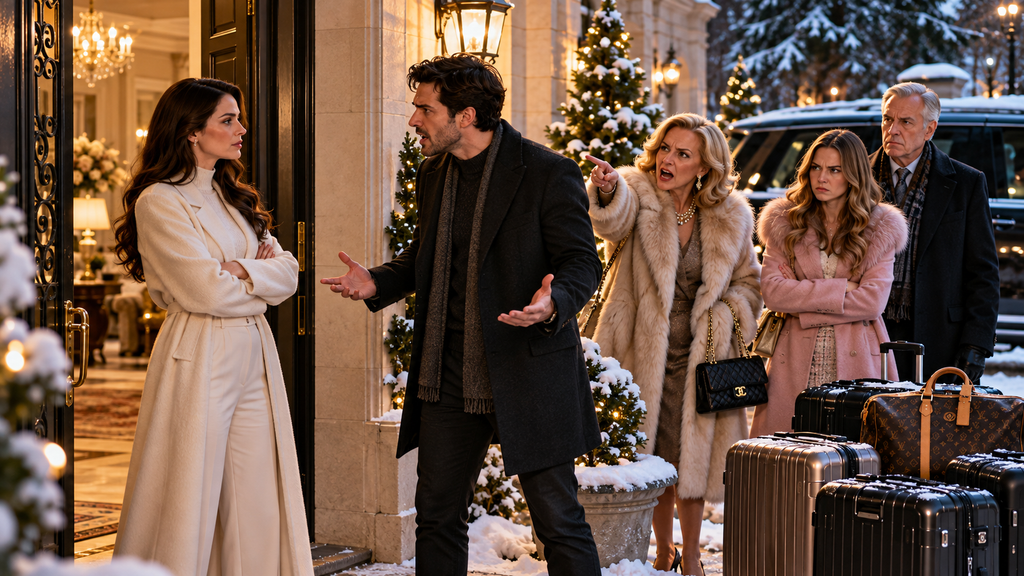
I sat in my grandfather’s favorite armchair, holding a warm cup of coffee, watching four people stand outside a house they had spent years pretending was theirs.
The morning sunlight filtered through the tall windows.
On the coffee table in front of me lay three folders.
One contained my divorce petition.
One contained financial records.
And the third contained something that would eventually make Patricia wish she had never threatened me.
I pressed the intercom button.
“Good morning, Mauro.”
“Don’t play games with me. Open the damn door.”
“Why?”
There was a moment of silence.
Then he laughed.
It was a short, disbelieving laugh.
“Because I live here, Rebecca. What kind of stupid question is that?”
I glanced at the photograph of my grandfather hanging above the fireplace.
He was smiling in that picture.
For a moment, I could almost hear his voice.
Never mistake someone’s confidence for their authority, sweetheart.
I smiled.
“That’s interesting,” I said. “Because according to the documents in front of me, your right to live here is considerably more complicated than you think.”
“What documents?”
“Documents you should have read before threatening to divorce me.”
Patricia pushed Mauro aside.
Her face filled the camera.
“Rebecca, you ungrateful little witch! Open this door immediately!”
I said nothing.
“Do you hear me? I am not standing outside like some common criminal while you sit in there playing queen of the castle!”
“Then perhaps you should stop behaving like someone who has come to commit a crime.”
Her mouth fell open.
“What did you just say?”
“Patricia, you threatened to throw me out of this house. Repeatedly. I thought you deserved the opportunity to discover who actually owns it.”
Mauro stepped back into view.
“Enough. I’m giving you ten seconds.”
I looked at the clock.
“Nine should be plenty.”
“Rebecca!”
“Eight.”
“Stop!”
“Seven.”
He slammed his fist against the door.
“Six.”
Jamie began shouting in the background.
“She’s completely lost her mind!”
“Five.”
Richard finally spoke.
“Mauro, stop hitting the door.”
“Four.”
Patricia shrieked.
“I’m calling the police!”
“Three.”
Mauro leaned toward the camera.
“You’re going to regret humiliating me.”
“Two.”
His face turned red.
“REBECCA!”
“One.”
I released the button.
Then I picked up my coffee and took another sip.
For the first time since marrying Mauro, I wasn’t afraid of what would happen when he got angry.
I was curious.
Because there was something deeply satisfying about watching a man discover that intimidation only works when the person on the other side still believes in it.
And I no longer believed in Mauro.
Not his promises.
Not his excuses.
Not his carefully manufactured image.
Not even the man I had once loved.
That man, I was beginning to understand, had never really existed.
Ten minutes later, a black sedan pulled into the driveway.
Veronica Saldana stepped out carrying a leather briefcase.
My attorney was forty-six, impeccably dressed, and possessed the kind of composure that made unreasonable people increasingly unreasonable in her presence.
She walked toward the front steps.
Patricia immediately intercepted her.
“Are you the real estate agent?” she demanded.
Veronica paused.
“No.”
“Then you can leave. This is a private family matter.”
“I agree,” Veronica replied. “Which is why I suggest you stop screaming about it in front of the neighbors.”
Mauro recognized her.
His expression changed.
“Veronica?”
“Good morning, Mauro.”
“What are you doing here?”
“Representing my client.”
He blinked.
“What client?”
Veronica looked directly at the security camera.
“Rebecca, would you mind opening the door?”
I rose from the armchair.
For one extraordinary second, I saw Mauro smile.
He thought Veronica had convinced me to surrender.
He even straightened his jacket.
Then I opened the door.
Only far enough for Veronica to step inside.
“Thank you,” she said.
Mauro moved to follow her.
I raised one hand.
“Not you.”
He stopped.
“You can’t be serious.”
“I’m completely serious.”
His smile vanished.
“Rebecca, move.”
“No.”
“I’m your husband!”
“Yes,” I said quietly. “That’s one of the problems we’re here to solve.”
Veronica stepped beside me.
“Mauro, before anyone enters, I need to explain something.”
He looked at her with contempt.
“I don’t need a lecture from my wife’s lawyer.”
“You might want one.”
Patricia folded her arms.
“Just tell her to stop this nonsense.”
Veronica opened her briefcase.
She removed a document.
Then she turned it toward them.
“This property is held by the Whitmore Family Residence Trust. Rebecca is its sole current beneficiary, and the trustee has confirmed its ownership and the authority governing occupancy.”
Patricia frowned.
“What does that mean?”
“It means,” I answered, “that this house does not belong to you.”
Mauro laughed.
“Obviously it doesn’t belong to my mother.”
“No,” I replied. “It doesn’t belong to you, either.”
His laughter stopped.
Jamie rolled her eyes.
“Oh my God. You’re making such a big deal over paperwork.”
Veronica continued calmly.
“The trust acquired this property years before Rebecca and Mauro married. Mauro’s name does not appear on the deed, and neither does anyone else’s in your family.”
Patricia waved her hand dismissively.
“That doesn’t matter. They’re married.”
“Marriage,” Veronica said, “does not magically transfer legal ownership of every asset one spouse possesses.”
Mauro stared at the paper.
Then at me.
Then back at the paper.
I could see him calculating.
He was looking for a weakness.
A loophole.
A threat that would restore the natural order of his universe.
Finally, he said, “I paid for renovations.”
“You mean the kitchen renovation that Rebecca’s company reimbursed after you promised to pay your portion?” Veronica asked.
His face tightened.
“That’s not what happened.”
“Then I’m sure you’ll enjoy reviewing the invoices.”
Richard suddenly looked down.
Patricia noticed.
“Richard?”
He didn’t answer.
And that was the first moment I realized something.
Richard wasn’t surprised.
Not entirely.
He looked ashamed.
At the time, I didn’t know why.
But before the week was over, I would discover that Mauro’s father had been carrying a secret much longer than any of us imagined.
“Where are our belongings?” Jamie demanded.
She pushed forward with two suitcases.
“My clothes are inside.”
“Your clothes are safe,” I said.
“Then let me get them.”
“You’ll receive the agreed arrangements for collecting them through Veronica.”
Jamie laughed.
“Agreed arrangements? You sound insane.”
“No,” I said. “I sound like a woman who has finally started putting things in writing.”
Mauro narrowed his eyes.
“What exactly are you doing?”
Veronica handed him a sealed envelope.
“These are preliminary documents relating to Rebecca’s petition for dissolution of marriage. Formal service will proceed through the required legal process.”
Mauro stared at it.
For the first time that morning, he stopped shouting.
He looked at me.
And in his eyes I saw something I hadn’t expected.
Not regret.
Not sadness.
Disbelief.
As though divorce was an idea that belonged exclusively to him.
He had threatened it so often that he considered it one of his possessions.
Something he could take from a shelf whenever I displeased him.
Now I had taken it out of his hands.
“Rebecca,” he said slowly, “you’re not actually doing this.”
“Yes.”
“Over a credit card?”
“No.”
“Then what?”
I looked at him.
“Over the last three years.”
His face hardened.
“You’re being dramatic.”
“No, Mauro. I was dramatic when I begged you to defend me while your mother mocked my work. I was dramatic when I cried because you gave Jamie my anniversary necklace without asking. I was dramatic when I discovered you had been telling your friends that my business was a little hobby you helped finance.”
Jamie scoffed.
“That necklace didn’t even suit you.”
I turned toward her.
“Thank you, Jamie.”
She blinked.
“For what?”
“For reminding me why I don’t feel guilty.”
Patricia stepped forward.
“This is ridiculous. Families share things.”
I nodded.
“Yes. Families share meals, memories, kindness, and responsibility. They don’t steal credit cards and call it love.”
Mauro reached for my arm.
I stepped back.
His hand closed around empty air.
Something flashed across his face.
Anger.
Then humiliation.
Then something far more dangerous.
Determination.
“You think you can just erase me?” he whispered.
“No.”
I met his eyes.
“I think I can stop letting you erase me.”
For several seconds, nobody spoke.
Then Veronica cleared her throat.
“Mauro, we’ll communicate the practical arrangements through counsel. No one is being denied lawful access to personal property, and no one should attempt to force entry.”
Patricia gave a harsh laugh.
“Lawful access. Counsel. Documents. You people are pathetic.”
Veronica looked at her.
“Mrs. Bellini, your messages threatening to remove Rebecca from this property have been preserved. I strongly recommend that your future communications be more thoughtful.”
Patricia’s face changed.
Only slightly.
But I noticed.
She glanced at Mauro.
He glanced away.
And suddenly, beneath all their arrogance, I sensed something else.
They weren’t merely angry that I had canceled the card.
They were frightened.
Not of losing the vacation.
Not even of losing the house.
They were frightened because something they had carefully hidden might finally be exposed.
By noon, the family had left the property.
Not peacefully.
Patricia called me six different names.
Jamie recorded a video claiming I had thrown four innocent people onto the street.
Mauro announced that he would destroy me financially.
Richard said almost nothing.
They drove away in a rented SUV, the same one Mauro had reserved using my Platinum card.
An hour later, the rental company called about the payment arrangement.
I directed them to Mauro.
That simple sentence felt like a victory.
Please contact the person who rented the vehicle.
No yelling.
No defending myself.
No desperate explanation.
Just responsibility being returned to its rightful owner.
At one-thirty, Veronica and I sat in my office.
She had spread documents across the desk.
My grandfather’s old walnut desk.
The one he used for nearly forty years.
He had built his construction company from a single pickup truck and a borrowed toolbox.
By the time he retired, he owned commercial properties throughout Illinois.
He had always said money was only useful if it bought freedom rather than fear.
When he died, he left me a modest personal inheritance, beneficial interests in several trusts, and a collection of letters.
Not instructions on how to become wealthy.
Instructions on how to remain myself.
I remembered one sentence particularly clearly.
People who love you will never demand that you surrender your judgment as proof of your devotion.
Mauro had spent three years doing exactly that.
“Rebecca?”
I looked up.
Veronica was watching me.
“Are you ready to see the full report?”
My stomach tightened.
“The company transactions?”
“Yes.”
I nodded.
She opened the first folder.
Across the top of the page was the name of one of my company’s approved vendors.
Lakefront Strategic Consulting LLC.
I recognized it.
We had paid that firm for marketing research and commercial development work.
At least, that was what our internal accounting records said.
Veronica tapped the page.
“Your CFO reviewed thirty-two payments made during the last eleven months.”
“How much?”
She hesitated.
“Two hundred and eighty-six thousand, four hundred dollars.”
I felt the blood drain from my face.
I had expected suspicious spending.
Perhaps forty thousand.
Maybe sixty.
But nearly three hundred thousand dollars?
I gripped the edge of the desk.
“Who approved them?”
“An internal user account with elevated payment privileges.”
“Whose?”
Veronica turned the page.
And there it was.
Mauro Bellini.
For a moment, the room seemed to tilt.
I stared at the name.
“I removed his authorization last year.”
“I know.”
“He was only supposed to have limited access before that.”
“I know.”
“So how?”
Veronica slid another document toward me.
“Someone reinstated those privileges using an administrative override.”
“Who?”
She didn’t answer immediately.
Instead, she asked, “Do you remember signing an emergency delegation form last October?”
I frowned.
“No.”
“Think carefully. You were hospitalized with pneumonia.”
I remembered.
Five days in the hospital.
An oxygen mask.
A fever so high that I barely knew what day it was.
Mauro had come twice.
He brought flowers once.
The second time, he brought a stack of paperwork and told me the company needed my signature on routine documents.
I had been too weak to read everything.
I remembered asking him to come back when I felt better.
He insisted it was urgent.
And I remembered signing one form.
Only one.
My hands started to tremble.
“He used my illness.”
Veronica’s expression softened.
“The records suggest a delegation document was later used to justify continued system access. We still need forensic verification of what was signed and whether anything was altered.”
I closed my eyes.
There are betrayals that arrive with shouting.
And there are betrayals that arrive years later, disguised as a memory you hadn’t understood correctly.
I saw myself lying in that hospital bed.
Trusting my husband.
Believing that the man standing beside me with a pen was helping.
I opened my eyes.
“Where did the money go?”
Veronica turned another page.
“That’s the next problem.”
She pointed to a series of transfers.
“The consulting company appears to have distributed much of the money into several accounts. One belongs to a business controlled by Jamie.”
I stared.
“Jamie?”
“Yes.”
“Jamie doesn’t have a business.”
“Apparently she does.”
Veronica placed a corporate registration on the desk.
Bellini Lifestyle Holdings LLC.
Registered eighteen months earlier.
Managing member:
Jamie Bellini.
Business address:
Patricia and Richard’s home.
I stared at the document until the letters blurred.
For months, Jamie had boasted about building her own luxury travel brand.
She posted photographs of designer shopping bags and exclusive hotels.
She called herself an entrepreneur.
She told everyone she was finally succeeding without anyone’s help.
I had congratulated her.
I had even offered to introduce her to two marketing consultants.
She had laughed and said she preferred building things on her own.
My throat tightened.
“She’s been using my money.”
Veronica folded her hands.
“The transfers raise serious questions. We need to distinguish legitimate services from transactions that were unauthorized or fraudulent.”
I laughed once.
It sounded strange.
Almost like a sob.
“She’s been insulting me with things I paid for.”
Veronica said nothing.
She didn’t need to.
I looked down at the documents.
Then another thought struck me.
“Mauro’s mother knew.”
“We don’t know that yet.”
“She knew.”
“Rebecca—”
“Every time Jamie showed up with a new handbag, Patricia told me that hard work was finally paying off for her daughter. Every time Mauro asked me to be more supportive, he said Jamie was creating something special.”
I swallowed.
“They were laughing at me.”
Veronica leaned forward.
“Maybe. But right now, what matters is proving exactly what happened.”
I nodded.
She was right.
Anger could tell me what I suspected.
Evidence would tell me what I could establish.
And I was no longer interested in winning arguments.
I wanted the truth.
All of it.
Even the parts that would hurt.
At four-twenty that afternoon, my phone rang.
Richard.
I almost ignored it.
In three years of marriage, my father-in-law had never called me without Patricia standing nearby.
He was a quiet man.
A retired engineer.
The kind who folded his newspaper neatly, washed his own coffee cup, and looked out the window whenever his wife began criticizing someone.
I had once mistaken his silence for gentleness.
Now I wondered whether it had simply been convenience.
I answered.
“Richard?”
His voice was barely audible.
“Rebecca, are you alone?”
“Yes.”
“Is Mauro there?”
“No.”
A pause.
“Good.”
I sat straighter.
“What’s wrong?”
He exhaled slowly.
“Can we meet?”
“About what?”
“I need to show you something.”
My heart began beating faster.
“What something?”
He hesitated.
Then he said five words that changed everything.
“Your grandfather came to me.”
I froze.
“What?”
“Before he died.”
For a moment, I couldn’t speak.
My grandfather had died five years before I married Mauro.
Richard and I had barely met before the wedding.
“What are you talking about?”
“Please,” he whispered. “Not over the phone.”
I stared at the wall.
“Why should I trust you?”
The silence stretched.
Then Richard said, “You shouldn’t.”
I held my breath.
“You have every reason not to trust me, Rebecca. But if I don’t tell you what I know now, I may never find the courage.”
“Why now?”
“Because I watched my son pound on your door this morning.”
His voice cracked.
“And I finally saw the man I helped raise.”
We met at a small café near Lincoln Park.
I arrived with Veronica.
Richard sat alone at a corner table.
He looked older than he had that morning.
His coat was wrinkled.
His hands trembled slightly around a cup of tea.
When he saw me, he stood.
“Rebecca.”
I stopped beside the table.
“Where’s Patricia?”
“At the hotel.”
“Does she know you’re here?”
“No.”
I sat down.
Veronica remained beside me.
Richard looked at her.
“I expected you would bring someone.”
“You can speak freely,” I said. “But Veronica is staying.”
He nodded.
“That’s wise.”
Then he reached into his coat.
He removed a worn brown envelope.
Across the front was my grandfather’s name.
Thomas Whitmore.
My breath caught.
I knew his handwriting.
Every Christmas card.
Every birthday letter.
Every note he tucked inside books he gave me.
I would have recognized those sharp, slanting letters anywhere.
Richard placed the envelope on the table.
“I’ve kept this for seven years.”
“Why?”
“Because I was ashamed.”
I stared at him.
“Of what?”
He looked down.
“Of what my family did to yours.”
Seven years earlier, my grandfather had invested in a commercial property redevelopment project.
A small venture on Chicago’s west side.
It was supposed to convert an old industrial warehouse into affordable office spaces for local businesses.
Richard had been consulting on the engineering work.
Mauro, who was younger then, had persuaded several investors that he could manage the project.
He had prepared presentations.
Hosted dinners.
Made promises.
And spent money.
Lots of it.
When the redevelopment failed, Mauro blamed market conditions.
Richard believed him.
Patricia defended him.
Everyone agreed the investors had simply been unlucky.
Except my grandfather.
He reviewed the records.
And discovered expenses that had nothing to do with construction.
Luxury hotel charges.
Personal travel.
Consulting fees to companies that barely existed.
Unexplained withdrawals.
My stomach tightened.
“How much?”
Richard looked at Veronica.
Then at me.
“Just over four hundred thousand dollars.”
I stared.
“My grandfather lost that much?”
“He was exposed to those losses. But what bothered him wasn’t only the money.”
“What was it?”
“He suspected Mauro was misrepresenting where the project funds had gone.”
My pulse quickened.
“Did he confront him?”
Richard nodded.
“Yes.”
“What happened?”
Richard’s mouth trembled.
“Mauro cried.”
I blinked.
“He what?”
“He cried. He said he’d made terrible mistakes. He said Patricia had pressured him to maintain appearances. He promised to repay everything if your grandfather gave him another chance.”
I stared at the envelope.
“That sounds like Mauro.”
Richard looked at me with painful recognition.
“Yes. I suppose it does.”
“Did Grandpa forgive him?”
“He agreed not to escalate the dispute immediately, subject to repayment and proper accounting.”
“And?”
Richard swallowed.
“Mauro never fully repaid him.”
For several seconds, I couldn’t move.
My grandfather had known.
Years before I married Mauro, he had already seen the kind of man Mauro could become.
“Why didn’t Grandpa tell me?”
Richard looked devastated.
“Because you hadn’t met Mauro yet. And when you did, Thomas was already ill.”
I shook my head.
“No. That doesn’t make sense. Grandpa would have warned me.”
Richard pushed the envelope closer.
“He tried.”
I looked up.
“What?”
“He wrote you a letter.”
The café seemed to disappear around me.
I stared at the envelope.
The old brown paper.
The familiar handwriting.
My name.
Rebecca.
Underneath it, in smaller letters:
Only if she needs to know.
I couldn’t breathe.
Richard continued.
“He gave it to me because he wanted me to confront my son. He hoped Mauro would change. He said if Mauro ever tried to build a relationship with you, I should tell you about the project.”
My hands clenched.
“And you didn’t.”
“No.”
“Why?”
His eyes filled.
“Because Patricia begged me not to ruin Mauro’s future.”
I felt something inside me go cold.
“You let me marry him.”
Richard closed his eyes.
“Yes.”
“You watched me stand at that altar.”
“Yes.”
“You watched me build a life with a man you knew had already cheated my grandfather.”
A tear slipped down his cheek.
“Yes.”
My voice broke.
“And you said nothing.”
Richard nodded.
“I will regret it for the rest of my life.”
For a moment, I wanted to scream.
I wanted to throw the envelope across the café.
I wanted to demand how many people had watched me walk willingly into a trap and decided their comfort mattered more than my future.
Instead, I picked up the letter.
My grandfather’s handwriting blurred behind my tears.
I carefully opened it.
Inside was a single folded page.
I recognized the stationery.
Cream-colored paper.
A small embossed tree in the corner.
The same stationery he used for all his personal letters.
I unfolded it.
And began to read.
My dearest Rebecca,
If this letter has reached you, it means someone I hoped would learn from his mistakes has chosen instead to repeat them.
I wish I could be there to speak to you myself.
I wish I could make you tea, sit across from you at the kitchen table, and remind you that no mistake you make in love can diminish the value of your life.
You have always had a generous heart.
That is one of your greatest strengths.
But generosity without boundaries becomes an invitation to people who mistake kindness for weakness.
I have learned troubling things about a young man named Mauro Bellini.
I hope he grows into someone better than the choices he has made.
If he does not, and if your paths ever cross, I want you to know this: you owe no one the right to spend your life proving that you are worthy of ordinary respect.
The trust was created to protect you, not to isolate you.
The company shares were arranged to preserve your independence, not to make you fearful.
And the house is meant to be a home, not a prize someone can win by marrying you.
You are my greatest achievement, Rebecca.
Not the buildings.
Not the investments.
Not the money.
You.
Please never forget that.
Love always,
Grandpa.
By the time I finished reading, tears were falling onto the paper.
I pressed the letter against my chest.
For three years, I had apologized for things that were not my fault.
I had made myself smaller so Mauro would feel bigger.
I had pretended not to notice Patricia’s insults.
I had convinced myself that love meant patience without limits.
And all along, the man who had taught me what love truly meant had left me one final reminder.
I wasn’t supposed to endure cruelty.
I was supposed to recognize it.
Veronica placed a hand gently over mine.
Richard was crying openly now.
“Rebecca,” he whispered, “I’m so sorry.”
I looked at him.
“You should be.”
He nodded.
“I know.”
For a long time, nobody spoke.
Then I folded the letter and returned it to its envelope.
“Is there anything else?”
Richard swallowed.
“Yes.”
I looked up.
His expression had changed.
The sadness remained.
But beneath it was fear.
“Patricia knows about the company payments.”
Veronica leaned forward.
“What exactly does she know?”
Richard rubbed his forehead.
“She knows Mauro has been taking money from somewhere he shouldn’t.”
“From Rebecca’s company?”
“I don’t know how much she understands.”
“Has she received any of it?”
Richard looked away.
I felt my stomach drop.
“Richard.”
He closed his eyes.
“Yes.”
“How?”
“She asked Mauro to help with the mortgage.”
I frowned.
“Your mortgage?”
He nodded.
“I thought we had paid that off.”
Veronica straightened.
“What do you mean?”
Richard stared at his hands.
“Patricia refinanced the house without telling me the full details. She said she was consolidating some expenses.”
“How much?” I asked.
He whispered the number.
“Three hundred and twenty thousand.”
I stared.
“Why?”
He hesitated.
Then finally said, “Jamie.”
I closed my eyes.
Of course.
Jamie.
The luxury trips.
The designer handbags.
The failed ventures.
The endless insistence that she was on the verge of tremendous success.
“What did she need three hundred thousand dollars for?”
Richard’s face crumpled.
“Her business.”
Veronica asked, “The travel company?”
He nodded.
“Patricia said Jamie had investors. That she was about to launch something extraordinary.”
I stared at him.
“And the money disappeared?”
“Most of it.”
The café seemed suddenly too warm.
Richard leaned forward.
“Rebecca, there’s something else.”
I almost laughed.
Of course there was.
With the Bellinis, there was always something else.
“What?”
He took a trembling breath.
“Patricia has been telling people you agreed to guarantee that loan.”
I froze.
“I did what?”
“She said the bank approved it because you promised financial support.”
Veronica’s expression sharpened.
“Richard, was Rebecca’s name actually placed on any application or guarantee?”
“I don’t know.”
“Have you seen the documents?”
“No.”
Veronica looked at me.
“We need copies immediately.”
I stared at Richard.
“Did you believe her?”
His silence answered before his words did.
“Yes.”
I felt something tear inside me.
Not because of the money.
Not even because someone might have misused my name.
But because an entire family had treated my financial security like a public resource.
Something they could borrow.
Promise.
Spend.
And sacrifice.
All without asking me.
I looked at Richard.
“Why are you telling me this now?”
He wiped his face with a napkin.
“Because last night I heard Patricia speaking to Mauro.”
My pulse quickened.
“What did she say?”
Richard looked directly at me.
“She told him that if you wouldn’t come back willingly, he needed to make sure you couldn’t afford to leave.”
I didn’t sleep that night.
I sat in my grandfather’s office until nearly three in the morning.
The letter lay beside me.
Veronica had taken copies of everything Richard brought.
My CFO, Daniel Cho, had arranged for an independent forensic accounting firm to examine the suspicious payments.
We had notified the bank about possible misuse of my identity and asked for verification of any guarantees bearing my name.
I had also changed my personal banking passwords, enabled additional security controls, and revoked any remaining unnecessary account access.
Every practical step made sense.
Every step was necessary.
But emotionally, I felt as though I had been pulled through years of my marriage and forced to watch the same scenes with new eyes.
The anniversary dinner where Mauro ordered champagne worth more than the flowers he had bought me.
The weekend he insisted we spend at a luxury resort because his parents deserved a break.
The business conference where he introduced himself as my company’s strategic partner.
The morning I was sick and he demanded that I sign documents because he was “only trying to help.”
Every memory felt contaminated.
At two-fifty-seven, my phone vibrated.
A message from Mauro.
I think we’ve both said things we don’t mean.
I stared at the screen.
Then another message arrived.
Let’s stop letting lawyers poison our marriage.
I didn’t respond.
A third message followed.
I miss you.
I felt tears sting my eyes.
Not because I believed him.
Because there had been a time when those three words could have repaired almost anything between us.
I would have forgiven insults.
Ignored lies.
Accepted excuses.
I would have rushed to open the door.
I would have made him coffee.
I would have apologized for being difficult.
And then I would have spent another six months slowly disappearing inside my own life.
My phone vibrated again.
Baby, please.
I closed my eyes.
That word.
Baby.
He used it when he wanted something.
When he needed money.
When his mother had offended me.
When I questioned his spending.
I had mistaken it for tenderness.
Now it sounded like a key he kept trying in a lock that had finally been changed.
Another message appeared.
I don’t want a divorce.
I stared at it for a long moment.
Then I typed my reply.
You should have thought about that before you threatened one every time I refused to obey you.
I pressed send.
His response came almost immediately.
You’re making a terrible mistake.
I read it.
Then turned off my phone.
For the first time, I didn’t need to convince him I was right.
I only needed to stop allowing him to decide what happened next.
The following morning, Veronica called at seven-fifteen.
“Rebecca, are you sitting down?”
I was in the kitchen.
“No.”
“Please sit.”
I pulled out a chair.
“What happened?”
“We obtained information about the loan Richard mentioned.”
My heart raced.
“And?”
“The lender’s preliminary response confirms your name appeared in the submitted package.”
I swallowed.
“As a guarantor?”
“Yes. But that doesn’t establish that you agreed to guarantee anything. We need the original documents and authentication records.”
I gripped the table.
“I never signed a guarantee.”
“I believe you.”
“What does it say?”
“The package includes a signature that appears to be yours.”
For a second, I couldn’t hear anything.
I looked down at my hands.
The same hands that had built a company.
Signed paychecks.
Held my grandfather’s hand during his final days.
The same hands Mauro had kissed when he promised to cherish me.
Someone had apparently put my name on a financial commitment I had never approved.
“How much exposure?”
“The loan’s current balance is significant. We are challenging the purported authorization and demanding preservation of the records.”
I pressed my fingers against my forehead.
“Who submitted it?”
“We’re tracing the submission and any intermediaries.”
I breathed slowly.
“Do we know if Mauro was involved?”
“Not yet.”
“Patricia?”
“Not yet.”
I closed my eyes.
Veronica’s voice softened.
“Rebecca, listen carefully. A document bearing your name doesn’t automatically mean it’s enforceable against you. We have a process for challenging it.”
“I know.”
“But I need you focused.”
I nodded even though she couldn’t see me.
“Okay.”
“And there’s something else.”
I waited.
“Daniel found a second vendor.”
My stomach tightened.
“What second vendor?”
“North Shore Advisory Partners.”
I recognized the name immediately.
We had hired them to help evaluate a possible acquisition.
The contract was supposed to be limited.
Short-term.
Professional.
“What about them?”
“Several invoices appear to have been inflated. And the consultant listed as the primary contact is someone you know.”
“Who?”
Veronica paused.
Then she said a name I had not expected.
“Cassandra Vale.”
I stared at the wall.
Cassandra.
My husband’s former girlfriend.
I had met Cassandra twice.
The first time was at a charity gala.
She was tall, elegant, and effortlessly confident.
She wore an emerald dress and greeted Mauro with a kiss on each cheek.
He introduced her as an old friend.
I noticed the way she looked at him.
The easy familiarity.
The private smile.
But I told myself not to be jealous.
Marriage required trust.
That was what Mauro always said.
The second time was at a business dinner.
Cassandra was seated beside Patricia.
They laughed together throughout the evening.
At one point, Patricia leaned toward me and said, “Cassandra always understood our family.”
I remembered the words.
And the cruel little smile that followed.
Mauro later insisted I was imagining things.
“You’re threatened by every woman who knows how to talk to investors,” he said.
I apologized.
I actually apologized.
Now Veronica was telling me that Cassandra’s consulting firm had received payments from my company.
Payments Mauro had helped authorize.
I felt sick.
“Is he having an affair?”
Veronica hesitated.
“We don’t have evidence that would establish that.”
“But they’re involved financially?”
“There are concerning connections.”
I stared at the window.
Outside, the city was waking up.
People walked dogs.
Cars passed.
A delivery truck stopped across the street.
Ordinary life continued.
I wanted to scream at the unfairness of that.
My marriage was collapsing.
My company might have been exploited.
My identity may have been used without my consent.
And somewhere, someone was buying a latte.
“Rebecca?”
“I’m here.”
“There’s more.”
I closed my eyes.
“Of course there is.”
“Cassandra contacted Daniel yesterday.”
I froze.
“She did what?”
“She said she had information about Mauro.”
I sat straighter.
“What kind of information?”
“She wouldn’t discuss it with him.”
“Why?”
“She said she wanted to speak with you directly.”
At ten-thirty, Cassandra Vale walked into Veronica’s office.
She looked nothing like the woman I remembered.
Her hair was tied back.
She wore a simple gray suit.
There was no expensive handbag.
No sparkling jewelry.
No confident smile.
She looked exhausted.
I stood when she entered.
She stopped just inside the doorway.
“Rebecca.”
I folded my arms.
“Cassandra.”
Her gaze dropped.
“Thank you for agreeing to meet.”
“I haven’t agreed to believe anything you say.”
She nodded.
“That’s fair.”
Veronica gestured toward a chair.
Cassandra sat.
Then she placed a small USB drive on the table.
I stared at it.
“What’s that?”
She took a breath.
“Records. Emails. Messages. Copies of invoices.”
My throat tightened.
“Why are you giving them to me?”
“Because Mauro lied to me too.”
I laughed bitterly.
“About what?”
She looked at me.
“Everything.”
I felt my hands grow cold.
Cassandra rubbed her fingers together.
“I knew Mauro before you met him. We dated for almost two years.”
“I know.”
“He told me you were a family acquaintance when you first started seeing each other.”
I stared.
“What?”
“He said you were helping him finance a business expansion.”
My chest tightened.
“And?”
“He told me your relationship was a strategic arrangement.”
For a moment, I couldn’t speak.
Cassandra’s voice shook.
“He said you weren’t really in love. That your marriage would help both families. That you had your own reasons for wanting the arrangement.”
I stared at her.
“You believed that?”
“At first.”
“Even after the wedding?”
She looked ashamed.
“He told me you knew he and I were still close.”
The room became unbearably quiet.
I could hear the clock ticking.
I looked at Veronica.
Then back at Cassandra.
“Were you sleeping with my husband?”
Cassandra closed her eyes.
“Yes.”
One word.
One small word.
And somehow it carried the weight of everything I had been trying not to imagine.
I sat very still.
“How long?”
She swallowed.
“On and off. For most of your marriage.”
I stared at the table.
I expected to cry.
I expected rage.
Instead, I felt an extraordinary emptiness.
Like walking into a room and discovering all the furniture had been removed.
“Did Patricia know?”
Cassandra nodded.
“Yes.”
“Jamie?”
“Yes.”
I looked up.
“Richard?”
“I don’t think so.”
I thought of every family dinner.
Every celebration.
Every holiday photograph.
Patricia smiling at me across the table.
Jamie asking whether I was finally going to give Mauro a baby.
Mauro reaching for my hand in public.
All of them knowing.
All of them protecting the same lie.
I whispered, “Why?”
Cassandra’s eyes filled.
“Because he told me he loved me.”
I looked at her.
“And you didn’t care that he was married?”
She shook her head.
“I can’t defend what I did. I should have walked away.”
“No,” I said quietly. “You should have told me.”
She nodded.
“You’re right.”
Veronica leaned forward.
“Cassandra, let’s focus on the financial records.”
Cassandra nodded quickly.
She opened her laptop.
“The consulting work began legitimately. My firm performed some market research for Rebecca’s company. But after a few months, Mauro began asking for additional invoices.”
“Additional services?” Veronica asked.
“No. Additional invoices.”
I swallowed.
Cassandra continued.
“He said the money was being moved between entities for tax and investment planning.”
“And you accepted that?”
“At first. Then I asked questions.”
“What happened?”
“He threatened me.”
I looked up.
Cassandra’s lips trembled.
“He said if I exposed him, he’d make sure everyone knew I’d helped.”
Veronica’s expression sharpened.
“Did you?”
Cassandra nodded miserably.
“Yes. I approved invoices I shouldn’t have approved.”
The admission hung in the room.
She looked at me.
“I know I may face consequences. I deserve to be investigated for my part. But I won’t keep helping him.”
I stared at her.
For a moment, I hated her.
Not abstractly.
Not politely.
I hated the fact that she had touched my husband while I trusted him.
I hated that she had smiled at me across dinner tables.
I hated that she had accepted money from my company while helping him betray me.
But beneath the anger was something else.
She was sitting in front of me, admitting what she had done.
Mauro still wasn’t.
That didn’t make her innocent.
It made her useful to the truth.
“Why now?” I asked.
She looked at the drive.
“Because last week Mauro told me the marriage was almost over.”
My pulse quickened.
“And?”
“He said once you were out of the way, everything would finally be his.”
I stared.
“What exactly did he say?”
Cassandra swallowed.
“He said you had no idea how much money your grandfather really left you.”
My stomach dropped.
Veronica sat straighter.
“Explain that.”
Cassandra reached into her bag.
She removed a folded piece of paper.
It was a printed email.
From Mauro.
To Cassandra.
Sent two months earlier.
The subject line read:
Whitmore Trust — Distribution Strategy.
My heart began pounding.
I read the message.
Then read it again.
Mauro had been discussing my grandfather’s trust.
Not the residence trust alone.
Another trust.
One I had barely thought about because its principal assets were managed separately, with scheduled distributions and specific conditions.
Mauro had somehow learned enough to estimate its value.
And he had written one sentence that made my skin go cold.
Once Rebecca is convinced to restructure the holdings, we’ll have the liquidity we need.
I looked at Veronica.
She looked equally disturbed.
Cassandra continued quietly.
“He wanted me to help find a financial adviser who could make the restructuring look attractive.”
“Restructuring into what?” Veronica asked.
“A new investment entity.”
“Controlled by whom?”
Cassandra looked at me.
“Mauro.”
I felt the last fragile remnants of my marriage crumble.
He hadn’t simply married me for money.
He had a plan.
A patient one.
A careful one.
He had spent years making me doubt my judgment.
Years convincing me that my success depended on his guidance.
Years normalizing the idea that a good wife shared everything without question.
And all that time, he was waiting for the moment I would sign something that could give him control.
I stared at the email.
Then I started laughing.
Cassandra looked startled.
“Rebecca?”
I couldn’t stop.
The laughter was quiet at first.
Then sharper.
More broken.
Tears streamed down my cheeks.
Veronica reached for my hand.
I shook my head.
“No. It’s okay.”
But it wasn’t okay.
Nothing about it was okay.
I wiped my face.
“He threatened to divorce me because I canceled a credit card.”
Cassandra nodded uncertainly.
“Yes.”
I laughed again.
“He thought that would frighten me into surrendering.”
Veronica looked at the documents.
“And instead, he exposed the entire scheme.”
I looked at her.
For the first time that day, my laughter became real.
“Yes.”
Then I straightened.
“Let’s make sure we can prove it.”
The investigation continued for several weeks.
Those weeks changed me more than the previous three years had.
I learned that justice rarely moves at the speed of anger.
I learned that suspicious transactions were not the same thing as proven fraud.
I learned that financial institutions had procedures, investigators needed records, and courts required evidence.
Most importantly, I learned to stop confusing action with noise.
Mauro made noise.
Constantly.
I took action.
Quietly.
He posted vague messages about betrayal.
I gave documents to my attorney.
He told mutual friends I had abandoned him.
I refused to argue on social media.
He claimed the credit card dispute was a misunderstanding.
I preserved the bank statements and communications.
He threatened to take half my company.
Veronica analyzed the ownership records and marital property questions instead of allowing his threats to set the agenda.
Every day, I became a little less afraid.
And every day, Mauro became a little more desperate.
One Tuesday morning, Jamie posted a video.
She sat in a hotel suite, wearing a cream-colored sweater and enormous sunglasses.
Her voice trembled theatrically.
“I never thought I’d have to speak publicly about something so painful,” she began.
I watched the video on my phone.
Not because I wanted to.
Because my communications director forwarded it with a short message.
You should see this before clients start asking questions.
Jamie dabbed at her eyes.
“My family has been subjected to financial abuse by someone we trusted. A woman who used money to control my brother and punish us when we refused to worship her.”
I almost dropped the phone.
She continued.
“We’ve lost our home. Our business opportunities are being destroyed. And all because one person believes wealth gives her the right to humiliate innocent people.”
The video had already attracted thousands of views.
Most of the comments were sympathetic.
Some called me cruel.
Others accused me of using my grandfather’s fortune to punish a struggling family.
Jamie ended by looking directly into the camera.
“Rebecca, if you’re watching this, I hope one day you’ll understand that money can’t buy a good heart.”
I stared at the screen.
Then I called Veronica.
“Have you seen it?”
“Yes.”
“Can we respond?”
“We can. But carefully.”
“I want to tell everyone what they did.”
“I understand.”
“No, Veronica. She’s accusing me of financial abuse while she’s under investigation for receiving company funds.”
“We need to avoid making public claims that could complicate the ongoing matters.”
I closed my eyes.
“So what do we do?”
“We correct demonstrably false statements without disclosing protected records, and we keep the full evidence in the proper channels.”
I exhaled.
“That’s less satisfying than I’d hoped.”
Veronica laughed softly.
“Legal strategy often is.”
We issued a brief statement through counsel.
It confirmed that my marriage was ending, that certain financial matters were under review, and that I would not discuss private family allegations publicly.
No insults.
No accusations presented as proven facts.
No dramatic revelations.
Jamie called it a cowardly response.
Patricia told relatives that my silence proved guilt.
Mauro wrote that the truth would soon come out.
I read his message.
And whispered to myself:
“Yes, Mauro.”
“The truth will.”
Three days later, my CFO called.
“Rebecca, you need to come to the office.”
I was already reaching for my keys.
“What’s happened?”
“We found a transfer request that was prepared but never completed.”
“To whom?”
Daniel hesitated.
“To a holding company.”
My stomach tightened.
“What holding company?”
“Bellini Family Capital.”
I stopped walking.
“Excuse me?”
“It’s registered in Delaware.”
“Who owns it?”
“We’re still confirming the full structure.”
I gripped my phone.
“How much was the request?”
Daniel took a breath.
“One million, eight hundred thousand dollars.”
I stood frozen in the hallway.
One million.
Eight hundred thousand.
For several seconds, my mind refused to process the number.
“Was it approved?”
“No.”
“Why not?”
“Because the final authorization required your direct confirmation.”
I closed my eyes.
My grandfather had insisted on that safeguard when I began expanding the company.
Any extraordinary transfer above a certain threshold required additional approval that no employee, executive, or spouse could bypass alone.
At the time, I had found the system frustrating.
Now I wanted to thank him all over again.
“Daniel,” I whispered, “when was the request prepared?”
He answered.
“The morning Mauro left for Vail.”
My chest tightened.
I stared at the wall.
The morning he stole my Platinum card.
The morning he left that insulting note.
The morning he disappeared with his family for a luxury vacation.
He had also tried to move nearly two million dollars.
I slowly sat down.
And suddenly, the entire trip looked different.
I had assumed it was a selfish family holiday.
A celebration of their ability to spend my money.
But what if the vacation was something else?
What if Mauro had planned to be away when a major transfer occurred?
What if he intended to return only after the money had been moved?
I thought of the note.
We went to Vail for a week.
You cover everything.
After the stress you cause us, we deserve this.
A shiver passed through me.
Maybe the credit card wasn’t the real plan.
Maybe it was merely one piece of it.
And by canceling it, I had interrupted something far larger.
I arrived at the office thirty minutes later.
Daniel was waiting in the conference room with two forensic accountants.
They had projected the transfer request onto the wall.
The form was dated.
Time-stamped.
Linked to a user session associated with Mauro’s credentials.
The proposed beneficiary was Bellini Family Capital.
And in the supporting notes was a phrase that made me feel physically ill.
Approved as part of planned Whitmore asset integration.
I stared at it.
“Asset integration?”
Daniel nodded grimly.
“Yes.”
I looked at the accountant beside him.
“Who approved that wording?”
“We’re investigating.”
I turned toward Daniel.
“Did anyone here know about a planned integration?”
“No.”
“Did I ever authorize one?”
“No.”
I looked back at the screen.
Then something caught my eye.
Near the bottom was an attached document.
A memorandum.
I asked them to open it.
The title appeared.
Confidential Family Wealth Alignment Proposal.
My throat tightened.
I read the first paragraph.
It described a proposed consolidation of assets associated with the Whitmore family and Bellini family.
It referred to Mauro as a principal strategic partner.
And then came the sentence that made everything suddenly clear.
Following anticipated marital asset restructuring, operational authority will be vested in Mauro Bellini.
I stared at the words.
“What anticipated restructuring?”
Nobody answered.
I looked at Daniel.
“Did anyone discuss this with me?”
“No.”
“Ever?”
“Never.”
I felt a cold, focused anger settle over me.
They weren’t trying to share my success.
They were trying to redefine it as theirs.
To take a company I had spent years building and wrap it inside a structure that placed Mauro at the center.
The same Mauro who had never stayed up until three in the morning to meet payroll.
The same Mauro who considered clients an audience and contracts an inconvenience.
The same Mauro who thought inheritance was more impressive than effort.
I looked at the memorandum.
Then I noticed the list of proposed beneficiaries.
Mauro Bellini.
Patricia Bellini.
Jamie Bellini.
Richard Bellini.
Four names.
All four people who had stood outside my door.
My own name appeared elsewhere in the document.
Under a heading labeled:
Transitional Interests.
I stared at those two words.
Transitional.
As if I were a temporary obstacle in the story of my own company.
I turned away from the screen.
And for the first time since the airport call, I cried from pure anger.
Not loudly.
Not dramatically.
Just tears sliding down my cheeks while everyone politely looked away.
I had worked so hard.
I had taken risks.
Made mistakes.
Built relationships.
Learned to negotiate.
Learned to lead.
Learned to survive years when one failed contract could have destroyed everything.
And these people had looked at all of it and decided it was simply waiting to become theirs.
Daniel handed me a tissue.
“Rebecca,” he said softly, “the transfer didn’t go through.”
I nodded.
“I know.”
“And we caught the documents.”
“I know.”
He hesitated.
“Then why are you crying?”
I wiped my eyes.
“Because I remember how proud I was when Mauro said he wanted to help me grow the company.”
My voice broke.
“I thought he believed in me.”
Nobody spoke.
I looked back at the screen.
“He wasn’t helping me build it.”
I took a slow breath.
“He was learning how to take it.”
That evening, Mauro called from a number I didn’t recognize.
I answered because I was expecting a call from a contractor.
“Rebecca.”
The moment I heard his voice, I knew.
He was angry.
But his anger sounded different now.
Less confident.
More frantic.
“Why aren’t you answering my calls?”
“Because you’ve been directed to communicate through our attorneys.”
He ignored that.
“I heard you’re digging through company records.”
I said nothing.
“Rebecca?”
“Yes?”
“You need to stop.”
I looked at the papers on my desk.
“Why?”
“Because you don’t understand what you’re doing.”
“Then explain it.”
He exhaled sharply.
“Business is complicated. There are agreements and structures you wouldn’t understand.”
I almost smiled.
“I own the company, Mauro.”
“And I helped you build it!”
“No.”
The word came out quietly.
But he heard it.
“What?”
“You didn’t build my company.”
There was silence.
Then he laughed.
“Wow.”
I waited.
“That’s what we’re doing now? Rewriting history?”
“No,” I said. “We’re finally reading it correctly.”
He cursed.
“Your grandfather handed you everything.”
I felt something inside me harden.
“My grandfather gave me opportunities. I built what I chose to do with them.”
“You’d be nothing without that trust.”
“Then why did you need my signature to access its assets?”
Silence.
Complete silence.
For one beautiful second, I could hear him breathing.
Then he whispered, “What did you say?”
I looked at the memorandum.
“I know about Bellini Family Capital.”
His breathing changed.
“And the transfer request.”
“Rebecca—”
“And the so-called family wealth alignment proposal.”
He said nothing.
I closed my eyes.
“Was I ever supposed to see those documents?”
He took a breath.
“It’s not what you think.”
I almost laughed.
“How many times have you said that to me?”
“You’re being emotional.”
“No. I’m being informed.”
“You’re going to destroy everything.”
I opened my eyes.
“Whose everything, Mauro?”
He didn’t answer.
“Yours?”
Silence.
“Patricia’s?”
He cursed under his breath.
“Jamie’s?”
“Stop.”
“Cassandra’s?”
He froze.
I heard it.
The sudden intake of breath.
The tiny silence that followed.
“What about Cassandra?”
I stared at the wall.
“Did you really think she would protect you forever?”
His voice changed.
“Rebecca, listen to me.”
“No.”
“Please.”
It was the first time I had heard him say that word without sounding offended by it.
Please.
He sounded almost human.
And perhaps that was what hurt most.
He had known how to speak gently all along.
He had simply never considered me worth the effort until he needed something.
“Please,” he repeated, “let’s talk about this like adults.”
I felt tears rise again.
“Mauro, I spent years asking you to talk to me like an adult.”
He swallowed audibly.
“I can explain.”
“You’ve had three years.”
“We can fix this.”
I looked at my grandfather’s letter.
Then at the divorce papers.
Then at the small framed photograph of myself on my company’s opening day.
I was standing outside our first office.
Wearing a borrowed blazer.
Smiling like someone who believed the future was something beautiful.
“We can’t,” I said.
“Rebecca—”
“Goodbye, Mauro.”
I ended the call.
And for the first time, I didn’t feel the urge to pick up when he called back.
Two weeks later, Patricia came to my office.
She arrived without an appointment.
My receptionist, Elena, called upstairs.
“Rebecca, there’s a woman here insisting she’s your mother-in-law.”
I closed my eyes.
“Patricia?”
“Yes.”
“Is she shouting?”
Elena paused.
“Yes.”
I almost smiled.
“Please ask security to remain nearby. I’ll come down.”
When I entered the lobby, Patricia was standing beside the reception desk.
She wore a navy designer coat.
Her hair was perfectly styled.
Her handbag looked expensive enough to pay someone’s monthly rent.
And she was furious.
“There you are!”
I stopped several feet away.
“Patricia.”
She pointed at me.
“You’ve gone too far.”
“Good morning to you too.”
“Do you have any idea what you’ve done to this family?”
“Yes.”
I folded my hands.
“I’ve stopped financing it.”
Her face flushed.
“You’ve destroyed Mauro’s reputation.”
“He’s responsible for his reputation.”
“You’ve humiliated Jamie.”
“Jamie published a video about me.”
“She was defending herself!”
“From what?”
Patricia stepped closer.
“From your cruelty.”
I looked at her for a long moment.
“Patricia, why are you really here?”
Her expression changed.
For the first time, she hesitated.
Then she looked around the lobby.
“Can we speak privately?”
I glanced at Elena.
Then back at Patricia.
“Veronica will need to be involved in any substantive discussion.”
Patricia gave an irritated sigh.
“I don’t need your lawyer for every conversation.”
“Then this can be a short one.”
She clenched her jaw.
“Fine.”
I led her into a small glass-walled conference room near the reception area.
I left the door partly open.
Patricia sat across from me.
For several seconds, she studied the room.
The framed company milestones.
The awards.
The photographs of our team.
Her mouth tightened.
“You always did enjoy showing off.”
I said nothing.
She looked at me again.
“Mauro is suffering.”
I waited.
“He barely sleeps.”
Still I said nothing.
“He’s lost weight.”
I folded my hands.
“I’m sorry he’s struggling.”
Patricia’s eyes narrowed.
“Then why don’t you do something?”
“Because his feelings do not erase his actions.”
She slapped her palm against the table.
“You took away his home!”
I looked at her calmly.
“Patricia, he moved into a house belonging to my grandfather’s trust after we married. He knew it was not titled in his name.”
“He was your husband!”
“Yes.”
“And husbands have rights!”
“They also have responsibilities.”
She leaned back.
For the first time, she looked tired.
Not angry.
Tired.
Then she said something unexpected.
“You have no idea what it’s like to be afraid of losing everything.”
I stared at her.
“Actually, Patricia, I do.”
She looked away.
I waited.
After a moment, she whispered, “The bank is calling.”
My stomach tightened.
“About the mortgage?”
Her head snapped toward me.
“How do you know about that?”
“Richard told me.”
She closed her eyes.
“Of course he did.”
“What do you want?”
She looked at me.
And suddenly, the proud woman who had spent three years calling me ungrateful seemed very small.
“We need help.”
I didn’t answer.
She swallowed.
“The house is in trouble.”
I watched her.
“The payments are behind. Jamie’s company hasn’t produced the returns we expected. Mauro says the accounts are frozen, or under review, or something.”
Her voice trembled.
“I don’t understand all of it.”
I thought of every time she had called me stupid.
Every time she had suggested I was lucky to marry into her family.
Every time she had spoken as though she were the guardian of an extraordinary fortune.
Now she sat in my office.
Asking for money.
“What kind of help?” I asked.
She stared at her hands.
“Enough to catch up.”
“How much?”
She hesitated.
“Seventy-five thousand dollars.”
I didn’t move.
“Seventy-five thousand?”
She nodded.
“Just to stabilize things.”
I looked at her.
“And in return?”
Her eyes widened.
“What do you mean?”
“What would change?”
She frowned.
“Change?”
“Would Mauro return money that was improperly taken from my company? Would Jamie cooperate with the financial review? Would you correct the false statements you’ve made about me?”
Her face hardened.
“I came here to ask you to help your family.”
I nodded slowly.
“There it is.”
“What?”
“The word.”
She stared.
“Family.”
I leaned forward.
“You use it when you want something. But when I needed respect, I wasn’t family. When I needed you to stop humiliating me, I wasn’t family. When I worked late to pay for the lifestyle you enjoyed, I was convenient. And when I canceled the stolen card, I became your enemy.”
Patricia’s eyes flashed.
“You don’t understand motherhood.”
I felt a familiar sting.
She had used that line before.
Because Mauro and I didn’t have children.
Because she knew I had once wanted them.
Because she understood exactly where to hurt me.
But this time, I didn’t flinch.
“No, Patricia. I understand that loving your children doesn’t mean helping them avoid every consequence.”
Her mouth opened.
Then closed.
I continued.
“Richard told me about the old redevelopment project.”
The color drained from her face.
For a moment, she seemed to forget how to breathe.
“What project?”
I looked at her.
“The one involving my grandfather.”
Patricia stared.
Then she whispered, “He had no right.”
My heart broke a little more.
Not because I was surprised.
Because she hadn’t even tried to deny it.
“You knew.”
She looked toward the door.
“Rebecca—”
“You knew what Mauro had done.”
She shook her head.
“It was years ago.”
“And you let me marry him.”
“He loved you.”
I almost laughed.
“Did he?”
She looked down.
I stared at her.
“Did you know about Cassandra too?”
Patricia closed her eyes.
The answer was written across her face.
My voice dropped.
“Did you?”
She whispered, “You weren’t supposed to find out like this.”
I sat back.
There it was.
Not an apology.
Not a confession of regret.
Only disappointment that the truth had escaped her control.
For several seconds, I watched the woman who had spent years judging me.
Then I said, “I won’t pay your mortgage.”
Her head snapped up.
“Rebecca!”
“I won’t finance Jamie’s next business idea. I won’t rescue Mauro from the consequences of his decisions. And I won’t buy your approval.”
She stared at me in disbelief.
“You would let us lose everything?”
I met her eyes.
“I didn’t create your debts.”
She started crying.
Real tears.
Or perhaps they were only real fear.
At that point, I no longer cared to distinguish.
“You don’t understand,” she whispered. “We’ve always been a respected family.”
I looked at her gently.
“Respect is not a house, Patricia.”
She cried harder.
“It’s not a handbag. It’s not a first-class ticket. And it’s not money you can take from someone else’s account.”
I stood.
“Our conversation is over.”
She looked up at me.
And then, in a voice so low I almost didn’t hear it, she said:
“Mauro told us you’d never leave.”
I stopped.
I slowly turned back.
“What?”
Patricia wiped her cheeks.
“He said you needed us more than we needed you.”
My chest tightened.
She looked at me with a strange mixture of bitterness and disbelief.
“He said you were too afraid of being alone.”
For one terrible second, I couldn’t move.
Because she was right about one thing.
I had been afraid.
Not of losing the house.
Not of losing money.
Of being alone.
Of discovering that the marriage I had fought so hard to preserve had never been the marriage I believed it was.
I had stayed because starting over frightened me.
I had stayed because admitting my mistake felt unbearable.
I had stayed because Mauro understood exactly how to turn my fear of loneliness into obedience.
I looked at Patricia.
Then I smiled.
Not cruelly.
Not triumphantly.
Sadly.
“He almost convinced me of that too.”
The next major development came from Cassandra.
She contacted Veronica and provided additional records.
Among them was a message from Mauro discussing what he called the “Vail contingency.”
When Veronica showed it to me, my stomach tightened.
The email was written four days before the vacation.
Mauro had sent it to Cassandra.
In it, he described a plan to create distance from me while certain corporate paperwork was being processed.
He expected me to be furious about the trip.
He expected an argument.
He expected to return home and offer reconciliation.
And during that reconciliation, he planned to present me with documents supposedly designed to “protect our marriage from future financial misunderstandings.”
Those documents would have included the proposed asset restructuring.
I stared at the email.
“He planned the fight.”
Veronica nodded.
“It appears he expected the dispute to create an opportunity.”
I read another line.
Mauro had written:
She always calms down once I threaten to leave. Then she wants to fix things.
My eyes burned.
He had studied my reactions.
Not to understand me.
To use them.
I thought of all the arguments that had ended with me apologizing.
I thought of the nights I begged him not to walk out.
I thought of how relieved I felt when he finally hugged me and said we could start over.
I had called those moments reconciliation.
He had called them leverage.
I put the paper down.
“There’s something I want to know.”
Veronica looked at me.
“What?”
“Did he ever love me?”
She was silent.
I looked at her.
“Not the money. Not the house. Not the company. Me.”
Veronica’s expression softened.
“Rebecca, I can’t tell you what he felt.”
I nodded.
I knew she was right.
But the question hurt anyway.
I stared at the window.
“Because I loved him.”
My voice broke.
“I really did.”
Veronica moved closer.
“I know.”
“I loved the man who made me laugh on our first date. The man who brought soup when I was working late. The man who danced with me in the kitchen when we first moved into the house.”
Tears spilled down my cheeks.
“I keep trying to figure out which moments were real.”
Veronica handed me a tissue.
“Some may have been.”
I looked at her.
“But the good moments don’t cancel the harm.”
I closed my eyes.
That was the hardest lesson of all.
Mauro didn’t need to have been cruel every day for the marriage to be destructive.
There had been beautiful mornings.
Funny conversations.
Warm embraces.
There had been holidays when I genuinely believed we were happy.
And those memories mattered.
But they did not erase the lies.
They did not return the money.
They did not restore the trust.
I could grieve the marriage I believed I had while still ending the marriage that actually existed.
And that was exactly what I intended to do.
Several weeks later, I was asked to attend a meeting with investigators reviewing the company’s records.
I arrived with Veronica and our forensic accountant.
The meeting was careful.
Methodical.
Nothing like the dramatic courtroom confrontations people imagine.
Questions were asked.
Records were reviewed.
Transactions were traced.
Cassandra’s cooperation was discussed.
So were Mauro’s access privileges and the circumstances surrounding their reinstatement.
One investigator asked about the vacation.
“Why did you cancel the Platinum card?”
I answered plainly.
“Because it was removed from my possession and used without my authorization.”
“Did your husband have general permission to use that account?”
“No.”
“Had he used the card before?”
“Only with specific permission on isolated occasions.”
“Did you know he was planning the trip?”
“No.”
“Did you authorize any of the purchases?”
“No.”
The investigator nodded.
Then asked, “Why did you contact your attorney so quickly?”
I took a breath.
“Because the card wasn’t the first concern.”
I explained the company payments.
The troubling access records.
The growing discrepancies.
The old patterns I had begun noticing.
I explained that I had been quietly consulting Veronica before the Vail trip.
The airport confrontation hadn’t started my doubts.
It had confirmed them.
At the end of the meeting, the investigator closed the file.
“We’ll continue reviewing the evidence.”
I nodded.
“Thank you.”
As we walked out, Veronica looked at me.
“You did well.”
I laughed softly.
“I just told the truth.”
“Sometimes,” she said, “that’s harder than people think.”
The first real consequence arrived quietly.
A financial institution restricted access to certain accounts while it reviewed questionable transactions.
Then Jamie’s business lost a major proposed partnership after the prospective partner conducted its own due diligence.
Then Mauro’s professional network began asking questions he could no longer answer with charm.
Nothing happened all at once.
There was no dramatic explosion.
No sudden collapse of every asset.
Just the slow, relentless arrival of accountability.
Mauro called it persecution.
Patricia called it revenge.
Jamie called it sabotage.
Richard called me one evening and used a different word.
“Consequences.”
We spoke for nearly an hour.
He had moved into a small rented apartment.
Patricia had refused to leave their house until the financial situation became impossible to ignore.
Richard told me he had hired his own attorney.
He was reviewing the documents connected to the refinance.
And he had begun separating his finances from Patricia’s where legally possible.
“I should have done this years ago,” he said.
I sat beside the fireplace.
“Why didn’t you?”
He sighed.
“Because I confused keeping the peace with doing the right thing.”
I stared at the flames.
“I know what that’s like.”
He was quiet.
Then he said, “I loved my son, Rebecca.”
“I know.”
“I still do.”
“I know.”
“But I’ve spent his whole life protecting him from consequences. I thought I was being a good father.”
I said nothing.
Richard’s voice broke.
“I think I helped teach him that everyone else exists to rescue him.”
I looked at my grandfather’s photograph.
“It’s not too late to stop.”
Richard cried quietly.
“No,” he whispered. “I suppose it isn’t.”
Winter settled over Chicago.
The city turned silver and white.
Snow gathered along the sidewalks.
The branches outside my grandfather’s house stood bare against the sky.
For the first time in years, I decorated the living room exactly the way I wanted.
No Patricia criticizing the colors.
No Jamie demanding a more expensive tree.
No Mauro complaining that I was spending too much time on sentimental things.
I brought down the boxes from the attic.
Inside were ornaments my grandfather had collected during his travels.
A tiny wooden cabin from Vermont.
A painted glass star from Germany.
A crooked clay angel I had made when I was six.
I stood holding that angel for a long time.
One of its wings was shorter than the other.
Its face was uneven.
The paint had faded.
But Grandpa had kept it for thirty years.
Every Christmas, he put it near the top of the tree.
When I was a child, I asked why.
He smiled and said, “Because the things made with love don’t have to be perfect to be precious.”
I placed the angel on the tree.
Then I sat on the floor.
And cried.
I cried for my grandfather.
For the girl I used to be.
For the marriage I had wanted.
For the family I had tried so hard to earn.
But when I finished crying, I felt lighter.
Not healed.
Not entirely.
Just lighter.
And sometimes, that is how healing begins.
Not with happiness.
With the first breath that doesn’t hurt quite as much.
Two days before Christmas, Mauro came to the house again.
This time, he didn’t pound on the door.
He rang the bell once.
I saw him through the camera.
He stood alone.
No Patricia.
No Jamie.
No Richard.
His hair was slightly longer.
His face looked thinner.
He wore the dark wool coat I had bought him for his birthday.
For a moment, I stared at him.
Then I activated the intercom.
“What do you need, Mauro?”
He looked directly at the camera.
“Please. Just five minutes.”
I hesitated.
Then I called Veronica.
She advised me to keep any contact brief and documented, and not to admit him into the house.
I returned to the intercom.
“You can speak from there.”
Mauro looked down.
Then he nodded.
“Okay.”
His voice was tired.
“I wanted to apologize.”
I said nothing.
He swallowed.
“I’ve been thinking about everything.”
I watched him.
“Everything?” I asked.
“Yes.”
“The card?”
“Yes.”
“The company payments?”
He looked away.
“The affair?”
His jaw tightened.
“The documents?”
He closed his eyes.
I waited.
Finally, he whispered, “I made mistakes.”
I felt something cold settle inside me.
Mistakes.
A misplaced wallet is a mistake.
Forgetting an anniversary is a mistake.
A thoughtless comment can be a mistake.
But years of deception?
A hidden affair?
Unexplained financial transfers?
A plan to move control of my assets?
Those were not moments of carelessness.
They were choices.
Repeated choices.
“Mauro,” I said quietly, “what exactly are you apologizing for?”
He looked up.
“I hurt you.”
“How?”
He frowned.
“Rebecca—”
“How did you hurt me?”
He stared at the camera.
“I wasn’t a good husband.”
I waited.
He looked increasingly uncomfortable.
“I let my family interfere.”
I nodded.
“And?”
“I made poor financial decisions.”
“And?”
His face hardened.
“Do we really need to go through every single thing?”
There it was.
The same impatience.
The same resentment.
The same belief that my need for honesty was an inconvenience.
I closed my eyes.
“Yes, Mauro. We would.”
He stared.
Then suddenly, his expression crumpled.
“I lost everything.”
I opened my eyes.
His voice shook.
“My reputation. My business opportunities. My family barely speaks to me. Cassandra won’t answer my calls.”
I watched him.
He wiped his face.
“And you won’t even let me come home.”
I took a slow breath.
He hadn’t said he regretted stealing.
He hadn’t said he regretted lying.
He hadn’t said he regretted betraying me.
He was grieving what he had lost.
Not what he had done.
I leaned toward the microphone.
“Mauro, do you know what I lost?”
He looked at the camera.
“You have everything.”
I almost smiled.
“No.”
He blinked.
“I lost the person I thought I married.”
His expression changed.
“I lost the future I spent years imagining. I lost trust in memories that used to make me happy. I lost the ability to hear certain songs without wondering where you were when you first played them for me.”
My voice trembled.
“I lost the feeling of being safe beside someone I loved.”
Mauro stared silently.
“And do you know what’s worse?”
He shook his head.
“I spent months wondering whether I had somehow caused it.”
Tears rose in my eyes.
“Whether I worked too much. Whether I wasn’t affectionate enough. Whether I should have given your mother more attention. Whether I should have tried harder to make Jamie like me.”
I swallowed.
“That’s what your marriage did to me, Mauro. It made me question my worth while you questioned how much more you could take.”
He began crying.
“Rebecca, please.”
I shook my head.
“I wanted to hear you say you were sorry for the choices you made.”
“I am.”
“Then prove it through your actions. Cooperate with the investigations. Tell the truth. Stop blaming other people.”
He looked down.
For a moment, I thought he might finally understand.
Then he whispered:
“If you loved me, you wouldn’t do this.”
And just like that, my last uncertainty disappeared.
I looked at him.
“I did love you.”
His face lifted.
For one second, hope flashed in his eyes.
Then I finished.
“But I love myself enough to leave.”
I switched off the intercom.
And walked away.
The divorce proceedings continued into the new year.
Mauro initially disputed several issues.
He asserted claims about contributions to the marriage and the business.
His attorneys requested documents.
My attorneys provided the records required through the process and challenged claims they believed lacked support.
There were hearings.
Mediation discussions.
Financial disclosures.
Long days of answering questions.
I learned quickly that having documentation did not make the process painless.
It simply gave us a firmer foundation.
Some nights I came home exhausted.
Some mornings I wondered how much longer everything would continue.
But I never doubted the decision itself.
Not once.
Because even on my loneliest days, I could feel the difference between being alone and being controlled.
Alone, I could breathe.
Alone, I could choose.
Alone, I could hear my own thoughts without anticipating someone’s anger.
And gradually, the word alone stopped sounding like a punishment.
It started sounding like peace.
In February, I received an unexpected letter.
It came from Patricia.
Not an email.
Not a text.
An actual handwritten letter.
The envelope was plain.
The handwriting was unmistakably hers.
I stared at it for a long time before opening it.
Inside were three pages.
Patricia wrote that she was struggling financially.
She said her marriage was deteriorating.
She said Jamie had moved to another state.
She said Mauro had become increasingly withdrawn and angry.
Then, halfway through the second page, she wrote something I never expected.
I think I was cruel to you because I knew you could survive without us.
I stopped reading.
I looked at the sentence again.
Then continued.
You had your own work, your own money, your own ideas. You didn’t need my approval, but I wanted you to seek it anyway.
I told myself I was protecting my son.
The truth is that I was afraid he would become less important if you realized how capable you were.
I put the letter down.
My hands trembled.
For years, I had wondered why Patricia disliked me so intensely.
I had tried being kind.
Then generous.
Then quiet.
Then agreeable.
Nothing worked.
Because her resentment had never been caused by my behavior.
It was caused by my independence.
And nothing I could have done to please her would have made that independence less threatening.
I picked up the letter again.
The final paragraph read:
I don’t know whether you will ever forgive me. I don’t know whether I deserve it. But I now understand that when I threatened to throw you out of that house, I was threatening you with the only thing I knew how to use: belonging.
I am sorry for making you feel as though you had to earn a place in your own family.
I sat very still.
Then I folded the pages.
I didn’t cry.
I didn’t feel triumphant.
I simply felt tired.
Patricia had finally said something true.
And I could accept that truth without inviting her back into my life.
I wrote a brief reply.
I acknowledged receiving her letter.
I wished her well.
And I explained that I needed continued distance.
I didn’t offer money.
I didn’t propose a reunion.
I didn’t promise forgiveness on demand.
I had spent too much of my life believing that compassion meant reopening doors.
Now I understood that sometimes compassion could exist on the other side of a closed one.
In March, the forensic review reached an important stage.
The final internal report identified substantial questionable payments and numerous control failures.
Some expenses were verified as legitimate business costs.
Others lacked adequate documentation.
Several appeared tied to entities connected to Mauro and Jamie.
The attempted transfer of $1.8 million had never been executed.
That fact remained one of the greatest reliefs of my life.
The report also identified weaknesses in our internal approval process.
Those weaknesses were mine to address as CEO.
I couldn’t blame Mauro for every failure in the company.
I had trusted the wrong person.
I had allowed personal relationships to influence professional oversight.
And I had neglected safeguards that should have been reviewed sooner.
Those were difficult truths.
But unlike Mauro, I didn’t need to pretend I was blameless in order to be worthy of respect.
I needed to learn.
So I did.
We rebuilt our authorization procedures.
Introduced independent reviews for related-party transactions.
Strengthened vendor verification.
And made certain that no spouse, relative, or executive could gain privileged access through informal pressure.
Daniel worked with me late into the evenings.
One night, as we reviewed the final changes, he leaned back in his chair.
“You know,” he said, “your grandfather would be proud.”
I smiled sadly.
“He’d probably be furious that I missed some of these problems.”
Daniel laughed.
“Probably.”
I looked at the new approval matrix.
Then smiled.
“But he’d be proud I fixed them.”
Daniel nodded.
“Yes.”
I glanced at my grandfather’s photograph on the shelf.
For the first time in months, it didn’t make me want to cry.
It made me want to keep going.
The financial investigation eventually produced formal allegations against Mauro and certain other participants.
I won’t pretend every accusation was proven overnight.
It wasn’t.
The legal process required time.
There were disputed facts.
Questions of intent.
Questions about signatures, access, and authorization.
Cassandra’s cooperation helped investigators reconstruct important events, but her own conduct was also scrutinized.
Jamie’s financial activities became part of the broader examination.
Patricia’s role was investigated separately from assumptions I had made about her.
Richard provided records and cooperated.
And I learned to accept that a satisfying story and a legally established fact are not always the same thing.
But the evidence had consequences.
Transactions were examined.
Certain funds were recovered or repaid through negotiated arrangements.
The questionable loan guarantee was challenged, and the lender ultimately confirmed that I would not be held responsible under the disputed instrument.
I remember the day Veronica called with that news.
I was standing in the kitchen.
The same kitchen where I had found Mauro’s note.
“The lender has confirmed the resolution in writing,” she said.
I gripped the counter.
“So I’m not responsible?”
“Not under that disputed guarantee, no.”
I closed my eyes.
The relief was so powerful that my knees felt weak.
For months, the possibility of someone using my name to bind me to their debt had hung over me.
Now that particular threat was finally over.
I lowered myself into a chair.
And began to cry.
Not because I was weak.
Because relief sometimes arrives after the body has forgotten how to relax.
Veronica stayed on the phone.
She didn’t rush me.
When I could speak again, I whispered, “Thank you.”
She laughed softly.
“You did the hard part, Rebecca.”
I wiped my eyes.
“What hard part?”
“You stopped believing their version of your life.”
The divorce was finalized later that spring.
I remember the morning clearly.
The sky was pale blue.
Rain had fallen overnight, leaving the sidewalks shining.
I wore a simple cream blouse and dark trousers.
No dramatic outfit.
No expensive jewelry.
No desire to impress anyone.
Just me.
Veronica met me outside the courthouse.
She handed me a coffee.
“Ready?”
I looked at the building.
Then nodded.
“Yes.”
Inside, the process was quieter than I expected.
There were formalities.
Questions.
Documents.
Acknowledgments.
And eventually, a judge entered the final order dissolving my marriage.
That was it.
Three years of hope.
Three years of compromise.
Three years of trying to become the wife Mauro claimed he wanted.
Reduced to a legal ending that took far less time than choosing flowers for our wedding.
I stared at the paperwork.
It felt strange.
A part of me had expected thunder.
Some enormous emotional release.
A dramatic moment when everything suddenly became clear.
Instead, I felt stillness.
Mauro stood several feet away.
He looked at me once.
Then looked down.
Afterward, he approached.
Veronica remained close.
“Rebecca.”
I turned.
“Mauro.”
He seemed unsure what to say.
For once, there was no commanding voice.
No threats.
No performance.
He stared at me.
Then whispered, “So that’s really it.”
I nodded.
“Yes.”
He looked at the floor.
“I never thought you’d actually leave.”
I felt a familiar sadness.
“I know.”
He swallowed.
“You used to fight so hard for us.”
I looked at him.
“I did.”
His eyes filled.
“What changed?”
For a moment, I considered giving him the long answer.
The stolen card.
The company payments.
The affair.
The lies.
The threats.
The years of humiliation.
But then I realized he already knew those things.
He had been there.
He simply hadn’t expected them to matter enough.
So I gave him the shortest answer I could.
“I finally started fighting for myself.”
Mauro looked at me for a long time.
Then nodded.
I don’t know whether he understood.
Perhaps he did.
Perhaps he never would.
But his understanding was no longer a requirement for my freedom.
I turned.
And walked out of the courthouse.
That afternoon, I went somewhere I hadn’t visited in months.
My grandfather’s grave.
It was in a quiet cemetery outside Chicago.
The trees were beginning to bloom.
Tiny green leaves trembled in the wind.
I carried white lilies.
His favorite.
I knelt beside the headstone.
And for a while, I didn’t say anything.
I just sat with him.
Like I used to when I was a little girl.
Then I placed the flowers down.
“Hi, Grandpa.”
My voice broke.
“I finally did it.”
The breeze moved through the branches.
I smiled through tears.
“I left.”
I took a deep breath.
“I wish you’d been here.”
My eyes filled.
“I wish I could have called you the night I found that note. I wish you could have told me I wasn’t crazy for being hurt. I wish you could have reminded me that I didn’t have to keep proving I was a good wife to people who wouldn’t even try to be a good family.”
I wiped my face.
“But I found your letter.”
I pressed my hand against the cold stone.
“And I remembered.”
For a long time, I sat quietly.
Then I laughed softly.
“You were right about the house.”
My voice trembled.
“It was never supposed to be a prize.”
I looked toward the trees.
“It was supposed to be a home.”
I stood slowly.
And for the first time since losing him, I felt that I was finally living the lesson he had tried so hard to teach me.
Love should make your life larger.
Not smaller.
Summer arrived.
I started doing things I had forgotten I loved.
I took pottery classes on Wednesday evenings.
I joined a small book club.
I visited friends without asking whether Mauro needed me home.
I traveled to Maine for a weekend and spent an entire afternoon sitting by the ocean.
I ate dinner alone at a beautiful restaurant.
Not because I had no one to eat with.
Because I wanted to.
And I discovered something extraordinary.
Peace was not boring.
It was beautiful.
It was waking up without dread.
It was buying flowers because I liked their color.
It was making decisions without rehearsing how someone might react.
It was silence that felt warm instead of threatening.
My business grew steadily.
Not perfectly.
There were difficult months.
Unexpected expenses.
Tough negotiations.
But the work felt like mine again.
And when I stood in front of my employees at our annual celebration, I didn’t feel the old anxiety of watching Mauro take credit for my achievements.
I felt proud.
Not of being wealthy.
Of being responsible for something meaningful.
I thanked the people who had stayed through the hardest year of our company’s history.
Daniel.
Elena.
The finance team.
The legal team.
The employees who continued doing excellent work while rumors circulated.
Then I paused.
And said something I had never said publicly before.
“Sometimes the greatest threat to what you’ve built isn’t someone who wants to compete with you.”
The room became quiet.
“Sometimes it’s someone who convinces you that trusting them requires surrendering your boundaries.”
I looked around.
“I learned that protecting a company and protecting yourself are not signs of selfishness. They are acts of responsibility.”
There was applause.
But what mattered most wasn’t the sound.
It was the feeling inside my chest.
I had survived the thing I once believed would destroy me.
And I was not the same woman anymore.
Almost a year after the airport call, I received one final message from Mauro.
It came through the appropriate legal communication channel because the financial matters had not yet been completely resolved.
Attached was a short personal note.
Veronica reviewed it before forwarding it to me.
The message was simple.
Rebecca,
I used to think the worst thing that could happen was losing the lifestyle we had.
I was wrong.
The worst thing was discovering how much of my identity depended on things I never earned.
I blamed you for taking away my comfort because admitting what I had done was unbearable.
I’m not asking you to forgive me.
I’m not asking you to come back.
I just wanted to say that you were right.
I treated your trust like an opportunity instead of a gift.
And by the time I understood the difference, it was too late.
Mauro.
I read the note twice.
Then I set it down.
For a moment, I felt sad.
Not devastated.
Not tempted.
Just sad.
There had been a time when an apology like that would have meant everything to me.
Now it meant something smaller.
It meant he was beginning to acknowledge his choices.
Perhaps sincerely.
Perhaps imperfectly.
That was his journey.
Mine was already moving forward.
I didn’t reply.
Not out of punishment.
Because there was nothing left I needed to say.
A few weeks later, Richard invited me to lunch.
I hesitated before accepting.
But over the previous months, he had consistently respected my boundaries.
He had cooperated with the financial review.
He had stopped making excuses for Mauro.
And he had never once asked me for money.
We met at a quiet restaurant.
He looked healthier.
Older, perhaps.
But lighter.
He smiled when he saw me.
“Rebecca.”
“Richard.”
We sat by the window.
For a while, we talked about ordinary things.
The weather.
The city.
My business.
His new apartment.
He told me he had started volunteering with a local organization that helped young adults learn basic financial skills.
I smiled.
“That sounds good.”
He nodded.
“I think so.”
Then he looked down.
“I wanted to tell you something.”
My stomach tightened automatically.
Old habits.
But Richard raised one hand.
“Nothing terrible.”
I laughed.
“That’s reassuring.”
He smiled sadly.
“Patricia and I are living separately now.”
I nodded.
“I’m sorry.”
“Don’t be. We both needed to confront things we’d ignored for years.”
He paused.
“She’s getting help.”
I looked up.
“What kind?”
“Counseling. Financial advice. She’s trying to understand why she needed everyone to believe we were wealthier and more important than we were.”
I looked out the window.
“That must be difficult.”
“Yes.”
Richard stirred his coffee.
“Jamie is working.”
I blinked.
“Working?”
He laughed.
“An actual job.”
I smiled despite myself.
“What kind?”
“Customer service for a travel company.”
I stared.
Then laughed.
For several seconds, I couldn’t stop.
Richard joined me.
“Life has a strange sense of humor,” he said.
“It certainly does.”
When our laughter faded, he looked serious.
“She’s struggling, Rebecca. But she’s learning that an expensive life and a good life aren’t the same thing.”
I nodded.
“I hope she keeps learning.”
Richard studied me.
“You don’t hate them.”
I thought about it.
“No.”
“After everything?”
I looked at my hands.
“I was angry for a long time.”
“Understandably.”
“I still get angry sometimes.”
He nodded.
“But hate takes up too much room.”
Richard was quiet.
I continued.
“I don’t need them to suffer for me to be free.”
His eyes filled.
“That sounds like Thomas.”
I smiled.
“I hope so.”
Then Richard reached into his pocket.
He placed a small velvet box on the table.
I stared at it.
“What’s that?”
“Something your grandfather gave me.”
My heart tightened.
“Richard…”
“Please.”
He pushed it toward me.
“He gave it to me after the redevelopment project failed. He said it belonged to your grandmother.”
I opened the box.
Inside was a delicate gold bracelet.
A tiny emerald hung from the chain.
I recognized it instantly.
My grandmother wore it in almost every photograph.
I had believed it was lost decades ago.
My eyes filled.
“Where has this been?”
Richard looked ashamed.
“In my safe.”
I stared at him.
“Why?”
He swallowed.
“Your grandfather gave it to me as a reminder that trust carries obligations. He told me to return it to you one day when I was ready to honor mine.”
I picked up the bracelet.
It was warm from the small box.
For several seconds, I couldn’t speak.
Then I fastened it around my wrist.
The emerald rested against my skin.
Perfectly.
As though it had been waiting for me.
Richard smiled through tears.
“He would have wanted you to have it.”
I touched the bracelet.
“Thank you.”
He nodded.
“No. Thank you for allowing me the chance to return it.”
That evening, I drove home just before sunset.
The sky was streaked with pink and gold.
When I entered the driveway, the house glowed warmly through the windows.
The same house where Patricia had threatened to evict me.
The same house Mauro had considered his birthright.
The same house where I had found that insulting note on the kitchen island.
For a moment, I stood beside my car and looked at it.
I thought about how strange life was.
A year earlier, I had been sitting inside those walls, frightened of the future.
Now I was looking at them from the outside, feeling something I hadn’t felt in a long time.
Belonging.
Real belonging.
Not the kind granted by a mother-in-law.
Not the kind purchased with expensive gifts.
Not the kind maintained by silence.
The kind that comes when you stop abandoning yourself to keep other people comfortable.
I walked inside.
The house smelled of fresh flowers and lemon polish.
Soft music played in the kitchen.
On the counter sat a small envelope.
It had arrived that morning from Veronica.
Inside was the final accounting of one of the settled financial claims.
The disputed transactions had been addressed through a combination of repayments, recoveries, and continuing legal resolutions.
Not every dollar had returned.
Not every person had admitted everything I believed they had done.
And not every consequence had arrived in the dramatic form I once imagined.
But the essential things were secure.
My home.
My company.
My independence.
My future.
I put the envelope down.
Then I noticed something.
Beside it lay the original note Mauro had left before going to Vail.
I had kept it as evidence.
Veronica had returned the original after a copy was preserved.
The paper was slightly creased.
I picked it up.
We went to Vail for a week with my parents and Jamie.
You cover everything.
After the stress you cause us, we deserve this.
I stared at the words.
For so long, that note had represented humiliation.
The moment my husband made it clear that he saw me not as a partner, but as a source of money.
But now, reading it again, I felt something unexpected.
Gratitude.
Not for what he had done.
Never that.
For the moment it forced me to stop looking away.
Mauro had written those words believing they would remind me of my place.
Instead, they helped me remember my worth.
I placed the note in a folder.
Closed it.
And put it away.
Then I walked into the living room.
My grandfather’s photograph still hung above the fireplace.
I looked at his smiling face.
And whispered:
“I think I’m finally home.”
But the most surprising moment came a month later.
It happened on a Saturday morning.
I was in the garden, trimming roses, when my phone rang.
An unfamiliar number.
I almost ignored it.
Then I answered.
“Hello?”
A young woman’s voice replied.
“Is this Rebecca Whitmore?”
“Yes.”
She hesitated.
“My name is Natalie.”
“Hello, Natalie.”
There was a pause.
Then she said:
“I think you should know that Mauro has been telling people he’s engaged.”
My hand froze around the gardening shears.
For a second, I stared at the roses.
Then I laughed softly.
“That’s his business.”
Natalie sounded startled.
“You’re not upset?”
“No.”
“But there’s something else.”
I closed my eyes.
Of course there was.
“What?”
“He’s telling his fiancée that his family owns several properties in Chicago.”
I smiled sadly.
“Is he?”
“Yes.”
“And he says he founded a successful investment company.”
I leaned against the garden wall.
“I see.”
Natalie hesitated.
“I’m the fiancée’s older sister.”
That made me straighten.
“Oh.”
“She showed me photographs of him. I recognized him from some reporting about the financial investigation.”
I didn’t answer.
Natalie continued.
“I told her she should look into his background before making any major financial commitments.”
“That’s sensible.”
“She wants to talk to you.”
I looked toward the house.
For a moment, I imagined another woman sitting across from Mauro.
Listening to his stories.
Believing his promises.
Thinking she had met a successful, charming man with an impressive family.
I remembered myself.
The younger version of me.
So eager to love.
So eager to be loved.
I took a slow breath.
“Natalie, I can’t discuss private financial or legal matters beyond what is already public. But your sister should independently verify anything important before she signs documents or combines finances.”
Natalie was quiet.
Then she said, “Thank you.”
I smiled.
“I wish her well.”
When I hung up, I stood in the garden for a long time.
I didn’t call Mauro.
I didn’t send a warning.
I didn’t rush to investigate his new relationship.
His choices belonged to him.
And I no longer needed to chase the consequences.
I returned to trimming the roses.
The sun warmed my face.
A bird landed on the fence.
Somewhere inside the house, the coffee machine beeped.
Ordinary life.
Beautiful, ordinary life.
I had never appreciated it more.
That night, I invited several friends over for dinner.
We ate pasta.
Drank wine.
Laughed about old memories.
And talked until the candles burned low.
At one point, my friend Olivia looked around the room.
“You know what’s different about you?”
I smiled.
“What?”
She considered the question.
“You don’t look like you’re waiting for something bad to happen.”
I stopped smiling.
Not because she had upset me.
Because she was right.
For years, even during happy moments, part of me had been listening.
Waiting for Mauro’s mood to change.
Waiting for Patricia’s next insult.
Waiting for Jamie to demand something.
Waiting for another bill.
Another argument.
Another apology.
Another reason to feel inadequate.
I had lived as though peace were something temporary.
Something that could be taken away at any moment.
Now I was sitting at my own table.
Surrounded by people who liked me without needing anything from me.
And I wasn’t waiting.
I was simply there.
I smiled at Olivia.
“I’m not.”
She reached across the table and squeezed my hand.
“Good.”
Later, after everyone left, I washed the dishes slowly.
Not because I had to.
Because I wanted to enjoy the quiet.
I dried the last plate.
Turned off the kitchen light.
And stood for a moment in the doorway.
My grandmother’s bracelet caught the moonlight.
I touched the emerald.
And thought about all the women who had been taught to believe that being chosen was more important than being respected.
I had once been one of them.
I thought marriage meant never giving up.
I thought loyalty meant enduring pain.
I thought being a good wife meant making everyone else comfortable.
But I had learned something different.
Love without respect is not a safe place to live.
Generosity without boundaries invites exploitation.
And a marriage cannot survive on the sacrifices of one person while the other treats commitment as an opportunity for personal gain.
I had not failed because I left.
I had finally succeeded in protecting the life I was responsible for.
My own.
Sometimes people ask whether I regret marrying Mauro.
The answer is complicated.
I regret ignoring the signs.
I regret apologizing when I had done nothing wrong.
I regret allowing Patricia’s judgment to become louder than my own instincts.
I regret trusting Mauro with parts of my business he never should have controlled.
I regret the years I spent trying to win the affection of people who believed my usefulness mattered more than my happiness.
But I don’t regret learning what I learned.
Because the woman I am today would never accept what the woman I was three years ago considered normal.
And that knowledge has become one of my greatest treasures.
Not my grandfather’s trust.
Not the house.
Not the company.
The knowledge that I can love someone deeply and still recognize when I must leave.
The knowledge that my value does not depend on being needed.
The knowledge that saying no is not cruelty.
And the knowledge that peace is worth protecting.
On the anniversary of the day I canceled my Platinum card, I did something small.
I went to the bank.
Not because there was a problem.
Not because anyone had stolen from me.
Not because I needed to stop another transaction.
I went because I wanted to close one final chapter.
I met with my banker, reviewed my updated accounts, and completed the remaining changes to my personal financial arrangements.
When everything was finished, she smiled.
“Is there anything else I can help you with, Ms. Whitmore?”
I looked at the new card in my wallet.
A simple card.
No dramatic symbolism.
No need to prove wealth to anyone.
And I smiled.
“No, thank you.”
As I walked outside, my phone vibrated.
It was a message from Veronica.
All remaining paperwork for this phase has been completed. You’re clear.
I stood on the sidewalk.
People hurried past me.
Traffic moved through the intersection.
The city was alive with its usual noise.
I read the message again.
Then I tilted my head toward the sky.
For one moment, I imagined Mauro at the airport a year earlier.
Screaming into his phone.
Demanding that I reactivate the card.
Threatening divorce.
Patricia announcing that I would be thrown out of my own home.
Jamie crying because her luxury vacation was being interrupted.
Richard standing silently behind them.
All four believing they held the power.
And me?
I had been sitting in my kitchen.
Holding a phone.
Listening.
For years, I would have been terrified.
I would have rushed to fix everything.
I would have called the bank.
I would have apologized.
I would have convinced myself that keeping the family together mattered more than the way they treated me.
But that day, something had finally changed.
I had looked at the stolen card charges.
Then at Mauro’s note.
And for the first time, I had asked myself a different question.
Not:
How do I make them happy again?
But:
Why have I been sacrificing my happiness to people who refuse to respect me?
That question saved me.
Not because it made the future easy.
It didn’t.
The months that followed were painful.
Expensive.
Exhausting.
Filled with betrayal, difficult evidence, and memories I wished I could erase.
But the question gave me permission to choose a different life.
A life where I didn’t have to purchase affection.
A life where family meant love rather than entitlement.
A life where my success belonged to me.
I took out my phone.
Opened my contacts.
And scrolled to Mauro’s old number.
For a moment, I stared at it.
Then I deleted it.
Not angrily.
Not triumphantly.
Just quietly.
Like closing a book that had finally reached its last page.
That evening, I sat on the terrace with a cup of tea.
The sky was turning orange.
The garden was full of flowers.
The house was peaceful.
And I thought about the last words Patricia had shouted at me from the airport.
When we get back, you’re getting the hell out of our house.
I smiled.
Because she had been wrong about almost everything.
Wrong about the money.
Wrong about the house.
Wrong about Mauro’s power over me.
Wrong about what I would tolerate.
But perhaps most importantly, she had been wrong about what it meant to belong.
She thought belonging was something her family could grant.
Or withhold.
Or use as a weapon.
My grandfather had taught me otherwise.
A home isn’t merely a building with your name on the paperwork.
A home is a place where you don’t have to beg to be treated with dignity.
And a family isn’t defined by the people who demand your loyalty most loudly.
It’s defined by the people who protect your humanity when you have nothing to offer them.
I looked around the terrace.
The flowers.
The warm lights.
The old stone steps.
My grandfather’s favorite chair.
Everything was exactly where it belonged.
Including me.
I lifted my cup.
And whispered the words I wished I could have said to Mauro from the very beginning.
“You were never entitled to everything I had simply because I loved you.”
The evening breeze moved gently through the garden.
I smiled.
Then I added:
“And losing you was never the same thing as losing myself.”
For the first time in years, I wasn’t someone’s exhausted wife.
I wasn’t Patricia’s unwanted daughter-in-law.
I wasn’t Jamie’s personal bank.
I wasn’t a woman waiting for permission to live peacefully.
I was Rebecca Whitmore.
A woman who had loved.
A woman who had been betrayed.
A woman who had made mistakes.
A woman who had learned.
And a woman who had finally reclaimed the one thing no amount of money could ever replace.
Her self-respect.
As the last sunlight disappeared behind the trees, I thought of Mauro’s furious voice at the airport.
Reactivate that card right now, or I’m divorcing you!
A year earlier, those words would have broken my heart.
Now they made me smile.
Because the moment he threatened to leave was the moment I finally understood that I could open the door myself.
And when he eventually came back, demanding entry, he discovered the truth that none of them had ever bothered to imagine.
The house had never been theirs.
The money had never been theirs.
My future had never been theirs.
And, most importantly—
I had never been theirs to control.
THE END! THANK YOU FOR READING!❤️