 Reading Time: 34 minutes
I clicked Cancel recurring transfer. For a moment, nothing happened. Then a small confirmation box appeared in the center of my laptop screen.
Your recurring transfer has been canceled. That was it. No thunder. No dramatic music. No feeling of victory. Just a quiet little sentence on a glowing screen at 10:03 on my son’s tenth birthday.
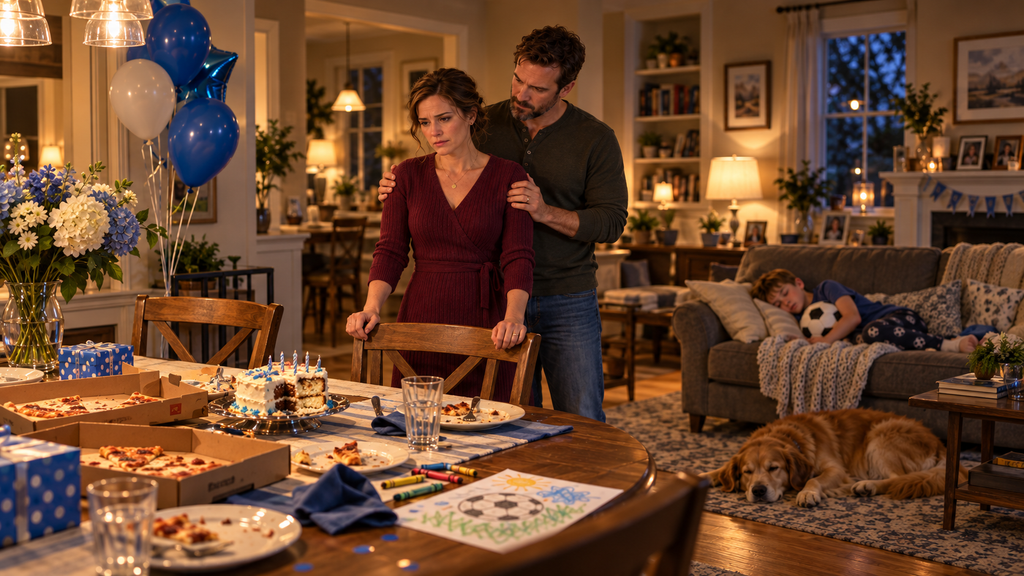
Twenty-four months of automatic payments ended with one click.
Grant was still standing behind me.
His hand remained on my shoulder.
“You sure?” he asked.
I looked at the confirmation again.
“Yes.”
Not because I wanted my parents to suffer.
Not because I wanted revenge.
Because something had finally become painfully obvious.
My parents were not struggling because they had nowhere else to turn.
They were struggling while expecting me to quietly make their lives comfortable enough that they could spend their own money pretending I wasn’t part of the family.
There was a difference.
And I had spent two years refusing to see it.
I closed the laptop.
Grant pulled out the chair beside me.
“What happens now?”
“They figure it out.”
He studied my face.
“You’re not going to call them?”
“No.”
“Tell them you stopped the transfer?”
“No.”
“Tell Whitney?”
“No.”
A faint smile touched his mouth.
That wasn’t because he enjoyed what was happening.
It was because Grant had spent fourteen years watching me explain myself to people who never felt obligated to explain themselves to me.
“You’re really done,” he said.
I looked toward the ceiling.
Owen’s bedroom was directly above us.
“I think I am.”
Grant squeezed my hand.
Then he asked, “What do you want to do tomorrow?”
That question surprised me.
“Tomorrow?”
“For Owen.”
I stared at him.
“He lost part of his birthday today. I don’t want him waking up thinking the important part was what your parents did.”
Something tightened in my throat.
“What are you thinking?”
Grant leaned back.
“I’m thinking pancakes again.”
I laughed softly.
“Again?”
“Better pancakes.”
“How?”
“Chocolate chips.”
“Dangerous.”
“And Bellucci’s for lunch.”
I smiled.
“And maybe the science museum.”
Owen had been asking to go for months.
Grant nodded.
“And we turn his tenth birthday into a birthday weekend.”
I looked upstairs again.
“Yes.”
That was what I wanted.
Not revenge.
Not screaming.
Not a family war.
I wanted my son to remember being loved more clearly than he remembered being excluded.
I had no idea that seven hours later, my phone would begin ringing.
And that by breakfast, everything my parents had tried to hide for two years would begin coming apart.
At 6:47 the next morning, I woke to the smell of coffee.
Grant’s side of the bed was empty.
For a few seconds, I forgot everything.
Then I remembered Harrison & Cole.
Whitney’s Instagram story.
My mother’s voice.
He might have embarrassed us.
The memory still hurt.
But it hurt differently in daylight.
Less like a wound.
More like information.
I picked up my phone.
Three missed calls.
All from my mother.
The first had come at 6:31.
The second at 6:36.
The third at 6:42.
There was also a text.
CALL ME IMMEDIATELY.
I stared at it.
Then another call came through.
Mom.
I let it ring.
When it stopped, I got out of bed, pulled on my robe, and walked downstairs.
Grant was standing at the stove making pancakes.
Owen sat at the kitchen island in dinosaur pajamas, reading the instructions on a new Lego set.
“Morning, Mom.”
“Morning, birthday boy.”
“I’m not the birthday boy anymore.”
“You’re the birthday-weekend boy.”
His eyes widened.
“That’s a thing?”
“It is now.”
Grant flipped a pancake.
“Your mother has declared it legally binding.”
Owen grinned.
And just like that, something inside me loosened.
My phone rang again.
Grant glanced toward it.
“Linda?”
I nodded.
Owen looked up.
“Grandma?”
I turned the phone facedown.
“Nothing you need to worry about.”
He hesitated.
Then went back to his Lego instructions.
At 7:02, my father called.
That was unusual.
My father almost never called me directly.
I declined it.
At 7:04, Mom called again.
Then came another text.
The bank called us. What did you do?
I stared at those words.
Not Good morning.
Not We’re sorry about Owen.
Not even Can we talk?
What did you do?
Grant slid a plate in front of me.
“Eat.”
“I’m not hungry.”
“Eat anyway.”
I smiled faintly.
“Yes, Dad.”
Owen snorted.
Then my phone rang again.
My father.
Something told me this one mattered.
I picked it up and walked into the laundry room.
“Hello?”
My father didn’t say hello.
“Did you cancel the mortgage transfer?”
His voice sounded breathless.
I leaned against the washing machine.
“I canceled the transfer I was sending you.”
“Why?”
For one second, I honestly thought I had misheard him.
“Why?”
“Yes, Meredith. Why?”
I closed my eyes.
“Dad, do you remember what yesterday was?”
Silence.
Then he exhaled sharply.
“Don’t do this.”
“Do what?”
“Turn everything into drama.”
I almost laughed.
Not because anything was funny.
Because the sentence was so familiar.
Any time someone in my family hurt me and I acknowledged it, the acknowledgment became the offense.
“Yesterday was Owen’s birthday.”
“I know.”
“You canceled dinner with him.”
“Your mother handled that.”
“And then you went to a four-hundred-dollar steakhouse.”
“It wasn’t four hundred dollars.”
That answer told me everything.
I opened my eyes.
“How much was it?”
“That isn’t the point.”
“Then what is?”
“The point is you made a commitment to help us with the mortgage.”
“No, Dad. I made a gift.”
“You said you’d help until I got back on my feet.”
“You are back on your feet.”
“You don’t know our finances.”
“Apparently not.”
His voice sharpened.
“We budget around that money.”
There it was.
Not gratitude.
Expectation.
“You budget around my money?”
“Don’t say it like that.”
“How should I say it?”
“We’re family.”
I stood very still.
“Were we family yesterday?”
Nothing.
“Dad?”
“You know what I mean.”
“No. I don’t anymore.”
His breathing grew heavier.
“You’re going to put your mother through this over a dinner?”
“No.”
“Then what is this?”
“This is me believing her.”
“Believing what?”
“That Owen embarrasses you.”
“That’s not what she meant.”
“It’s exactly what she said.”
“Your mother says things when she’s stressed.”
“She sounded pretty relaxed.”
“Meredith—”
“I heard the restaurant behind her.”
He went quiet.
“I heard you ask who was calling.”
Another silence.
“And I heard Mom tell you it was just me being sensitive.”
“Your mother shouldn’t have said that.”
“No.”
“But canceling the transfer without warning is irresponsible.”
I actually pulled the phone away from my ear and stared at it.
Then I put it back.
“Whose mortgage is it?”
“What?”
“Whose name is on the house?”
“Mine and your mother’s.”
“Whose responsibility is the mortgage?”
“That’s not the point.”
“It’s exactly the point.”
His voice dropped.
“You have plenty of money.”
That hurt more than I expected.
Not because it was entirely true.
Grant and I were comfortable.
We weren’t wealthy.
We had savings because we lived carefully.
We drove our cars until they needed replacing.
We packed lunches.
We planned vacations months ahead.
We contributed to Owen’s college account.
We had enough because we treated money like something earned, not something owed.
“You have plenty,” Dad repeated.
I looked through the laundry-room doorway.
Grant was cutting Owen’s pancake into ridiculous geometric shapes.
My son was laughing.
And suddenly I understood.
My parents had stopped seeing my help as sacrifice.
To them, it had become surplus.
If I could give it, apparently I didn’t need it.
And if I didn’t need it, apparently they deserved it.
“Then you’ll be okay without it,” I said.
My father went silent.
“Meredith.”
“I have to go.”
“Don’t hang up.”
“I’m having breakfast with my son.”
“This is serious.”
“So was yesterday.”
I ended the call.
My hands were shaking.
Grant saw it immediately when I returned.
He didn’t ask what happened.
He simply handed me a mug of coffee.
Owen looked at me.
“Grandpa mad?”
Children know.
Even when you think you’re hiding everything, they know.
I sat beside him.
“He’s upset about some grown-up stuff.”
“Because of yesterday?”
I hesitated.
“Yes. Partly.”
Owen looked down at his pancakes.
Then he said something so quietly I almost missed it.
“I didn’t want to embarrass Grandma.”
My heart cracked.
I put down my coffee.
“Owen.”
He wouldn’t look at me.
“I could’ve been good.”
Grant stopped moving.
I felt anger rise so quickly I had to swallow before speaking.
Not at Owen.
Never at Owen.
At every adult who had allowed a ten-year-old child to believe love depended on behaving well enough to deserve a chair at the table.
I moved beside him.
“You listen to me.”
His eyes lifted.
“You did nothing wrong.”
“But Grandma said—”
“Grandma was wrong.”
I rarely said that to him.
I had always tried to preserve his relationship with my parents.
Always softened things.
Always translated their behavior into something kinder.
Not anymore.
“She was wrong,” I repeated. “There is nothing embarrassing about you.”
His eyes filled.
“Then why didn’t they want me?”
There are questions parents desperately want to answer.
And there are questions where every possible answer feels inadequate.
I touched his cheek.
“Because sometimes adults make selfish choices.”
“Did I do something?”
“No.”
“Are you sure?”
“As sure as I have ever been about anything.”
He looked toward Grant.
Grant nodded.
“One hundred percent.”
Owen wiped his nose with the back of his hand.
Then he whispered, “Okay.”
I hugged him.
And while I held my son at the kitchen island, I made another decision.
I was done protecting adults at the expense of my child.
Completely done.
We went to Bellucci’s for lunch.
The owner, Mr. Bellucci, came around the counter himself when he saw Owen.
“There he is!”
Owen grinned.
“The old man!”
Mr. Bellucci clutched his chest.
“You wound me on your birthday weekend?”
Owen laughed.
We ordered too much pasta.
Mr. Bellucci brought garlic knots we hadn’t ordered.
Then he appeared with an enormous piece of chocolate cake.
“We didn’t order that,” I said.
He winked.
“Kitchen mistake.”
Owen looked at me.
“Told you.”
For two hours, my phone remained in my purse.
When I finally checked it, I had eleven missed calls.
Five from Mom.
Three from Dad.
Two from Whitney.
One from an unknown number.
And six text messages.
The newest was from Whitney.
What the hell did you do? Mom is hysterical.
I didn’t answer.
Then another message arrived.
She says you’re trying to make them lose the house.
I stared at it.
That was impressive.
Less than twelve hours.
I had gone from daughter paying their mortgage to daughter trying to make them homeless.
Grant read the text over my shoulder.
“That was fast.”
“I’m apparently a villain now.”
“Efficient family.”
I laughed despite myself.
Owen was busy drawing a soccer field on the paper tablecloth.
Grant lowered his voice.
“Don’t let them hijack today.”
“I won’t.”
So I didn’t.
We went to the science museum.
Owen spent forty minutes building a bridge out of wooden blocks.
He made Grant stand inside a wind tunnel.
He begged me to take seventeen pictures beside a dinosaur skeleton.
For most of the afternoon, I forgot my phone existed.
Then, around four, Whitney showed up at our house.
We had just pulled into the driveway when I saw her SUV parked at the curb.
She was standing on our porch.
Arms crossed.
Sunglasses on.
Waiting.
Grant looked at me.
“You want me to handle this?”
“No.”
Owen unbuckled his seat belt.
“Aunt Whitney?”
I turned around.
“Buddy, why don’t you and Dad go around back and test your new soccer ball?”
Grant understood immediately.
“Come on.”
“But—”
“I need someone to prove I’m still faster than a ten-year-old.”
“You’re not.”
“Big claim.”
Owen jumped out.
Grant gave me one last look.
I nodded.
I could handle it.
Whitney waited until Owen disappeared through the side gate.
Then she walked toward me.
“What is wrong with you?”
No hello.
Apparently that had become a family tradition.
I closed the car door.
“Nice to see you too.”
“Mom has been crying all day.”
“Why?”
“You know why.”
“Because I stopped paying her mortgage?”
Whitney lowered her sunglasses.
“So it’s true.”
“You came here without knowing?”
“She said you canceled something with the bank.”
“Something?”
“She wouldn’t explain.”
Of course she wouldn’t.
Because explaining would require telling Whitney that her younger daughter had secretly paid $57,120 toward their mortgage.
I folded my arms.
“For the last two years, I’ve been sending Mom and Dad $2,380 every month.”
Whitney blinked.
“What?”
“To cover their mortgage.”
Her expression changed.
Not dramatically.
But enough.
“What are you talking about?”
“When Dad’s hours were cut, they asked me for help.”
“No.”
“Yes.”
“Dad told me they refinanced.”
“They didn’t.”
Whitney stared at me.
“How long?”
“Twenty-four months.”
She did the math silently.
I watched the number land.
“Jesus.”
“Yeah.”
“Why didn’t anyone tell me?”
“Mom asked me not to.”
Her mouth opened.
Closed.
Then something unexpected happened.
Her anger shifted.
Not toward me.
Toward them.
“You’ve been paying their entire mortgage?”
“Yes.”
“And they went to Harrison & Cole last night?”
I looked at her.
“You were there.”
“I know I was there.”
“Then why are you asking?”
“Because Dad paid.”
That stopped me.
“What?”
“Dad paid for dinner.”
I stared at her.
“No, he didn’t.”
“Yes, he did.”
“Whitney—”
“He did. I watched him hand over his card.”
Something cold moved through me.
“How much?”
“I don’t know. Seven hundred? Eight hundred? Trevor ordered that stupid bottle of wine.”
I stared at my sister.
“You said it was a family dinner.”
“It was.”
“On Owen’s birthday.”
She looked away.
“Mom said you canceled.”
There it was.
The first twist.
“What?”
“She said Owen had been invited to a friend’s sleepover and you and Grant decided you wanted to do your own thing.”
I couldn’t speak for a second.
Whitney frowned.
“That’s what she told us.”
“She texted me at 4:30 and canceled.”
Whitney’s face went pale.
“Wait.”
I pulled out my phone.
Opened the message.
Handed it to her.
She read it.
Then read it again.
“Running behind. Let’s push it to next weekend.”
Her eyes lifted.
“She lied to me.”
“Yes.”
Whitney took off her sunglasses completely.
“I thought you knew.”
“Knew what?”
“About dinner.”
“No.”
“I swear.”
The anger I had been carrying toward my sister shifted slightly.
Not disappeared.
But shifted.
“You posted ‘family night.’”
She winced.
“I know.”
“You didn’t notice your sister and nephew were missing from family night?”
“That sounds terrible.”
“It was terrible.”
“I thought you chose not to come.”
“Why would I choose a steakhouse over my son’s birthday?”
She rubbed her forehead.
“I don’t know.”
“Exactly.”
For the first time since arriving, Whitney looked embarrassed.
Not defensive.
Actually embarrassed.
“I should’ve called you.”
“Yes.”
“I should’ve checked.”
“Yes.”
She nodded slowly.
“I’m sorry.”
That was not a sentence I heard often from my sister.
I didn’t immediately absolve her.
I was done doing that too.
But I believed she meant it.
Then Whitney said, “There’s something else.”
My stomach tightened.
“What?”
She glanced toward the house.
“Mom told me Dad got a new position six months ago.”
I stared at her.
“What kind of position?”
“Supervisor.”
“No.”
“Yes.”
“Dad told me he was still getting reduced hours.”
Whitney shook her head.
“He’s full-time.”
I felt the driveway tilt beneath me.
“How do you know?”
“Trevor knows someone at the plant. Dad got promoted in September.”
September.
Seven months earlier.
Seven months of mortgage payments.
Sixteen thousand six hundred and sixty dollars.
My money.
Money I had sent because I believed my parents were still struggling.
Whitney looked sick.
“Meredith…”
I turned away.
Suddenly the expensive steakhouse wasn’t the worst part anymore.
It was merely the moment the curtain had moved.
“How long have you known?”
“About his promotion? Since Thanksgiving.”
“And you never mentioned it?”
“I thought you knew.”
That phrase again.
I almost laughed.
Apparently everyone thought I knew everything except the things directly affecting me.
I looked toward the backyard.
Owen’s laughter floated over the fence.
Grant shouted something.
A soccer ball hit wood.
Normal sounds.
Safe sounds.
I held onto them.
“Mom called the transfer a gift,” I said.
Whitney frowned.
“What?”
“When Dad called this morning, he said they budget around my money.”
“Oh, God.”
“And now I know why.”
Whitney stared at the pavement.
Then she said, “You need to see something.”
“What?”
She opened her phone.
Scrolled.
Then handed it to me.
It was a photograph from three weeks earlier.
My parents standing beside a travel agent’s desk.
Mom was holding a glossy brochure.
Dad was smiling.
The caption read:
Finally booked! Italy in September!
I stared at it.
“They’re going to Italy?”
Whitney nodded.
“For three weeks.”
“How?”
She gave me a look.
I already knew the answer.
Because someone else was paying their mortgage.
Me.
I handed the phone back.
My fingers had gone numb.
Whitney’s voice softened.
“I didn’t know about the money.”
“I believe you.”
“I mean it.”
“I said I believe you.”
She swallowed.
“Are you going to ask for it back?”
“No.”
“Why not?”
“Because I gave it.”
“But they lied.”
“I still gave it.”
She stared at me.
“That’s fifty-seven thousand dollars.”
“I know exactly how much it is.”
“Meredith…”
“I’m not going to spend the next five years chasing money I willingly transferred. But there won’t be another dollar.”
Whitney nodded.
Then she surprised me again.
“Good.”
I looked at her.
She shoved her sunglasses into her purse.
“And if they lose the house, that’s on them.”
“Mom won’t see it that way.”
“I don’t care.”
I raised an eyebrow.
Whitney sighed.
“I’m starting to think maybe you weren’t the sensitive one.”
That almost made me smile.
“Careful. Personal growth can be dangerous.”
She laughed once.
Then her face changed.
“Can I see Owen?”
I hesitated.
“He thinks Grandma excluded him because he might embarrass her.”
Whitney closed her eyes.
“Damn it.”
“He asked me this morning if he could’ve behaved better.”
Her eyes opened immediately.
“She said that to him?”
“No. She said it to me. He heard enough afterward to understand.”
Whitney looked toward the backyard.
“Can I apologize?”
“Yes.”
“But?”
“Don’t make excuses.”
“I won’t.”
“And don’t tell him Grandma loves him if you’re trying to explain Grandma’s behavior.”
Whitney looked surprised.
“Why?”
“Because love isn’t a magic eraser.”
She nodded slowly.
“Okay.”
We walked around back.
Owen saw her first.
“Aunt Whitney!”
She smiled.
“Hey, kiddo.”
He ran over.
Whitney crouched in front of him.
For a second, she seemed unsure how to begin.
Then she simply said, “I owe you an apology.”
Owen looked at me.
I nodded.
Whitney continued.
“I went to dinner with Grandma and Grandpa last night. I thought you already had other plans. I should have called you myself.”
Owen kicked lightly at the grass.
“Grandma said I’d embarrass her.”
Whitney’s face crumpled.
“No.”
He looked up.
“No?”
“No. Listen to me. You could show up to the fanciest restaurant in America wearing pajamas and a pirate hat, and I would still want you sitting next to me.”
Owen considered this.
“What kind of pirate hat?”
Whitney laughed through wet eyes.
“The biggest one available.”
He smiled.
Then she hugged him.
And I realized something uncomfortable.
For years, I had placed Whitney and my parents into the same category.
Favorites versus forgotten.
Her family versus mine.
But maybe Whitney had also been living inside a version of the story our mother carefully maintained.
Maybe she benefited from it.
Absolutely.
Maybe she should have questioned it sooner.
Definitely.
But she wasn’t the architect.
That distinction mattered.
Not enough to erase the past.
Enough to change what came next.
My parents arrived at 6:20 that evening.
Uninvited.
I was chopping vegetables when the doorbell rang.
Grant looked through the window.
“Both of them.”
Whitney had gone home an hour earlier.
Owen was upstairs showering.
“Do you want them inside?” Grant asked.
“No.”
He nodded.
We stepped onto the porch together.
Mom stood closest to the door.
Dad was behind her.
My mother looked like she had dressed for court.
Pressed blouse.
Pearl earrings.
Perfect hair.
When she was angry, she became more polished.
“Are you really not going to invite us in?” she asked.
“Owen is upstairs.”
“So?”
“So I’m not having this conversation around him.”
Mom folded her arms.
“Fine.”
Dad looked exhausted.
“Meredith, we need to fix this.”
I leaned against the porch railing.
“Fix what?”
“The transfer.”
“No.”
Mom stared at me.
“That’s it?”
“Yes.”
“You’re cutting off your own parents?”
“I’m stopping a monthly gift.”
“You know we rely on that money.”
“I also know Dad was promoted seven months ago.”
Silence.
Beautiful, complete silence.
Mom’s face changed first.
Dad looked away.
That told me everything.
“So Whitney told you,” Mom said.
Interesting.
Not denial.
Not surprise.
Just annoyance at the source.
“Yes.”
“She had no business discussing your father’s employment.”
I laughed.
I couldn’t help it.
“His employment?”
Mom’s jaw tightened.
“This isn’t funny.”
“No, Mom. It really isn’t.”
Dad rubbed the back of his neck.
“I was going to tell you.”
“When?”
“When things stabilized.”
“You’ve been full-time for seven months.”
“The promotion came with expenses.”
“What expenses?”
“Work clothes. Gas. Taxes.”
I stared at him.
“Taxes?”
He knew how ridiculous that sounded.
Mom jumped in.
“We’ve had years of financial stress, Meredith. Your father finally gets a little breathing room, and suddenly you want to punish us for enjoying ourselves.”
“Enjoying yourselves?”
“Yes.”
“Like Italy?”
Her face froze.
Dad closed his eyes.
Apparently that was another thing I wasn’t supposed to know.
“Whitney talks too much,” Mom muttered.
I stared at her.
“Do you hear yourself?”
“What?”
“You’re not upset that you hid things from me. You’re upset that I found out.”
“That’s not fair.”
“Neither was paying your mortgage while you saved for Europe.”
“We deserve a vacation.”
“I never said you didn’t.”
“Then what is the problem?”
“The problem is that you expected me to finance it without knowing.”
“That is not what happened.”
“It is exactly what happened.”
Dad finally spoke.
“We were going to start taking over the mortgage again after the trip.”
I turned to him.
“When?”
He hesitated.
That hesitation told me the truth.
“You hadn’t decided.”
“Meredith—”
“You hadn’t decided because as long as I kept paying, there was no reason for you to stop me.”
Mom threw up her hands.
“You offered!”
“Yes.”
“So why are you acting like we stole from you?”
“I’m not.”
“You are.”
“No. I’m acting like I finally understand the arrangement.”
Dad frowned.
“What arrangement?”
“I give. You take. I stay quiet. Everybody’s happy.”
“That is ridiculous.”
“Is it?”
Mom stepped closer.
“We helped you plenty when you were younger.”
“Yes.”
“We paid for your braces.”
“I was fourteen.”
“We helped with college.”
“You paid for one semester.”
“We paid for your wedding flowers.”
“Mom, stop.”
“You act as though we’ve never done anything for you.”
“That’s not what I said.”
“Then stop keeping score.”
I stared at her.
The irony was almost breathtaking.
“I paid your mortgage for two years.”
“You keep bringing that up!”
“Because you came to my house demanding I continue.”
Dad touched her arm.
“Linda.”
She jerked away.
“No. I’m tired of this.”
“So am I.”
She looked at me.
And then, because anger makes careless people honest, my mother said the thing that finally explained more than she intended.
“You’ve always been jealous of Whitney.”
Grant shifted beside me.
I stayed still.
“Have I?”
“Yes.”
“You’ve resented how close we are to her children.”
I felt something inside me harden.
“I didn’t resent your relationship with them.”
“You absolutely did.”
“I resented watching you make an effort for them that you refused to make for Owen.”
“That’s different.”
There.
One sentence.
Grant looked at me.
I looked at Mom.
“How?”
She hesitated.
Dad murmured, “Linda.”
But she was already angry enough to keep going.
“Whitney’s children are easier.”
“Easier?”
“They’re more comfortable in adult settings.”
“Her youngest is eleven.”
“She’s mature.”
“And Owen?”
Mom sighed.
“Owen is… energetic.”
I stared at her.
My son liked soccer.
Science experiments.
Bad jokes.
He asked too many questions when he got excited.
He sometimes forgot to use his indoor voice.
He laughed with his whole body.
Apparently that was enough.
“He’s ten.”
“I know how old he is.”
“Then why are you expecting him to behave like a forty-year-old accountant?”
“That’s not what I said.”
“You said he embarrasses you.”
“I said he might embarrass us at that restaurant.”
“Why?”
Mom looked away.
“Why?”
She finally snapped.
“Because he doesn’t know when to stop talking!”
The porch went silent.
Grant’s jaw tightened.
I felt suddenly, strangely calm.
“Okay.”
Mom’s expression shifted.
She knew that word.
She remembered the phone call.
“Don’t do that.”
“Do what?”
“Say okay like that.”
“Why?”
“Because you’re twisting everything.”
“No. I’m hearing you.”
Dad stepped forward.
“This has gone too far.”
I looked at him.
“Did you agree with her?”
“With what?”
“That Owen shouldn’t be there.”
He didn’t answer.
That hurt.
It hurt worse than Mom’s words because Dad had always been the quiet one.
The one I defended.
Mom was difficult, but Dad was “just avoiding conflict.”
Dad forgot birthdays because Mom handled the calendar.
Dad missed games because Mom made the plans.
Dad didn’t call because Mom was better on the phone.
For years, I had mistaken passivity for innocence.
“Dad?”
He rubbed his forehead.
“I thought it would be easier.”
“For whom?”
He looked at me.
And there it was.
“For everyone.”
I nodded.
“Thank you.”
“For what?”
“For finally answering.”
Mom shook her head.
“You’re being dramatic.”
“No. I’m simplifying things.”
“How?”
“You don’t need to worry about Owen embarrassing you anymore.”
Her eyes narrowed.
“What does that mean?”
“It means you won’t be invited to his events until you can treat him like a grandchild instead of an inconvenience.”
Mom stared at me.
“You’re keeping our grandson from us?”
“No.”
“That’s exactly what you just said.”
“No. I said you are not entitled to access to a child you repeatedly make feel unwanted.”
“He doesn’t even know about this!”
“He asked me this morning whether he could’ve behaved better so you would have wanted him at dinner.”
My mother’s face changed.
Just slightly.
Dad looked stricken.
I continued.
“He is ten years old, Mom. Ten. And today he wondered whether his personality makes him unlovable to his grandparents.”
“I never said that.”
“You didn’t have to.”
Her eyes filled.
For one second, I almost moved toward her.
Old reflex.
Comfort Mom.
Fix it.
Make everyone feel better.
I stayed where I was.
Dad whispered, “He said that?”
“Yes.”
Mom wiped beneath one eye.
“Well, obviously we need to talk to him.”
“No.”
“Meredith.”
“No.”
“I need to explain.”
“No, you want him to make you feel forgiven.”
“That is not true.”
“Then give him space.”
She stared at me.
“I am his grandmother.”
“And I am his mother.”
That ended it.
At least for that night.
Dad took Mom’s arm.
She resisted at first.
Then she allowed him to guide her down the steps.
At the walkway, she turned around.
“What about the mortgage?”
I almost couldn’t believe it.
After everything.
After Owen.
After tears.
After the confrontation.
The mortgage.
I looked at her.
“You’ll need to make other arrangements.”
“Meredith—”
“Good night, Mom.”
I went inside.
Closed the door.
And locked it.
Grant stood beside me.
Neither of us spoke for several seconds.
Then we heard a small sound behind us.
I turned.
Owen was standing halfway down the stairs.
My heart stopped.
His hair was wet from the shower.
He wore pajama pants and a T-shirt.
“How long have you been there?” I asked.
He shrugged.
“Not long.”
That meant long enough.
I walked toward him.
“Owen—”
“Grandma thinks I talk too much?”
I wanted to lie.
God, I wanted to lie.
Instead, I climbed the stairs and sat beside him.
“Grandma doesn’t always understand that the things that make people different aren’t things they should be ashamed of.”
He stared at his feet.
“I do talk a lot.”
“So does your dad.”
From downstairs, Grant called, “Rude.”
Owen smiled despite himself.
I touched his shoulder.
“You know why you talk a lot?”
“Why?”
“Because you get excited about things.”
He nodded.
“And I hope you never lose that.”
“Even when I tell you Minecraft facts for twenty minutes?”
“Okay. There may be reasonable limits.”
He laughed.
Then his smile faded.
“Is Grandma bad?”
That question was harder.
“No.”
“Then why is she mean?”
I thought carefully.
“People aren’t usually just good or bad. Sometimes people we love have habits that hurt us. And when they refuse to change those habits, we have to decide how close we can safely stand.”
He considered that.
“Like fire?”
I smiled.
“Exactly like fire.”
“You can like a campfire.”
“Yes.”
“But you don’t put your hand in it.”
“Exactly.”
He nodded.
Then asked, “Are we still family?”
“With Grandma and Grandpa?”
“Yes.”
“We’re family.”
“Even if we don’t see them?”
“Yes.”
He thought again.
“Family is complicated.”
“You have no idea.”
He leaned against me.
And for the first time in years, I stopped worrying about whether setting boundaries would destroy my family.
I began wondering whether boundaries might be the only thing that could save what was left of it.
Three days passed.
Then five.
Then nine.
My parents did not call.
I didn’t call them.
The first of the month came.
No transfer left my account.
At 8:12 that morning, I received a notification from my bank.
For two years, seeing the first of the month had meant watching $2,380 disappear.
This time, the balance stayed exactly where it was.
I stared at the number.
Grant was brushing his teeth.
“I have an idea,” I said.
He leaned out of the bathroom.
“Toothpaste,” he mumbled.
“What?”
He spat into the sink.
“Sorry. What?”
“The mortgage money.”
“What about it?”
“I don’t want us to absorb it into regular spending.”
He wiped his mouth.
“Okay.”
“I want to keep transferring it.”
His eyebrows rose.
“To where?”
I smiled.
“Owen.”
Not all of it.
We talked to a financial adviser.
We increased Owen’s education savings.
We added more to retirement.
We started a family travel fund.
And we created something else.
A small account we jokingly named the Yes Fund.
Not yes to everything.
Yes to experiences.
Yes to weekends away.
Yes to soccer camp.
Yes to visiting places we had always said were too expensive while quietly paying someone else’s mortgage.
The first thing we used it for was a three-day trip to Washington, D.C.
Owen wanted to see the Air and Space Museum.
He stood beneath enormous aircraft with his mouth open.
He asked a volunteer so many questions that the man eventually laughed and said, “You planning on working here someday?”
“Maybe.”
“Then keep asking questions.”
I had to turn away for a second.
Because somewhere inside me, a wound closed.
Keep asking questions.
The exact quality my mother found embarrassing was something another adult recognized as curiosity.
That was the moment I understood something important.
Sometimes children don’t need to become easier.
They need to find rooms where they are welcomed exactly as they are.
My mother finally called three weeks after the birthday.
I almost didn’t answer.
Then I did.
“Hello?”
“Meredith.”
Her voice was different.
Smaller.
“Hi, Mom.”
“I want to see you.”
“What about?”
“You know what about.”
“No. I don’t.”
She exhaled.
“Can we meet?”
I thought about it.
“Just you?”
“Yes.”
“Where?”
“Bellucci’s?”
The choice surprised me.
Maybe that was intentional.
“Tomorrow at noon.”
“I’ll be there.”
She arrived before me.
Mom was sitting in a booth near the window.
No pearls.
No polished armor.
Just jeans and a navy sweater.
I sat across from her.
For several seconds, neither of us spoke.
Then she said, “Your father and I canceled Italy.”
I waited.
She seemed surprised I didn’t react.
“We got most of the deposit back.”
“Okay.”
“We’re refinancing.”
“Okay.”
“And your father picked up overtime.”
“Okay.”
She looked irritated.
“You could say something besides okay.”
“What would you like me to say?”
“I don’t know.”
“That’s the problem, Mom. For years I’ve been responsible for figuring out what you wanted me to say.”
She looked down.
A waitress came.
We ordered coffee.
Then Mom folded her hands.
“I owe you an apology.”
I waited.
“I shouldn’t have lied about dinner.”
“No.”
“And I shouldn’t have said that about Owen.”
“No.”
“I was angry.”
“At a ten-year-old?”
She flinched.
“No. At you.”
That surprised me.
“Why?”
She stared through the window.
“Because you make me feel ashamed.”
I almost laughed.
“What?”
“Not intentionally.”
“I genuinely don’t understand.”
She looked at me.
“When your father lost hours, you helped us.”
“Yes.”
“You didn’t make a big deal out of it.”
“No.”
“You never asked us to pay it back.”
“No.”
“And every month, when that money arrived, I was grateful.”
She paused.
“At first.”
There was something painful in her expression.
“Then?”
“Then I started resenting you.”
I stared at her.
“For helping you?”
“Yes.”
“Why?”
“Because every month reminded me that my daughter was supporting me.”
Her eyes filled.
“And instead of dealing with that feeling like an adult, I started finding reasons you weren’t as generous as you seemed.”
I said nothing.
“I told myself you had more money than you needed.”
There it was.
“I told myself you liked being the successful one. I told myself you probably enjoyed knowing we needed you.”
“I never—”
“I know.”
She swallowed.
“I know that now.”
The waitress brought our coffee.
Mom waited until she left.
“Whitney never made me feel that way.”
I felt an old pain stir.
“Because you never asked Whitney for help.”
“No.”
“Why?”
Mom hesitated.
“Because she would have said no.”
I stared at her.
And then, despite everything, I laughed.
A real laugh.
Mom looked offended for half a second.
Then she laughed too.
And suddenly we were both sitting there laughing at the absurdity of it.
“You favored the daughter who wouldn’t help you?”
“When you say it like that, it sounds terrible.”
“It is terrible.”
“I know.”
The laughter faded.
Mom looked down at her coffee.
“With Whitney, I could be useful. I babysat. I helped with parties. I brought food. With you…”
“You needed me.”
“Yes.”
“And you punished me for it.”
Tears filled her eyes.
“Yes.”
That was the first honest conversation my mother and I had ever had.
It did not fix everything.
But truth has a strange quality.
Even when it hurts, it gives you somewhere solid to stand.
Then Mom said something I didn’t expect.
“There’s something else.”
I stiffened.
“What?”
“Your father didn’t know I canceled Owen’s dinner.”
I stared at her.
“What do you mean?”
“He thought you had canceled.”
Just like Whitney.
“He asked why you weren’t coming to Harrison & Cole. I told him Owen had another birthday plan.”
I thought back to the phone call.
My father asking who was calling.
Mom saying I was being sensitive.
“He heard what you said to me.”
“Part of it.”
“And afterward?”
“He was angry.”
“With you?”
“Yes.”
“Then why did he defend you?”
Her expression hardened slightly.
“Because your father has spent forty-two years avoiding confrontation with me.”
That sounded painfully plausible.
“He knew by the next morning,” I said.
“Yes.”
“And he still called demanding the mortgage money.”
Mom looked down.
“Yes.”
“So don’t protect him now.”
“I’m not.”
“You are.”
She nodded slowly.
“You’re right.”
Another first.
Then I asked the question that mattered most.
“Why Owen?”
She closed her eyes.
“What about him bothers you?”
“Nothing bothers me about him.”
“Mom.”
She opened her eyes.
“I don’t know how to connect with him.”
That answer was different.
Not good.
But different.
“He talks about things I don’t understand. Soccer formations. Space. Video games. Dinosaurs. He corrects me when I get facts wrong.”
“He’s ten.”
“I know.”
“You could ask questions.”
“I know.”
“You could learn.”
“I know.”
“You learned every cheerleading routine Whitney’s daughter did.”
Mom flinched.
“You drove four hours to see Caleb play baseball.”
“I know.”
“You can learn the difference between a shortstop and second base, but you can’t learn what position Owen plays?”
Her eyes filled again.
“I know.”
I sat back.
“I’m not accepting ‘I don’t know how to connect with him’ anymore.”
She nodded.
“If you want a relationship with Owen, you build one.”
“How?”
“Start by being interested.”
“What if he doesn’t want to see me?”
“Then you respect that.”
Her face fell.
“That could happen?”
“Yes.”
She seemed genuinely frightened by the possibility.
Good.
Not because I wanted her hurt.
Because for the first time, access to my son was no longer something she considered automatic.
It was a relationship.
Relationships require participation.
Mom stirred her coffee.
“Could I write him a letter?”
I thought about it.
“Yes.”
“You’ll give it to him?”
“I’ll decide after I read it.”
Her eyes flashed.
Then she stopped herself.
“Okay.”
Progress.
Small.
But real.
The letter arrived four days later.
It was handwritten.
Three pages.
I read it first.
There were no excuses.
No “if I hurt you.”
No “your mother misunderstood.”
No “you know how Grandma is.”
She wrote:
I said something cruel about you because I was thinking more about how other people saw me than about how my grandson felt. That was wrong.
Then:
You do not talk too much. I have listened too little.
That line broke me.
I gave the letter to Owen.
He read it in his bedroom.
Then came downstairs carrying it.
“Do I have to forgive her?”
“No.”
“Do I have to answer?”
“No.”
“Can I?”
“Yes.”
He sat at the kitchen table.
He wrote six sentences.
Then folded the page.
I didn’t read it.
That was between him and his grandmother.
Two days later, Mom called.
She was crying.
“What did he write?” I asked.
“You didn’t read it?”
“No.”
She took a breath.
“He said he forgives me, but he wants me to come to one soccer game before he decides if we’re okay.”
I smiled.
“That sounds like Owen.”
“His next game is Saturday?”
“Yes.”
“What time?”
“Ten.”
“I’ll be there.”
“Mom?”
“Yes?”
“If you say you’re coming, come.”
A pause.
“I will.”
She arrived at 9:22.
Thirty-eight minutes early.
She brought no gifts.
No balloons.
No dramatic gesture.
Just a folding chair and a coffee.
Owen noticed her during warmups.
He looked toward me.
Then toward her.
Mom raised one hand.
Owen gave a tiny wave back.
She stayed for the entire game.
It rained during the second half.
She didn’t leave.
Owen scored once.
Mom jumped out of her chair so fast she spilled her coffee.
Afterward, Owen walked toward us covered in mud.
Mom looked at him.
“I have a question.”
“What?”
“Were you playing midfield?”
Owen’s entire face changed.
“Yeah.”
“I looked it up.”
“You did?”
“Yes.”
Then she said, “But I still don’t understand offside.”
Owen grinned.
“Oh, that’s easy.”
It was not easy.
He explained it for twelve straight minutes.
Mom listened.
Every word.
I stood a few feet away and watched.
Not healed.
Not forgotten.
But changing.
There is a difference.
Dad took longer.
Much longer.
He didn’t write a letter.
He didn’t come to soccer.
For nearly two months, our only communication consisted of short texts.
Hope you’re well.
Tell Owen Grandpa says hello.
Your mother says the soccer game was good.
I responded politely.
Nothing more.
Then one evening in June, he appeared at our house alone.
Grant was grilling burgers.
Owen was at a friend’s house.
Dad stood at the end of our driveway holding a cardboard box.
I walked outside.
“What’s that?”
He looked down.
“Your records.”
“My what?”
“Mortgage stuff.”
He handed me the box.
Inside were printed bank statements.
Twenty-four months.
Every transfer I had sent.
I looked up.
“Why do you have this?”
“I added it.”
My stomach tightened.
“Dad—”
“Fifty-seven thousand one hundred twenty dollars.”
“I know.”
“I want to pay it back.”
I stared at him.
“With what?”
“We sold the boat.”
I blinked.
“What boat?”
He looked embarrassed.
Of course.
Another secret.
“You bought a boat?”
“Used.”
“When?”
“Last summer.”
I actually closed my eyes.
“Dad.”
“I know.”
“With whose money?”
“Our savings.”
“While I was paying your mortgage.”
“Yes.”
For a second, the progress I had made evaporated.
I wanted to scream.
Instead, I asked, “How much?”
“We sold it for eighteen thousand.”
He reached into the box and handed me an envelope.
Inside was a cashier’s check.
$18,000.
I stared at it.
“I’m not taking this.”
“Yes, you are.”
“I gave you the money.”
“And I accepted it under circumstances that stopped being true.”
I looked at him.
He seemed older.
Not physically.
Somehow emotionally.
Like shame had finally forced him to look at himself without the usual excuses.
“I should have told you when I got promoted,” he said.
“Yes.”
“I should have stopped the transfers.”
“Yes.”
“I didn’t.”
“No.”
“I liked having extra money.”
There it was.
No excuse.
“I liked not worrying.”
He looked toward our house.
“And after a while, I convinced myself you could afford it.”
I said nothing.
“That was wrong.”
“Yes.”
He nodded.
“I also let your mother take the blame for things I agreed with because it was easier than admitting I was part of it.”
That one mattered.
I folded my arms.
“Why didn’t you want Owen at dinner?”
Dad looked ashamed.
“Because your mother said he’d get bored.”
“That’s it?”
“No.”
I waited.
He sighed.
“One of the people at dinner was Mr. Carlisle.”
“The man I didn’t recognize?”
“Yes.”
“Who is he?”
“Regional director at the plant.”
Now I understood.
“You were trying to impress your boss.”
“Yes.”
“And you thought Owen might embarrass you.”
Dad looked at the ground.
“Yes.”
The answer hurt.
But at least it was honest.
“What exactly were you afraid he’d do?”
Dad almost smiled.
“Ask Mr. Carlisle why bald people still need shampoo.”
I stared at him.
Then, against my will, I laughed.
“That sounds like Owen.”
“Your mother had mentioned he asked Pastor Jim that.”
“He was curious.”
“I know.”
Dad smiled faintly.
Then his eyes filled.
“And that’s the stupid part.”
“What?”
“Carlisle spent half the dinner talking about his grandson.”
I said nothing.
“He had pictures.”
Dad swallowed.
“Kept showing them to everyone.”
I watched him.
“And I sat there realizing I’d left mine at home because I was worried about looking important.”
His voice broke.
That was the first time I had ever seen my father cry.
“I traded my grandson’s birthday for a dinner with a man who wouldn’t remember what steak I ordered.”
I looked away.
Dad wiped his face.
“I’m sorry.”
For a while, neither of us spoke.
Then I handed the check back.
“No.”
“Meredith.”
“Keep it.”
“I don’t want it.”
“Then do something useful with it.”
“Like what?”
I thought about Owen.
Then an idea came.
“Open an account.”
Dad frowned.
“For what?”
“For all three grandchildren.”
“College?”
“College. Training. Whatever helps them when they’re older.”
His eyes widened.
“All three?”
“Yes.”
“But most of this came from you.”
“And I’m telling you what I want done with it.”
He looked at the check.
“You trust me?”
“Not with automatic transfers.”
He laughed.
So did I.
Then I became serious.
“But I’m willing to see what you do next.”
Dad nodded.
“I can live with that.”
“That’s the point.”
The summer changed our family.
Not magically.
Not completely.
There were awkward dinners.
There were moments when Mom fell into old habits.
There were times Whitney got defensive.
There were days when I caught myself about to say, “It’s fine,” when it wasn’t.
But something fundamental had shifted.
We stopped pretending.
That turned out to be more valuable than peace.
Whitney and I became closer.
Not immediately.
We had too much history.
But we began talking without Mom acting as translator.
One night, after two glasses of wine on my back porch, Whitney admitted something.
“I always thought you didn’t like me.”
I stared at her.
“I thought you didn’t like me.”
“Why?”
“Because Mom always told me you thought I was spoiled.”
Whitney blinked.
“She told me you thought I was selfish.”
“I did sometimes.”
“Well, I was.”
We laughed.
Then she said, “Mom told me you didn’t come to Caleb’s eighth birthday because you thought the party was tacky.”
I nearly dropped my glass.
“What?”
“You didn’t?”
“I was in the emergency room with Owen.”
Whitney stared at me.
“He had pneumonia.”
Her mouth fell open.
“She told me you had a headache.”
I sat back.
That was another curtain moving.
Not because Mom had spent years orchestrating some sinister conspiracy.
The truth was almost sadder.
She had spent years smoothing over conflict with small lies.
One lie to avoid explaining my absence.
Another to avoid telling me Whitney was angry.
Another to protect Dad.
Another to protect herself.
Tiny lies.
Convenient lies.
Family-maintenance lies.
Except lies don’t maintain families.
They create parallel versions of them.
Whitney and I had spent years resenting each other for things neither of us had actually said.
So we made a rule.
If Mom said the other person had said something, we called each other directly.
Mom hated that rule.
Which was how we knew it was excellent.
By September, my parents had adjusted to paying their own mortgage again.
They did not lose the house.
They did not starve.
They did not declare bankruptcy.
My father picked up occasional overtime.
Mom canceled a few subscriptions.
They ate out less.
They sold the boat.
They postponed Italy rather than canceling the dream completely.
In other words, they did what millions of adults do.
They adjusted.
The catastrophe my mother had predicted never happened.
What did happen was more interesting.
Without my money cushioning every decision, my parents began discussing money honestly.
Dad showed Mom the bills.
Mom stopped treating his income like an abstract number.
They made a budget.
At sixty-five and sixty-three years old, my parents created their first real household budget.
Mom called me once to complain about grocery prices.
I listened sympathetically.
Then she paused.
“You’re not going to offer money?”
“No.”
She laughed.
“Worth a try.”
That was progress too.
Then came Thanksgiving.
For years, Thanksgiving had belonged to Mom.
Her house.
Her turkey.
Her rules.
Dinner at precisely 3:30.
Family photograph at 3:15.
Children dressed nicely.
No football during dinner.
No phones at the table.
That year, Mom called me in October.
“I want everyone here.”
I hesitated.
“Including Owen?”
There was silence.
Then she said, “Especially Owen.”
I smiled.
“We’ll come.”
Thanksgiving morning, Owen spent two hours creating what he called a “turkey facts presentation.”
Grant looked terrified.
“Should we stop him?”
“No.”
“Your mother may not survive.”
“She’s been warned.”
At 3:15, Mom gathered everyone for the family picture.
Old habits.
Whitney stood beside Trevor.
Their kids squeezed together.
Grant put his arm around me.
Dad set the camera timer.
Then Mom looked around.
“Where’s Owen?”
My heart paused.
Ten months earlier, that question might have had a very different meaning.
Then we heard him from the kitchen.
“WAIT!”
He ran in wearing a ridiculous paper turkey hat.
Three construction-paper feathers were falling off.
Mom stared at him.
Owen froze.
For half a second, I saw uncertainty cross his face.
The old question.
Am I embarrassing?
Mom walked toward him.
She took the crooked turkey hat.
Adjusted it.
Then placed it firmly back on his head.
“You’re in the front.”
Owen grinned.
Mom turned toward Dad.
“Walter, hurry before the feathers fall off.”
The camera flashed.
That photograph still sits on my desk.
Owen in front.
Turkey hat crooked.
Mom’s hand on his shoulder.
Everyone laughing.
Not perfect.
Real.
I’ll take real.
But the final test came the following March.
Owen’s eleventh birthday.
One year after Harrison & Cole.
For weeks, nobody mentioned the previous birthday.
Then Mom called.
“I want to ask you something.”
“What?”
“Would Owen let Grandpa and me take him to dinner?”
My stomach tightened.
“Where?”
“That’s up to him.”
“Just you three?”
“If he wants.”
I told her I would ask.
That evening, Owen was doing homework at the kitchen table.
“Grandma wants to take you out for your birthday.”
He looked suspicious.
“Where?”
“She said you choose.”
His eyes narrowed.
“Anywhere?”
“Within reason.”
He thought for approximately three seconds.
“Bellucci’s.”
Of course.
I smiled.
“I’ll tell her.”
Then he added, “Can you and Dad come?”
“Sure.”
“And Aunt Whitney?”
“If you want.”
“And everybody?”
I understood.
He wasn’t trying to recreate the fancy dinner.
He was reclaiming the birthday table.
“Yes.”
“Everybody.”
So on Owen’s eleventh birthday, ten of us squeezed around two pushed-together tables at Bellucci’s.
Paper tablecloths.
Crayons.
Red-checkered napkins.
Too many garlic knots.
No white linen.
No expensive wine.
No one cared.
Mr. Bellucci came over.
“Owen!”
“The old man!”
“You wound me again!”
Mom laughed.
Owen spent ten minutes explaining something about black holes to Grandpa.
Dad listened.
Whitney’s daughter drew flowers on the tablecloth.
Trevor spilled soda.
Grant stole one of my ravioli.
Nobody behaved perfectly.
Nobody needed to.
Then Mr. Bellucci brought out a cake.
Eleven candles.
Everyone started singing.
I watched my mother.
She was singing louder than anyone.
When Owen blew out the candles, Mom clapped.
Then she reached into her purse.
I immediately narrowed my eyes.
“No giant gift.”
She looked offended.
“It isn’t.”
She handed Owen a small envelope.
He opened it.
Inside was a printed ticket.
He stared at it.
“What’s this?”
Dad leaned over.
“Planetarium.”
Owen’s eyes widened.
“For that space show you told us about.”
“You remembered?”
Dad smiled.
“Apparently you’ve mentioned it forty-seven times.”
“Forty-eight.”
Everyone laughed.
Then Owen stood and hugged them both.
I had to look down at my plate.
Grant squeezed my hand beneath the table.
“You okay?”
I nodded.
“Yes.”
And this time, I meant it.
Later that night, after everyone had gone home, Owen’s birthday cards were spread across our kitchen counter.
He had fallen asleep upstairs.
Grant was loading the dishwasher.
I found myself thinking about the previous year.
About the laptop.
The recurring transfer.
The little confirmation message.
At the time, I thought clicking that button was about money.
It wasn’t.
The money was simply the first boundary I could measure.
$2,380.
That was the price I had been paying every month to avoid asking uncomfortable questions.
Why was Whitney always prioritized?
Why did my parents make more effort for her children?
Why did I have to be understanding?
Why was my help expected but my hurt considered inconvenient?
Why did everyone call me sensitive whenever I finally reacted?
Canceling the transfer forced all of us to answer those questions.
Some answers were ugly.
Some were embarrassing.
Some broke my heart.
But they were real.
And real things can be repaired.
Pretend things cannot.
Grant closed the dishwasher.
“What are you thinking about?”
“Last year.”
He leaned against the counter.
“The steakhouse?”
“The transfer.”
He smiled.
“Best click of your life?”
I thought about it.
“No.”
“No?”
“The best click was booking Washington.”
He laughed.
“Fair.”
I picked up one of Owen’s birthday cards.
My parents had signed it together.
To Owen,
Never stop asking questions.
Love, Grandma and Grandpa.
I ran my thumb across the words.
“Grant?”
“Yeah?”
“Do you think I was too harsh?”
He stared at me.
“Are you seriously asking that a year later?”
“I don’t know.”
He walked over.
“Meredith, your parents didn’t change because you punished them.”
I looked at him.
“They changed because for the first time, you stopped protecting them from the consequences of their choices.”
I let that settle.
There was a difference.
A huge one.
I had spent most of my adult life believing boundaries were cruel because somebody would always be disappointed by them.
But disappointment is not cruelty.
Saying no is not cruelty.
Refusing to finance someone else’s comfort is not cruelty.
And protecting your child from people who repeatedly make him feel small is definitely not cruelty.
Sometimes love is generous.
Sometimes love is patient.
Sometimes love pays a mortgage for two years because your parents are frightened and you have the ability to help.
But sometimes love closes the banking app.
Sometimes love says:
No more.
Sometimes love lets the phone ring.
Sometimes love refuses to explain away an insult.
And sometimes the kindest thing you can do for a family is stop making dysfunction comfortable.
Six months later, Mom and Dad finally went to Italy.
They paid for it themselves.
Mom sent pictures.
Rome.
Florence.
Venice.
Dad standing beside a fountain looking sunburned.
Mom eating gelato.
One photograph made me laugh out loud.
Dad was sitting at an outdoor restaurant wearing a paper napkin tucked into his collar.
Underneath, Mom had written:
Your father is embarrassing me at a grown-up dinner. Should I send him home?
I showed Grant.
He laughed.
Then I showed Owen.
He stared at the picture.
“Grandpa looks ridiculous.”
“He does.”
Owen grabbed my phone.
He typed a reply.
Keep him. Everybody is embarrassing sometimes.
I looked at the message after he sent it.
Everybody is embarrassing sometimes.
Maybe that was the lesson.
Not that families should never disappoint each other.
They will.
Not that parents always know better.
They don’t.
Not even that forgiveness means everything returns to normal.
It shouldn’t.
The lesson was that love should make room for people.
Not only when they are polished.
Not only when they are quiet.
Not only when they make us look good.
Not only when they are useful.
Real love leaves a chair at the table.
Especially for the kid who talks too much.
Especially for the daughter who finally says no.
Especially for the father ashamed enough to admit he was wrong.
Especially for the mother learning, decades too late, that keeping the peace and telling the truth are not the same thing.
And especially for people willing to come back and do better.
I never restarted the mortgage transfer.
Mom never asked me to.
Dad never mentioned it again.
The account they created for the grandchildren grew slowly.
Not because eighteen thousand dollars magically fixed anything.
But because every month, Dad added something.
Sometimes fifty dollars.
Sometimes a hundred.
On each deposit, he wrote the same memo:
For their future.
And every time I saw it, I thought about that night.
My son asleep upstairs.
The soccer ball tucked under his arm.
My mother laughing inside a steakhouse after deciding he wasn’t polished enough to belong there.
I remembered moving my cursor across the screen.
I remembered the question:
Are you sure?
At the time, I thought the bank was asking whether I was sure I wanted to cancel a recurring payment.
Now I know the question was bigger.
Was I sure I was ready to stop buying peace?
Was I sure I was ready to disappoint people who had grown comfortable disappointing me?
Was I sure I could let adults solve problems I had spent years solving for them?
Was I sure I could protect my son even if doing so made me the villain in someone else’s version of the story?
Yes.
I was sure.
Because my parents did not lose their home when I stopped paying their mortgage.
My family did not collapse when I stopped pretending everything was fine.
My mother did not disappear when I finally told her she was wrong.
My father did not break when I stopped rescuing him.
Whitney and I did not become enemies when we finally compared the stories we had been told.
Quite the opposite.
For the first time, we became a family that knew what was actually happening.
And Owen?
Owen kept talking.
Thank God.
He talked through soccer games.
He talked through dinner.
He talked about planets, sharks, Roman emperors, penalty kicks, black holes, Minecraft, volcanoes, and whether dogs understand when humans accidentally step on their tails.
Sometimes I told him I needed five minutes of silence.
Because I am still human.
But I never again let anyone convince him that his joy was embarrassing.
On his twelfth birthday, he stood in Bellucci’s wearing a ridiculous plastic astronaut helmet while Mr. Bellucci carried out a cake.
Mom was there.
Dad was there.
Whitney’s family was there.
Grant was beside me.
Everyone was laughing.
Owen lifted the visor on the helmet.
“Grandma!”
“What?”
“Did you know a day on Venus is longer than a year on Venus?”
My mother opened her mouth.
Paused.
Then smiled.
“No.”
Owen’s eyes lit up.
“Okay, so basically—”
And he launched into the explanation.
Mom listened.
Dad asked questions.
Whitney stole frosting from the cake.
Grant leaned toward me.
“Here we go.”
I smiled.
“Yep.”
Owen kept talking.
Nobody asked him to stop.
Nobody worried about the people at the next table.
Nobody wondered whether he belonged.
There was a chair for him.
There had always been a chair for him.
The adults had simply needed to learn that.
And as I watched my son explain the solar system with chocolate frosting on his cheek, I realized I no longer remembered the expensive steakhouse as the night my parents rejected him.
I remembered it as the night I finally stopped teaching my son that love meant accepting whatever treatment family gave you.
That was the inheritance I refused to pass down.
Not the mortgage.
Not the resentment.
Not the silence.
Something better.
You can love people and still say no.
You can forgive people without returning to the old arrangement.
You can help someone without becoming responsible for them.
You can understand why somebody hurt you without pretending the hurt was acceptable.
And being family does not give anyone permanent permission to make you feel small.
Sometimes the moment that looks like the end of a family is actually the first honest beginning it has ever had.
For us, that beginning happened at 10:03 on a Saturday night.
With my ten-year-old son sleeping upstairs.
With $2,380 scheduled to leave my account in two days.
With my mother’s words still ringing in my ears.
He’d only embarrass us.
I moved the cursor.
I clicked the button.
And the screen asked:
Are you sure?
I clicked Yes.
A year later, my son was sitting at the center of the table.
Exactly where he belonged.
And I finally understood something I wish I had learned much earlier:
The most expensive thing I ever gave my parents wasn’t $57,000.
It was twenty-four months without consequences.
And the greatest gift I ever gave my son wasn’t a birthday trip, a soccer camp, or money for his future.
It was showing him that when someone tells you that you are too loud, too difficult, too inconvenient, or too embarrassing to deserve a place at their table…
you do not spend your life begging for a chair.
You build a better table.
And you fill it with people who are glad you came.
THE END! THANK YOU FOR READING!❤️