 Reading Time: 41 minutes
I pressed Send at 7:14 p.m. For several seconds, nothing happened. No thunder. No explosion.
No dramatic music announcing that, after thirty-eight years of being the dependable Bennett daughter, I had finally stopped volunteering to be used.
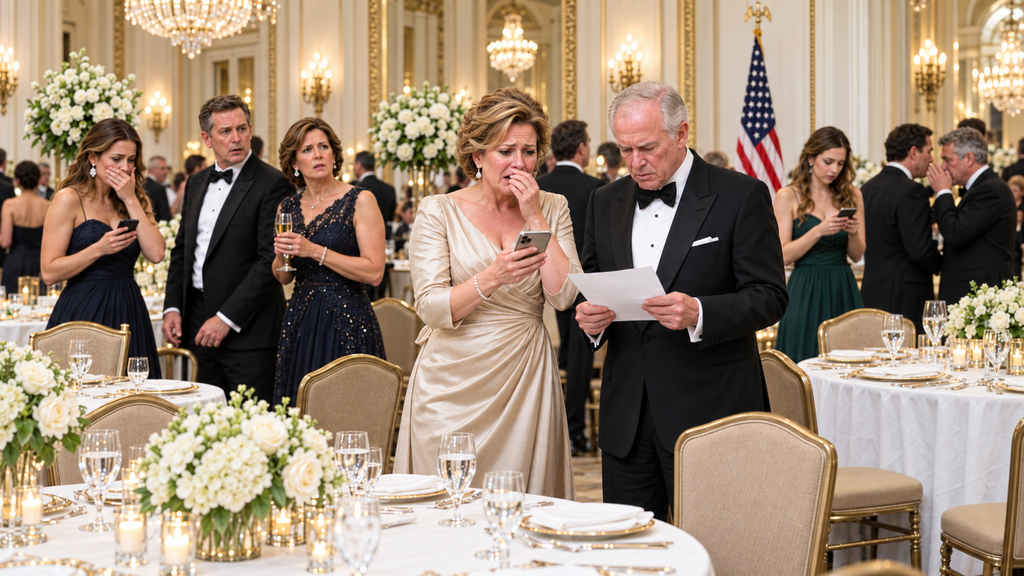
There was only the quiet hum of my office refrigerator and the faint glow of Boston traffic moving twelve floors below me.
My email sat on the screen.
You said there was no seat for me at the gala.
I have therefore cancelled the services I was personally funding.
The ballroom remains available to you.
Everything else is your responsibility now.
Four sentences.
That was all.
Five years of invoices, excuses, favors, emergency transfers, forgotten reimbursements, and guilt had been reduced to four sentences.
I leaned back in my chair.
My hands were shaking.
Not because I regretted it.
Because some part of me was still waiting to be punished.
When you grow up in a family where love is measured by usefulness, saying no does not feel like setting a boundary.
It feels like committing a crime.
My phone rang less than three minutes later.
MOM
I watched it vibrate across my desk.
Once.
Twice.
Three times.
Then it stopped.
Immediately, it started again.
I let that call ring out too.
Then Dad called.
Then Lauren.
Then Mom again.
Then my younger brother Ethan.
Then the family group chat exploded so rapidly that notifications stacked on top of one another faster than I could read them.
MOM: Claire, answer your phone immediately.
LAUREN: What did you DO?
DAD: Call me. NOW.
MOM: Antonio says the catering order has been CANCELLED.
LAUREN: The florist says they are not delivering anything!!!
DAD: This is childish.
Then came the message that almost made me laugh.
MOM: You are embarrassing this family.
I stared at those words.
Embarrassing the family.
I had arranged the venue.
Selected the menu.
Paid the deposits.
Negotiated hotel discounts for relatives.
Approved the wine.
Found a quartet willing to perform on short notice.
Rebuilt the seating chart three times after Lauren added guests without asking me.
Found a lighting company after Dad rejected the first proposal because he wanted the room to look, in his words, “expensive without looking like we tried too hard.”
I had done everything except receive an invitation.
And somehow I was embarrassing the family.
My phone rang again.
This time, instead of ignoring it, I answered.
“Hello?”
My mother did not say hello.
She screamed.
“What have you done?”
I moved the phone several inches away from my ear.
“Exactly what I told you in the email.”
“You cancelled my gala!”
“No.”
My voice sounded calmer than I felt.
“The ballroom is still reserved. Dad signed that contract. You still have your gala.”
“There’s no food!”
“You can order food.”
“The gala is tomorrow!”
“Yes.”
“The florist says they won’t deliver!”
“Then you’ll need another florist.”
“The quartet cancelled!”
“You can hire musicians.”
“The lighting company is refusing to come!”
“You can use the ballroom lights.”
Silence.
Then she lowered her voice.
That was always worse than the screaming.
“Claire.”
One word.
Soft.
Controlled.
Dangerous.
“This is your family.”
I looked through the glass wall of my office at the desks outside.
My assistants had gone home hours ago.
My reflection floated faintly in the window.
For once, I did not look guilty.
I looked tired.
“Yes,” I said. “That was what I thought too.”
“What is that supposed to mean?”
“It means I thought I was family when you needed the florist deposit.”
“Don’t do this.”
“I thought I was family when Dad needed me to cover the venue insurance.”
“Claire—”
“I thought I was family when Lauren wanted imported champagne instead of the original wine package.”
“That was for the guests.”
“I thought I was family when you called me last month because the entertainment company required a deposit.”
Her breathing changed.
“You offered.”
“No, Mom. I rescued you. There’s a difference.”
“You always said you were happy to help.”
Because every time I hesitated, she reminded me that I was the eldest.
The successful one.
The responsible one.
The daughter who had “been blessed” and therefore had an obligation to contribute more.
I had heard those words so many times I once believed they were compliments.
Now they sounded like instructions engraved on a cage.
My mother sighed dramatically.
“You are taking this personally.”
“You told me there was no room for me at a family gala.”
“It is a seating problem.”
“There are twelve empty seats.”
“We needed flexibility.”
“You invited someone listed only as ‘Guest.’”
“That’s one person.”
“And apparently that one person ranks above your daughter.”
“Stop twisting this.”
I closed my eyes.
“I’m not twisting anything.”
“Then restore the contracts.”
“No.”
She went silent.
I had never said no to her like that.
Not without an explanation.
Not with a nervous apology immediately afterward.
Not with an offer to solve the problem another way.
Just no.
She sounded genuinely stunned.
“What did you say?”
“No.”
“Claire, I am your mother.”
“And I’m your daughter.”
“That has nothing to do with this.”
My eyes opened.
There it was.
The truth.
She had said it without realizing she had said it.
I whispered, “Exactly.”
Another long silence followed.
Then my father’s voice appeared somewhere beside her.
“Give me the phone.”
There was shuffling.
My mother said something I could not hear.
Then Dad spoke.
“Claire.”
“Hi, Dad.”
“Reverse the cancellations.”
“I can’t.”
“You mean you won’t.”
“Yes.”
His breath came hard through his nose.
My father had spent his entire career running a regional investment company. He was accustomed to rooms becoming quiet when he spoke.
Our home had worked the same way.
Dad did not request.
Dad announced.
“I don’t know what point you are trying to make,” he said, “but you’ve made it.”
“I’m not making a point.”
“You have disrupted an event that involves important business relationships.”
“I cancelled services I was paying for.”
“They were promised.”
“By me.”
“For the family.”
“For an event I was excluded from.”
“You were not excluded.”
“Where is my seat?”
He paused.
“That is irrelevant.”
I almost smiled.
“Then the flowers are irrelevant too.”
“Don’t be smart with me.”
“I’m not.”
“Seventy-five thousand dollars means nothing compared to the damage you are about to cause.”
“To whom?”
“To all of us.”
“No, Dad. It might damage your party. That isn’t the same thing as damaging the family.”
“You think people won’t ask questions?”
“They probably will.”
“And what exactly do you expect your mother to say?”
“The truth would be simplest.”
His voice hardened.
“You need to grow up.”
The words hit harder than they should have.
Not because they were true.
Because they were familiar.
Grow up.
Be mature.
Be reasonable.
Think about everyone else.
Family comes first.
Those phrases had followed me through childhood like commandments.
When Lauren forgot Mom’s birthday, I was told to buy flowers and sign all our names.
When Ethan crashed Dad’s car at nineteen, I drove three hours at midnight because my parents did not want the neighbors seeing a police cruiser at the house.
When Natalie’s engagement venue demanded an additional deposit, I paid it.
When my youngest brother Ben needed six months of rent after changing jobs, I covered it.
When my parents needed help replacing the roof on the vacation house, I paid the contractor directly because Mom said their money was “temporarily tied up.”
Whenever anyone else made a mistake, it became a family problem.
Whenever I had a need, it became my responsibility.
I had spent years mistaking that imbalance for adulthood.
“No,” I said quietly. “I think I finally did.”
Dad did not answer.
So I continued.
“I am not restoring the contracts. I’m also not paying for any replacement services.”
“You will regret this.”
“Maybe.”
“I mean it.”
“I know.”
“We will remember who did this.”
That sentence hurt.
I swallowed.
Then I said the thing I should have said years earlier.
“I hope you also remember why.”
And I hung up.
For several minutes, I sat completely still.
Then I put my phone facedown on the desk.
My chest hurt.
Not physically.
It was a deep, strange ache.
I had spent years imagining that standing up for myself would feel powerful.
It did not.
It felt like grief.
Because boundaries do not only protect you from other people.
Sometimes they force you to admit who those people have always been.
And that can hurt more than whatever they did.
At 7:42 p.m., someone knocked gently against the glass door of my office.
I looked up.
My assistant Maya stood there holding two paper cups.
“You’re still here,” I said.
“So are you.”
She came inside and placed one cup in front of me.
“Tea.”
“Thank you.”
She glanced at my phone, which was vibrating again.
“I’m guessing that’s the family gala.”
I gave a tired laugh.
“You could say that.”
Maya had worked for me for almost four years.
She had watched me plan celebrity birthdays, corporate events, weddings for families who spent more on flowers than most people earned in a year, and charity dinners where donors arrived in chauffeured cars and argued over table placement.
She had also watched me personally subsidize every Bennett family celebration.
She never commented.
Until now.
“Can I say something that may get me fired?”
“You’re not getting fired.”
“You paid more for your mother’s gala flowers than you spent on the company Christmas bonus pool last year.”
I blinked.
“That sounds terrible when you say it out loud.”
“It sounded terrible when accounting processed it.”
Despite everything, I laughed.
Maya sat across from me.
“Claire, every year you tell the team not to let clients disrespect our time.”
“I know.”
“You charge rush fees.”
“I know.”
“You require payment before service.”
“I know.”
“You once told a billionaire that being wealthy did not make his emergency our emergency.”
I covered my face with both hands.
“I know where this is going.”
“You run one of the best event firms in Boston.”
“That is generous.”
“No. It’s true.”
She leaned forward.
“So why are the Bennetts the only clients allowed to treat you like unpaid staff?”
I lowered my hands.
“They’re not clients.”
Maya raised one eyebrow.
I sighed.
“That’s the problem, isn’t it?”
She nodded.
Then she pushed the tea toward me.
“I’m not saying cancelling everything was easy.”
“It wasn’t.”
“But I think you’ve spent a long time confusing being needed with being loved.”
The sentence landed in the quiet room between us.
I looked away.
Because it was too accurate.
My eyes burned.
Maya immediately softened.
“Sorry.”
“No.”
I shook my head.
“Don’t apologize.”
My voice cracked slightly.
“I think I needed somebody to say it.”
I did not sleep much that night.
At 11:18 p.m., Lauren sent me a message.
You are unbelievable.
At 11:25:
Mom is crying because of you.
At midnight:
Dad has been calling restaurants for hours. Do you understand how humiliating this is?
At 12:11:
If tomorrow is ruined, this is on you.
I typed three different replies.
Deleted all of them.
At 12:23, I finally sent one.
The event is not mine to ruin. It belongs to the people invited to it.
Lauren responded instantly.
You’re jealous.
That one almost worked.
Jealous.
It was such an easy word.
A word that could shrink five years of exploitation into wounded feelings over a chair.
I placed the phone down without answering.
Then, at 12:41 a.m., another message appeared.
This one came from Ethan.
Are you okay?
I stared at it.
Not What did you do?
Not Fix this.
Not Mom is upset.
Just:
Are you okay?
My eyes filled.
I called him.
He answered on the first ring.
“Hey.”
“Hey.”
For a moment, neither of us spoke.
Then Ethan said, “Mom told everyone you had some kind of breakdown.”
I laughed once.
It sounded awful.
“Of course she did.”
“I figured there was more to it.”
“There usually is.”
He hesitated.
“Did she really tell you there wasn’t room?”
“Yes.”
“At the gala you organized?”
“Yes.”
“That you paid for?”
“Most of it.”
Another pause.
“I didn’t know that.”
“Nobody did.”
“What do you mean?”
I sat up in bed.
“They told everyone Dad was paying, didn’t they?”
Ethan said nothing.
That was answer enough.
I stared into the darkness.
Of course.
Of course they had.
Dad had accepted compliments for the wine selections.
Mom had posted photographs of floral samples with captions about “months of careful planning.”
Lauren had boasted that the Bennetts were finally bringing back the gala “properly.”
Nobody mentioned me.
I had assumed everyone understood I was behind the event because I had spent weeks discussing details with them.
But perhaps they thought I was simply arranging things professionally.
Perhaps my parents had never told them who was actually paying.
“How much?” Ethan asked.
I hesitated.
“Claire.”
“Close to seventy-five thousand.”
He swore.
I closed my eyes.
“Yeah.”
“And Mom excluded you?”
“Yes.”
“Why?”
“She says there wasn’t enough room.”
“There are eighty-eight guests.”
“I know.”
“The room holds a hundred.”
“I know.”
“Jesus.”
I heard him walking.
Then a door closed.
“I’m going to call her.”
“No.”
“Claire—”
“Please don’t.”
“Why not?”
“Because I don’t need somebody to fight with Mom for me.”
“That’s not what I mean.”
“I know.”
I took a breath.
“I just need to handle this differently.”
He was quiet.
Then he said, “For what it’s worth, if you aren’t welcome, I don’t feel right going.”
My throat tightened.
“Ethan, you don’t have to pick sides.”
“I’m not.”
“Yes, you are.”
“No.”
His voice was unusually firm.
“I’m deciding where I want to sit.”
That sentence stayed with me long after we ended the call.
By eight the next morning, the Bennett family gala had become an emergency operation.
I knew this because my phone would not stop ringing.
Three caterers called my office asking whether my mother had authorization to use my company account.
She did not.
A rental business emailed because Dad had tried to move my card from the cancelled order onto a new contract.
I denied permission.
Then the ballroom coordinator, Valerie, called me personally.
“Claire,” she said carefully, “I need to confirm something.”
“Go ahead.”
“Your mother says you authorized her to place additional charges through Bennett & Lane Events.”
“I did not.”
“Okay.”
A pause.
“She is standing at my desk.”
I looked at the clock.
8:17 a.m.
The gala began at six.
“Please do not charge my company for anything unless the request comes directly from me in writing.”
“Understood.”
In the background, I heard my mother.
“Is that Claire?”
Then, louder:
“Give me the phone.”
Valerie said hurriedly, “I’m going to let you go.”
The line disconnected.
Thirty seconds later, Mom called me.
I answered.
“Do not humiliate me in front of vendors.”
I almost admired the consistency.
“Then stop trying to use my company credit.”
“We are trying to save the event.”
“Use your card.”
“There is a daily limit.”
“That sounds like something you should discuss with your bank.”
“Claire!”
I flinched despite myself.
Then I looked down at the spreadsheet open on my laptop.
For the first time, I had added up everything.
Not just the gala.
Everything.
Five years.
The ski-house rental for Dad’s sixtieth birthday.
Lauren’s bridal shower.
Natalie’s engagement dinner.
Mom and Dad’s anniversary party.
Ben’s graduation celebration.
Catering for Christmas.
Hotel rooms for visiting relatives.
Flowers for funerals.
Emergency airline tickets.
A roof repair.
A country-club membership payment Dad had once insisted was “temporary.”
The numbers sat in front of me in neat black columns.
$8,400.
$12,600.
$4,950.
$21,000.
$3,700.
$17,800.
$29,500.
Hundreds.
Thousands.
Transfers that had once seemed manageable because I never viewed them together.
The total at the bottom made my stomach turn.
$318,472.61
More than three hundred thousand dollars.
And that did not include countless dinners, gifts, hours of unpaid planning, or smaller expenses I had never bothered documenting.
“Mom.”
She was still speaking.
I interrupted her.
“What?”
“I added it up.”
“Added what up?”
“What I’ve paid for this family over the last five years.”
Silence.
Then:
“Why would you do something like that?”
I almost laughed.
Because even the act of calculating what I had given was somehow offensive.
“Because I should have done it years ago.”
“That money was not forced out of you.”
“Some of it was supposed to be repaid.”
“We always intended—”
“Three hundred eighteen thousand, four hundred seventy-two dollars and sixty-one cents.”
She stopped breathing for a second.
I heard it.
“That cannot be right.”
“It is.”
“You’re including gifts.”
“I’m including invoices you promised to reimburse.”
“This is disgusting.”
I stared at the spreadsheet.
“What is?”
“Keeping score with your parents.”
I felt something inside me finally go still.
Not numb.
Clear.
“Mom, you kept score first.”
“What are you talking about?”
“You counted every favor I owed because I was the eldest.”
“That is not the same.”
“You counted every time my business did well as a reason I should pay more.”
“We were proud of you.”
“You counted my success as family property.”
“That is an awful thing to say.”
“You counted my money.”
My voice remained calm.
“You just hoped I would never count it too.”
She went completely silent.
Then she said, “Your father will speak to you.”
“No.”
“What?”
“I have a client meeting in ten minutes.”
“You are putting a client before your mother?”
I looked through the office window as Maya arrived carrying her laptop.
For years, the question would have triggered automatic guilt.
Today it did not.
“Yes.”
And I ended the call.
At 9:30 a.m., I sat across from a bride named Rebecca and her mother while we discussed ivory linens and a ceremony contingency plan in case of rain.
For forty-five minutes, I did my job.
I listened.
I took notes.
I offered options.
I solved problems.
Nobody shouted.
Nobody guilted me.
Nobody asked me to prove my love by paying an invoice.
When the meeting ended, Rebecca’s mother paused at the door.
“Claire?”
“Yes?”
“I just wanted to say thank you.”
“For what?”
“For how calm you make everything feel. I know this wedding is business for you, but it feels personal to us. You make us feel like it matters.”
I could barely answer.
After they left, I went into my office and closed the door.
Then I cried.
Not because of the gala.
Not exactly.
I cried because a near stranger had thanked me more sincerely for forty-five minutes of professional attention than my own family had thanked me for years of sacrifice.
Sometimes heartbreak is not one enormous betrayal.
Sometimes it is finally noticing a thousand tiny absences.
Around noon, the family group chat changed.
The anger gave way to panic.
LAUREN: Does anyone know a florist who can do same-day centerpieces?
NATALIE: I called three places. Nobody can do 14 tables.
DAD: Stop discussing this in the group chat.
BEN: I found a restaurant that can deliver pasta trays.
MOM: Absolutely not. We are NOT serving pasta trays.
BEN: Then maybe people can eat chairs.
I stared at that message.
Then, despite myself, laughed so hard I had to cover my mouth.
Another message arrived privately.
From Ben.
Sorry.
Then:
But honestly, maybe chairs are appropriate since apparently seating is very important.
I laughed again.
For the first time since this started, the pressure in my chest loosened.
A minute later he sent:
I didn’t know you paid for everything.
I replied:
Most people didn’t.
Three dots appeared.
Then disappeared.
Then reappeared.
That’s messed up.
I did not know why those three words affected me so much.
Maybe because he was the youngest.
I had paid his first apartment security deposit.
Bought his graduation suit.
Covered two months of his student loan payments when he was between jobs.
I never told anyone.
I did not want applause.
But perhaps I had quietly hoped that one day, if I needed something as simple as a chair beside them, my family would remember.
At 1:13 p.m., Lauren appeared in my office.
She did not make an appointment.
She marched through reception wearing designer sunglasses and a camel-colored coat and pushed open my door.
Maya appeared behind her.
“I tried to stop her.”
“It’s okay.”
Lauren removed her sunglasses.
Her eyes were red.
For half a second, guilt stabbed me.
Then she spoke.
“You need to fix this.”
The guilt vanished.
“Sit down.”
“I don’t want to sit down.”
“Then stand.”
She stared at me.
“You have completely lost your mind.”
I returned my attention to the invoice on my screen.
“I have work to do.”
“Mom has been crying since last night.”
“I’m sorry she’s upset.”
“No, you’re not.”
“I am.”
“Then fix it.”
“I’m not paying.”
“This isn’t about money.”
“Great. Then paying for it yourselves should be easy.”
Lauren pressed both palms against my desk.
“Do you know who is coming tonight?”
“Eighty-eight people, apparently.”
“Dad invited two potential investors.”
“Okay.”
“I invited Daniel Mercer.”
I looked up.
The name was familiar.
Then I remembered.
A real-estate developer.
The mysterious Guest.
“Is Daniel the unnamed guest?”
Lauren’s expression changed.
Very slightly.
That was enough.
“He’s the seat.”
“It isn’t like that.”
I stared at her.
“The stranger gets the seat.”
“He isn’t a stranger to me.”
“He is to the family.”
“He could introduce me to people who could completely change my career.”
There it was.
Not logistics.
Not capacity.
Not an innocent mistake.
A choice.
My sister had decided a man who might benefit her professionally deserved a seat at our family gala more than I did.
And my mother had agreed.
“So you asked them to remove me?”
“No.”
“Lauren.”
“I said we needed room for him.”
“And whose name disappeared?”
She looked away.
“You weren’t really attending as a guest anyway.”
That sentence cut deeper than everything my mother had said.
“What does that mean?”
“You always work these things.”
“Because somebody has to.”
“Exactly.”
“No.”
I stood.
“Not exactly.”
Lauren folded her arms.
“You’re turning this into some huge emotional drama.”
“I bought the food you planned to eat.”
“And?”
“I paid for the flowers you planned to photograph.”
“You volunteered.”
“I hired the musicians.”
“You’re an event planner.”
“I am also your sister.”
Lauren rolled her eyes.
And suddenly, I saw it.
The same expression she had used when we were children and Mom asked me to let her have the bigger bedroom because Lauren was “more particular.”
The same look when I loaned her my car for a month and she returned it nearly empty.
The same look when she called me at two in the morning before her wedding because the place cards had been printed in the wrong shade of gold.
Entitlement did not always arrive shouting.
Sometimes it arrived as simple surprise that the person serving you had needs too.
“You really don’t understand,” I said.
“I understand perfectly. You’re punishing everyone because your feelings got hurt.”
“No.”
“What else would you call it?”
I walked around my desk.
“I stopped paying.”
“That is punishment.”
“No, Lauren. The fact that you experience me stopping as punishment tells me exactly how much you depended on taking from me.”
She opened her mouth.
Closed it.
I continued.
“You are thirty-four years old.”
“So?”
“If Daniel Mercer is important to your career, invite him.”
“I did.”
“Pay for his dinner.”
“This is not about one dinner.”
“You’re right.”
I nodded.
“It isn’t.”
Her eyes narrowed.
“You think you’re better than us because you have money.”
The accusation surprised me.
Then anger rose.
Clean and hot.
“I have never said that.”
“You don’t have to.”
“I paid your wedding florist.”
Her face changed.
“You said that was a gift.”
“It was.”
“So don’t throw it in my face.”
“I’m not.”
“Then why mention it?”
“Because you’re standing in my office accusing me of using money to feel superior after spending years happily letting me pay for things.”
She looked away.
I lowered my voice.
“I do not want the money back, Lauren.”
“Then what do you want?”
The answer came immediately.
“I wanted you to want me there.”
That silenced her.
My eyes burned.
I hated that.
I hated crying in front of her.
But I was done pretending this had been only about money.
“I wanted Mom to look at a seating chart and notice her daughter’s name was missing.”
Lauren’s expression softened slightly.
“I wanted Dad to say, ‘Of course Claire belongs at the table.’”
My voice cracked.
“I wanted one of you to notice before I did.”
Lauren swallowed.
I continued.
“I wanted someone to remember that the person solving every problem was also part of the family.”
She looked at the floor.
For several seconds, neither of us spoke.
Then she said quietly, “You could still come.”
I laughed through the tears.
“Where would I sit?”
“We’ll add a chair.”
“Because the catering disappeared?”
“That isn’t fair.”
“No.”
I wiped my cheek.
“What wasn’t fair was needing to cancel seventy-five thousand dollars in services before anybody suddenly discovered room for me.”
Lauren’s face tightened again.
“You are making it impossible to fix this.”
“No.”
I returned to my desk.
“I’m making it impossible to fix this with another favor from me.”
She stared at me for a long time.
Then she picked up her sunglasses.
“Mom says if you don’t restore everything, she doesn’t know if she can forgive you.”
My chest tightened.
But only briefly.
I looked at my sister.
“Tell her I spent years forgiving things nobody apologized for.”
Lauren left without another word.
At 3:05 p.m., my father arrived.
Unlike Lauren, he did not storm through reception.
He asked Maya if I was available.
That worried me more.
Dad only became polite when he had decided anger was not working.
He entered my office carrying a leather folder.
“Can we talk?”
I gestured toward the chair.
He sat.
For a moment, he said nothing.
Neither did I.
Finally he opened the folder.
Inside was a printed proposal from an emergency catering company.
“They can do dinner for ninety people.”
I glanced at the total.
$24,800.
Same-day premium.
Staffing surcharge.
Emergency rental fees.
“Looks expensive.”
“It is.”
I pushed it back toward him.
He did not take it.
“We need your card.”
“No.”
“Claire, enough.”
“I said no.”
“I can reimburse you Monday.”
I nearly smiled.
“When the investments pay out?”
He stiffened.
“Don’t mock me.”
“I’m quoting Mom.”
“We are temporarily illiquid.”
“You own two houses.”
“That is not cash.”
“You have investment accounts.”
“That money is committed.”
“Then reduce the gala.”
He stared at me.
“You want your mother to serve sandwiches?”
“I don’t care what she serves.”
“You arranged wagyu and lobster.”
“When I thought I was planning a celebration for my family.”
“It still is.”
“Then the family can fund it.”
His jaw tightened.
“I came here trying to resolve this calmly.”
“No, Dad. You came here because Lauren didn’t get me to pay.”
“That is unfair.”
“Is it?”
He stood.
“I have supported you your entire life.”
The sentence stunned me.
“Supported me?”
“Yes.”
“You made me start paying rent at nineteen.”
“To teach responsibility.”
“You refused to help with college because you said business school was a waste if I was only going into events.”
“I wanted you to choose something stable.”
“I built this company without a dollar from you.”
“And whose name opened doors when you started?”
There it was.
The Bennett name.
The invisible invoice I was expected to pay forever.
I stood too.
“You introduced me to three clients.”
“Important clients.”
“I’m grateful.”
“Apparently not.”
“Gratitude is not lifetime debt.”
He stared at me.
I continued.
“I have paid more than three hundred thousand dollars into this family in five years.”
His expression flickered.
“Your mother told me you were keeping some absurd ledger.”
“I created it this morning.”
“That money was your choice.”
“Then my decision to stop is my choice too.”
His face reddened.
“You cannot have it both ways.”
“Exactly.”
He looked confused.
I leaned closer.
“You can’t say every dollar I gave was voluntary and then act like every future dollar is mandatory.”
For once, Dad had no immediate response.
He picked up the catering proposal.
Then he placed it back in the folder.
“You’ve become very cold.”
The words hurt.
But I had spent the entire night learning that pain did not require obedience.
“No.”
I shook my head.
“I’ve become expensive to mistreat.”
His face changed.
He looked at me not like his daughter, but like an opponent in a negotiation.
Then he said, “I hope this is worth it.”
“It isn’t.”
That surprised him.
I took a breath.
“None of this is worth it. I wish you had simply put my name on the seating chart.”
He looked away first.
At five o’clock, I changed clothes in the small private restroom attached to my office.
Not into the navy gown.
I could not even look at it.
Instead, I put on black trousers, a cream blouse, and the flat shoes I kept under my desk for event emergencies.
Then I called Maya.
“Do you have plans tonight?”
She blinked.
“My boyfriend is working.”
“Good.”
She smiled.
“That sounded terrible.”
“You know what I mean.”
“What are we doing?”
“Dinner.”
“Where?”
“Anywhere that has a table.”
Her smile disappeared.
She understood.
“Give me ten minutes.”
At 5:42, as Maya and I stepped outside, Ethan called.
I answered.
“Hey.”
“Where are you?”
“Leaving work.”
“The gala starts in twenty minutes.”
“I’m aware.”
“Mom says you’re refusing to come.”
“She told me there wasn’t room.”
“She added a seat.”
I stopped walking.
Maya paused beside me.
“When?”
“About an hour ago.”
I looked up at the darkening sky.
Boston in early autumn had that particular blue-gray evening light that made every window glow warmer than it really was.
“Where?”
“What?”
“Where did she add the seat?”
Ethan hesitated.
I knew before he answered.
“At the end of table fourteen.”
Table fourteen.
The farthest table from the family.
Originally assigned to Dad’s former coworkers and distant acquaintances.
Of course.
“Between who?”
Another pause.
“Two people from Dad’s golf club.”
I laughed softly.
Not because it was funny.
Because some lessons insist on being repeated until you stop hoping the ending will change.
“Thanks for telling me.”
“Claire, I can move my seat.”
“No.”
“Come sit beside me.”
“No.”
“I mean it.”
“I know.”
I smiled even though he could not see me.
“And that means more than you think.”
“So you’re not coming?”
I looked at Maya.
She waited without asking.
“No.”
Ethan sighed.
Then he said, “Okay.”
“You should go.”
“I’m not.”
“Ethan.”
“I told you last night.”
“You don’t need to prove anything.”
“I’m not proving anything.”
He paused.
“I’m deciding where I want to sit.”
The same words.
This time, I cried.
Quietly.
Right there on the sidewalk.
“Where are you going?” he asked.
“To dinner.”
“Can I come?”
I wiped my cheek.
“Yes.”
“Ben too?”
I laughed.
“If he wants.”
“He’s already beside me.”
In the background I heard Ben shout, “Ask if Maya’s coming!”
Maya’s eyebrows shot up.
I laughed harder.
For the first time in two days, the tears felt different.
“Yes,” I said. “Maya is coming.”
Ben cheered.
At 6:07 p.m., the Bennett Family Gala began inside the Harbor Crown Ballroom.
I know because at 6:08, my mother called.
I did not answer.
At 6:10, she called again.
At 6:14, Lauren called.
At 6:16, Natalie called.
Then came a text from Natalie.
Please answer. This is bad.
I hesitated.
Natalie rarely involved herself in family conflict.
Of all my siblings, she was the quietest.
I called her.
She whispered immediately.
“Where are you?”
“At dinner.”
“You need to know what’s happening.”
“I really don’t.”
“No. Claire.”
Something in her voice stopped me.
“What happened?”
“The replacement caterer cancelled.”
“What?”
“They demanded payment before unloading. Dad’s card declined for the full amount and Mom tried splitting it across three cards.”
I closed my eyes.
“Natalie—”
“I’m not asking you to pay.”
“Okay.”
“I just thought you should know because Mom is telling people you sabotaged the caterer.”
My eyes opened.
“What?”
“She says you called them.”
“I didn’t even know who they hired.”
“I know.”
“Does Dad know she’s saying that?”
“Yes.”
“And?”
“He’s letting her.”
That hurt more than I expected.
“What else is happening?”
“The hotel set out water and bread because technically the ballroom contract includes basic beverage service.”
I pictured it.
Fourteen beautifully dressed tables.
Guests in evening gowns and tuxedos.
Water.
Bread.
Standard ceiling lights.
No flowers.
No band.
No dinner.
The kind of event I had spent my career making sure never happened.
Part of me felt vindicated.
A darker part.
A hurt part.
But mostly I felt sad.
Because I had wanted the gala to be beautiful.
I had wanted my mother to walk into that ballroom and be proud.
I had wanted my father to give his speech.
I had wanted my siblings around one table.
I had imagined myself in the navy gown, drinking champagne beside them after months of work.
I had never wanted this.
I had simply stopped preventing it.
“Natalie,” I said softly, “I’m sorry.”
“You didn’t do this.”
“Mom would disagree.”
“Mom is currently yelling at a hotel manager because he won’t let her charge outside food to your company account.”
I closed my eyes.
“Please tell Valerie not to do that.”
“She already knows.”
Another pause.
Then Natalie whispered, “Claire?”
“Yeah?”
“I didn’t know.”
“About the money?”
“About any of it.”
I heard voices behind her.
She moved farther away.
“I thought Mom hired your company and you gave her a discount.”
“No.”
“She always says Dad pays for these events.”
“I know.”
“How long?”
“Five years.”
“Why?”
There were a thousand answers.
Because Mom asked.
Because Dad expected it.
Because Lauren needed help.
Because Ethan had trouble.
Because Natalie was overwhelmed.
Because Ben was young.
Because I had money.
Because I believed being the strong one meant never noticing how heavy everything became.
Instead I said, “I thought that was what family did.”
Natalie was quiet for several seconds.
Then she whispered, “Family is supposed to do it for you too.”
My throat tightened.
“Yes.”
Behind her, my mother shouted her name.
“I have to go.”
“Go.”
“Are you really okay?”
I looked around the restaurant.
Maya sat across from me.
Ethan and Ben had just entered, shaking rain from their coats.
The hostess smiled and approached with menus.
There was a chair waiting for me.
“Yes,” I said.
For the first time all day, I meant it.
Our dinner was not elegant.
The restaurant was a small Italian place in the North End with checkered napkins and candles stuck inside old wine bottles.
No quartet played.
No imported flowers filled the room.
Nobody cared what kind of glass held the wine.
We ordered pasta, garlic bread, and enough dessert for six people even though there were only four of us.
Ben raised his water glass.
“To the family gala.”
Ethan kicked him under the table.
“What?” Ben said. “Too soon?”
I laughed.
Maya almost choked on her drink.
For two hours, nobody asked me for money.
Nobody asked me to solve a crisis.
Nobody made me justify why I deserved to be there.
Ethan told a ridiculous story about his new neighbor.
Ben imitated Dad trying to use a self-checkout machine.
Maya told them about the time I once reorganized an entire ballroom in seventeen minutes after a pipe burst above the dance floor.
“You should have seen her,” she said. “Everyone else was panicking, and Claire walked in, looked at the ceiling, and said, ‘Move the cake.’”
Ben laughed.
“That sounds exactly like her.”
Then something strange happened.
I realized they were talking about me.
Not what I provided.
Not what I fixed.
Me.
I had forgotten how different those things felt.
Around eight-thirty, Ethan’s phone buzzed.
He looked at it.
His expression changed.
“What?”
He turned the phone around.
Lauren had posted a photograph in the sibling group chat.
It showed the gala ballroom.
Guests were seated.
Some had left.
The remaining tables were half empty.
Takeout containers had appeared near the back of the room.
Apparently Ben’s suggestion had become reality.
Pasta.
My mother stood near the stage wearing a silver gown.
Dad was beside her.
Neither looked happy.
Under the photograph Lauren had written:
Happy now?
I stared at it.
Then I placed Ethan’s phone face down.
“No.”
Ben stopped smiling.
I looked at both my brothers.
“No. I’m not happy.”
Ethan nodded.
“I didn’t think you were.”
“I wanted them to understand.”
“Maybe they will.”
I shook my head.
“No.”
And I surprised myself by realizing that I no longer needed them to.
That was another kind of freedom.
Not winning the argument.
Not receiving an apology.
Not watching people finally admit you were right.
Freedom was understanding that your boundary did not need the other person’s agreement to exist.
At 9:02 p.m., my mother called again.
I almost ignored it.
Then I answered.
“Claire.”
Her voice was raw.
Not angry.
Exhausted.
“Hi, Mom.”
“Are you satisfied?”
“No.”
“Well, congratulations.”
I closed my eyes.
“Mom—”
“People left.”
“I’m sorry.”
“Your father’s investors left.”
“I’m sorry.”
“Lauren’s guest left.”
I glanced at Maya.
She looked away, giving me privacy.
“Okay.”
“Do you know what people were asking?”
I said nothing.
“They asked where you were.”
That surprised me.
Mom continued.
“They asked why the event planner wasn’t here. They asked why your company logo was on some of the original invitations but you weren’t attending.”
I frowned.
“My company logo?”
Silence.
“Mom?”
“It was on the digital sponsorship page.”
“I never approved that.”
“We used it because you were funding the event.”
My stomach tightened.
“So I was good enough to be the sponsor.”
“Don’t start.”
“But not the guest.”
“Claire.”
“No, I need to understand.”
My voice remained calm.
“You advertised my company as sponsoring the gala?”
“It was appropriate.”
“Did you tell anyone?”
“It was only a logo.”
“Did you tell anyone I paid for the gala?”
Another silence.
Then:
“That would have been tacky.”
I laughed once.
It came out hollow.
“So accepting seventy-five thousand dollars wasn’t tacky.”
“Stop making everything about money.”
“You just used my company name to make the gala look sponsored.”
“Because you were sponsoring it!”
“And yet apparently nobody was supposed to know what that meant.”
Her voice sharpened.
“People asked where you were, Claire. What was I supposed to say?”
“The truth.”
“You keep saying that as if life is that simple.”
“It is tonight.”
“And what truth would you like? That my eldest daughter abandoned her family over a seating misunderstanding?”
“No.”
I took a breath.
“Tell them your eldest daughter paid for the event and was told there wasn’t a chair for her.”
She inhaled sharply.
“You enjoy humiliating me.”
That sentence finally broke something.
Not my heart.
The last thread of my need to explain myself.
“Mom.”
My voice became very soft.
“I have spent my whole life trying to prevent you from feeling embarrassed.”
She went silent.
“I fixed forgotten birthdays so nobody would know you forgot.”
“Claire—”
“I paid bills when you and Dad were short so nobody would know.”
“That’s private.”
“I smoothed over Lauren’s wedding crisis. I covered Ben’s rent. I rearranged holidays when Natalie couldn’t travel. I planned Dad’s birthdays. I managed family emergencies.”
My eyes filled.
“I protected everybody from embarrassment.”
She did not speak.
“And tonight, for once, I stopped protecting you from the consequences of how you treated me.”
“That is cruel.”
“No.”
My voice trembled now.
“What was cruel was telling your daughter she could stand with the catering staff while a stranger sat at the family gala she paid for.”
Mom inhaled.
“That is not how I meant it.”
“But it’s what you did.”
“I thought you would understand.”
And there it was.
The sentence that explained everything.
I thought you would understand.
Of course.
Claire understands.
Claire is easy.
Claire is strong.
Claire does not need reassurance.
Claire has money.
Claire can handle it.
Claire always understands.
I had understood everyone until there was almost nothing left of me.
“I did understand,” I whispered.
“What?”
“I understood perfectly.”
I wiped my cheek.
“That was the problem.”
She began crying.
Real crying this time.
Not angry crying.
Not theatrical sighing.
Small, broken sounds.
And because she was my mother, every instinct in me screamed to comfort her.
To apologize.
To say I would come.
To promise that next year would be different.
Instead I let the silence exist.
Finally, she whispered, “What happens now?”
For once, I answered honestly.
“I don’t know.”
The following morning, my father sent a formal email.
Not a text.
Not a phone call.
An email.
The subject line read:
Regarding Recent Family Expenses
I opened it while drinking coffee.
The message was four paragraphs long.
Dad wrote that the family had become “too financially dependent” on me.
He said “miscommunication” around the gala had created unnecessary conflict.
He suggested that going forward, all shared family costs should be discussed in advance.
There was no apology.
No mention of the seating chart.
No acknowledgment that they had lied about why I was excluded.
No mention of the company logo.
But buried near the end was one sentence:
We should not have assumed your contributions would continue indefinitely.
I read it three times.
Then I laughed.
Because in my family, that sentence was practically a confession.
I did not answer immediately.
Instead, I opened the spreadsheet again.
$318,472.61.
I created a new folder on my computer.
PERSONAL — BENNETT FAMILY
I saved every invoice.
Every transfer.
Every email promising reimbursement.
Every cancelled gala contract.
Then I wrote a rule for myself.
Not for them.
For me.
No more secret financing.
If I gave a gift, it would be a gift.
If someone wanted a loan, there would be paperwork.
If an event mattered enough to host, it mattered enough for the host to pay.
I would never again purchase belonging.
For the next two weeks, my mother did not call.
Neither did Lauren.
Dad sent two logistical messages about Thanksgiving.
I answered politely.
Natalie called twice.
Ethan checked in every few days.
Ben sent memes.
Life continued.
That was perhaps the strangest part.
For years, I had believed disappointing my family would destroy everything.
It did not.
The sun still rose.
Clients still called.
Invoices still needed approval.
My office still smelled like coffee and printer paper in the morning.
People still got married.
Flowers still arrived.
Music still played.
The world did not end because my mother was angry with me.
Once I understood that, I became dangerous to every old pattern that depended on my fear.
Three weeks after the gala, Lauren came to my apartment.
This time, she called first.
I almost said no.
Then I agreed.
She arrived carrying a paper bag from the bakery we loved as children.
“Peace offering,” she said.
“I don’t know if cake can fix this.”
“It’s lemon.”
I opened the door wider.
“Lemon has a chance.”
She laughed nervously.
We sat in my kitchen.
For several minutes, we ate cake without speaking.
Finally Lauren placed her fork down.
“I owe you an apology.”
I looked at her.
She struggled with the words.
That mattered.
Real apologies are rarely smooth.
“I knew Mom was removing your seat.”
I said nothing.
“She called me because Daniel had confirmed at the last minute.”
“I know.”
“I told her you wouldn’t care.”
My chest tightened.
Lauren looked down.
“I said you would probably be working anyway.”
The old wound reopened slightly.
She continued.
“And when Mom said maybe we should tell Daniel there wasn’t room, I told her not to.”
I swallowed.
“Why?”
“Because I wanted him there.”
“At my expense.”
“Yes.”
The directness surprised me.
Lauren’s eyes filled.
“I didn’t think about it that way at the time.”
“But after?”
“After I came to your office, I did.”
She wiped beneath one eye.
“And then at the gala, people kept asking where you were.”
I said nothing.
“Mrs. Callahan asked Mom who designed the event before things got cancelled. Mom said she had been planning it for months.”
Of course she had.
Lauren shook her head.
“And I heard myself say, ‘Actually, Claire did most of it.’”
I looked at her.
“Mom was furious.”
“I can imagine.”
“And then I realized I had done the same thing.”
“What?”
“Taken credit for things you made possible.”
She looked at me.
“My wedding.”
“Lauren—”
“No. Let me finish.”
I sat back.
“You handled almost everything. When people complimented me for how beautiful it was, I said I had a vision.”
A sad smile touched her mouth.
“I had a Pinterest board.”
I laughed before I could stop myself.
She laughed too.
Then her expression became serious again.
“I’m sorry.”
This time, the words were simple.
No excuse.
No if your feelings were hurt.
No but you overreacted.
Just:
“I’m sorry.”
I felt the anger inside me loosen slightly.
Not disappear.
Forgiveness is not an eraser.
But the sharpness changed.
“Thank you.”
She nodded.
Then she reached into her purse.
“I brought something.”
It was an envelope.
Inside was a check.
$12,000.
I stared at it.
“What is this?”
“What I can pay you now.”
“For what?”
“My wedding.”
“No.”
“Claire.”
“It was a gift.”
“I know.”
“Then keep it.”
She hesitated.
“This is not about buying forgiveness.”
“I know.”
“I just realized I’ve treated your generosity like it was automatic.”
My eyes burned.
Lauren pushed the check toward me.
“I want to start undoing that.”
I looked at the check.
Then at my sister.
Slowly, I pushed it back.
“Buy dinner next time.”
Her eyes filled again.
“You sure?”
“Yes.”
“And don’t invite Daniel.”
She laughed through her tears.
“Deal.”
My mother took longer.
Much longer.
Thanksgiving arrived before we spoke properly.
For the first time in twelve years, I did not host.
I did not order the turkey.
I did not arrange flowers.
I did not ask who needed transportation.
I did not call the bakery.
I simply asked:
“What time should I arrive?”
The family group chat went silent for almost six minutes.
Then Mom replied:
Four.
That was it.
I arrived at 4:03 carrying one bottle of wine and a pie.
Nothing else.
The house smelled like overcooked turkey and cinnamon.
Dad opened the door.
His eyes dropped to the pie.
“That all you brought?”
The old me would have panicked.
Forgotten appetizers?
Needed wine?
Ice?
Flowers?
I smiled.
“Yes.”
He stared at me.
Then, unexpectedly, he smiled too.
“Come in.”
The dining room looked different.
Less perfect.
The napkins did not match.
One centerpiece leaned to the side.
Dinner began twenty minutes late because the potatoes were not ready.
Nobody died.
It was wonderful.
I sat between Ethan and Natalie.
My name was on a handwritten place card.
Claire.
Just Claire.
Not event planner.
Not sponsor.
Not rescuer.
Daughter.
Sister.
Person.
Mom barely spoke to me through the first half of dinner.
Then, while Dad carved the turkey, Ben reached for a roll and accidentally knocked over the gravy.
It splashed across the tablecloth.
Everyone froze.
A year earlier, I would already have been standing with towels.
Instead, I took a sip of wine.
Mom looked at me automatically.
So did Lauren.
Then Lauren caught herself.
She stood.
“I’ve got it.”
Natalie joined her.
Ben grabbed towels.
Within thirty seconds, the disaster was handled.
I remained seated.
Something about that tiny moment affected me more than it should have.
Perhaps because I had never realized how often everyone waited for me to stand.
After dessert, Mom approached while I was putting on my coat.
“Can we talk?”
Dad looked toward us.
Mom shook her head.
“Just us.”
We went into the small study near the front hallway.
She closed the door.
For several seconds, she touched the edge of Dad’s desk.
Then she said, “I was very angry with you.”
“I know.”
“I still think you could have handled the gala differently.”
My heart sank slightly.
Of course.
Then she continued.
“But I could have handled you differently.”
I looked at her.
She struggled to meet my eyes.
“I spent a lot of time thinking about what you said.”
I waited.
“Especially that line about understanding.”
My throat tightened.
Mom folded her hands.
“When you were little, you were always the easy child.”
I smiled sadly.
“I know.”
“You never threw tantrums.”
“Lauren did enough for both of us.”
Mom almost smiled.
“You helped with the younger kids.”
“I was nine.”
“I know.”
That surprised me.
She looked down.
“You became responsible so early that I think I began treating responsibility like your personality instead of something you were doing because we asked you to.”
I swallowed.
She continued.
“When your father’s business struggled years ago, you helped.”
“I remember.”
“When Natalie’s wedding plans fell apart, you helped.”
“Yes.”
“When Ben lost his job…”
“I helped.”
“Every time you solved something, I felt relieved.”
Her voice cracked.
“And I suppose I stopped asking what it cost you.”
The words hit me harder than any apology could have.
Tears rose instantly.
Mom looked at me.
“I am sorry there was no seat for you.”
My breath caught.
Not sorry you were hurt.
Not sorry things got out of control.
The thing itself.
“I’m sorry,” she repeated. “There should have been.”
I wiped my cheek.
“Yes.”
She nodded.
“There should always have been.”
I cried then.
Quietly.
And so did she.
Mom stepped forward as though she wanted to hug me, then stopped.
For once, she did not assume she was entitled to closeness.
That tiny hesitation broke the last of my resistance.
I moved toward her.
She held me.
And for several seconds, I was not thirty-eight-year-old Claire Bennett, owner of a successful company, family fixer, emergency fund, event planner, responsible eldest daughter.
I was just somebody’s child.
I had forgotten how much I missed that.
The apology did not magically fix everything.
Real families do not transform because of one emotional conversation.
Mom still slipped.
Two months later, she called and began with:
“Claire, we have a tiny emergency.”
I immediately felt my shoulders tighten.
“What kind?”
She explained that Dad had invited twelve people to a holiday brunch and the restaurant wanted a deposit.
Then she paused.
I waited.
Finally she said, “Never mind. I’ll put it on my card.”
I smiled.
“Good idea.”
Another month passed.
Dad called because the vacation house needed plumbing repairs.
He complained about the price for seven minutes.
I listened.
Then he said, “Well, I suppose I’ll handle it.”
“You probably should.”
He grunted.
Neither of us mentioned money.
Lauren began paying for her own career events.
Natalie started hosting Sunday dinners sometimes.
Ben, somehow, became obsessed with cooking and learned to make a roast chicken that he insisted was better than any caterer’s.
It was not.
We lied and told him it was.
Ethan remained Ethan.
Quiet.
Observant.
The first person who had asked if I was okay.
I never forgot that.
Six months after the gala, I received an invitation in the mail.
Cream cardstock.
Heavy weight.
Embossed lettering.
THE BENNETT FAMILY SPRING DINNER
I almost laughed.
Then I opened it.
At the bottom, in my mother’s handwriting, were six words:
Your seat is already saved. Love, Mom.
I stood in my kitchen staring at that sentence for a long time.
A year earlier, it would have meant everything.
Now it meant something different.
Because I no longer needed the promise.
That was the gift.
I had learned that belonging was not a chair someone reluctantly pulled out after you threatened to leave.
Belonging was being considered before the seating chart was printed.
It was people noticing your absence before they noticed what you had stopped providing.
It was being loved when you were useful.
And when you were tired.
And when you said yes.
And when you said no.
Especially when you said no.
The spring dinner was held at my parents’ house.
Twenty-two people attended.
No investors.
No mysterious guests.
No professional musicians.
No elaborate lighting.
Mom ordered food from a neighborhood restaurant.
Lauren brought dessert.
Natalie arranged flowers from her own garden.
Dad bought the wine.
Ben burned garlic bread.
It may have been the least impressive Bennett event in years.
It was also my favorite.
I arrived ten minutes late.
Nobody called to ask where the caterer was.
Nobody asked me to fix anything.
I walked into the dining room.
My chair was beside Mom.
A handwritten place card rested on the plate.
CLAIRE
Nothing else.
I stood there looking at it.
Mom noticed.
For one uneasy second, I saw fear in her face.
Perhaps she thought the gesture would feel too obvious.
Perhaps she worried I would think they were trying too hard.
Then I smiled.
“Thank you.”
She touched my hand.
“You’re welcome.”
I sat down.
And that should have been the end.
But life rarely closes its most painful chapters with a single dinner.
Sometimes you need to live differently long enough to trust that the difference is real.
A year after the disastrous gala, my company received the largest contract in its history.
A national charitable foundation hired Bennett & Lane Events to produce a three-night fundraising conference in Boston.
Four thousand guests.
Multiple venues.
Celebrity speakers.
A televised closing dinner.
The contract was worth more than anything my company had ever handled.
When I told my family, Mom screamed.
This time, happily.
Dad opened champagne.
Lauren posted the announcement online before I could.
Ben sent a message saying:
So does this mean free catering for life?
Then, thirty seconds later:
JOKE. THIS IS A JOKE. DO NOT CANCEL CHRISTMAS.
I laughed until I cried.
The closing dinner took place in the same ballroom where the Bennett gala had failed.
I had not chosen the venue.
The foundation had.
When I saw the name on the initial proposal, my stomach tightened.
For a moment, I considered asking them to change locations.
Then I decided no.
A room did not own my memories.
I did.
And I could make new ones.
On the evening of the closing dinner, I stood near the ballroom entrance wearing a black evening gown and a headset.
Four thousand guests had moved through the conference without a major incident.
The ballroom glowed under warm amber lighting.
Hundreds of white flowers floated above the tables.
A live orchestra played near the stage.
The kitchen was sending out the first course exactly on schedule.
Maya approached carrying two glasses of sparkling water.
“One for the boss.”
“I’m working.”
“So am I.”
I accepted it.
She looked around the room.
“Funny.”
“What?”
“A year ago, this place nearly gave you a nervous breakdown.”
I smiled.
“Not the place.”
She nodded.
“Fair.”
Across the ballroom, the foundation president waved at me.
I waved back.
Then Maya leaned closer.
“Your family is here.”
I turned.
Mom and Dad stood near the entrance.
Lauren, Natalie, Ethan, Ben, and the others gathered around them.
For a second, old instincts returned.
Were they seated properly?
Did they need anything?
Was Mom comfortable?
Had somebody checked Dad’s dietary request?
Then I remembered.
They were guests.
And I was working.
They could handle themselves.
I walked toward them anyway.
Mom’s eyes filled when she saw me.
“Oh, Claire.”
“What?”
She looked around.
“You did all this?”
“My team did.”
Dad shook his head slowly.
“This is incredible.”
“Thank you.”
Lauren hugged me.
“Daniel Mercer is here somewhere.”
I raised an eyebrow.
She laughed.
“He asked me for an introduction to you.”
I stared at her.
Then we both burst out laughing.
“Absolutely not,” I said.
“I already told him.”
“Good.”
Ben leaned toward me.
“Question.”
“No free catering.”
“Not what I was going to ask.”
“Yes, it was.”
He grinned.
Then Dad touched my shoulder.
“We should let you work.”
The sentence surprised me.
A year earlier, they would have expected me to remain with them.
Tonight, they understood.
“I’ll see you after dinner.”
Mom nodded.
“We know where our table is.”
I smiled.
“I made sure.”
Then Mom squeezed my hand.
“You don’t have to.”
I looked at her.
She repeated it softly.
“You don’t have to take care of us tonight.”
My throat tightened.
Those words meant more than she knew.
Or perhaps, finally, she did know.
“I know.”
At ten-thirty that evening, the closing speaker finished.
Four thousand people stood and applauded.
The orchestra swelled.
The screens around the ballroom displayed the amount raised during the conference.
More than eighteen million dollars.
My team cheered through their headsets.
Maya hugged me.
For a second, I simply stood there beneath the lights.
Then I looked toward my family’s table.
Everyone was standing.
Dad clapped.
Natalie wiped tears from her eyes.
Ben had both hands over his head.
Lauren was shouting something I could not hear.
Ethan smiled.
And Mom…
Mom was looking directly at me.
Not at the flowers.
Not at the stage.
Not at the beautiful room.
At me.
She placed one hand over her heart.
Then she mouthed:
I’m proud of you.
I cried.
Of course I did.
But this time, the tears did not come from finally earning her approval.
That was the difference.
They came because I could receive love without needing it to prove my worth.
I already knew my worth.
That knowledge had cost me seventy-five thousand dollars in cancelled contracts, eighteen thousand dollars in penalties, one ruined gala, several months of conflict, and a lifetime of illusions.
It was still the best investment I had ever made.
Later that night, after the guests left, I walked through the empty ballroom.
Staff folded linens.
Technicians dismantled lighting rigs.
Florists collected arrangements.
The room slowly returned to what it had always been.
Walls.
Floor.
Tables.
Chairs.
So many chairs.
I stopped beside one empty table.
A small place card had been left behind.
Not from my family’s table.
Just an ordinary printed name belonging to a guest I did not know.
I picked it up.
For a moment, I thought about the seating chart from a year earlier.
Eighty-eight names.
Twelve empty spaces.
And mine missing.
At the time, I thought the pain came from not having a chair.
But it never did.
The chair had simply shown me something I had spent years refusing to see.
I had been trying to earn a place inside a family I already belonged to.
Paying for celebrations.
Solving emergencies.
Making myself useful.
Making myself easy.
Making myself indispensable.
Because somewhere along the way, I had begun believing that if I stopped doing things for people, they might stop loving me.
The gala forced me to test that fear.
Some people became angry.
Some accused me.
Some blamed me.
Some walked away for a while.
But the people who truly loved me eventually learned to meet me differently.
And I learned something even more important.
If love disappears the moment you stop paying for it, solving it, organizing it, or sacrificing yourself for it…
It was never the kind of love you should bankrupt yourself to keep.
I placed the abandoned name card on the table.
Then I heard footsteps behind me.
Ethan.
“You ready?”
“Almost.”
He looked around the empty ballroom.
“Big night.”
“Very.”
He put his hands in his pockets.
“Mom wants a family photo.”
I laughed.
“Of course she does.”
“She also said to tell you she can wait until you’re finished.”
That made me smile.
“I’m finished.”
We walked toward the doors together.
Halfway there, Ethan said, “You know something?”
“What?”
“I still think you should have seen Mom’s face when the pasta trays arrived.”
I stopped.
He tried to keep a straight face.
Failed.
I started laughing.
“So do I.”
We laughed all the way down the hallway.
My parents never reimbursed the full $318,472.61.
They eventually paid back a portion of the expenses that had clearly been loans.
I forgave some.
Wrote off others.
Not because they were entitled to the money.
Because I no longer wanted old invoices to become chains connecting me to old resentment.
Lauren paid for dinner more often than necessary.
Natalie began sending me flowers on my birthday instead of asking me to order my own family arrangements.
Ben still requested ridiculous favors, but now he usually ended the messages with:
You can say no. Seriously.
Ethan never needed the reminder.
Dad became oddly careful about money around me.
Sometimes too careful.
One Christmas he tried to reimburse me eighteen dollars for wrapping paper.
I returned the transfer.
He sent it again.
I returned it again.
Eventually he called.
“Take the eighteen dollars.”
“No.”
“Claire.”
“Dad.”
“It is the principle.”
I laughed so hard I nearly dropped the phone.
“Yes,” I said. “It certainly is.”
Then I accepted the money.
Some transformations are dramatic.
Others arrive as an eighteen-dollar bank transfer.
I learned to appreciate both.
Two years after the gala, Mom decided to host another formal Bennett family celebration.
When she told me, I almost choked on my coffee.
“No.”
She laughed.
“I haven’t even asked anything yet.”
“You said gala.”
“Anniversary dinner.”
“How many people?”
“Thirty.”
“Who is paying?”
“Your father.”
Dad shouted from somewhere behind her:
“Your mother!”
Mom rolled her eyes.
“We’re paying.”
“Good.”
“I want to ask your professional opinion.”
“That costs extra.”
“Claire.”
I smiled.
“I’m listening.”
She asked about two venues.
I gave her my thoughts.
Then she asked if she could hire Bennett & Lane.
I paused.
That was new.
“As a client?”
“Yes.”
“With a contract?”
“Yes.”
“Deposit?”
“Claire.”
“Payment schedule?”
She sighed.
“Yes.”
I smiled.
“Then absolutely.”
Mom went quiet.
“What?”
“I just thought you’d say no.”
“Why?”
“Because of last time.”
I considered that.
Then I said, “Last time wasn’t a problem because I planned the event.”
She understood.
“It was because we treated you like the help.”
“Yes.”
“I remember.”
Those two words were enough.
“I’ll have Maya send a proposal.”
“Thank you.”
“And Mom?”
“Yes?”
“Put my name on the guest list before the contract is signed.”
She laughed.
“Already did.”
The anniversary dinner was beautiful.
Not because I spent more money.
I did not spend a cent beyond my own gift.
My parents paid the invoices exactly on schedule.
Dad complained about the cost of flowers.
I told him to reduce the budget.
He did.
Mom wanted an upgraded dessert station.
I explained the price.
She decided regular cake was perfectly acceptable.
It was strangely satisfying watching two adults discover that luxury felt different when their own credit card was attached.
The evening went smoothly.
At 6:45, after confirming the kitchen schedule, I removed my headset.
Maya took over.
“You sure?” she asked.
“Yes.”
“You’re technically still the owner.”
“Tonight I’m technically off duty.”
I walked into the ballroom.
Not through the service door.
Through the main entrance.
Mom saw me.
She came toward me wearing a deep green dress.
For one second, I remembered the phone call from two years earlier.
You can attend cocktails or remain near the catering staff.
Then she held out her hand.
“Your seat is over here.”
Not hidden near the back.
Not added at the last minute.
At the main family table.
Beside her.
I sat down.
Dad raised his glass during dinner.
“I planned a long speech,” he said.
Everyone groaned.
He glared.
“I can still make it long.”
Ben called, “We support brevity!”
Everyone laughed.
Dad shook his head.
Then his expression became serious.
“Two years ago, your mother and I hosted a family event.”
The room quieted.
I looked at him.
“We made several mistakes.”
Mom gave him a look.
He corrected himself.
“We made one very large mistake and then approximately eighty-six smaller ones trying to pretend we hadn’t.”
Laughter moved around the room.
My eyes filled.
Dad looked directly at me.
“We forgot that the person who had done the most to bring our family together deserved to feel like she belonged at the table.”
My breath caught.
He lifted his glass.
“So tonight, before I thank anyone else, I want to thank our daughter Claire.”
The room applauded.
I shook my head, embarrassed.
Dad continued.
“Not because she paid for tonight.”
He smiled.
“Thankfully.”
Everyone laughed.
“But because she taught us something we should have known long before she had to teach it.”
The room became quiet again.
“Family should never have to earn a chair.”
I looked down because I could no longer see clearly through the tears.
Mom reached for my hand.
Dad raised his glass.
“To Claire.”
Everyone repeated it.
“To Claire.”
I cried.
Then Ben leaned across the table.
“Just so everyone knows, I voted to serve chairs that first year.”
The entire table dissolved into laughter.
Including me.
Especially me.
That was when I understood the real ending.
It had never been about ruining a gala.
It had never been about revenge.
It had never even been about seventy-five thousand dollars.
It was about the moment I stopped confusing sacrifice with love.
For most of my life, I believed being the eldest daughter meant absorbing the discomfort everyone else avoided.
If somebody needed money, I found it.
If somebody made a mistake, I repaired it.
If somebody forgot, I remembered.
If somebody was embarrassed, I protected them.
If somebody was angry, I apologized first.
I built an entire identity around being the woman who could handle everything.
And people loved that version of me.
Of course they did.
She never asked for much.
She never said no.
She made life easier.
But she was exhausted.
And eventually, one missing name on a seating chart forced her to admit it.
There were eighty-eight names.
Six siblings.
Spouses.
Cousins.
Friends.
Business contacts.
A stranger.
And twelve empty chairs.
I had spent weeks asking whether the flowers were right.
Whether the wine was cold.
Whether the lighting flattered the room.
Whether the food would arrive hot.
Whether the music began at the correct moment.
I never thought I had to ask whether I belonged there.
Maybe that was why seeing the list hurt so much.
It answered a question I never knew I was asking.
What happens when Claire stops being useful?
For one terrible night, I thought the answer was:
Nobody wants her.
But I was wrong.
The real answer was much more complicated.
Some people did want the useful version of me.
Some people had grown comfortable with my generosity.
Some people had mistaken my silence for permission.
Some people needed consequences before they could see what they had been doing.
And I needed courage before I could see what I had been allowing.
We all learned something.
But mine mattered most.
I learned that I could survive being misunderstood.
I could survive someone calling me selfish.
I could survive my mother being angry.
I could survive my father being disappointed.
I could survive a sibling accusing me of jealousy.
I could survive a family dinner I did not fix.
I could survive letting other adults deal with problems they had created.
I could survive saying no.
What I could not survive forever was continuing to disappear inside every yes.
So I stopped.
And slowly, people learned to see me again.
Not my credit card.
Not my contacts.
Not my company.
Not my ability to organize a room.
Me.
Claire.
The daughter.
The sister.
The woman who sometimes needed help too.
The woman who could come to dinner empty-handed.
The woman who deserved a seat before she paid for the table.
Years later, I kept the photograph from my parents’ anniversary dinner on the wall of my office.
Not the professional one where everyone stood perfectly posed.
I chose another photograph.
Ben had said something ridiculous just before the camera clicked.
Dad was laughing with his head tilted back.
Mom was squeezing my hand.
Lauren was halfway through rolling her eyes.
Natalie was laughing.
Ethan looked like he wanted to disappear because everyone was being too loud.
Nobody was looking directly at the camera.
The table was messy.
Wine glasses were half empty.
A napkin had fallen to the floor.
The flowers were slightly uneven because Dad had refused the more expensive florist.
It was perfect.
Maya once asked why I kept that photograph instead of the glamorous photographs from celebrity weddings and charity galas.
I told her the truth.
“Because that event was the most expensive one I ever planned.”
She frowned.
“I thought your parents paid.”
“They did.”
“Then what do you mean?”
I looked at the photograph.
“It cost me the version of myself who believed I had to earn love.”
Maya smiled.
“Worth it?”
I thought about the screaming phone calls.
The cancelled catering.
The eighteen thousand dollars in penalties.
The tears.
The months of discomfort.
The first Thanksgiving when I brought only a pie.
The handwritten invitation.
The seat beside Mom.
The apology.
Dad’s toast.
My own peace.
“Yes,” I said.
“Every penny.”
And whenever someone asks me about the infamous Bennett gala now, I tell them the same thing.
Yes, I cancelled the catering.
Yes, I cancelled the flowers.
Yes, I stopped the wine delivery, lighting, quartet, rentals, and service staff.
Yes, my mother screamed.
Yes, the family ended up eating emergency takeout in formal clothes beneath ordinary ballroom lights.
No, I do not regret it.
But not for the reason people expect.
I do not remember that night as the evening I taught my parents a lesson.
I remember it as the evening I finally learned one myself.
You can spend your whole life making yourself valuable to people and still feel invisible.
You can give until everyone assumes giving is simply what you exist to do.
You can become so good at carrying other people that nobody notices when your own knees begin to shake.
And sometimes the most loving thing you can do—for yourself and even for the people around you—is set everything down.
Let them feel the weight.
Let them solve the problem.
Let them be disappointed.
Let them call you selfish.
Let the flowers not arrive.
Let the room look ordinary.
Let dinner be late.
Let people ask uncomfortable questions.
Because sometimes a beautiful lie needs to collapse before anyone can build something honest in its place.
My family survived a ruined gala.
So did I.
What almost destroyed me was everything that came before it—the years of believing my place at the table depended on what I could provide.
It did not.
It never should have.
And now, whenever I walk into a room filled with carefully arranged tables, I still check the seating chart.
Occupational habit.
Names matter.
Placement matters.
Details matter.
But I always smile when I see an empty chair.
Because I remember the woman who once believed she had to spend seventy-five thousand dollars to deserve one.
And I wish I could go back to that night, sit beside her in the quiet office while her phone screamed with angry calls, take her shaking hand, and tell her what she could not yet know:
This will hurt.
Your mother will cry.
Your father will blame you.
Your sister will call you selfish.
You will question yourself a hundred times.
You will lie awake wondering whether you went too far.
You will miss people who are angry with you.
You will feel guilty even when you have done nothing wrong.
But keep going.
Do not restore the catering.
Do not call the florist back.
Do not apologize for wanting to be treated like a daughter instead of a wallet.
Because one day you will walk into a family dinner without arranging a single flower.
Someone else will bring the food.
Someone else will clean the spill.
Someone else will solve the problem.
And there will be a chair waiting for you.
Not because you paid for it.
Not because you earned it.
Not because somebody suddenly needs something.
Simply because you belong.
And when you sit down, you will finally understand:
The greatest thing I cancelled that night was not the gala.
It was the belief that I had to buy my place in my own family.
I never paid for that seat again.
And somehow, once I stopped paying for it…
it finally became mine.
THE END! THANK YOU FOR READING!❤️