 Reading Time: 38 minutes
The first sentence on the note nearly stopped my heart. Mom, If you’re reading this, I’m alive. I stared at those words until they blurred. Then I read them again.
And again. Alive. Jennifer was alive. For five years, I had gone to sleep wondering whether my daughter was cold somewhere. Whether she had been frightened.
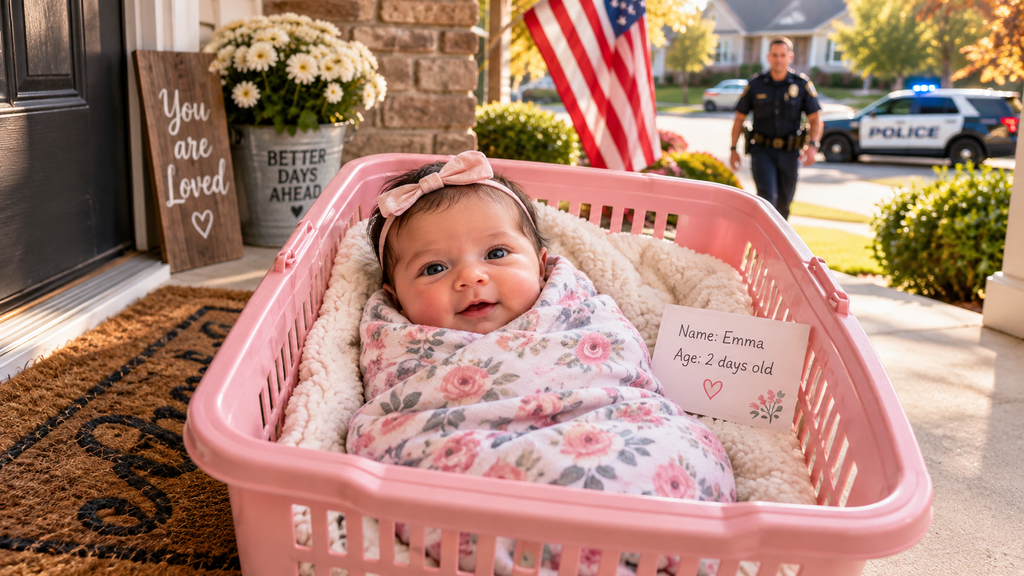
Whether she had called for me.
Whether her final thought had been that her mother had failed to find her.
For five years, I had prepared myself for the possibility that one day two police officers would knock on my door and ask me to identify remains.
And now, in Jennifer’s handwriting, were four words I had stopped allowing myself to hope for.
I’m alive.
A sound escaped my throat.
It wasn’t quite a sob.
It wasn’t quite a scream.
The baby lying on my kitchen table startled slightly.
I pressed my hand over my mouth.
“Oh, sweetheart.”
I moved toward her immediately.
“It’s okay. I’m sorry. Grandma’s here.”
Grandma.
The word left my lips before I even understood what I had said.
I froze.
My eyes moved from the child to Jennifer’s jacket.
Then back to the letter.
There were several more lines.
I forced myself to keep reading.
Mom,
If you’re reading this, I’m alive.
The baby is named Lily.
She’s my daughter.
Your granddaughter.
Please don’t call Dad.
Please don’t trust Dad.
And please, whatever you do, don’t take Lily to the police station on Hawthorne Street.
Someone there helped them.
I’ll explain everything.
I promise.
But first, I need you to do exactly what I’m telling you.
There’s a key sewn inside the left sleeve of my jacket.
Find it.
Go to locker 214 at the Greyhound station downtown.
Go alone.
Don’t tell anyone.
Especially Dad.
I’ll contact you when I know Lily is safe.
I love you.
I’m sorry.
Jen.
For several seconds, I couldn’t hear anything except the pounding of my own pulse.
Then my chair scraped violently backward.
“No.”
I stood so fast that the room spun.
“No, no, no.”
I read the middle of the letter again.
Please don’t call Dad.
Please don’t trust Dad.
I stared toward the hallway.
My husband’s photograph still hung near the staircase.
Not because I loved him.
Not anymore.
I simply had never found the strength to remove the last family portrait we had taken before Jennifer disappeared.
There we were.
Jennifer standing between us at fifteen.
David’s arm around her shoulders.
My hand resting against her back.
All three of us smiling.
A family.
At least, that was what I had believed.
I looked down at the note.
Especially Dad.
A coldness spread through me that had nothing to do with the January air coming through the front door.
Why would Jennifer be afraid of her father?
David had blamed me for her disappearance.
He had spent years telling me I should have noticed something.
He said I had been distracted.
Careless.
Too wrapped up in my job.
He had repeated it so many times that eventually I started believing him.
Even after he left.
Especially after he left.
I had carried his accusations like stones inside my chest.
What if I really had missed something?
What if Jennifer had needed me and I hadn’t seen it?
What if David was right?
But now…
Please don’t trust Dad.
I turned toward the baby.
Lily.
My granddaughter.
Her tiny fist had slipped out from beneath the denim jacket.
I touched one finger to her palm.
Her hand curled around it immediately.
And something inside me broke open.
She had Jennifer’s fingers.
Long and delicate.
Exactly like hers.
Jennifer used to complain about them when she was twelve.
“My hands look weird.”
“They look elegant,” I used to tell her.
“I don’t want elegant hands.”
“What kind do you want?”
“Normal ones.”
I had laughed then.
I hadn’t known how desperately I would miss those hands.
I sank into the chair.
“Oh, Jennifer.”
My voice trembled.
“Where are you?”
Lily blinked at me.
I don’t know how long I sat there.
Maybe thirty seconds.
Maybe ten minutes.
Then the rational part of my mind finally returned.
A baby had been left outside in January.
I needed to know she was healthy.
She needed food.
Diapers.
Warmth.
And the note had specifically told me not to trust the police station on Hawthorne Street.
But it hadn’t said anything about a hospital.
I carefully unwrapped the jacket.
Underneath, Lily wore a clean pink sleeper.
There was a small diaper bag tucked beneath the basket.
Inside were bottles.
Formula.
Diapers.
A knitted blanket.
A packet of baby wipes.
And another note.
This one had only three words.
She’s eight weeks.
Eight weeks.
My granddaughter had existed for two months.
And I hadn’t known.
I touched her cheek.
She leaned instinctively into my hand.
That was when I began crying.
Not the loud, desperate crying I had done after Jennifer disappeared.
These tears were quieter.
Almost reverent.
I had lost five years with my daughter.
But somehow, impossibly, part of her had been returned to me in a supermarket basket.
“Okay,” I whispered.
“We’re going to figure this out.”
I wrapped Lily in the blanket and carried her upstairs.
My hands remembered more than I expected.
The way to support her head.
The way to tuck the blanket around her.
The way to hold her against my chest while warming a bottle.
Motherhood had been buried beneath years of grief.
But it hadn’t disappeared.
Lily drank hungrily.
Then she fell asleep against me.
I sat in Jennifer’s old bedroom.
I had never changed it.
David hated that.
After the first year, he said keeping her room untouched was unhealthy.
After the second, he told me I was turning the house into a shrine.
After the third, he demanded I box everything up.
I refused.
It became one of our worst arguments.
Now I looked around at the faded posters on the wall.
The white desk.
The old guitar Jennifer had begged us to buy when she was fourteen.
The stuffed rabbit she had owned since kindergarten.
And I realized something.
David had wanted this room erased.
Not just changed.
Erased.
At the time, I thought it was because he couldn’t handle the grief.
Now I wasn’t so sure.
Lily stirred.
I looked down at her.
“Your mother slept in this room.”
My voice cracked.
“She painted that terrible blue stripe herself.”
The stripe was crooked.
Jennifer had insisted it was artistic.
I smiled through my tears.
Then I remembered the key.
I laid Lily carefully in the center of the bed and picked up the denim jacket.
The left sleeve.
I felt along the seam.
Nothing.
Then, near the cuff, my fingers touched something hard.
I found scissors in the desk drawer.
My hand shook as I cut two stitches.
A small brass key slid into my palm.
Attached to it was a faded plastic tag.
I stared at it.
The Greyhound station.
Downtown.
The note had said to go alone.
But I couldn’t leave Lily unattended.
And I couldn’t bring her somewhere potentially dangerous.
For the first time, I wished there were someone I trusted completely.
My parents were both gone.
My sister lived three states away.
Most of my friends had slowly disappeared during the years after Jennifer vanished.
Grief makes people uncomfortable.
At first they bring casseroles.
Then they call every week.
Then every month.
Eventually, they stop asking because they don’t know what else to say.
There was only one person who had never stopped checking on me.
Detective Maria Torres.
She had been the junior detective assigned to Jennifer’s case five years earlier.
Officially, she had been transferred to another division two years ago.
Unofficially, she still sent me a message on Jennifer’s birthday every year.
Thinking of you today.
That was all.
No false promises.
No empty optimism.
Just remembrance.
Jennifer’s note said someone at the Hawthorne station had helped them.
It didn’t say Maria.
Still, I hesitated.
Trust had suddenly become dangerous.
I looked at Lily.
Then I made a decision.
I didn’t call Maria.
Not yet.
Instead, I called my neighbor, Mrs. Dalton.
She was seventy-three and had lived beside us for twenty-six years.
She had watched Jennifer grow up.
She had helped search for her.
And she hated David.
That counted for something.
When she answered, I said, “I need you to come over.”
She heard something in my voice.
“I’m coming.”
No questions.
Five minutes later, she was at my door in slippers and a winter coat.
She walked into the kitchen.
Then stopped.
Her eyes widened.
“Whose baby is that?”
I handed her the note.
She read it.
Then sat down slowly.
“Oh, my God.”
“I need to go downtown.”
“You’re not going alone.”
“The note says I have to.”
“I don’t care if the note says you need to fly to the moon wearing a chicken costume.”
Despite everything, I almost laughed.
“Gloria.”
“I’m serious.”
“Someone might be watching.”
That changed her expression.
She looked toward the windows.
Then at Lily.
“What do you need from me?”
“Stay here with her.”
Her eyes filled with tears.
“Is she really Jennifer’s?”
“I think so.”
“Oh, sweetheart.”
She touched Lily’s foot.
“I think she has Jen’s nose.”
That nearly undid me.
I grabbed my coat.
Before leaving, I stopped.
“If David comes here—”
“I won’t open the door.”
“If anyone comes here.”
“I won’t.”
“And call me immediately.”
“I will.”
I squeezed her hand.
Then I drove downtown.
The Greyhound station looked exactly as depressing as I remembered.
Gray tile.
Fluorescent lights.
Plastic seats bolted to the floor.
People sleeping against duffel bags.
A vending machine humming near the bathrooms.
I kept expecting someone to grab me.
Nobody did.
The lockers were near the rear exit.
214 was halfway down the second row.
I inserted the key.
For a moment, it wouldn’t turn.
My palms were slick with sweat.
Then the lock clicked.
Inside was a black backpack.
Nothing else.
I pulled it out.
It was heavier than expected.
I carried it into a bathroom stall and locked the door.
Inside the bag were three things.
A prepaid cellphone.
A thick brown envelope.
And a small silver flash drive.
The envelope had my name written across the front.
Mom.
I ripped it open.
Inside were photographs.
Dozens of them.
Jennifer.
Older.
Her hair shorter.
Her face thinner.
But alive.
I pressed one photograph against my mouth.
There she was standing outside a motel.
There she was wearing a waitress uniform.
There she was sitting beside a lake.
And there she was holding newborn Lily against her chest.
My daughter.
My baby.
Alive.
I collapsed onto the closed toilet lid.
For several minutes, I couldn’t do anything except stare.
Then I noticed the dates printed in the corners.
The earliest photo had been taken only six months after Jennifer disappeared.
The others covered the years since.
Someone had been documenting her life.
Or Jennifer had been documenting it herself.
Beneath the photographs was another letter.
Mom,
If you found this, then Lily reached you.
That means at least one part of my plan worked.
I need you to understand something before anything else.
I did not run away.
I know Dad told people that.
I know some of the police believed it.
I didn’t.
I was taken.
My heart stopped.
I gripped the page harder.
The night I disappeared, Dad told me he was picking me up from Ashley’s house because you were working late.
He wasn’t alone.
There was a man in the car.
Dad said he was a friend.
His name was Raymond Vale.
You probably don’t know that name, but Dad did.
They had been doing business together for years.
Dad said we were stopping somewhere before going home.
We drove nearly two hours.
When I started asking questions, Dad got angry.
Then Raymond grabbed me.
I screamed.
Dad didn’t help me.
Mom, he didn’t even turn around.
My eyes filled with tears so quickly that I could no longer read.
I lowered the letter.
The bathroom suddenly felt too small.
David.
No.
It couldn’t—
But somewhere deep inside, another voice answered.
Why not?
You knew what he became after she disappeared.
Cold.
Accusing.
Controlling.
The way he always insisted on talking to detectives without me.
The way he convinced me Jennifer had been secretly rebellious.
The way he kept saying she had probably run away.
I remembered one sentence that had haunted me for years.
Teenage girls do stupid things. She’ll come back when she’s ready.
He had said it less than twenty-four hours after she disappeared.
At the time, I thought he was comforting himself.
Now the words sounded different.
I kept reading.
Raymond owned a house outside the city.
They kept me there.
At first, Dad told me it was temporary.
He said I had discovered something I wasn’t supposed to know.
I had found documents in his office.
Do you remember when Dad’s company suddenly started making so much money?
He told you he had landed several new construction contracts.
That wasn’t true.
He and Raymond were laundering money through the business.
I saw bank transfers.
Names.
Cash payments.
I didn’t understand everything then, but I understood enough to threaten them.
I told Dad I was telling you.
He panicked.
He said he only needed time to fix things.
He promised I would be home in a few days.
I believed him.
I was sixteen.
He was my father.
That sentence destroyed me.
He was my father.
I pictured Jennifer sitting in that car.
Terrified.
Still believing her dad would protect her.
I had married him at twenty-four.
I had slept beside him for twenty-one years.
I had trusted him with our child.
And he had handed her to another man.
The bathroom door opened outside my stall.
Someone walked in.
I stopped breathing.
Shoes crossed the tile.
A faucet turned on.
Water ran.
Then stopped.
The person left.
I waited another thirty seconds before continuing.
Those few days became months.
Dad stopped visiting.
Raymond told me Dad had decided I was too dangerous.
I tried escaping twice.
The second time, I made it to a gas station.
A police officer brought me back.
His name was Sergeant Paul Mercer.
Hawthorne Street precinct.
That’s why you can’t go there.
Mercer told me my father had reported me as emotionally unstable and that I had a history of running away.
None of that was true.
But because I was scared and screaming, Mercer treated me like a hysterical teenager.
He never checked the missing-person database.
Or maybe he did.
I don’t know.
What I know is that he handed me directly back to Raymond.
After that, they moved me.
For almost two years, I lived under fake names.
Raymond controlled everything.
My phone.
My money.
Where I worked.
Who I spoke to.
He told me if I contacted you, you would die.
He showed me photos of you leaving work.
Buying groceries.
Watering the garden.
I believed him.
Mom, I am so sorry.
I wanted to come home every single day.
I lowered the paper again.
The fluorescent light above me buzzed.
I thought about all those nights I had stood at Jennifer’s bedroom window.
Wondering whether she was somewhere looking at the same moon.
She had been.
And she had been afraid that coming home would kill me.
My daughter hadn’t abandoned me.
She had been protecting me.
I kept reading.
Three years ago, Raymond was arrested in another state for fraud.
Not because of us.
Something unrelated.
That gave me my first real chance.
I disappeared.
I changed my name myself.
I slept in shelters.
I worked cash jobs.
Eventually I met someone named Daniel.
He helped me get identification.
He never knew the whole story at first.
I was afraid to tell him.
Then I found out Dad was still connected to Raymond’s people.
And Dad was still telling everyone that I had probably died after running away.
That was when I realized he wasn’t waiting for me to come home.
He needed everyone to believe I never could.
Mom, I wanted to contact you so badly.
I almost did a hundred times.
Then last year, Daniel disappeared.
Police called it a car accident.
I didn’t believe them.
Two weeks later, I found an envelope pushed under my apartment door.
Inside was a photograph of you.
Someone had written:
Next time, we start with Mom.
I moved again.
Then I found out I was pregnant.
I spent the entire pregnancy terrified.
Not for myself.
For Lily.
And for you.
Three weeks ago, Raymond was released.
Yesterday, I saw him outside my apartment.
So I did the only thing I could think of.
I sent Lily to the one person in this world I still trust.
You.
The prepaid phone will ring.
When it does, answer it.
Don’t tell Dad.
Don’t tell the Hawthorne police.
I have evidence.
Real evidence.
Enough to put Dad and Raymond away.
I just need to survive long enough to get it to someone who will actually listen.
I love you, Mom.
Every day.
Every year.
I never stopped.
Jen.
I sat in that bathroom stall with the letter against my chest and cried so hard my whole body shook.
Five years of grief rearranged themselves inside me.
Jennifer hadn’t disappeared into nothing.
She had been stolen.
Her father had known.
Her father had helped.
And then he had blamed me.
Suddenly, memories came rushing back with terrible clarity.
David insisting I stop talking to reporters.
David telling me police were wasting resources searching.
David becoming furious when I hired a private investigator.
David secretly canceling the investigator after three weeks.
He told me we couldn’t afford it.
We had money.
I knew we had money.
Why hadn’t I questioned him harder?
Because I was drowning.
And because the person holding my head underwater kept telling me he was trying to save me.
My phone rang.
Not my phone.
The prepaid one.
I nearly dropped it.
One word appeared on the screen.
UNKNOWN.
I answered.
“Hello?”
Nothing.
Then breathing.
“Jennifer?”
A pause.
“Mom?”
My entire world stopped.
Her voice.
Older.
Rougher.
But hers.
I would have known it anywhere.
“Jennifer.”
I pressed the phone against my ear so hard it hurt.
“Oh, God. Jennifer.”
“Is Lily there?”
“Yes.”
“Is she safe?”
“She’s at home with Mrs. Dalton.”
A sob came through the line.
“Oh, thank God.”
“Where are you?”
“I can’t tell you yet.”
“Please.”
“Mom—”
“Five years.”
My voice broke.
“Five years, Jennifer.”
“I know.”
“I thought you were dead.”
“I know.”
“They told me—your father told me—”
“I know.”
“Where are you?”
She cried quietly.
I could hear traffic somewhere behind her.
“I’m close.”
“Then come home.”
“I can’t.”
“Yes, you can.”
“No.”
Fear sharpened her voice.
“Mom, listen to me. Raymond knows about Lily.”
My stomach turned.
“How?”
“I don’t know. But he knows.”
“Does David?”
Silence.
Then Jennifer said something that chilled me.
“I think Dad is the one who told him.”
I closed my eyes.
Of course.
“Jennifer, we have to go to the FBI.”
“I tried once.”
“When?”
“Two years ago. I panicked before I went inside.”
“Why?”
“Because Mercer wasn’t the only police officer Raymond paid. I didn’t know who was safe.”
“The FBI isn’t the local police.”
“I know.”
“Then we go together.”
She was quiet.
I could hear her breathing.
Finally she whispered, “I want to see you.”
My heart shattered.
“Then see me.”
“I’m scared.”
“So am I.”
Another pause.
“Do you still have the old cabin?”
My parents had owned a small cabin outside Millbrook when I was a child.
After they died, it became mine.
David hated it.
He had gone there only once.
“Yes.”
“Go there.”
“When?”
“Tonight.”
“I’ll bring Lily.”
“No.”
“But—”
“Leave her with Mrs. Dalton.”
“I’m not leaving your child behind if there’s danger.”
“That’s exactly why you have to.”
I understood.
If someone followed me, Lily would be safer elsewhere.
“Okay.”
“Come alone.”
“I will.”
“Mom?”
“Yes?”
“I missed you.”
I covered my mouth.
“I missed you every second.”
The line went dead.
I stayed sitting there for another minute.
Then I took the flash drive.
The letters.
The photographs.
And the phone.
I put everything into my purse.
As I walked out of the station, I felt different.
Not less afraid.
More.
But underneath the fear was something I hadn’t felt in years.
Purpose.
I wasn’t searching for a missing daughter anymore.
I was bringing her home.
I reached my car.
Then stopped.
A black SUV was parked across the street.
Engine running.
Windows tinted.
I stared at it.
The driver’s window lowered slightly.
I couldn’t see the driver’s face.
Then the SUV pulled away.
My stomach clenched.
I drove home using every trick I remembered from detective shows.
Right turn.
Left.
Circle the block.
Stop unexpectedly.
I saw no sign of the SUV.
Mrs. Dalton opened my door before I reached the porch.
“Well?”
I entered quickly.
Then locked the door.
“Jennifer called me.”
Mrs. Dalton’s hands flew to her mouth.
“She’s alive?”
“Yes.”
She hugged me.
For the first time in five years, someone held me while I cried tears of relief instead of grief.
When we separated, I said, “I need to tell you something.”
I explained everything.
Not every detail.
Enough.
Her face hardened as I described David.
“I knew that man had rot in him.”
“You didn’t know this.”
“No.”
She looked at Lily sleeping in a portable crib.
“But I knew the way he blamed you wasn’t grief.”
“What do you mean?”
“Grieving people say terrible things.”
She looked at me.
“But David was too consistent. He didn’t lash out once. He spent years building the story that Jennifer’s disappearance was your failure.”
I thought about that.
Building the story.
That was exactly what he had done.
“What do I do now?”
Mrs. Dalton crossed her arms.
“You call Detective Torres.”
“Jennifer told me not to trust police.”
“She told you not to trust Hawthorne.”
“Maria worked there.”
“Five years ago.”
I hesitated.
“What if she was involved?”
Mrs. Dalton’s expression softened.
“Then why has she stayed in touch with you?”
I didn’t know.
Maybe guilt.
Maybe concern.
Maybe because she was one of the few decent people left in this nightmare.
I took out my phone.
Before I could call, someone knocked on the front door.
Three slow knocks.
Mrs. Dalton and I looked at each other.
My blood went cold.
Another knock.
Then a familiar voice.
“Claire?”
David.
I stopped breathing.
“Claire, I know you’re home.”
Mrs. Dalton whispered, “Don’t answer.”
But David knocked again.
“I need to talk to you.”
How did he know to come here today?
He hadn’t visited in eight months.
Our divorce papers had stalled because neither of us cared enough to finish them.
He sent occasional texts about selling the house.
Nothing more.
Why today?
I moved toward the window and looked through the edge of the curtain.
David stood on the porch.
He looked older than the last time I’d seen him.
Gray at his temples.
Expensive coat.
Impatient expression.
Behind him, his silver sedan idled in the driveway.
I looked at Mrs. Dalton.
“Take Lily upstairs.”
“What are you doing?”
“I need to know why he’s here.”
“Claire—”
“If he already knows, refusing to answer the door won’t change anything.”
She hesitated.
Then nodded.
She carried Lily upstairs.
I tucked Jennifer’s letter into the waistband at the back of my jeans.
Then I opened the door three inches with the chain still attached.
“What?”
David forced a smile.
“Nice to see you too.”
“What do you want?”
“I was in the neighborhood.”
“No, you weren’t.”
His smile disappeared.
“Can I come in?”
“No.”
His gaze moved over my shoulder.
“What are you hiding?”
My heart kicked against my ribs.
“Why would I be hiding anything?”
He shrugged.
“You’re acting strange.”
“You showed up unannounced after eight months.”
“We’re still married.”
“Barely.”
He looked past me again.
I watched his face carefully.
Then he said, “A neighbor told me there was some commotion here this morning.”
Every nerve in my body tightened.
“What neighbor?”
“I don’t know. Someone called.”
“Called you?”
“Yes.”
“Who?”
He sighed.
“Claire, can you stop interrogating me?”
“No.”
His jaw tightened.
There.
The expression I remembered.
The one he used when Jennifer challenged him.
I had forgotten how much I hated it.
“I heard something was left on your porch.”
He said it casually.
Too casually.
My hand tightened around the door.
“Where did you hear that?”
“So something was?”
I didn’t answer.
David leaned closer.
“Was it a package?”
“What do you know?”
“Nothing.”
“Then why are you here?”
“I was concerned.”
“You haven’t been concerned about me in years.”
His eyes changed.
Only slightly.
But I saw it.
Fear.
He wasn’t concerned.
He was checking.
Jennifer was right.
David knew something.
I made myself smile faintly.
“It was groceries.”
He stared at me.
“Groceries?”
“Wrong address.”
For half a second, disappointment crossed his face.
Then suspicion replaced it.
“I see.”
“Anything else?”
“No.”
He turned to leave.
Then paused.
“Actually.”
He faced me again.
“Have you heard anything about Jennifer lately?”
My heart nearly stopped.
I kept my face blank.
“Why would you ask me that?”
“No reason.”
“Five years and today you suddenly want to know?”
“I still think about her.”
“Do you?”
His face hardened.
“She’s my daughter too.”
Those words almost made me lunge through the door.
Instead, I whispered, “Then you should have acted like it.”
I shut the door.
Locked it.
Deadbolt.
Chain.
My hands were shaking.
Mrs. Dalton came downstairs.
“You were right.”
“About what?”
“He knows.”
I called Maria Torres.
She answered on the second ring.
“Claire?”
“I need your help.”
Her voice changed immediately.
“What happened?”
“I can’t explain over the phone.”
“Are you safe?”
“I don’t know.”
That silence told me everything.
“Where are you?”
“Home.”
“I’m coming.”
“No.”
“Claire—”
“Not in a police car.”
Another silence.
Then, “Understood.”
“And don’t tell anyone from Hawthorne.”
This time, Maria didn’t ask why.
She only said, “Give me twenty minutes.”
She arrived seventeen minutes later.
Jeans.
Winter jacket.
Personal car.
No badge visible.
I let her inside.
Then I put Jennifer’s letter on the table.
Maria read it.
Her face went pale.
She read it twice.
Then sat down.
“Paul Mercer.”
“You know him.”
“He retired last year.”
“Was he corrupt?”
Maria looked up.
“There were rumors.”
“What kind?”
“Evidence disappearing. Informants getting exposed. Cases collapsing.”
“Why wasn’t he arrested?”
“Rumors aren’t evidence.”
She looked back at the letter.
“But this…”
“My daughter says he handed her back to the man who kidnapped her.”
Maria closed her eyes.
“God.”
“You believed she ran away.”
“No.”
The answer came immediately.
“I never believed that.”
“Then why—”
“Because I was twenty-eight years old and six months into the unit. Mercer was my supervisor.”
My anger flared.
“So you did nothing?”
Her eyes met mine.
“I did what I could.”
“Five years.”
“I know.”
“Did you know David was involved?”
“No.”
“Did you suspect?”
A pause.
“Yes.”
My chair scraped backward.
“You suspected my husband and never told me?”
“I didn’t have enough.”
“You could have told me.”
“And if you confronted him?”
I stopped.
Maria leaned forward.
“If he was involved, telling you without evidence could have gotten you killed.”
“That wasn’t your decision.”
“No.”
Her voice softened.
“It wasn’t.”
She looked ashamed.
“I made choices I thought were protecting you. Maybe some were wrong.”
I wanted to hate her.
But I recognized the same exhaustion I saw in my own mirror.
“Jennifer wants me to meet her tonight.”
Maria’s eyes widened.
“Where?”
“I’m not telling you.”
“Claire.”
“She said alone.”
“If Raymond Vale is involved, you cannot go alone.”
“You know him?”
“Everybody in organized-crime investigations knows the name.”
She looked at me sharply.
“What evidence does Jennifer have?”
“A flash drive.”
Maria held out her hand.
I hesitated.
Then gave it to her.
She pulled a laptop from her bag.
The drive was encrypted.
But one file opened without a password.
A video.
The image shook.
Then a sixteen-year-old Jennifer appeared on the screen.
My breath stopped.
She had recorded herself secretly.
The camera seemed hidden behind something.
A door opened.
David entered.
My husband.
Five years younger.
He was arguing with someone off-camera.
Raymond.
“You said she’d be here three days,” David snapped.
A man’s voice answered.
“She knows too much.”
“She’s sixteen.”
“Exactly. Sixteen-year-olds talk.”
“What do you expect me to do?”
“Whatever keeps you out of prison.”
David paced.
Then Jennifer’s voice came from somewhere near the camera.
“Dad?”
David froze.
I clutched the table.
My daughter stepped partially into frame.
Her face was swollen from crying.
“Dad, please take me home.”
David looked at her.
For one terrible moment, I saw hesitation.
Then fear.
Not fear for her.
For himself.
“You shouldn’t have gone through my office.”
Jennifer stared at him.
“I won’t tell anyone.”
“You already told me you were telling your mother.”
“I won’t. I swear.”
“Jen—”
“Dad, please.”
Her voice became the voice of a child.
“Daddy.”
I broke.
I covered my mouth as tears poured down my face.
On the screen, David looked away.
Raymond said, “Go.”
David walked toward the door.
Jennifer grabbed his sleeve.
He pulled away.
“Dad!”
He left.
The door closed.
The video ended.
Nobody spoke.
Maria wiped her eyes.
Mrs. Dalton was crying openly.
I stared at the black screen.
Something inside me died in that moment.
Not love.
That had died years earlier.
This was something older.
The memory of the man I thought I had married.
Whatever fragments of him remained inside me were gone.
Maria stood.
“I’m contacting the federal task force.”
“No.”
“Claire, this video is enough to open everything.”
“Jennifer is meeting me tonight.”
“Which means she may be walking into a trap.”
“She chose the location.”
“That doesn’t mean Raymond doesn’t know it.”
I thought of the black SUV.
Then of David arriving minutes after I returned.
“What if I’m already being followed?”
Maria looked toward the windows.
“Then we assume you are.”
The plan changed.
I would still go to the cabin.
Alone, as far as anyone watching me could tell.
Maria would contact a federal agent she trusted.
No Hawthorne police.
No radio calls.
No official dispatch.
Nothing that could reach Mercer or anyone connected to him.
Mrs. Dalton would take Lily to her sister’s house in another county.
I hated letting Lily out of my sight.
But if David came back looking for her, my house was the last place she should be.
Before Mrs. Dalton left, I held my granddaughter.
Her little eyes opened.
They were gray-blue.
Jennifer’s had been the same color as a baby.
I kissed her forehead.
“I’m going to bring your mommy home.”
Lily yawned.
I almost laughed.
“Good talk.”
Mrs. Dalton squeezed my shoulder.
“Bring our girl back.”
Our girl.
The cabin sat forty-three miles outside the city.
The sun had already gone down when I left.
I drove alone.
At least, it looked that way.
Maria and two federal agents were supposed to follow several miles behind.
I had no way to know whether they actually were.
Jennifer had instructed me not to bring police.
Technically, I was breaking that promise.
The guilt ate at me.
But I couldn’t lose her again.
Not when she was this close.
Snow began falling halfway there.
Thin flakes brushed the windshield.
I remembered driving that same road with Jennifer when she was nine.
She had pressed her face against the passenger window.
“Mom, it looks like we’re driving through stars.”
She always saw magic in ordinary things.
I wondered whether five years of fear had taken that from her.
The cabin appeared through the trees shortly after nine.
One light burned inside.
My hands tightened around the steering wheel.
Someone was there.
I parked.
For several seconds, I couldn’t move.
Then the door opened.
A woman stepped onto the porch.
Thin.
Dark hair cut to her shoulders.
A scar along one cheek.
She wore a green coat.
I knew her before I could see her clearly.
My body knew.
My soul knew.
“Jennifer.”
She ran.
So did I.
We met halfway between the car and the porch.
She crashed into my arms.
And suddenly five years disappeared.
She was sixteen again.
I was holding my baby.
I buried my face in her hair.
She smelled like cold air and soap.
Real.
Alive.
Warm.
I touched her face.
Her shoulders.
Her hair.
I needed proof everywhere.
“Oh, my God.”
She laughed through tears.
“Mom.”
“Let me look at you.”
“I’m right here.”
“You got so thin.”
She laughed again.
“You always say that.”
“No, I don’t.”
“You do.”
I touched the scar on her cheek.
Her smile faded.
I didn’t ask.
Not yet.
She pressed her forehead against mine.
“I’m sorry.”
“No.”
“I’m so sorry.”
“Don’t apologize.”
“I should have come home.”
“You survived.”
“I left you alone.”
“You survived.”
“I let you think I was dead.”
“You survived.”
She started crying harder.
I wrapped my arms around her.
“That’s the only thing that matters right now.”
We stayed outside until the cold forced us in.
Inside, Jennifer looked around.
“You kept everything.”
“Almost.”
She ran her hand over the old wooden table.
“Grandpa’s chair.”
“Still squeaks.”
She smiled.
Then her eyes moved toward me.
“Lily?”
“Safe.”
“Where?”
“With Mrs. Dalton.”
Relief washed across her face.
“She always liked me.”
“She still does.”
Jennifer sat near the fireplace.
I crouched in front of her.
“I saw the video.”
Her face went still.
“You opened the drive?”
“One file.”
She nodded.
“There are hundreds.”
“What else?”
“Bank records. Recordings. Photographs. Names.”
“How did you get them?”
“Raymond kept copies of everything.”
“Why?”
“Insurance.”
“Against your father?”
“Against everyone.”
She rubbed her hands together.
“After Raymond was arrested, I went back once.”
“Back where?”
“The house.”
My stomach twisted.
“Why would you do that?”
“Because running wasn’t enough anymore.”
She looked at me.
“I needed proof.”
“Jennifer—”
“I know.”
“That could have killed you.”
“I was already living like I was dead.”
That sentence silenced me.
She looked toward the fire.
“I wanted my name back.”
I sat beside her.
“You always had it.”
“No.”
She shook her head.
“Not out there.”
Her voice was quiet.
“I had four names in five years.”
She counted them.
“Jennifer Hale. Jenna Morris. Kate Avery. Emily Rose.”
She gave a bitter laugh.
“I started forgetting which birthday I was supposed to use.”
I took her hand.
She continued.
“Raymond made me work at places owned by people he knew. Diners. Motels. A cleaning company.”
“Did he hurt you?”
She looked down.
The answer was in the silence.
My chest tightened.
“You don’t have to tell me.”
“Not tonight.”
“Not ever, unless you want to.”
She squeezed my hand.
“Daniel was the first person who knew my real name.”
“The man who helped you?”
She nodded.
“He was good.”
Her expression softened.
“I loved him.”
“Was he Lily’s father?”
“Yes.”
My heart hurt for a man I had never met.
“What happened?”
Jennifer stared into the fire.
“He wanted us to stop running.”
She swallowed.
“He said we could go to the FBI together. He said if something happened to him, I needed to promise I would still do it.”
“What happened to him?”
“His brakes failed.”
I closed my eyes.
“I’m sorry.”
“He knew about Lily before he died.”
She smiled faintly.
“He used to talk to my stomach.”
Tears appeared in her eyes.
“He wanted a girl.”
I put my arm around her.
“He would have loved her.”
“I know.”
We sat quietly.
Then Jennifer suddenly stiffened.
“What?”
She stood.
“Did anyone follow you?”
“I don’t think so.”
“Think?”
“Jennifer—”
She crossed toward the window.
Then froze.
Headlights appeared between the trees.
One vehicle.
Then another.
My blood turned cold.
“Are those your people?”
She looked at me.
“What people?”
There was no time to answer.
A car door slammed outside.
Then another.
Jennifer’s face changed.
“You brought police.”
“I brought someone I trust.”
“You promised!”
“I promised I wouldn’t lose you again.”
“Mom!”
She grabbed her bag.
Then stopped.
More headlights appeared.
From the opposite direction.
A black SUV.
The same kind I’d seen downtown.
Jennifer’s face went white.
“That’s Raymond.”
A gunshot shattered the front window.
I screamed.
Jennifer pulled me to the floor.
Glass exploded across the room.
“Stay down!”
Another shot hit the wall.
Then shouting outside.
“Federal agents! Drop the weapon!”
Everything happened at once.
Jennifer crawled toward the back door.
I grabbed her ankle.
“No!”
“We have to get out!”
Another shot.
Then the cabin lights died.
Darkness swallowed us.
Jennifer pulled me toward the kitchen.
We reached the back door.
She opened it.
A man stood outside.
David.
For one second, none of us moved.
Snow fell behind him.
He held a gun.
My husband looked at our daughter for the first time in five years.
“Jennifer.”
Her whole body went rigid.
“Dad.”
The word sounded poisoned.
David’s gun trembled slightly.
“You shouldn’t have come back.”
I stepped in front of her.
“Claire.”
“Put the gun down.”
“You don’t understand.”
“I understand enough.”
“This got out of control.”
“Five years ago.”
“I was trying to protect this family.”
Jennifer laughed.
A horrible, broken laugh.
“You kidnapped me to protect the family?”
“I didn’t kidnap you.”
“You handed me to Raymond.”
“I thought it would be for a few days.”
“You left me!”
“I came back.”
“Once!”
“You threatened to destroy everything!”
“I was sixteen!”
David looked at me.
“Claire, you know how dramatic she was.”
Something inside me snapped.
I slapped him.
Hard.
His head jerked sideways.
For a moment, even the gun lowered.
“Don’t you dare.”
My voice shook with rage.
“Don’t you dare stand there after five years and blame the child you abandoned.”
“I didn’t abandon her.”
“You walked out that door.”
“I was scared.”
“So was she.”
“I could have gone to prison.”
“And she could have died.”
His face crumpled.
“I made a mistake.”
Jennifer stepped forward.
“A mistake is forgetting someone’s birthday.”
Her voice trembled.
“A mistake is leaving the stove on.”
She pointed toward the scar on her face.
“This isn’t a mistake.”
David stared at the scar.
For the first time, shame crossed his face.
“What did he do to you?”
She laughed bitterly.
“You don’t get to ask.”
“Jen—”
“You don’t get to care now.”
A voice shouted from the trees.
“David! Bring them out!”
Raymond.
David closed his eyes.
Jennifer whispered, “He’s going to kill us.”
“No.”
David looked toward the sound.
“I made a deal.”
Jennifer stared at him.
“With Raymond?”
“He takes the drive. You disappear again. Claire comes home.”
I couldn’t believe what I was hearing.
“You still think you control this?”
“Claire, please.”
“You knew about Lily.”
His face changed.
There it was.
The answer.
“You told Raymond.”
David said nothing.
Jennifer backed away.
“You told him about my daughter?”
“He found out.”
“You told him!”
“I needed leverage!”
The scream that came from Jennifer barely sounded human.
“You used my baby as leverage?”
David raised his hands.
“I wasn’t going to let him hurt her.”
“Like you didn’t let him hurt me?”
Silence.
Then a gunshot cracked from the trees.
David jerked.
His eyes widened.
He dropped to his knees.
Blood spread across his shoulder.
I screamed.
Jennifer grabbed me.
“Inside!”
We slammed the door.
Outside, gunfire erupted.
Agents shouted.
Raymond shouted something back.
Then tires spun.
An engine roared.
The black SUV crashed through the brush.
Gunshots followed.
And then—
silence.
Terrible, endless silence.
Jennifer and I crouched behind the kitchen counter.
My ears rang.
My hands were numb.
A voice called from outside.
“Claire! Jennifer! It’s Maria!”
Jennifer stared at me.
“You trust her?”
“Yes.”
After a moment, she nodded.
I opened the door.
Maria stood with both hands visible.
Behind her, federal agents moved through the trees.
David lay on the snow near the porch.
Alive.
An agent pressed gauze against his shoulder while placing him in handcuffs.
He looked at me.
“Claire.”
I turned away.
I had nothing left to say.
“Where’s Raymond?” Jennifer asked.
Maria’s expression tightened.
“He ran.”
Jennifer’s face drained.
“Then this isn’t over.”
“It will be.”
“No.”
“You have evidence.”
“He’s survived evidence before.”
Maria stepped closer.
“Not this time.”
Jennifer shook her head.
“You don’t know him.”
“I know men like him.”
Maria looked toward the road.
“And I know what happens when everyone they’ve paid starts realizing the federal government has their names.”
That was the beginning.
Not the end.
The next seventy-two hours felt like three years.
Jennifer and I were taken to a secure location.
Lily was brought to us shortly before sunrise.
When Jennifer saw her daughter, she collapsed.
She held Lily against her chest and sobbed.
“I’m sorry, baby.”
I sat beside her.
“She’s safe.”
Jennifer kissed Lily’s face again and again.
“Mommy’s here.”
I watched my daughter hold her daughter.
And some wound inside me began closing.
Not healing completely.
I don’t think wounds like ours ever disappear.
But closing.
Enough to stop bleeding.
The FBI interviews lasted hours.
Jennifer gave them everything.
Names.
Locations.
Accounts.
Dates.
The encrypted files from Raymond’s records.
Investigators uncovered financial transactions reaching back more than a decade.
David’s construction company had been laundering money through fake subcontractors.
Raymond Vale had built an entire network around people like him.
Business owners.
Accountants.
Two police officers.
A county clerk.
And Sergeant Paul Mercer.
Mercer was arrested four days later.
He denied everything.
Then investigators found bank transfers matching dates when Jennifer had been moved between locations.
That changed his story.
He claimed he had believed Jennifer was a troubled runaway.
Then they showed him the payments.
His lawyer stopped letting him answer questions.
David survived the gunshot.
He spent six days in the hospital under guard.
I never visited.
He asked for me twice.
I said no.
He asked for Jennifer.
She said no.
On the seventh day, he sent me a letter through his attorney.
I didn’t open it.
For five years, David had controlled the story.
Jennifer ran away.
I was careless.
He was grieving.
Life had been unfair to him.
I no longer cared what story he wanted to tell.
Then Raymond disappeared.
For eleven days, nobody knew where he was.
Jennifer barely slept.
Every sound made her flinch.
Every passing car brought her to the window.
She refused to let Lily out of her sight.
I slept in the room beside them.
Sometimes, in the middle of the night, I heard Jennifer crying.
I never entered unless she called for me.
Trauma teaches you strange things.
Love sometimes means holding someone.
And sometimes it means allowing them to have a locked door.
On the twelfth morning, Maria called.
“They found him.”
I stood so quickly I spilled my coffee.
“Where?”
“Airport in Montreal.”
“He made it to Canada?”
“Using a passport under another name.”
“Is he—”
“Alive.”
I didn’t know whether I felt relieved or disappointed.
Jennifer did.
“Good.”
That surprised me.
She looked at Lily.
“I want him to sit in a courtroom.”
She raised her eyes.
“I want him to hear my name.”
Months passed.
Our story became public.
Not all of it.
Some things Jennifer kept for herself.
Reporters camped outside the courthouse.
News vans parked near my house.
People who hadn’t spoken to me in years suddenly sent messages.
I’m so sorry.
I always knew something was strange.
You were such a strong mother.
I deleted most of them.
Strength is a word people use when they don’t know what else to call survival.
I hadn’t been strong every day.
Some mornings, after Jennifer vanished, I couldn’t shower.
Some nights, I drank wine until I could sleep.
Some days, I stood in the grocery store and forgot why I was there.
I wasn’t strong.
I simply kept breathing.
Sometimes that’s enough.
Jennifer moved back into her old bedroom temporarily.
The blue stripe was still crooked.
She laughed the first time she noticed.
“I can’t believe you left that.”
“I told you it was terrible.”
“You said it was artistic.”
“I lied.”
For the first time, her laughter filled the hallway again.
I stood downstairs listening to it.
And I cried.
A good cry.
One I had forgotten existed.
Lily grew quickly.
At four months, she laughed whenever I sneezed.
At five months, she discovered her feet.
At six months, she started reaching for Jennifer every time she entered a room.
Watching them together was beautiful.
And painful.
Because I kept thinking about the five years stolen from us.
Birthdays.
Christmases.
Graduations that never happened.
College applications never filled out.
Prom dresses never chosen.
Normal arguments we never had.
Jennifer once caught me staring at her while she folded laundry.
“What?”
“Nothing.”
“You’re doing the thing.”
“What thing?”
“The sad eyes.”
I looked away.
“I’m sorry.”
She sat beside me.
“You’re thinking about what we lost.”
I nodded.
“So am I.”
She folded one of Lily’s tiny shirts.
“But if we spend the next five years staring backward, they steal those years too.”
I looked at her.
She smiled faintly.
“Daniel used to say that.”
“He sounds smart.”
“He was annoying.”
I laughed.
She did too.
Then she leaned her head against my shoulder.
“I wish you could have met him.”
“So do I.”
“I think he would have liked you.”
“Of course he would.”
She snorted.
“There’s the mother I remember.”
The criminal case took fourteen months to reach trial.
David eventually pleaded guilty to multiple federal charges.
His lawyer argued he had been manipulated by Raymond.
Jennifer refused to let that become the final story.
She gave a victim-impact statement.
I sat behind her.
Her hands trembled when she approached the microphone.
But her voice didn’t.
“My father wants this court to believe fear made him participate.”
She looked directly at David.
“I understand fear.”
The courtroom became silent.
“I spent years afraid.”
She continued.
“I was afraid when I was sixteen and locked in a room.
I was afraid when the police officer who should have rescued me returned me to the man holding me.
I was afraid when I slept in shelters under fake names.
I was afraid when the man I loved died.
I was afraid when I was pregnant.
I was afraid when I placed my eight-week-old daughter in a basket on my mother’s porch because I believed that sending her away from me was the only way to keep her alive.”
Her voice cracked.
I pressed my fist against my mouth.
Jennifer continued.
“But fear does not excuse cruelty.”
She looked at David.
“My father was afraid of prison.”
“So he gave his daughter one instead.”
David lowered his head.
Jennifer didn’t.
Raymond’s trial lasted longer.
His attorneys attacked Jennifer’s credibility.
They questioned why she waited.
Why she used false identities.
Why she didn’t immediately contact federal authorities.
Why she returned to Raymond’s property to steal records.
I wanted to scream every time they spoke.
Jennifer remained calm.
On the third day of cross-examination, one attorney asked:
“Miss Hale, isn’t it true that you became quite skilled at lying during those five years?”
Jennifer looked at him.
“Yes.”
The attorney almost smiled.
“And therefore this jury has no reason to simply accept your version of events, correct?”
Jennifer tilted her head.
“I learned to lie because telling the truth could get me killed.”
The courtroom went silent.
The attorney’s smile disappeared.
“But the evidence doesn’t require you to believe me.”
She gestured toward the screen containing bank records.
“That’s why I brought receipts.”
Even the judge had to hide a reaction.
Raymond was convicted.
So was Mercer.
Two other officers accepted plea agreements.
Several people lost licenses.
Businesses were seized.
Accounts were frozen.
New investigations opened.
The network fell apart.
But none of that gave Jennifer back five years.
Justice and restoration are not the same thing.
People confuse them.
Justice can punish.
It can expose.
It can prevent.
But it cannot return a sixteen-year-old girl to her mother before midnight.
It cannot erase scars.
It cannot resurrect Daniel.
It cannot give Lily the father she never met.
What justice can do is say:
This happened.
It was wrong.
You were not imagining it.
You were not responsible.
And the people who hurt you do not get to rewrite the truth forever.
A year after the trial, our divorce finally became official.
My attorney asked whether I wanted anything from David.
The house was already mine.
Most of our shared accounts had been frozen or divided.
I thought about it.
“No.”
“Nothing?”
“One thing.”
I asked for the family photograph near the staircase.
My attorney looked confused.
I explained.
When the photograph arrived, I removed it from the frame.
I didn’t burn it.
I didn’t tear David’s face away.
I didn’t need drama.
I placed the picture in a box with court documents and old newspaper clippings.
Then I put the box in the attic.
Not erased.
Not worshiped.
Simply filed where the past belonged.
In its place, I hung a new picture.
Jennifer.
Lily.
Me.
We were at the lake.
Jennifer was laughing.
Lily was sitting on my lap wearing an enormous sun hat.
I wasn’t even looking at the camera.
I was looking at them.
That became my favorite photograph.
Two years after the morning Lily appeared on my porch, I woke to the smell of pancakes.
I walked downstairs.
Jennifer stood at the stove.
Lily sat in a booster seat banging a spoon against the table.
“Good morning, Grandma!”
She had only recently learned to say Grandma clearly.
Every time she said it, my heart did something ridiculous.
“Good morning, troublemaker.”
“I not trouble.”
Jennifer looked over her shoulder.
“She poured orange juice into the plant.”
Lily gasped.
“Plant thirsty!”
I laughed.
“Very considerate.”
Jennifer slid a pancake onto a plate.
“We need to leave by ten.”
“For what?”
She stared at me.
“Mom.”
“What?”
“You forgot?”
I honestly had.
Then I remembered.
“Daniel’s memorial.”
She nodded.
Every year on the anniversary of his death, Jennifer visited the little cemetery where his ashes had been placed by his sister.
This year would be the first time she took Lily.
“Are you sure you’re ready?”
Jennifer looked at her daughter.
“No.”
Then she smiled sadly.
“But we’re going anyway.”
We drove there together.
Daniel’s marker was simple.
His name.
Two dates.
And beneath them:
He chose kindness.
Jennifer knelt.
Lily placed a yellow flower on the grass.
“Hi, Daddy.”
Jennifer’s face crumpled.
She covered her mouth.
I turned away for a moment, giving her privacy.
Then she reached for my hand.
So I stayed.
That afternoon, we went to the lake.
Lily threw pebbles into the water.
Jennifer sat beside me on the dock.
“Mom?”
“Hmm?”
“Why didn’t you ever give up looking?”
The question surprised me.
“I did sometimes.”
“No, you didn’t.”
“Yes.”
I watched the water.
“There were days I didn’t make phone calls.”
“That’s not giving up.”
“There were days I believed you were dead.”
Her eyes softened.
“I had to consider it.”
I swallowed.
“But believing something might be true isn’t the same as wanting it to be true.”
She looked toward Lily.
“I used to picture you.”
“When?”
“When I was hiding.”
Her voice grew quiet.
“I would imagine you making coffee.”
I smiled.
“Very exciting.”
“It was.”
She leaned against me.
“I imagined ordinary things because ordinary felt impossible.”
“What kind of things?”
“You folding towels.”
“You’re terrible at fantasies.”
“You watering flowers.”
“Thrilling.”
“You complaining about the electric bill.”
I laughed.
She smiled.
“Sometimes I’d imagine coming through the front door.”
My laughter faded.
“You’d look at me and say, ‘Where have you been?'”
I swallowed hard.
“I probably would have.”
“I know.”
She reached for my hand.
“I kept coming home in my head.”
I squeezed her fingers.
“You eventually made it.”
We sat there until sunset.
When we got back to the house, Lily fell asleep in the car.
Jennifer carried her upstairs.
I remained in the kitchen.
The same kitchen where I had found the first note.
The same table.
The same doorway.
Sometimes I still saw that morning when I closed my eyes.
The basket.
The denim jacket.
Lily staring up at me.
The folded paper inside the pocket.
I kept the jacket.
Jennifer asked once why.
“I don’t know.”
But I did.
It represented the worst and best moment of my life.
Proof of everything stolen.
And everything returned.
Three years after Jennifer came home, she enrolled in college.
Not because she needed to prove anything.
Because she wanted to become a social worker.
“Seriously?” I asked.
“What?”
“After everything you’ve survived, you want a career where people call you with more problems?”
She smiled.
“I had people who helped me.”
“Who?”
“A woman at a shelter in Cleveland.”
She counted on her fingers.
“Daniel. His sister. Detective Torres eventually.”
“Eventually?”
Jennifer grinned.
“She knows I say it.”
“And me?”
She pretended to think.
“You’re somewhere on the list.”
I threw a dish towel at her.
She laughed.
That sound never became ordinary.
Maybe it never will.
Lily started kindergarten two years later.
On her first morning, she wore a denim jacket.
Not Jennifer’s old one.
A new one.
I almost lost my breath when she came down the stairs.
Jennifer noticed.
“You okay?”
I nodded.
“It’s just the jacket.”
She looked at Lily.
Then at me.
“We can change it.”
“No.”
I crouched in front of my granddaughter.
She held a pink backpack almost as large as she was.
“You look beautiful.”
Lily smiled.
“Mommy says denim is cool.”
“Your mommy used to say that too.”
At school, Lily ran toward the building without looking back.
Jennifer sighed.
“She could at least pretend to miss us.”
I laughed.
“Give her ten minutes.”
We stood by the car.
Other parents waved goodbye.
Children cried.
Teachers carried clipboards.
Nothing extraordinary happened.
And I realized that was extraordinary.
Ordinary life had once seemed impossible.
Now we had school lunches.
Laundry.
Dentist appointments.
Forgotten homework.
Burned toast.
Arguments about screen time.
Birthday cakes.
Flu season.
Sunday mornings.
Everything grief had convinced me I would never have again.
One evening, years after the trials ended, Jennifer came into my room holding something.
The original note.
The one she had placed inside the denim jacket.
Mom,
If you’re reading this, I’m alive.
The paper was yellowing slightly.
“You kept it?” I asked.
“Of course.”
“I thought it was in the evidence box.”
“It was.”
She sat beside me.
“I asked for it back.”
She ran her thumb across the paper.
“I wrote this in a bus-station bathroom.”
“You did?”
“At three in the morning.”
Her eyes became distant.
“Lily was asleep in the sink.”
I stared at her.
“In the sink?”
“It had towels.”
“Jennifer.”
“I know.”
She laughed.
“I was terrified someone would hear her cry.”
She unfolded the page.
“I rewrote it seven times.”
“Why?”
“I kept wanting to tell you everything.”
She looked at me.
“But every time I wrote more, I thought about what would happen if the wrong person found it.”
“Why the jacket?”
She smiled.
“Because I knew you’d recognize it.”
“I did.”
“It was the one you bought me for my fifteenth birthday.”
“I remember.”
“You said it was too expensive.”
“It was.”
“You bought it anyway.”
“You wouldn’t stop talking about it.”
She laughed.
Then her face became serious.
“I almost didn’t leave Lily.”
My heart tightened.
“I walked past the house twice.”
“What?”
“The morning I left her.”
My eyes filled.
“I was across the street.”
I stared at her.
“You were there?”
She nodded.
“I watched your house for almost forty minutes.”
“Oh, Jennifer.”
“I kept thinking I should knock.”
“Why didn’t you?”
“Because there was a car parked at the corner.”
“Raymond?”
“I didn’t know.”
She looked down.
“I thought if I came inside, anyone following me would know you were helping.”
“So you left Lily.”
“I knew you’d open the door at seven.”
I smiled through tears.
“You remembered?”
“You’ve opened the door at seven every morning since I was little.”
“For the newspaper.”
“I knew.”
She laughed softly.
“So I placed her there at six fifty-eight.”
My hand covered my mouth.
“Then where did you go?”
“Behind Mrs. Dalton’s hedge.”
“What?”
“I watched you find her.”
The room blurred through my tears.
“You saw me?”
“I saw you open the door.”
Her own eyes filled.
“I saw you freeze.”
“I thought I was dreaming.”
“I almost ran to you.”
“Why didn’t you?”
“Because you picked Lily up.”
She smiled through tears.
“And I knew she was safe.”
I grabbed her hand.
“For five years, I wondered what I would do if I ever saw you again.”
“What did you imagine?”
“Mostly hugging you.”
“Accurate.”
“Sometimes yelling.”
“Also accurate.”
“Sometimes I thought I’d be angry.”
“Were you?”
“At you?”
I shook my head.
“Never.”
Jennifer leaned against me.
“I was angry at myself for a long time.”
“Why?”
“Because I couldn’t escape sooner.”
I looked at her sharply.
“You were a child.”
“I know that now.”
“Do you?”
“Most days.”
I touched her cheek.
“Then listen to me on the others.”
She smiled.
“Okay.”
Years passed.
Lily grew.
Life grew around the scars.
Jennifer graduated.
I cried so loudly she claimed half the auditorium turned around.
“That’s what mothers are for,” I told her.
She corrected me.
“Grandmothers.”
“Both.”
She began working at a nonprofit that helped young people escaping abuse and trafficking.
On her desk was a photograph of Daniel.
Beside it was one of Lily.
And beside that was a small framed copy of the first line from her note.
If you’re reading this, I’m alive.
One day, I asked why she framed it.
She said, “Because sometimes survival deserves to be announced.”
I never forgot that.
David wrote to Jennifer several times from prison.
She didn’t answer.
Then, many years later, she opened one.
I didn’t ask what it said.
Some things belonged only to her.
Afterward, she sat quietly on the back porch.
“Are you okay?” I asked.
“Yeah.”
“Do you want to talk?”
“No.”
“Okay.”
She looked at me.
“Mom?”
“Yes?”
“I don’t forgive him.”
I waited.
She continued.
“And I don’t hate him anymore either.”
“Those aren’t the only choices.”
She nodded.
“I know.”
She stared toward the garden.
“I think I’m just finished carrying him.”
That was enough.
Lily turned ten.
On her birthday, she found the old denim jacket in the hall closet.
“Whose is this?”
Jennifer and I looked at each other.
“Mine,” Jennifer said.
Lily put it on.
The sleeves covered her hands.
“It’s huge!”
“You’ll grow.”
“What happened here?”
She pointed toward the small cut near the cuff where I had removed the key.
Jennifer smiled at me.
“That’s a long story.”
“Tell me.”
“Not today.”
“Why?”
“Because it’s your birthday.”
Lily pouted.
Jennifer kissed the top of her head.
“When you’re older.”
Lily looked at me.
“Grandma?”
“I’m staying out of this.”
“Traitor,” Jennifer said.
We laughed.
That night, after Lily went home with her friends for a sleepover, Jennifer and I sat in the kitchen.
“You’ll tell her someday?” I asked.
“Yes.”
“Everything?”
“Not everything.”
She considered.
“Enough.”
I nodded.
Children deserve truth.
But they don’t need to inherit every nightmare their parents survived.
Before bed, I carried the denim jacket upstairs.
For years, I had treated it almost like a sacred object.
That night, I finally washed it.
I put it in the machine.
Ordinary detergent.
Warm water.
Gentle cycle.
Jennifer came downstairs halfway through.
“What are you doing?”
“Washing your jacket.”
She stared at me.
“After all these years?”
“It smelled like the attic.”
She laughed.
And somehow, washing it felt important.
For years, that jacket had carried fear.
Secrets.
The smell of that freezing morning.
The memory of a baby left on a porch.
But cloth is only cloth.
It doesn’t have to hold everything forever.
Neither do we.
I folded it when it came out of the dryer.
Then I placed it in the guest-room closet.
Not hidden.
Not displayed.
Just there.
Years later, when people asked me what the worst day of my life was, I never knew how to answer.
Was it the day Jennifer disappeared?
The day David left?
The day I watched the video of him walking away from his terrified daughter?
Or was it that morning when I opened my front door and found a baby wrapped in a jacket I recognized?
Because that morning was terrifying.
But it was also the morning my daughter came back to life.
Not literally.
She had been alive all along.
But inside me.
Hope had been dead.
And hope is a strange thing.
You can bury it.
You can tell yourself you’ve accepted reality.
You can stop checking unknown numbers.
Stop turning around when you hear a familiar laugh.
Stop looking into crowds for one particular face.
But hope doesn’t always die.
Sometimes it waits.
Quietly.
For one knock.
One phone call.
One piece of handwriting.
One baby wrapped in an old denim jacket.
I am seventy now.
Lily is in college.
Jennifer still calls me nearly every night.
She pretends it’s because she wants to make sure I’m taking my medication.
I know better.
Sometimes we talk for five minutes.
Sometimes an hour.
Sometimes she says almost nothing.
I don’t mind.
For five years, I would have given anything just to hear her breathing on the other end of the line.
Now I never rush those calls.
Last Christmas, Jennifer handed me a small box.
Inside was a key.
I stared at it.
“What’s this?”
“Go outside.”
I followed her.
Parked in the driveway was a restored blue Volkswagen Beetle.
I burst out laughing.
It looked almost exactly like the car Jennifer had wanted when she was sixteen.
“You remember?”
“Of course.”
“You said you’d buy one when you turned eighteen.”
“I was slightly delayed.”
“Slightly?”
She hugged me.
“Five years doesn’t get to own everything.”
There was that lesson again.
The years taken from us mattered.
But they didn’t own every year afterward.
We drove the Beetle around town on Christmas afternoon.
Lily squeezed into the back seat.
Jennifer played terrible music.
I complained about her driving.
At a red light, snow started falling.
Lily pressed her forehead against the window.
“It looks like we’re driving through stars.”
My breath caught.
Jennifer looked at me.
She remembered too.
Neither of us said anything.
She simply reached across the console and took my hand.
The light turned green.
Cars behind us honked.
Jennifer laughed.
“Mom, we’re holding up traffic.”
“Let them wait.”
She smiled.
And for once, we did.
Because after all those years of fear, running, hiding, searching and waiting—
we were together.
Nobody was chasing us.
Nobody was watching from the corner.
Nobody was deciding whether we deserved to come home.
We were already home.
Sometimes people ask whether I regret not noticing sooner.
Whether I blame myself for missing the signs.
I used to.
For years, guilt was the first thing I felt when I opened my eyes every morning.
I should have known.
I should have asked more questions.
I should have fought harder.
But guilt is seductive because it creates the illusion that we once had control.
If I had only done this.
If I had only seen that.
Maybe everything would have changed.
Maybe.
Or maybe not.
What I know now is simpler.
I loved my daughter before she disappeared.
I loved her while she was gone.
I loved her when I thought she was dead.
And I loved her when she came home carrying scars I couldn’t erase.
Love did not save her from everything.
But it gave her somewhere to return.
Sometimes that matters more than we know.
The morning I found Lily, there was one line on Jennifer’s note that I barely noticed because I was too overwhelmed by everything else.
At the bottom, beneath her name, she had written something very small.
I didn’t understand it then.
Now I do.
It said:
Mom, please leave the porch light on.
When Jennifer was little, I always left the porch light burning whenever she went to a friend’s house.
Even if she promised she’d be home early.
Even if David complained about wasting electricity.
I would leave it on until I heard her key in the door.
After she disappeared, I left that light on every night for almost a year.
Eventually David began turning it off.
He said Jennifer wasn’t coming back.
After he left me, I started turning it on again.
Not because I truly believed she would walk up the driveway.
At least, that’s what I told myself.
I simply couldn’t stand the darkness.
Five years later, Jennifer had remembered.
That porch light became our private symbol.
Even now, whenever Jennifer visits, I switch it on before sunset.
She always notices.
One Thanksgiving, she arrived after dark.
Lily came running through the front door first.
Jennifer stopped on the porch.
She looked up at the light.
Then at me.
“You still leave it on.”
“Always.”
She smiled.
“I’m home, Mom.”
Those three words meant more than any apology.
More than any conviction.
More than any headline.
More than every answer I had begged for during those five terrible years.
I’m home, Mom.
I pulled her into my arms.
And this time, when I held my daughter—
I wasn’t imagining it.
I wasn’t dreaming.
I wasn’t clinging to a photograph.
She was warm.
Alive.
Laughing against my shoulder because I was squeezing too hard.
“Mom.”
“What?”
“I need oxygen.”
“You disappeared for five years. You owe me at least another thirty seconds.”
She laughed.
“Fair.”
Lily wrapped her arms around both of us.
“Group hug!”
So we stood there beneath the porch light.
Three generations.
Three lives that had almost been torn apart by choices we never made.
And as snow began drifting quietly across the yard, I remembered the morning this second life began.
A plastic shopping basket.
A tiny baby.
A familiar denim jacket.
And a trembling piece of paper hidden inside the pocket.
I had thought the note was going to tell me how my daughter died.
Instead, it told me she had survived.
And sometimes survival doesn’t arrive dramatically.
Sometimes it doesn’t kick the door down.
Sometimes it doesn’t come with sirens or celebrations.
Sometimes survival is quiet.
Sometimes it is wrapped in an old denim jacket.
Sometimes it weighs nine pounds.
Sometimes it stares up at you with your daughter’s eyes.
And sometimes it carries a message you have spent five years praying to hear.
I’m alive.
Those were the words that changed everything.
But they weren’t the most important words Jennifer ever gave me.
The most important ones came years later.
She was standing beneath that porch light.
Her daughter beside her.
Her scars no longer hidden.
Her real name finally hers again.
She looked at me and smiled.
“I’m home.”
And after everything we had lost—
that was enough.
THE END! THANK YOU FOR READING!❤️