 Reading Time: 42 minutes
I didn’t sleep a single minute that night. Every time I closed my eyes, I saw Mason at four years old. Then six. Then ten. Then seventeen.
I saw every version of him at once. The little boy sitting on Sarah and David’s living-room rug with dry cereal in his lap. The six-year-old who accidentally called me Dad over waffles.
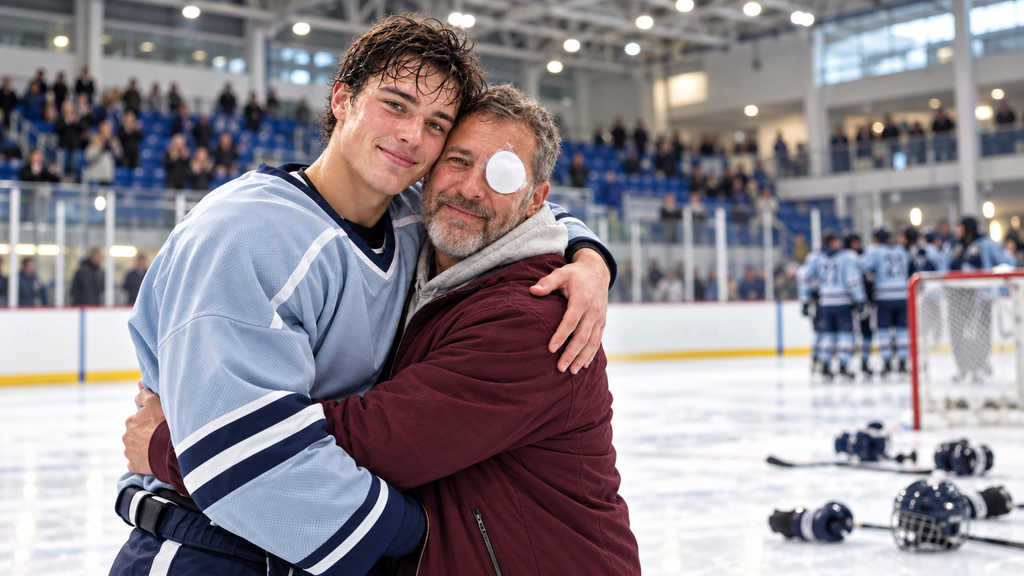
The eight-year-old who climbed into my bed during a thunderstorm and whispered that he didn’t want to be alone.
The twelve-year-old who pretended he didn’t care when every other kid on his soccer team had a father standing beside him during the parent ceremony.
The sixteen-year-old who handed me his first paycheck from a summer job and said, “I’m helping with groceries now.”
And now the eighteen-year-old who had invited the man who abandoned him to the biggest game of his life.
I lay there staring at the ceiling, listening to the furnace kick on and off.
Part of me was angry.
More angry than I wanted to admit.
Not at Mason.
Never at Mason.
At David.
At the sheer arrogance of disappearing for fourteen years and then returning when the difficult work was finished.
He hadn’t been there for the nightmares.
He hadn’t been there for the fevers.
He hadn’t been there when Mason failed his first spelling test and cried because he thought I’d be disappointed in him.
He hadn’t been there when Mason got shoved into a locker in seventh grade because another kid called him “the abandoned one.”
He hadn’t been there the night Mason finally asked me the question I had dreaded for years.
“Dad, was I not good enough for him to stay?”
David hadn’t been there when I sat on the edge of that boy’s bed until nearly sunrise explaining that children are never responsible for the failures of adults.
He hadn’t been there when Mason broke his arm.
When he made varsity.
When he learned to drive.
When he had his first heartbreak.
When he got his first recruiting letter.
He hadn’t stood beside me during parent-teacher conferences.
He hadn’t spent freezing Saturday mornings holding a thermos beside muddy soccer fields.
He hadn’t driven six hours through sleet for an away tournament because Mason had forgotten his cleats and refused to admit it until we were already halfway there.
I had.
And I hated myself for thinking that way.
Because love was not supposed to be an invoice.
Fatherhood wasn’t a list of expenses I could slide across a table and demand reimbursement for.
I had never loved Mason because I wanted recognition.
I loved him because somewhere between packing lunches and tying shoelaces and teaching him how to shave, he had become as much a part of me as my own heartbeat.
Still, lying awake in that dark room, I had to admit something I had never allowed myself to say aloud.
I was terrified.
Terrified that David would walk into that stadium wearing an expensive coat and a confident smile and offer Mason a version of life I could never give him.
David was wealthy now.
Successful.
Connected.
He owned commercial properties in Chicago.
He traveled.
He had the kind of life people photographed for magazines.
Meanwhile, I was still the same mechanic who came home smelling faintly of motor oil no matter how many times I washed my hands.
Our house was modest.
My truck had nearly two hundred thousand miles on it.
Most of my savings were already mentally assigned to whatever college expenses Mason’s scholarship wouldn’t cover.
What if blood mattered more than history?
What if Mason looked at David and saw the father he wished he had always had?
What if fourteen years of showing up could be undone by three months of messages?
At three in the morning, I got out of bed.
I walked down the hallway and stopped outside Mason’s bedroom.
His door was partly open.
He was asleep on his back, one arm hanging over the edge of the mattress, his championship jersey draped over the desk chair.
For a few seconds, I could almost see the little boy inside the young man.
Then I noticed something on his desk.
A framed photograph.
It was one I hadn’t seen in years.
Mason was seven.
His two front teeth were missing.
He was sitting on my shoulders at a county fair, holding a ridiculous stuffed tiger he had begged me to win.
I remembered spending forty-two dollars throwing plastic rings at glass bottles before finally succeeding.
Sarah had taken hundreds of photographs of Mason before she died.
But that picture had been taken by a stranger.
It was one of our pictures.
One from our life.
I stood there looking at it until my throat tightened.
Then Mason shifted in his sleep.
I quietly pulled his door almost closed and went back to bed.
Whatever happened tomorrow, I told myself, it was his decision.
And if being his father meant trusting the man I had raised, then that was what I would do.
Even if it hurt.
Especially if it hurt.
The next morning, Mason was already awake when I came downstairs.
He was sitting at the kitchen table in sweatpants, eating oatmeal and staring at his phone.
“Morning,” I said.
He looked up immediately.
“Morning.”
Neither of us mentioned David.
I poured coffee.
Mason tapped his spoon against the bowl.
“Did you sleep?”
“Like a baby.”
He narrowed his eyes.
“You look terrible.”
“So do babies.”
That got a small laugh out of him.
The tension loosened slightly.
I leaned against the counter.
“Big day.”
“Yeah.”
“Nervous?”
He shrugged.
“Little.”
“You’ve played bigger crowds.”
“Not really.”
“Then pretend everybody in the stands owes you money.”
He laughed again.
That was our rhythm.
Whenever life became too heavy, one of us cracked a terrible joke.
Most of the time it was me.
Mason finished eating, carried his bowl to the sink, then stood there for a moment.
“Dad?”
“Yeah?”
He didn’t turn around.
“Thank you for not telling me I couldn’t invite him.”
I watched his shoulders.
“You’re eighteen.”
“That’s not what I mean.”
I knew.
I set my coffee down.
“You don’t owe me loyalty by hating him, Mason.”
He finally turned around.
“I know.”
“You don’t have to punish him for me.”
“I’m not.”
“And you don’t have to protect my feelings either.”
His eyes shifted away.
That told me everything.
I walked closer.
“Mason.”
He looked back at me.
“If you want to know him, know him.”
He swallowed.
“Even after what he did?”
“Those are two separate things.”
His expression tightened.
“I don’t understand.”
“You can know someone without erasing what they did. You can listen to their explanation without accepting every excuse. You can forgive someone someday and still have boundaries.”
I paused.
“And you can love more than one person without betraying anybody.”
Something changed in his face.
Maybe relief.
Maybe sadness.
Maybe both.
He nodded.
Then he picked up his duffel bag.
“We should go.”
The championship was being held at Memorial Stadium, nearly an hour from our town.
By the time we arrived, the parking lots were already packed.
School buses unloaded students in matching colors.
Parents carried signs.
The marching band warmed up near the south entrance.
You could hear the drums from three blocks away.
Mason became quiet the moment we pulled into the players’ lot.
Game mode.
I had watched it happen a thousand times.
He could joke all morning, but the second he saw the field, something inside him narrowed.
Focused.
I parked.
He reached for the door handle, then stopped.
“Dad.”
“Yeah?”
“You’re sitting where you always sit, right?”
“Section C. Row twelve. Seat nineteen.”
He nodded.
Same seat whenever it was available.
Near midfield.
High enough to see the whole field.
Low enough for Mason to spot me from the sideline.
“Okay,” he said.
“Go play your game.”
He opened the door.
Then he leaned back inside.
“I love you.”
“I love you too.”
He disappeared toward the locker room.
I sat in my truck for another thirty seconds.
Then I exhaled.
“Here we go.”
I had almost reached the stadium entrance when I heard someone behind me.
“Leo?”
My feet stopped.
I knew the voice before I turned around.
Fourteen years can change a man dramatically.
David had more gray in his hair than I expected.
He had lost weight.
His face was sharper.
Older.
He wore a dark wool coat over a sweater that probably cost more than my entire outfit.
Beside him stood a woman in her early forties.
Elegant.
Blonde.
Nervous.
David stared at me like he had seen a ghost.
For a moment, neither of us spoke.
Then he stepped forward.
“Leo.”
“David.”
His eyes filled with something I couldn’t immediately identify.
Guilt, maybe.
Or nostalgia.
He looked at my face.
“You look the same.”
“You don’t.”
A faint smile appeared and disappeared.
The woman beside him touched his arm.
David cleared his throat.
“This is Claire. My wife.”
She held out her hand.
“I’ve heard a lot about you.”
I shook it.
“Hopefully not recently.”
Her expression faltered.
David looked toward the entrance.
“I didn’t know if you’d come.”
That almost made me laugh.
“I haven’t missed one of his games in eleven years.”
David lowered his gaze.
“Right.”
Silence stretched between us.
Crowds moved around us.
Teenagers shouted.
Parents posed for pictures.
Somewhere nearby, a vendor yelled about programs and bottled water.
Yet standing there in front of David, everything else seemed to fade.
Finally, he said, “Thank you.”
My jaw tightened.
“For what?”
His eyes rose.
“For Mason.”
I stared at him.
Something inside me snapped tight.
“No.”
David blinked.
“I’m sorry?”
“You don’t get to thank me like I watched your dog for the weekend.”
Claire looked away.
David’s face turned pale.
“That isn’t what I meant.”
“Then don’t say it like that.”
“Leo—”
“I didn’t keep Mason safe for you.”
“I know.”
“I didn’t raise him so you could come back when he was grown and say thank you.”
“I know.”
“Do you?”
My voice stayed low, but every word felt sharp.
“Because you weren’t there, David.”
He swallowed.
“I know.”
“No. You know the sentence. You don’t know what it means.”
He looked down.
I continued before I could stop myself.
“You don’t know what it was like when he cried for Sarah every night for three months.”
David’s face tightened.
“You don’t know what it was like when he woke up asking where you were.”
His eyes became glossy.
“You don’t know what it was like trying to explain abandonment to a four-year-old without teaching him to hate himself.”
“Leo…”
“You don’t know because you weren’t there.”
“I know.”
“You keep saying that.”
“Because it’s true.”
For the first time, David’s voice cracked.
He looked directly at me.
“I know exactly what I did.”
I fell silent.
David breathed out slowly.
“I have spent fourteen years knowing.”
A humorless smile touched his mouth.
“You think success fixed me?”
He glanced around the stadium.
“The company. The money. The house. None of it means what Mason probably thinks it means.”
“Then why tell him about it?”
“Because I didn’t know what else to say.”
I studied him.
That answer, at least, sounded honest.
David continued.
“When I messaged Mason, I stared at the screen for two hours before pressing send.”
“You had fourteen years to press send.”
“I know.”
“Stop saying that.”
“I don’t have another answer.”
His face folded slightly.
“I was a coward.”
That word hit differently.
Not grieving.
Not confused.
Not overwhelmed.
A coward.
David took a shaky breath.
“When Sarah died, I broke.”
I felt anger rise again.
“So did Mason.”
“I know.”
This time I didn’t interrupt.
David nodded toward an empty patch beside the walkway.
“Can we stand over there for a minute?”
I wanted to say no.
Instead, I followed.
Claire remained several yards away, giving us space.
David shoved his hands into his coat pockets.
“The night Sarah died, I was the one who found her.”
I remembered.
Of course I remembered.
“She was on the bathroom floor.”
His voice had dropped.
“Mason was asleep.”
David stared at the pavement.
“I called the ambulance. They worked on her. I watched them carry her out.”
He swallowed.
“Then I sat beside Mason’s bed for hours.”
I felt my anger shift but not disappear.
“He looked like her when he slept.”
David pressed his lips together.
“I remember thinking that every time I looked at him, I would see Sarah die all over again.”
“That doesn’t excuse what you did.”
“No.”
His answer came immediately.
“It doesn’t.”
He looked at me.
“That’s why I’ve never used it as an excuse with him.”
I said nothing.
“I left because I was weak,” David continued. “I drove until I couldn’t see straight. Ended up in Indiana. Slept in my car. Told myself I’d go back the next morning.”
His voice shook.
“Then morning came.”
He paused.
“And I was too ashamed.”
One day became two.
Two became a week.
A week became a month.
Then the longer he stayed away, the more impossible returning became.
“At first I kept thinking you’d call me,” he said.
“I did.”
His head jerked up.
“Thirty-six times.”
David closed his eyes.
“I changed my number.”
“I know.”
“I thought if I cut everybody off, I could stop being that person.”
“You mean a husband and father?”
He flinched.
“Yeah.”
“Did it work?”
“No.”
His answer was almost a whisper.
“No, Leo. It didn’t.”
For the first time since seeing him, I saw something beneath the expensive coat and polished life.
Not redemption.
Not innocence.
Just damage.
Damage he had caused.
Damage he had spent years running from.
“When did you get married?” I asked.
“Six years ago.”
“Kids?”
He hesitated.
“No.”
I glanced toward Claire.
David understood the question.
“We tried.”
His eyes returned to mine.
“Couldn’t.”
The universe had a cruel sense of timing.
“I told Claire about Mason before we got married,” David said. “Everything.”
“And she still married you?”
“She thought people could change.”
“Do you?”
“I think people can become different.”
He looked toward the stadium gates.
“But different doesn’t erase what they were.”
That was the first thing he had said that I respected.
A horn sounded inside the stadium.
Ten minutes until warmups.
I turned.
“I should go.”
“Leo.”
I stopped.
David’s voice softened.
“I’m not here to take anything from you.”
I looked back.
“You can’t.”
He nodded slowly.
“You’re right.”
Then he said something I had not expected.
“He calls you Dad.”
My throat tightened despite myself.
“Yes.”
David stared toward the field beyond the concrete walls.
“When he first did it in one of our messages, I had to put my phone down.”
I said nothing.
“He wrote, ‘I need to check with my dad.’”
David smiled sadly.
“I knew exactly who he meant.”
My anger didn’t vanish.
But it changed shape.
That was the thing about old wounds.
Sometimes you spent years imagining the person who hurt you as a monster because monsters were easier to understand.
But David wasn’t a monster.
He was worse in a more ordinary way.
He had been a frightened man who made a catastrophic choice.
And then made that same choice every day for fourteen years.
The first choice might have been panic.
Every day afterward was responsibility.
“I’m glad you came,” I said finally.
David looked surprised.
“I’m not glad for you.”
His expression fell slightly.
“I’m glad for Mason.”
He nodded.
“That’s fair.”
I walked inside.
My seat was exactly where it always was.
Section C.
Row twelve.
Seat nineteen.
A father named Mr. Alvarez sat beside me.
His son, Diego, played midfield with Mason.
Mr. Alvarez handed me a hot chocolate.
“You look like you’re about to throw up.”
“Feel like it too.”
“You nervous?”
“Little.”
He grinned.
“You always say that.”
A few minutes later, both teams ran onto the field.
The stadium erupted.
Thousands of people stood.
Students screamed.
The band exploded into the fight song.
Then I saw Mason.
Number nine.
Captain’s armband around his left bicep.
He ran onto the grass, clapping above his head.
I had seen him enter hundreds of soccer fields.
That moment was different.
He looked older.
Not because he was taller or stronger.
Because for the first time, I could see the man he was becoming more clearly than the boy he had been.
Mason jogged toward midfield.
Then his head lifted.
He scanned the stands.
I knew exactly what he was doing.
Looking for me.
I stood and raised one hand.
His eyes found mine.
He tapped his chest twice.
Our signal.
I tapped mine back.
Then Mason turned his head toward the visitors’ section.
I followed his gaze.
David stood near the aisle.
Mason looked at him.
David raised one hand.
Mason nodded once.
Nothing more.
Then he turned back toward the field.
I sat.
Mr. Alvarez glanced at me.
“Everything okay?”
“Yeah.”
I wasn’t sure whether that was true.
The whistle blew.
The game began.
The first half was brutal.
Our opponents were defending state champions.
Their back line was bigger.
More physical.
They double-teamed Mason from the opening minute.
Every time he touched the ball, somebody hit him.
At twelve minutes, he took an elbow to the ribs.
At nineteen, he got clipped from behind.
At twenty-six, he drove a free kick toward the upper corner, but their goalkeeper tipped it over the bar.
I stood for almost the entire half.
“Come on, Mason!”
He could never hear me.
I shouted anyway.
At thirty-seven minutes, disaster struck.
The opposing striker broke behind our defense.
One-on-one.
Goal.
The visiting crowd exploded.
One-nothing.
Mason stood at midfield with his hands on his hips.
Then he clapped hard and shouted something to his teammates.
Reset.
That was always Mason.
Never blamed anyone.
Never screamed at defenders.
Never threw his arms up.
He simply reset.
When the halftime whistle blew, we were still down by one.
The players disappeared into the tunnel.
The stadium buzzed nervously.
I sat back and rubbed my hands together.
Then somebody stepped into the empty seat beside me.
David.
Mr. Alvarez had gone for food.
David stared at the field.
“He’s incredible.”
“Yeah.”
“I’ve watched videos.”
“That’s different.”
“I know.”
There was that phrase again.
This time it didn’t bother me as much.
David leaned forward.
“He moves like Sarah.”
I turned my head.
“What?”
“When she played tennis.”
I had forgotten Sarah played in college.
“She had that same thing,” he continued. “That way of seeing where everybody was going before they moved.”
I looked back at the tunnel.
“He gets his stubbornness from her too.”
David laughed softly.
“That I remember.”
For a moment, we were simply two men remembering the same woman.
Then David asked, “Does he know much about her?”
“Everything I can remember.”
“Do you have pictures?”
“Boxes.”
He nodded.
“I have some too.”
The silence returned.
Finally, David said, “He asked me why I never came back.”
“What did you tell him?”
“The truth.”
“All of it?”
“As much as I could.”
“And what did he say?”
David rubbed his hands together.
“He said he wasn’t ready to forgive me.”
I looked at him.
“How did that feel?”
“Like he was being generous.”
That answer surprised me.
David continued.
“I expected him to tell me to disappear.”
“Maybe part of him wanted to.”
“Probably.”
“He’s spent years wondering about you.”
David’s jaw tightened.
“That’s the part I can’t forgive myself for.”
I stared at the field.
“Don’t make him responsible for fixing that.”
“I won’t.”
“Don’t show up for six months, make him trust you, and disappear again.”
“I won’t.”
I turned toward him.
“You don’t know that.”
David met my eyes.
“No.”
His expression was steady.
“But I know what I’ll do tomorrow.”
“What?”
“Show up.”
“And the day after?”
“Show up.”
“And after that?”
“The same.”
I looked away.
That was all fatherhood had ever been.
Not grand speeches.
Not DNA.
Not money.
Showing up.
Again.
And again.
And again.
The players returned for the second half.
David stood.
“I should get back to Claire.”
I nodded.
Before leaving, he hesitated.
“Leo?”
“Yeah?”
“I know I have no right to say this.”
He swallowed.
“But Sarah would have loved the man you became for him.”
My chest tightened.
I stared straight ahead.
“Go sit down, David.”
He did.
I didn’t trust myself to say anything else.
The second half began.
Mason came out differently.
Aggressive.
Focused.
At forty-nine minutes, he stripped the ball from a midfielder and launched a counterattack.
At fifty-two, he nearly scored off a header.
At fifty-eight, he threaded a pass between two defenders that put Diego through on goal.
Diego shot.
The goalkeeper blocked it.
The rebound rolled toward the penalty spot.
Mason appeared out of nowhere.
Left foot.
One touch.
Goal.
The stadium detonated.
I jumped so hard I nearly spilled into the row in front of me.
“One-one!”
Mr. Alvarez grabbed my shoulders.
The student section chanted Mason’s name.
Mason sprinted toward the corner flag.
His teammates piled onto him.
When he finally stood, he looked toward the stands.
For one heartbeat, his eyes found mine.
Then, across the stadium, I saw David standing too.
He was crying.
Not subtly.
Not hiding it.
Crying.
The score remained tied.
Ten minutes.
Then five.
Then two.
Regulation ended.
Overtime.
I thought my heart was going to stop.
The first overtime period ended scoreless.
During the second, Mason took a hard tackle and went down.
Everything inside me froze.
He grabbed his ankle.
The trainer ran out.
“No,” I whispered.
Mason tried to stand.
Collapsed.
My stomach dropped.
David had moved to the railing across the stadium.
Both of us watched.
The trainer examined him.
Mason stood again.
Limped.
Then waved the substitution away.
Of course he did.
“Stubborn idiot,” I muttered.
Mr. Alvarez laughed nervously.
“He gets that from you.”
“No. His mother.”
Mason finished overtime.
Still tied.
Penalty kicks.
I hated penalty kicks.
Every soccer parent did.
Five shots.
Five moments.
Five chances for teenagers to carry the emotional weight of an entire season on one foot.
Our goalkeeper saved the first.
We scored.
They scored.
We scored.
They scored.
We missed.
They scored.
We scored.
Four rounds.
Tied three-three.
The opponent scored their fifth.
Now we had to score to stay alive.
Mason was walking toward the penalty spot.
Of course he was.
Captain.
Number nine.
The player everybody expected to save them.
The entire stadium stood.
I could hear almost nothing except my heartbeat.
Mason placed the ball.
Stepped backward.
Then he looked up.
Not at the goalkeeper.
At the stands.
At me.
I don’t know how he found me among thousands of people.
But he did.
I lifted my hand.
One finger.
Our other signal.
One breath.
Whenever Mason became overwhelmed as a kid, I would tell him the same thing.
One breath.
One thing.
One moment.
Don’t carry tomorrow while you’re living today.
Mason inhaled.
The referee blew the whistle.
He ran.
Left foot.
The goalkeeper guessed correctly.
Dove right.
Mason drove the ball high.
Top corner.
Goal.
The stadium exploded again.
We survived.
Sudden death.
Their sixth shooter walked up.
Our goalkeeper bounced on his toes.
Whistle.
Shot.
Save.
The sound that came out of our student section was unbelievable.
Now we could win it.
Our sixth shooter was a sophomore defender named Tyler Nguyen.
Seventeen years old.
Quiet kid.
Rarely scored.
He walked to the penalty spot looking terrified.
Mason intercepted him.
He put both hands on Tyler’s shoulders.
Said something.
Tyler nodded.
Mason pulled him into a hug.
Then Tyler placed the ball.
The whistle blew.
He shot low left.
The goalkeeper went right.
Goal.
For half a second, there was silence.
As if nobody believed it.
Then every player on our bench sprinted onto the field.
STATE CHAMPIONS.
I don’t remember leaving my seat.
I remember hugging Mr. Alvarez.
I remember strangers grabbing me.
I remember seeing teachers cry.
I remember the band playing something completely off-key because half the musicians were jumping around.
And I remember Mason.
He stood in the middle of the field.
Surrounded by teammates.
Then he dropped to his knees.
Covered his face.
And cried.
My boy had spent fourteen years learning not to expect people to stay.
Now an entire stadium was chanting his name.
I pressed both hands against my mouth.
“Sarah,” I whispered.
“You should see him.”
The award ceremony began twenty minutes later.
Players lined up near midfield.
Medals were distributed.
The championship trophy gleamed beneath the stadium lights.
Mason, as captain, was called forward last.
The announcer’s voice boomed.
“Number nine, senior captain Mason Carter!”
The cheers were deafening.
Mason walked forward.
A medal was placed around his neck.
He shook hands with the state athletic director.
Then he lifted the championship trophy with his teammates.
Flashbulbs popped.
Phones rose.
The team gathered for photographs.
Normally, that would have been the end.
But then the athletic director handed Mason a microphone.
I frowned.
Mr. Alvarez looked at me.
“Did you know about this?”
“No.”
The crowd settled slowly.
Mason stood alone near midfield.
His jersey was grass-stained.
His hair was wet with sweat.
His ankle was wrapped.
His voice shook slightly when it came through the speakers.
“I promise I’m not going to make this long.”
The students laughed.
Mason smiled.
“First, I want to thank my teammates.”
He turned toward them.
“I love every one of you idiots.”
They shouted.
“Our coaches. Our teachers. Everybody who drove hours to watch us. Everybody who believed in us even after we started the season two and three.”
Applause rolled through the stadium.
Mason glanced down at the microphone.
Then his expression changed.
“I also need to say something personal.”
My stomach tightened.
Across the stadium, I saw David leaning forward.
Mason inhaled.
“A lot of people here know pieces of my story.”
Silence settled.
“My mom died when I was four.”
Several people nearby looked toward me.
Mason continued.
“And after she died, my biological father left.”
The stadium became so quiet that I could hear the hum of the speakers.
“I didn’t understand it when I was little.”
His voice cracked.
“I spent years wondering why.”
David lowered his head.
“I wondered if he left because of something I did.”
My eyes burned.
“I wondered if I had been too loud.”
Mason laughed once through emotion.
“Too difficult.”
He swallowed.
“Too expensive.”
I closed my eyes briefly.
“I thought maybe if I had been a better kid, he would have stayed.”
My chest broke open.
He had told me versions of those thoughts over the years.
But hearing him say them in front of thousands of people was different.
Mason continued.
“There was someone else in that house the morning my father disappeared.”
His voice became softer.
“A twenty-eight-year-old mechanic who had no kids.”
People started turning toward me.
I froze.
“He lived in a one-bedroom apartment.”
A few people laughed gently.
“He didn’t have much money.”
More faces turned.
“He definitely didn’t know what he was doing.”
I heard Mr. Alvarez whisper, “Oh, man.”
Mason smiled.
“But he looked at a four-year-old kid who had just lost everything and made him a promise.”
My vision blurred.
“He said, ‘I am not going to leave you.’”
I stopped breathing.
Mason looked directly toward Section C.
Toward Row Twelve.
Toward Seat Nineteen.
“And he never did.”
The first applause began somewhere behind me.
It grew.
Mason raised one hand.
The stadium quieted again.
“For fourteen years, he kept that promise.”
His voice trembled.
“He slept on a couch so I could have a bedroom.”
My eyes filled.
“He sold his motorcycle to pay legal fees.”
I covered my mouth.
“He learned how to pack lunches.”
Laughter mixed with tears around me.
“He made terrible spaghetti.”
“That’s debatable,” I muttered, and Mr. Alvarez laughed beside me.
“He worked overtime when I needed soccer cleats.”
Mason’s eyes were shining now.
“He came to every parent conference.”
My throat closed.
“He sat beside my hospital bed when I broke my arm.”
I wiped my face.
“He taught me to drive.”
A louder laugh rolled through the crowd.
“Which almost killed both of us.”
I laughed too.
Tears ran down my cheeks.
“He never missed a game.”
Mason paused.
“Not one.”
I looked across the field.
David was crying again.
Claire had her arm around him.
Mason’s voice dropped.
“For years, I thought real fathers were determined by blood.”
Then he slowly shook his head.
“But blood tells you where you came from.”
He looked at me.
“Love tells you who stayed.”
My chest convulsed.
And then Mason said the sentence that would live inside me for the rest of my life.
“My real father is here tonight.”
The stadium erupted.
For one strange second, I saw David straighten.
Maybe instinctively.
Maybe hopefully.
Maybe painfully.
Then Mason turned away from the podium.
He handed the microphone to the athletic director.
And he started walking.
Not toward David.
Toward me.
The crowd realized what was happening.
People stood.
Mason crossed the track.
Climbed the concrete steps.
Row by row.
Students were shouting.
Parents were clapping.
I couldn’t move.
My knees felt weak.
He reached Row Twelve.
Stopped in front of me.
And wrapped both arms around me.
“Dad,” he whispered.
That was all.
One word.
Dad.
I broke.
Completely.
I grabbed the back of his jersey and cried into his shoulder.
Not politely.
Not quietly.
Fourteen years came out of me at once.
All the fear.
All the exhaustion.
Every bill I had worried about.
Every night I had sat beside his bed.
Every birthday I had tried to make enough.
Every time I had wondered if I was doing it wrong.
Every moment I had secretly feared that biology would someday make me temporary.
Mason held me tighter.
“You’re my dad,” he whispered again.
I shook my head because I couldn’t speak.
Then something cold touched my palm.
I looked down.
Mason had taken off his championship medal.
He pressed it into my hand.
“No.”
He nodded.
“This is yours.”
“Mason—”
“You won this before I did.”
The people around us were crying.
Mr. Alvarez looked like somebody had punched him in the heart.
I tried to push the medal back.
“You earned this.”
“So did you.”
His voice broke.
“You spent fourteen years getting me here.”
That did it.
I pulled him into another hug.
He laughed into my shoulder.
When we finally separated, I noticed David standing several rows away on the opposite side of the stadium.
For one brief moment, our eyes met.
I expected anger.
Jealousy.
Humiliation.
Instead, David was applauding.
Slowly.
Tears streaming down his face.
He nodded at me.
Once.
And somehow, that hurt almost as much as everything else.
After the ceremony, parents were allowed onto the field.
Chaos followed.
Photographs.
Hugs.
Players dumping coolers over coaches.
Mason was pulled in every direction.
Recruiters waited near the tunnel.
Reporters from local stations tried to interview him.
I stayed back.
The medal still hung around my neck.
Eventually, Mason escaped the crowd.
He jogged toward me.
“You kept it.”
“Temporarily.”
“Permanently.”
“No.”
“Yes.”
“Your medal.”
“Our medal.”
I shook my head.
“You’re impossible.”
“Genetics.”
We both glanced toward David.
Mason’s expression changed.
David and Claire stood near the edge of the track.
Waiting.
Not approaching.
That mattered.
David wasn’t forcing the moment.
He was letting Mason decide.
Mason looked at me.
“Will you come with me?”
“Are you sure?”
“Yes.”
So we walked across the field together.
David’s eyes stayed on Mason.
When we stopped in front of him, neither spoke for several seconds.
Then David said, “Congratulations.”
Mason nodded.
“Thanks.”
“That was…”
David struggled for the word.
“Incredible.”
“Thanks.”
Another silence.
Then David looked at the medal around my neck.
A fragile smile appeared.
“You gave him your medal.”
Mason glanced at me.
“He earned it.”
David nodded.
“Yeah.”
He looked at me.
“He did.”
Claire hugged Mason.
“I’m really happy for you.”
“Thank you.”
Then she stepped back.
David shifted awkwardly.
The powerful real-estate executive looked suddenly like a scared young man again.
“Mason, I want you to know something.”
Mason waited.
“What you said tonight…”
David swallowed.
“You were right.”
Nobody spoke.
David continued.
“Leo is your father.”
I looked at him.
Mason’s jaw tightened.
David’s voice shook.
“I gave you DNA.”
His eyes filled.
“He gave you a life.”
Mason looked down.
“I’m not saying that so you’ll forgive me.”
David took a breath.
“I’m saying it because I spent fourteen years avoiding the truth, and I don’t want to do that anymore.”
Mason’s eyes rose.
“What truth?”
David looked directly at him.
“That I abandoned you.”
The words landed hard.
No excuses.
No softer phrasing.
No “I had to leave.”
No “I wasn’t ready.”
No “things were complicated.”
I abandoned you.
David’s eyes became red.
“And it was wrong.”
Mason’s jaw trembled.
“You were four years old.”
David’s voice broke.
“You had just lost your mother.”
He wiped his face.
“And I made you lose your father too.”
Mason stared at him.
“I can’t change that.”
David continued.
“I can’t earn back fourteen years.”
Mason’s breathing had become shallow.
“I can’t ask you to pretend it didn’t happen.”
David looked toward me.
“And I will never disrespect the man who did what I should have done.”
Then back to Mason.
“All I can ask is whether you’ll let me know you now.”
Mason didn’t answer immediately.
The stadium was emptying around us.
Players shouted in the distance.
Workers began collecting equipment.
Finally, Mason said, “I don’t know what I want yet.”
David nodded immediately.
“That’s okay.”
“I’m angry.”
“You should be.”
“I don’t trust you.”
“I understand.”
“I don’t want you showing up and acting like everything is fixed.”
“I won’t.”
Mason glanced toward me.
Then back at David.
“If we do this, it’s slow.”
“Anything you want.”
“No promises you can’t keep.”
David swallowed.
“Okay.”
“No disappearing.”
His voice cracked.
David looked as if that sentence had stabbed him.
“I won’t.”
Mason’s eyes hardened.
“You said that without thinking.”
David blinked.
“What?”
“You said you won’t disappear.”
Mason stepped closer.
“You can’t promise me what happens ten years from now.”
David was silent.
Mason continued.
“Dad taught me not to trust words people say because they’re scared of losing something.”
He glanced at me.
“You show me.”
Then back at David.
“You don’t promise.”
David nodded slowly.
“You’re right.”
“Show up tomorrow.”
“I will.”
“Then the next day.”
“I will.”
“Then maybe I’ll believe you eventually.”
David wiped his face.
“Okay.”
Mason held out his hand.
Not a hug.
Not yet.
David looked at it.
Then shook it.
Something about that moment made me prouder of Mason than the championship.
He had not humiliated David.
He had not rushed to forgive him.
He had not allowed anger to control him.
He had offered exactly what he was comfortable offering.
Nothing more.
Nothing less.
A beginning.
That night, after the celebrations ended, Mason and I drove home.
The trophy had gone back to the school.
His uniform was stuffed into his duffel bag.
The medal still hung around my neck.
Neither of us said much during the first twenty minutes.
Finally, Mason looked over.
“You okay?”
“No.”
He laughed.
“Why?”
“You made me cry in front of four thousand people.”
“More like seven thousand.”
“Great. Even better.”
He smiled.
We drove another mile.
Then I asked the question that had been sitting inside me.
“Did you know you were going to do that?”
“At the microphone?”
“Yeah.”
Mason stared out the windshield.
“Sort of.”
“Sort of?”
“I wrote something last week.”
“You wrote a speech?”
“Three versions.”
I glanced at him.
“Where?”
“My phone.”
“The phone you kept flipping over whenever I walked in?”
He grinned.
“Partly.”
I shook my head.
“You’re sneaky.”
“I learned from you.”
“I am not sneaky.”
“You hid every Christmas present in Mr. Alvarez’s garage for eight years.”
“That’s strategic storage.”
Mason laughed.
Then he became serious.
“I wasn’t trying to hurt David.”
“I know.”
“I just needed him to hear it.”
“What?”
“That Dad isn’t a title he gets back because he showed up.”
My hands tightened around the steering wheel.
Mason looked at me.
“He kept saying things like, ‘I know I’m your father.’”
His voice softened.
“And every time he said it, something felt wrong.”
“Because biologically he is.”
“I know.”
He stared down.
“But when I think ‘father,’ I don’t see him.”
He looked at me.
“I see you.”
I swallowed.
“Kid…”
“No. Let me finish.”
I recognized my own words from the day before.
Mason smiled faintly.
“I’ve been thinking about this for three months.”
I kept my eyes on the road.
“When he first messaged me, I was excited.”
That hurt a little.
Mason noticed.
“Dad.”
“It’s okay.”
“No, listen.”
He turned toward me.
“I was excited because part of me had waited my whole life for it.”
I nodded.
“I know.”
“I wanted him to say there was a reason.”
Mason’s voice became quiet.
“I wanted some explanation that would make me feel like he hadn’t chosen to leave me.”
I gripped the steering wheel.
“But every explanation still ended the same way.”
He looked out the window.
“He left.”
Neither of us spoke for several seconds.
“He told me about Mom dying.”
“I know.”
“You talked to him?”
“Before the game.”
Mason nodded.
“Did you punch him?”
“No.”
“Think about it?”
“Yes.”
He smiled.
Then his expression became serious again.
“He said he was scared.”
“That’s what he told me too.”
“I believe him.”
“So do I.”
Mason blinked.
“You do?”
“Being scared doesn’t excuse what he did.”
“No.”
“But I believe he was scared.”
I paused.
“People can do terrible things while feeling terrible themselves. One doesn’t cancel the other.”
Mason absorbed that.
After another mile, he said, “Do you hate him?”
I thought carefully.
“No.”
“Really?”
“I did.”
“When?”
“For a long time.”
I turned at the light.
“Maybe part of me still does sometimes.”
“Then why did you tell me I could invite him?”
“Because my relationship with David isn’t yours.”
Mason looked at me.
“You deserved the chance to decide for yourself.”
He was quiet.
Then he whispered, “That’s why you’re my dad.”
I had already cried enough for one day.
I pointed at him.
“Don’t start.”
He laughed.
We stopped for burgers on the way home.
State champions ate fast food at eleven thirty at night.
Apparently victory changed nothing.
Mason ordered enough food for three people.
I complained about the price.
He reminded me that college recruiters were watching him now.
I told him Division I scholarships did not include unlimited cheeseburgers.
He said they should.
When we finally got home, Mason stood in the kitchen and looked around.
Same scratched table.
Same refrigerator covered with magnets.
Same cabinet door that had never closed properly.
Same cheap clock above the stove.
He leaned against the counter.
“You know what’s weird?”
“What?”
“All day everybody kept saying this was the biggest moment of my life.”
“Pretty big moment.”
“Yeah.”
He looked around.
“But coming home still feels better.”
I understood.
Home was not the place where the most exciting things happened.
Home was the place where you were allowed to stop performing.
I took the medal off my neck.
Placed it on the counter.
Mason stared at it.
“I told you to keep it.”
“I’ll keep it safe.”
He sighed dramatically.
“You are the most stubborn human being alive.”
“Go shower. You smell terrible.”
“State champion.”
“State champion who smells terrible.”
He headed upstairs.
Halfway up, he stopped.
“Dad?”
“Yeah?”
“David asked if I wanted to have breakfast tomorrow.”
I waited.
“What did you say?”
“That I’d ask you.”
“Mason.”
“What?”
“You don’t have to ask me.”
His hand rested on the railing.
“I know.”
“Do you want to go?”
He considered it.
“I think so.”
“Then go.”
“Do you want to come?”
“No.”
He looked surprised.
“No?”
“That breakfast should be yours.”
Mason nodded slowly.
“Okay.”
Then I added, “But text me.”
He rolled his eyes.
“Every fifteen minutes.”
“Dad.”
“Ten.”
“Goodnight.”
“Five.”
He disappeared upstairs laughing.
The next morning, Mason met David alone.
I thought I would be fine.
I was not fine.
At 8:14, I checked my phone.
At 8:21, I checked again.
At 8:28, I considered driving past the diner.
At 8:31, I called myself insane.
At 8:42, Mason texted.
Still alive.
I stared at the message.
Then another arrived.
He paid. I ordered the expensive pancakes.
I laughed so loudly the dog next door barked.
Breakfast lasted two hours.
When Mason returned, he found me in the garage changing the oil in a customer’s old Ford.
He sat on a stool.
“How’d it go?” I asked.
“Okay.”
“Just okay?”
“He brought pictures.”
I wiped my hands.
“Of what?”
“Mom.”
That stopped me.
Mason pulled out his phone.
David had scanned photographs I had never seen.
Sarah at twenty.
Sarah on a college tennis court.
Sarah laughing on a beach.
Sarah heavily pregnant with Mason.
Sarah holding Mason minutes after he was born.
The final photo made my throat tighten.
David stood beside her.
Young.
Exhausted.
Terrified.
Happy.
His hand rested gently against newborn Mason’s head.
Mason stared at the picture.
“That’s the part that messes with me.”
“What?”
“He looks like he loved me.”
I sat beside him.
“He did.”
Mason frowned.
“How can you know?”
“Because leaving someone doesn’t always mean you never loved them.”
He looked at me.
“Then why leave?”
“Because love and courage aren’t the same thing.”
I paused.
“Some people love badly.”
Mason looked back at the picture.
“Did Mom love him?”
“Very much.”
“Do you think she’d forgive him?”
I shook my head.
“That’s one question I’m never going to answer for her.”
He nodded.
Fair.
Then Mason showed me another photograph.
Sarah holding him at maybe eighteen months old.
She looked exhausted.
Her hair was messy.
Mason was screaming.
David stood in the background with a baby bottle.
We both laughed.
“Okay,” Mason said. “I was apparently a nightmare.”
“You were.”
“Dad.”
“You asked.”
He smiled.
Then he put the phone away.
“I told him I’d meet him again next week.”
“How do you feel about that?”
“Weird.”
“Reasonable.”
“I still don’t know what I want him to be.”
“You don’t have to.”
“He wants to be part of my life.”
“That’s obvious.”
“What if I don’t want a father relationship?”
“Then don’t have one.”
“What if I do?”
“Then you do.”
Mason stared at me.
“That doesn’t hurt you?”
I took a breath.
There was no point lying.
“Parts of it probably will.”
His face fell.
“But that’s mine to manage.”
I touched his shoulder.
“You don’t shrink your life to protect me from feelings I can handle.”
He lowered his gaze.
“I don’t want you to think I’m replacing you.”
“You can’t.”
“How do you know?”
I smiled.
“Because I’ve seen your room.”
He laughed.
“No sane person is lining up for that job.”
He punched my shoulder.
Over the next several months, David did exactly what Mason had asked.
He showed up.
No grand gestures.
No new car.
No expensive gifts.
No dramatic speeches.
He came for coffee.
He attended two regular-season basketball games because Mason’s best friend played.
He mailed him a book Sarah had loved.
He answered questions when Mason asked them.
And when Mason did not answer texts for several days, David did not pressure him.
He waited.
At first, I expected failure.
Every week, I subconsciously waited for David to disappear again.
He didn’t.
That didn’t make the past vanish.
It simply created something new beside it.
A few weeks after the state championship, Mason received an official scholarship offer from Western State University.
Full tuition.
Housing.
Meal plan.
Soccer.
When the email arrived, Mason screamed so loudly I thought someone had broken into the house.
“Dad!”
I ran downstairs carrying a wrench.
“What?”
He shoved the laptop toward me.
“Read it!”
I read the first line.
Then again.
Then a third time.
Mason watched me.
“Well?”
“You’re going to college.”
He laughed.
“You’re going to college.”
I grabbed him.
We jumped around the kitchen like idiots.
Then I stepped back.
“Full tuition.”
“Yeah.”
“Housing.”
“Yeah.”
“Meal plan.”
“Yes.”
“So you’re telling me I don’t have to keep feeding you?”
“Apparently.”
I pointed toward the ceiling.
“Thank you, God.”
He shoved me.
The signing ceremony was held in the school gymnasium two months later.
A long table had been decorated with school colors.
Coaches stood behind Mason.
Teachers filled folding chairs.
A local reporter came.
David sat near the back.
He had asked Mason where he should sit.
Mason told him anywhere was fine.
David chose the back.
I sat in the front row.
When Mason signed his letter, everyone applauded.
Then the principal handed him a microphone.
Again.
I groaned.
Mason looked at me and grinned.
“I promise not to make my dad cry this time.”
Everyone laughed.
I pointed at him.
“Good.”
Mason thanked his coaches.
His teammates.
His teachers.
Then he looked at me.
“My dad spent most of my childhood worried he couldn’t give me enough.”
My smile disappeared.
“But the funny thing is, everything that got me here had nothing to do with money.”
My eyes burned.
“He gave me consistency.”
Mason smiled.
“Which sounds boring until you grow up without being sure people stay.”
The gym became quiet.
“He gave me discipline.”
A few players laughed.
“Too much discipline.”
More laughter.
“He taught me that talent doesn’t mean anything if you don’t work.”
He looked toward David briefly.
“And he taught me something else recently.”
Mason’s voice softened.
“That forgiveness doesn’t mean pretending something didn’t happen.”
David lowered his gaze.
“It means deciding whether the past gets to control what you do next.”
I looked at my son and realized something.
The little boy I had spent fourteen years trying to raise had quietly become someone capable of teaching me too.
After the ceremony, David approached me.
“Congratulations.”
“Mostly his work.”
“Not mostly.”
I looked at him.
David nodded toward Mason across the gym.
“He told me about the nights you worked late.”
I shrugged.
“Had bills.”
“He told me you refinanced your truck to pay for travel soccer.”
“I didn’t refinance the whole truck.”
David smiled.
“Mason says you always minimize everything.”
“Mason exaggerates everything.”
David laughed softly.
Then his expression changed.
“I want to ask you something.”
“What?”
“Would you ever let me repay some of it?”
I knew immediately what he meant.
“No.”
“Leo—”
“No.”
“College expenses. Training. Medical bills. Anything.”
“I said no.”
David nodded.
Not offended.
Just thinking.
Then he said, “Okay.”
I appreciated that he didn’t argue.
But before he walked away, I stopped him.
“There might be something.”
He turned.
“What?”
“Mason’s team runs a youth camp every summer.”
David listened.
“Some kids can’t afford cleats or fees.”
Understanding entered his face.
“Anonymous?”
“Completely.”
He nodded.
“How much?”
“As much as you want.”
A month later, the program director told me an anonymous donor had funded forty-seven children.
David never mentioned it.
Neither did I.
That was the first moment I believed he might truly be changing.
Not because he gave money.
He had always had money.
Because he finally understood that making amends was not about buying access to Mason.
It was about becoming useful without demanding applause.
Spring arrived.
Then graduation.
I sat in the high school football stadium beneath an unforgiving afternoon sun, holding a program and pretending I wasn’t emotional.
Mason walked across the stage wearing his cap and gown.
“Michael Mason Carter.”
I stood before his name was finished.
“That’s my son!”
People laughed.
Mason covered his face.
Later he told me I embarrassed him.
I told him that was legally required.
After graduation, we went home for a cookout.
Mr. Alvarez came.
Mason’s teammates came.
Patricia, the lawyer who had helped me adopt him fourteen years earlier, came.
When she walked into the backyard, Mason hugged her.
“You’re the reason I got stuck with him.”
Patricia laughed.
“I prefer to think I protected you.”
“From what?”
She looked at me.
“His cooking.”
Everyone agreed.
David arrived twenty minutes later with Claire.
He carried no expensive gift.
Just an old wooden box.
After dinner, he asked Mason if they could talk privately.
Mason glanced at me.
I nodded.
They sat on the back porch.
I stayed inside.
Ten minutes later, Mason entered carrying the box.
His face looked strange.
“Dad.”
“What?”
He set it on the table.
Inside were letters.
Dozens.
Some sealed.
Some unfinished.
All addressed to Mason.
The earliest had been written thirteen years earlier.
“What are these?” I asked.
Mason looked toward the porch.
“He wrote them.”
David stood in the doorway.
I picked up one envelope.
Mason — Age 5.
Another.
Mason — Age 8.
Another.
Mason — Age 13.
I looked at David.
“You wrote to him?”
David’s face was pale.
“I never sent them.”
“Why?”
“Cowardice.”
Again, that word.
He walked closer.
“Every birthday, I wrote something.”
Mason opened one of the envelopes.
The handwriting looked shaky.
He read silently.
His eyes filled.
I turned away.
Whatever those letters contained belonged to him.
After several minutes, Mason closed the box.
“You should’ve sent them.”
David nodded.
“I know.”
“You should’ve come back.”
“Yes.”
“You should’ve done a lot of things.”
“Yes.”
Mason’s voice shook.
“But I’m glad you kept them.”
David wiped his eyes.
“So am I.”
Then Mason did something I hadn’t seen him do before.
He stepped forward.
And hugged David.
Not for long.
Maybe three seconds.
But it happened.
David froze.
Then carefully placed one hand against Mason’s back.
He did not squeeze too tightly.
Did not try to hold on.
He simply accepted what was given.
When Mason stepped away, David’s face was wet.
“Thank you,” he whispered.
Mason shook his head.
“Don’t thank me.”
David nodded.
“Right.”
That night, after everyone left, Mason and I sat outside beneath the porch light.
The wooden box rested between us.
“Are you okay?” I asked.
“I don’t know.”
“Fair.”
“He loved me.”
“Yes.”
“Even when he wasn’t there.”
I thought about that.
“Yes.”
Mason shook his head.
“That almost makes it worse.”
“I know.”
“Because if he didn’t care, it would make sense.”
I nodded.
“People rarely make perfect sense.”
Mason picked at the label on one envelope.
“Dad?”
“Yeah?”
“Did you ever regret adopting me?”
The question stunned me.
“What?”
“Honestly.”
I stared at him.
“Mason.”
“I mean it.”
He looked at me.
“You were twenty-eight.”
“I remember.”
“You could’ve gotten married. Traveled. Done whatever you wanted.”
“I did what I wanted.”
“You wanted a four-year-old with separation anxiety who threw cereal at you?”
“You only threw cereal once.”
“Twice.”
“Right.”
He smiled faintly.
Then I became serious.
“Did I ever wonder if I was capable of doing it?”
“Yes.”
“Did I ever feel overwhelmed?”
“All the time.”
“Did I ever miss being able to do whatever I wanted whenever I wanted?”
“Sometimes.”
His expression tightened slightly.
“But regret you?”
I shook my head.
“Not once.”
He looked down.
“Not even when things were hard?”
“Especially then.”
“Why?”
I leaned back.
“Because hard isn’t the same as wrong.”
That sentence seemed to settle somewhere inside him.
I continued.
“You know what I regret?”
“What?”
“Not buying the bigger box of cereal that first week.”
He laughed.
I nudged the wooden box with my foot.
“You going to read all of those?”
“Eventually.”
“No rush.”
He nodded.
“Dad?”
“Yeah?”
“When I leave for college…”
My chest tightened automatically.
“I’m not moving to another planet.”
“Feels like it.”
“You’ll love the quiet.”
“I hate quiet.”
“I know.”
He smiled.
“Can I ask you something?”
“Sure.”
“When I’m gone…”
He looked toward the kitchen.
“Don’t just sit here.”
“What does that mean?”
“It means get a life.”
I laughed.
“I have a life.”
“You work.”
“Yes.”
“You watch soccer.”
“Yes.”
“You argue with the neighbor about where he puts his trash cans.”
“He knows what he’s doing.”
Mason rolled his eyes.
“I’m serious.”
“So am I. Those trash cans—”
“Dad.”
I stopped.
He looked at me.
“You spent fourteen years building your life around me.”
“Because you were my kid.”
“I know.”
His voice softened.
“But I don’t want you to wake up after I leave and realize you forgot to build anything for yourself.”
I stared at him.
“I didn’t forget.”
“Then what is it?”
I thought for a long moment.
“You.”
He frowned.
“That’s not what I mean.”
“I know.”
I smiled.
“But raising you wasn’t the thing that interrupted my life, Mason.”
My voice tightened.
“It was my life.”
He looked away quickly.
“Stop.”
“You started this.”
“You’re doing the crying thing.”
“You asked.”
“I take it back.”
We sat there laughing.
A month later, Mason and I visited Sarah’s grave.
We did it every year around his birthday.
This time, David came too.
That had been Mason’s idea.
When we reached the cemetery, David stopped several yards away.
Sarah’s headstone was simple.
Beloved daughter.
Beloved wife.
Beloved mother.
Mason knelt and brushed a leaf from the base.
“Hey, Mom.”
He always talked to her.
Not dramatically.
Just naturally.
Like she lived somewhere he couldn’t quite reach.
“I graduated.”
He smiled.
“Dad screamed during the ceremony.”
I crossed my arms.
“That information was unnecessary.”
Mason ignored me.
“I’m going to Western State.”
He placed his championship medal against the stone for a moment.
“We won too.”
David made a soft choking sound behind us.
Mason looked back.
“Come here.”
David didn’t move.
“You sure?”
“Yes.”
David approached slowly.
He stared at Sarah’s name.
His face changed.
Fourteen years collapsed.
His knees buckled slightly.
He knelt.
For a long time, he said nothing.
Then he whispered, “I’m sorry.”
Mason looked away.
So did I.
Some grief deserved privacy even in company.
David touched two fingers to the edge of the stone.
“I’m sorry, Sarah.”
His shoulders shook.
“I failed him.”
Mason closed his eyes.
David continued.
“Leo didn’t.”
I looked at him.
“He grew up good.”
David laughed through tears.
“Better than good.”
His hand remained on the stone.
“I wish you could see him.”
Mason’s voice broke.
“She can.”
David looked up at him.
Mason nodded toward me.
“Dad always says Mom shows up whenever people tell embarrassing stories about me.”
I shrugged.
“It’s scientifically proven.”
David laughed.
That sound in that cemetery felt strange and beautiful.
Before we left, Mason placed one hand on Sarah’s stone.
Then looked at both of us.
“I used to think my family was broken.”
Neither David nor I spoke.
“Maybe it was.”
Mason continued.
“But broken doesn’t mean gone.”
He looked at me.
“Sometimes somebody rebuilds it.”
My eyes burned.
Then he looked at David.
“And sometimes somebody comes back and has to start at the outside.”
David nodded.
“I can live with that.”
Mason smiled faintly.
“Good.”
College move-in day arrived in August.
I hated it.
I pretended not to.
Our truck was packed so tightly I could barely see through the rear window.
Mason brought far too many shoes.
I complained.
He insisted athletes needed options.
I told him feet did not care about fashion.
He called me old.
We argued for forty miles.
Exactly how we both needed it.
When we reached campus, students were everywhere.
Parents carried mini refrigerators.
Freshmen looked terrified.
Upperclassmen wore volunteer shirts and shouted directions.
Mason’s dorm room was on the fourth floor.
No elevator.
By the third trip upstairs, I told him higher education was a scam.
He laughed.
We assembled his bed.
Set up his desk.
Hung photographs.
One was the county fair picture.
Mason at seven, sitting on my shoulders.
Another was Sarah holding him as a baby.
Another was the championship team.
Then he placed one more photograph on the shelf.
The graduation cookout.
Mason stood in the center.
I was on one side.
David on the other.
Not a perfect family.
Not a simple family.
But his family.
When the room was finished, there was nothing left to do.
That was the part I had dreaded.
Mason stood near the door.
I shoved my hands into my pockets.
“Well.”
“Well,” he echoed.
“You remember how to do laundry?”
“Yes.”
“Separate whites.”
“You’ve told me.”
“Don’t live on pizza.”
“You’ve told me.”
“Go to class.”
“Yes.”
“Even if practice runs late.”
“Yes.”
“And call—”
“Dad.”
“What?”
He smiled.
“I know.”
I nodded.
Then he hugged me.
Hard.
I held on.
“Thank you,” he whispered.
“For what?”
“Everything.”
I closed my eyes.
“You don’t owe me thanks.”
“I know.”
His voice broke.
“That’s why I’m giving it.”
I pulled back.
“Go live your life.”
He wiped his face.
“You too.”
“I have a transmission rebuild tomorrow.”
“That is the saddest answer possible.”
We both laughed.
I walked down four flights of stairs alone.
Reached the truck.
Opened the door.
Then sat behind the wheel.
I didn’t start the engine.
For nearly five minutes, I stared at the empty passenger seat.
There were crumbs in the cup holder from the breakfast sandwich Mason had eaten on the drive.
A sweatshirt he had forgotten lay behind the seat.
His water bottle remained in the door pocket.
My house would be quiet tonight.
No cleats by the door.
No music upstairs.
No arguments about dishes.
No refrigerator mysteriously empty three hours after grocery shopping.
I had spent fourteen years teaching Mason how to leave home.
Nobody had taught me how to watch him do it.
I put my head against the steering wheel.
And cried.
Then my phone buzzed.
Mason.
I opened the message.
You still in the parking lot?
I looked toward the dorm.
Yes.
Three dots appeared.
Then:
Good. I forgot my charger.
I started laughing.
Ten minutes later, he ran across the parking lot.
“See?” I said, holding it out. “You’re not ready.”
He grabbed the charger.
“I’m completely ready.”
“You lasted nine minutes.”
He hugged me again.
“Drive safe, Dad.”
“You too.”
“I’m not driving.”
“You know what I mean.”
He jogged away.
Halfway across the lot, he turned.
Raised one hand.
Tapped his chest twice.
Our signal.
I tapped mine.
He disappeared inside.
The first semester was harder than Mason expected.
College soccer was faster.
Players were stronger.
For the first time in years, he wasn’t automatically the best player on the field.
He sat on the bench during the first three matches.
After the third game, he called me at eleven forty at night.
“I think I made a mistake.”
I was already asleep.
I sat up.
“What happened?”
“I’m not good enough.”
“You’re three games into freshman year.”
“Coach doesn’t trust me.”
“He recruited you.”
“That doesn’t mean anything.”
“It means at least one thing.”
Mason sighed.
“You don’t understand.”
“You’re right.”
Silence.
He hadn’t expected that.
I continued.
“I don’t know what it feels like to play Division I soccer.”
“Exactly.”
“But I know what it feels like to be bad at something before you get better.”
“I’m not bad.”
“You just said—”
“You know what I mean.”
I smiled.
“Want advice?”
“No.”
“Good. I’ll give it anyway.”
He groaned.
“Tomorrow, show up.”
Silence.
“The day after, show up.”
I could almost hear him smiling.
“The day after that?”
“Show up.”
“That’s your answer for everything.”
“Most important things.”
Two weeks later, he got his first start.
He assisted the winning goal.
The first person he called afterward was me.
The second was David.
I knew because David texted me.
He did it.
Attached was a blurry screenshot of the game stream.
I stared at those two words.
Then replied:
He did.
That became our strange relationship.
David and me.
Not friends exactly.
Not enemies anymore.
Two men standing in different places around the same young man.
Sometimes David called before visiting Mason.
Sometimes I sent him game schedules.
We rarely discussed the past.
It didn’t need constant discussion.
The truth already existed.
A year passed.
Then another.
Mason became a regular starter during sophomore year.
By junior year, he was team captain again.
The first time he wore the armband in college, I drove six hours to watch.
David flew in from Chicago.
We sat beside each other.
Neither of us acknowledged the irony.
At halftime, David handed me coffee.
“You ever think this would happen?”
“What?”
“You and me sitting together watching him.”
“No.”
“Me neither.”
We watched Mason sprint onto the field.
David smiled.
“He still looks for you.”
“What?”
“Before kickoff.”
I turned.
David nodded toward the field.
“He always looks for your seat.”
I swallowed.
“He’s done that since he was seven.”
“I know.”
I looked at him.
David smiled sadly.
“I watch recordings.”
That sentence told me more than he intended.
Maybe he was trying to recover pieces.
Not rewrite them.
Just see them.
Near the end of Mason’s junior year, something happened that I never expected.
David called me.
Not Mason.
Me.
It was almost midnight.
“Leo?”
“What happened?”
His voice sounded strange.
“My dad died.”
I knew David’s relationship with his father had been complicated.
“I’m sorry.”
“Thank you.”
Silence.
Then:
“I don’t know why I called you.”
I did.
But I let him discover it.
“My father and I didn’t talk much the last ten years.”
David breathed shakily.
“I kept telling myself we had time.”
I sat at my kitchen table.
“David.”
“Yeah?”
“Call Mason tomorrow.”
“I don’t want to dump this on him.”
“You’re not.”
“I just…”
His voice broke.
“I suddenly understand how easy it is to think you’ll say something later.”
I looked toward an old photograph of Sarah on my shelf.
“Then don’t wait.”
David inhaled.
“Okay.”
The next day, he called Mason.
They talked for nearly an hour.
Afterward, Mason called me.
“David told me about Grandpa.”
“I heard.”
“You knew?”
“He called last night.”
Mason went quiet.
“You guys talk now?”
“Sometimes.”
“That’s weird.”
“Very.”
Mason laughed.
Then he became serious.
“He told me he loved me.”
I waited.
“First time?”
“First time he said it.”
“How’d that feel?”
“Weird.”
“Most true things do.”
“He didn’t ask me to say it back.”
“That matters.”
“Yeah.”
Another year passed.
Mason graduated from college with a degree in kinesiology.
He had professional offers from lower-division clubs but surprised everyone by turning them down.
Instead, he accepted a graduate assistant coaching position while beginning a master’s degree.
When I asked why, he shrugged.
“I like helping kids get better.”
“You’re twenty-two.”
“They’re younger kids.”
“Barely.”
He smiled.
Then said, “I think I want to coach.”
I understood.
Mason had spent his childhood being guided.
Now he wanted to become someone who stayed on the sideline for others.
By twenty-six, he was an assistant coach at a respected university.
By twenty-nine, he married a woman named Emily.
She was a physical therapist.
Smart.
Patient.
Completely unimpressed by Mason’s ability to turn any conversation into soccer.
The night before their wedding, Mason and I sat outside the rehearsal dinner venue.
He looked nervous.
“You okay?” I asked.
“Terrified.”
“Good.”
He frowned.
“Good?”
“Means you understand it matters.”
He stared at his shoes.
“Dad?”
“Yeah?”
“What makes somebody ready to be a husband?”
I laughed.
“You’re asking the wrong person.”
“You raised me.”
“That’s different.”
“How?”
“You couldn’t divorce me.”
He laughed.
Then I became serious.
“You won’t be ready for every part.”
“That’s encouraging.”
“You won’t.”
I looked at him.
“You just decide that leaving isn’t your first answer when things get hard.”
His expression changed.
We both knew what we were talking about.
“You stay for the conversation.”
I continued.
“You stay when you’re angry.”
“You stay when you’re scared.”
“You stay long enough to figure out whether something can be repaired.”
Mason nodded.
“And if things ever become truly unhealthy or unsafe, staying isn’t always the right choice.”
“I know.”
“But don’t confuse discomfort with disaster.”
He smiled.
“You should write greeting cards.”
“I’d make millions.”
The wedding was beautiful.
During the father-son dance, which Emily insisted on including because she said traditions could be rewritten, Mason chose an old song Sarah used to play.
I lasted twenty seconds before crying.
“Again?” Mason whispered.
“Shut up.”
“You’re ruining my suit.”
“Your suit is rented.”
“It’s not.”
“Then you overpaid.”
He laughed into my shoulder.
David stood near the edge of the dance floor.
He did not look sad.
He looked grateful.
After the dance, Mason hugged him too.
Their relationship had become something neither of them could have predicted.
Mason never called David Dad.
David never asked him to.
Sometimes Mason called him David.
Sometimes, teasingly, “old man.”
They spoke every week.
Visited several times a year.
David came to graduations, birthdays, holidays when invited.
He never missed another major event.
Not one.
Was that enough to erase fourteen years?
No.
Nothing could.
But life was not an equation.
Sometimes repair did not mean restoring something to its original condition.
Sometimes repair meant building something new around the crack.
Two years after the wedding, my phone rang at 4:13 in the morning.
For half a second, panic took me back twenty-seven years.
Another nighttime call.
Another disaster.
Then I saw Mason’s name.
I answered immediately.
“What happened?”
“Dad.”
His voice sounded breathless.
“Are you okay?”
“Yeah.”
“Emily?”
“She’s good.”
I heard crying in the background.
A baby.
My heart stopped.
“Mason?”
He laughed.
“She’s here.”
I sat up.
“What?”
“She’s here.”
I couldn’t speak.
“Our daughter.”
His voice broke.
“She’s perfect.”
I put one hand against my mouth.
“What’s her name?”
Mason was silent for a second.
Then:
“Sarah.”
My eyes closed.
“Oh.”
“And Leo.”
I frowned.
“What?”
He laughed through tears.
“Sarah Leah Carter.”
“You said Leo.”
“Middle name’s Leah.”
“You scared me.”
“I considered Leona.”
“Don’t you dare.”
He laughed.
Then he said, “We want you to come meet her.”
“I’ll be there.”
“Drive carefully.”
“Yeah.”
“Dad?”
“What?”
“Bring the medal.”
I froze.
“What medal?”
“You know what medal.”
The state championship medal.
The one he had given me eleven years earlier.
I still had it.
Of course I did.
It hung inside a frame beside a photograph of him walking up the stadium steps toward me.
“Why?”
“Just bring it.”
At the hospital, Mason met me in the hallway.
He looked exhausted.
Terrified.
Radiant.
Exactly like David had looked in that photograph after Mason’s birth.
For a moment, time folded.
“You look terrible,” I said.
He hugged me.
“You always say that.”
“Because it’s often true.”
He led me inside.
Emily lay in bed.
And in her arms was the smallest person I had seen in years.
My granddaughter.
Sarah.
Mason carefully lifted her.
Then turned toward me.
“You ready?”
“No.”
“Too bad.”
He placed her in my arms.
Everything inside me stopped.
She weighed almost nothing.
Tiny face.
Tiny fingers.
Eyes closed.
I stared at her.
“Hi,” I whispered.
My voice disappeared.
“Hi, Sarah.”
Mason stood beside me.
“She has Emily’s nose.”
“Thank God.”
“Hey.”
I laughed.
Then my granddaughter opened her eyes briefly.
Something inside my chest shattered in the best possible way.
I looked at Mason.
He was crying.
“What?” I asked.
“You look exactly how I hoped you would.”
I shook my head.
“You’re weird.”
He reached into my jacket pocket.
Pulled out the medal.
I had almost forgotten I brought it.
Mason took it.
Then carefully laid the ribbon across the blanket near the baby’s feet.
Emily smiled.
Mason looked at me.
“You remember what you said when you gave it back after the game?”
“What?”
“That I earned it.”
“Yeah.”
“You were wrong.”
I stared at him.
He smiled through tears.
“You earned this.”
He touched the medal.
“And I earned this.”
He touched his daughter’s blanket.
“Because you taught me how to stay.”
I couldn’t breathe.
Mason’s voice shook.
“You had every reason not to take me.”
My arms tightened around the baby.
“You were twenty-eight.”
He swallowed.
“Single.”
“Broke.”
“Definitely broke.”
He laughed.
“But you stayed.”
His eyes filled.
“You showed me what a father was before I even understood the word.”
I looked down at Sarah.
Mason continued.
“So when things in my life get scary…”
He placed one hand on my shoulder.
“I know what to do.”
I looked at him.
He smiled.
“Show up.”
The room blurred.
That phrase.
Those two words.
The foundation of everything.
Show up.
When you are tired.
Show up.
When you are scared.
Show up.
When you don’t know what you’re doing.
Show up.
When the person you love is angry.
Show up.
When you are ashamed.
Show up.
When there is no applause.
No trophy.
No audience.
Show up.
Because love was never proven by the promises made on easy days.
Love was proven by who was still standing there on the hard ones.
A knock came at the door.
David stood in the hallway.
He looked nervous.
Mason smiled.
“You can come in.”
David approached slowly.
His eyes went immediately to the baby.
“That’s her?”
Mason nodded.
“Sarah.”
David stopped.
I watched the name hit him.
His face crumpled.
“Sarah?”
Mason nodded.
David covered his mouth.
Claire stood behind him crying.
Mason took the baby from me.
Then carefully placed her in David’s arms.
David looked terrified.
“I haven’t held a baby in…”
He stopped.
Nobody needed him to finish.
Twenty-five years.
The last baby he had held had been Mason.
His hands trembled.
Mason adjusted his arm.
“Support her head.”
David laughed through tears.
“Right.”
He stared at his granddaughter.
“Hello.”
His voice broke.
“Hello, sweetheart.”
I watched him.
And suddenly I saw the impossible shape of our family.
Sarah’s death had broken us apart before some of us even understood what had happened.
David ran.
I stayed.
Mason grew.
David returned.
Nobody replaced anybody.
Nobody erased anything.
The past remained exactly what it was.
But it no longer dictated every possible future.
Later, Mason and I stood in the hospital hallway while David and Claire visited with Emily.
Mason leaned against the wall.
“You okay?”
I nodded.
“You?”
“Yeah.”
He smiled.
“Grandpa Leo.”
“Don’t.”
“What?”
“I’m not old enough.”
“You’re fifty-three.”
“Exactly.”
“That is grandfather age.”
“I will leave.”
He laughed.
Then he became quiet.
“You know I’m going to tell her about you.”
“About me?”
“Everything.”
I groaned.
“Not everything.”
“The cereal story.”
“No.”
“The county fair.”
“Fine.”
“The time you cried when I called you Dad.”
I stared at him.
“How do you know about that?”
“You stayed in the bathroom for five minutes.”
“I had allergies.”
“In December?”
“Winter allergies.”
Mason laughed.
Then his eyes became soft.
“I’m going to tell her that her grandpa chose me.”
I looked away.
“Mason.”
“I’m going to tell her that when I was four years old and the world got very small and very scary…”
My eyes burned.
“You were there.”
He placed a hand on my shoulder.
“And I’m going to tell her that every good thing I know about being a father started with you.”
I pulled him into a hug.
“I love you, kid.”
“I love you too, Dad.”
Years earlier, I had believed the hardest day of my life was the morning David disappeared.
I had been wrong.
The hardest days came afterward.
The ordinary ones.
The mornings when Mason refused breakfast.
The evenings when bills piled up.
The nights when he asked questions I couldn’t answer.
The parent conferences.
The illnesses.
The tantrums.
The loneliness.
The fear that love would not be enough.
But the strange thing about a life built from ordinary days is that one day you look back and realize those ordinary days became everything.
David had missed fourteen years because he thought he had to become ready before he could be a father.
I learned the opposite.
Nobody is ready.
You become ready by doing it.
One lunch.
One bedtime.
One drive home.
One bad report card.
One scraped knee.
One apology.
One conversation.
One day at a time.
People sometimes ask me when Mason truly became my son.
Legally, I could give you the date.
I still have the adoption papers.
Emotionally?
Maybe it was the morning I found him sitting on the floor with cereal in his lap.
Maybe it was the first night he fell asleep against my chest.
Maybe it was when he called me Dad over waffles.
Maybe it happened slowly, across a thousand moments too small to notice individually.
I don’t know.
What I do know is that fourteen years after his biological father left him, Mason stood in a stadium full of thousands of people and said:
“My real father is here tonight.”
For one terrifying heartbeat, I thought he meant the man who gave him life.
Then my son walked past him.
Climbed twelve rows of concrete stairs.
Put a championship medal around my neck.
And reminded me of something I should have understood all along.
Being a real father was never about who arrived first.
It was about who stayed.
And maybe that is what family really is.
Not blood.
Not paperwork.
Not perfect histories.
Family is the person who answers at two in the morning.
The person who sleeps on the couch.
The person who learns how you like your sandwiches cut.
The person who sits in the same seat at every game.
The person who keeps your nightlight on.
The person who tells you the truth even when it hurts.
The person who gives you enough safety to ask questions about where you came from.
The person who does not make you choose between curiosity and loyalty.
The person who stays.
The person who shows up.
Again.
And again.
And again.
That night in the hospital, I held my granddaughter while Mason stood beside me.
David stood across the room.
Three generations connected by loss, choice, regret, forgiveness, and love.
Nothing about our family had happened the way anyone planned.
Yet somehow, looking at Mason holding his daughter, I knew I would not rewrite our story.
Not even the painful chapters.
Because the scared four-year-old sitting alone on that rug had grown into a man who knew exactly what kind of father he wanted to be.
And the twenty-eight-year-old mechanic who thought he had nothing to offer had somehow given him the one thing he needed most.
A promise.
I am not going to leave you.
Fourteen years later, beneath the brightest stadium lights of his life, Mason gave that promise back to me.
Not with words.
With a medal.
With a hug.
With one name.
Dad.
And I finally understood that I had never been his replacement father.
I had simply been his father all along.
THE END! THANK YOU FOR READING!❤️