 Reading Time: 18 minutes
For several seconds, I couldn’t breathe. I stared at the birth certificate until the letters began to blur. Father: Julian Edward Vance. The man whose hand I had held while he was dying.
The man who had asked me to pretend to be his daughter. The man I had jokingly called Dad because I thought it would comfort him. He hadn’t been pretending.
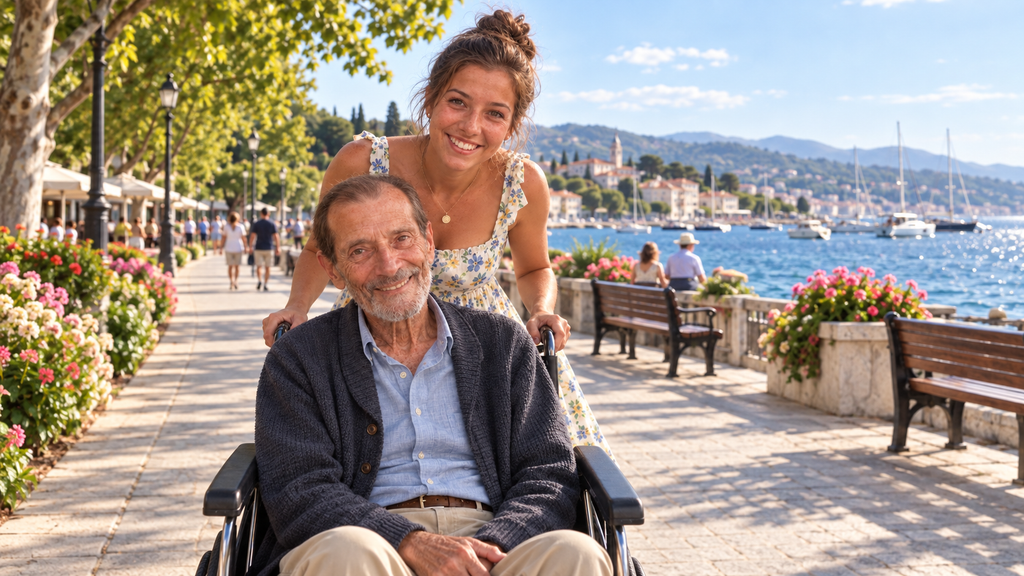
Neither had I.
My fingers began shaking so violently that the paper rattled.
“No.”
It was the only word I could manage.
Mr. Vance—the lawyer, no relation despite sharing Julian’s surname—sat quietly across from me.
I looked at him.
“No. This isn’t possible.”
He didn’t answer.
“My mother told me my father left before I was born.”
“I know.”
“She said he didn’t want us.”
“I know that too.”
My voice rose.
“Then explain this.”
I slammed the birth certificate onto the table.
“Explain why the name of the man I just watched die is written on my birth certificate.”
Mr. Vance looked toward the hospice windows.
Outside, rain had begun tapping softly against the glass.
Then he said something I will remember for the rest of my life.
“Because your mother lied to protect you.”
I stared at him.
“Protect me from whom?”
He looked back at me.
“From Julian’s family.”
A chill moved through my body.
I thought about Julian’s request.
Pretend you’re my daughter.
I thought about the strange way he had phrased it.
I thought about the times he’d stared at me when he believed I wasn’t looking.
The questions he’d asked.
What foods did I hate?
Had I ever broken a bone?
Was I afraid of thunderstorms?
Did I like the ocean?
What had my childhood been like?
Questions I had mistaken for the curiosity of a lonely dying man.
They hadn’t been random.
He had been learning about his daughter.
“Why didn’t he just tell me?” I whispered.
Mr. Vance looked down at the wooden box.
“Because Julian wasn’t certain you would stay if you knew the truth.”
That hurt more than I expected.
“He thought I’d leave?”
“He thought you’d hate him.”
I swallowed.
“Why?”
The lawyer reached into the box and removed the leather journal.
“He wanted you to read this.”
He handed it to me.
The leather was cracked with age.
When I opened the cover, I recognized Julian’s handwriting immediately.
On the first page, there were only six words.
For the daughter I never forgot.
My eyes filled with tears.
I turned the page.
The first entry was dated nearly thirty years earlier.
Before I was born.
I began reading.
Julian had met my mother, Claire, when they were both young.
She was twenty-four.
He was twenty-nine.
He was an engineer working for his father’s company.
My mother worked at a small architectural firm that occasionally contracted with them.
According to Julian’s journal, he fell in love with her almost immediately.
Not gradually.
Not carefully.
Completely.
There were pages about their first date.
Their first apartment.
The terrible pasta he tried to cook for her.
The cheap silver bracelet he bought because he couldn’t afford the necklace she wanted.
Then came the entry that changed everything.
Claire told me today that she’s pregnant.
Underneath it, Julian had written:
I have never been more frightened or happier in my life.
I covered my mouth.
My mother had always told me my father disappeared the moment he learned she was pregnant.
But Julian’s journal told a different story.
He had proposed.
There was even a photograph tucked between the pages.
My mother stood beside him outside a courthouse.
She was young.
Laughing.
Her hand rested against Julian’s chest.
And on her finger was a small engagement ring.
I recognized it immediately.
My mother had worn that ring on a chain around her neck until the day she died.
She told me it had belonged to my grandmother.
Another lie.
“Why?” I whispered.
Mr. Vance didn’t interrupt.
I kept reading.
Julian’s father, Arthur Vance, controlled the family company.
And apparently, he controlled his children with the same ruthlessness.
Arthur had already arranged a future for Julian.
A respectable marriage.
A position in the company.
A carefully managed public life.
My mother didn’t fit into that future.
She came from an ordinary family.
No money.
No connections.
No influence.
When Arthur learned she was pregnant, he summoned Julian to his office.
Julian wrote about that meeting.
My father told me Claire would destroy everything our family had built.
I told him I didn’t care.
He told me I would.
Two days later, Julian was arrested.
I stopped reading.
“What?”
Mr. Vance leaned forward.
“Keep going.”
The charges involved financial fraud at the family company.
Documents carried Julian’s signature.
Money had been moved through accounts under his authority.
Julian insisted he hadn’t done it.
But the evidence was overwhelming.
Arthur offered him a choice.
Fight the charges and risk years in prison.
Or leave.
Leave the company.
Leave the state.
Leave Claire.
And Arthur would make the evidence disappear.
I felt sick.
“He chose to leave my mother?”
Mr. Vance didn’t soften the answer.
“Yes.”
Anger erupted through my grief.
I stood so quickly the chair scraped backward.
“So she was right.”
“Not entirely.”
“He abandoned her.”
“Yes.”
“He abandoned me.”
“Yes.”
The lawyer’s honesty stopped me.
He didn’t defend Julian.
Didn’t excuse him.
He simply waited.
I looked down at the journal.
There was another entry.
I told myself I was protecting Claire.
That was the lie I used to survive what I did.
I sat down again.
My hands trembled as I continued.
Julian left.
My mother was devastated.
But Arthur didn’t stop there.
He approached her afterward.
He told her Julian had confessed that he wanted nothing to do with her or the baby.
Then he offered her money.
My mother refused.
So Arthur threatened her.
According to the journal, Arthur had people following her.
Watching her apartment.
Watching her workplace.
My mother eventually disappeared.
Changed cities.
Changed jobs.
And raised me alone.
Julian spent years trying to find us.
There were copies of returned letters inside the box.
Dozens of them.
Some had never been opened.
Others had been returned because the addresses were no longer valid.
Every envelope had my mother’s name written across the front.
Claire Bennett.
I picked up one dated twenty-seven years earlier.
My hands shook as I opened it.
I read only the first sentence before tears blurred my vision.
Claire, I don’t deserve forgiveness, but please let me know if our baby is safe.
I pressed the letter against my chest.
“He looked for us.”
“Yes,” Mr. Vance said.
“Did my mother know?”
“Eventually.”
I looked up sharply.
“What do you mean eventually?”
“Your mother contacted Julian twelve years ago.”
Everything inside me stopped.
“Twelve years?”
He nodded.
“She knew where he was?”
“Yes.”
“And she never told me?”
“Apparently she believed reconnecting you with him would reopen something she had spent your childhood trying to escape.”
I wanted to be angry with her.
Part of me was.
But I remembered my mother.
How fiercely she had protected me.
How she checked the locks twice every night when I was little.
How she hated being photographed.
How she never talked about my father.
Things I had once thought were personality quirks suddenly felt like scars.
“Did Julian meet her?”
“Once.”
The lawyer reached into the box.
He handed me a photograph.
My mother looked older in this one.
I recognized the coat she was wearing.
Julian sat across from her at a restaurant.
Neither was smiling.
On the back, Julian had written:
She still doesn’t trust me. Maybe she shouldn’t.
My throat tightened.
“What happened?”
“Your mother asked him to stay away from you.”
“And he agreed?”
“Yes.”
“Why?”
“Because she told him you were happy.”
I laughed bitterly.
“Happy?”
Mr. Vance’s expression softened.
“Julian believed disrupting your life would be another selfish decision made by a man who had already made too many.”
I looked at the photograph again.
I didn’t know whether to forgive either of them.
Maybe I never fully would.
Love doesn’t erase damage.
Regret doesn’t reverse time.
And protecting someone can become another form of hurting them when you decide what truths they’re allowed to know.
Then something occurred to me.
“Wait.”
I looked at Mr. Vance.
“My mother died two years ago.”
“Yes.”
“And I started volunteering here afterward.”
“Yes.”
I slowly lowered the photograph.
“Julian didn’t happen to be here, did he?”
The lawyer’s silence answered before his mouth did.
“No.”
My skin went cold.
“He knew I volunteered here?”
“Eventually.”
“How?”
Mr. Vance folded his hands.
“After your mother’s death, Julian learned about it through an obituary. He discovered where you were living. He hired a private investigator.”
I stood again.
“He investigated me?”
“He wanted to know whether approaching you would cause harm.”
“That’s not his decision!”
“No.”
The lawyer’s voice remained calm.
“It wasn’t.”
I paced toward the window.
Suddenly, the beautiful six weeks I’d spent with Julian felt contaminated.
Had anything been real?
The coffee?
The diner?
The ocean?
The laughter?
Or had I been manipulated from the beginning?
“He came to this hospice because of me.”
“Yes.”
My stomach dropped.
“Was he even sick?”
Mr. Vance’s expression changed immediately.
“Very.”
That stopped me.
“He had terminal pancreatic cancer. His diagnosis was genuine. His prognosis was genuine. His death was expected.”
I looked away.
“So he knew he was dying.”
“Yes.”
“And he arranged to come here because I volunteered here.”
“Yes.”
My voice became quiet.
“That’s the trap.”
Mr. Vance looked at the box.
“Part of it.”
I turned around.
“Part?”
He reached into his briefcase.
And removed a sealed envelope.
My name was written across it.
EMILY BENNETT.
Underneath:
To be opened only after she learns the truth.
Mr. Vance handed it to me.
I stared at Julian’s handwriting.
“What else did he do?”
“Open it.”
I tore the envelope.
Inside was a single letter.
My daughter,
I stopped.
Not “Emily.”
Not “Dear Emily.”
My daughter.
I had to wipe my eyes before continuing.
If you’re reading this, then I am gone, and Mr. Vance has probably told you enough of the truth to make you furious with me.
Despite everything, I almost laughed.
That sounded exactly like Julian.
You have every right to be angry.
I manipulated our meeting.
I knew you volunteered at the hospice.
I arranged to become a patient there because I was too much of a coward to knock on your door and tell you who I was.
My chest tightened.
I told myself I only wanted to see you once.
One glimpse.
I thought that would be enough.
It wasn’t.
I covered my mouth.
The lawyer quietly looked away, giving me privacy.
I continued.
The first day you walked into my room, you asked why I hadn’t eaten my pudding.
I remembered.
Julian had stared at the cup like it had personally insulted him.
I’d teased him about it.
He’d said vanilla pudding was evidence that hospitals hated sick people.
I had laughed.
He had smiled.
Apparently, that was the first moment my father had ever spoken to me.
You looked so much like Claire that I forgot how to breathe.
Tears dropped onto the page.
Then you rolled your eyes exactly the way I do.
I laughed through my crying.
I did roll my eyes constantly.
Julian had once told me that.
“Terrible habit,” he’d said.
Now I knew why he’d been smiling.
I kept reading.
I wanted to tell you immediately.
But then you told me your father abandoned you before you were born.
And I realized that was the man I was in your story.
That sentence broke me.
Because he was right.
Whenever someone asked about my father, that was what I said.
He left.
He didn’t want me.
End of story.
Except it wasn’t the end.
I couldn’t ask you to forgive a stranger simply because he was dying.
So I made a selfish decision.
I asked for six weeks.
Not as your father.
As Julian.
I wanted you to know me before you knew what I had done.
I whispered, “You idiot.”
My tears wouldn’t stop.
And then I made the cruelest request of all.
I asked you to pretend to be my daughter.
Emily, you weren’t pretending.
My vision disappeared behind tears.
I lowered the letter.
I couldn’t continue.
I bent forward, pressing my forehead against the wooden box.
For six weeks, Julian had introduced me proudly.
“This is my daughter.”
And every time, I thought I was helping a dying man live inside a fantasy.
It had never been a fantasy.
He had been telling the truth in the only way he believed he was allowed to.
Eventually, I forced myself to continue.
Every time you called me Dad, I wanted to tell you.
At the diner.
In the garden.
At the ocean.
Especially at the ocean.
I remembered that day.
Julian had been weak.
Too weak to walk far.
So I’d helped him from the wheelchair.
He’d taken off his shoes.
We stood at the edge of the water while the waves moved around our ankles.
He cried.
I’d pretended not to notice.
Now I understood.
Your mother once told me that if we had a daughter, she wanted me to take her to the ocean because she had never seen it until she was twenty-three.
My hand flew to my mouth.
That was why.
That was why Julian had insisted.
It hadn’t been his last trip to the ocean.
It had been ours.
A father keeping a promise almost thirty years late.
I cried until my chest hurt.
Then I reached the final paragraphs.
Now we come to the trap.
I stopped.
My heart began pounding again.
You see, Emily, I knew that if I simply told you I was your father, you might run.
And perhaps you should have.
But I also knew something about you from everything I learned after Claire died.
You stay.
You stayed beside your mother.
You stay beside frightened strangers at the hospice.
You stay when leaving would be easier.
So I gambled on your kindness.
I put myself where our paths would cross.
Then I asked you for something I had no right to ask.
Time.
And you gave it to me.
I closed my eyes.
That was the trap.
Not money.
Not some sinister scheme.
He had arranged for me to know him before I could reject him.
It was manipulative.
Unfair.
Desperate.
And painfully human.
But the letter wasn’t finished.
There is another reason Mr. Vance called it a trap.
I slowly looked at the lawyer.
He nodded toward the page.
Keep reading.
I have left you something.
My stomach tightened.
I turned the page.
Everything.
I stared at the word.
“What?”
Mr. Vance opened his briefcase again.
This time, he removed a thick document.
“Julian’s estate.”
I shook my head.
“I don’t want his money.”
“You don’t know what it contains.”
“I don’t care.”
“You should.”
He placed the document on the table.
“Julian’s estate is currently valued at approximately eighteen million dollars.”
I stared at him.
I genuinely thought I’d heard incorrectly.
“Eighteen…?”
“Approximately.”
I laughed once.
Not because anything was funny.
Because my brain had stopped processing reality.
“The man complained when I bought him a seven-dollar coffee.”
Mr. Vance almost smiled.
“He was notoriously cheap about coffee.”
“Julian was rich?”
“Very.”
I looked around the modest hospice lobby.
Nothing about him had suggested wealth.
His sweaters were old.
His shoes were scuffed.
He wore the same watch almost every day.
“He never told me.”
“He didn’t want you staying because of money.”
My anger returned.
“So instead he waited until he died and dumped it on me?”
“Not exactly.”
The lawyer slid the document toward me.
“There’s a condition.”
Of course there was.
I stared at him.
“What condition?”
“You must open the safe-deposit box before deciding whether to accept the inheritance.”
I looked at the little brass key inside the wooden box.
“What’s in it?”
“I don’t know.”
“You don’t know?”
“Julian placed the contents there personally.”
“When?”
“Three weeks before he died.”
I picked up the key.
“And if I don’t open it?”
“You receive nothing.”
I stared at him.
“That’s ridiculous.”
“Julian anticipated that response.”
“Of course he did.”
For the first time that day, Mr. Vance smiled.
“He knew you remarkably well for a man who had known you six weeks.”
Two days later, I stood inside a private room at a bank.
The safe-deposit box rested on the table.
Mr. Vance stood beside me.
I inserted the key.
My hands were shaking again.
Inside wasn’t gold.
There weren’t stacks of cash.
There weren’t investment documents.
There was a child’s pink sweater.
A hospital bracelet.
A tiny silver spoon.
And hundreds of letters.
I picked up the sweater.
It was impossibly small.
“What is this?”
Mr. Vance said nothing.
There was another note on top.
Your mother sent me this when you were six months old.
My knees weakened.
I picked up the hospital bracelet.
Printed across it was:
BABY GIRL BENNETT.
My bracelet.
My mother had sent Julian pieces of my childhood.
Not many.
But enough.
A photograph of me taking my first steps.
A crayon drawing from preschool.
A school photograph from first grade.
A copy of my high-school graduation announcement.
I stared at them.
“She kept him informed.”
“Sometimes,” Mr. Vance said.
My mother hadn’t completely erased him.
She had allowed him glimpses.
Tiny windows into a life he had forfeited.
Then I found the letters.
They weren’t addressed to my mother.
They were addressed to me.
Emily — Age 1.
Emily — Age 2.
Emily — Age 3.
There was one for almost every birthday.
My hands shook.
“He wrote to me?”
“Every year.”
“Why didn’t he send them?”
“I believe your mother asked him not to.”
I opened the letter marked Age 8.
Happy birthday, Emily.
Your mother says you want a telescope. I hope you get one. If you do, look for Saturn. It was the first planet I learned to find when I was your age.
I remembered that birthday.
My mother had bought me a telescope.
We stood in our backyard trying to find Saturn.
She knew exactly where to look.
I had always wondered how.
Now I knew.
I opened another.
Age 16.
Your mother says you’re learning to drive. I hope the roads survive.
I laughed so suddenly that Mr. Vance looked startled.
“That’s exactly something he would say.”
Then the laughter became crying.
Because I realized I had known my father for six weeks.
But he had known pieces of me my entire life.
From a distance.
Through photographs.
Through secondhand stories.
Through birthday letters he was never allowed to send.
At the bottom of the box was one final envelope.
It was thicker than the others.
OPEN LAST.
Inside was a legal document.
And another letter.
I read the document first.
It established a charitable foundation.
THE CLAIRE BENNETT FAMILY FOUNDATION.
My mother’s name.
Its purpose was to provide legal and financial assistance to single parents facing coercion, financial abuse, or family intimidation.
I stared at the paper.
“He created this?”
“Yes.”
“When?”
“Shortly before entering hospice.”
“Why?”
Mr. Vance pointed to the letter.
I opened it.
Emily, if you’ve reached this page, then you know almost everything.
The money isn’t the trap.
The money is the apology.
But apologies are worthless unless they change something.
I swallowed hard.
My father used money to control people.
I spent half my life believing money itself was the poison.
I was wrong.
Money is only a tool.
It can imprison someone.
Or it can open a door.
I want mine to open doors.
The foundation would receive half of Julian’s estate.
The remaining half would come to me.
But there was no requirement that I run the foundation.
No demand that I forgive him.
No condition that I carry his surname.
Nothing.
Except opening the box.
At the bottom of the letter, Julian had written:
The trap was never meant to catch you, Emily.
It was meant to catch me.
I frowned.
Then I read the next line.
Because once I met you, I knew I would no longer be able to die pretending that cowardice was the same thing as sacrifice.
I sat down.
Those words stayed with me.
For decades, Julian had told himself he’d left to protect us.
Maybe part of him had believed it.
But at the end of his life, he had finally admitted the uglier truth.
He had been afraid.
And fear had cost him nearly thirty years.
The last paragraph was shorter.
I don’t know whether you will ever call me your father after you learn the truth.
I don’t know whether I deserve that word.
But for six weeks, you gave me something I had dreamed about for almost thirty years.
You let me hear it.
Dad.
Thank you.
I love you.
Julian.
Not Dad.
Julian.
He had left that choice to me.
I folded the letter carefully.
Then I cried harder than I had cried at his funeral.
Because at the funeral, I thought I was mourning a lonely man I had befriended.
Now I was mourning my father.
And the thirty years we never got.
Three months passed.
I accepted the inheritance.
Not immediately.
I spent weeks arguing with myself.
Part of me believed taking the money meant forgiving everything.
Eventually, I understood that forgiveness wasn’t a transaction.
I could love Julian and still be angry with him.
I could understand my mother’s choices without believing every one of them was right.
I could grieve the father I had found without rewriting him into a perfect man.
He wasn’t.
Neither was my mother.
They were two frightened young people whose lives had been shaped by a powerful man who believed control was love.
And I was the child who grew up inside the silence they created.
I kept my name.
Bennett.
My mother’s name.
But I added something to the foundation.
A small program called Julian’s Door.
It provides emergency housing for parents and children trying to leave controlling households.
I thought he’d appreciate the irony.
A man who spent his youth running away would now help other people escape safely.
Six months after Julian died, I returned to the hospice.
I hadn’t volunteered since his death.
I wasn’t sure I could.
The hallways smelled exactly the same.
Coffee.
Disinfectant.
Lavender air freshener.
Room 214 had a new patient.
An elderly woman named Margaret.
Her daughter lived overseas and couldn’t visit often.
Margaret looked suspiciously at me when I entered.
“Are you the new volunteer?”
“I suppose I am.”
She pointed at the coffee in my hand.
“Is that for me?”
“Depends.”
“On what?”
“Do you drink vanilla hospital coffee?”
She looked horrified.
“Absolutely not.”
I smiled.
“Good answer.”
I sat beside her.
And for the first time since Julian died, being there didn’t hurt quite as much.
A year later, on the anniversary of his death, I drove to the ocean.
The same beach where I had taken him.
I brought the wooden box.
Inside were copies of the letters.
The photographs.
The journal.
And the ridiculous receipt from the diner where Julian had complained that twelve dollars was “highway robbery” for pancakes.
I sat in the sand until sunset.
Then I took out the final letter.
I’d read it dozens of times.
But that evening, I noticed something on the back.
Very faint handwriting.
Almost hidden near the bottom.
I turned the page toward the fading light.
There were five words.
P.S. Check your mother’s necklace.
My heart stopped.
My mother’s necklace.
The one she’d worn almost every day.
The chain with the engagement ring.
I kept it inside a jewelry box at home.
I drove back so quickly I probably broke several traffic laws.
I ran upstairs.
Opened the drawer.
Found the necklace.
The little silver ring still hung from the chain.
I’d examined it hundreds of times.
But this time, I looked inside the band.
There was an inscription.
So tiny I’d never noticed.
J + C
Julian and Claire.
And beneath it was a date.
The date from one of Julian’s journal entries.
The day he proposed.
I sat on my bedroom floor holding that ring.
Then I noticed something else.
The jewelry box had belonged to my mother.
There was a velvet lining.
One corner had begun lifting.
I pulled gently.
Underneath was a folded piece of paper.
My mother’s handwriting.
My name on the front.
Emily.
I almost couldn’t open it.
My mother had been dead for more than two years.
Yet suddenly, both my parents were speaking to me from pieces of paper they had hidden away.
I unfolded it.
Emily,
If you ever discover the truth about Julian, please understand something before you judge either of us.
My eyes filled immediately.
He loved you.
I know that.
And I loved you enough to be terrified that loving him again might bring his family back into our lives.
Maybe I protected you.
Maybe I punished him.
Maybe after enough years, I stopped knowing the difference.
I pressed my hand against my mouth.
My mother had known.
She had questioned herself too.
When you were twelve, you asked me whether your father had your eyes.
I remembered.
I had forgotten until that moment.
I told you I couldn’t remember.
That was a lie.
You have his eyes.
I began crying.
You have my stubbornness and his terrible habit of pretending you’re not hurt when you are.
That made me laugh through the tears.
If you ever meet him, don’t forgive him because he’s your father.
And don’t hate him because I was hurt.
Know him yourself.
I stopped reading.
Those three words destroyed me.
Know him yourself.
Maybe that was why, after my mother’s death, Julian finally came.
Maybe he had known about this letter.
Maybe he hadn’t.
But somehow, that was exactly what had happened.
For six weeks, before I knew his name belonged on my birth certificate, I had known him myself.
Not as the villain in my mother’s story.
Not as the regretful father in his own.
Just Julian.
The stubborn man who hated vanilla pudding.
The engineer who corrected everyone’s measurements.
The terrible joke teller.
The man who pretended he wasn’t frightened of dying.
The man who cried when his feet touched the ocean.
And I had loved him before I knew I was supposed to.
That was his trap.
Maybe the most unfair trap imaginable.
He had made me love my father before telling me that he was my father.
But sitting there on my bedroom floor with my mother’s letter in one hand and their engagement ring in the other, I finally understood something.
Julian hadn’t spent his last six weeks trying to trick me into forgiving him.
He had been trying to give me the one thing both my parents had denied me.
A choice.
The choice to know him.
The choice to love him.
The choice to be angry.
The choice to walk away.
The choice to stay.
And I had stayed.
Not because of blood.
I hadn’t known about the blood.
I stayed because whenever I entered his room, his face lit up.
Because he remembered how I took my coffee.
Because he listened when I talked about my mother.
Because somehow, without understanding why, sitting beside him made a missing part of me feel less empty.
Two years have passed now.
The Claire Bennett Family Foundation has helped more than four hundred families.
Julian’s Door has provided temporary housing for dozens of parents and children.
I still volunteer at the hospice every Thursday.
And the wooden box sits on a shelf in my living room.
Sometimes I open it.
Sometimes I don’t.
There are days when I’m furious with Julian.
Days when I wish he’d simply knocked on my door two years earlier.
Days when I imagine everything we could have done.
Birthdays.
Christmases.
Ordinary Sunday breakfasts.
Arguments.
Phone calls.
All the boring things people don’t realize are precious until they never get to have them.
And there are days when I am angry with my mother too.
But grief taught me something.
People can love you and still make choices that hurt you.
They can try to protect you and get it wrong.
They can be frightened.
Proud.
Confused.
Human.
Love doesn’t automatically make people wise.
Sometimes it only makes the consequences hurt more.
Last Thursday, I was leaving the hospice when one of the nurses stopped me.
“Emily?”
I turned.
She was holding an envelope.
“We found this when we were clearing some old administrative files.”
My heart began pounding.
“What is it?”
She smiled.
“Apparently Julian left instructions for this to be given to you on the second anniversary of his death.”
I almost laughed.
Of course he did.
Even dead, the man had terrible respect for dramatic timing.
I sat in my car before opening it.
Inside was a photograph.
It had been taken at the ocean.
I hadn’t known anyone was taking pictures that day.
Julian and I were standing ankle-deep in the water.
His trousers were rolled up badly.
My arm was around his waist.
His head rested against mine.
We were both laughing.
On the back, he’d written:
My favorite day.
Underneath that:
She still doesn’t know.
And then:
But for one afternoon, I didn’t feel like I had missed her whole life.
I sat behind the steering wheel and cried.
Not the broken kind of crying I’d done after learning the truth.
Something softer.
Something almost grateful.
I turned the photograph over again.
There was another sentence at the very bottom.
If she ever finds out, tell her the trap worked.
I laughed.
I actually laughed.
Then I pressed the photograph against my chest.
“Yes, Dad,” I whispered.
“It worked.”
And that is how I discovered that the dying stranger who asked me to pretend to be his daughter wasn’t a stranger at all.
He was the father I had spent my entire life believing didn’t want me.
He had made terrible mistakes.
He had lost decades he could never recover.
He didn’t deserve to have those mistakes erased simply because he was dying.
But during the last six weeks of his life, neither of us knew we were creating the memories I had wanted since childhood.
The diner.
The garden.
The coffee.
The ocean.
His hand holding mine.
His ridiculous jokes.
His voice saying proudly to strangers:
“This is my daughter.”
For weeks, I believed I was giving a lonely dying man a beautiful lie.
I know better now.
Julian wasn’t pretending.
He was finally telling the truth.
And neither was I.
Because somewhere between that first cup of coffee and our last trip to the ocean, before blood tests, birth certificates, lawyers, inheritances, journals, and secrets…
I had already started loving him like a father.
I just didn’t know why.
The cruelest part of Julian’s trap wasn’t that he found me.
It wasn’t the inheritance.
It wasn’t the box.
It wasn’t even discovering that my mother had kept the truth from me.
It was realizing that sometimes the person you’ve spent your entire life missing can stand right in front of you…
and neither of you knows how little time is left.
So now, whenever someone asks me about my father, I no longer say:
“He left before I was born.”
I tell them something different.
I say:
“My father found me very late.”
“And I found him just in time.”
THE END! THANK YOU FOR READING!❤️