 Reading Time: 30 minutes
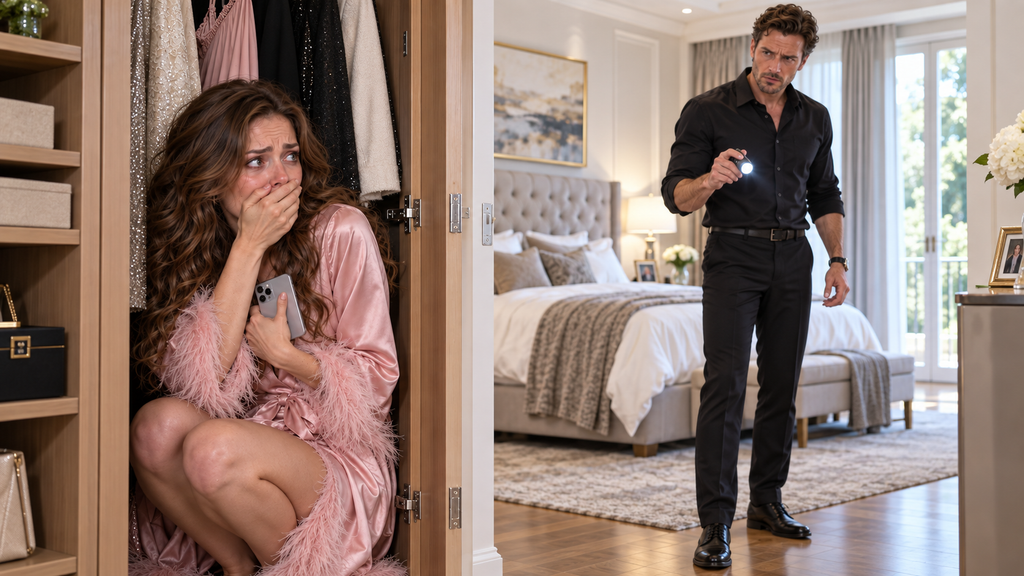
“Toby, listen to me very carefully.” My voice sounded steady. I wasn’t. I was standing in the kitchen of the home my father had left me, staring at the man I had shared a bed with for fourteen years while he casually buttered a pastry and asked whether I wanted another cup of coffee.
Christopher was less than twelve feet away. My son was hundreds of miles away in Indianapolis. And somehow, my fourteen-year-old child had become the only person I completely trusted. “Do not call your father,” I whispered into the phone.
“I won’t.”
“Do not text him.”
“I won’t.”
“And don’t tell anyone at school what you found unless I tell you it’s safe.”
There was a pause.
Then Toby said something that nearly broke me.
“Mom… are you scared?”
I looked through the doorway.
Christopher was standing at the kitchen counter now, scrolling through his phone.
The same hands that had held a syringe a few hours earlier were tearing a croissant in half.
The same man who had kissed my forehead before business trips.
The same man who had sat beside me at Toby’s school concerts.
The same man who had once slept on the floor beside my hospital bed after I had emergency surgery.
Fourteen years.
Thousands of ordinary mornings.
And I suddenly understood how dangerous ordinary could be when it was built on a lie.
“Yes,” I told Toby.
It was the first honest word I had spoken all morning.
“I’m scared.”
His breathing changed.
“Then leave.”
“I will.”
“Now.”
“I can’t.”
“Why?”
Because if I ran without knowing what Christopher had planned, he might disappear.
Because I didn’t know how much he knew about Toby’s discovery.
Because the computer files Toby found might vanish the second Christopher realized we had seen them.
Because there was something else bothering me.
The paper.
The folded sheet he had carried into our bedroom.
I had seen it through the narrow opening in the safe room.
He had unfolded it beside the bed.
Read it.
Folded it again.
Put it into the inside pocket of his jacket.
Whatever was on that paper mattered.
And I needed to know why.
“I need you to send me everything,” I whispered.
“I already downloaded it.”
“Everything, Toby.”
“I did.”
“Not to the family drive.”
“I know.”
I closed my eyes.
Sometimes you spend years teaching your child to look both ways before crossing a street.
Not to talk to strangers.
Not to share passwords.
To call you if they ever feel unsafe.
You imagine all the dangers outside your family.
You never imagine that one day your child will use everything you taught him to protect you from his own father.
“Where did you save it?”
“My private school account and another cloud folder Dad doesn’t know about.”
“Good.”
“Mom?”
“Yes?”
“I found something else.”
Every muscle in my body tightened.
“What?”
“I don’t understand it yet.”
“Tell me.”
“It looks like there are more insurance documents.”
I gripped the edge of the counter.
“How many?”
“I only saw part of them before Dad’s account logged out last night.”
“Toby.”
“Mom, I think one of them has my name on it.”
The kitchen disappeared.
Not literally.
But for a second, I couldn’t see it.
Couldn’t hear the refrigerator.
Couldn’t smell the coffee.
Couldn’t feel the floor beneath my feet.
All I could hear was my son saying:
My name.
On it.
“Toby,” I said, and my voice no longer sounded calm. “Lock your dorm room.”
“It is locked.”
“Do not leave campus with anyone. Not even someone you recognize.”
“Okay.”
“If your father calls and says he’s coming to get you, you call me first.”
“Okay.”
“If he shows up there—”
“I call campus security.”
“Yes.”
“Mom?”
“Yes?”
“Please don’t stay there because of me.”
I pressed my hand against my mouth.
I had spent fourteen years thinking Toby needed me to be brave for him.
That morning, I realized he was trying to be brave for me.
“I’m not going to do anything reckless.”
That was technically true.
What I did next was very careful.
I walked back into the kitchen.
Christopher glanced up from his phone.
“Everything okay?”
I smiled.
I hate remembering how easily the smile came.
“Just Toby.”
“What does he want?”
“Forgot his history project.”
Christopher rolled his eyes.
“That kid would forget his own head if it wasn’t attached.”
I almost threw the coffee cup at him.
Instead, I laughed.
Not because anything was funny.
Because survival sometimes sounds like laughter.
“He gets that from you.”
Christopher smiled.
For one strange second, he looked exactly like the man I had loved.
And I almost wished he hadn’t.
It would have been easier if monsters always looked like monsters.
Christopher had brown eyes.
A dimple in his left cheek.
A small scar near his chin from falling off a bicycle when he was nine.
He cried at his mother’s funeral.
He made pancakes shaped like dinosaurs when Toby was five.
He hated olives.
He snored when he slept on his back.
And apparently, sometime between those ordinary details, he had decided my life could be converted into money.
Twenty-four million dollars.
I kept smiling.
“You heading back to the office?”
“Eventually.”
“I thought Minneapolis was keeping you until this afternoon.”
Something flickered across his face.
It disappeared immediately.
“Meeting ended early.”
“Lucky.”
“Very.”
He kissed my cheek.
I didn’t move.
Then he picked up his briefcase and walked toward the mudroom.
At the doorway, he stopped.
“Oh.”
I turned.
Christopher was watching me.
“You said you stayed with the neighbor last night?”
My heart struck my ribs.
“Yes.”
“Which neighbor?”
I forced myself to look confused.
“Eleanor.”
“Eleanor Price?”
“Yes.”
He nodded slowly.
“That’s funny.”
“What is?”
“I thought she was visiting her daughter in Cincinnati this week.”
Silence.
One second.
Two.
Three.
My mind moved faster than it ever had in my life.
Then I frowned.
“No. Eleanor Watkins.”
Christopher stared at me.
Eleanor Watkins lived four houses down.
She was seventy-three.
Widowed.
And, fortunately for me, almost always awake before sunrise because she walked her terrier at five thirty every morning.
Christopher’s expression softened.
“Right.”
He smiled again.
“My mistake.”
Then he left.
I waited until I heard the garage door close.
Waited until his car rolled down the driveway.
Waited another full minute.
Then my knees gave out.
I sat directly on the kitchen floor.
I didn’t cry.
Not yet.
I called the police.
Not 911.
My father had spent thirty-two years restoring historic buildings throughout northern Ohio, and over those decades he had made friends everywhere.
Architects.
Contractors.
Judges.
Firefighters.
Police officers.
One of his closest friends had been Detective Leonard Ortiz.
Leonard had retired three years earlier, but his daughter, Lena, had followed him into law enforcement.
I had met her several times.
The last time had been at my father’s funeral.
I called Leonard first.
He answered on the third ring.
“Gwen?”
“Mr. Ortiz, I need Lena.”
Something in my voice made him stop asking questions.
“I’ll get her.”
Twenty-seven minutes later, Detective Lena Ortiz pulled into my driveway in an unmarked car.
She didn’t come alone.
A second detective named Aaron Bell followed.
Before either of them entered, I called Eleanor Watkins.
I told her part of the truth.
Enough of it.
Then I asked her for a favor.
If Christopher asked, I had spent part of the night at her house because the power had gone out.
Eleanor was silent for a long moment.
Then she said:
“Your father once sat in a hospital waiting room with my husband for nine hours when I had heart surgery. Tell me what you need.”
That was when I finally cried.
Only for a few seconds.
Then the detectives arrived.
I showed them the safe room first.
Lena stood inside it and looked through the narrow ventilation opening toward my bed.
“You watched him from here?”
“Yes.”
“And you’re absolutely certain he had a syringe?”
“Yes.”
“Could it have been something else?”
“No.”
“You saw it clearly?”
“I did.”
“Did he say anything?”
“Only my name.”
“What exactly?”
I swallowed.
“Gwen.”
Lena waited.
“How did he say it?”
I stared at the empty bedroom.
“Like he was disappointed I wasn’t there.”
Nobody spoke for several seconds.
Then I showed them Toby’s screenshots.
The search history.
The policy documents.
Financial statements I didn’t recognize.
Digital signatures that looked like mine.
A spreadsheet titled FAMILY PROTECTION.
A folder marked GWEN — ACTIVE.
Another marked TOBY — REVIEW.
Lena’s expression changed at that one.
“Your son is fourteen?”
“Yes.”
“And he’s currently at boarding school?”
“Yes.”
“Who can remove him from campus?”
“Christopher and me.”
“Call the school.”
I did.
I removed Christopher from every emergency pickup list.
The headmaster initially told me both parents had equal rights unless there was a legal order.
Lena took the phone.
I don’t know exactly what she said.
Two minutes later, the school agreed that Toby would not leave campus without direct confirmation from law enforcement.
Then Detective Bell began going through the insurance documents.
He spent nearly twenty minutes reading without speaking.
Finally, he turned the laptop toward me.
“Mrs. Hale, do you recognize this company?”
At the top of the page was a name.
HALE HERITAGE RESTORATION GROUP.
“That was my father’s business.”
“Was?”
“I closed most operations after he died. We still hold some properties and licensing rights, but I don’t actively run projects anymore.”
“Who manages its financial accounts?”
I already knew the answer before he asked.
“Christopher.”
Bell leaned back.
“How long?”
“About six years.”
“Did you authorize him to purchase insurance on you as a key employee or company principal?”
“No.”
“Did you sign any estate-planning documents in the last eighteen months?”
I thought about it.
Then remembered.
Nine months earlier, Christopher had brought a stack of papers into the kitchen.
He said they were related to taxes.
He had marked the signature lines with little yellow tabs.
I trusted him.
So I signed.
I didn’t read every page.
The shame of admitting that made my face burn.
“I signed some financial documents.”
“Digitally?”
“Some.”
“Did he ever mention life insurance totaling twenty-four million dollars?”
“No.”
Bell and Lena exchanged a look.
“What?”
Bell pointed at the screen.
“These aren’t three ordinary policies.”
I moved closer.
“There are three separate eight-million-dollar policies.”
“Yes.”
“All on me?”
“From what we can see, yes.”
“And Christopher is the beneficiary?”
“Indirectly.”
I stared at him.
“What does that mean?”
He enlarged part of the document.
“The immediate beneficiary on two policies is a trust.”
“What trust?”
“GHC Family Continuity Trust.”
I shook my head.
“I’ve never heard of it.”
Bell pointed farther down.
“Trustee: Christopher Hale.”
Of course.
My stomach twisted.
“And the third?”
“Christopher personally.”
“So he gets all of it.”
“Essentially.”
Lena spoke quietly.
“Assuming these documents are genuine.”
“They’re real,” I said.
“We need to verify that.”
“They’re real enough that my husband came into my bedroom with a syringe.”
She didn’t argue.
Instead she asked:
“Do you have somewhere safe to stay?”
“Yes.”
“Go there.”
“No.”
Both detectives looked at me.
“I need to know what that paper said.”
Lena shook her head.
“You do not need to play detective.”
“I’m not.”
“You stayed hidden in a wall while your husband searched for you with a syringe.”
“I didn’t know what else to do.”
“Now you do.”
She leaned toward me.
“Mrs. Hale, this is the point where people make mistakes because they think one more piece of proof will make everything clear.”
Her voice softened.
“It won’t.”
I looked at the bedroom.
“How can fourteen years become unclear overnight?”
Lena didn’t answer.
Because there was no answer.
Instead, she said:
“Leave the house.”
So I did.
But not before I took something with me.
My father’s old ledger.
It had been stored inside the safe room for years.
Leather cover.
Cracked binding.
Pages filled with project expenses, property purchases, sketches, and handwritten notes from decades earlier.
I don’t know why I grabbed it.
Maybe because I needed something that had belonged to a man whose love for me had never required guessing.
I stayed with Eleanor.
Police officers remained nearby without making it obvious.
For the next nine hours, I heard almost nothing.
That was worse than hearing bad news.
Silence allowed my imagination to work.
At 11:42 a.m., Christopher texted me.
Lunch?
I stared at the message.
I did not respond.
At 11:44:
Everything okay?
At 11:48:
Gwen?
At noon:
Tried calling. Call me.
Then nothing for forty-three minutes.
At 12:51:
Talked to Toby?
My blood went cold.
I immediately called my son.
He answered.
“Mom?”
“You’re okay?”
“Yeah.”
“Did Dad call?”
“Three times.”
“Did you answer?”
“No.”
“What did he say?”
“Voicemail. Asked if I wanted him to pick me up Friday.”
Friday.
Two days away.
Christopher had never picked Toby up on a Friday without arranging it with me first.
Never.
“Delete nothing,” I said.
“I know.”
“Send the voicemail to Detective Ortiz.”
“I already did.”
That almost made me smile.
“You’re getting annoyingly good at this.”
For the first time that day, Toby laughed.
It was a small sound.
But I needed it.
Then he went quiet.
“Mom?”
“Yes?”
“I remembered something.”
“What?”
“Last month, Dad asked me what time the dorm staff does room checks.”
I stopped breathing.
“Why?”
“He said he wanted to know how strict the school was.”
“Did you tell him?”
“Yeah.”
My fingers tightened around the phone.
“I thought he was just being Dad.”
I closed my eyes.
“Toby, listen to me.”
“I know. Stay on campus.”
“No.”
My voice cracked.
“Listen to me about something else.”
He went silent.
“None of this is your fault.”
“I gave him information.”
“You answered a normal question from your father.”
“But if I hadn’t—”
“You were supposed to trust him.”
That sentence hurt more than anything else I had said.
“You were supposed to trust your father.”
I sat on Eleanor’s couch and stared at my hands.
“He’s the one who broke that. Not you.”
Toby started crying.
Quietly.
Trying not to let me hear.
I hated Christopher for many things that day.
But the thing I hated most was that he had made my child ashamed of trusting his own parent.
By three in the afternoon, Detective Ortiz had confirmed the policies existed.
All three.
Twenty-four million dollars.
All issued within the previous eleven months.
All arranged through entities connected to Christopher.
And all carrying signatures that appeared to be mine.
But there was another problem.
The policies alone proved fraud.
Not attempted murder.
The searches helped.
The syringe mattered.
My testimony mattered.
But Christopher had removed whatever he carried into the bedroom.
There was no physical evidence inside the house.
At least, none we knew about.
Then Toby called again.
This time, he wasn’t crying.
He sounded confused.
“Mom, I found the folded paper.”
“What?”
“Not the actual paper.”
He sent me an image.
It was a scan.
A single sheet.
The same crease pattern I remembered seeing from the safe room.
I opened it.
At the top were three policy numbers.
Below them:
GWENDOLYN HALE — COVERAGE CONFIRMED.
Waiting periods satisfied.
Beneficiary structures finalized.
Then dates.
Amounts.
Account information.
At the bottom was a handwritten note.
One sentence.
I recognized Christopher’s handwriting immediately.
After G, revise T coverage.
I stared at it.
G.
T.
Gwen.
Toby.
My body went completely numb.
“Mom?”
“I’m here.”
“I think T means me.”
I wanted to lie.
I wanted to tell him there were thousands of names beginning with T.
Thousands of explanations.
But motherhood is not pretending danger isn’t real.
Sometimes motherhood is looking directly at the worst thing in the world so your child doesn’t have to face it alone.
“I think so too.”
Toby inhaled shakily.
“Why?”
“I don’t know.”
“I’m his son.”
I pressed my eyes closed.
“I know.”
“He taught me to ride a bike.”
“I know.”
“He came to my science fair.”
“I know.”
“He said he was proud of me.”
Every memory landed like broken glass.
“I know, sweetheart.”
“Was all of that fake?”
“No.”
I answered immediately.
And I meant it.
“I don’t think people are that simple.”
“What does that mean?”
“It means someone can love you and still become someone dangerous. It means good memories don’t disappear just because something terrible happened later.”
I swallowed.
“And it means you don’t have to decide today what every memory means.”
Neither of us spoke.
Finally Toby whispered:
“I hate him.”
I understood.
“You’re allowed.”
Then, after several seconds:
“I still love him.”
My heart broke.
“You’re allowed that too.”
That evening, police obtained the first warrant.
Christopher’s office.
His vehicle.
Electronic devices.
Financial accounts.
I was not there when detectives entered his office downtown.
But I later learned Christopher had been sitting at his desk when they arrived.
He acted offended.
Then confused.
Then amused.
He told them there must be a misunderstanding.
He claimed the insurance policies were part of sophisticated estate planning.
He said I knew about them.
He said the searches on the family account could have been made by anyone.
He said the syringe probably did not exist.
Then detectives searched his locked office cabinet.
Inside they found a disposable phone.
Copies of the policy documents.
A sealed medical kit.
And an envelope containing photographs.
Photographs of me.
Leaving yoga.
Meeting Eleanor.
Driving to the grocery store.
Entering my doctor’s office.
Walking through the parking lot outside my father’s former business.
Someone had been tracking me.
But the most important discovery was on the disposable phone.
Messages.
Christopher had been communicating with someone under the name E.
The messages went back almost eighteen months.
At first, they looked like an affair.
Hotel rooms.
Secret dinners.
Complaints about me.
Promises about a future together.
That explained the perfume I had smelled on him.
But farther back, the messages changed.
Money appeared.
Then insurance.
Then my medical history.
Then discussions about whether my death would trigger extra scrutiny.
Police did not tell me everything that night.
They didn’t need to.
One message was enough.
Christopher:
Once Gwen is gone, everything clears.
E:
And Toby?
Christopher:
Later.
I read it three times.
Then handed the phone back to Lena.
“I don’t want to see anymore.”
She nodded.
“Who is E?”
“We’re working on that.”
“Does Christopher know you found the phone?”
“Yes.”
“What did he say?”
“That he’s never seen it before.”
Of course.
Then Lena’s phone rang.
She listened without speaking.
Her face changed.
“What?”
She held up one finger.
Then turned away.
“Yes. Keep her there.”
Her.
Lena ended the call.
“We found E.”
“Who?”
“Elise Carter.”
The name meant nothing to me.
“Should I know her?”
“I don’t think so.”
“What does she do?”
Lena hesitated.
“Medical sales.”
I almost laughed.
Not because it was funny.
Because sometimes horror becomes so perfectly arranged that your brain rejects it.
“Was she helping him?”
“We don’t know yet.”
“Was she sleeping with him?”
“We know there was a relationship.”
“How long?”
“At least a year.”
Fourteen years of marriage.
Reduced to at least a year.
I thought jealousy would come.
It didn’t.
By then, infidelity felt almost ordinary.
I didn’t care who Christopher kissed.
I cared who he intended to bury.
“Where is she?”
“Being interviewed.”
“And Christopher?”
“Still at the office.”
“Why isn’t he arrested?”
Lena’s eyes held mine.
“We’re building the strongest case we can.”
“He entered my bedroom with a syringe.”
“I know.”
“You found messages.”
“I know.”
“You found insurance fraud.”
“Yes.”
“And he’s still sitting there?”
“He is not free to leave while the warrant is being executed.”
“That’s not what I asked.”
Lena lowered her voice.
“If we move too fast and charge the wrong thing without enough evidence, a defense attorney attacks the gaps. I do not want gaps.”
Neither did I.
So I waited.
At 6:22 p.m., Elise Carter started talking.
And the story she told was worse than the one I had imagined.
According to Elise, Christopher had approached her more than a year earlier.
They had met at a financial conference where her company was presenting.
The affair began months later.
Christopher told her our marriage was over.
He said I refused to divorce him because I controlled most of the family assets.
That part was true.
Not the divorce.
The assets.
The house.
Several commercial properties.
My father’s company shares.
Investment accounts.
A trust my father had created for Toby.
Christopher had money.
He made a very good living.
But compared with the estate my father left behind, he owned very little.
And apparently, that had begun to bother him.
Christopher told Elise that I had become unstable.
Depressed.
Paranoid.
He claimed I took medication recklessly.
He showed her documents.
Some real.
Some altered.
Over time, he began asking questions about medical emergencies.
What might happen if someone mixed medications incorrectly.
What signs could resemble an accidental overdose.
Elise claimed she thought the questions were theoretical.
Later, she suspected they weren’t.
But by then she had already provided him access to supplies he should never have possessed.
When she confronted him, he told her it was for “an emergency.”
She believed him.
Or wanted to.
Then Christopher started talking about money.
About a future.
About buying a house near the lake.
About traveling.
About not having to work anymore.
Elise asked where the money would come from.
Christopher told her:
“Gwen has taken care of me better dead than she ever would alive.”
Elise still didn’t go to police.
That fact would haunt her for the rest of her life.
Instead, she tried to end the relationship.
Christopher threatened to expose her involvement.
So she stayed quiet.
She didn’t know about Toby.
Not until police showed her the message.
And according to Detective Ortiz, that was when Elise broke down completely.
She handed over a storage locker key.
Christopher had asked her to keep a sealed box there.
Police searched the locker just after nine that night.
Inside the box were copies of my financial records.
Printouts of my daily schedule.
Old prescription bottles taken from my bathroom.
A spare key to our house.
One of Toby’s school brochures.
A campus map.
And the folded sheet of paper.
The original.
The paper I had watched my husband carry into our bedroom.
On the back, in Christopher’s handwriting, were four words.
G first.
T after probate.
I stared at that photograph until the letters blurred.
Toby was not collateral damage.
He was part of the plan.
Not immediately.
Not because Christopher hated him.
Because of money.
My father’s trust had been designed very carefully.
If I died before Toby turned twenty-five, most of my inherited assets would eventually pass to him.
Christopher would have limited control.
But if Toby died before receiving those assets, a large portion of the estate reverted through my marital succession structure.
To Christopher.
I had signed that arrangement years earlier.
When Toby was six.
My father’s attorney had warned me to create stronger safeguards.
I had refused.
“Christopher is his father,” I had said.
“If something happens to me, there is nobody I trust more.”
I remembered saying it.
Word for word.
There is nobody I trust more.
That night, sitting inside Eleanor’s living room, I finally understood why my father had looked uncomfortable.
He had known something I didn’t.
Not that Christopher was planning murder.
Nothing like that.
But my father had never trusted Christopher’s relationship with money.
I suddenly remembered conversations I had dismissed.
Warnings disguised as questions.
“Does Christopher need access to every company account?”
“Why is Christopher borrowing against his portfolio?”
“Do you know how much personal debt he has?”
I always defended my husband.
Always.
Until there was nobody left to defend me except my son.
At 10:16 that night, Christopher was arrested.
I didn’t see it.
Not then.
But I saw the body-camera footage months later.
He remained calm.
Almost insultingly calm.
When the detective told him he was being taken into custody, Christopher straightened his suit jacket.
“On what grounds?”
The detective named the initial charges.
Fraud.
Forgery.
Attempted conspiracy.
Possession of controlled medical materials without lawful authorization.
More charges would follow.
Christopher smiled.
He actually smiled.
Then he said:
“My wife is emotional. You’re making a serious mistake.”
My wife is emotional.
After fourteen years, those were the words he chose.
Not:
Is Gwen okay?
Not:
Where is my son?
Not:
What happened?
He worried about controlling the story.
Even in handcuffs.
The following morning, I drove to Indianapolis with two police officers.
I could have waited until the school arranged transportation.
I couldn’t.
I needed my son.
The drive felt endless.
Every highway sign seemed farther away than the last.
When we finally reached campus, Toby was sitting inside the administrative office with his backpack between his feet.
He looked small.
I had forgotten how small fourteen could look.
The second he saw me, he stood.
Neither of us said anything.
He crossed the room.
I crossed the room.
And then he was in my arms.
My son was almost as tall as I was.
But that morning, I held him the same way I had when he was four years old and woke from nightmares.
His face pressed into my shoulder.
His hands clenched the back of my coat.
“Mom.”
“I’m here.”
“Is Dad arrested?”
“Yes.”
“Is he coming here?”
“No.”
“Are you sure?”
“Yes.”
That was the first certainty I had been able to give him.
“He can’t hurt you.”
Toby started shaking.
I held him tighter.
“He can’t hurt you.”
He cried then.
Really cried.
Not the quiet tears from the phone.
Not embarrassed.
Not trying to hide it.
He cried until my shoulder was wet.
And then something happened I will never forget.
He pulled away and looked at me.
“I’m sorry.”
“For what?”
“I should’ve found it sooner.”
I stared at him.
“Toby.”
“If I hadn’t ignored those folders—”
“Toby.”
“He could’ve—”
“No.”
I held his face between my hands.
“You are fourteen years old.”
His eyes were red.
“You are not responsible for investigating your father.”
“But I found it.”
“You found it because you were paying attention.”
“What if I hadn’t?”
“That is not a question you ever need to answer.”
“But—”
“You saved my life.”
His face crumpled.
I had not meant to say it like that.
But it was true.
“You saved my life.”
“No.”
“Yes.”
“I just called you.”
“At two thirteen in the morning.”
“You believed me.”
That stopped me.
Toby wiped his face.
“You didn’t even ask why.”
I thought back to that phone call.
His whisper.
Turn off the main breaker.
Hide.
Don’t trust Dad.
“No,” I said.
“I didn’t.”
“Why?”
I smiled through tears.
“Because you’re my son.”
For several days, Toby and I stayed somewhere Christopher did not know.
The house was treated as part of the investigation.
Our phones were changed.
Passwords reset.
Accounts frozen.
Lawyers arrived.
Insurance investigators arrived.
Financial auditors arrived.
And every day uncovered another piece of the man I had married.
Christopher was nearly four million dollars in debt.
I had known about none of it.
Private investments.
Failed real-estate ventures.
Loans.
Gambling losses disguised through business transfers.
Money moved through shell companies.
Credit secured against assets he did not legally own.
The twenty-four million dollars wasn’t greed in the abstract.
It was his exit.
Pay debts.
Buy freedom.
Control my estate.
Eventually control Toby’s inheritance.
Start again with Elise.
That was the fantasy.
Except Elise had never agreed to murder.
She had been selfish.
Reckless.
Cowardly.
And legally responsible for some of what she helped Christopher access.
But when prosecutors compared the messages, it became clear she had repeatedly tried to distance herself once Christopher’s questions became specific.
It did not absolve her.
But it separated her crime from his.
And then came the detail I still have trouble saying aloud.
The night Christopher entered our bedroom was not his first attempt.
Six weeks earlier, I had become suddenly ill after a dinner at home.
I vomited most of the night.
Christopher insisted it was food poisoning.
He refused to take me to the emergency room because, according to him, I needed rest.
By morning, I felt better.
I never went to a doctor.
Investigators later found a message Christopher had sent Elise that evening.
Didn’t work.
She had replied:
What didn’t?
Christopher never answered.
When Detective Ortiz showed me that message, I went into the bathroom and threw up.
I had eaten soup that night.
Christopher had made it.
He had sat beside me while I became sick.
Held a towel to my forehead.
Brought me water.
Whispered:
“Poor thing.”
Even memories can become evidence.
For weeks, I couldn’t remember my marriage without questioning every moment.
Our tenth anniversary.
Real?
The surprise trip to Vermont.
Real?
His tears when Toby was born.
Real?
The nights we sat on the back porch talking until midnight.
Real?
The way he held my hand when my father died.
Real?
My therapist eventually told me something that helped.
“You do not have to rewrite fourteen years in one day.”
So I didn’t.
Some memories stayed good.
Some became poisoned.
Most remained complicated.
Life is cruel that way.
We want villains to arrive wearing masks.
Christopher had worn my wedding ring.
Three weeks after his arrest, I returned to the house.
Toby came with me.
Police had finished most of their work.
The bedroom looked almost exactly the same.
That was the strangest thing.
Same bed.
Same curtains.
Same photographs.
Same rug.
Yet nothing was the same.
Toby stopped at the doorway.
“Is that where you hid?”
I pointed toward the oak armoire.
“Behind there.”
He walked over.
I moved the hidden latch.
The panel opened.
Toby stepped inside.
“It’s tiny.”
“It felt smaller that night.”
He looked through the ventilation opening.
Then turned toward me.
“He was really standing right there?”
“Yes.”
“With the syringe?”
“Yes.”
Toby became very quiet.
I regretted answering.
Then he said:
“I knew something was wrong with him.”
I looked at him.
“How?”
“Not like that.”
He sat on the floor of the safe room.
“For a while.”
I sat beside him.
“He started asking weird questions.”
“What kind?”
“About your money.”
My stomach tightened.
“What did he ask?”
“Whether Grandpa’s trust could change.”
“Anything else?”
“Whether I liked boarding school enough to stay there through summer.”
I stared at him.
“I thought maybe you guys were getting divorced.”
“No.”
“He complained about you sometimes.”
That hurt.
“What did he say?”
Toby hesitated.
“You don’t have to protect me.”
“He said you controlled everything.”
I looked at the old shelves.
“He said the house belonged to you.”
“It does.”
“He said Grandpa treated him like an employee instead of family.”
My father had, in some ways.
I once thought it was unfair.
Now I wondered how much Dad had seen.
Toby continued.
“He said one day everything would finally be simpler.”
A chill passed through me.
“When?”
“A couple months ago.”
“Why didn’t you tell me?”
He shrugged.
“He was my dad.”
There it was again.
The simplest explanation.
He was my dad.
Not every warning arrives as a scream.
Sometimes it arrives as a sentence we excuse because we love the person speaking.
I put my arm around Toby.
We sat inside that little hidden room for a long time.
Then Toby noticed my father’s ledger.
“You brought Grandpa’s book back?”
“Yes.”
He picked it up.
A loose paper slipped from between the pages.
I had never seen it before.
It was folded twice.
My name was written across the front.
GWEN.
My father’s handwriting.
My hands began to shake before I even opened it.
The letter was dated eighteen months before his death.
Gwen,
If you ever find this, I hope I was wrong.
That was the first line.
I stopped.
“Mom?”
I kept reading.
My father wrote that Christopher had approached him twice for loans.
Large loans.
Hundreds of thousands of dollars.
Dad refused.
Christopher asked him not to tell me.
That bothered him more than the request itself.
Then Christopher asked questions about the trust.
What happened if I died.
What happened if Toby died.
What happened if both of us died before Toby reached twenty-five.
Dad claimed Christopher said it was for “estate planning.”
My father did not believe him.
But he had no proof of wrongdoing.
So he changed what he could.
He placed additional safeguards around several assets.
Restricted Christopher’s access.
Separated certain properties.
Then he wrote:
I know you love him.
I also know that if I criticize him directly, you will defend him.
You have always protected the people you love.
It is one of the things I admire most about you.
But protection should travel both directions.
Never stay where your loyalty is only useful to someone else.
I stopped reading.
The page shook in my hands.
Toby put his arm around me.
For once, my child held me.
There was one more paragraph.
If I am wrong, burn this letter and forgive an old man for worrying.
If I am right, please remember this:
You were my greatest work.
Not the buildings.
Not the company.
Not the money.
You.
And no one is entitled to destroy what I loved just because you once loved them.
I couldn’t breathe.
My father had been dead for almost four years.
Yet somehow, sitting inside a room he did not even know existed, I felt him beside me.
I cried harder than I had cried since his funeral.
Toby cried too.
We sat on the floor holding each other, surrounded by old blueprints and dusty boxes, reading the words of a man who had tried to protect us even after he was gone.
That letter changed something in me.
Until then, part of me still felt humiliated.
How had I not known?
How had I shared a bed with Christopher and failed to see him?
How had my own son recognized danger before I did?
My father’s letter gave me the answer.
Love is not forensic analysis.
You don’t marry someone and spend every morning searching their eyes for evidence.
You trust.
That is what marriage is supposed to allow.
Christopher had not defeated me by fooling me.
He had abused something valuable.
My trust.
That shame belonged to him.
Not me.
The criminal case took eleven months.
Christopher fought everything.
Every charge.
Every document.
Every witness.
He claimed Elise was manipulating police because she was angry he planned to end their affair.
He claimed Toby misunderstood what he saw.
He claimed I had fabricated the bedroom incident to gain advantage in our divorce.
He even claimed my father’s letter proved our family had been conspiring against him for years.
Then prosecutors introduced something Christopher did not know existed.
My recording.
I had forgotten about it.
The moment I entered the safe room that night, before turning my phone completely silent, I had pressed the voice memo button.
I wasn’t thinking about evidence.
I was terrified.
I thought if something happened to me, maybe Toby would someday know the truth.
Most of the recording was silence.
Breathing.
Footsteps.
A drawer opening.
Closet doors.
Then Christopher’s voice.
“Gwen.”
Silence.
More footsteps.
Then another sentence.
So quiet that investigators almost missed it.
“Where are you?”
A minute later:
“This was supposed to be easy.”
Four words.
This was supposed to be easy.
Christopher’s attorneys argued the recording lacked context.
Maybe he meant the power outage.
Maybe he meant finding me.
Maybe he was frustrated because he wanted to surprise me.
Then prosecutors showed the messages.
The policies.
The searches.
The storage locker.
The medical kit.
The photographs.
My father’s trust documents.
Toby’s school map.
And the handwritten note.
G first.
T after probate.
The jury deliberated for less than five hours.
I attended every day of the trial except one.
Toby did not.
I refused to let his life become a courtroom.
He gave one recorded statement with specialists present.
That was enough.
On the day the verdict was read, I sat behind the prosecutor.
Christopher wore a dark navy suit.
The same tie he had worn to my father’s funeral.
That bothered me more than it should have.
When the first guilty verdict was read, Christopher did not react.
Then the second.
Then another.
Then another.
His jaw tightened.
I kept staring at his hands.
Those hands had built Toby’s first crib with my father.
Those hands had put a wedding ring on mine.
Those hands had entered our bedroom holding a syringe.
Human beings want things divided cleanly.
Good.
Bad.
Love.
Hate.
Victim.
Monster.
Life refused to give me that simplicity.
Christopher turned around once.
Our eyes met.
And for one terrible second, I saw the man from our wedding day.
Then he mouthed something.
I couldn’t hear it.
But I knew the words.
I love you.
I felt nothing.
Not hatred.
Not grief.
Nothing.
And somehow, that felt like freedom.
At sentencing, I was allowed to speak.
For weeks, I wrote drafts.
Angry drafts.
Cruel drafts.
Pages about betrayal.
Money.
Marriage.
Fatherhood.
Murder.
Then, the night before sentencing, I threw all of them away.
When I stood in court, I carried no paper.
I looked at Christopher.
“You wanted twenty-four million dollars.”
The courtroom was completely silent.
“You valued my death at twenty-four million dollars.”
Christopher stared at me.
“You decided my life had a number.”
I glanced toward the judge.
“But the thing you never understood was that none of the money was what made my life valuable.”
I thought of Toby.
“My son did.”
I thought of my father.
“My father did.”
I thought of Eleanor.
“People who showed up when I needed them did.”
Then I looked at Christopher again.
“And for fourteen years, I thought you did too.”
His eyes lowered.
“That is what you took from me. Not money. Not property. Not a marriage certificate.”
I inhaled.
“You took away the safety of believing that the person sleeping beside me wanted me to wake up in the morning.”
Someone behind me began crying.
I continued.
“But you failed.”
Christopher looked up.
“You failed because our son paid attention.”
His face changed at the word our.
“He saw something wrong and chose courage over loyalty.”
I swallowed.
“And because of him, I woke up.”
I paused.
“In every possible meaning of those words.”
Christopher received a sentence that meant he would spend decades in prison.
There were appeals.
There probably always will be legal filings.
Insurance companies canceled the policies.
The fraudulent trust was dissolved.
Accounts were recovered where possible.
Properties were protected.
Elise pleaded guilty to lesser charges related to the medical supplies and financial concealment.
She received prison time too.
I never spoke to her.
I didn’t need to.
Toby never visited Christopher.
At least not during the first two years.
Christopher wrote letters.
Dozens.
Toby kept the first three unopened.
Then asked me what he should do.
“That’s your decision,” I said.
“What would you do?”
“That doesn’t matter.”
“He tried to kill you.”
“Yes.”
“And me.”
“Yes.”
“Why aren’t you telling me to hate him?”
Because I had learned something.
You can remove a dangerous person from your life without ordering your heart how to feel.
“Hating him forever would still give him a room inside you.”
Toby stared at the letters.
“What if I want to read one?”
“Then read one.”
“What if I don’t?”
“Then don’t.”
“What if I read it and forgive him?”
I thought carefully.
“Forgiveness and access are not the same thing.”
He looked at me.
“You can forgive someone and still never let them close enough to hurt you again.”
Toby eventually opened one letter.
He read half.
Then put it down.
“What did he say?” I asked.
“Mostly excuses.”
He carried it to the fireplace.
Then stopped.
Instead of burning it, he put it into an envelope and placed it inside a box.
“Why keep it?”
He shrugged.
“So I remember I’m allowed to stop reading.”
That was my son.
Sixteen by then.
Taller than me.
Still wiser than Christopher ever understood.
As for the house, everyone assumed I would sell it.
I almost did.
For months, I could not enter the bedroom without remembering the flashlight moving across the armoire.
Could not hear a key in the front door after dark without my pulse racing.
Could not smell disinfectant without feeling sick.
But the house had belonged to my father long before it held Christopher’s lies.
I refused to let one terrible night erase generations of good memories.
So I changed it.
I gutted the bedroom.
New walls.
New floors.
New windows.
I removed the old closet.
Moved the bed.
Painted everything.
And I kept the safe room.
Not because I expected to hide again.
Because it became something else.
Toby and I turned it into an archive for my father’s work.
Blueprints.
Photographs.
Ledgers.
Letters.
His old measuring tools.
The hidden room where I once crouched in terror became the place where we stored the history of the man who had loved us without conditions.
There was poetry in that.
Maybe healing is sometimes just deciding what a room will mean next.
I reopened my father’s restoration company too.
Not at its old scale.
Smaller.
Careful.
I hired people I trusted.
Young architects.
Craftsmen.
Preservation specialists.
I started taking on historic homes other developers wanted to tear down.
Buildings everyone else considered damaged beyond repair.
That felt appropriate.
One afternoon, about two years after Christopher’s arrest, Toby came home from school and found me standing inside an abandoned library we had just purchased.
The ceiling leaked.
Paint peeled from the walls.
Half the windows were boarded.
“This place is awful,” he said.
I smiled.
“It’s beautiful.”
He looked around.
“Mom, there are mushrooms growing next to the stairs.”
“Historic mushrooms.”
He laughed.
Then we climbed to the second floor.
Sunlight entered through broken stained glass, scattering pieces of blue and red across the dusty floor.
Toby stood beside me.
“Grandpa would’ve loved this.”
“Yes.”
“You really think you can save it?”
I looked at cracked plaster.
Rotten wood.
Collapsed shelves.
Damage everywhere.
“Yes.”
“How?”
“The same way you save anything worth saving.”
He looked at me.
“How?”
“You figure out what’s still strong.”
I didn’t realize what I had said until Toby smiled.
“Was that supposed to be about the building?”
I laughed.
“Mostly.”
He bumped his shoulder against mine.
For several seconds, we just stood there.
Then Toby said:
“You know what I still think about sometimes?”
“What?”
“That phone call.”
My chest tightened.
“Two thirteen.”
He nodded.
“I almost didn’t call.”
I turned toward him.
“What?”
“I thought maybe I was overreacting.”
My stomach dropped.
“I saw the searches and those folders, but I kept thinking there had to be an explanation.”
“Toby…”
“I sat there with the phone for like ten minutes.”
I had never known that.
“What made you call?”
He looked down through the broken floor toward the library lobby.
“I remembered something Grandpa told me.”
“What?”
“He said if something feels wrong and the cost of being wrong is embarrassment, be embarrassed.”
I laughed softly.
“That sounds like him.”
“He said if the cost of ignoring it could be someone’s life, don’t worry about looking stupid.”
Tears filled my eyes.
“So I called.”
Two thirteen in the morning.
A frightened fourteen-year-old boy sitting inside a dorm room.
His phone in his hands.
Trying to decide whether he was being ridiculous.
And hundreds of miles away, his father was preparing to come home.
There are moments when a life changes dramatically.
Car accidents.
Weddings.
Births.
Deaths.
Then there are moments that look almost invisible.
A teenager pressing a call button.
A mother believing him.
A breaker switch being pulled.
A wooden panel closing.
Small decisions.
Huge consequences.
“If you hadn’t called…” I began.
Toby interrupted.
“But I did.”
I looked at him.
He smiled.
“But I did, Mom.”
He was right.
For years afterward, people asked me how I survived.
Reporters.
Friends.
Women who had heard parts of my story.
Some asked how I could have missed the warning signs.
Some wanted to know whether Christopher had always been dangerous.
Some asked whether money changed him.
I never knew how to answer.
Maybe greed changed him.
Maybe desperation revealed him.
Maybe the man who built dinosaur pancakes and the man holding the syringe had always existed inside the same body.
I stopped needing to know.
Understanding Christopher was no longer necessary for surviving Christopher.
That was another kind of freedom.
On the fifth anniversary of my father’s death, Toby and I went to the cemetery.
It was early October.
Cold enough for coats.
The maple trees had turned orange.
Toby was nineteen.
College now.
Engineering.
My father would have been unbearably proud.
We brought coffee.
My father hated flowers.
He once told me:
“Flowers are for people who are alive enough to smell them. Bring me coffee.”
So we did.
Toby poured a little onto the grass beside the headstone.
“For Grandpa.”
I laughed.
“You know he meant leave a cup.”
“He’s dead, Mom. His caffeine tolerance is probably lower.”
“Terrible.”
“I learned from you.”
We sat beside the grave.
For a while, neither of us spoke.
Then Toby said:
“Dad wrote again.”
My smile disappeared.
“Oh.”
“I read it.”
“You okay?”
“Yeah.”
“What did he say?”
“He finally stopped saying he was innocent.”
I turned toward him.
Toby stared at his grandfather’s name carved into stone.
“He said he doesn’t expect me to forgive him.”
I waited.
“He said he thinks about that night every day.”
“So do I.”
“I know.”
“What did you write back?”
Toby shook his head.
“I didn’t.”
“Are you going to?”
“Maybe someday.”
Then he looked at me.
“I don’t think I hate him anymore.”
I took his hand.
“That’s okay.”
“I thought you’d be upset.”
“No.”
“Why?”
“Because your life shouldn’t be organized around what he deserves.”
Toby’s eyes filled with tears.
I squeezed his hand.
“Whatever peace looks like for you, choose that.”
We stayed until the wind became too cold.
On the walk back to the car, Toby suddenly stopped.
“Mom.”
“What?”
“I never asked.”
“Asked what?”
“What happened to the syringe?”
I hadn’t told him.
Police had recovered it from Christopher’s office cabinet.
Forensic testing found traces consistent with substances that could have caused a serious medical emergency.
Prosecutors believed Christopher intended to make my death appear accidental.
I did not need Toby carrying those details through childhood.
Now he was nineteen.
Still, I didn’t give him everything.
“They found it.”
“Was it what you thought?”
“Yes.”
He nodded.
That was enough.
Then he asked:
“Do you ever think about what would’ve happened if you hadn’t had that safe room?”
I looked toward the trees.
“Yes.”
“Does it scare you?”
“Sometimes.”
He waited.
“But I try not to live inside the version of my life that didn’t happen.”
He smiled.
“That sounds like something Grandpa would say.”
“No.”
I opened the car door.
“Your grandfather would’ve said, ‘Quit staring backward before you walk into a tree.’”
Toby laughed so hard he had to lean against the car.
And that sound—
my son laughing in cold October sunlight—
was worth more than twenty-four million dollars.
More than every house.
Every trust.
Every investment.
Every building my father ever restored.
Christopher had made the mistake of believing money was the most valuable thing our family possessed.
It wasn’t.
Time was.
Trust was.
Safety was.
Love was.
And unlike money, once those things are stolen, sometimes you cannot simply replace them.
You have to rebuild them.
Slowly.
Carefully.
One beam at a time.
One honest conversation at a time.
One ordinary morning at a time.
Years after the trial, I finally removed my wedding ring from the little box where I had stored it.
I had taken it off the morning Christopher was arrested.
For some reason, I could never throw it away.
One Sunday, I brought it into my father’s old workshop.
Toby was home from college.
He found me turning the ring between my fingers.
“You getting nostalgic?”
“No.”
“What are you going to do with it?”
“I don’t know.”
“Sell it.”
“I don’t want the money.”
“Throw it in the lake.”
“Pollution.”
He smiled.
“Very responsible.”
Then his eyes moved toward my father’s workbench.
An idea came to me.
Several months later, a metal artist who worked with our restoration company melted the ring down.
Not completely.
Just enough to incorporate the gold into a small brass plaque.
The plaque was installed inside the restored library.
Near the main entrance.
It did not mention Christopher.
It did not mention murder.
It did not mention betrayal.
It said:
THE TOBIAS AND ARTHUR READING ROOM
IN HONOR OF THOSE WHO PAY ATTENTION,
SPEAK WHEN SOMETHING IS WRONG,
AND HELP OTHERS FIND THEIR WAY HOME.
Arthur was my father.
Tobias was my son.
The library reopened the following spring.
Hundreds of people attended.
Children ran between shelves.
Older residents cried when they saw the stained-glass windows restored.
Toby stood beside me during the ribbon cutting.
He nudged me.
“Historic mushrooms are gone.”
“Tragic.”
“I kind of miss them.”
“You are welcome to grow some in your dorm.”
“Pretty sure I already have.”
I gave him a horrified look.
He laughed.
Then the doors opened.
People walked inside.
A building everyone thought was too damaged to save filled with life again.
I stood on the steps and watched.
And for the first time in years, I thought about that night without fear.
Two thirteen in the morning.
My phone vibrating.
My son whispering:
“Mom, turn off all the lights, hide, and be careful around Dad.”
I remembered darkness swallowing the house.
The hidden panel.
Christopher’s footsteps.
The flashlight.
The syringe.
My hand over my mouth.
At the time, I thought hiding meant I was powerless.
I know differently now.
Sometimes survival does not look brave.
Sometimes it looks like silence.
Sometimes it looks like running.
Sometimes it looks like locking a door.
Sometimes it looks like believing a frightened child.
Sometimes it is simply staying alive long enough for the truth to catch up.
Christopher thought he had planned everything.
The policies.
The money.
The timing.
The story he would tell after I was gone.
He accounted for banks.
Insurance companies.
Inheritance laws.
Signatures.
Schedules.
He calculated my life down to numbers.
But he failed to calculate one thing.
Toby.
A fourteen-year-old boy who noticed something strange in an old digital folder.
A son who did not dismiss the feeling in his stomach.
A child who was brave enough to question the man he had trusted his entire life.
My husband thought twenty-four million dollars would buy him a new beginning.
Instead, the policies became part of the evidence that ended his freedom.
And my son?
My son gave me something no insurance company could ever price.
Another morning.
Then another.
Then thousands more after that.
These days, when I wake up before sunrise, I sometimes walk downstairs while the house is still dark.
I make coffee.
Open the curtains.
Watch the sky slowly turn blue above the trees my father planted.
For a long time after Christopher’s arrest, darkness frightened me.
Not anymore.
Because I learned something in that safe room.
Darkness is not always where danger lives.
Sometimes darkness is where you stay quiet long enough to survive it.
And morning—
morning is what comes after.
Every single day I have lived since 2:13 a.m. has felt borrowed.
At first, that frightened me.
Now it feels like a gift.
Toby once asked me whether I wished I had never married Christopher.
I thought about it for a long time.
Then I told him the truth.
“No.”
He looked shocked.
“Seriously?”
“If I erase Christopher, I erase you.”
He smiled.
“Okay. Fair.”
“And I don’t want to spend the rest of my life wishing my past had been different.”
“Why?”
“Because then he still gets to control the story.”
Toby nodded.
“So what’s the story?”
I looked at my son.
At my father’s restored house around us.
At the sunlight falling across the oak floors.
At the hidden doorway that no longer represented terror.
Then I answered.
“The story is that he tried to end my life.”
Toby waited.
“And he didn’t.”
That is the part I choose to remember.
Not the syringe.
Not the twenty-four million dollars.
Not the betrayal.
Not the courtroom.
Not even the fear.
I remember the phone ringing at 2:13 in the morning.
I remember answering.
And I remember believing my son.
Because sometimes the difference between a tragedy and a second chance is one person speaking up—
and another person listening.
Christopher had spent months planning how my life would end.
Toby needed less than ten seconds to change the ending.
And every morning since then, when sunlight enters that house and touches the walls my father built, I quietly say the same words.
Not to Christopher.
Not to the police.
Not even to myself.
To my son.
Thank you for calling.
Thank you for paying attention.
Thank you for giving me enough time to hide.
And most of all—
thank you for giving me the chance to come back out.
THE END! THANK YOU FOR READING!❤️