 Reading Time: 40 minutes
Grandma went completely still. For several seconds, the only sound in the county recorder’s office was the faint clicking of another clerk’s keyboard somewhere behind us.
I stared at the woman behind the counter. “Transferred?” The clerk nodded carefully. “According to the document filed three days ago, Eleanor Sterling transferred her entire interest in the property to Arthur Sterling and Wendy Sterling.”
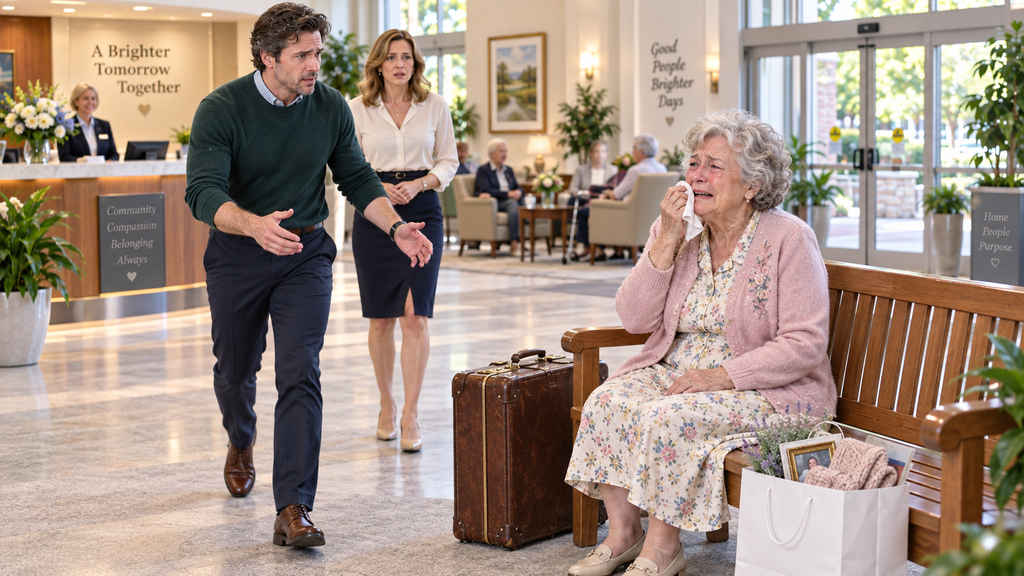
My mouth went dry.
“That’s impossible.”
Grandma finally spoke.
Her voice was quiet.
Almost too quiet.
“I didn’t sign anything.”
The clerk looked back at the screen.
“There is a signature.”
“It isn’t mine.”
“There’s also a notary acknowledgment.”
Grandma’s fingers tightened around the envelope my grandfather had labeled HOUSE DEED decades earlier.
I felt anger beginning to rise inside me, but Grandma didn’t move.
She simply stared at the clerk.
Then she said something that made the woman stop typing.
“Print it.”
The clerk blinked.
“Excuse me?”
“Print the document.”
“Mrs. Sterling—”
“I want to see the signature my son believes belongs to me.”
The clerk studied her for a moment, then nodded.
A minute later, a printer behind the counter began humming.
Three sheets of paper slid into the tray.
The clerk brought them over.
Grandma took the pages.
I watched her eyes move slowly down the first sheet.
Property address.
Parcel number.
Legal description.
Arthur Sterling.
Wendy Sterling.
Then she reached the signature page.
Her face changed.
Not dramatically.
Grandma Eleanor had never been dramatic.
Her anger had always been colder than that.
More frightening.
She touched the forged signature with one finger.
Whoever had written it had tried to imitate the long E in Eleanor and the narrow curl she used in Sterling.
But they had made one mistake.
My grandmother had broken her right wrist when she was sixty-eight.
After that, the shape of her signature changed slightly.
The final letters leaned downward.
This one didn’t.
It looked like the signature she had used ten years earlier.
Before the accident.
Before the surgery.
Before arthritis stiffened two of her fingers.
Grandma looked at me.
“They copied an old signature.”
The clerk’s expression tightened.
“Do you recognize the notary?”
Grandma read the name.
Then shook her head.
“No.”
I leaned closer.
The document said the deed had been signed at Grandma’s home on Monday afternoon.
I remembered Monday.
I had called her.
We had talked for forty minutes because she couldn’t figure out how to stop her television from narrating every menu option.
She had complained about the weather.
She had told me the neighbor’s dog had dug up her tulips again.
And at one point she had said Arthur and Wendy were supposed to come by, but they had canceled.
At least, that was what they had told her.
“What time does it say she signed it?” I asked.
The clerk pointed.
“Two seventeen p.m.”
I pulled out my phone.
Grandma watched me.
“What are you doing?”
“Checking my call history.”
My hands were shaking now.
I found Monday.
There it was.
2:03 p.m.
Incoming call.
Duration: forty-one minutes.
I turned the screen toward the clerk.
“I was talking to her at two seventeen.”
The clerk looked from my phone to the deed.
“That doesn’t necessarily prove where she was.”
Grandma gave a small nod.
“No.”
Then she looked at me.
“But my front-door camera will.”
I stared at her.
“You have a camera?”
“Your grandfather bought me one after someone stole a package off the porch.”
“You never told me.”
“You never asked.”
Under any other circumstances, I might have laughed.
I didn’t.
The clerk lowered her voice.
“Mrs. Sterling, I can’t determine from this counter whether a document is fraudulent. Our office records properly submitted documents. We don’t conduct criminal investigations.”
“I understand.”
“But if you’re saying this signature isn’t yours, you should speak to an attorney immediately.”
“I intend to.”
“And possibly law enforcement.”
Grandma folded the copy of the forged deed with precise, steady hands.
Then she slid it into her purse.
“Thank you.”
We turned to leave.
The clerk called after us.
“Mrs. Sterling?”
Grandma stopped.
The woman hesitated.
“I’m sorry.”
Grandma looked at her.
Then she said, “Don’t be sorry yet.”
The clerk blinked.
Grandma straightened her coat.
“Be sorry for them after I’m finished.”
The bank was seventeen minutes away.
Dad called twice during the drive.
Mom called three times.
Then the texts started.
IVAN, WHERE ARE YOU?
Then:
CALL ME IMMEDIATELY.
Then:
YOUR GRANDMOTHER IS CONFUSED. DO NOT UPSET HER.
Grandma read that one over my shoulder at a red light.
She laughed once.
There was no humor in it.
“Confused.”
I looked at her.
“You want me to answer them?”
“No.”
“Grandma, they know you’re gone from the facility by now.”
“Good.”
“What if they go to your house?”
Her eyes stayed on the road ahead.
“I’m counting on it.”
That answer bothered me.
“What does that mean?”
“You’ll see.”
The bank manager knew Grandma by name.
That should not have surprised me.
She had used the same bank for forty-three years.
Grandma had probably been banking there before the manager was born.
When we walked in, a young teller smiled.
“Mrs. Sterling, good afternoon.”
Grandma smiled back.
“Hello, Rachel. Is Mr. Keating available?”
The teller’s smile faded slightly when she noticed the suitcase in my car through the glass doors and the expression on Grandma’s face.
“I’ll check.”
Five minutes later, we were seated inside a private office.
Mr. Keating was probably in his late fifties, with silver-rimmed glasses and the careful voice of a man accustomed to discussing large sums of money without allowing his eyebrows to move.
Grandma put the bank statement on his desk.
“These withdrawals.”
He looked at them.
His face revealed nothing.
“I remember speaking with your son about some transactions.”
“My son stole that money.”
That made his eyebrows move.
He sat back.
“Mrs. Sterling, Arthur is listed under the power of attorney we have on file.”
“I’m revoking it.”
“Effective immediately?”
“Effective five minutes ago if you can arrange it.”
He looked at me.
Then back at her.
“May I ask whether you’re making this decision voluntarily?”
Grandma folded her hands.
“Yes.”
“Has anyone pressured you to come here today?”
“No.”
“Do you understand the purpose of the power of attorney?”
“Yes.”
“What month is it?”
I almost interrupted.
Grandma lifted one hand toward me without looking in my direction.
I shut my mouth.
“April.”
“What year?”
She answered.
“Who is the president?”
She answered that too.
Then she leaned forward.
“My birthday is October nineteenth. My Social Security deposit arrives on the second Wednesday of each month. My checking account ends in 4418. My savings account ends in 9032. My last electric bill was one hundred eighty-six dollars and fourteen cents because the furnace blower motor was failing, and Arthur told me the higher bill was because rates had gone up.”
Mr. Keating remained silent.
Grandma continued.
“I have one hip replacement, two false teeth, cataract surgery scheduled for June, and apparently a son who mistook old age for stupidity.”
I pressed my lips together.
Mr. Keating removed his glasses.
“That answers my question.”
He pulled several forms from a drawer.
Then he asked Grandma whether she recognized the withdrawals.
She recognized none of them.
The first had been transferred to an account she had never seen.
The second had been issued as a cashier’s check.
The third had gone toward something listed only as a loan payoff.
Fifty-five thousand dollars.
Six weeks.
Gone.
Grandma stared at those numbers.
For the first time that day, her anger slipped.
Something else appeared.
Pain.
Not because she needed the money.
Grandpa had been careful.
They had saved.
They had lived beneath their means.
Grandma could survive the loss.
What hurt was that her only son had taken it.
I could see forty years of memories moving behind her eyes.
My father as a child.
My father learning to ride a bicycle.
My father graduating high school.
My grandparents helping him with college.
Grandpa lending him money to start his first business.
Grandma watching his children.
Grandma cooking every Thanksgiving.
Grandma sitting in the front row when Dad remarried after my biological mother died.
The stolen money was not the deepest wound.
Trust was.
Mr. Keating spoke gently.
“Mrs. Sterling, because these transactions were completed by someone who had valid authority on file at the time, the review is more complicated.”
Grandma nodded.
“I understand.”
“But if the authority was abused for personal benefit, that’s different. We can open an internal investigation and preserve the records.”
“Do that.”
“I also recommend you speak with counsel.”
“We’re doing that next.”
The bank froze further transfers.
Grandma revoked Dad’s authority.
She changed every access code.
Removed his online access.
Changed the mailing instructions.
Added verbal security questions he could not answer.
Then Mr. Keating asked whether she wanted me added.
Grandma looked at me.
I immediately shook my head.
“No.”
Mr. Keating seemed surprised.
Grandma didn’t.
I leaned forward.
“She just got burned because someone had access to her money. I’m not taking that place.”
Dad had always claimed I was irresponsible.
Maybe part of me wanted someone to hear what I said next.
“If Grandma wants help paying bills, I’ll sit beside her while she pays them herself.”
Grandma stared at me.
Her eyes softened for half a second.
Then she looked back at the banker.
“My grandson gets emergency contact information. Nothing more.”
“Of course.”
We finished the paperwork.
As we stood to leave, Mr. Keating said something I never forgot.
“Mrs. Sterling, I’ve known your family for many years. I hope there’s an explanation.”
Grandma put on her gloves.
“So do I.”
She opened the door.
“Because the explanation I currently have is going to cost my son everything.”
My phone started ringing again before we reached the parking lot.
Dad.
This time Grandma said, “Answer it.”
I looked at her.
“You sure?”
“Yes.”
I put it on speaker.
“Hello?”
Dad’s voice exploded through the car.
“Where the hell are you?”
Grandma’s eyes narrowed.
I said, “Hello to you too.”
“Ivan, this isn’t funny. Your grandmother needs professional care. Wendy and I spent months arranging that placement.”
Grandma leaned closer to the phone.
“You didn’t even finish the paperwork, Arthur.”
Silence.
It was instant.
Complete.
Then Dad’s voice changed.
“Mom?”
Grandma stared through the windshield.
“Hello, son.”
“Mom, thank God. Listen to me. There’s been a misunderstanding.”
“Has there?”
“Yes. You were upset. Wendy said you became disoriented at lunch, and—”
“That’s interesting.”
Another pause.
“Why?”
“Because Wendy told the facility I had been diagnosed with dementia.”
I looked at Grandma.
She hadn’t mentioned that before.
Apparently, the administrator had told her while waiting for me.
Dad cleared his throat.
“Mom, you’ve been forgetting things.”
“What things?”
“You know.”
“No. Tell me.”
“Appointments. Bills. Conversations.”
Grandma’s hand tightened on her purse.
“I remembered the withdrawals.”
Dad said nothing.
Then:
“I don’t know what you mean.”
Grandma looked at me.
I watched something harden behind her eyes.
“Of course you don’t.”
“Mom—”
“And you probably don’t know anything about a quitclaim deed either.”
I heard Dad inhale.
Not loudly.
But enough.
That was the moment I knew.
He knew exactly what she meant.
Grandma knew too.
“Arthur?”
“Mom, listen.”
“No.”
“You don’t understand the documents.”
“I understand my own signature.”
“It wasn’t—”
He stopped.
Grandma leaned closer to the phone.
“What wasn’t?”
Silence.
“You were about to tell me what wasn’t something, Arthur.”
Dad’s voice became quieter.
“Where are you?”
Grandma smiled.
It was a terrible smile.
“Do you know what your father used to say whenever you lied?”
“Mom, please.”
“He said you always asked the wrong question afterward.”
“Where are you?”
“There it is again.”
Dad cursed under his breath.
Then Mom’s voice appeared in the background.
“Give me the phone.”
A moment later, Wendy was speaking.
“Eleanor, you need to stop this nonsense right now.”
Grandma’s entire posture changed.
I had seen Wendy talk down to her for years.
Correcting her.
Interrupting her.
Rolling her eyes.
Calling her “difficult.”
Grandma had tolerated it mostly because she loved her son.
Not anymore.
“Nonsense?”
“You’re upsetting Arthur. You’re upsetting Ivan. You’re creating a family crisis because you don’t remember agreeing to things.”
Grandma’s face went white.
I reached for the phone.
She caught my wrist.
Her grip was surprisingly strong.
Then she said:
“Wendy, what dress was I wearing when I signed the deed?”
Silence.
Mom responded too quickly.
“Your blue one.”
Grandma looked at me.
I felt the air leave my lungs.
Mom kept talking.
“The flowered blue dress. You were sitting at the kitchen table. Arthur explained everything. You were perfectly comfortable with it.”
Grandma closed her eyes.
Just briefly.
When she opened them, any uncertainty was gone.
“My blue flowered dress has been at the dry cleaner since last Thursday.”
Nobody spoke.
Grandma continued.
“And according to the document, I signed on Monday.”
Mom stammered.
“I meant—”
“You weren’t there.”
“Eleanor—”
“You never watched me sign anything.”
“We were trying to protect you.”
“From whom?”
No answer.
“From the woman who has lived alone for eleven years? The woman who still drives herself to church? The woman who balances her checkbook to the penny?”
Mom’s voice hardened.
“You’re seventy-nine.”
“And you’re a thief.”
Dad came back onto the phone.
“Mom, stop.”
“No, Arthur.”
His breathing sounded heavy.
“You are not thinking clearly.”
“I am thinking more clearly than I have in years.”
“We’ve taken care of you.”
“You took fifty-five thousand dollars.”
“For expenses.”
“What expenses?”
“The house.”
“Name one.”
Silence.
“The roof?”
“I paid cash for the roof four years ago.”
“Property taxes.”
“They are automatically withdrawn.”
“Insurance.”
“Same account.”
Dad lost patience.
“Fine. You want to do this? We’ll do it. Wendy and I have spent years helping you. Time costs money.”
Grandma’s expression broke.
Not much.
But I saw it.
A tiny collapse around her eyes.
Her own son had finally said it plainly.
Every grocery run.
Every doctor appointment.
Every Sunday visit.
Every favor.
He had apparently been keeping score.
Grandma whispered, “Time costs money.”
Dad must have heard something in her voice, because he tried to retreat.
“That isn’t what I meant.”
“Yes, it is.”
“Mom—”
“How much did Christmas cost?”
“What?”
“You drove me home after Christmas dinner last year. Forty-three minutes. What did you charge me for that?”
“Stop this.”
“How much did the afternoon you sat beside me after knee surgery cost?”
Dad sounded desperate now.
“Nobody is charging you.”
“You just said you were.”
“I’m saying we sacrificed.”
Grandma looked toward the bank.
Then at the folded fraudulent deed inside her purse.
Finally she said:
“You left me in the lobby of a nursing facility with one suitcase.”
Dad became quiet.
“You told me we were going to lunch.”
“Mom…”
“You stood there while Wendy told the receptionist I was becoming difficult.”
“I didn’t—”
“You told them I wandered.”
“I was worried.”
“I have never wandered anywhere in my life.”
“They needed information to approve the placement.”
“You lied to make me sound incompetent.”
“It was for your safety.”
“No.”
Grandma’s voice shook now.
But not from weakness.
“For your convenience.”
Dad said nothing.
Grandma wiped beneath one eye before the tear could fall.
“You wanted my money.”
“Mom, please.”
“You wanted my house.”
“That’s not true.”
“And you wanted me somewhere nobody would listen when I objected.”
Dad’s voice cracked.
“No.”
Grandma answered with devastating calm.
“Then why did you forge my name?”
Silence.
Long enough to become an answer.
Grandma reached over.
She ended the call.
We sat in the parking lot for almost a minute.
I didn’t know what to say.
Anything sounded too small.
Eventually, Grandma looked at me.
“Take me home.”
I hesitated.
“Are you sure?”
“Yes.”
“Dad might be there.”
“I know.”
“That could get ugly.”
She fastened her seatbelt.
“Then he should have behaved better.”
I almost smiled.
Almost.
The drive to Grandma’s house took thirty minutes.
She barely spoke.
I watched her in the passenger seat.
Her hands rested neatly over her purse.
She looked small.
For most of my childhood, Grandma Eleanor had seemed indestructible.
She made pie dough without measuring.
Changed tires herself.
Could identify every weed in a garden.
She buried her husband after forty-eight years of marriage and stood at his graveside holding everyone else together.
She never raised her voice unless someone mistreated an animal.
She had survived cancer.
A broken hip.
Two recessions.
And three decades of my father insisting that every bad decision he made was somehow temporary.
But betrayal had done what illness couldn’t.
It had made her look old.
I hated him for that more than I hated him for the money.
We turned onto her street.
Halfway down the block, Grandma sat upright.
“What?”
She pointed.
There was a van in her driveway.
A moving van.
My stomach dropped.
Two men were carrying a cabinet down Grandma’s front steps.
A woman stood near the garage holding a clipboard.
My father’s truck was parked beside the curb.
Mom’s SUV sat behind it.
Grandma whispered:
“They started already.”
I parked so hard the tires bumped the curb.
Before I could stop her, Grandma was out of the car.
“Grandma!”
She marched toward the house.
Dad stepped out through the front door.
He froze when he saw her.
Wendy appeared behind him.
For a few seconds, all four of us stood completely still.
Then Grandma looked toward the moving men.
“That cabinet goes back inside.”
The men stopped.
Dad recovered first.
“Mom.”
“Inside.”
One mover looked at Dad.
Dad said, “Keep going.”
Grandma repeated, louder:
“Put my cabinet back inside my house.”
The clipboard woman stepped forward.
“Mrs. Sterling?”
Grandma turned.
“Yes?”
The woman’s face tightened.
“I’m Melissa Grant. Your son said you had moved into assisted living and authorized an estate liquidation.”
Grandma stared at her.
“I did no such thing.”
The woman slowly lowered the clipboard.
Dad stepped between them.
“This is a family matter.”
“No,” Grandma said. “It became a police matter about two hours ago.”
Wendy’s face changed.
“Eleanor, don’t be ridiculous.”
Grandma ignored her.
She walked toward the front door.
Then stopped.
The doorknob was different.
Brand new.
She tried her key anyway.
It didn’t fit.
She stood there holding the useless key.
That tiny piece of brass affected me more than anything else had.
This was the house my grandparents had bought in 1978.
The house where Dad had grown up.
Where Grandpa built the back deck.
Where Grandma had measured my height against a kitchen doorway from the time I was four.
Where every Thanksgiving smelled like sage and butter.
Where Grandpa had died in the upstairs bedroom with Grandma holding his hand.
And my father had changed the locks.
While his mother was sitting abandoned in the lobby of a nursing facility.
Grandma stared at the key.
Dad spoke behind her.
“We changed them for security.”
She turned around.
“Whose security?”
“Mom, things were getting lost.”
“Nothing was getting lost.”
“You misplaced your spare key twice.”
“I gave one to Mrs. Alvarez next door and one to Ivan.”
Dad’s jaw tightened.
“You see? You don’t even remember.”
Mrs. Alvarez’s voice came from the neighboring yard.
“She remembers perfectly.”
We all turned.
Eighty-two-year-old Rosa Alvarez stood beside her mailbox holding a garden hose.
She lifted a key from the pocket of her apron.
“Eleanor gave this to me nine years ago.”
Grandma almost smiled.
Wendy rolled her eyes.
“This is getting absurd.”
Mrs. Alvarez pointed the hose nozzle toward Wendy.
“I have plenty of water, dear. Keep talking.”
That time, I did smile.
Dad stepped toward Grandma.
“You cannot stay here alone anymore.”
Grandma looked around him.
Through the open door, I saw boxes.
Dozens of them.
Mom had been packing the house.
Grandma saw them too.
Then she saw something else.
A framed photograph resting inside an open cardboard box.
Grandpa.
His Army portrait.
Grandma crossed the distance before anyone could stop her.
She picked it up.
Her hands shook.
Mom sighed.
“We were organizing.”
Grandma turned.
“Organizing?”
“We can’t keep every piece of junk you’ve accumulated.”
Grandma looked at the photograph.
“Junk.”
Wendy’s expression flickered.
“I didn’t mean that.”
Grandma gently set Grandpa’s photograph on the hallway table.
Then she walked toward the living room.
Half the shelves were empty.
The silver serving tray her mother had given her was gone.
The clock Grandpa repaired every Sunday for twenty years was missing from the mantel.
Several framed photographs had disappeared.
Her sewing basket was gone.
She walked into the dining room.
Cabinet doors stood open.
Boxes were labeled:
KEEP
SELL
DONATE
One box was labeled:
TRASH
Grandma opened it.
Inside were birthday cards.
Old letters.
Grandpa’s favorite pipe.
A hand-painted plate I had made in elementary school.
And the little ceramic bird Grandpa bought Grandma on their honeymoon.
She lifted it out.
One wing was chipped.
She held it against her chest.
Dad stood in the doorway.
“Mom, we were trying to handle things before they became overwhelming.”
Grandma turned slowly.
“For whom?”
Nobody answered.
She picked up the box marked TRASH.
Then she carried it toward me.
“Ivan.”
I took it from her.
“What?”
“Put this in your car.”
Dad stepped forward.
“No one is taking anything.”
Grandma looked at him.
That was the moment something changed.
Until then, Dad still believed this was a family argument.
He believed he had authority.
He believed enough pressure would make Grandma surrender.
He believed age had reduced her.
He had forgotten who raised him.
Grandma reached into her coat pocket.
She removed her phone.
Then she tapped the screen.
A recorded voice played.
Wendy’s voice.
Clear as daylight.
Once she’s placed, we can get the rest cleared out.
Dad’s face emptied.
The recording continued.
His own voice answered.
I know. The realtor wants photos by Friday.
Then Wendy again.
What about the deed?
Dad:
Already handled.
Wendy:
And if Ivan asks?
Dad:
He won’t know until everything’s done.
The movers stopped working.
The estate-sale woman stared at Dad.
I stared at Grandma.
Dad went pale.
“Where did you get that?”
Grandma stopped the recording.
“Living-room camera.”
“You were recording us?”
“In my house.”
“You can’t—”
“I can certainly listen to people plotting to steal my house while standing in my living room.”
Wendy looked at Dad.
“You told me the camera didn’t record audio.”
Grandma smiled coldly.
“Thank you, Wendy.”
Mom realized what she had done.
Her mouth snapped shut.
Dad looked toward me.
“Ivan, you don’t understand what’s happening.”
“I understand enough.”
“No, you don’t. Your grandmother has been paranoid for months.”
Grandma lifted her phone.
“I installed the camera three weeks ago.”
Dad stopped talking.
She continued.
“I installed it after I found the first unexplained withdrawal.”
Then she looked around the room.
“I wanted to know whether I was losing my mind.”
Her voice softened.
“That was what you kept telling me.”
Dad swallowed.
“You were forgetting things.”
“You moved them.”
No response.
“My insurance folder vanished.”
Dad looked away.
“My medication list disappeared.”
Wendy crossed her arms.
“We were helping.”
“My checkbook moved from my desk to the kitchen drawer.”
Grandma’s voice cracked.
“I started writing notes to myself because you made me believe I had put it there.”
My stomach twisted.
This was bigger than theft.
They had been manufacturing confusion.
Moving things.
Hiding documents.
Telling her she forgot conversations.
Using ordinary moments of aging as proof that she could no longer trust herself.
Grandma looked at Dad.
“You made me afraid of my own memory.”
Dad’s face flushed.
“That’s not what happened.”
“It is exactly what happened.”
“We were preparing you.”
“For what?”
“For reality!”
The word exploded out of him.
Everyone went silent.
Dad’s breathing became heavy.
He pointed around the house.
“You’re almost eighty years old! You shouldn’t be living alone in a three-bedroom house. You shouldn’t be driving. You shouldn’t be handling all these accounts. You don’t need all this.”
Grandma stared at him.
Then asked:
“And you do?”
Dad’s face tightened.
“That isn’t the point.”
“It seems to be exactly the point.”
Wendy stepped forward.
“We have debt, Eleanor.”
Dad turned sharply.
“Wendy.”
But she was already angry.
“We have debt. Arthur’s business hasn’t been doing well. We’ve helped you for years while sitting here watching you hoard money you’ll never even spend.”
I felt sick.
Grandma looked at her.
“You believe my savings belong to you because I am old?”
“I’m saying families help each other.”
Grandma glanced toward the front door.
“Is that what you call leaving me at a nursing home?”
Wendy’s eyes hardened.
“You would have been comfortable.”
“You never went past the lobby.”
“They had a garden.”
Grandma laughed.
A short, wounded sound.
“You told me that at lunch.”
Wendy stopped.
Grandma nodded slowly.
“That was why you kept talking about the garden.”
Then she turned to Dad.
“You knew I would agree to go inside if you said there were roses.”
Dad looked at the floor.
Grandma loved roses.
Grandpa had planted twelve bushes in the backyard.
After he died, she kept every one alive.
I watched Grandma understand that even the smallest detail of the deception had been planned around something she loved.
Her eyes filled with tears.
This time she didn’t wipe them away.
“You knew exactly how to get me through that door.”
Dad whispered, “Mom.”
She stepped backward.
“Don’t.”
“Please.”
“Don’t call me that while you’re standing inside a house you stole from me.”
Dad’s eyes became wet.
“I was desperate.”
There it was.
Not denial.
Not confusion.
Not concern.
Desperation.
Grandma stared at him.
Dad lowered his voice.
“The business is failing.”
Wendy turned away.
“I owe money.”
“How much?” Grandma asked.
Dad didn’t answer.
“How much, Arthur?”
“Two hundred and eighty thousand.”
I actually laughed.
Not because it was funny.
Because the number was so enormous that my brain rejected it.
Grandma’s face barely changed.
“What happened?”
Dad sat down.
For the first time, he looked old too.
Older than I had ever seen him.
“A contract fell through last year. Then another client didn’t pay. I used a line of credit to cover payroll. Then I borrowed against the house.”
“Your house?”
He nodded.
“It wasn’t enough.”
“And the fifty-five thousand?”
He covered his face.
“I was trying to keep everything alive.”
Grandma stood over him.
“You could have asked me.”
Dad looked up.
“You would have said no.”
Grandma’s expression changed.
Not anger.
Disbelief.
“You never asked.”
“I knew.”
“No.”
“You always hated the business.”
“I hated watching you borrow money every time the business got into trouble.”
“Exactly.”
“That isn’t the same as refusing to help.”
“You would have lectured me.”
Grandma stared at her son.
“So you forged my name instead.”
Dad rose again.
“I was going to pay it back.”
“When?”
“After the property sold.”
The entire room went silent.
Dad realized too late what he had admitted.
Grandma whispered:
“You were going to sell my house.”
He rubbed his forehead.
“The market is strong. The house is too large for you. You could have moved into a good facility. There would have been money left over.”
“For whom?”
He didn’t answer.
“For whom, Arthur?”
“I was trying to save the business.”
Grandma took a breath.
“And after you sold this house?”
Dad said nothing.
“Where would I go?”
“The facility was nice.”
“You visited it?”
“Yes.”
“How many times?”
Silence.
Grandma understood.
“Once?”
Dad didn’t answer.
She looked at Wendy.
“Did either of you ever see my room?”
Wendy frowned.
“They showed us a model.”
“My room.”
“No.”
“Did you know who my roommate would be?”
“They hadn’t assigned—”
“Did you know whether I could keep my furniture?”
“It wasn’t important.”
Grandma nodded.
Not important.
Her chair.
Her photographs.
Grandpa’s clock.
Forty years of memories.
Not important.
Dad reached toward her.
“Mom, I made mistakes.”
She stepped away.
“No.”
His hand fell.
“You made decisions.”
“Please.”
“You decided your debt mattered more than my home.”
“I was scared.”
“You decided your embarrassment mattered more than asking me for help.”
“Mom—”
“You decided I was old enough to steal from.”
His face crumpled.
Grandma’s voice dropped.
“And you decided I was disposable.”
Dad started crying.
I had seen my father cry only twice in my life.
At my mother’s funeral.
And when Grandpa died.
Part of me wanted to feel sorry for him.
I couldn’t.
Not while Grandma’s suitcase was still in my back seat.
Not while boxes marked SELL and TRASH surrounded us.
Not while her own key no longer opened her front door.
A car pulled up outside.
Dad looked toward the window.
So did I.
A woman stepped out carrying a leather briefcase.
Grandma exhaled.
“I was wondering when she’d get here.”
I looked at her.
“Who?”
“My attorney.”
Dad’s head snapped toward Grandma.
“You called a lawyer?”
Grandma gave him a long look.
“No, Arthur.”
She straightened.
“The bank manager did.”
Her name was Margaret Hale.
She was sixty-six, five foot three, wore a gray suit, and walked into Grandma’s house like she owned every inch of oxygen inside it.
I liked her immediately.
She listened.
Grandma explained the deed.
The withdrawals.
The nursing facility.
The changed locks.
The boxes.
The recording.
Margaret asked almost no emotional questions.
Only facts.
Dates.
Amounts.
Names.
Who prepared the deed?
Who notarized it?
Who had access to Grandma’s papers?
Where was the original power of attorney?
Had Grandma ever discussed selling?
Had anyone evaluated her mental capacity?
Did the nursing facility have signed admission documents?
Did Dad possess a key?
Had any real-estate contract been signed?
At that last question, Dad went silent.
Margaret looked at him.
“Mr. Sterling?”
Dad stared at Grandma.
Grandma stared back.
Margaret repeated:
“Has a contract for this property been signed?”
Dad swallowed.
“There was an offer.”
My heart started pounding.
Grandma whispered:
“An offer?”
Dad didn’t answer.
Wendy finally did.
“Six hundred and twenty thousand.”
Grandma sat down.
I stepped toward her.
She lifted one hand.
“I’m fine.”
Margaret remained focused.
“Accepted?”
Dad nodded.
“When?”
“Yesterday.”
“Closing date?”
“Three weeks.”
“And who signed the seller’s documents?”
Dad’s voice was almost inaudible.
“We did.”
Grandma closed her eyes.
Margaret wrote something down.
“Was the buyer informed that the deed transferring the property to you may be disputed?”
“No.”
“Was the listing agent informed?”
“No.”
“Was title insurance ordered?”
“Yes.”
Margaret nodded.
“That closing is not happening.”
Wendy scoffed.
“You can’t know that.”
Margaret finally looked at her.
“I’ve practiced property law for thirty-eight years. I am comfortable with my assessment.”
Then she turned to Grandma.
“Eleanor, I need you to authorize me to contact the title company, the buyer’s attorney, the real-estate brokerage, the bank, the county recorder, and law enforcement.”
Grandma didn’t hesitate.
“Yes.”
Margaret continued.
“I’m also going to arrange an independent medical evaluation of your capacity as soon as possible.”
Wendy smiled.
“Good.”
Margaret turned slowly.
“That isn’t for you.”
Wendy’s smile disappeared.
“It’s to prevent you from later arguing that Mrs. Sterling lacked capacity when she revoked your husband’s authority.”
Dad stared at Margaret.
“You’re making this sound criminal.”
Margaret closed her folder.
“Mr. Sterling, I’m not making anything sound like anything.”
She pointed toward Grandma.
“If your mother did not sign that deed, somebody filed a false instrument affecting title to her home.”
She pointed toward the boxes.
“If her belongings were being sold without permission, that matters too.”
Then toward the phone.
“If someone deliberately manipulated an older adult into believing she was cognitively impaired while removing property and transferring funds, investigators may be interested in the pattern.”
Dad’s voice dropped.
“I had power of attorney.”
Margaret nodded.
“That generally gives an agent responsibilities.”
Dad said nothing.
“It is not a certificate of ownership.”
His face reddened.
“I was acting in her best interest.”
Margaret looked toward the moving boxes.
“Then you should have excellent records showing that.”
Dad didn’t answer.
Margaret waited.
Nothing.
Finally she said:
“That’s what I thought.”
The police arrived forty minutes later.
Grandma gave her statement at the dining-room table.
She did not exaggerate.
She did not call Dad names.
She did not dramatize anything.
She simply told the truth.
That somehow made it worse.
She described the withdrawals.
The forged deed.
The nursing facility.
The changed locks.
The estate liquidation.
The recording.
The accepted offer.
The officer asked Dad whether he wished to make a statement.
Margaret immediately looked at him.
Dad ignored her.
“I was trying to protect my mother.”
The officer looked around the half-packed house.
“By selling her belongings?”
Dad rubbed his face.
“This got out of control.”
Wendy spoke from the kitchen.
“Nobody stole anything.”
Grandma turned.
“My silver tray is missing.”
Wendy rolled her eyes.
“It’s in storage.”
“Where?”
No answer.
“My sewing basket?”
“Storage.”
“Where?”
Dad looked at Wendy.
She finally named a storage facility thirty miles away.
The officer wrote it down.
Grandma continued.
“My mother’s wedding ring?”
Dad looked confused.
“What?”
“My mother’s wedding ring was inside the blue jewelry box upstairs.”
Wendy’s face changed.
Only slightly.
But Margaret saw it.
So did I.
Grandma saw it too.
She stood.
“Where is it?”
Wendy crossed her arms.
“I don’t know.”
Grandma walked toward the stairs.
I followed.
The bedroom looked as if someone had searched it.
Drawers open.
Closet half emptied.
Jewelry box gone.
Grandma stopped in the middle of the room.
For one horrible second, she looked as though she might collapse.
I reached for her elbow.
She leaned into me.
Just once.
Then straightened.
“My mother wore that ring for fifty-four years.”
I didn’t know what to say.
Grandma looked toward the doorway.
Wendy stood there.
“Where is it?”
“I told you. I don’t know.”
The police officer came upstairs.
“What does the ring look like?”
Grandma described it.
Small diamond.
Platinum band.
An engraving inside.
R + E 1941.
The officer wrote everything down.
Dad came upstairs behind him.
“Wendy?”
She glared at him.
“What?”
“Where’s the jewelry?”
“I packed it.”
“Where?”
“I don’t remember.”
Grandma laughed bitterly.
“I thought I was the one with memory problems.”
Wendy’s face flushed.
The officer asked:
“Ma’am, do you know where the jewelry is?”
Mom said nothing.
Dad stared at her.
“Wendy.”
She snapped:
“I sold some of it.”
The words landed like glass breaking.
Dad blinked.
“What?”
“You said we needed money.”
“What did you sell?”
“Just things she never wore.”
Grandma sat slowly on the edge of the bed.
Dad stepped toward Wendy.
“You sold Mom’s jewelry?”
“Don’t look at me like that. You forged a deed.”
Even the officer paused.
Wendy realized what she had said.
Too late.
Dad’s face turned white.
Margaret, standing at the bottom of the stairs, called up calmly:
“I believe everyone has heard enough.”
Nobody spoke after that.
Grandma slept at my apartment that night.
Not because she couldn’t return home.
The locks were changed again before sunset, this time with keys that belonged only to her.
The movers replaced everything they had removed from the truck.
The estate-sale company canceled the job.
Margaret contacted the realtor.
The listing was immediately suspended.
The title company froze the transaction.
But Grandma couldn’t stay there.
Not yet.
Every room felt violated.
Every drawer reminded her someone had searched through it.
Every box reminded her how close she had come to losing things she had spent a lifetime collecting.
So I loaded her suitcase into my car again.
As we pulled away, she looked at the house through the passenger window.
“I always thought I’d die there.”
I swallowed.
“You still might.”
She looked at me.
“That sounded terrible.”
I winced.
“Sorry.”
And then, unbelievably, Grandma laughed.
A real laugh.
Small.
Tired.
But real.
I started laughing too.
For thirty seconds, sitting at a traffic light after one of the worst days of our lives, we laughed until tears ran down our faces.
Then she reached across the console and squeezed my hand.
“Thank you for driving.”
“Anytime.”
“No.”
She looked at me.
“For coming.”
My throat tightened.
“You called.”
“The facility called.”
“You would have called eventually.”
She smiled faintly.
“Maybe.”
We drove another mile.
Then she said:
“You know what hurt most?”
I expected her to say the money.
Or the deed.
Or the nursing home.
Instead she whispered:
“I believed him.”
I looked over.
“He kept telling me I was forgetting things. Sometimes I do forget things, Ivan.”
“Everybody does.”
“I walked into the pantry last week and couldn’t remember why.”
“I did that yesterday.”
“You’re thirty-four.”
“Exactly.”
She smiled for half a second.
Then it faded.
“He used ordinary mistakes to make me afraid.”
I didn’t interrupt.
“He moved my papers. Then he asked why I couldn’t find them. Wendy would tell me we had discussed something when we hadn’t. They began finishing my sentences. Answering questions for me at the doctor.”
Her voice became smaller.
“I started wondering if they were right.”
I gripped the steering wheel.
“They weren’t.”
“I know that now.”
Then she looked out the window.
“But for a little while, I didn’t.”
That was the part I could never forgive.
Not the fifty-five thousand dollars.
Not even the house.
They had stolen something from Grandma that no bank could restore.
Confidence in herself.
The next morning, I woke to the smell of coffee.
Grandma was already in my kitchen.
She had reorganized two cabinets.
Naturally.
She turned around.
“Your spices are a disgrace.”
I stared at her.
“My spices?”
“Three containers of garlic powder.”
“They were on sale.”
“Cinnamon expired two years ago.”
“Cinnamon doesn’t expire.”
She held it up.
“Then eat a spoonful.”
I poured coffee.
“You’re feeling better.”
“No.”
She sat down.
“I’m functioning.”
There was a difference.
Margaret called at 8:12.
The situation had moved quickly.
The title company had flagged the deed.
The pending sale was dead.
The notary listed on the document was being contacted.
The bank’s fraud department had opened an investigation.
The storage facility had preserved surveillance footage.
And the nursing facility had retained every document my parents submitted.
One detail changed everything.
Dad had not simply told them Grandma was forgetful.
He had submitted a photocopied physician’s letter claiming she had “progressive cognitive decline requiring supervised residential placement.”
Grandma had never seen that letter.
Neither had her actual doctor.
Margaret’s voice sharpened over the phone.
“If the physician confirms the letter is fabricated, this becomes significantly worse.”
Grandma stirred sugar into her coffee.
“How much worse?”
Margaret paused.
“Enough that I would advise your son and daughter-in-law to obtain criminal counsel.”
Grandma’s spoon stopped.
She didn’t smile.
She didn’t celebrate.
She simply said:
“Good.”
Then she hung up.
I watched her.
“You okay?”
“No.”
Same answer.
Same calm.
Then she picked up her coffee.
“But I will be.”
The next six weeks changed my family forever.
The notary denied witnessing Grandma’s signature.
His seal had been copied from another document.
Grandma’s actual doctor confirmed he had never written the letter submitted to the nursing facility.
Bank records traced the fifty-five thousand dollars.
Thirty-two thousand had gone toward Dad’s business debts.
Eleven thousand had covered overdue payments on my parents’ home.
Eight thousand had paid credit cards.
Four thousand had gone into an account Wendy controlled.
The storage facility footage showed Mom and Dad unloading Grandma’s belongings.
The pawn shop produced records for several pieces of jewelry.
Including the ring Grandma’s mother had worn for fifty-four years.
Thankfully, it had not yet been melted or resold.
Grandma got it back.
I was with her when the detective returned it.
He placed a small evidence envelope on the table.
Grandma opened it.
The ring looked tiny in her palm.
Almost insignificant.
A little metal.
One diamond.
An engraving nobody else would understand.
She touched the inside with her thumb.
Then she cried.
Not loudly.
She bowed her head and cried into both hands.
I sat beside her.
After a while, she whispered:
“My mother washed clothes in a hotel laundry for twenty-three years to help pay for that ring.”
I stared at it.
“She used to say your grandfather could never afford something like this when they got married. She was so proud of it.”
Grandma slid it onto a chain.
Then fastened the chain around her neck.
She never put the ring back inside a jewelry box.
Not once.
Dad came to my apartment four days later.
I saw him through the peephole.
For a moment, I considered pretending I wasn’t home.
Then Grandma spoke from behind me.
“Open it.”
I turned.
“You sure?”
“Yes.”
I opened the door.
Dad looked terrible.
Unshaven.
Red eyes.
Same clothes I had seen him wearing the previous afternoon at the courthouse.
He looked past me.
“Mom.”
Grandma stood in the middle of my living room.
She didn’t invite him inside.
Dad stared at her.
“I need to talk to you.”
“You can talk from there.”
His eyes flicked toward me.
“Alone.”
“No.”
“Mom.”
“Ivan stays.”
Dad closed his eyes.
Then nodded.
He started with an apology.
At least, he called it one.
“I’m sorry things got this far.”
Grandma interrupted.
“Try again.”
Dad blinked.
“What?”
“You’re sorry things got this far.”
She folded her arms.
“That means you’re sorry you got caught.”
“No.”
“Then say what you did.”
Dad’s jaw tightened.
“Mom, please.”
“Say it.”
He looked at me.
I said nothing.
Dad swallowed.
“I took money.”
“Without permission.”
“Yes.”
“Say it correctly.”
His face hardened.
“I stole money.”
Grandma nodded.
“What else?”
“I signed the deed.”
“You forged my signature.”
He closed his eyes.
“Yes.”
“What else?”
“I was trying to place you in assisted living.”
“You lied about my health.”
Dad’s shoulders slumped.
“Yes.”
“What else?”
“I don’t know what you want.”
Grandma’s face changed.
“What do I want?”
Dad looked exhausted.
“I came here to apologize.”
“No. You came here because your lawyer told you cooperation might help.”
His eyes widened.
Apparently, she had guessed correctly.
Grandma shook her head.
“You still don’t understand.”
“I do understand.”
“No.”
Her voice cracked.
“You left me.”
Dad stared at her.
“You drove me to a building I had never seen, told me we were going to look at flowers, and left me there with a suitcase.”
“Mom—”
“I watched you walk toward the doors.”
Dad’s mouth opened.
Nothing came out.
“I thought you were getting something from the car.”
Her eyes filled.
“I kept looking through the glass every time someone came through those doors.”
Dad began crying.
Grandma continued.
“I waited for you.”
“Please.”
“I defended you.”
That broke him.
His face crumpled.
Grandma wiped her cheek.
“When the administrator asked whether someone was coming back, I told her yes.”
Dad covered his mouth.
“I said my son would never leave me.”
The room went silent.
Grandma looked at him for a long time.
“I was still protecting you while you were driving away.”
Dad stepped across the threshold.
I moved between them automatically.
Grandma touched my arm.
“It’s all right.”
Dad stopped.
“I’m sorry.”
This time it sounded different.
Maybe because there was nothing left to defend.
No excuse.
No business debt.
No concern about her age.
Just what he had done.
He whispered:
“I’m sorry, Mom.”
Grandma nodded slowly.
“I believe you.”
Dad’s face lifted.
Then she continued:
“But forgiveness is not the same as escape.”
Hope vanished from his face.
“I’m not asking you to—”
“Yes, you are.”
She looked toward the envelope of legal papers on my coffee table.
“You want me to tell the prosecutor this was a misunderstanding.”
Dad didn’t answer.
“You want me to withdraw the complaint.”
Silence.
“You want me to save you.”
Tears ran down his face.
“Mom, I could go to prison.”
Grandma stared at him.
“You were willing to put me somewhere I could not leave.”
“That’s different.”
“Is it?”
His shoulders collapsed.
Grandma took a breath.
“I loved you before you could speak, Arthur.”
Dad looked at her.
“I stayed awake beside your crib when you had pneumonia. I worked extra shifts when your father was laid off. I sold my mother’s bracelet so you could go on that school trip to Washington.”
Dad cried harder.
“I know.”
“No, you don’t.”
She stepped closer.
“I would have given you money.”
He froze.
“What?”
“If you had come to me.”
His eyes widened.
Grandma nodded.
“I would not have given you the house.”
Dad stared at her.
“I would not have emptied my savings to rescue a business you’ve refinanced three times.”
She swallowed.
“But if my son came to my kitchen and said, ‘Mom, I’m scared. I made mistakes. I need help,’ do you truly believe I would have watched you drown?”
Dad lowered his eyes.
“I didn’t know how to ask.”
Grandma whispered:
“So you learned how to steal.”
He had no answer.
She opened the door wider.
Not to welcome him.
To end the conversation.
Dad understood.
“Will you ever forgive me?”
Grandma looked at him.
“I don’t know.”
It was the most honest answer she could have given.
Dad nodded.
Then he stepped into the hallway.
Grandma called his name.
He turned.
She removed something from her pocket.
His childhood house key.
The old one.
Before he changed the locks.
She held it in her palm.
“For fifty years, you could walk into my house without knocking.”
Dad stared at the key.
Grandma closed her fingers around it.
“Not anymore.”
Then she shut the door.
Three months later, the forged deed was formally voided.
The title returned cleanly to Grandma.
The attempted sale disappeared from the record of anything that mattered.
The money took longer.
Some was recovered from accounts.
Some from the business.
Some through restitution agreements.
Not all of it came back immediately.
Grandma didn’t seem concerned.
“Money can be replaced,” she told me.
Then she touched the ring hanging around her neck.
“Some things cannot.”
Margaret helped her rebuild everything.
New estate documents.
New financial safeguards.
A trust.
Independent accounting.
Written instructions for future medical care.
No single person could move her property or money without multiple safeguards.
When Margaret asked who Grandma wanted as successor trustee, Grandma looked at me.
I immediately said:
“No.”
Margaret raised one eyebrow.
Grandma smiled.
“He’s been saying that.”
“I mean it.”
“I know.”
“I don’t want your money.”
“I know.”
“I don’t want the house.”
“I know.”
“Then why are you smiling?”
“Because that’s why I trust you.”
I groaned.
Margaret laughed.
We eventually found a structure everyone could live with.
A professional fiduciary handled the finances.
I remained Grandma’s emergency contact and healthcare advocate.
Nothing more.
Nothing that could ever turn our relationship into a transaction.
That mattered to me.
It mattered even more to her.
The criminal case ended seven months after the day I found Grandma at the nursing facility.
Dad accepted responsibility for multiple offenses tied to the forged deed and misuse of Grandma’s finances.
Wendy faced her own charges related to the property, jewelry, false documents, and the attempt to establish Grandma as cognitively impaired.
The exact legal language never mattered much to Grandma.
She attended every hearing.
Sat upright.
Wore the same dark-blue coat she had worn the day I picked her up.
At the final hearing, the judge allowed her to speak.
Grandma stood.
Dad sat at one table.
Wendy at another.
They had separated by then.
Their marriage hadn’t survived the investigation.
Neither, apparently, had their habit of blaming other people.
Grandma walked toward the lectern.
The courtroom was quiet.
She unfolded a single sheet of paper.
Then she looked at the judge.
“My son believed this case was about money.”
Dad stared at the table.
“It was not.”
Grandma’s hands trembled slightly.
She steadied the paper.
“I have lived seventy-nine years. I have buried my parents, my husband, three sisters, and most of my closest friends. I have learned that age takes many things from you whether you consent or not.”
She paused.
“It takes speed. It takes strength. Sometimes it takes memory.”
She looked toward Dad.
“But age does not take away ownership of your life.”
The courtroom remained completely still.
“My son saw wrinkles and decided they were permission.”
Dad’s shoulders shook.
“He saw a slower walk and assumed it meant a weaker will.”
Grandma looked toward Wendy.
“They moved my belongings and told me I had forgotten where I put them. They repeated conversations that never happened. They spoke over me at medical appointments.”
Her voice trembled.
“And eventually, I started questioning myself.”
I felt my throat tighten.
Grandma continued.
“That frightened me more than losing my house.”
She looked at the judge.
“Because a house is wood and brick.”
She touched one hand to her chest.
“But when someone teaches you to distrust your own mind, they are stealing the place where you live inside yourself.”
Nobody moved.
Even the judge looked affected.
Grandma lowered her paper.
“I do not ask this court to destroy my son.”
Dad finally looked up.
“I loved him yesterday. I love him today. I will probably love him on the day I die.”
Tears rolled down Dad’s face.
Grandma’s eyes filled too.
“But love cannot mean pretending he did not choose this.”
She took a breath.
“I want accountability.”
Then she folded the paper.
“That is all.”
She returned to her seat beside me.
I took her hand.
She squeezed mine.
Dad received consequences that were serious but not theatrical.
Restitution.
Loss of access to Grandma’s finances and property.
Court supervision.
A sentence that included incarceration.
Mandatory counseling.
The business collapsed anyway.
The house he had tried so desperately to save was eventually sold to cover debts.
Wendy was ordered to return what she could, repay what she could not, and stay away from Grandma except through approved legal channels.
Neither of them left the courtroom victorious.
Neither did Grandma.
That was something stories often get wrong.
Justice does not always feel like winning.
Sometimes it feels like standing outside after court with cold wind against your face while the son you raised is being led through another door.
Grandma cried in my car that afternoon.
She cried for nearly twenty minutes.
Then she wiped her eyes.
“Take me home.”
I asked:
“Your house?”
She shook her head.
“No.”
I looked at her.
She pointed toward the highway.
“Yours.”
Grandma lived with me for eight months.
My apartment had one bedroom.
I gave it to her.
I slept on a pullout sofa.
She complained about the mattress.
Then my towels.
Then my grocery choices.
Then my coffee.
She rearranged the kitchen.
Replaced my curtains.
Bought a basil plant.
Killed it.
Blamed the window.
She started attending a church six blocks away.
Within two months, she knew more people in my neighborhood than I did.
Every Wednesday, three women came over for cards.
They cheated shamelessly.
Grandma cheated worst of all.
On Sunday mornings, we made pancakes.
She always burned the first one.
Grandpa used to call it the “sacrifice pancake.”
The first time she said that at my stove, she went quiet.
I waited.
Then she smiled.
“He used to steal it before I could throw it away.”
So I picked up the burned pancake.
And ate it.
Grandma laughed until she had to sit down.
That became our Sunday tradition.
Eventually, she returned to her house.
Not because she had to prove anything.
Because she wanted to.
We unpacked every box together.
Some things went back exactly where they had been.
Some didn’t.
Grandma said the house needed to stop being a museum.
We repainted the living room.
She chose a lighter color.
I replaced the back steps.
Mrs. Alvarez supervised and criticized everything.
We planted two new rose bushes in the yard.
One red.
One yellow.
Grandpa had always preferred red.
Grandma preferred yellow.
“For forty-eight years, we compromised,” she told me. “Now I’m planting what I like.”
The forged-deed copies stayed inside a folder in Margaret’s office.
Grandma refused to keep them at home.
“I don’t want their worst decision living in my drawer.”
The cardboard boxes labeled SELL and TRASH were flattened and recycled.
All except one.
Grandma kept the box that had held Grandpa’s photograph and the little ceramic bird.
She crossed out TRASH in thick black marker.
Above it she wrote:
NOT YOURS TO DECIDE.
She kept that box in the hall closet.
I asked her once why.
She shrugged.
“In case I forget.”
“What?”
“That other people do not get to tell me what matters.”
Dad wrote letters.
At first, Grandma didn’t read them.
She stacked them inside a drawer.
One every two weeks.
Sometimes one every week.
No excuses anymore.
No requests about court.
No demands.
Mostly memories.
He wrote about Grandpa teaching him to fish.
Grandma packing sandwiches for school.
The first car they helped him buy.
The time he broke a neighbor’s window and Grandpa made him mow their lawn all summer.
Four months passed.
Then one Sunday, Grandma opened a letter.
She read it alone.
When I came over, it was folded beside her coffee.
I didn’t ask.
Eventually she said:
“He remembered the blue bicycle.”
“What blue bicycle?”
“His tenth birthday.”
She smiled faintly.
“Your grandfather worked Saturdays for three months to buy it.”
Then she became quiet.
“Arthur crashed it the first day.”
I laughed.
“Sounds like Dad.”
Grandma looked toward the window.
“Yes.”
For the first time in months, she had called him Dad to me instead of Arthur.
I noticed.
I said nothing.
Forgiveness, I learned, did not arrive like a door suddenly opening.
It came like morning.
Slowly.
Almost invisibly.
A little light beneath the curtains.
Then more.
Grandma never withdrew what she said in court.
Never pretended what happened was acceptable.
Never gave Dad access to her accounts again.
Never handed him another key.
But two years after that day, she agreed to see him.
In Margaret’s office.
For one hour.
I drove her.
When we reached the parking lot, she remained seated.
“You want me to come in?”
“No.”
“You sure?”
“Yes.”
She looked toward the building.
Then at me.
“Ivan?”
“Yeah?”
“If I’m not out in an hour, don’t panic.”
I smiled.
“Ninety minutes?”
“One hour.”
“Yes, ma’am.”
She opened the door.
Then paused.
“You know what?”
“What?”
“You were wrong about one thing.”
“When?”
“The day you picked me up.”
I thought back.
“What did I say?”
“You asked where we were going.”
“Yeah.”
She smiled.
“I thought I knew.”
I looked at her.
“Courthouse, bank, house.”
“That’s what I thought too.”
She touched my shoulder.
“But that wasn’t where we were really going.”
“Where were we going?”
Grandma looked toward the office where her son was waiting.
Then back at me.
“Somewhere I could still choose.”
She shut the car door.
And walked inside.
Grandma turned eighty-two that October.
We held her birthday party in the backyard.
Nothing fancy.
Neighbors.
Church friends.
Mrs. Alvarez.
Margaret.
Two people from the bank.
My girlfriend, Clara.
A few cousins who had finally learned what happened after months of hearing competing versions of the story.
Dad came too.
Grandma invited him.
He stood awkwardly near the fence for the first twenty minutes as if he wasn’t sure he belonged there.
Maybe he didn’t.
Not yet.
But Grandma had decided he could come.
That was enough.
He looked older.
Quieter.
He no longer ran the business.
He worked for another company now.
No title on the door.
No employees.
No elaborate plans.
He had spent years believing success meant nobody could ever see him fail.
It had nearly cost him his mother.
Wendy was not invited.
She and Dad had divorced.
Grandma had not spoken to her since court.
Some doors stayed closed.
Grandma had learned she was allowed to decide that too.
At the birthday party, Dad approached her carrying a small package.
She looked suspicious.
“No paperwork?”
He smiled nervously.
“No paperwork.”
“No keys?”
“No.”
“No power of attorney?”
His smile broke.
“Definitely not.”
Grandma accepted the box.
Inside was a ceramic bird.
Not the same one.
That remained on her mantel.
This one was yellow.
Hand-painted.
Slightly crooked.
Dad cleared his throat.
“I saw it and thought of the one Grandpa bought you.”
Grandma touched the tiny wing.
Then looked at him.
“Thank you.”
Dad nodded.
For a second, neither knew what to do.
Then Grandma opened her arms.
Dad folded into them.
He cried immediately.
So did she.
The hug lasted maybe five seconds.
Maybe ten.
It did not erase anything.
It did not return the lost years.
It did not turn betrayal into misunderstanding.
It did not restore innocence.
But it was real.
And Grandma had chosen it.
That mattered.
Later that evening, after everyone left, I found her sitting alone on the back porch.
The yellow ceramic bird rested beside her.
The sunset stretched orange over the roofs.
I handed her a cup of coffee.
“You had a good birthday.”
She nodded.
“Best eighty-second birthday I’ve ever had.”
I laughed.
“High bar.”
“Exactly.”
We sat quietly.
Eventually she said:
“You know, people talk about getting older as though your life becomes smaller.”
I looked at her.
“It does in some ways.”
She held up one hand.
“I can’t climb ladders.”
“Good.”
“I can’t eat pepperoni after seven.”
“Tragic.”
“My knees predict rain better than the weather station.”
“That’s useful.”
She smiled.
Then looked toward the yard.
“But people make a mistake.”
“What mistake?”
“They think because your world becomes smaller, what remains matters less.”
I waited.
She pointed toward the roses.
“My house matters because your grandfather planted half that garden.”
She pointed toward the window.
“My dishes matter because my mother gave them to me.”
She touched the ring around her neck.
“This matters because it belonged to someone who worked hard her entire life.”
Then she looked at me.
“And my choices matter because they are mine.”
I nodded.
Grandma took a sip of coffee.
“That was what your father didn’t understand.”
“The money?”
“No.”
“The house?”
“No.”
I looked at her.
“What then?”
She smiled sadly.
“He thought he was stealing things.”
She reached over and tapped my hand.
“He was stealing decisions.”
That sentence stayed with me.
A year later, Grandma sold the house.
Dad nearly fell out of his chair when he heard.
I did too.
“You fought all that way to keep it,” I said.
Grandma shrugged.
“I fought to keep the right to decide.”
That was different.
She had made the decision herself.
No forged signature.
No manipulated documents.
No family meeting where everyone spoke over her.
No suitcase packed behind her back.
She interviewed three realtors.
Rejected two.
Negotiated the commission herself.
Argued over the inspection report.
Refused to replace a perfectly good water heater just because the buyer was nervous.
She sold for more than the amount my parents had accepted.
Then she bought a smaller one-story home twelve minutes from me.
Two bedrooms.
A little garden.
Wide doors.
No stairs.
A porch with enough room for two chairs.
On closing day, Margaret handed her the keys.
Grandma looked at them for a moment.
Then tossed one to me.
I caught it.
“What’s this?”
“Your key.”
I stared at her.
“You sure?”
“Yes.”
“After everything?”
She raised one eyebrow.
“Ivan, trust is not the same thing as foolishness.”
“I know.”
“You came one hundred ninety miles when I needed you.”
“Anybody would have.”
“No.”
She shook her head.
“Not anybody.”
Then she smiled.
“And you refused access to my money twice.”
“Three times.”
“Exactly.”
I turned the key over in my hand.
Grandma pointed at me.
“But you knock.”
“Even with a key?”
“Especially with a key.”
“Yes, ma’am.”
She smiled.
“Good.”
The strange thing is, when people later heard pieces of the story, they always focused on the dramatic parts.
The forged deed.
The money.
The nursing home.
The jewelry.
The courtroom.
They asked whether Grandma had known something was wrong before that day.
She had.
Not everything.
But enough.
The missing papers.
The withdrawals.
The strange questions.
The sudden conversations about assisted living.
The way Dad started asking whether she had updated her will.
The way Wendy began referring to Grandma’s house as “too much for one person.”
That was why Grandma hid the original deed.
That was why she installed the camera.
That was why she began circling transactions.
She had been building proof quietly while the people around her mistook quiet for helpless.
But there was one thing none of us understood until much later.
That envelope Grandpa had written HOUSE DEED on?
It contained more than the deed.
Grandma discovered it several weeks after moving into her new house.
I was there.
She was sorting old documents at the kitchen table when something slipped from the envelope.
A folded piece of yellow paper.
Grandma frowned.
“What is that?”
She unfolded it.
Then sat very still.
I watched her read.
“What?”
She handed it to me.
Grandpa’s handwriting covered half a page.
The note was old.
Probably written years before he died.
It said:
Ellie,
If you’re reading this, you’re probably trying to find something important and cursing me because I put it in the wrong envelope.
Grandma laughed immediately.
I continued reading.
The deed belongs to you. The house belongs to you. But remember what we always said: a house is only worth keeping while it still feels like home.
Grandma covered her mouth.
I read the last lines.
Never let Arthur, Ivan, me, or anyone else make a decision just because they say they know what is best for you. You have always known your own mind. Trust it.
Then:
And if you ever sell the place, take the rose clippers. They cost me thirty-eight dollars.
Love,
Frank
I couldn’t speak.
Grandma was crying and laughing at the same time.
She pressed the note against her chest.
“Well.”
I smiled.
“Grandpa got the last word.”
“He usually did.”
We sat there for a long time.
Then Grandma stood.
She walked toward the back door.
“Where are you going?”
She picked up a pair of old rose clippers from the counter.
“Your grandfather paid thirty-eight dollars for these.”
I laughed.
Grandma opened the door.
Outside, the two rose bushes we had transplanted from the old house were blooming beside her new porch.
One red.
One yellow.
She pointed at the yellow one.
“Deadheading.”
“You need help?”
She gave me the same look she had given the courthouse clerk.
The same look she gave my father.
The same look she had given the world every time someone confused age with weakness.
“No.”
Then she smiled.
“But you can make coffee.”
So I did.
Sometimes people ask what happened to the fifty-five thousand dollars.
Most of it came back eventually.
Some through seized accounts.
Some through restitution.
Some through the sale of assets.
Grandma put every recovered dollar into a separate account.
She named it something that made Margaret roll her eyes.
THE LUNCH FUND.
The first time I saw the statement, I laughed so hard I nearly dropped it.
“Seriously?”
Grandma looked offended.
“They said they were taking me to lunch.”
“What are you going to do with it?”
“Have lunch.”
Apparently, she meant that literally.
Once a month, Grandma took someone to lunch.
Sometimes me.
Sometimes Mrs. Alvarez.
Sometimes a woman from church.
Once, the nursing-facility administrator who had called me.
Her name was Denise.
Grandma invited her to a little Italian restaurant and paid for both meals.
Denise tried to refuse.
Grandma wouldn’t allow it.
“If you had not called Ivan, I don’t know how long I would have sat there.”
Denise looked embarrassed.
“We weren’t going to leave you alone.”
“I know.”
Grandma touched her hand.
“That’s why I’m buying lunch.”
The next month she invited Rachel from the bank.
Then Margaret.
Then a home-health worker who had helped a neighbor.
Eventually, Grandma changed the purpose.
Part of the recovered money went to a local nonprofit that helped older adults obtain legal advice when family members were pressuring them over housing, finances, or medical decisions.
Grandma refused to put her name on anything.
When they offered to name a small assistance fund after her, she said:
“Absolutely not. Sounds like I’m dead.”
So the organization called it the Choice Fund.
Grandma approved.
I asked her once whether she regretted pursuing the case against Dad.
We were sitting on her porch.
She thought for a long time.
“No.”
“You never wondered whether you should have handled it privately?”
“Of course I wondered.”
“What stopped you?”
She looked toward the roses.
“If a stranger had done those things, nobody would ask whether I should protect him because he was family.”
I nodded.
Grandma continued.
“Family should make the standard higher, Ivan. Not lower.”
That answer changed something in me.
For years, my family had used the word family like a key.
Family means you forgive.
Family means you lend money.
Family means you show up.
Family means you don’t embarrass us.
Family means you keep things private.
But Grandma taught me another version.
Family means you do not exploit trust.
Family means you do not demand access because of blood.
Family means love can survive boundaries.
And sometimes loving someone means allowing consequences to reach them.
Dad learned that too.
Slowly.
Painfully.
He never asked Grandma for money again.
Never asked about the will.
Never offered to “handle” an account.
When he visited, he brought groceries and left the receipt on the counter without asking for reimbursement.
The first time he drove Grandma to an appointment after everything happened, she sent me a photograph.
Dad stood beside his car holding the passenger door.
Grandma’s message underneath said:
HE ASKED WHERE I WANTED TO GO.
Four ordinary words.
But I understood.
That was the beginning of something new.
Not the old relationship.
That one was gone.
Something different.
Something built with permission instead of assumption.
Grandma is eighty-four now.
She still lives in the little one-story house.
She still complains about my spices.
Still beats everyone at cards.
Still insists weather forecasts are inferior to her knees.
And she still has the brown suitcase.
The same one my parents packed before driving her to that nursing facility.
For a long time, it stayed buried in the back of a closet.
Then last summer, Grandma pulled it out.
She wiped off the dust.
Set it on her bed.
And started packing.
I happened to arrive halfway through.
My heart stopped when I saw it.
“What’s happening?”
She looked at me like I was an idiot.
“Vacation.”
I stared at the suitcase.
She noticed.
Her expression softened.
“Oh.”
I nodded.
“That suitcase.”
She looked down at it.
For a moment, the room became quiet.
Then Grandma zipped it closed.
“Exactly.”
“You sure you want to use it?”
She thought about that.
Then smiled.
“Yes.”
“Why?”
“Because it belongs to me.”
Of course.
Everything came back to that.
Her house.
Her money.
Her key.
Her suitcase.
Her decisions.
She dragged it toward the door.
“Where are you going?”
“Charleston.”
“With who?”
“Mrs. Alvarez.”
I stared at her.
“Mrs. Alvarez is eighty-seven.”
“She knows.”
“Who’s driving?”
“We’re flying.”
I rubbed my forehead.
“Do you two have any idea what you’re doing?”
Grandma pointed at me.
“Careful.”
I stopped.
She smiled.
“You’re starting to sound like your father.”
That shut me up immediately.
She laughed.
Then kissed my cheek.
At the door, she paused.
“You remember the first time this suitcase was in your car?”
“Yeah.”
“So do I.”
Her smile faded for a moment.
“I thought that was the worst day of my life.”
“It was pretty bad.”
“No.”
She shook her head.
“The worst day would have been if nobody came.”
My throat tightened.
She squeezed my hand.
“But you did.”
I looked away.
Grandma opened the door.
Sunlight poured across the floor.
Mrs. Alvarez sat outside in a rideshare car waving impatiently through the window.
Grandma rolled her suitcase onto the porch.
Then she turned back toward me.
“You know what I learned that day?”
“What?”
She smiled.
“Sometimes being abandoned tells you exactly who hasn’t abandoned you.”
Then she walked down the steps.
I watched her put the brown suitcase in the trunk.
Watched her argue with Mrs. Alvarez about who had forgotten the hotel confirmation.
Watched the driver laugh.
And right before Grandma got into the car, she looked back at me.
For half a second, I saw the woman I had found years earlier in that nursing-facility lobby.
Church coat still buttoned.
Gray hair pinned neatly.
A single suitcase beside her.
Waiting for a son who had promised he would come back.
But she wasn’t that woman anymore.
Maybe she never had been.
That day, my parents thought they had removed Grandma from the one place standing between them and everything they wanted.
They thought putting her in a facility would make her powerless.
They thought changing a lock would make a house theirs.
They thought a forged signature could replace consent.
They thought moving her belongings could erase her life.
They thought age had made her easy to control.
They were wrong about all of it.
Because three hours after they abandoned her, one phone call was made.
I drove one hundred ninety miles.
Grandma climbed into my passenger seat.
She clicked the seatbelt into place.
She told me not to call them.
And when I asked where we were going, she already had an answer.
The courthouse.
The bank.
Her house.
But years later, I finally understood what she had really meant.
She wasn’t giving me directions.
She was taking back her life.
One stop at a time.
And from that day forward, nobody ever chose her destination for her again.
THE END! THANK YOU FOR READING!❤️