 Reading Time: 34 minutes
“Yes,” Silvia said. “About three months ago.” I sat beside my daughter’s hospital bed with the phone pressed so tightly against my ear that my fingers had begun to ache.
Outside the window, morning light was slowly filling the gray sky. Maya was asleep. Her face looked younger when she slept. Not fifteen. Maybe ten.
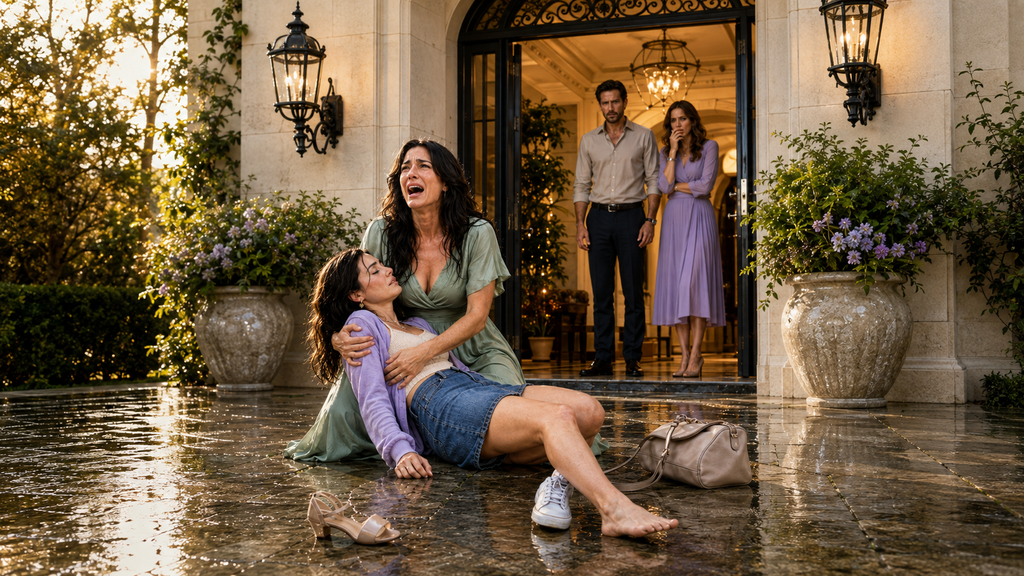
Maybe eight.
Maybe like the little girl who used to climb into my bed during thunderstorms and whisper, “Mom, can I stay until the scary part is over?”
I stared at her now and wondered how many scary parts she had endured without me.
“What happened three months ago?” I asked.
Silvia hesitated.
“The paramedic doesn’t remember every detail, but he remembers the address because something about the call bothered him.”
My throat tightened.
“What?”
“A neighbor called emergency services after seeing Maya sitting near the side of Richard’s house late at night. Apparently she looked sick.”
I closed my eyes.
“What do you mean sick?”
“Mark said she was pale, shaking, and having difficulty standing.”
My hand flew over my mouth.
Silvia continued carefully.
“When the ambulance arrived, Richard told them Maya had experienced what he called a teenage panic attack. He refused transportation to the hospital.”
“He refused?”
“According to Mark, yes.”
“Could he do that?”
“That is one of the things CPS will be looking into.”
I stared at Maya.
Three months ago.
I tried to remember that week.
Suddenly I did.
Maya had returned from Richard’s house on a Sunday evening unusually quiet.
She had slept almost twelve hours.
The next morning, she complained of a headache.
I asked whether she was getting sick.
She said no.
I asked whether anything had happened at her father’s house.
She shrugged.
“Just tired.”
And I accepted it.
Because I wanted to believe her.
Or maybe because believing her was easier than asking harder questions.
The thought made my stomach twist.
“Sarah?”
“I’m here.”
“There’s more.”
I stood and quietly moved toward the window.
“What?”
“The paramedic said Maya appeared frightened when Richard came outside.”
My eyes burned.
“He noticed that?”
“Yes.”
“Then why didn’t anyone tell me?”
“I don’t know yet.”
My voice cracked.
“How does an ambulance go to my daughter’s father’s house and nobody tells her mother?”
“We’ll find out.”
I looked back at Maya.
“Silvia, I should have known.”
“No.”
“I should have known.”
“Sarah—”
“She kept getting quieter.”
My voice dropped to a whisper.
“She stopped wanting to pack for weekends there. She started getting headaches before visits. She asked me once what happened if a kid didn’t want to go to a parent’s house.”
I pressed my forehead against the cold window.
“I told her that sometimes rules feel different in different homes.”
Silvia was silent.
“I told her her father loved her.”
My voice broke.
“I kept telling her to give him a chance.”
“Sarah.”
“I sent her back.”
“Listen to me.”
Silvia’s voice became firm.
“You cannot help Maya by turning this into a trial against yourself.”
I closed my eyes.
“She needed me.”
“She needs you now.”
That sentence stopped me.
Silvia continued.
“What matters is what you do with what you know today.”
I wiped my face.
“What happens now?”
“CPS is sending an investigator to the hospital.”
“When?”
“Soon.”
“And Richard?”
“He may be contacted separately.”
My stomach tightened.
“Will they make Maya go back to him?”
“Based on what you’ve told me, I am filing an emergency motion requesting temporary sole physical custody while this is investigated.”
I looked at my sleeping daughter.
“How fast?”
“Hopefully today.”
“Today?”
“Yes.”
Silvia paused.
“But Sarah, I need you prepared for something.”
“What?”
“Richard may fight.”
I gave a bitter laugh.
“He already threatened me about custody while Maya was being put into an ambulance.”
“That tells me he’s thinking about control.”
“What do I do?”
“Nothing impulsive.”
“I won’t.”
“Save every message.”
“I will.”
“Do not delete anything.”
“Okay.”
“Do not confront Patricia.”
“I won’t.”
“And if Richard calls, unless there’s an immediate emergency, let it go to voicemail.”
I looked at my phone.
Three missed calls already glowed on the screen.
All from Richard.
Then a text arrived.
You are blowing this completely out of proportion.
Another appeared seconds later.
Maya needs discipline, not coddling.
Then:
Do not coach her into lying about us.
My body went cold.
“Silvia.”
“What?”
“He’s texting me.”
“What did he say?”
I read the messages.
There was a long pause.
Then Silvia said quietly:
“Screenshot everything.”
I did.
Another message came.
You always undermine me. This is why she thinks she can behave however she wants.
Then another.
She knew the consequence for disrespect was staying outside until she apologized.
I stared at those words.
My heartbeat changed.
“Silvia.”
“What?”
“He just admitted it.”
“To what?”
I read the message aloud.
Silence.
“Screenshot that immediately,” Silvia said.
“I already did.”
“Forward it to me.”
My fingers trembled as I sent the images.
Then I looked at Maya again.
She shifted slightly beneath the hospital blanket.
Her eyes opened.
“Mom?”
I rushed to her side.
“I’m here.”
She blinked slowly.
“Are we going home?”
“Hopefully soon.”
Her eyes moved toward my phone.
“Was that Dad?”
I hesitated.
“Yes.”
Her body immediately tensed.
I set the phone facedown.
“You don’t have to talk to him.”
She stared at me.
“Really?”
That one word nearly destroyed me.
Really.
As if she expected me to tell her she had no choice.
As if she had been waiting years for permission to say no.
“Really,” I said.
She searched my face.
“You’re not going to make me call him?”
“No.”
“What if he gets mad?”
“He can be mad.”
“What if Patricia gets mad?”
“She can be mad too.”
Her lower lip trembled.
“What if the judge says I have to go back?”
I pulled my chair closer.
“We are going to tell the truth about what happened.”
“What if they don’t believe me?”
The question came so quietly I almost missed it.
I reached for her hand.
“Maya.”
She looked down.
“Look at me.”
Slowly, she lifted her eyes.
“I believe you.”
Her face crumpled.
Not dramatically.
Not loudly.
Her chin simply began trembling.
Then tears spilled down both cheeks.
“You believe me?”
“Yes.”
She turned her face away and started crying.
I wrapped my arms around her.
“I’m sorry,” she whispered.
“For what?”
“For making trouble.”
I pulled back.
“No.”
“I should’ve just apologized.”
“No.”
“I shouldn’t have rolled my eyes.”
“Maya.”
“Patricia said if I hadn’t acted disrespectful none of this would have happened.”
I felt rage rise through me like fire.
But I swallowed it.
This was not the moment for my anger.
This was her moment.
“Maya, rolling your eyes does not mean you deserve to be locked outside.”
She stared at me.
“Arguing with an adult does not mean you deserve to go without food.”
Her eyes widened slightly.
“Being frustrated does not mean somebody gets to stop you from calling me.”
Her breathing became uneven.
“And nothing you did made what happened last night your fault.”
She cried harder.
I held her.
For several minutes we said nothing.
I just rocked her gently, the way I had when she was small.
Eventually she whispered against my shoulder:
“I thought you’d think I was lying.”
“Why?”
She hesitated.
“Because Dad said you would.”
My arms tightened around her.
“What exactly did he say?”
She pulled away.
“Sometimes when Patricia punished me, I’d say I was going to tell you.”
I waited.
“Dad would say you were already tired of dealing with drama between the houses.”
I stared at her.
“He said you told him that?”
She nodded.
“He said you wanted me to stop complaining.”
“I never said that.”
“I know now.”
“No, Maya. I need you to understand this. I never said that.”
She looked ashamed.
“He said if I kept trying to get out of visits, you might tell the judge you didn’t want full responsibility for me.”
My heart seemed to stop.
“He said what?”
Maya looked down.
“He said you had work trips and a life.”
I could barely breathe.
“And Patricia said courts don’t like kids who try to manipulate parents.”
“Maya…”
“So I stopped saying anything.”
She wiped her cheeks with the blanket.
“I thought if I complained too much, you might get tired of me.”
That sentence cut deeper than anything Richard had ever done to me.
I leaned forward until our foreheads touched.
“There is no version of my life where I get tired of being your mother.”
She started crying again.
“Do you understand?”
She nodded.
“You could call me at three in the morning.”
Another nod.
“You could call me angry.”
Nod.
“Scared.”
Nod.
“Confused.”
Her fingers tightened around mine.
“You could call me after making the biggest mistake of your life.”
She finally looked at me.
“And I would still come.”
Her face folded against my shoulder.
“You never have to earn the right to come home.”
We stayed like that until someone knocked.
A woman in her early forties entered carrying a leather folder.
She introduced herself as Elena Brooks from Child Protective Services.
Maya’s entire body went stiff.
Elena noticed.
She didn’t immediately start asking questions.
Instead she pulled a chair near the foot of the bed.
“Hi, Maya.”
Maya barely nodded.
“My name is Elena. I know there are probably a lot of adults asking you things right now.”
Silence.
“I’m not here to get you in trouble.”
Maya looked at me.
Elena followed her gaze.
“You can have your mom stay while we talk for a little bit.”
Maya visibly relaxed.
Then Elena added gently:
“At some point I might ask to speak with you privately. That doesn’t mean anyone is in trouble. It just helps me make sure your answers are yours.”
Maya nodded.
Elena opened her folder.
“I’m going to ask you some questions about your father’s home.”
Maya’s fingers twisted together beneath the blanket.
“Okay.”
“When you’re punished there, what usually happens?”
Maya hesitated.
“Depends.”
“On what?”
“What we did.”
“We?”
“Me and Logan.”
“Who is Logan?”
“Patricia’s son.”
“How old is he?”
“Seventeen.”
“What happens when Logan gets in trouble?”
Maya shrugged.
“They take his Xbox.”
“And when you get in trouble?”
Long silence.
“Maya?”
“Sometimes I lose my phone.”
“Okay.”
“Sometimes dinner.”
Elena’s pen stopped.
“What do you mean?”
“If Patricia says I’m being disrespectful, I have to stay upstairs while they eat.”
“Do they bring you food later?”
“Sometimes.”
“How often do they not?”
Maya looked at me.
I forced myself not to react.
“Maybe… I don’t know. A lot.”
Elena spoke gently.
“Has anyone ever told you that you cannot drink water?”
“No.”
“Use the bathroom?”
“No.”
“Leave your room?”
“Yes.”
“For how long?”
“Until Dad says.”
“Hours?”
Maya nodded.
“Overnight?”
She hesitated.
“Once.”
I almost stood.
Elena glanced at me, silently asking me to stay calm.
I gripped the sides of my chair.
“When was that?” Elena asked.
“Last winter.”
“What happened?”
“I came downstairs because I was hungry.”
“And?”
“Patricia said I was violating punishment.”
“What happened after that?”
“Dad put a chair under the doorknob.”
My stomach dropped.
Elena’s expression changed.
Only slightly.
But enough.
“Your bedroom door?”
Maya nodded.
“So you could not open it?”
“Yes.”
“For how long?”
“I don’t know.”
“Until morning?”
“Yes.”
“Did you have access to a bathroom?”
Maya shook her head.
I couldn’t stop myself.
“Oh, God.”
Maya immediately looked guilty.
I covered my mouth.
“I’m sorry, honey. Keep talking.”
Elena wrote something down.
“Has your father ever hit you?”
“No.”
“Patricia?”
“No.”
“Has anyone grabbed you?”
Maya hesitated.
“Dad grabs my arm sometimes.”
“Hard?”
“Sometimes.”
“Has it left marks?”
“Once.”
“When?”
“Before spring break.”
I remembered that too.
Maya had worn a sweatshirt in unusually warm weather.
I had teased her about it.
She had smiled.
I wanted to scream.
Not at her.
At myself.
At every missed clue.
Elena continued.
“Has anyone prevented you from contacting your mother?”
Maya nodded.
“How often?”
“A lot.”
“How?”
“They take my phone.”
“That can sometimes be a normal consequence,” Elena said carefully. “But when you asked to contact your mother specifically, what happened?”
“Patricia said I only wanted to call Mom so she would rescue me.”
Elena nodded.
“And did your dad allow you to call?”
“Usually no.”
“Did you ever try another way?”
Maya looked toward the damp backpack sitting on the chair.
“School laptop.”
Elena followed her gaze.
“What happened?”
“They changed the Wi-Fi password.”
The room went silent.
Something inside me shifted.
This was no longer a story of strict parenting.
This was isolation.
Calculated isolation.
Elena closed her folder halfway.
“Do you remember emergency responders coming to your father’s house three months ago?”
Maya froze.
Her face drained of color.
“Yes.”
“What happened that night?”
Maya looked at me.
Her lips parted.
Then closed.
I reached for her hand.
“You can tell her.”
Maya swallowed.
“Patricia got mad because I didn’t finish cleaning the kitchen.”
“What happened?”
“She said if I wanted to be lazy, I could stay outside until I appreciated having a house.”
“How long were you outside?”
“I don’t know.”
“Was it cold?”
Maya nodded.
“Had you eaten?”
“No.”
“Why?”
“Dinner was the punishment too.”
I shut my eyes.
Elena continued.
“How did emergency services get called?”
“Our neighbor.”
“Do you know who?”
“Mrs. Gardner.”
“What happened when the ambulance came?”
“Dad told them I was having anxiety.”
“Were you?”
“I was shaking.”
“Did they want to take you to the hospital?”
Maya nodded.
“What happened?”
“Dad said no.”
“Did anyone ask you what you wanted?”
Maya looked down.
“One man did.”
“Was it Mark?”
“I don’t remember his name.”
“What did you say?”
Maya whispered:
“I said I was okay.”
“Were you?”
“No.”
“Why did you say you were?”
Tears filled her eyes.
“Because Dad was standing behind him.”
Elena stopped writing.
No one spoke.
Finally she asked:
“What did you think would happen if you told the paramedic you weren’t okay?”
Maya’s voice came barely above a whisper.
“I thought Dad would make it worse after they left.”
I felt my heart fracture.
Elena sat quietly for several seconds.
Then she asked one final question.
“Maya, do you feel safe returning to your father’s home today?”
“No.”
The answer was immediate.
Not hesitant.
Not confused.
“No.”
Elena nodded.
“Thank you for telling me.”
She turned toward me.
“I’d like to speak with Maya privately now.”
I hated leaving.
Every instinct in me screamed to stay beside her.
But Maya squeezed my hand.
“It’s okay.”
I kissed her forehead.
“I’ll be right outside.”
The hospital corridor seemed unnaturally bright.
I paced near the vending machines for almost forty minutes.
When Elena finally stepped outside, she looked serious.
“Mrs. Dalton?”
“Sarah is fine.”
“Sarah, I cannot discuss every detail Maya shared privately, but I can tell you there are significant safety concerns.”
My knees nearly weakened.
“What happens?”
“For now, CPS is recommending that Maya not return to her father’s residence pending further investigation.”
Relief hit me so hard I nearly cried.
“Thank you.”
“This isn’t over.”
“I know.”
“We’ll interview Richard and Patricia. We’ll also speak to school staff, neighbors, medical personnel, and anyone else who may have relevant information.”
“I understand.”
“Do you have documentation from the last year?”
“Texts. Maybe emails.”
“Keep everything.”
“My attorney already told me to.”
Elena nodded.
Then her eyes shifted toward the backpack.
“What is that?”
“Maya’s.”
“Was it outside with her?”
“Yes.”
“And you found the note inside?”
I nodded.
“Can I photograph it?”
“Yes.”
I handed her the paper.
She unfolded it slowly.
Tuesday: Wouldn’t let me inside after school.
Friday: Sent to room without dinner.
Sunday: Confiscated phone so I couldn’t call Mom.
Wednesday: Patricia told me Mom wouldn’t believe me anyway.
If they do it again, I just have to wait outside until someone sees me.
Elena stared at that last sentence for a long time.
Then she took several photographs.
“Keep the original somewhere safe,” she said.
“I will.”
My phone buzzed again.
Richard.
This time, a voicemail.
I didn’t listen.
Not yet.
Maya was discharged around noon.
She had mild hypothermia, dehydration, and exhaustion, but the doctor said she could recover at home as long as I monitored her closely.
When we walked toward the hospital exit, Maya stopped.
“What’s wrong?”
She stared outside.
Rain had begun again.
Only a drizzle.
But I saw fear flash through her face.
“I can bring the car around.”
She nodded.
“Okay.”
I squeezed her shoulder.
“Stay right here.”
I drove to the covered entrance.
When Maya climbed inside, she immediately locked the door.
Then checked it twice.
I pretended not to notice.
Some wounds should not be pointed at while they are still bleeding.
On the drive home, she fell asleep.
Her head rested against the passenger window.
I drove slowly.
When we reached the house, I carried her backpack inside.
The first thing she did was walk to the kitchen.
She opened the refrigerator.
Then closed it.
Opened it again.
“Hungry?”
She shrugged.
“You can eat anything.”
“I know.”
“Anything.”
She looked at me.
“Even if it’s not dinner?”
My chest tightened.
“Yes.”
“Even if I already had breakfast?”
“Yes.”
She opened the refrigerator again.
I watched her take out yogurt, strawberries, leftover chicken, cheese, and a container of pasta.
Then she stopped.
“Is this too much?”
“No.”
“I probably won’t eat all of it.”
“That’s okay.”
“I can put it back.”
“Maya.”
She looked at me.
“You do not need permission to eat in this house.”
Her eyes filled.
She turned away quickly.
“Okay.”
I walked into the living room so she could cry without feeling watched.
Thirty minutes later, Silvia arrived carrying a briefcase and two coffees.
Maya was upstairs showering.
Silvia sat at the kitchen table.
“I filed the emergency motion.”
“What happens now?”
“There may be a temporary hearing this afternoon.”
“So fast?”
“Given the hospital records and CPS involvement, yes.”
I rubbed my forehead.
“Will Maya have to appear?”
“Probably not today.”
“Good.”
Silvia opened her laptop.
“Now, show me every message Richard sent.”
I handed over my phone.
She read them slowly.
When she reached the message admitting Maya had been outside as punishment, she leaned back.
“He really sent this voluntarily.”
“Yes.”
“He believes this helps him.”
“I think he honestly believes what he did was discipline.”
“That may be true.”
“Does that make it worse?”
“In some ways.”
My phone buzzed.
A new message appeared.
We need to talk before you poison Maya against me any further.
Silvia photographed it.
Then another.
Patricia is devastated by how you’re twisting this.
Then:
We have records of Maya’s behavior. A lot of records. You won’t like what a judge sees.
Silvia’s eyes narrowed.
“What?”
She leaned closer.
“Read that last message again.”
I did.
“We have records of Maya’s behavior.”
Silvia sat completely still.
“Sarah, did Richard ever use any shared parenting software?”
“We have a family cloud folder from the divorce.”
“What kind?”
“A shared drive for schedules, school forms, insurance, travel consent stuff.”
“Do you still have access?”
“I think so.”
“Open it.”
I pulled my laptop from my work bag.
The folder loaded.
School.
Medical.
Custody Schedule.
Travel.
Receipts.
Then one folder I had never noticed before.
MAYA — DISCIPLINE
My heartbeat thudded.
“Silvia.”
“I see it.”
The folder showed it had been created nine months earlier.
Richard had apparently shared it with me accidentally because it was nested inside our custody documents.
Silvia held up a hand.
“Before opening anything, I want to be clear. You already have legitimate access to this shared folder?”
“Yes.”
“He created it inside a location shared with you?”
“Yes.”
“Okay.”
She leaned closer.
“Open the folder.”
Inside were three files.
Behavior Log.
Consequences.
Screenshots.
I felt sick.
Silvia clicked Behavior Log.
A spreadsheet opened.
Dates.
Incidents.
Punishments.
Dozens of them.
January 12.
Incident: Talked back to Patricia.
Consequence: Phone removed 48 hours.
January 20.
Incident: Refused to finish dinner.
Consequence: No snacks following day.
February 2.
Incident: Attempted to contact Sarah during discipline.
Consequence: Laptop removed.
February 17.
Incident: Door slamming.
Consequence: Bedroom restriction.
March 1.
Incident: Left bedroom without permission.
Consequence: Door secured overnight.
I stopped breathing.
Silvia whispered:
“Oh my God.”
March 18.
Incident: Would not apologize to Patricia.
Consequence: Dinner withheld.
April 4.
Incident: Said she wanted to go back to mother’s house early.
Consequence: Phone confiscated until custody exchange.
April 23.
Incident: Complained about household rules to school counselor.
Consequence: No phone, no Wi-Fi.
May 9.
Incident: Refused yard work.
Consequence: Outside until chores completed.
May 31.
Incident: Tried calling Sarah after bedtime.
Consequence: Phone placed in locked office.
Then June.
The earlier emergency call.
June 12.
Incident: Refused to clean kitchen and yelled that Patricia wasn’t her mother.**
Consequence: Outside reflection period. Dinner canceled.**
Under Notes:
Neighbor interfered and called EMS. Told responders Maya has anxiety and exaggerates. No transport. Need to speak with Gardner about boundaries.
I covered my mouth.
Silvia stared at the screen.
“He documented it.”
I couldn’t speak.
“He actually documented everything.”
She scrolled farther.
July 3.
Incident: Refused family outing.
Consequence: Bedroom until next morning.
July 22.
Incident: Asked Sarah to pick her up early.
Consequence: Communication privileges suspended.
August 6.
Incident: Rolled eyes at Patricia.
Consequence: Dinner withheld.
August 14.
Incident: Refused to apologize.
Consequence: Two hours outside.**
August 27.
Incident: Told Logan she hated living here.**
Consequence: Phone and laptop removed, no contact with Sarah.
And then yesterday.
September 3.
Incident: Rolled eyes, argued about phone, stated she would call mother.**
Consequence: Outside until apology. No electronics.**
Under Notes:
Sarah scheduled pickup around 7. If Maya refuses apology before then, Sarah can see consequences and maybe stop undermining household rules.
I stared at the sentence.
He knew.
Richard knew I was coming.
He had left Maya outside intentionally.
He wanted me to see her being punished.
Silvia’s face hardened.
“This is exceptionally important.”
“He wanted me to find her.”
“Apparently.”
“He thought she would just be standing there.”
“Probably.”
“He didn’t think she would collapse.”
Silvia closed the laptop halfway.
“Or he didn’t care enough to check.”
I stood so quickly my chair scraped across the floor.
“I need air.”
I walked into the backyard.
The rain had stopped.
Water clung to the grass.
I stood beneath the covered patio and tried to breathe.
Every punishment.
Every canceled call.
Every time Maya came home hungry.
Every time she asked me whether she could stay home.
Every time I had encouraged her to maintain a relationship with her father because I believed that was the mature thing to do.
I had confused peace with safety.
I had been so determined not to become the bitter divorced mother that I had ignored my own instincts.
Behind me, the door opened.
Maya stood there wearing pajamas.
“Mom?”
I wiped my face.
“Hey.”
“Are you crying?”
“A little.”
She walked closer.
“Because of me?”
“No.”
“Dad always says—”
I turned.
“No.”
She stopped.
“Whatever sentence you were about to say that starts with ‘Dad always says,’ I need you to hear me first.”
She stared at me.
“You are not responsible for my emotions.”
Her eyes dropped.
“You did not cause this.”
“But if I hadn’t—”
“No.”
I approached her.
“Your father made choices.”
She looked up.
“Patricia made choices.”
Another step.
“I made mistakes too. I should have asked more questions.”
“Mom—”
“But none of those choices were yours.”
She started crying.
“I should’ve told you.”
“You were scared.”
“I should’ve told someone.”
“You tried.”
She looked confused.
“You wrote it down.”
Her eyes moved toward the kitchen.
“The note?”
“Yes.”
“I thought maybe if something really bad happened, somebody would find it.”
Something really bad.
I swallowed.
“Maya, did you think you might die?”
Her face went pale.
For several seconds she said nothing.
Then she whispered:
“Sometimes.”
I pulled her into my arms.
She cried against me.
“I’m sorry.”
“Stop apologizing.”
“I’m sorry.”
“You have nothing to apologize for.”
“I’m sorry I didn’t tell you.”
“I’m sorry I didn’t see it.”
We held each other beneath the patio while rainwater dripped from the roof.
Neither of us pretended anymore.
That afternoon, the emergency custody hearing took place by video conference.
Maya stayed upstairs.
Silvia sat beside me.
Richard appeared from his attorney’s office.
Patricia sat behind him.
The sight of them made my stomach tighten.
Richard looked annoyed.
Not worried.
Annoyed.
His attorney spoke first.
“This is a significant overreaction to an unfortunate disciplinary incident.”
Silvia said nothing.
The judge looked toward Richard.
“Your daughter was transported by ambulance after being found unconscious outside your residence?”
Richard cleared his throat.
“She was pretending at first.”
My hands clenched beneath the table.
The judge’s expression changed.
“At first?”
“She has a history of dramatics.”
Silvia slid a document in front of me.
“Stay calm,” she whispered.
The judge asked:
“How long was she outside?”
“I don’t know exactly.”
“Did you put her outside?”
“She was told to remain outside until she was ready to apologize.”
“In the rain?”
“It wasn’t raining when the consequence began.”
The judge looked down at the paperwork.
“According to hospital records, she arrived with symptoms of mild hypothermia.”
Richard shifted.
“She should have come to the door and apologized.”
I saw Silvia’s jaw tighten.
The judge looked up.
“Mr. Dalton, are you suggesting your fifteen-year-old daughter remained unconscious outside because she had not yet apologized?”
Richard’s attorney interrupted.
“Your Honor—”
“I asked Mr. Dalton.”
Richard hesitated.
“No.”
“Then why did you not call emergency services?”
He said nothing.
The judge waited.
Richard finally answered:
“I believed she was exaggerating.”
Silvia spoke.
“Your Honor, we have a message Mr. Dalton sent to my client this morning stating that Maya’s consequence for disrespect was staying outside until she apologized.”
Richard’s attorney leaned toward him.
The judge asked to see it.
Silvia submitted the screenshot electronically.
The silence lasted almost a full minute.
Then she said:
“We also discovered documents voluntarily stored by Mr. Dalton in a shared parenting folder accessible to both parents.”
Richard’s face changed.
His attorney turned sharply.
“What documents?”
Silvia uploaded the spreadsheet.
I watched Richard realize what had happened.
His mouth opened.
Then closed.
Patricia leaned forward.
“What did you save there?” she whispered.
The judge read silently.
Five seconds.
Ten.
Twenty.
The longer she read, the colder her expression became.
“Mr. Dalton.”
“Yes?”
“What is an ‘outside reflection period’?”
Richard swallowed.
“A timeout.”
“For a fifteen-year-old?”
“Yes.”
“Outside the residence?”
“Sometimes.”
“How long?”
“Depends.”
The judge looked at the spreadsheet.
“August fourteenth indicates two hours.”
Richard’s attorney interrupted.
“These notes lack context.”
The judge continued.
“March first states, ‘Door secured overnight.’ What does that mean?”
Richard’s face reddened.
“She kept leaving her bedroom.”
“So?”
“We blocked the door.”
The judge stared at him.
“With what?”
“A chair.”
My chest tightened.
The judge looked toward his attorney.
His attorney rubbed his forehead.
The judge continued reading.
“June twelfth. ‘Outside reflection period. Dinner canceled. Neighbor interfered and called EMS. Told responders Maya has anxiety and exaggerates. No transport.’”
Richard’s face had gone pale.
The judge leaned closer to the camera.
“You described an emergency medical response as neighbor interference?”
Richard said nothing.
“And then wrote that you told emergency responders your daughter exaggerates?”
“She does sometimes.”
The judge’s voice sharpened.
“That was not my question.”
Richard stared downward.
Silvia added:
“Child Protective Services has opened an active safety investigation. Their initial recommendation is that Maya not return to her father’s residence pending review.”
Richard finally erupted.
“This is ridiculous.”
His attorney touched his arm.
Richard pulled away.
“She is a teenager. Teenagers lie. Sarah has wanted sole custody for years.”
I nearly laughed.
For years?
I had spent four years doing the opposite.
Making excuses.
Switching weekends.
Encouraging visits.
Defending him.
The judge turned toward me.
“Ms. Dalton, have you previously sought to restrict Mr. Dalton’s parenting time?”
“No, Your Honor.”
“Ever?”
“No.”
“Have you filed prior emergency motions?”
“No.”
Richard interrupted.
“She poisons Maya against me.”
His lawyer hissed his name.
The judge looked at him.
“Mr. Dalton, you will not interrupt again.”
Silence.
Silvia submitted the hospital note.
Then Maya’s handwritten record.
Then confirmation from EMS about the earlier call.
The judge read everything.
When she finally spoke, her voice was calm.
Almost too calm.
“Based on the information currently before the court, I find sufficient immediate safety concerns to issue temporary emergency orders.”
My heart began pounding.
“Maya will remain with her mother.”
I closed my eyes.
“No unsupervised parenting time is authorized for Mr. Dalton until further review.”
Richard shot upright.
“What?”
His attorney grabbed his sleeve.
The judge continued.
“No direct contact with the child except as approved by the child’s therapist, guardian, or agency investigator.”
“This is insane!”
“Mr. Dalton.”
“She is my daughter!”
“And she is a minor whose immediate safety is the issue before this court.”
Patricia leaned forward.
“We never hurt her.”
The judge’s eyes moved toward the screen.
“Ma’am, you are not a party represented before me at this moment. Do not interrupt again.”
Patricia leaned back.
Silvia touched my arm beneath the table.
The judge continued.
“CPS will proceed with its investigation. The court will appoint a guardian ad litem to represent Maya’s interests. The parties will preserve all relevant electronic records.”
Then she looked directly at Richard.
“That includes text messages, home security recordings, cloud storage, photographs, and smart-home records.”
Richard’s expression changed.
Just slightly.
But Silvia saw it.
So did I.
After the hearing ended, she immediately said:
“Did you see his face?”
“Yes.”
“There may be more.”
“What kind of smart-home records?”
“Door locks. Cameras. Security logs.”
My stomach twisted.
“The house has cameras.”
“Where?”
“Front door. Driveway. Backyard.”
“Do you know whether they save footage?”
“I think they do.”
Silvia was already typing.
“I’m requesting preservation.”
“What does that mean?”
“We notify them through counsel not to destroy relevant evidence.”
My phone rang.
Unknown number.
Silvia nodded.
“Answer.”
“Hello?”
“Is this Sarah Dalton?”
“Yes.”
“Mrs. Dalton, my name is Detective Alicia Grant with the county child protection unit. CPS forwarded information involving your daughter.”
My knees weakened.
Silvia pointed toward speakerphone.
I turned it on.
Detective Grant continued.
“We would like to speak with you and Maya.”
“Of course.”
“We also need to clarify something regarding the prior emergency call.”
“What?”
“The neighbor who called three months ago contacted us this morning.”
“Mrs. Gardner?”
“Yes.”
“She remembers what happened?”
“She remembers more than that.”
I looked at Silvia.
“What does she remember?”
“There is security footage.”
My breath caught.
“From last night?”
“From several incidents.”
The room went quiet.
Mrs. Gardner lived two houses down from Richard.
I knew her only casually.
She had brought cupcakes to one of Maya’s birthdays years earlier.
I had not spoken to her since the divorce.
Detective Grant explained that after learning Maya had been hospitalized, Mrs. Gardner reviewed recordings from her home security system.
Her driveway camera captured part of Richard’s front property.
Not enough to see inside.
Enough to see the porch.
Enough to see the walkway.
Enough to see the side gate.
She had recordings from multiple dates.
At four that afternoon, Detective Grant came to my house.
Elena from CPS arrived shortly afterward.
Maya sat between me and Silvia in the living room.
Detective Grant placed a tablet on the coffee table.
“I want to warn you,” she told Maya, “you do not have to watch these.”
Maya stared at the screen.
“What are they?”
“Video from your neighbor.”
Maya gripped the sleeve of her sweater.
“I want to see.”
I almost told her no.
Then stopped.
This was her story.
Not mine.
Detective Grant opened the first file.
June 12.
Timestamp: 8:47 PM.
The picture showed Richard’s driveway.
Maya sat near the side of the garage.
She wore shorts and a T-shirt.
Her arms were wrapped around her knees.
The timestamp moved.
8:58.
9:11.
9:26.
9:43.
No one came outside.
At 9:47, Maya tried the door.
Locked.
She knocked.
Waited.
Knocked again.
Nothing.
At 9:52, she walked toward the front porch.
She rang the bell.
A minute later, Patricia opened the door.
There was no audio.
But we watched her point toward the side yard.
Maya shook her head.
Patricia pointed again.
Maya returned to the driveway.
At 10:06, she sat down.
At 10:18, she lay on the grass.
At 10:23, Mrs. Gardner appeared.
Then the ambulance arrived.
I could barely see through my tears.
The video continued.
Paramedics spoke with Richard.
Maya sat on the ambulance step wrapped in a blanket.
Then Richard approached.
Even without sound, the change in Maya was obvious.
Her shoulders tightened.
She looked down.
A paramedic knelt in front of her.
Maya shook her head.
Moments later, the ambulance left.
Without her.
The next recording was from August.
Maya was outside again.
Two hours.
Exactly as Richard had written.
Then a third.
Another evening.
She sat on the porch without shoes.
Then last night.
I almost couldn’t watch.
The video began at 5:31 PM.
Richard opened the front door.
Maya stepped outside holding her backpack.
He pointed toward the driveway.
She turned back.
They argued.
Richard took her phone from her hand.
Then he went inside.
Locked the door.
At 5:52, rain started.
At 6:03, Maya knocked.
No answer.
6:11.
She knocked again.
6:24.
She sat beneath the small overhang.
6:37.
The rain grew heavier.
Maya moved toward the door.
She pounded on it.
For nearly thirty seconds.
A curtain shifted in the window.
Someone inside had looked out.
No one opened the door.
Maya covered her head with her backpack.
At 6:48, she tried standing.
She stumbled.
At 6:56, she fell to her knees.
At 7:01, she collapsed.
My car arrived at 7:10.
The video showed me running toward her.
Then Richard stepping outside.
Nine minutes.
My daughter had been unconscious outside his house for approximately nine minutes before I arrived.
His curtains had been open.
The porch light was on.
And nobody came out.
Detective Grant paused the video.
Nobody spoke.
Maya stared at the frozen image.
Her face had gone blank.
“Maya?”
She whispered:
“They knew.”
I put my arm around her.
“They knew I fell.”
Detective Grant spoke gently.
“We don’t know exactly what they saw.”
Maya looked at her.
“They knew.”
Her voice cracked.
“The curtain moved.”
She began crying.
“They knew.”
I pulled her into my chest.
“They saw me.”
I held her tighter.
“They knew, Mom.”
“I know.”
“They just left me there.”
“I know.”
For the first time since the hospital, Maya did not apologize for crying.
She sobbed.
Loudly.
Angrily.
Her whole body shook.
And I let her.
Because some grief should not be made quiet.
Detective Grant waited until Maya was calmer.
Then she closed the tablet.
“There’s something else.”
Silvia looked up.
“What?”
“The smart lock.”
My stomach tightened.
Richard’s house had electronic locks.
He installed them shortly after we divorced.
Detective Grant continued.
“CPS asked for preservation of electronic logs after today’s emergency hearing.”
Silvia nodded.
“The lock company confirmed records exist.”
“What do they show?” I asked.
“Repeated remote locking events.”
Maya looked confused.
Detective Grant explained.
“The exterior doors can be controlled through an app.”
I knew that.
Richard used to brag about it.
He could lock the house from work.
Check whether doors were open.
See who entered.
Detective Grant looked at Maya.
“Several times when you tried the door during punishments, the door had been unlocked shortly beforehand.”
Maya stared at her.
“What?”
“Then someone used the phone application to lock it remotely.”
My blood turned cold.
It wasn’t simply that they forgot about her.
Someone was watching.
Someone knew she was trying to enter.
And deliberately kept her out.
Silvia asked:
“Can you identify whose account?”
“Not yet conclusively.”
The detective looked at Maya.
“But records show the commands came from registered devices belonging to both Richard and Patricia.”
Maya began trembling.
I reached for her hand.
Detective Grant stopped.
“That’s enough for today.”
Maya nodded quickly.
After everyone left, she went upstairs.
I found her an hour later sitting on the floor of her bedroom.
Her old stuffed rabbit, Clover, rested in her lap.
She had owned it since she was four.
I sat beside her.
Neither of us spoke at first.
Finally she whispered:
“I hate him.”
I did not correct her.
I did not tell her hate was unhealthy.
I did not tell her he was still her father.
I did not make her emotions easier for adults to tolerate.
“You’re allowed to feel whatever you feel.”
She rubbed Clover’s worn ear between her fingers.
“Do you hate him?”
I thought carefully.
“I hate what he did to you.”
“That’s not what I asked.”
I looked at her.
“I’m angry enough that I don’t know what I feel yet.”
She nodded.
“Will I ever have to see him again?”
“I don’t know.”
Her face tightened.
“But I can promise you something.”
“What?”
“You will never walk into that house alone again because someone told me being fair to your father mattered more than listening to you.”
She looked at me.
“Never?”
“Never.”
“What if a judge says—”
“Then we go back to court.”
“What if they still say—”
“Then we keep telling the truth.”
“What if Dad calls you crazy?”
“He has before.”
A tiny smile appeared.
“What if Patricia says you’re dramatic?”
“She definitely has before.”
Maya almost laughed.
Then her face became serious.
“Mom?”
“Yes?”
“Can I lock my bedroom door tonight?”
The question hurt.
“Of course.”
She nodded.
“But…”
“What?”
“If I lock it, you won’t get mad?”
“No.”
“And you won’t lock it from the other side?”
My chest tightened.
“Never.”
She looked toward the door.
“I know that’s weird.”
“It isn’t.”
“I think I just want to know I can open it whenever I want.”
I nodded.
“You can.”
That night, I removed every lock in our house that could trap someone inside a room.
I left the normal privacy locks.
But anything that could be used from the hallway came off.
I didn’t tell Maya.
I just did it.
At midnight, I woke and found her standing in my doorway.
“Mom?”
“Yes?”
“Can I sleep here?”
I lifted the blanket.
She climbed in.
Just like she used to during thunderstorms.
She rested her head against my shoulder.
After several minutes she whispered:
“I thought you’d be mad if I woke you up.”
I kissed her hair.
“Wake me up.”
“What?”
“Anytime.”
She closed her eyes.
“Okay.”
The investigation lasted weeks.
Not days.
Weeks.
And each week uncovered another piece.
The school counselor had notes documenting that Maya repeatedly asked whether children could request fewer visits with a parent.
A teacher remembered Maya secretly eating part of a classmate’s lunch after one weekend with Richard.
Mrs. Gardner had additional security recordings.
The smart-lock company preserved access logs.
The cloud folder contained more than the punishment spreadsheet.
There were screenshots.
Text messages between Richard and Patricia.
Some were mundane.
Others made me physically ill.
One from Patricia read:
She keeps asking for Sarah. If you let her call every time she cries, she’ll never respect this house.
Richard replied:
Take the phone. She can call Sunday.
Another:
Maya refuses dinner.
Richard:
Then she goes hungry. Her choice.
Another from Patricia:
She said she’ll tell Sarah we locked her out.
Richard responded:
Let her. Sarah avoids conflict like the plague. She won’t do anything.
That one I read three times.
Because he was right.
Not anymore.
But for years?
He had known exactly who I was trying to be.
Calm.
Reasonable.
Cooperative.
He had used it.
Silvia read the message and looked at me.
“Do not blame yourself.”
“How can I not?”
“Because being cooperative after divorce is not a character flaw.”
“I ignored things.”
“You interpreted incomplete information based on the assumption that another parent loved his child enough not to endanger her.”
I stared at the message.
“He knew I wouldn’t fight.”
“Then he miscalculated.”
She was right.
Because I stopped avoiding conflict.
I stopped caring whether Richard thought I was difficult.
I stopped worrying about whether mutual friends believed I was overreacting.
I stopped explaining myself to people who began sentences with:
“I’m sure there’s another side.”
There was another side.
There was always another side.
But sometimes the other side was simply a list of excuses written by someone who expected a child to carry the consequences.
A month later, Maya began therapy with a psychologist named Dr. Hannah Lee.
At first she hated it.
“She asks too many questions,” Maya complained after the second session.
“That sounds suspiciously like a therapist.”
Maya rolled her eyes.
Then froze.
The humor vanished.
Her face changed.
“I’m sorry.”
I immediately understood.
“You don’t have to apologize for rolling your eyes.”
She looked at me.
“Seriously?”
“Seriously.”
“What if I do it really dramatically?”
“You may be informed that you are being annoying.”
She smiled.
“But I don’t get locked outside?”
“No.”
“What if I sigh too?”
“I may sigh louder.”
She laughed.
It was the first real laugh I had heard from her since the hospital.
I nearly cried.
So naturally, she noticed.
“Mom.”
“What?”
“Are you crying because I rolled my eyes?”
“No.”
“You are.”
“I have allergies.”
“In October?”
“Severe emotional allergies.”
She laughed harder.
That sound became one of my favorite things in the world.
Healing did not happen in a straight line.
For several weeks, Maya kept food in her bedroom.
Granola bars.
Crackers.
Small juice boxes.
At first, I wanted to tell her she didn’t need to.
Then Dr. Lee explained that telling her not to might make her feel that another adult was controlling access to food.
So I bought a basket.
We filled it together.
I placed it beside her desk.
“Emergency snacks,” I said.
She looked suspicious.
“I’m allowed to keep them here?”
“Yes.”
“Forever?”
“If you want.”
She nodded.
For three months, the basket stayed full.
Then one afternoon I noticed it was empty.
Not because Maya had eaten everything.
Because she had carried the unopened snacks back downstairs.
She didn’t announce it.
Neither did I.
Some victories do not need ceremonies.
For a while, she also checked the front door repeatedly.
Especially during rain.
If we were watching television and a storm began, Maya would glance toward the hallway.
Sometimes she got up and tested the lock.
I never asked why.
I simply let her.
One evening she checked it three times.
On the fourth, I said:
“Want me to show you something?”
She followed me.
I opened the front door.
Closed it.
Locked it.
Then handed her the key.
“This lock works from both sides normally.”
She nodded.
“You can open it anytime from inside.”
“I know.”
“And if you ever want another key for your room, your backpack, anywhere, we’ll make one.”
She stared at the key.
“You trust me with it?”
“Maya.”
“What?”
“It is your house too.”
She looked down.
Then slid the key onto the chain around her wrist.
She wore it there for months.
The legal process moved slower than my anger wanted.
But it moved.
The guardian appointed for Maya met her several times.
The CPS investigation concluded that Richard and Patricia had used unsafe punitive practices, intentionally interfered with Maya’s ability to seek parental help, and repeatedly exposed her to physical risk.
The prosecutor’s office also reviewed the evidence.
I learned quickly that television had lied to me about how these things worked.
There was no dramatic squad of officers storming Richard’s house the next morning.
There was paperwork.
Interviews.
Evidence requests.
Court dates.
Postponements.
Lawyers.
Reports.
More interviews.
More waiting.
But eventually there were consequences.
Richard and Patricia were charged with child-endangerment-related offenses connected to the incidents captured on video and documented in their own records.
Their attorneys challenged the evidence.
They argued context.
They argued parental discretion.
They argued Maya was difficult.
That part enraged me more than almost anything.
At one hearing, Richard’s attorney described Maya as:
“A teenager with behavioral challenges and a tendency to exaggerate household conflict.”
Silvia put her hand on my arm before I could react.
Then the prosecutor displayed the security video.
Maya lying in the rain.
The courtroom went silent.
No description sounded persuasive after that.
No label.
No accusation.
No claim about teenage attitude.
There was simply a child on the ground.
And adults inside.
At the final custody hearing, five months had passed since the night in the rain.
Maya did not sit in the courtroom.
She spoke privately with the judge beforehand, accompanied by her guardian.
I never asked what she said.
That belonged to her.
Richard arrived looking older.
Patricia sat behind him.
Neither looked at me.
The judge reviewed reports from CPS, Maya’s therapist, school personnel, the guardian, emergency responders, and investigators.
Then Richard was allowed to speak.
He stood.
For the first time since this began, he looked nervous.
“I love my daughter.”
I closed my eyes briefly.
Because maybe, in some broken way, he believed that.
“I never intended for her to be hurt.”
His voice shook.
“I was trying to teach responsibility.”
The judge watched him.
“I grew up in a strict household.”
There it was.
The explanation people reach for when they want the past to excuse the present.
“My father believed consequences had to mean something. I thought Sarah was too lenient, and I thought Maya had learned to play us against each other.”
My stomach twisted.
Richard continued.
“I see now that some of the punishments went too far.”
Some.
He still said some.
“I regret that night.”
The judge asked:
“Which part?”
Richard hesitated.
“What?”
“Which part do you regret?”
He looked confused.
“The night she went to the hospital.”
“Do you regret putting her outside?”
“Yes.”
“Do you regret leaving her there?”
“Yes.”
“Do you regret withholding communication with her mother?”
“Yes.”
“Do you regret denying medical transport during the earlier emergency?”
He hesitated.
“Yes.”
“Do you regret locking her bedroom door from the outside?”
His face reddened.
“Yes.”
“Do you regret withholding meals?”
“Yes.”
“Then help me understand something.”
The judge lifted the printed discipline spreadsheet.
“You documented these actions repeatedly.”
Richard stared at the floor.
“You described emergency responders as interference.”
Silence.
“You described Maya asking to contact her mother as manipulation.”
Still nothing.
“You described the use of outdoor isolation as a consequence multiple times.”
The judge set the pages down.
“At what point did concern for discipline become more important than concern for your child?”
Richard’s eyes filled.
“I don’t know.”
And for once, I believed him.
The judge looked toward me.
“Ms. Dalton?”
I stood.
My legs trembled.
Silvia had told me I could make a brief statement.
I had written three pages.
Then deleted them.
I wrote another two.
Deleted those too.
In the end, I brought nothing.
I looked at the judge.
Then at Richard.
“I spent four years trying to make sure Maya never felt she had to choose between her parents.”
My voice shook.
“I defended Richard to her.”
I swallowed.
“I encouraged her to go on visits when she seemed reluctant because I thought consistency was good for her.”
I looked toward my hands.
“I believed avoiding conflict meant I was protecting her.”
My eyes burned.
“I was wrong.”
Richard finally looked at me.
“I am not asking the court to punish Richard because our marriage failed.”
My voice grew steadier.
“I am not asking because I hate him.”
I looked directly at him.
“I am asking because our daughter learned to measure safety by whether a neighbor might notice she had been left outside.”
The courtroom was silent.
“She wrote herself a note that said, ‘If they do it again, I just have to wait outside until someone sees me.’”
My voice cracked.
“No child should have to create an emergency plan for surviving a parent’s punishment.”
I wiped my cheek.
“Maya does not need revenge.”
I breathed.
“She needs safety.”
Then I sat down.
The judge issued her ruling that afternoon.
I was granted sole legal and physical custody.
Richard would have no unsupervised contact with Maya.
Any future contact would depend on Maya’s therapist, her willingness, compliance with court-ordered counseling, parenting education, and safety recommendations.
There would be no forced overnight visits.
No forced telephone calls.
No surprise appearances at school.
No direct communication that bypassed me or the court-approved structure.
When the judge finished, I did not feel victorious.
I had imagined I might.
I thought maybe I would feel some tremendous rush of vindication.
Instead I felt tired.
Terribly tired.
Because no mother dreams of winning custody under circumstances like those.
I did not want to defeat Richard.
I wanted him to have been the father I had spent years pretending he was.
Outside the courthouse, Silvia hugged me.
“It’s over.”
I shook my head.
“The court part.”
She understood.
“Yes.”
“The rest will take time.”
“Yes.”
I looked toward the sky.
Heavy gray clouds covered the city.
“Thank you.”
“You did the work.”
“Maya did.”
Silvia smiled sadly.
“She did.”
That evening, I stopped at Maya’s favorite restaurant and ordered takeout.
When I got home, she was sitting at the kitchen island doing homework.
She looked up.
“Well?”
I placed the food on the counter.
“You stay with me.”
Her shoulders dropped.
“For good?”
“For good.”
Her eyes filled.
“No overnight visits?”
“No.”
“No weekends?”
“No.”
“Do I have to call him?”
“Not unless you choose to.”
She stared at me.
“Really?”
“Really.”
She covered her face.
For several seconds, I thought she was crying.
Then she laughed.
A strange, breathless sound halfway between laughter and tears.
She stood.
I opened my arms.
She ran into them.
I held her as tightly as I could.
“I’m staying home.”
“Yes.”
“I’m really staying.”
“Yes.”
She cried against me.
Then suddenly she pulled away.
“I want Chinese food.”
I laughed.
“That is possibly the fastest emotional transition I’ve ever seen.”
“I’m starving.”
“Then eat.”
She opened the bag.
Then looked at me.
“And I can have seconds?”
“As many as you want.”
She smiled.
“Good.”
Six months after the rainstorm, something unexpected happened.
A letter arrived.
From Richard.
It came through Silvia.
He was not allowed to contact Maya directly.
Silvia called first.
“He wrote a letter.”
I looked across the living room.
Maya was sprawled on the couch scrolling through videos.
“What does it say?”
“I haven’t read it. It’s sealed for her.”
“Do we have to give it to her?”
“No.”
I hesitated.
“What do you recommend?”
“I recommend asking Maya.”
So I did.
“There’s a letter from your dad.”
Her face immediately went blank.
“You don’t have to read it.”
She stared at the floor.
“Did you?”
“No.”
“Why not?”
“It’s yours.”
She thought for nearly a minute.
Then held out her hand.
“Give it to me.”
I did.
She carried it upstairs.
Twenty minutes later, she came back down.
Her eyes were red.
I waited.
“He said sorry.”
I nodded.
“He said he was wrong.”
I waited.
“He said he was angry at you for the divorce and I reminded him of you whenever I disagreed with him.”
My stomach tightened.
“He said Patricia thought I needed to respect her more and he let everything become some stupid battle.”
Maya’s hands trembled.
“He said he knows I might never forgive him.”
She sat beside me.
“Do I have to?”
“No.”
“Everyone says forgiveness is supposed to make you feel better.”
“Sometimes people say that.”
“What do you think?”
I considered the question.
“I think forgiveness is personal.”
She waited.
“I think safety comes first.”
She nodded.
“And I think you can heal whether you forgive him now, later, or never.”
She looked relieved.
“I’m not ready.”
“Then you’re not ready.”
She folded the letter.
“I might not ever be.”
“That’s yours to decide.”
She looked at me.
“Are you going to forgive him?”
I smiled sadly.
“I’m still working on forgiving myself.”
Her expression changed.
“For what?”
“For not seeing sooner.”
Maya shook her head.
“Mom.”
“What?”
“You didn’t know.”
“I should have.”
“He lied.”
“I should have asked harder questions.”
She leaned against me.
“Maybe.”
I looked down at her.
She continued.
“But I lied too.”
“You were scared.”
“Exactly.”
I stared at her.
“So maybe we both stop blaming the person who was tricked.”
I laughed softly through tears.
“When did you become the therapist?”
“Dr. Lee is expensive. I’m trying to get our money’s worth.”
I laughed harder.
And suddenly we were both crying and laughing at the same time.
That was healing too.
Messy.
Contradictory.
Human.
A year passed.
Maya turned sixteen.
She got her learner’s permit.
Dyed two streaks of her hair purple without asking me first.
Failed a chemistry test and survived.
Rolled her eyes approximately six hundred times.
Left three mugs in her bedroom until something began growing inside one.
Argued with me about curfew.
Slammed a door once.
Then opened it immediately.
“Sorry.”
I looked up from my book.
“For slamming the door?”
“Yes.”
“Thank you.”
She hesitated.
“You’re not mad?”
“I’m annoyed.”
“That’s it?”
“That’s usually what happens when teenagers slam doors.”
She stared at me.
Then laughed.
“Oh.”
She started closing it again.
“Maya?”
“Yes?”
“Do not interpret my emotionally healthy parenting as permission to destroy my hinges.”
She grinned.
“Yes, ma’am.”
The door closed.
Normally.
I smiled at my book.
Those ordinary moments became sacred.
Arguments.
Dishes.
Homework.
Laundry.
Curfew.
Bad moods.
Burnt toast.
Teenage sarcasm.
Because ordinary problems meant she felt safe enough to have them.
She stopped keeping emergency food in her room.
Stopped wearing the house key around her wrist.
Stopped checking the front door every time rain started.
Not completely.
But mostly.
And then one Saturday afternoon in early spring, almost eighteen months after the night everything changed, the sky darkened.
Rain started suddenly.
Heavy.
Cold.
I was in the kitchen when I noticed Maya standing by the window.
She watched the water hit the driveway.
Her face went still.
I didn’t say anything.
A year earlier, rain would have sent her upstairs.
Six months earlier, she might have checked the locks.
Today she simply watched.
Then she turned.
“Mom?”
“Yes?”
“Want to go outside?”
I stared at her.
“In that?”
She smiled.
“Yeah.”
“It’s pouring.”
“I know.”
“We own umbrellas.”
“No umbrellas.”
I understood.
My throat tightened.
“Okay.”
We put on sneakers.
Not boots.
Sneakers.
Because apparently if you’re reclaiming emotional trauma from a rainstorm, ruining your shoes is part of the process.
Maya opened the front door.
She paused.
Only for a second.
Then stepped outside.
Rain hit her hair.
Her face.
Her sweatshirt.
She closed her eyes.
I stood behind her.
“You okay?”
She nodded.
Then stepped into the driveway.
The rain soaked her almost instantly.
She turned toward me.
“Come on!”
I laughed.
“You’re insane.”
“You already agreed!”
“I agreed before realizing how cold it was.”
“Mom!”
So I stepped outside.
Within seconds, we were both drenched.
Maya laughed.
Not carefully.
Not nervously.
Loudly.
She spun in the driveway like a little kid.
Then she splashed through a puddle and soaked my jeans.
“Maya!”
She laughed harder.
“That was intentional.”
“No evidence.”
“There are cameras.”
She froze.
For half a second, I regretted saying it.
Then she looked toward our small porch camera.
Her expression changed.
She walked straight up to it.
Looked directly into the lens.
And waved.
“Hi.”
I burst out laughing.
She waved again.
“Just documenting my behavior.”
I almost fell over laughing.
She returned to the driveway.
The rain poured around us.
And for a moment I saw two versions of my daughter.
The fifteen-year-old girl lying unconscious on wet concrete.
And the sixteen-year-old girl standing freely in the rain.
Same water.
Different life.
One had been waiting for somebody to open a door.
The other knew exactly where home was.
Maya looked at me.
“What?”
I realized I was crying.
“Nothing.”
“You’re doing the allergy thing again.”
I laughed.
“Terrible allergies.”
“In the rain?”
“Especially in the rain.”
She hugged me.
We stood there soaking wet.
After a while, she whispered:
“I used to hate rain.”
“I know.”
“I thought I always would.”
I held her tighter.
“What about now?”
She pulled away.
Water ran down her cheeks.
She looked toward the house.
Our house.
Her house.
The door behind us was unlocked.
Warm light spilled through the windows.
Dinner waited inside.
Her phone was in her pocket.
She could call anyone she wanted.
She could walk through that door whenever she wanted.
Nobody was watching from behind a curtain, deciding whether she had earned the right to come inside.
Maya smiled.
“Now it’s just rain.”
Three words.
That was all.
But I understood what they meant.
It was just rain.
Not punishment.
Not fear.
Not a locked door.
Not hunger.
Not silence.
Not waiting.
Just rain.
We stayed outside until we were freezing.
Then Maya ran toward the porch.
“Last one inside makes hot chocolate!”
“That’s not how races work!”
“It is now!”
She reached the door first.
Her hand closed around the knob.
She opened it.
No hesitation.
No permission.
She stepped inside.
Then turned around.
“Mom?”
“Yes?”
“You coming?”
I looked at my daughter.
At the girl who once wrote that if they left her outside again, she only had to wait until someone saw her.
She would never have to wait like that again.
I walked inside.
Maya closed the door behind us.
Not because we were afraid of the world.
Not because someone ordered her to.
But because home was warm, and we were cold, and there was hot chocolate to make.
That was all.
Sometimes justice does not look like revenge.
Sometimes it looks like a hospital discharge paper.
A saved text message.
A frightened child finally being believed.
A judge saying, “You do not have to go back.”
A bedroom door that opens from the inside.
A full refrigerator.
A phone that nobody takes away when you need help.
A mother learning that keeping the peace is not always the same thing as protecting the person she loves.
And sometimes healing looks like a teenage girl standing in a storm, laughing.
The night I found Maya unconscious in the rain, I believed I had arrived too late.
For months, guilt told me I should have noticed sooner.
I should have asked more questions.
I should have trusted the silences.
Maybe some of that was true.
But eventually I learned something Maya understood before I did.
Being late is not the same as never coming.
I came.
The paramedics came.
Mrs. Gardner came.
CPS came.
Her teachers came.
Silvia came.
Dr. Lee came.
And eventually Maya learned something she should never have been forced to doubt in the first place.
When she called for help, people would come.
She did not have to become invisible to survive.
She did not have to apologize for being hungry.
She did not have to be perfectly respectful to deserve shelter.
She did not have to protect adults from the consequences of their decisions.
And she never again had to stand outside a locked door wondering whether she had behaved well enough to be allowed home.
Because home was no longer something anyone could take away as punishment.
Home was where she was believed.
Home was where she was safe.
Home was where the door opened.
And this time—
it stayed open.
THE END! THANK YOU FOR READING!❤️