 Reading Time: 49 minutes
For the past five years, my family had trained me to believe that their approval was something I had to earn. And somehow, earning it always came with a price tag.
Chloe’s car payments. My brother’s disastrous investments. My parents’ luxury vacations. Emergency bills that were never really emergencies.
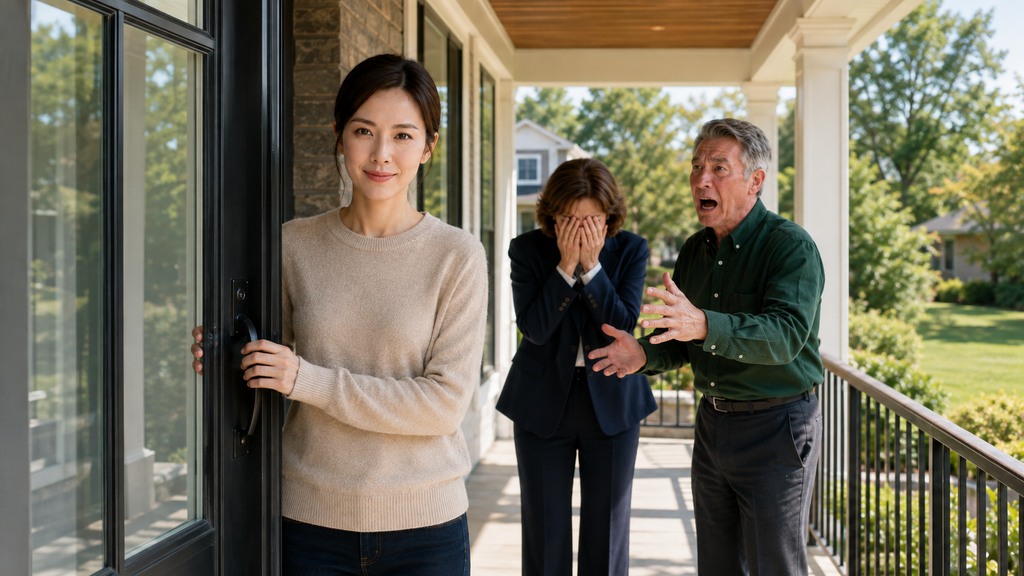
Every time I hesitated, they reminded me of everything they had supposedly done for me.
“Family helps family.”
“You make more than the rest of us.”
“You can afford it.”
“Don’t be selfish.”
Those words had been repeated so often that eventually, I stopped questioning them.
I simply paid.
And paid.
And paid.
While my parents posted photographs from beach resorts and expensive cruises, I lived in a cramped studio apartment where the kitchen was barely six feet from my bed.
I clipped coupons.
I compared grocery prices down to the cent.
I delayed buying new shoes until the soles of mine were nearly worn through.
I avoided dinners with coworkers because I was constantly worried about spending twenty dollars I might suddenly need when someone in my family called with another “crisis.”
And they always called.
Someone always needed something.
For years, I believed I was struggling because I wasn’t disciplined enough.
Because I wasn’t earning enough.
Because maybe I just wasn’t good enough with money.
But after walking away from that dining room table, I finally understood the truth.
I had never been bad with money.
I had been financing four other adults.
My family had kept me cash-poor by design.
As long as I had just enough money to survive—but never enough to feel secure—I remained easy to control.
If I saved too much, there was suddenly an emergency.
If I received a bonus, someone needed help.
If I talked about buying property, my mother reminded me that Chloe was struggling.
If I mentioned taking a vacation, my father told me my brother needed capital for his newest investment idea.
Every dream I had was quietly postponed so someone else could enjoy theirs.
And standing there after finally cutting them off, I realized something that terrified me almost as much as it liberated me.
Walking away wasn’t a punishment.
It was an escape.
For the first time in my adult life, nobody had access to my wallet except me.
Within forty-eight hours, I began rebuilding everything.
The first thing I protected was the trust fund my grandmother had quietly left me years earlier.
My parents knew about it.
What they didn’t know was that they had never legally controlled it.
They had simply spent years convincing me that touching the money without their approval would be irresponsible.
I transferred every cent into a secure independent account.
New bank.
New passwords.
New authentication.
No shared addresses.
No family access.
Nothing connected to the financial system my parents had spent years hovering around.
Then I changed my phone number.
Blocked every relative who had participated in the pressure campaigns.
Deleted family members from social media.
Removed myself from old group chats.
And for the first few days, the silence was unbearable.
I kept reaching for my phone.
Expecting another demand.
Another accusation.
Another guilt-filled voicemail.
But there was nothing.
Just silence.
At first, it felt lonely.
Then it started feeling peaceful.
And eventually, it became addictive.
Without my family draining nearly eighty percent of my disposable income every month, my finances transformed almost immediately.
For the first time, I saw what my salary could actually do.
I paid off the small balance remaining on my student loans.
Built an emergency fund.
Increased my retirement contributions.
And every dollar I used to spend cleaning up someone else’s choices went directly into savings and conservative investments.
The numbers climbed faster than I ever expected.
One month became three.
Three became six.
Six became twelve.
And something else changed too.
Me.
I stopped apologizing for wanting things.
I stopped feeling guilty for buying groceries I actually liked.
I bought a proper mattress.
A real dining table.
A good winter coat.
Nothing extravagant.
Just things that made my life feel like mine.
At work, I became sharper.
More focused.
Without spending half my day dealing with family emergencies, I had energy again.
I volunteered for larger projects.
Took additional certifications.
Led a major product rollout.
And fourteen months after leaving my family behind, I was promoted.
The raise was significant.
But the feeling mattered more.
For once, something good had happened in my life without anyone immediately asking how much money they could get from it.
I celebrated alone with takeout and a bottle of sparkling water in my tiny studio.
And I remember looking around that cramped apartment and smiling.
Because for the first time, it didn’t feel like a prison.
It felt temporary.
I had a plan now.
A house.
Not a mansion.
Not some ridiculous status symbol.
I wanted something warm.
Quiet.
Three bedrooms.
A decent backyard.
Enough space for a little home office.
Maybe a porch where I could drink coffee in the morning without hearing my neighbor through the wall.
I created a folder on my laptop labeled:
MY HOME.
Every property I liked went inside.
Every month, my savings grew.
Every month, the dream became more real.
And exactly two years to the day after I walked out of my parents’ dining room, I stood on the front porch of a beautiful three-bedroom house in a peaceful suburb.
White siding.
Dark shutters.
A wide wraparound porch.
A maple tree stretching over the front lawn.
Flower beds along the walkway.
And a backyard large enough for a garden.
The realtor smiled beside me.
“You ready?”
I looked down at the keys resting in my palm.
My keys.
My house.
No landlord.
No family money.
No co-signer.
No debt hanging over my head.
I had bought it completely in cash.
For several seconds, I couldn’t move.
Then I started crying.
Not dramatic tears.
Quiet ones.
The kind that slip out before you realize they’re coming.
I thought about every grocery receipt I had calculated.
Every vacation I had funded but never attended.
Every time my mother called me selfish.
Every time my father told me I would never survive without the family.
Every night I had sat in that tiny studio wondering why someone with my salary was still struggling.
And now I finally knew.
I had never been struggling because I was incapable.
I had been carrying people who were perfectly capable of carrying themselves.
I unlocked the door.
Stepped inside.
The house smelled faintly of fresh paint and polished wood.
Sunlight poured through the front windows.
My footsteps echoed through the empty living room.
I laughed.
Actually laughed.
I dropped my handbag on the floor and turned slowly in a circle.
“This is mine,” I whispered.
Nobody answered.
And somehow, that made it even better.
I spent the next hour carrying boxes in from my car.
Books.
Kitchen supplies.
Clothes.
A few framed photographs.
Everything I owned fit into surprisingly few boxes.
I was kneeling beside one of them, unpacking coffee mugs, when suddenly—
BANG.
I froze.
Another pounding hit the front door.
BANG.
BANG.
BANG.
Not a polite knock.
Someone was hammering against it.
For one strange second, my body reacted the way it used to.
Heart racing.
Stomach tightening.
That old feeling of dread.
Someone needs something.
Then I reminded myself.
Nobody knew where I lived.
At least, nobody from my old life was supposed to.
The pounding came again.
“Maya!”
My blood went cold.
I knew that voice.
I stood slowly.
No.
There was no possible way.
“Maya!”
My mother.
I walked toward the door, every step heavier than the last.
Two years.
Two full years without hearing her voice.
Two years without seeing her face.
Two years of rebuilding everything they had almost taken from me.
I opened the door.
And there she was.
But she looked nothing like the woman I remembered.
My mother had always been perfectly dressed.
Perfect hair.
Perfect makeup.
Designer handbag.
Matching jewelry.
Even when she was angry, she looked polished.
Now her hair was messy.
There were deep shadows beneath her eyes.
Her blouse was wrinkled.
No jewelry.
No designer purse.
Nothing.
She looked exhausted.
Older.
Frightened.
And the moment she saw me, her face collapsed with relief.
“Oh, thank God.”
I didn’t move.
“How did you find me?”
She ignored the question and stepped forward.
I blocked the doorway.
Her eyes flicked past me into the house.
And something changed in her expression.
Shock.
Then disbelief.
Then something dangerously close to resentment.
“You bought this?”
I said nothing.
“With what money?”
There it was.
Not congratulations.
Not pride.
Not even curiosity about whether I was happy.
Money.
Always money.
I almost laughed.
“Why are you here?”
Her expression tightened.
“Maya, please.”
“Why are you here?”
For several seconds, she seemed unable to speak.
Then her shoulders dropped.
“Your father is in trouble.”
Of course.
I folded my arms.
“What kind of trouble?”
She glanced toward the street like she was afraid someone might be watching.
“Can I come inside?”
“No.”
Her eyes widened.
“Maya.”
“You can talk from there.”
She looked wounded.
Two years ago, that expression would have destroyed me.
Now I recognized it for what it was.
A tool.
Her voice dropped.
“Your father made some financial decisions.”
I almost smiled.
That sentence could have described half my childhood.
“What decisions?”
“He borrowed money.”
“How much?”
She hesitated.
That hesitation told me the number was large.
“How much, Mom?”
“Almost four hundred thousand.”
I stared at her.
For once, even I didn’t know what to say.
She continued quickly.
“Your brother convinced him to invest in another business opportunity. They thought it was guaranteed. Then everything collapsed.”
I closed my eyes briefly.
Of course my brother was involved.
“And Chloe?” I asked.
My mother looked away.
That answered everything.
“What did Chloe do?”
“She has debt too.”
“How much?”
“Maya, please.”
“How much?”
“Nearly seventy thousand.”
I actually laughed then.
Not because it was funny.
Because it was absurd.
The same woman whose BMW repair had helped destroy our family was apparently still living exactly the same way.
My mother flinched.
“This isn’t funny.”
“No. It really isn’t.”
She stepped closer.
“We’re going to lose the house.”
I looked at her.
And suddenly, I understood why she was standing on my porch.
Not because she missed me.
Not because she regretted what happened.
Not because two years had changed her.
She had found me because the money had run out.
My money.
The money they had once believed belonged to them.
Her gaze traveled past me again, lingering on the hardwood floors, the staircase, the large windows.
Then she whispered the sentence I had somehow known was coming.
“You can save us.”
Everything inside me went still.
Two years disappeared.
I was back at the dining room table.
My father yelling.
Chloe crying.
Everyone staring at me as though my bank account was a family resource.
Only this time, something was different.
I wasn’t trapped in their house.
She was standing outside mine.
I tightened my grip on the door.
“No.”
My mother blinked.
“What?”
“I said no.”
“Maya, you don’t understand.”
“I understand perfectly.”
Her face hardened.
“We’re your family.”
I stared at her.
There were those words again.
The oldest weapon in their arsenal.
Family.
Two years ago, hearing it would have filled me with guilt.
Now?
It felt almost meaningless.
“Family?” I said quietly.
Her mouth tightened.
“Yes.”
I nodded slowly.
“That’s interesting.”
“Maya—”
“Because the last time I saw my family, they told me to pay Chloe’s bill or leave.”
Her face changed.
“That was different.”
“No.”
“Yes, it was. Everyone was emotional.”
“You gave me an ultimatum.”
“We didn’t mean it literally.”
“You absolutely did.”
She shook her head.
“Your father was angry.”
“And I left.”
“Maya, please.”
“And not one of you came after me.”
She went silent.
“Not one call asking whether I had somewhere to sleep. Not one message asking whether I was safe. Not one apology. Nothing.”
Her eyes dropped.
“You blocked us.”
“After forty-eight hours.”
She looked up.
I held her gaze.
“You had forty-eight hours.”
Silence stretched between us.
Then my mother did something I had rarely seen her do.
She started crying.
Real tears.
At least, they looked real.
“I’m sorry.”
My chest tightened.
For a second, some small piece of the daughter I used to be wanted to believe her.
Wanted to step forward.
Wanted to hug her.
Wanted to hear that everything had changed.
But then she added:
“We need you.”
And there it was.
Not:
I miss you.
Not:
I hurt you.
Not:
I was wrong.
We need you.
I exhaled slowly.
“No, Mom.”
Her face twisted.
“Maya, if we lose the house, your father and I have nowhere to go.”
“That isn’t true.”
“What do you mean?”
“You can sell the cars.”
She stared at me.
“Downsize.”
“Maya—”
“Cancel the vacations.”
Her cheeks flushed.
“Sell the jewelry.”
“That’s not fair.”
I almost smiled.
“Interesting word.”
She looked furious now.
“You’re enjoying this.”
“No.”
And I meant it.
“I’m just no longer willing to destroy my life to protect you from the consequences of yours.”
Her face went completely still.
Behind her, a car pulled slowly around the corner.
Black SUV.
Tinted windows.
My mother looked over her shoulder.
And suddenly, all the color drained from her face.
Her panic became real.
Very real.
“Maya.”
The SUV stopped across the street.
The driver’s door opened.
A man in a gray suit stepped out carrying a folder.
My mother grabbed my wrist.
“Please.”
I immediately pulled away.
“Don’t touch me.”
The man started walking toward the house.
My mother’s breathing became shallow.
“You don’t understand.”
“What?”
She looked at me with terror in her eyes.
Then she whispered:
“Your father didn’t just borrow money.”
I stared at her.
The man reached the sidewalk.
My mother leaned closer.
“He used your name.”
Every sound around me disappeared.
The wind.
The birds.
The distant traffic.
Everything.
“What did you say?”
Tears streamed down her face now.
“He used your identity to secure part of the loan.”
My entire body turned cold.
The man in the gray suit reached the bottom of my steps.
He looked directly at me.
“Ms. Maya Bennett?”
I didn’t answer.
He opened the folder.
My mother began sobbing beside me.
And suddenly, my beautiful new house no longer felt like the ending of my story.
It felt like the beginning of a war.
PART 3 — THE HOUSE THEY COULDN’T TAKE FROM ME
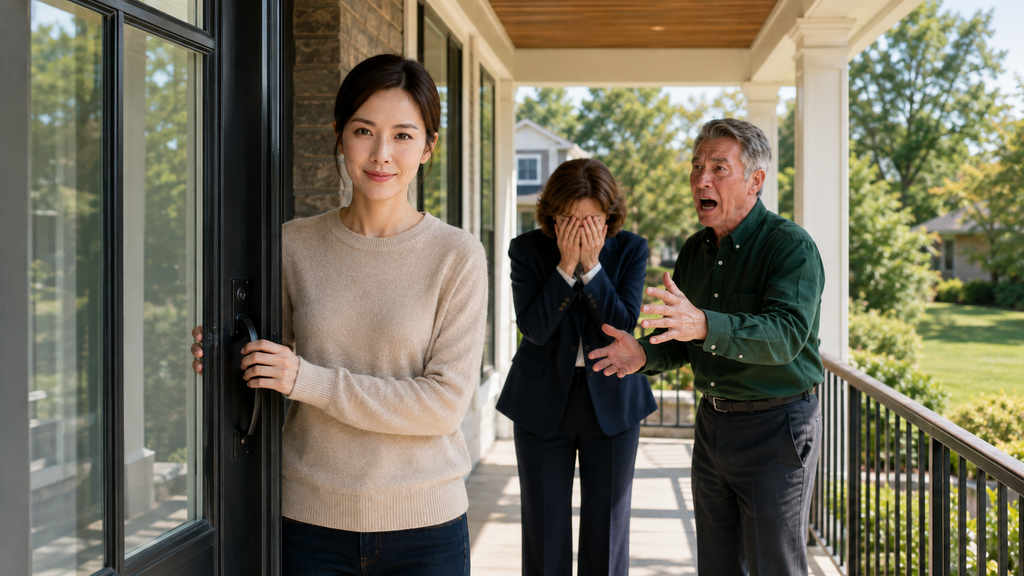
The pounding came again.
Three hard blows against the front door of the house I had owned for less than three hours.
I stood in the middle of my new living room surrounded by unopened boxes, staring toward the entrance as the sound echoed through rooms that still smelled faintly of fresh paint and polished hardwood.
My first thought was that the movers had forgotten something.
My second was that maybe one of my new neighbors had come to introduce themselves.
Then I heard my mother’s voice.
“Maya!”
My entire body went still.
“Maya, I know you’re in there!”
For a moment, I couldn’t breathe.
Two years.
Two peaceful, difficult, beautiful years had passed since I walked away from my parents’ dining room after they ordered me to pay Chloe’s $2,500 BMW repair bill or consider myself dead to them.
Two years since I had heard my mother’s voice in person.
Two years since my father had looked me in the eye and allowed me to walk out because I refused to function as my family’s personal ATM.
And somehow, on the very first day I moved into the house I had spent those two years building toward, my mother was standing on the other side of my front door.
I should have been shocked.
Instead, something colder settled inside me.
Of course she was.
People like my mother always had remarkable timing when there was something they wanted.
I crossed the room slowly.
The pounding became more frantic.
“Maya!”
I opened the door.
My mother nearly stumbled forward.
For several seconds, neither of us spoke.
I barely recognized her.
Not because she had changed beyond recognition.
Because I had.
Two years earlier, every expression on that woman’s face had possessed the power to rearrange my emotional state.
A disappointed look could make me apologize for something I hadn’t done.
A sigh could make me transfer money.
A tear could erase every boundary I had spent weeks preparing myself to enforce.
Anger could reduce me to a frightened teenager even when I was a grown woman with a successful career.
Now I simply looked at her.
She wore wrinkled black trousers, a cream cardigan I remembered buying for her birthday, and shoes that looked as though she had put them on without bothering to fasten them properly.
Her hair, usually styled perfectly, was tied into a loose knot.
There were dark circles beneath her eyes.
“Maya,” she whispered.
I didn’t move from the doorway.
“How did you find me?”
Her eyes flicked over my shoulder.
Into my house.
My house.
She stared at the tall windows.
The staircase.
The boxes.
The vaulted ceiling.
Something passed across her face.
Shock.
Then disbelief.
Then calculation.
I recognized that look immediately.
And for the first time in my life, it didn’t scare me.
It disgusted me.
“You bought this?”
I almost laughed.
Not hello.
Not I missed you.
Not I’m sorry.
Not I’ve thought about what happened.
You bought this?
“Yes.”
Her lips parted.
“All of it?”
“What does that mean?”
“I mean…”
Her eyes traveled past me again.
“This must have cost a fortune.”
I stepped sideways, deliberately blocking her view.
“It cost what it cost.”
She looked at me.
Then she said something I should have expected.
“Why didn’t you tell us?”
The absurdity of the question was so complete that I simply stared at her.
“You told me I was dead to you.”
Her face tightened.
“Maya—”
“You told me to leave your house and consider myself disowned.”
“We were angry.”
“You said I wasn’t your daughter anymore.”
“People say things when they’re upset.”
“I didn’t.”
That stopped her.
I folded my arms.
“You gave me a choice. Pay Chloe’s bill or leave. I chose to leave.”
My mother’s eyes filled suddenly.
Once, those tears would have destroyed me.
I would have opened the door wider.
I would have hugged her.
I would have begun explaining myself before she ever apologized.
Instead, I waited.
She wiped at her cheek.
“You really blocked everyone.”
“Yes.”
“Your father tried calling.”
“After six months.”
Her eyes shifted.
I knew then that she hadn’t expected me to remember.
But I remembered everything.
I remembered the first month after leaving.
Every silent evening when some childish part of me kept expecting my phone to ring.
I remembered checking my email inbox even though I had blocked their numbers.
I remembered wondering whether my father might show up at my apartment and say enough was enough.
I remembered imagining my mother crying, apologizing, finally admitting she had gone too far.
No one came.
Not when my birthday passed.
Not during Thanksgiving.
Not at Christmas.
Not when I received the promotion I had worked three years to earn.
Not when I moved from my tiny apartment into a comfortable rental while I searched for the right house.
Six months later, my father sent one email.
Not an apology.
Not an attempt to repair our relationship.
The subject line had been:
URGENT FAMILY MATTER.
The message contained one sentence.
Your mother needs $8,000 for dental work. Call me.
I deleted it.
Three months after that, Chloe created a new social media account and sent me a message.
You seriously going to stay mad forever? I need help getting approved for another car.
I blocked that account too.
That was the extent of my family’s efforts to reconcile.
Now my mother had appeared on my front porch.
And I knew before she said another word that she had not come because she missed me.
“What do you want?”
Her expression changed.
“Maya, don’t speak to me like I’m a stranger.”
“You are standing outside the home of someone you declared dead.”
Her mouth trembled.
“That was two years ago.”
“Yes.”
“Families fight.”
“That wasn’t a fight.”
“What would you call it?”
“An eviction with emotional blackmail attached.”
She looked wounded.
I didn’t care.
Not because I had become cruel.
Because I had stopped confusing honesty with cruelty.
My mother lowered her voice.
“Can I come inside?”
“No.”
The word left my mouth easily.
She blinked.
“What?”
“No.”
“Maya, I drove nearly an hour.”
“That was your decision.”
“It’s cold.”
It wasn’t.
It was a mild spring afternoon.
But manipulation didn’t require accuracy.
Only habit.
My mother glanced behind herself as if expecting an audience.
Then she leaned closer.
“Please.”
That word almost got me.
Not because I wanted to obey.
Because my mother almost never said it.
Not when requesting money.
Not when demanding favors.
Not when telling me to cancel plans because Chloe needed something.
In our family, my help had never been requested.
It had been assigned.
Please felt unfamiliar coming from her.
I studied her.
“Five minutes.”
Relief appeared instantly.
I opened the door wider.
She entered my home.
I hated how much that bothered me.
She stepped into the foyer and slowly looked around.
The house wasn’t enormous.
It wasn’t a mansion.
But after years of sacrificing everything for people who treated my income like communal property, it felt luxurious because every inch belonged to me.
Three bedrooms.
A bright kitchen with an island.
A small office overlooking the backyard.
A fireplace.
A wraparound porch.
A garden I planned to fill with lavender.
A reading nook beneath the upstairs window.
Nothing extraordinary.
Everything extraordinary.
Because I had bought it without asking permission from anyone.
My mother walked toward the living room.
Her fingertips brushed the edge of a cardboard box.
“You paid cash?”
I turned toward her sharply.
“How do you know that?”
She hesitated.
Then I understood.
“You looked up the property records.”
“Maya…”
“You searched for me.”
“We’ve been worried.”
“No. You found out I bought something.”
She exhaled.
“Your aunt Denise saw your promotion announcement online a few months ago. Then she heard from someone that you had purchased a house.”
Of course.
Family gossip traveled faster than emergency services.
“So you looked it up.”
“We were curious.”
My mother walked toward one of the windows.
Her gaze moved across the backyard.
“I cannot believe this.”
I waited.
She turned around.
“You could afford this?”
There it was again.
Money.
Always money.
“I work hard.”
“We know that.”
“Do you?”
“Of course we do.”
“You spent years telling me I was selfish whenever I wanted to keep the money I earned.”
“That’s not fair.”
“It’s exactly fair.”
Her eyes hardened for half a second.
There was the mother I remembered.
Then she softened again.
“Maya, I didn’t come here to fight.”
“Then why did you come?”
She looked down.
Her hands twisted together.
I waited.
Ten seconds.
Twenty.
Then she whispered, “Your father is in trouble.”
I felt nothing.
That surprised me.
Not satisfaction.
Not panic.
Not guilt.
Just stillness.
“What kind of trouble?”
“Financial.”
Of course.
I almost smiled.
Not because financial trouble was funny.
Because apparently the universe had a sense of irony.
My mother hurried forward.
“He made some investments.”
“No.”
She froze.
“I haven’t even explained.”
“You don’t need to.”
“Maya—”
“If this story ends with you asking me for money, the answer is no.”
Her face collapsed.
“You don’t understand.”
“I understand perfectly.”
“He could lose the house.”
The sentence hung between us.
Their house.
The house where they gave me the ultimatum.
The house where my mother told me I was dead to her.
The house where Chloe sat crying over a BMW repair bill while everyone decided my bank account belonged to her.
I should have felt victorious.
Instead, I remembered being twelve years old, sitting on those front steps with my father while he showed me how to change a bicycle tire.
I remembered Christmas mornings.
Birthdays.
The smell of cinnamon rolls from the kitchen.
The bedroom where I studied for college entrance exams.
The hallway where my height had once been marked in pencil.
Pain was complicated.
People could give you beautiful memories and still become unsafe to keep in your life.
Both things could be true.
“What happened?”
My mother lowered herself onto one of the packed moving boxes.
“Your father invested heavily with Caleb.”
My brother.
I closed my eyes.
That explained everything.
Caleb had always believed wealth was one brilliant decision away.
Crypto schemes.
Restaurant investments.
An online clothing company.
Real estate seminars.
Foreign currency trading.
Every six months, he discovered another opportunity that would supposedly make everyone rich.
Most disappeared quietly.
Others ended with somebody else paying his debts.
Usually me.
“How much?”
My mother swallowed.
“Four hundred and eighty thousand dollars.”
My eyes opened.
“What?”
“He borrowed against the house.”
I stared at her.
“Dad borrowed almost half a million dollars against your home for one of Caleb’s investments?”
“It seemed legitimate.”
“What was it?”
“A development project.”
“Where?”
She hesitated.
“Arizona.”
“What kind of development?”
“Luxury vacation properties.”
“Did Dad visit the site?”
“No.”
“Did he hire an attorney?”
“I don’t know.”
“Did he verify ownership?”
Her silence answered me.
I almost couldn’t process it.
My father, who had lectured me my entire childhood about responsibility, had apparently mortgaged his home to invest nearly half a million dollars in a project he barely understood.
“What happened to the money?”
My mother looked down.
“Gone.”
“All of it?”
“As far as we know.”
“And the loan?”
“Still there.”
I took several slow breaths.
“When is the payment due?”
“We’re already behind.”
“How far?”
“Four months.”
I walked toward the window.
Outside, the late afternoon sun rested over the backyard.
Somewhere nearby, a lawn mower buzzed.
A dog barked.
Normal life continued.
Behind me, my mother whispered, “They’re starting foreclosure proceedings.”
There it was.
The disaster.
The reason she had come.
I turned around.
“How much do you need?”
Hope exploded across her face so quickly that my stomach twisted.
Not because I intended to help.
Because she had apparently been waiting for the number.
“Seventy-five thousand would stop things immediately.”
I laughed.
I genuinely couldn’t help it.
Her face hardened.
“This isn’t funny.”
“No, Mom. It’s unbelievable.”
“Maya—”
“You came to the house I bought after you threw me away for refusing to pay twenty-five hundred dollars for Chloe’s BMW, and now you’re asking me for seventy-five thousand dollars.”
“You have the money.”
The words came automatically.
She realized what she had said a second too late.
I stared at her.
There it was.
Underneath the tears.
Underneath the disheveled hair.
Underneath the frightened mother routine.
The same entitlement.
My money was still family money.
No matter how long I disappeared.
She stood.
“I didn’t mean it like that.”
“How did you mean it?”
“You bought this house in cash.”
“So?”
“You clearly have substantial savings.”
“So?”
“We’re your parents.”
“There it is.”
Her voice rose.
“Oh, for heaven’s sake, Maya! Do you want your father and me living on the street?”
“No.”
“Then help us!”
“No.”
Her mouth fell open.
“I am not giving you seventy-five thousand dollars.”
She stared at me as though I had slapped her.
“You would let your parents lose their home?”
“I’m not making you lose it.”
“You have the ability to prevent it.”
“That doesn’t make it my responsibility.”
“Family helps family!”
Something inside me almost laughed again.
Family helps family.
The slogan people in my family used whenever they needed Maya.
Nobody ever said it when Maya needed anything.
Nobody said family helps family when I worked through pneumonia because my father insisted I had to keep saving money.
Nobody said family helps family when my apartment flooded and I spent three nights in a budget motel.
Nobody said family helps family when I paid Chloe’s tuition shortfall, Caleb’s car insurance, my mother’s credit card bill, and my father’s property taxes within the same six-month period.
Nobody said family helps family when I sat alone on Thanksgiving after being disowned.
In my family, “family helps family” had always meant one thing.
Maya pays.
Everyone else receives.
“You had two years to be my family,” I said quietly.
My mother’s anger disappeared.
I continued.
“You knew where I worked.”
She looked away.
“You could have emailed.”
Silence.
“You could have mailed a letter.”
Nothing.
“You could have come to my apartment.”
Her shoulders lowered.
“You could have asked whether I was alive.”
“Maya…”
“You didn’t.”
“We thought you needed space.”
“Six months of space?”
Her eyes filled.
“A year?”
No answer.
“Two years?”
She whispered, “Your father is stubborn.”
“So am I.”
“That’s the problem.”
I shook my head.
“No. The problem is that nobody came until you needed money.”
My mother began crying.
Real crying this time.
Her shoulders shook.
I hated seeing it.
That was the part nobody tells you about boundaries.
They hurt even when they’re necessary.
You can know someone has manipulated you.
You can understand the pattern perfectly.
You can still love them.
Love does not always disappear when respect does.
“I missed you,” she whispered.
I looked at her.
“Then why didn’t you come?”
She wiped her face.
“Because I was ashamed.”
That stopped me.
She sat back down.
“For the first few weeks, your father kept saying you would come back.”
I said nothing.
“He said you always came back.”
My throat tightened.
Because he was right.
Until that night.
“He told Chloe not to worry because you would calm down and pay the repair anyway.”
A sad smile touched my mouth.
“I didn’t.”
“No.”
My mother looked around the room.
“You didn’t.”
Her voice became quieter.
“A month passed.”
She twisted the edge of her cardigan between her fingers.
“Then two.”
I stayed silent.
“Chloe couldn’t afford the BMW.”
“What happened?”
“We covered the repair.”
I almost laughed.
“Of course you did.”
“Then she missed another payment.”
My mother sighed.
“The car was repossessed.”
That surprised me.
“What?”
“She had taken out other loans.”
I stared at her.
“For what?”
“Trips. Clothes. Credit cards.”
“Jesus.”
“She blamed us.”
“Of course.”
“She moved back home.”
I folded my arms.
My mother continued.
“Then she quit her internship because she said public transportation was humiliating.”
That sounded like Chloe.
“What does she do now?”
My mother looked embarrassed.
“She works part-time at a cosmetic boutique.”
I nodded slowly.
Some part of me had spent years imagining Chloe succeeding effortlessly while I stayed away.
Apparently, consequences had finally reached her too.
“And Caleb?”
“He convinced your father to invest.”
“I gathered that.”
“He said the Arizona project would triple the investment within eighteen months.”
“And Dad believed him.”
“Your father wanted to recover some of what we had spent.”
My eyes narrowed.
“What do you mean?”
She hesitated.
“Maya…”
“What did you spend?”
Her silence changed the air.
Suddenly I knew there was more.
“How much money have you given Chloe and Caleb since I left?”
My mother stared at the floor.
“Mom.”
“About one hundred and ten thousand.”
I actually took a step backward.
“In two years?”
“Some of that was loans.”
“To whom?”
She didn’t answer.
“Chloe?”
“Yes.”
“Caleb?”
“Yes.”
“Have either of them repaid anything?”
She looked away.
I laughed once.
There was no humor in it.
“So Dad mortgaged the house because he was trying to recover from supporting two grown children who refuse to support themselves.”
“That’s not fair.”
“It’s exactly what happened.”
“Your brother truly believed this project would work.”
“Caleb always truly believes his projects will work.”
“He feels terrible.”
“Does he?”
“Yes.”
“Is he selling his car?”
My mother didn’t answer.
“His watches?”
Nothing.
“His golf membership?”
Nothing.
“His condo?”
“He rents.”
“Is Chloe working two jobs?”
Silence.
“Has she sold the designer bags?”
“Maya.”
“Has either one of them done anything to save your house?”
“They don’t have the money.”
I stared at her.
“Neither did I when you demanded it from me.”
My mother flinched.
I hated the small satisfaction that gave me.
I didn’t want to become someone who enjoyed hurting people.
So I took a breath.
When I spoke again, my voice was calm.
“I’m sorry you’re going through this.”
Her face brightened slightly.
“But I am not giving you seventy-five thousand dollars.”
The light disappeared.
“Maya.”
“No.”
“Please.”
“No.”
“You could save us.”
“I already spent years trying.”
Her lips trembled.
“I was paying for everyone long before you admitted you were drowning.”
“That’s what family does.”
“No.”
I shook my head.
“That’s what one exploited daughter does until she stops.”
She stood quickly.
“Exploited?”
“Yes.”
“We raised you.”
“You did.”
“We fed you.”
“You were my parents.”
“We sent you to college!”
“I had scholarships.”
“We paid what they didn’t cover.”
“And I spent years helping you afterward.”
“You make it sound transactional.”
“It became transactional when every expression of love came with an invoice.”
That landed.
My mother stared at me.
Then something extraordinary happened.
Her face changed.
Not into anger.
Into recognition.
She sat again.
Slowly.
For perhaps the first time in my adult life, my mother looked old.
Not physically.
Emotionally.
Like someone finally looking at the ruins of a house after insisting for years there had never been a fire.
“I suppose we did rely on you,” she said.
My throat tightened.
That was the closest she had ever come to admitting it.
“You relied on me because I always said yes.”
“You were good with money.”
“That doesn’t mean I existed to fix everyone else’s mistakes.”
“No.”
Her eyes filled again.
“No, I suppose it doesn’t.”
We sat in silence.
I didn’t know what I wanted from her.
An apology?
A confession?
Two years earlier, I would have given almost anything to hear both.
Now they seemed less important than they once had.
Because healing had happened without them.
I had learned something difficult during those two years.
Closure is wonderful when people give it to you.
But sometimes you have to build a life that does not require their cooperation.
My mother finally spoke.
“How did you do it?”
“Do what?”
She gestured around.
“This.”
I looked at my house.
I could have told her about the trust fund.
About the forgotten account my grandfather had protected.
About the $200,000 that gave me a foundation.
But that wasn’t the whole truth.
Money made the beginning possible.
Freedom did the rest.
“I stopped paying for everyone else.”
Her eyes lowered.
“I started keeping what I earned.”
I walked toward one of the boxes and opened it.
Inside were framed photographs.
Friends.
Coworkers.
Trips I had taken.
Moments from a life my family knew nothing about.
“I got promoted.”
She nodded.
“I heard.”
“I negotiated another raise six months later.”
I pulled out a photograph of myself standing beside three coworkers at a conference in Seattle.
“I invested.”
Another photograph.
Me standing on a mountain trail.
“I traveled.”
Another.
My birthday dinner with people who had become more like family than some of the people related to me.
“I made friends.”
My mother stared at the photographs.
“I built something.”
She whispered, “Without us.”
That sentence hurt more than I expected.
I looked at her.
“Because of your decision.”
She nodded.
For several seconds, the only sound in the room was the distant hum of traffic.
Then my mother reached into her handbag.
She pulled out an envelope.
My body tensed automatically.
“What’s that?”
“Something your father told me to bring.”
Of course.
I almost laughed.
“Another bill?”
“No.”
She held it toward me.
I didn’t take it.
“What is it?”
“Open it.”
“I would rather you tell me.”
Her shoulders slumped.
“It’s a proposal.”
I stared at her.
“A proposal for what?”
“The house.”
I nearly laughed again.
Of course it was.
She quickly added, “Not your house.”
“What house?”
“Ours.”
She placed the envelope on a moving box between us.
“Your father thinks you could purchase our home.”
I stared at the envelope.
The audacity was almost impressive.
“Dad wants me to buy the house from him?”
“Technically from the bank, before foreclosure.”
“And what happens to you?”
“We would remain there.”
My eyes slowly lifted.
“You want me to buy your house and let you keep living in it.”
My mother swallowed.
“Temporarily.”
“How temporarily?”
“Until we recover.”
“From the investment?”
“Yes.”
“The money is gone.”
“We might be able to sue.”
“With what money?”
She looked frustrated.
“You don’t need to interrogate every detail.”
“Yes, I do, when you are proposing that I spend hundreds of thousands of dollars.”
“We wouldn’t expect it for free.”
I almost admired the confidence.
“What would you pay me?”
“Rent.”
“How much?”
She named a number.
It was less than half the current market rent.
I shook my head.
“No.”
My mother’s face tightened.
“You didn’t even consider it.”
“I considered it instantly.”
“Maya.”
“No.”
“The house is where you grew up.”
“I know.”
“You could keep it in the family.”
“The family told me to get out of it.”
She looked away.
I picked up the envelope.
For one second, I considered tearing it apart.
Instead, I handed it back.
“I don’t want your house.”
“You’d own another property.”
“I don’t want one that comes with permanent emotional tenants.”
Her expression turned wounded.
“That’s cruel.”
“No. It’s accurate.”
She stood.
“I don’t know who you are anymore.”
Those words would once have frightened me.
Now I smiled sadly.
“I know.”
She stared.
“That’s the difference.”
For several seconds, neither of us spoke.
Then my mother walked toward the door.
Part of me wanted to stop her.
Not to give her money.
Just to say something kinder.
Something that would make the moment easier.
But easy was what had kept me trapped for years.
Easy was paying the bill.
Easy was apologizing.
Easy was carrying problems that belonged to other adults.
So I allowed silence to do what I had never allowed it to do before.
I let other people feel disappointed in me.
My mother reached the doorway.
Her hand rested on the knob.
Then she turned.
“Do you hate us?”
The question broke something open inside me.
“No.”
My answer came immediately.
She looked surprised.
I swallowed.
“That would actually be easier.”
Her eyes filled.
“I love you.”
I paused.
“But loving you doesn’t mean giving you access to everything I have.”
She began crying again.
“I love Dad too.”
My voice trembled now.
“And Chloe.”
A tear escaped before I could stop it.
“And Caleb.”
I wiped it away.
“I spent years proving that love with money. Nobody seemed interested in learning whether there were other ways to love me back.”
My mother covered her mouth.
I continued.
“I don’t hate you.”
I opened the door.
“But I am never going back to being who I was.”
She stepped onto the porch.
For a moment, I thought that was the end.
Then she looked over her shoulder.
“What are we supposed to do?”
It was an honest question.
For once, I gave her an honest answer.
“Sell the house before the bank takes it.”
Her face tightened.
“Downsize.”
“Maya…”
“Dad can work another few years.”
“He planned to retire.”
“Plans change.”
She looked offended.
“Chloe can contribute rent.”
“She barely makes anything.”
“Then she can work full-time.”
My mother started to interrupt.
I raised my hand.
“Caleb can contribute too.”
“He has debts.”
“So do you.”
She went quiet.
“You keep asking what you’re supposed to do.”
I looked directly at her.
“This is what other families do when Maya isn’t there to write a check.”
Her shoulders fell.
Then she walked away.
I closed the door.
Locked it.
And leaned my forehead against the wood.
For exactly three seconds, I felt powerful.
Then I cried so hard my knees gave out.
I slid down against the door and sat on the floor of my dream house surrounded by boxes while two years of grief came pouring out.
I cried for the family I had lost.
I cried for the family I had imagined.
I cried for twenty-five-year-old Maya, who thought paying Chloe’s phone bill would make everyone grateful.
For twenty-eight-year-old Maya, who canceled a vacation because Caleb needed money.
For thirty-year-old Maya, who believed love meant never saying no.
For the woman who sat at that dining table and realized everyone she loved was willing to throw her away over $2,500.
And I cried for my mother.
Because I knew she was frightened.
I knew losing a home was terrifying.
I knew my father probably wasn’t sleeping.
I knew Chloe would be panicking.
I knew Caleb was probably filled with shame even if he didn’t know how to admit it.
Their pain was real.
But so was mine.
And for the first time, I understood that acknowledging someone else’s pain did not create an obligation to destroy myself fixing it.
Eventually, the tears stopped.
I wiped my face.
Then I stood.
I looked around my empty living room.
The late afternoon sun had shifted lower.
Golden light spilled across the hardwood floor.
For a moment, everything was quiet.
Then my phone rang.
Unknown number.
I almost ignored it.
Something made me answer.
“Hello?”
Silence.
Then my father’s voice.
“Maya.”
My stomach dropped.
Two years.
His voice sounded older.
Rougher.
But still unmistakably his.
“Dad.”
“Your mother came to see you.”
“Yes.”
“She told me you refused.”
I closed my eyes.
There it was.
No hello.
No apology.
Straight to money.
“Yes.”
“You understand what’s happening?”
“I understand enough.”
“This house has been in our family for thirty-one years.”
“I know.”
“You grew up here.”
“I know.”
“I never imagined one of my children would have the ability to save it and refuse.”
My jaw tightened.
“I never imagined my father would tell me I was dead to him over a BMW repair.”
Silence.
Then he said, “I didn’t say that.”
“No.”
I looked toward the front door.
“Mom did.”
“I was there.”
Exactly.
“You didn’t stop her.”
Another silence.
“I was angry.”
“So was I.”
“You walked out.”
“You gave me the choice.”
“You could have just paid the bill!”
He shouted it.
And suddenly I was back there.
The dining room.
Chloe crying.
My mother’s hand striking the table.
My father’s face red with anger.
The invoice.
The ultimatum.
Something inside me hardened.
“You still think I should have paid it.”
“It was twenty-five hundred dollars.”
I laughed bitterly.
“Exactly.”
He didn’t understand.
So I explained.
“It was twenty-five hundred dollars to you.”
My voice shook.
“To me, it was every dollar before it.”
The silence changed.
“It was Chloe’s rent.”
“Caleb’s investment.”
“Mom’s credit card.”
“Your vacation.”
“Your taxes.”
“Her tuition.”
“His insurance.”
“Her car payment.”
“Your emergency roof repair.”
“I had spent years being everyone’s emergency fund.”
I pressed one hand against my chest.
“That twenty-five hundred dollars wasn’t the beginning.”
My voice broke.
“It was the last straw.”
My father said nothing.
I continued.
“You weren’t throwing me out because of twenty-five hundred dollars.”
“You were throwing me out because I finally said no.”
The line went silent.
Then, very quietly, my father said, “We thought you would come back.”
Something about hearing him admit it made my eyes burn.
“I know.”
“We thought you’d cool down.”
“I know.”
“Your mother kept saying you were stubborn.”
“I know.”
“I kept saying you’d realize family was more important.”
I wiped my eyes.
“I did.”
He paused.
“I realized that families aren’t supposed to make one person prove their love by constantly paying for everyone.”
My father exhaled.
“We made mistakes.”
It was the first time he had ever said those words to me.
I sat down on one of the boxes.
“A lot of them.”
“Yes.”
His voice sounded small.
“We did.”
I didn’t know what to say.
Then he asked, “Do you really have enough money to help?”
My heart sank.
So close.
We had been so close to having a human conversation.
“Yes,” I said.
He inhaled sharply.
“How much?”
“That’s none of your business.”
“Maya.”
“I’m answering because I need you to understand something.”
I looked around my house.
“I probably could help.”
Silence.
“I could write a check.”
His breathing changed.
“I could probably stop the foreclosure.”
“Maya…”
“But I won’t.”
The words hurt.
I said them anyway.
“I won’t because if I save the house, nothing changes.”
“That’s not true.”
“It is.”
“You’ll resent me.”
“I already resent what happened.”
“You’ll resent Chloe.”
“She needs consequences.”
“You’ll resent Caleb.”
“He needs consequences.”
My voice softened.
“And you need to learn that rescuing adults from every bad decision is not love.”
He gave a humorless laugh.
“You sound like a therapist.”
“I saw one.”
That shut him up.
“For eighteen months.”
He said nothing.
“I had to learn why I thought setting myself on fire was the price of belonging.”
My father whispered my name.
I continued.
“I had to learn that guilt isn’t the same thing as responsibility.”
I stood and walked toward the kitchen.
“I had to learn that disappointing someone doesn’t mean I’ve harmed them.”
Silence.
“I had to learn that saying no doesn’t make me selfish.”
My father’s voice cracked.
“We never meant to make you feel that way.”
“I believe that.”
And surprisingly, I did.
I didn’t believe my parents had sat together years earlier plotting how to exploit me.
Patterns rarely begin that deliberately.
I had been responsible.
So they relied on me.
Chloe struggled.
So they protected her.
Caleb made reckless decisions.
So they rescued him.
I succeeded.
So success became evidence that I needed less.
Every time I solved a problem, the family learned to bring me another one.
Every time Chloe fell apart, everyone learned to protect her from consequences.
Every time Caleb failed, someone softened the landing.
Eventually, the pattern became the family.
That didn’t make it harmless.
But understanding something and excusing it were not the same.
“Dad.”
“Yes?”
“Sell the house.”
He exhaled.
“Your mother said the same thing.”
“You have equity left.”
“Not enough.”
“Enough to start over.”
“I’m sixty-three years old.”
“Then start over at sixty-three.”
“That sounds simple when you’re thirty-two.”
“It isn’t simple.”
I looked around the kitchen.
“It’s just necessary.”
There was a long pause.
Then my father asked the question I had waited two years to hear.
“Are you happy?”
I closed my eyes.
“Yes.”
The answer surprised both of us.
He was quiet for several seconds.
Then he said, “I’m glad.”
Tears filled my eyes again.
“Thank you.”
“I mean that.”
“I know.”
Another long pause.
Then he whispered, “I miss my daughter.”
My throat closed.
“You told me I didn’t have a family anymore.”
“I was wrong.”
“You didn’t say it.”
“I let it happen.”
“Yes.”
“I was wrong.”
I sat down on the kitchen floor because my legs suddenly couldn’t hold me.
My father had apologized to me perhaps four times in my entire life.
None sounded like this.
“I should have called.”
“Yes.”
“I should have come after you.”
“Yes.”
“I thought being the father meant everyone came back to me.”
I wiped tears from my face.
“It doesn’t.”
“I know that now.”
For a while, neither of us spoke.
Then he asked, “Can I see you?”
I almost answered immediately.
But the old Maya answered immediately.
The new Maya thought first.
“Not yet.”
He inhaled.
“That’s fair.”
Three words.
That’s fair.
I had spent my entire life being told my boundaries were unreasonable.
Hearing him say those words felt almost unreal.
“When?”
“I don’t know.”
“All right.”
“And Dad?”
“Yes?”
“Do not send Mom back here asking for money.”
“I won’t.”
“Don’t send Chloe.”
“I won’t.”
“Or Caleb.”
“I understand.”
I hesitated.
“I’m sorry about the house.”
His voice cracked.
“So am I.”
Then he said, “Congratulations on yours.”
I stared toward the living room.
The boxes.
The sunlight.
The staircase.
The home I had built from the wreckage of the relationship we were discussing.
“Thank you.”
We hung up.
I sat on the floor for a long time afterward.
Not destroyed.
Not healed.
Just changed.
Sometimes that is what reconciliation begins with.
Not forgiveness.
Not hugs.
Not dramatic reunions.
Just one person finally saying:
I was wrong.
And the other person deciding what happens next.
The following morning, I woke on an air mattress in my bedroom because I still hadn’t assembled my bed.
Sunlight poured through the curtains.
For five beautiful seconds, I forgot everything.
Then I remembered my mother.
My father.
The foreclosure.
The phone call.
I expected guilt to crash over me.
It didn’t.
Instead, there was sadness.
Sadness I could live with.
My phone buzzed.
A text from my best friend, Lena.
HOUSEWARMING EMERGENCY. COFFEE IN TEN.
I smiled.
Lena arrived fifteen minutes later carrying coffee, breakfast sandwiches, and a toolbox she absolutely did not know how to use.
She walked into the living room.
Then she froze.
“What happened?”
“Why?”
“You look like you fought a ghost.”
I laughed.
“My mother came here yesterday.”
Lena nearly dropped the coffee.
“YOUR mother?”
“Yes.”
“The one who disowned you?”
“The very same.”
“How did she find you?”
“Public property records.”
Lena stared at me.
“That is deeply creepy.”
“She needs seventy-five thousand dollars.”
Lena set the coffee down carefully.
“Oh.”
“Dad invested almost half a million with Caleb.”
“Oh no.”
“Against their house.”
“Oh, Maya.”
“They might lose it.”
Lena studied me.
“Are you going to pay?”
“No.”
She nodded.
“Good.”
I looked at her.
“You didn’t even think.”
“I’ve spent two years watching you rebuild yourself.”
“That doesn’t mean they deserve to be homeless.”
“No.”
She sat beside me.
“But those aren’t the only two options.”
I knew that.
Still, I needed to hear someone else say it.
“They can sell.”
“Yes.”
“Downsize.”
“Yes.”
“Chloe can work.”
“A revolutionary concept.”
I laughed despite myself.
“Caleb can help.”
“Also revolutionary.”
I stared into my coffee.
“I feel terrible.”
Lena put one hand over mine.
“You can feel terrible and still say no.”
That sentence stayed with me.
You can feel terrible and still say no.
For years, I had assumed discomfort meant I was making the wrong choice.
Therapy taught me something different.
Sometimes discomfort is simply what happens when you stop participating in a pattern that once protected everyone except you.
Three weeks passed.
Then my father emailed.
The message contained five words.
We put the house up.
I stared at the screen.
I expected relief.
Instead, grief.
I drove past the house that evening.
I told myself I was only curious.
That was a lie.
I parked down the street beneath an old maple tree.
The FOR SALE sign stood in the front yard.
That nearly broke me.
I remembered helping Dad plant flowers around that mailbox.
I remembered chalk drawings on the driveway.
I remembered Chloe learning to ride a bike.
Caleb sneaking friends into the basement.
Mom calling everyone to dinner through the back door.
Lives are strange.
Sometimes the place where you suffered also contains your happiest memories.
Sometimes leaving something harmful does not mean everything inside it was bad.
I cried in my car.
Then I drove home.
My home.
Six weeks later, the house sold.
My parents moved into a two-bedroom townhouse forty minutes away.
They lost money.
Not everything.
But enough that retirement changed.
Dad returned to consulting three days a week.
Mom picked up bookkeeping work for a local dentist.
Chloe moved in with a friend because my parents told her she could no longer live with them unless she paid rent.
Apparently she screamed for two straight days.
Then she got another job.
Caleb sold his car.
That information shocked me most.
He also sold several expensive watches and used the money to repay a small portion of what my father had lost.
Not enough.
But something.
Consequences were doing what my money never had.
They were teaching.
For the first time, everyone had to carry part of their own weight.
Three months after my father and I spoke, I received a letter.
Not an email.
A real letter.
The handwriting belonged to Chloe.
I almost threw it away unopened.
Instead, I made tea and sat on my porch.
The letter was six pages long.
The first page made me angry.
She defended herself.
Explained the pressure she had been under.
Said being the younger sister of someone successful had always made her feel inadequate.
I nearly stopped reading.
Then something changed around page three.
I’m not writing to ask you for anything.
I read that sentence twice.
She continued.
I know you probably don’t believe me.
I didn’t.
I’m working full-time now.
I have two jobs.
I sold the designer things I could sell.
Mom and Dad stopped paying my phone bill.
I thought it was cruel.
Now I understand that I didn’t know how much things cost because somebody always fixed everything before I had to learn.
My stomach tightened.
Then came the sentence that hurt most.
Mostly you.
I set the letter down.
I stared at my garden.
Lavender moved gently in the evening breeze.
Eventually, I kept reading.
I used to tell myself you liked paying because you were the successful one.
I told myself you were showing off.
I told myself you judged me.
Maybe sometimes you did judge me.
But I think mostly I said those things because admitting how much I depended on you would have been embarrassing.
I cried the first time I had to choose between going out with friends and paying my electricity bill.
Then I realized you had probably been making choices like that for years while I was spending your money too.
I’m sorry about the BMW.
But I’m more sorry that I sat there while Mom told you that you were dead to us.
I thought you would stay.
That is the ugliest thing I have ever admitted.
I thought you would stay no matter how badly we treated you because you always did.
You leaving was the first time I understood that people can love you and still decide they’ve had enough.
I folded the letter.
Then opened it again.
At the bottom, she had written:
I don’t expect forgiveness.
I just wanted to say I’m sorry without needing anything afterward.
Love,
Chloe.
I sat on the porch until it became dark.
Then I cried.
Not because I had forgiven her.
Because she had finally seen me.
Weeks passed before I responded.
My message was short.
Thank you for the letter.
I’m glad you’re doing well.
I need more time.
Maya.
She replied thirty seconds later.
Take all the time you need.
No guilt.
No anger.
No demand.
I stared at those words for a long time.
Maybe people could change.
Not because I paid them to.
Because I stopped protecting them from the consequences that might force them to.
Caleb’s apology arrived later.
His was less elegant.
One text.
Dad gave me your number. I hope that’s okay.
I’m sorry.
I screwed up badly.
Not just the investment.
Everything.
I shouldn’t have treated you like a bailout fund.
I won’t ask you to fix what I broke.
I’m trying.
If you never want to talk, I understand.
I read it three times.
Then replied:
Keep trying.
He sent back:
I will.
That was enough.
My mother took longer.
Much longer.
For six months, we had no contact.
Then a birthday card arrived.
No request inside.
Just:
Happy birthday, Maya.
I hope your house feels like home.
Love, Mom.
The following Christmas, another card.
In spring, another letter.
Short.
Quiet.
Different.
I learned through Dad that she had started seeing a counselor.
That surprised me more than anything.
My mother had spent years calling therapy “paying someone to hear you complain.”
Apparently losing her daughter had changed her opinion.
Or maybe losing her house had.
Or maybe, for the first time, she had enough silence around her to hear herself.
Nearly a year after she came to my porch asking for $75,000, she called.
I answered.
“Hello?”
“Maya.”
“Hi, Mom.”
She took a breath.
“I want to apologize.”
I said nothing.
“I’ve rehearsed this with my therapist.”
Despite myself, I smiled.
“That sounds dangerous.”
She laughed.
It was small.
Nervous.
But real.
“I was controlling.”
My smile faded.
“I used guilt.”
She continued.
“I confused your competence with invulnerability.”
That sentence hit me hard.
“I treated Chloe and Caleb like they needed protection and treated you like you didn’t need anything.”
Tears filled my eyes.
“I thought because you were strong, I could ask more from you.”
She inhaled shakily.
“And every time you managed, I asked even more.”
I sat down.
“I made you pay for being the responsible child.”
I covered my mouth.
There it was.
The sentence I had needed twenty years earlier.
“I’m sorry.”
I couldn’t speak.
Her voice trembled.
“I’m especially sorry for what I said that night.”
I closed my eyes.
“I told my daughter she was dead to me because she wouldn’t give money to her sister.”
She began crying.
“I am ashamed of that.”
“So am I.”
“I know.”
We stayed quiet.
Then she whispered, “I don’t want your money.”
My breath caught.
“I want my daughter back.”
I looked around my house.
The curtains.
The furniture.
Photographs on the walls.
Plants in the windows.
A home that was no longer filled with moving boxes.
A life.
My life.
“I can’t go back,” I said.
“I know.”
“I won’t be the same daughter.”
“I don’t want the same daughter.”
I swallowed.
“What does that mean?”
“The daughter we had thought she had to buy her place in the family.”
My eyes closed.
“I want to know the woman who learned she didn’t.”
I cried then.
Quietly.
So did she.
A month later, I invited my mother for coffee.
Not to my house.
A café.
Neutral territory.
She arrived fifteen minutes early.
I almost laughed.
My mother had never been early for anything that involved me.
She stood when I walked in.
For a second, we simply looked at each other.
Then she opened her arms.
But she didn’t move toward me.
She waited.
That mattered.
I stepped forward.
We hugged.
It lasted perhaps ten seconds.
It felt like ten years.
When we sat down, she reached for her purse.
I tensed automatically.
She noticed.
Her face changed.
“Oh, Maya.”
“I’m sorry.”
“No.”
She shook her head.
“Don’t apologize.”
She pulled out a small photograph.
It was my grandfather.
The grandfather who created the trust fund.
The money that ultimately gave me the financial freedom to leave without fear.
He stood beside me at my college graduation.
His hand rested proudly on my shoulder.
“I found this while moving,” Mom said.
I held the photograph.
“I thought you should have it.”
“Thank you.”
She stirred her coffee.
Then she said, “There’s something else.”
My stomach tightened.
“What?”
She hesitated.
“About your grandfather’s trust.”
My entire body became still.
“What about it?”
My mother looked ashamed.
“We knew.”
The café seemed to disappear.
“You knew what?”
“About the account.”
I stared at her.
“How?”
“Your grandfather told your father years ago.”
My heartbeat became loud in my ears.
I placed the photograph on the table.
“You knew there was more than two hundred thousand dollars sitting there?”
“Not the exact amount.”
My voice dropped.
“But you knew the trust existed.”
“Yes.”
The progress we had made suddenly felt fragile.
“Why did you never tell me?”
My mother looked down.
“Your grandfather asked us not to.”
“What?”
“He said it was meant to be yours.”
“That makes no sense.”
“He didn’t trust us with it.”
I stared at her.
She continued carefully.
“He had seen how the family relied on you.”
My throat tightened.
“He knew?”
“Yes.”
“He told your father that if you knew the money existed too early, we might pressure you to use it.”
I leaned back.
A chill moved through me.
“So he hid it from me to protect it from you.”
My mother’s eyes filled.
“Yes.”
“And you let me believe I had almost nothing saved.”
“Yes.”
“While asking me for money.”
Her face crumpled.
“Yes.”
I stood.
“Maya—”
“I need air.”
I walked outside.
My hands shook.
All those years.
All those arguments.
All those moments when I sat in my apartment staring at spreadsheets, wondering how I would ever buy a home.
My parents knew there was a trust.
They knew.
Mom followed me outside but stayed several feet away.
“I know how terrible it sounds.”
“It sounds worse than terrible.”
“I know.”
“You watched me panic about money.”
“Yes.”
“You watched me work weekends.”
“I know.”
“You kept asking me to pay for Chloe and Caleb.”
“I know.”
“Knowing Grandpa had protected money from you.”
Her face collapsed.
“Yes.”
I laughed bitterly.
“Unbelievable.”
“Maya, your father and I convinced ourselves the trust wasn’t relevant because we weren’t touching it.”
“You were touching everything around it!”
I was shouting now.
People near the café glanced toward us.
I didn’t care.
“You drained every dollar I earned because somewhere in the back of your minds you knew I had a hidden safety net!”
My mother shook her head.
“No.”
“How do you know?”
Silence.
“How do you know that wasn’t part of it?”
She couldn’t answer.
I wiped tears from my cheeks.
“My grandfather saw what you were doing before I did.”
“Yes.”
“And instead of changing, you proved him right.”
Her shoulders shook.
“Yes.”
The anger drained out of me almost instantly.
Not because she deserved comfort.
Because truth had arrived.
Ugly.
Complete.
Necessary.
I turned away.
“I can’t do this today.”
“I understand.”
“I might not call for a while.”
“I understand.”
She started walking toward her car.
Then she stopped.
“Maya?”
I didn’t look at her.
“I’m sorry.”
She waited.
“I know I’ve said it before.”
Her voice cracked.
“But I am.”
She left.
I stood outside the café for fifteen minutes.
Then I called the law firm that had administered my grandfather’s trust.
Two days later, I sat in a conference room across from an attorney named Martin Reeves.
He had handled estate matters for my grandfather.
He confirmed everything.
The trust had been created when I was nineteen.
My grandfather had contributed to it periodically.
Investment growth accounted for much of its eventual value.
The release provisions became fully available to me after age thirty, but because the contact information had been outdated and statements had largely transitioned to an online portal, I simply hadn’t realized the account had grown so substantially.
“Did my parents have access?” I asked.
“No.”
“Could they withdraw money?”
“Absolutely not.”
“Did my grandfather specifically say why he structured it this way?”
Martin hesitated.
Then opened a file.
“There is a letter.”
My heart stopped.
“A letter?”
“To you.”
“Why didn’t I receive it?”
“He instructed that it remain in the file unless questions arose about the trust.”
Martin slid an envelope across the table.
My name was written across the front in handwriting I recognized instantly.
I cried before opening it.
Inside was a single sheet of paper.
My grandfather had written it fourteen years earlier.
Maya,
If you are reading this, you have probably discovered the account.
I hope it gives you choices.
That is what money is meant to give a person.
Not status.
Not obedience.
Choices.
You have always been the helper in your family.
That is a beautiful quality.
But I worry people may mistake your generosity for an unlimited resource.
Never confuse being useful with being loved.
People who love you should still love you when you say no.
Use this money to build something that belongs to you.
A home.
A business.
A life.
Anything.
Just promise me you will not spend all of yourself trying to keep everyone else comfortable.
Love,
Grandpa.
I couldn’t finish reading it the first time.
Or the second.
By the third, tears were dropping onto the paper.
Never confuse being useful with being loved.
My grandfather had understood everything.
Long before I did.
I carried that letter home.
That night, I framed it.
Not the original.
That went into a safe.
I framed a copy and placed it in my office.
Every morning, when I sat down to work, I could see one sentence.
People who love you should still love you when you say no.
One year later, my family gathered at my house for the first time.
Not the old family.
Not exactly.
Something new.
Something cautious.
My father arrived carrying a bottle of sparkling cider because I had mentioned months earlier that I liked it.
Not because it was expensive.
Because he remembered.
My mother brought flowers from her small townhouse garden.
Chloe arrived with a homemade pie that was slightly burned around the edges.
Caleb brought nothing.
Then apologized awkwardly and drove to a nearby store for ice.
I laughed harder than I had expected.
Nobody asked what the house cost.
Nobody asked how much I earned.
Nobody asked about the trust.
Nobody asked for money.
We ate dinner at my table.
My table.
Halfway through the meal, Chloe looked around and said, “This place is beautiful.”
“Thank you.”
Then she grinned.
“Way better than my old BMW.”
Everyone froze.
I stared at her.
Then we both started laughing.
Even Dad laughed.
Mom covered her face.
“Can we please retire that story?”
“No,” I said.
Chloe raised her glass.
“Absolutely not.”
Caleb lifted his glass too.
“To the BMW transmission that destroyed the family.”
Mom groaned.
I smiled.
“No.”
Everyone looked at me.
I lifted my own glass.
“To the BMW transmission that forced the family to change.”
Silence.
Then Dad raised his glass.
“I’ll drink to that.”
We toasted.
Not everything healed that night.
Some things never completely heal.
There were still boundaries.
I never gave my parents access to my finances.
I never loaned Chloe money.
I never invested in Caleb’s ideas.
I stopped explaining what I could afford.
When someone asked for help, I decided based on what I wanted to give—not what guilt demanded.
Sometimes I said yes.
Often I said no.
And gradually, everyone learned that no was not rejection.
It was simply no.
Chloe eventually became a manager at the cosmetic boutique.
Then she completed a certification program in digital marketing.
She bought another car three years after losing the BMW.
Used.
Reliable.
Paid for mostly in cash.
She sent me a photograph the day she got it.
LOOK WHAT I BOUGHT WITHOUT RUINING ANYONE’S LIFE.
I laughed for five minutes.
Caleb spent several years repaying our parents.
He never recovered all the money.
But he changed.
The man who once chased every shortcut toward wealth became strangely conservative.
He started working in commercial insurance.
Boring.
Stable.
Perfect.
Dad eventually retired.
Later than planned.
With less money than planned.
But he told me once that losing the house had taught him something he wished he had learned earlier.
“I spent years trying to prevent your brother and sister from failing,” he said.
“All I did was delay the lessons.”
Mom and I never became the mother and daughter we might have been.
Too much history sat between us.
But we became something real.
She learned to ask instead of demand.
I learned to answer honestly.
Sometimes we disappointed each other.
Nobody died from it.
That was progress.
As for me, I stayed in my house.
I planted lavender.
Then roses.
Then far too many tomatoes one summer because I had absolutely no idea what I was doing.
I turned the third bedroom into a library.
I bought the oversized couch I had always wanted.
I traveled.
I worked.
Eventually, I became a director at the technology company where I had once been terrified to take a day off.
I created an emergency fund so large it would have horrified the younger version of me.
Then I learned to spend money too.
On joy.
That took practice.
I had spent so long equating responsibility with deprivation that buying something simply because I wanted it made me anxious.
The first extravagant thing I bought was a piano.
Not because I knew how to play.
Because I had always wanted to learn.
A beautiful upright piano stood near the windows in my living room.
Every Thursday evening, an instructor named Elaine came over and patiently taught me chords.
I was terrible.
Delightfully terrible.
Nobody needed piano lessons.
Nobody could call them responsible.
Nobody benefited except me.
That was exactly why I loved them.
Three years after buying the house, I hosted my thirty-fifth birthday dinner there.
Friends filled the kitchen.
Music played.
Lena was shouting about candles.
Chloe argued with Caleb about how to cut the cake.
My father stood outside checking the grill.
Mom arranged flowers on the dining table.
I stood in the hallway for a moment and watched them.
My family.
Not perfect.
Not magically repaired.
Not innocent of what happened.
But different.
And I was different too.
That mattered most.
Lena caught me watching.
“You okay?”
I smiled.
“Yeah.”
She followed my gaze.
“You ever think about that night?”
“What night?”
She rolled her eyes.
“The famous BMW ultimatum.”
I laughed.
“Sometimes.”
“What would you do differently?”
I thought about it.
The dining room.
The invoice.
My mother’s hand slamming against the table.
My father ordering me to pay.
Chloe crying.
Everyone waiting.
The moment I pushed my chair back.
Then I’m out.
I smiled.
“Nothing.”
Lena raised an eyebrow.
“Nothing?”
“Maybe I would have grabbed dessert before leaving.”
She burst out laughing.
I did too.
Then I looked around my home.
At the walls I owned.
The people I had chosen to allow back into my life.
The peace I had built.
I understood something then.
For years, I had believed the most important part of that story was the hidden trust fund.
People loved that detail when they heard the story.
The forgotten account.
The two hundred thousand dollars.
The money that changed everything.
But they were wrong.
The account didn’t save me.
Money helped.
Of course it did.
Pretending otherwise would be dishonest.
It gave me security.
It gave me options.
It accelerated the life I was building.
But money was not what saved me.
I had already walked away before I saw the notification.
I said, “Then I’m out,” when I still believed I had nothing except my salary, my coat, my car, and whatever courage I could gather on the way to the front door.
That was the moment everything changed.
Not when the balance appeared on my phone.
Not when I bought the house.
Not when my mother apologized.
Not when my father admitted he was wrong.
Not when Chloe finally learned to support herself.
The turning point was smaller.
Quieter.
A chair sliding backward from a dining room table.
A woman standing up.
A coat pulled from a rack.
A sentence spoken without shouting.
Then I’m out.
That was the investment that produced every return afterward.
Self-respect.
A few months after my thirty-fifth birthday, I found myself standing in front of the framed letter from Grandpa.
I had received another promotion that morning.
My mother had sent flowers.
Dad had texted:
PROUD OF YOU.
Chloe sent approximately eighteen celebratory emojis.
Caleb asked if my new position meant I finally outranked everyone.
Lena wanted champagne.
Normal things.
Healthy things.
I touched the frame.
“Thanks, Grandpa,” I whispered.
The room was quiet.
Sunlight rested across the floor.
Outside, lavender moved in the breeze.
And for just a moment, I remembered myself sitting inside my car two years earlier after being thrown out of my parents’ home.
I remembered staring at the banking notification.
Remembered seeing that balance.
Remembered believing I had discovered the secret that would change my life.
But now I understood.
Grandpa’s money was never the biggest secret.
The biggest secret was something nobody in my family had ever taught me.
You can love people without rescuing them.
You can forgive someone without giving them unrestricted access to your life.
You can feel guilty and still make the right decision.
You can miss people and still stay away until they treat you better.
You can be generous without becoming available for exploitation.
You can say no without providing a twenty-minute explanation.
And sometimes losing your place in a family is the first step toward discovering whether that place was ever safe to begin with.
The house eventually became filled with memories.
Good ones.
Real ones.
No invoices on the table.
No ultimatums.
No one demanding proof that they mattered more than I did.
Years later, I replaced the dining table.
The old one was perfectly fine.
But I wanted something larger.
Something sturdy.
Something that could hold ten people comfortably.
When the new table arrived, the deliverymen placed it beside the kitchen.
I ran my hand over the wood.
For a second, I thought of my mother’s hand slamming against another polished table years before.
You transfer the money, or you leave.
I smiled.
Interesting how one piece of furniture can hold a memory.
That weekend, my family came over.
Dad carved chicken.
Mom brought salad.
Caleb told a terrible joke.
Chloe showed up late.
Some things never changed.
Halfway through dinner, Chloe spilled wine.
Everyone shouted.
She grabbed napkins.
I laughed until my stomach hurt.
Then Mom looked around.
“This is nice.”
Nobody answered immediately.
Because it was.
No one was performing.
Nobody needed anything.
For once, we were simply people sitting around a table.
Mom looked at me.
Her eyes softened.
“You built something beautiful.”
I knew she wasn’t talking about the house.
My throat tightened.
“Thank you.”
Dad raised his glass.
“To Maya.”
I groaned.
“No speeches.”
“Too late.”
He stood.
Everyone complained.
He ignored them.
“My daughter once walked out of my house because I was too stubborn to admit she was right.”
“Dad.”
“I’m serious.”
The room became quiet.
He looked at me.
“I spent years thinking providing for a family made someone strong.”
He smiled sadly.
“Maya taught me that sometimes strength is knowing when to stop providing.”
My eyes filled.
“To the person who finally taught all of us how to stand on our own feet.”
He raised his glass.
Everyone followed.
I looked at Chloe.
She winked.
Caleb smiled.
Mom was crying.
I laughed through my own tears.
“To expensive BMW transmissions,” I said.
Everyone laughed.
Then we drank.
Later that night, after everyone left, I walked onto the porch.
The neighborhood had gone quiet.
Porch lights glowed along the street.
Somewhere in the distance, someone was walking a dog.
I sat in the rocking chair beside the front door.
The same front door where my mother had appeared years earlier asking me for seventy-five thousand dollars.
Everything looked different now.
Or maybe I did.
I thought about how close I had come to giving in that day.
Not financially.
Emotionally.
I had almost mistaken her tears for an emergency I was required to solve.
Had I written that check, perhaps my parents would still have their old house.
Maybe Caleb would have learned less.
Maybe Chloe would still believe consequences were things other people paid for.
Maybe my parents would still believe I always came back.
Maybe I would still be angry.
Instead, they lost the house.
And somehow, slowly, we found one another.
Not because disaster made us better automatically.
People romanticize hardship too easily.
Suffering does not guarantee growth.
Consequences do not automatically produce wisdom.
We changed because some of us finally became willing to look honestly at what we had created.
My parents saw the pattern.
Chloe saw it.
Caleb saw it.
I saw my own part too.
That was difficult.
For years, I blamed them entirely.
And yes, they were responsible for what they demanded.
But I had participated too.
I said yes because yes made me feel needed.
I rescued people because being the fixer made me feel important.
I complained about everyone depending on me while secretly fearing what would happen if they stopped.
Who would Maya be if nobody needed her money?
It took losing my family to answer that question.
I was still Maya.
I was funny.
I was ambitious.
I loved terrible mystery novels.
I liked hiking but hated camping.
I loved expensive coffee and cheap popcorn.
I enjoyed gardening despite being mediocre at it.
I was learning piano.
I was loyal.
Sometimes impatient.
Sometimes afraid.
Sometimes selfish.
Often generous.
I was a person.
Not a function.
That sounds obvious.
It wasn’t.
For most of my adult life, usefulness had been my identity.
Now I was simply alive.
The front door opened behind me.
I turned.
Chloe had returned.
“What are you doing here?”
She held up her purse.
“Forgot this.”
“Of course you did.”
She came outside and sat in the other chair.
For a moment, we listened to the crickets.
Then she said, “I think about that night too.”
I looked at her.
“The BMW?”
She nodded.
“I was horrible.”
“You were twenty-two.”
“That isn’t an excuse.”
“No.”
She smiled slightly.
“Remember how I cried?”
“You deserved an Oscar.”
She laughed.
“I really thought my life was over.”
“Because your luxury car needed a transmission?”
“Yes.”
She covered her face.
“Oh God.”
I laughed.
“So embarrassing.”
“You did recover.”
“Eventually.”
We sat quietly.
Then Chloe became serious.
“You know what bothers me most?”
“What?”
“I wasn’t scared of losing the car.”
She looked at me.
“I was scared you were finally going to stop fixing everything.”
That honesty hurt.
“I knew, somewhere, that Mom and Dad couldn’t keep paying.”
She stared toward the road.
“And I knew Caleb was always broke.”
“So there was you.”
I swallowed.
“The reliable one.”
“The one who always said yes.”
She looked at me.
“When you said you were leaving, I honestly thought you were bluffing.”
“I know.”
“And when you actually walked out…”
She shook her head.
“I remember Mom saying you would come back by breakfast.”
A sad smile touched my mouth.
“Dad said three days.”
“I gave you a week.”
“Generous.”
She laughed.
Then her eyes filled.
“After two months, I realized you weren’t coming.”
I said nothing.
“That was when I started understanding what we had done.”
“You still asked me to help buy another car.”
She groaned.
“I said started understanding.”
I laughed.
“Fair.”
She wiped her eyes.
“I’m really glad you left.”
That surprised me.
“What?”
“Not glad we hurt you.”
She shook her head quickly.
“I’m glad you didn’t stay and teach us that treating you like that worked.”
I looked at my sister.
The girl who once cried over a BMW.
The woman sitting beside me now wearing comfortable sneakers and driving a used Honda.
People could change.
But not always because you explained things perfectly.
Sometimes they changed when life finally stopped bending around them.
“I’m glad I left too.”
Chloe smiled.
Then looked toward the house.
“You really paid cash for this?”
I narrowed my eyes.
She burst out laughing.
“Kidding!”
I threw a cushion at her.
She screamed.
We laughed like children.
And maybe that was healing too.
Not pretending nothing happened.
Being able to remember it without living inside it.
Eventually Chloe left.
I locked the door.
Turned off the lights.
Walked upstairs.
Before bed, I stood at the window overlooking the front yard.
For years, I had imagined freedom as something dramatic.
A giant bank balance.
A perfect home.
A promotion.
A life impressive enough to prove everyone wrong.
But freedom turned out to be quieter.
Freedom was opening my bank app without wondering which relative would need money next.
Freedom was buying groceries without guilt.
Freedom was allowing someone to be disappointed.
Freedom was letting the phone ring.
Freedom was answering when I wanted.
Freedom was forgiving without surrendering.
Freedom was knowing that love which required my silence, money, exhaustion, and obedience had never truly been love in its healthiest form.
I pulled the curtains closed.
Then I turned toward the room.
My room.
My house.
My life.
And somewhere in the silence, I could almost hear the echo of the woman I had been years earlier.
Then I’m out.
She had sounded calm.
But underneath that calm, she had been terrified.
She didn’t know about the trust fund.
She didn’t know she would buy a house.
She didn’t know her parents would eventually apologize.
She didn’t know Chloe would change.
She didn’t know Caleb would grow up.
She didn’t know anything.
She only knew that staying would cost her more than leaving.
So she walked.
I wish I could go back and tell her what happened next.
I would find her sitting in that car at the end of the cul-de-sac, staring at the forgotten account on her phone.
I would sit beside her.
And when she asked me whether everything would be okay, I wouldn’t promise that it would be easy.
Because it wasn’t.
I would tell her:
You are going to cry.
You are going to miss them.
You are going to wonder whether you overreacted.
Birthdays will hurt.
Christmas will feel strange.
You will almost call your mother dozens of times.
You will feel guilty when you save money.
You will discover that peace can feel lonely before it begins to feel peaceful.
You will have to learn who you are without everyone needing something.
You will make mistakes.
You will still love people who hurt you.
But keep going.
Because one day you will stand in a house nobody can threaten to throw you out of.
Your mother will knock on the door.
Your father will finally apologize.
Your sister will learn how to pay her own bills.
Your brother will discover that shortcuts are expensive.
And you will discover something even more valuable than the money Grandpa left you.
You will discover that you can survive being disliked.
You can survive disappointing people.
You can survive being misunderstood.
You can survive walking away.
And once you know that…
No ultimatum will ever own you again.
The next morning, I woke early.
Sunlight covered the bedroom.
Downstairs, the house was quiet.
I made coffee.
Opened the back door.
Walked barefoot onto the porch.
The grass was cool beneath my feet.
I stood there holding my mug while the neighborhood slowly came alive.
A car started nearby.
Birds moved between trees.
Someone’s sprinkler clicked on.
Ordinary morning.
Ordinary peace.
I thought about the $2,500 invoice.
The number seemed almost ridiculous now.
For years, people might tell the story as though I lost my family over $2,500.
That wasn’t true.
I didn’t lose my family over money.
I almost lost myself because I thought love required me to keep paying.
The BMW bill simply forced the truth into the open.
When my parents said:
Pay or leave.
They expected fear.
They expected obedience.
They expected the same daughter who had spent her entire adult life cleaning up everyone else’s mess.
Instead, I stood.
I walked.
And somehow, everything that mattered began after that door closed behind me.
People sometimes ask whether I regret refusing to save my parents’ house.
I don’t.
I regret that they lost it.
Those are different things.
I regret the pain.
I regret the years we lost.
I regret that my grandfather understood our family dynamic so clearly that he felt compelled to protect my inheritance in secret.
I regret that Chloe had to lose her car.
That my parents lost money.
That Caleb damaged their trust.
But I do not regret allowing consequences to belong to the people who created them.
Because when I stopped carrying everyone…
They learned they could walk.
And so did I.
I took another sip of coffee.
Then my phone buzzed.
A family group chat.
Something I never imagined I would willingly join again.
Chloe:
Who wants breakfast Sunday?
Caleb:
Depends. Are you paying?
Chloe:
Blocked.
Dad:
I’ll pay.
Mom:
No you will NOT. Everyone pays for themselves.
I stared at that message.
Then laughed so loudly a neighbor walking past glanced toward me.
Mom:
Maya?
Me:
I’m in.
Chloe:
Look at us being financially responsible.
Caleb:
Speak for yourself.
Dad:
Do not invest the breakfast money.
Caleb:
I deserve that.
I put my phone down.
The morning sun warmed my face.
My life wasn’t perfect.
My family wasn’t perfect.
I wasn’t perfect.
But peace had never required perfection.
Only honesty.
Boundaries.
Responsibility.
And the courage to leave a table when staying there means betraying yourself.
I looked across the garden I had planted with my own hands.
At the house I had bought with money nobody could demand from me.
And I smiled.
Because two years earlier, my mother had believed she was giving me the worst punishment imaginable.
Pay your sister’s bill…
Or leave.
She never imagined leaving would be the thing that saved me.
Neither did I.
But sometimes the door someone forces you through becomes the doorway into the life you should have been living all along.
And if I learned one thing from all of it, it was this:
Never be afraid to walk away from a table where your seat is only guaranteed as long as you keep paying for everyone else.
Real family may be complicated.
They may disagree with you.
They may frustrate you.
They may make terrible mistakes.
But eventually, if the relationship is going to survive, they have to learn to love you when your answer is no.
Mine finally did.
And more importantly…
So did I.
THE END! THANK YOU FOR READING!❤️