 Reading Time: 21 minutes
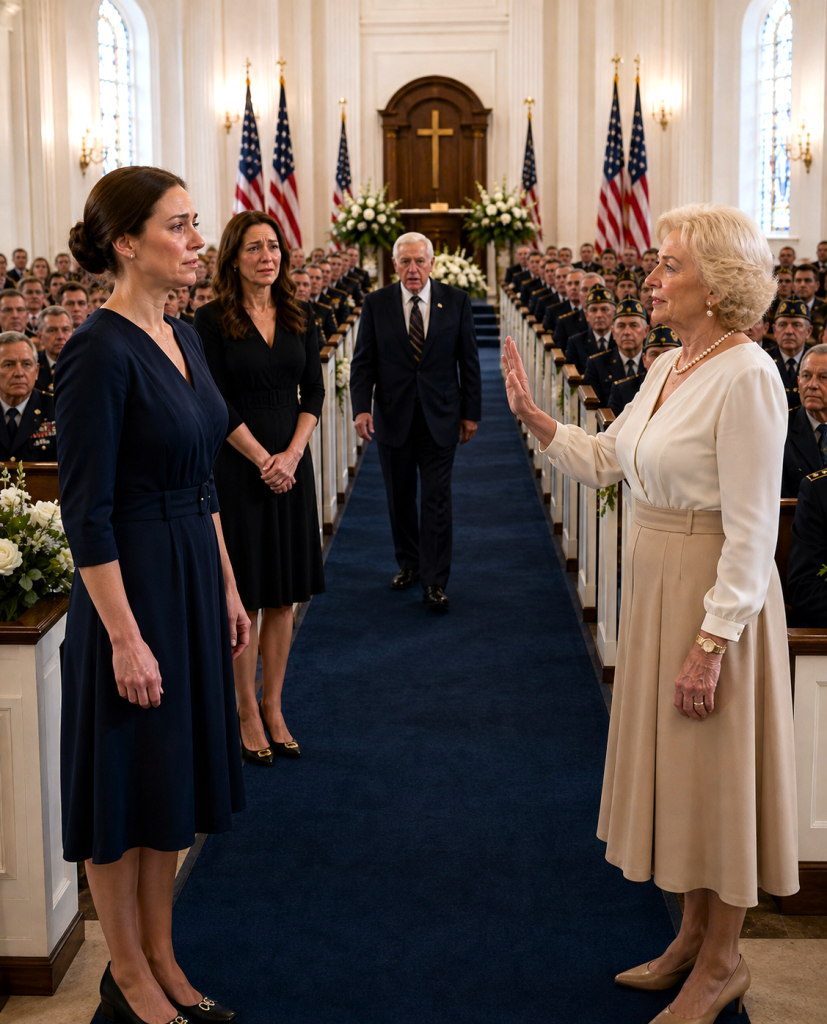
My mother made sure everyone thought I had chosen the Navy over my family, even when I was lying injured in a military hospital and begging to come home.
On the morning of Dad’s memorial, she ordered me to remove my uniform in front of the entire church. Then an old veteran stood up with my father’s final letter. My name is Rebecca Carter, and for twelve years, Willow Creek, Tennessee, believed one version of me.
The selfish daughter. The cold daughter. The daughter who left home in uniform and never looked back.
People had repeated that story so many times that eventually it became fact.
At the grocery store, old neighbors stopped asking my mother about me.
At church, people learned not to mention my name.

When my father became sick, sympathy cards arrived addressed only to Thomas and Elaine Carter, as if their oldest daughter had disappeared from the earth.
And when he died, people said the same thing in quiet voices.
Poor Thomas.
Imagine raising a daughter who would not even come home for her father’s funeral.
That part hurt most.
Because I had tried.
God knew I had tried.
Six weeks before my father died, I had been lying unconscious in a military hospital in Germany after an overseas attack left me with a fractured shoulder, internal injuries, and enough stitches to make one side of my body feel as though it belonged to somebody else.
When I woke up, my first question was not about my unit.
It was not about my injuries.
It was not even about whether I would be able to return to active duty.
It was about my father.
“Did he make it through surgery?”
The nurse standing beside my bed looked confused.
Then she found the note attached to my chart.
My commanding officer had already contacted my family.
My father had died two days earlier.
I remember turning my head toward the window.
Outside, snow covered the hospital courtyard.
Inside, machines continued beeping as if nothing important had happened.
I had missed the moment I had feared for almost a year.
I had missed his last breath.
I had missed saying goodbye.
And later, I learned that I had missed his funeral too.
Not because I chose to.
Because I could barely sit upright.
I asked the doctors if I could travel.
They said no.
I asked again.
Still no.
I called my mother.
She did not answer.
I called my sister, Anna.
She did not answer either.
At the time, I believed they were overwhelmed with grief.
I did not know my mother had already told people I had decided not to come.
I did not know she had told Anna I was “too busy with Navy business.”
I did not know she had stood in the church lobby before my father’s funeral and told neighbors, “Rebecca made her choice years ago.”
I learned all of that later.
Much later.
By then, the story had hardened.
I became the daughter people whispered about when they thought nobody was listening.
And for twelve years before that, my relationship with my mother had been difficult enough that people found her story easy to believe.
I joined the Navy when I was twenty-two.
My father drove me to the recruiting office.
My mother refused to come.
The night before I left for basic training, Dad sat with me on the back porch while cicadas buzzed in the trees and the porch light flickered over his coffee mug.
“You sure about this?” he asked.
“Yes.”
“Then do it right.”
That was Dad.
No speeches.
No dramatic declarations.
He believed if you chose something, you gave it everything.
He had served twenty-eight years in the Army before retiring as a colonel.
Military service was not unusual in our family.
What was unusual, according to my mother, was that I wanted a life she had not chosen for me.
She wanted me to stay in Willow Creek.
She wanted me to marry someone from town.
She wanted grandchildren she could see every Sunday.
My younger sister, Anna, fit naturally into that vision.
I did not.
When I enlisted, my mother treated it as a personal rejection.
“You’ll come back in six months,” she told me.
I didn’t.
Six months became one year.
Then three.
Then seven.
I came home when I could.
Sometimes for Christmas.
Sometimes for two days between assignments.
Sometimes only long enough to sleep in my childhood room and leave before sunrise.
My father understood.
My mother counted every absence.
She kept score.
“You missed Easter.”
“You forgot your cousin’s wedding.”
“You haven’t been home for Thanksgiving in three years.”
Every time I explained that I had been deployed, stationed overseas, or unable to leave, she reacted as though duty were merely an excuse.
Dad never did.
He wrote letters.
Actual letters.
Even when everyone else moved to email and video calls, my father believed paper mattered.
“I like knowing something crossed an ocean to reach you,” he once told me.
His handwriting was terrible.
Large, slanted letters that sometimes ran into one another.
But I saved every page.
When he was diagnosed with pancreatic cancer, I was stationed in the Pacific.
My mother called me.
Her first words were not, “Your father is sick.”
They were, “You should have come home more.”
I closed my eyes.
“Mom, what happened?”
She told me the diagnosis.
I remember gripping the edge of my desk until my fingers hurt.
“How bad?”
“Bad.”
“When does treatment start?”
“Soon.”
“I’ll request leave.”
She laughed once, bitterly.
“Now you want to come?”
I requested emergency leave.
It was approved.
I flew home three days later.
Dad had lost weight already, though he pretended otherwise.
“You look terrible,” I told him.
He smiled.
“You always were my sweetest child.”
We sat in the kitchen until nearly midnight.
My mother went to bed early.
Anna came by with her two children.
For a few hours, we almost felt like a normal family.
Later, when everyone else was gone, Dad lowered his voice.
“Your mother is angry.”
“When isn’t she?”
He gave me the look that meant do not make this worse.
Then he said something I never forgot.
“She thinks every mile between you and this town is a mile you chose against her.”
“That isn’t fair.”
“No.”
“Do you believe that?”
“No.”
The answer came so fast my eyes burned.
Dad reached across the table.
“You built a life, Rebecca. That is not abandonment.”
I looked down.
“I should have visited more.”
“We all should have done something more. That’s life.”
The next day, I drove him to treatment.
Before I left town, he handed me an envelope.
“Open it later.”
I did.
Inside was a note.
Do your duty. I’ll do mine. We’ll both complain about it later.
That was how we survived the next eleven months.
Letters.
Calls.
Short visits when I could get away.
My father’s health declined quickly.
I requested leave twice in the final months.
Both requests were denied.
My unit was supporting active operations, and personnel shortages had become serious.
Dad knew.
He never blamed me.
My mother did.
Every phone call became an accusation.
“Your father asked about you.”
“Your father had a bad night.”
“Anna was here again.”
“Everybody else manages to make time.”
The worst call came three months before Dad died.
He had been admitted to the hospital.
My mother answered his phone.
“I want to speak to him.”
“He’s sleeping.”
“Wake him when he can talk.”
“He shouldn’t have to beg his daughter.”
“Mom, stop.”
“You stop. Come home.”
“You know I can’t leave.”
“Then don’t pretend family matters.”
The line went dead.
That evening, Dad called me himself.
His voice was weak.
“Your mother has always been gifted at making a thunderstorm out of humidity.”
I laughed even though I wanted to cry.
“Are you okay?”
“No.”
That was the first time he admitted it.
My throat tightened.
“Dad.”
“I’m dying, Becky.”
He had not called me Becky since I was a teenager.
“I know.”
“I need you to hear something.”
I sat down.
“You do not owe me guilt.”
I stared at the wall.
“Don’t say that.”
“I’m saying it because you’ll try to carry it.”
“I should be there.”
“You’re where you’re supposed to be.”
“You don’t know that.”
“I do.”
He coughed for almost thirty seconds.
When he spoke again, his voice sounded farther away.
“I spent my life wearing a uniform. I know what orders mean.”
“I requested leave again.”
“I know.”
“Maybe they’ll approve it.”
“Maybe.”
He paused.
“If they don’t, I still know you tried.”
That was our last long conversation.
Two weeks later, I received a short letter from him.
The handwriting was shakier than usual.
Rebecca,
When they honor me, wear what you earned.
Do not wear it for them.
Wear it for me.
If people talk, let them talk.
You know who you are.
Love,
Dad
I folded that letter and carried it inside my uniform bag.
Three weeks later, my unit was attacked.
I remember noise.
Heat.
Then nothing.
When I woke in Germany, my father was already gone.
By the time I could travel, the funeral had been over for nearly two weeks.
I called my mother again.
This time she answered.
“I’m sorry,” I whispered.
She was quiet.
“I tried to come.”
“You always try after it’s too late.”
“I was hospitalized.”
“So I heard.”
“I couldn’t travel.”
“You missed your father’s funeral.”
Her voice was flat.
As if the reason did not matter.
“Mom, I nearly died.”
“And your father did die.”
That sentence ended something between us.
I did not speak to her for almost a year.
Anna reached out occasionally, but our conversations were strained.
She believed what our mother told her.
Not all of it.
But enough.
I eventually returned to duty.
I carried on.
Years passed.
I was promoted.
I moved twice.
I built a life that looked stable from the outside.
But every year on the anniversary of Dad’s death, I reread his letters.
I did not return to Willow Creek.
Partly because of my mother.
Partly because I did not know how to walk into a place where everyone thought I had betrayed the person I loved most.
Then, twelve years after Dad died, a letter arrived from Major William Hayes.
I knew the name immediately.
He had served with my father when both men were young officers.
They stayed friends for decades.
Major Hayes lived two counties away and visited my parents several times a year.
His letter was brief.
Rebecca,
Your father’s memorial plaque is being dedicated at First Baptist on October 14.
I believe you should come.
There are things Thomas left with me that belong to you.
Respectfully,
William Hayes
I read those three sentences at least ten times.
Then I called him.
His voice was older than I remembered but steady.
“You coming?”
“I don’t know.”
“You should.”
“My mother will be there.”
“Yes.”
“That’s part of the problem.”
“I know.”
“What did Dad leave with you?”
“Letters.”
My chest tightened.
“What kind of letters?”
“The kind he told me not to give you until the right time.”
“What does that mean?”
“It means Thomas knew his wife better than most people did.”
I was silent.
Major Hayes continued.
“He knew Elaine might blame you.”
“She did.”
“I’m aware.”
“How?”
“Because I’ve listened to it for twelve years.”
My grip tightened around the phone.
“And you never said anything?”
“Thomas asked me not to create a public war while your mother was grieving. He believed eventually she would stop.”
“She didn’t.”
“No.”
“Then why now?”
“Because this memorial is the last official event held in Thomas’s name. And because your father left clear instructions regarding what should happen if you attended.”
I sat down.
“What instructions?”
“You’ll hear them if you come.”
So I did.
On the morning of the memorial, I sat alone in a hotel room outside Willow Creek, staring at my Navy dress uniform laid across the bed.
Every crease was sharp.
Every ribbon was aligned.
I had retired from active duty two years earlier, but I was authorized to wear the uniform for certain ceremonial occasions.
I knew my mother would hate it.
But Dad had asked me to wear it.
So I did.
I buttoned the jacket slowly.
My shoulder still ached in cold weather where the injury had never healed quite right.
There was a faint scar near my collarbone.
Most people never saw it.
That morning, I touched it and thought about the hospital in Germany.
Then I tucked Dad’s letter into my handbag and drove to church.
Willow Creek had changed less than I expected.
The diner still had red awnings.
The pharmacy still sat on Main Street.
A new supermarket had replaced the old hardware store, but the courthouse square looked exactly the same.
As I drove past familiar streets, memories rose so quickly I almost turned around.
Dad teaching me to parallel park.
Anna riding her bicycle down Maple Street.
My mother waving from the front porch when we were little.
Families are complicated that way.
Even the people who hurt you live inside your happiest memories.
The First Baptist Church parking lot was already full.
Veterans.
Neighbors.
Church members.
Old family friends.
They had come to honor Colonel Thomas Carter, retired Army officer and respected community leader.
To them, he was a hero.
To me, he was Dad.
The man who taught me to change a tire, put cinnamon in pancake batter, and mail handwritten letters across oceans.
I sat in my car for almost five minutes.
Then I looked at Dad’s letter one more time.
Wear what you earned.
I stepped out.
The moment I entered the church lobby, conversations softened.
A few people recognized me immediately.
Others looked twice.
One older woman whispered my name.
“Rebecca?”
I turned.
Mrs. Lawrence had taught my Sunday school class when I was ten.
She looked smaller now.
“Oh my goodness.”
“Hello, Mrs. Lawrence.”
Her eyes dropped to my uniform.
Then back to my face.
“You came.”
It sounded almost surprised.
“Yes, ma’am.”
Before she could say anything else, another voice caught my attention.
“Rebecca?”
My sister stood near the sanctuary doors.
Anna looked older, of course.
We both did.
But for one strange second, I saw the fourteen-year-old girl who used to sneak into my room and borrow sweaters.
“Hi, Annie.”
Her eyes filled.
“You really came.”
I swallowed.
“Yeah.”
She moved forward and hugged me.
I almost did not know what to do.
We had not hugged in twelve years.
“You look exactly the same,” she whispered.
“That is a terrible lie.”
She laughed through tears.
Then my mother’s voice cut across the lobby.
“No.”
One word.
Hard enough to stop every conversation.
Elaine Carter stood near the sanctuary entrance wearing a pressed black dress and pearl earrings.
She was seventy-three now.
Her hair was mostly silver.
Her posture remained straight.
For a moment, neither of us moved.
Then her eyes dropped to my uniform.
Her face changed.
“You are not wearing that in here.”
The lobby fell silent.
“Mom.”
“No.”
She walked toward me.
“Your father’s memorial is not about you.”
The words hit harder than I expected.
Maybe because some part of me had hoped twelve years might soften her.
It had not.
“I know it isn’t.”
“Then don’t turn it into a military ceremony for yourself.”
“I’m not.”
“You show up after all these years dressed like this?”
“Dad asked me to.”
Her jaw tightened.
“Do not use your father to excuse yourself.”
I felt people watching.
I could have left.
For one second, I wanted to.
Return to the hotel.
Remove the uniform.
Drive back to the airport.
Let Willow Creek keep its version of me.
But I remembered Dad’s handwriting.
Do not wear it for them.
Wear it for me.
“I’m staying.”
My mother’s face hardened.
“Then attend dressed appropriately.”
“This is appropriate.”
“Not after what you did.”
“What did I do?”
“You disappeared.”
“I was deployed.”
“You always had an excuse.”
“I was injured when he died.”
Several people shifted.
My mother’s expression changed immediately.
Her voice softened into the wounded tone she used whenever she wanted witnesses on her side.
“Your father waited for you, Rebecca.”
I stared at her.
“That isn’t true.”
“Even at the end.”
“That isn’t true.”
“He asked why you weren’t there.”
I felt something inside me break open.
“Dad knew I requested leave.”
“You expect us to believe he was comforted by paperwork?”
“He understood.”
“You missed his funeral.”
“I was in a hospital.”
“You could have come later.”
“I did call.”
“And then stayed away twelve years.”
I looked around.
People lowered their eyes.
They believed her.
Or at least they had believed her long enough that uncertainty itself felt like judgment.
Anna spoke quietly.
“Mom, maybe we should go inside.”
“No. This needs to be said.”
“No,” I replied. “It doesn’t.”
My mother turned sharply.
“You think you can walk in here wearing medals and make everyone forget?”
“Forget what?”
“That you abandoned us.”
“I served.”
“You chose strangers over family.”
“I nearly died.”
“And your father did die.”
She used the same sentence she had used twelve years earlier.
The room went silent.
Then a chair scraped against the sanctuary floor.
Major William Hayes stood slowly from the front row.
He was eighty-one, thin, and walking with a cane.
But when he spoke, his voice carried through the entire church.
“My name is Major William Hayes.”
Everyone knew who he was.
He looked directly at my mother.
“Before one more word is spoken against that woman, this church deserves the truth.”
My mother went still.
“William, this is not the time.”
“No, Elaine.”
He stepped into the aisle.
“This is exactly the time.”
He reached inside his jacket and removed a sealed envelope.
My throat closed.
Major Hayes turned toward the congregation.
“Colonel Carter asked me to speak if Rebecca came home wearing that uniform.”
My mother’s face lost color.
“He knew someone might try to shame her for it.”
A murmur moved through the room.
Major Hayes continued.
“Rebecca Carter did not abandon her father. She was deployed. Twice, she requested emergency leave when Thomas became seriously ill. Twice, her leave was denied because her unit was supporting active operations.”
He looked at me.
“Six weeks before Thomas’s funeral, Rebecca was seriously injured overseas and evacuated to Germany.”
Gasps moved through the pews.
Anna covered her mouth.
I stared at the floor.
Major Hayes unfolded the letter.
“This is Thomas Carter’s handwriting. I witnessed him write it and sign it four days before he died.”
He began reading.
“If my daughter walks into that church in uniform, let her stand proud. She has carried wounds many of you cannot see. She has served with honor. If anyone tells her she is unwelcome, then that person is dishonoring me.”
The silence was absolute.
Major Hayes lowered the page.
Then he looked directly at my mother.
“Thomas also wrote more.”
“William,” she whispered.
He continued.
“I know Elaine is angry at Rebecca. I know she believes our daughter chose service over us. She is wrong. Rebecca asked to come home. I told her not to destroy herself over what she could not control.”
My mother shook her head.
“Stop.”
Major Hayes did not.
“I am proud of both my daughters. Anna stayed close and helped us every day. Rebecca served far away and loved us from there. One sacrifice does not erase the other.”
Anna began crying.
I could barely breathe.
Major Hayes continued reading.
“If I die before Rebecca gets home, nobody is to tell her she failed me. She did not.”
My mother closed her eyes.
The old veteran folded the letter carefully.
Then Anna stepped away from our mother.
She walked to me.
Without saying anything, she stood at my side.
One by one, the veterans in the sanctuary rose.
They did not clap.
They did not cheer.
They simply stood.
An old Marine near the aisle.
Two Vietnam veterans near the back.
A younger man wearing an Afghanistan veteran cap.
A woman I recognized as a former Air Force nurse.
Then civilians began standing too.
Mrs. Lawrence.
My old high school principal.
The church secretary.
People who had believed the story for years.
My mother looked around the room.
For the first time in my life, she seemed to realize she no longer controlled it.
The pastor approached quietly.
“Rebecca,” he said, “would you like to sit with your family?”
I looked at Anna.
Then at Major Hayes.
Finally, I looked at my mother.
“I’ll sit where Dad wanted me.”
Major Hayes smiled faintly.
“Front row. Right side.”
Of course Dad had planned that too.
The memorial service began twenty minutes late.
Nobody mentioned the delay.
I sat beside Anna.
My mother sat on the other side of her.
We did not speak.
The pastor talked about Dad’s years of service.
His work with veterans.
His terrible jokes.
His habit of repairing things nobody asked him to repair.
People laughed.
I cried.
Major Hayes told a story about Dad getting lost during a training exercise in the 1970s and insisting for three hours that the map was wrong.
“That map remained wrong until Thomas died,” he said.
The church erupted in laughter.
Even I laughed through tears.
Then the plaque was unveiled.
COLONEL THOMAS CARTER
A LIFE OF DUTY, FAITH, FAMILY, AND SERVICE
I stared at the word family.
For twelve years, I had believed that word no longer included me.
After the service, people formed a line.
I expected condolences.
What I received instead were apologies.
Mrs. Lawrence came first.
“Rebecca, I am ashamed.”
“You don’t need to be.”
“Yes, I do.”
She touched my arm.
“I believed things I should have questioned.”
An older man named Mr. Bennett approached next.
He had been Dad’s neighbor for twenty years.
“Your father talked about you all the time.”
I looked at him.
“What?”
“He showed me newspaper clippings. Pictures. Every promotion you got.”
My eyes burned.
“I didn’t know.”
“He kept a folder.”
A folder.
Of me.
For years, I had imagined Dad dying surrounded by people who thought I had forgotten him.
Now I learned he had been telling those same people how proud he was.
The cruelty of it was almost unbearable.
Not Dad’s cruelty.
My mother’s.
Anna found me near the church steps.
“Can we talk?”
I nodded.
We walked around the side of the building.
For a few moments, neither of us spoke.
Then Anna said, “I didn’t know.”
“I figured.”
“No. I mean I really didn’t know.”
She wiped her face.
“Mom told me your leave had been approved and you decided not to come.”
My stomach dropped.
“What?”
“She said you were tired of family drama.”
“That never happened.”
“I know that now.”
I stared at her.
“She told me you weren’t injured until after Dad died.”
“I was hospitalized before.”
Anna closed her eyes.
“Oh God.”
“She knew.”
“She knew?”
“The military contacted next of kin.”
Anna leaned against the brick wall.
“I defended her.”
“I know.”
“I was angry at you.”
“I know.”
“She told me you didn’t call.”
“I called constantly.”
Anna started crying harder.
I wanted to be angry.
For twelve years, I had been angry.
But looking at her, I realized she had been manipulated too.
Our mother had not merely lied about me.
She had stolen twelve years from both of us.
“I’m sorry,” Anna whispered.
I hugged her.
This time I knew exactly what to do.
We stood there for a long time.
Later, Major Hayes found me in the fellowship hall.
He carried an old wooden box.
“This is yours.”
I recognized it immediately.
Dad kept letters in that box.
“My father’s?”
“Mostly.”
I touched the lid.
“Why didn’t you give these to me earlier?”
“Because Thomas left instructions.”
“What instructions?”
Major Hayes sighed.
“Your father believed your mother would eventually tell the truth.”
“She didn’t.”
“No.”
“He didn’t want his death to become a weapon between you.”
“It became one anyway.”
“Yes.”
There was something else in his expression.
“What?”
Major Hayes looked toward the doorway.
My mother stood across the hall speaking to the pastor.
Then he lowered his voice.
“Thomas knew Elaine had intercepted some of your letters.”
I stopped breathing.
“What?”
“He discovered it near the end.”
“What do you mean intercepted?”
“You mailed letters home.”
“Yes.”
“She kept several from him.”
My hands went cold.
“Why?”
“He confronted her.”
“And?”
“She said hearing from you only upset him because you weren’t there.”
“That’s insane.”
“I agree.”
“Did Dad read them?”
“Eventually. Thomas found them in a desk drawer.”
Major Hayes opened the wooden box.
Inside were dozens of envelopes.
Some were mine.
My handwriting.
My return addresses.
Japan.
California.
Hawaii.
Virginia.
Places I had served.
All opened.
All saved.
I picked up one.
The date was two months before Dad died.
I knew exactly what I had written.
I had told him I was trying again for leave.
I had told him I loved him.
I had told him I would come as soon as they released me.
Major Hayes pointed to another envelope.
“That one came with Thomas’s final instructions.”
Inside was a second letter.
Rebecca,
If you are reading this, then William has decided enough time has passed.
Your mother loves fiercely and badly sometimes.
She confuses keeping people close with loving them.
Do not let her anger decide who you become.
I know you tried to come home.
I know every request you made.
I know about every phone call.
I never believed you abandoned me.
Not once.
If you need proof of that, keep this.
Dad
I pressed the letter against my chest.
For years, I had told myself I knew the truth.
I knew Dad understood.
But guilt does not care about facts.
It grows in empty spaces.
And now, for the first time in twelve years, one of those spaces closed.
My mother approached us.
“William, I need to speak with Rebecca.”
Major Hayes looked at me.
I nodded.
He walked away.
My mother stood across from me.
For several seconds, neither of us spoke.
Then she said, “You embarrassed me.”
I almost laughed.
Not because it was funny.
Because after everything, that was her first concern.
“I embarrassed you?”
“That spectacle.”
“I didn’t create it.”
“You let him read that letter.”
“Dad told him to.”
“You could have stopped him.”
“Why would I?”
“Because families handle private matters privately.”
I stared at her.
“You spent twelve years discussing me publicly.”
Her face tightened.
“I was grieving.”
“So was I.”
“You left.”
“I served.”
“You stayed away.”
“You made sure there was nothing to come back to.”
Her eyes flashed.
“Do not blame me for your choices.”
I lifted one of the letters from Dad’s box.
“You hid my letters from him.”
She looked at it.
For the first time, she had no immediate answer.
“You hid them.”
“He was sick.”
“That wasn’t your decision.”
“He needed peace.”
“He needed his daughter.”
“You weren’t there.”
“I was trying to be.”
“You always chose duty first.”
“Dad understood that.”
“I was his wife.”
“And I was his daughter.”
Her voice rose.
“I was the one changing his sheets. I was the one taking him to appointments. I was the one sitting beside him at three in the morning.”
“I know.”
“No, you don’t.”
“I know you took care of him.”
“You don’t know what that cost.”
“I never said it cost nothing.”
She stared at me, surprised.
I continued.
“You were there every day. Anna was there. I’m grateful for that.”
Her expression flickered.
“But your sacrifice did not give you the right to erase mine.”
“I didn’t erase anything.”
“You told people I chose not to come.”
Silence.
“You told Anna my leave had been approved.”
She looked away.
“You told people I did not call.”
Still nothing.
“You hid my letters.”
Her mouth tightened.
“I was angry.”
Finally.
A truth.
Small.
Ugly.
Real.
“I know.”
“He was dying, Rebecca.”
“I know.”
“And every day he defended you.”
My eyes filled.
“That made you angry?”
“Yes.”
The answer stunned me.
She seemed stunned by it too.
“He would say, ‘Rebecca is doing her duty.’ He would say, ‘She’ll come if she can.’ Every time I wanted him to admit you had left us, he defended you.”
I stared at her.
“So you punished me after he died.”
Her face crumpled slightly.
“I wanted you to understand what it felt like.”
“What what felt like?”
“To wait.”
The hallway seemed to disappear.
There it was.
The entire thing.
Twelve years of silence.
Twelve years of rumors.
Two sisters separated.
A daughter kept from mourning properly.
All because my mother wanted me to feel the pain she felt.
“You succeeded,” I said.
She looked at me.
“I waited twelve years for my family to believe me.”
Her eyes filled.
“Rebecca—”
“I waited twelve years to walk into this town without wondering who hated me.”
“I didn’t think—”
“No. You did think. You just thought your hurt mattered more.”
She began crying.
For most of my life, seeing my mother cry made me immediately soften.
That day, I did not.
Not because I hated her.
Because I finally understood that compassion without boundaries had helped keep our family sick.
“I loved your father,” she whispered.
“So did I.”
“I was losing him.”
“So was I.”
“I was alone.”
“You had Anna.”
“That isn’t what I mean.”
“No. You wanted me here too.”
“Yes.”
“I wanted to be here.”
She wiped her face.
“I know that now.”
I shook my head.
“No. You knew it then.”
That was the sentence she could not escape.
She knew.
She knew about my leave requests.
She knew about my injury.
She knew I called.
She knew Dad defended me.
And still she chose the story she wanted.
“I don’t know what you want me to say,” she whispered.
“I don’t need you to say anything today.”
“Then what do you want?”
“I want the lying to stop.”
“It has.”
“No. I mean everywhere.”
Her expression changed.
“You want me to announce this to the town?”
“I don’t care about the town.”
That surprised her.
“I care about Anna. I care about Dad’s name. I care that nobody ever again says I abandoned him.”
She looked down.
“What do you expect me to do?”
“Tell the truth when people ask.”
“That’s all?”
“That’s the beginning.”
She stared at me for a long moment.
Then she nodded once.
I did not forgive her that day.
That matters.
Some stories pretend forgiveness is a switch.
One apology.
One tear.
One hug.
Then everything resets.
Real families are not like that.
My mother and I had twelve years of damage between us.
One church service could not erase it.
But something changed.
The truth was finally outside her control.
That afternoon, Anna and I went to Dad’s grave.
The cemetery sat on a hill above town.
His stone was simple.
THOMAS CARTER
BELOVED HUSBAND, FATHER, SOLDIER
I stood there in uniform.
Anna placed flowers beside the headstone.
For a few minutes, we said nothing.
Then I laughed softly.
“What?”
Anna asked.
“He would hate this.”
“The flowers?”
“The fuss.”
She smiled.
“He’d complain about the plaque.”
“He’d say they spelled something wrong.”
“And then check it six times.”
We both laughed.
Then I knelt and touched the top of the stone.
“I came home, Dad.”
The words broke me.
For twelve years, I had imagined saying them.
Not at a funeral.
Not beside a hospital bed.
Just somewhere he could hear.
“I’m sorry it took so long.”
Anna put her hand on my shoulder.
I looked at Dad’s name.
Then I said the thing I had needed to say most.
“I tried.”
The wind moved through the trees.
Nothing dramatic happened.
No sign.
No voice.
But for the first time in twelve years, I believed my own words.
I tried.
And Dad knew.
Three weeks after the memorial, something unexpected happened.
My mother wrote a letter to the church.
Not a private note.
A public one.
The pastor called me before reading it during Sunday service.
He asked whether I objected.
I said no.
Anna later sent me a copy.
My mother wrote:
For many years, I allowed grief and anger to distort the truth about my daughter Rebecca.
She did not abandon her father.
She attempted to return home while he was ill, and her military obligations prevented her from doing so.
She was seriously injured before his death and medically unable to attend his funeral.
I knew these facts.
Instead of sharing them, I allowed people to believe something untrue.
That was wrong.
Thomas was proud of Rebecca until the day he died.
So am I.
The last sentence made me cry.
Not because everything was fixed.
It wasn’t.
But because my mother had finally used her own voice to undo part of what her voice had damaged.
Over the following months, she and I began speaking again.
Carefully.
Sometimes awkwardly.
We did not pretend.
When she minimized something, I corrected her.
When I became angry, I told her.
Anna refused to become a messenger between us.
That helped.
Eventually, Mom admitted she had spent years believing love meant being chosen first.
If someone left town, chose a career, married differently, or built a life beyond her reach, she experienced it as rejection.
“I thought if I made you feel guilty enough, you would come back,” she told me once.
“You made me afraid to come back.”
“I know.”
That was progress.
Not perfection.
Progress.
A year after Dad’s memorial, I returned to Willow Creek again.
Not for a funeral.
Not for a ceremony.
For dinner.
Anna hosted.
Her children, now nearly grown, asked me dozens of questions about the Navy.
My mother made Dad’s cinnamon pancakes the next morning.
She burned the first batch.
Dad always did too.
We laughed.
And for a few minutes, the kitchen felt like the house I remembered before anger took over.
Before I left, my mother handed me a photograph.
It showed Dad sitting at the kitchen table about six months before he died.
He was thinner.
Tired.
But smiling.
In his hand was one of my letters.
On the back, in his handwriting, were five words.
My girl is coming home.
I stared at those words for a long time.
Maybe he had meant physically.
Maybe he meant eventually.
Maybe he simply believed I would always find my way back to myself.
I keep that photograph beside his final letter now.
People sometimes ask me whether I forgave my mother.
The answer is yes.
But not quickly.
And not by pretending nothing happened.
Forgiveness came after truth.
After accountability.
After boundaries.
After enough time passed for new memories to stand beside the old ones.
I also forgave myself.
That took longer.
For years, I believed good daughters always arrive in time.
They do not.
Sometimes planes are grounded.
Sometimes orders cannot be changed.
Sometimes bodies fail.
Sometimes death comes before goodbye.
Love is not measured only by who stands beside the hospital bed.
Sometimes love crosses oceans in badly written letters.
Sometimes it lives in unanswered phone calls.
Sometimes it survives twelve years of lies and still finds its way back into daylight.
The people of Willow Creek no longer call me the daughter who abandoned her father.
But that matters less to me than it once did.
Because I finally understand something Dad knew long before I did.
Other people can misunderstand your life.
They can repeat the wrong story.
They can judge you from a distance.
They can even convince an entire town that you failed someone you loved.
But the truth does not disappear because people stop saying it.
My father knew I loved him.
He knew I tried.
And on the morning his memorial plaque was dedicated, wearing the uniform he asked me to wear, I finally stopped asking the world for permission to believe that too.
When Major Hayes stood up with Dad’s final letter, I thought he was defending me from my mother.
Years later, I understand he gave me something bigger.
He gave me my father’s voice one last time.
Stand proud.
You know who you are.
And at last, I did.
THE END! THANK YOU FOR READING.