 Reading Time: 23 minutes
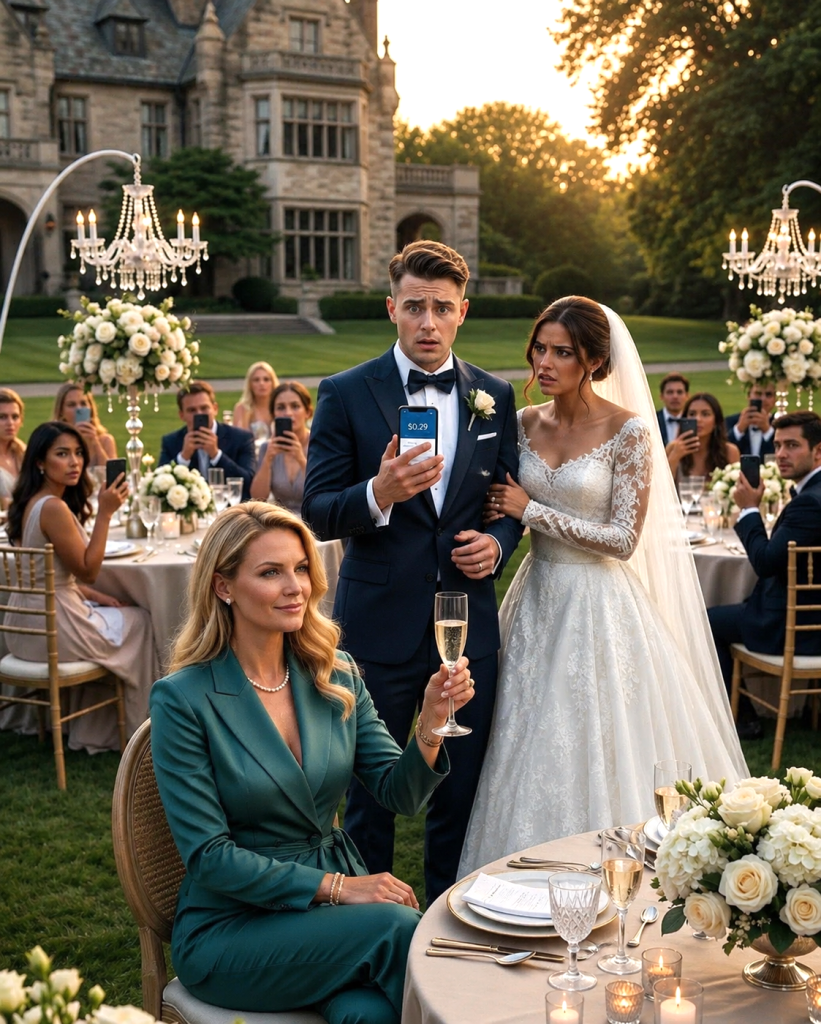
After years of helping raise my little brother, I came to his wedding with a heart full of happiness. Then I saw the cruel words on my name card, and the bride’s family started laughing. I was about to walk away quietly, but my brother took my hand and said one sentence that made everyone freeze.
The next morning, everything they thought they owned began falling apart. The name card sat in front of my plate like a knife. Poor, uneducated sister—living off her brother. For a few seconds, I could not breathe.
The ballroom was bright with morning sunlight pouring through tall windows. White roses spilled from crystal vases. Gold chairs surrounded tables covered in ivory linen. Champagne glasses caught the light like diamonds.

Everyone looked polished.
Expensive suits.
Designer dresses.
Perfect hair.
Perfect smiles.
People who looked as though they had never stood in a grocery store calculating whether they could afford both milk and bread.
And there I was in the only navy-blue dress I owned.
I had bought it three years earlier for a coworker’s retirement dinner and kept it carefully wrapped in plastic ever since.
That morning, I had looked at myself in the hotel mirror and felt beautiful.
Not glamorous.
Not wealthy.
Just proud.
My little brother Ethan was getting married.
That was enough.
Then the bride’s cousin leaned over and read my place card.
She laughed.
Not a nervous laugh.
A real one.
“Oh my God,” she said.
The woman beside her leaned closer.
Then she laughed too.
Within seconds, three people were looking toward me.
Someone whispered.
Someone else turned around.
At the head table, Claire’s mother, Margaret Whitaker, covered her mouth with her hand.
For half a second, I hoped she was horrified.
Then I saw her shoulders shaking.
She was laughing too.
Her husband, Richard Whitaker, simply watched me over the rim of his champagne glass.
He wore a black tuxedo that probably cost more than my first car.
His expression was different from everyone else’s.
He wasn’t surprised.
He wasn’t embarrassed.
He looked satisfied.
That was when I understood.
This was not an accident.
My fingers tightened around the little cream-colored card.
I read the words again.
Poor, uneducated sister—living off her brother.
There are insults that hurt because they contain some truth.
This one hurt because it turned the truth completely upside down.
My name is Hannah Cole.
I was forty-one years old when my brother got married.
And I had spent most of my adult life making sure Ethan never had to live the childhood I did.
Our mother died when Ethan was eight.
I was nineteen.
Cancer took her slowly enough for us to understand what was happening but quickly enough that none of us were prepared when it finally did.
Our father had already been disappearing long before that.
First emotionally.
Then financially.
Then almost completely.
Dad had been a decent man once. At least that is what I remember from when I was little.
But after Mom became sick, he started drinking.
After she died, drinking became his entire life.
Bills piled up on the kitchen counter.
Electricity was shut off twice.
Our landlord came to the house three times in one month.
There were nights when Ethan would sit at the kitchen table pretending to do homework while listening for Dad’s truck.
Sometimes Dad came home.
Sometimes he didn’t.
Eventually, I stopped expecting him.
I had been attending community college.
I wanted to become a nurse.
I loved biology.
I loved hospitals, strangely enough. I loved the order of them, the feeling that frightened people could walk through those doors and find someone who knew what to do.
But dreams are expensive when your little brother needs groceries.
So I dropped out.
I told myself it would be temporary.
One semester.
Maybe two.
I took a morning job at a bakery and an evening job cleaning offices.
I woke at 4:30 every morning.
By six, I was arranging pastries behind glass.
By three in the afternoon, I was home making Ethan something to eat.
By five, I was cleaning law offices downtown.
I usually returned home a little after eleven.
Then I checked Ethan’s homework.
That became our life.
When he needed soccer cleats, I bought secondhand work shoes for myself.
When his class took a field trip to Washington, I worked four Saturdays to pay for it.
When he had pneumonia at twelve, I slept upright in a hospital chair for three nights.
When he got his first broken heart at sixteen, I sat with him on the back steps while he cried and pretended I couldn’t see him wiping his face.
When he graduated high school, I screamed so loudly from the bleachers that he turned red.
When he was accepted into college, he found me standing at the kitchen sink crying over the acceptance letter.
“You’re acting like you got in,” he teased.
“I did,” I told him. “I just got in twenty years late and in a different body.”
He hugged me so hard I nearly dropped the plate in my hand.
Ethan knew what I had sacrificed.
At least I believed he did.
He studied engineering.
I kept working.
Eventually, I left the bakery and became an office manager for a small construction company.
It wasn’t glamorous.
I did payroll, ordered supplies, handled invoices, and occasionally cleaned the office myself when someone called out.
But it paid better.
Ethan graduated near the top of his class.
Then he built a career that made me prouder than I knew how to express.
By thirty-one, he was a project director at a renewable-energy development firm.
He earned more in a year than I had once earned in five.
The first time he received a major bonus, he tried to give me a check.
I refused it.
“Hannah, please.”
“No.”
“You paid for half my childhood.”
“I paid for your whole childhood.”
He laughed.
“Exactly.”
I pushed the check back.
“Then make it worth something.”
“What does that mean?”
“Build a good life.”
That was all I wanted.
And when he met Claire Whitaker, I thought maybe he had.
Claire was beautiful.
Not only physically.
At least not at first.
She had a softness about her.
She remembered birthdays.
She sent me flowers after I had minor surgery.
She called me on Thanksgiving the first year she and Ethan were dating and asked how I made my cornbread stuffing because Ethan kept talking about it.
I liked her.
I truly did.
The Whitakers were another matter.
Claire came from money.
Old money, according to people who cared about those distinctions.
Her father owned Whitaker Development Group, a regional real-estate company that had built luxury apartments, shopping centers, and office parks across three states.
Her mother sat on charity boards.
Her older brother attended an Ivy League university.
Their family Christmas photos looked like magazine advertisements.
The first time I met Richard Whitaker, he asked where I had gone to college.
I told him I had attended community college for one year.
He smiled.
“College wasn’t your thing?”
I could have explained.
I didn’t.
“No,” I said. “Life had other plans.”
He nodded as if I had confirmed something.
Later that evening, Margaret asked whether Ethan helped me financially.
“No.”
She blinked.
“Oh. Claire mentioned you two were extremely close.”
“We are.”
“I suppose that’s fortunate for you.”
I remember staring at her.
She smiled.
Then someone interrupted us.
I told myself I was imagining the insult.
For Ethan’s sake, I let it go.
That became a pattern.
Little comments.
Little questions.
Little assumptions.
Was I still renting?
Did I ever regret not getting married?
Had I ever considered going back to school?
Did Ethan pay for my vacations?
Did Ethan buy my car?
Did Ethan help with my medical insurance?
Once, during an engagement dinner, Margaret introduced me to another woman by saying, “This is Ethan’s sister. They had a very difficult upbringing.”
Not Hannah.
Not the woman who raised Ethan.
A difficult upbringing.
As if poverty were a stain she needed to explain before people noticed it.
I swallowed every insult.
Because Ethan was happy.
Or I thought he was.
Then came the wedding.
The Whitakers insisted on paying for most of it.
At least that was what they told everyone.
The ceremony and reception were held at a luxury resort outside Charleston.
Two hundred guests.
A string quartet.
Thousands of white roses.
Custom menus.
Imported champagne.
A photographer whose name Claire’s cousin said I should recognize.
The entire weekend probably cost more than the house where Ethan and I grew up.
I arrived Friday afternoon.
Ethan hugged me in the lobby.
“You look tired,” I told him.
“I haven’t slept in a week.”
“Nervous?”
“About marrying Claire? No.”
He hesitated.
“About everything else? Maybe.”
I should have asked what he meant.
Instead, I touched his cheek.
“You deserve to be happy.”
His eyes changed.
“Hannah.”
“What?”
“You know I wouldn’t be here without you.”
“Don’t start.”
“I mean it.”
“I know.”
“No. I don’t think you do.”
Before he could continue, one of the groomsmen called him.
Ethan squeezed my hand.
“We’ll talk tomorrow.”
We never got that conversation.
Not before the place card.
Not before the laughter.
I stood beside my chair, trying to decide whether I could make it to the hallway without crying.
I had survived worse things than cruel rich people.
I had survived eviction notices.
I had survived hunger.
I had survived my mother’s funeral.
I had survived watching my father choose alcohol over his children.
But humiliation is strange.
Sometimes the smallest cruelty reaches places that enormous tragedies cannot.
I didn’t want Ethan’s wedding ruined because of me.
So I decided to leave.
Quietly.
I placed the card on the table.
Then Ethan saw my face.
He had been across the ballroom speaking with the pastor.
He walked toward me quickly.
People noticed.
The laughter faded.
“Hannah?”
“I’m fine.”
He looked at my face.
Then at the table.
Then at the card.
“What is that?”
“Nothing.”
He picked it up.
I watched his eyes move across the words.
His expression changed completely.
“Who did this?”
Nobody answered.
“Ethan,” I whispered. “Not today.”
He looked around the table.
“Who did this?”
Richard Whitaker lifted his glass.
“Oh, relax,” he said. “It was a joke, son. A little family humor.”
Ethan stared at him.
“You wrote this?”
Richard smiled.
“Technically, I believe Margaret suggested the wording.”
My stomach dropped.
Margaret straightened.
“For heaven’s sake, Ethan. Everyone knows your sister has depended on you. We were trying to lighten the mood.”
“That isn’t true,” Ethan said.
Margaret rolled her eyes.
“Perhaps not from your perspective.”
I touched Ethan’s arm.
“Please. Let’s just forget it.”
He looked down at my hand.
Then he took it.
His voice was low when he spoke.
But every person near us heard him.
“You just made the most expensive mistake of your life.”
The room fell silent.
Richard stopped smiling.
Then Ethan reached into the inside pocket of his jacket.
He removed his wedding ring.
He had not put it on yet.
The ceremony was still less than an hour away.
He placed the ring on the table.
Then he looked toward Claire.
She had gone pale.
“Claire,” he said, “tell me you didn’t know.”
She stared at him.
“Ethan…”
“Tell me.”
Her eyes filled with tears.
“I knew they were doing something.”
My heart sank.
Ethan’s jaw tightened.
“What does that mean?”
“I didn’t know exactly what they were going to write.”
“Did you know they were planning to humiliate Hannah?”
Claire looked at her parents.
That was answer enough.
Ethan stepped backward.
“Oh my God.”
“Ethan, please.”
“How long?”
“It wasn’t supposed to be cruel.”
I almost laughed at that.
Richard stood.
“This has become ridiculous.”
Ethan turned toward him.
“No. It’s finally becoming clear.”
“Son—”
“Do not call me son.”
A murmur passed through the room.
Richard’s face darkened.
“This is our daughter’s wedding.”
“No,” Ethan said. “It was supposed to be our wedding.”
Claire started crying.
I wanted to disappear.
“Ethan,” I said quietly, “please don’t make a decision because of me.”
He turned toward me.
“Hannah, this isn’t because of you.”
“Yes, it is.”
“No.”
His eyes were wet now.
“This is because I’ve spent two years pretending I didn’t see what they were doing to you.”
That silenced me.
He looked around the ballroom.
“They call you dependent. They make jokes about your education. They ask me how much money I give you. Richard told me three months ago that after we married, I needed to establish ‘financial boundaries’ with you.”
Richard folded his arms.
“That was sensible advice.”
Ethan laughed once.
A cold laugh.
“Do you know why I didn’t correct you?”
Richard said nothing.
“Because Hannah asked me not to cause problems.”
Then Ethan looked at me.
“And I listened when I should have defended her.”
My throat tightened.
Claire moved closer.
“Ethan, we can fix this.”
He looked at her.
“Did you ever tell your parents the truth?”
She hesitated.
“What truth?”
“That Hannah raised me.”
“They know that.”
“No. They know she’s my sister.”
Ethan pointed toward the card.
“They think she lives off me.”
Claire wiped her face.
“I never said that.”
“You never corrected it.”
“I didn’t think it mattered.”
“It mattered to her.”
“I didn’t know they would put it on a card!”
“You knew enough.”
Richard stepped forward.
“That is enough melodrama. We have two hundred guests waiting.”
Ethan looked at him.
“You’re worried about the guests?”
“I’m worried about perspective.”
“Then let me give you some.”
Ethan reached into his jacket again.
This time he pulled out his phone.
“Do you remember the Harbor Point project?”
Richard’s expression shifted.
Barely.
But I noticed.
So did Ethan.
The Harbor Point project was the biggest development the Whitakers had attempted in years—a mixed-use waterfront complex involving apartments, retail space, offices, and a hotel.
I knew about it because Ethan’s company was providing renewable-energy infrastructure and project financing partnerships.
Richard cleared his throat.
“What does business have to do with this?”
“Everything.”
Claire stared at Ethan.
“What are you talking about?”
Ethan looked directly at Richard.
“Your financing isn’t finalized.”
Richard’s face tightened.
“It will be Monday.”
“No,” Ethan said. “It won’t.”
Silence.
“My company’s investment committee approved the final participation agreement because I recommended it.”
Richard’s smile disappeared.
Ethan continued.
“And because the agreement hasn’t been executed, I can withdraw that recommendation.”
“You wouldn’t.”
“I already did.”
Richard put down his champagne glass.
“You are letting a stupid joke interfere with a ninety-million-dollar development?”
“No. I’m letting your character interfere with it.”
“Ethan,” Claire whispered.
But he wasn’t finished.
“You’ve spent two years treating Hannah like she was trying to get access to my money. Meanwhile, you were asking me to put my professional reputation behind your project.”
Richard’s face had turned red.
“That financing has nothing to do with your sister.”
“It has everything to do with whether I trust you.”
Richard stepped closer.
“You need to think very carefully.”
“I have.”
“You could damage your own career.”
“Maybe.”
“You could cost your company millions.”
“No. We have four other developments competing for the same capital allocation.”
Richard froze.
Ethan nodded.
“You assumed Harbor Point was doing us a favor.”
Then he looked around the room.
“It wasn’t.”
For the first time that morning, nobody was looking at me.
Everyone was looking at Richard Whitaker.
He looked suddenly smaller.
Margaret rushed toward Ethan.
“Whatever disagreements we have, surely you aren’t going to destroy Claire’s wedding over a place card.”
Ethan turned toward her.
“You still think this is about cardboard.”
“What else could it possibly be?”
“Respect.”
Margaret stared at him.
Ethan picked up the card.
“This is what you think Hannah is.”
Margaret said nothing.
“So let me tell you who she actually is.”
“Ethan,” I whispered.
He squeezed my hand.
“No. They’re going to hear it.”
Then he faced the room.
“When I was eight years old, our mother died.”
The ballroom became completely still.
“Our father disappeared into alcohol. Hannah was nineteen.”
I could feel tears burning behind my eyes.
“She quit school to raise me.”
I looked down.
“She worked two jobs. Sometimes three.”
“Ethan…”
“She packed my lunch every morning. She came to every parent-teacher meeting. She bought my clothes. She paid for my soccer trips. She helped me apply to college.”
People had stopped smiling.
“She sold our mother’s wedding ring to pay the deposit on my freshman housing.”
I closed my eyes.
I had never told him that.
At least I thought I hadn’t.
“How did you know?”
He looked at me.
“I found the pawn receipt years ago.”
My chest hurt.
“You weren’t supposed to see that.”
“I know.”
His voice broke.
“I also know you ate toast for dinner for almost six months because you were sending me money.”
Several people looked down at their tables.
Then Ethan turned toward Margaret.
“So when you call Hannah poor, I agree.”
Margaret blinked.
“She was poor.”
He held up the card.
“When you call her uneducated, technically, you’re right. She never finished college.”
He paused.
“Because she chose my education instead.”
Margaret’s face changed.
“And when you say she lives off me…”
Ethan smiled sadly.
“That’s the funniest part.”
Richard frowned.
“What are you talking about?”
Ethan looked at me.
I knew what was coming.
“No,” I whispered.
He nodded.
“Yes.”
Then he faced the Whitakers.
“Hannah doesn’t live off me.”
Nobody moved.
“I live off what Hannah built.”
Richard gave an impatient sigh.
“What is that supposed to mean?”
Ethan answered calmly.
“The first seventy thousand dollars I used to start investing after college came from Hannah.”
Claire stared at me.
“What?”
“It was money she saved after the construction company she worked for gave her equity.”
I felt every eye return to me.
That part of my life was something I rarely discussed.
The little construction company where I had become office manager had grown.
Slowly at first.
Then quickly.
Its founder, Mr. Delgado, was nearing retirement and had no children interested in the business.
I had worked beside him for seventeen years.
I knew every client.
Every vendor.
Every employee.
Every contract.
When he retired, he sold most of the company to a regional group.
Because I had helped build the operation, I received a percentage.
Not millions.
But enough.
Enough to finally buy a modest home.
Enough to establish savings.
Enough to give Ethan a head start when he wanted to invest.
I never considered it a loan.
Apparently, he did.
Ethan continued.
“Hannah gave me seventy thousand dollars. I invested it in a small energy company that was later acquired.”
Richard was no longer interrupting.
“That became two hundred and eighty thousand.”
Claire looked at Ethan.
“You told me your first investment came from savings.”
“It did.”
He looked at me.
“Hers.”
I wanted the floor to open.
Not because I was ashamed.
Because I had never wanted repayment to become the measure of what existed between us.
Ethan seemed to understand.
He squeezed my hand again.
“Hannah never asked for a dollar back.”
Then he turned toward Richard.
“But I kept track.”
Richard said nothing.
“Over the years, I invested on her behalf too.”
My head snapped toward him.
“What?”
That was news to me.
Ethan almost smiled.
“You told me to build a good life.”
“Yes.”
“You never said I couldn’t build yours too.”
“What did you do?”
“I’ll explain later.”
“Ethan.”
“Later.”
Richard’s voice cut through the room.
“This is sentimental nonsense.”
Ethan looked at him.
“No, Richard. The sentimental part is over.”
He picked up the wedding ring.
For one terrible second, I thought he was going to put it on.
Instead, he held it toward Claire.
“I can’t marry into a family that thinks kindness is weakness.”
Claire shook her head.
“I’m not my parents.”
“No.”
His expression softened.
“But today I needed you not to be.”
She started crying harder.
“I love you.”
“I love you too.”
That sentence hurt more than anger would have.
Claire reached for him.
“Then don’t do this.”
Ethan looked at her for a long time.
“I asked you to protect one person.”
“What?”
“Six months ago, when your mother made that comment about Hannah’s apartment, I told you privately that I wouldn’t tolerate this anymore.”
Claire’s face fell.
I hadn’t known that either.
“I asked you to stop it.”
“I tried.”
“No. You avoided it.”
“I was trying to keep peace.”
“So was Hannah.”
He looked at me.
“And look where that got her.”
Then he placed the ring into Claire’s palm.
“I’m sorry.”
The wedding never happened.
There was no dramatic shouting after that.
No overturned tables.
No scene from a movie.
Real humiliation is quieter.
Guests began whispering.
The string quartet stopped playing.
Staff members stood near the walls, unsure what to do.
Claire disappeared upstairs with her mother.
Richard spent twenty minutes on his phone.
Ethan and I walked out through the hotel’s side entrance.
We sat on a stone bench near the gardens.
For several minutes, neither of us spoke.
Finally, I said, “You just canceled your wedding.”
“Yes.”
“Your very expensive wedding.”
“Yes.”
“Because of a place card.”
He turned toward me.
“No.”
I sighed.
“Ethan.”
“Hannah, if someone treats a waiter badly, you don’t marry them and hope they become kinder after the honeymoon.”
“That isn’t the same thing.”
“It is to me.”
I looked toward the gardens.
“You love her.”
“I do.”
“That doesn’t disappear because her parents are awful.”
“No.”
He was quiet.
“But love doesn’t make cowardice harmless either.”
I looked at him.
He rubbed both hands over his face.
“I should have dealt with this months ago.”
“You were trying to build a relationship with her family.”
“I was trying to be accepted by them.”
That surprised me.
“Why?”
He laughed softly.
“Because some part of me is still the kid with the secondhand backpack.”
I understood that better than he knew.
“I thought if people like the Whitakers respected me, it meant I had made it.”
“And now?”
“Now I think I was asking the wrong people.”
We sat there until the sunlight shifted across the garden.
Then I remembered what he had said inside.
“What did you mean about investing for me?”
Ethan looked guilty.
“That conversation might require coffee.”
“Ethan.”
“And maybe legal paperwork.”
“Ethan Cole.”
He smiled.
There was my little brother.
For one second, I could see the twelve-year-old boy who used to hide report cards under his mattress even when they were good because he was afraid I would worry.
“I created an investment account for you years ago.”
“You what?”
“Technically, a trust structure.”
“How much?”
He looked away.
“How much?”
“Enough.”
“That is not a number.”
“It’s a comfortable number.”
“Ethan.”
He sighed.
“About 1.8 million.”
I stared at him.
Then I laughed.
I honestly thought he was joking.
When he didn’t laugh, I stood up.
“Absolutely not.”
“Hannah—”
“No.”
“It’s yours.”
“No, it isn’t.”
“Yes, it is.”
“You cannot give me almost two million dollars.”
“I didn’t.”
“What?”
“I invested your money.”
“My seventy thousand dollars?”
“Partly.”
“Ethan!”
He stood too.
“You gave me the capital that changed my life. I kept a proportional investment account for you from the beginning.”
“You should have told me.”
“You would have stopped me.”
“You’re right.”
“Exactly.”
I stared at him.
“You are impossible.”
“You raised me.”
“That is not a defense.”
“It’s an explanation.”
Despite everything that had happened, I laughed.
Then I started crying.
Ethan wrapped his arms around me.
For years, I had worried that he remembered only what I lacked.
The small house.
The cheap meals.
The community college degree I never finished.
The Christmases when presents came from thrift stores.
I had never understood that he remembered the sacrifices behind them too.
We stayed there until my breathing settled.
Then his phone rang.
He looked at the screen.
“Richard.”
“Answer it.”
“No.”
“Ethan.”
He declined the call.
“He can talk to my company Monday.”
I frowned.
“You really withdrew the Harbor Point recommendation?”
“Yes.”
“Because of me?”
“Because I discovered something yesterday.”
My stomach tightened.
“What?”
Ethan sat down again.
“Richard has been telling investors that our family relationship essentially guarantees my company’s participation.”
“That sounds dishonest.”
“It is.”
“He told two lenders that after Claire and I married, he expected me to join Whitaker Development’s advisory board.”
“Were you going to?”
“No.”
“Did he know that?”
“Yes.”
That changed everything.
“So this wasn’t only about the place card.”
“No.”
Ethan looked toward the hotel.
“I was already planning to confront him after the honeymoon. The card just told me exactly who I was dealing with.”
The next morning, I woke at 6:12 to someone knocking on my hotel-room door.
I assumed it was Ethan.
It was Claire.
She stood in the hallway wearing jeans, sneakers, and a gray sweater.
No makeup.
Her eyes were swollen.
“Can I come in?”
I hesitated.
Then stepped aside.
She sat in the chair near the window.
For a moment, neither of us spoke.
Finally, she said, “I’m sorry.”
I nodded.
“I know.”
“No. I don’t think you do.”
She looked down at her hands.
“I knew my mother was planning some kind of joke.”
My chest tightened.
“She showed me a list of table jokes Thursday night. Most were harmless. My uncle’s said something about his golf obsession. My cousin’s said she changes boyfriends faster than shoes.”
“And mine?”
Claire swallowed.
“She wouldn’t show me.”
“Did that worry you?”
“Yes.”
“But you didn’t stop her.”
“No.”
“Why?”
Tears filled her eyes.
“Because I have spent my entire life being afraid of disappointing my parents.”
I understood fear.
But understanding is not the same as excusing.
“So you let them disappoint Ethan instead.”
She nodded.
“Yes.”
That answer surprised me.
No defense.
No excuse.
Just yes.
Claire wiped her face.
“My father has controlled everything for as long as I can remember. My schools. My friends. My first apartment. My job. He liked Ethan because Ethan was successful.”
She gave a bitter laugh.
“Then he found out Ethan came from nothing.”
“He didn’t come from nothing.”
“I know.”
She looked at me.
“That’s the point.”
For the first time since meeting Claire, I saw something in her I recognized.
Shame.
Not the shame someone else puts on you.
The shame that comes when you finally see your own cowardice.
“My father told me you would become a burden after we married.”
I said nothing.
“My mother said Ethan would eventually have to choose between his future family and you.”
“And what did you say?”
“Nothing.”
That hurt.
Claire nodded as if she knew.
“I’m sorry.”
“What do you want from me?”
“I don’t know.”
“You came here for something.”
She took a breath.
“I want to know if you think Ethan will ever forgive me.”
I looked at her for a long moment.
“That isn’t my decision.”
“I know.”
“And I’m not going to tell him what to do.”
“I wouldn’t ask you to.”
“Good.”
She stood.
At the door, she stopped.
“Hannah?”
“Yes?”
“My father didn’t write the card.”
I frowned.
“Your mother did?”
“No.”
She looked directly at me.
“I did.”
The room seemed to tilt.
“What?”
“My mother suggested the idea.”
Claire’s voice shook.
“But I typed the words.”
I could not speak.
“She said if we made you understand your position before the marriage, it would prevent problems later.”
“My position?”
Claire closed her eyes.
“I know how that sounds.”
“No. You know how it is.”
She started crying again.
“I thought Ethan would laugh it off.”
“You thought my brother would laugh while his wife publicly humiliated the woman who raised him?”
“I wasn’t thinking.”
“That is not true.”
She looked at me.
“You were thinking, Claire. You were just thinking about yourself.”
She flinched.
I did not enjoy saying it.
But I would not soften it.
Not anymore.
For twenty years, I had made myself smaller so Ethan could have more.
I was done making myself smaller so wealthy strangers could feel bigger.
Claire nodded slowly.
“You’re right.”
Then she left.
At nine that morning, Richard Whitaker’s attorneys contacted Ethan’s company.
By noon, news had spread through the development community that Harbor Point’s primary energy-financing partner was reconsidering participation.
Richard called Ethan seventeen times.
Ethan answered none of them.
On Monday, his company officially reassigned its capital commitment to another project.
Harbor Point did not collapse.
Life is rarely that neat.
But it stalled.
Without Ethan’s company participating, another lender demanded revised guarantees.
A major investor delayed funding.
Construction was pushed back.
Whitaker Development eventually found alternative financing, but at a significantly higher cost.
According to Ethan, the delay and financing changes cost Richard several million dollars.
I never celebrated that.
I did not need Richard ruined.
I only needed him to understand that the people he considered beneath him were not furniture in his world.
They could walk away.
So could their money.
So could their respect.
Claire moved out of the condo her parents had purchased for her three days after the wedding.
She returned the wedding gifts.
She resigned from the family foundation.
Then she found a small apartment and, for the first time in her life, began paying her own rent.
Ethan did not immediately take her back.
I respected him for that.
For six months, they barely spoke.
Claire started therapy.
She found work at a nonprofit unrelated to her family.
She wrote me a letter.
Not an email.
A real letter.
Six pages.
I read it once.
Then again.
She did not ask me to forgive her.
She explained what she had done, why it was wrong, and what she was trying to change.
At the end, she wrote:
I thought money made my family powerful. Now I understand that the most powerful person in that ballroom was the woman who had spent twenty years giving without asking anyone to applaud.
I cried when I read that.
I still did not answer immediately.
Forgiveness should not be demanded on someone else’s schedule.
Three months later, I wrote back.
I told her I forgave her.
I also told her forgiveness did not erase consequences.
She wrote back one sentence.
I understand.
That was the first moment I believed she might actually be changing.
Almost a year after the canceled wedding, Ethan called me on a Sunday afternoon.
“Are you busy?”
“I’m cleaning the refrigerator.”
“So, extremely busy.”
“What do you want?”
“Dinner.”
“With who?”
“Claire.”
I stopped wiping the shelf.
“You’re seeing her again?”
“Sometimes.”
“How long?”
“Two months.”
“You waited two months to tell me?”
“I was afraid.”
“Of me?”
“You raised me. Of course I’m afraid of you.”
I laughed.
Then I became serious.
“Do you love her?”
“Yes.”
“Do you trust her?”
He was quiet.
“I’m learning to.”
That answer mattered more.
Claire came to dinner.
No expensive dress.
No perfect hair.
No parents.
She brought a homemade apple pie that leaned slightly to one side.
“I made it myself,” she announced.
Ethan whispered, “She almost burned down the kitchen.”
Claire elbowed him.
For the first time, the three of us laughed without tension.
Nobody mentioned the wedding until dessert.
Then Claire looked at me.
“I’m still sorry.”
“I know.”
“I’ll probably always be sorry.”
“Then make it useful.”
She frowned.
“What does that mean?”
“Don’t spend your life punishing yourself. Spend it becoming someone who wouldn’t do it again.”
Her eyes filled.
She nodded.
Ethan reached across the table and took her hand.
Two years after the wedding that never happened, Ethan and Claire married.
The second ceremony had twenty-three guests.
It took place in my backyard.
There were no imported roses.
No champagne tower.
No string quartet.
I made the cornbread stuffing Ethan loved.
Claire baked her crooked apple pie.
Ethan wore the same suit he had bought for the first wedding.
Claire wore a simple cream dress.
Richard and Margaret were not invited.
That was Claire’s decision.
Her brother attended.
So did two cousins.
Before the ceremony began, Ethan walked over to me.
He handed me a small cream-colored card.
My stomach tightened.
“Very funny.”
“Read it.”
I looked down.
There were only five words.
The woman who made me possible.
I stared at him.
“You’re going to make me cry before the ceremony.”
“That’s the plan.”
“You’re terrible.”
“You raised me.”
He smiled.
Then he kissed my forehead.
During the ceremony, the pastor asked who stood with the groom.
Ethan looked at me.
“My sister,” he said.
Then he corrected himself.
“My family.”
Claire smiled.
This time, I believed her smile.
A year later, Ethan convinced me to finally do something I had postponed for more than two decades.
I went back to school.
Not because I needed a degree to prove anything.
That lesson had already been learned.
I went because the nineteen-year-old girl who had once wanted to become a nurse deserved to know her dream had not died.
It had simply waited.
I enrolled part-time.
On my first day, Ethan sent me a picture.
It was an old photograph of the two of us.
He was ten.
I was twenty-one.
We were standing outside his elementary school.
My hair was pulled back.
My work uniform was visible beneath an old winter coat.
Ethan was grinning at the camera with two missing front teeth.
Underneath the photo, he wrote:
Your turn.
I cried in the parking lot for ten minutes.
Three years later, at forty-five, I completed my degree in healthcare administration.
Ethan and Claire sat in the front row.
When my name was announced, Ethan stood before anyone else.
He shouted so loudly that half the auditorium turned toward him.
I laughed all the way across the stage.
Afterward, he hugged me.
“Now who’s the uneducated sister?”
“Still me,” I said. “I’m considering graduate school.”
He groaned.
Claire laughed.
We took pictures beneath a maple tree outside the auditorium.
There were no gold chairs.
No crystal glasses.
No wealthy guests measuring one another by last names and bank accounts.
Just people I loved.
And for me, that was enough.
Richard Whitaker never apologized directly.
Years later, I heard that Harbor Point eventually opened.
The newspapers called it successful.
Good for him.
I never wanted revenge.
I wanted something much more valuable.
Distance.
Margaret sent me a Christmas card once.
I returned it unopened.
Not because I hated her.
Because forgiveness does not require renewed access.
That was another lesson it took me too many years to learn.
Ethan and Claire eventually had a daughter.
They named her Rose after our mother.
The first time I held that baby, Ethan stood beside the hospital bed crying.
Claire looked exhausted and happy.
“She has your nose,” I told Ethan.
“Poor kid.”
Claire laughed.
Then Ethan placed his hand on my shoulder.
“We want to ask you something.”
“What?”
“If anything ever happens to us…”
“Don’t.”
“Hannah.”
I looked at him.
“We want you to be her guardian.”
My throat closed.
Claire reached for my hand.
“There is nobody else we trust more.”
I looked down at little Rose sleeping against my chest.
All those years ago, I had been nineteen years old with a frightened eight-year-old boy depending on me.
I had no degree.
No money.
No husband.
No plan.
I had only love and the stubborn belief that somehow I would keep him safe.
People like the Whitakers might have looked at that girl and seen poverty.
Failure.
Ignorance.
But Ethan had seen something else.
Home.
That was what I had been for him.
And now he was giving that trust back to me.
“Yes,” I whispered.
Ethan hugged me.
Years have passed since that first wedding.
The insulting place card is still in my house.
People are surprised when I tell them that.
They assume I would have thrown it away.
I almost did.
Instead, I put it in a small wooden box with my mother’s photographs, Ethan’s childhood report cards, my old community college identification card, and the pawn receipt for Mom’s wedding ring.
Every few years, I take it out.
The words have faded slightly.
Poor, uneducated sister—living off her brother.
I used to look at those words and remember the humiliation.
Now I see something completely different.
I see a nineteen-year-old girl waking before sunrise.
I see her spreading peanut butter across bread because there was no lunch meat.
I see her sitting beside a sick child all night and going to work the next morning.
I see worn shoes.
Unpaid bills.
College brochures pushed into a drawer.
I see every sacrifice nobody applauded.
And I understand something now that I did not understand when I was young.
There are people who will measure your life by what you possess.
Your degree.
Your house.
Your clothes.
Your salary.
Your family name.
They will look at sacrifice and call it failure because sacrifice does not always leave behind something expensive enough for them to recognize.
Let them.
The people who truly know your worth do not need a résumé.
Ethan never cared that I could not give him a wealthy childhood.
He remembered that I stayed.
That mattered.
Claire learned that lesson the hard way.
So did I.
Because I had spent years believing silence was the same thing as dignity.
It isn’t.
Sometimes dignity means walking away.
Sometimes it means speaking.
Sometimes it means refusing to sit at a table where someone has decided humiliation is the price of belonging.
And sometimes dignity is having someone who loves you stand beside you and say:
Enough.
I once believed the most important sentence Ethan said that day was the one that silenced the ballroom:
“You just made the most expensive mistake of your life.”
It wasn’t.
The most important thing he said came later, when we were sitting alone outside and I told him he should not have canceled his wedding because of me.
He looked at me and said:
“You taught me that love without respect isn’t love worth keeping.”
I had never deliberately taught him that.
But apparently children learn from what we survive as much as from what we say.
Maybe that is what raising someone really means.
You give them everything you can.
You make mistakes.
You worry you have failed them.
Then one day they stand beside you when you are too tired to stand for yourself.
And suddenly you realize they were watching all along.
I thought I had spent twenty years raising my little brother.
At that wedding, I discovered I had raised a man.
And that was worth more than anything money could ever buy.
THE END — THANK YOU FOR READING.