 Reading Time: 15 minutes
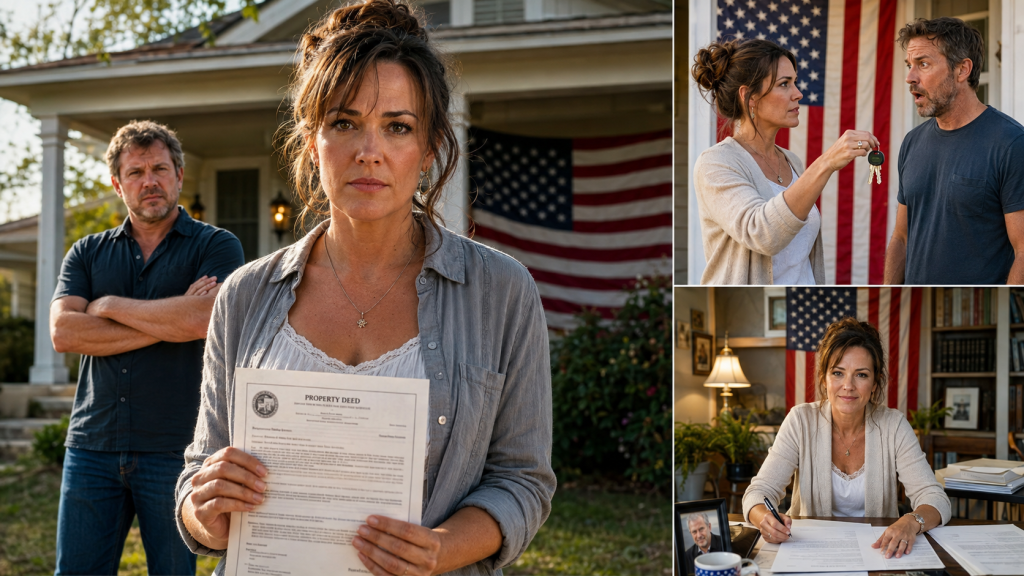
My husband Darryl worked 21 days on and 7 off on a rig 90 miles out in the Gulf, and for nine years, I held our whole life together in Lake Charles.
Then, one afternoon in April, I went to pay the parish property tax. The teller looked at her computer, frowned, and told me something that made my stomach drop. My name had been removed from every account.
Not frozen. Not accidentally hidden. Removed.
The change had happened back in February.
I got Darryl on the platform phone and asked him one simple question.
“Why is my name gone?”
He laughed.
Then he said:
“I earn it, so I decide who touches it. You just spend.”
I sat there silently for a moment.
Then I said, “Okay.”
I hung up and drove straight to the courthouse basement.
By the end of that week, I had pulled the original deed, called my late father’s estate lawyer in Sulphur, and quietly taken steps to protect the title to the house Darryl believed was half his.
There was only one problem for Darryl.
It was never half his.
It was mine.
All of it.
The House My Father Left Me
Let me back up.
My daddy left me that house and eleven acres when he died in 2013.
Darryl and I had just gotten married.
I was young, in love, and foolish about one particular thing: I believed that if you trusted someone completely, you didn’t need to protect yourself from them.
Daddy didn’t share that belief.
He had spent nearly forty years working around refineries and fabrication shops, first with his hands and later as a supervisor.
He understood people.
More importantly, he understood what money could do to people.
About six months before he died, Daddy called me into his kitchen.
There was an envelope sitting beside his coffee cup.
“This property stays yours,” he said.
I laughed.
“Daddy, Darryl isn’t trying to steal the house.”
“I didn’t say he was.”
“Then why are we talking about this?”
Daddy looked through the kitchen window toward the pecan trees.
“Because people change, baby girl. Paper doesn’t.”
At the time, I thought he was being cynical.
Eleven months later, I buried him.
The house, acreage, mineral interests, and a modest investment account passed to me through a trust Daddy had established with his longtime attorney, Mr. Landry.
Darryl attended the meetings with me.
But he never really listened.
He hated paperwork.
“Your daddy sure made this complicated,” Darryl complained after one meeting.
Mr. Landry looked at him.
“He made it safe.”
Darryl rolled his eyes.
I should have remembered that moment.
Instead, I went home with my husband and continued building what I believed was our life.
When Everything Slowly Became “His”
Darryl wasn’t always controlling.
That’s important.
Men like him don’t necessarily begin by showing you exactly who they’ll become.
Sometimes they begin as the man who replaces your alternator at ten at night.
The man who brings groceries to your mother.
The man who remembers exactly how you take your coffee.
After Daddy died, Darryl fixed a broken fence without me asking.
He sat beside me when I cried.
For months, he slept with one arm around me because grief kept waking me in the middle of the night.
So when he suggested combining our finances, it seemed natural.
“We’re married,” he said. “What’s yours is mine and what’s mine is yours.”
I believed him.
Or maybe I believed the version of that sentence I wanted to hear.
Then Darryl’s offshore career took off.
He worked hard. I will never deny that.
Eventually, he became a compliance supervisor and was making around $141,000 a year, sometimes more with bonuses.
But the more Darryl earned, the more he acted as though money belonged exclusively to whoever brought home the larger paycheck.
Meanwhile, I became the unpaid manager of everything he didn’t have time to notice.
I maintained the property.
I handled insurance.
I paid taxes.
I arranged repairs.
I bought groceries.
I handled vehicle registrations.
I coordinated contractors.
I maintained the generator.
I managed storm preparation.
I remembered birthdays and Christmas presents.
I drove his mother to appointments.
And when Hurricane Laura tore roofing from our house and drove rain into the upstairs hallway, I spent weeks dealing with insurance adjusters, contractors, estimates, tarps, damaged drywall, and repairs.
Darryl called from offshore and told me which bids were “too expensive.”
He called everything I did “spending.”
Once, I bought a $79 pair of work boots because my old ones had split at the sole.
Darryl noticed the charge.
“Why didn’t you discuss this with me?”
I stared at him.
“Discuss boots?”
“Seventy-nine dollars is seventy-nine dollars.”
Two weeks later, he bought a fishing reel that cost around $1,600.
I said nothing.
That became our marriage.
Darryl bought things.
I incurred expenses.
Darryl rewarded himself.
I wasted money.
He deserved nice things because he worked offshore.
I was supposed to be grateful.
By our ninth anniversary, I was clipping coupons for a man earning $141,000 a year.
The Day the Bank Teller Looked at Me Differently
Then came April.
I went into town because there was an issue involving the property tax payment.
The teller was a woman named Missy who had known my family since I was a teenager.
She pulled up the banking information.
Then she frowned.
She clicked again.
“Honey, are you sure this is the account?”
“Of course.”
She looked uncomfortable.
“You’re not listed.”
I laughed because I thought she meant there was some technical problem.
“What do you mean?”
“You’re not an owner or authorized signer anymore.”
My stomach went cold.
“That’s impossible.”
Missy asked for my identification and checked again.
Then she got a manager.
The manager carefully explained that changes had been made in February.
Because I was no longer an authorized party, there were limits to what they could tell me.
“Who removed me?” I asked.
They couldn’t answer.
“My husband?”
Nobody said anything.
They didn’t need to.
I walked outside and sat in my SUV.
People were going about their normal lives around me.
An elderly man was loading potting soil into his pickup.
Somebody pushed a shopping cart across the parking lot.
Traffic moved past.
That’s one of the strangest things about discovering your marriage isn’t what you thought it was.
The world doesn’t stop.
“I Earn It”
I contacted Darryl through the offshore communication system.
It took nearly forty minutes before he reached the platform phone.
“What?” he answered.
Not hello.
Just:
“What?”
“I’m at the bank.”
Silence.
“Why was my name removed from our accounts?”
Another silence.
Then he laughed.
“You drove all the way over there for that?”
“Answer me.”
“Because I earn it, so I decide who touches it. You just spend.”
I looked across the parking lot.
“You removed your wife from every account without telling her.”
“My paycheck goes in there.”
“And our bills come out.”
“Which I pay.”
That almost made me laugh.
Darryl hadn’t personally paid a household bill in years.
“Okay,” I said.
He sounded confused.
“Okay?”
“Okay.”
“Don’t start acting dramatic.”
“I’m not.”
Then he said the sentence that changed everything.
“When I’m off this rig for good, I want a house that feels like mine.”
I stared at my hands.
“What does that mean?”
“It means I’m tired of asking permission in my own house.”
Darryl had never asked permission for anything.
But I didn’t argue.
“Anything else?”
“Just stop making everything difficult.”
“Okay.”
I hung up.
Then I drove directly to the courthouse.
The Paper Darryl Never Bothered to Read
Daddy had once shown me where property records were kept.
I hadn’t thought about that conversation in years.
Downstairs, beneath fluorescent lights, I requested everything connected to the property.
The clerk helped me locate the deed and related estate documents.
And there it was.
My full legal name.
Mine.
Not Darryl’s.
The property had been inherited separately through Daddy’s estate planning.
Darryl had no ownership interest recorded on that deed.
I stared at Daddy’s signature.
Suddenly, I heard his voice again.
“People change, baby girl. Paper doesn’t.”
That was when I cried.
Not because of Darryl.
Because my father had protected me from something I had once laughed at him for imagining.
I called Mr. Landry.
He was older now and working fewer hours, but his office remembered my family.
He returned my call that afternoon.
“What happened?” he asked.
I told him everything.
He listened.
Then he asked:
“Has your husband attempted to borrow against the property?”
“I don’t know.”
“Has he represented himself as an owner?”
“Probably.”
“Do you believe he may attempt to interfere with the property?”
I remembered Darryl’s words.
A house that feels like mine.
“Yes.”
“Then we protect the title first. Everything else comes second.”
That week, Mr. Landry began reviewing the trust, deed history, insurance records, tax documents, and other paperwork.
Then something unexpected arrived in the mail.
Her Name Was Renata
It was a bank statement.
Darryl had switched almost everything to electronic delivery, but apparently one statement connected to the account changes still came to the house.
I almost placed it with the rest of his mail.
Instead, I opened it because it covered a period when my information had still been connected to the account.
That’s when I saw February.
My name was gone.
Darryl’s remained.
And beneath his was another name.
Renata V.
I didn’t know any Renata.
Then I started reading the charges.
A steakhouse in Houston.
$286.
A hotel.
Another restaurant.
A jewelry store.
$3,840.
Then Galveston.
A resort.
Room service.
A spa.
Another dinner.
Parking charges.
The dates caught my attention.
Darryl had told me he was attending mandatory company training around some of those times.
I sat at my kitchen table and read the statement three times.
I didn’t cry.
I want you to understand that.
I became very calm.
For years, Darryl had trained me to explain every dollar I spent.
Now I was staring at thousands of dollars spent alongside a woman whose name had apparently been added to financial arrangements after mine disappeared.
I made coffee.
Then I started documenting.
Dates.
Amounts.
Locations.
Account changes.
Messages.
Travel information.
Anything I could lawfully preserve from records already available to me.
And something else began bothering me.
Darryl worked in compliance.
His position involved rules concerning reimbursements, corporate travel, vendors, lodging, mileage, and expense reporting.
I remembered him once complaining about an employee who had submitted a personal dinner as a business expense.
“You lie on expenses, you’re lying to the company,” Darryl had said.
Funny what you remember.
I Didn’t Confront Him
I contacted a lawyer before doing anything else.
I wanted to know what I could protect, what documentation I could preserve, and what I absolutely should not touch.
I didn’t empty accounts.
I didn’t destroy anything.
I didn’t pretend to be Darryl.
I documented what was legally available to me and protected what belonged to me.
Then, on Tuesday morning, I had the locks changed.
Darryl’s personal belongings were carefully moved into the large metal storage building.
His tools went onto shelves.
His fishing equipment went along one wall.
His recliner required three people.
Boxes, jackets, coolers, boots, trophies, and years of things he had forgotten he owned went inside.
Everything was photographed and inventoried.
Nothing damaged.
Nothing missing.
Then I secured the building.
After speaking with counsel, I also preserved copies of records that appeared relevant to Darryl’s business travel.
I didn’t accuse him of anything I couldn’t prove.
Instead, information potentially relevant to company policies was provided through the appropriate channels for them to review themselves.
Then I waited.
Friday at 4:40 P.M.
Darryl’s hitch ended Friday.
At exactly 4:40 p.m., his truck came down the driveway.
I watched from the window I’d washed a thousand times.
He parked.
Pulled out his duffel.
Walked onto the porch.
Then he put his key into the front door.
It didn’t turn.
He tried again.
Harder.
Then he stared at the key like it had betrayed him.
He rang the bell.
Once.
Twice.
Three times.
Then he started pounding.
“Claire!”
I stayed inside.
“Claire! Open this door!”
My phone rang.
I let it ring.
Eventually, I opened the inner door while keeping the storm door secured between us.
“What did you do?” he demanded.
“Changed the locks.”
“Why?”
“You said you wanted a house that felt like yours.”
His face reddened.
“Open the door.”
“No.”
“This is my house.”
“No, Darryl. It isn’t.”
He laughed.
“We’re married.”
“Yes.”
“I’ve lived here nine years.”
“Yes.”
“I paid for this place.”
“No.”
“I paid for the roof.”
“Insurance covered most of the roof. The remaining costs were handled through funds connected to Daddy’s estate.”
He stared at me.
“Open the door.”
“Your belongings have been inventoried and secured. My attorney can arrange access.”
“Your attorney?”
That was when anger gave way to something else.
Fear.
“What attorney?”
“Mr. Landry.”
Darryl knew that name.
“What does your daddy’s estate lawyer have to do with this?”
“The house.”
“What about it?”
“It’s mine.”
“Half of it is mine.”
“No.”
“Louisiana is community property.”
He said it triumphantly.
“Inherited property can be treated differently, Darryl. Daddy’s trust and the property records were very specific.”
His face changed.
“We improved this house together.”
“My lawyer can discuss any claim you believe you have with your lawyer.”
“Claire, stop this nonsense.”
“No.”
He stepped closer.
“You don’t have money for lawyers.”
There it was.
The foundation of everything.
Darryl believed removing me from the accounts had made me powerless.
“Daddy left me more than a house.”
Darryl became very still.
“How much?”
I almost smiled.
“That’s none of your business.”
“I’m your husband.”
“You remembered that late.”
He began pacing.
Then he pointed toward me.
“You’ve lost your mind.”
“Maybe.”
“Where am I supposed to go?”
“Renata might know.”
He stopped.
“Who?”
“Renata.”
“I don’t know any Renata.”
“Then you should probably be concerned that a stranger’s name appeared alongside yours.”
“Claire—”
“The steakhouse looked nice.”
His mouth opened.
“And Galveston.”
He stared at me.
“It wasn’t what you think.”
“I haven’t told you what I think.”
“Renata works with a vendor.”
That interested me.
“Then I’m sure your company can determine whether everything was appropriate.”
The color disappeared from his face.
“What did you do?”
I said nothing.
“Claire. What did you do?”
“Check your mail.”
Then I closed the door.
The Letter in His Hand
Darryl stood outside for another minute.
Then he turned toward the mailbox.
There were several pieces of correspondence waiting for him, including documents connected to my legal representation and matters he would need to address personally.
He opened one.
I watched through the window.
He read the first page.
Then the second.
Then he sat down on the porch step.
Ten minutes earlier, he had been pounding on the door demanding entry to “his” house.
Now he looked like a man discovering that the ground beneath him wasn’t as solid as he’d believed.
Then his phone rang.
He answered.
I couldn’t hear everything.
But I heard enough.
“Yes, sir.”
Pause.
“No, sir.”
Another pause.
“I can explain.”
Longer pause.
“I understand.”
His shoulders dropped.
He looked toward the house.
That was the beginning.
Not the end.
Consequences Don’t Happen Like They Do in Movies
People imagine revenge as one dramatic moment.
A secret gets exposed.
A door slams.
Someone receives exactly what they deserve.
Then the credits roll.
Real consequences are slower.
Darryl’s employer began reviewing expense reports, travel records, reimbursements, and issues involving Renata, who turned out to have a connection to a contractor doing business with his company.
That raised questions beyond our marriage.
I didn’t know every detail.
My attorney repeatedly reminded me not to speculate.
So I didn’t.
Investigators could investigate.
Lawyers could argue.
I had my own life to recover.
Darryl hired an attorney and initially demanded immediate access to the house.
My attorney responded with the property records, trust documentation, and history.
Darryl’s tone changed.
Then came arguments about improvements to the property.
Again, records mattered.
Insurance statements.
Trust distributions.
Receipts.
Contractor invoices.
Property tax records.
Photographs.
Nine years of paperwork Darryl had considered meaningless suddenly mattered more than his opinion.
Mr. Landry spread the documents across his conference table.
“Your daddy would be proud you kept all this.”
“I didn’t do it intentionally.”
“Doesn’t matter. You kept it.”
Then he handed me something I had never seen.
A letter.
From Daddy.
My Father’s Final Lesson
Daddy had placed the letter with his estate documents.
I read it alone.
He wrote that he hoped Darryl and I would have a long and happy marriage.
Protecting property, he explained, didn’t mean expecting a marriage to fail.
Then he wrote something I’ll never forget:
“A seat belt doesn’t mean you plan to wreck. It means you respect that life can turn faster than you expect.”
I had to put the letter down.
For years, I’d believed protecting myself would somehow insult my marriage.
Daddy understood what I hadn’t.
A healthy marriage doesn’t require one person to be defenseless.
Darryl Finally Said the Quiet Part Out Loud
Darryl eventually returned under arrangements made through counsel to collect his belongings.
The first time, he barely looked at me.
The second time, he tried something different.
He became the old Darryl.
Soft voice.
Tired eyes.
“Can we just talk?”
“We’re talking.”
“Privately.”
“This is private enough.”
He looked down.
“I messed up.”
I waited.
“I got carried away.”
“With what?”
“Everything. Money. Renata. Feeling important.”
That was probably the most truthful thing he’d said in months.
Then he looked toward the house.
“I felt like nothing there belonged to me.”
For the first time, I understood part of what had been driving him.
But understanding something doesn’t excuse it.
“So you decided nothing should belong to me either?”
“That’s not what I meant.”
“You took away my access to the money.”
“My money.”
He stopped.
Too late.
I nodded.
“There it is.”
“Claire—”
“Even now.”
He looked away.
“I worked three weeks at a time offshore for us.”
“And I worked here every day for us.”
“That’s different.”
“Yes, Darryl. Mine was unpaid.”
“I never asked you to do all that.”
“No. You just expected it to happen.”
He had no answer.
The Marriage Ended on Paper
The months that followed weren’t dramatic.
They were exhausting.
Lawyers.
Financial disclosures.
Documents.
Meetings.
Arguments over vehicles, retirement funds, debts, personal property, and responsibilities.
But the house remained the thing Darryl struggled hardest to accept.
For nine years, he had called it his house.
He told coworkers about “his acreage.”
He talked about retiring there.
He once joked that I was lucky he let me use one bedroom for sewing.
But every time the property records were opened, the documents said what they had always said.
My father’s planning mattered.
The legal structure mattered.
The paperwork mattered.
Darryl didn’t automatically become owner of half my inherited property simply because he’d spent years behaving as if he were.
I kept my home.
I kept the eleven acres.
I kept Daddy’s letter.
And for the first time since my twenties, I controlled my own finances.
The First Thing I Bought
The first unnecessary thing I bought for myself after everything settled was almost laughably ordinary.
Boots.
They cost $124.
I stood inside the store holding them and nearly put them back.
Some old voice inside my head whispered:
Too expensive.
Then I realized whose voice it was.
I bought them.
I wore them home.
That evening, I walked across my eleven acres while sunlight came through the pecan trees.
Nobody asked what they cost.
Nobody demanded an explanation.
Nobody checked the receipt.
They were just boots.
But to me, they felt like freedom.
One Year Later
A year after Darryl first discovered his key no longer worked, I renovated the kitchen.
Nothing extravagant.
New counters.
Repaired cabinets.
Fresh paint.
And a large farmhouse table.
The contractor asked what color Darryl wanted for the cabinets.
“There is no Darryl,” I said.
He immediately apologized.
“No need.”
Saying it felt surprisingly good.
There is no Darryl.
Not on my bank account.
Not on my deed.
Not deciding whether I can buy boots.
Not calling from ninety miles offshore to tell me which repair can wait while rain comes through the ceiling.
Darryl eventually found another job.
It paid less and was mostly land-based, according to mutual acquaintances.
I was glad he found work.
I didn’t want him destroyed.
I wanted something much simpler.
I wanted him to stop controlling my life.
And he did.
I Saw Him Again
About eighteen months after our divorce became final, I saw Darryl in a grocery store in Lake Charles.
I was buying peaches.
He was standing near the coffee aisle.
We noticed each other at the same time.
Neither of us moved for a moment.
He looked older.
I probably did too.
“Hey,” he said.
“Hey.”
He glanced at my cart.
“You look good.”
“Thank you.”
“How’s the house?”
There wasn’t bitterness in his voice anymore.
Maybe just sadness.
“Good.”
“Still fighting that fence on the north side?”
I laughed.
“Every spring.”
“Your daddy built that fence stubborn.”
“Daddy built everything stubborn.”
Silence.
Then Darryl looked at me.
“I owe you an apology.”
I didn’t save him from the uncomfortable moment.
“I spent years acting like my paycheck made me more important,” he said. “After I lost the rig job, I kept thinking about what you said. About you working every day too.”
I held onto my shopping cart.
“I should’ve understood it then.”
“Yes.”
“I didn’t.”
“No.”
He nodded.
“I’m sorry.”
“Thank you.”
He looked surprised.
Maybe he expected forgiveness.
Maybe he expected anger.
I gave him neither.
An apology doesn’t require reconciliation.
Sometimes it’s simply the truth arriving years late.
We said goodbye.
I bought my peaches.
Then I went home.
Everything Was Exactly Where It Belonged
That evening, I sat on the back porch with Daddy’s letter beside me.
The sun lowered across the eleven acres.
Pecan trees threw long shadows over the grass.
Somewhere in the distance, a mower was running.
For most of my marriage, I’d believed security meant having a husband who earned enough money.
I thought loyalty meant not questioning him.
I thought being a good wife meant making his life easier, even when doing so made mine smaller.
I was wrong.
Security was knowing what had my name on it.
Loyalty didn’t require blindness.
And love without respect was just dependence wearing prettier clothes.
I still think about that April phone call.
“I earn it, so I decide who touches it. You just spend.”
Darryl thought removing my name from the money would show me how powerless I was.
Instead, it forced me to discover every place where my name still mattered.
The deed.
The trust.
Daddy’s estate.
My legal rights.
My signature.
My own bank account.
My own decisions.
Myself.
Darryl had wanted a house that felt like his.
In trying to take mine, he reminded me that it had been mine all along.
And I don’t mean only the walls, roof, porch, pecan trees, and eleven acres.
I mean the life inside it.
The right to make choices without asking permission.
The right to know where money goes.
The right to protect what my father left me.
And the right to walk away when respect disappears.
People sometimes ask whether changing the locks was the moment I took my life back.
It wasn’t.
Neither was sending the documents.
Neither was signing the divorce papers.
The real moment happened beneath fluorescent lights in a courthouse basement.
I placed my finger beside my father’s name.
Then I placed it beside mine.
And I finally understood what Daddy had been trying to tell me all those years ago.
Protecting yourself isn’t cruelty.
Boundaries aren’t betrayal.
And paperwork isn’t unromantic when it prevents somebody else from rewriting your life.
I framed Daddy’s letter.
It hangs beside my desk now.
Visitors probably assume it’s there because I’m sentimental.
They don’t know it helped save my home.
More importantly, the man who wrote it protected a version of his daughter he knew might someday forget that trusting someone didn’t mean surrendering herself.
Every April, I handle the property taxes myself.
The first year after the divorce, I returned to the same office where everything had started.
Missy was still working there.
She recognized me.
“Everything okay this time?” she asked.
I handed her my paperwork.
I smiled.
“Everything’s exactly where it belongs.”
She processed the payment and handed me the receipt.
I folded it carefully and placed it inside my purse.
Outside, the Louisiana heat had already begun settling over the parking lot.
I drove home with the windows down.
When I reached the property, I slowed near the mailbox.
For a moment, I looked toward the porch where Darryl had once stood with a useless key in his hand, pounding on a door to a house he’d convinced himself he owned.
The locks had changed since then.
The kitchen had changed.
The bank accounts had changed.
And I had changed.
I parked beneath Daddy’s old pecan tree, carried my property-tax receipt inside, and filed it with the deed.
My name was still there.
It always had been.
I just needed to remember what it was worth.
THE END! Thank you for reading.