 Reading Time: 23 minutes
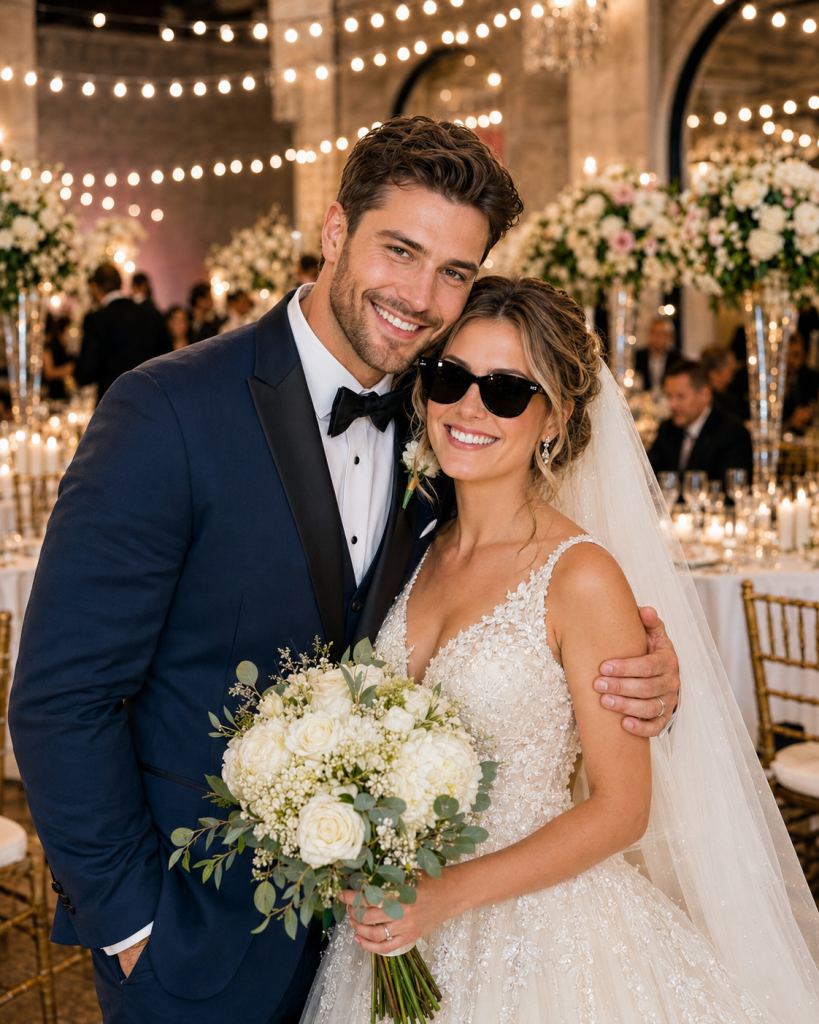
PART 2 Lily’s fingers trembled around mine.For a moment, I could hear nothing except the steady beeping of machines somewhere down the corridor and the sound of rain striking the hospital windows.
Then she spoke.”When Ed was seventeen, he went to the hospital for a routine examination after collapsing during basketball practice.”I frowned. “I remember that. He told us it was exhaustion.”
“He lied.”
My breath caught in my throat.
Lily lowered her head.
“The doctors discovered a genetic condition.
They told him it would gradually destroy his heart. Nobody could predict how quickly it would happen,
but they warned him that his life would probably be much shorter than everyone expected.”
I stared at her in disbelief.
“That’s impossible. He never said anything.”
“He didn’t want any of you to know.”
“Why?”
“Because he knew exactly what would happen. Your parents would spend every day worrying. You would stop treating him like your little brother. He didn’t want pity.”
I shook my head.
“But what does that have to do with you?”
For the first time since the doctor had delivered the terrible news, Lily smiled.
“Everything.”
She gently touched the wedding ring on her finger.
“Ed once told me that blindness had taught me something most people never learn.”
I swallowed hard.
“What was that?”
“How to love someone without being distracted by how much time remains.”
Tears slid down her cheeks.
“He said everyone else looked at the future and counted the years ahead. I listened to the person standing beside me. That was enough for me.”
My chest tightened painfully.
“So he married you because he knew he was dying?”
She shook her head immediately.
“No. He married me because we were already in love. But he chose to spend the rest of his life with me because he knew I would never waste a single moment of it.”
Footsteps suddenly echoed down the hallway.
My parents had arrived.
At the same instant, Lily reached into her handbag and pulled out a sealed envelope.
“There’s one more thing,” she whispered. “Ed told me to give you this only after he was gone.”
Across the front, in my brother’s handwriting, were four words:
The truth about Lily
PART 3 THE WOMAN WITH LILY’S FACE
Rebecca stood in the doorway wearing a dark green coat, rain shining on her shoulders.
For one impossible moment, nobody moved.
Lily sat beside my mother, her face turned toward the stranger’s voice. Rebecca stared back at her with an expression I could not understand—wonder, grief, anger, and recognition all fighting for space.
They had the same delicate mouth.
The same narrow chin.
The same habit of tilting their heads slightly when listening.
But Rebecca’s eyes were clear gray, while Lily’s had never seen light.
“My name is Rebecca Nolan,” she said again. “Ed told me you would know why I was stolen from my sister.”
My father stepped backward.
“I don’t know what you’re talking about.”
Rebecca reached into her coat and removed a photograph.
She placed it on the coffee table.
It showed two newborn babies lying side by side beneath hospital blankets.
One had a white identification band.
The other wore a yellow one.
Written across the bottom in faded ink were the words:
Twin girls. Eleanor Hale.
Eleanor made a broken sound.
“No,” she whispered. “They told me there was only one.”
Rebecca looked at her.
“You’re Eleanor?”
Lily tightened her fingers around my mother’s hand.
“She is our biological mother.”
Rebecca’s face changed, but she did not approach her.
Instead, she turned toward my father.
“Ed found that photograph in a sealed file registered under your name.”
Dad stared at it.
“I have never seen this.”
“Then why was your signature on the transfer authorization?”
Everyone looked at him.
My mother rose slowly.
“Thomas?”
He shook his head.
“I helped arrange Lily’s adoption, but there was only one baby. I swear.”
Rebecca opened a folder.
“According to the original hospital records, two girls were delivered. Six minutes apart. One was blind. The other was healthy.”
Lily’s breathing became shallow.
Rebecca continued.
“Hours later, the second child disappeared from the official record. One birth certificate was destroyed. Two different adoption agencies received separate infants. And both transfers were approved using documents connected to your law office.”
My father’s face drained of color.
“I was a junior clerk then. I didn’t own the office.”
“But your uncle did,” my mother said.
Dad looked at her.
A terrible realization passed between them.
“Uncle Charles,” he whispered.
I remembered Charles Hale.
He had been my grandfather’s older brother, a respected attorney who spoke softly, wore expensive suits, and never married.
He had attended every Christmas dinner until his death twelve years earlier.
He had also been present at Ed and Lily’s wedding.
Lily’s voice trembled.
“Was Charles the name in Ed’s letter?”
I looked down at the page.
“No.”
Every face turned toward me.
I had stopped reading before revealing the name.
The truth was, I had been too shocked.
The person Ed had written was not Charles.
It was someone still alive.
Someone standing only a few feet away.
I looked at Eleanor.
“The name was yours.”
Silence struck the room.
Eleanor’s cane slipped from her hand.
Rebecca stepped toward her.
“You separated us?”
“No!” Eleanor cried. “I didn’t even know there were two of you.”
“Ed believed you did.”
“He was wrong.”
Lily’s voice was barely audible.
“Why would Ed accuse you?”
Eleanor pressed both hands against her chest.
“I don’t know.”
Rebecca’s gaze hardened.
“Then tell us everything you remember about the birth.”
Eleanor sank into a chair.
“I went into labor early. Charles arranged the hospital. He said he knew a doctor who would keep everything private.”
My father closed his eyes.
“What doctor?”
“Dr. Samuel Voss.”
My mother gasped.
The name meant nothing to me, but Lily reacted instantly.
“Dr. Voss founded the vision institute.”
“Yes,” my mother said. “The institute where Lily was treated as a child.”
Rebecca took another paper from the folder.
“He also signed both infant transfer forms.”
The room suddenly felt too small.
Eleanor began to tremble.
“I remember waking after the delivery. Charles told me the baby had been born blind. He said she would need care I could never afford. He placed papers in front of me and told me adoption was the only merciful choice.”
“Did you read them?” Rebecca asked.
“No. I was medicated.”
“Did you sign more than one page?”
“I don’t know.”
Rebecca’s anger sharpened.
“You signed away two children without knowing?”
“I thought there was only one!”
Lily stood.
“Stop.”
Everyone fell silent.
She turned her face toward Rebecca.
“We have both spent our lives without the truth. Blaming her before we understand everything will not return those years.”
Rebecca’s expression softened.
“You sound exactly like Ed described you.”
Lily’s lips parted.
“You knew him well?”
“For two months.”
“Did he tell you about his illness?”
“Yes.”
A painful stillness settled between them.
Rebecca lowered her voice.
“He was determined to bring us together before his heart failed.”
Lily pressed a hand over her mouth.
“He knew he was running out of time.”
“He also believed the separation had something to do with your blindness.”
Eleanor looked up.
“What do you mean?”
Rebecca opened the final document.
“Ed discovered that one of the babies was entered into an experimental medical program.”
Lily went rigid.
“What kind of program?”
Rebecca hesitated.
“A program studying congenital blindness in newborns.”
My father stared at the papers.
“That cannot be legal.”
“It wasn’t.”
Rebecca’s voice shook.
“The institute received private funding to study whether damaged infant optic tissue could be repaired using cells taken from a genetically identical sibling.”
The meaning reached us slowly.
Then Eleanor screamed.
They had not merely separated two babies.
They had used one child to experiment on the other.
Rebecca’s hands began to tremble.
“I found surgical records under my original birth number. When I was three weeks old, tissue was removed from behind my left eye.”
She touched her temple.
“I have carried the scar all my life.”
Lily stumbled backward.
“They hurt you because of me.”
“No,” Rebecca said quickly. “They hurt both of us because they thought we were useful.”
My mother pulled Lily into her arms.
My father looked as though he might be sick.
“Charles knew,” he whispered.
Rebecca shook her head.
“Charles arranged it. But Ed believed someone else continued watching us after Charles died.”
“Who?”
Rebecca looked toward the hallway.
“I don’t know.”
Then the telephone rang.
All of us jumped.
My mother answered.
A man’s voice spoke on the other end.
I could not hear his words, but Mom’s face went white.
“When?” she whispered.
She slowly lowered the receiver.
“What happened?” I asked.
She stared at Lily.
“Your adoptive father has been found unconscious.”
Lily’s knees buckled.
Rebecca caught her before she fell.
Mom’s next words came out in a whisper.
“And the medical files Ed sent him are gone.”
PART 4 — THE HOUSE THAT KEPT THE SECRET
We reached Lily’s childhood home twenty minutes later.
Police cars filled the narrow street. Rain poured over the roof, and red emergency lights flashed across the windows where Ed and Lily had once played as children.
Lily’s adoptive mother, Ruth, stood beneath the porch awning, soaked and shaking.
The moment she saw Lily, she rushed forward.
“Your father is alive,” she said. “They’re taking him to surgery.”
“What happened?”
“I found him at the bottom of the basement stairs.”
Rebecca studied the open front door.
“Was anything stolen?”
Ruth looked at her, startled by the familiar face.
Lily quickly explained.
Ruth covered her mouth.
“Another daughter?”
“There were twins,” Lily said. “And Ed discovered something about our adoption.”
Ruth’s eyes filled with tears.
“I knew this day would come.”
Everyone went silent.
Lily gripped her cane.
“You knew about Rebecca?”
“No. But I knew the adoption was not clean.”
Ruth led us inside.
The living room still contained photographs of Lily at every age.
Lily learning Braille.
Lily in a school play.
Lily beside Ed on graduation day.
Lily wearing her wedding dress while Ed kissed her forehead.
Rebecca stopped before that photograph.
“He looked happy.”
“He was,” Lily said.
Ruth opened a locked cabinet and removed a small metal box.
“When we adopted you, a lawyer named Charles Mercer handled everything. He made us sign a confidentiality agreement.”
“Mercer?” my father asked. “His name was Charles Hale.”
“That was not the name he used with us.”
Rebecca frowned.
“A false identity.”
Ruth nodded.
“He told us your birth mother was unstable and dangerous. He said she might try to take you back.”
Eleanor flinched.
“I never knew where Lily was.”
Ruth turned toward her.
“I am sorry. I believed him.”
“What else did he say?” Rebecca asked.
“That Lily had been enrolled in special medical observation. We were required to bring her to Dr. Voss twice a year.”
Lily’s face tightened.
“All those examinations.”
“I thought they were helping you.”
Ruth opened the box.
Inside were appointment cards, adoption documents, and dozens of letters.
Every letter had been addressed to Lily.
Every envelope remained sealed.
Eleanor recognized her own handwriting.
“You wrote to me?” Lily asked.
“Every year.”
Ruth began crying.
“Charles intercepted them. They arrived inside official envelopes with instructions that opening them would violate the adoption agreement.”
Lily reached into the box and touched the stack.
Twenty-eight birthdays.
Twenty-eight letters.
Twenty-eight chances to know she had not been forgotten.
She pressed the envelopes against her chest.
Eleanor took one step closer, but stopped.
“I don’t expect forgiveness.”
Lily’s voice broke.
“I don’t know what I feel yet.”
A detective entered the room.
“We found evidence someone searched the basement before Mr. Parker fell. A filing cabinet was forced open.”
“What was inside?” I asked.
Ruth looked toward Lily.
“Ed’s documents.”
Rebecca’s expression hardened.
“Who knew he sent them here?”
“Only my husband, Ed, and me.”
The detective took notes.
“Was there anything unusual recently?”
Ruth hesitated.
“Three days ago, Dr. Voss called.”
My father stared at her.
“Samuel Voss is still alive?”
“He is eighty-six and living in a private care residence.”
“What did he want?” Rebecca asked.
“He asked whether Lily had received anything from Ed. He sounded frightened.”
Lily turned toward us.
“We need to speak with him.”
The detective objected, but Rebecca was already searching for the address.
An hour later, we reached the residence.
The administrator led us to a private room on the highest floor.
Dr. Samuel Voss was thin and nearly motionless, his skin stretched tightly across his bones. Oxygen tubes rested beneath his nose.
When Lily entered, his eyes widened.
Then Rebecca stepped beside her.
The old man began to cry.
“Both of you,” he whispered. “After all these years.”
Lily stood at the foot of his bed.
“What did you do to us?”
Voss closed his eyes.
“Something unforgivable.”
Rebecca placed the photograph of the twins on his blanket.
“Who ordered the experiment?”
“Charles arranged the adoptions, but he did not create the project.”
“Who did?”
Voss looked toward my father.
“Your father.”
Dad stiffened.
“My father died thirty years ago.”
“He funded the first trials.”
My grandfather had been a respected surgeon.
A man whose portrait still hung in the local hospital.
A man our family described as brilliant and honorable.
Voss coughed.
“He believed inherited blindness could be cured through identical-cell transplantation. The twins presented a rare opportunity.”
Eleanor began sobbing.
“You stole my children.”
“Yes.”
“Why separate them?”
“So no one would compare their medical histories.”
Rebecca’s voice became icy.
“And why did one of us remain blind?”
Voss looked at Lily.
“The procedure failed.”
Lily did not move.
“What happened to Rebecca?”
“The tissue removal caused permanent nerve damage around one eye, but her sight survived.”
Rebecca touched her scar.
Voss continued.
“After the failure, your grandfather ordered the records destroyed. Charles arranged separate adoptions. Thomas was used to sign documents because he was young and trusted.”
My father looked shattered.
“My own father used my name.”
“He believed he was protecting the family.”
Lily’s expression hardened.
“People always call it protection when they are really protecting themselves.”
Voss began to struggle for breath.
Rebecca leaned closer.
“Who attacked Lily’s adoptive father?”
“I don’t know.”
“You called him.”
“I wanted the files.”
“Why?”
“Because there is one record Ed never found.”
The monitor beside him began beeping faster.
“What record?” I asked.
Voss’s frightened eyes moved between the twins.
“The original genetic report.”
Rebecca gripped the bed rail.
“What did it say?”
The door opened behind us.
A nurse entered carrying medication.
She was middle-aged, with silver hair pinned beneath a cap.
Dr. Voss saw her and panicked.
“No,” he gasped. “Not her.”
The nurse froze.
Then she turned and ran.
Rebecca chased her into the corridor.
I followed.
The woman reached the stairwell, but security stopped her at the exit.
Inside her pocket, they found a syringe and a photograph of Ed.
Written on the back were five words:
He should have stopped searching.
The woman refused to speak.
But when police removed her cap, Eleanor cried out.
“I know her.”
The woman looked directly at Lily.
Eleanor’s voice shook.
“She was in the delivery room the night the twins were born.”
PART 5 — THE NURSE WHO NEVER FORGOT
Her name was Marion Crest.
She had worked beside Dr. Voss during the illegal trial and later became his private nurse.
For nearly three decades, she had protected the secret.
When police questioned her, she denied attacking Ruth’s husband.
She denied taking Ed’s files.
She denied knowing anything about his death.
That final denial changed the room.
“Ed died during surgery,” I said. “What do you mean, his death?”
Marion smiled without warmth.
“Did he?”
Lily moved toward her voice.
“What are you saying?”
Marion remained silent.
The police took her away, but suspicion had already entered all of us.
Ed had suffered a sudden heart emergency.
He had been rushed into surgery.
Ten hours later, a doctor said he was dead.
We had seen his body.
We had buried him.
Yet Marion’s question would not leave my mind.
Did he?
Rebecca requested copies of every medical record.
The hospital resisted until the detective obtained a warrant.
By midnight, we were gathered in my parents’ dining room while Rebecca examined the documents.
She had trained as an investigative journalist. Ed had found her through an article she had written about illegal adoption networks.
“He did not contact me only because of the DNA match,” she explained. “He thought I could help expose the institute.”
Lily sat across from her.
“Why didn’t he tell me?”
“He wanted proof first.”
Rebecca turned pages rapidly.
Then she stopped.
“This surgery report is wrong.”
I leaned closer.
“How?”
“The operating surgeon listed here retired two years ago.”
My father frowned.
“Maybe it is a clerical error.”
“There are five clerical errors. The anesthesiologist’s signature is missing. The time of death was entered before the final medication log. And no postmortem examination was performed.”
Lily went pale.
“Because his condition was known.”
“That is what the hospital claimed.”
Rebecca pulled out her phone.
“Ed sent me a message the morning he collapsed.”
She played the recording.
My brother’s voice filled the room.
“If anything happens to me today, do not trust the first explanation. Ask Lily about the red thread. She knows where the key is.”
Lily touched the thread around her wrist.
“He said it was from an old promise.”
“Think,” Rebecca urged. “Did he ever mention a key?”
Lily sat silently.
Then she gasped.
“Our wedding song.”
“What about it?”
“The first line was, ‘The key waits beneath the red horizon.’”
She stood.
“Ed kept a music box in our bedroom. It plays that song.”
We drove to Lily’s house.
Inside the music box, beneath a red velvet lining, we found a tiny brass key.
It opened a safety-deposit box at a private bank.
At eight the next morning, the bank manager brought us a sealed case.
Inside were copies of the medical files, photographs from the institute, DNA reports, and a video drive.
There was also a handwritten note.
Lily, trust Rebecca. Alice, protect them both. Dad knows more than he remembers.
My father stared at the final sentence.
“What does that mean?”
We played the video.
Ed appeared on the screen, thinner than I remembered, seated in his study.
“If you are watching this,” he began, “I failed to finish what I started.”
Lily reached for Rebecca’s hand.
Ed explained that while investigating the twins, he had discovered records linking my grandfather, Charles, Dr. Voss, and Marion to the experiment.
But there was another name.
A child had been listed in the genetic report.
Not Lily.
Not Rebecca.
A third infant.
My mother whispered, “Another twin?”
Ed shook his head on the recording, as though anticipating the question.
“The third baby was male. Born to a different mother on the same day. His blood samples were substituted for Rebecca’s in later records.”
Rebecca stared at the screen.
“Why?”
“Because the institute needed to hide that the transplantation caused a rare hereditary mutation.”
Lily’s fingers tightened.
“What mutation?”
Ed’s recorded voice softened.
“A condition affecting the heart.”
The room went silent.
I looked at my father.
Then at the screen.
Ed had suffered from an inherited heart disorder.
But perhaps it had not been inherited.
Perhaps it had been caused.
Ed continued.
“The male child was me.”
My mother screamed.
Dad caught her.
I could not breathe.
Ed had been born at the same hospital on the same night as Lily and Rebecca.
Our parents had always told us his birth came unexpectedly during a thunderstorm.
Now the truth emerged.
My grandfather had used his own newborn grandson as part of the experiment.
“He substituted my blood to conceal the twins’ genetic results,” Ed said. “The exposure damaged my heart before I was even taken home.”
My father staggered away from the screen.
“No.”
Ed looked directly into the camera.
“Dad, you were told I was briefly placed under observation because I had trouble breathing. That was a lie. Your father authorized my involvement.”
Dad sank into a chair.
He began crying.
Not quietly.
Not with dignity.
He wept like a child discovering that his father had betrayed everything sacred.
Ed’s video continued.
“I do not know whether my collapse will be natural. Marion has been following me. Someone accessed my medical records. If I die unexpectedly, examine everything.”
The screen went black.
Lily stood motionless.
Then she said the words none of us wanted to hear.
“Ed may have been murdered.”
That afternoon, police arrested Marion for attempted poisoning of Dr. Voss.
Under questioning, she finally confessed.
She had attacked Lily’s adoptive father and stolen the documents.
She had also changed medication orders in Ed’s hospital file.
But she insisted she had not killed him.
“I wanted him frightened,” she said. “I wanted the investigation stopped.”
“Then who changed the surgical report?” the detective asked.
Marion laughed bitterly.
“You still don’t understand.”
She leaned forward.
“Ed arranged it himself.”
PART 6 — THE GRAVE WITHOUT A BODY
The cemetery was closed when we arrived, but the detective had already obtained authorization.
Rain had softened the earth around Ed’s grave.
Lily stood beneath an umbrella between Rebecca and me while workers lifted the coffin.
My mother refused to come.
My father did.
He watched in silence as the lid was opened.
Inside lay a body.
For one terrible second, hope died.
Then the medical examiner pulled back the sheet.
It was not Ed.
The dead man was older, heavier, and completely unknown to us.
Lily swayed.
“He is alive.”
No one dared answer.
The hospital’s security footage had been erased, but Rebecca found an ambulance record showing that a private medical transport left the rear entrance three hours before Ed was declared dead.
The destination was listed as an abandoned rehabilitation clinic outside the city.
Police reached the clinic that evening.
They found bloodstained bandages, heart medication, and restraints.
But no Ed.
On the wall, someone had written:
THE TRUTH DIES WITH THE LAST WITNESS.
Rebecca studied the handwriting.
“That is not Marion’s.”
“How do you know?” I asked.
“It matches the note on the back of Ed’s photograph.”
Lily turned toward her.
“Then who wrote it?”
Rebecca looked at my father.
“Someone with access to the family.”
Our suspicion moved from one face to another.
Ruth.
Eleanor.
My parents.
Even Rebecca.
Every person had secrets.
Then my father remembered something.
“Ed asked about the old lake house.”
“What lake house?” I asked.
“My father owned a cabin near Ashford Lake. Charles used it after the institute closed.”
The property had been abandoned for years.
We drove through darkness and heavy rain.
The cabin stood deep among pine trees, its windows black.
Police entered first.
A lamp burned in the basement.
There, chained to a metal bed, thin and barely conscious, was Ed.
Lily heard my cry and pushed past everyone.
“Ed!”
His eyes opened.
When he saw her, tears filled them.
“Lily.”
She dropped beside him and touched his face with both hands.
“You’re alive.”
“I’m sorry.”
She struck his chest weakly, then collapsed against him.
“Don’t ever apologize for being alive.”
Ed had been taken from the hospital before surgery.
A corrupt administrator had falsified his death and replaced his body.
He had been drugged and questioned about the evidence.
“Who held you here?” the detective asked.
Ed looked toward my father.
“Grandpa’s last partner.”
Dad frowned.
“Voss?”
“No.”
A floorboard creaked above us.
Police rushed upstairs.
A gunshot shattered a window.
A figure fled through the back door but was caught near the lake.
When officers brought the suspect inside, my mother—who had arrived behind us despite insisting she would stay home—gave a cry of disbelief.
It was Ruth.
Lily’s adoptive mother.
“No,” Lily whispered.
Ruth looked at her with tears streaming down her face.
“I loved you.”
“Then why?”
“Because I had no choice.”
Ed struggled to sit up.
“You always had a choice.”
Ruth confessed that she had worked as a young laboratory assistant at the institute.
She and her husband had not been randomly selected as adoptive parents.
They were chosen to watch Lily.
At first, Ruth followed orders.
She reported Lily’s health, her development, and every medical change.
But over time, she truly became her mother.
When Charles died, Ruth believed the secret was buried.
Then Ed began investigating.
“I begged him to stop,” she said.
“You tried to kill my husband,” Lily replied.
“No. I arranged the false death to keep him alive.”
Ed looked at her.
“You drugged me and imprisoned me.”
“I was hiding you from Marion.”
“Then why question me?”
“Because I needed to know who had the evidence before she found it.”
Rebecca stepped closer.
“And Lily’s adoptive father?”
“He discovered my past. We argued. He fell down the stairs.”
Ruth wept.
“I never meant to hurt him.”
Lily turned away.
The woman who had raised her had also monitored her.
Protected her.
Deceived her.
Loved her.
Betrayed her.
The truth was not clean enough to hate and not kind enough to forgive.
Then Ed asked the question that changed everything again.
“Where is the original genetic report?”
Ruth stared at him.
“You don’t have it?”
“No.”
Her face filled with fear.
“Then Marion was right.”
“About what?”
Ruth looked toward Rebecca and Lily.
“The experiment was never about curing blindness.”
Rebecca went still.
“What was it about?”
“Finding a way to transfer inherited traits between identical siblings.”
Lily frowned.
“That makes no sense.”
“It was not only tissue,” Ruth said. “Voss injected one twin with altered cells taken from the other. He believed he could switch biological conditions between them.”
Rebecca touched her eyes.
“You mean he tried to move Lily’s blindness into me?”
“Yes.”
Lily began crying.
“And Ed’s heart?”
“He was the control subject.”
Ed closed his eyes.
Ruth continued.
“The final report showed the treatment failed. But decades later, one result appeared.”
“What result?” I asked.
Ruth looked directly at Rebecca.
“Your eyesight has been deteriorating.”
Rebecca’s silence answered her.
Lily reached toward her.
“You never told us.”
Rebecca’s voice cracked.
“I was diagnosed six months ago. Doctors said I could lose my sight within a year.”
Ruth looked at Lily.
“And your latest scans?”
Lily shook her head.
“I haven’t had scans recently.”
Ed stared at Ruth.
“What are you implying?”
Ruth whispered:
“The experiment may not have failed.”
PART 7 — THE MIRACLE HIDDEN INSIDE THE CRIME
The next morning, Lily underwent a complete neurological examination.
Rebecca remained beside her.
Ed, weak but alive, watched from a wheelchair.
The specialist entered holding the scan results.
His expression was bewildered.
“Lily, your optic nerves show activity.”
She frowned.
“That’s impossible. I have been blind since birth.”
“They are damaged, but not inactive.”
Rebecca gripped her hand.
“What does that mean?”
“With treatment and surgery, there is a possibility—only a possibility—that Lily may gain limited vision.”
No one spoke.
Lily had never seen Ed.
Never seen her parents.
Never seen the ocean, a candle flame, or her own reflection.
She pressed both hands over her mouth.
The doctor turned toward Rebecca.
“Your condition appears related. The cellular changes in both of you are nearly identical, but moving in opposite directions.”
Rebecca gave a hollow laugh.
“She may see while I become blind.”
Lily immediately shook her head.
“No.”
“Lily—”
“I will not take something from you.”
“You are not taking it. This was done to us.”
But Lily refused surgery.
For two weeks, she remained beside Ed while he recovered.
Rebecca stayed too.
The twins learned each other slowly.
Rebecca described colors.
Lily taught Rebecca how to navigate rooms with closed eyes.
They argued over music, laughed at identical childhood habits, and cried over years they had lost.
One evening, I found them sitting on the porch.
Rebecca had tied a scarf over her eyes.
Lily was teaching her to listen to the wind moving through trees.
“You hear that?” Lily asked.
“The leaves?”
“No. Beyond them.”
Rebecca tilted her head.
“A train.”
Lily smiled.
“You’re learning.”
Rebecca removed the scarf.
“And you are avoiding surgery.”
Lily’s smile faded.
“I don’t want my first sight to be your last.”
Ed, standing in the doorway, answered softly.
“Then make sure neither of those things happens.”
He had been researching a new treatment based on the original trial data.
The criminal experiment had been monstrous, but its records contained a discovery never published: the twins’ altered cells could potentially repair each other when combined safely.
A medical team agreed to study the possibility.
The procedure was experimental.
Risky.
Uncertain.
But it could preserve Rebecca’s sight and awaken Lily’s.
The twins agreed on one condition:
The research would be public, ethical, and used to help others—not hidden behind family power.
Before surgery, Eleanor visited.
She had kept her distance since the revelations.
Lily invited her inside.
“I read your letters,” she said.
Eleanor began crying.
“All of them?”
“Yes.”
“I was a coward.”
“You were nineteen and manipulated.”
“I still left.”
Lily nodded.
“You did.”
Eleanor lowered her face.
“I don’t deserve to be called your mother.”
Lily took her hand.
“Ruth raised me. You gave birth to me. Neither truth cancels the other.”
Rebecca joined them.
“We cannot recover the childhood we lost.”
“No,” Eleanor whispered.
“But we can decide what happens now.”
The surgery lasted fourteen hours.
Ed and I waited in the same hospital where he had been declared dead.
My mother walked the corridor.
My father sat with his head bowed.
Ruth, released temporarily under supervision to help investigators recover records, waited in another room.
She had accepted responsibility and agreed to testify.
When the surgeon finally appeared, his exhaustion frightened us.
“The procedures are complete.”
Ed stood despite the pain.
“Are they alive?”
“Yes.”
“Can they see?”
“We won’t know until the bandages are removed.”
Three days later, the entire family gathered in Lily’s room.
Rebecca’s bandages came off first.
She blinked.
Then she looked directly at Lily.
“I can see you.”
Everyone cried.
The doctor moved to Lily.
Her hands searched for Ed’s.
He placed his fingers in hers.
“You don’t have to be afraid,” he whispered.
“I’m not afraid of seeing.”
“What are you afraid of?”
“That reality won’t be as beautiful as your descriptions.”
Ed laughed through his tears.
“I exaggerated many sunsets.”
The bandages came away.
Lily kept her eyes closed.
Slowly, painfully, she opened them.
Light entered her world for the first time.
She gasped.
Everything was blurred.
Shapes moved.
Colors trembled.
Then Ed leaned close.
Lily stared at him.
Her first sight was not the sky.
Not flowers.
Not her own face.
It was the man who had walked beside her since childhood.
“You’re older than I imagined,” she whispered.
Everyone laughed and sobbed at once.
Ed kissed her hands.
“And you are more beautiful than I ever knew how to describe.”
Lily turned toward Rebecca.
Their eyes met.
Two identical faces.
Two lives separated by greed.
Two sisters finally seeing each other.
But the joy did not last.
A nurse entered carrying an envelope addressed to Ed.
Inside was the original genetic report.
There was no sender.
At the bottom, beneath the medical data, was a final handwritten note:
The heart condition was not caused by the experiment. Find Alice’s test results.
I stopped breathing.
Ed looked at me.
“Alice?”
I had never told my family that I had been suffering from chest pain.
Or that my doctor had found the same abnormal heart pattern.
PART 8 — THE HEART THAT SAVED THEM ALL
My diagnosis came two days later.
I carried the same hereditary condition as Ed.
That proved the experiment had not caused his illness.
It had come from our family line.
But the new tests revealed something else.
My father carried no trace of it.
Neither did my mother.
The genetic markers came from someone unrelated to both of them.
The hospital reopened our birth records.
What they found destroyed the last remaining certainty of our family.
Ed and I were not my father’s biological children.
My mother sat in stunned silence.
“That is impossible.”
My father looked at her.
“Margaret?”
“I never betrayed you.”
The investigator explained.
Both Ed and I had been conceived through fertility treatment after my parents struggled to have children.
The clinic had claimed to use my father’s samples.
Instead, Dr. Voss had substituted material from an anonymous donor selected for medical research.
The same donor had fathered at least twelve children.
Several had developed heart disease.
My mother stared at Voss’s name on the documents.
“He experimented on all of us.”
“Yes,” Rebecca said. “But now we can find the others.”
The anonymous donor was eventually identified as Dr. Voss himself.
His obsession had never been limited to blindness.
He had spent decades attempting to manipulate heredity, using children as data and families as hiding places.
The original genetic report had been sent by Marion.
From prison, she admitted she had kept it as insurance.
She had protected Voss for years, but after learning he intended to blame everything on her, she released the truth.
Dr. Voss died before trial.
His death was quiet.
His legacy was not.
Rebecca published the entire investigation.
The story spread nationally.
Hospitals opened sealed archives.
Families demanded answers.
Victims found one another.
A legal fund was created from the seized assets of the institute and the remaining Hale estate.
My father insisted our family contribute everything inherited from his father.
“No money built on suffering belongs to us,” he said.
Ruth pleaded guilty to kidnapping, obstruction, and unlawful imprisonment.
Before sentencing, Lily visited her.
They sat across from each other in a small room divided by glass.
“I loved you,” Ruth said.
“I know.”
“Do you hate me?”
Lily looked at the woman who had raised her.
“I hate what you did. I don’t know whether I can hate the person who held me through every fever and taught me to read.”
Ruth began to cry.
“Will you ever forgive me?”
“Forgiveness is not a door I can open today.”
Lily placed her hand against the glass.
“But I will not pretend the good years were false.”
Ruth placed her hand opposite Lily’s.
It was not forgiveness.
But it was not goodbye.
Eleanor became part of the twins’ lives gradually.
She never demanded the title of mother.
She attended appointments, cooked terrible dinners, and read her old letters aloud when Lily’s eyes became tired.
Rebecca joked that after losing twenty-eight years, Eleanor was trying to fit motherhood into every afternoon.
My parents’ marriage nearly collapsed.
My mother struggled to forgive Dad for hiding Eleanor, Daniel, and the adoption.
Dad struggled to forgive himself for trusting his father.
Yet grief and truth changed them.
They began speaking honestly for the first time in decades.
Not beautifully.
Not gently.
But honestly.
Ed recovered slowly.
His heart remained weak.
He needed a transplant.
For months, no match appeared.
Then one morning, the hospital called.
A donor had been found.
The transplant succeeded.
When Ed woke, Lily was beside him.
Her vision remained limited. She could see faces at close range, distinguish colors, and watch light move across a room.
It was more than doctors had promised.
Rebecca’s eyesight stabilized.
She continued journalism, exposing medical abuse and illegal adoptions.
I began treatment early enough to control my condition.
The secret that nearly killed Ed saved my life.
One year later, we gathered at the lake house.
It had been rebuilt and converted into a retreat for families affected by unethical medical research.
A plaque near the entrance read:
THE ED AND LILY FOUNDATION — TRUTH SHOULD HEAL, NOT HIDE.
Children ran across the lawn.
Some were blind.
Some had heart conditions.
Some had spent years searching for biological families.
All were welcomed.
Lily stood beside the lake wearing a pale blue dress.
Ed approached and touched her shoulder.
“Can you see the sunset?” he asked.
She narrowed her eyes toward the horizon.
“A little.”
“What do you see?”
“Gold.”
“And?”
“Pink.”
“And?”
She smiled.
“A man who still exaggerates everything.”
He laughed and wrapped his arms around her.
Rebecca joined them.
Eleanor stood nearby with my parents.
For once, no one looked like a stranger.
I thought the story had finally ended.
Then a young man approached.
He appeared to be about thirty, with Ed’s dark hair and my eyes.
He held a folder containing genetic test results.
“Are you Alice?” he asked.
“Yes.”
“My name is Michael.”
Something in his face made my heart race.
He looked toward Ed.
Then back at me.
“I believe Dr. Voss was my biological father too.”
Ed stepped closer.
“You are one of the donor children?”
Michael nodded.
“But that isn’t why I came.”
He opened the folder.
Inside was a photograph of three infants.
Not two.
Not one.
Three babies lying beneath hospital blankets.
Two girls.
One boy.
Across the bottom was written:
Eleanor Hale — triplets.
Rebecca went pale.
Lily’s hand found mine.
Eleanor stared at the picture, unable to speak.
Michael’s eyes filled with tears.
“I was adopted the same night you were separated.”
Rebecca whispered, “You are our brother?”
He nodded.
Eleanor began to sob.
For nearly thirty years, she had believed she had lost one child.
Then two.
Now a third stood before her.
Michael stepped toward the twins.
“I spent my entire life feeling as if something was missing.”
Lily smiled through tears.
“So did we.”
She reached out.
Rebecca took one of his hands.
Lily took the other.
Three siblings stood together beside the water while the sunset turned the lake to gold.
Ed leaned toward me.
“Do you think this is finally the last secret?”
I looked at the family gathering behind us.
At my parents learning to forgive.
At Eleanor holding the photograph of the children stolen from her.
At Rebecca, Lily, and Michael laughing like they had known one another all their lives.
At Ed, alive despite every attempt to silence him.
“No,” I said. “Families always have more secrets.”
His smile faded slightly.
Then I added:
“But maybe not all surprises are meant to break us.”
That evening, music filled the rebuilt lake house.
Lily danced with Ed beneath warm lights.
Rebecca danced badly with Michael and blamed their shared genetics.
My father held my mother close.
Eleanor watched all three of her children together.
And I understood something Ed had known since he was seventeen.
A life does not become meaningful because it is long.
It becomes meaningful because someone chooses to stay.
Because someone tells the truth.
Because someone reaches through darkness and takes your hand.
Ed had once married Lily believing his heart might stop without warning.
Instead, his love exposed a crime, reunited a family, restored sight, saved my life, and gave three lost siblings a place to belong.
The brother we thought we had buried had returned.
The blind woman who believed she had been abandoned discovered an entire family waiting in the darkness.
And the secrets intended to destroy us became the reason we finally learned how to love one another without fear.
Sometimes the cruelest truth does not end a family.
Sometimes it gives the family a second beginning.