 Reading Time: 15 minutes
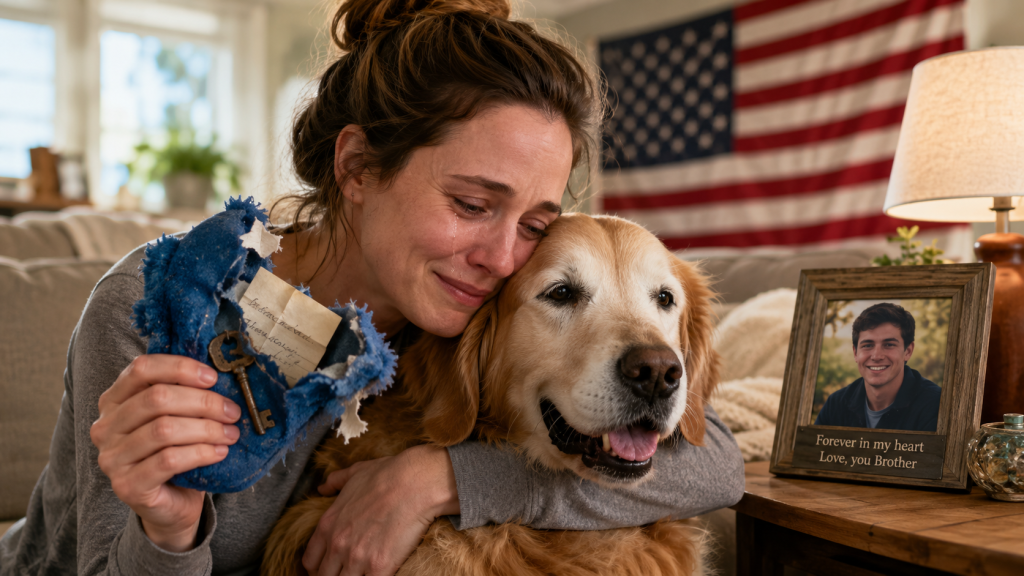
I finally surrendered my brother’s old golden retriever to the shelter on a gray Tuesday morning in November.Baxter was eleven years old, slow in the hips, silver around the muzzle, and still convinced that every stranger had been sent into the world specifically to become his friend.
My brother Ethan had brought him home as a clumsy puppy with paws too large for his body. For nearly a decade, the two of them had been inseparable.When Ethan died, Baxter became the last living piece of him I had left.
For eleven months, I rearranged my entire life around that dog.
I woke before sunrise to walk him, spent lunch breaks driving home to check on him,
and turned down social invitations because Baxter panicked whenever I left him alone too long.
Then I lost my rental house.
My new bookkeeping job paid better,
but the office was downtown, where every affordable apartment seemed to have the same rule
no dogs over thirty pounds. Baxter weighed seventy-four.
I found a one-bedroom apartment managed by a company that rarely inspected its units. For three months, I hid him. I took him through the back stairs, walked him after dark, and kept the curtains closed whenever he sat near the window.
Then a maintenance worker saw him.
The landlord gave me seventy-two hours.
“Remove the animal,” the notice said, “or face immediate eviction.”
I called everyone I knew.
Friends apologized. Coworkers lived in small apartments. Rescue groups had waiting lists. My mother said she could not handle the hair. My uncle Victor told me that continuing to care for Baxter was preventing me from moving on.
“Ethan would understand,” Victor said over the phone. “You cannot ruin your future over an old dog.”
I hated him for saying it, but part of me believed he was right.
The shelter lobby smelled of disinfectant and wet fur. Dogs barked behind metal doors while Baxter sat quietly beside my chair, his head resting against my knee.
A woman named Kelly handled the intake paperwork.
She was probably in her late thirties, with carefully shaped eyebrows, pale blond hair, and a silver cross around her neck. She barely looked at Baxter before sliding the surrender form toward me.
“Reason for surrender?” she asked.
“Housing restrictions.”
“Any aggression?”
“Never.”
“Medical conditions?”
“Arthritis. He takes medication with breakfast.”

Kelly checked several boxes.
“Standard surrender fee is fifty dollars.”
I handed her my card.
Baxter watched every movement.
When Kelly attached a temporary paper collar around his neck, he finally stood. He did not bark, pull away, or resist.
He simply pressed his warm nose into my palm one last time.
Then he picked up his favorite ratty blue chew toy and dropped it at my feet.
The toy had once been shaped like a bone. Years of chewing had flattened it into a stained bundle of fabric with loose stitching.
“He wants you to keep it,” Kelly said.
“I think he wants to play.”
“He cannot take personal items into general housing.”
I crouched and wrapped my arms around Baxter’s neck.
“I’m sorry,” I whispered into his fur. “I’m so sorry.”
His tail tapped the floor once.
I put the toy inside my purse and walked out before I changed my mind.
For two weeks, I checked the shelter’s website every morning. Baxter’s photograph never appeared among the adoptable animals. Whenever I called, I was told he was still undergoing evaluation.
On the fifteenth day, Kelly telephoned me at work.
“I’m sorry, Ms. Mercer,” she said. “Baxter passed away during the night.”
The office around me seemed to disappear.
“What happened?”
“He went to sleep and did not wake up. Older dogs sometimes pass suddenly.”
“Was he sick?”
“Not according to intake.”
“Was someone with him?”
There was a pause.
“Our overnight staff found him during morning rounds.”
I gripped the edge of my desk.
“Can I have his ashes?”
“His remains have already been transferred for communal cremation.”
“You did that without calling me?”
“You surrendered ownership. The authorization was included in the paperwork.”
I did not remember seeing such an authorization, but I had been crying when I signed.
“I understand,” I whispered.
That night, I sat on my kitchen floor holding Baxter’s toy.
I imagined him alone in a metal kennel, waiting for me to return. I imagined his ears lifting each time footsteps passed. I imagined him finally lowering his head and realizing I had abandoned him.
The guilt was unbearable.
I stood, opened the trash bin, and dropped the toy inside.
It caught on the metal rim.
The fabric ripped open.
Something small struck the tile floor with a sharp metallic sound.
A rusted brass key lay near my shoe.
A narrow strip of paper had been wrapped around it with old yellow tape.
I peeled it away carefully.
The handwriting belonged to Ethan.
If Baxter gave you this, it means they found me. Go to Union Station. Locker 214. Trust Mara Lopez. Trust no one in the family.
My knees weakened.
Ethan had died eleven months earlier after his car went through a guardrail on a mountain road outside Denver. The vehicle burned before emergency crews arrived. The police ruled his death an accident.
There had been a closed casket.
My uncle Victor handled the identification.
Victor arranged the funeral.
My mother discouraged me from requesting the full police report.
“You do not want those images in your mind,” she had said. “Let your brother rest.”
I read the note again.
If Baxter gave you this, it means they found me.
Not if I die.
Not if something happens.
They found me.
Someone knocked hard on my apartment door.
I nearly screamed.
Then Victor’s voice came through the wood.
“Rachel? Are you home?”
I did not move.
“I saw your car,” he continued. “Your mother is worried about you.”
I stared at the key in my hand.
Victor had never visited my apartment before. He claimed the neighborhood was unsafe and always insisted I come to his house.
“Rachel?”
His hand touched the doorknob.
It turned slightly, but the lock held.
“I know today was difficult,” he said. “The shelter called your mother about Baxter. Open the door.”
Why would the shelter call my mother?
I slipped the key and note into my pocket.
“Give me a minute,” I called.
I turned off the kitchen light, grabbed my purse, and moved toward the bedroom window. My apartment was on the first floor. Below the window was a narrow strip of grass bordered by shrubs.
Victor knocked again.
“Rachel, open this door.”
I pushed up the window, climbed through, and dropped into the wet bushes.
By the time I reached my car, my hands were shaking so badly that I dropped the keys twice.
I drove to a twenty-four-hour pharmacy parking lot and stayed there until dawn.
At seven the next morning, I entered Denver Union Station beneath its enormous arched windows. Travelers hurried past carrying coffee and rolling suitcases while holiday music played softly over the speakers.
Locker 214 stood in an older luggage corridor near the bus terminal.
The brass key fit.
Inside was a black backpack, a prepaid phone, a sealed envelope, three flash drives, and a framed photograph of Ethan and me when we were children.
In the picture, I was missing two front teeth, and Ethan had his arm around my shoulders. On the back, he had written: For when you forget we were once on the same team.
The prepaid phone turned on when I held the power button.
There was only one saved video.
Ethan appeared on the screen, sitting in his garage. Baxter lay beside him with his head on Ethan’s boot.
“Rachel,” he began, “I hope you never see this.”
Hearing his voice stole the air from my lungs.
“If you are watching, Baxter gave you the key. I trained him to bring you that toy if I failed to come home for three nights. He is smarter than anyone gives him credit for.”
Baxter lifted his head at the sound of his name.
Ethan smiled briefly, but he looked exhausted. Dark circles shadowed his eyes, and a bruise marked the side of his jaw.
“I discovered something inside Hale Community Housing,” he continued. “Victor has been stealing from the organization for years.”
Hale Community Housing was the nonprofit founded by my grandfather. It managed affordable apartments for veterans, senior citizens, and families escaping homelessness. After my grandfather died, Victor became executive director.
Our family treated him like a saint.
He hosted fundraising dinners, appeared in newspaper photographs, and gave speeches about dignity and service. My mother called him the only person keeping our grandfather’s legacy alive.
Ethan had worked there as financial manager.
“I found properties being billed for repairs that never happened,” Ethan said. “Fake contractors. Inflated invoices. Rent assistance transferred into private accounts. Emergency grants disappearing before they reached tenants. At least six million dollars is missing.”
He held up a flash drive.
“I confronted Victor privately. He told me the organization owed our family and that no one had been harmed. I told him families were living with broken furnaces while he bought lake property.”
Ethan looked toward the garage door.
“Two days later, someone broke into my house. Nothing valuable was taken. They searched my office.”
He placed a hand on Baxter’s head.
“That is when I copied everything.”
Then his expression changed.
“Mom knows.”
I stopped breathing.
“She has been signing false board reports and receiving money through a consulting company Victor created. I do not know if she understands the full scheme, but she knows enough.”
Our mother, Linda Mercer, had spent her life presenting herself as the moral center of our family. She corrected other people’s manners, organized charity drives, and told Ethan and me that dishonesty was the fastest way to lose our respect.
“She may try to convince you I was unstable,” Ethan continued. “I was not. I contacted Detective Mara Lopez with the state financial-crimes unit. She has some evidence, but not all of it. Her card is in the envelope.”
His voice cracked.
“I am sorry, Rachel. I thought I could fix this without involving you. If I disappear, do not confront Victor. Do not give anything to local police. Victor’s older brother, Thomas, is the police chief.”
He looked directly into the camera.
“Trust Mara. Trust Baxter. And please forgive me for leaving you with this.”
The video ended with Ethan kneeling beside the dog.
“Take care of each other,” he whispered.
I sat on the floor between the lockers, crying so hard that travelers glanced at me as they passed.
Inside the envelope were bank statements, property records, photographs of damaged apartment buildings, and lists of shell companies. There was also a business card for Detective Mara Lopez.
I called the number from Ethan’s prepaid phone.
A woman answered on the second ring.
“This is Lopez.”
“My name is Rachel Mercer. Ethan Mercer was my brother.”
Silence followed.
Then she asked, “Where are you?”
“Union Station.”
“Are you alone?”
“Yes.”
“Do not call anyone in your family. Do not return to your apartment. Walk to the main entrance and stand beside the flower kiosk. I will be there in fifteen minutes.”
Mara arrived in an unmarked gray sedan with another investigator.
She was in her late forties, with dark hair streaked by silver and the calmest eyes I had ever seen. She examined Ethan’s note, the key, and the flash drives without touching them directly.
“We believed the original records were destroyed with him,” she said.
“You knew he was in danger?”
“We knew he was frightened. Ethan contacted me three weeks before the crash. He provided enough evidence to begin a confidential inquiry, but he refused protective custody.”
“Why?”
“He believed disappearing would alert your uncle and put you at risk.”
I showed her the shelter paperwork and explained what Kelly had told me.
Mara’s expression sharpened.
“You never saw Baxter’s body?”
“No.”
“No veterinary report?”
“No.”
“Did the shelter offer ashes?”
“They said he had already been cremated.”
She exchanged a look with the second investigator.
“Rachel, your dog may still be alive.”
Hope struck so quickly that it felt painful.
We drove directly to the shelter.
Kelly was not working.
The director, a tired-looking woman named Mrs. Hanley, searched the computer system and frowned.
“There is no death record for Baxter Mercer,” she said.
She pulled the surrender file from a cabinet.
According to the paperwork, Baxter had been transferred to a private senior-dog sanctuary three hours after I left him.
The sanctuary did not exist.
The authorization bore Kelly’s signature.
Security footage showed her leading Baxter through a side door and loading him into a dark SUV.
The vehicle was registered to Hale Community Housing.
Victor had taken him.
Mara told me not to confront anyone. The investigators needed time to secure the evidence and locate Baxter before Victor realized we had opened the locker.
I spent that night in a hotel under another name.
My mother called seventeen times.
Victor called nine.
The final message came from an unknown number.
Bring the drive to the old family cabin by noon tomorrow. Come alone if you want the dog back.
A photograph followed.
Baxter lay on a concrete floor beside his blue water bowl. He looked tired, but alive.
My first instinct was to drive there immediately.
Mara stopped me.
“That is exactly what Victor expects.”
“He has Baxter.”
“And he may hurt you once he has the evidence.”
“I will not leave him there.”
“You will not,” she promised. “But we need to do this correctly.”
The family cabin sat on twelve acres outside Evergreen. My grandfather built it when my mother and Victor were children. After his death, Victor renovated it into a private retreat.
The investigators fitted me with a recording device and replaced Ethan’s flash drives with harmless copies. Officers positioned themselves in the surrounding woods.
At eleven fifty-five, I drove up the long gravel road.
Victor waited on the porch.
He wore a camel-colored coat and leather gloves, looking more like a banker than a criminal. When I stepped from the car, he smiled as if I had arrived for Thanksgiving dinner.
“Where is Baxter?” I demanded.
“Inside.”
“I want to see him.”
“First, give me what Ethan left.”
I held up the backpack.
Victor’s eyes fixed on it.
“Your brother was confused,” he said. “He convinced himself that normal business decisions were crimes.”
“Six million dollars is not a business decision.”
His smile disappeared.
“So you watched the video.”
“Mom knew.”
“Your mother signed what she was told to sign.”
“She took money.”
“Our family built Hale Community Housing. Your grandfather worked himself into an early grave for people who never thanked him.”
“So you stole from them?”
“I redirected resources.”
“Into lake houses and private accounts?”
Victor stepped closer.
“You have no idea what it takes to maintain influence. Donors expect appearances. Politicians expect favors. Your grandfather was naïve. I made the organization powerful.”
“Ethan discovered the truth.”
“Ethan was emotional. He could never understand that good work sometimes requires unpleasant compromises.”
“What happened to his car?”
For the first time, Victor looked away.
“It was an accident.”
“Did you tamper with his brakes?”
“No.”
“Did you tell someone else to?”
His jaw tightened.
“You should be careful what you accuse people of.”
A bark came from inside the cabin.
“Baxter!” I shouted.
The door shook as the dog scratched from the other side.
I moved toward it, but Victor blocked me.
“The drive.”
I handed him the backpack.
He searched it quickly, found the flash drives, and slipped them into his pocket.
“Now the dog.”
Victor sighed.
“You have always been stubborn, Rachel. Ethan was the same way.”
He opened the cabin door.
Baxter stumbled out.
He had lost weight. His fur was dirty, and one of his back legs shook, but the moment he recognized me, his ears lifted.
I dropped to my knees.
He crossed the porch as quickly as his old body allowed and pressed himself against me.
“I’m here,” I cried. “I’m here, boy.”
Victor watched us without emotion.
“You have the drives,” I said. “We are leaving.”
“I cannot allow that.”
He reached inside his coat.
Before he could remove his hand, voices thundered from the trees.
“State police! Show us your hands!”
Victor froze.
Officers surrounded the porch.
Mara appeared beside my car.
Victor looked at me with disbelief.
“You brought them here?”
“Ethan did.”
His face collapsed as officers handcuffed him.
Baxter remained pressed against my side.
Kelly was arrested that afternoon.
During questioning, she admitted Victor paid her to monitor local shelters for Baxter. Months before his death, Ethan had visited the shelter and asked about emergency placement if anything happened to him.
Kelly recognized Baxter immediately when I surrendered him.
She called Victor, transferred the dog before the shelter director could process him, and invented the story about his death so I would stop searching.
Victor had kept Baxter at the cabin, believing the toy would eventually lead him to Ethan’s evidence. He did not know the key was sewn inside it until Kelly told him I had taken the toy home.
My mother came to see me three days later at Mara’s office.
She looked ten years older. Her hair was unwashed, and her hands shook as she placed her purse on the table.
“I did not know about Ethan’s brakes,” she whispered.
“Did you know Victor was stealing?”
Tears filled her eyes.
“He said the organization owed our family. He said the consulting payments were legal.”
“Did you ask what you were consulting on?”
She lowered her head.
“I did not want to know.”
“Ethan came to you, didn’t he?”
She began to cry.
“He was frightened. He said Victor was destroying everything Grandfather built.”
“What did you do?”
“I called Victor.”
The answer cut through me.
“You told the man Ethan feared that he was planning to expose him.”
“I thought Victor would talk sense into him.”
“You thought Victor would scare him into silence.”
“I never imagined he would die.”
“Ethan imagined it. That is why he hid the key.”
She reached across the table.
I pulled my hand away.
“Please, Rachel. I have already lost my son.”
“So have I.”
“I am still your mother.”
“And Ethan was still your child when he begged you for help.”
She covered her face.
For years, I had believed forgiveness was proof of goodness. That day, I understood that forgiveness given too quickly can become another form of permission.
“I hope you tell the truth,” I said. “But I cannot protect you from what the truth costs.”
My mother eventually accepted a plea agreement. She returned more than four hundred thousand dollars, testified against Victor, and admitted signing fraudulent reports. She avoided prison but lost her home, her board position, and nearly every friendship built around her reputation.
Police Chief Thomas Hale resigned after state investigators discovered he had delayed examination of Ethan’s crash, withheld evidence, and pressured a county employee to classify the death as accidental.
A mechanic later admitted he had been paid to damage Ethan’s brake line.
Phone records connected the payment to one of Victor’s shell companies.
Victor denied ordering Ethan’s death, but the jury did not believe him.
The trial lasted six weeks.
Tenants from Hale Community Housing testified about winters without heat, ceilings that collapsed, mold-covered walls, and elevators that remained broken for months. One elderly veteran described sleeping in his coat because the furnace repairs listed on Victor’s invoices had never occurred.
The prosecution displayed photographs of Victor’s lake property beside pictures of apartments with buckets catching rainwater.
Ethan’s video was played in court.
I watched my brother explain the truth to a room full of strangers.
Victor stared at the table.
He was convicted of fraud, embezzlement, conspiracy, evidence tampering, animal theft, and charges connected to Ethan’s death.
At sentencing, the judge called his crimes a betrayal of both family and public trust.
Victor received decades in prison.
The investigation recovered more than five million dollars through seized accounts and property sales. The money was returned to Hale Community Housing under a new independent board.
Buildings were repaired.
Heating systems were replaced.
A legal-aid fund was created for tenants.
The organization also established the Ethan Mercer Integrity Award for employees who reported misconduct.
I attended the first ceremony with Baxter beside me.
He wore a blue bandana and slept through most of the speeches.
Afterward, a veteran named Samuel Greene knelt to pet him.
“Your brother visited my building,” he told me. “He sat at my kitchen table and promised he would find out where the repair money went.”
“He kept his promise,” I said.
Samuel looked at Baxter.
“Seems like the dog helped.”
“He did more than help.”
Six months after the trial, I moved into a small house outside Denver with a fenced yard and a maple tree near the porch.
My employer allowed me to work from home three days a week. Baxter spent those days asleep beneath my desk, occasionally waking when the refrigerator opened.
His hips grew weaker, but his appetite remained impressive. He greeted every visitor as though they were an old friend and carried the torn blue toy whenever he felt particularly pleased with himself.
I repaired the toy as carefully as I could, leaving one small seam open where the key had been hidden.
The rusted key sat inside a glass box on my bookshelf beside Ethan’s photograph.
While sorting through the final items from the Union Station locker, I found another note tucked behind the picture.
Rachel,
You have always believed strength means carrying everything alone. It does not. Sometimes strength means asking for help. Sometimes it means walking away. Sometimes it means trusting an old dog when he refuses to give up on you.
Baxter knows where home is.
So do you.
Love,
Ethan
I sat on the floor beside Baxter and read the note aloud.
His tail tapped the rug.
“I almost threw away your toy,” I told him.
He rested his head on my knee.
“I almost threw away the truth.”
For a long time, we watched the evening light fade across the yard.
I used to believe I had failed Baxter when I surrendered him.
In reality, he had been completing the final task my brother gave him.
He carried Ethan’s secret through grief, eviction notices, loneliness, and betrayal. He waited until the moment he believed we were being separated forever.
Then he gave me the key.
Two years later, Baxter stopped eating.
The veterinarian found a tumor near his heart. Surgery was not possible.
I brought him home.
For his final week, friends visited with treats, blankets, and photographs. Samuel Greene came from the housing organization and sat beside him for an hour. Mara brought a new tennis ball, though Baxter was too tired to chase it.
My mother wrote a letter asking to see him.
I allowed her to visit.
She sat on the floor and stroked Baxter’s ears.
“I am sorry,” she whispered. “For all of it.”
I did not tell her everything was forgiven.
Some wounds do not disappear because the person who caused them finally understands their depth.
But I let her say goodbye.
On Baxter’s final morning, sunlight filled the living room.
I lay beside him on the rug with one hand resting on his golden fur. There were no metal cages, no strangers, and no unanswered questions.
“You found me,” I whispered.
His tired eyes opened.
His tail moved once.
Then he went peacefully, with his head in my lap.
I buried his ashes beside Ethan’s grave beneath a young maple tree. On the stone, I added a small bronze plaque.
BAXTER
LOYAL FRIEND. BRAVE WITNESS.
HE BROUGHT THE TRUTH HOME.
As I stood beneath the tree, I finally understood what Ethan had meant.
Home was not the apartment I had struggled to keep.
It was not the family name Victor had tried to protect.
Home was the place where love did not demand silence, where loyalty was not exploited, and where the truth was safe.
My brother had trusted a dog with his final secret.
The dog had trusted me with the key.
And although I had almost been too late, I finally became worthy of them both.
THE END! THANK YOU FOR READING!