 Reading Time: 16 minutes
My wife suddenly passed away, leaving me alone with our four kids. After the funeral, her mother handed me a sealed box and said, “She made me promise to give you this if anything ever happened to her.”
For most of my adult life, I believed I was one of the lucky ones. I had a wife I loved, four incredible children, and a home that was always full of life. Fifteen years ago, I met Sarah in the most ordinary way possible.
At a grocery store. I was standing in front of the pasta sauce, holding two jars and pretending I understood the difference between roasted garlic and traditional marinara, when she reached past me and grabbed a third jar from the top shelf.
“That one,” she said. I looked at her. “What?” “The one you’re pretending not to need help choosing.” She smiled, and I remember thinking it was the kind of smile that made a man want to become better immediately. Three years later, we were married.
Then came Julie.
Then Joyce.
Then Joan.
Then Jeremy.
Four children in eight years.
Four different personalities.
Julie was serious and careful, always reading two grades above her level.
Joyce was loud, funny, and fearless.
Joan was quiet, artistic, the kind of child who noticed when someone was sad before the adults did.
Jeremy was our surprise baby, the son Sarah said completed the chaos.
Life with four kids was loud, messy, and sometimes exhausting.
There were socks everywhere.
Crumbs in places crumbs should not exist.
Homework papers on the kitchen island.
Tiny shoes by the door.
Arguments over cereal.
Bedtime routines that stretched into negotiations.
But it was also the happiest chapter of my life.
And through it all, Sarah was the heart of our family.
She was the one who remembered which child hated peas, which child needed the hallway light left on, which child pretended not to care about hugs but leaned in anyway.
She danced in the kitchen.
She wrote notes in lunchboxes.
She could calm Jeremy with one hand while helping Joan find her missing sketchbook with the other.
She made our house feel safe.
Then one ordinary Tuesday morning, everything changed.
Sarah woke up saying she felt strange.
Not sick exactly.
Just off.
She sat on the edge of the bed with one hand pressed to her stomach and said, “Maybe I ate something weird.”
I told her to stay home.
She laughed and said, “David, I have four kids and a meeting at ten. Mothers don’t get to be dramatic.”
By noon, she called me from her car.
Her voice was thin.
“Can you come home?”
That was all she said.
I left work so fast I forgot my laptop.
By the time I reached the house, she was sitting on the bathroom floor, pale and sweating, trying to smile so I would not panic.
I called 911.
At the hospital, doctors moved quickly.
Too quickly.
There were machines.
Tests.
Words I did not understand.
A nurse took me aside and said they were doing everything they could.
Less than forty-eight hours later, Sarah was gone.
Even now, writing those words feels impossible.
My wife was thirty-nine years old.
She had packed school lunches the night before.
She had kissed Jeremy’s forehead that morning.
She had reminded me to buy dishwasher detergent.
And then she was gone.
Losing her broke me in a way I did not know a person could break and still keep breathing.
But every morning, I looked at our children and reminded myself that I had to keep going for them.
Julie was fourteen.
Joyce was twelve.
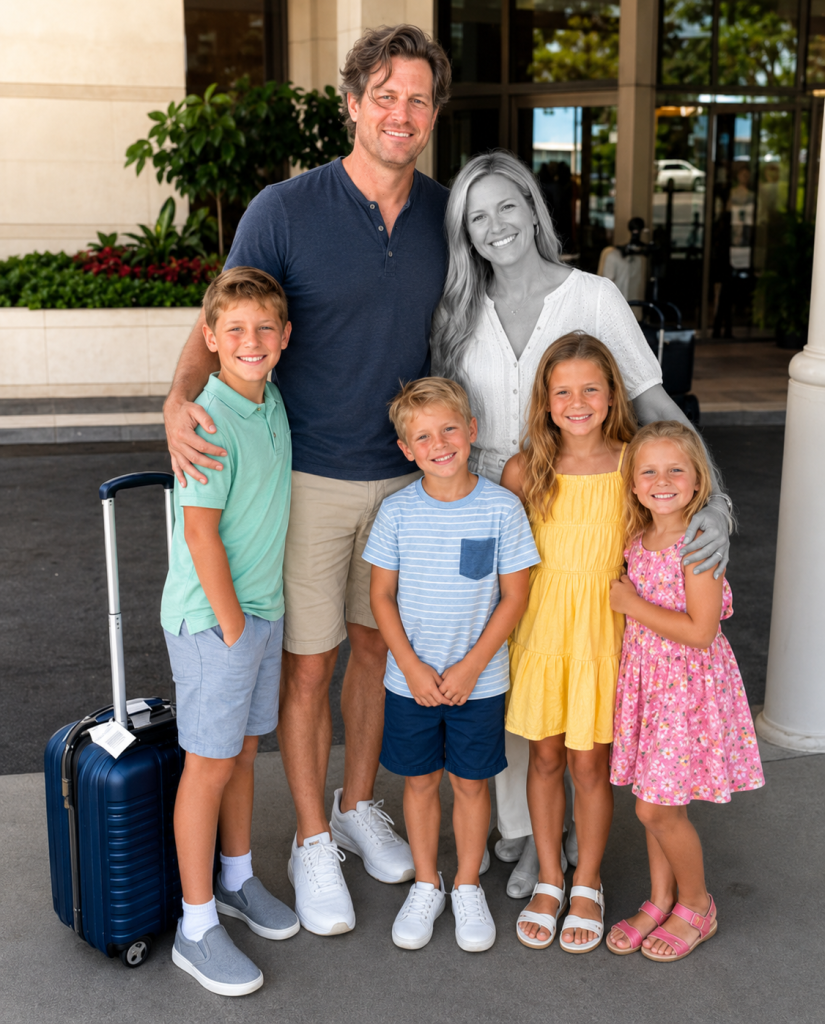
Joan was nine.
Jeremy was six.
They needed breakfast.
Clean clothes.
Rides to school.
Someone to sign permission slips.
Someone to sit on the floor with them when the grief hit too hard.
So I learned to cry in the shower.
I learned to fold laundry badly.
I learned which drawer Sarah kept the allergy medicine in.
I learned that grief does not stop because children need pancakes.
The days after the funeral blurred together.
People came and went.
Neighbors brought casseroles.
Coworkers sent flowers.
Church ladies wiped counters I did not remember dirtying.
Everyone told me to call if I needed anything, then walked back into lives where their wives were still alive.
I was trying to care for four grieving children while barely understanding my own grief.
Then one afternoon, Sarah’s mother showed up at the house.
Linda looked older than she had at the funeral.
Her hair was pulled back tightly, and her eyes were red, but her face had a strange firmness to it.
I assumed she had come to help with the kids.
Instead, she walked inside carrying a small sealed box and placed it on the kitchen table.
Then she looked at me and quietly said, “Sarah made me promise to give you this if anything ever happened to her.”
I stared at the box in disbelief.
Sarah had been healthy.
There was no reason for her to prepare something like this.
“What is it?” I asked.
Linda shook her head.
“I don’t know everything. She only told me that if she died suddenly, I was not to give this to anyone but you.”
“If she died suddenly?”
My voice cracked on the words.
Linda’s mouth trembled.
“She was afraid, David.”
The kitchen seemed to tilt.
“Afraid of what?”
Linda looked toward the hallway, where the children’s drawings still hung on the wall.
“Open it when you’re alone.”
Then she pushed the box closer to me.
“She was very specific about that.”
After my mother-in-law left, I sat staring at the box for a long time, unable to shake the feeling that something was not right.
The children were upstairs.
The house was quiet in that unnatural way houses become quiet after death.
Everything felt like Sarah had just stepped out for a moment.
Her mug still sat near the coffee machine.
Her sweater hung over the back of a chair.
Her handwriting was still on the grocery list stuck to the fridge.
I touched the sealed box.
It was small.
Plain.
Brown cardboard wrapped in clear tape.
Not romantic.
Not decorative.
Practical.
Like Sarah.
When I finally gathered the courage to open it and saw what she had left inside, I felt the blood drain from my face.
Inside the box was not jewelry.
Not letters for the children.
Not some final romantic goodbye.
It was a flash drive, a hospital bracelet from three years earlier, and a sealed envelope with my name written in Sarah’s handwriting.
My hands shook as I opened it.
David,
If you are reading this, then I am gone, and I need you to be brave before you trust anyone.
My breath stopped.
The next line made the room spin.
My death may not have been natural.
I gripped the table so hard my knuckles turned white.
Sarah wrote that she had been feeling sick for months but hid most of it because someone close to our family kept telling her she was just exhausted from motherhood.
She had secretly ordered blood tests.
Saved recordings.
Written down every strange symptom.
Then came the sentence that shattered me completely.
Do not let my sister Megan near the children until you watch the video.
Megan.
Sarah’s younger sister.
The woman who had been at my house every day since the funeral.
Cooking meals.
Holding Jeremy.
Telling everyone Sarah had worked herself too hard.
Megan, who had cried dramatically beside the coffin.
Megan, who kept saying, “Sarah always pushed herself. She never knew when to rest.”
Megan, who had already offered to move into our guest room “until the kids were stable.”
I plugged the flash drive into my laptop.
For a moment, nothing happened.
Then a folder opened.
Videos.
Documents.
Scanned lab reports.
Audio files.
The first video was labeled: If something happens to me.
I clicked it.
Sarah appeared on the screen, sitting in our bedroom.
She looked pale and tired, but her eyes were clear.
My chest caved in at the sight of her.
“David,” she whispered, “I hope I’m wrong. God, I hope I’m wrong. But if you are watching this, then I need you to listen carefully.”
I covered my mouth with one hand.
Her voice trembled.
“I have been sick for months. Not normal tired. Not mom tired. Something is wrong. I told Megan, and she kept bringing me vitamins, teas, little wellness drops. She said she got them from a holistic doctor. I trusted her because she’s my sister.”
Sarah looked down at something in her lap.
“I started feeling worse after taking them.”
My skin went cold.
“I stopped taking them for a week, and I felt better. Then Megan noticed and got angry. She said I was wasting her help. She said I acted like I was too good for family.”
Sarah looked directly at the camera.
“David, I found something in the vitamins Megan keeps bringing me.”
Before the video continued, my phone buzzed.
I looked down.
Megan.
I’m outside. Open the door.
My heart slammed against my ribs.
For a moment, I could not move.
Then the doorbell rang.
Once.
Twice.
The sound echoed through the house.
I closed the laptop halfway, hiding the screen.
Upstairs, Jeremy called, “Dad? Aunt Megan is here!”
I stood slowly.
My legs felt hollow.
When I opened the front door, Megan stood on the porch holding a casserole dish wrapped in foil.
Her eyes were puffy, but her makeup was perfect.
“Hey,” she said softly. “I thought the kids might need dinner.”
I stared at her hands.
At the casserole.
At her concerned face.
At the sister-in-law I had known for fifteen years.
She had always been intense.
Sensitive.
Jealous of Sarah in ways I dismissed as normal sibling history.
But dangerous?
The thought felt impossible.
Then again, my wife had left me a box from the grave.
“David?” Megan asked. “Are you okay?”
I stepped aside.
“Come in.”
She walked into the kitchen like she belonged there.
Like she had already imagined herself taking Sarah’s place.
She set the casserole on the counter and looked at the open box on the table.
Her expression changed.
Only for a second.
But I saw it.
“What’s that?” she asked.
“Something Linda brought.”
“Mom came by?”
Her voice sharpened before she could soften it.
“Yes.”
Megan forced a smile.
“That’s good. She’s been so emotional. I hope she didn’t upset you.”
“She said Sarah wanted me to have it.”
Megan’s eyes flicked to the laptop.
My body went still.
She knew.
Maybe not everything.
But enough.
“What was inside?” she asked.
I leaned against the counter, making my voice tired.
“Letters, I think. I haven’t really looked.”
Her shoulders loosened.
“Oh.”
Then she stepped closer and touched my arm.
“You shouldn’t go through emotional things alone. Sarah was my sister. I can help.”
I looked at her hand on my sleeve.
“No.”
The word came out harder than I intended.
Her fingers withdrew.
“I just mean—”
“I know what you mean.”
For a few seconds, neither of us spoke.
Then she smiled again, but it did not reach her eyes.
“I’ll heat this up for the kids.”
“No,” I said. “They already ate.”
“They did?”
“Yes.”
That was a lie.
They had not.
But there was no chance I would let Megan feed my children before I knew what Sarah had found.
Megan’s smile tightened.
“You need help, David. You’re overwhelmed.”
“I am.”
“I can stay tonight.”
“No.”
She stared at me.
“You shouldn’t be alone.”
“I’m not. The kids are here.”
“That’s not what I mean.”
I thought of Sarah’s letter.
Do not let my sister Megan near the children until you watch the video.
“I need space tonight,” I said.
Megan’s face hardened for the first time.
“Space from me?”
“From everyone.”
She nodded slowly.
“Of course. Grief makes people suspicious.”
The word landed like a warning.
Suspicious.
I said nothing.
She picked up her purse.
At the door, she turned back.
“Sarah always kept things dramatic. Don’t let old recordings or letters make you believe something ugly. She was scared near the end. Fear changes people.”
My blood went cold.
I had not mentioned recordings.
Megan realized her mistake at the same time I did.
Her face went blank.
Then she left.
The moment her car pulled away, I locked the door.
Then I called Linda.
“Did you tell Megan about the flash drive?”
“No,” she said immediately. “Why?”
“She knows there are recordings.”
Linda’s breath caught.
“Oh God.”
“What did Sarah tell you?”
There was a long silence.
Then Linda whispered, “She told me Megan hated her.”
I closed my eyes.
“Sisters fight.”
“Not like that, David. Megan believed Sarah stole the life she should have had.”
“What does that mean?”
“She thought you should have chosen her.”
The floor seemed to disappear beneath me.
“What?”
Linda began crying.
“Years before you met Sarah, Megan saw your photo from a mutual friend’s party. She had some idea about you. Then Sarah actually met you later and fell in love. Megan never forgave her.”
“That was fifteen years ago.”
“I know.”
“She married someone else.”
“And divorced him because she said he was not the man she deserved.”
I looked toward the stairs.
My children’s voices drifted faintly from above.
“Linda, I need you to come get the kids.”
“I’m already on my way.”
“Bring someone with you. Do not come alone.”
Then I called the police.
Not with accusations.
With concern.
I told them my wife had left evidence suggesting possible poisoning or medical interference.
The officer on the line asked questions in a careful, neutral voice.
I answered each one.
Then I called Sarah’s doctor.
Then the hospital.
Then a lawyer.
By the time Linda arrived with her brother, Uncle Robert, I had watched three more videos.
Each one made the world darker.
Sarah had recorded herself opening capsules Megan had given her.
Inside were powders that looked different from normal supplements.
She had saved samples in labeled bags.
She had recorded phone calls where Megan pushed her to take them.
One audio file played Megan’s voice clearly.
“You look awful, Sarah. You need to keep taking what I brought. Unless you want David to think you can’t handle your own life.”
Sarah’s voice answered weakly, “They make me sick.”
“That’s because your body is detoxing.”
“I don’t think that’s it.”
“Stop being dramatic.”
The same word.
Dramatic.
Megan had used it at the funeral.
She had used it at my door.
She had been building the explanation before Sarah was even dead.
In another recording, Sarah whispered from her car.
“She keeps asking if David changed the life insurance after Jeremy was born. She says widowers with kids need family support. I laughed it off, but it scared me.”
I found copies of emails Sarah sent to herself.
Screenshots of messages.
A photo of a hidden envelope in Megan’s purse with the name of a chemical supply company.
I did not understand everything.
But I understood enough.
Sarah had not been paranoid.
Sarah had been alone with the truth.
When Linda took the children that night, Julie resisted.
“She’s my aunt,” she said, crying. “Why can’t Aunt Megan come?”
I knelt in front of my oldest daughter.
Because that was the hardest part.
Explaining danger without destroying childhood all at once.
“Sweetheart, your mom left me some information I need to understand. Until I understand it, Grandma’s house is safest.”
Julie searched my face.
“Is this about Mom dying?”
My throat tightened.
“Yes.”
Her face crumpled.
“Did someone hurt her?”
I wanted to say no.
I wanted to protect her.
But Sarah had protected us with truth, and I could not begin the next chapter with lies.
“I don’t know yet,” I said. “But I’m going to find out.”
After they left, the house became unbearable.
Every room held Sarah.
Her slippers by the bed.
Her book on the nightstand.
The half-used bottle of lotion near the sink.
The calendar on the fridge with Jeremy’s dentist appointment circled.
I sat at the kitchen table until dawn, watching every video.
Reading every document.
Following the trail my wife had left like breadcrumbs through a forest.
By morning, detectives had opened an inquiry.
Sarah’s samples were collected.
Her medical records were reviewed.
The hospital agreed to preserve all bloodwork.
The medical examiner was contacted.
And Megan started calling me.
At first, gently.
Then urgently.
Then angrily.
David, call me.
Mom said the kids are with her. Why?
You’re scaring everyone.
Sarah was sick. Don’t make this harder.
Whatever she told you, she misunderstood.
That last message told the detectives plenty.
Whatever she told you.
Not if.
Whatever.
Two days later, Detective Harris and Detective Monroe came to my house.
They had serious faces and careful voices.
“Mr. Miller,” Detective Harris said, “some of the substances found in the supplement samples are not typical dietary ingredients.”
My stomach turned.
“Were they dangerous?”
“We’re waiting for full toxicology. But we have enough concern to continue investigating.”
Detective Monroe placed a photo on the table.
“Do you recognize this bottle?”
I did.
Megan had brought it every week.
Small amber glass.
White label.
Handwritten dosage instructions.
“Wellness mineral blend.”
I swallowed hard.
“That was in our kitchen.”
“Do you still have it?”
I walked to the cabinet where Sarah kept vitamins.
The bottle was gone.
So were the others Megan had brought.
Megan must have taken them when she came with the casserole.
But Sarah had saved samples.
My brilliant, terrified wife had saved samples.
A week later, police searched Megan’s apartment.
They found more bottles.
Receipts.
Internet searches.
Printed articles about symptoms.
And a notebook.
That notebook became the center of everything.
Megan had written about Sarah for years.
Not every day.
Not like a movie villain.
But enough.
Enough to show obsession.
Resentment.
Fantasy.
She wrote that Sarah “always got everything.”
That Sarah “collected love without earning it.”
That David would “need someone steady” if Sarah “finally stopped pretending to be perfect.”
The detectives did not show me every page.
I did not want to see them.
What I saw was enough.
Megan was arrested three weeks after the funeral.
By then, the news had already begun to circle.
People whispered.
Neighbors avoided eye contact.
Parents at school looked at me with pity so heavy it felt like another burden to carry.
The children were staying with Linda, and every night I drove there to tuck them in.
Julie had stopped speaking much.
Joyce got angry at everything.
Joan drew pictures of Sarah with wings but never showed them to anyone unless I asked gently.
Jeremy kept asking when Mommy’s “long sleep” would be over.
How do you explain to a six-year-old that grief is not sleep?
How do you tell four children that the aunt who braided their hair, baked cookies, and cried at their mother’s funeral may have caused that funeral?
You do it slowly.
With therapists.
With truth small enough for their hands to hold.
With the promise that they are safe.
Even when you are not sure you believe the world is safe anymore.
The trial took almost a year.
During that year, I learned how much strength a family can lose and rebuild in small pieces.
I learned to make pancakes Sarah’s way, thin at the edges and slightly crisp.
I learned Jeremy only slept if I sat in the hallway until he stopped whispering for his mother.
I learned Julie had been reading Sarah’s old texts at night.
I learned Joyce blamed herself because Megan once asked her to remind Sarah to take the vitamins.
That nearly destroyed me.
I held my twelve-year-old daughter while she sobbed and said, “I helped her.”
“No,” I told her again and again. “You were a child. She used you. That is not your guilt.”
Joan barely spoke about Megan.
Instead, she drew locked boxes.
Dozens of them.
One day, she handed me a picture of a box with light coming out.
“Mom left you one,” she said.
I kept that drawing in my desk.
At trial, Megan looked different.
Smaller.
No perfect makeup.
No casserole-dish kindness.
She watched me when I entered the courtroom.
I did not look away.
The prosecution played Sarah’s videos.
The room went silent when my wife appeared on the screen.
There she was.
Alive.
Afraid.
Brave.
“David, if you’re watching this, then I need you to protect the children from Megan.”
I heard someone in the courtroom gasp.
Megan stared at the table.
Linda cried silently behind me.
The defense tried to argue Sarah had been anxious.
Overwhelmed.
Confused by motherhood and illness.
Then the prosecutor played the audio recordings.
Showed the samples.
Showed the purchases.
Showed the notebook.
Showed Megan’s messages to me after the box appeared.
Whatever she told you, she misunderstood.
That sentence became impossible for Megan to explain.
On the third day, she finally looked at me during a break and whispered, “I loved them too.”
I turned to her.
“No. You wanted what Sarah had. That is not love.”
Her face twisted.
“You don’t know what it was like always being second.”
For a second, I saw the core of it.
Not madness.
Not some grand plan born in one day.
Just envy fed for years until it became entitlement, then cruelty.
“You made four children motherless,” I said.
Megan looked away first.
The jury convicted her.
The sentence was long.
Not long enough.
No sentence would have been long enough for Julie’s silence, Joyce’s guilt, Joan’s locked boxes, Jeremy’s bedtime questions, or the empty space beside me every morning.
But it was something.
It was truth with a gavel.
Afterward, Linda hugged me outside the courthouse.
“I’m sorry,” she said into my shoulder. “I should have listened to Sarah sooner.”
I held her because she was grieving two daughters in different ways.
One buried.
One lost to what she had done.
“You gave me the box,” I said. “That saved us.”
“No,” Linda whispered. “Sarah saved you.”
She was right.
Sarah had saved us.
From the grave.
From Megan.
From a lie that would have swallowed her memory and dressed it up as exhaustion.
The first anniversary of Sarah’s death came with rain.
The children and I stayed home from school and work.
We made her favorite lemon cake.
It collapsed in the middle.
Sarah would have laughed.
We lit a candle and each said one thing we missed.
Julie said, “Her singing in the car.”
Joyce said, “How she made funny voices when she read.”
Joan said, “Her hands.”
Jeremy said, “Everything.”
Then he started crying, and we all folded into each other on the kitchen floor.
That was grief in our house now.
Not neat.
Not quiet.
But shared.
The sealed box stayed on a shelf in my closet for a long time.
I could not throw it away.
I could not look at it either.
Eventually, I placed Sarah’s letter inside with Joan’s drawing of the box full of light.
The flash drive went into a safe.
The evidence belonged to the case.
But the meaning belonged to us.
Two years later, the house is still loud.
Different loud.
There is still homework on the counter.
Still socks in strange places.
Still arguments over cereal.
Julie is learning to drive now, and every time she pulls out of the driveway, I hear Sarah’s voice saying, “Brake earlier, sweetheart.”
Joyce plays basketball and pretends not to look for me in the stands, though she always smiles when she finds me.
Joan paints now, not only locked boxes.
Sunrise.
Hands.
Kitchens.
Sometimes her mother.
Jeremy barely remembers Sarah’s voice without videos, and that hurts in a way I cannot explain.
So we play them.
Not the frightening ones.
The birthday ones.
The silly ones.
The ones where she dances in the kitchen and says, “David, stop recording me,” while smiling at the camera.
I tell them stories.
The grocery store.
The pasta sauce.
The stormy proposal.
The night Julie was born and I cried so hard Sarah laughed at me.
The way she burned toast but could make perfect soup.
The way she loved them.
I make sure Megan does not get the final word in their childhood.
One day, Jeremy asked, “Did Mommy know she was going to heaven?”
I sat beside him on the bed.
“I think Mommy knew she loved us so much that she wanted to protect us no matter what.”
He thought about that.
“Like a superhero?”
I smiled through tears.
“Yes. But with better hair.”
He laughed.
That laugh felt like oxygen.
Sometimes, late at night, I still open Sarah’s first letter.
Not the whole evidence file.
Just the letter.
The first sentence still hurts.
If you are reading this, then I am gone, and I need you to be brave before you trust anyone.
For a while, I thought bravery meant uncovering the truth.
Calling police.
Sitting through trial.
Facing Megan.
But now I know bravery is also packing lunches the next morning.
Answering impossible questions.
Letting your children see you cry without making them carry you.
Not letting bitterness become the new mother of the house.
Sarah left me a box because she knew I would need proof.
But she also left me our children.
And they needed more than justice.
They needed a father who would not disappear into revenge.
They needed birthday cakes, school plays, clean pajamas, dentist appointments, bedtime stories, and someone who could say their mother’s name without only pain attached to it.
I am still learning.
I fail often.
Sarah would probably roll her eyes at how badly I organize the pantry.
She would laugh at my uneven ponytails for Joan.
She would tell me to stop buying the wrong yogurt.
But I think she would know I am trying.
Last month, I found a note tucked inside one of her old cookbooks.
It must have been there for years.
Just a normal note.
Not evidence.
Not fear.
A grocery list on one side, and on the other, a sentence written in Sarah’s quick handwriting.
David forgets how strong he is when he loves people. Remind him gently.
I sat at the kitchen table and cried for twenty minutes.
Then I taped it inside the cabinet where I keep the coffee.
Now I see it every morning.
Remind him gently.
That is what her memory does.
Not always gently.
Sometimes grief is a door slamming open.
But sometimes it is lemon cake.
A child laughing.
A song in the car.
A sealed box full of painful truth that somehow became the reason we survived.
My wife suddenly passed away, leaving me alone with our four kids.
That is where the story began.
But it is not where it ends.
It ends with Julie teaching Jeremy how to make pancakes.
With Joyce shouting from the driveway that she won her game.
With Joan painting a box with light pouring out.
With Linda sitting at our table every Sunday, loving her grandchildren and carrying her own sorrow quietly.
It ends with Sarah’s photo on the mantel, not as a ghost, but as proof that love lived here.
It ends with me opening the curtains every morning, even when I do not feel ready for the day.
Because Sarah trusted me with the truth.
She trusted me with our children.
She trusted me to be brave.
And even though I lost the woman who was the heart of our family, she left enough of that heart behind for us to keep living.
Not the same life.
Never the same.
But a life.
One she fought to protect until the very end.
THE END! THANKS FOR READING!