 Reading Time: 30 minutes
“What if something is wrong with me?” Penelope’s voice trembled as she sat on our bedroom floor, surrounded by medical reports, appointment reminders, and photographs of babies she had quietly saved on her phone.
I still remember the way she looked up at me that evening. Her eyes were swollen from crying. Her hands shook as she held a document from the fertility specialist. “Graham, please tell me something,” she whispered. “Do you think we’ll ever have a baby?”
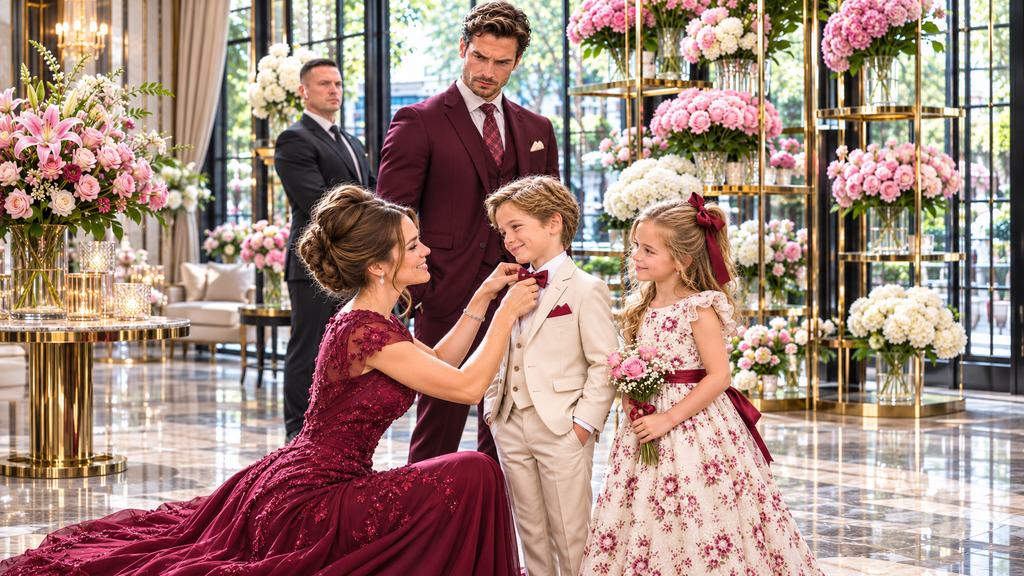
I stood in the doorway wearing a suit that cost more than most people earned in a month.
My phone vibrated with messages from business partners.
A major investment proposal waited for my approval.
And the woman who had loved me for years was sitting on the floor, begging me to reassure her about a future I had secretly made every effort to prevent.
I should have knelt beside her.
I should have held her.
Most importantly, I should have told her the truth.
Instead, I glanced at my watch.
“Penelope, perhaps we should stop putting so much pressure on ourselves.”
She stared at me.
“Pressure?”
“Yes. Maybe having children simply isn’t something we should worry about right now.”
Her lips parted slightly.
“Graham, we’ve been married for years. I’m not asking for something unreasonable. I just want us to have a family.”
“We already are a family.”
“But don’t you ever want someone to call you Daddy?”
The question struck something deep inside me.
For a moment, I saw a memory I had spent most of my adult life trying to bury.
I was eight years old, standing beside the front door of my childhood home, watching my father carry a suitcase to his car.
My mother was crying.
I asked him when he would return.
He looked down at me and said, “A man can’t build a future if everyone keeps demanding pieces of him.”
Then he drove away.
For years, I believed that becoming a father meant losing control of my own life.
I promised myself I would never become the kind of man who abandoned a child.
But instead of confronting that fear, I chose the easier solution.
I decided I would never have one.
Four years before our divorce, without telling Penelope, I had undergone a vasectomy.
I told her I was attending a financial conference.
The doctor explained that the procedure was not guaranteed to be immediately effective and that follow-up testing was essential.
I never returned for that testing.
I was too busy, too arrogant, and too certain that anything I arranged would work exactly as intended.
For years, I assumed the procedure had been successful.
And every time Penelope cried over another disappointing pregnancy test, I allowed her to believe the problem might be hers.
That night, she reached toward me.
“Graham, I need you.”
I stepped backward.
“I have an early meeting tomorrow.”
Something changed in her face.
It wasn’t anger.
It was worse.
It was the quiet realization that the person standing in front of her was no longer the man she had married.
“Of course,” she whispered.
I turned off the bedroom light and walked away.
I didn’t know that, somewhere in the darkness behind me, my wife was beginning to learn how to stop expecting love from me.
And I certainly didn’t know that the decision I had made in secret would eventually become the greatest regret of my life.
The Woman I Chose Over My Wife
Six months before the divorce, I met Celeste Monroe at a private investment event in Manhattan.
She was beautiful, ambitious, confident, and completely comfortable among people whose wealth was measured in hundreds of millions.
She wore expensive dresses, understood commercial real estate, and knew exactly how to make a powerful man feel important.
Unlike Penelope, Celeste never complained about my long working hours.
She admired them.
When I canceled dinner because of a business emergency, she called me dedicated.
When I spent a weekend negotiating a property acquisition, she praised my ambition.
And when I mentioned that my wife wanted children, Celeste laughed.
“Children?” she said, lifting her champagne glass. “Graham, you’ve spent twenty years building an empire. Why would you want to spend the next twenty changing diapers?”
I smiled.
It felt wonderful to hear someone agree with the selfish thoughts I had been too ashamed to express.
Our relationship began with late-night conversations.
Then came private dinners.
Eventually, I crossed the line I had once promised Penelope I would never cross.
I started having an affair.
At first, I told myself I wasn’t doing anything truly wrong.
My marriage had become distant.
Penelope and I barely spoke.
She spent her evenings reading or tending flowers, while I traveled and attended business meetings.
But I never admitted the most important truth.
Our marriage had become distant because I had stopped participating in it.
I gave Penelope a beautiful house, expensive jewelry, vacations, and unlimited access to my accounts.
I convinced myself those things made me a good husband.
I forgot that she had never married me for my money.
Three weeks before I sent the divorce message, Penelope prepared dinner at home.
There were candles on the table.
She wore a pale blue dress I remembered from our honeymoon.
When I entered the dining room, she smiled nervously.
“Graham, can we have dinner together tonight? Just the two of us?”
I glanced at my phone.
Celeste had sent a message.
I miss you. Come over.
“I can’t tonight,” I replied.
Penelope’s smile disappeared.
“Is it work again?”
“Yes.”
She lowered her eyes.
“Of course.”
I picked up my car keys.
Then she said something that should have stopped me.
“Graham, I have something important to tell you.”
I turned impatiently.
“Can it wait?”
Her hand moved instinctively toward her stomach.
I noticed the movement.
But I didn’t understand it.
She hesitated.
“I suppose it can.”
I left.
Later, I would learn that she had visited her doctor that afternoon.
And the doctor had told her something she had been praying to hear for years.
She was pregnant.
Not with one baby.
With two.
The Divorce Papers and the White Envelope
When I sent Penelope the message offering her $150 million, I expected an emotional reaction.
I imagined tears.
Angry phone calls.
Perhaps arguments about our home and marriage.
Instead, she replied three hours later.
“I understand, Graham. Please have the papers prepared.”
That was all.
No accusations.
No pleading.
No desperate attempt to save what remained of our marriage.
I remember feeling relieved.
I even told Celeste that evening.
“Penelope accepted everything surprisingly well.”
Celeste smiled.
“Of course she did. One hundred and fifty million dollars would make anyone happy.”
I believed her.
That was how little I understood my own wife.
Two days later, my financial adviser informed me that the entire $150 million had been transferred back into my account.
At first, I thought there had been a banking error.
I called Penelope.
“Why did you return the money?”
Her voice was calm.
“Because I don’t want it.”
“Penelope, you’re being unreasonable.”
“No, Graham. I’m being clear.”
“That’s enough money to secure your future forever.”
There was a long silence.
Then she said something I remembered for years.
“You’ve always believed money could replace whatever you weren’t willing to give. But I never asked you to buy me a future. I asked you to be part of one.”
Before I could answer, she ended the call.
The following afternoon, we met at my attorney’s office.
Penelope arrived wearing a simple cream-colored coat.
Her hair was pulled back.
She carried a brown handbag and a white envelope.
I remember that envelope clearly now.
At the time, I assumed it contained personal documents.
My lawyer explained the settlement.
Penelope waived the extraordinary payment I had offered. Our attorneys had prepared separate arrangements for the ordinary legal matters associated with ending our marriage.
She signed every necessary document without arguing.
Then she removed her wedding ring.
For a moment, she held it between her fingers.
I looked away.
I couldn’t bear to watch her place it on the table.
“Graham,” she said quietly.
I looked up.
There was something unusual in her expression.
Hope.
Fear.
A desperate question she couldn’t quite bring herself to ask.
“Before I leave, are you absolutely certain this is what you want?”
I thought about Celeste.
I thought about the life I imagined waiting for me.
Freedom.
Luxury.
No emotional expectations.
No conversations about children.
“Yes,” I answered.
Penelope swallowed.
Her fingers tightened around the white envelope.
“And there’s nothing that could change your mind?”
I frowned.
“Penelope, don’t make this harder than it has to be.”
She looked down.
For several seconds, she said nothing.
Then she nodded.
“All right.”
She picked up her handbag.
The white envelope disappeared inside it.
At the door, she turned around.
“I hope someday you understand what you gave up.”
I thought she was talking about our marriage.
Three years later, I would discover she meant something much more.
She walked away.
And I let her go.
Three Years Later, One Photograph Destroyed My Peace
My relationship with Celeste lasted eleven months after the divorce.
For a while, I thought I had finally found the life I wanted.
We traveled to Paris, Milan, and the Maldives.
We attended exclusive parties.
We appeared together in business magazines.
People called us a perfect couple.
But gradually, something strange happened.
Every luxury became ordinary.
Every celebration felt empty.
Celeste and I could discuss millions of dollars for hours.
Yet I couldn’t remember the last time someone had asked whether I had eaten lunch.
I couldn’t remember the last time someone had left a handwritten note inside my briefcase.
And whenever I entered my enormous house, the silence seemed to follow me through every room.
One evening, I found an old gardening book beneath a stack of documents in my study.
Inside was a yellow sticky note.
Graham, remember to eat something today. You can’t run an empire on coffee. Love, Penny.
I sat there for almost an hour.
That was the first time I admitted to myself that I missed my wife.
Not the dinners she cooked.
Not the beautiful home she maintained.
I missed her.
The woman who found happiness in sunlight coming through a kitchen window.
The woman who remembered the names of every neighborhood dog.
The woman who had once believed I could become a wonderful father.
Celeste and I separated shortly afterward.
She accused me of being emotionally unavailable.
For the first time, I didn’t argue.
She was right.
Another two years passed.
I poured myself into work.
I acquired another hotel.
I expanded my investment portfolio.
My fortune grew.
But the satisfaction I used to feel after every successful deal gradually disappeared.
Then, one rainy Tuesday morning, my assistant knocked on my office door.
Her name was Marisol Chen.
She had worked for me for almost eight years and was one of the few people who didn’t seem intimidated by me.
“Mr. Whitfield, there’s something I think you should see.”
I continued reviewing a contract.
“Can it wait?”
“I don’t think it should.”
Something in her tone made me look up.
She held a tablet.
“This photograph appeared in a community fundraising article from New Hope.”
“New Hope?”
“Yes. A small garden center there is facing closure because of a redevelopment project.”
“And why does that concern me?”
Marisol hesitated.
“Because Whitfield Holdings is financing the redevelopment.”
I sighed.
“Then send the article to our acquisitions department.”
“Sir, please look at the photograph.”
She placed the tablet on my desk.
I glanced down.
And my entire world stopped.
Penelope stood in front of a charming greenhouse surrounded by colorful flowers.
She looked different.
Her hair was shorter.
There were faint lines beside her eyes.
But her smile was unmistakable.
It was the same gentle smile I had once fallen in love with.
She was holding the hand of a little girl wearing a yellow cardigan.
Beside her stood a little boy in blue overalls.
Two children.
Both looked around two or three years old.
The little girl had Penelope’s brown eyes.
But the boy…
My throat tightened.
He had my dark hair.
My eyebrows.
The same small dimple in his left cheek.
Even the way he tilted his head reminded me of childhood photographs my mother kept in an old album.
I stared at the screen.
“Marisol.”
“Yes, sir?”
“Who are those children?”
She looked uncomfortable.
“The article identifies them as Penelope’s twins.”
My heart started pounding.
“Twins?”
“Yes.”
I enlarged the photograph.
My hand began shaking.
“How old?”
“The article says they’re two.”
I tried to calculate.
Three years since the divorce.
Seven months between a pregnancy and the birth of twins, if she had been expecting when we separated.
It was possible.
Terrifyingly possible.
“Find out their birthdays.”
Marisol hesitated.
“Mr. Whitfield—”
“Please.”
She checked the article and an attached community profile.
“June twelfth. They’re approaching their third birthday next year.”
I leaned backward.
June twelfth.
Roughly seven months after our divorce became final.
My mind returned to Penelope standing in my attorney’s office.
Her cream-colored coat.
The white envelope.
Her hand resting protectively near her stomach.
And there’s nothing that could change your mind?
I had thought she was asking about our marriage.
Suddenly, I understood what she might have been holding.
I stood so quickly my chair struck the wall.
“Cancel my meetings.”
Marisol stared at me.
“Sir, the investors from London are already on their way.”
“I don’t care.”
“You have a sixty-million-dollar contract scheduled for signature.”
“Cancel it.”
I grabbed my coat.
“Where is that garden center?”
She gave me the address.
As I rushed toward the elevator, she called after me.
“Mr. Whitfield?”
I turned.
Her expression softened.
“I hope you find what you’re looking for.”
I said nothing.
Because for the first time in my life, I was terrified that I might find something I had no right to ask for.
The Garden Center Where My Past Was Waiting
The drive to New Hope took less than an hour.
It felt like a lifetime.
Every traffic light seemed to turn red.
Every passing car moved too slowly.
I kept glancing at the photograph on my phone.
The little boy.
The little girl.
Penelope.
I wanted to believe there was a reasonable explanation.
Perhaps she had remarried.
Perhaps the children belonged to someone else.
Perhaps the resemblance was a coincidence.
But deep down, something in me already knew.
When I finally arrived, I found a small wooden sign beside the road.
SECOND SPRING GARDENS
Below the name, someone had painted a message in cheerful yellow letters.
Every beautiful thing deserves another chance to grow.
The irony nearly brought me to my knees.
I parked across the street.
For several minutes, I couldn’t make myself leave the car.
Through the greenhouse windows, I could see shelves filled with flowers, hanging baskets, and small tables where customers were choosing plants.
Then I heard laughter.
A little boy came running out through the open door.
He wore green rain boots and carried a plastic watering can.
A little girl followed him, shouting, “Oliver! That’s my watering can!”
The boy laughed.
“No, Sophie! Mine!”
My hands tightened around the steering wheel.
Oliver.
Sophie.
The children from the photograph.
Oliver turned his head.
And suddenly I wasn’t looking at a stranger’s child.
I was looking at myself.
Not the wealthy businessman.
Not the man whose photograph appeared in financial magazines.
I was looking at the little boy I had once been.
The same dark hair that refused to stay flat.
The same deep-set eyes.
The same crooked grin.
I stepped out of the car.
Oliver noticed me immediately.
“Hello!” he called.
I stopped walking.
That tiny voice did something to me that years of business failures, betrayals, and financial risks had never done.
It made me afraid to speak.
“Hello,” I managed.
He lifted his watering can.
“I’m helping Mommy.”
“Are you?”
He nodded proudly.
“Flowers need drinks.”
I almost smiled.
That sounded exactly like something Penelope would say.
Sophie hurried over and tugged on her brother’s sleeve.
“Mommy says don’t talk to strangers.”
Oliver considered this.
Then he looked at me again.
“Are you a stranger?”
I swallowed.
“Yes,” I whispered. “I suppose I am.”
Before either child could say another word, a familiar voice came from inside the greenhouse.
“Oliver? Sophie? Where have you two gone?”
Penelope appeared in the doorway.
She was wearing a green apron with dirt on one pocket.
Her hair was loosely tied behind her head.
She held a pair of gardening gloves.
When she saw me, she stopped.
The gloves slipped from her fingers.
For several seconds, neither of us moved.
Then she whispered, “Graham?”
I tried to answer.
Nothing came out.
Her eyes moved from my face to the children.
Something protective immediately appeared in her expression.
“Sophie, sweetheart, please take your brother inside and find Uncle Adam.”
The little girl obeyed.
Oliver looked back at me.
“Bye, stranger!”
I felt something break inside my chest.
“Goodbye, Oliver.”
Penelope waited until the children had disappeared.
Then she walked toward me.
“What are you doing here?”
Her voice was controlled, but her hands were trembling.
“I saw a photograph.”
Her face changed.
“What photograph?”
“You. The children. It was in an article about this place.”
She closed her eyes briefly.
“I see.”
“Penelope, I need to ask you something.”
“No.”
The answer came before I could finish.
“Please.”
She looked at me with an expression I couldn’t recognize.
It wasn’t hatred.
It wasn’t love.
It was the exhaustion of someone who had already survived the pain standing in front of her.
“Not here,” she said. “Not in front of them.”
She led me into a small office behind the greenhouse.
The room smelled of coffee, potting soil, and lavender.
Children’s drawings covered one wall.
There was a little desk beside the window.
On it stood a framed photograph of Penelope holding two newborn babies in a hospital bed.
I stopped in front of it.
My breath caught.
Two tiny infants.
One wrapped in pink.
The other in blue.
Penelope noticed where I was looking.
“Sit down, Graham.”
I remained standing.
“Are they mine?”
Her face went pale.
I repeated the question.
“Penelope, please. Are Oliver and Sophie my children?”
She looked away.
Then, so quietly I almost didn’t hear her, she answered.
“Yes.”
The room seemed to tilt.
I reached for the edge of the desk.
“My God.”
Penelope said nothing.
“Twins?”
“Yes.”
“A boy and a girl?”
She nodded.
I looked at the photograph again.
“How old?”
“Two years and almost five months.”
I covered my mouth.
I had missed their birth.
Their first cries.
Their first steps.
Their first words.
Every birthday.
Every fever.
Every sleepless night.
Every time they had reached for someone and called for comfort.
I had missed all of it.
“Why didn’t you tell me?”
Penelope slowly turned toward me.
And the look she gave me was sharper than any accusation I had ever heard.
“I did.”
I stared at her.
“What?”
“I told you, Graham.”
“No. You never told me.”
“Yes,” she said, her voice rising for the first time. “I did. And you made your feelings very clear.”
I shook my head.
“That’s impossible.”
She opened a drawer.
From beneath a stack of invoices, she removed a worn blue folder.
Then she placed it on the desk between us.
“Then perhaps it’s time you read what you sent me.”
The Letter That Someone Had Hidden
Inside the folder was a copy of a letter.
It was dated seven months after our divorce.
Penelope had written it just days after Oliver and Sophie were born.
My eyes moved across the page.
Graham,
I don’t know how to begin this letter.
I tried to tell you something before we signed the divorce papers, but you had already decided you wanted another life.
I was pregnant.
On June twelfth, I gave birth to twins. A boy named Oliver and a girl named Sophie.
They are healthy, beautiful, and more precious than anything I have ever known.
I’m not writing because I want your money. I’m not asking you to return to me.
But these children are yours, and someday they may have questions about their father.
I won’t lie to them.
If you want to know them, I won’t stand in your way.
If you don’t, I will raise them with all the love I have.
I only ask that you never make them feel unwanted.
Penelope.
I read the letter twice.
Then a third time.
My throat burned.
“I never received this.”
Penelope said nothing.
“I swear to you. I’ve never seen this letter before.”
She opened the folder again.
There was a delivery receipt showing that the letter had reached my executive office.
Beneath it lay another document.
A response.
Printed on Whitfield Holdings letterhead.
It carried my name.
My personal signature appeared at the bottom.
The message was brief.
Mrs. Whitfield,
Your correspondence has been received.
Mr. Whitfield does not wish to establish a relationship with the children mentioned in your letter.
He has moved on with his life and requests that you respect his privacy.
Any future correspondence concerning paternity or financial responsibility should be directed through legal counsel.
Please do not contact him personally again.
Graham Whitfield.
My vision blurred.
I had never written those words.
I had never signed that letter.
But Penelope had believed I had.
“You thought I sent this?”
She stared at me.
“What else was I supposed to think?”
“Penelope, this isn’t my signature.”
“You signed our divorce papers without looking at me. You transferred one hundred and fifty million dollars as if you were paying me to disappear. Why would I think this letter was any different?”
I had no answer.
She continued, her eyes filling with tears.
“Do you know what it felt like to read that while holding two newborn babies?”
I lowered my head.
“I had spent the night walking back and forth between their cribs because Oliver had trouble settling after his feedings. Sophie had finally fallen asleep on my chest.”
Her voice cracked.
“I was exhausted. I was frightened. I had never been a mother before, and suddenly I had two babies depending on me for everything.”
She touched the letter.
“When I saw an envelope from your office, a little part of me hoped you might have changed.”
Tears slipped down her cheeks.
“I thought perhaps you wanted to meet them.”
She took a shaky breath.
“Then I opened it.”
I couldn’t bear to look at her.
“I sat on the nursery floor and cried while my babies slept.”
“Penelope…”
“No, Graham. You need to hear this.”
I looked up.
“For years, I thought I wasn’t enough for you. Then I thought maybe having children would make us a family again. But when you left, I promised myself I would never teach our children to beg someone to love them.”
She wiped her face.
“So I stopped contacting you.”
I picked up the forged letter.
My hands were shaking violently.
There was only one person who had routinely handled my personal correspondence during the months following our divorce.
Only one person who had access to my office while I traveled.
Only one person who had repeatedly told me that Penelope wanted nothing more to do with me.
Celeste.
The realization made my blood run cold.
“Oh, God.”
Penelope frowned.
“What?”
I slowly looked at her.
“I think I know who sent this.”
The Other Woman’s Final Betrayal
I left the garden center that afternoon with a copy of the letter and a promise that I would not approach the children again without Penelope’s permission.
It was the hardest promise I had ever made.
All I wanted was to run back into the greenhouse, kneel beside Oliver, and tell him who I was.
I wanted to hold Sophie.
I wanted to hear them laugh.
But I had already spent seven years putting my own wishes ahead of their mother’s feelings.
I would not begin fatherhood by doing the same thing.
On the drive back to Philadelphia, I called Marisol.
“Find every record related to correspondence received at my office after the twins were born.”
“Twins, sir?”
I closed my eyes.
“Yes. They’re mine.”
There was silence.
Then Marisol spoke softly.
“I’m sorry.”
“Don’t be sorry for me. Find the records.”
By the following morning, our legal and security teams had begun reviewing the old correspondence system.
The original letter had been scanned into a restricted executive file.
The receipt showed that Celeste had accepted its delivery while I was in Singapore.
An archived email showed that she had instructed my staff not to forward the envelope because she would handle it personally.
And the forged response had been prepared using an executive correspondence account she was authorized to access for routine business matters.
The signature had been copied from an old document.
My attorney looked at me across the conference table.
“Graham, there’s no evidence you ever approved this reply.”
I stared at the page.
“So she knew.”
“Yes.”
“She knew I had children.”
“It appears so.”
“And she deliberately kept it from me.”
My attorney paused.
“That’s what the evidence indicates. We need to preserve the records and investigate properly.”
I stood.
“Call Celeste.”
An hour later, she entered my office wearing an immaculate designer coat.
She smiled when she saw me.
“Graham. This is unexpected.”
I placed the forged letter on my desk.
Her smile vanished.
For a few seconds, she didn’t move.
Then she whispered, “Where did you get that?”
“Penelope.”
Celeste looked toward the door.
I followed her gaze.
“There’s no one here to help you explain this away.”
She folded her arms.
“I don’t know what you think happened.”
“Did you intercept my ex-wife’s letter?”
Silence.
“Did you know she had given birth to twins?”
Celeste looked down.
I felt sick.
“Answer me.”
“Yes,” she whispered.
The word was so quiet that I almost missed it.
I stared at her.
“You knew?”
Her expression hardened.
“Graham, think about what your life was like back then.”
“Don’t.”
“You told me you didn’t want children. You told me your marriage had been suffocating you.”
I stepped closer.
“So you decided I shouldn’t know my children existed?”
“I was protecting our future!”
The words burst out of her.
“You had finally left her. We were happy. Then suddenly she sends a letter claiming she had your babies?”
“Claiming?”
Celeste looked away.
I gripped the edge of my desk.
“Those children are real. They’re almost three years old. My son looked me in the eyes yesterday and called me a stranger.”
For the first time, her confidence faltered.
“I didn’t know you’d eventually regret leaving her.”
“That isn’t the point!”
My voice echoed through the office.
“You stole three years of their lives from me!”
Celeste’s eyes filled with angry tears.
“You gave those years away yourself when you divorced her!”
I went completely still.
Because beneath her selfishness and deception, there was a terrible truth.
I had started everything.
I had betrayed Penelope.
I had rejected the possibility of fatherhood.
I had treated my marriage like a contract I could cancel.
Celeste had hidden the truth.
But I had created the circumstances that made the lie believable.
I lowered my voice.
“You’re right about one thing.”
She looked up hopefully.
“I was a terrible husband. I made unforgivable choices. But none of that gave you the right to decide whether my children would know their father.”
She said nothing.
“I’ve given copies of the records to my lawyers. Penelope will receive them too. Any legal consequences will be handled properly.”
“Graham, please—”
“Leave.”
Her face twisted.
“You’re throwing everything away for a woman who didn’t even tell you she was pregnant?”
I looked at her.
“She tried.”
Celeste’s mouth closed.
“And when she tried again, you took away her chance.”
I opened the office door.
For once, Celeste had nothing left to say.
After she left, I stood beside the window overlooking Philadelphia.
For years, I had believed that my greatest mistake was divorcing Penelope.
Now I understood something worse.
My greatest mistake had been making it so easy for someone else to convince her that I would abandon my own children.
The Secret I Finally Confessed
Two days later, I returned to Second Spring Gardens.
This time, I called Penelope first.
She agreed to meet me after closing.
When I arrived, the greenhouse was quiet.
Rain tapped gently against the glass roof.
Penelope sat at a wooden table with two cups of tea.
She had placed one across from her.
The sight nearly undid me.
Even after everything, she remembered that I preferred tea without sugar.
I sat down.
“I found out who sent the letter.”
Her hands tightened around her cup.
“Celeste?”
I nodded.
For several minutes, I explained what the records showed.
Penelope listened without interrupting.
When I finished, she stared at the table.
“So you really didn’t know.”
“No.”
“And you never rejected them?”
I shook my head.
“Not knowingly. But I understand why you believed I did.”
She closed her eyes.
A tear rolled down her cheek.
“I spent years trying to understand how someone could be so cruel to his own children.”
“Penelope, I’m sorry.”
She gave a sad laugh.
“That’s a very small sentence for what happened, Graham.”
“I know.”
Then I took a deep breath.
“There’s something else.”
She looked at me.
“Something you deserve to know.”
My heart pounded.
I had spent nearly seven years hiding the truth.
Even now, when I had already lost her, I was afraid to say it aloud.
“Four years before our divorce, I had a vasectomy.”
Penelope stared at me.
For a moment, she seemed not to understand.
Then her face went completely white.
“What?”
“I was afraid of becoming a father. I didn’t tell you. I had the procedure done while I was away.”
She stood so suddenly her chair scraped against the floor.
“You did what?”
I couldn’t look away.
“The doctor told me to return for testing. I never did. I assumed it had worked.”
She pressed one hand against her mouth.
I continued, hating every word.
“I don’t know whether it ever worked properly. But the twins make it clear that it didn’t prevent the pregnancy.”
Penelope backed away.
“No.”
Her voice was barely audible.
“No, Graham. Tell me you’re lying.”
“I wish I were.”
She looked at me as if she had never seen me before.
“All those appointments?”
I lowered my head.
“All those doctors?”
“Penelope—”
“All those nights I cried because I thought my body was failing us?”
Tears began spilling down her face.
“You knew you had deliberately tried to stop us from having children?”
“Yes.”
She made a small, broken sound.
Then she turned away.
I stood, but she raised her hand.
“Don’t come near me.”
I stopped.
For several seconds, the only sound was rain against the greenhouse roof.
Then she spoke.
“I thought I was defective.”
My chest tightened.
“I know.”
“No. You don’t know.”
She turned toward me.
“I spent years believing I wasn’t enough as a wife, and maybe I couldn’t even give you a family. I hated myself for something you were doing behind my back.”
I could barely breathe.
“I was wrong. There is no excuse.”
“Why didn’t you just tell me you didn’t want children?”
“Because I was a coward.”
She stared at me.
“Because you wanted to keep the marriage without giving me the truth.”
I nodded.
“Yes.”
She wiped her tears angrily.
“And after all that, when I finally became pregnant, you left me for another woman.”
I had no defense.
She looked toward the small drawings on the wall.
“When I found out I was carrying twins, I thought it was a miracle. I wanted to tell you so badly.”
Her voice softened.
“I imagined your face when I showed you the ultrasound. I imagined us choosing names and painting a nursery. I thought perhaps we could find our way back to each other.”
She swallowed.
“But then you sent me a message saying our marriage was over. Like you were canceling a meeting.”
I covered my face.
“On the day we signed the papers, I had their ultrasound inside a white envelope,” she continued.
I looked up.
“I know. I remember it.”
“I brought it because a foolish part of me thought that if you saw them, you might remember that we had once loved each other.”
“Why didn’t you show me?”
Her eyes filled again.
“Because I asked if anything could change your mind.”
I closed my eyes.
“And you said no.”
The words were unbearable because they were true.
Penelope sat down slowly.
“When I left that office, I made a decision. My children were not going to be bargaining chips. I wouldn’t use them to convince a man to stay with me.”
I walked toward the window.
My reflection stared back from the glass.
A man who had built a fortune by calculating the value of everything.
And who had failed to recognize the value of the two little lives growing inside the woman he was abandoning.
“I don’t deserve your forgiveness,” I whispered.
Penelope didn’t disagree.
After a long silence, she said, “What happens now?”
I turned around.
“I want to be their father.”
She watched me carefully.
“Because you feel guilty?”
“Because they’re my children.”
“Graham, children aren’t a second chance for adults to repair their mistakes.”
“I know.”
“They’re people. They have feelings. They have routines. They have a safe life.”
“I understand.”
“Do you?”
I nodded.
“Then listen carefully.”
She leaned forward.
“You don’t get to appear with expensive toys, become their favorite person for two weeks, and disappear when parenting becomes difficult.”
“I won’t.”
“You don’t get to promise things you won’t keep.”
“I won’t.”
“And you don’t get to use them to win me back.”
That hurt more than anything she had said.
But I nodded.
“I won’t do that either.”
She studied my face.
Then she asked the question I had been dreading.
“And what happens if they don’t love you immediately?”
My eyes burned.
“Then I’ll love them anyway.”
For the first time that evening, her expression softened.
Only slightly.
But enough for me to see that a door I had closed three years earlier might not be locked forever.
The Price of Becoming a Father
The following week, Penelope and I met with a family lawyer.
We arranged a legal paternity test.
She said she had no doubts about who the children’s father was, but she wanted our future arrangements to rest on confirmed facts rather than emotion.
I agreed.
When the results arrived, I sat alone in my office.
Both tests established my paternity with a probability exceeding 99.99 percent.
Oliver Whitfield.
Sophie Whitfield.
My son.
My daughter.
I read their names again and again.
Then I broke down.
I cried harder than I had cried when my father abandoned our family.
For thirty minutes, I sat behind my enormous desk with the documents pressed against my chest.
I had spent my life believing that success meant never needing anyone.
Now I had two children who had needed me, and I hadn’t even known their names.
That afternoon, Marisol entered my office carrying another file.
“Mr. Whitfield, we have a problem.”
I wiped my face.
“What is it?”
“The New Hope redevelopment.”
My stomach tightened.
“Second Spring Gardens?”
She nodded.
“The existing leases are scheduled to terminate in six weeks. Demolition preparations are already underway.”
I opened the folder.
It was a project I had approved nine months earlier.
Luxury residences.
Retail space.
An exclusive private club.
The projected profit was enormous.
And among the properties scheduled for demolition was the little greenhouse where Penelope had rebuilt her life.
I stared at my own signature.
Once again, my ambition was threatening to destroy something precious to her.
“Stop the project,” I said.
Marisol hesitated.
“Sir, there are contractual obligations.”
“Then find out what it costs.”
By the following morning, my legal team had calculated the termination penalties and restructuring expenses.
Nearly twenty-eight million dollars.
Three senior executives argued against canceling the development.
One accused me of allowing personal matters to influence business decisions.
For the first time in my career, I didn’t care.
“Gentlemen,” I said, standing at the head of the conference table, “I’ve spent decades creating buildings that people admire. I don’t need another luxury development badly enough to destroy a place that serves an entire community.”
My chief financial officer shook his head.
“Graham, this is an emotional decision.”
“Yes,” I answered. “It is.”
The room fell silent.
“And I should have learned long ago that emotions aren’t always the enemy of good judgment.”
We renegotiated the contracts, absorbed the necessary costs, and withdrew the demolition plans.
Then I worked with local representatives to transfer the garden center’s property into an independent community land trust.
It would never belong to me personally.
Penelope and the people who relied on the center would help govern its future.
When Penelope heard what had happened, she called me.
“Graham, did you cancel the development?”
“Yes.”
“Why?”
“Because the project would have harmed people. Including you.”
She was silent.
Then she said, “I don’t want you spending millions of dollars to make me forgive you.”
“I’m not asking you to forgive me.”
“Then what are you doing?”
I looked down at a photograph of Oliver and Sophie.
“Trying to become the kind of man who doesn’t destroy everything he touches.”
She didn’t answer immediately.
Finally, she whispered, “I hope you mean that.”
“So do I, Penelope.”
The First Time My Children Called Me Daddy
Our first visit took place in a quiet park near New Hope.
Penelope stayed nearby.
I arrived carrying nothing except a small bag of snacks she had approved and two picture books.
I had wanted to buy Oliver a toy sports car and Sophie an enormous dollhouse.
But Penelope had reminded me that the children needed consistency, not expensive presents.
Oliver was sitting in the grass when I approached.
He looked up.
“Garden stranger!”
I laughed nervously.
“Yes. That’s me.”
Penelope knelt beside him.
“Oliver, sweetheart, do you remember Graham?”
He nodded.
“Mommy’s friend?”
She glanced at me.
Then she gently said, “Graham is your daddy.”
My heart stopped.
Oliver stared at me.
He considered this surprising information.
Then he asked, “Do you know dinosaurs?”
I blinked.
Penelope smiled faintly.
“A little,” I answered.
“What’s the big one with the long neck?”
“Brachiosaurus.”
Oliver’s eyes widened.
“Mommy! He knows!”
Sophie, meanwhile, hid behind Penelope’s legs.
I didn’t approach her.
I sat on the grass several feet away and opened a picture book.
After a while, Sophie moved closer.
She pointed at an illustration.
“That’s a bunny.”
“Yes, it is.”
“Bunnies eat carrots.”
“I think you’re right.”
She looked at me thoughtfully.
“Do you eat carrots?”
“Sometimes.”
She frowned.
“Then you’re a bunny.”
Penelope laughed.
It was the first time I had heard her laugh freely in my presence for years.
And that sound was worth more than every hotel I owned.
Our visits continued.
At first, I came twice a week.
Then, with Penelope’s agreement and the guidance of our family counselor, I began spending longer periods with the twins.
I learned that Oliver hated having his hair washed.
Sophie couldn’t fall asleep without her stuffed rabbit.
They both loved strawberries.
They fought over the same yellow blanket despite having two identical blankets.
And every evening, they demanded the same bedtime story.
Parenthood was nothing like the prison I had imagined.
It was exhausting.
Messy.
Unpredictable.
Sometimes frustrating.
But it was also the first part of my life that felt real.
One afternoon, while I was helping Oliver put on his shoes, he looked at me seriously.
“Daddy?”
I froze.
It was the first time he had used the word without Penelope prompting him.
“Yes, buddy?”
“Where were you when I was a baby?”
The question struck like a knife.
I had prepared for this conversation with our counselor.
But nothing could prepare me for hearing those words in my son’s voice.
I knelt in front of him.
“I didn’t know about you when you were born,” I said gently. “And before that, I made some very bad choices.”
He frowned.
“Bad choices?”
“Yes.”
“Like when I throw my toys?”
I almost cried.
“Something like that, but much bigger.”
He studied me.
“Are you going away again?”
I shook my head.
“No, Oliver. I’m going to keep coming back. And if my plans ever change, you’ll know where I am.”
He seemed satisfied.
Then he wrapped his little arms around my neck.
“Okay, Daddy.”
I held him carefully.
And for the first time in my life, I understood that a promise could be more valuable than any contract.
The Woman Who No Longer Needed Me
Over the following eighteen months, my life changed completely.
I stopped scheduling business calls during my time with the twins.
I learned to prepare their favorite meals.
I attended preschool activities, medical appointments, and birthday celebrations.
I also began attending individual therapy.
There were things about my childhood I had never confronted.
There were fears I had used as excuses.
And there was guilt that couldn’t be resolved simply because my children had begun to love me.
Penelope and I worked through parenting arrangements with our lawyers.
I accepted financial responsibilities without attaching conditions to them.
I didn’t use money to demand more time, and I didn’t expect Penelope to praise me for doing what a father should have done from the beginning.
Some days were difficult.
There were disagreements.
There were moments when old memories returned and Penelope became quiet around me.
Sometimes I wanted to tell her how much I still loved her.
But I remembered my promise.
I would not use the children to win her back.
One evening, after putting Oliver and Sophie to bed, I found Penelope standing on the porch.
The garden was filled with fireflies.
She was looking at the stars.
I stood beside her.
“Beautiful night,” I said.
She nodded.
For a while, we remained silent.
Then she spoke.
“Oliver told his teacher that his daddy knows everything about dinosaurs.”
I smiled.
“That’s an exaggeration.”
“He’s very proud of you.”
My throat tightened.
“I’m proud of him.”
She looked toward the house.
“And Sophie says you make the best pancakes in the world.”
“That’s definitely an exaggeration.”
Penelope laughed softly.
Then her expression became serious.
“You’ve changed, Graham.”
I looked at her.
“I had to.”
She shook her head.
“No. You didn’t have to. You could have sent money and hired lawyers and treated this like another obligation.”
“I could have.”
“But you didn’t.”
I took a slow breath.
“Penelope, there’s something I’ve wanted to tell you for a long time.”
She looked at me.
I continued carefully.
“I still love you.”
Her expression changed.
I raised my hand slightly.
“I’m not asking for anything. I know what I did. I know love doesn’t erase it.”
She looked down.
“I loved you for so many years, Graham.”
“I know.”
“No. I don’t think you ever understood how much.”
My eyes filled.
“I’m beginning to.”
She took a shaky breath.
“When you left, I thought my life was over.”
I swallowed.
“But then Oliver and Sophie were born. And I discovered I was stronger than I knew.”
She looked directly at me.
“I learned how to be happy without you.”
The truth hurt.
But I nodded.
“I’m glad you did.”
Her eyes searched mine.
“Are you?”
“Yes,” I whispered. “Because you deserved happiness even when I wasn’t capable of giving it to you.”
For a long moment, she said nothing.
Then she reached for my hand.
It wasn’t a promise.
It wasn’t forgiveness for everything.
But it was the first time she had touched me willingly in years.
And I knew better than to demand more.
The Second Wedding That No Money Could Buy
Two more years passed.
Oliver and Sophie grew into lively little children who filled every room with questions, laughter, and occasional chaos.
Our family wasn’t perfect.
But it was honest.
Penelope and I had slowly begun spending time together outside our parenting responsibilities.
We went for walks.
We shared dinners.
We talked about our fears and the mistakes we had made.
There were painful conversations about my affair, the vasectomy, and the years of deception.
I never asked her to forget.
I listened.
I apologized.
And I kept doing the work, even when forgiveness seemed impossible.
Eventually, Penelope agreed that we could try building a relationship again.
Not because we had once been married.
Not because we had children.
But because, after years of consistent effort, she had begun to trust the man I was becoming.
One spring morning, I found her standing beside the roses at Second Spring Gardens.
The twins were playing near a little wooden bench.
I approached carrying a small white envelope.
Penelope noticed it immediately.
She smiled nervously.
“What’s that?”
I held it out.
“Something I should have given you years ago.”
She opened the envelope.
Inside was a handwritten letter.
Not a bank transfer receipt.
Not a settlement agreement.
Just a letter.
Dear Penelope,
Seven years of marriage taught me what love looked like, but I was too selfish to recognize it.
Three years apart taught me what losing you felt like.
And these past few years with our children have taught me what it means to show up for someone without expecting anything in return.
I cannot undo the pain I caused.
I cannot give back the days I missed.
But I can promise that I will never again hide the truth from you because I’m afraid of what honesty might cost me.
If you choose to spend your life beside me again, I will be grateful every day.
And if you choose not to, I will still honor you as the mother of our children and the woman who helped me become better.
Love, Graham.
When Penelope finished reading, her eyes were wet.
She looked at me.
“Graham…”
I reached into my pocket.
Then I stopped.
There was a time when I would have presented a ring worth more than most houses.
Instead, I held out a simple gold band.
“No audience,” I said softly. “No business associates. No expectations.”
I took a breath.
“Penelope, would you ever consider marrying me again?”
She stared at the ring.
For several seconds, she didn’t speak.
Then she smiled through her tears.
“You know what I want this time?”
“Anything.”
“I want you to come home when you say you will.”
“I will.”
“I want you to tell me the truth, even when it’s difficult.”
“I promise.”
“And I want us to remember that love isn’t something we own. It’s something we choose, every day.”
I nodded.
“Yes.”
She looked toward our children.
Oliver was trying to balance a flowerpot on his head.
Sophie was laughing so hard she could barely stand.
Penelope shook her head affectionately.
Then she turned back to me.
“Yes, Graham.”
I stared at her.
She laughed.
“Yes. I’ll marry you again.”
For a moment, I couldn’t move.
Then I pulled her gently into my arms.
And when she kissed me, I understood how different this moment was from the first time I had proposed.
Back then, I had believed I was giving her a wonderful life.
Now I knew she was choosing to share hers with me.
Our second wedding took place in the garden that I had once almost destroyed.
There were no celebrity guests.
No expensive chandeliers.
No journalists.
Just family, close friends, flowers, and two excited children.
Oliver carried the rings.
Sophie scattered flower petals.
When the officiant asked whether I would take Penelope as my wife, I looked into her eyes.
This time, I didn’t think about contracts, fortunes, or control.
I thought about the frightened young woman who had once sat on our bedroom floor.
The mother who had raised our children alone.
The woman who had found the strength to walk away from $150 million.
And the extraordinary gift of being allowed to stand beside her again.
“I do,” I whispered.
Penelope smiled.
“I do.”
Our children cheered.
And for the first time in my life, I felt truly wealthy.
The Photograph on My Desk
Today, there is a framed photograph on my office desk.
It isn’t a picture of a hotel.
It isn’t an award.
It isn’t a magazine cover celebrating my financial success.
It is a photograph of Penelope and our children standing in front of Second Spring Gardens.
Beside it is another photograph.
A grainy black-and-white ultrasound.
The image she had carried inside that white envelope on the day I ended our marriage.
One evening, Oliver climbed into my lap and pointed at it.
“Daddy, what’s that?”
I smiled.
“That’s the first picture anyone ever took of you and your sister.”
He stared at it.
“We look funny.”
I laughed.
“You certainly do.”
Sophie climbed onto my other knee.
“Were we tiny?”
“Very tiny.”
“Did Mommy love us then?”
I felt tears rising.
“More than anything.”
Oliver looked at me.
“Did you love us too?”
The question brought back every mistake.
Every lie.
Every moment of cowardice.
For a second, I couldn’t speak.
Then I kissed the top of his head.
“I didn’t know you were there yet,” I said. “But I love you now more than I can ever explain.”
Sophie wrapped her arms around my neck.
“We love you too, Daddy.”
I held them both.
And I silently promised myself that I would spend every day earning the trust those simple words represented.
Later that evening, after the children were asleep, Penelope found me standing beside their bedroom door.
“Are you all right?” she asked.
I nodded.
“Just thinking.”
“About what?”
I looked at her.
“About the day I offered you one hundred and fifty million dollars to leave me.”
She grew quiet.
“I thought that money could settle everything,” I continued. “I thought our marriage was just another chapter I could close.”
Penelope gently took my hand.
“And now?”
I looked through the doorway.
Oliver was sleeping with his dinosaur tucked beneath one arm.
Sophie was curled around her favorite stuffed rabbit.
Their breathing was soft and peaceful.
Then I turned back to the woman who had given me more than I deserved.
“Now I know there are things no amount of money can buy.”
Penelope rested her head against my shoulder.
For a long time, we stood together in silence.
Three years earlier, I had watched her walk away carrying a secret I never bothered to discover.
I had believed I was choosing freedom.
Instead, I had thrown away the family I didn’t even know I had.
And although life had given me an opportunity to rebuild what I destroyed, I would never pretend that the lost years didn’t matter.
They mattered.
They always would.
Because some mistakes cannot be erased.
They can only be acknowledged, repaired where possible, and remembered so they are never repeated.
I once believed that being a successful man meant having enough money to control my future.
Now I understand that being a good man means taking responsibility for the people whose futures are affected by my choices.
I offered my wife $150 million to disappear from my life.
She returned every dollar and walked away carrying the two most precious gifts I would ever receive.
And when I finally found her again, I learned the greatest lesson of my life.
The richest man in the world isn’t the one who has the most money. It’s the one who understands the value of the people waiting for him at home.
THE END.
THE END! THANK YOU FOR READING!❤️