 Reading Time: 55 minutes
The Truth That Broke Our Family — And the Secret That Changed Everything “There were six tickets.”My niece’s voice trembled on the other end of the phone.
I sat perfectly still. Outside my farmhouse window, the sun was sinking behind the orchard, turning the sky a deep shade of orange. For a moment, I couldn’t speak.
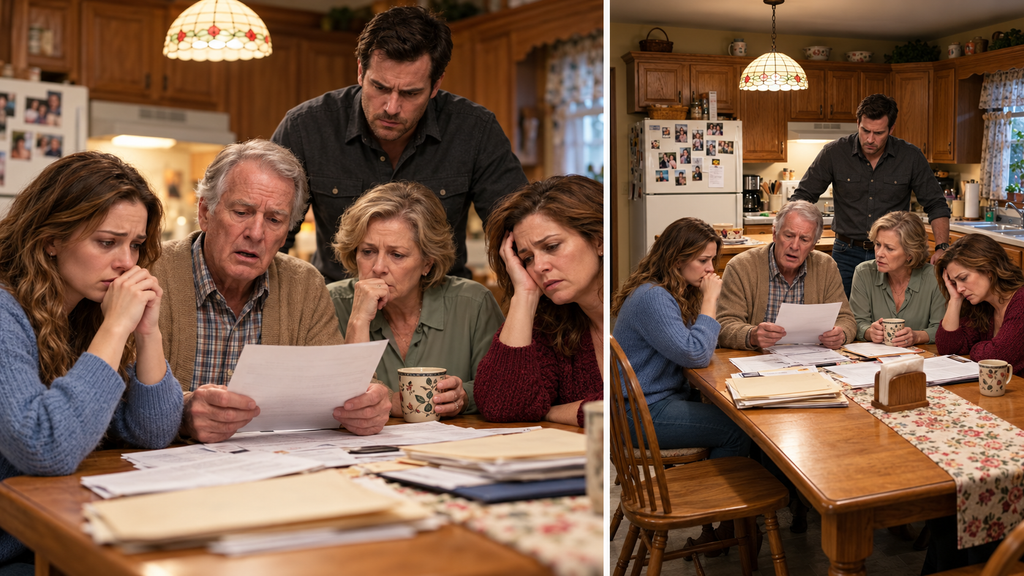
“Six?” I finally whispered.
“Yes, Aunt Fay. Six.”
Willa swallowed.
“Mom told me she offered you one, but you said you had better things to do.”
Something inside my chest tightened.
I remembered that graduation.
I remembered standing in the feed store, holding a card with a little gold graduation cap on the front.
I remembered writing a message inside.
I’m so proud of the young woman you’ve become. Keep chasing your dreams. Love, Aunt Fay.
I had placed a check for two thousand dollars inside the envelope.
Not because I wanted to impress her.
Not because I wanted recognition.
But because I remembered what it felt like to be eighteen and afraid of the future.
And I wanted my niece to know someone believed in her.
“Willa,” I said carefully, “I never refused to attend your graduation.”
She started crying.
“I knew it.”
My throat closed.
“What do you mean?”
“I knew something wasn’t right.”
Her breathing became uneven.
“Because when I asked Mom why you hadn’t come, she said you were jealous of our family. She said you couldn’t stand seeing me succeed because you never went to college.”
I closed my eyes.
There it was again.
Another lie.
Another piece of my life that Ranata had stolen.
Only this time, she hadn’t taken money.
She had taken a memory.
A precious moment I would never get back.
“Sweetheart,” I whispered, “I would have been there if I’d known I was welcome.”
Willa began sobbing.
“I looked for you in the audience.”
Those words nearly broke me.
“I kept looking toward the doors because I thought maybe you would change your mind.”
I pressed my hand against my mouth.
For fifteen years, I had convinced myself that I was strong enough to live without my family’s approval.
But hearing that my niece had searched for me in a crowded auditorium while believing I’d abandoned her was something I had never prepared for.
“I am so sorry,” I whispered.
“No, Aunt Fay. You’re not the one who should apologize.”
For several moments, neither of us spoke.
Then Willa said something that made the hairs rise on the back of my neck.
“Aunt Fay, there’s something else.”
I straightened.
“What is it?”
“My mother didn’t just lie about the graduation.”
My stomach tightened.
“What else did she say?”
Willa hesitated.
Then she whispered:
“She told me you were the reason Grandma and Grandpa might lose their house.”
I stared at the wall.
“Willa, when did she tell you that?”
“Last week.”
The room seemed to go cold.
Last week.
After the investigation had begun.
After the documents had exposed the transfers.
After Ranata had stood inside my farmhouse and begged me to use my money to make everything disappear.
She was still telling lies.
Only now, she was using her own daughter.
“Did she explain why?” I asked.
Willa sniffled.
“She said you were refusing to help because you wanted to punish everyone.”
I looked down at the handwritten thank-you card my mother had given me.
It sat beside my coffee mug.
I had already paid off my parents’ home-equity loan.
Directly to the lender.
With proper documentation.
Ranata knew that.
And yet she was still telling her daughter the opposite.
I felt an unfamiliar emotion settle over me.
It wasn’t sadness.
It wasn’t even anger.
It was clarity.
For the first time, I understood that my sister’s lies weren’t simply desperate attempts to protect herself.
They were weapons.
And as long as she could reach someone who loved me, she would find another way to use them.
“Willa,” I said gently, “I’m going to tell you something, and I need you to understand that none of this is your responsibility.”
“Okay.”
“Your grandparents’ mortgage has already been paid.”
Silence.
Then a stunned whisper.
“What?”
“I paid the remaining balance directly to the bank after they asked for help.”
“But Mom said—”
“I know what your mother said.”
Willa took a shaky breath.
“She told me you were trying to make Grandma sell the house.”
“No, sweetheart.”
I looked toward the orchard.
“I helped your grandparents keep it.”
Willa was quiet for so long that I thought the call had disconnected.
Then she said:
“Aunt Fay, I think Mom knows you’re telling the truth.”
A chill moved down my spine.
“Why do you say that?”
“Because yesterday I heard her talking to someone on the phone.”
I waited.
“She said you were becoming a problem.”
My fingers tightened around the phone.
“What exactly did she say?”
Willa lowered her voice.
“She said, ‘Fay thinks she has won. But she doesn’t know about the second account.’”
I stopped breathing.
The second account.
For several seconds, I heard nothing but the faint sound of Willa crying.
Then I stood.
“Willa, where are you right now?”
“In my apartment.”
“Are you alone?”
“Yes.”
“Good. I need you to do something for me.”
“What?”
“Don’t confront your mother. Don’t search through her belongings. Don’t put yourself in the middle of this.”
“But Aunt Fay—”
“Promise me.”
A pause.
Then:
“I promise.”
I looked at the darkening windows.
“And sweetheart?”
“Yes?”
“Thank you for calling me.”
Her voice broke.
“I wish I’d called four years ago.”
I swallowed the lump in my throat.
“So do I.”
After we hung up, I remained standing in the kitchen.
The refrigerator hummed.
The old clock above the stove ticked steadily.
Everything around me looked ordinary.
But my mind kept returning to those three words.
The second account.
I opened my laptop and sent Miriam Cole a message.
Then I called her office number.
She answered on the fourth ring.
“Fay?”
“Miriam, I’m sorry to call so late.”
“What’s happened?”
I told her about Willa’s graduation.
About Ranata’s accusations.
And finally, about the phone conversation my niece had overheard.
Miriam became very quiet.
Then she asked:
“Did Willa say who your sister was speaking to?”
“No.”
“Did she mention a bank?”
“No.”
“A company?”
“No.”
There was a pause.
Then Miriam said:
“I’m going to ask Daniel to review something.”
“What?”
“The transfers we identified were payments from your parents to your sister’s accounts. But that doesn’t necessarily mean we’ve identified every account connected to those payments.”
I leaned against the counter.
“You think there’s more money?”
“I think we need to find out.”
“Could there be another million?”
“I can’t responsibly speculate.”
Her voice was calm.
But I knew her well enough by then to recognize the seriousness beneath it.
“Fay, don’t contact Ranata about this.”
“I wasn’t planning to.”
“And don’t make assumptions about what the second account means until we’ve verified it.”
I glanced toward the brown folder that had changed my family’s life.
“I’m starting to understand how important that is.”
“Good.”
Before hanging up, Miriam added:
“One more thing.”
“Yes?”
“Your sister’s financial situation is getting more desperate. Desperate people sometimes make decisions they would never have considered when they still believed they had options.”
I looked toward the front door.
“Are you telling me to be afraid?”
“No,” Miriam said.
“I’m telling you to be careful.”
And three days later, I learned exactly why.
Chapter 2 — The Envelope Beneath My Windshield
Wednesday morning began with rain.
Not the gentle rain that settles over the fields in spring.
This was the hard, cold rain that rattled against the windows and turned the farm road into a ribbon of mud.
I had been awake since five.
Old habits don’t disappear just because your bank balance changes.
I made coffee.
Fed the remaining chickens.
Walked through the greenhouse.
Then drove into town to meet Julia Chen.
We had been discussing how I wanted to manage the proceeds from the sale.
Thirty-nine million dollars sounds like an ending when you say it aloud.
But I was discovering that money on that scale created a new beginning filled with responsibilities.
Taxes.
Investments.
Security.
Estate planning.
And decisions about the kind of person I wanted to be when financial survival was no longer part of my daily life.
Julia had asked me to bring identification and several signed documents.
I arrived at her office at nine.
When I came back outside just after eleven, something was tucked beneath my windshield wiper.
A white envelope.
No stamp.
No name.
Just a small rectangle of paper pressed against the wet glass.
I glanced around the parking lot.
Nobody seemed to be watching.
I removed the envelope and climbed into my truck.
Inside was a single photograph.
My breath caught.
It showed me standing outside my farmhouse.
The picture had been taken at night.
I was wearing my blue flannel shirt.
A porch light glowed above my head.
I remembered that evening.
Two nights earlier.
I had stepped outside to bring in a package.
Someone had been watching me.
My hands turned cold.
On the back of the photograph, someone had written:
Stop looking for what doesn’t belong to you.
I stared at the words.
Then I noticed a second sentence.
The farm was never entirely yours.
For a moment, I couldn’t move.
I read it again.
And again.
The farm was never entirely yours.
That was impossible.
I had purchased the eighty acres fifteen years earlier.
I had the deed.
The surveys.
The title records.
The closing statement.
Every signature had been reviewed by attorneys.
The sale was complete.
What was this person talking about?
I took photographs of the envelope, the note, and the parking lot.
Then I called Miriam.
She instructed me to preserve everything and make a report.
I told her about the photograph.
She asked whether I recognized the handwriting.
“I don’t know.”
“Don’t try to guess,” she said.
I understood what she meant.
After spending months uncovering deception, it was tempting to see Ranata behind every strange event.
But suspicion wasn’t proof.
I drove directly to the police station.
A deputy took my statement.
He examined the photograph and asked whether I had security cameras at the farmhouse.
“Two,” I said.
“One near the porch and one facing the equipment shed.”
“Check the recordings. Don’t delete anything.”
I nodded.
Then he asked:
“Do you have reason to believe someone wants to frighten you?”
I thought about my sister.
Her debts.
Her lies.
Her desperate visit.
And the second account.
“Yes,” I said.
“But I don’t know who left this.”
He wrote that down.
When I returned home, I went straight to my office and opened the camera recordings.
The first video showed the gravel driveway.
A truck passed at 9:17 p.m.
Then nothing.
The second camera faced the porch.
I found the moment captured in the photograph.
There I was, stepping outside.
Picking up a package.
Glancing toward the fields.
But something else appeared at the edge of the frame.
A light.
Very faint.
Beyond the fence.
Someone had been standing near the orchard with what looked like a phone or small camera.
The figure was mostly hidden by the trees.
I enlarged the video as much as I could.
I couldn’t identify the person.
But I could see one thing clearly.
They had been there before I came outside.
Waiting.
I sat back slowly.
Then my phone rang.
Desmond.
I answered.
“Fay, are you at home?”
“Yes.”
“Is Willa with you?”
“No. Why?”
He sounded frightened.
“Ranata knows she called you.”
My stomach dropped.
“How?”
“I don’t know. Willa told her she wanted to speak with you about the graduation. They argued.”
“Where’s Willa now?”
“At her apartment. I spoke to her twenty minutes ago.”
I exhaled.
“Is she okay?”
“She says she is.”
Then his voice changed.
“Fay, there’s something I need to tell you.”
I looked toward the window.
“What?”
“I found another folder.”
My heart began beating faster.
“Where?”
“In the storage unit Ranata rented last year.”
I sat perfectly still.
“What kind of folder?”
He took a breath.
“It’s labeled with your farm’s original parcel number.”
For several seconds, neither of us spoke.
Then he said:
“And there’s a copy of a document inside that looks like a sale agreement.”
I frowned.
“A sale agreement?”
“Yes.”
“For what?”
He hesitated.
Then whispered:
“For your land.”
Chapter 3 — A Signature From the Past
I met Desmond at Miriam’s office the following morning.
He arrived carrying a cardboard document box.
He looked exhausted.
His shirt was wrinkled.
There were dark circles beneath his eyes.
For the first time since I’d known him, his expensive watch was missing.
He placed the box on the conference table.
Miriam sat opposite us.
Daniel Mercer joined by video.
Desmond opened the lid.
Inside were folders.
Old bank statements.
Printed emails.
Receipts.
Property maps.
And a thick envelope marked:
CEDAR VALLEY — 80 ACRES
I recognized the survey immediately.
It showed my farm.
The old pond.
The irrigation lines.
The greenhouse.
The southern pasture.
Every corner of the property I had spent fifteen years building.
Desmond removed a document.
“This is what worried me.”
He pushed it toward Miriam.
She adjusted her glasses.
The heading read:
Option Agreement for Future Acquisition.
I frowned.
“What’s that?”
Miriam studied the first page.
“An option agreement generally gives someone the right, under specified conditions, to purchase property in the future.”
“But I never signed an option agreement.”
She looked at the signature page.
Neither of us spoke.
My name appeared at the bottom.
Fay Whitcomb.
But the signature wasn’t mine.
The same elaborate final stroke.
The same incorrect curve of the F.
I felt cold.
“That’s not my signature.”
Miriam nodded.
“I understand.”
Desmond looked sick.
“There are emails attached.”
Daniel asked him to show them.
He spread several pages across the table.
The messages dated back six years.
Long before anyone knew my farm might become worth millions.
The sender was a company called Hawthorne Land Holdings.
The recipient was an email address associated with Ranata’s consulting business.
The correspondence referred to preliminary land access.
Future development opportunities.
Confidential valuation.
And potential acquisition rights.
I stared at the pages.
“What does this mean?”
Miriam studied the document.
“It may mean your sister attempted to represent that she had authority to negotiate concerning your property.”
“But she didn’t.”
“That’s important.”
Desmond swallowed.
“There was a payment.”
Daniel leaned toward his camera.
“How much?”
Desmond looked down.
“Seventy-five thousand dollars.”
My mouth went dry.
“For what?”
“According to the description, a preliminary option fee.”
I stared at him.
“Someone paid Ranata seventy-five thousand dollars for rights connected to my farm?”
“That’s what the records appear to show.”
I looked at Miriam.
“But I sold the land legally.”
“Yes,” she said carefully.
“And we are not going to assume this paper affected your title. Your closing attorneys completed a title review. We’ll ask them to examine these documents immediately.”
I nodded.
She continued.
“An unauthorized document doesn’t automatically create a valid interest in your property. But we need to understand who prepared it, who relied on it, and whether anyone attempted to record or enforce it.”
I looked down at the forged signature.
My name.
My land.
My life.
Ranata hadn’t been satisfied with stealing money in my name.
She had apparently tried to turn my property into another opportunity for herself.
Six years earlier.
Before the thirty-nine-million-dollar offer.
Before the development company arrived.
Before I had any idea that my land might become valuable.
I whispered:
“How long has she been doing this?”
Nobody answered.
Then Desmond said:
“There’s another email.”
He pulled out the final page.
It had been sent three weeks before my farm sale closed.
The subject line read:
URGENT — PROPERTY TRANSFER DISCLOSURE.
The message said:
We have become aware of a pending transaction involving the subject parcel. Please confirm whether the previously submitted authorization remains valid.
I stared at the words.
“Someone knew about my sale?”
Miriam took the page.
“Apparently someone connected to this correspondence did.”
“But I didn’t tell Ranata.”
Daniel spoke.
“There are several possible ways information about a major land transaction might circulate. Let’s establish the source before drawing conclusions.”
I barely heard him.
I was staring at the next message.
The reply.
Sent from Ranata’s business email.
It contained only one sentence.
My sister is not aware of the arrangement, and I intend to keep it that way.
I looked up.
Desmond couldn’t meet my eyes.
Miriam slowly lowered the paper.
And for the first time since the investigation began, I felt genuine fear.
Not because I thought the sale would necessarily be undone.
Not because I feared losing the money.
But because I realized my sister had been conducting business in my name while I slept, worked, and trusted her to remain somewhere within the boundaries of ordinary family loyalty.
I had never imagined that someone who knew me as a little girl could grow up to treat my identity as something she could borrow whenever she needed it.
“What happens now?” I asked.
Miriam folded the document.
“We authenticate the records. We notify the attorneys who handled your land sale. We determine whether any claim was ever recorded. And we give investigators the evidence.”
Desmond nodded.
Then he reached into the bottom of the box.
“There is one more thing.”
He removed a small blue notebook.
Its cover was cracked.
Several pages were folded at the corners.
“Ranata kept this with the property documents.”
I stared at it.
“What is it?”
He placed it on the table.
“I think it’s a record of the promises she made.”
Miriam opened the notebook carefully.
The first page contained dates.
Names.
Amounts.
The next contained what appeared to be a list of people Ranata had contacted.
I recognized two names from my childhood.
A former neighbor.
And a retired real estate agent.
Then I saw one name that made my heart stop.
Evelyn Whitcomb.
My grandmother.
Beside her name, Ranata had written:
She knows too much.
My grandmother had been dead for five years.
For several moments, I couldn’t breathe.
Then I whispered:
“What did Grandma know?”
Chapter 4 — The Secret My Grandmother Took to Her Grave
My grandmother had been the only person in my family who never treated my farm like a mistake.
Her name was Evelyn.
She was small, sharp-eyed, and stubborn enough to argue with a thunderstorm.
She wore old cardigans with mismatched buttons.
Kept peppermint candies in her purse.
And believed that anyone who could make something grow from the ground deserved respect.
When I bought my first eighty acres, she arrived carrying a rusty watering can.
I laughed.
“Grandma, I have irrigation.”
“I know,” she said.
“But every good farmer needs something that reminds her where she started.”
That watering can still hung beside my greenhouse.
Five years after her death, I could still hear her voice when I worked beneath the oak tree.
I had always believed she died knowing exactly who I was.
Now I wondered what else she had known.
Miriam turned the notebook toward me.
Beside Grandma’s name was a date.
Seven months before her death.
Below it, another sentence.
Do not let her talk to Fay alone.
My stomach twisted.
“Why would Ranata write that?”
Desmond shook his head.
“I don’t know.”
I studied the date.
Then a memory returned.
Grandma had called me one afternoon that year.
She sounded upset.
I had been driving a tractor and almost missed the call.
“Fay,” she said, “I need to talk to you about your sister.”
I remembered laughing.
“What has she done now?”
Grandma hadn’t laughed.
“Not over the phone.”
I promised to visit the following Sunday.
But that weekend, a severe storm flooded the lower field.
I spent two days clearing drainage channels.
When I finally called Grandma, she said she wasn’t feeling well.
We postponed.
Then postponed again.
Three weeks later, she was hospitalized.
And the conversation never happened.
I looked up from the notebook.
“She tried to tell me something.”
Miriam waited.
“Grandma called me. She said she needed to talk about Ranata.”
Desmond closed his eyes.
“Ranata told me your grandmother was becoming confused toward the end.”
I shook my head.
“She wasn’t confused.”
I remembered Grandma balancing her checkbook.
Remembered her correcting the pharmacist over a prescription.
Remembered how she could recite the birthdays of twenty-three grandchildren and great-grandchildren without consulting a calendar.
She had been physically frail.
But her mind had remained clear.
At least during the period I knew her.
I stood.
“I need to go to her house.”
Miriam looked at me.
“Who owns it now?”
“My father.”
“Then speak with him. If you find records relevant to this, preserve them and let us know.”
I nodded.
For the first time in years, I felt as though Grandma were calling me again.
Only this time, I intended to answer.
That afternoon, Dad met me outside her old cottage.
The house sat near the edge of town.
Its white paint had faded.
The porch swing was gone.
But the rosebush Grandma planted beside the steps was still alive.
Dad unlocked the door.
“I haven’t been inside much,” he said.
I could tell.
The air smelled of cedar, dust, and closed rooms.
Sheets covered the furniture.
Grandma’s old clock stood silent on the mantel.
I walked into the kitchen.
For a moment, I was eight years old again.
I could almost see her standing at the stove, stirring peach preserves.
“Are you all right?” Dad asked.
I nodded.
Then shook my head.
“I’m not sure.”
We searched the desk in her bedroom first.
Receipts.
Old photographs.
Christmas cards.
A worn Bible.
Nothing unusual.
Then Dad remembered something.
“Your grandmother kept important papers in a metal box.”
“Where?”
He pointed toward the hallway.
“Linen closet. Top shelf.”
I went there immediately.
The closet smelled of lavender.
Grandma had always tucked little sachets between the towels.
I reached above the folded blankets and found a green metal box.
It was heavier than I expected.
Dad brought it to the kitchen table.
Inside were insurance documents.
Property records.
Letters.
And an envelope addressed in Grandma’s handwriting.
FOR FAY — WHEN SHE IS READY TO HEAR THE TRUTH.
My hands began trembling.
Dad stared.
“I’ve never seen that.”
I touched the familiar handwriting.
For a moment, I was afraid to open it.
Not because I thought Grandma had something cruel to say.
But because I knew whatever was inside had been waiting for me for years.
I carefully removed the letter.
The paper was yellowed.
The ink had faded slightly.
But every word was clear.
My dearest Fay,
If you are reading this, then I may not have had the chance to tell you what I discovered.
There is something wrong with the story your sister has been telling about you.
She came to me asking for money last spring.
She said your farm was facing foreclosure.
I told her that made no sense because you had told me yourself the property was paid for.
She became angry.
She said you were hiding your debts from me.
So I did something she never expected.
I called you.
I stopped reading.
My eyes filled.
Dad leaned forward.
“What does it say?”
I shook my head.
“Give me a moment.”
I continued.
You told me about your new greenhouse roof and the orchard you were planting.
You sounded happy.
You sounded tired, as farmers often do, but not frightened.
When I asked whether you were in financial trouble, you laughed and said, “Only if peaches suddenly become illegal.”
I remembered that conversation.
Grandma had laughed so hard she started coughing.
I had completely forgotten why she’d asked about money.
I knew then that something was wrong.
I confronted Ranata.
She told me to mind my own business.
When I said I intended to tell your parents, she warned me that interfering would tear the family apart.
But families are not protected by hiding the truth.
I pressed the paper against the table.
The next sentence blurred through my tears.
Fay, if I fail to tell you this myself, please remember that I have never been disappointed in you.
My breath broke.
I covered my mouth.
Dad turned away.
I kept reading.
Your life has never looked like your sister’s.
That does not make it smaller.
I have watched you build something with your own hands, and I am proud of you.
I don’t know how far Ranata’s deception has gone.
But I know this: anyone who asks you to stay silent to preserve family peace is asking you to carry a burden that belongs to someone else.
Don’t carry it.
And don’t let anyone convince you that love must be purchased with obedience.
With all my heart,
Grandma Evelyn.
By the time I reached her name, I was sobbing.
Not quietly.
Not politely.
I cried with the helplessness of a child who had spent years pretending she didn’t need someone to tell her she mattered.
Dad moved toward me.
“Fay?”
I held up my hand.
Not because I wanted to hurt him.
Because I needed a moment that belonged only to Grandma and me.
I read the letter again.
Then I noticed another piece of paper in the envelope.
A bank receipt.
Five thousand dollars.
The recipient was Ranata.
Beside it, Grandma had written:
First and only payment. Told her there would be no more until she explained everything directly to Fay.
I stared at the receipt.
Even Grandma had been pulled into the lie.
But unlike everyone else, she had tried to verify it.
And when she discovered something was wrong, she had refused to participate further.
Dad slowly sat across from me.
His face was pale.
“She came to me,” he whispered.
I looked up.
“What?”
“Mom.”
He swallowed.
“She told me she was concerned about Ranata.”
I went still.
“When?”
“A few months before she died.”
“What did she say?”
He rubbed his forehead.
“That we needed to stop giving money without speaking to you.”
I stared at him.
“And what did you do?”
His eyes filled.
“I told her Ranata was handling things.”
The room became silent.
I looked down at Grandma’s letter.
Then back at my father.
“You knew she was worried.”
“I knew she had questions.”
“And you didn’t ask me?”
His voice cracked.
“No.”
I wanted to scream.
I wanted to ask how many warnings a family needed before it finally listened.
But Dad spoke first.
“I told her she was making trouble.”
His eyes closed.
“I told my own mother that she was making trouble because she wanted me to talk to my daughter.”
A tear fell onto the table.
“Fay, I don’t know how to forgive myself for that.”
I looked at him for a long time.
Then I said:
“Maybe you don’t need to forgive yourself yet.”
He raised his head.
“Maybe you need to remember it.”
He nodded slowly.
We sat in Grandma’s kitchen until the afternoon light faded.
Eventually, Dad reached for the letter.
“May I read it?”
I hesitated.
Then passed it across the table.
He read every word.
When he finished, he took off his glasses and cried.
I had seen my father angry.
Frustrated.
Proud.
Tired.
But I had almost never seen him cry.
He held the letter gently.
“She was right,” he whispered.
I looked toward the window.
The rosebush stirred in the wind.
“She usually was.”
That evening, I drove home with Grandma’s letter beside me.
I placed it inside the brown folder.
Not with the financial evidence.
In a separate sleeve.
Some documents prove what happened.
Others remind you who you were before it did.
And Grandma’s letter was the first thing I had read in months that made me feel like myself again.
Chapter 5 — The Second Account
The following Monday, Daniel called.
I was walking through the greenhouse when my phone rang.
“Fay, are you somewhere private?”
I stopped beside the tomato beds.
“Yes.”
“Can you come to Miriam’s office this afternoon?”
My stomach tightened.
“Did you find the second account?”
A pause.
“There’s something we need to show you.”
I looked down at the wet soil beneath my boots.
“Daniel.”
“Yes?”
“Is it worse than we thought?”
His voice softened.
“It’s different from what we expected.”
Three hours later, I sat across from him in Miriam’s conference room.
Julia was beside me.
A laptop stood open.
Several financial charts lay across the table.
Daniel looked exhausted.
He had spent days reviewing transaction histories and corporate filings.
Miriam began.
“We have identified another account associated with a business entity connected to Ranata.”
I nodded.
“How much?”
Daniel slid a document toward me.
The account balance was just over six hundred thousand dollars.
I stared at it.
“Six hundred thousand?”
“Approximately. The balance has fluctuated.”
I looked at him.
“Is it money from my parents?”
“Some of the deposits appear connected to transfers we’ve already identified. Other funds came from unrelated sources.”
My heart sank.
“So she still has money?”
“Potentially recoverable assets, yes. But ownership, restrictions, and creditor claims need to be established.”
I took a breath.
“What is the account called?”
Daniel turned the page.
The account belonged to a limited liability company.
Whitcomb Agricultural Advisory LLC.
I stared at the name.
“Whitcomb?”
“Yes.”
“That’s my last name.”
Daniel nodded.
“And Ranata’s maiden name.”
I frowned.
“Why would she use it?”
Miriam answered.
“It may have made the company appear connected to your agricultural business.”
Daniel turned the laptop toward me.
The company’s website had been taken down.
But archived materials showed what it had advertised.
Agricultural asset consulting.
Land development coordination.
Farm transition services.
And strategic property acquisition support.
I read the words.
They sounded impressive.
They also sounded deliberately vague.
Then I saw a photograph.
My farmhouse.
My orchard.
My greenhouse.
The same image I had used in a newsletter years earlier.
Below it appeared the sentence:
Founded on fifteen years of hands-on agricultural experience.
I stared.
“That’s my experience.”
Daniel nodded.
“There’s more.”
He opened another document.
A company profile.
It identified Ranata as managing director.
And beneath her name was another person.
Fay Whitcomb — Founding Agricultural Partner.
I felt sick.
“I’ve never been her partner.”
“We know.”
“I’ve never worked for that company.”
“We know.”
I looked at Miriam.
“She used my farm, my name, and my work to advertise her business?”
“That is what these records appear to indicate.”
My hands curled into fists.
For fourteen years, Ranata had told our parents I couldn’t support myself.
Meanwhile, she had apparently been presenting my experience to outsiders as part of her own business.
She had made me a failure inside our family.
And a successful farmer when my reputation could help her make money.
I laughed.
One sharp, broken sound.
Julia touched my arm.
“Fay?”
I shook my head.
“She couldn’t even let me own my own success.”
Nobody answered.
Daniel continued carefully.
“We also identified payments from several clients. Some appear to have been for legitimate consulting services. Others are under review because the supporting documents refer to property rights or business relationships we haven’t verified.”
I stared at the screen.
“Did any of those clients think I was involved?”
“That’s one of the questions investigators may need to answer.”
He opened a scanned contract.
At the bottom was my name again.
Another signature.
Another version of me that existed only on paper.
I felt tears rising.
“How many times?”
Daniel looked confused.
“How many times did she sign my name?”
He hesitated.
“We’ve identified several documents containing signatures that appear inconsistent with your verified signatures. I don’t want to give you a final number until the review is complete.”
I turned toward the window.
Outside, the traffic moved through the city.
People walked past carrying lunches and talking on phones.
The world continued as though nothing had happened.
I thought about all the mornings I had stood ankle-deep in mud, repairing irrigation lines.
All the evenings I had fallen asleep with sore hands.
All the seasons I had worried about frost and drought.
My sister had looked at those years and found a way to sell them to strangers.
Then Daniel said:
“Fay, one particular payment requires attention.”
I turned back.
“What payment?”
He placed another statement in front of me.
A deposit of two hundred and ten thousand dollars.
The payment description referred to a potential development introduction involving my parcel.
The date was eleven months before my sale closed.
I stared at it.
“Someone paid her for introducing my farm to a developer?”
“That appears to be the claim made in the payment documentation.”
“But she didn’t introduce anyone.”
Miriam leaned forward.
“Did you have any dealings with the company named here?”
I read the name.
Then shook my head.
“No.”
“Did Ranata ever participate in your negotiations?”
“No.”
“Did you authorize her to represent you?”
“Absolutely not.”
Miriam nodded.
“Then we need to understand what she represented to that company.”
I read the amount again.
Two hundred and ten thousand dollars.
My throat tightened.
“So she was making money from my land while telling everyone I was losing it.”
Nobody contradicted me.
Then Julia spoke.
“Fay, there’s something else we should discuss.”
I looked at her.
“The farmland sale has already closed, and your attorneys have confirmed there were no recorded adverse claims discovered during the closing process. We should still have them review these new materials, but nothing here establishes that your sale proceeds belong to anyone else.”
I nodded.
I hadn’t realized how badly I needed to hear that.
Miriam added:
“Your sister’s conduct may create claims against her. That doesn’t mean she acquired valid rights to your property.”
I exhaled slowly.
For the first time that afternoon, I felt the ground steady beneath me.
Then my phone vibrated.
A message from an unknown number.
I opened it.
There was no greeting.
Only a sentence.
You should have taken the deal when your sister offered it.
I stared at the screen.
Another message arrived.
Now everyone loses.
I showed Miriam.
Her expression hardened.
“Don’t respond.”
I nodded.
Then a third message appeared.
This one contained a photograph.
My parents’ house.
Taken from across the street.
My blood turned cold.
Chapter 6 — The Night Someone Came to the House
I called my father immediately.
He answered after the second ring.
“Fay?”
“Dad, where are you?”
“At home.”
“Is Mom there?”
“Yes. She’s making dinner.”
“Listen carefully. Has anyone been outside the house today?”
He hesitated.
“What do you mean?”
I told him about the photograph.
The messages.
The note beneath my windshield.
His voice changed.
“Should we call the police?”
“Yes.”
Miriam spoke with him directly.
She advised us to preserve the messages and report the circumstances.
My parents agreed to stay with relatives that evening while the situation was assessed.
I went home before dark.
For the first time in fifteen years, I didn’t feel entirely comfortable entering my own driveway.
The fields were quiet.
The wind moved through the grass.
My porch light glowed above the steps.
I parked near the house and looked toward the orchard.
Nothing moved.
I unlocked the door.
Inside, everything appeared normal.
But I checked the windows.
The back entrance.
The camera system.
Then I called my neighbor, Harold Briggs.
Harold was seventy-two.
He had lived across the county road for nearly forty years.
He was the sort of man who could fix an engine with half a toolbox and identify a storm by the smell of the wind.
He answered immediately.
“Fay? Everything okay?”
“Not exactly.”
I explained the situation.
He was quiet.
Then he said:
“I saw a vehicle near your south gate last night.”
I stopped.
“What kind?”
“Dark SUV. Couldn’t make out the plates.”
“What time?”
“Little after ten.”
“Did it stop?”
“For a few minutes.”
My heart began beating harder.
“Why didn’t you call?”
“Thought it might be someone connected to the development project.”
I looked toward the back window.
“Harold, if you see it again, please call the sheriff’s department.”
“Already planning to.”
Then he added:
“And Fay?”
“Yes?”
“Don’t go chasing anybody around those fields by yourself.”
Despite everything, I almost smiled.
“I won’t.”
“Good. You may have thirty-nine million dollars now, but you’ve still only got one head.”
I laughed weakly.
“Thanks, Harold.”
“Anytime.”
That night, I slept with the hallway light on.
Or rather, I tried to sleep.
At 11:43 p.m., a notification appeared on my phone.
Motion detected — South camera.
I sat upright.
My heart hammered.
I opened the feed.
The image showed the equipment shed.
A dark shape moved near the fence.
At first, I thought it was a deer.
Then the shape straightened.
A person.
Wearing a dark jacket.
Standing near the gate.
I stared at the screen.
The figure looked toward the house.
Then disappeared behind the shed.
I called the sheriff’s department.
I remained inside and followed the dispatcher’s instructions.
Within minutes, headlights swept across the driveway.
Two patrol vehicles arrived.
I watched from the window as deputies searched the property.
They found no one.
But near the south gate, they discovered fresh tire marks.
And a torn piece of paper caught beneath the fence wire.
One deputy brought it to the porch in an evidence sleeve.
“Do you recognize this?”
I leaned closer.
It appeared to be part of a printed property map.
At the bottom was a company logo.
Hawthorne Land Holdings.
The same name that appeared on Ranata’s old correspondence.
I looked up.
“Where did you find it?”
“Beside the gate.”
My hands went cold.
The deputy studied my face.
“Do you know the company?”
“I know its name.”
“Then we’ll include that in the report.”
After they left, I sat at my kitchen table until sunrise.
I didn’t cry.
I didn’t pace.
I simply stared at the brown folder.
I had spent my adult life building a place where I felt safe.
Now someone was trying to make me afraid of it.
And that angered me more than the threats themselves.
At seven the next morning, Miriam called.
She had spoken with an investigator.
I told her everything.
Then she said:
“Fay, there’s been a development.”
“What kind?”
“A person associated with the old land option has agreed to speak with investigators.”
I sat straighter.
“Who?”
“A former employee of Hawthorne Land Holdings.”
“Does he know Ranata?”
“Apparently.”
I held my breath.
“What’s his name?”
Miriam paused.
“Elliot Vance.”
I frowned.
The name sounded familiar.
Then I remembered.
Six years earlier, a man had driven down my farm road asking questions about the southern pasture.
He claimed to be evaluating nearby properties for a possible water-line project.
I had spoken with him for perhaps ten minutes.
Then sent him away because he had no written authorization to survey my land.
I remembered his polished shoes.
His expensive vehicle.
And the way he kept glancing toward the farmhouse.
“Elliot Vance,” I whispered.
“Yes.”
“I met him.”
Miriam went quiet.
“When?”
“Six years ago.”
I closed my eyes.
“He told me he was researching utility access.”
“What happened?”
“I refused to let him survey without proper paperwork.”
Miriam took a breath.
“Fay, that conversation may be important.”
I looked toward the orchard.
For six years, I had assumed the man was just another stranger interested in development.
Now I wondered whether he had already paid my sister for something she had no right to sell.
And whether he had been trying to find out how much I knew.
Chapter 7 — The Man Who Bought Something I Never Sold
Elliot Vance’s statement changed the investigation.
According to the information Miriam was authorized to share with me, Elliot had worked as a project manager for Hawthorne Land Holdings.
Six years earlier, Ranata had approached his company claiming she represented a family agricultural partnership.
She had provided business documents.
Maps.
Financial summaries.
And an authorization bearing my name.
I had never seen any of them.
Elliot claimed he believed the arrangement was legitimate.
Investigators would determine how much of that claim was supported.
But the documents showed that he had continued corresponding with Ranata long after his employer had ended its interest in the project.
I learned another disturbing detail.
The seventy-five-thousand-dollar option payment hadn’t come directly from Hawthorne.
It had passed through a separate consulting company.
A company connected to someone who had later done business with Ranata.
The trail was complicated.
But one fact stood out.
Several people had benefited from presenting my farm as a property available for negotiation.
Without me.
I sat in Miriam’s office reading the summary.
“Did they ever visit the land?”
“Elliot says he did,” Miriam answered.
“I remember him.”
“Then your recollection may help establish what actually happened.”
I looked at the document.
“Did he know I hadn’t signed anything?”
“We don’t know yet.”
I stared at the signature.
The same false F.
The same exaggerated ending.
The same person impersonating me again and again.
Then I asked:
“Is this connected to the threats?”
Miriam shook her head.
“There’s no confirmed connection at this stage.”
I nodded.
That was becoming one of the hardest parts.
Not knowing.
Every suspicious message seemed connected to everything else.
But evidence moved more slowly than fear.
I had to remind myself that a frightening coincidence wasn’t automatically proof.
Still, when Miriam told me investigators were reviewing the old business relationships, I felt the first small shift toward relief.
Someone besides me was finally asking questions.
And this time, Ranata couldn’t simply change the subject.
Two days later, Dad called.
He sounded worried.
“Fay, your sister wants to meet us.”
I sat down.
“Us?”
“Your mother and me.”
“Has she spoken to the attorneys?”
“She says she has new information.”
I looked toward Grandma’s letter.
“What kind?”
He hesitated.
“She says there are things we don’t understand.”
I closed my eyes.
“Dad, please don’t meet her privately about the financial investigation.”
“I wasn’t planning to.”
I opened my eyes.
He continued.
“I told her if she wants to discuss the money, she can do it through the attorneys.”
I smiled faintly.
“That was the right thing.”
He was quiet for a moment.
Then:
“Fay, she cried.”
My smile disappeared.
“I know.”
“She said we’re abandoning her.”
I looked at the old clock.
“Dad, holding someone accountable isn’t the same as abandoning them.”
He sighed.
“I keep reminding myself.”
I could hear how much this hurt him.
Ranata was still his daughter.
The little girl he’d carried on his shoulders.
The teenager whose school awards he had framed.
The woman he’d trusted to manage family problems.
He wasn’t going to stop loving her because the truth was ugly.
And I didn’t want him to.
But love without boundaries had already cost our family too much.
“Dad,” I said softly, “you can love her and still refuse to give her more money.”
He was quiet.
Then he whispered:
“Your grandmother would have said that.”
I smiled sadly.
“Yes.”
He took a breath.
“She would.”
Before hanging up, he asked whether I wanted to come for Sunday dinner.
I hesitated.
It would be the first ordinary family meal since everything had come apart.
“Will Ranata be there?”
“No.”
I looked toward the fields.
“Then yes.”
Dad sounded relieved.
“Your mother is making roast chicken.”
“With the lemon potatoes?”
He laughed.
“Of course.”
I smiled.
“I’ll bring pie.”
And for one brief moment, life felt almost normal.
Then another call arrived.
It was Willa.
She was crying so hard I could barely understand her.
“Aunt Fay, I need help.”
I stood immediately.
“What’s wrong?”
“Mom came to my apartment.”
“Are you safe?”
“Yes. She left.”
“What happened?”
Willa took a shaking breath.
“She asked me to sign something.”
I froze.
“What?”
“A statement.”
My stomach tightened.
“What kind of statement?”
“She wanted me to say you promised to give our family money from the farm sale.”
I closed my eyes.
Of course.
Another document.
Another signature.
Another attempt to turn someone else’s name into protection for herself.
“Did you sign it?”
“No.”
Relief moved through me.
“Good.”
“She got angry.”
Willa began crying harder.
“She said I was choosing you over her.”
My heart broke for her.
“Sweetheart, refusing to sign something untrue isn’t choosing sides.”
“But she’s my mother.”
“I know.”
“I love her.”
“I know you do.”
Willa whispered:
“Does loving her mean I have to help her?”
I stared out the window.
For a moment, I saw Grandma sitting beneath the oak tree.
Smiling.
Waiting.
“No,” I said.
My voice was steady.
“Loving someone doesn’t require you to lie for them.”
Willa sobbed.
“I wish she understood that.”
“So do I.”
Then she said something that changed everything again.
“She told me if I wouldn’t sign, she’d make sure Dad lost the house.”
I went still.
“What house?”
“Our house.”
I frowned.
“Willa, the lender already has a claim against that property because of the business debt.”
“I know.”
She sniffled.
“But Mom said there’s something Dad doesn’t know.”
My heart tightened.
“What?”
“She said she’s been planning for this for years.”
I looked down at the brown folder.
Planning.
For years.
Those words followed me long after the call ended.
Because suddenly, the second account didn’t seem like the end of my sister’s deception.
It seemed like the beginning of a much larger one.
Chapter 8 — The Woman Behind the Company
The next major revelation came from Daniel Mercer.
He had been reviewing the ownership records of Whitcomb Agricultural Advisory.
At first, the company appeared to be controlled entirely by Ranata.
But several older filings identified a second person.
A woman named Celeste Morgan.
I didn’t recognize the name.
Daniel arranged a meeting with Miriam and me.
He placed a photograph on the table.
A woman in her late forties.
Dark hair.
Sharp features.
A confident smile.
I stared at her.
“Who is she?”
“Celeste Morgan,” Daniel answered.
“She previously worked with Ranata on several business ventures.”
Miriam explained that Celeste’s role was still being investigated.
But the financial records showed she had received substantial payments from companies associated with Ranata.
“How substantial?” I asked.
Daniel turned the page.
“Over two hundred thousand dollars across several years.”
I frowned.
“For what?”
“Consulting services, according to the payment descriptions.”
“Real services?”
“Some may have been. Others need verification.”
I leaned back.
“Why does she matter?”
Daniel hesitated.
Then opened another file.
“Because Celeste previously worked for a company involved in the land development negotiations near your farm.”
I stared.
“Which company?”
He told me.
It was the same development group whose expansion had eventually increased the value of my property.
I felt my stomach tighten.
“Was she involved in my sale?”
“Not in the final transaction records we have reviewed.”
“But she knew about the development plans?”
“Her employment history suggests she may have had relevant industry knowledge. We haven’t established what information she possessed at particular times.”
I looked at Miriam.
“Are you telling me Ranata had someone feeding her information about my land?”
“I’m telling you there are relationships worth examining.”
I sighed.
The careful language was frustrating.
But I understood why it mattered.
We weren’t writing a family argument anymore.
We were building a record that had to survive scrutiny.
Daniel continued.
“One more thing. Celeste had a financial dispute with Ranata last year.”
“What kind?”
“A civil claim concerning unpaid consulting fees.”
I frowned.
“Was it resolved?”
“The case was dismissed after a private settlement was reported.”
I looked at the dates.
The settlement occurred shortly before Ranata requested another large payment from my parents.
My skin prickled.
“Could Mom and Dad’s money have paid that settlement?”
“That’s something we’re tracing.”
I stared at the photograph.
Celeste Morgan.
A stranger whose name had appeared in the shadows of my family’s finances.
I wondered how many people had known that my sister was pretending to represent me.
How many had accepted the story because it benefited them.
And how many had never bothered to ask the actual owner of the farm.
Then Miriam said:
“Celeste has contacted investigators.”
I looked up sharply.
“What?”
“She has indicated that she may possess documents relevant to the inquiry.”
“Why would she come forward now?”
“We don’t know her full motivation.”
I looked at the photograph again.
There was something unsettling about her smile.
Not because it looked cruel.
Because it looked familiar.
The same practiced confidence I’d seen on Ranata’s face for years.
The confidence of people who believed words could rearrange reality.
Three days later, Miriam called with an update.
Celeste had provided records.
And one of them was a draft email Ranata had written but apparently never sent.
The subject line was:
Contingency if Fay discovers everything.
I stared at the words on my screen.
The message contained a proposed explanation.
A story about family financial arrangements.
Misunderstood support.
Shared property interests.
And my supposed agreement to allow Ranata to handle negotiations.
It was almost elegant.
If you ignored that none of it was true.
Then I reached the final paragraph.
If Fay refuses to cooperate, we may need to challenge her credibility before she makes public accusations.
I read it twice.
Challenge my credibility.
I imagined what that might mean.
More lies about my finances.
More stories about my supposed instability.
More forged records.
More attempts to turn the people I loved against me.
And suddenly, fifteen years of family dinners made terrible sense.
Ranata hadn’t only taken money.
She had spent years preparing everyone to doubt me.
If I ever discovered the truth, she wanted them to believe I was the unreliable one.
I called Miriam.
“Is this why she told everyone I was struggling?”
Miriam paused.
“We can’t establish her motives from one document alone.”
“But it fits.”
“It may help explain a pattern.”
I looked toward the orchard.
The trees swayed gently beneath the afternoon sun.
For fifteen years, I had believed my sister’s insults were petty competition.
I had thought she simply enjoyed feeling superior.
Now I realized they might have served another purpose.
Every joke about my poverty.
Every story about my unpaid bills.
Every claim that I was too proud to accept help.
They had all made one thing easier.
If I ever told the truth, people might hesitate to believe me.
I sat quietly.
Then I whispered:
“She was building a defense before anyone accused her.”
Miriam didn’t answer immediately.
Finally, she said:
“Whatever her intentions were, the documents matter more than the story she tells about them.”
I closed my eyes.
For the first time, I was grateful for every receipt I’d kept.
Every canceled check.
Every tax record.
Every piece of ordinary paperwork I’d filed away during long winter evenings.
Ranata had spent years inventing a version of me.
But the truth had been sitting in my desk the entire time.
Chapter 9 — The Dinner That Changed Everything
Sunday arrived bright and cold.
I baked two peach pies.
The peaches came from my own orchard.
I had frozen them during the last harvest.
As I worked, I thought about Grandma.
She had taught me to roll pie dough by feel.
“Don’t fight it,” she used to say.
“If you handle it too much, it gets tough.”
I smiled at the memory.
Then I thought about my family.
And wondered whether people worked the same way.
Whether too much pressure could make love hard.
Or whether some relationships needed to be broken open before they could become honest.
I arrived at my parents’ house just before five.
Dad opened the door.
He smiled when he saw the pies.
“Your grandmother would approve.”
I laughed softly.
“She’d say the crust is too thick.”
He grinned.
“She’d be right.”
For the first time in months, we laughed without sadness following immediately afterward.
Mom was in the kitchen.
The familiar smell of roast chicken and rosemary filled the house.
She turned when I entered.
“Fay!”
She crossed the room and hugged me.
I hugged her back.
Not because everything had been repaired.
But because we were trying.
And trying, I was learning, was sometimes the most honest thing people could offer.
We sat down to dinner.
At first, the conversation was awkward.
Dad asked about the greenhouse.
Mom asked whether I’d chosen a new house.
I told them I was looking at properties near the river.
A smaller place.
Enough land for a garden.
Maybe a few animals.
Dad listened carefully.
Then he asked:
“Are you going to miss the farm?”
I looked at him.
“Every day.”
He nodded.
“I thought so.”
Mom reached for my hand.
“Then why sell?”
I considered the question.
For fifteen years, that land had been my home.
My livelihood.
My independence.
But the development plans were changing the surrounding area.
Roads were coming.
Utilities.
Warehouses.
Traffic.
And the offer had given me a rare opportunity to choose a different future.
“Because I built something valuable,” I said.
“And I wanted the freedom to decide what came next.”
Dad smiled.
“That’s a good answer.”
I looked at him.
There had been a time when those words would have meant everything.
Now they meant something different.
Not approval.
Recognition.
He was finally seeing me as an adult capable of making her own decisions.
We finished dinner.
Mom brought out coffee.
I cut the pies.
And for nearly an hour, nobody mentioned Ranata.
It was wonderful.
Then the doorbell rang.
Mom looked toward the hallway.
Dad frowned.
“Are we expecting someone?”
“No,” Mom said.
He stood.
A few seconds later, I heard his voice.
“Ranata?”
My stomach dropped.
Mom froze beside the counter.
Then Ranata appeared in the doorway.
She wore a dark coat.
Her hair was pulled tightly back.
Her face looked thinner than I remembered.
Behind her stood Desmond.
And Willa.
I stared at them.
Willa’s eyes met mine.
She looked frightened.
Ranata glanced around the room.
Then smiled.
“Well,” she said.
“Isn’t this cozy?”
Nobody answered.
Dad stepped into the kitchen.
“Ranata, I told you we weren’t discussing the investigation without the attorneys.”
She lifted her hands.
“I’m not here to discuss money.”
I almost laughed.
Of course.
That was how every terrible conversation began.
I’m not here to discuss money.
I’m just trying to help.
You don’t understand.
She looked at me.
“Hello, Fay.”
“Ranata.”
Her gaze moved toward the peach pie.
“Still baking?”
I remained silent.
Mom stepped forward.
“Why are you here?”
Ranata’s smile faded.
“Because I wanted to see my family.”
Dad looked at Desmond.
He shook his head slightly.
I noticed.
Then Willa spoke.
“Mom, please.”
Ranata turned sharply.
“What?”
“Tell them why we’re really here.”
The room became silent.
I looked at my niece.
Her hands were trembling.
Ranata’s face hardened.
“Willa, this isn’t your business.”
Willa took a step forward.
“You made it my business when you asked me to lie.”
Mom’s hand flew to her mouth.
Dad stared.
Desmond closed his eyes.
Ranata looked furious.
“That’s enough.”
“No,” Willa said.
Her voice shook.
But she didn’t step back.
“You told me Aunt Fay abandoned me at graduation.”
Ranata’s eyes darted toward me.
“You misunderstood.”
Willa began crying.
“No, Mom. I didn’t.”
She reached into her purse.
Then pulled out an envelope.
I recognized it immediately.
My graduation card.
The one I’d mailed four years earlier.
The gold cap.
The blue ribbon.
My own handwriting.
Willa held it up.
“You told me Aunt Fay never sent anything.”
I stared.
“Willa?”
She looked at me.
“Dad found this in Mom’s filing cabinet.”
My throat closed.
She opened the card.
The check was still inside.
Uncashed.
Four years old.
I stared at it.
“I thought you received it.”
Willa began crying harder.
“I didn’t.”
Ranata stepped forward.
“Willa, put that away.”
But my niece shook her head.
“No.”
She looked around the kitchen.
“I’m tired of being told that loving my family means pretending I didn’t see something.”
Dad sat down slowly.
Mom was crying.
Desmond stood beside the doorway with his hands clenched.
Then Willa turned toward Ranata.
“Why?”
One word.
So small.
So devastating.
“Why did you make me think she didn’t love me?”
Ranata’s face changed.
For a moment, I saw something like shame.
Then she looked at me.
“Because Fay always made everything about herself.”
I stared at her.
Willa shook her head.
“That’s not an answer.”
Ranata’s voice rose.
“You don’t understand the history between us!”
“Then tell me,” Willa cried.
“Tell me what Aunt Fay did that was so terrible!”
Silence.
Ranata opened her mouth.
Then closed it.
Willa waited.
So did I.
For fifteen years, my sister had spoken for everyone.
Now, for the first time, she had been asked a question she couldn’t escape with a story.
Dad stood.
“Ranata.”
She turned.
His face was pale.
“Tell your daughter the truth.”
Ranata looked at him.
Then Mom.
Then Desmond.
And finally, me.
Her eyes filled.
“I was jealous.”
The words were barely audible.
Nobody moved.
Ranata swallowed.
“I was jealous of Fay.”
My heart thudded.
She looked at Willa.
“Your aunt didn’t need anyone to tell her she was doing well.”
I stared at her.
“She bought that farm. She made her own decisions. She didn’t ask permission.”
Her voice shook.
“And every time I saw her, I felt like she was free in a way I wasn’t.”
I wanted to speak.
But something kept me silent.
Ranata wiped her face.
“I was supposed to be the successful one.”
She laughed bitterly.
“The responsible one. The one everybody admired.”
She looked at Dad.
“You always told people I was going places.”
Dad stared at her.
“I was proud of you.”
“I know.”
She began crying.
“And I couldn’t stand the idea that Fay might accomplish something bigger without needing any of us.”
I felt the words settle inside me.
So that was it.
At least part of it.
Not hatred.
Not even greed alone.
Fear.
Envy.
And a desperate need to remain the person everyone admired.
Willa whispered:
“So you made her look like a failure?”
Ranata covered her face.
“I didn’t think it would become this.”
I spoke for the first time.
“You kept doing it for fourteen years.”
She looked at me.
Tears streamed down her cheeks.
“I know.”
“You took money.”
“I know.”
“You forged my name.”
She nodded.
“You made Grandma worry about me.”
Her face crumpled.
“You made Willa believe I didn’t love her.”
Ranata sobbed.
I took a shaky breath.
“And after all of that, you still tried to make me pay your debts to protect you.”
She couldn’t answer.
I stood slowly.
“Ranata, you weren’t protecting your success.”
She stared at me.
“You were protecting a lie.”
The room fell silent.
Then Desmond spoke.
“There’s something else she needs to tell you.”
Ranata turned sharply.
“Desmond, don’t.”
He shook his head.
“No more.”
I looked at him.
“What?”
He reached into his jacket.
And placed a folded document on the table.
Ranata went white.
I stared at the page.
It was a copy of a property transfer form.
The owner listed at the top was Desmond.
The property was their family home.
And beneath his name appeared a signature.
His signature.
Or something that looked like it.
Desmond looked at my father.
“I didn’t sign this.”
Mom gasped.
Willa stepped backward.
Ranata whispered:
“Please.”
Desmond’s voice broke.
“She tried to transfer the house into another company without telling me.”
I stared.
The room seemed to tilt.
Ranata had forged my name.
Taken our parents’ savings.
Misrepresented my land.
And now she was accused of trying to move her own husband’s property beyond his knowledge.
Desmond looked at her.
“Why?”
She began shaking.
“Because I was trying to save something.”
He stared at her.
“Save what?”
Her answer came in a whisper.
“Myself.”
Chapter 10 — The Confession
Nobody spoke for a long moment.
The clock above the kitchen doorway ticked steadily.
The smell of peach pie still hung in the air.
It was almost unbearable how ordinary everything seemed.
Desmond pushed the document toward Dad.
“I found it while reviewing the property paperwork with my attorney.”
Dad stared at the signature.
“Are you certain you didn’t authorize it?”
Desmond nodded.
“Absolutely.”
Miriam would later explain that the document’s legal effect depended on whether it had been properly executed, delivered, recorded, or accepted.
But at that moment, I wasn’t thinking about legal technicalities.
I was looking at my sister.
And wondering whether anything in her life had remained untouched by deception.
Ranata sank into a chair.
Willa stood beside her.
“Mom,” she whispered.
Ranata looked up.
“What?”
“Is there anything else?”
My sister stared at her daughter.
Then lowered her eyes.
For the first time, I saw real terror on her face.
Not fear of exposure.
Fear of losing the last person who still wanted to believe her.
“Willa,” she said softly, “I never wanted to hurt you.”
My niece’s lips trembled.
“But you did.”
Ranata began crying.
“I know.”
“Why didn’t you stop?”
My sister looked toward the window.
For several moments, she couldn’t speak.
Then she whispered:
“Because every time I thought I could fix it, something else went wrong.”
Desmond laughed bitterly.
“You kept borrowing.”
She nodded.
“You kept lying.”
Another nod.
“You kept telling us the next deal would save everything.”
Ranata covered her face.
“I know.”
Willa sat across from her.
“Mom, look at me.”
Ranata slowly raised her head.
“Did you ever plan to tell Aunt Fay?”
Silence.
Willa waited.
Finally, Ranata whispered:
“No.”
The word landed harder than any accusation.
Because it was honest.
For the first time, she wasn’t offering an excuse.
She wasn’t blaming the economy.
The business.
Our parents.
Me.
She was admitting what she’d chosen.
Willa started crying.
“Then what was going to happen?”
Ranata looked down.
“I hoped the business would eventually make enough money to repay everything.”
“And if it didn’t?”
No answer.
Willa wiped her cheeks.
“Would you have kept using Aunt Fay’s name?”
Ranata whispered:
“Probably.”
I closed my eyes.
There it was.
The truth I had been waiting months to hear.
Not a perfect apology.
Not a dramatic promise.
Just an ugly admission.
She would have continued.
As long as the lie worked.
As long as someone still believed it.
As long as another account could be opened.
Another transfer requested.
Another signature copied.
Another story invented.
Dad sat down slowly.
“Ranata,” he whispered, “we gave you everything you asked for.”
She looked at him.
“I know.”
“We would have helped you if you’d told us your business was failing.”
“I know.”
“You didn’t have to invent emergencies for your sister.”
Tears slipped down her face.
“I know.”
His voice broke.
“Then why?”
Ranata looked at me.
For a moment, I thought she might blame me again.
Instead, she whispered:
“Because if I’d told the truth, you would have known I wasn’t who I pretended to be.”
Dad stared at her.
Then said something I’ll never forget.
“Sweetheart, I would rather have known the truth about my daughter than spend fourteen years loving a character she invented.”
Ranata began sobbing.
Willa covered her mouth.
Mom turned away.
And I felt something inside me soften.
Not toward what my sister had done.
That remained unforgivable in many ways.
But toward the frightened person beneath the lies.
For the first time, I could see that Ranata had spent years imprisoned inside an image of herself.
She had built it carefully.
Success.
Wealth.
Respectability.
Control.
And then she had sacrificed everyone around her to keep it standing.
Including herself.
I took a breath.
“Ranata.”
She looked at me.
“I need you to hear something.”
Her eyes searched mine.
“I am not going to give you money to make this disappear.”
She nodded weakly.
“I know.”
“And I’m not going to ask Mom and Dad to withdraw their claims.”
Another nod.
“And you need to cooperate with the legal process.”
She lowered her head.
“I know.”
I paused.
“But that doesn’t mean I want your life destroyed.”
She looked up sharply.
Tears filled her eyes.
“What?”
“I want you to stop destroying it yourself.”
Her face crumpled.
I continued.
“You still have a daughter who loves you. You still have the ability to tell the truth. You still have choices.”
I swallowed.
“But you don’t get to make those choices for the rest of us anymore.”
She nodded.
Then Willa reached across the table.
Not to hug her mother.
Not to excuse her.
But to place a tissue beside her hand.
It was such a small gesture.
Yet it nearly broke my heart.
Because love was still there.
Wounded.
Confused.
Changed forever.
But there.
And for the first time, I wondered whether our family might eventually become something honest.
Not the family we had pretended to be.
Something new.
Something smaller.
Something that didn’t require anyone to lie.
Chapter 11 — The Price of the Truth
In the weeks that followed, the investigation moved forward.
Ranata retained legal counsel.
Her attorneys reviewed the financial records and began discussing the claims against her.
Desmond moved into a separate apartment.
He didn’t announce a divorce immediately.
But he told Willa that he needed time to understand what his marriage had become.
My parents met regularly with Miriam.
They were no longer willing to accept vague explanations.
Every account was reviewed.
Every obligation documented.
Every request examined.
The process was exhausting.
And painfully slow.
I discovered that uncovering wrongdoing and repairing its consequences were two very different things.
The records could show where money had gone.
But they couldn’t restore missed birthdays.
Lost conversations.
Years of distrust.
Or the moments when someone needed family and found only silence.
One afternoon, Dad came to my farmhouse carrying a small wooden box.
I was sorting tools in the shed.
He stood near the doorway.
“Got a minute?”
I wiped my hands.
“Of course.”
He placed the box on the workbench.
“I found this in your grandmother’s belongings.”
I opened it.
Inside was an old photograph.
Grandma and me.
I was twenty-two.
Standing beside the first tractor I’d purchased.
My hair was tied back.
My boots were muddy.
Grandma held her rusty watering can.
Both of us were laughing.
I smiled through sudden tears.
“I remember that day.”
Dad nodded.
“I do too.”
He looked embarrassed.
“I remember thinking the tractor was a terrible investment.”
I laughed.
“It probably was.”
He smiled faintly.
“Did it work?”
“After three months of repairs.”
We both laughed.
Then he grew serious.
“Your grandmother told me something that day.”
I looked up.
“What?”
“She said you were going to build a good life.”
I swallowed.
“And what did you say?”
He stared at the photograph.
“I told her I hoped you knew what you were getting into.”
I smiled sadly.
“That sounds like you.”
He nodded.
Then whispered:
“She told me I was confusing worry with wisdom.”
I looked at him.
He continued.
“She said I had spent too much time trying to protect you from the possibility of failure.”
His eyes filled.
“And not enough time celebrating the possibility of success.”
I couldn’t speak.
Dad touched the photograph.
“I wish I’d listened.”
I looked down at the image.
Grandma’s smile.
My muddy boots.
The old tractor.
A day that had seemed completely ordinary.
And yet somehow, it had contained the beginning of everything.
“Dad,” I said quietly, “you can listen now.”
He nodded.
“I intend to.”
We stood beside the workbench for a long time.
Then he asked:
“Will you take me to see the new property you’re considering?”
I smiled.
“You want to see it?”
“Yes.”
“It’s much smaller.”
“I don’t care.”
“The house needs some work.”
He grinned.
“Then maybe you’ll finally need my toolbox.”
I laughed.
And for the first time, I reached out and hugged my father without wondering whether he believed in me.
Chapter 12 — The Day I Left the Farm
The ninety-day period passed faster than I expected.
Suddenly, the farmhouse was filled with boxes.
The kitchen shelves were empty.
The photographs had been removed from the mantel.
The old curtains hung motionless over bare windows.
I had sold most of the equipment separately.
Some went to neighboring farmers.
Some to a young couple who had recently purchased their first twenty acres.
I donated several tools to a local agricultural training program.
The greenhouse supplies went to a community growing initiative.
It felt strange to dismantle a life I had spent fifteen years building.
But I tried to think of it differently.
I wasn’t destroying the farm.
I was allowing pieces of it to continue somewhere else.
On my final morning there, I woke before sunrise.
I made coffee in the old kitchen.
Then carried the mug outside.
Mist covered the fields.
The orchard stood silent beneath the pale sky.
A few birds called from the fence line.
I walked slowly toward Grandma’s oak tree.
For fifteen years, that tree had watched me grow.
It had seen my failures.
My triumphs.
My heartbreaks.
My stubborn determination.
I touched the bark.
“Thank you,” I whispered.
I wasn’t entirely sure whom I was speaking to.
The land.
Grandma.
The younger version of myself who had arrived with a rusty tractor and a dream.
Perhaps all three.
I sat beneath the tree for a while.
Then took a final photograph.
When I returned to the house, my phone rang.
Willa.
“Hi, Aunt Fay.”
“Hi, sweetheart.”
“Are you leaving today?”
“Yes.”
She went quiet.
“Are you sad?”
I looked around the empty kitchen.
“A little.”
“Do you regret selling it?”
I thought carefully.
“No.”
“Even after everything?”
“Especially after everything.”
She was silent.
Then asked:
“How can you leave a place you love so much?”
I looked toward the window.
“Because sometimes loving something doesn’t mean you have to hold onto it forever.”
She took a breath.
“I think I understand.”
I smiled.
“How are you doing?”
“Better.”
“And your dad?”
“Better too.”
I hesitated.
“How’s your mom?”
Willa sighed.
“She’s finally talking honestly with her attorney.”
I nodded.
“That matters.”
“She asked me to visit.”
“Are you going to?”
“I don’t know.”
I understood.
“Take your time.”
Willa was quiet.
Then she whispered:
“Aunt Fay, do you think people can really change?”
I looked toward the orchard.
The first peach tree stood near the eastern fence.
The tree I had almost pulled out fifteen years earlier.
Its roots had been damaged.
Its leaves yellowed.
Everyone told me it would never recover.
I had changed the soil.
Protected it from the wind.
Watered it carefully.
And waited.
Three years later, it produced its first peaches.
“Yes,” I said.
“I think people can change.”
Willa exhaled.
“Really?”
“Yes.”
I paused.
“But wanting to change and doing the work are different things.”
She was quiet.
Then said:
“I hope Mom does the work.”
“So do I.”
We said goodbye.
I carried the final box to my truck.
Then walked through the house one last time.
The living room.
The hallway.
My bedroom.
The little office where I had kept every invoice and tax document.
The kitchen table where I had learned that thirty-nine million dollars couldn’t buy the one thing I had wanted from my family.
Understanding.
I stood in the doorway and looked back.
Then I turned off the light.
Locked the door.
And walked away.
I didn’t cry until I reached the end of the driveway.
But when the tears came, I let them.
Because some goodbyes deserve to be felt.
Chapter 13 — A Different Kind of Wealth
My new house sat near a quiet river.
It was smaller than the farmhouse.
Three bedrooms.
A wide porch.
An old stone fireplace.
And six acres of land.
There was a vegetable garden behind the kitchen.
A few fruit trees.
A workshop.
And enough space to grow things without turning every season into a business decision.
The first morning I woke there, I stood barefoot on the porch and listened to the water.
No tractors.
No equipment deliveries.
No irrigation pumps.
Just birds.
Wind.
And the river moving steadily beyond the trees.
For the first time in my adult life, I didn’t have to rush outside before sunrise.
I made coffee.
Sat on the porch.
And watched the light change.
It felt almost unnatural.
Then wonderful.
The money from the farm sale had been placed into carefully planned accounts and investments with professional guidance.
I didn’t suddenly become someone who bought expensive things just because I could.
I replaced a few essentials.
Repaired the new house.
Made sure my financial affairs were organized.
And continued driving my old truck.
Dad laughed when he saw it parked outside.
“Still haven’t replaced that thing?”
I smiled.
“It still runs.”
He shook his head.
Then grinned.
“Your grandmother would love that.”
Mom began visiting on Sundays.
Sometimes she brought apple pie.
Sometimes she brought flowers from her garden.
Sometimes she arrived with nothing but a book she thought I might enjoy.
We learned how to talk.
Really talk.
Not about money.
Not about Ranata.
Not about everything we’d lost.
But about ordinary life.
My garden.
Her recipes.
The birds nesting beneath the porch roof.
The books we were reading.
The plans we wanted to make.
There were difficult conversations too.
Sometimes Mom would mention a memory and we’d discover that Ranata had told us different versions of what happened.
Sometimes Dad would apologize for something he’d said years earlier.
Sometimes I would become angry without warning.
And they would listen.
Not defend.
Not explain.
Just listen.
One evening, Mom said:
“I spent so many years trying to help the daughter I thought was in trouble that I forgot to know the daughter standing right in front of me.”
I looked at her.
“That hurt.”
Her eyes filled.
“I know.”
I took a breath.
“But I’m glad you’re getting to know me now.”
She smiled through tears.
“So am I.”
That was enough for that evening.
Not a perfect ending.
Not a magical repair.
Just something real.
And real had become more valuable to me than anything else.
Chapter 14 — The Hearing
Months passed before the legal proceedings reached a major turning point.
The investigation had grown beyond our family’s transfers.
Several documents were examined.
Financial accounts were traced.
Business relationships were reviewed.
And the suspected unauthorized signatures became part of the larger inquiry.
Ranata eventually acknowledged responsibility for substantial financial misrepresentations involving our parents.
Her legal team negotiated an arrangement addressing restitution and other consequences, while the separate issues involving property documents continued through the appropriate channels.
The outcome was serious.
She faced financial penalties.
Loss of assets.
Court-supervised obligations.
And restrictions that would follow her for years.
Not every dollar could be recovered immediately.
Some funds had been spent.
Some assets had competing claims.
And some transactions remained difficult to reconstruct.
But enough evidence existed to establish something important.
My parents had not been supporting me.
They had been deceived into supporting Ranata.
The difference mattered.
I attended one hearing with Mom and Dad.
The courtroom was smaller than I expected.
Wooden benches.
Fluorescent lights.
A seal on the wall.
A court clerk arranging papers.
There was nothing dramatic about the setting.
No sudden music.
No shouting crowd.
No glamorous moment of victory.
Just ordinary people sitting in a room where the consequences of extraordinary dishonesty were being addressed.
Ranata sat beside her attorney.
She wore a plain gray jacket.
Her hair was pulled back.
She looked older.
Tired.
Almost unrecognizable.
When she saw me, her eyes filled.
I nodded once.
Nothing more.
The proceeding was painful.
The financial records were discussed.
The false explanations.
The money transferred over fourteen years.
The documents bearing signatures I had not authorized.
My parents sat beside me.
Dad’s hands were clenched.
Mom held a tissue.
At one point, Ranata was given an opportunity to speak.
She stood slowly.
Her voice trembled.
“I spent years believing that if people saw me fail, they would stop loving me.”
The room was silent.
She looked toward our parents.
“I was wrong.”
A tear slid down her cheek.
“But instead of admitting I was struggling, I created lies that hurt the people who loved me.”
She swallowed.
“I told my parents their younger daughter was in trouble.”
Her voice broke.
“I used my sister’s name and reputation to get money and business opportunities I had no right to claim.”
I stared at her.
For months, I had wondered whether she would ever say it plainly.
Now she was.
Without the familiar excuses.
Without accusing me of being dramatic.
Without hiding behind family loyalty.
She continued.
“I damaged my parents’ retirement. I hurt my husband. I lied to my daughter. And I took years from my sister that I cannot give back.”
I felt tears rising.
Ranata looked at me.
“Fay, you never deserved what I did to you.”
I gripped the edge of the bench.
She took a shaky breath.
“I don’t expect forgiveness.”
Another tear fell.
“I just wanted to say the truth where everyone could hear it.”
I closed my eyes.
For fifteen years, my sister had told people who I was.
Now, finally, she was telling them what she had done.
It was not the same thing as repair.
But it mattered.
When the hearing ended, we stepped into the hallway.
Ranata approached slowly with her attorney nearby.
She stopped several feet away.
“Fay?”
I looked at her.
“Yes?”
She swallowed.
“Thank you for coming.”
I nodded.
Then she said:
“I read Grandma’s letter.”
My heart tightened.
Dad had shared a copy with her.
I knew that.
But hearing her mention it still hurt.
Ranata’s eyes filled.
“She tried to warn everyone.”
“Yes.”
She looked down.
“I was angry with her.”
“I know.”
“She told me I was building a life I wouldn’t be able to live inside.”
I stared at my sister.
Ranata gave a broken smile.
“She was right.”
For a moment, I saw the girl who had taught me how to braid my hair.
The teenager who had defended me when children mocked my braces.
The woman I had wanted to trust for most of my life.
I felt grief rise so sharply that I almost stepped forward.
But I remained where I was.
“Ranata,” I whispered, “I hope you build a different life.”
She began crying.
“Do you think that’s possible?”
I thought of the peach tree.
The damaged roots.
The years of waiting.
“Yes,” I said.
“But you’ll have to grow it honestly.”
She nodded.
I turned to leave.
Then she called my name again.
“Fay?”
I stopped.
“I really am proud of what you built.”
I looked back.
For a moment, I couldn’t speak.
Those were words I’d waited fifteen years to hear.
And now that she’d finally said them, I understood something unexpected.
I no longer needed them.
I smiled sadly.
“Thank you.”
Then I walked away.
Chapter 15 — The Letter I Never Expected
Nearly a year after the farm sale, a letter arrived at my new house.
The envelope was handwritten.
The address was familiar.
Ranata’s.
I stood at the kitchen counter staring at it.
For months, our contact had been limited.
Occasional updates through family.
A brief holiday message.
A carefully worded note after the hearing.
I had not visited her.
I had not promised forgiveness.
And she had not asked again.
That alone felt like change.
I opened the envelope.
Inside were three pages.
Handwritten.
No business letterhead.
No legal language.
No request for money.
Just my sister’s words.
Fay,
I have started writing this letter six times.
Every version sounded like an excuse.
So I am going to try something I should have learned a long time ago.
I’m going to tell the truth.
I sat down.
The river moved quietly outside the window.
I was jealous of you before you bought the farm.
I was jealous when you decided not to follow the path everyone expected.
I was jealous when you seemed comfortable being different.
And when your farm began doing well, I felt afraid.
I thought your success would make mine look smaller.
Instead of dealing with that fear, I tried to make you look unsuccessful.
At first, I told little stories.
Then I discovered those stories made people sympathetic.
Then I used their sympathy to ask for money.
And once I’d taken the first payment, I was afraid to admit what I’d done.
I swallowed.
She continued.
The worst part is that I eventually started believing some of my own lies.
I told myself I was protecting the family.
I told myself you didn’t need anyone.
I told myself I would repay everything before anyone noticed.
But none of those things were true.
I was protecting myself.
My eyes filled.
When I learned about the thirty-nine-million-dollar sale, I felt something terrible.
I wasn’t happy for you.
I was furious.
Not because you had done anything wrong.
Because you had succeeded without my permission.
I stared at that sentence for a long time.
It was cruel.
And brutally honest.
I know now how ugly that is.
I am trying to understand why I treated your independence as an insult to me.
I am learning that other people’s achievements don’t reduce my worth.
I wish I had learned that before I hurt everyone.
I turned the page.
I found an old photograph of us.
You were nine.
I was thirteen.
We were sitting on Grandma’s porch eating watermelon.
You had juice all over your shirt.
I was laughing so hard I could barely breathe.
I looked at that photograph for a long time.
And I realized something.
There was a time when I loved you without comparing myself to you.
I want to become someone capable of that again.
Tears slipped down my cheeks.
I don’t expect you to trust me.
I don’t expect you to invite me into your home.
I don’t expect you to pretend the past wasn’t real.
I am continuing to cooperate with the restitution process.
I am working.
I am attending counseling.
I am trying to rebuild my relationship with Willa honestly.
And for the first time, I am learning how to tell someone I’m struggling without inventing a story.
I read the final paragraph slowly.
I don’t know whether we will ever be close again.
But I hope you know that the girl who taught you to braid your hair was real.
So was the woman who hurt you.
I am responsible for both.
I am sorry.
Your sister,
Ranata.
I placed the letter on the table.
Then I cried.
Not because the words erased anything.
They didn’t.
The missing years were still missing.
The records still existed.
The consequences remained.
But for the first time, my sister had written something that didn’t ask me to carry her burden.
She had taken responsibility for it herself.
I read the letter again that evening.
Then placed it beside Grandma’s.
Two letters.
Two different kinds of love.
One from a woman who had always believed in me.
And one from a woman finally learning what love should have been.
I didn’t answer immediately.
I needed time.
And for once, nobody was demanding that I hurry.
Chapter 16 — The Family We Became
The next spring, I planted twelve peach trees behind the new house.
Dad helped dig the holes.
Mom brought sandwiches.
Willa arrived with gardening gloves and a camera.
The air smelled of damp soil.
The river shimmered beneath the morning sun.
I stood beside the first tree and showed Willa how to loosen the roots before planting.
“Be gentle,” I told her.
She smiled.
“Like Grandma used to say?”
I looked at her.
“You remember?”
“Mom used to tell me stories about her.”
My heart softened.
“Grandma believed almost anything could grow if you gave it the right conditions.”
Willa looked at the small tree.
“Even if it’s damaged?”
I smiled sadly.
“Especially then.”
We worked for hours.
Dad handled the heavier digging.
Mom arranged lunch beneath the porch.
Willa labeled each tree with a small wooden marker.
When we finished, we stood looking at the new orchard.
Twelve thin saplings.
Bare branches.
No fruit.
Nothing impressive.
Yet.
Dad wiped his forehead.
“Looks like a lot of work.”
I laughed.
“It is.”
He looked at me.
“Think they’ll make it?”
I touched the nearest trunk.
“I hope so.”
Willa smiled.
“That’s your answer to everything.”
I laughed.
“Not everything.”
She pointed toward the trees.
“But you always give things a chance.”
I thought about my family.
About the years of lies.
The money.
The betrayal.
The missing graduation.
The forged signatures.
The moments when I had wanted to disappear from their lives entirely.
Then I looked at my niece.
“I believe in giving things a chance,” I said.
“But not in pretending damage doesn’t exist.”
She nodded slowly.
“I think I understand.”
That afternoon, after everyone left, I sat on the porch.
The sky turned gold above the river.
My phone buzzed.
A message from Ranata.
Willa sent me a picture of the peach trees. They look beautiful.
I stared at the screen.
For a long time, I didn’t move.
Then I typed:
They’re small now. They need time.
I hesitated.
Then added:
But I hope they grow.
I sent it.
A few minutes later, Ranata replied.
Me too.
It wasn’t reconciliation.
Not fully.
It wasn’t forgiveness.
Not yet.
But it was a beginning.
And I had learned that beginnings didn’t need to be grand.
Sometimes they were only two sisters exchanging a few honest words.
Chapter 17 — The Last Surprise
The final surprise came on the anniversary of Grandma’s death.
Dad called early that morning.
“Fay, can you come over?”
His voice sounded strange.
I sat up.
“Is everything okay?”
“Yes.”
He hesitated.
“I found something.”
My heart tightened.
After everything we’d uncovered, those words still frightened me.
“What kind of something?”
He took a breath.
“Something your grandmother left.”
I stared at the wall.
“Another letter?”
“Not exactly.”
An hour later, I arrived at my parents’ house.
Mom met me at the door.
Her eyes were red.
Dad sat at the kitchen table.
In front of him was a small wooden case.
The kind used to hold old jewelry.
He opened it.
Inside was Grandma’s gold locket.
I recognized it immediately.
She had worn it every Sunday.
A simple oval pendant on a thin chain.
I had admired it since childhood.
Dad lifted it carefully.
“Your grandmother wanted you to have this.”
I stared.
“Why didn’t you give it to me?”
His eyes filled.
“Ranata told us you didn’t want anything from the estate.”
I closed my eyes.
Of course.
Even Grandma’s final gifts had been filtered through my sister’s stories.
Dad continued.
“We believed her.”
I nodded slowly.
He swallowed.
“I know.”
Mom stepped closer.
“We found the original letter from the estate attorney.”
Dad handed it to me.
It confirmed that Grandma had specifically requested that the locket be given to me.
I took it with trembling hands.
The gold felt warm from Dad’s palm.
I opened it.
Inside were two tiny photographs.
One showed Grandma as a young woman.
The other showed me.
At twenty-two.
Standing beside my first tractor.
I stared.
Then noticed a folded piece of paper tucked behind the second photograph.
Dad leaned forward.
“I didn’t know that was there.”
I carefully removed it.
The paper was tiny.
The handwriting unmistakable.
For my Fay.
Never let anyone measure your worth by what you own.
You were precious before the first seed you planted.
You will be precious after the last harvest.
And if the world ever makes you feel small, remember that the strongest trees often begin as seeds nobody notices.
I began crying.
Mom put her arm around me.
Dad wiped his eyes.
I held the locket against my chest.
For years, I’d thought the biggest tragedy was that my family had failed to recognize what I’d accomplished.
But Grandma had understood something deeper.
My value had never depended on the farm.
Or the sale.
Or the thirty-nine million dollars.
It hadn’t depended on whether Ranata admired me.
Whether Dad was proud.
Whether Mom understood.
It had existed before any of those things.
I had been worthy of love at twenty-two, driving a broken tractor.
At thirty, rebuilding a greenhouse alone.
At thirty-seven, sitting in an old pickup with a life-changing bank confirmation on my phone.
And now, standing in my parents’ kitchen holding Grandma’s locket.
I looked at Dad.
“Can you help me put it on?”
His face crumpled.
“Of course.”
He stepped behind me and fastened the chain.
The pendant rested just above my heart.
Mom smiled through her tears.
“It looks like it belongs there.”
I touched it gently.
“It does.”
For the first time in years, I felt completely at peace with something from my family’s past.
Not because the past had changed.
But because I finally understood which parts of it I wanted to carry forward.
Chapter 18 — What Thirty-Nine Million Dollars Couldn’t Buy
Two years after I sold the farm, I drove past the old property.
I hadn’t planned to.
I was returning from a meeting in town when I found myself turning onto the familiar county road.
The landscape had changed.
New fencing lined the highway.
Construction vehicles moved in the distance.
The old gravel entrance had been widened.
Several fields had been cleared.
The farmhouse was gone.
I pulled over safely where parking was permitted and looked across the land.
For a moment, grief rose unexpectedly.
That house had sheltered me through fifteen winters.
The fields had taught me patience.
The orchard had taught me persistence.
The greenhouse had taught me that broken things could be rebuilt.
And the farm had given me a life I was proud of long before anyone offered thirty-nine million dollars for it.
I touched Grandma’s locket.
Then looked toward the place where the old oak tree had stood.
The developers had agreed to preserve that part of the landscape during the planning process, and the oak remained beyond the new access road.
Its branches reached into the afternoon sky.
I smiled.
Some things remained.
Even when everything around them changed.
My phone rang.
Dad.
“Fay?”
“Hi, Dad.”
“Where are you?”
“Near the old farm.”
He was quiet.
Then said:
“Do you miss it?”
I looked toward the tree.
“Yes.”
He took a breath.
“Was selling it the right decision?”
I smiled.
“I think so.”
Another pause.
Then he said:
“I know I’ve told you this before.”
I waited.
“But I’m proud of you.”
I closed my eyes.
For years, those words had seemed impossibly far away.
Now they came easily.
Without an audience.
Without a financial revelation.
Without a need to prove anything.
“Thanks, Dad.”
He cleared his throat.
“Not because of the money.”
I smiled through tears.
“I know.”
“Because you built something with your own hands.”
I looked toward the distant fields.
“And because you knew when it was time to let it go.”
A tear slipped down my cheek.
“Thank you.”
He laughed softly.
“Your mother wants to know if you’re coming Sunday.”
I smiled.
“What’s she making?”
“Roast chicken.”
“With lemon potatoes?”
“Of course.”
“I’ll be there.”
We said goodbye.
I remained beside the road a little longer.
Then climbed back into my truck.
Yes.
The same old pickup.
The odometer had climbed even higher.
The driver’s seat was worn.
The radio occasionally stopped working.
But the engine still ran beautifully.
I turned the key.
The truck started on the first try.
I laughed.
Some things really didn’t need replacing.
As I drove toward my new home, I thought about what had happened.
I had sold eighty acres for thirty-nine million dollars.
My sister had stolen more than a million dollars from our parents while using my name.
She had convinced my family that I was failing.
She had interfered with my relationships.
Misrepresented my work.
And tried to make me pay for the consequences of her choices.
For years, I had lived inside a story I hadn’t written.
Then one Saturday afternoon, carrying two bags of groceries, I heard a conversation through my parents’ front door.
And everything changed.
But the greatest change wasn’t the money.
It wasn’t the investigation.
It wasn’t even the exposure of my sister’s lies.
It was what happened afterward.
My father learned to ask me questions instead of accepting someone else’s answers.
My mother learned that love sometimes means showing up, not sending money.
My niece learned that telling the truth isn’t betrayal.
My sister began learning that accountability isn’t the end of a life, even when the consequences are painful.
And I learned something I wish I’d understood years earlier.
You can love your family without allowing them to define you.
You can forgive someone without trusting them immediately.
You can help people without becoming responsible for their mistakes.
And you can walk away from something precious without losing everything it taught you.
That evening, I returned to my river house.
The young peach trees stood in neat rows behind the garden.
Their leaves moved gently in the breeze.
I parked my truck.
Walked onto the porch.
And found an envelope beside the front door.
For a moment, my heart tightened.
Old instincts.
Old fear.
Then I recognized the handwriting.
Willa.
I opened it.
Inside was a photograph from her college graduation.
She stood smiling in a dark blue gown.
Her father was on one side.
Her grandparents on the other.
And there I was.
Standing beside her.
My arm wrapped around her shoulders.
Grandma’s gold locket resting against my dress.
On the back, Willa had written:
This time, everyone who loves me was invited.
I stared at the photograph.
Then laughed through my tears.
Because I had been there.
I had watched her walk across the stage.
I had cheered louder than anyone.
I had hugged her afterward and told her how proud I was.
And no one had been able to steal that moment from us.
I placed the photograph on the mantel.
Beside Grandma’s picture.
Then stepped outside.
The sun was setting behind the river.
I walked down to the small orchard and stopped beside the first peach tree.
Its branches were thin.
Its trunk still young.
But near the top, I noticed something.
A tiny green fruit.
The first peach.
I laughed softly.
Then touched the branch with one finger.
“Look at you,” I whispered.
“Growing anyway.”
The wind moved through the leaves.
And for one beautiful moment, I imagined Grandma standing beside me.
Her cardigan buttoned crookedly.
Her peppermint candies tucked into her pocket.
Her familiar smile.
I could almost hear her say:
“Told you, Fay. Give things time.”
I looked at the little peach.
Then toward my house.
Toward the windows glowing warmly in the evening light.
Toward the life I’d chosen.
I had thirty-nine million dollars from the sale of my farm.
But standing there, with dirt beneath my boots and Grandma’s locket against my heart, I understood that the richest moment of my life had nothing to do with the number in my bank account.
It was knowing I no longer had to prove I was worthy.
Not to my father.
Not to my mother.
Not to my sister.
Not to anyone.
I had always been enough.
And finally, I believed it.
That night, I sat on my porch watching the stars appear.
My phone buzzed.
A message from Dad.
Love you, sweetheart.
A second message followed.
And I hope you know how proud I am of the woman you’ve become.
I smiled.
Then typed back:
Love you too, Dad.
I paused.
And added:
Come over tomorrow. The first peach is growing.
His reply arrived almost immediately.
Wouldn’t miss it for the world.
I set the phone down.
The river whispered beyond the trees.
The porch light glowed.
And somewhere in the darkness, the new orchard kept growing.
My family wasn’t perfect.
Some wounds were still healing.
Some relationships would never return to what they had been.
And maybe that was all right.
Because the family we’d pretended to be had been built on silence.
The family we were becoming was built on truth.
I leaned back in my chair.
Closed my eyes.
And smiled.
Thirty-nine million dollars had changed my financial future.
But one overheard conversation had changed my life.
And in the end, the greatest inheritance wasn’t money, land, or a beautiful house.
It was the freedom to live as myself.
Without shame.
Without permission.
Without someone else’s story hanging over my head.
I spent fifteen years growing a farm while my family believed I was a failure.
It took losing that farm to discover that I had never been the one who failed.
And as the stars brightened above the river, I whispered one final sentence to the grandmother who had believed in me before anyone else did.
“Grandma, I finally made it home.”
THE END! THANK YOU FOR READING!❤️