 Reading Time: 40 minutes
My knees buckled when I saw the stuffed rabbit. Not because it was old. Not because someone had left it on my husband’s grave. But because I recognized it. I had sewn that rabbit myself.
Six years earlier, I had sat at our kitchen table with a needle, a piece of soft white fabric, and a little blue ribbon. Paul had been standing behind me, laughing because one of the rabbit’s ears was longer than the other.
‘
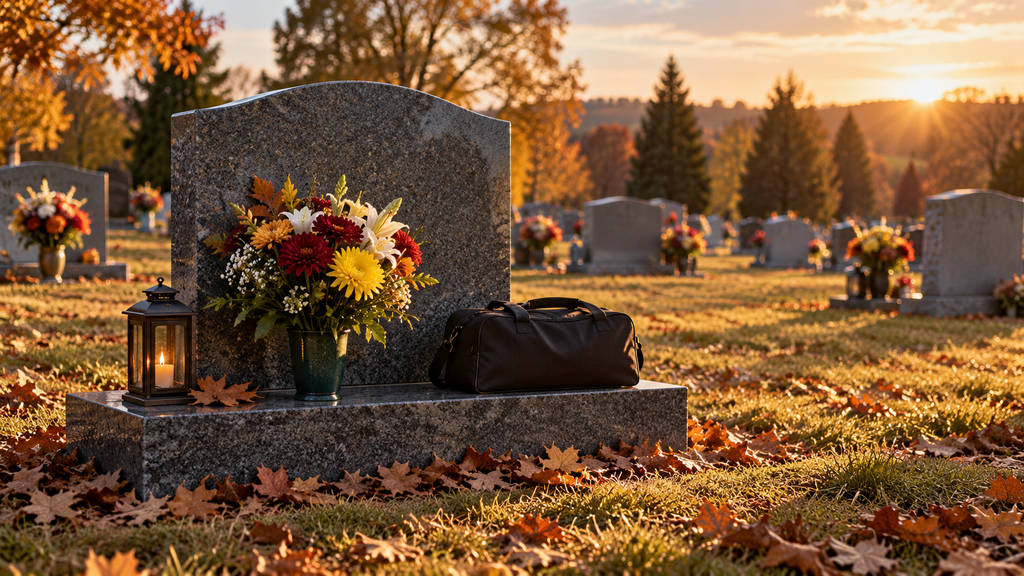
“It’s supposed to look like that,” I’d told him.
“Of course,” he said, kissing the top of my head. “Our baby is going to have the world’s most unique rabbit.”
Our baby.
The two words hit me so hard that I had to put one hand against Paul’s headstone to keep from falling completely.
Because our baby had never been born.
At least, that was what I had believed for five years.
I stared at the rabbit.
Its left ear was still slightly crooked.
The blue ribbon was faded.
And on its little cotton belly, embroidered in yellow thread, was a name.
LILY.
I couldn’t breathe.
“No,” I whispered.
I picked it up with trembling fingers.
There was a small brown stain near one of its paws, and one of the black button eyes had been replaced with a different button.
Someone had loved this rabbit.
Someone had carried it.
Someone had slept with it.
And somehow, after all these years, it had found its way back to me.
I heard footsteps behind me.
“Ma’am?”
I turned so quickly that the rabbit slipped from my hands.
A cemetery groundskeeper stood several feet away. He was an older man wearing a green work jacket and holding a ring of keys.
“Are you all right?”
I tried to answer.
Nothing came out.
He looked at the open bag.
“Is that yours?”
I shook my head.
“Someone left it here.”
He approached carefully.
“I’m going to call the office.”
“Wait.”
My voice sounded strange, almost unrecognizable.
I reached into the bag and pulled out the photograph.
It was wrapped in a piece of white cloth.
When I unfolded it, I saw a little girl standing in front of a yellow house.
She couldn’t have been more than four.
She had dark brown curls, round cheeks, and a serious expression that reminded me painfully of Paul whenever he was concentrating.
She wore a yellow dress.
In one hand, she held the white rabbit.
In the other, she held a man’s hand.
Only the man’s arm and part of his torso were visible.
He was wearing a faded blue shirt.
The same blue shirt lying inside the bag.
I turned the photograph over.
Three words were written on the back.
“She knows your name.”
My stomach twisted.
Below those words was a date.
August 14.
Three years after Paul’s funeral.
I looked again at the man’s arm.
There was a watch on his wrist.
A silver watch with a dark leather strap.
I knew that watch.
I’d given it to Paul on our seventh wedding anniversary.
And he had been wearing it the morning he supposedly died.
For five years, I had been told that my husband’s body was too badly damaged for me to see.
For five years, I had stood beside a grave believing that the man I loved was beneath it.
Now I was holding a photograph taken three years after his death.
And the man in that photograph was wearing his watch.
The groundskeeper was saying something.
I barely heard him.
“Ma’am, please sit down. You look very pale.”
I lowered myself onto the grass.
The photograph trembled between my fingers.
There had to be an explanation.
Someone could have inherited Paul’s watch.
Someone could have purchased it.
Someone could have found it after the accident.
But the rabbit?
The blue shirt?
The handwriting?
I recognized that handwriting.
Paul always wrote the letter S in an unusual way, with the bottom curve nearly closed.
I had seen it on grocery lists, birthday cards, and little notes he left on the refrigerator.
I turned the photograph over again.
She knows your name.
The words blurred.
“Who left this?” I whispered.
The groundskeeper frowned.
“I don’t know.”
“Did you see anyone near this grave?”
He hesitated.
“Not today.”
“What about yesterday?”
He looked toward the cemetery entrance.
“There was a woman here late yesterday afternoon. I remember because she asked where the older graves were.”
“What woman?”
“Brown coat. Dark hair. Maybe forty.”
“Was she carrying a black bag?”
“I couldn’t say.”
I grabbed the brown envelope.
My name was written across the front.
Not Megan Carter.
Not the name I had used since Paul’s death.
It said:
Megan Bennett.
My maiden name.
Underneath, in smaller letters, someone had written:
Please read everything before you decide what to believe.
Inside were several folded papers and a letter.
The letter was written in blue ink.
I unfolded it.
Dear Megan,
If you are reading this, I have finally found the courage to do what I should have done years ago.
You have been living with a lie.
I know because I helped create it.
The child in the photograph is your daughter.
Her name is Lily.
And Paul did not die in that accident.
I stopped reading.
The world around me seemed to tilt.
Somewhere in the distance, a lawn mower started.
A bird landed on a nearby headstone.
The groundskeeper spoke into his radio.
Life continued as though nothing had happened.
But mine had just split open.
I forced myself to read the next line.
Before you hate me, please understand that I was told you knew.
I was told you had chosen to leave them.
I believed it until Lily started asking questions.
Then I found the hospital records.
My name is Rebecca Ellis.
I was the nurse who took care of you the night your daughter was born.
I read those sentences six times.
My daughter.
Born.
Alive.
The words made no sense.
I remembered the hospital.
I remembered the bright lights.
The pain.
Paul holding my hand.
And the doctor telling me that our baby hadn’t survived.
I remembered waking up in a quiet room.
I remembered the empty space beside my bed where a bassinet should have been.
I remembered Paul sitting in a chair with his face buried in his hands.
When I asked to see our daughter, he told me the doctors had already taken care of everything.
I had screamed at him.
I remembered that too.
I had begged.
I had cried until my throat hurt.
But he said seeing her would only make things worse.
For months afterward, I couldn’t walk past the baby section of a store.
I couldn’t bear to hear newborns crying.
I packed away the tiny yellow dresses, the blankets, the rabbit.
Paul told me he had donated the things to a charity because he thought keeping them would hurt me.
And eventually, because I loved him, I believed he was trying to protect me.
Now the rabbit was in my hands.
And the little girl in the photograph had my eyes.
I pressed the picture against my chest.
“Oh, my God.”
The groundskeeper crouched beside me.
“Ma’am, should I call an ambulance?”
“No.”
I could barely speak.
“Please. I need my phone.”
He handed it to me from where it had fallen in the grass.
I called my sister, Rachel.
She answered on the second ring.
“Hey. Are you still at the cemetery?”
“Rachel.”
There was something in my voice that made her stop.
“Megan? What’s wrong?”
I swallowed.
“I found something.”
“What?”
“A bag. On Paul’s grave.”
Silence.
Then she asked, very quietly, “What kind of bag?”
My heart stopped.
Not because of the question.
Because of the way she asked it.
She didn’t sound confused.
She sounded frightened.
“Rachel?”
“Where are you?”
“I’m standing beside his grave.”
“Don’t open anything else.”
I looked down at the scattered papers.
“Why?”
“Just listen to me. Put everything back and leave.”
My blood turned cold.
“How do you know there’s something else inside?”
She didn’t answer.
“Rachel.”
“Megan, please.”
“Did you know?”
A long silence followed.
Then I heard her begin to cry.
And in that moment, before she said another word, I knew.
My sister had been keeping something from me.
Something terrible.
Something connected to the five years I had spent mourning a man who might still be alive.
I don’t remember the drive home.
The groundskeeper insisted that I sit in the cemetery office until I stopped shaking.
A woman brought me water.
Someone asked whether they should call the police.
I told them I would.
But first, I needed answers.
I placed the black bag on the passenger seat of my car and drove to Rachel’s house.
She lived fifteen minutes away in a quiet neighborhood lined with maple trees.
Her car was in the driveway.
I didn’t knock.
I used the spare key she’d given me years earlier.
“Rachel!”
She was sitting at the kitchen table.
A cup of coffee stood untouched in front of her.
Her eyes were red.
When she saw the bag in my hand, she covered her mouth.
I placed it on the table.
“Tell me.”
“Megan—”
“Tell me what you know.”
She looked at the rabbit.
Her face crumpled.
“Oh, God.”
I took the photograph out.
“Who is she?”
Rachel shut her eyes.
“Please sit down.”
“Who is she?”
My voice rose so sharply that she flinched.
She whispered, “Her name is Lily.”
I felt the floor shift beneath me.
“Whose daughter?”
Rachel didn’t answer.
“Whose daughter, Rachel?”
“Yours.”
I stared at her.
She began sobbing.
“I wanted to tell you.”
I stepped backward.
“How long?”
“Megan—”
“How long have you known?”
Her lips trembled.
“Since the hospital.”
I felt something inside me go very still.
Not peaceful.
Not calm.
Something colder.
“You knew my daughter was alive?”
Rachel nodded.
“And you watched me bury her clothes?”
She covered her face.
“You watched me cry every Mother’s Day?”
“I know.”
“You let me believe she was dead?”
“I thought I was protecting you.”
I laughed.
It was a terrible sound.
“Protecting me?”
Rachel reached for my hand.
I pulled away.
“Don’t touch me.”
She looked down.
I pointed toward the photograph.
“Where is she?”
Rachel swallowed.
“I don’t know where she is now.”
“Now?”
The word hung between us.
“What does that mean?”
Rachel looked at the floor.
“Paul took her.”
My heart hammered.
“Paul is dead.”
She shook her head.
“No, Megan.”
A tear slid down her cheek.
“He isn’t.”
For a moment, I couldn’t hear anything except the pounding of my own heart.
The refrigerator hummed.
A clock ticked above the stove.
Outside, someone was mowing their lawn.
I stared at my sister.
“Say that again.”
Rachel whispered, “Paul didn’t die in the accident.”
I sat down because my legs would no longer hold me.
“No.”
“He arranged it.”
“No.”
“He wanted everyone to believe he was gone.”
I shook my head.
“You’re lying.”
“I wish I were.”
“Then whose grave have I been visiting?”
Rachel began crying harder.
“It’s empty.”
I looked at her.
The room seemed to stretch and narrow.
Five years.
Five anniversaries.
Five bouquets of yellow flowers.
Five mornings spent kneeling beside a stone, telling my husband about the life I was trying to build without him.
And there had been no one beneath it.
I felt sick.
“Why?”
Rachel wiped her cheeks.
“He said he had to disappear.”
“Why?”
“He said there were dangerous people looking for him.”
“What people?”
“I don’t know.”
“Don’t lie to me again.”
She flinched.
“I swear I don’t know their names.”
I looked at the rabbit.
“Why did he take Lily?”
Rachel pressed her palms together.
“Because he believed she was safer with him.”
I stood so quickly that the chair scraped across the floor.
“Safer from whom?”
Rachel looked up.
Her expression changed.
For the first time, I saw something beyond guilt.
Fear.
“From you.”
I stared at her.
“What?”
“That’s what he told me.”
The words came out in a rush.
“He said you were having episodes. That you weren’t remembering things. That the doctors were worried. He said you’d become dangerous during the pregnancy.”
I shook my head.
“That never happened.”
“I know that now.”
“You knew me, Rachel.”
“I know.”
“You grew up with me.”
“I know.”
“And you believed him?”
She began sobbing again.
“He showed me medical papers.”
“What papers?”
“Reports. Evaluations. He said you had a condition that could get worse after childbirth. He told me you had signed documents agreeing that Lily should stay with him.”
I felt as though someone had punched me in the chest.
“I never signed anything.”
Rachel looked at me with an expression I would remember for the rest of my life.
“I know.”
I leaned forward.
“When did you find out?”
She whispered, “Three years ago.”
I went completely still.
“Three years?”
Rachel nodded.
“And you still didn’t tell me?”
“He threatened me.”
“With what?”
She looked toward the window.
Then she said something that made the room go cold.
“He told me if I told you the truth, Lily would disappear forever.”
I wanted to hate Rachel.
Part of me did.
But another part of me was trying desperately to understand how an ordinary family could become tangled in something so monstrous.
I had trusted my husband.
I had trusted my sister.
I had trusted the doctors who told me my baby had died.
And somehow, all three had become part of a story that wasn’t true.
I picked up the letter again.
“Who’s Rebecca Ellis?”
Rachel frowned.
“I don’t know.”
“The nurse who wrote this.”
I handed her the letter.
She read the first paragraph.
Her face drained of color.
“What?” I asked.
She looked up.
“Paul told me Rebecca died.”
I stared at her.
“When?”
“Two years ago. He said she’d been in a car accident.”
A chill moved down my spine.
Another accident.
Another convenient death.
I looked at the photograph.
“Have you seen Lily?”
Rachel nodded slowly.
“Once.”
“When?”
“Three years ago.”
“Where?”
“At a house outside Asheville.”
I gripped the edge of the table.
“North Carolina?”
She nodded.
“Paul called me. He said he wanted me to know they were safe. He gave me an address and told me not to bring anyone.”
“And you went?”
“Yes.”
“What did you see?”
Rachel stared at the rabbit.
“A little girl with brown curls. She was sitting on the porch with that toy.”
I pressed a hand over my mouth.
“She asked me if I was her aunt.”
Rachel’s voice broke.
“And I said yes.”
Tears filled my eyes.
“She knows about me?”
Rachel nodded.
“Paul told her you were sick.”
I could barely breathe.
“He told her you couldn’t take care of her.”
My knees weakened again.
I sat down.
Rachel continued.
“She asked why you never visited.”
I covered my face.
“And what did you say?”
Rachel began crying.
“I told her you loved her.”
For a long time, neither of us spoke.
Then I asked the only question that mattered.
“Where is that house?”
Rachel reached for her phone.
“I still have the address.”
She scrolled through old messages.
Then she stopped.
Her expression changed.
“What?”
She turned the screen toward me.
The message thread was gone.
Not archived.
Not hidden.
Gone.
“I didn’t delete it,” she whispered.
I looked at her.
“When did you last speak to Paul?”
Rachel hesitated.
“Last month.”
The words landed like stones.
“He’s been calling you?”
She nodded.
“Sometimes.”
“Give me his number.”
“He always calls from a blocked number.”
“Did he call yesterday?”
Rachel’s eyes widened.
“No.”
“Are you sure?”
“Yes.”
I stared at her.
“Then who left the bag?”
She looked down at the letter.
“I think Rebecca did.”
I picked up the envelope again.
There was more inside.
A folded hospital document.
A small brass key.
And a piece of paper with an address written in red ink.
Underneath it were four words.
DON’T TRUST THE GRAVE.
The address led to a storage facility on the outskirts of town.
I didn’t go there immediately.
For the first time since finding the bag, I made a decision that wasn’t driven entirely by panic.
I called the police.
An officer came to Rachel’s house and listened while I explained what had happened.
He looked at the photograph, the letter, and the hospital papers.
He asked questions.
A lot of questions.
Did I have proof the handwriting belonged to Paul?
Did I have the original death certificate?
Who had identified the body?
Had I ever seen a burial permit?
Had I spoken to the funeral director?
I realized, with growing horror, that I didn’t know the answers.
Paul’s brother, Daniel, had handled the arrangements.
Daniel had told me the accident had been so severe that viewing the body wasn’t possible.
He had arranged the funeral.
He had paid the cemetery.
He had handed me the death certificate.
I had been twenty-nine years old, heavily medicated for anxiety, and barely able to get out of bed.
I hadn’t questioned him.
Why would I?
He was family.
The officer took copies of the documents and explained that the allegations would need to be investigated.
I wanted someone to rush out and arrest Paul immediately.
Instead, I heard words like verification, jurisdiction, and records request.
It was unbearable.
But the officer also told me something important.
“Don’t confront anyone you believe may be involved.”
I nodded.
“Especially your husband’s brother.”
At the mention of Daniel, Rachel looked away.
I noticed.
The officer noticed too.
After he left, I turned toward her.
“What else?”
Rachel shook her head.
“Megan, I can’t.”
“Rachel.”
She began trembling.
I stepped closer.
“What does Daniel know?”
She whispered, “Everything.”
Daniel Carter had always been the charming one.
Paul was quiet, thoughtful, and careful with his words.
Daniel was loud, funny, and impossible to ignore.
At family gatherings, he told stories that made everyone laugh.
He remembered birthdays.
He helped neighbors move furniture.
He volunteered at church fundraisers.
When Paul supposedly died, Daniel became the person who held our family together.
He arranged meals.
He called the insurance company.
He handled paperwork.
He sat beside me at the funeral and held my hand when I couldn’t stop crying.
I had called him my guardian angel.
Now I wondered whether he had been watching me.
Making sure I never asked the wrong questions.
I remembered something from the first year after Paul’s death.
Daniel had insisted I sell our house.
“Too many memories,” he’d said.
He had found a buyer within two weeks.
He had also suggested I change banks.
“Fresh start,” he’d told me.
At the time, I thought he was helping.
Now every act of kindness looked different.
I pulled out my phone.
There were messages from Daniel.
He still checked on me occasionally.
The most recent had arrived three days earlier.
Thinking of you this week, Meg. Anniversaries are hard. Call if you need anything.
I stared at the screen.
Then another message appeared.
Rachel says you’re having a difficult day. Everything okay?
My blood went cold.
I looked at Rachel.
“Did you text him?”
She shook her head.
“No.”
The phone vibrated again.
You shouldn’t be alone right now.
I showed her.
Rachel covered her mouth.
Then the phone rang.
Daniel.
I watched his name flash across the screen.
Once.
Twice.
Three times.
I didn’t answer.
A voicemail appeared.
I pressed play.
His familiar voice filled the kitchen.
“Hey, Meg. It’s Daniel. Just checking in. Rachel sounded worried. Give me a call when you get a chance, okay?”
He paused.
Then added, in a quieter voice:
“And Megan? Whatever you found today, don’t make any decisions until we’ve talked.”
I looked at Rachel.
She looked back at me.
Neither of us spoke.
Because Daniel had just confirmed something.
He knew about the bag.
That night, I didn’t sleep.
I stayed at Rachel’s house because I couldn’t bear to return to my apartment.
The black bag sat on the kitchen table.
Every few minutes, I looked at it.
As if it might disappear.
As if I might wake up and discover that none of this had happened.
Around midnight, I unfolded the hospital papers.
They were photocopies.
Most of the medical terminology meant nothing to me.
But one page caught my attention.
It was a birth record.
The mother’s name was Megan Bennett Carter.
The father’s name was Paul James Carter.
The baby was female.
Weight: seven pounds, two ounces.
Time of birth: 2:14 a.m.
And beside the section labeled Condition at Birth, someone had written:
LIVE BIRTH.
I stared at those two words.
Live birth.
Not stillbirth.
Not deceased.
Alive.
There was another document.
A discharge summary.
It listed me as having experienced complications requiring sedation.
But the baby’s discharge information was missing.
At the bottom, someone had written a note in blue pen.
Original records retained by R.E.
Rebecca Ellis.
I looked through the envelope again.
There was a second letter tucked behind the first.
It was shorter.
If Daniel contacts you, do not tell him where you are going.
He is the reason Paul disappeared.
And he is the reason your daughter has never been allowed to come home.
My hands began to shake.
I read the final sentence.
The truth is in locker 214.
I looked at the brass key.
A small metal tag hung from it.
214.
At six the next morning, Rachel and I drove to the storage facility.
I had called the investigating officer and left a message about the key and the new letter. He advised me to preserve everything and not enter any unfamiliar place alone.
We waited until the facility office opened.
The manager was a middle-aged woman named Mrs. Porter.
She listened carefully when I explained that I had found a key among documents connected to a police investigation.
She asked for identification.
Then she checked her computer.
“Locker 214,” she said.
Her expression changed.
“What is it?” I asked.
She looked at the screen.
“This unit was rented under the name Rebecca Ellis.”
My heart leaped.
“Is she still a customer?”
Mrs. Porter hesitated.
“Her account was paid in advance.”
“Until when?”
“Until next Friday.”
I swallowed.
“Can we open it?”
She looked at the key.
“I’ll need to verify that you’re authorized.”
I showed her the letter.
She read the section mentioning the locker.
After a moment, she said, “There’s a note on the account.”
“What note?”
She turned the screen slightly.
“It says that if a woman named Megan Carter arrives with the key, I should contact the person listed here.”
“Who?”
Mrs. Porter looked at me.
“Rebecca Ellis.”
Rebecca arrived forty minutes later.
She was thinner than I expected.
Her dark hair was streaked with gray, and she wore a brown coat that looked familiar from the groundskeeper’s description.
She stood in the doorway of the storage office and stared at me.
For a moment, neither of us moved.
Then she whispered, “You look just like I remember.”
I stood.
“Are you Rebecca?”
She nodded.
I wanted to scream at her.
I wanted to ask why she had waited so long.
I wanted to know whether she had held my daughter while I lay unconscious.
Instead, one question came out.
“Is Lily alive?”
Rebecca’s eyes filled with tears.
“Yes.”
I covered my mouth.
“Have you seen her?”
“Yes.”
“When?”
“Three weeks ago.”
I nearly collapsed.
Rachel caught my arm.
Rebecca stepped forward.
“I’m sorry.”
I shook my head.
“Don’t.”
She stopped.
“Please don’t apologize yet. Just tell me where my daughter is.”
Rebecca looked toward the parking lot.
Then she said, “I don’t know her exact location today.”
I felt hope begin to crumble.
“But I know how to find her.”
Locker 214 contained three cardboard boxes, a small metal case, and a laptop.
Rebecca opened the first box.
Inside were medical records.
Original documents.
Not photocopies.
There were forms bearing my signature.
Except the signature wasn’t mine.
I recognized the shape of my name, but the letters were wrong.
Someone had copied it.
Rebecca pointed to a page.
“This is the consent form they used.”
“For what?”
“To transfer Lily into her father’s custody.”
I stared at it.
“Why would they need that? He was her father.”
Rebecca looked at me.
“Because you were supposed to be told she had died.”
The room seemed to grow colder.
Rebecca explained that she had been working the overnight shift when Lily was born.
She remembered me because I had been frightened.
I had asked repeatedly whether my baby was all right.
Lily had been healthy.
She had cried loudly.
Rebecca smiled through tears.
“She had the strongest little lungs.”
I pressed a hand against my chest.
“Did I hold her?”
Rebecca nodded.
“Briefly.”
I closed my eyes.
Something moved at the edge of my memory.
Warmth.
A tiny weight against my chest.
The smell of a hospital blanket.
I had spent years believing that memory was a dream.
Now I knew it was real.
Rebecca continued.
“Your husband told the staff there were serious concerns about your mental health. He produced documents from a private physician.”
I shook my head.
“I never saw a private physician.”
“I know that now.”
“What happened?”
Rebecca looked down.
“Your chart was altered. The discharge paperwork was changed. I questioned it, but I was told the situation involved a confidential family protection arrangement.”
“Who told you?”
“Dr. Harrison.”
I remembered the name.
Dr. Michael Harrison.
The obstetrician who had delivered Lily.
He had been kind to me.
He had sat beside my bed and told me sometimes terrible things happened without explanation.
I had believed him.
Rebecca took a breath.
“Years later, I discovered that Dr. Harrison had been receiving money from Daniel Carter.”
I stared at her.
“Why?”
She opened the metal case.
Inside were bank statements.
Transfers.
Company records.
And a photograph of Daniel standing beside a man I didn’t recognize.
Rebecca pointed to him.
“That’s the man who was supposed to die in the highway accident.”
His name was Thomas Reed.
He was thirty-six years old.
He had worked as a mechanic for a trucking company connected to Daniel’s business.
And according to Rebecca, he had died in a crash five years earlier.
The same crash in which Paul was declared dead.
I stared at the photograph.
Thomas had a similar build to Paul.
Similar hair.
A similar jawline.
But he wasn’t my husband.
“Daniel used Thomas’s death to create Paul’s,” Rebecca explained.
I shook my head.
“How?”
“I don’t know every detail. But there were falsified identification records, a compromised medical examiner’s report, and funeral paperwork arranged through Daniel’s contacts.”
Rachel whispered, “Why would Daniel do that?”
Rebecca looked at her.
“Because Paul had discovered what his brother was doing.”
She opened the second box.
Inside were company ledgers.
Invoices.
Copies of contracts.
And a flash drive.
“Daniel was laundering money through his freight company,” Rebecca said. “Paul found evidence. He threatened to report him.”
I stared at her.
“Paul worked in accounting.”
She nodded.
“He knew exactly what he was looking at.”
My mind raced.
Paul had been quieter than usual during the months before the accident.
He had spent late nights on his laptop.
He had argued with Daniel over the phone.
Once, I had walked into the kitchen and heard him say, “I won’t let you drag Megan into this.”
When he noticed me, he’d ended the call.
I had forgotten that moment.
Or perhaps I had forced myself to forget it.
Rebecca continued.
“Daniel threatened Paul. He told him that if he went to the authorities, he’d destroy your family.”
I looked at the photograph of Lily.
“And Paul believed him?”
“He had reason to.”
Rebecca’s voice grew softer.
“Daniel had already arranged the false medical records. He was preparing to use them to separate you from Lily.”
I felt sick.
“Why?”
“To control Paul.”
I stared at her.
“He used our baby as leverage?”
Rebecca nodded.
“Paul tried to stop him. But by then, Daniel had too many people involved.”
I pressed my hands against my temples.
“Then why didn’t Paul come to me?”
Rebecca looked at me for a long moment.
“Because he made a terrible choice.”
“What choice?”
“He decided he could save Lily by taking her and disappearing.”
I stared at her.
“And leaving me?”
Rebecca’s eyes filled.
“Yes.”
I wanted to understand.
I wanted desperately to believe that Paul had been a frightened man trying to protect his child.
But the truth was more complicated.
He had taken my daughter.
He had allowed me to believe she was dead.
He had allowed me to mourn him.
And for five years, he had made no attempt to tell me the truth.
I looked at Rebecca.
“Did he know I was alive?”
She seemed startled.
“Of course.”
“Did he know I thought Lily was dead?”
She lowered her eyes.
“Yes.”
“Then don’t tell me he did it to protect me.”
Rebecca said nothing.
I felt anger rising through the grief.
“He could have sent a letter.”
“Yes.”
“He could have called.”
“Yes.”
“He could have told me where she was.”
Rebecca nodded.
“He could have.”
I looked down at the rabbit.
“Instead, he let our daughter grow up believing I didn’t want her.”
Rebecca began crying.
“I know.”
I wiped my face.
“Why are you helping me now?”
She took a long breath.
“Because Lily asked me something three weeks ago.”
“What?”
Rebecca’s voice broke.
“She asked whether a mother could stop loving her child before the child was born.”
I closed my eyes.
The words cut deeper than anything I had heard that morning.
Rebecca continued.
“She said her father told her you loved her, but you were too sick to be with her. She wanted to know why you never sent a birthday card.”
I couldn’t stop crying.
“I didn’t know she was alive.”
“I know.”
“She thinks I abandoned her.”
Rebecca reached across the table.
This time, I let her take my hand.
“She doesn’t know what to believe,” Rebecca whispered. “But she wants to meet you.”
I looked up.
“Then help me find her.”
Rebecca nodded.
“I will.”
The laptop contained hundreds of files.
Photographs.
Videos.
Documents.
And recordings.
Rebecca explained that Paul had sent her copies over the years because she was one of the few people who knew the truth.
He had asked her to keep everything safe in case something happened to him.
I wanted to know why she hadn’t gone to the police sooner.
She didn’t pretend to have a good answer.
“I was afraid,” she said. “Daniel threatened my family. And for a long time, I believed Paul would eventually do the right thing.”
“Did he?”
Rebecca looked at the laptop.
“Not soon enough.”
She opened a folder labeled LILY.
My heart stopped.
There were photographs from every year of my daughter’s life.
Lily as a newborn.
Lily asleep in a blue blanket.
Lily sitting in a high chair with mashed carrots on her face.
Lily taking her first steps.
Lily standing beside a Christmas tree.
Lily on her first day of kindergarten.
I stared at the screen.
Five years of birthdays.
Five years of Christmas mornings.
Five years of scraped knees and bedtime stories.
Five years I would never get back.
Then Rebecca clicked on a video.
A little girl appeared on the screen.
She was sitting at a kitchen table.
Her hair was tied into two uneven pigtails.
She held the white rabbit.
A man’s voice spoke from behind the camera.
“What do you want for your birthday, sweetheart?”
Lily thought for a moment.
“A bicycle.”
The man laughed.
“What color?”
“Yellow.”
“Anything else?”
She looked directly at the camera.
“Yes.”
“What?”
Her voice was small.
“I want my mommy.”
I covered my mouth.
The camera shook.
For several seconds, the man said nothing.
Then Lily asked:
“Daddy, does Mommy know where we live?”
The recording ended.
I stared at the black screen.
I had heard Paul’s voice.
There was no doubt.
He was alive.
And my daughter was asking for me.
We gave the investigators everything Rebecca had brought.
By the following afternoon, the case had moved far beyond a suspicious bag at a cemetery.
Detectives interviewed Rachel.
They interviewed Rebecca.
They began reviewing the hospital records and the original death investigation.
I learned that the detective assigned to the case was named Elena Morales.
She was in her forties, with dark eyes and a calm voice.
She didn’t make promises she couldn’t keep.
But she listened.
Really listened.
When I showed her Lily’s photograph, she studied it carefully.
“Do you have any idea where your husband is now?”
I shook my head.
“Rebecca says he moves frequently.”
“Do you know why?”
“He’s afraid of Daniel.”
Detective Morales nodded.
“Fear can explain behavior. It doesn’t excuse it.”
I looked at her.
For the first time, someone had said aloud what I had been thinking.
Paul might have been threatened.
He might have been frightened.
But he had still stolen years from me.
And from Lily.
Detective Morales continued.
“We’re going to investigate the fraud and locate your daughter. But I need you to understand something.”
“What?”
“If Paul believes Daniel is watching, he may run again.”
My stomach tightened.
“Then what do we do?”
“We make sure he understands that coming forward is safer than disappearing.”
She paused.
“And we need to determine whether Daniel knows where Lily is.”
I thought of Daniel’s voicemail.
Whatever you found today, don’t make any decisions until we’ve talked.
I showed it to her.
She listened twice.
Then she asked me to save it.
“Has he contacted you again?”
I nodded.
“Seven times.”
“Don’t respond without speaking to us.”
I agreed.
But that night, Daniel sent a message that made my hands go numb.
I know Rebecca found you.
A second message followed.
She doesn’t understand what she’s started.
Then a third.
Ask her what happened to the first little girl.
I stared at the message.
The first little girl.
What did that mean?
I called Detective Morales.
She asked me to forward the messages.
Then she told me not to reply.
But I couldn’t stop thinking about those words.
The first little girl.
Was Daniel threatening another child?
Was there another family?
Another stolen baby?
I called Rebecca.
She answered immediately.
“Megan?”
“What happened to the first little girl?”
Silence.
Then I heard a sharp intake of breath.
“Who told you that?”
“Daniel.”
Rebecca whispered something I couldn’t hear.
“Rebecca, what does he mean?”
She began crying.
“I hoped he wouldn’t bring that up.”
“Tell me.”
“It was before Lily.”
I gripped the phone.
“How long before?”
“About eighteen months.”
I sat down.
Rebecca’s voice shook.
“There was another woman. Another baby. Daniel was involved.”
My skin prickled.
“What happened?”
“The mother was told her daughter had died. The child was transferred into private custody using falsified records.”
I felt nauseated.
“Where is she now?”
Rebecca was silent.
“Rebecca?”
“She died.”
I closed my eyes.
“How?”
“An untreated medical condition. She was only eleven months old.”
I pressed a hand against my mouth.
Rebecca continued.
“I tried to report it. I was told the paperwork was legitimate. I lost my job for questioning the transfer.”
“Why didn’t you tell me?”
“Because I didn’t know how much Daniel knew about my involvement. I was terrified he’d use it to discredit me.”
I stared at the wall.
The story had just become darker.
This wasn’t simply about Paul.
It wasn’t only about a brother threatening another brother.
Daniel had been involved in something far worse.
And Lily might not have been the first child whose life he had stolen.
Over the next several days, the investigation moved quickly.
Detective Morales told me only what she could.
The medical examiner’s records were being reviewed.
The funeral home’s paperwork was under investigation.
The hospital had been ordered to preserve relevant files.
Financial investigators were examining Daniel’s company.
And Rebecca’s evidence had opened questions about several other suspicious infant custody transfers.
I barely slept.
I went to work once and lasted forty minutes before I broke down in the supply room.
My supervisor sent me home.
I stopped answering most calls.
I stopped eating properly.
But every morning, I looked at Lily’s photograph.
And every night, I watched the birthday video.
I memorized her voice.
The way she said bicycle.
The way she tilted her head.
The way she looked at the camera before asking for her mother.
I wondered what foods she liked.
Whether she was afraid of thunderstorms.
Whether she preferred stories about princesses or dinosaurs.
Whether she had my terrible sense of direction.
Whether she laughed like Paul.
I wondered whether she would hate me.
That was the thought that frightened me most.
What if I finally found her, and she didn’t want me?
What if five years of absence had created a distance love couldn’t cross?
One evening, Rachel found me sitting on the living room floor surrounded by photographs.
She lowered herself beside me.
For a long time, we said nothing.
Then she whispered, “I don’t expect you to forgive me.”
I kept looking at the pictures.
“Good.”
She nodded.
“I deserve that.”
I turned toward her.
“You knew she was alive.”
Tears filled her eyes.
“I did.”
“You knew I was grieving.”
“Yes.”
“And you still kept quiet.”
Rachel began crying.
“I was afraid he’d take her somewhere I could never find her.”
I looked at her.
“You should have trusted me.”
“I know.”
“No. You don’t.”
My voice broke.
“You don’t know what it was like to wake up every morning thinking my baby was dead. You don’t know what it was like to watch other women push strollers and wonder what my daughter would have looked like.”
Rachel covered her mouth.
“I lost everything,” I whispered. “And you knew I hadn’t.”
She reached for me.
I moved away.
“I’m not ready.”
She nodded.
“I understand.”
I looked down at Lily’s photograph.
Then I said something that surprised even me.
“But when we find her, I don’t want you to disappear.”
Rachel looked up.
“Why?”
“Because she deserves to know her family.”
I swallowed.
“And because I don’t want another person making decisions about who she gets to love.”
On the ninth day after I found the bag, Detective Morales called.
I was standing in my kitchen, trying to make toast.
My phone rang.
I saw her name.
My heart began pounding.
“Hello?”
“Megan, are you somewhere private?”
I gripped the counter.
“Yes.”
“We have a location.”
The room went silent.
“A location?”
“For Paul.”
I closed my eyes.
“Where?”
“A small town in Virginia.”
I could barely breathe.
“Is Lily with him?”
“We believe so.”
I sank into a chair.
“Can I go?”
“Not yet.”
The words hurt.
But I listened.
Detective Morales explained that they needed to approach carefully.
Paul had used several identities.
He had moved frequently.
And there was evidence that someone connected to Daniel had recently been searching for him.
“We don’t want Lily caught in the middle of a confrontation,” she said.
I nodded even though she couldn’t see me.
“What happens now?”
“We’re coordinating with local authorities.”
“How long?”
“I can’t promise a timeline.”
I pressed my forehead against the table.
“Please.”
My voice cracked.
“Please don’t let him disappear again.”
Detective Morales was quiet for a moment.
Then she said, “We’re doing everything we can to prevent that.”
I hung up.
And for the first time in five years, I allowed myself to imagine holding my daughter.
Not a memory.
Not a dream.
A real child.
Warm and breathing.
With dark curls and a crooked little rabbit.
Two days later, Daniel was arrested.
I learned about it from Detective Morales before the news broke.
He was facing allegations connected to financial fraud, falsified records, and obstruction of the investigation.
Other charges were being considered.
The investigation into the earlier infant custody cases was continuing.
I sat on my couch and listened.
When she finished, I asked, “Did he say anything about Lily?”
Detective Morales hesitated.
“He asked whether you had found her.”
My stomach tightened.
“What did you tell him?”
“Nothing.”
I closed my eyes.
Then she said, “Megan, there’s something else.”
I braced myself.
“Paul has been located.”
I stood.
“Is he alive?”
“Yes.”
I began crying before she finished.
“Is Lily with him?”
“Yes.”
I pressed a hand against my mouth.
“She is safe.”
Those three words broke me.
I sank onto the floor.
For five years, I had prayed for impossible things.
I had prayed to hear my baby’s heartbeat again.
I had prayed to see Paul’s face one more time.
I had prayed for a chance to say goodbye properly.
Now I was being told that my daughter was alive.
Safe.
And only a few hours away.
Detective Morales continued.
“Paul has agreed to cooperate.”
I wiped my face.
“Can I see her?”
“We’re arranging a meeting with a child welfare specialist.”
I nodded.
“Okay.”
My voice trembled.
“Okay.”
Then I asked the question I had been avoiding.
“Does she know I’m coming?”
Detective Morales paused.
“Paul told her yesterday.”
I closed my eyes.
“What did he say?”
“He told her that her mother had been looking for her.”
I began sobbing.
For the first time, Lily knew.
I hadn’t abandoned her.
I hadn’t forgotten her.
I had been looking for her.
Even when I didn’t know where to look.
The first time I saw Paul again, I didn’t recognize him.
Not immediately.
He was sitting in a small interview room at a county office in Virginia.
His hair was longer.
There were gray strands near his temples.
He had lost weight.
He wore a plain dark sweater.
But when he looked up, I knew.
The eyes.
The shape of his mouth.
The way his left eyebrow lifted slightly when he was nervous.
My husband.
The man I had buried.
The man I had mourned.
The man who had stolen my daughter.
He stood.
“Megan.”
I stopped in the doorway.
For five years, I had imagined what I would say if I could speak to him again.
I had imagined telling him how much I missed him.
How hard the first Christmas had been.
How lonely our anniversary felt.
How I still sometimes reached across the bed in my sleep.
Now all I could think was:
You let me bury an empty coffin.
Paul took a step toward me.
I raised my hand.
“Don’t.”
He stopped.
His eyes filled with tears.
“You look—”
“Don’t.”
I couldn’t bear his voice.
Not yet.
He lowered his head.
“I know you hate me.”
I stared at him.
“Hate?”
My voice shook.
“Paul, I spent five years visiting your grave.”
He closed his eyes.
“I know.”
“I brought flowers.”
A tear slid down his cheek.
“I know.”
“I talked to you.”
His shoulders trembled.
“I know.”
I stepped closer.
“I told you about my job. About Rachel. About the dates I went on and how guilty I felt afterward.”
He looked at me.
I laughed bitterly.
“I apologized to a dead man for trying to live.”
Paul covered his face.
I continued.
“I cried on your birthday. I cried on our anniversary. I cried when I found your old sweater in the closet.”
My voice broke.
“And all that time, you were alive.”
He whispered, “I’m sorry.”
I stared at him.
Then I asked the question that had been burning inside me.
“Why didn’t you come back?”
Paul sat down slowly.
“Because I was afraid.”
“Of Daniel?”
He nodded.
“At first.”
I caught those words.
“At first?”
Paul looked at me.
His face crumpled.
“Later, I was afraid of you.”
I stared.
“Of me?”
“Of what you’d say. Of what you’d do when you found out.”
I felt something inside me harden.
“So you kept lying.”
He nodded.
“Yes.”
“For five years.”
“Yes.”
I looked away.
The truth was almost worse than the mystery.
He hadn’t stayed away only because of danger.
He had stayed away because he was ashamed.
Because returning meant facing what he had done.
And every year he waited, the truth became harder to tell.
I looked back at him.
“You chose your comfort over our daughter.”
Paul began crying.
“I thought I was protecting her.”
“No.”
My voice was steady now.
“You were protecting yourself from the consequences.”
He didn’t argue.
And somehow, that hurt even more.
Paul told me everything.
Or as much as he could bear to tell.
He had discovered that Daniel was using their family business to move money through fraudulent contracts.
When Paul threatened to expose him, Daniel revealed that he had already begun manipulating records connected to my pregnancy.
Daniel knew people at the hospital.
He had paid Dr. Harrison.
He had arranged documents claiming I was mentally unstable.
Paul believed Daniel could take Lily away.
So he made a plan.
A terrible plan.
He would disappear with our daughter.
Daniel, believing Paul would remain silent about the financial crimes, helped arrange the false death.
But Paul had kept copies of the evidence.
He thought that gave him leverage.
For a while, it worked.
Then Daniel began demanding more.
Money.
Documents.
Silence.
Paul moved Lily from place to place.
He changed names.
He avoided schools that asked too many questions.
He worked temporary jobs.
And all the while, he told Lily that her mother was too sick to care for her.
I listened without interrupting.
When he finished, I asked, “Did you ever think about what this was doing to her?”
He looked down.
“Every day.”
“Then why didn’t you stop?”
He whispered, “I didn’t know how.”
I shook my head.
“You could have called the police.”
“I thought Daniel had people everywhere.”
“You could have contacted a lawyer.”
“I didn’t trust anyone.”
“You could have contacted me.”
Paul began crying.
“I was afraid you’d never forgive me.”
I stared at him.
“Paul, you didn’t give me a chance.”
He covered his face.
And for the first time, I saw him clearly.
Not as the perfect husband I had mourned.
Not as the monster I had imagined after finding the bag.
But as a frightened, selfish man who had made one terrible decision and then spent five years making more.
I had loved him.
Part of me still did.
But love could not erase what he had done.
Before I left the room, Paul reached into his pocket.
He took out a folded piece of paper.
“I wrote this years ago,” he said.
I didn’t move.
“I never sent it.”
He held it toward me.
I hesitated.
Then I took it.
It was a letter.
Dated three years earlier.
Megan,
There isn’t a day I don’t think about you.
Lily is growing so fast. She has your eyes and your stubbornness. She laughs when she’s nervous, just like you.
I tell myself that one day I’ll explain everything.
But every time I imagine seeing your face, I lose my courage.
I know you think we’re gone.
I know what that must have done to you.
And I know there is no excuse.
I hope someday Lily will know how much you loved her before she was born.
I hope someday you can forgive me.
Paul.
I folded the letter.
Then I looked at him.
“Why didn’t you send it?”
He whispered, “Because I was a coward.”
I nodded.
“Yes.”
He flinched.
I placed the letter on the table.
“I’m not going to spend the rest of my life carrying your guilt.”
Paul looked up.
“I don’t expect you to.”
“Good.”
I walked toward the door.
Then stopped.
“One more thing.”
He looked at me.
“Don’t ever tell Lily that I didn’t want her.”
His face crumpled.
“I won’t.”
“And don’t ask her to choose between us.”
He nodded.
“I promise.”
I opened the door.
For five years, I had wanted one more conversation with my husband.
Now I’d had it.
And all I wanted was to meet my daughter.
The meeting took place the next afternoon.
A child welfare specialist named Anna had prepared Lily gently.
She explained that Lily knew I was her mother.
She knew I had believed she was gone.
She knew I hadn’t chosen to leave her.
But Anna warned me that children don’t process enormous truths the way adults do.
“She may be excited,” Anna said. “She may be angry. She may ask questions you can’t answer.”
I nodded.
“She may also seem distant.”
“I understand.”
“And she may want her father.”
That one hurt.
But I nodded again.
“Of course.”
Anna studied me.
“Your job today isn’t to make up for five years.”
I looked at her.
“Your job is simply to let her meet you.”
I swallowed.
“Okay.”
She smiled gently.
“And Megan?”
“Yes?”
“Don’t worry about saying the perfect thing.”
I looked down at the rabbit in my lap.
“I don’t know what to say at all.”
Anna’s eyes softened.
“Then start with hello.”
The room was small.
There was a blue couch, a low table, and a shelf filled with children’s books.
A box of crayons sat beside a stack of paper.
Sunlight came through a wide window.
I sat on the couch with the rabbit in my hands.
My heart was beating so hard that I could hear it.
Every sound made me look toward the door.
Footsteps.
Voices.
A chair scraping somewhere down the hall.
Then the handle turned.
Anna entered first.
And behind her came a little girl.
She was wearing jeans, white sneakers, and a yellow cardigan.
Her dark brown hair fell in curls around her face.
She held Anna’s hand.
And she had my eyes.
Not eyes that merely resembled mine.
My eyes.
The same shape.
The same deep brown color.
The same little crease at the outer corners.
I forgot how to breathe.
Lily stopped in the doorway.
She looked at me.
I looked at her.
For five years, I had imagined what my daughter might have looked like.
Now she was standing ten feet away.
Real.
Alive.
Beautiful.
And frightened.
I wanted to run to her.
I wanted to scoop her into my arms.
I wanted to kiss her cheeks and tell her every word I’d been saving since the day she was born.
But I stayed where I was.
Anna crouched beside her.
“Lily, this is Megan.”
Lily looked at me.
Then at the rabbit.
Her eyes widened.
“Bunny?”
I looked down.
My voice broke.
“I brought him.”
She stepped forward.
“That’s my Bunny.”
I nodded.
“I know.”
She stared at me.
“Daddy said you made him.”
Tears filled my eyes.
“Yes.”
She looked at the crooked ear.
“Why is this ear funny?”
I laughed through my tears.
“Because I’m not very good at sewing.”
For the first time, she smiled.
It was a small smile.
But it was hers.
And I knew I would remember it for the rest of my life.
She came closer.
“Did you really make him before I was born?”
I nodded.
“Yes, sweetheart.”
She looked at me carefully.
“Did you know I was a girl?”
“Yes.”
“How?”
“The doctors told us.”
She considered that.
Then she asked, “Did you want a girl?”
My heart broke.
I knelt so we were at the same height.
“Oh, Lily.”
My voice trembled.
“I wanted you more than anything in the world.”
She looked down.
“Daddy said you were sick.”
I swallowed.
“I was sick after you were born.”
That was true.
I had been devastated.
But not for the reason she believed.
I continued carefully.
“Some people told me things that weren’t true. They told me you couldn’t come home.”
Lily frowned.
“Why?”
I looked toward Anna.
She gave me a small encouraging nod.
“That’s something the grown-ups are still trying to understand,” I said. “But I need you to know one thing.”
Lily looked at me.
“I never stopped loving you.”
Her lower lip trembled.
“Even when you didn’t know where I was?”
I began crying.
“Even then.”
She stared at me for a long moment.
Then she asked the question that nearly destroyed me.
“Did you look for me?”
I pressed a hand against my chest.
“I didn’t know you were alive, sweetheart. I was told you had died.”
Her eyes widened.
“Like Grandpa?”
I nodded slowly.
“Something like that.”
She looked at the rabbit.
Then back at me.
“So you were sad?”
I laughed through my tears.
“Very sad.”
She thought about that.
Then she stepped closer.
“I’m sorry you were sad.”
I covered my mouth.
This little girl, who had lost five years with her mother, was apologizing for my pain.
I shook my head.
“Oh, honey. You don’t have to be sorry.”
She reached out and touched my sleeve.
“Can I hug you?”
I couldn’t speak.
I nodded.
And Lily stepped into my arms.
There are moments in life that words cannot hold.
The first time I hugged my daughter was one of them.
She was warm.
Her hair smelled faintly of strawberry shampoo.
Her small arms wrapped around my neck.
I felt her heartbeat against my chest.
For five years, I had lived with an emptiness so deep that I thought it had become part of me.
And now, for one brief moment, that emptiness was filled.
I held her carefully.
Not too tightly.
I didn’t want to frighten her.
But she pressed closer.
Then she whispered something against my shoulder.
“Mommy?”
I closed my eyes.
“Yes?”
“Are you going away again?”
The question pierced me.
I pulled back just enough to look at her.
“No, sweetheart.”
My voice shook.
“I’m not choosing to go away.”
She studied my face.
“Promise?”
I wanted to promise that nothing would ever separate us again.
But Anna had warned me not to make promises about things I couldn’t control.
So I told Lily the truth.
“I promise I will keep trying to be with you. And I promise I will never stop loving you.”
She thought about that.
Then she nodded.
“Okay.”
And she hugged me again.
The days that followed were not a fairy tale.
I wish I could say Lily came home with me immediately.
That we drove away together.
That everything was fixed.
But real life doesn’t work that way.
There were legal questions.
Custody proceedings.
Counseling appointments.
Interviews.
Medical records.
School records.
Identity documents.
And a little girl who loved the father who had raised her, even though he had lied to her.
I had to learn to make room for that truth.
Lily loved Paul.
She missed him when he wasn’t there.
She asked about him.
She cried sometimes because she didn’t understand why everyone was suddenly upset with him.
At first, hearing her say she wanted her daddy felt like another knife in my chest.
But I reminded myself that love wasn’t a competition.
I didn’t need Lily to stop loving Paul in order to love me.
She had already lost enough.
I refused to make her lose more.
So I learned patience.
I learned to sit beside her while she drew pictures.
I learned that she hated peas but loved carrots.
I learned that she was afraid of dogs larger than she was.
I learned that she liked yellow because it reminded her of sunshine.
I learned that she couldn’t fall asleep without Bunny tucked beneath her chin.
I learned that she asked a thousand questions.
And I learned that sometimes, when she was frightened, she became very quiet.
Just like Paul.
But when she was excited, she talked with her whole body.
Just like me.
Three months after the meeting, the court approved a plan that allowed Lily to begin living with me while the remaining proceedings continued.
I had prepared a bedroom.
Yellow curtains.
A white bedspread.
A small bookshelf.
A night-light shaped like a moon.
I had spent hours standing in the doorway, wondering whether she’d like it.
The day she arrived, she carried a pink backpack and Bunny.
She walked into the room and looked around.
Then she turned toward me.
“Is this mine?”
I nodded.
“Yes.”
“All of it?”
“All of it.”
She touched the bedspread.
Then the bookshelf.
Then the little lamp beside her bed.
“Can I put my drawings on the wall?”
I smiled.
“Anywhere you want.”
She looked at me seriously.
“Even if they’re messy?”
“Especially if they’re messy.”
She grinned.
Then she threw her arms around my waist.
“Thank you, Mommy.”
I held her.
And for the first time, I let myself believe that we might be all right.
The investigation into Daniel continued.
Evidence from Rebecca’s storage locker led authorities to several people who had helped falsify documents.
Dr. Harrison’s role was examined.
The funeral arrangements were reviewed.
Financial records connected Daniel’s company to a wider fraud scheme.
Some of the people involved agreed to cooperate.
Others denied everything.
I followed the case as closely as I could.
But I gradually realized something.
I couldn’t spend every day living inside the nightmare.
Lily needed breakfast.
She needed clean socks.
She needed someone to help her with spelling words.
She needed birthday parties and bedtime stories.
She needed a mother who was present.
Not a mother consumed by the past.
So I made a decision.
I would cooperate with the investigation.
I would fight for the truth.
But I would also build a life.
A real life.
One ordinary day at a time.
One evening, about six months after Lily moved in, she found a photograph of Paul and me on our wedding day.
It was tucked inside an old album.
She carried it into the kitchen.
“Mommy?”
I looked up from the dishes.
“Yes?”
“Is this you and Daddy?”
I dried my hands.
“Yes.”
She studied the picture.
“You look happy.”
I swallowed.
“We were.”
She looked at Paul’s face.
“Do you still love him?”
I stood very still.
It was a question I had asked myself many times.
I had loved Paul deeply.
I had loved him when we were young and broke.
I had loved him when he brought home yellow flowers for no reason.
I had loved him when we painted our first apartment together.
I had loved him when we found out we were expecting Lily.
And I had loved him after I believed he was dead.
But the man I loved had also done something unforgivable.
Or perhaps not unforgivable.
I still didn’t know.
I sat beside Lily.
“I loved your daddy very much,” I said.
She looked at me.
“But not now?”
I thought carefully.
“Sometimes love changes when people hurt each other.”
She frowned.
“Like when my friend Emma broke my crayons?”
I smiled sadly.
“A little like that. But bigger.”
Lily considered this.
Then she asked, “Can you love someone and still be mad at them?”
I looked at her.
“Yes, sweetheart.”
She nodded.
“Good.”
“Why?”
“Because I’m mad at Daddy.”
My chest tightened.
“But I still love him.”
I pulled her close.
“That’s okay.”
She rested her head against me.
“I’m mad because he didn’t tell me about you.”
I kissed her hair.
“I understand.”
She looked up.
“Are you mad too?”
I smiled through tears.
“Very.”
She thought for a moment.
Then she said, “Maybe we can both be mad together.”
I laughed.
And she laughed.
And somehow, in that small kitchen, surrounded by dishes and homework papers, something inside me began to heal.
On the sixth anniversary of Paul’s supposed death, I went back to the cemetery.
But this time, I didn’t go alone.
Lily came with me.
She wore a yellow dress and carried a small bouquet of yellow flowers.
Rachel came too, though things between us were still complicated.
I had not forgotten what she’d done.
I wasn’t sure I ever would.
But she had been attending counseling.
She had cooperated fully with the investigation.
And she was trying, patiently, to rebuild what she’d broken.
Forgiveness, I had learned, wasn’t a door you opened once.
Sometimes it was a path you walked slowly.
Sometimes you stopped.
Sometimes you turned around.
And sometimes you took one more step.
We parked near the cemetery entrance.
Lily held my hand as we walked along the gravel path.
When we reached Paul’s headstone, she looked at it curiously.
“Is this where you thought Daddy was?”
I nodded.
“Yes.”
She read his name.
PAUL JAMES CARTER.
BELOVED HUSBAND.
1986–2021.
She frowned.
“But he’s not here.”
“No.”
“Then why is his name on the stone?”
I knelt beside her.
“Because sometimes grown-ups make mistakes.”
She thought about that.
“Big mistakes?”
I looked at the grave.
“Very big ones.”
Lily placed the flowers beside the stone.
Then she looked at me.
“Are you sad?”
I considered the question.
For five years, this place had represented everything I’d lost.
Now it represented something else.
The truth.
The lies.
The grief.
The beginning of the journey that had brought my daughter home.
“A little,” I admitted.
She slipped her hand into mine.
“Do you want a hug?”
I smiled.
“Always.”
She wrapped her arms around me.
And I held her beneath the morning sun.
Before we left, Lily noticed something near the headstone.
A small white envelope.
It had been tucked beneath the edge of the stone.
My heart began pounding.
For a moment, I was back on that terrible morning.
The black bag.
The rabbit.
The photograph.
The letter.
I looked around.
No one was nearby.
Rachel noticed my expression.
“What is it?”
I picked up the envelope.
My name was written on the front.
Megan.
I recognized the handwriting immediately.
Paul.
I opened it carefully.
Inside was a single sheet of paper.
Megan,
I know I have no right to ask you for anything.
I know that every day you spent grieving was a day I stole from you.
I know that Lily’s first steps, first words, and first birthdays can never be returned.
There is no excuse for what I did.
I have spent years telling myself I was protecting our daughter. But the truth is that I became so afraid of losing her that I forgot she needed her mother.
You were always the stronger one.
You were the one who could face hard truths.
I was the one who ran.
Thank you for giving Lily the life I couldn’t.
Thank you for letting her love me even after everything.
I don’t expect forgiveness.
I only hope that one day, when she is older, you will tell her that I loved her.
And that I loved you.
Paul.
I folded the letter.
Lily looked up.
“Is it from Daddy?”
I nodded.
“Yes.”
“What does it say?”
I looked at her.
Then I knelt.
“It says he loves you.”
She smiled.
“I know.”
I felt tears fill my eyes.
Then she asked, “Does he love you too?”
I looked at the letter.
“Yes.”
She thought about that.
“Then why are you crying?”
I brushed a curl away from her face.
“Because sometimes love isn’t enough to stop people from hurting each other.”
She frowned.
“That’s sad.”
I nodded.
“It is.”
She took my hand.
Then she said something I will never forget.
“But we can still be happy, right?”
I looked at my daughter.
At her bright eyes.
Her yellow dress.
The crooked rabbit tucked beneath her arm.
And I smiled.
“Yes, Lily.”
I pulled her into my arms.
“We can.”
A few weeks later, the cemetery arranged to remove Paul’s headstone after the necessary legal matters were resolved.
I didn’t ask to keep it.
I had spent enough years holding on to a grave that contained no one.
Instead, I kept the yellow flowers.
I pressed one between the pages of a book.
And I placed the photograph of Lily in a frame beside my bed.
Not the photograph from the black bag.
A new one.
It showed her standing in our backyard.
Her hair was messy.
Her cheeks were pink.
She was laughing so hard that her eyes were nearly closed.
In one hand, she held Bunny.
In the other, she held a yellow flower.
I took that photograph on an ordinary Saturday.
We had been planting flowers in the garden.
Lily had spilled soil on her shoes.
I had gotten dirt on my face.
We had eaten sandwiches on the back steps.
Nothing extraordinary happened.
No secrets were revealed.
No one disappeared.
No terrible phone calls came.
It was simply a good day.
And after everything, I had learned that ordinary days were the most precious.
Sometimes, people ask whether I have forgiven Paul.
I never know how to answer.
I don’t hate him.
I don’t wish him harm.
I want him to become the kind of father Lily deserves.
I want him to take responsibility.
I want him to tell the truth.
And I want him to understand that love is not measured by how much pain someone is willing to endure in silence.
Love is measured by what we do when telling the truth is difficult.
I have forgiven myself for believing him.
That was harder than I expected.
For months, I replayed every conversation.
Every strange moment.
Every warning sign I had ignored.
I wondered how I could have been so blind.
Then one day, Lily found me crying in the kitchen.
She climbed into my lap.
“What’s wrong, Mommy?”
I wiped my face.
“I’m thinking about things I wish I’d done differently.”
She considered that.
Then she said, “Like when I colored on the wall?”
I laughed.
“Yes. Something like that.”
She patted my cheek.
“It’s okay. We can clean it.”
I held her tightly.
And I realized that was exactly what we were doing.
We couldn’t erase the past.
But we could stop letting it decide every day of our future.
Last month, Lily turned seven.
We had a small birthday party in the backyard.
There were yellow balloons.
A chocolate cake.
A few children from school.
Rachel brought a bicycle with a yellow ribbon tied around the handlebars.
Lily screamed when she saw it.
She hugged Rachel so tightly that they nearly fell over.
Then she ran to me.
“Mommy! Look!”
I laughed.
“I see it!”
She grabbed my hand.
“Will you teach me?”
“Of course.”
We spent the afternoon running up and down the sidewalk.
I held the back of the bicycle seat while Lily pedaled.
“Don’t let go!” she shouted.
“I’ve got you!”
“Promise?”
“I promise!”
And then, without realizing it, I loosened my grip.
She kept going.
One pedal.
Then another.
Then another.
She was riding by herself.
I stopped running.
My hands fell to my sides.
Lily looked back.
“Mommy!”
I waved.
“You’re doing it!”
She laughed.
A beautiful, wild, fearless laugh.
And for a moment, I saw all the years ahead of us.
School concerts.
Lost teeth.
Birthday cakes.
Bad haircuts.
First heartbreaks.
Graduations.
Ordinary mornings.
Ordinary evenings.
A lifetime of moments I had almost lost.
Lily rode to the end of the sidewalk and turned around.
Then she came racing back toward me.
“Mommy! Did you see?”
I caught her as she jumped off the bicycle.
“I saw everything.”
She threw her arms around my neck.
“I did it!”
I kissed her forehead.
“Yes, sweetheart.”
My voice broke.
“You did.”
That evening, after the guests had gone home, Lily climbed into bed with Bunny.
I sat beside her and opened her favorite storybook.
But before I could begin, she touched my hand.
“Mommy?”
“Yes?”
“Can I ask you something?”
“Anything.”
She looked down at the rabbit.
“Do you think Bunny was lonely when we were apart?”
I smiled sadly.
“Maybe a little.”
She hugged him.
“Because I was lonely sometimes.”
My heart tightened.
“I know, sweetheart.”
She looked at me.
“Were you lonely too?”
I nodded.
“Very.”
She thought about that.
Then she placed Bunny between us.
“Well,” she said seriously, “now nobody has to be lonely.”
I laughed through my tears.
“No.”
I kissed her forehead.
“Not tonight.”
She closed her eyes.
Within minutes, she was asleep.
I stayed beside her for a long time.
Listening to her breathe.
Watching the gentle rise and fall of her chest.
Memorizing the small details of her face.
The things I had once believed I would never see.
Then I looked at the rabbit.
Its crooked ear.
Its faded ribbon.
Its mismatched eyes.
The little yellow letters spelling her name.
Six years earlier, I had made that rabbit for a baby I hadn’t met.
Five years earlier, I had believed both my baby and my husband were gone.
And one year earlier, a black bag had appeared on a grave.
I had opened it expecting nothing more than a stranger’s forgotten belongings.
Instead, I had found the beginning of the truth.
A truth that broke my heart.
A truth that destroyed the life I thought I knew.
But also a truth that gave me back the most important person in my world.
I reached over and turned off the lamp.
The room filled with soft moonlight.
As I stood to leave, Lily stirred.
“Mommy?”
I stopped.
“Yes, baby?”
Her eyes remained closed.
“Don’t forget the yellow flowers tomorrow.”
I smiled.
“I won’t.”
She sighed happily.
“Good. They’re my favorite.”
I stood in the doorway for a moment.
Then I whispered the words I had once said to a gravestone.
“I love you.”
Only this time, someone answered.
“Love you too, Mommy.”
And that was when I finally understood something.
For five years, I had believed the saddest day of my life was the day I buried my husband.
Then I believed it was the day I learned he had lied.
But neither was the end of my story.
Because the day I found that black bag wasn’t the day my world fell apart.
It was the day my daughter began finding her way home.
And after five years of bringing yellow flowers to an empty grave, I finally had someone waiting at home to receive them.
THE END! THANK YOU FOR READING!❤️