 Reading Time: 38 minutes
Only the monitors spoke. Beep. Pause. Beep. Pause. Each sound seemed louder now that my family had finally run out of excuses.
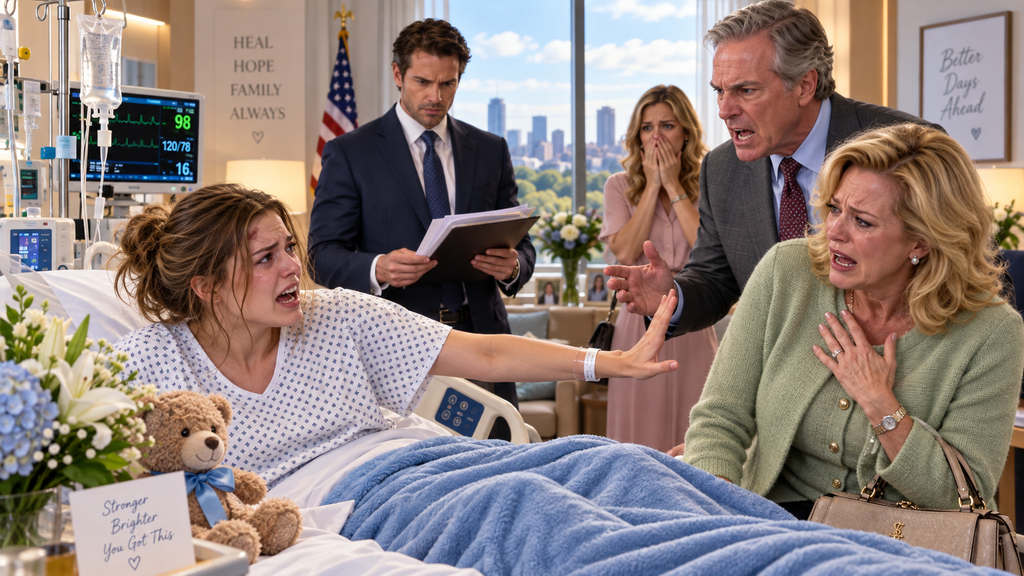
My mother stood beside my hospital bed with her hand still half extended toward me. For most of my life, that hand had been enough. One touch on my shoulder.
One exhausted sigh.
One quiet, “Miranda, please don’t make this harder.”
And somehow I would become the unreasonable one.
I would apologize.
I would pay.
I would rearrange my plans.
I would swallow whatever hurt I was carrying because Lauren needed something more important.
But that night, I looked at my mother’s hand and felt nothing pulling me toward it.
No guilt.
No responsibility.
No desperate little-girl hope that maybe this time she had finally chosen me.
I turned my face toward Julian.
“Are we finished?”
He understood the question immediately.
“With the documents?”
“Yes.”
“We’re finished.”
My father scoffed.
“No, you’re not.”
Julian looked at him.
My father stepped farther into the room.
“You think because she signed a few pieces of paper while she’s lying in a hospital bed that this is over?”
Julian’s voice stayed calm.
“She signed legally enforceable documents while evaluated as alert, competent, and capable of making independent decisions.”
Dad’s jaw tightened.
“I wasn’t talking to you.”
“You were questioning my client’s legal decisions,” Julian replied. “That makes it my business.”
Lauren gave an irritated laugh.
“This is ridiculous.”
She crossed her arms.
“Miranda, what do you even want? Do you want us to beg? Is that it?”
I stared at her.
My sister.
Thirty-four years old.
Beautiful.
Healthy.
Standing in an intensive-care room complaining about humiliation because I had finally stopped financing her life.
I almost envied her.
Not because she had received more love.
But because she had never once needed to wonder whether she deserved it.
She had spent her whole life believing love was something that arrived automatically.
For me, love had always felt like a performance review.
Be useful.
Be successful.
Don’t complain.
Cover the bill.
Fix the problem.
Then maybe someone would remember to call you.
“I don’t want you to beg,” I said.
Lauren shook her head.
“Then what?”
“I wanted you to answer the phone.”
The words landed harder than shouting could have.
Her expression changed.
Only slightly.
But I saw it.
For one second, beneath the anger and entitlement, Lauren looked uncomfortable.
Then Mom stepped between us.
“She didn’t know.”
“Yes, she did.”
“Miranda—”
“She knew.”
I turned my head toward Lauren.
“You saw the family group chat.”
Lauren looked away.
“You knew there had been an accident.”
Silence.
“You knew I had surgery.”
Still nothing.
“You knew Mom and Dad’s phones were ringing all afternoon.”
Lauren’s eyes finally met mine.
“I assumed if it were really serious, someone would call again.”
Nine calls.
I closed my eyes.
Something inside me finally stopped hurting.
Not because I had forgiven them.
Because the truth had become too obvious to argue with.
People who love you do not need ten emergencies before they care.
I opened my eyes again.
“You’re right.”
Lauren blinked.
“What?”
“If it were really serious, someone would call again.”
My voice was barely above a whisper.
“They did.”
Her face went pale.
“The hospital called.”
Mom shifted beside me.
“Miranda—”
“They called you at 11:18.”
I looked at Mom.
“Then I called.”
Dad stared at the floor.
“Then I called again.”
My eyes moved to him.
“And again.”
I swallowed against the dryness in my throat.
“And again.”
Nobody interrupted now.
“By the ninth call, I wasn’t trying to tell you I was hurt anymore.”
Mom’s lips parted.
“I was trying to find out whether I mattered.”
She looked as if I had slapped her.
I continued.
“And you answered me.”
Tears began filling her eyes.
“Sweetheart—”
“Don’t.”
My voice cracked.
That was the first time all evening it had.
It embarrassed me.
I hated that my body could still betray me by showing how badly they had hurt me.
But then Marisol stepped closer to the bed.
She didn’t touch me.
She simply stood there.
And somehow that gave me enough strength to continue.
“You answered me when you chose throw pillows over a hospital room.”
Mom began crying.
Not quietly.
Not elegantly.
Her face crumpled and she pressed a trembling hand to her mouth.
For thirty-five years, her tears had been a weapon I never knew how to fight.
When I was twelve and begged her to attend my piano recital, she cried because Lauren had a fever and accused me of making her feel like a terrible mother.
When I was seventeen and asked why Dad had missed my scholarship ceremony, Mom cried because I “didn’t understand how difficult parenting two daughters could be.”
When I was twenty-four and refused to pay Lauren’s credit-card debt for the second time, Mom cried until I transferred the money.
Tears had always meant I surrendered.
Not anymore.
“I’m sorry,” she whispered.
I looked at her.
“Are you?”
“Yes.”
“You haven’t asked what happened to me.”
Her crying stopped.
The sentence seemed to strike her physically.
“What?”
“You’ve been in this room for almost fifteen minutes.”
I gestured weakly toward the IV.
“The first thing Dad asked was why Julian was here.”
My father stiffened.
“The first thing Lauren did was defend herself.”
Lauren’s mouth opened.
“And you,” I said to Mom, “asked what I changed.”
My mother stared at me.
“You haven’t asked what the doctors said.”
Her face drained.
“You haven’t asked how badly I was hurt.”
No one moved.
“You haven’t even asked whether I’m going to be okay.”
That silence was different.
It wasn’t hostile.
It wasn’t angry.
It was exposure.
The kind that happens when people suddenly hear themselves exactly as they are.
Mom lowered herself into the visitor’s chair.
“What did the doctors say?”
I laughed once.
A tiny sound.
It hurt my ribs.
“That question doesn’t mean anything now.”
“Please.”
“No.”
Her eyes filled again.
“Miranda.”
I turned toward Marisol.
“I’m tired.”
She understood immediately.
“Visiting hours in this unit are limited anyway.”
Dad stared at her.
“We just got here.”
Marisol stepped forward.
“And the patient needs rest.”
“I’m her father.”
“She is an adult patient who has requested rest.”
Dad’s face darkened.
“Do you know who I am?”
Marisol’s expression didn’t change.
“Yes.”
That surprised him.
Then she added,
“You’re the emergency contact who didn’t respond.”
Lauren looked at the floor.
I almost smiled.
Marisol walked toward the door.
“I’m going to ask all three of you to leave.”
Mom stood immediately.
“No. Please.”
She came closer to me.
“Miranda, we’ll come back tomorrow.”
I looked at her.
“Don’t.”
Her face collapsed again.
“Please don’t say that.”
“I don’t want visitors.”
“You’re angry.”
“Yes.”
“We’re family.”
I stared at her for a long moment.
“So was I.”
Mom stopped breathing for a second.
I saw it.
Her chest rose but didn’t fall.
And suddenly I wasn’t in the hospital anymore.
I was eight years old, standing behind a curtain at a school auditorium.
My class was performing a little spring concert.
I had one line.
Seven words.
I had practiced it for three weeks.
Mom promised she would be there.
Dad promised too.
I remember looking over the crowd again and again while other children waved to their parents.
The teacher finally whispered, “Miranda, sweetheart, we have to begin.”
I said my seven words.
I smiled.
I bowed.
Nobody was there for me.
Afterward, I sat on the school steps in my yellow dress with my teacher until Dad finally arrived forty minutes late.
Lauren had wanted ice cream.
She’d thrown a tantrum.
They had taken her.
Mom said I was old enough to understand.
Lauren was five.
I was eight.
That became the pattern.
I was always old enough to understand.
At ten.
At fifteen.
At twenty-two.
At thirty-five.
Miranda could understand.
Miranda was strong.
Miranda didn’t need as much.
Miranda could wait.
Until one day Miranda nearly died, and they assumed she could wait then too.
Dad moved toward the door.
“Come on, Linda.”
Mom stared at him.
“That’s it?”
“What do you want me to do?”
“Our daughter is lying in a hospital bed.”
“I can see that.”
“And she’s asking us to leave.”
“Because she’s throwing a tantrum.”
Something inside the room changed.
Julian slowly looked at my father.
Lauren whispered,
“Dad.”
But he was already angry enough to keep going.
“This family has bent over backward for you, Miranda. And the minute we miss a few phone calls, you decide to punish everyone financially.”
I stared at him.
He had finally said it.
Not concern.
Not fear.
Money.
He continued.
“You think writing checks gives you the right to hold everyone hostage?”
I felt Julian shift beside the window.
He was waiting for me.
Not to rescue me.
To see what I wanted.
That mattered.
So I answered my father myself.
“You’re absolutely right.”
He frowned.
I nodded slowly.
“You’re right about something for the first time tonight.”
Dad folded his arms.
“I never should have used money to hold this family together.”
His expression changed.
“I should have stopped years ago.”
“That isn’t what I said.”
“I know.”
I looked toward Julian.
“Tomorrow morning, terminate every voluntary payment I make on their behalf.”
Mom gasped.
Dad stepped forward.
“Miranda.”
I continued.
“The mortgage assistance.”
Julian nodded.
“The lake-house taxes.”
Another nod.
“The vehicle insurance.”
Mom whispered,
“Please.”
“The country-club dues.”
Dad’s face went red.
“The travel account.”
Lauren suddenly spoke.
“What about my house?”
I turned toward her.
There it was.
Of course.
Her house.
“My house closing had conditions,” she said. “You said you were handling the second payment.”
I held her gaze.
“I was.”
Her expression sharpened.
“You can’t just back out.”
Julian answered.
“If Ms. Caldwell made no contractual commitment to you, she can.”
Lauren looked at me.
“But you promised.”
For a moment, I couldn’t believe she had said it.
Then I remembered who she was.
“You promised.”
Her voice rose.
“I bought that place because you said you’d cover part of the down payment.”
“And I got into the car yesterday because Mom promised she’d meet me for lunch after my appointment.”
Mom flinched.
“You didn’t come.”
She looked confused.
Then I saw recognition.
My mother had forgotten.
Of course she had.
My accident had happened while I was driving away from a restaurant after waiting forty-five minutes for her.
She had texted at the last minute.
Lauren needs help picking paint colors. Rain check?
I had stared at the message at a red light.
Then the light had turned green.
Three intersections later, a delivery truck ran the red.
I had never blamed Mom for the accident.
She hadn’t caused it.
But standing in that hospital room, I realized something else.
Even before I nearly died, she had already chosen Lauren that day.
Mom covered her mouth.
“Oh, Miranda.”
“That’s where I was coming from.”
My father closed his eyes.
“The restaurant.”
“Yes.”
“I didn’t know.”
“You didn’t ask.”
Silence.
Again.
Always silence once there was nothing left to defend.
Finally, Dad looked at Julian.
“She’s emotional.”
Julian’s voice went cold.
“She is allowed to be emotional.”
“She nearly died yesterday.”
“Correct.”
“So you let her make major financial decisions?”
“No.”
Dad looked confused.
Julian continued.
“I advised her of the consequences. I asked whether she wanted additional time. I ensured she understood every document she signed. And then I respected her decision.”
He paused.
“You might try it sometime.”
Dad’s cheeks reddened.
“You son of a—”
Marisol stepped between him and the bed.
“That’s enough.”
Dad pointed toward Julian.
“This man has manipulated her.”
“No,” I said.
Everyone looked at me.
“I called him.”
Dad shook his head.
“You’ll regret this.”
Maybe once, that threat would have terrified me.
Not because I believed he would hurt me.
Because I feared being cut off emotionally.
I had spent decades doing everything possible to avoid exactly that.
Then I realized something so simple that I almost laughed.
You cannot be afraid of losing something you never truly had.
“I already have regrets,” I said.
Dad’s face softened slightly.
Perhaps he thought I meant the documents.
I looked straight into his eyes.
“I regret every year I spent buying a place in this family.”
He went still.
“I regret paying off your mortgage when you were perfectly capable of downsizing.”
Mom lowered her eyes.
“I regret buying Lauren a car after she totaled hers texting.”
Lauren muttered,
“That was an accident.”
“I regret funding the lake house because Mom said it would give us somewhere to be together.”
I smiled sadly.
“You know how many weekends I spent there last year?”
Nobody answered.
“Two.”
I looked at Mom.
“You invited Lauren seventeen times.”
Her face folded.
“You work so much.”
“Because someone had to earn the money everyone was spending.”
Dad looked away.
That one got through.
Good.
“I regret setting up education accounts for children Lauren doesn’t even have yet while she never once remembered my company anniversary.”
Lauren stared at me.
“What does your company anniversary have to do with anything?”
“Nothing.”
I smiled.
“That’s the point.”
It was never one birthday.
One recital.
One dinner.
One hospital call.
It was a lifetime of tiny moments that all said the same thing.
You are useful.
But you are not precious.
And for the first time, I finally believed them.
Not the part about me.
The part about them.
They had shown me who they were.
I was simply finished arguing with the evidence.
Marisol opened the door.
“You need to leave now.”
Mom took one step toward me.
“Miranda, please.”
My voice softened.
Not because I was forgiving her.
Because I was tired.
“Go home, Mom.”
She started crying again.
I closed my eyes.
This time, I didn’t watch.
I heard footsteps.
Lauren complaining quietly.
Dad saying something under his breath.
Then the door clicked shut.
For several seconds, nobody spoke.
I opened my eyes.
Julian stood beside the window.
Marisol checked my IV.
And suddenly the room felt enormous.
My throat tightened.
“I thought I’d feel better.”
Julian came closer.
“About what?”
“Doing it.”
He knew what I meant.
“The will?”
“Everything.”
A tear slipped sideways into my hair.
“I thought there would be some big moment where I felt powerful.”
Marisol pulled a tissue from the box and handed it to me.
Instead of wiping my tears herself, she let me take it.
I liked that.
I dabbed my face.
“I just feel tired.”
Julian nodded.
“That’s normal.”
I looked at him.
“You don’t have to lawyer everything.”
The corner of his mouth lifted.
“That wasn’t legal advice.”
Another tear fell.
“I almost died.”
His expression softened.
“Yes.”
“And they didn’t come.”
“No.”
That was when I finally cried.
Not like my mother cried.
Not loudly.
Not theatrically.
There was no audience left to manipulate.
I cried the way people cry when the truth finally reaches the deepest place inside them.
Quietly.
Helplessly.
My shoulders shook.
Every movement hurt.
Marisol stayed beside me.
Julian sat in the chair near the window.
Neither told me everything would be okay.
Neither insulted me with promises.
They simply stayed.
And somehow two people who were not related to me gave me the first thing I had asked my family for all day.
Presence.
I woke shortly after five the next morning.
For a few seconds, I didn’t remember where I was.
The room was dim.
The machines glowed softly.
Rain whispered against the window.
My mouth tasted metallic and dry.
Then everything came back.
The truck.
Surgery.
Nine calls.
My family.
Julian.
The documents.
I turned my head toward the visitor’s chair.
Someone was sitting there.
I froze.
Then the figure leaned forward.
“Hey.”
My breath caught.
“Naomi?”
She smiled tiredly.
Dr. Naomi Brooks.
My best friend since we were nineteen years old and terrified freshmen sharing a dorm room with broken air conditioning.
We had survived exams, bad boyfriends, graduate school, my first failed startup, her residency, my divorce, and the year her father died.
She lived in Seattle now.
The hospital was in Boston.
I stared at her.
“What are you doing here?”
She looked offended.
“You nearly die one time and suddenly I need an appointment?”
“How did you—”
“Julian.”
I closed my eyes.
“Of course.”
“He called around midnight.”
“You flew across the country?”
“The first flight with seats left.”
I looked toward the clock.
“You just got here?”
“Twenty minutes ago.”
“You have surgery on Thursday.”
“I moved it.”
“You can’t just move—”
“My patient is fine. Another surgeon is covering.”
She leaned back.
“And unlike your family, I understand the difference between an inconvenience and an emergency.”
I started crying.
Again.
Naomi stood immediately.
“Oh no.”
She took my hand.
“Hey.”
“I’m sorry.”
“Don’t apologize.”
“This is so stupid.”
“No.”
“I just—”
My voice broke.
“You came.”
Her face changed.
Of course she understood.
Naomi always understood the sentence underneath the sentence.
She squeezed my hand.
“Miranda.”
I looked at her.
“You called me at three in the morning nine years ago because my dad died.”
I remembered.
“You sat on the phone with me until sunrise.”
“That was different.”
“No.”
She shook her head.
“That’s what family is supposed to look like.”
I turned away.
Fresh tears slipped down my cheeks.
“I don’t think I know what family is supposed to look like.”
Naomi squeezed my fingers again.
“Then maybe it’s time you stop letting biology write the definition.”
That sentence stayed with me.
Long after she said it.
Long after breakfast trays arrived.
Long after the surgeon came in and told me I was recovering better than expected.
Long after Marisol finished her shift and whispered, “You scared me yesterday,” before heading home.
Maybe it was time I stopped letting biology write the definition.
My parents did not obey my request.
At 9:12 that morning, security stopped them at the ICU entrance.
Dad demanded to see me.
Mom cried.
Lauren apparently told a security officer she was “basically Miranda’s next of kin.”
She wasn’t.
Not anymore.
At 9:26, Julian called me.
“They’re downstairs.”
“I know.”
“Do you want them escorted off the property?”
I hesitated.
Naomi sat near the window drinking terrible hospital coffee.
She didn’t give me advice.
She waited.
I stared at the ceiling.
“No.”
Julian paused.
“No?”
“Let them wait.”
“For what?”
“For nothing.”
He was silent for a moment.
Then I heard the faint smile in his voice.
“Understood.”
They waited almost three hours.
At noon, my father texted.
We need to talk like adults.
At 12:07:
Your mother is devastated.
At 12:18:
Lauren has financial commitments based on promises you made.
At 12:31:
This has gone far enough.
At 12:46:
Call me immediately.
Not once:
How are you feeling?
Not once:
Are you in pain?
Not once:
What do you need?
Naomi watched my face as I read the messages.
“You know you can turn that thing off.”
“I know.”
“Why don’t you?”
I thought about it.
“Because part of me keeps thinking the next message will be different.”
Naomi didn’t look surprised.
“Will it?”
“No.”
“Then stop waiting for the message you deserved thirty years ago.”
I powered the phone off.
The silence afterward felt terrifying.
Then peaceful.
Three days later, I left intensive care.
A week after that, I left the hospital.
My parents never saw me.
They sent flowers.
Huge flowers.
White roses.
Lilies.
Orchids.
The arrangement was so large that two hospital employees had to carry it.
There was a card.
We love you more than money.
Mom and Dad.
I stared at those words for a long time.
Then I handed the card to Naomi.
She read it.
“Oh.”
“Exactly.”
“What do you want to do with the flowers?”
I looked toward the nurses’ station.
“Give them to every room on this floor that doesn’t have visitors.”
Naomi smiled.
“I like that.”
The nurses divided the arrangement into smaller bouquets.
One went to an elderly man recovering from heart surgery.
One went to a woman whose children lived overseas.
One went to a nineteen-year-old college student who had been injured in a cycling accident.
One small vase stayed beside Marisol’s station.
That felt right.
My family’s grand gesture became something useful.
For once.
I moved into a rehabilitation facility for twelve days before going home.
During that time, Julian did exactly what I had asked.
The automatic mortgage payment to my parents stopped.
Their vehicle leases transferred back into their names.
The lake-house tax account was closed.
The monthly allowance I had deposited into Mom’s account disappeared.
Lauren’s remaining home assistance vanished.
Her furniture account was canceled.
The private family credit card I had paid for years was closed.
The country-club membership ended.
Dad noticed every single one.
On the second day, he sent me an email with the subject line:
ENOUGH.
I didn’t open it.
On the third day, Mom left a fourteen-minute voicemail.
I deleted it after twenty seconds.
On the fourth day, Lauren texted Naomi.
Naomi showed me because the message made her laugh.
Please tell Miranda she is putting my marriage under serious pressure.
I read it twice.
Then typed:
I’m sorry your marriage depended on my bank account.
Naomi raised an eyebrow.
“You sending that?”
I thought about it.
Then deleted it.
“No.”
“Why?”
“Because I’m trying to stop participating.”
And that was harder than revenge.
Revenge still tied me to them.
Every reaction meant I was waiting for theirs.
Every argument meant I was still hoping to win a case they had spent decades refusing to hear.
I didn’t want to defeat my family.
I wanted to stop orbiting them.
So I said nothing.
When I finally returned to my apartment, I stood inside the front doorway for a long time.
The last time I had been there, I was healthy.
I had been wearing heels.
I had been angry because Mom canceled lunch.
There had been an unopened package on the counter and three emails I planned to answer after dinner.
Now I entered slowly with a cane and a surgical scar beneath my clothes.
Naomi carried my bag.
My assistant, Theo, had stocked the refrigerator.
Someone from my company had left fresh flowers on the dining table.
Not expensive ones.
Daisies and sunflowers.
The card said:
Take your time. We’ve got things covered.
—Your team.
I touched the card.
“What?” Naomi asked.
“Nothing.”
I smiled.
“It’s just strange.”
“What is?”
“I spent years thinking people only stayed if I was useful.”
She looked around the apartment.
“And?”
“Apparently some people stay because they love you.”
Naomi leaned against the counter.
“Terrifying, isn’t it?”
I laughed.
It hurt.
But less than before.
My recovery took months.
The physical part was almost easier.
Walk farther.
Lift more.
Breathe deeper.
Eat.
Sleep.
Take the medication.
Attend the appointment.
Bodies hurt honestly.
They don’t tell you nothing happened.
They don’t accuse you of being dramatic.
They don’t rewrite history.
Pain enters the room and says exactly what it is.
Family pain is different.
It whispers.
Maybe you imagined it.
Maybe they did their best.
Maybe you expected too much.
Maybe you should call.
Maybe you should apologize.
Some nights, I would wake at two in the morning and almost text Mom.
Not because I had changed my mind.
Because loneliness can impersonate forgiveness when the room is dark enough.
I would pick up my phone.
Then remember nine calls.
And put it down.
Six weeks after the accident, Julian came to my apartment.
He brought a stack of documents.
And bagels.
“Which one is the bribe?” I asked.
“The bagels.”
“Obviously.”
We sat at my dining table.
My walking cane leaned beside the chair.
I had lost twelve pounds.
My scar still pulled when I moved too quickly.
But I was alive.
Julian opened a folder.
“There’s one question we didn’t settle at the hospital.”
“The lake house?”
“No.”
He looked at me.
“Your estate.”
“I changed it.”
“You removed them.”
“Yes.”
“That tells me where you don’t want the money to go.”
He paused.
“Not where you do.”
I looked toward the windows.
Below us, Boston moved beneath a cold gray sky.
People crossed intersections.
Buses stopped.
Dogs pulled impatiently against leashes.
Everyone carrying some invisible story.
“What happens if I do nothing?”
“Most of your existing charitable designations remain. The remainder is distributed according to the revised trust structure we established.”
“And if I want to change it?”
“You can.”
I thought about the hospital.
About the flowers.
About Marisol.
About the eighteen-year-old CNA who brought me ice chips at two in the morning.
About Naomi flying across the country.
About the woman in the room next to mine whose husband slept in a chair every night and brushed her hair each morning because she couldn’t lift her arms.
Family.
Not biology.
Presence.
“What would it take to create something for patients who don’t have anyone?”
Julian leaned back.
“What kind of something?”
“I don’t know.”
I frowned.
“Transportation after discharge. Temporary home care. Someone to sit with them. Emergency contacts. Advocates.”
I stared at my hands.
“When I woke up after surgery, I was surrounded by excellent medical professionals.”
My voice softened.
“But I was terrified.”
Julian said nothing.
“What happens to the people who don’t have a Naomi?”
He nodded slowly.
“We can build something.”
“How much?”
“That depends on how large you want it.”
I looked at him.
“Large.”
That was how the Caldwell Patient Support Foundation began.
Not because I wanted my name on a building.
I specifically prohibited that.
I wanted a program that answered the phone.
That became our first rule.
Every patient enrolled in the emergency-support network would have access to a real person.
Twenty-four hours a day.
Seven days a week.
Not a voicemail maze.
Not a website.
A human being.
Someone answers.
Those two words became the foundation’s motto.
Three months after my accident, I returned to work.
My employees applauded when I stepped off the elevator.
I immediately started crying.
They pretended not to notice.
Which made me cry harder.
Theo hugged me carefully.
“You’re impossible,” I whispered.
“You’re late.”
“I own the company.”
“You sold most of it.”
“Details.”
He handed me a coffee.
Black.
Exactly how I liked it.
I stood inside the office I had built from nothing.
My company had started twelve years earlier with one borrowed desk, two programmers, and a prototype that crashed every eleven minutes.
My parents had called it risky.
Lauren had called it boring.
Dad told me I would eventually need to “find something stable.”
When I sold controlling interest, the deal had made me wealthier than anyone in my family imagined.
Dad suddenly started introducing me as “our brilliant daughter.”
Mom began telling friends she had always known I would succeed.
Lauren posted an old childhood photo of us online with the caption:
My genius sister. So proud.
I had believed that success finally made me visible.
Now I understood something uglier.
It made me valuable.
Those are not the same thing.
My father arrived at my office at 3:20 that afternoon.
No appointment.
No warning.
Security called upstairs.
“Ms. Caldwell, there’s a Robert Caldwell in the lobby.”
I looked through the glass wall of my office.
Theo noticed my expression.
“Want me to handle it?”
My first instinct was yes.
Then something else replaced it.
“No.”
I stood.
My legs were stronger now.
No cane.
No assistance.
“I’ll go down.”
Dad was standing beside reception when the elevator opened.
He looked older.
Not dramatically.
But enough.
His hair was grayer around the temples.
His favorite expensive watch was missing.
He wore a plain navy jacket.
For a strange second, I wanted to hug him.
That reflex stunned me.
Thirty-five years of being someone’s daughter doesn’t disappear because you finally understand them.
Dad saw me.
His eyes moved over my face.
Down to the slight stiffness in my walk.
Back up.
“You look better.”
“Thank you.”
“I’ve been trying to reach you.”
“I know.”
“Can we talk?”
I glanced toward the lobby seating area.
“No.”
His eyebrows lifted.
“You came all the way downstairs to say no?”
“I came downstairs because I don’t want you causing trouble for my employees.”
His mouth tightened.
“I’m not here to cause trouble.”
“What are you here for?”
He glanced toward the receptionist.
“Privately.”
“No.”
“Miranda.”
“What do you need?”
He looked at me for several seconds.
Then his shoulders lowered.
“Your mother is not doing well.”
There it was.
The old hook.
Guilt entered my body before thought could stop it.
“What’s wrong?”
“She barely sleeps.”
“That isn’t what I mean. Is she medically ill?”
Dad hesitated.
“No.”
I almost smiled.
“Then don’t phrase it like she is.”
“She’s heartbroken.”
“So was I.”
“This has gone on long enough.”
“For you?”
“For everyone.”
I folded my arms.
“What do you want?”
He looked offended.
“I want my family back.”
I studied him.
“Which part?”
“What?”
“The daughter part or the financial part?”
His jaw moved.
“That’s unfair.”
“Then answer.”
“I don’t care about your money.”
“Great.”
His eyes narrowed.
I continued.
“That should make this easier.”
He exhaled sharply.
“Your mother and I have had to put the lake house on the market.”
“I heard.”
“You heard?”
“Julian mentioned it.”
Dad laughed bitterly.
“Of course he did.”
“It isn’t my house.”
“You paid for half of it.”
“I helped with the purchase, taxes, maintenance, insurance, renovations, dock replacement, roof, and property manager.”
Dad’s expression changed.
“So closer to seventy percent.”
He looked away.
“The market isn’t good.”
“That’s unfortunate.”
“And the mortgage payment—”
“Is yours.”
“You know our retirement plan was based on—”
“Me.”
Dad stopped.
I nodded.
“Say it.”
His eyes hardened.
“No.”
“You built your retirement around your daughter continuing to subsidize you.”
“We’re your parents.”
“Yes.”
“We raised you.”
“Yes.”
“We paid for food. Clothes. School.”
My chest tightened.
I had heard versions of this before.
I stayed quiet.
Dad continued.
“You don’t erase thirty-five years because of one bad day.”
And there it was.
The sentence I had been waiting for.
Not intentionally.
But somewhere inside me I had known one of them would eventually say it.
I took a slow breath.
“This wasn’t one bad day.”
Dad rubbed his forehead.
“Here we go.”
“No.”
I stepped closer.
“You wanted to talk. So listen.”
His hand dropped.
“When I was eight, you missed my spring concert because Lauren wanted ice cream.”
He sighed.
“Miranda, I don’t remember something that happened twenty-seven years ago.”
“I do.”
“That’s my point. You keep records of every grievance.”
“When I was thirteen, you left my birthday dinner early because Lauren wanted to sleep at Madison Burke’s house and needed a ride.”
“She was a child.”
“So was I.”
Dad looked away.
“When I was seventeen, you missed my scholarship ceremony.”
“I had work.”
“No. You were taking Lauren to a dance competition in Hartford.”
His face changed.
He remembered that one.
“I asked you to come.”
“Your mother was there.”
“No, she wasn’t.”
He frowned.
“She was supposed to be.”
“She left before my name was called because Lauren forgot her costume bag.”
Dad said nothing.
“When I graduated college, you spent half the dinner talking about Lauren’s new boyfriend.”
“That’s ridiculous.”
“I remember because the waiter congratulated me more times than you did.”
His cheeks flushed.
“When I launched my company, you told me to keep my résumé updated because the business would probably fail.”
“I was trying to protect you.”
“When I sold it, suddenly you told everyone you encouraged me.”
Silence.
“When I got divorced, Mom said not to talk about it at Christmas because Lauren had just gotten engaged and she didn’t want anything ruining the mood.”
Dad stared at me.
“You think we didn’t love you?”
I felt tears threaten.
I refused to look away.
“I think you loved me in the way people love the bridge they drive across every morning.”
His face went still.
“You depended on it.”
My voice broke.
“You expected it to hold your weight.”
I wiped one tear quickly.
“But nobody thanks a bridge.”
Dad looked as though I had hit him.
For once, I didn’t soften the truth.
“I was useful to you.”
“That is not true.”
“Then why did it take losing access to my money for you to show up at my office?”
“I’m trying to save this family.”
“You had a chance to save it.”
“When?”
I looked straight at him.
“Call number one.”
He stopped talking.
The lobby felt strangely quiet.
Behind the reception desk, someone pretended to concentrate very hard on a computer screen.
Dad swallowed.
“That’s cruel.”
“No.”
My voice softened.
“That’s the part you still don’t understand.”
I stepped back.
“What happened in the hospital wasn’t revenge.”
He gave a humorless laugh.
“Really?”
“No.”
“It was boundaries.”
“You took away everything.”
“No.”
I shook my head.
“I stopped giving.”
Dad stared at me.
“There’s a difference.”
He opened his mouth.
Then closed it.
I continued.
“Your house is still yours.”
“You have retirement accounts.”
“You have income.”
“You have cars.”
“You have your health.”
“You have each other.”
I paused.
“What you don’t have anymore is access to my money.”
Dad’s eyes hardened.
“And apparently that feels like I destroyed your life.”
I let the silence sit between us.
“Think about what that says.”
He said nothing.
Finally, he looked toward the elevator.
“I don’t know who you are anymore.”
The sentence hurt more than I expected.
But I smiled sadly.
“That makes two of us.”
He looked at me again.
Then left.
I watched the elevator doors close behind him.
My knees began trembling the second he disappeared.
Theo came out from behind the glass doors.
“You okay?”
“No.”
He nodded.
“Want coffee?”
“Yes.”
“Good.”
He turned toward the office.
Then looked back.
“For what it’s worth…”
I waited.
“That bridge line was brutal.”
I laughed.
Actually laughed.
“Go away, Theo.”
“Yes, boss.”
Lauren lasted another three weeks before she appeared.
Unlike Dad, she didn’t come to my office.
She came to my apartment.
At eight in the morning.
I opened the door wearing pajamas.
She stood in the hallway looking exhausted.
No makeup.
Hair pulled into a messy knot.
For the first time in years, she looked like the little sister I remembered.
Not polished.
Not curated.
Not posing beside the white kitchen she thought proved she had won some invisible competition.
“Can I come in?”
“No.”
Her mouth tightened.
“Of course.”
“What do you need?”
“Why does everyone keep asking me what I need?”
I stared at her.
“You showed up uninvited at my home after I stopped speaking to you.”
She looked away.
“Fair.”
That surprised me.
Lauren leaned against the hallway wall.
“Eric left.”
Her husband.
I blinked.
“What?”
“He’s staying at a hotel.”
“Why?”
She laughed without humor.
“Money.”
Of course.
“What happened?”
“He thought the house assistance was guaranteed.”
“It wasn’t.”
“I know that now.”
She looked exhausted.
“We overextended.”
“How badly?”
Her eyes filled with tears.
I felt the old reflex immediately.
Fix it.
Transfer money.
Call Julian.
Rescue Lauren.
My stomach tightened.
I gripped the doorframe.
Lauren noticed.
And for once, she seemed ashamed.
“I’m not asking you for money.”
I said nothing.
She swallowed.
“Actually, that’s a lie.”
I almost laughed.
She wiped her face.
“I came here planning to ask.”
“At least you’re honest.”
“I rehearsed this whole speech in the car.”
“What speech?”
“How you promised. How it isn’t fair. How you’re punishing my children.”
“You don’t have children.”
“I know.”
She laughed through tears.
“It was a really manipulative speech.”
That almost sounded like self-awareness.
Almost.
“What changed?”
“I sat in the parking garage for forty minutes.”
She looked at me.
“And I remembered the hospital.”
I stiffened.
“I remembered what you said.”
She took a breath.
“That you wanted us to answer the phone.”
I looked away.
“Lauren—”
“No.”
Her voice cracked.
“Please.”
For the first time in our adult lives, my sister did not interrupt me to defend herself.
She interrupted me to stop herself from escaping.
“I need to say this.”
So I waited.
Lauren stared at the floor.
“When Mom got the first call, I heard her phone.”
My heart slowed.
“She looked at it and said it was probably the hospital doing paperwork.”
I said nothing.
“Then Dad’s phone rang.”
Her voice became smaller.
“He checked the number and said he’d call back after we finished moving the dining table.”
I closed my eyes.
Lauren continued.
“Then the family chat started.”
My throat tightened.
“You knew.”
“Yes.”
My eyes opened.
“I told myself you were fine.”
“Why?”
“Because…”
She stopped.
Tears rolled down her face.
“Because if you weren’t fine, then they would leave.”
There it was.
A truth so ugly neither of us had ever said it.
Lauren had not only benefited from being chosen.
She had been terrified of what would happen if she stopped being the one chosen.
She wiped her cheeks.
“I wanted them there.”
I stared at her.
“I wanted Mom arranging my kitchen.”
Her voice trembled.
“I wanted Dad carrying boxes.”
She laughed bitterly.
“It sounds so stupid now.”
“Yes.”
“I know.”
Her face crumpled.
“And every time your phone rang, I thought if I acknowledged that something serious might be happening, my day would stop being about me.”
I felt something tear open inside me.
Not new pain.
Old pain finally given a name.
“I hate you for that.”
Lauren nodded.
“I know.”
“I hate that you let them stay.”
“I know.”
“I could have died.”
Her shoulders shook.
“I know.”
“No, you don’t.”
My voice rose.
“You don’t know what it was like.”
She covered her mouth.
“I was lying there wondering whether I would wake up again.”
“I know.”
“No.”
I stepped into the hallway.
“You were posting videos.”
Lauren cried harder.
“I know.”
“Stop saying that!”
The words exploded out of me.
A neighbor’s door opened down the hall.
Then closed again.
I didn’t care.
“You do not know.”
Lauren stared at me.
“I woke up from surgery alone.”
My voice broke.
“I asked the nurse whether anybody had come.”
I wiped my face angrily.
“She said no.”
Lauren was sobbing now.
“And then I saw your video.”
“I’m sorry.”
“I saw Mom fluffing your stupid pillows.”
“I know.”
“And Dad carrying your lamp.”
“I know.”
“And all three of you smiling.”
“I’m sorry.”
“I could hear machines keeping track of whether my heart was still beating while my family was smiling for your camera!”
Lauren slid down the wall.
Literally.
Her knees buckled and she sat on the hallway floor.
I stood over her trembling.
Part of me wanted to keep going.
To give her every ounce of pain she had helped create.
Then I realized she was doing something I had never seen Lauren do.
She wasn’t defending herself.
She wasn’t blaming Mom.
She wasn’t blaming Dad.
She wasn’t blaming me.
She was sitting in the consequences.
So I stopped.
Not for her.
For me.
Lauren wiped her nose with the sleeve of her sweater.
“I’ve been jealous of you my whole life.”
I stared at her.
That was so absurd I almost shut the door.
“Don’t.”
“I’m serious.”
“You were always the favorite.”
“I know.”
She laughed bitterly.
“That was the problem.”
I frowned.
She looked up at me.
“You were good at everything.”
“That isn’t true.”
“You got scholarships.”
“So?”
“You built a company.”
“You could have built your own life.”
“I never had to.”
The hallway went still.
Lauren looked down.
“Every time I failed, Mom fixed it.”
She twisted her wedding ring.
“When I got bad grades, she called the teacher.”
“When I dropped out of college the first time, Dad blamed the school.”
“When I maxed out the card, you paid it.”
My stomach tightened.
“When I crashed the car, they bought another one.”
She nodded.
“When Eric said we couldn’t afford the Ridgefield house, Mom said you’d help.”
I stared at her.
“She said that?”
Lauren nodded.
“She said you always did.”
Of course she did.
Lauren looked up at me.
“I hated you because you didn’t need them.”
I almost laughed.
“You think I didn’t need our parents?”
“No.”
She shook her head.
“I mean… you knew how to survive without them.”
A tear rolled down her cheek.
“I never learned.”
I leaned against my doorway.
For the first time, I saw the shape of the damage from the other side.
Our parents had neglected me by demanding independence.
They had damaged Lauren by preventing it.
I had learned that love must be earned through usefulness.
Lauren had learned that love meant someone would always rescue her.
Neither lesson was love.
But understanding damage did not erase responsibility.
“What do you want from me?” I asked.
Lauren took a long time to answer.
“I don’t know.”
“Money?”
“No.”
She looked miserable.
“Maybe.”
I raised an eyebrow.
She laughed weakly.
“God, I hate myself right now.”
“That sounds like something to discuss with a therapist.”
“I started seeing one.”
That surprised me.
“When?”
“Two weeks ago.”
“Why?”
“Eric said he won’t come home unless I change.”
I almost rolled my eyes.
Then she added,
“But I’m not doing it for him anymore.”
I waited.
She looked toward the elevator.
“I don’t know if you’ll ever forgive me.”
“I don’t know either.”
“I don’t know if we’ll ever be sisters again.”
That hurt.
More than I wanted it to.
“But I’m selling the house.”
I blinked.
“What?”
“We can’t afford it.”
She stood slowly.
“I’m going back to work full-time.”
“You have a job?”
She gave me a look.
“I’m spoiled, not completely unemployed.”
Despite myself, I smiled.
She saw it.
For one second, we were twelve and nine again.
Then the moment disappeared.
Lauren took a breath.
“I’m not asking you to fix anything.”
“Good.”
“I just wanted to tell you I’m sorry.”
She looked directly at me.
“Not because you cut me off.”
Her voice shook.
“I’m sorry because when you needed me, I chose myself.”
Something inside me softened.
Not forgiveness.
Not yet.
But maybe the locked door inside me moved half an inch.
I nodded.
“Thank you for saying it.”
She looked hopeful.
I immediately added,
“That does not mean everything is okay.”
“I know.”
“It doesn’t mean you’re back in the will.”
A tiny laugh escaped her.
“I figured.”
“It doesn’t mean I’m paying for the house.”
“I know.”
“It doesn’t mean—”
“Miranda.”
“What?”
“I know.”
We stood there.
Sisters.
Strangers.
Something in between.
Then Lauren stepped toward the elevator.
I watched her go.
Just before she reached it, I said,
“Lauren.”
She turned.
“If you really want to repair this…”
She waited.
“Don’t ask Mom and Dad to do it for you.”
Her eyes filled.
“I won’t.”
The elevator doors opened.
She stepped inside.
“Goodbye, Miranda.”
“Bye.”
The doors closed.
I stood in the hallway for almost a minute.
Then I went back into my apartment and cried.
Not because I regretted anything.
Because grief and hope sometimes arrive wearing the same face.
My mother came last.
Six months after the accident.
By then, autumn had turned into spring.
My body had healed enough that the scars no longer frightened me when I saw them.
The foundation had launched its first pilot program in four Boston hospitals.
Lauren had sold the Ridgefield house.
She and Eric moved into a smaller rental.
Whether their marriage would survive, I didn’t know.
Lauren and I had coffee twice.
The first time lasted twenty-three minutes.
The second lasted nearly an hour.
We talked mostly about neutral things.
Work.
Books.
A restaurant we both remembered from childhood.
Neither of us forced intimacy.
For once, we allowed something to grow at its natural speed.
Dad never apologized.
He sent birthday flowers.
I returned them.
He sent a handwritten card.
I read it.
It said:
I hope someday you remember the good things too.
I kept the card.
Not because it moved me.
Because it perfectly summarized him.
Even his closest attempt at reconciliation required me to adjust my memory for his comfort.
Mom was different.
She waited.
Then one morning, I received a letter.
Not a text.
Not an email.
Six handwritten pages.
I left it on my kitchen counter for three days.
Then I read it.
The first sentence made me cry.
I have spent six months trying to write an apology without explaining myself, and I keep discovering how often I used explanations to avoid apologizing.
I sat down.
And continued.
She wrote about my childhood.
The recital.
The scholarship ceremony.
My graduation.
My divorce.
The restaurant.
The hospital.
Some memories I hadn’t realized she remembered.
Others she admitted Lauren had recently reminded her about.
She did not mention money until page five.
And when she did, she wrote:
When you stopped paying our expenses, I told myself the pain I felt was proof you were being cruel. It took me months to admit that what frightened me was not losing your love. It was losing the comfortable life your love had funded. Writing that sentence makes me ashamed.
I stopped reading.
Walked to the window.
Cried.
Then returned.
The final paragraph said:
I want to ask you to forgive me, but I am beginning to understand that asking would still make this about what I need from you. So I will not ask. I only want you to know that when you called from that hospital, you deserved a mother who dropped everything and came running. You did not get her. I cannot undo that. I am sorry.
I read that paragraph four times.
Then I called Naomi.
She answered immediately.
“What happened?”
“How do you always know something happened?”
“You don’t call before eight unless somebody died or you’ve made a terrible romantic decision.”
“I got a letter from Mom.”
Silence.
Then,
“How do you feel?”
I looked at the six pages on the table.
“Angry.”
“Okay.”
“Sad.”
“Okay.”
“Relieved.”
“Okay.”
“Hopeful.”
“That one scare you?”
“Yes.”
Naomi was quiet.
Then she said,
“Hope doesn’t require you to hand someone the keys again.”
I closed my eyes.
“I hate when you sound smart.”
“I’m a surgeon.”
“You cut people open for money.”
“Very prestigious cutting.”
I laughed.
And then, because life is strange, I called my mother.
She answered on the first ring.
“Miranda?”
Her voice sounded different.
Smaller.
“Hi, Mom.”
She started crying.
I almost hung up.
Then she stopped herself.
“I’m sorry.”
“It’s okay.”
“No.”
She took a breath.
“I don’t want to cry so you feel like you have to take care of me.”
That sentence mattered.
More than she probably knew.
“I read your letter.”
“Okay.”
“I’m not ready for things to go back to normal.”
“I know.”
“And I don’t think they ever should.”
A pause.
“I know.”
“I’m not putting you back in the estate plan.”
“I don’t want you to.”
“I’m not paying your mortgage.”
“I know.”
“I’m not reopening the lake-house account.”
A tiny laugh came through the phone.
“We sold the lake house.”
“I heard.”
“Your father hated that.”
“I’m sure.”
Another silence.
Then Mom whispered,
“I miss you.”
My throat tightened.
“I miss you too.”
The truth surprised me.
I did.
I missed the mother who made cinnamon pancakes on snow days.
The mother who sang badly while wrapping Christmas presents.
The mother who sat beside me when I had chickenpox.
The mother who existed in flashes between years of choosing Lauren.
Human beings are cruelest to our hearts because they are rarely only one thing.
If my mother had been terrible every day, leaving would have been easy.
But she had loved me.
Just not reliably.
Not courageously.
Not when love required disappointing Lauren.
And unreliable love can wound deeper than no love at all.
“I don’t know what happens next,” I said.
“We could have coffee.”
I hesitated.
“In public.”
“Yes.”
“For an hour.”
“Okay.”
“And if you start explaining why I misunderstood my childhood, I leave.”
Mom inhaled.
“Okay.”
“If Dad shows up, I leave.”
“I understand.”
“And this isn’t forgiveness.”
“I know.”
I closed my eyes.
“Thursday?”
Her voice cracked.
“Thursday.”
My father and I did not reconcile.
Not then.
Maybe not ever.
That surprises people when they hear the story.
They expect endings to be symmetrical.
The sister apologizes.
The mother changes.
The father must eventually appear in the rain, humbled and transformed.
Life is rarely written that neatly.
Dad never understood why financial boundaries and emotional boundaries belonged in the same conversation.
He believed providing for children when they were young created a permanent debt.
He believed my success was partly his because he had raised me.
He believed family money should circulate through the family.
And perhaps, in another family, with different relationships, that might have worked.
But generosity without respect becomes extraction.
And I was finished being extracted from.
I saw Dad at Christmas.
Almost ten months after the accident.
Mom invited me.
I said yes under one condition.
No financial conversations.
Dad agreed.
For most of the evening, we were polite.
We talked about football.
Weather.
Lauren’s new job.
Mom’s garden.
After dinner, Dad cornered me near the back porch.
“I hear that foundation of yours is spending millions.”
I looked at him.
“We agreed.”
“I’m not asking for money.”
“Good.”
He stared toward the yard.
“Just seems strange.”
“What does?”
“You’ll spend millions helping strangers.”
I waited.
“But not your own family.”
There it was.
I could have become angry.
Instead, I felt tired.
Then strangely calm.
“They aren’t strangers.”
He laughed.
“You don’t know them.”
“I know what they need.”
Dad frowned.
“What?”
I looked at him.
“Someone to answer.”
He had no response.
I walked back inside.
And for the first time, leaving an argument unfinished felt better than winning it.
One year after my accident, I returned to the hospital.
Not as a patient.
The Caldwell Patient Support Foundation was opening its first permanent office.
The hospital had offered to name the wing after me.
I refused.
Instead, a small plaque beside the door read:
THE SOMEONE ANSWERS CENTER
Emergency advocacy, transportation, companionship, and post-discharge support.
No patient should face a crisis alone.
Marisol came to the opening ceremony.
So did Julian.
Naomi flew in.
Theo brought half the company.
Mom sat three rows back.
Lauren sat beside her.
Dad did not come.
And I was okay.
Before the ribbon cutting, the hospital administrator asked me to say a few words.
I stepped to the microphone.
For a moment, I couldn’t speak.
I looked around the room.
Doctors.
Nurses.
Volunteers.
Social workers.
Patients.
Friends.
My mother.
My sister.
People who had hurt me.
People who had held me together.
People who had met me only after the worst day of my life and somehow become part of everything that came afterward.
I unfolded my speech.
Then folded it again.
“I had something prepared.”
A few people laughed.
“But I think I’d rather tell you why this place exists.”
The room quieted.
“One year ago, I was lying several floors above us recovering from emergency surgery.”
My mother lowered her eyes.
“I was frightened.”
My voice remained steady.
“And I called my family.”
I paused.
“Nine times.”
Nobody moved.
“They didn’t answer.”
Mom wiped her cheek.
I continued.
“For a long time, I believed that was the story.”
I looked toward Marisol.
“A woman abandoned by her family during the worst moment of her life.”
Marisol smiled gently.
“But I was wrong.”
I looked at Julian.
“At 8:15 that night, someone came.”
Then Naomi.
“The next morning, someone flew across the country.”
Then the nurses gathered near the doorway.
“People brought water.”
“People adjusted pillows.”
“People answered questions.”
“People sat beside me when I cried.”
My throat tightened.
“So this foundation was not created because nobody came.”
I smiled.
“It exists because some people did.”
The room blurred through my tears.
“We can spend our whole lives staring at the people who didn’t show up.”
I looked at Mom.
Then Lauren.
“Sometimes we have good reason.”
I looked back at the audience.
“But healing started for me when I finally noticed the people who did.”
I unfolded the ribbon-cutting scissors.
“And we’re going to make sure more people have someone who shows up.”
Applause filled the room.
Not explosive.
Warm.
Human.
I cut the ribbon.
And something inside me finally felt complete.
After the ceremony, I walked alone through the new center.
There were soft chairs beside tall windows.
Phone stations.
Private consultation rooms.
A transportation desk.
A volunteer lounge.
On one wall hung a simple wooden sign.
Someone Answers.
I touched the edge of it.
Behind me, a voice said,
“Miranda?”
I turned.
My mother.
She stood several feet away.
She didn’t rush toward me.
That was new.
“Hi.”
“That was beautiful.”
“Thank you.”
Her eyes moved toward the sign.
“Do you hate me every time you look at it?”
The question startled me.
I considered lying.
Then didn’t.
“Sometimes.”
She nodded.
“I understand.”
“But not always.”
Mom looked at me.
“Sometimes I remember Marisol.”
I smiled.
“And Naomi.”
Another smile.
“And Julian.”
Mom nodded.
“I’m glad they were there.”
“So am I.”
She looked through the windows.
“Your father almost came.”
I sighed.
“Mom.”
“I know.”
She stopped herself.
“Sorry.”
That was new too.
She turned to leave.
“Mom?”
She looked back.
I walked toward her.
She waited.
Then I hugged her.
Not because everything was forgiven.
Not because the past had disappeared.
Not because she had earned her place back.
I hugged her because I wanted to.
And for the first time, that distinction mattered.
She held me carefully.
No sobbing.
No dramatic promises.
Just a quiet hug.
When we separated, she wiped one tear.
“I’ll see you Sunday?”
“Sunday.”
She left.
Lauren appeared a moment later holding two paper cups.
“Coffee?”
“You remembered?”
“Black.”
I took it.
She glanced after Mom.
“You okay?”
“I think so.”
Lauren nodded.
“Me too.”
We walked toward the windows.
She had been working for almost nine months now.
Actually working.
Not calling Dad every time a manager upset her.
Not asking me for emergency transfers.
She and Eric had begun rebuilding their marriage.
And three weeks earlier, she had called me with news.
She was pregnant.
Years ago, my first instinct would have been to reopen the education trust.
Write a check.
Buy a crib.
Pay for everything.
Instead, I bought one tiny yellow blanket.
Lauren cried harder over that blanket than she ever had over any check.
Maybe she was learning too.
“You know,” she said, staring through the glass, “Mom keeps that hospital flower card.”
“What flower card?”
“The one they sent you.”
I laughed.
“The ‘we love you more than money’ one?”
“Yes.”
“Oh God.”
“She says it reminds her never to send another stupid apology.”
“That’s actually useful.”
Lauren smiled.
Then grew quiet.
“Do you think Dad will ever understand?”
I looked outside.
Cars moved below.
Ambulances pulled toward the emergency entrance.
People entered carrying fear.
People left carrying relief.
Others carried grief.
“I don’t know.”
“Does that bother you?”
“Yes.”
I took a sip of coffee.
“But not enough to destroy my peace anymore.”
Lauren nodded.
We stood side by side.
Not healed completely.
Not magically close.
But honest.
That was better.
Two years after the accident, an envelope arrived at my office.
No return address.
Inside was a photograph.
My father stood in front of a small condo near the coast.
Mom beside him.
Both smiling.
On the back, Dad had written:
Downsized.
Turns out we survived.
I laughed so loudly Theo came into my office.
“What?”
I handed him the photo.
He read the back.
“Is that an apology?”
“For my father?”
“Yes.”
“Then maybe.”
There was one more line beneath the first.
Still working on the rest.
I stared at it.
For a long time.
Then placed the photograph in my desk drawer.
I didn’t call him that day.
Or the next.
But several weeks later, when he sent me a message saying:
Happy birthday. No request attached.
I replied:
Thank you.
That was all.
Sometimes healing is not a grand reunion.
Sometimes it is two words where there used to be silence.
Five years after the crash, the foundation operated in twenty-three hospitals.
We had paid for tens of thousands of rides home.
Provided short-term caregivers.
Connected isolated patients with volunteers.
Helped people understand discharge instructions.
Sat beside patients waiting for family who never came.
And sometimes, reunited people with relatives who did.
One winter afternoon, I walked through the original center and saw a young woman sitting alone.
Maybe twenty-five.
She had a bandage near her temple.
Her coat was folded across her lap.
She stared at her phone.
A volunteer sat beside her.
“Want me to try them again?” the volunteer asked.
The woman shook her head.
“They know I’m here.”
My steps stopped.
Five years disappeared.
I saw myself.
Hospital lights.
Nine calls.
A family video.
A coffee cup in my mother’s hand.
Julian’s briefcase closing.
I walked toward the woman.
“Hi.”
She looked up.
I introduced myself.
She glanced at the sign behind me.
“Are you the Miranda Caldwell?”
I laughed.
“That depends on what you’ve heard.”
She managed a small smile.
“They told me you started this place.”
“I helped.”
Her eyes dropped toward her phone.
“My parents are busy.”
The words cut straight through me.
“I’m sorry.”
“They said they’ll come tomorrow.”
I sat in the empty chair across from her.
“Do you have someone taking you home?”
She shook her head.
“We can arrange that.”
“I don’t want charity.”
“It isn’t charity.”
“What is it?”
I thought about the answer.
“Someone answering.”
Her face crumpled.
I recognized that too.
The humiliating relief of finally being seen.
She covered her face.
“I don’t understand why they didn’t come.”
I leaned forward.
And because I knew better now, I did not say:
They love you in their own way.
I did not say:
Maybe they had a good reason.
I did not say:
Family is complicated.
Sometimes people rush to explanations because another person’s pain makes them uncomfortable.
Instead, I gave her the sentence I had needed.
“You deserved someone to come.”
She cried.
So did I.
And we sat there.
Two strangers.
Neither alone.
People occasionally ask me whether I regret changing my will from that hospital bed.
The answer is no.
Not because my parents deserved punishment.
Not because Lauren deserved to lose money.
But because I finally understood something.
An inheritance is not a reward children owe their parents.
Money is not proof of forgiveness.
Access is not love.
And boundaries are not revenge simply because someone dislikes living with them.
My will changed again eventually.
Not back to what it had been.
Never that.
Most of my estate will someday go to the foundation.
Some will go to people who became my chosen family.
Naomi is included, although she threatens to haunt me if I die first.
Theo’s children have education trusts.
Marisol’s nursing scholarship program is permanently funded.
And yes, there is now a modest trust for Lauren’s daughter.
Her name is Claire.
She is three years old.
She has my stubborn chin and Lauren’s enormous brown eyes.
But the trust is structured differently from the one I originally created.
It will not rescue her from every mistake.
It will not teach her that money appears whenever life becomes uncomfortable.
It will pay for education.
Healthcare.
And opportunities.
Not avoidance.
Lauren agreed.
That may be one of the clearest signs she truly changed.
Mom visits Claire constantly.
She also visits me.
Our relationship is imperfect.
There are days when she slips back into old habits.
Days when I remind her.
Sometimes badly.
Sometimes gently.
But now she listens more often than she defends.
Dad and I remain complicated.
We speak.
We occasionally have dinner.
He has never given me the perfect apology.
I no longer wait for one.
Perhaps that is the greatest freedom I received from nearly dying.
I stopped requiring other people to become who I needed them to be before I allowed myself to live.
Every year on the anniversary of the crash, I turn my phone off for one hour.
Just one.
I walk along the Charles River if the weather is good.
I sit on a bench.
And I remember the woman I was before the accident.
Miranda Caldwell.
Thirty-five.
Successful.
Wealthy.
Efficient.
Exhausted.
A woman who believed being needed was the same thing as being loved.
I wish I could sit beside her.
I wish I could tell her:
You do not have to keep paying admission to your own family.
You do not have to become useful enough to deserve tenderness.
You do not have to answer every request from people who ignore yours.
You do not have to keep proving that you are the strong daughter.
Strong people are allowed to need someone too.
I would tell her something else.
One day, something terrible will happen.
You will lie beneath hospital lights and call the people who taught you that family always comes first.
They will not come.
It will break your heart.
But listen carefully.
Because after the silence, another sound will begin.
A nurse will answer.
A lawyer will arrive.
A friend will board a plane.
Coworkers will leave flowers.
Volunteers will sit beside strangers.
A sister may finally learn.
A mother may finally listen.
And you will learn the difference between the people who claim you and the people who choose you.
The last time I visited the original hospital, Marisol was preparing to retire.
The staff held a small celebration in the nurses’ lounge.
There was cake.
Cheap champagne.
Paper decorations.
She cried when I arrived.
“You didn’t have to come.”
I smiled.
“Yes, I did.”
I handed her a small box.
Inside was a silver bracelet.
One simple engraving.
Nine Calls.
One Answer.
Marisol stared at it.
Then at me.
“You know I wasn’t the only nurse.”
“I know.”
“Lots of people helped.”
“I know.”
She touched the engraving.
“Then why me?”
I swallowed.
“Because you were standing in the doorway when my father called me dramatic.”
Her eyes filled.
“You told him I was awake and competent.”
She laughed softly.
“I was doing my job.”
“No.”
I shook my head.
“You believed me.”
Marisol went still.
“That mattered.”
She hugged me.
Hard.
By then my ribs had been healed for years.
So I hugged her back.
When we separated, she wiped her eyes.
“How’s your family?”
I thought about the question.
Mom had texted me a picture that morning of Claire wearing mismatched rain boots.
Lauren and I were having dinner Friday.
Dad had sent me a newspaper article about healthcare funding without any commentary, which for him was practically affection.
Naomi had called at 5:30 a.m. just to complain about airport coffee.
Theo was still threatening to quit every Monday morning.
The foundation had received its twenty-fourth hospital partnership.
And somewhere upstairs, someone frightened was probably hearing a volunteer say:
I’m here.
I smiled.
“They’re complicated.”
Marisol laughed.
“That means normal.”
“Maybe.”
Then she squeezed my hand.
“You look happy.”
I looked around the crowded lounge.
At the nurses.
The cake.
The ridiculous paper banner.
The woman who had stood beside my bed when the people who raised me would not.
“I am.”
And I meant it.
That evening, I drove home alone.
The sky was turning gold over Boston.
Traffic moved slowly.
Years earlier, traffic had annoyed me.
I measured my life in minutes saved.
Calls completed.
Problems solved.
Deals closed.
That night, I didn’t mind the delay.
I lowered the window.
Cool air filled the car.
At a red light, my phone rang through the speakers.
Mom.
For one second, the sight of her name transported me back to another traffic light.
The day of the crash.
The canceled lunch.
The message.
Lauren needs help.
Rain check?
Then the memory passed.
The light remained red.
The phone continued ringing.
I answered.
“Hi, Mom.”
“Hi, sweetheart.”
Her voice sounded breathless.
“Is everything okay?”
“Yes.”
She laughed.
“Nothing is wrong.”
That sentence alone felt miraculous.
“I just wanted to hear your voice.”
I smiled.
“Well, here it is.”
She laughed again.
“Lauren and Claire are coming Sunday. Are you still coming?”
“Yes.”
“And your father is making his chili.”
I groaned.
“Then maybe not.”
“I heard that,” Dad shouted somewhere in the background.
I laughed.
For several seconds, nobody said anything important.
Mom complained about Dad leaving dishes everywhere.
Dad defended his chili.
Claire shouted something unintelligible through another phone in the room.
Lauren told everyone to stop yelling.
Chaos.
Ordinary family chaos.
I listened.
And I understood something.
This was not the family I had spent thirty-five years trying to earn.
That family was gone.
Maybe it had never existed.
This was something smaller.
More fragile.
More honest.
A family rebuilt after consequences.
A family where access could be lost.
Where apologies had to mean something.
Where I could leave if I was mistreated.
Where loving someone did not require financing them.
Where forgiveness was not permission.
Where boundaries did not cancel affection.
Where showing up mattered.
The light changed.
I started driving.
“I’ll see you Sunday,” I said.
Mom paused.
“Miranda?”
“Yes?”
“I’m glad you answered.”
My hands tightened gently around the steering wheel.
There were a hundred things I could have said.
Instead, I smiled through tears.
“Me too.”
I ended the call.
Then drove toward home.
Five years earlier, I had believed nine unanswered calls proved that I was alone.
I know better now.
Sometimes the worst silence of your life does not mean nobody loves you.
Sometimes it means you have been calling the wrong people.
And sometimes losing the family you thought you had is the only way to finally recognize the one that has been standing beside you all along.
I did not get those nine calls back.
I did not get my childhood back.
I did not get the mother who came running, the father who understood immediately, or the sister who chose me before herself.
But I got something I never had before.
A choice.
I could decide who entered my life.
Who stayed.
Who received my trust.
Who received my generosity.
Who received my time.
And nobody received those things simply because we shared blood.
They received them because they handled my heart with care.
The accident nearly took my life.
My family’s silence nearly broke my heart.
But neither destroyed me.
Instead, lying beneath those hospital lights, listening to a machine count every heartbeat, I finally understood that every beat belonged to me.
Not my parents.
Not my sister.
Not anyone waiting for another check.
Mine.
And I would never again spend them begging someone to answer.
Because now, when I call the people I love—
someone answers.
And when they call me—
so do I.
THE END! THANK YOU FOR READING!❤️