 Reading Time: 45 minutes
Arthur placed the brass key in my palm. The numbers were stamped so deeply into the metal that I could feel them beneath my thumb.For several seconds, I simply stared at it.
The silver key Nora had given me during the final minutes of her life had already uncovered millions of dollars in forged debt, hidden transfers, and years of betrayal.
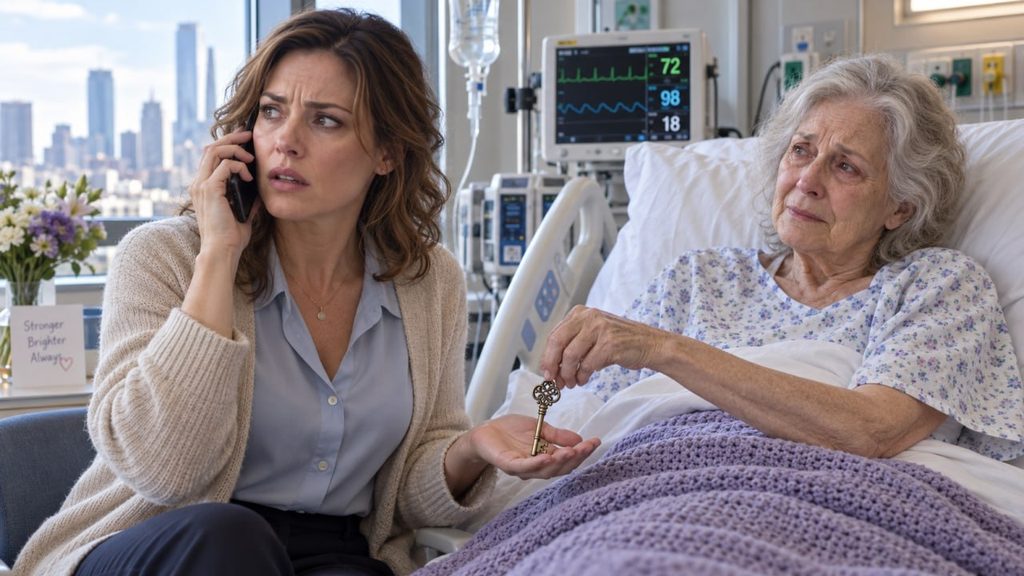
Now there was another key.
And judging by Arthur’s expression, whatever waited behind number 317 was something Nora had protected even more carefully.
My phone vibrated again.
Julian.
Thirty-eight missed calls.
Then thirty-nine.
Then a text appeared.
WHERE ARE YOU?
Another followed immediately.
WHY IS MOM’S LAWYER NOT ANSWERING ME?
Then:
EVELYN, CALL ME RIGHT NOW.
I stared at the screen.
Less than twelve hours earlier, I had called my husband thirty-one times because his mother was dying.
He had ignored me.
Now that he realized Nora was dead and I was sitting with the attorney who controlled her estate, suddenly I was worth chasing.
Arthur watched the messages arrive.
“Do not answer him yet.”
“I wasn’t planning to.”
He nodded.
“That may be the wisest decision you make today.”
I closed my fingers around the key.
“What is 317?”
Arthur took a slow breath.
“A safe-deposit box.”
“At a bank?”
“Yes.”
“What’s inside it?”
“I don’t know.”
That surprised me.
“You don’t?”
“Nora never told me.”
Arthur walked toward the window.
For a moment, he stood there looking down at the traffic moving along LaSalle Street.
Then he turned back.
“She opened the box eleven years ago, shortly after her husband died. She gave me instructions regarding the key, but she never permitted me to access the contents.”
“Why?”
“Because she wanted one person to decide whether the truth should ever come out.”
I already knew the answer.
“Me.”
Arthur nodded.
“You.”
The room suddenly felt colder.
I looked down at the key.
“Why would Nora trust me with something she wouldn’t even show her attorney?”
Arthur gave a tired smile.
“Because for twenty years, Evelyn, you were the one person she trusted who never asked her for anything.”
That sentence hurt more than I expected.
I thought about Nora in the hospital bed.
Her thin fingers.
Her shallow breaths.
The way she had squeezed my hand.
Don’t give it to Julian.
I had assumed she was protecting something from him.
I hadn’t realized she was entrusting something to me.
Arthur returned to his desk.
“There is something else you need to understand before we go any further.”
“Go where?”
“The bank.”
He looked at his watch.
“We have approximately forty-five minutes before they open.”
My heart started beating faster.
Arthur gathered several folders into a leather briefcase.
“What do I need to understand?”
“That Julian believes the family company belongs to him.”
I frowned.
“Doesn’t it?”
Arthur stopped.
“No.”
I stared at him.
“What do you mean?”
“When Julian’s father died, Julian inherited a significant economic interest in Vance Freight Systems. But control remained inside a voting trust.”
“And Nora controlled the trust?”
“She did.”
“How much?”
Arthur looked directly at me.
“Fifty-one percent.”
For a moment, I forgot how to breathe.
Julian had spent twenty years describing Vance Freight Systems as his company.
His employees called him president.
Business magazines occasionally referred to him as the heir to the Vance transportation empire.
At dinners, he spoke about acquisitions as though every truck, warehouse, distribution contract, and acre of company property belonged personally to him.
“You’re telling me Nora controlled the company this entire time?”
“Legally, yes.”
“Did Julian know?”
“Oh, he knew.”
Arthur’s voice hardened.
“He simply preferred that everyone else forget.”
I sank into the chair.
Suddenly, a thousand memories rearranged themselves in my mind.
Arguments between Nora and Julian behind closed doors.
Julian storming from her house after dinner.
Nora refusing to sign papers he brought her.
Julian once telling me, “Mom still thinks it’s 1985 and Dad is alive.”
Another time, after Nora blocked the sale of an old terminal in Indiana, Julian had come home furious.
“She enjoys humiliating me,” he said.
I had believed him.
I had comforted him.
I had rubbed his shoulders while he complained about the stubborn old woman who supposedly refused to accept that her son was capable of running the company.
Now I understood.
Nora wasn’t interfering.
She was protecting something.
Maybe everyone.
Arthur zipped the briefcase.
“Whatever is inside box 317 may explain why she refused to surrender control.”
My phone buzzed again.
This time Julian was calling.
I rejected it.
Ten seconds later, Chloe Sinclair called me.
I froze.
Arthur noticed.
“Who is it?”
“The woman from Maui.”
His expression changed.
“Answer it.”
I hesitated.
Then I swiped.
“Hello?”
For several seconds, there was only breathing.
Then Chloe spoke.
Her voice was nothing like the mocking voice I had heard the night before.
“Is Nora dead?”
My stomach tightened.
“Yes.”
Silence.
Then:
“Oh my God.”
I said nothing.
“I didn’t know.”
Her voice trembled.
“He told me she had pneumonia.”
My grip tightened around the phone.
“She was dying.”
“I swear I didn’t know.”
“Yet you answered his phone.”
“I shouldn’t have.”
“No. You shouldn’t have.”
Chloe began crying.
Part of me wanted to hang up.
Another part wanted to hear everything.
“Why are you calling me?”
“Because Julian is losing his mind.”
“Good.”
“He’s been calling attorneys. He booked the first flight back. He says you stole something from Nora.”
My eyes went to the keys on Arthur’s desk.
“What does he think I stole?”
“I don’t know.”
“You expect me to believe that?”
“I honestly don’t know.”
She lowered her voice.
“But there’s something else.”
Arthur gestured for me to put the call on speaker.
I did.
Chloe continued.
“About twenty minutes ago, Julian told me to delete every email he ever sent me.”
Arthur immediately opened a legal pad.
“What emails?” I asked.
“Business emails.”
“What kind?”
“I don’t know. Transfers. Property purchases. Corporate accounts.”
Arthur wrote faster.
“Did you delete them?”
“No.”
“Why?”
“Because he scared me.”
Her breathing became ragged.
“He told me if anyone asked questions, I was supposed to say Pacific Crest was my company and that he had nothing to do with it.”
My blood ran cold.
Pacific Crest Investments.
The shell company in Chloe’s name.
“You knew the company was in your name?”
“Yes, but Julian told me it was for taxes.”
Arthur shook his head slowly.
“He said he was protecting assets before restructuring the company.”
Chloe sniffed.
“I didn’t understand any of it.”
“Did you sign documents?”
“A few.”
“How many?”
“I don’t know. Maybe twenty.”
“Did you read them?”
A pause.
“No.”
I almost laughed.
Not because it was funny.
Because I had spent years being called careless by Julian whenever I forgot to keep a grocery receipt.
And here was his mistress casually signing documents involving millions.
Arthur leaned toward the phone.
“Ms. Sinclair, this is Arthur Vance. I represent the estate of Eleanor Vance.”
Chloe gasped.
“Yes.”
“You need independent counsel immediately.”
“What?”
“Do not delete anything. Do not alter anything. Preserve every email, text message, voicemail, financial document, photograph, reservation, and travel record connected with Julian Vance or Pacific Crest Investments.”
“Am I in trouble?”
“I cannot give you legal advice.”
“But—”
“You need your own attorney.”
She started crying harder.
“I didn’t steal anything.”
Arthur’s voice remained calm.
“Then preserving records is in your interest.”
There was a long silence.
Then Chloe whispered:
“He told me he was leaving Evelyn after his mother died.”
My throat tightened.
I said nothing.
“He said once Nora was gone, everything would finally be his.”
Arthur and I looked at each other.
“When did he tell you that?” I asked.
“Months ago.”
“How many months?”
“Seven.”
Seven months.
Nora had been sick for almost two years.
Seven months ago, Julian had stood in our kitchen, kissed my forehead, and told me he couldn’t imagine what he’d do without me.
Apparently, he had already imagined it.
Very thoroughly.
Chloe continued.
“He said the divorce would be ugly for a while, but you would end up owing so much money that you couldn’t fight him.”
My legs went numb.
Arthur stopped writing.
“What exactly did he say?” he asked.
Chloe swallowed loudly.
“He said, ‘By the time she figures out what she signed, she’ll be begging me to take the house just to make the creditors stop calling.’”
I closed my eyes.
The forged signatures.
The loans.
The personal guarantees.
He had planned everything.
Not in anger.
Not impulsively.
Not because our marriage had slowly fallen apart.
He had built my destruction methodically.
One document at a time.
One lie at a time.
One forged signature at a time.
And I had been sleeping beside him.
Chloe spoke again.
“Evelyn?”
“Yes?”
“I’m sorry.”
I looked through Arthur’s office window.
Chicago moved below us as though nothing had happened.
Cars stopped at lights.
People carried coffee.
Someone waited for a bus.
My entire marriage had detonated before breakfast, yet outside, the world continued.
“I don’t know whether I believe you,” I said.
“I understand.”
“But send Arthur everything.”
“I will.”
“And Chloe?”
“Yes?”
“You laughed.”
Silence.
“Last night. When I told you his mother was dying, you laughed.”
Her breathing broke.
“I know.”
“Nora heard you.”
“Oh God.”
“She died knowing exactly where her son was.”
Chloe began sobbing.
I didn’t comfort her.
I didn’t insult her either.
I simply said:
“Live with that.”
Then I ended the call.
Arthur remained silent for a moment.
“I’ll have my office send preservation instructions.”
“Do whatever you need.”
He closed his briefcase.
“Are you ready?”
I picked up both keys.
“No.”
Arthur waited.
I stood.
“But let’s go anyway.”
The bank occupied the ground floor of a limestone building three blocks away.
Nora had done business there for decades.
Arthur and I arrived just after ten.
The private banking manager recognized him immediately.
Then she saw the brass key in my hand.
Something changed in her face.
Not shock.
Recognition.
“You’re Mrs. Vance?”
“Yes.”
“Evelyn Vance?”
“Yes.”
The woman glanced at Arthur.
“I need to verify identification.”
I handed her my driver’s license.
She disappeared into an office.
Five minutes later, she returned carrying a sealed envelope.
“This was left with instructions to be given to you upon presentation of key 317.”
My fingers trembled as I accepted it.
The envelope was addressed in Nora’s handwriting.
Evelyn.
Again.
My name.
Again.
Arthur looked at me.
“Open it.”
Inside was a single sheet of paper.
My dear girl,
If Arthur is standing beside you, then you already know enough to understand why I was afraid.
But you do not yet know everything.
Box 317 contains proof of what Julian became.
It also contains proof of what you were to me.
Do not confuse those two things.
What I leave you is not payment for caring for me.
Love cannot be invoiced.
It is protection.
You gave me twenty years of loyalty when my own son gave me excuses.
Now allow me to give you one final thing.
A choice.
Nora.
I read the last line twice.
A choice.
The bank manager led us downstairs.
The vault was behind two steel doors.
The air smelled like cold metal and old paper.
She verified our credentials again before escorting us through rows of numbered boxes.
317 was near the bottom.
Arthur inserted the bank’s guard key.
I inserted mine.
Two locks.
Two turns.
A soft metallic click.
The box slid out.
It was surprisingly heavy.
The manager brought us to a private viewing room.
Then she left.
For several seconds, Arthur and I simply stared at the gray metal box.
“Go ahead,” he said.
I lifted the lid.
Inside were five things.
A thick black binder.
A sealed flash drive.
Three envelopes.
A bundle of original stock certificates.
And a small red notebook.
I picked up the notebook first.
On the cover Nora had written:
JULIAN.
I opened it.
The first entry was dated almost nine years earlier.
March 14.
Julian asked again for unrestricted signing authority.
I refused.
He became angry.
Said I was treating him “like a thief.”
I hope I am wrong to be worried.
The next entry:
May 2.
Account discrepancy discovered.
$218,400 transferred without board authorization.
Julian calls it timing.
Thomas in accounting calls it an error.
Neither explanation satisfies me.
Another:
September 8.
Evelyn took me to Northwestern for the cardiology appointment.
Julian said he was in St. Louis.
I later learned his corporate card was used in Miami.
Do not involve Evelyn yet.
She still believes him.
My throat tightened.
Page after page.
Year after year.
Nora had documented everything.
Missing funds.
Suspicious invoices.
Unauthorized loans.
Trips Julian claimed were business-related.
Payments to consulting firms that seemed to perform no consulting.
And between the financial entries were pieces of my life.
Evelyn brought soup.
Evelyn stayed overnight.
Evelyn fixed the medicine dispenser.
Evelyn drove me to rehabilitation.
Evelyn paid the pharmacy when Julian “forgot” to renew the family medical account.
Evelyn defended him again today.
She believes the best of people long after they stop deserving it.
I closed the notebook.
I couldn’t continue.
Arthur gently moved the black binder toward himself.
On the front:
FORENSIC REVIEW — VANCE FREIGHT SYSTEMS.
He opened it.
His face changed immediately.
“What?”
“Nora hired forensic accountants.”
“When?”
“Almost three years ago.”
Three years.
Arthur began turning pages.
Charts.
Invoices.
Wire records.
Vendor lists.
Property transfers.
The investigation had traced money flowing through a series of shell companies.
Pacific Crest was only one.
There were four others.
Combined transfers exceeded eight million dollars.
My stomach dropped.
“Eight million?”
Arthur kept reading.
“Possibly more.”
“How did no one notice?”
“People noticed.”
He tapped a page.
“Julian replaced them.”
The report listed four senior employees who had questioned transactions.
A controller.
A compliance officer.
A regional finance director.
An internal auditor.
All four had left the company within eighteen months.
I knew their names.
Julian had complained about them at dinner.
Difficult.
Disloyal.
Outdated.
Negative.
One woman, Margaret Dunn, had worked for the company twenty-seven years.
Julian told me she was “losing it.”
According to Nora’s investigators, Margaret had identified nearly six hundred thousand dollars in suspicious payments.
She was terminated six weeks later.
I felt sick.
“How much did Nora know?”
“A great deal.”
“Then why didn’t she stop him?”
Arthur leaned back.
“She tried.”
He pulled out several board resolutions from the binder.
Nora had blocked property sales.
Refused refinancing.
Demanded audits.
Restricted Julian’s spending authority.
But apparently Julian had found ways around each restriction.
Forged approvals.
Misclassified expenses.
Side agreements.
And eventually, forged signatures.
Mine.
Arthur picked up the flash drive.
“This may explain the rest.”
We opened one of the envelopes.
FOR EVELYN AND ARTHUR TO VIEW TOGETHER.
Inside was another note.
The password is the name of the dog Evelyn rescued from the interstate in 2011.
I stared at Arthur.
He raised an eyebrow.
“Dog?”
Despite everything, I nearly smiled.
“Biscuit.”
Arthur almost laughed.
“Of course.”
We connected the drive to his encrypted laptop.
Password:
Biscuit.
A folder opened.
Audio.
Video.
Scanned Documents.
Correspondence.
Photographs.
Arthur clicked Audio.
There were dozens of files.
Dates stretched across four years.
The most recent recording had been made eleven weeks earlier.
He clicked it.
At first, all we heard was the clinking of dishes.
Then Nora’s voice.
Weak, but unmistakable.
“You’re taking money from the company.”
Julian answered.
My husband.
Calm.
Almost bored.
“Mom, we’ve discussed this.”
“No. You talk. I listen. Today you’re going to answer me.”
A chair scraped.
“You’re sick.”
“I’m not stupid.”
“You’re tired.”
“Eight million dollars, Julian.”
Silence.
Then he laughed softly.
“You’ve been snooping.”
“I founded the company with your father.”
“You inherited his shares.”
“I built the first office while he drove the trucks.”
Another silence.
Then Julian said:
“You should be enjoying whatever time you have left instead of digging through spreadsheets.”
I felt my stomach twist.
Nora answered:
“I would enjoy it more if my son weren’t stealing from me.”
Julian’s voice changed.
Cold.
“You need to be careful saying things like that.”
“You think I’m afraid of you?”
“I think you’re confused.”
“I think you moved money into a company owned by your mistress.”
Arthur paused the recording.
Neither of us spoke.
Then he pressed play again.
Julian:
“Leave Chloe out of this.”
Nora:
“So there is a Chloe.”
Julian:
“You don’t understand anything.”
Nora:
“I understand enough.”
There was another chair movement.
Then Nora asked:
“Does Evelyn know?”
My heart stopped.
Julian laughed.
“No.”
“You’re going to tell her.”
“No.”
“She deserves the truth.”
“She deserves whatever I decide she deserves.”
My hands began trembling.
Nora’s voice became quieter.
“You used her signature.”
A long silence.
Julian answered:
“Be very careful.”
“You forged Evelyn’s name.”
“It’s business.”
“It’s fraud.”
“You don’t understand commercial lending.”
“I understand my daughter-in-law did not authorize those guarantees.”
Julian sighed.
Then he said something that ended my marriage more completely than the affair ever could.
“By the time anybody looks closely, Evelyn and I will be divorced.”
Nora:
“And the debt?”
Julian:
“Attached to her.”
Nora:
“You would destroy her.”
Julian:
“She’ll survive.”
Nora:
“After twenty years?”
Julian:
“Oh please. Don’t make her into a saint.”
Nora:
“She cared for you.”
“She enjoyed the lifestyle.”
I covered my mouth.
Arthur looked toward me.
I shook my head.
Keep playing.
Nora answered:
“What lifestyle?”
Julian didn’t respond.
“She drives a nine-year-old Volvo.”
Silence.
“She shops with coupons.”
Silence.
“She stayed in this house changing my bandages while you flew to Cabo.”
Silence.
“She paid twelve thousand dollars of my medical costs last year because you told her the company was short on cash.”
Julian finally spoke.
“She chose to.”
Nora’s voice broke slightly.
“She chose you.”
My eyes filled with tears.
“And God forgive me, so did I.”
The recording ended.
For a long time, neither Arthur nor I moved.
I stared at the blank audio player on the screen.
There are moments when grief arrives all at once.
Then there are moments when grief comes in layers.
My marriage did not die when Chloe answered Julian’s phone.
It did not die when I discovered the forged documents.
It did not even die when I learned he planned to leave me with millions in debt.
It died when I heard the complete absence of love in his voice.
“She chose to.”
As though twenty years of marriage were merely a financial mistake I had volunteered to make.
I thought about the birthdays I planned.
The shirts I ironed.
The dinners I reheated at midnight.
The nights I waited awake because his flight was delayed.
The Christmases I spent alone with Nora while Julian “handled an emergency acquisition.”
The years I told myself successful men carried pressure differently.
The way I apologized whenever I asked him for more time.
The way I convinced myself that loneliness was simply the price of being married to someone important.
He had trained me to treat neglect as ambition.
And betrayal as inconvenience.
I wiped my face.
“Play the next one.”
Arthur hesitated.
“Evelyn.”
“Please.”
He clicked another file.
This one was dated six months earlier.
Nora’s voice.
Then Arthur’s.
He looked surprised.
“I remember this conversation.”
On the recording, Nora said:
“Arthur, I want the voting trust changed.”
“To whom?”
“If I become incapacitated or die, Evelyn.”
Arthur had apparently objected.
“Eleanor, Julian will challenge that.”
“He can challenge the moon if he wants.”
“You need to understand the implications.”
“I understand perfectly.”
“Why Evelyn?”
“Because she is honest.”
“That’s not a legal qualification.”
“It should be.”
Despite myself, I laughed through my tears.
Even dead, Nora sounded like Nora.
Arthur continued on the recording:
“Does Evelyn know anything about company operations?”
“She knows more than she thinks.”
“How?”
“She has spent twenty years listening to my son complain.”
Arthur chuckled in the recording.
Then Nora became serious.
“I don’t want Evelyn running trucks.”
“Then what do you want?”
“I want her controlling the vote long enough to clean the rot out.”
“What happens afterward?”
“The employees get it.”
Arthur paused.
I looked at him.
“The employees?”
He nodded slowly.
“I drafted the documents.”
“What documents?”
He opened the second envelope from the box.
Inside were signed trust amendments.
Not photocopies.
Originals.
Arthur placed them carefully on the table.
“Nora changed the succession of the voting trust four months ago.”
“To me?”
“To you and me jointly, initially.”
My mouth fell open.
“What?”
“You have no obligation to accept.”
“I don’t understand.”
Arthur turned several pages.
“Upon Nora’s death, her controlling voting interest passes into a restructuring trust. You are named primary trustee. I am co-trustee for legal compliance.”
“And Julian?”
“Retains his economic interest but loses operational control pending audit and investigation.”
I stared at the document.
“What happens to Nora’s shares?”
“Over time, once liabilities are resolved and the company is stabilized, a large portion moves into an employee ownership trust.”
“How large?”
“Forty percent.”
I couldn’t speak.
Arthur continued.
“Ten percent goes to a charitable foundation Nora created in her husband’s name. The remaining beneficial interests are divided among several family and estate provisions.”
“And me?”
Arthur looked at another page.
“You receive Nora’s residence free of debt, her personal investment account, reimbursement for documented medical expenses you’ve paid on her behalf, and a lifetime annual stipend from the trust if you serve as trustee.”
“How much?”
He told me.
It was generous.
Very generous.
But nowhere near the fortune Julian would later claim I had manipulated his mother into giving me.
I actually felt relieved.
Nora had protected me.
She had not handed me an empire.
She had given me a position of trust.
And a way to stop her son from destroying everything.
Arthur pointed to a clause.
“She also left you something else.”
“What?”
“Full indemnification from the trust for legal expenses related to exposing forged obligations made in your name.”
My eyes filled again.
She knew.
Of course she knew.
She knew Julian would come after me.
So before dying, she built armor around me.
Not vengeance.
Protection.
Exactly as her letter had said.
My phone rang again.
Julian.
This time I answered.
Arthur started to speak, but I raised one finger.
I wanted to hear my husband’s voice.
“Evelyn!”
He sounded furious.
“Where the hell have you been?”
“At the bank.”
Silence.
“What bank?”
I looked at box 317.
“You know which bank.”
The line went completely quiet.
Then Julian said:
“What did she give you?”
Not:
How did Mom die?
Not:
Was she in pain?
Not:
Did she say anything about me?
What did she give you?
That was when I finally understood something I should have understood years ago.
Julian did not measure relationships in affection.
He measured them in control.
Money.
Access.
Leverage.
Ownership.
“What did she give you?” he repeated.
“A key.”
His breathing changed.
“What key?”
“317.”
He stopped breathing altogether.
Arthur watched my face.
I had never heard genuine fear in Julian’s voice before.
Until that moment.
“Evelyn.”
“Yes?”
“Listen to me very carefully.”
“I’ve been doing that for twenty years.”
“Do not open that box.”
“Too late.”
The silence on the line felt endless.
Then:
“What did you see?”
“Enough.”
“Evelyn, whatever Mom put in there, she was confused.”
I looked at Arthur.
He closed his eyes briefly.
There it was.
Exactly as predicted.
“She was medicated. She was paranoid. She was angry with me. She didn’t understand the business anymore.”
“Interesting.”
“What’s interesting?”
“She predicted you’d say that.”
Another silence.
“Where is Arthur?”
“Beside me.”
“Put him on.”
“No.”
“Evelyn.”
“No.”
His voice hardened.
“You have no idea what you’re dealing with.”
“That sentence worked better yesterday.”
“What is that supposed to mean?”
“It means yesterday I still believed you were in Dallas.”
He said nothing.
“I heard Chloe.”
“Evelyn—”
“She told me about Pacific Crest.”
He inhaled sharply.
“What did that stupid—”
He stopped.
Too late.
I almost smiled.
“That stupid what, Julian?”
“Don’t twist my words.”
“I don’t need to.”
“Chloe doesn’t understand anything.”
“Neither did I, apparently.”
“This is business.”
“Forging my signature isn’t business.”
The line went silent again.
Longer this time.
When Julian spoke, his voice was different.
Lower.
Controlled.
The voice he used in negotiations.
“Who told you that?”
“Your mother.”
“My mother is dead.”
I flinched.
Not because of what he said.
Because of how easily he said it.
No grief.
No hesitation.
Just a fact that removed an obstacle.
“Yes,” I whispered.
“She is.”
“Then you need to stop letting Arthur fill your head with nonsense.”
“I saw the documents.”
“Copies can be manipulated.”
“I heard the recording.”
That did it.
“What recording?”
I said nothing.
His voice rose.
“What recording, Evelyn?”
“The one where you said I’d be divorced by the time anyone discovered the debt.”
His breathing became rapid.
“That’s not what I meant.”
“You said the debt would be attached to me.”
“Context matters.”
“You said I’d survive.”
“Evelyn—”
“You were right.”
A strange calm came over me.
“I will survive.”
I looked down at Nora’s notebook.
“But not the way you planned.”
I ended the call.
Julian called fourteen more times.
Then he stopped.
Arthur and I remained at the bank for nearly three hours.
We reviewed everything Nora had hidden.
There were photographs taken by a licensed investigator.
Julian leaving hotels with Chloe.
Julian meeting with lenders outside official company channels.
Julian visiting a notary who had later certified documents bearing my forged signature.
There were emails.
Invoices.
Private financial reports.
Copies of canceled checks.
And one document that explained why Julian had been so desperate to know whether I opened box 317.
A handwritten agreement.
Signed by Julian.
Dated nine years earlier.
In it, he acknowledged receiving a personal loan of $1.8 million from Nora after a failed real-estate investment.
He agreed the debt would be deducted from his eventual inheritance.
Arthur stared at the page.
“I never saw this.”
“Is it valid?”
“It appears to be.”
“He owed her almost two million dollars?”
“Before interest.”
I laughed bitterly.
Julian once lectured me for twenty minutes because I accidentally paid our electric bill three days late.
He had accused me of being irresponsible.
Meanwhile, he owed his mother nearly two million dollars.
The hypocrisy was almost artistic.
But the last envelope was the hardest.
It was labeled:
FOR AFTER THE FUNERAL.
I didn’t open it.
Not yet.
Something told me Nora had placed it last for a reason.
The next forty-eight hours moved faster than I could process.
Arthur activated the emergency provisions of the trust.
The company’s general counsel was notified.
An outside forensic accounting firm was retained.
Two members of the board convened an emergency meeting.
Julian’s signing authority was temporarily suspended pending review.
The company banks received notice that no extraordinary transfers could be made without dual authorization.
And every lender associated with the suspicious guarantees was contacted regarding disputed signatures.
Arthur made one thing clear to me from the beginning.
“We don’t destroy evidence.”
“I know.”
“We don’t move money to punish Julian.”
“I know.”
“We don’t threaten him.”
“I know.”
“We let documents speak.”
That became our rule.
Documents.
Not rage.
Records.
Not revenge.
Facts.
Not screaming.
And strangely, that was more powerful than anything I could have said to him.
For twenty years, Julian had survived because he controlled the story.
Now the paperwork was telling its own story.
Julian arrived in Chicago the following afternoon.
He came directly to Nora’s house.
I was there with Arthur, two representatives from the trust, and Nora’s longtime housekeeper, Rosa.
I was standing in the dining room sorting funeral photographs when the front door slammed.
“Evelyn!”
Rosa looked frightened.
Arthur calmly closed the folder in front of him.
Julian appeared in the doorway.
I barely recognized him.
His expensive linen shirt was wrinkled from the flight.
His hair was disordered.
His eyes were red.
Not from grief.
From panic.
“Everyone out.”
No one moved.
Julian looked at Arthur.
“You especially.”
Arthur remained seated.
“I represent the estate.”
“This is my mother’s house.”
Arthur’s expression didn’t change.
“No longer.”
Julian stared at him.
“What?”
“The property transferred pursuant to trust instructions upon Nora’s death.”
“To who?”
Arthur looked toward me.
Julian followed his gaze.
His face drained of color.
“You’ve got to be kidding me.”
I said nothing.
He laughed.
Not because anything was funny.
Because his brain was rejecting reality.
“Of course.”
He looked at me.
“Of course she gave it to you.”
“Julian—”
“You were waiting for this.”
Rosa gasped.
Arthur stood.
“Careful.”
Julian ignored him.
“Twenty years playing nurse.”
His voice became cruel.
“Twenty years sitting beside her bed, carrying her bags, making yourself indispensable.”
My chest tightened.
“You think I cared for your mother because I wanted her house?”
“I think you knew exactly what you were doing.”
Something inside me almost broke.
Not because I believed him.
Because after everything he had done, he was trying to poison the purest relationship I had left.
Nora and me.
No.
He would not have that too.
“You want to know what I was doing?”
My voice stayed quiet.
“I was calling you.”
Julian frowned.
“Thirty-one times.”
He looked away.
“Don’t.”
“Thirty-one.”
“I said don’t.”
“Your mother was dying.”
“I was on a business trip.”
Rosa looked at him.
Arthur looked at him.
I almost felt embarrassed for him.
“Maui is beautiful this time of year.”
His jaw tightened.
“So Chloe called you.”
“She answered your phone.”
“That was a mistake.”
“No.”
I stepped closer.
“Your mistake was believing nobody would ever answer for you.”
Julian’s face hardened.
“This is between us.”
“No.”
I shook my head.
“This stopped being between us when you forged my name.”
Rosa covered her mouth.
Julian glanced toward her.
Then Arthur.
Then me.
“Evelyn, you need to stop repeating accusations you don’t understand.”
“I understand three million dollars in guarantees.”
“Those were standard corporate instruments.”
“I never signed them.”
“You authorized me to handle family financial affairs.”
“No.”
“You signed powers of attorney.”
“No.”
“You absolutely did.”
Arthur reached into the folder.
“No, she did not.”
Julian stared.
Arthur placed a certified document on the table.
“I reviewed every power of attorney Evelyn executed during the marriage. None authorize Julian to execute personal guarantees, corporate indemnities, or individual credit instruments on her behalf.”
Julian’s face changed.
Arthur continued.
“Furthermore, three of the notarizations appear to have occurred on dates when Evelyn was documented elsewhere.”
I remembered.
One signature had supposedly been notarized in Chicago on a day I was in Wisconsin with Nora for a specialist appointment.
Another was dated while I was attending my sister’s funeral in Ohio.
A third was signed when I was hospitalized with pneumonia.
Julian looked at me.
I had never seen him look afraid of me before.
Not because I had suddenly become powerful.
Because I had stopped believing him.
For people like Julian, disbelief is terrifying.
Control requires cooperation.
I was no longer cooperating.
He stepped toward me.
“You have no idea what this will do to the company.”
I stared at him.
“You did.”
“What?”
“You knew exactly what it would do.”
His face reddened.
“People will lose jobs.”
“Because I found out?”
“Because you’re creating chaos!”
“No.”
I shook my head.
“You created the chaos.”
“I built that company.”
“Nora and your father built it.”
“I expanded it!”
“And apparently treated it like an ATM.”
He pointed at me.
“You’re going to regret this.”
Arthur immediately stepped between us.
“That’s enough.”
Julian laughed.
“What? Is that a threat now?”
Arthur’s voice remained perfectly calm.
“No. That was a request.”
He reached into his jacket.
“This is notice that all communications concerning the estate, trust, disputed guarantees, and corporate records should go through counsel.”
Julian stared at the papers.
Then he looked at me.
“You lawyered up against your own husband.”
The sadness that hit me then was almost unbearable.
Because despite everything, there had been a time when I loved him so much that the idea of standing across a table from him like this would have destroyed me.
But that woman was gone.
Not dead.
Just finished.
“You stopped being my husband long before I hired a lawyer.”
Julian’s face twitched.
For half a second, I thought I saw guilt.
Then it disappeared.
He leaned close enough that only I could hear him.
“You think my mother saved you?”
I didn’t move.
“She used you.”
I looked into his eyes.
“No, Julian.”
My voice was barely above a whisper.
“She saw me.”
And that was something he had never done.
Nora’s funeral was held three days later.
The church was full.
Employees from Vance Freight Systems came from six states.
Drivers.
Dispatchers.
Mechanics.
Office staff.
Retired managers.
People Nora had known since the company’s first years.
I learned stories about her I had never heard.
She once drove payroll checks through a snowstorm because the bank had closed early.
She personally delivered groceries to a driver after he broke his leg.
She remembered the names of employees’ children.
Every December, she called the widow of the company’s first mechanic.
Julian sat in the front pew.
Alone.
Chloe was not there.
I sat two seats away from him.
Not because I wanted to.
Because appearances no longer mattered.
During the service, Julian cried once.
I noticed because I had been waiting to see if grief would reach him.
It did.
When the choir sang Nora’s favorite hymn, he lowered his head and wiped his eyes.
And for a moment, I felt something unexpected.
Pity.
Not enough to forgive him.
Not enough to excuse anything.
Just enough to remember that people are rarely only one thing.
Julian was a liar.
A cheat.
A thief, perhaps, if the investigators proved what the documents suggested.
But he was also Nora’s son.
Once, a very long time ago, she had held him as a baby.
Once, she had probably believed he would become a better man.
Maybe part of her died disappointed long before her heart stopped.
That thought hurt.
After the burial, Julian approached the casket.
Everyone else had begun walking toward their cars.
I stayed behind.
He didn’t know I was there.
He rested one hand on the flowers.
For almost a minute, he said nothing.
Then he whispered:
“Why didn’t you trust me?”
I closed my eyes.
Of all the questions.
That was the one he asked.
Not:
Why did I do this?
Not:
How did I become this person?
Why didn’t you trust me?
I walked away before he noticed me.
The formal reading of Nora’s estate plan happened the following morning.
Arthur’s conference room was crowded.
Julian.
Me.
Two board representatives.
A representative from Nora’s charitable foundation.
The trust administrator.
And, unexpectedly, Margaret Dunn.
The former controller Julian had fired.
When she entered, Julian shot to his feet.
“What is she doing here?”
Margaret calmly took a chair.
Arthur answered.
“Nora named Ms. Dunn as an adviser to the restructuring trust.”
Julian laughed.
“This is insane.”
Margaret didn’t look at him.
I had met her twice years earlier.
She looked older now.
Tired.
But steady.
Arthur began reading.
The personal bequests were simple.
Jewelry to nieces.
Artwork to museums.
Money to charities.
A scholarship fund for children of Vance Freight employees.
The house to me.
Julian scoffed loudly at that.
Arthur continued.
Then came the voting trust.
When Arthur explained that Julian had been removed as successor trustee, my husband’s face became completely still.
“Who replaces me?”
Arthur looked at the document.
“Evelyn Vance.”
Julian actually laughed.
Not a normal laugh.
A short, disbelieving burst.
“My wife?”
“Yes.”
“She doesn’t know anything about transportation.”
“I agree,” I said.
Everyone looked at me.
Julian blinked.
I continued.
“I don’t intend to manage transportation.”
Arthur nodded.
“The trust separates voting oversight from operational management. Professional executives will manage the company.”
Julian stared at me.
“So you’re taking my company.”
“No.”
I shook my head.
“I’m stopping you from taking everyone else’s.”
His jaw flexed.
Arthur kept reading.
Nora had written a statement explaining why she changed the trust.
Arthur read her words.
“My son believes inheritance means entitlement without responsibility. I disagree. Vance Freight Systems carries our family name, but thousands of families have helped build its value. No single Vance should be permitted to destroy it for personal enrichment.”
Julian’s face went pale.
Arthur continued.
“Until a full independent audit has been completed, Julian Vance shall hold no unilateral signing authority over extraordinary corporate transactions.”
Julian shoved his chair back.
“This is garbage.”
“Sit down,” Arthur said.
“You think you can humiliate me in my own company?”
Margaret finally looked at him.
“It hasn’t been your company for a long time, Julian.”
His eyes flashed.
“You.”
Margaret’s voice stayed calm.
“I warned your mother.”
“You stole internal records.”
“I preserved accounting records.”
“You violated confidentiality.”
“I reported unexplained transfers.”
“You were incompetent.”
Margaret smiled sadly.
“That line probably worked better before the forensic auditors found the money.”
Julian looked at me.
“You brought her into this?”
“No.”
“Nora did,” Arthur said.
Julian stood.
“We’re done.”
“Not yet.”
Arthur reached for the final envelope.
The one from box 317.
FOR AFTER THE FUNERAL.
My stomach tightened.
Arthur looked at me.
“Evelyn?”
I nodded.
He opened it.
Inside was a handwritten letter.
Several pages.
Arthur read silently for a moment.
Then his face softened.
“She addressed this to both of you.”
Julian stopped.
“To me?”
“Yes.”
For the first time since entering the room, he sat without arguing.
Arthur began.
My dear Julian and Evelyn,
If this letter is being read, then I am gone.
Julian, I know you believe I chose Evelyn over you.
I did not.
I chose the truth over you.
There is a difference.
You are my son.
Nothing you have done can erase the fact that I loved you before you knew your own name.
I remember the first time you walked.
I remember holding you during thunderstorms.
I remember the day your father put you in the passenger seat of his first truck and you announced that one day the entire company would be yours.
You were six.
Your father laughed.
I did too.
Perhaps we should have corrected you then.
Nothing worth having is ever entirely ours.
We borrow houses.
We borrow companies.
We borrow money.
We even borrow time.
And eventually we return all of it.
Character is the only thing we truly keep.
Julian looked down at the table.
Arthur continued.
I watched ambition take pieces of you slowly.
At first, I was proud.
You worked hard.
You grew the company.
You made decisions your father would never have understood.
Then success stopped satisfying you.
You wanted obedience.
You wanted admiration.
You wanted people to be grateful for whatever crumbs of your attention you offered.
And when they were not, you punished them.
I told myself you were under pressure.
A mother can invent more excuses for her child than anyone on earth.
Perhaps that is why I understood Evelyn.
She invented excuses for you too.
For years.
Julian’s eyes flickered toward me.
I couldn’t meet them.
Arthur read on.
Evelyn, you were never weak.
You were loyal.
There is a difference.
Please learn it sooner than I did.
Do not allow what Julian did to make you ashamed of loving him.
Love given honestly is not made foolish simply because the receiver misused it.
I began crying.
Quietly.
Arthur stopped.
I wiped my face.
“Keep going.”
He did.
Julian, I know about Chloe.
I know about Pacific Crest.
I know about the forged guarantees.
I know about the employees you dismissed.
I know about the loans.
And I know you planned to place Evelyn beneath enough debt that she would be unable to fight you in the divorce you were planning.
I asked you directly whether you would hurt her.
You said she would survive.
You were right.
She will.
But that does not absolve you.
I have protected the company as best I can.
What happens next will be determined by law and by the choices you make after my death.
I leave you this opportunity:
Tell the truth.
Not to save the company.
Not to save your inheritance.
Not to save your reputation.
Tell it because somewhere inside the man you became is the little boy who once cried because he accidentally ran over a bird with his bicycle.
I would like to believe he is still there.
The room was completely silent.
Even Julian had stopped moving.
Arthur’s voice softened.
I do not ask Evelyn to forgive you.
That is not mine to ask.
I do not ask anyone to protect you from consequences.
Consequences are sometimes the last teachers we have.
But I ask you to remember something your father once told you:
A man’s name is not what is printed on the building.
A man’s name is what people say after he leaves the room.
Think carefully about what they will say about yours.
I loved you before all of this.
I love you despite all of this.
But love is not permission.
Mother.
Arthur lowered the letter.
No one moved.
For perhaps thirty seconds, Julian simply stared at the table.
Then I heard it.
A small sound.
Like someone trying not to breathe.
He covered his face.
His shoulders shook.
I had seen Julian angry.
I had seen him frustrated.
I had seen him drunk.
I had seen him charming.
I had seen him perform grief at funerals and affection at parties.
But I had never seen him collapse.
Not until then.
He pressed both palms to his eyes.
“Damn her.”
No one spoke.
“Damn her.”
His voice broke.
Then he slammed one fist against the table.
“She had no right.”
Arthur remained still.
Julian looked at him.
“She had no right to record me.”
“Depending on the circumstances, questions about admissibility may be addressed by counsel.”
“She was sick.”
Arthur didn’t answer.
“She was confused!”
Still nothing.
Julian turned to me.
“Evelyn, you know she was confused.”
I looked at him.
“No.”
“Her medications—”
“No.”
“You saw her.”
“I did.”
“She forgot things.”
“She forgot where she left her glasses.”
I leaned forward.
“She didn’t forget eight million dollars.”
Julian’s face twisted.
“You don’t understand.”
“Then explain it.”
Everyone looked at him.
For the first time, there was nowhere to hide.
No private kitchen.
No locked office.
No wife willing to accept half an answer.
“Explain Pacific Crest.”
He looked toward Arthur.
“Not without counsel.”
“Fine.”
“Explain Chloe.”
His face hardened.
“Our marriage had been dead for years.”
The words hurt.
But less than they would have a week earlier.
“Was it?”
“You were always with my mother.”
I almost couldn’t believe him.
“You left me alone with your dying mother and then blamed me for being there?”
“That isn’t what I mean.”
“What do you mean?”
Julian stood again.
“I came home and all you talked about was appointments. Medications. Blood pressure. Doctors.”
“She was sick.”
“I know!”
“And you were her son.”
“I had a company to run!”
Margaret laughed once.
Julian glared at her.
She shook her head.
“Sorry. Continue.”
He pointed toward me.
“You stopped being my wife.”
I looked at him.
The old Evelyn would have defended herself.
She would have listed all the ways she tried.
Dinner reservations.
Vacations canceled because Julian had meetings.
Therapy appointments he skipped.
Weekends he spent “working.”
The old Evelyn would have argued for the validity of her own love.
I didn’t.
I simply asked:
“So you forged my name?”
Julian blinked.
“What?”
“You were lonely, therefore you forged my name?”
“That isn’t related.”
“You had an affair, therefore you moved debt into my name?”
“I said it isn’t related.”
“You bought Chloe a four-million-dollar house because I took your mother to cardiology?”
His face turned bright red.
Margaret looked down to hide a smile.
Julian lowered his voice.
“The house was an investment.”
“Of course.”
“You don’t understand offshore structures.”
“I understand she has an ocean view.”
“Evelyn—”
“No.”
I stood.
“You don’t get to bury theft under vocabulary.”
His mouth closed.
For once, completely.
The estate meeting ended shortly afterward.
Julian left with his attorney, who had arrived halfway through the reading.
Outside, reporters were already gathering.
Someone had leaked news that Vance Freight Systems had initiated an internal financial review.
Arthur wanted us to leave through the garage.
Before I could, Margaret touched my arm.
“Evelyn.”
“Yes?”
“I owe you an apology.”
“For what?”
“When I worked for the company, I thought you knew.”
“Knew what?”
“About Julian.”
I shook my head.
“I didn’t.”
“I know that now.”
She glanced toward the door.
“He used to tell people you were part of the structure.”
“What structure?”
“The personal guarantees. The outside investments.”
My stomach tightened.
“He told employees I approved them?”
“He said you handled the family side.”
I almost laughed.
“I didn’t even know what half those companies were.”
Margaret nodded.
“I understand.”
She hesitated.
“Your mother-in-law believed you.”
“When?”
“The first time I told her something was wrong.”
My eyes filled.
Margaret continued.
“She said, ‘If Evelyn knew, she’d be sitting in this office screaming before sunset.’”
That sounded like Nora.
I smiled through my tears.
Margaret squeezed my arm.
“She knew you.”
“Yes.”
I looked toward the envelope containing Nora’s letter.
“She really did.”
The separation papers were filed four days later.
Divorce followed.
Not because of Chloe.
Not entirely.
An affair can destroy a marriage.
But our marriage had already been hollowed out by something deeper.
Contempt.
Manipulation.
Financial abuse.
The quiet belief that one spouse exists to absorb the consequences of the other’s choices.
When my attorney asked what I wanted, I answered without hesitation.
“Nothing that isn’t mine.”
He looked surprised.
“You could seek significantly more.”
“I want my name removed from every fraudulent obligation.”
“Of course.”
“I want my personal assets protected.”
“Yes.”
“And I want the truth documented.”
He studied me.
“No revenge?”
I thought about that word.
Revenge.
It sounded dramatic.
Powerful.
Satisfying.
But the truth was, I was exhausted.
I didn’t want to destroy Julian.
He had done enough of that himself.
“I don’t want revenge.”
I looked toward the window.
“I want distance.”
Then came the investigation.
It lasted months.
And the deeper investigators dug, the worse things became.
Pacific Crest had received millions.
But it wasn’t the only entity.
There were property companies.
Consulting agreements.
Loans written off as vendor costs.
Corporate aircraft time billed to nonexistent clients.
Luxury travel coded as executive development.
And a network of transactions complicated enough that even Arthur occasionally removed his glasses and rubbed his temples.
Some documents bore Julian’s real signature.
Others contained disputed signatures.
Some transfers appeared approved.
Others did not.
The forensic accountants refused to speculate.
They followed money.
That became strangely comforting to me.
Money doesn’t remember arguments.
It doesn’t care who cried.
It doesn’t care who is charming.
Numbers go where someone sends them.
And once investigators followed them, Julian’s story began collapsing.
Chloe hired her own lawyer.
Within two weeks, her lawyer contacted Arthur.
She agreed to provide records voluntarily.
Apparently, Julian had lied to her almost as consistently as he lied to me.
He told Chloe he and I were legally separated.
We weren’t.
He told her Nora approved their relationship.
She didn’t.
He told her Pacific Crest held investment assets he personally owned.
Much of the money appeared to originate from company accounts.
He told her the Maui property would become their marital home after our divorce.
Then investigators discovered that the house itself was heavily leveraged.
Chloe learned that the lifestyle Julian had promised her was partially built on debt.
For the first time, I almost felt sorry for her.
Almost.
Then I remembered her laugh in Nora’s hospital room.
Compassion has boundaries too.
Three months after Nora died, I returned to her house alone.
Technically, it belonged to me now.
But I still thought of it as hers.
I had changed almost nothing.
Her cardigan remained on the hook beside the kitchen.
Her tea tins lined the shelf.
A half-finished crossword puzzle rested inside the side table.
For weeks, I had avoided her bedroom.
That afternoon, I finally entered.
The curtains were open.
Dust floated through the afternoon sunlight.
Her bed was made exactly as Rosa had left it.
I sat on the edge.
And cried.
Not politely.
Not quietly.
I cried until my chest hurt.
For Nora.
For the marriage I thought I had.
For the woman I had been.
For the years I spent shrinking every need so Julian would never accuse me of being demanding.
And strangely, I cried for Julian too.
Not the man he became.
The man Nora still remembered.
The six-year-old boy in the passenger seat of his father’s truck.
The child who cried over a bird.
The son who once had a chance to become someone else.
Maybe that was the most tragic part.
People like Julian are easy to hate when you reduce them to the worst thing they did.
But Nora had known every version of him.
That was why her final letter carried more weight than any accusation.
She loved him.
And still stopped him.
For years, I had believed love meant staying.
Excusing.
Protecting.
Absorbing.
Nora taught me something different.
Sometimes love means drawing the line the other person refuses to draw.
Sometimes love means saying:
No more.
Even when your voice shakes.
Even when the person on the other side is your own child.
Six months after Nora’s death, the restructuring of Vance Freight Systems officially began.
I attended my first board meeting as trustee.
I wore a navy suit Nora once told me made me look “less apologetic.”
Margaret sat beside me.
Across the table were executives, financial advisers, labor representatives, and Arthur.
I was terrified.
Before the meeting began, Arthur leaned toward me.
“Nervous?”
“Completely.”
“Good.”
I frowned.
“Good?”
“People who aren’t nervous when they’re given power are usually the people who shouldn’t have it.”
I smiled.
“Nora said something similar.”
“She often stole my better lines.”
The meeting lasted four hours.
I understood maybe seventy percent of it.
Whenever I didn’t understand, I asked.
At first, I apologized before every question.
“Sorry, but can someone explain—”
After the fourth time, Margaret leaned toward me.
“Stop apologizing.”
I looked at her.
“For what?”
“For asking people to explain what they’re asking you to approve.”
I nodded.
The next time, I didn’t say sorry.
Small victories.
By the end of the year, the company stabilized.
Several executives were replaced.
Stronger financial controls were introduced.
An employee ownership program began.
A confidential reporting system was created so employees could raise concerns without fearing retaliation.
Margaret became chair of the audit committee.
I remained trustee.
Not CEO.
Not president.
I had no interest in pretending I knew how to route freight across twelve states.
My job was simpler.
Make sure people who knew what they were doing were allowed to do it honestly.
Nine months after Nora’s death, Julian was formally charged with several financial offenses arising from the investigation.
I learned from Arthur.
He called early one morning.
“It’s public.”
I closed my eyes.
“What happens now?”
“The courts handle it.”
“Will they call me?”
“Possibly.”
I looked out my kitchen window.
For months, I had imagined this moment.
I thought I would feel triumphant.
I didn’t.
I felt sad.
Not for what was happening to him.
For everything that had to happen before he finally faced consequences.
Arthur must have sensed it.
“You don’t need to celebrate this.”
“I know.”
“Justice and satisfaction aren’t always the same feeling.”
“No.”
I stared at my wedding ring.
I had stopped wearing it months earlier but still hadn’t moved it from the kitchen drawer.
“Does he know?”
“Yes.”
“How did he react?”
Arthur paused.
“He asked whether you had pushed for charges.”
I laughed softly.
Of course he did.
Even now.
Even after forensic accountants, lawyers, auditors, bank records, emails, wire transfers, and forged documents.
Still:
Evelyn did this.
“No,” I said.
“You didn’t.”
“I know.”
Arthur continued.
“For what it’s worth, I told his lawyer the same.”
“Thank you.”
After we hung up, I opened the drawer.
The ring lay where I had left it.
Twenty years.
I picked it up.
Held it between my fingers.
Then placed it inside an envelope.
Not to destroy.
Not to sell.
Just to store.
A piece of history no longer needed to live beside the silverware.
The divorce became final eleven months after Nora died.
Julian and I sat on opposite sides of a conference table.
There was no courtroom spectacle.
No screaming.
No final dramatic accusation.
Just documents.
Signatures.
Division.
The house we had shared was sold.
My forged debt exposure was separated from me pending final resolution with lenders.
My personal accounts remained mine.
Julian retained whatever lawful assets were determined to belong to him.
When it was finished, the attorneys began collecting their papers.
Julian remained seated.
“Can I talk to Evelyn alone?”
My attorney looked at me.
I hesitated.
Then nodded.
Everyone left.
The door closed.
For the first time in almost a year, Julian and I were alone.
He looked older.
Much older.
Gray threaded his hair.
He had lost weight.
The arrogance that once filled every room seemed diminished.
But I no longer trusted appearances.
He looked down at his hands.
“I read Mom’s letter again.”
I said nothing.
“Arthur gave my lawyer a copy.”
I waited.
Julian swallowed.
“She hated me.”
“No.”
He looked up.
“She did.”
“No.”
“How can you say that after what she did?”
“Because I was there.”
“At the end?”
“Yes.”
His face tightened.
“Did she ask for me?”
I considered lying.
Mercy sometimes feels like a lie begging to be told.
But Nora had chosen truth.
“Yes.”
Julian closed his eyes.
“What did she say?”
“She asked if you were coming.”
His mouth trembled.
“What did you tell her?”
“The truth.”
“That I was in Maui?”
I nodded.
He looked away.
For a long time, neither of us spoke.
Then he asked:
“Was she scared?”
My eyes filled.
“No.”
“Was she in pain?”
“Not at the end.”
“Were you holding her hand?”
“Yes.”
His eyes filled.
He covered his mouth.
I let him cry.
Not because I forgave him.
Because grief belongs even to guilty people.
After a while, he whispered:
“I should have been there.”
“Yes.”
“I thought I had more time.”
I looked at him.
“You always thought you had more time.”
He nodded slowly.
That was the first honest thing I had heard him say in months.
Maybe years.
He wiped his face.
“Chloe left me.”
I said nothing.
“I suppose you know.”
“I heard.”
“She says I ruined her life.”
I thought about responding.
I didn’t.
“She gave investigators everything.”
“Yes.”
“She saved every message.”
“Yes.”
He laughed bitterly.
“Everyone saved everything except me.”
I looked at him carefully.
“What did you save, Julian?”
He frowned.
“What?”
“From twenty years with me.”
He stared at the table.
“What did you save?”
He didn’t answer.
Not because there was nothing.
Because perhaps he had never asked himself.
Finally, he whispered:
“I don’t know.”
My heart hurt.
That answer told me everything.
Julian had saved contracts.
Statements.
Leverage.
Assets.
Properties.
Receipts when they benefited him.
But memories?
Moments?
People?
He had assumed they would always be there.
Until they weren’t.
I stood.
“Goodbye, Julian.”
He looked up.
“Evelyn.”
I stopped.
“Were you ever happy with me?”
I looked at him.
That question deserved the truth too.
“Yes.”
His eyes widened slightly.
“For a long time.”
“What happened?”
I thought about all the possible answers.
Chloe.
Money.
Lies.
Nora.
Neglect.
Ambition.
Then I realized the simplest answer was also the truest.
“You stopped noticing when I wasn’t.”
I opened the door.
And walked away.
A year after Nora’s death, we held the first annual Eleanor Vance Employee Scholarship Dinner.
The ballroom was filled with drivers and their families.
Mechanics.
Warehouse staff.
Dispatchers.
Office workers.
Retirees.
The scholarship funded education for employees’ children.
Nora had insisted that selection be based on need and merit, not job title.
A mechanic’s daughter received the first award.
She wanted to become a nurse.
When her name was announced, her father cried harder than she did.
I stood near the back of the room watching them hug.
Arthur appeared beside me.
“She’d like this.”
“She’d complain about the chicken.”
Arthur smiled.
“Absolutely.”
“And tell us the flowers were too expensive.”
“Undoubtedly.”
We watched the family take photographs.
Arthur handed me a small envelope.
“What’s this?”
“Something I found while organizing Nora’s personal papers.”
I opened it.
Inside was a photograph.
Nora and me.
Taken maybe fifteen years earlier.
We were standing in her kitchen covered in flour.
I remembered the day instantly.
We had attempted to make ravioli from scratch.
It was a disaster.
The pasta stuck.
The filling leaked.
Nora blamed humidity.
I blamed her recipe.
We ended up ordering pizza.
On the back of the photograph, Nora had written:
My daughter, even before either of us admitted it.
I pressed the photograph against my chest.
Arthur looked away to give me privacy.
I cried.
Of course I cried.
But this time, the tears were different.
Not betrayal.
Not rage.
Not fear.
Love.
Grief is proof that love existed.
For months, I had thought the silver key Nora pressed into my hand was about money.
It wasn’t.
The money mattered.
The evidence mattered.
The company mattered.
But the key itself meant something simpler.
Nora wanted me to unlock the truth.
About Julian.
About her.
And most of all, about myself.
Two years passed.
The legal cases wound slowly through the system.
Some allegations were resolved.
Others continued.
Civil claims took different paths from criminal proceedings.
Lawyers negotiated.
Judges ruled.
Lenders reviewed documents.
The company kept operating.
Trucks still left terminals before sunrise.
Dispatchers still cursed weather delays.
Drivers still complained about coffee.
People still needed paychecks.
That was Nora’s real legacy.
Not the logo.
Not the buildings.
Not the money.
Continuity.
Responsibility.
Thousands of ordinary lives connected to decisions made in quiet rooms.
I stayed involved long enough to see the employee ownership trust take effect.
The day the first shares officially transferred, Margaret brought champagne.
I laughed.
“It isn’t even noon.”
“Nora would’ve opened it at breakfast.”
That was probably true.
Arthur raised his glass.
“To Eleanor.”
“To Eleanor.”
The board joined us.
For a moment, I imagined her standing in the corner.
Arms crossed.
Pretending not to be pleased.
Then telling everyone to get back to work.
Three years after she died, I sold Nora’s house.
That surprised people.
Several thought I would keep it forever.
But memories do not require mortgages, roofs, or staircases.
A young family bought it.
Two children.
A dog.
At closing, the mother asked whether there was anything unusual she should know.
I smiled.
“The kitchen window sticks in winter.”
She wrote it down.
“And the upstairs bathroom faucet needs to be turned harder than you think.”
She wrote that too.
Then I hesitated.
“The rose bushes along the side were Nora’s.”
“We’ll take care of them.”
“Thank you.”
I handed over the keys.
Except one.
The small vintage silver key.
I kept that.
It no longer opened anything.
The mahogany box had been emptied years earlier.
The documents lived with attorneys and investigators.
But I carried the silver key in a small pouch inside my desk.
Not because of the secrets it unlocked.
Because of the hand that gave it to me.
Five years after Nora’s death, I received a letter.
No return address.
But I recognized the handwriting.
Julian.
For several minutes, I didn’t open it.
Then I did.
Evelyn,
I have started this letter at least twenty times.
You do not owe me a response.
You do not owe me anything.
I used to think what happened to me was something you and my mother did.
I told myself I was betrayed.
I told myself people misunderstood business decisions.
I told myself Chloe was vindictive.
I told myself Arthur wanted control.
I told myself Margaret hated me.
I told myself you wanted revenge.
I had a story for everyone.
Except myself.
My mother’s letter said consequences might be the last teacher we have.
I hated that line.
Now I understand why.
There are things I want to apologize for, but the list is too long and the word “sorry” feels small beside it.
I am sorry anyway.
For Hawaii.
For Chloe.
For the money.
For your signature.
For making you question your own memory.
For every night you waited.
For every time I made you feel unreasonable for asking where I had been.
For turning my mother into your responsibility because I knew you would never abandon her.
For then resenting you for being closer to her than I was.
I am especially sorry for that.
I used to tell myself you chose Mom over me.
The truth is, I made you choose because I kept refusing to show up.
I don’t know whether you will believe this, but I am grateful she had you.
I have thought many times about her final hours.
Knowing you were there is the only part that gives me peace.
I hope your life is good.
You deserved better than what I gave you.
Julian.
I sat quietly for a long time.
Then I folded the letter.
Did I believe him?
Some of it.
Maybe all of it.
People can change.
Or at least understand what they destroyed.
But understanding does not restore what was lost.
An apology is not a time machine.
And forgiveness does not require reunion.
I did not write back.
Not because I hated him.
I didn’t anymore.
Hatred is a heavy rope.
Eventually, I put it down.
I simply had nothing left to say.
Sometimes closure isn’t two people finally understanding each other.
Sometimes closure is realizing you no longer need to be understood by the person who hurt you.
I eventually bought a small house north of the city.
Nothing extravagant.
Two bedrooms.
A garden.
A porch wide enough for coffee in the morning.
For the first time in my adult life, every room felt entirely mine.
No waiting for someone to come home.
No listening for a garage door at midnight.
No checking whether someone’s story matched a credit-card statement.
No explaining why I spent money on myself.
I planted roses.
Nora’s roses.
Rosa helped me take cuttings before the old house sold.
The first year, only one bloomed.
Deep red.
Crooked.
Stubborn.
Perfect.
I stood outside staring at it far longer than necessary.
Then I laughed.
“You always did need the last word.”
The wind moved through the leaves.
And for a second, I could almost hear Nora correcting me.
Not the last word, dear.
The right one.
Looking back, people sometimes assume the most important moment was Chloe answering Julian’s phone.
It wasn’t.
That merely revealed the affair.
Some assume it was opening the mahogany box.
It wasn’t.
That revealed the fraud.
Others think it was box 317.
The recordings.
The trust.
The millions.
The company.
None of those were the most important moment.
The most important moment happened in a hospital room at 11:43 at night.
Nora was dying.
Her son was thousands of miles away with another woman.
I had just apologized for something I had not done.
And Nora used the last of her strength to close my fingers around a silver key.
For twenty years, I thought my purpose was to hold everyone else together.
My husband.
His mother.
His home.
His reputation.
His family.
His excuses.
That night, a dying woman handed me permission to stop.
The key unlocked evidence.
But first, it unlocked my hand.
I finally let go.
People later asked whether Nora planned everything.
I don’t think she did.
She couldn’t have known Julian would ignore exactly thirty-one calls.
She couldn’t have known Chloe would answer.
She couldn’t have known which night her heart would finally fail.
But Nora understood her son.
She knew there might come a moment when I could no longer protect myself with denial.
So she prepared for that moment.
She left documents.
She left recordings.
She left legal protections.
And she left words.
Love is not permission.
Those four words changed my life.
Because for years, I had confused loyalty with surrender.
I had thought loving someone meant defending them even from the consequences of their own choices.
I was wrong.
You can love someone and say no.
You can remember who they once were and still accept who they became.
You can forgive without reopening the door.
You can grieve a marriage and still be grateful you escaped it.
And you can walk away without becoming cruel.
That was the lesson Nora left me.
On the sixth anniversary of her death, I visited her grave.
I brought red roses.
The cemetery was quiet.
Late September sunlight filtered through the maple trees.
I knelt beside the stone and brushed away a few fallen leaves.
ELEANOR ROSE VANCE.
WIFE.
MOTHER.
FOUNDER.
1938–2026.
The company had wanted to add philanthropist.
Arthur suggested entrepreneur.
Julian once proposed family matriarch.
But Nora had chosen the inscription herself years earlier.
At the bottom were four smaller words.
SHE SHOWED UP.
When Arthur first showed me the engraving order after her death, I cried for an hour.
Because that was Nora.
And in her own way, it was what she valued most in me.
Not intelligence.
Not money.
Not status.
Showing up.
I placed the roses beneath her name.
“You were right about him,” I whispered.
Then I smiled.
“You were right about me too.”
I reached into my purse.
The silver key lay inside.
For years, I had considered leaving it at her grave.
But every time I tried, I couldn’t.
That day, I finally understood why.
It wasn’t Nora’s key anymore.
It was mine.
A reminder.
I stood.
My knees complained.
Nora would have mocked me for that.
I looked at her name one last time.
“I’m okay.”
The words surprised me.
Because they were true.
Not surviving.
Not recovering.
Not rebuilding.
Okay.
Happy, even.
I turned toward the path.
Behind me were years I could not change.
Ahead of me was a life I no longer needed anyone’s permission to live.
And for the first time, there was no phone in my hand.
No missed calls.
No excuses waiting.
No husband asking where I had been.
Just sunlight.
Wind.
A silver key.
And me.
But there was one final chapter I hadn’t expected.
It happened two months later.
I was sitting on my porch drinking coffee when a delivery truck pulled into my driveway.
The driver stepped out holding a small package.
“Evelyn Vance?”
“Yes.”
“Signature required.”
I signed.
The return address belonged to Arthur.
Inside was a velvet jewelry box.
I called him immediately.
“What did you send me?”
“You opened it?”
“Not yet.”
“Open it.”
I lifted the lid.
Inside was Nora’s wedding ring.
I stopped breathing.
I had seen that ring on her hand nearly every day for twenty years.
A simple platinum band with a small diamond.
Nothing extravagant.
Nothing like the giant stones Julian occasionally bought me after doing something he didn’t want to explain.
Nora’s ring had been missing from the estate inventory.
I assumed she had donated it.
There was a folded note beneath it.
My handwriting is getting worse, so stop criticizing it.
I laughed instantly.
Then kept reading.
Evelyn,
You once told me you admired this ring because it had survived fifty-two years of marriage.
That is not why I kept it.
I kept it because your father-in-law bought it when he had almost no money.
He paid for it over fourteen months.
During our first year of marriage, I nearly threw it at him twice.
The second time was deserved.
Marriage is not made valuable because it lasts.
Some things last because people are afraid to end them.
Some last because people work to repair them.
Some should end and do not.
Do not worship duration.
Worship truth.
I want you to have this ring.
Not as a symbol of my marriage.
As proof that objects survive stories.
You will too.
Nora.
I pressed the note against my lips.
And cried.
Again.
I seemed to cry often in those years.
But tears had stopped feeling like weakness.
They were simply the body making room.
I called Arthur back.
“I thought the estate was closed.”
“It is.”
“How did you have this?”
“Nora gave it to me two years before she died and told me to wait.”
“For what?”
Arthur laughed.
“Her exact words were, ‘Wait until Evelyn stops confusing survival with living.’”
I looked around my porch.
At the roses.
At the book beside my coffee.
At the life that finally felt quiet.
“How did you know?”
“I saw the photograph from your garden last week.”
“What photograph?”
“The scholarship foundation newsletter.”
I remembered.
Someone had taken a picture of me kneeling beside the first red rose.
“You looked happy.”
I smiled.
“I am.”
“Then Nora’s timing was right.”
As usual.
That evening, I put Nora’s ring on a thin chain.
I didn’t wear it on my finger.
It wasn’t my marriage.
I wore it around my neck.
Beside the silver key.
Two small pieces of metal.
One from a beginning.
One from an ending.
Together, they rested over my heart.
Years later, when young women occasionally asked me how I had survived what Julian did, I always corrected the question.
“I didn’t survive one thing.”
I survived a thousand small things.
The dinner eaten alone.
The apology I didn’t owe.
The lie I pretended to believe.
The birthday forgotten.
The credit-card question.
The business trip that didn’t make sense.
The loneliness beside someone.
The slow erosion of certainty.
People imagine betrayal as an explosion.
Sometimes it is.
Sometimes a woman answers your husband’s phone from Maui while his mother is dying.
But sometimes betrayal is quieter.
Sometimes it happens over years.
A small lie here.
A dismissed feeling there.
A boundary moved.
A signature copied.
A truth hidden.
Until one day you wake up inside a life that no longer resembles the one you agreed to.
The opposite is also true.
Healing rarely arrives as one dramatic moment.
It arrives quietly.
The first morning you don’t check their phone.
The first night you sleep without waiting.
The first purchase you make without explaining it.
The first holiday that feels peaceful instead of empty.
The first time someone mentions their name and your stomach does not tighten.
The first time you realize an entire week passed without thinking about them.
Healing is not fireworks.
It is silence becoming safe again.
For a long time, I wondered what would have happened if Julian had answered one of my first thirty calls.
Maybe he would have flown home.
Maybe Nora would have forgiven him.
Maybe I would never have opened the box.
Maybe I would have stayed married to him another decade.
Maybe the forged debt would have landed on me exactly as he planned.
Sometimes the worst moment of your life interrupts an even worse future.
I did not know that while standing in Nora’s hospice room.
I only knew I was heartbroken.
But now?
Now I sometimes think about call number thirty-one.
The ring.
The waves in the background.
Chloe’s mocking voice.
“We’re in Maui. Stop harassing us.”
At the time, those words felt like humiliation.
Now they sound almost like a door unlocking.
Because finally, someone said the lie out loud.
Finally, I could stop pretending.
Finally, Nora could stop protecting me from the truth.
And finally, I could stop protecting Julian from himself.
The company eventually removed the Vance name from several divisions.
Not because we wanted to erase the family.
Because the business had grown beyond it.
The new parent corporation adopted a neutral name chosen by employees.
At the final meeting before the change became official, a young board member asked me whether I was sad.
I thought about it.
“A little.”
“Your family name has been on trucks for almost seventy years.”
“My married name.”
He nodded.
“Still.”
I looked at the old logo hanging on the conference-room wall.
VANCE FREIGHT SYSTEMS.
For decades, Julian believed that name made him important.
Nora understood something he didn’t.
The name mattered only because people worked beneath it.
People loaded trucks at four in the morning.
People drove through snow.
People answered phones at midnight.
People repaired engines.
People processed invoices.
People missed family dinners.
People built the thing Julian assumed was his by birthright.
“No,” I finally said.
“I’m not sad.”
“Why?”
“Names should serve people.”
I smiled.
“Not the other way around.”
The last time I saw Julian was almost nine years after Nora died.
I didn’t expect it.
I was leaving a small restaurant after lunch with Arthur.
Across the street stood a man waiting for the light.
Older.
Gray.
Thinner.
Julian.
He saw me.
I saw him.
Neither of us moved.
The pedestrian signal changed.
People crossed around him.
He remained on the opposite curb.
For one strange second, I saw all twenty years.
Our wedding.
The first apartment.
Christmas mornings.
Hospital corridors.
Arguments.
Laughter.
Maui.
Nora.
The key.
The courtroom.
Everything.
Julian lifted one hand.
A small wave.
I hesitated.
Then lifted mine.
Nothing more.
No conversation.
No confrontation.
No dramatic reunion.
The light changed again.
He turned left.
I turned right.
And that was enough.
Arthur died many years later.
Peacefully.
His daughter invited me to the memorial.
In his office, mounted behind the desk, was a framed photograph of Nora, Arthur, and me at the first employee scholarship dinner.
Beneath it was a handwritten note from Nora.
Keep these two out of trouble.
Apparently, we failed.
At the memorial, Arthur’s daughter handed me a small file.
“He wanted you to have this.”
Inside was the original receipt for safe-deposit box 317.
Closed.
Contents removed.
Account terminated.
On the bottom, Arthur had written:
Best case of my career.
Not because we won.
Because she did.
I stared at the words.
Then shook my head.
Arthur had it wrong.
None of us won.
Not really.
Nora died.
Julian lost his family, reputation, and years of his life to consequences he created.
I lost a marriage and part of my faith in my own judgment.
Employees endured months of uncertainty.
Chloe learned what it meant to be someone else’s hiding place.
There had been too much damage for the word victory.
But truth?
Truth survived.
And sometimes that has to be enough.
I am seventy-one now.
My hair is gray.
My knees complain even more.
I still grow Nora’s roses.
Every spring, they return.
I have learned to prune them properly, though I still hear her voice whenever I cut too aggressively.
Not that branch, Evelyn.
Honestly.
I have never remarried.
Not because I stopped believing in love.
Quite the opposite.
I finally learned what love should not require.
I have friends.
Family.
The scholarship foundation.
Former Vance employees who still invite me to retiree picnics even though I never technically worked a single shift.
Every year, someone tells the story of Eleanor Vance driving payroll through a snowstorm.
Every year, someone exaggerates how deep the snow was.
By now, depending on who tells it, Nora drove through a blizzard taller than the truck.
She would love that.
And every anniversary of her death, I take out the silver key.
I place it in my palm.
Close my fingers.
And remember.
Not Julian.
Not Chloe.
Not the money.
Her.
The hospital room.
Her weak hand closing mine.
Her eyes still sharp.
Don’t give it to Julian.
For years, I thought those were instructions about a key.
They weren’t.
They were instructions about my life.
Don’t give him your future.
Don’t give him your name.
Don’t give him your peace.
Don’t give him the part of you he failed to value.
I didn’t understand that night.
Eventually, I did.
So if you ask me what Nora really left me, I won’t say the house.
I sold it.
I won’t say the money.
Much of it went where she intended.
I won’t say control of the company.
I surrendered that once the employee trust was secure.
I won’t even say the silver key.
The key was just metal.
What Nora left me was permission.
Permission to believe what I saw.
Permission to stop making excuses.
Permission to protect myself without becoming ashamed of it.
Permission to understand that loyalty has limits.
And permission to walk away from someone I once loved without denying that the love had been real.
That is harder than hatred.
Hatred makes everything simple.
Love tells the truth.
I loved Julian.
He betrayed me.
Both things are true.
Nora loved her son.
She stopped him.
Both things are true.
I miss the marriage I thought I had.
I am grateful it ended.
Both things are true.
Human hearts can hold contradictions.
That doesn’t make us weak.
It makes us human.
The night Nora died, I thought I was witnessing the end of a family.
I wasn’t.
I was witnessing the end of a lie.
There is a difference.
Families can survive truth.
Lies cannot.
That was what Julian never understood.
He believed truth was dangerous because it threatened what he owned.
Nora understood truth was necessary because it protected what mattered.
The employees.
The company.
My future.
And perhaps, in the strangest way, even Julian himself.
Because consequences were the one inheritance she left him that nobody could steal.
Whether he learned from them was finally his responsibility.
Not mine.
Sometimes I still dream of the hospice room.
The lights are dim.
Machines hum.
Nora is beside me.
My phone rings.
Call thirty-one.
But in the dream, I don’t answer.
I already know.
Instead, Nora opens her eyes.
She reaches beneath the pillow.
And places the key in my hand.
Then she says something she never actually had enough breath to say in real life.
Go live.
I always wake up crying.
Then I get out of bed.
Open the curtains.
Make coffee.
And do exactly that.
Because the greatest revenge was never destroying Julian.
It wasn’t taking his company.
It wasn’t exposing Chloe.
It wasn’t watching lawyers dismantle the lies he had built.
The greatest revenge was becoming unreachable by the version of myself he had trained me to be.
The woman who waited.
The woman who apologized.
The woman who doubted her own eyes.
The woman who thought love meant endless understanding.
She does not live here anymore.
In her place is someone quieter.
Kinder to herself.
Much harder to deceive.
And finally free.
My husband ignored the first thirty calls I made while his mother was dying.
On call thirty-one, his mistress answered from Maui and told me to stop harassing them.
For years, I thought that was the cruelest sentence anyone had ever spoken to me.
I was wrong.
It was a gift wrapped in cruelty.
Because Nora heard every word.
And with the last strength in her body, she made sure those words would not become the beginning of my destruction.
She pressed a silver key into my hand.
The next morning, her lawyer locked his office door.
We opened a box.
Then another.
Then a safe-deposit box numbered 317.
Inside was the truth my husband had spent years trying to bury.
Forged signatures.
Hidden millions.
A mistress.
A plan to leave me crushed beneath debt.
But also inside that box was something Julian never expected.
His mother’s faith in me.
Her protection.
Her final plan to save the company he thought belonged to him.
And a letter telling me something I should have learned years earlier:
Love is not permission.
I still carry her key.
Not because I am afraid someone will lock me out again.
Because I finally understand that some doors are meant to close.
And when they do—
you don’t always lose a home.
Sometimes,
you find the way out.
THE END! THANK YOU FOR READING!❤️