 Reading Time: 38 minutes
The moment Emma and I stepped through the doors at the back of the church, the organ stopped. Not gradually. Not elegantly. One second, the music was swelling through the sanctuary.
The next, there was nothing. Nearly two hundred people turned toward us. For one strange, suspended moment, everyone seemed to assume this was part of the ceremony.
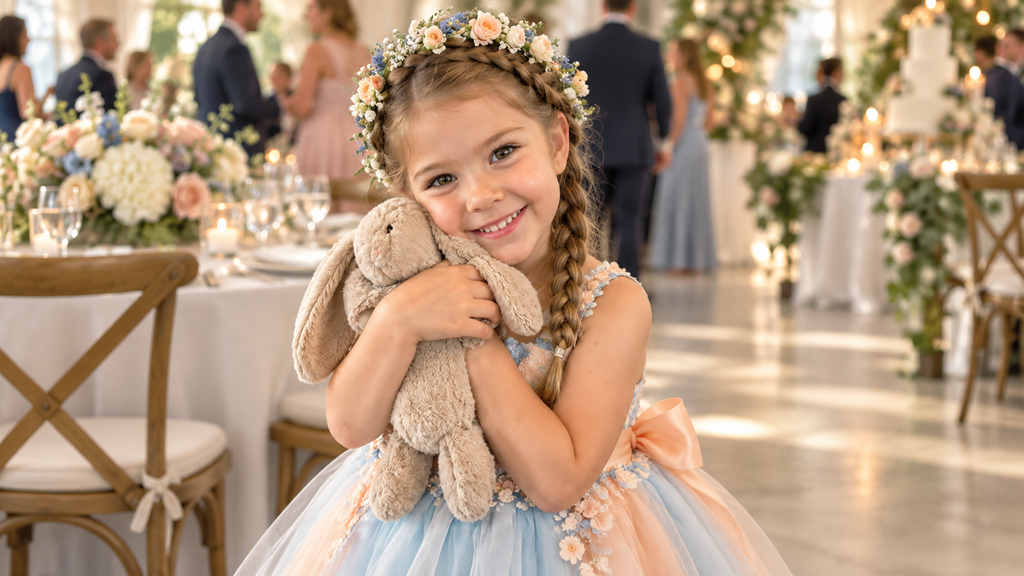
My mother smiled through her tears from the front pew.
My bridesmaids exchanged confused looks.
Matthew stood beneath the flowers at the altar, his hands folded in front of him, wearing the charcoal-gray suit we had spent two Saturdays choosing.
When he saw me, he smiled.
That smile lasted maybe three seconds.
Then he noticed Emma.
She was holding my hand so tightly that her little fingers had turned white.
And then he noticed what I was holding in my other hand.
The tiny black recording device.
Matthew’s smile vanished.
It was so slight that perhaps nobody else noticed.
But I did.
And in that instant, every instinct inside me screamed the same thing.
He knew exactly what it was.
I stopped walking.
I wasn’t halfway down the aisle.
I hadn’t even made it past the last row of pews.
My heart was pounding hard enough that I could hear it.
Emma pressed against my side.
“Mommy?”
“I’m right here.”
Matthew took one step forward.
“Lauren?”
My name sounded strange coming from him.
Too careful.
Too controlled.
“What’s going on?”
Everyone was watching us now.
I looked down at Emma.
Five years old.
Crooked flower crown.
White shoes with tiny pearls sewn across the straps.
Bunny tucked beneath one arm.
She should have been thinking about flower petals.
Cake.
Dancing.
Staying up too late.
Instead, she looked terrified.
Terrified of the man I had almost made part of our family.
Something inside me hardened.
“Emma,” I whispered, crouching beside her. “Did Matthew put this inside Bunny?”
She looked toward the altar.
Matthew immediately said, “Lauren, don’t do this here.”
Emma flinched.
That was my answer before she ever spoke.
I turned toward him.
“Don’t tell me what to do.”
A murmur passed through the church.
Matthew’s mother, Diane, leaned toward the woman beside her.
My maid of honor, Claire, had followed us out of the bridal room.
She stopped a few feet behind me.
“Lauren?” she whispered.
I held the recorder up.
“Emma found this inside her stuffed rabbit.”
The church went completely silent.
Matthew shook his head.
“Okay. Everybody needs to calm down.”
I almost laughed.
Calm down.
The phrase people use when your reaction becomes more inconvenient than what caused it.
“What is it?” Claire asked.
“A recorder.”
My mother covered her mouth.
Someone in the pews whispered, “Oh my God.”
Matthew stepped away from the altar.
“Lauren, listen to me.”
“No.”
“It’s not what you think.”
“I haven’t told you what I think.”
He stopped.
That was when I knew.
Because an innocent person would have asked what I was talking about.
Matthew was already defending himself from an accusation I hadn’t made yet.
I looked down at the recorder.
There were buttons along the side.
Play.
Stop.
Forward.
Backward.
A tiny screen showed a list of audio files.
Dozens of them.
I had only glanced at it in the bridal room.
I hadn’t listened.
There hadn’t been time.
I had seen the device and looked at Emma’s frightened face, and something deeper than reason had told me to move.
Get her out.
Ask questions later.
Now, standing in the church, I realized something that made my stomach twist.
The recorder wasn’t new.
The oldest file was almost seven weeks old.
Seven weeks.
Matthew had been hiding a recording device inside my daughter’s favorite toy for nearly two months.
“What were you recording?” I asked.
Matthew looked around at our guests.
“Can we please discuss this privately?”
“No.”
“Lauren.”
“No.”
His jaw tightened.
It was a tiny movement.
I had seen it before.
Usually when a waiter made a mistake.
Or when someone cut him off in traffic.
Or when Emma interrupted a conversation.
A flash of irritation.
Gone so quickly that I had always found an excuse for it.
Now I saw it clearly.
“Tell me why you put a recorder inside my daughter’s toy.”
He stared at me.
Then he said something I will remember for the rest of my life.
“I was trying to protect us.”
Us.
Not Emma.
Us.
“From what?”
He hesitated.
“From misunderstandings.”
I felt Emma’s hand tighten around mine.
“What misunderstandings?”
Matthew sighed.
The sound was almost impatient.
“Emma has been having a difficult time adjusting to me. We’ve talked about this. She’s been telling you things that aren’t accurate. I wanted to understand what she was saying when I wasn’t around.”
For a few seconds, I could not process his words.
Then I did.
“You hid a recording device inside her stuffed animal so you could listen to conversations between my five-year-old daughter and me?”
“That’s not how I would phrase it.”
A few people gasped.
Claire muttered something behind me that I won’t repeat.
Matthew lifted his hands.
“Everybody is making this sound sinister when it wasn’t.”
“Then what was it?”
“Lauren, please.”
“What was it?”
His voice dropped.
“She was trying to turn you against me.”
Emma suddenly whispered, “I wasn’t.”
The words were barely audible.
But the church was so quiet that people several rows away heard them.
I crouched immediately.
“I know, baby.”
“I wasn’t trying to make you sad.”
My chest felt like it cracked open.
“Emma.”
Tears filled her eyes.
“I didn’t want you to not get married because you were happy.”
I touched her cheek.
“Oh, sweetheart.”
Behind me, someone began crying.
I don’t know who.
I didn’t turn around.
Emma’s lower lip trembled.
“He said if I kept saying bad things about him, you’d think I was jealous.”
Matthew’s face changed.
“That’s not what I said.”
Emma looked at him.
And I felt her whole body stiffen.
“Don’t.”
The word came out of me before I could think.
Matthew looked at me.
“Excuse me?”
“Do not correct her.”
“Lauren, she’s five.”
“Exactly.”
“Children misunderstand things.”
“Then we’ll listen.”
His face lost color.
I looked down at the recorder.
“Lauren.”
I pressed Play.
“Don’t.”
That one word told me more than every reassurance he had given me for the past year.
The recorder crackled.
At first, there was only muffled movement.
Fabric rubbing against the microphone.
A television playing somewhere in the distance.
Then I heard Emma’s voice.
Small.
Uncertain.
“Can I have Bunny back?”
My heart stopped.
Matthew’s voice came next.
Quiet.
Cold.
Nothing like the voice he used with me.
“You need to stop carrying this thing everywhere.”
“I like Bunny.”
“You’re not a baby.”
“I’m five.”
A few people in the church shifted uncomfortably.
Matthew started toward me.
“Turn that off.”
Claire stepped between us.
“Don’t come any closer.”
Matthew stared at her.
“Stay out of this.”
Claire didn’t move.
The recording continued.
Emma’s voice again.
“Mommy said Bunny can come with me.”
Then Matthew.
“Your mother says yes to you too much.”
“Can I have her?”
“You need to learn something before the wedding.”
“What?”
“When your mom and I are married, everything isn’t going to be about you anymore.”
Silence filled the church.
In the recording, Emma began to sniffle.
Matthew continued.
“Stop crying.”
“I’m not.”
“You’re doing it now.”
“I want Mommy.”
“Your mother is at the store.”
“I want to call her.”
“No.”
“Why?”
“Because I’m telling you something important.”
There was a pause.
Then his voice became quieter.
“If you keep trying to make your mother choose between you and me, eventually she’s going to get tired of it.”
A sound escaped my throat.
Not quite a sob.
Not quite a gasp.
Emma buried her face against my dress.
The recording continued.
“Mommy won’t get tired of me.”
“I didn’t say she’d get tired of you.”
“You did.”
“No. I said she’ll get tired of your behavior.”
“I don’t want you to marry Mommy.”
Several people gasped.
I closed my eyes.
Matthew spoke again on the recording.
“See? That’s exactly what I’m talking about.”
“You’re mean.”
“And you’re rude.”
“I’m telling Mommy.”
There was a long pause.
Then Matthew said:
“If you tell her every little thing that happens when she’s not here, you’ll make her miserable.”
Emma began crying.
“You don’t want Mommy to be miserable, do you?”
“No.”
“You know how happy she is about the wedding.”
“Yes.”
“And you know how hard she worked for all of this.”
“Yes.”
“Then don’t ruin it.”
The recording ended.
No one moved.
No one whispered.
Even the children in the church seemed to understand that something terrible had just happened.
Not terrible in the way people imagine terrible things.
There had been no screaming.
No crash.
No obvious violence.
It was worse in a quieter way.
An adult man had looked at a five-year-old child who loved her mother more than anything in the world and had weaponized that love against her.
He had made her responsible for my happiness.
He had made her believe that telling me the truth could destroy my life.
And I had almost married him.
Matthew’s father stared at the floor.
His sister was crying.
His mother looked stunned.
Matthew himself looked furious.
Not ashamed.
Not horrified by hearing his own voice.
Furious.
At being exposed.
“You weren’t supposed to play that in front of everyone.”
I stared at him.
For a moment, I genuinely thought I had misheard him.
“What?”
“You’re humiliating me.”
Something inside me went still.
Completely still.
And suddenly I understood why I had ignored so many small things.
Matthew had never seemed cruel when he was with me because cruelty was not his first tool.
Control was.
He liked being the calmest person in the room.
The reasonable one.
The patient one.
He liked making other people’s reactions look excessive.
If I became upset, he lowered his voice.
If Emma cried, he called her emotional.
If somebody disagreed, he called them difficult.
And because he rarely shouted, I had mistaken composure for kindness.
I had mistaken control for stability.
I had mistaken a quiet man for a safe man.
“You think this is about humiliating you?” I asked.
Matthew glanced around at the church.
“Look at what you’re doing.”
“I am looking.”
“No, you’re having a panic response because Emma found something she wasn’t supposed to find.”
Claire actually laughed.
It wasn’t a happy laugh.
“You might want to hear yourself,” she said.
Matthew ignored her.
He focused on me.
“Lauren, you’ve been under enormous pressure. The wedding, the planning, Emma’s behavior. You’re overwhelmed.”
There it was again.
The version of reality he needed me to accept.
I looked at the recorder.
“There are more files.”
His expression changed.
“Lauren.”
I pressed the forward button.
Another file.
At first, footsteps.
A door closing.
Then Matthew speaking on the phone.
“Yeah, she’s still doing it.”
A man’s voice answered faintly through the speaker.
I recognized Matthew’s brother, Eric.
“Doing what?”
“Following Lauren everywhere.”
“She’s five.”
“I know how old she is.”
Eric laughed.
“Then what do you expect?”
“I expect boundaries.”
“She lost her dad.”
“He didn’t die. He left.”
“Same difference to a kid.”
Matthew sighed.
“Once we’re married, I’ll straighten it out.”
My entire body went cold.
Eric said something I couldn’t make out.
Then Matthew spoke clearly.
“Lauren lets guilt run that house. Emma sleeps in her bed whenever she’s scared, interrupts conversations, drags that rabbit everywhere. There’s no structure.”
“Lauren seems like a good mom.”
“She is.”
A pause.
“She’s just too soft.”
Eric said, “And you’re going to fix that?”
“If I have to.”
Another pause.
Then Matthew laughed.
“Eventually Emma will figure out that I’m not asking permission.”
The file ended.
Someone in the pews said, “Jesus.”
Matthew’s mother stood.
“That’s enough.”
I looked at her.
Diane’s face was pale.
For one hopeful second, I thought she was talking to her son.
Then she looked at me.
“This should not be happening in public.”
I almost couldn’t believe it.
“Your son hid a recording device inside my child’s stuffed animal.”
“I understand that.”
“No. I don’t think you do.”
“Matthew clearly handled this badly.”
“Handled what badly?”
Diane swallowed.
“He was trying to adjust to becoming a parent.”
I stared at her.
“You don’t secretly record a child because you’re adjusting to parenthood.”
“I didn’t say it was right.”
“Then stop explaining it.”
Matthew finally raised his voice.
“Mom, sit down.”
Diane immediately sat.
That frightened me more than I expected.
Not because he yelled.
Because she obeyed without hesitation.
My mother stood from the opposite side of the church.
“Lauren.”
I turned.
She wasn’t looking at me.
She was looking at Matthew.
I had never seen that expression on my mother’s face.
Not once.
She walked into the aisle.
“Is there anything else on that recorder?”
“I don’t know.”
Matthew moved again.
“I’m done with this.”
He started down the aisle toward us.
Emma made a sound.
A tiny sound.
Barely more than a breath.
But I felt her trying to get behind me.
Claire moved beside me.
My brother, Daniel, rose from his seat.
So did my uncle.
Then Matthew’s own brother Eric stood from the groomsmen’s side.
“Matt,” he said.
Matthew stopped.
Eric walked down the altar steps.
“Don’t.”
“This is none of your business.”
“You put my voice on that thing too, apparently, so I guess now it is.”
Matthew glared at him.
Eric lowered his voice.
“Stay where you are.”
Matthew looked around.
For the first time all day, he seemed to realize something.
He had lost control of the room.
He had expected me to be embarrassed.
Expected me to protect appearances.
Expected me to worry about the guests.
The money.
The photographs.
The flowers.
The meal waiting at the reception hall.
He had counted on the weight of everything already spent to push me forward.
Two hundred people.
Thousands of dollars.
A church full of expectations.
He had believed I would rather marry the wrong man than admit, publicly, that I had been wrong about him.
He had underestimated one thing.
I was a mother before I was a bride.
And standing there with Emma shaking behind me, there wasn’t enough money in the world to make me take another step toward that altar.
I slowly removed my engagement ring.
Matthew watched me.
“No.”
It was almost a whisper.
I held the ring between my fingers.
“There isn’t going to be a wedding.”
A sound moved through the church like wind through trees.
Matthew shook his head.
“You’re not serious.”
“I have never been more serious about anything.”
“Lauren, we’ve spent a year planning this.”
“I don’t care.”
“Your family is here.”
“I don’t care.”
“Our friends flew in.”
“I don’t care.”
“The reception—”
“I don’t care.”
His eyes hardened.
“You will care tomorrow.”
That sentence silenced the room again.
I stared at him.
“What does that mean?”
“You are emotional right now. Tomorrow, when everyone goes home and you realize what you’ve done, you’re going to regret blowing up our life because a five-year-old doesn’t like sharing her mother.”
Emma started crying again.
That was it.
Whatever tiny piece of doubt remained inside me disappeared.
I stepped forward.
Not close enough for him to touch me.
Just close enough that he could hear every word.
“My daughter did not destroy this wedding.”
Matthew opened his mouth.
I continued.
“You did.”
He froze.
“You destroyed it every time you frightened her when I wasn’t there.”
“I never frightened her.”
“You destroyed it when you taught her that telling me the truth would hurt me.”
“That’s not what happened.”
“You destroyed it when you hid a recorder in her toy.”
“I told you why.”
“And you destroyed it when you stood here after hearing your own voice and cared more about being embarrassed than about what you did to a child.”
Matthew’s face turned red.
“You’re twisting everything.”
“No.”
For the first time in our entire relationship, I didn’t feel the need to convince him.
“I finally stopped twisting everything for you.”
He stared at me.
Then Emma stepped out from behind my dress.
She looked so tiny.
So impossibly tiny.
She held Bunny against her chest.
Matthew looked at her.
Emma looked right back.
And then my five-year-old daughter said the bravest thing I had ever heard.
“I told Mommy.”
Matthew’s expression changed.
Emma squeezed my hand.
“And she believed me.”
I broke.
Tears came so suddenly that my vision blurred.
I bent down and pulled her into my arms.
“Yes,” I whispered into her hair. “I believe you.”
She wrapped both arms around my neck.
“Are you mad?”
“At you?”
She nodded against my shoulder.
“No.”
“But your wedding.”
I pulled back enough to look at her.
“There is no wedding in the whole world more important than you feeling safe.”
Her face crumpled.
“Really?”
“Really.”
“What about the cake?”
A laugh escaped me through my tears.
Around us, other people started laughing too.
Not because anything was funny.
Because sometimes after terror, the smallest ordinary question breaks the pressure holding everyone together.
“The cake will survive,” I said.
Emma sniffed.
“It has strawberries.”
“I remember.”
“I like strawberries.”
“I know.”
Behind us, Claire was crying openly now.
My mother reached us and knelt beside Emma.
“So do I,” she said. “I think we should eat a ridiculous amount of that cake.”
Emma almost smiled.
Matthew suddenly said, “This is insane.”
My brother turned toward him.
“Leave.”
“This is my wedding.”
“No,” I said.
Matthew looked at me.
I placed the engagement ring on the small table beside the aisle where programs had been stacked.
“This was your wedding.”
His mother stood again.
“Matthew, let’s go.”
He ignored her.
“Lauren, come outside with me.”
“No.”
“Five minutes.”
“No.”
“Please.”
“No.”
His face tightened.
“We need to discuss the house.”
That caught my attention.
“What about my house?”
He hesitated.
Just a fraction of a second.
But people noticed.
My mother looked at me.
Claire looked at him.
I felt cold again.
“The renovations,” he said quickly.
“What renovations?”
“The ones we discussed.”
“We haven’t discussed renovations.”
“Yes, we have.”
“No.”
He looked around.
“This is exactly why we shouldn’t be doing this publicly.”
I reached for the recorder again.
Matthew’s entire body changed.
“Don’t.”
There was fear in his voice this time.
Real fear.
I looked at the screen.
More recordings.
Dozens.
I pressed the next file.
Matthew swore.
The recording began.
At first, nothing.
Then Matthew’s voice.
He was talking to someone.
I couldn’t identify the other person.
“After the wedding, it’ll be easier.”
The other person said something indistinct.
Matthew continued.
“Right now everything is technically hers.”
My breath stopped.
“The house?” the voice asked.
“House. Savings. Investment account. Most of it.”
The other person laughed.
“You picked well.”
Matthew laughed too.
It was a sound I had heard hundreds of times.
A sound I would never hear the same way again.
“Don’t be an asshole.”
“I’m serious.”
“She’s not stupid.”
“I didn’t say she was.”
“Then how are you getting her to put your name on anything?”
Matthew answered casually.
“Marriage changes the conversation.”
My mother grabbed my arm.
The voice asked, “Does she know you talked to the contractor?”
“No.”
“About knocking out the back?”
“Yeah.”
“That’s a lot of money.”
“There’s plenty of equity.”
“And the kid?”
Matthew went quiet.
Then:
“That’s the bigger problem.”
Every person in that church seemed to stop breathing at once.
The other man laughed nervously.
“She’s five, man.”
“She’s attached to Lauren every second she’s awake.”
“So?”
“So after we’re married, she needs to start spending more time with her grandparents.”
My mother whispered, “What?”
Matthew on the recording continued.
“Weekends at first.”
“Does Lauren know?”
“Not yet.”
“And you think she’s going to agree?”
A pause.
Then Matthew said:
“She’ll agree eventually.”
The file ended.
My mother went white.
I stared at Matthew.
He looked like a stranger.
Not because his face had changed.
Because mine finally understood it.
The contractor.
The house.
My daughter.
He had been making plans for our lives that he never intended to ask me about.
Not wild plans.
Not cinematic plans.
That would have been easier to spot.
Incremental plans.
A weekend here.
A renovation there.
His name added to something.
Emma spending more time away.
A boundary.
A compromise.
Another compromise.
Until one day I would wake up inside a life I no longer recognized and wonder how I had agreed to all of it.
Matthew pointed toward the recorder.
“That conversation is completely out of context.”
I almost smiled.
“You seem to have a lot of conversations that only sound terrible because of context.”
“Lauren.”
“Who were you talking to?”
He didn’t answer.
“Who?”
“Someone from work.”
“What’s his name?”
“Why does that matter?”
“Because you were discussing my finances with him.”
“I wasn’t discussing your finances.”
“You literally said my house and my savings.”
“We were joking.”
“My daughter wasn’t a joke.”
“I didn’t say she was.”
“You called her the bigger problem.”
“I meant adjustment problem.”
My voice rose.
“She is not a problem!”
The words echoed through the church.
Emma looked up at me.
I immediately lowered my voice.
“You are not a problem, sweetheart.”
Her eyes filled again.
“I know.”
That nearly destroyed me.
Because she didn’t say it confidently.
She said it like she was practicing.
As though she had spent weeks being made to feel like a problem and now needed to relearn the opposite.
Claire touched my shoulder.
“Lauren.”
I looked at her.
She held up her phone.
“I called the police.”
Matthew turned sharply.
“You did what?”
“I called them when she played the first recording.”
“For what?”
“For putting a recording device in a child’s toy, for starters. They can decide what applies.”
“You had no right.”
Claire’s voice went flat.
“Neither did you.”
Matthew looked at me.
“Tell her to cancel it.”
“No.”
“Lauren.”
“No.”
“You’re going to involve police in this?”
“You involved surveillance in my daughter’s bedroom.”
“I wasn’t recording her bedroom.”
My blood ran cold.
“What?”
He froze.
I stared at him.
“I never said where Bunny was kept.”
Matthew didn’t speak.
Emma looked at me.
“Bunny sleeps in my room.”
The entire church changed.
It was almost physical.
People who had been confused became horrified.
My brother stepped between Matthew and us.
Eric stared at his brother as though he had never seen him before.
Diane began crying.
“Matthew,” she whispered.
For the first time, Matthew seemed to realize he had said something he could not explain away.
He lifted his hands.
“I knew Bunny was in her room because I’ve been in the house.”
“Not alone.”
“Lauren—”
“Not once.”
He said nothing.
I thought through the past two months.
Keys.
Matthew had a key to my house.
I had given it to him three months earlier.
For emergencies.
He had occasionally arrived before me.
Picked up groceries.
Left flowers.
Fixed a cabinet door.
Had he gone into Emma’s room?
Of course he had.
I remembered coming home one evening and finding Bunny on the sofa.
Emma insisting she had left her in her bedroom.
Matthew had laughed.
“Bunny must have learned to walk.”
Emma hadn’t laughed.
I had.
The memory made me sick.
“Give me your key.”
Matthew blinked.
“What?”
“My house key.”
“Lauren, we’re getting married.”
“No, we’re not.”
“This is ridiculous.”
“Give me the key.”
He didn’t move.
My brother said, “You heard her.”
Matthew reached into his pocket.
For one horrible second, everyone tensed.
Then he pulled out his key ring.
He worked one key loose.
Held it toward me.
I didn’t take it.
My brother did.
Matthew looked at me.
“This is a mistake.”
I shook my head.
“No.”
“You think this proves I’m some kind of monster?”
“I don’t need to call you anything.”
“You’re letting a child dictate your life.”
“No.”
I looked at Emma.
“I’m finally listening to my child about hers.”
Sirens sounded faintly outside.
Matthew heard them.
So did everyone else.
His eyes moved toward the church doors.
Then back to me.
“You’ll regret this.”
My brother stepped closer.
“That’s enough.”
But Matthew wasn’t looking at him.
He was looking at me.
And for the first time, I wasn’t afraid of disappointing him.
I wasn’t afraid of appearing unreasonable.
I wasn’t afraid of losing the future I had imagined.
Because I finally understood something.
That future had never existed.
Not really.
I had loved the person Matthew presented to me.
The gentle man who remembered how I took my coffee.
The man who fixed Emma’s bicycle chain.
The man who held my hand during thunderstorms because he knew I hated them.
The man who told me I deserved to be taken care of.
Maybe parts of him had been real.
That was the hardest thing to accept later.
People like Matthew are rarely cruel every minute of every day.
If they were, leaving would be easy.
He had been kind often enough for me to doubt the moments when he wasn’t.
Patient often enough for me to question Emma when she said he could be mean.
Loving often enough for me to explain away control as concern.
The police entered through the rear doors.
Two officers.
They looked surprised to find a bride standing in the aisle holding a recorder, a crying flower girl, and nearly two hundred silent wedding guests.
Claire walked toward them.
Matthew looked at me one final time.
“Please don’t do this.”
I held Emma’s hand.
“I’m not doing anything to you.”
I swallowed.
“I’m protecting her.”
And then I turned away.
The strangest part about canceling a wedding while wearing a wedding dress is that the world around you continues functioning normally.
Outside the church, cars passed.
A delivery truck stopped at a traffic light.
Somewhere nearby, a dog barked.
A man walked across the street carrying coffee.
The sky was still blue.
I remember staring at all of it through the bridal-room window while one police officer spoke to Matthew in the church office and another sat across from me taking notes.
I kept thinking:
How can everything outside look exactly the same?
My entire future had collapsed in less than thirty minutes.
Yet somewhere, somebody was deciding what to order for lunch.
Emma sat in my mother’s lap.
She had taken off her flower crown.
Bunny rested beside her.
The recorder was sealed inside an evidence bag on the table.
Every time I looked at it, another wave of nausea hit me.
“Ms. Carter?”
I looked up.
The officer was probably in his forties.
Calm voice.
Gentle expression.
“Do you need a break?”
“No.”
My voice sounded distant.
“I want to finish.”
He nodded.
“How long did your daughter have the stuffed animal?”
“Since she was two.”
“Does she normally sleep with it?”
“Every night.”
My throat tightened.
“She takes Bunny almost everywhere.”
“And Mr. Reeves had access to your home?”
“He had a key.”
“Did you know he was placing recording devices anywhere in the house?”
“No.”
“Did you ever consent to him recording your daughter?”
“No.”
“Did you consent to being recorded?”
“No.”
He nodded and wrote something.
“Has he ever threatened either of you?”
I hesitated.
“Not me.”
Then I looked at Emma.
She was tracing the rabbit’s ear with one finger.
“I don’t know.”
That answer hurt more than saying yes would have.
Because I was her mother.
I should have known.
I should have known everything.
The officer seemed to understand what was happening in my face.
“We’ll need to examine the device. There may be additional files you haven’t heard.”
“Okay.”
“We may also need to speak with your daughter separately, preferably with a trained child interviewer.”
My stomach tightened.
“Will I be there?”
“Usually the interviewer speaks with the child without a parent in the room so they don’t unintentionally influence answers. But she’ll be in a child-friendly environment, and you’ll be nearby.”
I looked at Emma.
“Okay.”
My voice broke.
“Whatever she needs.”
The officer nodded.
Then he said, “You should also consider changing your locks today.”
“I will.”
“And if he had passwords to any security systems, email accounts, location-sharing apps, smart devices—change all of those too.”
That sentence opened an entirely new wave of fear.
I thought about everything Matthew knew.
My phone code.
The garage keypad.
The password to our streaming accounts.
Maybe my laptop password.
My Wi-Fi.
The tablet Emma used.
My mother’s address.
Emma’s preschool.
Her pediatrician.
Our routines.
Where I bought groceries.
Which playground we visited.
Which side of the bed I slept on.
I suddenly felt as if my whole life had windows I hadn’t known were open.
Claire was standing near the door.
She must have seen my expression.
“I’ll help,” she said.
I looked at her.
“With everything.”
She crossed the room.
“Locks. Passwords. Security system. Whatever.”
I nodded.
“Thank you.”
Emma looked up.
“Are we going home?”
I crouched beside her.
“Not right away.”
“Why?”
“Because we’re going to make sure home is safe first.”
Her face changed.
Fear flickered through it.
“Is Matthew there?”
“No.”
“Can he come there?”
I swallowed.
“No.”
She stared at me.
“You promise?”
There are moments when a child asks for certainty you cannot guarantee.
I wanted to tell her yes.
Forever.
Nothing bad will ever happen again.
But I had learned enough in the past hour about false reassurance.
So I told her something I could promise.
“I promise I will do everything I can to keep you safe.”
She considered this.
Then she nodded.
“Okay.”
My mother looked away and wiped her face.
The wedding reception still happened.
Just not the way anyone planned.
I didn’t go.
At first, the venue coordinator called Claire asking what to do with the food.
Two hundred meals had been prepared.
The cake had arrived.
The DJ was setting up.
Tables were decorated with candles and eucalyptus branches.
Place cards waited beside folded napkins.
Our names were printed on a sign beside the entrance.
LAUREN & MATTHEW
SEPTEMBER 19
FOREVER STARTS HERE.
Claire asked me what I wanted.
I sat in my mother’s guest room wearing sweatpants beneath my bridal robe and stared at that text message.
What should we do with the reception?
My wedding dress lay across a chair.
I couldn’t bear to look at it.
Emma was asleep beside me, exhausted from crying.
I typed:
Let everyone eat.
Claire replied almost immediately.
Are you sure?
I looked at Emma.
Her hand was curled beneath her cheek.
Bunny was gone because the police had taken it with the recorder for evidence.
She had cried when they took the rabbit.
An officer had promised they would return Bunny as soon as possible.
I typed:
Yes.
People traveled. Food is already there. Tell them to eat. Tell them to take flowers home. Tell them I’m okay.
Three dots appeared.
Then:
What about the cake?
I almost laughed.
Emma had asked the same thing.
Take it to the reception.
A moment later:
Even the bride-and-groom topper?
I stared at the message.
Then typed:
Throw that part away.
Claire sent back a heart.
Later she told me that nearly all the guests went to the reception.
Not to celebrate a wedding.
To sit together.
To talk.
To process what they had heard.
The venue staff removed our names from the entrance.
The DJ didn’t play the first-dance song.
Nobody touched the champagne toast.
But people ate.
They drank coffee.
They cried.
Some hugged my mother.
Someone cut the wedding cake.
Apparently Emma’s prediction was correct.
The strawberries were excellent.
Guests took centerpieces to a nursing home nearby.
The unopened wine went back to the venue.
Several trays of leftover food were donated to a shelter.
My aunt packed some cake into a white cardboard box and brought it to my mother’s house.
At nearly nine that night, Emma woke up.
Her eyes were swollen.
“Mommy?”
“I’m here.”
She sat up.
“Did you get married?”
“No.”
“Because of me?”
The question sliced straight through me.
I sat beside her.
“No.”
Her eyes lowered.
“You were going to.”
“Yes.”
“And then I showed you Bunny.”
“Yes.”
“So because of me.”
I took her hands.
“No, Emma. Listen carefully.”
She looked at me.
“The wedding stopped because Matthew did things that were wrong.”
She stared at me.
“You telling me about something wrong is never the same thing as causing it.”
She didn’t answer.
I continued.
“If someone breaks a window and you tell me the window is broken, did you break it?”
“No.”
“If someone steals a cookie and you tell me the cookie is gone, did you steal it?”
She almost smiled.
“No.”
“Then if Matthew did something wrong and you told me, did you cause what Matthew did?”
She thought about it.
Then slowly shook her head.
“No.”
“Exactly.”
“But you’re sad.”
I couldn’t lie to her.
“I am.”
Her face fell.
I squeezed her fingers.
“But I’m not sad because you told me.”
“Why are you sad?”
Because I loved a man who frightened you.
Because I didn’t believe you quickly enough.
Because I had almost promised my life to someone who saw you as an obstacle.
Because part of me still missed the man I thought he was, and I hated myself for missing him.
Because our living room was filled with wedding gifts from people who thought tonight would look entirely different.
Because tomorrow I would wake up without a fiancé, without a honeymoon, without the future I had spent a year imagining.
There were a thousand answers.
I gave her the one a five-year-old could carry.
“I’m sad because I found out someone I trusted wasn’t who I thought he was.”
Emma leaned against me.
“I didn’t like him.”
“I know.”
“He was nice when you were there.”
My eyes closed.
“I know.”
“I thought you wouldn’t believe me because he was nice to you.”
That sentence will probably hurt me until the day I die.
I put my arms around her.
“I should have listened better the first time.”
“You listened today.”
Tears filled my eyes.
“Yes.”
“You came with me.”
“I did.”
Emma rested her head against my chest.
Then, after a while, she whispered:
“Can we have cake?”
I laughed.
A real laugh this time.
“We absolutely can.”
My aunt had packed enough cake to feed twelve people.
Emma and I sat at my mother’s kitchen table at nine-thirty at night.
I was wearing sweatpants and the pearl earrings I’d forgotten to remove.
Emma wore her flower-girl dress with one sock.
My mother still had her formal hairstyle but had changed into pajamas.
The three of us ate wedding cake out of paper plates.
There was something almost absurd about it.
Three generations of women.
Half dressed for a wedding.
Half dressed for bed.
Eating strawberries from a cake that was supposed to celebrate a marriage that never happened.
At one point Emma got frosting on her nose.
My mother laughed so hard she cried.
Then I started crying.
Then Emma started laughing at both of us.
That was how my wedding day ended.
Not with a first dance.
Not with a husband.
Not with photographs beneath string lights.
It ended in my mother’s kitchen with my daughter alive, safe, and beginning to understand that telling me the truth had not cost her my love.
There are worse endings.
There are far worse endings.
The next morning, I woke up at 5:17.
For several seconds, I didn’t remember.
Then I saw the wedding dress hanging from the closet door.
Everything came back.
I ran to the bathroom and threw up.
My mother found me sitting on the floor.
She didn’t say anything.
She simply sat beside me.
“I’m so stupid,” I whispered.
“No.”
“Mom.”
“You’re not.”
“She told me.”
My mother looked at me.
“Emma told me he was mean when I wasn’t there.”
“You changed your behavior after that.”
“I should’ve ended it.”
“You didn’t know what ‘mean’ meant.”
“I should’ve asked more questions.”
“Maybe.”
That answer surprised me.
I looked at her.
My mother wasn’t going to give me some easy sentence that erased responsibility.
And I loved her for it.
“Maybe you should have asked more questions,” she said softly. “Maybe you should have trusted your discomfort sooner.”
Tears ran down my face.
“But Lauren, you can spend the next twenty years punishing yourself for not understanding something soon enough, or you can spend those years proving to Emma that once you understood, you acted.”
I stared at the floor.
“I almost married him.”
“But you didn’t.”
“By seconds.”
“Seconds matter.”
I covered my face.
“What if she hadn’t found that recorder?”
My mother was quiet.
That question terrified both of us.
Eventually she said:
“Then be grateful she did.”
By noon, my brother had changed every lock on my house.
Claire reset the garage code.
My mother sat beside me while I changed passwords.
Email.
Banking.
Phone account.
Wi-Fi.
Cloud storage.
Home security.
Streaming services.
Social media.
Everything.
We discovered Matthew had been listed as an emergency contact on two accounts.
Removed.
He had access to the shared grocery app.
Removed.
He was connected to the smart thermostat.
Removed.
He knew the password to the tablet Emma used.
Reset.
His fingerprint had been programmed into my front-door smart lock before I switched back to a regular deadbolt.
Deleted.
Every small digital connection felt like cutting a thread.
By evening, my house was mine again.
But it didn’t feel like mine.
Not yet.
I walked into Emma’s bedroom.
There was an empty space on her pillow where Bunny usually slept.
I sat on the edge of her bed.
Emma stood in the doorway.
“Are you sad?”
“Little bit.”
She came inside.
“Because Bunny’s gone?”
“That too.”
“They said she’ll come back.”
“I know.”
Emma climbed beside me.
We sat in silence.
Then she pointed toward the closet.
“He went in there once.”
My heart stopped.
“Matthew?”
She nodded.
“When?”
“When you went to get pizza.”
I remembered.
Three weeks earlier.
The restaurant had forgotten half our order.
I had driven back.
I was gone maybe fifteen minutes.
Matthew stayed with Emma.
One of the only times since her warning that I had left them alone together.
I had considered taking her.
But she was already in pajamas.
Matthew had smiled.
“I think I can handle fifteen minutes.”
I had hesitated.
Emma had looked nervous.
And I had said:
Mommy will be right back.
I felt physically ill.
“What did he do in the closet?”
“I don’t know.”
“You didn’t see?”
“He told me to stay downstairs.”
“Did he touch any of your things?”
She shrugged.
“Bunny.”
“Anything else?”
“I don’t know.”
I called the detective.
Within an hour, officers returned.
We searched Emma’s room.
Nothing in the closet.
Nothing beneath the bed.
Nothing behind furniture.
Then one officer noticed the night-light.
It looked ordinary.
Plugged into the wall.
A little white square with a soft glow.
Except it wasn’t ours.
I thought it was Matthew’s.
Emma thought it was mine.
The officer unplugged it.
Turned it over.
His expression changed.
There was a small lens.
My knees nearly gave out.
The officer immediately said, “Don’t assume what this is yet.”
But my hands were shaking.
He placed it in another evidence bag.
I called my mother.
I couldn’t speak.
She arrived anyway.
Later, investigators confirmed the device was a small Wi-Fi-enabled camera.
It was aimed not at Emma’s bed but toward the bedroom doorway and the area where she usually played.
That distinction mattered legally.
Emotionally, it changed nothing.
Matthew had installed a camera in my five-year-old daughter’s bedroom without my knowledge.
He later claimed he had done it because Emma “made false accusations” and he wanted protection.
But the timeline destroyed that excuse.
The camera had been purchased before Emma ever told me she was afraid of him.
Before our confrontation.
Before he claimed she was trying to turn me against him.
He had been planning surveillance long before he had a justification ready.
The detective asked me whether Matthew had installed devices elsewhere.
We searched the entire house.
A second camera was found in the living room disguised as a USB charger.
A third device was discovered in the kitchen.
That one recorded audio.
Nothing was found in bathrooms or my bedroom.
I was told that mattered.
It did.
But not enough to make me feel clean in my own home.
For weeks afterward, I couldn’t look at a charger without examining it.
I unplugged things constantly.
I covered the camera on my laptop.
I stopped using smart speakers.
At night, I would wake convinced that something was watching us.
Fear does strange things after the danger is gone.
It keeps showing up for work.
The investigators recovered twenty-seven audio files from Bunny’s recorder.
I listened to eleven.
That was enough.
My attorney advised me not to listen to the rest unless necessary.
The police had copies.
The prosecutor had copies.
I didn’t need to hurt myself repeatedly just because evidence existed.
Some recordings were ordinary.
Emma singing.
Me reading her bedtime stories.
My mother talking about groceries.
Me on the phone with Claire discussing wedding flowers.
But scattered among those normal moments were conversations that made me understand just how carefully Matthew had been working on Emma when I wasn’t around.
He rarely shouted.
That was deliberate.
He spoke quietly.
He corrected.
He shamed.
He implied consequences without stating them directly.
He told her I was exhausted because she “needed too much attention.”
He told her I deserved “grown-up time.”
He told her big girls slept alone.
He told her five-year-olds didn’t interrupt.
He told her bringing Bunny downstairs during dinner was “baby behavior.”
Once, when Emma said she wanted to live with only me forever, Matthew replied:
“That’s not your decision.”
Another time:
“Your mom is allowed to have a life too.”
Another:
“You need to stop making everything harder for her.”
That sentence appeared again and again.
Harder for her.
Difficult for her.
Stressful for her.
Matthew had found the one thing guaranteed to silence my daughter.
Her love for me.
Emma believed she was helping me by staying quiet.
I had spent five years teaching her to be kind.
Matthew had turned kindness into a weapon.
The worst recording was made eight days before our wedding.
Emma was crying.
She wanted me.
Matthew told her I was outside talking to the wedding planner.
Then he said:
“After Saturday, things change.”
Emma sniffled.
“What things?”
“Your mom and I become a family.”
“We’re already a family.”
There was a long silence.
Then Matthew said:
“I mean a real married family.”
My hands shook when I heard it.
Emma said:
“Me and Mommy are real family.”
Matthew answered:
“That’s not what I meant.”
But it was.
It absolutely was.
Not because he wanted to hurt her for entertainment.
I don’t believe that.
In some ways, that would have been easier to understand.
Matthew wanted hierarchy.
He believed marriage would put him first.
He believed being my husband would elevate his needs above hers.
He believed Emma’s attachment to me was something to correct.
And perhaps most frightening of all, he believed he was entitled to decide these things without my consent.
He wasn’t trying to join our family.
He was trying to reorganize it around himself.
Matthew contacted me seventeen times in the first three days.
Calls.
Texts.
Emails.
Messages from new numbers after I blocked the old ones.
At first, his messages were apologetic.
Lauren, please let me explain.
I handled things badly.
I love you.
I love Emma.
I panicked about becoming a stepfather.
Please don’t let one mistake erase everything good between us.
Then they became defensive.
You’re listening to people who don’t know our relationship.
Claire has always disliked me.
Your mother is using this to turn you against me.
The recordings sound bad without context.
Then angry.
You humiliated me in front of everyone I know.
Do you understand what you’ve done to my career?
People are calling me a child abuser because of you.
You had no right to play private conversations publicly.
Then bargaining.
We can postpone.
We can do counseling.
I’ll never discipline Emma again.
I’ll move out while we work on things.
Then back to apology.
I wasn’t trying to hurt either of you.
Finally:
I know you’re reading these.
Just answer one question.
Did you ever actually love me?
I stared at that message for a long time.
Because that was the trap.
If I answered yes, he could pull on the love.
If I answered no, he could rewrite our relationship as fraud.
So I didn’t answer.
My attorney sent him a formal notice directing all communication through counsel.
A temporary no-contact order followed.
Then silence.
The silence was strange.
For more than a year, Matthew had texted me every morning.
Good morning, beautiful.
Every night:
Sleep well.
Suddenly my phone stopped lighting up.
I expected relief.
Instead, for a while, there was grief.
That embarrassed me.
How could I miss him?
Then therapy helped me understand that I wasn’t missing the man who frightened Emma.
I was grieving the person I thought he was.
The future I believed we were building.
The Sunday breakfasts.
The trip we were supposed to take after the wedding.
The garden he had promised to help me plant.
The inside jokes.
The photograph of the three of us at the county fair where Emma was sitting on his shoulders.
The hundreds of ordinary memories now contaminated by knowledge I hadn’t possessed when they were created.
Grief doesn’t always mean you want someone back.
Sometimes it means you’re accepting that the person you loved never existed in the way you thought they did.
Three weeks after the wedding, a woman named Rachel contacted me.
I almost deleted her message because I didn’t recognize the name.
Then I read the first sentence.
I dated Matthew for two years before you met him.
My stomach dropped.
She continued.
I heard about what happened at the wedding. I don’t want anything from you. But if you’re speaking to police, there’s something you should know.
We met at a coffee shop with my attorney’s knowledge.
Rachel was thirty-eight.
Quiet.
Dark hair.
Nervous hands.
She apologized three times before we even sat down.
“I don’t know why I’m apologizing,” she finally said.
“Neither do I.”
She gave a small, sad laugh.
Then she looked at me.
“Did he ever tell you why we broke up?”
“He said you wanted to move overseas.”
Rachel’s face went blank.
“No.”
My heart sank.
“He said you got a job opportunity in London.”
“I have never lived outside this state.”
I felt cold.
Rachel stirred her coffee without drinking it.
“I left because he put a tracker on my car.”
I stared at her.
“He said it was because my commute was dangerous.”
She looked down.
“But he didn’t tell me it was there.”
“How did you find it?”
“My mechanic.”
She took a breath.
“Then I found out he’d been checking my location whenever I didn’t answer quickly enough.”
“Did you report it?”
“No.”
“Why not?”
Rachel’s eyes filled with shame.
“He convinced me I was overreacting.”
The sentence sounded painfully familiar.
She continued.
“He said couples shared locations all the time. He said the only difference was that he forgot to tell me. Then he cried.”
I closed my eyes.
Of course he cried.
I had seen Matthew cry twice.
Once during a movie.
Once when he proposed.
Tears had made me trust him more.
Rachel said, “A month later, I found an old phone plugged in behind a bookshelf.”
My heart started pounding.
“It was recording audio.”
“What did he say?”
“That he thought I was cheating.”
“Were you?”
“No.”
“What did you do?”
“I left.”
“Did he threaten you?”
“No.”
She paused.
“Not directly.”
That phrase again.
Not directly.
“He told me I was unstable. Said I’d regret throwing away someone who loved me. Told mutual friends I had developed trust issues.”
She laughed without humor.
“And somehow, by the end of it, I was apologizing to him.”
I stared at her.
“Why are you telling me now?”
Rachel looked toward the window.
“Because when I heard about the camera in your daughter’s room, I realized he hadn’t changed.”
Her eyes came back to mine.
“He got better.”
That sentence stayed with me.
Not changed.
Better.
Better at explaining.
Better at appearing patient.
Better at choosing behavior that was difficult to describe without sounding paranoid.
Rachel gave a statement to investigators.
So did one of Matthew’s former coworkers.
Then another ex-girlfriend came forward.
The pattern was not identical.
But the theme was.
Tracking.
Recording.
Monitoring.
Justifications afterward.
Matthew didn’t believe privacy was something other people possessed.
He believed it was something he could revoke when uncertainty made him uncomfortable.
The investigation widened.
What had happened to Emma was no longer an isolated lapse of judgment.
It was part of something older.
Something practiced.
That knowledge devastated me.
And strangely, it also freed me.
Because I finally stopped asking the question that had haunted me every night.
What did I do wrong that made him become this person?
Nothing.
I hadn’t transformed him.
I had simply reached the point where I could finally see him.
Emma started seeing a child therapist named Dr. Reyes.
The first few sessions were mostly play.
Emma built houses with blocks.
Drew pictures.
Made animals talk to each other.
I sat in the waiting room every week feeling like I was being slowly disassembled.
After the fourth session, Dr. Reyes asked to speak with me.
“Emma believes she has to manage adult emotions.”
My chest tightened.
“Because of Matthew?”
“Partly.”
She chose her words carefully.
“Some children are naturally very attuned to their parents. Emma watches your emotional state closely.”
I felt guilt rise immediately.
Dr. Reyes noticed.
“This isn’t about assigning blame.”
I nodded.
“Okay.”
“She’s afraid that telling you something upsetting will make you sad.”
I looked down.
“She asked if the wedding stopped because of her.”
“Yes.”
“I told her it didn’t.”
“Good.”
Dr. Reyes paused.
“But she’ll need to hear that message more than once.”
“How many times?”
“As many times as it takes.”
So I told Emma again.
And again.
And again.
Sometimes children don’t heal because you find the perfect sentence.
They heal because you keep saying the true sentence until their fear gets tired of arguing.
You can tell me anything.
You are not responsible for my feelings.
Adults are responsible for adult choices.
You do not have to be polite to someone who makes you feel unsafe.
You are allowed to say no.
You are allowed to leave.
You are allowed to ask for me.
You will never get in trouble for telling me something that scares you.
At first, Emma nodded without speaking.
Then she began testing the rules.
“Mrs. Dalton made me uncomfortable because she yelled.”
“Thank you for telling me.”
“A boy pushed me today.”
“Thank you for telling me.”
“Grandma said I could have two cookies but I had three.”
I laughed.
“Thank you for telling me. We’re still going to talk about the cookie.”
She giggled.
Little by little, truth stopped feeling dangerous.
Bunny came home six weeks later.
The police returned the rabbit in a clear evidence bag.
Emma cried when she saw her.
So did I.
There was a small tear beneath the ribbon where the recorder had been hidden.
I asked Emma whether she wanted a new Bunny.
She looked horrified.
“No.”
“Okay.”
“Can you fix her?”
“I can try.”
We went to a fabric store.
Emma chose a piece of red cloth covered in tiny white stars.
That evening, I sat at the kitchen table and stitched a small heart-shaped patch over the opening.
I am terrible at sewing.
The heart was crooked.
One side was bigger than the other.
The stitches were uneven.
Emma watched every movement.
When I finished, I held Bunny out.
“There.”
Emma examined the patch.
“It’s crooked.”
“I know.”
She grinned.
“I like it.”
“You do?”
“Yeah.”
She hugged Bunny.
“Now she has a heart on the outside.”
I had to look away for a second.
“That’s one way to think about it.”
Emma touched the patch.
“Does she remember?”
“Remember what?”
“The bad stuff.”
I considered my answer.
“Maybe.”
Emma looked concerned.
“Is that bad?”
“No.”
I touched the crooked heart.
“Sometimes remembering helps us know what to do differently.”
Emma thought about that.
Then she kissed Bunny’s head.
“It’s okay. She’s safe now.”
I don’t know if she was talking about the rabbit.
Maybe she wasn’t.
The legal process took months.
There was no dramatic courtroom confession.
No movie moment where Matthew suddenly admitted everything.
Real consequences are slower.
Messier.
Less satisfying.
His attorney argued that he had placed the devices because he believed Emma was making false accusations.
Investigators pointed out that some devices had been purchased earlier.
His attorney argued that he had access to the home.
My attorney pointed out that access was not blanket consent to secret surveillance.
There were hearings.
Statements.
Forensic reports.
Dates.
Receipts.
Metadata.
Technical explanations about recording equipment I never wanted to understand.
Matthew eventually accepted a plea arrangement involving privacy and harassment-related offenses.
The most important part to me wasn’t the punishment.
It was the order prohibiting him from contacting me or Emma.
There were financial penalties.
Probation.
Court-required counseling.
Restrictions tied to further violations.
He lost his job several months after the wedding.
I don’t know exactly why.
His company called it a personnel matter.
I never asked.
For a while, mutual acquaintances sent me updates.
Matthew moved.
Matthew was dating someone.
Matthew wasn’t dating someone.
Matthew blamed me.
Matthew admitted he’d made mistakes.
Matthew said he was getting help.
Eventually I told everyone the same thing.
“I don’t need to know.”
And I meant it.
His life was no longer part of mine.
Knowing what happened to him would not heal Emma faster.
It would not repair my trust in myself.
It would not give me back the months before the wedding.
So I stopped looking backward for justice and started looking forward for peace.
The wedding dress remained in my mother’s closet for almost a year.
I couldn’t decide what to do with it.
Selling it felt depressing.
Keeping it felt worse.
One Saturday, Emma and I were helping my mother clean the guest room when she opened the closet.
There it was.
White satin.
Lace sleeves.
Tiny pearl buttons.
The dress I had imagined wearing during the happiest day of my life.
Emma stared at it.
“That’s your wedding dress.”
“Yep.”
“Are you going to wear it again?”
I nearly dropped the box I was carrying.
“No.”
“Why?”
“Because it was for that wedding.”
She nodded.
“Can I touch it?”
“Sure.”
Emma ran her fingers across the skirt.
Then she looked up at me.
“You looked pretty.”
My throat tightened.
“Thank you.”
She tilted her head.
“Even when you were mad.”
I laughed.
“I wasn’t mad exactly.”
“You looked mad.”
“Okay. Maybe a little.”
She continued touching the fabric.
Then she said:
“I’m glad you didn’t marry him.”
“So am I.”
She looked at me.
“Are you still sad?”
The answer surprised me.
“No.”
I waited for grief.
It didn’t come.
“I don’t think I am.”
That night, I finally decided what to do with the dress.
I donated it to an organization that provided formal clothing to women who couldn’t otherwise afford it.
Before sealing the box, I cut one tiny piece of fabric from an inner seam.
Emma asked why.
“I want to remember.”
She looked confused.
“I thought you didn’t like the wedding.”
“I don’t.”
I folded the little piece of satin.
“But I want to remember what happened that day.”
“The recorder?”
“Not the recorder.”
I looked at her.
“I want to remember that when I had to choose between pretending everything was okay and protecting you, I chose you.”
Emma smiled.
“You always choose me.”
The certainty in her voice almost undid me.
Because that was the trust we had rebuilt.
Not perfection.
Trust.
There is a difference.
A year passed.
Then another.
Life became boring again.
I mean that as the highest compliment.
There were school lunches.
Lost shoes.
Dentist appointments.
Birthday parties.
Laundry.
Grocery lists.
Saturday cartoons.
Homework arguments.
Rainy mornings.
Burned pancakes.
Tiny dramas over mismatched socks.
The magnificent ordinariness of a life where nobody was secretly monitoring us.
Emma stopped asking whether Matthew could come back.
She stopped checking windows.
She started sleeping alone most nights.
Sometimes she still climbed into my bed after a bad dream.
I never told her she was too old.
Eventually she stopped needing to.
We adopted a dog.
That was not planned.
We went to a shelter “just to look.”
Her name was Pepper.
She had one floppy ear and absolutely no respect for personal space.
Emma fell in love instantly.
Pepper slept beside her bed.
Bunny slept beneath Emma’s arm.
The house filled with laughter again.
Real laughter.
The kind that doesn’t disappear when someone enters the room.
That became one of the things I noticed most.
Before the wedding, I had somehow normalized the way Emma changed when Matthew appeared.
Afterward, I paid attention to how people affected the atmosphere around my child.
Did she relax?
Did she speak freely?
Did she make mistakes without panicking?
Did she laugh?
Did she feel allowed to say no?
Those questions became more important to me than charm.
More important than politeness.
More important than whether someone impressed me.
I stopped looking for people who seemed safe.
I started watching whether Emma actually felt safe.
There is a difference there too.
I didn’t date for almost three years.
People assumed I was afraid.
Maybe I was, at first.
But mostly, I wasn’t interested.
Emma and I had built something peaceful.
I wasn’t willing to disrupt it simply because other adults thought a woman should be looking for someone.
My aunt tried once.
“There’s a man at my office—”
“No.”
“You don’t even know what I was going to say.”
“Yes, I do.”
She laughed.
“He’s very nice.”
“So was Matthew.”
That ended the conversation.
Eventually I learned that being cautious didn’t mean becoming closed.
It meant allowing trust to move at the speed of evidence.
Not promises.
Not chemistry.
Not fantasy.
Evidence.
Years later, when I finally did begin seeing someone, I did it differently.
Slowly.
No immediate introductions.
No instant family language.
No talk of being Emma’s new father.
No assumption that my daughter owed anyone affection.
The first time Emma met him, he didn’t hug her.
He didn’t call her sweetheart.
He didn’t try to impress her.
He simply said:
“Your mom tells me you draw dragons.”
Emma narrowed her eyes.
“I draw lots of things.”
He nodded.
“Fair correction.”
She liked him slightly more after that.
But that is another story.
What matters is that I never again confused someone wanting access to my life with someone earning a place in it.
Emma was nine when she asked me about the wedding again.
We were sitting on the porch after dinner.
Pepper was chasing something invisible in the yard.
Emma was holding Bunny.
The rabbit looked ancient by then.
One eye slightly loose.
Fur worn smooth.
Crooked red heart still stitched beneath the ribbon.
Emma touched the patch.
“Mom?”
“Yeah?”
“Did I save us?”
I looked at her.
“What makes you ask that?”
She shrugged.
“Grandma said once that it was lucky I found the recorder.”
I waited.
Emma continued.
“If I didn’t find it, you would’ve married Matthew.”
“Probably.”
“So I saved us.”
I thought carefully.
“I think you told the truth.”
“That’s not the same thing?”
“Not exactly.”
She looked at me.
“Why?”
“Because I don’t want you to think it was your job to save me.”
She frowned.
“But—”
“You were five.”
“I know.”
“I was the adult.”
She stared at Bunny.
I continued.
“You noticed something was wrong. You tried to tell me. And on the wedding day, you trusted me enough to show me.”
Emma smiled faintly.
“Because I knew you would look.”
My heart tightened.
“Yes.”
She touched Bunny’s heart.
“So what did I do?”
“You gave me the truth.”
“And what did you do?”
I smiled.
“I finally knew what to do with it.”
Emma thought for a moment.
Then she nodded.
“I like that.”
“So do I.”
She leaned against me.
For a while, we watched Pepper destroy a flowerpot.
Then Emma whispered:
“I was really scared that day.”
“I know.”
“I thought you might tell me to wait.”
I swallowed.
“I almost did.”
“I know.”
“You remember?”
“You said, ‘Can we look after the ceremony?'”
My eyes burned.
She remembered every word.
Children do.
Adults think frightening moments blur with time.
Sometimes they sharpen.
“I wish I had looked immediately.”
Emma shrugged.
“You did when I said please.”
I looked at her.
There was no accusation in her voice.
No resentment.
Just memory.
I put my arm around her.
“I’m glad you asked again.”
“I’m glad you listened.”
We sat there until the sun went down.
Years after that day, people still sometimes asked me about the wedding.
Usually when they heard the story from someone else.
“Was it really minutes before the ceremony?”
Yes.
“Did you really walk into the church holding the recorder?”
Yes.
“Did you really play it in front of everyone?”
Yes.
“Did you ever regret doing it publicly?”
That question took longer to answer.
There were days I wished it had happened privately.
Not because Matthew deserved privacy.
Because Emma deserved it.
If I could redo that day knowing everything I know now, I might have taken her away immediately and let investigators hear the recordings before two hundred guests did.
Trauma does not become more valid because it has an audience.
But that morning, I was a mother in shock.
I didn’t have perfect judgment.
I had instinct.
And my instinct finally pointed in the right direction.
It pointed toward the door.
Sometimes people ask whether I regret the money.
The deposits.
The reception.
The flowers.
The dress.
The honeymoon we canceled.
No.
Not one dollar.
Money can be earned again.
Trust can be rebuilt.
Weddings can be canceled.
Embarrassment fades.
But when a child looks at you with fear and asks you to believe her, there are some moments you do not get to redo.
That lesson cost me a wedding.
It was worth every cent.
When Emma turned twelve, Bunny finally started falling apart.
One ear had been repaired twice.
The stuffing had flattened.
The red heart patch had faded from bright crimson to a soft pink.
I offered to have the rabbit professionally restored.
Emma shook her head.
“I don’t want them changing her.”
“They could make her look new.”
“I don’t want new.”
I smiled.
“Okay.”
She examined the heart.
“Can you sew this part again?”
One corner had come loose.
“Sure.”
We sat at the same kitchen table where I had first repaired Bunny years earlier.
My sewing skills had not improved much.
Emma watched me.
“You still make terrible stitches.”
“Thank you.”
“You’re welcome.”
I threaded the needle.
She laughed.
Then she became quiet.
“Mom?”
“Hmm?”
“Do you ever wish you had married him?”
My hand stopped.
“No.”
“Never?”
“Never.”
“Even before all the bad stuff?”
I thought about the question.
“I miss who I thought he was sometimes.”
Emma seemed to understand that.
“But that person wasn’t real?”
“Parts of him were.”
She frowned.
“That’s confusing.”
“It is.”
I started stitching again.
“People aren’t always one thing. Someone can do kind things and still make choices that hurt people. That’s why we don’t only listen to what someone says they are.”
“What do we listen to?”
“What they keep doing.”
Emma nodded slowly.
Then she said:
“Matthew always said he loved us.”
“Yes.”
“But he didn’t act like love.”
I looked at her.
At twelve, she understood something it had taken me thirty-five years to learn.
“No,” I said.
“He didn’t.”
She watched me finish the patch.
“Love shouldn’t make you scared to tell the truth.”
My eyes stung.
“No.”
She took Bunny from me.
“Then I think Bunny knew.”
I smiled.
“Bunny?”
“Yep.”
“How?”
“She kept the recorder until I found it.”
I laughed.
“That’s a very generous interpretation of Bunny’s contribution.”
Emma hugged the rabbit.
“She’s a hero.”
“I thought you were.”
She shook her head.
“You said I wasn’t supposed to save you.”
“You’re right.”
She smiled smugly.
“Bunny saved us.”
I surrendered.
“Fine.”
We both laughed.
And in that ordinary kitchen, years removed from the worst day of my life, I realized something I wish I could have told the terrified woman standing in that church.
One day, this will be a story you can tell without shaking.
One day, your daughter will laugh again.
One day, your home will feel like yours.
One day, the dress won’t matter.
The ring won’t matter.
The whispers won’t matter.
People will stop asking.
Your body will stop expecting danger.
You will sleep.
You will breathe.
You will forgive yourself—not because every decision you made was perfect, but because when the truth finally stood in front of you, you didn’t look away.
For years, I had imagined my wedding day in one particular way.
I imagined standing at the back of the church.
Music playing.
My daughter scattering petals.
The man I loved waiting at the altar.
I imagined that the bravest step I would take that day would be the first one down the aisle.
I was wrong.
The bravest step was the one I took in the opposite direction.
It was holding my daughter’s hand.
It was ignoring two hundred staring faces.
It was accepting embarrassment instead of demanding her silence.
It was letting the perfect day collapse.
It was choosing the frightened little girl beside me over the future I had already paid for.
And if I could return to that moment—
to the white dress,
the silent church,
the crooked flower crown,
the tiny black recorder trembling in my hand—
I would not tell myself to be less afraid.
I would not tell myself everything would be fine.
I would tell myself something simpler.
Look at Emma.
She is telling you where safety is.
And then I would do exactly what I did.
I would take my daughter’s hand.
I would turn away from the altar.
And I would walk out.
Because I once believed walking down the aisle would be the moment I finally gave Emma the complete family she deserved.
Instead, walking away taught me something far more important.
Emma and I had already been a family.
We had never been incomplete.
And no man, no wedding, no ring, and no promise was worth teaching my daughter that she had to be afraid in order for me to feel loved.
That was the real ending of my wedding day.
Not that I lost a husband.
That I listened to my daughter.
And she learned that when she whispered,
“Mommy, please look,”
her mother would.
Every single time.
THE END! THANK YOU FOR READING!❤️