 Reading Time: 36 minutes
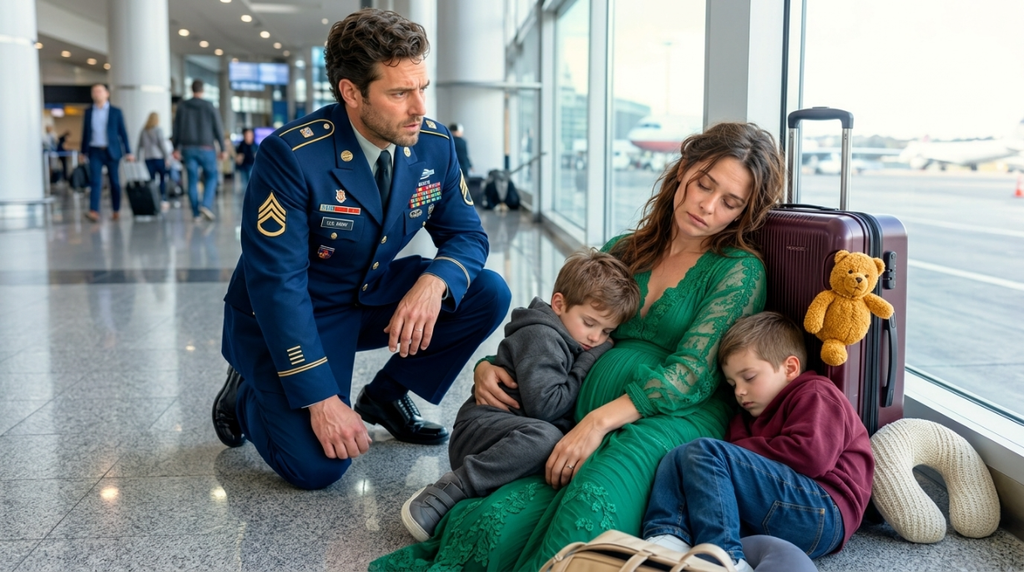
I went deathly pale. For several seconds, the airport disappeared around me. The announcements. The rolling suitcases. The children crying near the security line.
The businessmen talking too loudly into their phones. Everything faded until there was only Evelyn, the two boys, and the cashier’s check trembling between my fingers.
Sixty thousand dollars.
My mother’s signature.
Six years of my life suddenly reduced to ink on a piece of paper.
I looked at Evelyn.
“She told you I knew?”
Evelyn nodded.
“And she told me you left because you didn’t want my family interfering in your life.”
Her eyes filled.
“I didn’t leave because I wanted to.”
The words hit harder than anything else she had said.
I lowered myself onto the seat across from her because my legs no longer felt dependable.
Leo and Toby were watching me now.
They didn’t understand the conversation.
How could they?
They were five.
One of them—Leo, I would later learn—held a battered plastic airplane in his hand.
The other had crawled against Evelyn’s side and was watching me suspiciously.
I stared at them.
My sons.
Possibly my sons.
No.
I knew.
Looking at them, some part of me already knew.
But I had spent my adult life signing contracts, reading financial statements, verifying ownership records, questioning every number placed in front of me.
So I forced myself to ask the question that made Evelyn flinch.
“Would you be willing to do a DNA test?”
Her face hardened.
Not with anger.
With hurt.
“I’m not asking because I think you’re lying.”
“Then why?”
“Because if my mother has done what you’re telling me she did, I want everything documented. I don’t want her, or anyone else in my family, to ever be able to question who these boys are.”
Evelyn stared at me for a long moment.
Then she nodded.
“All right.”
I looked at the boys again.
Leo was studying my face.
Finally he touched his eyebrow.
Then he pointed at mine.
“You got one too.”
My throat closed.
The notch.
I had received mine when I was seven years old after falling off my bicycle.
Leo’s was apparently from running into the corner of a playground slide.
Same eyebrow.
Almost the same location.
I smiled, although my eyes were burning.
“Yeah.”
He smiled back.
“Cool.”
That single word nearly destroyed me.
Because suddenly I wasn’t thinking about millions of dollars.
I wasn’t thinking about Boston.
I wasn’t thinking about the hotel acquisition.
I was wondering how many times that little boy had fallen down and cried without me there to lift him.
How many fevers Evelyn had sat through alone.
How many birthdays I had missed.
First words.
First steps.
First day of preschool.
Christmas mornings.
Lost teeth.
Nightmares.
Bedtime stories.
Five years.
Gone.
I stood abruptly and pulled out my phone.
Evelyn’s expression changed.
“What are you doing?”
I called my CFO.
He answered on the second ring.
“Marcus, they just announced boarding could resume within twenty minutes. If you can get on that flight, we can still—”
“Cancel it.”
Silence.
“Cancel what?”
“The acquisition meeting.”
Another silence.
Longer this time.
“Marcus, tell me you’re joking.”
“I’m not.”
“Do you understand what happens if we don’t close today?”
“Yes.”
“The seller has another bidder.”
“I know.”
“We’ve spent fourteen months on this.”
“I know.”
“We could lose the property.”
“I know.”
“And the deposit.”
“Yes.”
“Then what exactly am I supposed to tell the board?”
I looked at Leo.
Then Toby.
Then Evelyn.
“Tell them I found something more important.”
My CFO lowered his voice.
“Marcus, what happened?”
I swallowed.
“I found my children.”
He didn’t speak.
Eventually he said, very quietly, “Your what?”
“My children.”
I ended the call before I could explain.
Evelyn was staring at me.
“You didn’t have to do that.”
“Yes.”
“No, Marcus. You didn’t.”
“I missed five years.”
My voice broke.
“I’m not missing another hour because somebody in Boston thinks an old building matters more.”
For the first time since I had recognized her, Evelyn’s face softened.
But only slightly.
She was still protecting herself.
And I realized something important.
Finding Evelyn did not mean she trusted me.
Finding my sons did not make me their father in any way that mattered.
Biology might give me a connection.
It would not give me the years I had missed.
Those would have to be earned.
One day at a time.
I sat beside them until the airline announced another delay.
Then I asked Evelyn where they were going.
Her expression became guarded again.
“New York.”
“For what?”
“A friend has been helping me find work.”
“What kind of work?”
“Event planning. Corporate functions. Whatever pays.”
“You’re still doing that?”
“When people hire me.”
Something about the answer bothered me.
“When people hire you?”
Evelyn looked away.
“Your mother didn’t just tell me to disappear, Marcus.”
I felt the temperature in my body drop.
“What else did she do?”
Evelyn stared toward the runway.
“At first I thought leaving Chicago would be enough.”
She placed one hand protectively over Toby’s shoulder.
“I moved to Milwaukee. I had a friend there. She helped me find an apartment. I was pregnant, terrified, but I thought I could rebuild.”
Her mouth twisted bitterly.
“Then the job offers started disappearing.”
“What do you mean?”
“I would interview. Everything would go perfectly. Then twenty-four hours later, they’d call and say the position had been filled.”
“That happens.”
“Seven times?”
I didn’t answer.
“One company actually hired me. I worked there for three weeks. Then the owner called me into his office and said one of their biggest corporate clients objected to having me associated with the company.”
My hands slowly curled into fists.
“Who was the client?”
“Vance Hospitality.”
I stopped breathing.
“No.”
“Yes.”
“I never—”
“I know that now.”
She looked at me.
“That’s the worst part. I know that now.”
She continued.
“I moved again after the boys were born. Indianapolis. Then Columbus. For years I avoided any company connected to your family.”
“Why didn’t you go public?”
“With what?”
Her voice sharpened.
“A pregnant event coordinator accusing one of the wealthiest families in Chicago of threatening her? Your mother had lawyers. Publicists. Foundation board members. Judges at her dinner table. I had morning sickness and twenty-three hundred dollars in savings.”
I looked down.
There was no response that didn’t sound pathetic.
Evelyn’s voice softened.
“I tried to contact you.”
She pointed toward the stack of returned letters.
“Again and again.”
I picked one up.
My old office address.
My name.
Her handwriting.
RETURN TO SENDER.
Another.
And another.
Some had been mailed years apart.
The most recent was only eight months old.
“You kept trying?”
“I stopped expecting an answer.”
“Then why keep writing?”
She looked at Leo and Toby.
“Because one day they were going to ask whether I tried.”
That sentence broke something inside me.
I put the envelope down.
“I’m sorry.”
Evelyn looked at me.
“I know you didn’t forge those stamps.”
“That isn’t what I mean.”
She frowned.
“I’m sorry I stopped searching.”
Her eyes filled immediately.
“My mother lied to me, Evelyn. But I believed her because believing her was easier than accepting that I might have to keep looking and keep getting hurt.”
I swallowed.
“I was angry. I was humiliated. And I was proud.”
She didn’t interrupt.
“I searched for several months. Then every returned letter became another excuse to stop. Eventually I told myself that if you wanted me, you knew how to find me.”
I looked toward the children.
“I should have done more.”
“Yes.”
There was no cruelty in the answer.
That almost made it worse.
“Yes,” she repeated. “You should have.”
I nodded.
“I know.”
And for the first time in my life, I didn’t defend myself.
We never boarded that flight.
I booked rooms at an airport hotel instead.
Not because Evelyn needed rescuing.
She made that very clear.
“I can pay for our room.”
“I know.”
“Marcus.”
“I said I know.”
“Then stop treating me like I’m helpless.”
I looked at her.
“You’re not helpless.”
“Then why are you trying to pay for everything?”
“Because I have missed five years of expenses.”
She crossed her arms.
“You don’t get to erase them with a credit card.”
That silenced me.
She was right.
Again.
So we compromised.
I paid for dinner because the boys wanted cheeseburgers.
She paid for the hotel room.
I did not argue.
That evening, I sat across from Leo and Toby in a restaurant booth while they dipped french fries into ketchup.
I learned more about my sons in forty minutes than I had learned about some business partners in forty meetings.
Leo loved airplanes.
Toby loved sharks.
Leo hated mayonnaise.
Toby hated tomatoes.
Both believed chocolate milk should legally be considered a breakfast food.
Leo talked when nervous.
Toby became quiet.
Leo asked me thirty-three questions.
I counted.
Toby asked one.
“Are you really our dad?”
The french fry stopped halfway to my mouth.
Evelyn looked down.
Leo immediately became quiet too.
I placed my food on the plate.
“I think I am.”
Toby frowned.
“Mom says you are.”
I looked at Evelyn.
She looked terrified.
Not because she feared me.
Because she feared what my answer might do to him.
So I chose every word carefully.
“I think your mom is right.”
“Then where were you?”
There are questions that no amount of money can prepare a man to answer.
I could negotiate with bankers.
Investors.
Attorneys.
City governments.
But I could not lie to a five-year-old boy looking at me with my own eyes.
“I didn’t know about you.”
“Why?”
“Because some grown-ups made some very bad choices.”
“Mom?”
“No.”
I answered too quickly.
“Not your mom.”
His shoulders relaxed.
I continued.
“Your mom tried very hard to tell me.”
“Then who?”
Evelyn spoke gently.
“That is a grown-up conversation, sweetheart.”
Toby looked at me again.
“If you knew, would you have come?”
My vision blurred.
“Yes.”
No hesitation.
No qualification.
“Yes.”
He studied me.
Children have a strange way of deciding whether adults are lying.
Finally he nodded.
“Okay.”
Then he returned to his fries.
I turned my face toward the window so the boys wouldn’t see me cry.
At 10:17 that night, my mother called.
I stared at her name on my phone.
EVELYN noticed.
“Don’t answer it because of me.”
“I’m answering it because of me.”
I stepped into the hallway.
Then reconsidered.
“No.”
I looked at Evelyn.
“I want you to hear this.”
She shook her head.
“Marcus—”
“I spent six years hearing one version of the truth.”
I pressed the speaker button.
“Hello, Mother.”
Her voice came through smooth and controlled.
“Marcus. Your CFO called me.”
Of course he had.
My mother still sat on the family holding company board.
“I understand you abandoned the Boston closing.”
“I postponed it.”
“The seller will not postpone indefinitely.”
“Then we lose the property.”
Silence.
“I assume you have an explanation.”
I looked at Evelyn.
“Yes.”
“Well?”
“I found Evelyn.”
The silence on the other end was so complete I could hear the faint hum of the hotel air conditioner.
Then my mother said one word.
“Where?”
Not who.
Not how.
Where.
That told me everything.
“You knew she was alive.”
“Of course I knew she was alive.”
Evelyn closed her eyes.
I felt something inside me go cold.
“You told me she disappeared.”
“She did disappear.”
“You said she asked us not to find her.”
“She wanted distance.”
“She was pregnant.”
Another silence.
My mother’s voice changed.
Just slightly.
“Marcus, this is not a conversation for the telephone.”
“Why?”
“Because you’re emotional.”
“My five-year-old sons are asleep twenty feet away.”
Eleanor inhaled sharply.
So she had known there were children.
“You knew they were boys?”
“Marcus.”
“You knew?”
“This situation was complicated.”
“Two children are not a situation.”
“You know what I mean.”
“No.”
My voice rose.
“For once in my life, Mother, I don’t know what you mean. Explain it.”
Her patience disappeared.
“Evelyn was not equipped to become part of our family.”
Evelyn’s jaw tightened.
“Did you offer her sixty thousand dollars?”
My mother didn’t respond.
“I’m holding the check.”
Still nothing.
“Did you tell her I wanted nothing to do with my children?”
“I prevented a catastrophic mistake.”
Evelyn covered her mouth.
My hands started shaking.
“A catastrophic mistake?”
“You were preparing to expand the company internationally. Your father had just died. Investors were questioning whether you could lead. You were vulnerable.”
“I was thirty-eight years old.”
“And behaving like a teenager.”
“I loved her.”
“You were infatuated.”
“She was carrying my children.”
“She was carrying leverage.”
Evelyn recoiled as if she had been slapped.
Something inside me snapped.
“Do not talk about her like that.”
“I am your mother.”
“And she is the mother of my sons.”
Another pause.
Then Eleanor said the sentence that ended whatever remained of our old relationship.
“Their mother should have known her place.”
I stared at the phone.
Evelyn stopped breathing.
Even from the bedroom doorway, I saw Leo move under the blanket.
I lowered my voice.
“What did you say?”
“You heard me.”
“Yes.”
“I did.”
My mother continued.
“She was an employee of the foundation who confused access with belonging. You would have married her, divided your attention, diluted everything your father spent his life building, and eventually you would have regretted it.”
“You stole six years from me.”
“I protected you.”
“You stole my children.”
“No. I removed a distraction until you were strong enough to—”
I ended the call.
Not because I had nothing else to say.
Because if I listened for another ten seconds, I knew I would say something I could never take back.
I stood in the hallway with the phone still pressed against my ear.
Evelyn whispered, “Marcus.”
I looked at her.
For six years I had wondered why she left.
For six years she had wondered why I rejected our children.
The answer was worse than either of us had imagined.
My own mother had decided that she had the right to rewrite both our lives.
I looked at Evelyn.
“I believe you.”
She laughed once.
It was a broken sound.
“Now?”
“Yes.”
“After six years?”
“I know.”
“That doesn’t give me the six years back.”
“I know.”
“Stop saying that.”
Her tears finally spilled.
“I raised two babies alone, Marcus.”
I said nothing.
“I had a C-section and drove myself to appointments three weeks later because I couldn’t afford to miss work.”
My chest tightened.
“Toby had pneumonia when he was eighteen months old. I sat beside his hospital bed for three nights. Leo kept asking when his brother was coming home.”
She wiped her face angrily.
“I filled out preschool forms and left the father line blank.”
I closed my eyes.
“They had a Father’s Day breakfast at school last year.”
Her voice collapsed.
“Leo made a card for you anyway.”
I looked at her.
“What?”
“He didn’t know your address, so he put it under his pillow.”
I couldn’t speak.
“He told me maybe fathers could hear things if children dreamed hard enough.”
I covered my mouth.
Evelyn began crying harder.
“And all that time, I thought you knew.”
I stepped toward her.
She stepped back.
That hurt.
But I deserved it.
So I stopped.
“I cannot fix that.”
“No.”
“I cannot give you those nights back.”
“No.”
“I cannot give them those birthdays back.”
She shook her head.
“No.”
“But if you let me, I will spend whatever time I have left making sure none of you ever have to wonder where I am again.”
Evelyn looked at me for a long time.
Then she said something I have never forgotten.
“Don’t promise forever tonight.”
I nodded.
“Okay.”
“Promise tomorrow.”
My throat tightened.
“I promise tomorrow.”
The next morning, I called an attorney.
Not the Vance family attorney.
That mattered.
I called Rebecca Sloan, a litigation partner I had once hired during a hotel ownership dispute.
She had no loyalty to my mother.
No connection to the foundation.
And absolutely no patience for wealthy families trying to handle crimes quietly.
I explained everything.
There was silence when I finished.
Then Rebecca said, “Do not confront anyone else.”
“I already confronted my mother.”
“Of course you did.”
“She admitted she knew.”
“Recorded?”
I looked at my phone.
The call had been on speaker.
But I hadn’t recorded it.
“No.”
“Anyone else hear it?”
“Evelyn.”
“Good.”
Her tone sharpened.
“Marcus, listen carefully. Do not destroy anything. Do not hand those letters to your mother. Do not give that cashier’s check to anyone except your independent counsel. Photograph everything.”
“I want to know what happened.”
“So do I.”
“I want answers today.”
“You have survived six years without them. Give me forty-eight hours to get answers that can survive a courtroom.”
That sentence stopped me.
A courtroom.
Until that moment, some part of me had still been thinking of this as a family betrayal.
Rebecca saw it differently.
Forged documents.
Intercepted correspondence.
Possible misuse of corporate systems.
Potential employment interference.
Maybe fraud.
Maybe more.
“I need one more thing,” she said.
“What?”
“A DNA test through an accredited laboratory.”
Evelyn agreed.
The samples were collected that afternoon.
I told myself I didn’t need the result.
I was wrong.
When it arrived two days later, I read the first page three times.
Probability of paternity: greater than 99.99%.
Leo and Toby were my sons.
I sat alone in the hotel bathroom and cried until my chest hurt.
Not because I was surprised.
Because there was finally a piece of paper nobody could rewrite.
Nobody could intercept.
Nobody could lie about.
They were mine.
And I was theirs.
The next discovery came six hours later.
Rebecca called.
“I found something.”
Her voice made the hair rise on my arms.
“What?”
“Where are you?”
“With Evelyn and the boys.”
“Can you leave for an hour?”
I looked through the glass doors of the indoor pool.
Leo was kicking water at Toby.
Evelyn sat nearby.
“Tell me now.”
“I don’t want to tell you this over the phone.”
“Rebecca.”
She sighed.
“There is a document in the archived files of Vance Family Counsel.”
My blood went cold.
“What document?”
“A legal authorization dated six years ago.”
“Authorization for what?”
“To represent you in a confidential personal matter involving Evelyn Hart.”
I stopped moving.
“I never hired anyone for that.”
“I know.”
“How?”
“Because I’m looking at the signature.”
My pulse started pounding.
“Whose signature?”
“Yours.”
The document was waiting for me when I arrived at Rebecca’s temporary office.
Four pages.
Cream legal paper.
My full name printed at the top.
MARCUS ALEXANDER VANCE.
Below it:
LIMITED AUTHORIZATION AND RETAINER REGARDING CONFIDENTIAL PERSONAL CLAIM.
I read the first paragraph.
Then the second.
My stomach turned.
The document supposedly authorized the Vance family law firm to negotiate any “financial, reputational, parental, or personal claims asserted by Ms. Evelyn Hart arising from an alleged pregnancy.”
Alleged pregnancy.
I kept reading.
The next section stated that I wanted “no direct communication with Ms. Hart.”
Another paragraph permitted counsel to negotiate a confidential financial settlement.
Another authorized representatives to receive and respond to correspondence on my behalf.
Then I reached the last page.
My signature sat at the bottom.
Marcus A. Vance.
It looked perfect.
Almost.
I stared at it.
Rebecca said nothing.
“You know what’s wrong with it?”
She nodded toward the page.
“Tell me.”
“The M.”
I traced it with my finger.
“I changed the way I signed my M when I was thirty-three.”
Rebecca leaned closer.
“This uses the older version.”
I laughed.
A stunned, empty laugh.
“My mother has birthday cards with this signature.”
Rebecca’s expression hardened.
“The document is notarized.”
“By whom?”
She turned the page.
Diane Mercer.
My mother’s former personal assistant.
I felt sick.
“She wasn’t a notary anymore by then.”
Rebecca looked at me.
“You’re sure?”
“Her commission expired years before.”
“It appears it had been renewed.”
“Without me knowing.”
“That part isn’t unusual.”
“No.”
I stared at the signature.
“But this is.”
Rebecca pulled another document from the folder.
“You should sit down.”
“I’m fine.”
“Marcus.”
I sat.
She placed the second paper in front of me.
It was not addressed to me.
It was an internal memorandum from the family law firm.
SUBJECT: HART MATTER.
The first paragraph confirmed that Evelyn had declined the proposed $60,000 settlement.
The second recorded an instruction from “E.V.”
Eleanor Vance.
My mother.
I read the line once.
Then again.
All future correspondence from Ms. Hart concerning Mr. Marcus Vance is to be routed through this office pursuant to signed authorization.
My forged authorization.
Below that was another sentence.
Ms. Vance has requested that no direct contact be facilitated while Mr. Vance remains overseas and during the subsequent leadership transition.
I looked up.
“How long was the leadership transition?”
Rebecca’s face was grim.
“There’s more.”
She gave me a third page.
This one was from eighteen months later.
I recognized the logo of the family office.
The subject line made my vision blur.
HART CHILDREN — CONTINUING EXPOSURE.
Children.
Plural.
Eighteen months after my sons were born.
My mother knew.
Not suspected.
Knew.
I read further.
Evelyn had apparently mailed copies of the boys’ birth certificates to my Chicago office.
The mailroom had logged the envelope.
Then someone from my mother’s executive office had signed for it.
My hands started shaking.
“They received their birth certificates.”
“Yes.”
“She knew their names.”
“Yes.”
I continued reading.
Leo James Hart.
Tobias Marcus Hart.
I stopped.
“Tobias Marcus?”
Rebecca looked at me.
I couldn’t breathe.
Evelyn had given one of the boys my name.
Even while believing I had rejected him.
I lowered my head.
Rebecca waited.
After a moment I forced myself to continue.
Attached to the memorandum was a scanned letter Evelyn had written.
Only the first page remained.
Marcus,
I am sending these because whatever has happened between us, you deserve to know their names. Leo was born first. Toby followed eleven minutes later. They are healthy. They have your hair. Toby has your stubborn expression already.
I stopped reading.
The rest of the letter was missing.
“Where is page two?”
Rebecca shook her head.
“We don’t have it.”
“Why not?”
“I don’t know.”
I stood so quickly the chair slid backward.
“She wrote to me.”
“Yes.”
“My office received it.”
“Yes.”
“My mother took it.”
“That is what the records appear to show.”
I stared at the forged signature again.
All those years.
Every time I had walked into my mother’s house.
Every Christmas.
Every birthday.
Every Sunday dinner.
Every time she had looked me in the face and asked why I hadn’t met someone “appropriate.”
She had known I had two sons.
She had known Evelyn had tried to reach me.
She had known I was grieving a woman who had never truly left me.
And she had eaten dinner across from me as if nothing had happened.
I whispered, “I want her out.”
Rebecca frowned.
“Out of what?”
“Everything.”
“Marcus—”
“The holding company. The foundation. Every board where I have authority. Every account she can access. Every office using the Vance name.”
“You need to be careful.”
“I am being careful.”
“No. You’re angry.”
“I’m beyond angry.”
“And that is precisely when people make expensive mistakes.”
I looked at the forged document.
“My mother used my company’s lawyers to steal six years from my children.”
Rebecca leaned back.
“That’s why we do this correctly.”
She tapped the folder.
“We preserve evidence. We hire a forensic document examiner. We interview the former assistant. We secure mail records. We determine exactly who knew what and when.”
“And then?”
“Then you decide what kind of man you want to be.”
I stared at her.
She continued.
“You can use your money to bury this.”
My jaw tightened.
“I won’t.”
“You can use your money to destroy your mother.”
I said nothing.
“Or you can use the truth.”
Rebecca pushed the documents toward me.
“The truth will do enough damage on its own.”
The Boston deal collapsed that afternoon.
Our competitor increased its offer.
The seller signed with them.
My CFO called with the news.
“We lost it.”
I stared out the window while Leo and Toby watched cartoons behind me.
“How bad?”
“Fourteen months of work gone. Due diligence expenses. The earnest money dispute will probably go to arbitration.”
“How angry is the board?”
“On a scale of one to ten?”
“Yes.”
“Twelve.”
I almost smiled.
“Schedule an emergency meeting.”
“When?”
“Tomorrow.”
“Are you coming to Chicago?”
“Yes.”
There was a pause.
“Marcus?”
“What?”
“For whatever it’s worth, I think you made the right choice.”
I looked at my sons.
“It cost us millions.”
“Yeah.”
“Still think it?”
“Yes.”
“So do I.”
Evelyn refused to stay behind.
“I’m coming to Chicago.”
“No.”
Her eyebrows rose.
I realized immediately that I had chosen the wrong word.
“I mean—you don’t have to.”
“That’s different.”
“Yes.”
“Keep practicing.”
Despite everything, I laughed.
For one second, she did too.
It was the first glimpse of the Evelyn I remembered.
The woman who once laughed at me for owning seven nearly identical navy suits.
Then her expression became serious again.
“If your mother did this to me, I want to see the evidence.”
“You will.”
“And I want my own lawyer.”
“Absolutely.”
“I don’t want your lawyer representing me.”
“She won’t.”
“And I don’t want money in exchange for silence.”
“I would never ask.”
“I need you to understand something, Marcus.”
“I’m listening.”
“I spent six years having people with your last name decide what was best for me without asking.”
Her voice trembled.
“I will never let that happen again.”
I nodded.
“You shouldn’t.”
“And the boys are not a Vance asset.”
I winced.
“I know.”
“They’re not heirs to be managed.”
“I know.”
“They’re children.”
“I looked toward the twins.
“I know.”
Evelyn studied my face.
Then she nodded.
“Good.”
My mother was already sitting at the conference table when I entered the Vance Hospitality headquarters the next morning.
Of course she was.
Eleanor Vance believed arriving early was a form of dominance.
She wore ivory.
Pearls.
Her silver hair perfectly arranged.
The same woman who had kissed my forehead after my father’s funeral.
The same woman who had sat beside me when we opened our first hotel.
The same woman who had forged my signature.
Around the table sat eleven directors.
My CFO.
General counsel.
Two outside investors.
My cousin Philip.
And my mother.
She gave me a small, disappointed smile.
“Finally.”
I placed a folder on the table.
“Good morning.”
“Is Evelyn here?”
“Yes.”
My mother’s eyes sharpened.
“She has no business attending a corporate board meeting.”
“She isn’t attending.”
“Good.”
“She’s meeting with independent counsel downstairs.”
My mother’s expression changed.
Only for half a second.
But I saw it.
Fear.
I sat at the head of the table.
The chairman cleared his throat.
“Marcus, we need to discuss Boston.”
“We do.”
My mother immediately spoke.
“This is exactly why personal distractions must remain separate from business.”
I looked at her.
“Interesting choice of words.”
Her lips tightened.
I opened the folder.
“Our Boston acquisition failed because I chose not to attend yesterday’s closing.”
Several directors shifted.
“I accept responsibility for that decision.”
My mother nodded as if I had just proven her argument.
“However, before this board discusses my judgment, it needs to understand why I made that decision.”
I slid copies of the forged authorization around the table.
My mother stopped breathing.
The papers moved from director to director.
My CFO looked at me.
“What is this?”
“A document supposedly signed by me six years ago.”
I looked at my mother.
“I did not sign it.”
Silence.
The general counsel picked it up.
His face changed.
“Marcus—”
“It authorized our former family counsel to intercept communication from the pregnant woman who was carrying my children.”
Someone whispered, “Jesus.”
My mother stood.
“This is completely inappropriate.”
“Sit down.”
The room went still.
I had never spoken to her like that.
Eleanor stared at me.
“Marcus.”
“Sit.”
Slowly, she did.
I placed the internal memoranda on the table.
“Corporate mail facilities were used to reroute Evelyn Hart’s letters.”
Our general counsel went pale.
“Not under my tenure.”
“I know.”
I continued.
“Family office resources were used to interfere with her employment prospects. At least one Vance Hospitality vendor appears to have been pressured to terminate her.”
One of the outside directors swore under his breath.
My mother’s face hardened.
“You’re presenting accusations as facts.”
“No.”
I looked directly into her eyes.
“I’m presenting evidence as evidence.”
“You have no idea what was happening at the time.”
“Then explain it.”
“This does not belong here.”
“You used this company.”
“I protected this company.”
“No.”
My voice remained quiet.
“You protected your idea of what my life should look like.”
She glanced around the table.
“Are you all really going to participate in this?”
Nobody answered.
My mother turned back to me.
“Your father built this company.”
“And you used it to interfere with the lives of his grandchildren.”
That landed.
Her face went white.
“You cannot prove those children are yours.”
I reached into my folder.
I had not intended to use the result.
Not like this.
But she had made the choice for me.
I placed the DNA report on the table.
“Greater than 99.99 percent.”
Nobody moved.
My mother stared at it.
For the first time in my entire life, Eleanor Vance had no prepared response.
I leaned forward.
“Their names are Leo and Tobias.”
Her eyes flickered.
“Tobias Marcus.”
Something in her face betrayed her.
Recognition.
“You already knew that.”
She said nothing.
“You knew his middle name.”
Nothing.
“You read the birth certificates.”
“Marcus—”
“Say it.”
“I will not be interrogated by my own son.”
“Did you receive their birth certificates?”
Her silence was answer enough.
My cousin Philip slowly removed his glasses.
“Eleanor?”
She looked at him.
“Stay out of this.”
He leaned back as if she had struck him.
I continued.
“Effective immediately, I am requesting a vote to suspend Eleanor Vance from all operational authority within Vance Hospitality pending completion of an independent investigation.”
My mother laughed.
“You cannot be serious.”
“I am.”
“I own shares.”
“Your shares are yours.”
“You cannot remove me from my own family.”
“I’m not.”
I looked at her.
“I’m removing you from power you proved you cannot be trusted with.”
Her face twisted.
“You ungrateful child.”
I almost laughed.
Child.
Forty-four years old.
Two sons of my own.
Still a child when she needed me to obey.
“You lost a multimillion-dollar acquisition because that woman appeared with two children and pointed at you.”
“That woman has a name.”
“She has manipulated you before.”
“She refused your money.”
“She knew sixty thousand dollars was nothing compared to what she could get through you.”
I slammed my palm on the table.
“She refused it!”
Eleanor flinched.
Everyone did.
I took a breath.
Then I lowered my voice.
“She raised my sons alone while you sat in this building talking about family legacy.”
I pointed toward the DNA report.
“There is your legacy.”
She stared at me.
“Two five-year-old boys who did absolutely nothing to you.”
My eyes burned.
“One of them made me a Father’s Day card when he didn’t even know where I lived.”
My mother blinked.
For one brief second, something almost human moved through her expression.
Then it vanished.
“You are emotional.”
“Yes.”
I nodded.
“I am.”
I looked around the table.
“And if anyone here thinks discovering that two children were deliberately kept from their father shouldn’t produce emotion, I question whether that person should be making decisions about human beings at all.”
No one spoke.
The chairman called the vote.
My mother lost eleven to one.
Her own vote was the one.
She followed me into the corridor.
“Marcus!”
I kept walking.
She grabbed my arm.
I turned.
“Do not touch me.”
Her hand dropped.
“You are humiliating me.”
I stared at her.
“Humiliation?”
I almost couldn’t believe the word.
“You want to talk to me about humiliation?”
“I gave my life to this family.”
“So did Evelyn.”
“Do not compare me to her.”
“That is your problem.”
My voice shook.
“You keep thinking there are levels of human worth.”
“That is not what I—”
“Yes.”
I interrupted.
“It is.”
“You thought she was beneath me.”
“She was.”
There it was.
No apology.
No misunderstanding.
Just belief.
Pure and ugly.
I stared at the woman who had raised me.
“You know what hurts most?”
She said nothing.
“I spent years defending you.”
Her face changed.
“I told people you were demanding because you cared.”
I laughed bitterly.
“I told Evelyn that once.”
My mother looked away.
“I said you pushed people because you wanted the best for them.”
I shook my head.
“You don’t want the best for people.”
“You want control.”
“That is ridiculous.”
“You couldn’t control who I loved, so you removed her.”
“You were making a mistake.”
“You couldn’t control whether she was pregnant, so you tried to buy her.”
“I gave her an opportunity.”
“You couldn’t control whether she contacted me, so you forged my signature.”
“I did not forge—”
I pulled a copy from the folder.
“This is not my signature.”
“It looks exactly like it.”
“That’s the problem.”
Her face went still.
I stepped closer.
“You knew it had to look exactly like mine.”
For once, Eleanor had no answer.
“I want the truth.”
“You know the truth.”
“No.”
“I know pieces.”
I held up the document.
“Who signed this?”
She stared straight ahead.
“Who signed my name?”
Nothing.
“Was it you?”
Her jaw tightened.
“Diane?”
Still nothing.
“The attorney?”
Silence.
I folded the document.
“That’s fine.”
She finally looked at me.
“What does that mean?”
“It means you can tell me now as my mother.”
I put the paper back into the folder.
“Or you can tell investigators later.”
Her eyes widened.
“You wouldn’t.”
That was the moment I understood how little she knew me.
Not the child she had raised.
The man I had become.
“You stole six years from two children.”
My voice became very quiet.
“You still think I’m worried about embarrassing you.”
Diane Mercer called Rebecca the following morning.
Apparently, my mother had called her first.
That was Eleanor’s mistake.
Diane panicked.
Then she hired a lawyer.
Then she started talking.
The story came apart quickly after that.
Six years earlier, while I was overseas, Evelyn had told my mother she was pregnant.
She had planned to surprise me when I returned.
Instead, Eleanor invited her to lunch.
A private dining room.
No witnesses except Diane.
My mother congratulated her.
Then placed the $60,000 cashier’s check on the table.
Evelyn refused.
Eleanor increased the offer.
Evelyn refused again.
Then Eleanor changed tactics.
She told Evelyn I had known about the pregnancy for nearly a week.
That I was horrified.
That I had asked my mother to “handle it.”
Evelyn didn’t believe her.
So my mother produced the document with my signature.
The authorization.
My forged signature.
That was why it existed.
Not for court.
Not for business.
For Evelyn.
It was theater.
A prop designed to make a frightened pregnant woman believe the man she loved had formally instructed attorneys to remove her from his life.
Diane admitted that she had notarized it.
She claimed she never saw who signed my name.
Rebecca didn’t believe her.
Neither did I.
But then came the detail that made me physically ill.
Evelyn had asked one question at that lunch.
“Did Marcus really sign this?”
My mother had looked her in the eye.
“Yes.”
Evelyn had asked again.
“Knowing I’m pregnant?”
“Yes.”
My mother then told her that I wanted the matter handled “before it damaged the family.”
I went into Rebecca’s bathroom and vomited.
Evelyn was waiting when I returned to the conference room.
She had heard Diane’s statement too.
Neither of us spoke.
Finally I said, “I’m sorry.”
She looked exhausted.
“Marcus.”
“I know that isn’t enough.”
“No.”
“I just don’t know what else to say.”
She looked at me for a long time.
“You believed something too.”
“What?”
“You believed I could walk away without saying goodbye.”
I lowered my eyes.
“Yes.”
“That hurt.”
“I know.”
“You knew me.”
“Yes.”
“You knew how much I loved you.”
“I did.”
“And still some part of you believed I could disappear.”
I felt tears forming.
“I was angry.”
“So was I.”
“I was hurt.”
“So was I.”
“I thought you chose to leave.”
“And I thought you chose not to come.”
Silence.
Then Evelyn said something that changed the way I understood all six missing years.
“Your mother didn’t separate us because she was powerful.”
I looked at her.
“She separated us because both of us were wounded enough to believe the worst thing we feared.”
My eyes filled.
I feared Evelyn had never truly loved me.
Evelyn feared I would eventually choose my family name over her.
My mother had simply taken those fears and fed them.
I whispered, “She knew exactly where to cut.”
Evelyn nodded.
“Yes.”
I expected anger.
Instead she reached across the table and took my hand.
It was the first time she had touched me since the airport.
I stared at our hands.
Six years vanished for one impossible second.
Then she whispered, “We were both manipulated.”
I shook my head.
“But I still should have searched harder.”
“Yes.”
I looked at her.
She squeezed my hand.
“And I should have found a way to come to you in person.”
“You were pregnant and being threatened.”
“I still spent years wondering whether I should have walked into one of your hotels and demanded to see you.”
“I wish you had.”
“So do I.”
Her voice cracked.
“But wishing doesn’t raise five-year-olds.”
“No.”
She looked toward the door.
Leo and Toby were downstairs with the nanny the hotel had arranged.
Then Evelyn looked back at me.
“So we stop trying to change yesterday.”
“What do we do instead?”
“Tomorrow.”
The word hit me immediately.
Promise tomorrow.
I nodded.
“Tomorrow.”
The hardest part was not the investigation.
It wasn’t the board.
It wasn’t losing Boston.
It wasn’t the press once rumors began circulating.
The hardest part was becoming a father to two boys who already had a life.
I had imagined, in some selfish corner of my mind, that once paternity was confirmed, everything would click into place.
It didn’t.
Leo liked me almost immediately.
Toby did not.
Leo wanted me at breakfast.
Toby sometimes refused to sit beside me.
Leo asked whether I could visit his school.
Toby asked his mother whether I was going to disappear again.
The first time I heard him ask that, I went into another room.
I sat on the edge of the bathtub and cried silently.
Evelyn found me there.
“He doesn’t hate you.”
“I know.”
“He’s afraid.”
“I know.”
“You don’t have to leave every time something hurts.”
I looked up.
“I don’t want him to see me upset.”
“Why?”
“Because he already feels responsible for too much.”
She leaned against the doorframe.
“He needs to learn that grown men can be sad without falling apart.”
I wiped my face.
“You became very wise while I was gone.”
She gave me a look.
“I had two children asking questions all day for five years.”
“Fair.”
She almost smiled.
Then she sat beside me.
“Toby watches doors.”
“What?”
“When people leave.”
I frowned.
“He always watches the door.”
Her expression became sad.
“He has since he was little.”
“Why?”
“I don’t know.”
She paused.
“Maybe because there was always somebody missing.”
That night, when I left their hotel suite, Toby watched me walk toward the door.
I stopped.
I turned.
“I’m going to my room.”
He said nothing.
“I’ll be back at seven-thirty tomorrow morning.”
Still nothing.
“For pancakes.”
Leo shouted from the couch, “Chocolate chip!”
I smiled.
“Chocolate chip.”
Then I looked at Toby.
“Seven-thirty.”
He nodded.
The next morning I arrived at 7:26.
Toby looked at the clock.
Then at me.
“You’re early.”
“Four minutes.”
He considered this.
Then moved his backpack off the chair beside him.
“Sit here.”
It was the greatest invitation of my life.
Three weeks later, Toby called me Dad for the first time.
By accident.
We were crossing a parking lot.
A delivery van came around the corner faster than it should have.
I grabbed both boys instinctively and pulled them against me.
Toby shouted, “Dad!”
One word.
One second.
The van passed.
But I remained frozen.
Toby realized what he had said.
His eyes widened.
I could see embarrassment coming.
So I simply checked his coat.
“You okay?”
He nodded.
“Leo?”
“Yep.”
“Good.”
We continued walking.
I didn’t mention the word.
Not until that night.
I was sitting alone in my car when I finally allowed myself to cry.
Eleanor tried to contact the boys twice.
The first attempt was through a handwritten letter.
My attorney intercepted it.
The second was worse.
She came to the hotel.
I was downstairs when security called.
“Mr. Vance, there’s a woman asking to see you.”
“Name?”
“Eleanor Vance.”
My entire body went cold.
“Do not allow her upstairs.”
“She says she’s your mother.”
“I know exactly who she is.”
I found her in the lobby.
She wore a charcoal coat.
No pearls.
No makeup that I could see.
For the first time in my life, she looked old.
I hated myself for feeling anything.
But I did.
She was still my mother.
That was part of what made betrayal so cruel.
If monsters always looked like monsters, they would be easy to recognize.
Sometimes they looked like the person who taught you to tie your shoes.
She stood.
“I want to see my grandsons.”
“No.”
Her face tightened.
“They are my family.”
“According to you, they were a catastrophic mistake.”
“I was angry.”
“You called their mother leverage.”
“I said things I regret.”
“Do you regret saying them?”
I stared at her.
“Or do you regret that I stopped accepting them?”
Her eyes filled.
“I made mistakes.”
“You forged my signature.”
“I was trying to protect you.”
“Stop saying that.”
Several people in the lobby turned.
I lowered my voice.
“Protection does not require deception.”
“You have no understanding of what was at stake.”
“My children.”
“Yes.”
Her voice cracked.
“Your entire future.”
“They were my future.”
She looked away.
“I know that now.”
I almost laughed.
“You know because there are consequences now.”
“That is unfair.”
“No.”
I stepped closer.
“Unfair was Leo putting a Father’s Day card under his pillow because he didn’t know where to send it.”
My mother’s face collapsed.
I continued.
“Unfair was Evelyn sitting alone in a pediatric hospital while I hosted a charity gala two states away.”
“Marcus—”
“Unfair was Toby carrying my name for five years while you pretended he didn’t exist.”
She whispered, “I didn’t know about the pneumonia.”
“That’s your defense?”
“No.”
“Because there isn’t one.”
She began crying.
I had seen my mother cry only twice before.
At my grandfather’s funeral.
And when my father died.
A part of me wanted to comfort her automatically.
I hated that part.
I kept my hands at my sides.
“I want to make this right.”
“You can’t.”
“I can try.”
“You can cooperate with the investigation.”
Her face hardened slightly.
“That isn’t what I meant.”
“I know.”
She wanted forgiveness.
Before confession.
Access before accountability.
She had always believed consequences were things other people endured.
“I want to see them.”
“No.”
“I’m their grandmother.”
“No.”
“You cannot keep them from me forever.”
“I’m not making a forever decision.”
Her expression shifted.
I heard Evelyn’s voice in my own words.
“I’m making a tomorrow decision.”
My mother stared at me.
“Tomorrow, you will not see them.”
I turned away.
She grabbed my sleeve.
“Marcus, please.”
I stopped.
Her voice was barely audible.
“Are you really going to choose her over me?”
I looked back.
There it was again.
The same poisonous equation.
Evelyn or Eleanor.
Children or legacy.
Love or family.
As if there were only room for one.
“I’m not choosing Evelyn over you.”
My mother exhaled.
I continued.
“I’m choosing what is right over what you did.”
Then I looked toward the elevator where my sons were waiting upstairs.
“And for the record?”
My voice softened.
“They are my family.”
The investigation lasted five months.
The truth grew uglier.
Three of Evelyn’s letters had reached my office.
All three had been diverted.
One had been opened.
A scanned copy existed in an archived legal file.
My mother’s assistant had contacted two employers after discovering Evelyn was interviewing there.
The foundation had marked Evelyn as “not eligible for future engagement.”
Nobody could identify a legitimate reason.
The old family attorney claimed he believed I had authorized everything.
Then Rebecca showed him metadata proving the authorization document had been created while I was on a flight over the Atlantic.
He changed lawyers.
Diane admitted she had notarized my signature without witnessing me sign.
Then, under pressure from her own attorney, she admitted the rest.
My mother had signed my name.
Diane had watched.
There were no dramatic police officers bursting through the doors.
No handcuffs at breakfast.
Real consequences moved more slowly.
Letters.
Interviews.
Subpoenas.
Depositions.
Investigators.
Account records.
The kind of quiet paperwork that destroys carefully constructed lies one page at a time.
Eventually, the matter was referred to prosecutors.
My mother was charged with offenses related to forgery and fraudulent use of the authorization.
Diane entered into an agreement to cooperate.
The former attorney faced disciplinary proceedings.
The board permanently removed Eleanor from any management role.
She retained her ownership interest.
I didn’t try to take what legally belonged to her.
I did not need revenge badly enough to become her.
The family foundation removed her as chair.
That hurt her more than the company.
Her entire identity had been built around the belief that the Vance name represented dignity.
Now the same name appeared beside headlines about forged documents and hidden grandchildren.
Reporters camped outside headquarters for three days.
I issued one statement.
It was brief.
There had been serious misconduct.
An independent investigation was underway.
The privacy of two minor children would be protected.
That was all.
I would not turn Leo and Toby into publicity.
Not even to defend myself.
Especially not to defend myself.
I created trusts for them.
Evelyn almost threw the documents at me.
“I told you I’m not taking hush money.”
“It isn’t hush money.”
“Then why are you giving them millions of dollars?”
“Because if I had known they existed from birth, I would have provided for them from birth.”
She glared at me.
“You cannot buy being their father.”
“I know.”
“Then stop trying.”
“I’m not.”
“Marcus.”
I took a breath.
“Come with me.”
“Where?”
“To my accountant.”
“That sentence has never made anyone feel better.”
Despite herself, she smiled.
We sat with an independent fiduciary.
Not my mother’s family office.
Not Vance counsel.
Independent.
The documents gave me no control over Evelyn.
None.
The trusts could pay for education, healthcare, housing support, and later provide the boys with assets under professionally managed terms.
Evelyn did not have to sign an NDA.
She did not have to waive claims.
She did not have to forgive anyone.
There was no condition requiring her to remain near me.
When she finished reading, she looked at me.
“You really thought about this.”
“I’m trying.”
She stared at the pages.
“Why an independent trustee?”
“Because I never want money to become a way for me to control them.”
Her eyes lifted.
“Or you.”
Something softened in her face.
“Okay.”
“Okay?”
“I’ll have my lawyer review it.”
“Good.”
A month later, she approved.
My relationship with Evelyn was harder.
There are stories where two people discover the truth, run into each other’s arms, and six weeks later there is a wedding.
That is not what happened.
The truth did not erase six years.
Love does not automatically survive betrayal simply because the betrayal came from somebody else.
Evelyn had changed.
So had I.
She had learned to depend only on herself.
I had learned to solve problems with money, lawyers, and efficiency.
Those two survival instincts collided constantly.
The first major argument happened over an apartment.
I found a beautiful three-bedroom place near the boys’ school.
Doorman.
Park nearby.
Excellent security.
I put down a deposit.
Then I proudly showed Evelyn.
She stared at me.
“You did what?”
“I found you a place.”
“You found me a place.”
“Yes.”
“Without asking me.”
My stomach dropped.
“I thought—”
“That’s the problem.”
She walked away.
“Evelyn.”
She spun around.
“Your mother decided where I belonged without asking.”
The words hit immediately.
“I’m not my mother.”
“Then stop making decisions for me like she did.”
I canceled the deposit that afternoon.
The next day I apologized.
No excuses.
A week later Evelyn chose her own apartment.
Two bedrooms.
Smaller.
Less expensive than what I would have selected.
The boys loved it because there was a playground across the street.
I helped carry boxes.
That was all.
And somehow, carrying those boxes meant more than handing her keys to a luxury apartment ever could have.
Six months after the airport, Evelyn and I had dinner alone for the first time.
Not as parents.
Not with attorneys.
Not discussing school schedules.
Dinner.
She chose the restaurant.
A little Italian place where the tables were too close together.
No private dining room.
No valet.
No one cared about the Vance name.
Halfway through the meal she looked at my jacket.
“You still own too many navy suits.”
I laughed.
“You remembered.”
“I remember everything.”
The smile left both our faces.
For a moment, six years sat between us.
Then I asked the question I had been afraid to ask.
“Did you ever stop loving me?”
She looked down at her wine.
“That’s not fair.”
“I know.”
“I hated you for a while.”
“I understand.”
“I used to imagine running into you.”
“Did it look anything like the airport?”
“No.”
She smiled faintly.
“I was usually wearing something much nicer.”
I laughed.
Then she became serious.
“I imagined screaming at you.”
“You probably should have.”
“I imagined slapping you once.”
“Understandable.”
“I imagined showing you the boys and watching your face when you realized what you had thrown away.”
My smile disappeared.
“But you didn’t throw us away.”
“No.”
Her eyes filled.
“That somehow made it better and worse at the same time.”
I nodded.
“I know.”
She pointed her fork at me.
“You are banned from saying ‘I know’ for five minutes.”
I almost laughed.
“Understood.”
“Better.”
Then she reached across the table.
Her fingertips touched mine.
“I never stopped loving the man I thought you were.”
My heart pounded.
“And now?”
She looked at me.
“Now I’m trying to figure out who you became.”
I turned my hand over beneath hers.
“So am I.”
She didn’t pull away.
That was enough.
By the twins’ sixth birthday, I had memorized their routines.
Leo woke early.
Toby had to be dragged from bed.
Leo liked his pancakes almost burned.
Toby inspected every banana for bruises before eating it.
Leo told jokes badly.
Toby somehow delivered them perfectly.
They fought over everything.
Then defended each other from everyone else.
I attended kindergarten conferences.
Dental appointments.
Soccer practices.
A school play in which Leo played a tree and somehow forgot how trees worked halfway through the performance.
Toby played a cloud.
He took it extremely seriously.
Afterward they ran toward me wearing cardboard costumes.
“Dad!”
Both of them said it now.
Every time, some invisible part of me still stopped.
Dad.
One word.
A lifetime.
I never stopped being grateful for it.
The Boston estate we lost was eventually turned into a hotel by our competitor.
For months, financial journalists called it the acquisition that got away.
One reporter asked whether I regretted canceling the meeting.
I told him no.
He thought I was bluffing.
I wasn’t.
A year earlier, I would have measured that decision by millions.
Now I measured it differently.
Because on the morning that hotel officially opened, I was sitting on the floor of Toby’s school gym watching him receive a certificate for reading fifty books.
He searched the audience until he found me.
Then his whole face lit up.
No building in Boston could compete with that.
My mother eventually pleaded guilty to a reduced set of charges.
The court imposed penalties, restitution obligations connected to the investigation, and strict conditions.
She avoided prison.
Some people thought that was unfair.
Maybe it was.
I stopped measuring my healing by how much she suffered.
That path led nowhere.
The real consequence was something no judge could order.
She lost us.
Not permanently.
Perhaps not.
But access was no longer hers by entitlement.
Nearly eighteen months passed before Evelyn agreed to let her meet the boys.
It happened in a therapist’s office.
Neutral ground.
No family mansion.
No Vance foundation.
No power.
Eleanor entered carrying no gifts because the therapist had told her not to.
She looked smaller than I remembered.
Leo whispered to Toby.
“That’s Grandma?”
Toby whispered back loudly, “I think so.”
My mother almost smiled.
Then she saw Evelyn.
Everything in the room changed.
Eleanor lowered her eyes.
For several seconds nobody spoke.
Finally she looked at Evelyn.
“I owe you an apology.”
Evelyn’s expression remained still.
“Yes.”
My mother swallowed.
“I thought I knew what was best for my son.”
Evelyn did not rescue her from the silence.
So Eleanor continued.
“I told myself that made what I did acceptable.”
Her hands trembled.
“It did not.”
I watched her.
This was the first time I had ever heard my mother speak without turning her explanation into a defense.
She looked toward Leo and Toby.
“I took something from all of you that I cannot return.”
Her voice cracked.
“I’m sorry.”
Toby looked at Evelyn.
“Why is she crying?”
My mother closed her eyes.
Evelyn answered softly.
“Because sometimes grown-ups cry when they understand they hurt someone.”
Leo frowned.
“Can she fix it?”
Nobody answered immediately.
Then I said, “Some things can’t be fixed exactly.”
He looked at me.
“What happens then?”
“You try to do better.”
My mother began crying harder.
Leo, being Leo, walked across the room.
He did not hug her.
He simply offered her a tissue.
“Here.”
She took it with shaking fingers.
“Thank you.”
Toby remained beside Evelyn.
That was okay.
Nobody forced him.
That mattered.
Two years after the airport, I took Evelyn back to the place where everything had changed.
Not intentionally.
Our flight home from Florida was delayed.
When we reached the terminal, Leo groaned dramatically.
“Airports hate us.”
Toby corrected him.
“Airports cannot have feelings.”
“You don’t know that.”
“They’re buildings.”
“Buildings can be haunted.”
“That’s different.”
I laughed.
Evelyn looked toward the windows.
Then she became very still.
“What?”
She pointed.
The wall.
The same row of seats.
The same place where I had found them sleeping beside the scuffed blue suitcase.
For a moment neither of us spoke.
The boys had no idea why.
Leo was taller now.
Toby had lost both front teeth.
The old suitcase was gone.
I had offered to replace it months after meeting them.
Evelyn had refused.
Then one wheel finally snapped off in New York.
She made me throw it away.
“Don’t turn luggage into symbolism, Marcus.”
But standing there, I thought about it anyway.
I remembered seeing Evelyn asleep against that wall.
I remembered Leo’s hand around the suitcase handle.
As if letting go meant losing everything.
I looked at Evelyn.
“What?”
She smiled.
“You’re doing the face.”
“What face?”
“The face where you turn normal things into dramatic metaphors.”
“I do not.”
“You absolutely do.”
Leo shouted from several yards away.
“Mom! Dad! Come on!”
Dad.
I still heard it every time.
Evelyn started walking.
I touched her arm.
“Wait.”
She turned.
“What?”
I had planned this differently.
A restaurant.
Candles.
Maybe Charleston.
Possibly Paris.
I owned hotels.
I could arrange ridiculous things.
But standing in that airport, I suddenly understood that there would never be a more honest place.
So I reached into my coat.
Evelyn’s eyes widened.
“Oh, no.”
I froze.
“What?”
She covered her face.
“Marcus Vance, if you propose to me in an airport after everything that happened—”
“I was thinking about it.”
She started laughing.
I did too.
“You ruined it.”
“Good.”
“Why good?”
“Because you were about to make a speech.”
“It was a good speech.”
“I’m sure it involved destiny.”
“Not once.”
“Fate?”
“Maybe once.”
She laughed harder.
The boys noticed.
They came running back.
“What’s happening?” Leo demanded.
“Dad is being weird,” Evelyn said.
“That happens,” Toby replied.
I stared at my family.
Then I forgot the speech.
All of it.
I took Evelyn’s hand.
“I don’t want the life we lost.”
Her smile faded.
“I used to.”
I continued.
“For a long time, I wanted to go backward. I wanted the six years restored. I wanted our old apartment. Your old job. The night you were supposed to tell me you were pregnant.”
My throat tightened.
“But if I went backward, I would have to lose who Leo and Toby have become.”
The boys were listening now.
“I would lose the woman you became.”
Evelyn’s eyes filled.
“And I would lose the man I had to become before I understood that loving someone is not the same as owning their future.”
I lowered myself onto one knee.
People began turning toward us.
Evelyn started crying.
“No pressure.”
I smiled.
“I have learned that lesson.”
She laughed through her tears.
“I’m not asking you to give me back what my mother stole.”
I opened the ring box.
“I’m asking whether you want to build something new with me.”
Toby gasped.
Leo yelled, “THAT’S A RING!”
Half the terminal laughed.
I looked at Evelyn.
“Tomorrow.”
Her face broke.
She knew exactly what I meant.
Not forever promised by two frightened people trying to erase the past.
Tomorrow.
Chosen.
Again and again.
Evelyn whispered, “Tomorrow.”
I blinked.
“Is that yes?”
She laughed and pulled me to my feet.
“Yes.”
Leo screamed.
Toby covered his ears.
Strangers applauded.
Evelyn kissed me.
And somewhere inside that moment, six missing years finally stopped controlling the years ahead.
We married nine months later.
Small ceremony.
No newspaper announcement.
No ballroom.
No foundation donors.
Leo carried the rings.
Toby carried them after Leo nearly lost them.
Evelyn wore a simple dress.
I wore navy.
She complained.
I told her some traditions deserved to survive.
My mother was not seated in the front row.
That decision was mine and Evelyn’s together.
She attended.
Quietly.
She did not give a speech.
She did not control a single detail.
When Evelyn walked down the aisle, my mother stood with everyone else.
And when Leo and Toby stood beside me, one on each side, I looked at them and thought about all the things I had once considered important.
Hotel openings.
Acquisitions.
Press coverage.
Family legacy.
None of them came close.
Years later, Leo found the old Father’s Day card.
Evelyn had kept it.
Of course she had.
It was folded inside a box with hospital bracelets, baby photographs, preschool drawings, and two tiny knit hats.
Leo brought it to me.
He was ten by then.
“Mom said I made this when I was five.”
I took it carefully.
The front showed three stick figures.
One tall.
Two small.
Above them, in shaky letters:
ME + TOBY + DAD.
Inside, he had written:
DEAR DAD,
I DON’T KNOW WHERE YOU LIVE.
I HOPE YOU LIKE AIRPLANES.
LOVE LEO.
I couldn’t speak.
Leo shifted awkwardly.
“You’re crying.”
“I know.”
“You cry a lot.”
“I’ve been informed.”
He sat beside me.
“Were you really lost?”
I looked at the card.
“In a way.”
“How?”
I thought about my mother.
Evelyn.
The forged signature.
The returned letters.
The business deal.
The airport.
Six years of believing something that had never been true.
“I believed somebody who told me there was no road back.”
Leo frowned.
“That’s dumb.”
I laughed.
“Yes.”
“It’s very dumb.”
“I agree.”
He leaned against me.
Then Toby entered the room.
“What are you doing?”
“Dad’s crying again.”
Toby rolled his eyes.
“Why?”
“Old card.”
“Oh.”
Toby climbed onto the other side of me.
For a few seconds, neither boy spoke.
Then Toby pointed toward the three stick figures.
“You forgot Mom.”
“I was five,” Leo protested.
“She’s literally the most important one.”
“I know that now.”
They began arguing.
I sat between them holding the card.
Eventually Evelyn appeared at the doorway.
“What is happening?”
“Leo excluded you from the family.”
“I was five!”
Toby pointed accusingly.
“He drew only the boys.”
Evelyn saw the card in my hand.
Her face softened.
“Oh.”
Leo looked embarrassed.
“I told Dad he was dumb.”
“That seems unnecessarily harsh.”
“He believed Grandma instead of finding us.”
Evelyn looked at me.
We had never lied to the boys about what happened.
We gave them age-appropriate truth.
Then more truth as they grew.
I nodded.
“I made mistakes.”
Toby leaned his head against my shoulder.
“But you found us.”
I looked at him.
Before I could answer, Leo shook his head.
“No.”
We all looked at him.
Leo smiled.
“We found him.”
For a moment, nobody said anything.
Then Evelyn crossed the room.
She sat beside us.
Four people squeezed onto a couch designed for three.
I looked down at the old Father’s Day card.
For years I thought the worst thing my mother stole from me was time.
Five birthdays.
First words.
First steps.
Thousands of mornings.
Thousands of goodnight kisses.
And yes, I would always grieve those things.
But time was not the only thing she stole.
She stole our version of the truth.
She convinced Evelyn that she had been rejected.
She convinced me that I had been abandoned.
She forged my name on a legal document because she believed a signature could decide another person’s life.
For six years, it almost did.
But paper is powerful only while people believe what is written on it.
Eventually, truth develops a signature of its own.
Leo’s laugh.
Toby calling me Dad.
Evelyn’s hand in mine.
Four plates at breakfast.
Four suitcases at the airport.
Four names on Christmas cards.
A family my mother once decided should never exist.
The Boston hotel deal I sacrificed eventually became worth almost forty million dollars.
People occasionally asked whether that bothered me.
It didn’t.
Because I knew exactly what happened on the day I canceled that meeting.
I did not lose the biggest deal of my life.
I finally stopped negotiating with the things that mattered most.
I found Evelyn.
I found Leo.
I found Toby.
And after six years of living inside someone else’s lie…
I finally found my way home.
THE END! THANK YOU FOR READING!❤️