 Reading Time: 34 minutes
The recorder was smaller than a matchbox, black and harmless-looking, but in that room it became louder than a gunshot. Bianca stepped back. “You recorded us?”
“I recorded the truth,” I said. “Every insult. Every threat. Every word you screamed while stealing from an old woman
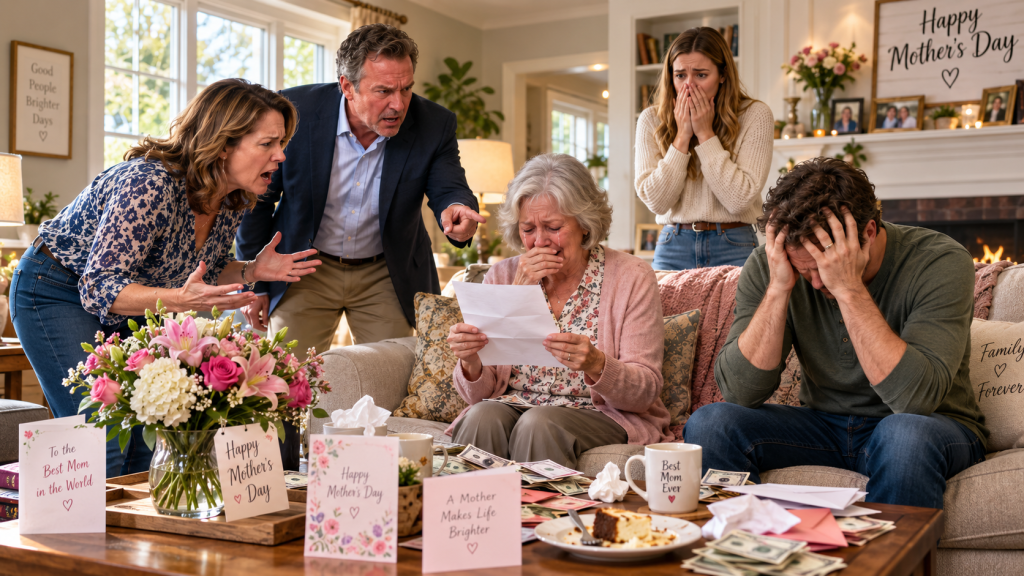
Ewald’s fingers loosened around the envelope. Lydia’s face lost its painted elegance. Alexander looked from the device to me, his eyes wide, not angry, not yet grateful, only stunned.
“Mom,” he whispered, “what did you do?”
“What a mother does when her son is being buried alive and no one else hears him breathing.”
Bianca tried to laugh, but it came out broken.
“This is illegal. You trapped us.”
“No,” I said. “I invited you to show who you were. You chose the rest.”
I walked to the window and pulled the curtain aside. Across the street sat a white delivery van. Inside was Robert Klein, my neighbor, retired private investigator, widower, and the first person who had believed me when I said my son was being manipulated.
A camera lens glinted through the windshield.
“Robert has been filming since I arrived,” I said. “He saw you attack me. He saw Ewald accept stolen money. He saw Lydia laugh while you humiliated me.”
Ewald dropped the envelope onto the carpet as though it had burned him.
“This is madness.”
“No,” I replied. “Madness was thinking I would let you destroy my son forever.”
Alexander turned to Bianca. His voice was low.
“Is this what you are? Is this what you say when I am not strong enough to defend my mother?”
Bianca rushed toward him, changing masks so quickly it almost impressed me. The furious woman vanished, replaced by the trembling wife.
“Darling, she planned this. She hates me. She wants to ruin us.”
“She did not force your hand,” Alexander said.
For the first time in years, my son’s voice did not bend around Bianca’s feelings.
It stood straight.
I picked up the envelope and pulled out one note.
“You were all so eager to grab it that none of you looked closely.”
Lydia frowned.
“What does that mean?”
I held the bill to the light. Printed in tiny letters, clear to anyone patient enough to see, were the words: For film use only.
Bianca stared at it.
“No.”
“Yes,” I said. “Prop money. Legal, worthless, and perfect for greedy hands.”
Alexander’s mouth fell open. Ewald staggered back into the wall. Lydia sat down without meaning to.
Bianca’s eyes sharpened with panic, and I knew she was calculating again, searching for a new victim, a new lie, a new door.
So I opened the folder in my handbag.
“This,” I said, lifting the first document, “is the credit report showing Ewald’s eighty-thousand-euro debt. Six cards. Three private loans. Four months behind on the mortgage.”
Ewald lunged toward me, but Alexander stepped between us.
“Do not touch her,” my son said.
His words filled a hollow place inside me.
I showed the next papers.
“This is proof Bianca was fired from her advertising job six months ago for falsified expenses. She told you she was working late, Alexander. She was not. Robert followed her to casinos outside the city. Fifteen thousand euros gone from your savings.”
Bianca slapped the papers from my hand. Her palm grazed my cheek. Not hard enough to injure, but hard enough to silence the room.
Alexander caught her wrist.
“Never again.”
The words were quiet, but they ended a marriage.
Bianca began sobbing, not from sorrow, but from defeat. Ewald muttered that I had violated privacy. Lydia called me a jealous old cleaner.
I let them speak.
Let them dig the hole deeper.
The recorder was still running.
Then the doorbell rang.
Bianca froze.
I smiled.
“That will be my sister Greta, her husband, and two neighbors who watched Alexander grow up.”
PART 3 — FINAL PART
The doorbell rang again.
Once.
Twice.
Then three sharp times in a row.
Nobody in the room moved.
Bianca stood beside the sofa with mascara beginning to streak beneath her eyes, one hand still pressed dramatically against her chest.
Her father, Ewald, stared at the worthless envelope of prop money scattered across the carpet.
Lydia sat frozen in the armchair.
And my son stood between me and his wife as though he had finally remembered which side of the room he belonged on.
The bell rang a fourth time.
Bianca turned toward me.
“Don’t open that door.”
I almost smiled.
For three years, she had told Alexander which calls to answer.
Which invitations to refuse.
Which holidays were “too stressful.”
Which family members were “toxic.”
Which memories were “unhealthy attachments.”
Now, suddenly, she was giving orders to me.
In my son’s house.
After stealing twenty-five thousand euros she believed were real.
After striking me.
After revealing more of herself in ten minutes than she had managed to hide in three years.
I walked calmly toward the front door.
Bianca stepped after me.
“Helga, I said don’t—”
Alexander moved sideways.
He did not touch her.
He did not need to.
He simply stood in her path.
Bianca stopped.
It was such a small thing.
A man standing still.
A husband refusing to move aside.
But I saw the meaning of it immediately.
So did she.
For years, Alexander had stepped aside for Bianca.
Tonight, for the first time, she was the one being stopped.
I opened the door.
My sister Greta stood on the porch.
At seventy, Greta was only two years younger than me, but she still wore her silver hair in the same neat twist she had worn at fifty. Beside her stood her husband, Friedrich, broad-shouldered despite his age, with the expression of a man who had already decided he disliked everyone in the house.
Behind them were my neighbors, Marta and Wilhelm Schneider.
They had known Alexander since he was eight.
Marta had once bandaged his knee when he fell off his bicycle.
Wilhelm had taught him how to change the oil in his first car.
Greta looked at my cheek.
Her eyes narrowed.
“Helga.”
“I’m fine.”
“You are red on one side of your face.”
“Bianca touched me.”
Behind me, I heard Alexander say, “She slapped Mom.”
Greta looked past my shoulder.
The expression on her face changed.
Not dramatically.
Greta had never been dramatic.
She simply became very still.
That was worse.
Friedrich muttered something in German under his breath that I will not repeat.
Marta covered her mouth.
Wilhelm’s jaw tightened.
I stepped aside.
“Come in.”
Bianca found her voice again.
“No.”
Greta raised one eyebrow.
“No?”
“This is my home.”
Alexander turned toward her.
“No.”
Bianca blinked.
He swallowed.
Then he repeated himself.
“No, Bianca.”
His voice shook.
But he said it.
“This is our home. And right now, I need witnesses.”
That sentence changed the air.
Bianca stared at him.
I watched years of control slipping from her face.
Control does not disappear gracefully.
It claws.
It threatens.
It cries.
It seduces.
It accuses.
It promises.
It reminds you of anniversaries, secrets, guilt, children, money, loneliness.
It becomes whatever shape will keep the door from closing.
Bianca tried guilt first.
“You’re choosing them over your wife?”
Alexander looked exhausted.
“I’m choosing the truth.”
Her face twisted.
“There is no truth! Your mother staged this entire thing!”
Alexander gestured toward the floor.
“Did she make you grab the envelope?”
Bianca said nothing.
“Did she make you call her a cleaning woman?”
Nothing.
“Did she make you hand the money to your father?”
Nothing.
“Did she make you slap her?”
Bianca’s lips parted.
Alexander’s voice became rough.
“Did she make you steal from our savings?”
“I was going to put it back.”
“When?”
“I had a plan.”
“When, Bianca?”
Her eyes flashed.
“I don’t have to stand here and be interrogated.”
“No,” Alexander said.
He looked at her for a long moment.
“You don’t.”
Then he pointed toward the staircase.
“You can pack.”
The room went completely silent.
Even Greta looked surprised.
Bianca laughed.
It was a sharp, breathless sound.
“You’re throwing me out?”
“I’m asking you to leave tonight.”
“This is unbelievable.”
“No,” he said.
“What’s unbelievable is how long I believed you.”
That hurt her.
I saw it.
Not because she loved him.
Maybe she did, in whatever way a person like Bianca was capable of loving.
But mostly because his obedience had always been the proof of her power.
And now he was taking it back.
She walked toward him.
Her voice softened.
“Alex.”
He closed his eyes.
She put one hand against his chest.
“You’re emotional.”
His eyes opened.
“That phrase.”
“What?”
“You always say that when I disagree with you.”
She froze.
Alexander stared at her hand until she removed it.
“You say I’m emotional.”
His voice grew quieter.
“You say I’m tired.”
“You say Mom is manipulating me.”
“You say work is making me irrational.”
“You say I misunderstood.”
“You say I remembered something wrong.”
“You say you were joking.”
“You say I’m too sensitive.”
He swallowed.
“You have an explanation for everything except your own behavior.”
Bianca backed away.
I saw my son then.
Not the forty-six-year-old engineer.
Not the husband.
Not the homeowner.
I saw the frightened boy he had once been after his father died.
Alexander had been twelve.
His father, my Karl, had collapsed at work.
A heart attack.
Gone before the ambulance reached the hospital.
One ordinary Tuesday morning, Alexander had kissed his father goodbye.
By dinnertime, half his life had vanished.
After that, my son became terrified of losing people.
He did not show it.
He became quieter.
Helpful.
Responsible.
He learned that if he made no trouble, maybe the people he loved would stay.
That fear had followed him into adulthood.
And Bianca had found it.
Some people find your wounds to heal them.
Others learn where to press.
I looked at him and felt something inside me break.
Not with anger.
With sorrow.
Because perhaps I should have understood sooner.
Perhaps Bianca had not changed Alexander.
Perhaps she had merely discovered the frightened twelve-year-old still living inside him and taught that boy that disagreement meant abandonment.
Greta walked past me.
She stopped beside Alexander.
“Your mother never wanted this.”
He looked at her.
“She could have fought harder.”
Greta nodded.
“She could have screamed. She could have called you every day. She could have insulted your wife and forced you to choose.”
Alexander lowered his head.
“But she didn’t.”
“No.”
Greta touched his arm.
“She waited because she loved you more than she loved winning.”
Alexander turned toward me.
There are moments when a mother has a thousand sentences inside her and not one of them is safe to speak.
I wanted to tell him I had missed him every Sunday.
I wanted to tell him I still cooked too much soup because part of me expected him to arrive hungry.
I wanted to tell him I had kept his old birthday cards.
His school photographs.
His father’s watch.
His childhood scarf.
I wanted to tell him how many nights I had sat alone in my kitchen wondering what I had done wrong.
Instead, I said only:
“I never stopped being here.”
Alexander broke.
There is no prettier word for it.
His shoulders folded.
His face crumpled.
And my forty-six-year-old son began crying in front of everyone.
Not politely.
Not quietly.
He covered his face with both hands and made the broken sound of someone discovering that the floor beneath his life had been rotten for years.
I went to him.
He shook his head.
“Mom, I’m sorry.”
I put my hands around his wrists and gently pulled his hands away from his face.
“Look at me.”
He did.
His eyes were red.
“I’m sorry.”
“I know.”
“I believed her.”
“I know.”
“I let her say terrible things about you.”
“Yes.”
His face twisted when I said it.
But love is not the same as pretending nothing happened.
I would not heal him with lies.
“I stopped calling.”
“Yes.”
“I missed your birthday dinner last year.”
“You did.”
“I told you that you needed boundaries.”
“You did.”
“I called you manipulative.”
My throat tightened.
“Yes.”
He closed his eyes.
“I’m sorry.”
I touched his face.
“You can be sorry and still move forward.”
He opened his eyes.
That was when Bianca began applauding.
Slowly.
Mockingly.
Clap.
Clap.
Clap.
Everyone turned.
She stood near the stairs with a strange smile on her face.
“What a beautiful performance.”
Alexander stared at her.
She laughed.
“Mother and son reunited. How touching.”
“Bianca,” Lydia whispered.
But Bianca was finished pretending.
Perhaps she knew it.
Perhaps once people lose control, they no longer see any value in hiding.
She pointed at me.
“You think she’s innocent?”
Alexander said nothing.
Bianca continued.
“She hated me from the beginning.”
“That isn’t true.”
“She thought I wasn’t good enough.”
“I thought you were rude.”
“Same thing.”
“No.”
I looked directly at her.
“I disliked the way you treated people who could do nothing for you.”
Her expression hardened.
“You looked down on me.”
“I cleaned toilets for forty years.”
I almost laughed.
“I have never been wealthy enough to look down on anybody.”
Ewald stepped forward.
“This has gone far enough.”
Friedrich faced him.
“Yes.”
Ewald stopped.
Friedrich was seventy-three.
He had arthritis in both knees.
But Ewald apparently decided not to test him.
“This is a family matter,” Ewald said.
Wilhelm spoke from near the doorway.
“We are witnesses now.”
Marta nodded.
“And I saw the mark on Helga’s face when we entered.”
Bianca turned pale.
Then, suddenly, she grabbed her handbag.
“I’m leaving.”
Alexander nodded.
“Good.”
“I’ll send someone for my things.”
“Fine.”
“I’ll take half of everything.”
Alexander’s face changed.
Not fear.
Calculation.
He was an engineer again.
“I think we need lawyers before you decide what half means.”
Bianca stared at him.
“Excuse me?”
He looked at the papers scattered across the carpet.
“You hid fifteen thousand euros in gambling losses.”
“They were household expenses.”
“Casinos are household expenses?”
“I made investments.”
“Roulette is not an investment.”
Ewald interrupted.
“Careful, Alexander.”
Alexander turned.
Ewald lifted his chin.
“My daughter knows things about you too.”
There it was.
A threat.
Simple.
Ugly.
Familiar.
But what Ewald did not understand was that threats work best when the person hearing them is still afraid of losing something.
Alexander had just watched his marriage collapse.
Suddenly Ewald had much less leverage.
“What things?”
Ewald blinked.
“You know.”
“No.”
Alexander stepped closer.
“Say them.”
Ewald looked at Bianca.
Bianca looked away.
Alexander laughed.
It was not a happy laugh.
“Of course.”
He rubbed his forehead.
“God.”
He turned toward me.
“They’ve done this before.”
I frowned.
“What?”
Alexander looked at Bianca.
“Whenever I questioned money, you said your father had concerns about my job.”
Bianca said nothing.
“You told me Ewald knew someone at the company.”
Ewald’s face stiffened.
“You said he could make trouble.”
“I never said that.”
Alexander stared at him.
“No.”
“You let her say it.”
That distinction mattered.
Cowards often do their threatening through other people.
Bianca zipped her handbag shut.
“I’m done.”
She started toward the door.
Then another vehicle pulled up outside.
Blue light flashed briefly across the window.
Bianca stopped.
So did Ewald.
Lydia whispered, “What now?”
I looked at Robert’s van across the street.
His driver’s door opened.
He climbed out.
Behind him, a police car stopped along the curb.
Bianca spun toward me.
“You called the police?”
“No.”
Alexander did.
Everyone looked at him.
My son pulled his phone from his pocket.
“I called while Mom was showing the documents.”
Bianca looked genuinely stunned.
“You called the police on me?”
Alexander’s expression was empty.
“You hit my mother.”
“It was barely a slap!”
“And you took money from her.”
“It was fake!”
“You didn’t know that.”
Bianca’s mouth closed.
Exactly.
That was the part none of them could escape.
The money had been worthless.
Their intentions had not been.
A knock sounded at the front door.
Marta opened it.
Two police officers stood outside with Robert.
Robert met my eyes.
I nodded.
He stepped inside.
One officer was a woman perhaps in her early forties with dark hair tied behind her head.
The other was a younger man carrying a small notebook.
The female officer looked around the room.
“Who called?”
“I did,” Alexander said.
She looked at him.
“Are you the homeowner?”
“Yes.”
“My wife assaulted my mother and took an envelope she believed contained twenty-five thousand euros.”
Bianca let out an incredulous laugh.
“This is insane.”
The officer looked at her.
“Ma’am, please let him finish.”
Bianca went silent.
I liked that woman immediately.
Alexander explained everything.
The officer listened.
Robert handed over the recording from his camera.
I provided the small audio recorder.
The officer looked at me.
“You recorded the conversation?”
“Yes.”
“Were you participating in it?”
“Yes.”
She nodded, though she made no legal judgment in the living room.
She only said the materials could be reviewed properly.
Then she asked about my cheek.
I told her the truth.
Bianca interrupted four times.
The officer warned her four times.
On the fifth interruption, the younger officer stepped closer and told her to remain quiet.
Ewald tried to leave.
They asked him to wait while statements were taken.
He demanded to know whether he was under arrest.
They said no.
He demanded a lawyer.
They told him he could contact one.
Then he demanded they stop treating him like a criminal.
That was when Greta whispered to me:
“People who are innocent usually ask fewer questions about being arrested.”
I almost laughed.
Even then.
Especially then.
Because sometimes laughter is not amusement.
Sometimes it is the body’s last defense against rage.
The officers separated us.
They took statements.
They photographed my cheek.
They documented the scattered prop bills.
They spoke privately with Alexander.
Then Robert.
Then Marta and Wilhelm.
Bianca sat stiffly on the sofa while Lydia whispered urgently in her ear.
Ewald paced near the window.
For the first time since I had known him, he looked ordinary.
That is what fear does to arrogant people.
It removes the costume.
An hour earlier, Ewald had carried himself like a man above consequences.
Now he was just a frightened debtor in an expensive jacket.
Eventually, the officers said Bianca should arrange somewhere else to stay that night while the incident was documented and reviewed.
Alexander did not argue.
Neither did I.
Bianca went upstairs.
Lydia followed.
Ewald remained below.
Robert stepped beside me.
“You all right?”
“Yes.”
“That answer is becoming less convincing.”
I looked at him.
He smiled slightly.
Robert was seventy-five and had spent thirty-two years investigating insurance fraud, missing persons, marital deceit, and corporate theft.
He had once told me that the worst people he encountered were not criminals.
They were people who believed consequences were for somebody else.
“You were right,” I said.
“About?”
“She hit me.”
Robert’s face tightened.
“I hoped she wouldn’t.”
“I knew she might.”
“That doesn’t make it better.”
“No.”
He looked toward Alexander.
My son sat at the dining table with both elbows resting on his knees.
“He seems awake now,” Robert said.
I looked at him too.
“Yes.”
Robert hesitated.
“Sometimes waking up hurts more than the dream.”
I understood exactly what he meant.
Bianca came downstairs twenty minutes later dragging two suitcases.
She had changed clothes.
That surprised me at first.
Then I understood.
Bianca did not know how to leave a stage without choosing the costume.
She wore fitted black trousers, a cream coat, and large sunglasses despite it being nearly evening.
She looked prepared for photographers.
There were none.
Only family.
Neighbors.
Police.
And the husband she had underestimated.
Lydia carried a smaller suitcase behind her.
Alexander stood.
Bianca stopped at the bottom of the stairs.
“Are you really doing this?”
“Yes.”
“After nine years?”
“Yes.”
She stared at him.
“You’re going to throw away nine years because your mother hates me?”
Alexander shook his head.
“No.”
He stepped toward her.
“I’m ending nine years because I finally heard what you say when you think I won’t resist.”
Bianca’s mouth trembled.
For a moment, she looked almost young.
Almost frightened.
Almost human.
Then she said the cruelest thing she could find.
“You’ll come crawling back.”
Alexander flinched.
She saw it and pushed harder.
“You can’t live without me.”
My hands tightened around my handbag.
But I stayed silent.
This was his moment.
Not mine.
Bianca smiled.
“You couldn’t even choose curtains without asking me.”
Alexander looked at her.
Then he did something I will remember forever.
He laughed.
Not loudly.
Not cruelly.
Just once.
Softly.
“You’re right.”
Bianca frowned.
Alexander nodded.
“I forgot how to choose curtains.”
He looked around the living room.
“Forgot how to invite my own mother for dinner.”
He gestured toward the kitchen.
“Forgot which food I liked.”
His eyes filled.
“Forgot that I used to play guitar.”
Bianca stared at him.
“Forgot I wanted children.”
The room became still.
I had not known that.
My heart stopped.
Alexander continued.
“You told me we would wait.”
Bianca’s expression changed.
“You said next year.”
He swallowed.
“Then the year after.”
Her eyes darted toward her mother.
I noticed.
So did Alexander.
“What?”
Bianca said nothing.
“Why did you look at your mother?”
“Alexander.”
“Why?”
Lydia whispered, “Don’t.”
Bianca turned.
“Mom.”
Alexander stared between them.
A new silence entered the room.
Not the silence of anger.
The silence of another secret arriving.
I had learned to recognize it.
Alexander stepped closer.
“What don’t I know?”
Lydia looked at the floor.
Bianca’s face hardened again.
“Nothing.”
Alexander laughed bitterly.
“No.”
He shook his head.
“Not anymore.”
He looked at Lydia.
“Tell me.”
She did not answer.
He looked at Bianca.
“Tell me.”
Bianca crossed her arms.
“I decided I didn’t want children.”
Alexander stared at her.
Nobody moved.
He looked almost confused.
“You told me there were medical problems.”
“There were.”
“What problems?”
She looked away.
Alexander’s face drained of color.
“You said the doctor told you pregnancy might be dangerous.”
Bianca sighed.
“Oh, for God’s sake.”
I felt sick.
Alexander whispered, “Was that a lie?”
Bianca’s silence answered first.
Then Lydia said:
“Bianca never wanted children.”
My son sat down.
Not carefully.
His knees simply seemed to fail.
The chair caught him.
I moved toward him, but he lifted one hand.
“Wait.”
His voice sounded distant.
He stared at Bianca.
“You let me think you were sick.”
Bianca shrugged.
“What difference does it make?”
Greta made a small sound of disbelief.
Alexander stared at his wife.
“You let me spend years being afraid for you.”
“I knew you wouldn’t accept that I didn’t want kids.”
“So you lied?”
“I protected myself.”
“From me?”
“From pressure.”
He looked as though she had struck him.
I understood then that the fifteen thousand euros mattered less.
The insults mattered less.
Even the slap mattered less to him.
This was the wound.
Alexander had wanted a family.
I remembered.
God.
How had I forgotten?
When he was twenty-eight, long before Bianca, he told me he wanted two children.
Maybe three.
He had joked that he would build them a treehouse even if he lived in an apartment.
When he married Bianca, he gave me an old wooden train he had kept from childhood.
“Save it,” he had said.
“For someday.”
I had saved it.
It was still in my hall closet.
Wrapped in newspaper.
Waiting for a child who had never come.
Alexander covered his mouth.
“You watched me blame myself.”
Bianca said nothing.
“You said my stress was making things harder.”
Nothing.
“You let me change jobs.”
I looked at him.
He had changed companies four years earlier.
He told me it was for better hours.
Now I knew why.
“I took a salary cut,” he said.
“I stopped traveling.”
His eyes reddened.
“I came home early every day because you said we needed less stress.”
Bianca rolled her eyes.
That tiny movement destroyed whatever remained.
Alexander saw it.
He stood.
“Go.”
“Alex—”
“Get out.”
His voice cracked through the room.
Everyone froze.
“Get out of my house.”
Bianca’s face changed.
“You’ll regret this.”
Alexander pointed at the door.
“Maybe.”
His chest heaved.
“Maybe I’ll regret everything for a while.”
He wiped his face.
“But at least the regret will be mine.”
Bianca stared at him.
Then she walked out.
Lydia followed.
Ewald remained one second longer.
He looked at me.
There was hatred in his face.
But beneath it, something else.
Fear.
I smiled gently.
Not because I was cruel.
Because I wanted him to understand something.
He had mistaken my age for weakness.
My work for ignorance.
My kindness for stupidity.
My silence for surrender.
He had been wrong about all four.
“Happy Mother’s Day, Ewald,” I said.
He walked out without answering.
The door closed.
Nobody spoke.
Alexander stood in the middle of the room staring at it.
Then he slowly turned around.
The house looked different.
Nothing had changed physically.
Same sofa.
Same dining table.
Same framed photographs Bianca had chosen.
Same tall white candles.
Same expensive curtains.
Yet the entire house felt as though a storm had passed through and taken the roof with it.
Alexander sat down again.
I sat beside him.
Greta began collecting the fake money from the floor.
Friedrich helped.
Marta made coffee.
That was Marta’s answer to all disasters.
Death.
Divorce.
Argument.
Flood.
Coffee.
Wilhelm found mugs.
Robert stood by the window speaking quietly with one of the officers.
And I sat beside my son.
For a while, we said nothing.
Eventually Alexander whispered:
“Did you know about the children?”
“No.”
He nodded.
“I believed her.”
“I know.”
“She cried when she told me.”
I looked at him.
“She said she was scared.”
His voice broke.
“I held her all night.”
I took his hand.
His fingers were cold.
“What kind of person does that?”
I could have answered.
But I didn’t.
Because when someone you love discovers betrayal, there is a temptation to explain the betrayer.
Narcissist.
Liar.
Manipulator.
Cruel.
Sick.
Selfish.
Maybe some of those words would have fit Bianca.
But none of them would give Alexander back his years.
So I said:
“The kind of person you no longer have to understand.”
He looked at me.
I squeezed his hand.
“You only have to understand yourself now.”
His eyes filled again.
“I don’t know who that is.”
“Yes, you do.”
“No.”
“Alexander.”
I smiled through my own tears.
“You hated peas when you were six.”
He stared at me.
“What?”
“You still hate peas.”
A tiny laugh escaped him.
“You wanted to be an astronaut until you discovered you got sick on roller coasters.”
He smiled despite himself.
“You broke Mrs. Hoffmann’s window with a football when you were eleven and spent two weeks washing her car because you felt guilty.”
“Mom.”
“You played guitar badly for seven years.”
“I wasn’t that bad.”
“You were terrible.”
He laughed.
A real laugh.
Small.
Fragile.
But real.
I continued.
“You like blue shirts.”
He looked down.
He was wearing gray.
Bianca liked gray.
“You used to order strawberry ice cream.”
“She hated strawberry.”
“I know.”
He closed his eyes.
I leaned closer.
“You are still in there.”
His face folded again.
This time, when he cried, he leaned against me.
And I held my son.
Just as I had when he was twelve.
Just as I had when his father died.
Just as I had when he broke his arm.
Just as I had when his first girlfriend left him.
People imagine motherhood becomes lighter when children grow up.
It does not.
You simply lose the ability to carry them physically.
The weight moves somewhere else.
Into your chest.
Into your sleep.
Into every telephone call.
Every silence.
Every holiday chair left empty.
That Mother’s Day, after three years of watching my son disappear inch by inch, I finally felt his weight return to me.
And I was grateful.
Even though it hurt.
Especially because it hurt.
Because pain meant he was still reachable.
Later that evening, the police left.
Greta and Friedrich went home.
Marta made us promise to call if anything happened.
Wilhelm checked the locks.
Robert collected his equipment.
Before leaving, he handed me a memory card.
“What’s this?”
“Backup.”
“Of today?”
“And some earlier material.”
Alexander looked up.
“What earlier material?”
Robert glanced at me.
I sighed.
“I was going to tell you.”
Alexander rubbed his forehead.
“Of course you were.”
Robert almost smiled.
“For six weeks, Helga asked me to look into financial irregularities involving Bianca and her parents.”
Alexander looked at me.
“You investigated my wife?”
“I investigated what was happening to you.”
“That’s not an answer.”
“No.”
I held his gaze.
“I investigated your wife.”
He stood.
For a moment, anger returned.
Good.
Anger meant he was no longer numb.
“You had someone follow her?”
“Yes.”
“Read our finances?”
“Only records Robert could obtain legally.”
“Mom.”
“I know.”
“No, you don’t.”
He paced toward the window.
“You don’t get to say Bianca controlled me and then decide investigating my life behind my back is okay.”
The words landed.
And he was right.
That is the strange thing about loving people.
Sometimes we become so convinced we are saving them that we stop asking where help ends and control begins.
I stood.
“You’re right.”
Alexander turned.
He clearly had prepared for resistance.
My agreement confused him.
I continued.
“I was frightened.”
“That doesn’t make it right.”
“No.”
“I thought something terrible was happening.”
“Something terrible was happening.”
“Still.”
“Yes.”
I nodded.
“Still.”
The room quieted.
Robert remained near the door.
I said:
“If I could do it again, I would tell you earlier.”
Alexander looked at me.
“But I need you to understand something too.”
He waited.
“I tried speaking to you.”
My voice trembled.
“I tried for years.”
His anger softened.
“You stopped answering.”
He looked away.
“You told me Bianca needed space.”
He closed his eyes.
“You told me my calls were harming your marriage.”
His jaw tightened.
“You returned my Christmas gift unopened.”
“I didn’t.”
“Yes.”
He looked at me.
“Bianca told me you had.”
I shook my head.
“I sent you your father’s watch.”
Alexander went still.
“When?”
“Christmas two years ago.”
He stared at me.
“No.”
“Yes.”
“I never saw it.”
Robert lowered his eyes.
Alexander’s face changed.
“What happened to it?”
I turned toward Robert.
He nodded slowly.
“That’s in the other material.”
Alexander gripped the back of a chair.
“What other material?”
Robert looked at him.
“Your wife sold several items online.”
Alexander’s face emptied.
“My father’s watch?”
Robert nodded.
“And two pieces of jewelry that belonged to Helga, from what we could confirm.”
I stopped breathing.
“What jewelry?”
Robert looked at me.
“I didn’t want to tell you until I had proof.”
“Robert.”
He hesitated.
“The garnet brooch.”
My mother’s brooch.
I sat down.
The room tipped sideways for a moment.
My mother wore that brooch on the collar of her winter coat.
She wore it the day I married Karl.
She wore it when Alexander was baptized.
Before she died, she placed it in my hand.
Not because it was expensive.
It wasn’t.
Because it had survived.
War.
Migration.
Poverty.
Widowhood.
Three generations of women.
I had given it to Alexander after his wedding because I thought one day he might have a daughter.
“Bianca sold it?”
Robert nodded.
“We found the old listing.”
Alexander whispered, “I didn’t know.”
I believed him.
That made it worse.
“How much?”
“Two hundred euros.”
I laughed.
Not because it was funny.
Two hundred euros.
My mother had once traded her wedding shoes for potatoes.
She carried that brooch sewn into the lining of her coat when she fled her childhood village.
Two hundred euros.
Some objects are worthless until you know what they survived.
Alexander sat beside me.
“Mom.”
I could not look at him.
“I’m sorry.”
“It wasn’t yours.”
“I know.”
“No.”
I looked at him.
“It was yours.”
He frowned.
“I gave it to you.”
He swallowed.
“And I failed to protect it.”
“Yes.”
His eyes filled.
I put my hand over his.
“But objects can be lost.”
My voice shook.
“People matter more.”
He looked at me.
“And I almost lost you.”
“Yes.”
This time, I did not soften it.
He needed the truth.
So did I.
We slept very little that night.
I stayed in the guest room.
Alexander stayed downstairs.
At three in the morning, I heard music.
I went down.
He was sitting on the floor beside a cabinet, holding an old guitar.
Dust covered the case.
One string was broken.
He looked embarrassed.
“Found it.”
I smiled.
“I told you.”
He plucked the remaining strings.
The sound was terrible.
“Still bad,” I said.
He laughed.
We sat there until sunrise.
At six fifteen, he made coffee.
At six forty, he opened the refrigerator.
Then he looked at me.
“There are no strawberries.”
I laughed so hard I cried.
The next weeks were not dramatic.
Real endings rarely are.
After the shouting comes paperwork.
Lawyers.
Bank statements.
Appointments.
Passwords.
Locks.
Insurance.
Documents.
Questions.
More questions.
Then silence.
Bianca hired an attorney within forty-eight hours.
So did Alexander.
The recording and camera footage became important, though not in the spectacular way television teaches people to expect.
There were no handcuffs at breakfast.
No judge shouted.
No one confessed under a spotlight.
Life is slower than that.
But evidence matters.
Especially financial evidence.
And once Alexander began looking, he found things even Robert had missed.
Small transfers.
Cash withdrawals.
Credit card payments.
Subscriptions.
A joint savings account that had been drained gradually.
A second card in Alexander’s name that he swore he never opened.
That was the item that changed everything.
His lawyer advised him to obtain his full credit history.
The result arrived on a Thursday afternoon.
Three loans.
Not one.
Three.
Two had been repaid.
One still carried a balance.
Alexander came to my apartment holding the papers.
His hands were shaking.
“Mom.”
I knew before he spoke.
“What?”
“She used my information.”
I stared.
“She applied for credit in my name.”
“How much?”
“Forty-two thousand euros over four years.”
I sat down.
He remained standing.
“How?”
“I signed things.”
His face twisted.
“She’d put papers with insurance documents.”
He laughed bitterly.
“I signed wherever she marked.”
I closed my eyes.
Trust is convenient.
That is why thieves love it.
The investigation widened.
Ewald’s debts were worse than Robert had known.
Much worse.
Bianca had been funneling money toward her parents.
Some went to gambling.
Some went toward their mortgage.
Some went toward Lydia’s credit cards.
Some went into a business account belonging to Ewald.
The business barely existed.
It had no employees.
No office.
No real clients.
But it had received thousands.
Alexander stared at the documents.
“My money.”
“Yes.”
“No.”
He shook his head.
“Our money.”
He looked at me.
“I worked evenings for that.”
I remembered.
He had missed my seventieth birthday because of an “emergency project.”
Bianca had told me he was too exhausted to attend dinner.
Now I knew where part of that money had gone.
I wanted to hate her.
I did.
For a while.
Hatred is easy when someone harms your child.
Much easier than forgiveness.
Much easier than sleep.
But hatred is expensive.
It requires feeding.
Every memory becomes fuel.
Every photograph becomes evidence.
Every quiet morning becomes another courtroom in your head.
At seventy-two, I did not have enough life remaining to spend it all prosecuting Bianca inside my thoughts.
So I let the lawyers handle facts.
I handled my son.
Alexander moved into a small apartment temporarily while the house became part of the marital dispute.
The first apartment he chose was terrible.
Gray walls.
Gray sofa.
Gray rug.
Gray curtains.
I stood in the doorway.
“No.”
He looked offended.
“What?”
“You escaped Bianca and rented her favorite color.”
He looked around.
Then started laughing.
The next week, he bought blue curtains.
Bright blue.
Almost ridiculous.
He sent me a photograph.
I replied with one word.
“Better.”
He bought strawberries too.
The divorce took ten months.
Ten long months.
Bianca fought everything.
The house.
The savings.
Furniture.
Vehicles.
Even kitchen appliances.
At one point, her lawyer included my antique walnut cabinet in a list of marital property.
I had loaned it to Alexander when he bought the house.
My Karl had built it.
I arrived at my lawyer’s office with photographs dated 1978, the original receipt for the wood, and a picture of Karl standing beside the unfinished cabinet in our first apartment.
My lawyer looked at me.
“You save everything?”
“Yes.”
He smiled.
“Good.”
I thought about Bianca calling me an old cleaner.
People underestimate cleaners.
But cleaners know something important.
Everything leaves a trace.
Dirt.
Grease.
Dust.
Lies.
Money.
Fingerprints.
Footsteps.
Nothing simply disappears.
Eventually, Bianca’s claims weakened.
Financial records were not sentimental.
Neither were bank statements.
Neither were loan applications.
Neither were gambling receipts.
Nor was the footage of her grabbing the envelope from my hands.
The physical assault itself resulted in legal consequences that were modest compared with the drama of that Mother’s Day but significant enough to become part of the overall record.
More importantly, Alexander obtained protection over his finances and identity.
The fraudulent credit issues were investigated.
Some liabilities were disputed.
Some losses could not be recovered.
But the bleeding stopped.
That mattered.
Ewald lost his house the following year.
I did not celebrate.
Greta did.
She brought cake.
I told her she was terrible.
She said:
“I’m terrible with frosting.”
Then ate two slices.
Lydia moved into a smaller apartment.
From what we heard through mutual acquaintances, she blamed everyone except herself.
Bianca relocated to another city after the divorce.
For months she sent Alexander messages.
First angry.
Then apologetic.
Then romantic.
Then threatening.
Then nostalgic.
Then cruel again.
The pattern was almost mathematical.
“I miss you.”
“You ruined me.”
“I forgive you.”
“You’ll never find someone like me.”
“Your mother destroyed our marriage.”
“I always loved you.”
“Your mother brainwashed you.”
“Can we meet?”
“Coward.”
“I need closure.”
Alexander showed me the first few.
Then I told him to stop.
“Why?”
“Because every message brings her back into the room.”
He looked at his phone.
“I need to understand.”
“No.”
I touched his wrist.
“You need to heal.”
He deleted her thread.
Not immediately.
He stared at it for almost a minute.
Then pressed delete.
His hand shook afterward.
Freedom is often like that.
We imagine it should feel like flying.
Sometimes it feels like losing your balance because the cage had been holding you upright.
Alexander began therapy.
He told me himself.
Years earlier, he might have been embarrassed.
Now he said it simply.
“I need help understanding why I stayed.”
I nodded.
“Good.”
“You don’t think it’s weak?”
I stared at him.
“Your father once drove twenty kilometers with appendicitis because he thought asking a doctor for help was weak.”
Alexander laughed.
“Dad did that?”
“Yes.”
“He could have died.”
“Exactly.”
He smiled.
“So no.”
“No.”
I squeezed his hand.
“Getting help before you nearly explode is improvement.”
The months softened him.
At first, he apologized constantly.
For Bianca.
For birthdays.
For missed calls.
For believing lies.
For the brooch.
For the watch.
For the years.
Eventually, I told him to stop.
We were eating soup at my kitchen table.
He had apologized because I mentioned a Christmas three years earlier.
I put down my spoon.
“Alexander.”
“What?”
“No more.”
He frowned.
“No more what?”
“Apologizing for every memory.”
“But—”
“No.”
I pointed my spoon at him.
“I refuse to spend whatever years I have left making you pay rent in guilt.”
His eyes filled.
“Mom.”
“You hurt me.”
He lowered his head.
“I know.”
“I survived.”
He looked up.
“We are here.”
I reached across the table.
“That is what matters now.”
He took my hand.
For several minutes, neither of us spoke.
The next Mother’s Day arrived quietly.
No trap.
No recorder.
No prop money.
No expensive lunch.
Alexander called me at seven in the morning.
“Are you awake?”
“I am seventy-three.”
“What does that mean?”
“It means my knees wake me before the birds.”
He laughed.
“I’m outside.”
I looked toward the window.
His car was parked along the curb.
He came upstairs carrying a paper grocery bag.
“What is that?”
“Breakfast.”
“You cook now?”
“No.”
“Good.”
He brought bread.
Cheese.
Strawberries.
A small cake.
And one envelope.
I stared at it.
He noticed.
“This one is safe.”
I laughed.
“Open it.”
Inside was not money.
It was a photograph.
The photograph showed a small wooden brooch box.
Inside the box lay my mother’s garnet brooch.
For several seconds, I could not breathe.
I looked at him.
“How?”
He smiled.
“I found the buyer.”
My hands shook.
“Robert helped.”
Of course Robert helped.
Alexander continued.
“The woman had bought it online years ago. She still had it.”
I touched the photograph.
“She gave it back?”
“I bought it back.”
“How much?”
He hesitated.
“How much, Alexander?”
“More than two hundred euros.”
“How much?”
He smiled.
“Happy Mother’s Day.”
I narrowed my eyes.
Then he reached into his jacket.
A small velvet box appeared in his hand.
My heart stopped.
He placed it on the table.
I opened it.
There it was.
My mother’s brooch.
The same deep red stones.
The same tiny bend in the pin.
The same scratch across the back where I had dropped it at my wedding.
I touched it.
And suddenly I was eight years old again.
My mother was fastening her coat.
I was thirty, standing beside Karl on my wedding day.
I was forty, holding Alexander’s hand at his grandmother’s funeral.
I was seventy-two, sitting in my son’s living room while another woman laughed at the life I had lived.
All those women existed inside me at once.
Mother.
Daughter.
Wife.
Widow.
Cleaner.
Old woman.
None of them weak.
I began crying.
Alexander came around the table and knelt beside me.
“Mom.”
“You found it.”
“I found it.”
I held the brooch against my chest.
Then I laughed.
He smiled.
“What?”
“Nothing.”
“You’re laughing.”
“I know.”
“That laugh scares me now.”
I laughed harder.
He put his head against my shoulder.
After breakfast, he drove me somewhere.
He refused to tell me where.
Twenty minutes later, we stopped in front of a small house near the edge of town.
It had green shutters.
A crooked apple tree.
A narrow garden.
And the ugliest mailbox I had ever seen.
Alexander got out.
I followed.
“Whose house is this?”
“Mine.”
I turned.
“What?”
“I bought it.”
“When?”
“Last month.”
He looked nervous.
“It’s smaller than the old place.”
“Good.”
“No gray walls.”
“Excellent.”
He smiled.
“There’s a workshop behind the garage.”
“For what?”
He shrugged.
“I thought maybe I’d build things.”
My throat tightened.
Like his father.
Alexander looked toward the backyard.
“And there’s room for a treehouse.”
I stared at him.
He kept looking away.
“Alexander.”
“What?”
“Why would you need a treehouse?”
He shrugged again.
“I don’t know.”
He smiled.
“Someday.”
That word.
Someday.
The word he had almost lost.
I slipped my arm through his.
We walked around the house.
Blue curtains hung in the living-room windows.
Real blue.
Bright blue.
Ridiculous blue.
I loved them.
In the kitchen sat a bowl of strawberries.
He had planted herbs near the window.
Badly.
Half were already dying.
I did not mention it.
Outside, the apple tree leaned toward the fence.
Alexander touched its trunk.
“It needs pruning.”
“You know how?”
“No.”
“Your father would.”
He nodded.
For a moment, grief passed across his face.
But grief was different now.
Not a pit.
More like weather.
It came.
It passed.
He looked at me.
“I wish Dad could see this.”
I touched his shoulder.
“He saw enough of you to know you’d get here.”
Alexander looked down.
“Do you think he’d be ashamed?”
“Of what?”
“That I stayed so long.”
I stared at him.
Then I took his face between my hands the way I had when he was a boy.
“Your father loved you.”
His eyes filled.
“He would be angry that someone hurt you.”
I smiled.
“And furious you let your guitar strings rust.”
Alexander laughed.
“But ashamed?”
I shook my head.
“Never.”
He leaned forward and kissed my forehead.
That afternoon, we sat beneath the apple tree.
Robert arrived later.
Greta too.
Then Friedrich.
Marta and Wilhelm.
Somehow, without planning it, Mother’s Day became a gathering.
No deli food pretending to be homemade.
No expensive table settings.
No judging parents.
No envelopes of money.
We grilled sausages.
Burned half of them.
Greta brought potato salad.
Friedrich complained about the mustard.
Marta brought cake.
Robert brought wine.
Alexander played guitar.
Badly.
Very badly.
We begged him to stop.
He refused.
The neighbors laughed.
I laughed.
Even Robert laughed.
At sunset, Alexander came and sat beside me.
“You know,” he said, “I really did save twenty-five thousand euros.”
I looked at him.
“What?”
“The money that day.”
“The fake money?”
“No.”
He smiled.
“The real money exists.”
I stared at him.
“I put it somewhere safe before the lunch.”
“Why?”
“Robert’s idea.”
Across the yard, Robert lifted his glass toward us.
I shook my head.
“Two criminals.”
Alexander laughed.
“I still want you to have it.”
“No.”
“Mom.”
“No.”
“You gave everything to me.”
“That was my choice.”
“I want to give something back.”
“You do.”
“What?”
I looked around the garden.
At Greta laughing.
At Robert arguing with Friedrich.
At Marta cutting cake.
At the blue curtains glowing behind the window.
Then I looked at my son.
“This.”
He frowned.
“What?”
“You’re here.”
My voice caught.
“You call me.”
“You argue with me.”
“You eat my soup.”
“You remember birthdays.”
“You bought strawberries.”
He smiled.
“You’re becoming yourself again.”
I touched his hand.
“That is enough.”
Alexander looked away.
Tears filled his eyes.
Then he nodded.
“What should I do with the money?”
“Therapy.”
He laughed.
“I already pay for therapy.”
“Buy better curtains.”
“They’re blue.”
“Too blue.”
“You said you liked them.”
“I lied.”
He stared at me.
Then we both burst out laughing.
That was when I realized something.
A year earlier, I had laughed because Bianca thought she had stolen twenty-five thousand euros from me.
I had laughed because I knew the money was fake.
I had laughed because I held proof.
Because I had a recorder.
Because I had documents.
Because, for once, I was ahead of people who had spent years thinking I was stupid.
But that afternoon beneath my son’s apple tree, my laughter meant something different.
It was not revenge.
It was not victory.
It was freedom.
For him.
For me.
Maybe even for the memory of my mother and the women before us who survived far worse things than a cruel daughter-in-law and an arrogant family.
People later asked whether I felt satisfied watching Bianca lose her marriage.
The answer is no.
A marriage ending is not satisfying.
Watching your child discover years of deception is not satisfying.
Finding out heirlooms were sold is not satisfying.
Learning someone used your son’s fear, love, money, and hope against him does not make you feel victorious.
There was no victory in that.
The victory came later.
It came when Alexander called just to ask how my day was.
When he started playing guitar again.
When he invited Greta for Christmas without asking anyone’s permission.
When he changed jobs because he wanted to, not because he was trying to solve someone else’s invented crisis.
When he bought strawberry ice cream.
When he hung blue curtains.
When he spoke about his father without falling apart.
When he told me one evening:
“I think I’m happy.”
Not ecstatic.
Not perfect.
Not healed forever.
Happy.
Quietly.
Honestly.
His own kind of happy.
That was the victory.
Two years after that Mother’s Day, Alexander met a woman named Sophie.
I was suspicious.
Of course I was.
I am not ashamed of that.
When your house burns down, you become very interested in smoke.
Sophie was a school librarian.
Forty-three.
Divorced.
No children.
Kind eyes.
Terrible fashion sense.
Alexander loved her.
The first time she came to my apartment, she brought flowers.
I thought:
Too obvious.
Then she washed my coffee cups without asking.
I thought:
Manipulation.
Then she asked to see photographs of Alexander as a child.
I thought:
Research.
Greta told me I had become insane.
“You’re studying the poor woman like she’s applying for government clearance.”
“I am being careful.”
“You checked her shoes.”
“Shoes tell you things.”
“What things?”
“I don’t know yet.”
Greta rolled her eyes.
But Sophie did something Bianca never had.
She gave Alexander space.
When he disagreed, she did not punish him.
When he visited me, she did not count the hours.
When he had a difficult day, she did not make it about herself.
Once, after dinner, Sophie and I were alone in the kitchen.
She dried a plate.
Then said:
“Alexander told me what happened.”
I became still.
“How much?”
“Enough.”
I waited.
Sophie put the plate away.
“I’m not Bianca.”
I looked at her.
“I know.”
“You don’t.”
She smiled gently.
“Not yet.”
That answer surprised me.
No defensiveness.
No insult.
No demand that I trust her.
She simply understood that trust takes time.
I liked her immediately after that.
I did not tell her.
A woman must maintain some mystery.
Six months later, Alexander called me.
He sounded strange.
“Mom.”
“What happened?”
“Nothing.”
“Are you sick?”
“No.”
“Car accident?”
“No.”
“Fired?”
“No.”
“Then why are you breathing like a criminal?”
He laughed nervously.
“Sophie’s pregnant.”
I dropped the telephone.
Actually dropped it.
It struck the kitchen floor.
I stared at it.
From the speaker, Alexander shouted:
“Mom?”
I bent down.
My knees complained.
I picked it up.
“Say that again.”
“Sophie’s pregnant.”
I sat down.
“How?”
There was silence.
Then Alexander began laughing.
“Mom.”
“I know how.”
He laughed harder.
“I mean—”
I covered my mouth.
My entire body started shaking.
“Is she all right?”
“Yes.”
“The baby?”
“Everything looks good.”
“How far?”
“Eleven weeks.”
I closed my eyes.
For years, I thought anger would be the strongest emotion Bianca left behind.
It wasn’t.
Hope was stronger.
Hope always is when given enough time.
“Mom?”
“I’m here.”
“You’re quiet.”
“I’m crying.”
“Oh.”
“That means I’m happy, you idiot.”
He laughed.
Then his own voice broke.
“Mom.”
“Yes?”
“I’m scared.”
I understood.
Of course I did.
His whole life, happiness had frightened him because happiness created something to lose.
I said:
“You can be scared.”
He breathed.
“And?”
“And still be happy.”
The baby arrived in March.
A girl.
Seven pounds.
Dark hair.
Furious lungs.
Alexander called me from the hospital at four thirty in the morning.
I arrived before sunrise.
He stood in the hallway wearing a wrinkled shirt and an expression I had not seen since he was a boy at Christmas.
“Mom.”
I hugged him.
“How is Sophie?”
“Good.”
“The baby?”
“Perfect.”
He began crying.
Again.
My son cried much more after he learned not to be ashamed of it.
I approved.
He led me into the room.
Sophie lay exhausted in bed.
In her arms was a tiny bundle wrapped in white.
“Helga,” she whispered.
I approached.
The baby’s face was pink and serious.
Her eyes were closed.
One tiny fist rested beside her cheek.
“What is her name?”
Alexander looked at Sophie.
Sophie smiled.
Then he looked at me.
“Helena.”
I stared at him.
“No.”
He laughed through tears.
“Yes.”
“No.”
“Mom.”
“Absolutely not.”
Sophie smiled.
“We’re calling her Lena.”
I shook my head.
“You cannot name a child after me without permission.”
Alexander kissed my cheek.
“Too late.”
I looked down at my granddaughter.
Lena.
She opened her eyes.
For half a second, she looked directly at me.
I know newborns do not truly focus.
Do not correct an old woman.
I decided she knew exactly who I was.
I touched one tiny finger.
She closed her hand around mine.
That nearly destroyed me.
Later that year, I gave Alexander the garnet brooch.
Again.
He refused.
“Absolutely not.”
“It belongs to Lena.”
“Mom, we nearly lost it once.”
“And now we found it.”
I opened his hand and placed the box in his palm.
“Some things are meant to travel.”
He stared at it.
“She’s a baby.”
“So don’t let her swallow it.”
He laughed.
Then became serious.
“I’ll protect it.”
I looked at him.
“I know.”
That was the difference.
The first time I gave him the brooch, I trusted him because he was my son.
The second time, I trusted him because he had become himself.
There is a difference.
Today, I am seventy-five.
Lena is almost two.
She visits every Sunday.
She likes strawberries.
Of course she does.
She pulls books from my lowest shelf.
She hides spoons beneath the sofa.
She calls Robert “Robo,” which irritates him terribly.
Greta teaches her bad habits.
Friedrich teaches her worse ones.
Alexander rebuilt the old wooden train.
The one I had saved.
It runs through his living room now.
Around Christmas, he built a treehouse behind his home.
Lena is far too small to use it properly.
Alexander claims that is not the point.
Sometimes I sit beneath the apple tree while he works.
Sophie brings tea.
The blue curtains are still there.
Still too blue.
I still complain.
Alexander still refuses to change them.
Good.
A son should disagree with his mother sometimes.
That is how you know nobody is afraid.
As for Bianca, I saw her once after the divorce.
Nearly three years after that Mother’s Day.
I was leaving a pharmacy.
She was standing across the street.
For a moment, neither of us moved.
She looked older.
So did I.
She crossed the road.
“Helga.”
“Bianca.”
She glanced at my shopping bag.
“How is Alexander?”
“Good.”
Her face tightened.
“Is he married?”
“Yes.”
She looked away.
“And?”
“He has a daughter.”
Bianca went completely still.
I regretted saying it the moment the words left my mouth.
Not because it was secret.
Because I saw something break behind her eyes.
For the first time, she did not look manipulative.
Or proud.
Or cruel.
She looked empty.
“I see.”
I waited.
She swallowed.
“Does he hate me?”
I thought about it.
Then answered honestly.
“No.”
She looked surprised.
“He doesn’t?”
“No.”
“What does he say about me?”
“Very little.”
That hurt her more than hatred would have.
People like Bianca imagine being hated means they still occupy space in your heart.
Indifference is the locked door.
She nodded slowly.
“I made mistakes.”
“Yes.”
“I was under pressure.”
“Yes.”
“My parents—”
I raised one hand.
“No.”
She stopped.
“You were forty years old.”
Her eyes narrowed slightly.
“Do not give your parents ownership of choices you made willingly.”
Bianca looked down.
For several seconds, neither of us spoke.
Then she asked:
“Do you forgive me?”
There are questions that deserve careful answers.
That was one.
I looked at the woman who had insulted me.
Manipulated my son.
Sold pieces of my family history.
Drained his savings.
Lied about children.
Struck me.
Nearly separated me from my only child forever.
And I realized I no longer felt rage.
Not because what she did was small.
Because my life had become too large to keep her at its center.
“I don’t carry you anymore,” I said.
She frowned.
“What does that mean?”
“It means I stopped waking up angry.”
She stared at me.
“I stopped imagining arguments with you.”
I adjusted my shopping bag.
“I stopped needing you punished.”
Her eyes filled slightly.
“Is that forgiveness?”
“Maybe.”
I smiled faintly.
“Maybe it is simply peace.”
She nodded.
I turned to leave.
“Helga.”
I stopped.
She looked at me.
“I’m sorry.”
I studied her face.
Maybe she meant it.
Maybe she didn’t.
For once, I did not need to know.
“Goodbye, Bianca.”
And I walked away.
That evening, I went to Alexander’s house.
Lena ran toward me shouting:
“Oma!”
I lifted her.
My knees protested.
I ignored them.
Alexander kissed my cheek.
Sophie put dinner on the table.
Robert came later.
Greta arrived carrying cake.
There was noise.
Too much food.
A toy train circling the floor.
A child laughing.
Blue curtains.
Strawberries.
Life.
Real life.
Messy.
Imperfect.
Uncontrolled.
Beautiful.
At one point, Alexander looked across the table at me.
“What?”
I asked.
He smiled.
“Nothing.”
“Then stop staring.”
“I was just thinking about that Mother’s Day.”
I looked at him.
“So was I.”
He laughed.
“You scared the hell out of me when you pulled out that recorder.”
“I know.”
“I thought you’d lost your mind.”
“Possibly.”
“You really put fake money in an envelope.”
“Yes.”
“You hid a recorder under a flowerpot.”
“Yes.”
“You hired Robert.”
“I did not hire him.”
Robert looked up from his plate.
“She paid me in soup.”
Greta laughed.
Alexander shook his head.
“You were terrifying.”
I smiled.
“You needed terrifying.”
His expression softened.
Then he reached across the table and took my hand.
“Thank you.”
“For what?”
“For not giving up on me.”
The room went quiet inside my heart.
Perhaps that is the sentence every mother wants.
Not thank you for the money.
Not thank you for the school fees.
Not thank you for cooking.
Not thank you for sacrifice.
Thank you for staying.
I squeezed his hand.
“I came close.”
He stared at me.
“Really?”
“Yes.”
He looked shocked.
“I was tired.”
I smiled sadly.
“I am not a saint, Alexander.”
He lowered his eyes.
“There were days I told myself I would stop calling.”
My voice became softer.
“Days I thought loving you from far away would hurt less.”
He looked at me.
“But?”
I glanced around the table.
At Sophie.
At Lena.
At Greta.
At Robert.
At the life that had grown from the wreckage.
“But every time I tried to close the door…”
I looked back at my son.
“…I remembered the boy who used to leave the hallway light on because he was afraid I would disappear.”
Alexander’s eyes filled.
“So I left the light on.”
He bowed his head.
I squeezed his hand.
“And eventually you came home.”
That was all.
No dramatic music.
No envelope.
No hidden recorder.
No twenty-five thousand euros.
Just my son’s hand in mine.
My granddaughter laughing beside us.
My mother’s garnet brooch waiting safely upstairs for another generation.
And peace where fear had once lived.
People sometimes think the lesson of my story is that you should never underestimate an old woman.
That is a decent lesson.
We old women know more than people think.
We notice more.
We remember more.
And after enough years, very little frightens us.
But that is not the most important lesson.
The real lesson is this:
Love does not mean allowing someone to destroy you.
Family does not mean surrendering your dignity.
Forgiveness does not require forgetting.
And protecting someone does not mean owning their choices.
Sometimes loving your child means holding on.
Sometimes it means letting go.
And sometimes it means standing quietly beside the door until they finally remember the way home.
That Mother’s Day, Bianca thought she had stolen twenty-five thousand euros from a poor old cleaning woman.
She thought the envelope was the prize.
She thought greed had won.
She was wrong.
The money had never been real.
But the thing I got back that day was worth more than every euro Alexander could have placed in my hands.
I got my son back.
And this time…
I never needed to hide a recorder to hear him say:
“Mom, I’m home.”
THE END! THANK YOU FOR READING!❤️