 Reading Time: 33 minutes
My mother answered the phone on Christmas morning as if she had not stolen seven years of my son’s life from me. “Merry Christmas, sweetheart.”
Her voice was bright. Warm. Almost cheerful enough to make me doubt the letter sitting on the hotel desk in front of me. Almost. Behind her, I could hear dishes clinking.
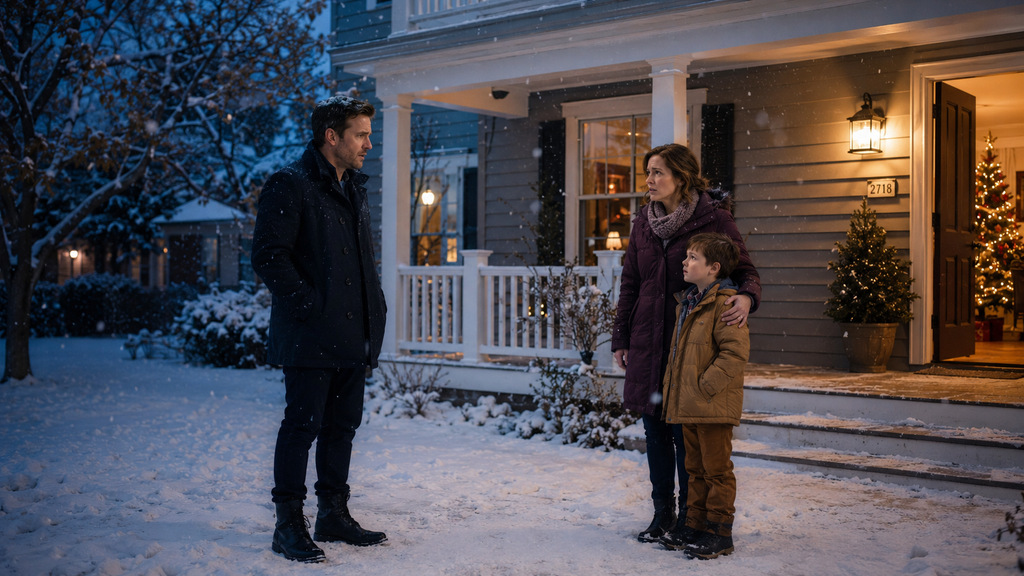
Christmas music played softly somewhere in the background.
Someone laughed.
My mother had apparently begun Christmas morning exactly the way she always did—with expensive coffee, polished silver, and the absolute certainty that every secret she had buried would remain underground.
I stared at the envelope beside my hand.
Claire’s handwriting was faded now.
Mine was written across the front.
And beneath the return stamp, in unmistakable blue ink, were the words my mother had written seven years earlier.
He has chosen the Army and wants nothing to do with this child.
I had read that sentence so many times during the night that I could close my eyes and see every curve of every letter.
My mother continued talking.
“I made those cinnamon rolls you like. Your aunt is coming around noon. I know you said you were staying in Virginia, but if your plans change—”
“Mom.”
She stopped.
Something in my voice must have reached her.
“What?”
I looked toward the hotel window.
Snow covered the parking lot.
Across the street, Christmas lights were still blinking on a closed pharmacy.
A father in a heavy coat was lifting a little girl into the back seat of a car.
He tucked a blanket around her legs before closing the door.
Such a small thing.
Such an ordinary fatherly gesture.
And suddenly it hurt so badly I had to look away.
“Do you remember Claire?”
Silence.
Not confusion.
Not surprise.
Silence.
That told me everything.
When my mother finally answered, her voice was different.
Careful.
“Of course I remember Claire.”
“Do you remember a letter she sent me?”
Another pause.
“Daniel—”
“That isn’t an answer.”
Her breathing changed.
I could hear it through the phone.
A small inhale.
A controlled exhale.
The way she always breathed when deciding which version of the truth would protect her best.
“What letter?”
I almost laughed.
Instead, I pushed my chair backward and stood.
“You know exactly what letter.”
“Daniel, I really don’t know what you’re talking about.”
I picked up the envelope.
My hand shook.
“There’s handwriting on the back.”
Silence.
“Your handwriting.”
Still nothing.
“You wrote that I had chosen the Army and wanted nothing to do with my child.”
The Christmas music on her end suddenly seemed unbearably loud.
For several seconds, neither of us spoke.
Then my mother said the one thing I will never forget.
“I was trying to protect you.”
I closed my eyes.
There it was.
Not denial.
Not horror.
Not even an apology.
Justification.
“You knew?”
“Daniel—”
“You knew I had a son?”
Her voice softened.
“That situation was much more complicated than you understand.”
I gripped the edge of the desk.
“No.”
My voice cracked.
“No, Mom. It’s actually very simple.”
“You were going overseas.”
“So?”
“You had just gotten divorced.”
“So?”
“You were angry. You were unstable emotionally.”
“So you decided I wasn’t allowed to know I had a child?”
“That is not what happened.”
“That is exactly what happened.”
My mother sighed.
Not sadly.
Impatiently.
As though I were being unreasonable.
“I knew what Claire had done to you.”
“No. You knew what we thought she had done.”
“I saw the photograph.”
“So did I.”
“And?”
“And I was wrong.”
The words came out quietly.
Maybe that was what made them powerful.
For seven years, I had built my entire anger around one photograph.
Claire standing outside a restaurant with Jonathan.
His hand near her waist.
Her face turned toward him.
A moment frozen at precisely the wrong angle.
My mother had been the first person I showed it to.
I remembered sitting at her kitchen table, shaking with rage.
“She’s cheating on you,” my mother had said immediately.
I had wanted someone to tell me I was wrong.
Instead, she gave my worst fear a voice.
“She always thought she was too good for you.”
I had believed her.
Not because there was proof.
Because I was hurt.
Because I had just returned from training exhausted, insecure, and carrying the accumulated fear that Claire would eventually decide military life was too difficult.
I confronted Claire.
She told me Jonathan was her cousin’s divorce attorney and that she had been meeting him because she was helping her cousin gather paperwork.
I called it a lie.
She tried to show me messages.
I refused.
She begged me to call her cousin.
I walked out.
Within two months, we were separated.
Within six, the divorce papers were filed.
The photograph had been innocent.
I learned that years later when I accidentally met Claire’s cousin at a conference.
By then I was too ashamed to contact Claire.
I convinced myself too much time had passed.
That she was better without me.
That apologizing would only reopen a wound.
So I carried the truth quietly for years.
Until Christmas Eve.
Until Noah.
Until the letter.
My mother spoke again.
“Even if the photograph was misunderstood, you were leaving. You had finally secured the overseas assignment you had worked toward for years.”
I stared at the envelope.
“And my son was born while I was gone.”
“Yes.”
“You knew.”
“I found out after you left.”
“And you said nothing.”
“You were serving your country.”
“I could have done both.”
“You don’t know that.”
“I had a right to try.”
That silenced her.
For a moment, all I could hear was the faint sound of someone opening a cabinet on her end.
Then she lowered her voice.
“Daniel, listen to me. You were twenty-nine years old. Your marriage had collapsed. Your career was finally moving forward. Claire had already hurt you. Then suddenly she writes saying she’s pregnant?”
“She was pregnant before the divorce was final.”
“She claimed the baby was yours.”
My whole body went cold.
“Claimed?”
My mother hesitated.
I nearly dropped the phone.
“You doubted he was mine?”
“You were gone frequently.”
“So?”
“I am saying there were questions.”
“No.”
“Daniel—”
“No.”
I walked to the window.
The little girl across the street had pressed her palm to the car window.
Her father waved as the car pulled away.
I could barely breathe.
“You didn’t have questions,” I said. “You had an excuse.”
My mother’s voice sharpened.
“That’s unfair.”
“Is it?”
“I devoted my life to you.”
“And that gave you permission to take my life away from me?”
“I was protecting my son.”
“From my son.”
The words landed between us.
Heavy.
Final.
My mother stopped speaking.
My heart was pounding.
I had faced mortar fire without feeling as helpless as I did standing in that hotel room.
Because on a battlefield, danger announces itself.
Sometimes it screams.
Sometimes it explodes.
Sometimes it comes from a place you already know you must fear.
This had come from my mother’s kitchen.
From birthday cards.
From Thanksgiving dinners.
From the woman who had hugged me when my divorce was finalized and whispered that I deserved better.
“Did Dad know?” I asked.
She hesitated again.
That hesitation was becoming unbearable.
“Did he know?”
“No.”
I exhaled.
My father had died three years earlier.
Cancer.
I had sat beside his bed during his final week, holding his hand while he drifted in and out of sleep.
He had asked once if I ever regretted not having children.
I told him life simply had not worked out that way.
My mother had been sitting three feet away.
She knew.
The thought nearly brought me to my knees.
“You sat there,” I whispered.
“What?”
“When Dad asked why I never had children.”
“Daniel…”
“You sat beside us.”
“I remember.”
“You knew Noah existed.”
She began crying.
I wish I could say it softened me.
It didn’t.
Because her tears still centered her pain.
“I made a mistake.”
“No.”
My voice became strangely calm.
“You made a choice.”
“I was scared for you.”
“For seven years?”
Silence.
“When were you planning to tell me?”
“I don’t know.”
“When he turned ten?”
Nothing.
“Eighteen?”
Nothing.
“When you died?”
“Stop.”
“When, Mom?”
“I said stop.”
Her voice cracked.
I pressed my fingers against my eyes.
That was when something inside me changed.
The anger did not disappear.
But underneath it, something larger emerged.
Grief.
For first steps I had never seen.
For birthday candles I had never helped light.
For scraped knees.
Lost teeth.
Christmas mornings.
School photographs.
Fevers in the middle of the night.
Bedtime stories.
Questions about stars.
Questions about soldiers.
Questions about fathers.
Seven years.
More than two thousand five hundred days.
Gone.
And none of them could be returned.
“You don’t get to tell me to stop,” I said quietly. “You stopped Claire’s letter. You stopped me from knowing my son. You stopped Noah from knowing his father. You have had seven years of silence.”
She cried harder.
“I thought you would thank me one day.”
That sentence somehow hurt more than the first.
I lowered the phone.
For several seconds, I stared at it.
Then lifted it back.
“I won’t.”
“Daniel, please come home. We can talk.”
“No.”
“Don’t make a decision while you’re angry.”
I laughed without humor.
“You made one for me when I was thousands of miles away.”
“I said I’m sorry.”
“No. You said you were protecting me.”
“Then what do you want me to say?”
I looked at Claire’s letter.
“I want you to understand that this isn’t about what you say anymore.”
“What does that mean?”
“It means Noah comes first.”
She became silent.
Then, very quietly, she asked, “Have you met him?”
“Yes.”
“How?”
“I went to Claire’s house.”
“Oh God.”
The fear in her voice surprised me.
“What?”
“Daniel, you need to be careful.”
My jaw tightened.
“Careful of what?”
“She could use this against you.”
For the first time since the call began, I felt something close to disgust.
“There it is.”
“What?”
“You still think Claire is the enemy.”
“I didn’t say that.”
“You didn’t have to.”
“Daniel, she kept your child from you too.”
“She tried to contact me.”
“Twice.”
“She thought I rejected him.”
“She should have tried harder.”
The hypocrisy nearly stunned me.
“You intercepted her letter and answered it pretending to speak for me, and now you’re blaming her for believing you?”
“I was your mother.”
“Exactly.”
That silenced her.
I let the next words come slowly.
“You were the one person she had every reason to believe spoke to me.”
She began explaining again.
I stopped listening.
For years, I had mistaken explanations for accountability.
They are not the same thing.
An explanation tells you why someone hurt you.
Accountability accepts that they did.
My mother still wanted her reasons to matter more than the damage.
I could not fix that.
So I ended the call.
“Daniel?”
“I’m going now.”
“Wait.”
“I need space.”
“You can’t just cut me off.”
A bitter smile crossed my face.
“You taught me how.”
Then I hung up.
My hand remained around the phone long after the screen went dark.
Christmas morning sunlight was beginning to brighten the room.
I sat on the edge of the bed.
And for the first time since Noah opened Claire’s door, I cried.
Not loudly.
There was no dramatic collapse.
The tears simply came.
Years of them.
The kind you do not realize your body has been storing.
I cried for Claire.
For the pregnant woman who had written to a man she believed hated her.
For the young mother who must have stood beside a hospital bassinet wondering whether she should try again.
I cried for Noah.
And finally, I cried for the version of myself who had been so convinced that anger was strength that he had refused to listen.
My mother stole the letter.
But I had created the silence that made her interference possible.
That truth mattered.
I could blame her for seven lost years.
I could not blame her for everything.
That afternoon, I drove back to Claire’s house.
I did not go to the door.
I sat across the street inside my rental car and stared at the house for almost ten minutes.
Snow rested on the roof.
A paper snowman Noah had drawn was taped crookedly to the front window.
Through the curtains, I could occasionally see movement.
A child running.
Claire passing behind him.
A life.
Their life.
I wanted desperately to knock.
I wanted to say I had spoken to my mother.
I wanted to ask if I could stay.
I wanted to hear everything about Noah.
His first word.
His favorite food.
Whether he was afraid of thunderstorms.
Whether he liked baseball.
Whether he hated peas.
But wanting something did not mean I was entitled to it.
That was another lesson I should have learned years earlier.
So instead, I texted Claire.
I spoke to my mother. You were telling the truth. I’m sorry. I won’t come by unless you want me to. Please tell Noah Merry Christmas for me.
Her response came twenty minutes later.
He already asked when the soldier is coming back.
I stared at those words until I smiled through tears.
Then another message appeared.
Come by tomorrow at noon. One hour. We need rules.
I answered immediately.
Whatever rules you want.
I arrived at eleven fifty-eight the next day.
Not early enough to pressure her.
Not late enough to disappoint Noah.
I parked in front of the house and checked myself in the rearview mirror.
I had changed out of the Army coat.
I was wearing a plain gray sweater, jeans, and boots.
Nothing that might make me look heroic.
I did not deserve to enter Noah’s life as some returning soldier from a movie.
I was simply a man who had missed seven years and hoped he might be allowed to earn a place in the eighth.
Claire opened the door.
She looked tired.
“You’re early.”
“Two minutes.”
“That still counts.”
I almost apologized.
Then noticed the faintest hint of a smile.
“You can wait two minutes.”
“Fair.”
She closed the door.
I stood there in the cold.
Exactly two minutes later, the door opened again.
This time Noah was beside her.
“You came back.”
The joy in his voice hit me unexpectedly.
“I said I would.”
“No, you didn’t.”
I blinked.
He was right.
I had deliberately avoided making promises the night before.
Claire crossed her arms.
“He remembers exact words.”
“Good skill.”
Noah smiled.
“Mom says it’s annoying.”
“I said detailed.”
“You said exhausting.”
Claire sighed.
“Noah.”
He laughed and ran toward the living room.
I stepped inside.
The house smelled like coffee, pine, and leftover gingerbread.
Noah’s cardboard star was finally attached to the tree.
Crooked.
Perfect.
Claire gestured toward the dining table.
“Before you spend time with him, we talk.”
“Of course.”
Noah groaned.
“Grown-up talk?”
“Yes.”
“How long?”
“Twenty minutes.”
He looked at me.
“You should talk fast.”
“I’ll try.”
He disappeared into his bedroom with an armful of toy cars.
Claire waited until he was gone.
Then sat across from me.
There was a notebook on the table.
That told me she had prepared.
Good.
I deserved preparation.
“I’m going to say a few things,” she began. “You might not like them.”
“I’ll listen.”
She studied my face.
“Don’t say that unless you mean it.”
“I mean it.”
Her eyes hardened.
“The last time I tried to explain something important, you wouldn’t listen.”
The shame was immediate.
“You’re right.”
“I’m not bringing that up to punish you.”
“I know.”
“I’m bringing it up because Noah cannot survive us repeating our marriage.”
That sentence reached somewhere deep.
I nodded.
“He’s seven. He’s happy. He has friends. He loves science, hates spelling, and thinks every adult who owns a toolbox can fix everything.”
Despite myself, I smiled.
Claire continued.
“He has never had a father in his life.”
“Has he asked?”
“Yes.”
The smile disappeared.
“What did you tell him?”
“That families are different.”
“And about me?”
“Until now? Nothing.”
I looked down.
She softened slightly.
“When he was little, it was easy. He thought every family looked different because every classroom showed him that. As he got older, questions became more specific.”
“What kind of questions?”
“Where is my dad? Does he know about me? Did he die? Did he leave?”
Each question cut differently.
“What did you say?”
“I said I would tell him the truth when I understood enough of it to tell him without hurting him.”
“And now?”
“Now I still don’t understand all of it.”
“Neither do I.”
“Exactly.”
She opened the notebook.
“So we go slowly.”
I nodded.
“You don’t tell him today that you’re his father.”
The words hurt.
But I had expected them.
“Okay.”
“You don’t buy him expensive gifts.”
“Okay.”
“You don’t make promises about future trips, vacations, school events, anything.”
“Okay.”
“You don’t criticize me in front of him.”
“I never would.”
Her expression sharpened.
“You criticized me to everyone else seven years ago.”
I swallowed.
“You’re right.”
“And you don’t disappear.”
That was the first rule that sounded less like caution and more like fear.
I leaned forward.
“I won’t.”
“You don’t know that.”
“Yes, I do.”
“You thought you knew a lot of things about me once.”
Fair.
I sat back.
“What would make you believe me?”
“Time.”
The answer was immediate.
“No speeches. No dramatic promises. Time.”
I nodded.
“Then I’ll give you time.”
She closed the notebook.
“One more thing.”
“Anything.”
“If you want legal confirmation that Noah is yours, I understand.”
My chest tightened.
“I don’t need it.”
“Daniel.”
“I know what I saw.”
“That isn’t evidence.”
“No.”
I looked toward the hallway where Noah had disappeared.
“But I don’t need evidence to care about him.”
Claire’s expression changed.
Just slightly.
For a moment, she looked like the woman I had married.
Then the caution returned.
“Still, we should do it.”
“For Noah?”
“For everyone.”
So we did.
Three days later, with Claire’s agreement, I provided a sample for a paternity test.
Waiting for the results was strange.
I had no real doubt.
Noah had my eyes.
My father’s smile.
Even the way he frowned while thinking looked exactly like me.
But certainty on paper mattered.
Especially after years built on assumptions.
The irony was not lost on me.
Seven years earlier, I had destroyed my marriage because I trusted a photograph more than the woman standing in front of me.
Now I refused to build my relationship with Noah on resemblance alone.
The results came back eleven days later.
99.99 percent.
I read the number once.
Then again.
Then placed the paper on my kitchen counter and stared at it.
Father.
One word.
Seven letters.
Seven years late.
I called Claire.
She answered on the third ring.
“It’s confirmed,” I said.
“I know.”
“You got the email?”
“Yes.”
Neither of us spoke.
Then she asked, “Are you okay?”
It was the first time she had asked about me personally since Christmas Eve.
I sat down.
“I don’t know.”
“Fair.”
“I’m happy.”
“Okay.”
“And furious.”
“I know.”
“And ashamed.”
She was quiet.
“And I keep thinking about everything I missed.”
“That part doesn’t help.”
“I know.”
“I used to do that too.”
That surprised me.
“What?”
“Think about what Noah missed.”
I closed my eyes.
“I’m sorry.”
“I know.”
Those two words mattered more than I expected.
Not forgiveness.
Not absolution.
Recognition.
We told Noah three days later.
Claire wanted to do it at home.
No lawyers.
No therapists in the room.
No dramatic reveal.
Just his mother, me, and the truth explained carefully enough for a seven-year-old.
Noah was building a model rocket on the coffee table when Claire sat beside him.
“Buddy, can we talk for a minute?”
He immediately looked suspicious.
“Am I in trouble?”
“No.”
“Did I break something?”
“No.”
“Then this is worse.”
I almost laughed.
Claire did.
“Come sit.”
He sat between us on the couch.
I could feel my heartbeat in my neck.
Claire looked at me once.
Then began.
“You remember Daniel?”
Noah nodded.
“The soldier.”
“Yes.”
“I’m not really a soldier anymore,” I said.
“You still have the coat.”
“Fair point.”
Claire gave me a look.
I stopped.
She continued.
“I told you before that sometimes grown-ups make mistakes.”
Noah nodded cautiously.
“And sometimes those mistakes can keep people apart.”
“What people?”
Claire reached for his hand.
“You and Daniel.”
Noah looked at me.
Then back at her.
I saw the moment something began forming in his mind.
Children notice more than adults imagine.
His eyes widened.
“Is he my dad?”
Neither of us had expected him to say it that quickly.
Claire inhaled.
“Yes.”
Noah stared at me.
I had rehearsed a hundred things I might say.
Every one of them disappeared.
“Really?”
“Yes.”
His eyes dropped to my hands.
Then my face.
Then my eyes.
“My real dad?”
I nodded.
“Yes.”
He frowned.
“Where were you?”
There it was.
The question.
Not dramatic.
Not angry.
Just seven-year-old honest.
Where were you?
I felt Claire watching me.
I kept my voice steady.
“I didn’t know about you.”
His frown deepened.
“How can you not know you have a kid?”
It was such a reasonable question.
“Your mom tried to tell me.”
Claire’s grip tightened slightly around his hand.
“But I never got the message.”
“Why?”
I looked toward Claire.
She nodded.
We had agreed not to lie.
But also not to burden him with adult betrayal.
“Someone made a bad decision and kept the message from me.”
“Who?”
“We’ll explain more when you’re older.”
Noah considered that.
Then looked at Claire.
“Did he leave you?”
The question visibly hurt her.
“No, buddy. It was more complicated than that.”
I spoke carefully.
“I made mistakes with your mom before I knew about you.”
“What mistakes?”
“I didn’t listen when I should have.”
Noah looked confused.
“That’s it?”
I almost smiled.
“At the time, it was a very big mistake.”
He thought about that for several seconds.
Then turned back to me.
“So if you knew, would you have come?”
My throat tightened.
“Yes.”
The word came immediately.
Claire looked at me.
I did not hesitate.
“I would have come.”
Noah studied me as if deciding whether adults could be trusted at all.
Then he asked the question that broke me.
“Do you have pictures of me?”
I swallowed.
“No.”
His face fell.
“But I want them.”
Claire reached for a photo album beneath the coffee table.
“I have enough for both of you.”
Noah climbed down from the couch and opened it.
The first picture was him in the hospital.
Tiny.
Red-faced.
Wrapped in a blue blanket.
I touched the edge of the page.
“That’s you?”
“Obviously,” Noah said.
Claire laughed.
I stared at the photograph.
Seven pounds, two ounces, according to the caption Claire had written beneath it.
January third.
Two thirteen in the morning.
I had been in Kuwait.
I remembered that day.
The heat.
The dust.
The dull metal bunk.
I had spent that night angry about my divorce.
At the exact same time, my son was being born.
The next picture showed Claire holding him.
Her hair was damp.
She looked exhausted.
Terrified.
Beautiful.
Alone.
I had to look away.
Noah noticed.
“Are you crying?”
“No.”
“You are.”
“A little.”
“Why?”
“Because I wish I had been there.”
He leaned closer to the photograph.
“You weren’t.”
Children can be brutal without meaning to be.
“No.”
I cleared my throat.
“I wasn’t.”
He turned another page.
First smile.
First bath.
First Halloween.
A pumpkin costume.
I laughed through the ache.
“You wore that?”
“I was a baby.”
“You were an angry pumpkin.”
“Mom made me wear it.”
“It was adorable,” Claire said.
“It was humiliating.”
“You were six months old.”
“Still.”
Page after page.
Noah crawling.
Noah standing.
Noah with frosting across his face.
Noah asleep against Claire’s shoulder.
Noah holding a toy dinosaur.
Noah with his first lost tooth.
Seven years flattened into glossy photographs.
I had imagined missing milestones.
Seeing them was different.
They existed.
They simply existed without me.
Eventually, Noah rested his head against my arm while turning pages.
It was probably accidental.
He was tired.
But I did not move.
I barely breathed.
Claire saw.
Her eyes filled with tears.
She looked away before he noticed.
That afternoon lasted three hours instead of one.
At the door, Noah asked whether I was coming back.
I looked at Claire first.
Her smallest nod gave me permission.
“If you want me to.”
“I do.”
“Then yes.”
“When?”
Claire answered.
“Saturday.”
Noah looked at me.
“You better come.”
“I will.”
He pointed at me.
“Promise?”
Everything in me wanted to say yes immediately.
But Claire’s rule returned to me.
Do not make promises casually.
So I knelt until we were eye level.
“I won’t promise things I can’t control.”
His face fell slightly.
“But I can promise this: if I say I’m coming Saturday, I’ll be here Saturday.”
He considered it.
Then held out his hand.
“Deal.”
I shook it.
“Deal.”
I arrived Saturday at nine fifty-nine.
Over the next three months, I arrived every time.
Not dramatically.
Consistently.
That was harder.
And more important.
Some Saturdays we went to the science museum.
Some we stayed home and built models.
Sometimes I attended soccer practice and sat far enough from Claire that neither of us felt we were pretending to be a family.
Sometimes Noah asked questions.
Most of them were simple.
“Did you ever jump out of an airplane?”
“Yes.”
“Were you scared?”
“Yes.”
“Soldiers get scared?”
“All the time.”
“Then why do they do it?”
“Because courage isn’t the same as not being afraid.”
He seemed impressed.
A week later he asked, “Were you scared of Mom?”
I nearly dropped my coffee.
Claire choked on hers.
“Why would you ask that?”
“You said you didn’t listen to her.”
I thought carefully.
“I think I was scared she could hurt me.”
“Did she?”
I looked at Claire.
“No.”
“Then you were scared for nothing?”
Children.
Brutal philosophers.
“Pretty much.”
He nodded.
“That’s not smart.”
“Noah,” Claire said.
“He’s right.”
I was learning to agree with uncomfortable truths.
It was new for me.
My relationship with Claire was harder.
Noah could accept small pieces of me.
Claire remembered the whole man I had once been.
One evening, after Noah fell asleep on the couch during a movie, we carried him upstairs together.
At his bedroom door, Claire whispered, “Put him down carefully.”
“I know how to put a child in bed.”
She raised an eyebrow.
“You’ve been a father for four months.”
“Fair.”
I lowered Noah onto the mattress.
His hand remained wrapped around two of my fingers.
I froze.
Claire stood beside me.
We waited.
Eventually his grip loosened.
We stepped into the hallway.
Claire closed the door.
Then she leaned against the wall.
“You’re good with him.”
I did not know how to answer.
“Thank you.”
“I wasn’t sure you would be.”
“Neither was I.”
She looked surprised.
“You always seemed sure of yourself.”
“I was good at pretending.”
“That’s new.”
“What?”
“You admitting uncertainty.”
I leaned against the opposite wall.
“I’ve had seven years to practice.”
She looked toward Noah’s room.
“Sometimes I hate how easily he loves you.”
The sentence hurt.
But I understood.
“You’re allowed.”
She glanced at me.
“It feels unfair.”
“It is.”
“I did everything.”
“I know.”
“Every fever. Every school meeting. Every nightmare. Every dentist appointment.”
“I know.”
“And then you show up with Army stories and model rockets and suddenly you’re his favorite person on Saturdays.”
I nodded.
“You can hate that.”
“I don’t hate you.”
The words hung between us.
I looked at her.
She looked away.
“That would be easier.”
“I’m sorry.”
“I know.”
She rubbed her forehead.
“I spent years thinking you had rejected him.”
“I know.”
“I hated you.”
“I deserved some of it.”
“No.”
Her voice sharpened.
“You deserved anger for how you treated me during the divorce. You did not deserve what your mother did.”
That distinction mattered.
“I still made it possible.”
“She made her own choice.”
“I changed my number.”
“Yes.”
“I refused to hear you.”
“Yes.”
“I gave my mother control of the mail.”
“Yes.”
“I told you never to contact me again.”
Her eyes flashed.
“Yes.”
I looked down.
“So when her letter arrived—”
“Stop.”
I looked up.
Claire was crying.
“You keep trying to make what she did your fault because guilt feels familiar to you.”
I had no answer.
“You were wrong about me,” she continued. “You were cruel. You embarrassed me. You told our friends I cheated. You walked away instead of listening.”
Every word landed.
“But I still mailed you the letter.”
I nodded.
“And your mother still opened something that did not belong to her.”
“Yes.”
“And she still answered in your name.”
“Yes.”
“Stop taking responsibility away from her.”
That was one of the strangest gifts Claire ever gave me.
Permission to carry only my own guilt.
Not my mother’s.
I sat down on the hallway floor.
Claire looked surprised.
Then sat across from me.
We stayed there in the dim hallway outside our sleeping son’s room.
“I’m seeing a therapist,” I said.
That caught her off guard.
“You?”
“Yes.”
She almost smiled.
“What?”
“Nothing.”
“You looked like you wanted to laugh.”
“I remember suggesting therapy eight years ago.”
“And I said?”
“That therapists were for people who couldn’t solve their own problems.”
I closed my eyes.
“That sounds like me.”
“It does.”
“I was an idiot.”
“You were.”
We both laughed quietly.
It was the first easy laugh we had shared in years.
For a moment, I remembered us at twenty-four.
Before resentment.
Before deployments.
Before the photograph.
Before pride became louder than love.
Then Claire stood.
“You should go.”
The warmth disappeared.
Not because she was angry.
Because boundaries still mattered.
I respected them.
“Good night.”
“Good night.”
I was halfway down the stairs when she called my name.
“Daniel?”
I looked back.
She stood at the top of the staircase.
“I kept your letters.”
“What letters?”
“The ones from your first deployment.”
My heart stopped.
“You said you burned them.”
“I lied.”
A faint smile appeared.
“I was angry.”
Then she disappeared into the hallway.
I drove home thinking about that sentence for hours.
My mother did not contact me for almost six weeks.
Then she appeared at my apartment without warning.
I opened the door and nearly closed it again.
She looked older.
Not suddenly.
I had simply stopped seeing her as indestructible.
“Please,” she said.
I stepped into the hallway and closed the door behind me.
“You can’t show up like this.”
“You won’t answer my calls.”
“I told you I needed space.”
“It’s been over a month.”
“That doesn’t create an expiration date.”
She looked hurt.
I felt something.
But not enough to let her in.
“I want to meet Noah.”
“No.”
The word left my mouth before she finished breathing.
Her face fell.
“Daniel.”
“No.”
“I’m his grandmother.”
“You’re the reason he thought he didn’t have a father.”
“I made one terrible mistake.”
“You made it every day for seven years.”
Tears filled her eyes.
“I think about that constantly.”
“Good.”
She recoiled slightly.
I regretted the cruelty immediately.
But I did not apologize.
Some consequences are painful.
That does not make them wrong.
“You cannot use Noah to punish me,” she whispered.
“I’m not.”
“It feels like punishment.”
“This is protection.”
The irony was obvious.
She heard it too.
“Now you’re using my words against me.”
“No.”
I stepped closer.
“I’m showing you what protection actually looks like.”
She cried.
“I love children.”
“That isn’t the issue.”
“I would never hurt him.”
“You already did.”
Her face crumpled.
I continued.
“You don’t get access to Noah because you’re related to him. Claire decides who is safe around him. So do I, when she trusts me enough. And right now, you are not.”
“I said I’m sorry.”
“You still haven’t apologized to Claire.”
She looked away.
There it was.
“You think she shares the blame.”
“She could have called your command.”
“Mom.”
“She could have found another way.”
“Mom.”
“She gave up.”
My voice rose.
“She had just given birth alone after receiving a letter she believed came from my family saying I wanted nothing to do with my child!”
The apartment hallway echoed.
My mother went silent.
A door down the hall opened slightly.
Then closed.
I lowered my voice.
“You want forgiveness without accepting what you did.”
“That’s not true.”
“Then call Claire.”
She looked alarmed.
“What would I say?”
“The truth.”
“She hates me.”
“She has every right.”
“What if she refuses to forgive me?”
“That’s the risk.”
My mother stared at me.
For the first time, I think she understood that this was not about saying the correct sentence and restoring the old family order.
There would be no old order.
Not after Noah.
Not after the letter.
“What if you never forgive me?” she asked.
I answered carefully.
“I don’t know yet.”
Her eyes filled again.
I continued.
“But whether I forgive you and whether I trust you are different questions.”
She nodded slowly.
“Can I ask one thing?”
“What?”
“What is he like?”
My anger shifted.
Not gone.
But complicated.
I could have said nothing.
Instead, I leaned against the wall.
“He likes astronomy.”
She smiled through tears.
“So did you.”
“He hates spelling.”
“You hated handwriting.”
“He asks about everything.”
“You did too.”
“He’s funny.”
“Like you?”
“No. Like Claire.”
That made her look down.
I almost ended the conversation.
Then she whispered, “I’m sorry I hated her.”
There it was.
Not enough.
But real.
Two weeks later, Claire called me.
“Your mother wrote me a letter.”
I sat up.
“What did it say?”
“I’m not reading it to you.”
“Of course.”
“She apologized.”
“Okay.”
“She didn’t make excuses.”
That surprised me.
“What are you going to do?”
“Nothing yet.”
“Fair.”
“She asked if she could meet Noah someday.”
“And?”
“I said maybe.”
My chest tightened.
“You don’t owe her that.”
“I know.”
“Then why maybe?”
Claire was silent for a moment.
“Because I don’t want Noah growing up inside our resentment.”
That sentence stayed with me.
Children inherit enough from us without inheriting every injury.
My mother eventually met Noah eight months later.
Public park.
One hour.
Claire present.
Me present.
No private stories.
No pretending she had been waiting lovingly for him since birth.
Just honesty.
My mother brought no gifts.
That was Claire’s rule.
She sat on a bench with her hands trembling when Noah approached.
“Are you Daniel’s mom?”
“Yes.”
“So you’re my grandma?”
My mother looked at me.
I gave no answer for her.
“Yes,” she whispered.
Noah frowned.
“Why didn’t I know you?”
I saw my mother’s entire body tense.
Claire had warned her this might happen.
She looked at Noah.
And to her credit, she did not lie.
“Because I made a very bad decision a long time ago.”
“What decision?”
“I kept your dad from finding out about you.”
Noah looked at me.
Then back at her.
“Why?”
My mother’s eyes filled.
“I thought I was helping him.”
“Were you?”
“No.”
He considered that.
“So grown-ups can be wrong for seven years?”
My mother let out a broken laugh.
“Yes.”
“Wow.”
That was Noah.
No cruelty.
Just wonder.
My mother nodded.
“Wow is right.”
He stared at her another few seconds.
Then held up his model rocket.
“Do you want to see this?”
My mother looked at me.
I could see hope there.
I also saw grief.
I nodded once.
She followed him toward the picnic table.
Forgiveness did not happen that day.
Trust did not magically return.
But something else began.
A truthful relationship.
Maybe that was better.
Claire and I spent the first year of my return learning how not to become our old selves.
It was surprisingly difficult.
There were moments when familiar patterns returned.
I became defensive.
She withdrew.
I wanted quick resolution.
She needed space.
Once, during an argument about Noah’s summer camp schedule, I said, “You always assume I’ll disappear.”
The second the words left my mouth, I regretted them.
Claire froze.
I saw seven years flash across her face.
I wanted to explain.
Instead, I stopped.
“I’m sorry.”
She stared at me.
“That was unfair.”
“Yes.”
“I know why you’re cautious.”
She crossed her arms.
“This isn’t about caution. You agreed to those dates.”
“You’re right.”
“I built work around them.”
“You’re right.”
“And now you have a training conference.”
“It’s optional.”
That surprised her.
“What?”
“I turned it down.”
She blinked.
“You did?”
“Yes.”
“When?”
“This afternoon.”
“Then why are we arguing?”
“Because I was angry that you assumed I wouldn’t.”
Her expression softened.
Then, against all probability, she laughed.
I did too.
We had just spent twenty minutes fighting about a problem I had already solved.
That was us.
Still imperfect.
But learning.
On Noah’s eighth birthday, he asked me to attend his classroom party.
I arrived carrying twenty-four cupcakes because Claire said there were twenty-two students and I panicked.
“You bought extras?”
“I didn’t know if teachers eat cupcakes.”
“They do.”
“What about assistants?”
She stared at me.
“You’ve been in combat.”
“This is worse.”
Noah ran toward us wearing a paper crown.
“My dad brought cupcakes!”
The room continued moving.
Children shouting.
Teachers arranging chairs.
Someone spilling juice.
But I stopped.
My dad.
It was the first time he had called me that in public.
Maybe the first time at all.
Claire heard it too.
Our eyes met.
I did not cry.
Mostly.
That evening, after the party, Noah fell asleep in the back seat of Claire’s car.
We stood in her driveway.
She looked at me.
“You heard him.”
“Yes.”
“You’re trying not to make a big deal out of it.”
“Yes.”
“You can make a small deal.”
I smiled.
“He called me Dad.”
“He did.”
“I liked it.”
“I noticed.”
“Was it obvious?”
“You looked like someone handed you a winning lottery ticket.”
“It was better.”
Claire’s expression changed.
The porch light reflected in her eyes.
For one dangerous second, I wanted to kiss her.
I did not.
She noticed that too.
“Good night, Daniel.”
“Good night.”
I drove home with both hands gripping the wheel.
The following year changed everything.
Not because of one dramatic event.
Because of ordinary ones.
I began picking Noah up from school on Wednesdays.
I learned how impossible third-grade math had become.
He joined a youth astronomy club.
I helped him build a telescope.
Claire came to my apartment for dinner once because Noah begged.
Then twice.
Then sometimes without him.
We began talking about things that had nothing to do with parenting.
Books.
Work.
My father.
Her career.
The restaurants we once loved.
The places we regretted never visiting.
I apologized again.
Not one dramatic apology.
Many small ones.
For the photograph.
For accusing her.
For refusing the evidence she tried to show me.
For telling mutual friends she had cheated.
For letting pride make me cruel.
One evening, Claire interrupted.
“You don’t have to apologize every time we have coffee.”
“I know.”
“Then stop.”
“I’m trying to make sure you know I understand.”
“I know you understand.”
I looked at her.
She continued.
“If you keep apologizing forever, we’ll never have a conversation that exists in the present.”
That landed.
“So what do we talk about?”
She sipped her coffee.
“Anything.”
“Anything?”
“Except our divorce.”
I smiled.
“Favorite dinosaur?”
She stared.
“You’ve spent too much time with Noah.”
“Triceratops.”
“Velociraptor.”
“You’re wrong.”
“It’s an opinion.”
“Some opinions are incorrect.”
She laughed.
A real laugh.
Head tilted back.
Eyes closed.
For a second, I forgot seven years had passed.
Then I remembered.
But it didn’t hurt the same way.
The past had not changed.
We had.
The first time Claire kissed me again was not romantic.
At least not intentionally.
It happened during a thunderstorm.
Noah had caught a stomach virus and was asleep upstairs after hours of vomiting.
Claire was exhausted.
I had stayed to help clean.
At two in the morning, we stood in the kitchen under a single light.
She handed me a towel.
“You missed a spot.”
“I served in the infantry.”
“And yet vomit has defeated you.”
“I was trained for different conditions.”
She laughed quietly.
Then looked at me.
I looked at her.
Neither of us moved.
“You stayed,” she said.
“Of course.”
“You didn’t have to.”
“Yes, I did.”
“No. You wanted to.”
I nodded.
“Yes.”
Something changed in her face.
Then she kissed me.
It lasted maybe two seconds.
Then she pulled away.
“Oh no.”
I blinked.
“What?”
“That was a mistake.”
I almost smiled.
“I wasn’t going to complain.”
“Daniel.”
“Sorry.”
She covered her face.
“We can’t do this.”
“Okay.”
“We absolutely cannot confuse Noah.”
“I agree.”
“And we are not the people we were.”
“I agree.”
“And I don’t even know if I trust you completely.”
“I know.”
She lowered her hands.
“Stop agreeing with me.”
“That might be harder.”
She laughed despite herself.
Then became serious.
“I’m scared.”
There was the truth.
“I am too.”
She stared at me.
“You?”
“Claire, I already destroyed us once.”
That silenced her.
“I know exactly what I’m capable of when I’m afraid.”
The room became quiet.
Rain struck the windows.
Upstairs, Noah coughed.
I continued.
“If anything ever happens between us again, I don’t want it built on pretending the past never happened.”
She nodded slowly.
“We’d need help.”
“Therapy?”
“Yes.”
“I’m already converted.”
She rolled her eyes.
“We go together.”
“If you want.”
“No promises.”
“No.”
“Slow.”
“Very.”
“And Noah comes first.”
“Always.”
She held out her hand.
It reminded me of Noah making me promise Saturday visits.
I took it.
“Deal.”
We started counseling two weeks later.
It was uncomfortable.
Sometimes humiliating.
Frequently painful.
Also necessary.
I learned Claire had not stopped loving me when we divorced.
That was one of the hardest things I ever heard.
“I loved you when I signed the papers,” she said during one session.
I stared at the floor.
“Then why didn’t you fight longer?”
Her expression became incredulous.
“I did.”
“I mean—”
“I begged you to listen.”
“I know.”
“I showed you messages.”
“I know.”
“I called Jonathan in front of you.”
“I know.”
“You refused to speak to him.”
“I know.”
“I asked your commanding officer to delay your departure paperwork so we could talk.”
That I had not known.
I looked up.
“What?”
“You didn’t know that?”
“No.”
She stared.
Then laughed sadly.
“Of course you didn’t.”
I felt sick.
“I thought you gave up.”
“I ran out of doors you would let me knock on.”
That sentence never left me.
I had thought silence meant indifference.
Sometimes silence simply means someone has been denied entry too many times.
Six months later, we began dating.
Actually dating.
Not sliding back into marriage.
Not pretending the years apart had vanished.
Friday night dinner.
Movies.
Walks.
Coffee.
Awkwardness.
Hope.
The first time Noah realized, he looked disgusted.
“You kissed Mom.”
Claire nearly dropped a plate.
“What?”
“I saw you.”
I froze.
“When?”
“Yesterday.”
Claire looked at me.
“You said he was upstairs.”
“I thought he was.”
Noah crossed his arms.
“This is weird.”
I tried not to smile.
“Fair.”
“Are you getting married?”
Claire and I answered simultaneously.
“No.”
Noah blinked.
“Okay.”
Then he returned to his cereal.
That was the entire crisis.
A year later, he asked again.
This time, the answer was different.
“Maybe someday,” Claire said.
Noah nodded.
“Okay.”
Then added, “Can I get a dog if you do?”
That became his main concern.
My mother changed too.
Slowly.
Painfully.
Not perfectly.
She stopped defending what she had done.
That mattered.
She began therapy on her own.
That mattered more.
One afternoon, she asked to speak to me privately after Noah’s soccer game.
We walked toward the parking lot.
“I need to tell you something.”
I tensed automatically.
Old habits.
“What?”
“When Claire’s first letter arrived, I destroyed it.”
I stopped walking.
“What?”
“The one she said was returned.”
My stomach turned.
“You said you only answered the second.”
“I lied.”
My hands became cold.
She continued before I could speak.
“The first one came to your old address two days after you left. I opened it.”
“Why?”
“I told myself I needed to make sure there wasn’t anything urgent.”
“She was pregnant.”
“Yes.”
My heart pounded.
“What did it say?”
“That she was about twelve weeks along.”
I closed my eyes.
“She asked you to call her.”
“Yes.”
“You destroyed it.”
“Yes.”
My voice became dangerously calm.
“And the second?”
“She mailed it later after your number changed.”
“That’s the one you answered.”
“Yes.”
I stared at her.
For years, I had thought one intercepted letter explained everything.
Now there had been two deliberate choices.
“Why tell me now?”
“Because my therapist said I’m still controlling the truth.”
I laughed bitterly.
“She’s right.”
“I know.”
I wanted to scream.
Instead, I walked away.
My mother followed.
“Daniel.”
“Not now.”
“Please.”
“Not now.”
I turned.
“You don’t get credit because you told the truth seven years late.”
“I know.”
“No. I don’t think you do.”
She stood there in the parking lot while parents loaded children into cars.
Noah was somewhere behind us laughing with teammates.
“I thought Claire was going to ruin your life,” my mother whispered.
“And what did you think losing my son would do?”
“I didn’t think that far.”
That was probably the most truthful answer she ever gave.
Control rarely thinks about the future.
Only the immediate outcome.
I needed three months before speaking to her again.
Claire encouraged me not to make a permanent decision while still furious.
Not because she was defending my mother.
Because she knew what irreversible choices felt like.
Eventually, I sat across from my mother in a therapist’s office.
She apologized without explanations.
No protecting me.
No blaming Claire.
No mentioning my career.
Just:
“I took away your right to choose.”
Then:
“I took away Noah’s right to know you.”
And finally:
“I hurt Claire when she was most vulnerable.”
I cried.
So did she.
I forgave her eventually.
Not completely.
Not neatly.
Forgiveness was not a switch.
More like a door I opened slowly.
Trust came even slower.
Some things never returned.
That was okay.
Not every repaired relationship becomes what it was.
Sometimes surviving honestly is enough.
Three years after Christmas Eve, Noah was ten.
Claire and I remarried in the backyard of her house.
Not a huge wedding.
Twenty-six people.
White lights across the trees.
No orchestra.
No elaborate decorations.
No expensive venue.
No performance.
Noah stood beside me wearing a navy suit and sneakers because he refused formal shoes.
He held both rings.
Before the ceremony, he pulled me aside.
“Dad?”
That word still affected me.
“What?”
“If you mess this up again, I’m staying with Mom.”
I laughed so hard I had to bend over.
“Fair.”
“I’m serious.”
“I know.”
He narrowed his eyes.
“And the dog stays with us.”
“Yes.”
“Good.”
He walked away.
Claire had finally agreed to the dog six months earlier.
A giant golden retriever named Rocket.
Because, of course.
During the ceremony, Claire stood beneath the lights holding my hands.
Her eyes were wet.
Mine were worse.
When it was time for vows, I did not promise never to fail her.
That would have been dishonest.
I promised something else.
“I promise that when I am afraid, I will ask instead of accuse.”
Claire’s mouth trembled.
“I promise that when I don’t understand, I will listen before I decide.”
A tear slipped down her cheek.
“And I promise I will never again confuse pride with strength.”
Claire squeezed my hands.
Her vows were simpler.
“I promise not to pretend that love erases history.”
She looked at Noah.
“But I also promise not to let history erase love.”
That destroyed whatever composure I had left.
Noah loudly whispered to the officiant, “He cries a lot now.”
Everyone laughed.
Including me.
Especially me.
Our life afterward was not perfect.
Real second chances rarely are.
Noah became a teenager.
Which meant suddenly I knew nothing.
At thirteen, he informed me that every haircut suggestion I made was terrible.
At fourteen, he decided I was embarrassing.
At fifteen, he asked me to teach him to drive.
I nearly told him combat had been safer.
Claire laughed.
The first time he pulled away from the curb, I gripped the dashboard so hard my fingers hurt.
“Relax, Dad.”
“I’m relaxed.”
“You look like you’re dying.”
“This is my relaxed face.”
Claire filmed the entire thing.
Years passed.
Slowly this time.
Thank God.
I attended birthdays.
Parent conferences.
Soccer games.
Science fairs.
Doctor appointments.
Bad concerts.
Good concerts.
One truly terrible middle-school play where Noah forgot every third line and improvised so confidently that half the audience thought it was intentional.
I was there.
That became the miracle.
Not that I got the seven years back.
I didn’t.
The miracle was that I stopped losing new ones.
On Noah’s eighteenth birthday, he asked me to help him clean out his closet before leaving for college.
We found the old cardboard Christmas star in a box.
The one he had been holding the first night I saw him.
He picked it up.
“Wow.”
I smiled.
“I remember that.”
“You should.”
He turned it over.
The cardboard was bent.
One corner was torn.
“You know what’s weird?”
“What?”
“I barely remember meeting you.”
That surprised me.
“You don’t?”
“I remember the Army coat.”
I laughed.
“Of course.”
“And I remember you looked scared.”
I stared at him.
“I was terrified.”
“Of me?”
“Absolutely.”
He smiled.
“I was seven.”
“You could have destroyed me.”
“I think I asked if you were a soldier.”
“You did.”
He sat on the floor beside the box.
“I used to be angry.”
My smile faded.
“At me?”
“At everyone.”
I sat beside him.
He turned the star in his hands.
“When I got older and understood what happened.”
“I’m sorry.”
He shook his head.
“Not about that.”
“What then?”
“That you all wasted so much time being mad.”
I considered that.
“We did.”
“I mean Grandma. You. Mom. Everybody.”
“Yes.”
He looked toward me.
“But I’m glad you came to the door.”
“So am I.”
“Why did you?”
That question took me back to Christmas Eve.
Snow.
The porch.
Claire’s face.
My old guilt.
“I finally decided apologizing late was better than never apologizing.”
Noah nodded.
“Good call.”
“Eventually.”
He smiled.
Then became serious.
“Mom says if you had come a year later, she might have moved.”
My heart stopped.
“What?”
“She was thinking about taking a job in Oregon.”
I had never known that.
“She told you?”
“Yeah.”
I looked at the cardboard star.
One year.
Maybe less.
That was the difference between the life I had and another decade of silence.
The thought shook me.
Noah nudged my shoulder.
“You okay?”
“Yes.”
I looked at him.
“Just grateful.”
He held out the star.
“You should keep this.”
“No.”
“Why?”
“It’s yours.”
“You remember it better.”
I took it carefully.
That cardboard star now sits in my office.
Not framed.
Not preserved professionally.
Just resting on a shelf.
Crooked.
Faded.
Worthless to anyone else.
Priceless to me.
My mother died when Noah was twenty-one.
She had spent more than a decade rebuilding what she could.
Noah loved her.
Not innocently.
He knew the truth once he was old enough to understand it.
Claire and I told him together.
No excuses.
No lies.
He was angry.
Then he decided, on his own, what relationship he wanted with her.
That was important.
Choice.
The very thing she had taken from all of us.
She attended his high school graduation.
She watched him leave for college.
She cried when he called her Grandma without hesitation.
Near the end of her life, I sat beside her hospital bed.
It reminded me painfully of my father.
She looked toward the window.
“Is Noah coming?”
“Tomorrow.”
She nodded.
“Good.”
Her voice was weak.
Then she looked at me.
“Daniel?”
“Yes?”
“Do you ever think about those seven years?”
I could have lied.
“Yes.”
“So do I.”
I reached for her hand.
She cried quietly.
“I don’t know how you forgave me.”
I thought about Claire.
About therapy.
About Noah.
About all the years after the years we lost.
“I didn’t forgive what you did.”
Her eyes filled.
“I forgave you.”
She closed her eyes.
There is a difference.
I understand that now.
Forgiveness does not rewrite the event.
It does not return stolen time.
It does not erase consequences.
It simply means the worst thing someone did is no longer the only thing you see when you look at them.
My mother squeezed my hand.
“I’m sorry.”
“I know.”
Those were the last meaningful words we shared.
She died two nights later.
At her funeral, Noah stood beside me.
Twenty-one years old.
Tall.
Broad shoulders.
My eyes.
My father’s smile.
He slipped one arm around me when the casket was lowered.
“You okay, Dad?”
I nodded.
Then shook my head.
He understood.
Claire stood on my other side.
Three people connected by a truth that once nearly destroyed us.
Now held together by everything that came after.
People often ask whether I regret knocking on Claire’s door that Christmas Eve.
I tell them regret is the wrong word.
I regret waiting seven years.
I regret believing a photograph instead of my wife.
I regret letting anger make decisions I should have made with patience.
I regret giving my mother enough control over my life that she could silence something as important as a letter telling me I was going to be a father.
I regret every birthday I missed.
Every first.
Every night Claire handled alone.
Every question Noah asked before I arrived.
But I will never regret knocking.
Because the strangest thing about second chances is that they rarely arrive looking like second chances.
Sometimes they look like humiliation.
Sometimes they look like a conversation you are terrified to have.
Sometimes they look like standing on a snowy porch in an old Army coat, realizing a little boy has your eyes.
And sometimes they look like a sealed envelope with your name on it.
Years later, after Noah finished college, he came home for Christmas with his fiancée.
The house was crowded.
Claire was cooking.
Rocket’s successor, an equally ridiculous golden retriever named Apollo, was trying to steal wrapping paper.
Noah stood on a chair hanging decorations.
I was pretending not to watch because he was balancing badly.
“Dad.”
“What?”
“Stop hovering.”
“You’re leaning.”
“I’m twenty-three.”
“Gravity doesn’t care.”
Claire laughed from the kitchen.
“You were exactly like this when he was seven.”
“I was careful.”
“You checked whether his bicycle helmet was certified in three different countries.”
“That’s called parenting.”
“That’s called anxiety.”
Noah climbed down.
Then he reached into a box.
“Hey.”
He pulled out the old cardboard star.
I had moved it from my office when we remodeled.
He stared at it.
“You still have this?”
“Of course.”
His fiancée, Emma, walked over.
“What is it?”
Noah smiled.
“This was the decoration I was holding the first time I met my dad.”
Emma looked at me.
“You kept it?”
I shrugged.
“Some things matter.”
Noah placed the star at the top of the tree.
It leaned slightly left.
Claire stepped beside me.
Her shoulder touched mine.
“That looks familiar,” she said.
“Still crooked.”
“Still standing.”
I looked at her.
She looked back.
So much history passed between us without words.
Pain.
Anger.
Loss.
Forgiveness.
Love.
A second wedding.
A son grown tall.
A life we almost never had.
Noah stepped down from the ladder.
“Perfect.”
The star was absolutely not perfect.
One side sagged.
The cardboard was faded.
Tape showed along the back.
It was uneven and old and fragile.
But when the Christmas lights came on beneath it, Claire slipped her hand into mine.
And I finally understood something I wish I had known seven years before I knocked on her door.
Perfect things are not what survive.
Honest things do.
Love survives when people stop protecting their pride.
Families survive when the truth is allowed into the room.
And sometimes the greatest gift you will ever receive is not another chance to start over.
It is the chance to return to the place you failed…
stand there without excuses…
and do the next right thing.
I used to think the letter my mother hid was the most important letter of my life.
It wasn’t.
The most important message was never written down.
It came from a seven-year-old boy with my eyes, standing behind my ex-wife’s door on Christmas Eve.
He looked at me like a stranger.
Because I was one.
But then he gave me a cookie.
He asked if I had been a soldier.
And two days later, he asked if I would come back.
That was my second chance.
Not forgiveness.
Not fatherhood handed to me automatically.
Just an invitation to return.
So I returned.
Saturday after Saturday.
Birthday after birthday.
Year after year.
Until one day the stranger at the door became Dad.
And the woman I had once refused to believe became my wife again.
I lost seven years because of anger, pride, and a lie someone else told in my name.
I spent the rest of my life making sure no one ever answered for me again.
Especially when the answer was love.
And every Christmas Eve, just before we turn off the lights, I look at that crooked cardboard star sitting above our tree.
Then I look at Claire.
Then at Noah.
And I remember the night I thought I had arrived to apologize for one mistake.
Instead, I discovered an entire life waiting behind the door.
A son.
A truth.
A second chance.
And the family I almost lost forever.
THE END! THANK YOU FOR READING!❤️