 Reading Time: 28 minutes
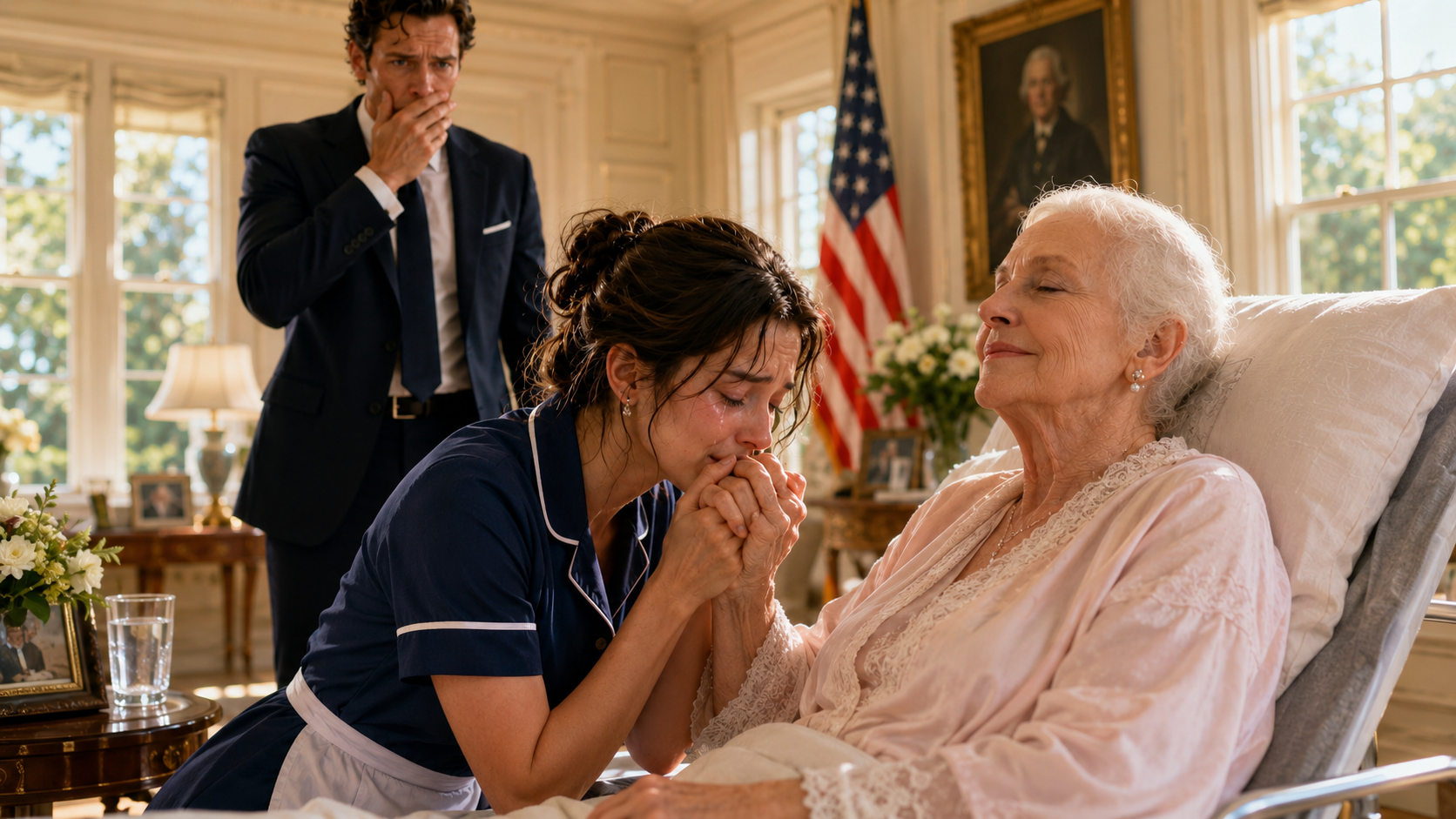
Mother’s fingers tightened around Clara’s hand. “Clara isn’t here because she needed a job,” she said. “She came because of your father.” The room seemed to shrink around me. “My father has been dead for twelve years.” Mother nodded slowly. “I know.”
She opened the drawer beside her wheelchair and removed an old photograph. My father stood outside a small apartment building with his arm around a woman I had never seen. Beside them was a little girl with Clara’s unmistakable eyes. I looked from the photograph to Clara. “No.”
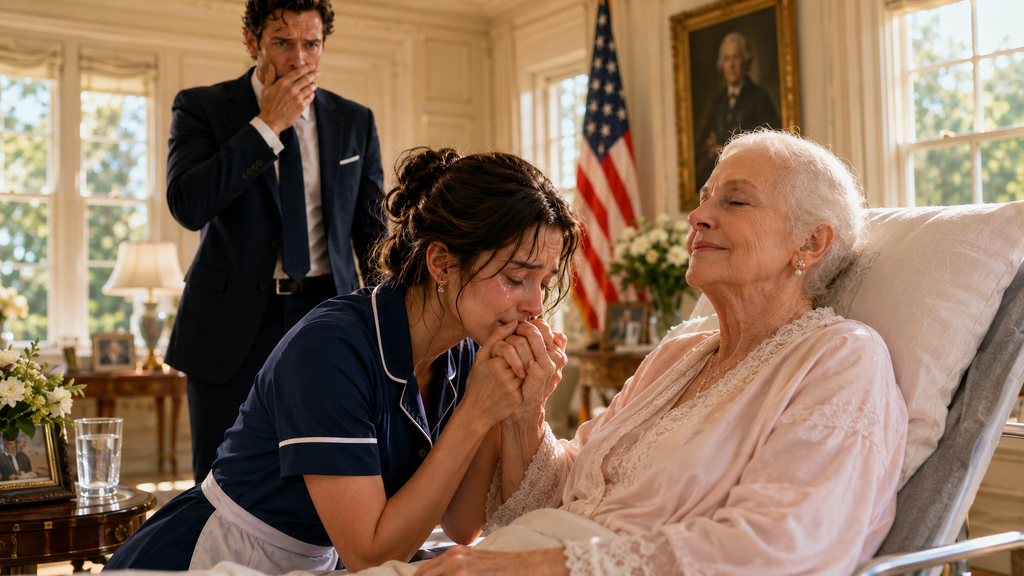
Clara lowered her head. Mother’s voice trembled. “Your father had another daughter.” For several seconds, I heard nothing but my own breathing. “You’re saying Clara is my sister?” Clara swallowed. “Half-sister.”
Anger came faster than shock. “So you lied your way into my house?” Clara’s eyes hardened. “I never lied. I applied for a housekeeping position. I never told anyone who I was.” “Why come here at all?” I demanded. Her voice dropped. “Because I wanted to see the family he chose.”
The words struck harder than any accusation. Mother closed her eyes. “I knew about Clara’s mother. Your father confessed shortly before he died. I was angry, humiliated… and I made him promise never to bring that child into our lives.”
Clara stared at her. “So you knew about me all these years?” Mother began crying. “Yes.” Clara’s kindness vanished for the first time. “My mother worked two jobs while he sent birthday cards he was too afraid to sign.”
I stared at the photograph, wondering how much of my childhood had been built on secrets. Then Clara reached into her pocket. “But that isn’t why I came.” She placed a sealed envelope on my desk. My name was written across the front in my father’s handwriting.
Mother went completely still. “Where did you get that?” Clara answered, “My mother gave it to me before she died. She said I could only give it to Bennett Hale after Eleanor finally admitted the truth.”
I reached for the envelope, but Mother suddenly whispered, “Bennett… don’t open it.”
That was when I understood Clara wasn’t the family secret.
She was only the beginning.
I stared at my father’s handwriting on the envelope.
Twelve years.
Twelve years since I had seen that slanted B he always used when writing my name.
For a moment, I was twenty-four again, standing beside his coffin while hundreds of employees, politicians, investors, and friends told me what an extraordinary man Daniel Hale had been.
A visionary.
A builder.
A devoted father.
A man of integrity.
Now his handwriting seemed to accuse all of us.
Mother watched my fingers move toward the seal.
“Bennett,” she whispered again. “Please.”
I looked at her.
She had lost almost all her hair.
Her skin seemed thinner than paper.
For eight months, I had watched cancer take pieces of her body.
But I had never seen fear in her eyes like I saw then.
“What’s in this letter?”
She didn’t answer.
Clara stood beside the desk, pale and motionless.
I turned to her.
“You know?”
“No.”
“But your mother did.”
“Yes.”
“And she told you not to give it to me until my mother admitted who you were.”
Clara nodded.
“Why?”
“I asked her that a hundred times.”
“What did she say?”
Clara looked at my mother.
“She said some truths are useless until the person who buried them is willing to stop digging.”
I broke the seal.
Mother shut her eyes.
Inside were six handwritten pages.
The first line destroyed the last twelve years of what I thought I knew about my family.
Bennett,
If you are reading this, then Eleanor has finally told you about Clara.
I stopped.
My father knew this moment might come.
I continued.
I have spent most of my life teaching you that a man is measured by what he builds.
I was wrong.
A man is measured by what he is willing to destroy in order to keep what he built.
And I destroyed more than you know.
My hands began trembling.
Clara looked toward the window.
Mother whispered, “Daniel…”
I kept reading.
You will be angry with me for Clara.
You should be.
But Clara is not the greatest wrong I committed.
The greatest wrong is the foundation beneath everything you inherited.
Hale Industries did not begin with me.
It began with Rachel Reed.
I looked up.
“Rachel?”
Clara’s voice was almost inaudible.
“My mother.”
I returned to the letter.
Before there was Hale Industries, there was a tiny transportation consulting company operating out of two rented rooms above a hardware store.
Rachel Reed designed the routing model that made our company different from every competitor.
She created the warehouse system.
She negotiated our first major contract.
And when the company was days away from collapsing, she invested nearly every dollar her parents had left her.
I was the salesman.
Rachel was the mind.
The world remembers only my name because I made certain that was the name on the building.
My throat tightened.
I looked at the walls of my office.
My office.
My company.
My name carved into glass, steel, letterhead, airplanes, buildings, foundations.
HALE.
It was everywhere.
And suddenly it felt borrowed.
I kept reading.
Rachel was supposed to receive twenty-five percent of the company.
That agreement existed.
So did my promise to her.
Then Rachel became pregnant with Clara.
Eleanor discovered the affair shortly afterward.
I stopped again.
Mother stared at the floor.
“You knew before Clara was born?”
“Yes.”
Her voice broke.
“You told me Father confessed shortly before he died.”
“I lied.”
Clara turned toward her sharply.
Mother continued before either of us could speak.
“I knew almost thirty years ago.”
The room became painfully quiet.
I could hear the old clock in the hallway.
Tick.
Tick.
Tick.
I lowered the letter.
“Why would you lie about that?”
Mother looked at Clara.
“Because the truth made me look worse.”
Clara’s face hardened.
“Worse than pretending I didn’t exist?”
Mother flinched.
“Yes.”
I continued reading.
When Eleanor discovered Rachel and me, she threatened to leave.
I deserved that.
But she also threatened to take you, Bennett, and make certain I never saw you again.
You were six years old.
I panicked.
I told myself I was choosing my son.
That became the excuse I used for everything afterward.
Rachel wanted nothing except what was already hers.
Her ownership.
Her work.
And assurance that I would acknowledge Clara.
Eleanor demanded that Rachel leave the company completely.
I agreed.
I felt something cold move through my chest.
The next paragraph was worse.
Rachel was offered a settlement.
The amount was significant at the time, but nowhere near the value of the company she helped create.
She refused.
Eleanor then discovered something I had been too cowardly to consider.
Our earliest ownership documents had never been formally completed.
Rachel trusted me.
I used that trust against her.
My vision blurred.
I read the sentence again.
Rachel trusted me.
I used that trust against her.
Clara turned away.
I finally understood why she had come into the mansion as a housekeeper instead of walking through the front doors demanding recognition.
This wasn’t merely about an affair.
It wasn’t merely about an abandoned daughter.
My father had built an empire partly on the work of a woman he erased.
And my mother had helped him erase her.
I looked at Mother.
“Did you know?”
Tears slipped down her face.
“Yes.”
“All of it?”
“Yes.”
“How much was Rachel offered?”
Mother closed her eyes.
“One hundred thousand dollars.”
Clara laughed.
There was no humor in it.
“One hundred thousand.”
Mother nodded.
“My mother died with forty-three dollars in her checking account.”
I couldn’t look at Clara.
The letter shook in my hand.
I forced myself to continue.
I signed documents transferring Rachel’s work, contracts, and intellectual property into Hale Industries.
Some were legitimate.
Some were morally indefensible.
One document contained a signature Rachel later told me she had never written.
My heart stopped.
I slowly looked at Mother.
She went completely still.
“Mother.”
She said nothing.
“Did you forge it?”
Clara inhaled sharply.
Mother’s mouth trembled.
“Yes.”
The word barely reached me.
Clara stepped backward as if Mother had struck her.
“You forged my mother’s signature?”
“I was terrified.”
“Of what?”
“Losing my family.”
Clara’s voice rose.
“So you destroyed mine?”
Mother began crying.
“I know what I did.”
“No, you don’t.”
“Clara—”
“My mother spent twenty-seven years thinking she had been too stupid to protect herself.”
Clara’s face twisted.
“She blamed herself.”
Mother covered her mouth.
Clara continued.
“She used to keep every Hale Industries article she saw.”
I watched her.
“She would cut them out of newspapers and put them in a box.”
“Why?”
“So she could remember what her life might have been.”
Her voice cracked.
“She never told me that when I was little. She just said Daniel Hale was someone she once knew.”
Mother began sobbing.
Clara didn’t stop.
“When I was fifteen, I found the box.”
She wiped her face angrily.
“There were photographs. Contracts. Letters.”
She pointed toward the envelope.
“And one birthday card after another addressed to me but never signed.”
I looked at Mother.
“You stopped him from signing them?”
She shook her head.
“No.”
“Then why?”
“Because your father was a coward.”
The words came out harder than anything she had said all morning.
“He wanted to love everyone without paying the price of choosing what was right.”
For once, Clara didn’t disagree.
I looked back down at the letter.
My father had written more.
There is no sentence I can write that will make what happened fair.
But there is something you can do that I could not.
You can stop pretending the Hale fortune belongs only to the Hale family.
My eyes moved faster.
Before my final surgery, I created a trust.
Fifteen percent of my personal ownership in Hale Industries was placed in Clara Reed’s name.
It was not enough.
Nothing could be enough.
But it was the largest transfer I could make without triggering the agreements I had signed with our investors.
The trust documents are in the private compartment of the safe in Eleanor’s sitting room.
The combination is Clara’s birthday.
I lowered the pages.
Nobody spoke.
I looked at Mother.
“You knew about the trust?”
“Yes.”
“And Clara never received it.”
Mother stared at her hands.
“No.”
Clara seemed confused.
“What trust?”
I turned toward her.
“Father left you part of the company.”
She actually shook her head.
“No.”
“Fifteen percent of his personal ownership.”
“No.”
“Clara—”
“I don’t want it.”
“You haven’t even heard—”
“I said I don’t want it.”
Mother whispered, “You should.”
Clara spun toward her.
“You don’t get to decide what I should have.”
“No.”
Mother’s voice was quiet.
“You’re right.”
I looked at the last pages.
My father had anticipated everything.
Eleanor may tell you she withheld the trust because she was protecting you.
She may even believe that.
Do not hate her more than you hate me.
I gave her too much power because I was unwilling to face the consequences of my own actions.
But Bennett, understand this:
Money has a strange ability to make cowardice look responsible.
I told myself protecting Hale Industries protected thousands of jobs.
Eleanor told herself protecting your inheritance protected our son.
We used respectable words for selfish decisions.
Then we lived inside those words until we believed them.
I sat down.
For the first time since inheriting the company, I felt physically sick at the thought of my own last name.
There was one final paragraph.
Find the documents.
Give Clara what is hers.
Not because she is your sister.
Not because you feel guilty.
Not because I am asking you.
Do it because a debt does not stop being a debt simply because the person who owed it died.
And when you have done that, decide what kind of man you want to be.
Not what kind of Hale.
What kind of man.
Dad.
I placed the letter on the desk.
Nobody moved.
I had spent my life believing money solved problems.
If a roof leaked, replace it.
If a company struggled, acquire it.
If Mother became ill, hire the best doctors.
If employees needed something, create a fund.
Every problem had a number attached to it.
Now I was staring at a problem created by money.
Protected by money.
Hidden by money.
Inherited through money.
And for once, writing a check wouldn’t make me innocent.
I looked at Mother.
“Take me to the safe.”
She nodded.
We went upstairs together.
Mother rolled her wheelchair slowly down the hallway.
Clara followed several feet behind.
The sitting room beside Mother’s bedroom had barely changed since I was a child.
Same cream curtains.
Same antique desk.
Same painting of the sea Father purchased during a trip to Maine.
Mother stopped in front of a cabinet.
Behind it was a small wall safe.
My father had installed it when I was fourteen.
I had never known there was a second compartment.
Mother entered the combination.
Nothing happened.
She tried again.
Her hands were shaking.
Clara stood near the doorway.
“What’s my birthday?” she asked.
Mother froze.
It took her three seconds.
Too long.
“October seventeenth.”
Clara’s expression changed.
For all her anger, I think some part of her had expected Mother not to know.
Mother entered 1017.
The lock clicked.
Inside were jewelry boxes, documents, passports, and several envelopes.
Mother reached behind the metal shelf.
Her fingers searched for something.
Then I heard another click.
A narrow panel opened.
Inside was a thick leather folder.
She handed it to me.
I opened it.
Trust documents.
Stock certificates.
Letters from attorneys.
My father’s signature.
And Clara’s full legal name.
Clara Elizabeth Reed.
Beneficiary.
I looked at the date.
Eleven years earlier.
One year before Father died.
“You’ve had this for eleven years.”
Mother nodded.
“Why?”
She didn’t answer.
I raised my voice.
“Why?”
“Because I was still angry!”
The confession exploded out of her.
Clara looked stunned.
Mother’s breathing became uneven.
“I had spent years pretending I had survived what your father did to me.”
She pressed one hand against her chest.
“I played the gracious wife. I attended dinners. I smiled for photographs. I stood beside him at charity galas while people told me I was lucky to have such a faithful husband.”
Her eyes burned.
“Then he told me he had created that trust.”
She looked at Clara.
“And suddenly, after everything, there would always be proof.”
Clara whispered, “Proof that I existed.”
“Yes.”
Mother closed her eyes.
“I hated you.”
Clara stopped breathing for a moment.
Mother forced herself to continue.
“I had never met you. You had done nothing to me. You were a child.”
She began crying.
“But I hated what you represented.”
Clara’s jaw tightened.
“And that was enough for you to steal from me.”
“Yes.”
Mother did not defend herself.
That somehow made the moment worse.
“I told myself Bennett needed control of the company.”
She looked at me.
“I told myself investors would panic if another heir suddenly appeared.”
Her voice dropped.
“I told myself Daniel was confused because he was sick.”
She shook her head.
“But beneath all those excuses was something uglier.”
“What?”
“I wanted to win.”
Clara stared at her.
Mother’s tears fell freely.
“I wanted Daniel’s other family to disappear so completely that no one could ever look at my life and know I hadn’t been enough for him.”
Clara’s voice became very quiet.
“My mother never wanted your life.”
“I know that now.”
“She never wanted your husband either.”
Mother flinched.
Clara stepped closer.
“She loved him when she was young.”
Her eyes filled again.
“Then she spent the rest of her life wishing she hadn’t.”
Mother bowed her head.
“I know.”
“No.”
Clara shook her head.
“You know now because you’re dying.”
Mother looked up.
“Yes.”
It was the first answer that stopped Clara.
Mother did not ask to be forgiven.
She didn’t explain.
She simply said it again.
“Yes.”
Clara turned away.
For several minutes, the only sound in the room was Mother struggling to breathe.
Finally, I closed the folder.
“I’m calling the lawyers.”
Clara looked at me.
“For what?”
“To transfer everything.”
“No.”
“It belongs to you.”
“I told you I don’t want your guilt money.”
“It isn’t my money.”
“It’s all your money.”
“No.”
I walked toward her.
“That’s what I believed yesterday.”
I held up the folder.
“Today I know better.”
Clara crossed her arms.
“What do you expect? I take a few million dollars and suddenly we become brother and sister?”
“I don’t expect anything.”
“Good.”
“I mean it.”
She looked at me suspiciously.
“I don’t expect you to forgive Father.”
I glanced at Mother.
“Or her.”
Mother looked down.
“I don’t expect you to like me.”
“That’s convenient.”
“I don’t expect you to stay in this house.”
Her expression shifted.
“But I am going to return what should have been yours.”
Clara’s voice hardened.
“And what about my mother?”
I had no answer.
She stepped closer.
“What do you return to her?”
Silence.
“What check pays for the nights she worked cleaning offices after working all day?”
I said nothing.
“What percentage gives back the years she spent choosing between medicine and electricity?”
My stomach tightened.
“What exactly do you transfer to a woman who died believing the man she trusted became a billionaire by pretending she never existed?”
“I don’t know.”
“Exactly.”
Her voice cracked.
“That’s the point.”
Then she walked out.
I didn’t follow her.
Not then.
I called our family attorney.
By noon, three lawyers were sitting around my dining-room table.
By one o’clock, they had confirmed the documents were legitimate.
By two, I learned the trust had become enormously valuable.
My father’s fifteen-percent personal stake at the time of his death had changed through mergers, stock splits, and restructuring.
Clara’s current interest, including dividends that had never been distributed, was worth more than two hundred million dollars.
Two hundred and seventeen million, to be precise.
Our lead attorney, Martin Kessler, adjusted his glasses.
“If these documents had been disclosed when Daniel died, Ms. Reed would have received distributions for the last decade.”
I stared at Mother.
She sat at the opposite end of the table.
“Can Clara sue?”
Martin hesitated.
“Yes.”
Mother nodded slowly.
“She should.”
I looked at her.
She seemed smaller than she had that morning.
Not weaker.
Smaller.
As if telling the truth had finally stripped away the armor she had spent decades polishing.
Martin continued.
“There may also be complications involving the original ownership of the company, especially if Rachel Reed’s signature was forged.”
“Complications?”
“Potential fraud. Corporate claims. Ownership claims.”
“How far back?”
“Nearly thirty years.”
I looked at the Hale family portrait hanging above the fireplace.
Father.
Mother.
Me.
All three of us dressed in black at some charity event.
We looked untouchable.
“How much could this cost?”
Martin started answering.
Then I stopped him.
“No.”
Everyone looked at me.
I pushed my chair back.
“That’s the wrong question.”
For once, nobody around that table knew what to say.
I found Clara outside near the old greenhouse.
She was sitting on a stone wall with her coat wrapped around her.
“You’re rich,” I said.
She looked at me.
“That may be the worst way anyone has ever started a conversation.”
Despite everything, I almost smiled.
“Two hundred and seventeen million dollars.”
Her face went blank.
“What?”
“That’s roughly what the trust is worth now.”
She stared at me.
I expected shock.
Joy.
Disbelief.
Something.
Instead, she began laughing.
Not happily.
She covered her mouth.
Then the laugh turned into tears.
I sat beside her.
She didn’t tell me to leave.
“My mother died because she delayed a medical test for seven months.”
I looked at her.
“She didn’t have insurance.”
Clara stared at the frozen garden.
“She had pain. She kept saying it was nothing.”
Her hands tightened.
“When she finally went to the hospital, the cancer had spread.”
I closed my eyes.
“So you’re telling me there was two hundred million dollars sitting in a folder upstairs while she was deciding whether she could afford a doctor.”
I had no defense.
“Yes.”
She wiped her face.
“That’s funny.”
“It isn’t.”
“It has to be.”
She laughed again through her tears.
“Otherwise I’ll start screaming and never stop.”
I sat there beside her.
For once, I didn’t try to fix anything.
I didn’t tell her the best hospitals could have saved Rachel.
I didn’t tell her I would create a foundation.
I didn’t offer money.
I simply sat beside my sister while she cried for a mother I had never met.
After a while, Clara spoke.
“She wasn’t bitter every day.”
“I didn’t think she was.”
“She loved terrible television.”
I looked at her.
“She used to yell at game-show contestants.”
That surprised a laugh out of me.
Clara smiled faintly.
“She could burn water.”
“That sounds genetically related to Father.”
Clara looked at me.
“You can’t cook?”
“I once caused a fire making toast.”
For the first time, she laughed for real.
It lasted only a second.
But it mattered.
That evening, Mother asked Clara to sit with her.
Clara refused.
The next day, Mother asked again.
Clara refused again.
Three days passed.
I stopped going to the office.
For the first time since becoming CEO, I delegated everything.
I sat with Mother.
Not her nurse.
Not her oncologist.
Me.
At first, we had no idea how to talk to each other.
I had spent years discussing practical things with her.
Appointments.
Properties.
Investments.
Business.
Never fear.
Never regret.
Never loneliness.
On the fourth night, she woke at three in the morning.
I was sleeping in the chair beside her bed.
“Bennett?”
“I’m here.”
She looked toward the window.
“I’m frightened.”
The words shocked me more than the diagnosis had.
My mother had never admitted fear.
I moved closer.
“Of dying?”
She nodded.
Then she shook her head.
“Of dying as the worst thing I ever did.”
I didn’t know what to say.
She looked at me.
“You must think I’m a monster.”
“No.”
“You should.”
“No.”
“I stole from a child.”
“Yes.”
“I helped destroy her mother.”
“Yes.”
“I lied to you.”
“For most of my life.”
She closed her eyes.
“You sound like your father.”
“That isn’t a compliment anymore.”
A tired smile crossed her face.
“No.”
I took her hand.
“I don’t think you’re a monster.”
“Why?”
“Because monsters don’t usually spend their last days wishing they had been better.”
She looked at me.
“That doesn’t make me good.”
“No.”
I squeezed her hand.
“It makes you human.”
She started crying.
For once, I didn’t call a nurse.
I stayed.
A week after I opened the letter, Clara entered Mother’s bedroom.
I was reading near the window.
Mother was sleeping.
Clara whispered, “How is she?”
“Worse.”
The doctors had already told me.
Days, perhaps weeks.
Clara looked at Mother’s sleeping face.
Then at the chair beside the bed.
The same chair where she had shaved away Mother’s remaining hair.
“You can sit down,” I said.
“I know.”
She remained standing.
Mother opened her eyes.
When she saw Clara, she tried to push herself upright.
Clara stepped forward automatically.
“Don’t.”
Mother froze.
“I can do it,” Clara said.
She adjusted the pillows anyway.
Then she sat.
For several minutes, nobody spoke.
Finally, Mother whispered, “Why did you care for me?”
Clara looked surprised.
“Before I told Bennett. Before you knew I was sick enough to confess.”
Clara stared at her hands.
“I don’t know.”
“You should hate me.”
“I did.”
“Did?”
Clara sighed.
“When I came here, I planned to stay for three months.”
“Why three?”
“My mother always said you could learn everything important about someone in ninety days.”
Mother smiled faintly.
“That sounds like her.”
Clara’s eyes narrowed.
“You remember her?”
“Every day.”
The answer seemed to hurt them both.
Clara looked away.
“I wanted to see your family.”
She glanced at me.
“The family he chose.”
Mother nodded.
“I thought maybe I’d understand something.”
“Did you?”
“No.”
Clara laughed bitterly.
“You had this beautiful house. Bennett had a company. There were cars and paintings and rooms nobody used.”
She looked directly at Mother.
“And you looked miserable.”
Mother didn’t deny it.
“That made me angrier.”
“Why?”
“Because my mother had nothing and still found reasons to laugh.”
Mother’s eyes filled.
Clara continued.
“Then you got sick.”
She exhaled slowly.
“And I discovered something inconvenient.”
“What?”
“You were funny.”
Mother almost smiled.
“You complained constantly.”
“That sounds less flattering.”
“You cheated at cards.”
“I did not.”
“You absolutely did.”
Mother looked at me.
“Bennett, tell her.”
“She cheats.”
“Traitor.”
Clara smiled.
Then the smile disappeared.
“One night, I heard you crying.”
Mother became still.
“You were in the bathroom.”
Clara’s voice softened.
“You thought nobody could hear.”
Mother looked embarrassed.
“You had found a handful of your hair in the sink.”
I remembered that morning.
Mother had told me treatment was progressing normally.
I had left for a meeting in Singapore.
Clara continued.
“You kept saying, ‘I don’t want to look sick.’”
Mother’s eyes filled.
“I didn’t know what to do.”
“So you sat outside the door.”
“Yes.”
“All night.”
Clara nodded.
“I hated you.”
Her voice broke.
“But you were scared.”
Mother began crying.
“And I knew what scared looked like.”
“Your mother?”
“Yes.”
Silence filled the room.
Then Mother whispered, “I’m sorry.”
Clara closed her eyes.
Mother continued.
“I know that is the smallest sentence imaginable compared to what I did.”
Clara didn’t speak.
“I’m sorry for stealing from Rachel.”
A tear moved down Clara’s cheek.
“I’m sorry for helping Daniel erase her.”
Another tear.
“I’m sorry for every birthday you spent wondering why your father did not want you.”
Clara’s lips trembled.
“I’m sorry that your mother died without knowing the truth.”
Mother struggled to breathe.
“And I am so terribly sorry that you had to become kind to me before I found the courage to be honest with you.”
Clara covered her face.
I stood to leave.
This moment wasn’t mine.
But before I reached the door, Clara spoke.
“I can’t forgive you today.”
Mother nodded.
“You don’t have to.”
“I might never.”
“I know.”
Clara lowered her hands.
“But I don’t want you to die alone.”
Mother’s face collapsed.
Clara moved beside her.
And the woman my mother had tried to erase held her hand while she cried.
That was the moment money finally became useless.
There was nothing I could purchase that looked anything like what Clara gave her.
Time.
Presence.
Mercy without permission.
Two weeks later, I held a special meeting of Hale Industries’ board.
Every director attended.
So did our legal team.
Clara sat beside me.
She had resisted until the last minute.
“What am I supposed to say?” she asked before we entered.
“The truth.”
“I’m a housekeeper standing in front of people who manage billions of dollars.”
“No.”
She looked at me.
“You’re Clara Reed.”
“That isn’t reassuring.”
“It should be.”
The boardroom fell silent when we entered.
I didn’t soften the story.
I told them about Rachel Reed.
The original company.
The missing ownership agreement.
The forged signature.
Clara.
The trust.
My mother’s confession.
My father’s letter.
When I finished, one director leaned back.
“Bennett, we need to think carefully about how this is disclosed.”
I looked at him.
“It will be disclosed truthfully.”
“I understand, but the reputational impact—”
“Is deserved.”
Another director spoke.
“We have obligations to shareholders.”
“Yes.”
“So we cannot make decisions based entirely on emotion.”
I nodded.
“I agree.”
That seemed to reassure them.
Then I continued.
“Which is why emotion has nothing to do with returning property that does not belong to us.”
Silence.
Our general counsel looked at me.
“You understand this may reduce your personal stake considerably.”
“Yes.”
“And potentially expose the company to historical claims.”
“Yes.”
“And you still want to proceed?”
I looked at Clara.
For most of her life, people with my last name had decided what she deserved without asking her.
That ended there.
“It isn’t about what I want.”
I slid my father’s letter across the table.
“It’s about what happened.”
The board approved an independent investigation.
Every surviving company record from those early years was opened.
It took six weeks.
The findings were worse than expected.
Rachel Reed had not simply contributed ideas.
She had been a co-founder in everything except title.
Her models had created the operational system that won Hale Industries its first three major clients.
Her investment had kept the company alive during its first year.
Several former employees remembered her.
One retired manager cried during his interview.
“Rachel was the smartest person in that building,” he said.
“Then one Monday she was gone.”
Nobody had asked enough questions.
That sentence stayed with me.
Nobody had asked enough questions.
It was the story of my life.
I never asked why Mother knew which tea helped her nausea.
I never asked why she laughed with Clara.
I never asked what Father had sacrificed while building our fortune.
I saw wealth and assumed the foundation beneath it must be solid.
Wealth makes a convincing curtain.
It hides cracks very well.
The independent committee concluded Rachel should have held twenty-five percent of the original company.
Calculating what that ownership would mean decades later was almost impossible.
Lawyers argued.
Accountants argued.
Experts produced numbers that made the two hundred and seventeen million dollars in Clara’s trust look small.
One evening, Clara and I sat in the kitchen with pages of calculations spread between us.
She stared at the largest estimate.
“That can’t be real.”
“It is.”
“I don’t need that much money.”
“That’s not the question.”
She looked at me.
“You sound different.”
“From what?”
“The man who called me into his office because I had exceeded my housekeeping responsibilities.”
I winced.
“I was an idiot.”
“You were spectacularly unpleasant.”
“Thank you.”
“You’re welcome.”
She looked at the papers again.
“What happens if I accept?”
“You become one of the largest individual shareholders.”
“And you?”
“I remain obscenely rich.”
She smiled despite herself.
“That wasn’t what I meant.”
“I know.”
I leaned back.
“My ownership decreases.”
“Does that bother you?”
Six months earlier, it would have.
I would have called advisors.
Calculated voting control.
Negotiated protective agreements.
Now the answer surprised me.
“No.”
Clara studied my face.
“Why?”
“Because I finally understand the difference between losing something and returning it.”
She said nothing.
Two days later, she accepted the settlement.
Not as a gift.
Not as an inheritance.
As restitution for Rachel Reed’s stolen ownership.
But Clara made one condition.
Rachel’s name would be restored.
So on a cold Monday morning, Hale Industries issued the most important announcement in company history.
Our original founding documents were amended.
Every official history was corrected.
A plaque in the headquarters lobby was removed.
For thirty-one years, it had read:
HALE INDUSTRIES
FOUNDED BY DANIEL R. HALE
The new one read:
HALE INDUSTRIES
FOUNDED BY DANIEL R. HALE AND RACHEL E. REED
Clara stood beside me when the workers installed it.
She touched her mother’s name with two fingers.
For a long time, she said nothing.
Then she whispered:
“She would have pretended this didn’t matter.”
I smiled.
“Would it?”
“She would’ve come here every Tuesday just to stare at it.”
I laughed.
Clara did too.
Then she cried.
So did I.
Mother never saw the plaque in person.
By then, she was too weak to leave the house.
But I brought her a photograph.
She studied it for almost a minute.
Then she pressed it against her chest.
“She deserved that.”
“Yes.”
Mother looked at me.
“And Clara?”
“She received her ownership.”
Mother exhaled.
“Good.”
“She’s joining the board.”
That surprised her.
“Really?”
“She threatened to fire three executives during her first meeting.”
Mother smiled.
“She’ll fit in perfectly.”
I sat beside the bed.
Mother had barely eaten that day.
The doctor had told me privately that evening might be her last.
“Bennett.”
“Yes?”
“Are you angry with me?”
I thought about lying.
Then I remembered how lies had built the room around us.
“Yes.”
She nodded.
“I understand.”
“I love you too.”
Her eyes filled.
“Those things can exist together?”
“I think most real things do.”
She squeezed my hand weakly.
“I spent so long believing that if people saw the worst parts of me, they would stop loving me.”
I swallowed.
“So I hid them.”
“I know.”
“And hiding them made me worse.”
“Yes.”
She looked toward the doorway.
“Where’s Clara?”
“She went to make tea.”
Mother smiled faintly.
“She makes terrible tea.”
“She says you taught her.”
“I did.”
A minute later, Clara entered carrying three cups.
Mother looked at the tray.
“I hope none of that is for me.”
Clara set it down.
“You’re impossible.”
“I’m dying. I’m allowed to be difficult.”
“You’ve been using that excuse for months.”
Mother smiled.
It was the same smile I had seen through the half-open bedroom door weeks earlier.
Real.
Unprotected.
Human.
Clara sat on one side of the bed.
I sat on the other.
Mother looked between us.
“My children.”
Clara stiffened.
Mother noticed.
“I’m sorry.”
Clara surprised both of us.
“No.”
Mother stared at her.
Clara reached for her hand.
“You can say it.”
Mother started crying.
I looked away.
She squeezed both our hands.
“My children.”
That night, we talked until she could no longer keep her eyes open.
Not about cancer.
Not about company shares.
Not about lawyers.
We talked about ridiculous things.
The time I got locked inside a pantry when I was eight.
The time Clara’s mother accidentally drove twenty miles in the wrong direction because she refused to ask for help.
Father’s terrible dancing.
Mother’s obsession with detective novels.
At midnight, Clara fell asleep in the chair.
At two, Mother woke again.
She looked at Clara.
“She’s here.”
“Yes.”
“Why?”
“Because she chose to be.”
Mother closed her eyes.
“That’s more than I deserve.”
“Maybe.”
She looked at me.
“Bennett.”
“I’m here.”
“Don’t become me.”
My throat tightened.
“I won’t.”
“Don’t let money do your living for you.”
I thought about all the checks I had written for her care.
All the specialists.
All the equipment.
All the things I had mistaken for love.
“I understand.”
She shook her head weakly.
“No. You’re beginning to.”
Those were the last words my mother said to me.
She died just before sunrise.
Clara was holding her hand.
So was I.
There were no machines screaming.
No dramatic final speech.
Her breathing simply became slower.
Then softer.
Then it stopped.
For several minutes, neither of us moved.
Finally, Clara whispered:
“She was difficult.”
I laughed through tears.
“Terribly.”
“She cheated at cards.”
“Constantly.”
“She hated my tea.”
“Everyone hates your tea.”
Clara hit my arm.
And somehow, in the room where my mother had died, we laughed.
Then we cried until neither of us could speak.
The funeral was private.
Mother had spent most of her life attending enormous events.
Hundreds of people would have come if I let them.
Instead, there were twenty-three chairs.
Family.
A few friends.
Several people who had known her before we were rich.
Clara sat in the front row beside me.
Nobody questioned it.
If anyone had, I was ready.
But nobody did.
At the cemetery, after everyone left, Clara remained beside the grave.
I stood a few feet away.
She looked at the fresh earth.
“I thought I’d feel relieved.”
“Because she’s gone?”
Clara nodded.
“Part of me wanted her to suffer when I first came here.”
I didn’t judge her.
“And then?”
“She did.”
Clara wiped her face.
“And it didn’t make anything better.”
“No.”
She looked at me.
“I forgave her last night.”
I was surprised.
“You told her you might never.”
“I know.”
“Did you tell her?”
Clara shook her head.
“No.”
“Why?”
“I think she knew.”
I looked toward Mother’s grave.
“I think she did too.”
Spring came slowly that year.
The mansion changed after Mother died.
At first, every room seemed emptier.
Then Clara began changing things.
Without asking.
I came home one afternoon and found strangers carrying furniture out of a sitting room.
“What’s happening?”
Clara appeared from the hallway.
“We’re donating it.”
“We?”
“You weren’t using it.”
“That table is eighteenth-century French.”
“It’s ugly.”
“It’s worth eighty thousand dollars.”
“That makes it expensive and ugly.”
I stared at her.
“You don’t technically live here anymore.”
“I own part of your company.”
“That doesn’t give you authority over my furniture.”
“It should.”
I tried not to smile.
“What’s going in the room?”
“A library.”
“We already have a library.”
“A useful library.”
Apparently, that meant books people were allowed to touch.
The former sitting room eventually became Clara’s favorite place in the house.
Mine too.
But the biggest change happened at Hale Industries.
Clara did not become the executive everyone expected.
She refused an office on the top floor.
She refused a private driver.
She refused an assistant until her workload became impossible.
During her first month on the board, she visited warehouses without announcing herself.
She ate with night-shift employees.
She asked cleaners how much they were paid.
She asked warehouse workers whether their health plans actually covered their families.
She asked questions nobody in our boardroom knew how to answer.
At first, executives hated it.
Then they became terrified of hearing her say:
“I’ll go ask the people who actually do the job.”
I loved watching it happen.
One year after Mother’s death, Clara created the Rachel Reed Fund.
I assumed it would be a charitable foundation.
I was wrong.
“It isn’t charity,” she told me.
“What is it?”
“Ownership.”
The fund invested in companies founded by workers whose ideas were often ignored.
Women.
Immigrants.
Warehouse supervisors.
Single parents.
People with talent but no wealthy network.
Clara insisted they keep meaningful equity.
“No one should build something and then discover their name disappeared from the wall,” she said.
I knew exactly where that sentence came from.
I contributed half a billion dollars.
Clara almost refused it.
Then she said:
“Fine. But you don’t get your name on anything.”
I smiled.
“Perfect.”
Three years later, the Rachel Reed Fund had helped launch forty-seven businesses.
Five years later, Hale Industries changed its name.
That was my decision.
The board opposed it at first.
So did Clara.
“You don’t have to erase Father,” she told me.
“I’m not.”
“Then why change it?”
“Because one name should never have been the whole story.”
At the annual shareholder meeting, the new name appeared behind us.
HALE REED GROUP.
Clara stared at it.
She didn’t speak for almost thirty seconds.
Then she leaned toward me and whispered:
“Mother would have yelled.”
“Your mother?”
“Yes.”
“What would she say?”
Clara smiled through tears.
“Make the Reed bigger.”
So we did.
Years passed.
People eventually stopped introducing Clara as “Bennett Hale’s secret half-sister.”
She became Clara Reed.
Board chair.
Investor.
Founder of one of the most successful worker-ownership programs in the country.
And, unfortunately for me, the person most willing to tell me when I was being an idiot.
Especially about my personal life.
“You need friends,” she told me one evening.
“I have friends.”
“You have executives who play golf with you.”
“That counts.”
“No.”
“I have you.”
“I’m legally required to tolerate you because we share a terrible father.”
“That sounds like family.”
She threw a cushion at me.
She was right, though.
For years, I had lived exactly as I once cared for Mother.
Efficiently.
Professionally.
At a distance.
I knew thousands of people.
Almost none of them knew me.
So I changed that too.
Not overnight.
Real change rarely happens overnight.
I stopped sleeping at the office.
I stopped answering messages during dinner.
I learned the names of employees without immediately asking what department they belonged to.
I visited Rachel’s grave with Clara every October seventeenth.
And once a year, on Mother’s birthday, Clara and I made terrible tea.
We drank it in her bedroom.
Neither of us ever suggested changing the tradition.
Ten years after the morning I opened Father’s letter, Clara and I stood in the mansion’s front hallway.
Workers were carrying boxes outside.
Again.
“You really enjoy removing my possessions,” I said.
“Our possessions.”
“You have your own house.”
“Yes, but annoying you is free.”
The mansion was being converted.
Not sold.
Not abandoned.
Converted into a residential center for families of cancer patients receiving treatment in the city.
Private bedrooms.
Child-care rooms.
Counseling.
Transportation to hospitals.
A real kitchen.
And in the upstairs hallway, where Mother once spent sleepless nights pretending not to be afraid, there would be rooms where nobody had to be alone.
The house no longer needed to prove how wealthy our family was.
It could finally be useful.
On the morning before the center opened, I walked into Mother’s old bedroom.
The furniture was gone.
The curtains were new.
Sunlight covered the floor.
Clara was standing beside the window.
In her hand was the old photograph Father had taken with Rachel and the little girl who became my sister.
“You kept it.”
“Of course.”
She handed it to me.
I looked at Father.
For years, I didn’t know what to feel when I saw his face.
Anger.
Grief.
Love.
Disappointment.
Eventually, I stopped trying to choose only one.
He had loved me.
He had failed Clara.
He had built something enormous.
He had stolen something precious.
He had tried, too late, to repair part of the damage.
People are rarely the clean stories carved into monuments.
Sometimes they are all of their contradictions at once.
Clara tapped the picture.
“You have his forehead.”
“That is unnecessarily cruel.”
She laughed.
Then she looked around the room.
“Do you ever think about that day?”
“What day?”
“The day you came home early.”
Every time.
I remembered standing outside that bedroom door.
A billionaire convinced everything important in his world was under control.
Then seeing a young housekeeper kneeling beside his dying mother.
Crying.
Shaving away the last of her hair.
Giving her something I had never thought to purchase because it couldn’t be purchased.
Herself.
“Yes,” I said.
“All the time.”
Clara leaned against the window.
“If you hadn’t come home early, do you think she would’ve told you?”
I thought about Mother.
Her pride.
Her fear.
The sealed folder behind the safe.
“I don’t know.”
“Maybe not.”
“Maybe.”
Clara looked down at the photograph.
“I nearly quit that morning.”
That surprised me.
“After shaving her head?”
“Yes.”
“Why?”
“Because I was getting too attached.”
I smiled.
“To Mother?”
“She was annoying.”
“She liked you.”
“I know.”
“That scared you?”
Clara nodded.
“I came to this house wanting proof that the people who hurt my mother were terrible.”
She looked at me.
“It would have been easier.”
“But we weren’t?”
“Oh, you were terrible.”
“Thank you.”
“You’re welcome.”
She smiled.
“Just not in the way I expected.”
I understood.
That was the hardest truth of all.
Cruel people are easy to hate.
Human beings are harder.
Mother had done something cruel.
She had also held Clara’s hand during chemotherapy.
Father had betrayed Rachel.
He had also spent years writing letters he was too ashamed to send.
Rachel had every reason to teach Clara hatred.
Instead, she raised a daughter capable of sitting beside the frightened woman who had helped steal her future.
And me?
I had believed providing money meant providing love.
It took losing my mother and finding my sister to understand how wrong I was.
The center opened the next morning.
We named it Eleanor and Rachel House.
Clara objected at first.
“My mother would hate having her name beside Eleanor’s.”
“I know.”
“Then why?”
“Because their story is the reason this place exists.”
She considered that.
“Eleanor first?”
“Alphabetical.”
“Rachel Reed comes first alphabetically if we use surnames.”
“You are exhausting.”
“Change the sign.”
We compromised.
RACHEL & ELEANOR HOUSE.
Clara still claimed she won.
Maybe she did.
At the opening ceremony, reporters asked the usual questions.
How much had the renovation cost?
How many families would be served?
Why had we donated such valuable property?
One reporter asked me:
“Mr. Hale, this house has been in your family for generations. Was it difficult to give it up?”
I looked behind me.
Through the open doors, I could see children running through the hallway.
A father was carrying suitcases upstairs.
A woman in a head scarf was talking with one of the counselors.
Near the staircase, Clara was arguing with an electrician about a light fixture.
I smiled.
“No.”
The reporter seemed surprised.
“Why not?”
I looked at the house that had once represented everything I thought success meant.
“It was much harder when we were keeping it.”
That quote ended up everywhere.
People called it profound.
It wasn’t.
It was simply true.
That evening, after everyone left, Clara and I sat on the front steps.
The same mansion where she had once entered through the staff door.
The same mansion where my mother had hidden the evidence of Clara’s inheritance.
The same mansion where I had summoned her into my office and demanded to know why she had dared to care for a dying woman.
“Do you miss cleaning?” I asked.
She looked horrified.
“No.”
“You were excellent.”
“I cleaned your bathroom for four months.”
“I know.”
“You left towels on the floor.”
“I was creating employment.”
She stared at me.
“That might be the most billionaire sentence you’ve ever spoken.”
I laughed.
She rested her head against my shoulder.
It had taken years before she did things like that without thinking.
At first, even calling me her brother sounded strange.
Then one Christmas, she introduced me to someone by saying:
“This is my brother Bennett.”
I didn’t tell her how much that sentence meant.
I didn’t need to.
We sat quietly until the lights inside the house began switching off.
“Bennett?”
“Yes?”
“Do you ever wish none of it happened?”
I knew what she meant.
Father.
Rachel.
The affair.
The theft.
The lies.
Mother’s guilt.
Clara growing up without him.
There were a thousand things I wished had been different.
But erasing them would erase people too.
“No.”
She looked at me.
“I wish they had made better choices.”
I looked toward the house.
“But I don’t wish you away.”
Clara’s eyes filled immediately.
“Oh, that was disgusting.”
“What?”
“You said something emotional.”
“I take it back.”
“Too late.”
She hugged me.
And sitting there, I thought about Father’s final instruction.
Decide what kind of man you want to be.
Not what kind of Hale.
What kind of man.
For most of my life, I thought legacy was something you inherited.
A company.
A house.
A fortune.
A name.
I know better now.
Legacy is what remains after someone finally has the courage to tell the truth.
Sometimes it is shame.
Sometimes it is repair.
Sometimes it is a company plaque with the correct name on it.
Sometimes it is a woman sitting beside the bed of someone she has every reason to hate.
Sometimes it is a brother discovering his sister decades too late and deciding that late is not the same as never.
And sometimes it is as simple as coming home early on a Wednesday.
I had expected silence that afternoon.
Instead, I heard my mother laughing.
At the time, I thought I was walking into her bedroom.
I didn’t understand that I was walking into the rest of my life.
Clara had entered our mansion looking for the family her father chose.
She found a dying woman carrying thirty years of guilt.
She found a brother hiding behind money.
And I found the truth my family had spent a fortune trying to bury.
My father was right about one thing.
A debt does not stop being a debt because the person who owed it dies.
But neither does love.
Rachel’s love survived in Clara.
Mother’s love survived in the courage she finally found to confess.
Even Father’s damaged, cowardly love survived inside a sealed envelope waiting twelve years for someone to open it.
Money could return Clara’s ownership.
It could restore her mother’s name.
It could turn a mansion into a home for frightened families.
But it could not give Rachel her years back.
It could not give Clara the childhood she deserved.
It could not give Mother another chance to make different choices.
And it could never purchase the thing Clara had given my mother before knowing whether she would receive a single dollar.
Time.
That became the lesson I carried with me.
Not the company.
Not the fortune.
Not the Hale name.
Time.
Because on the last night of Eleanor Hale’s life, she did not ask about her bank accounts.
She did not ask whether our stock had risen.
She did not ask about the mansion.
She looked at the two people holding her hands and asked only one question.
“Are you still here?”
We were.
And in the end, that was the only answer money had never been able to give her.
THE END! THANK YOU FOR READING!❤️