 Reading Time: 16 minutes
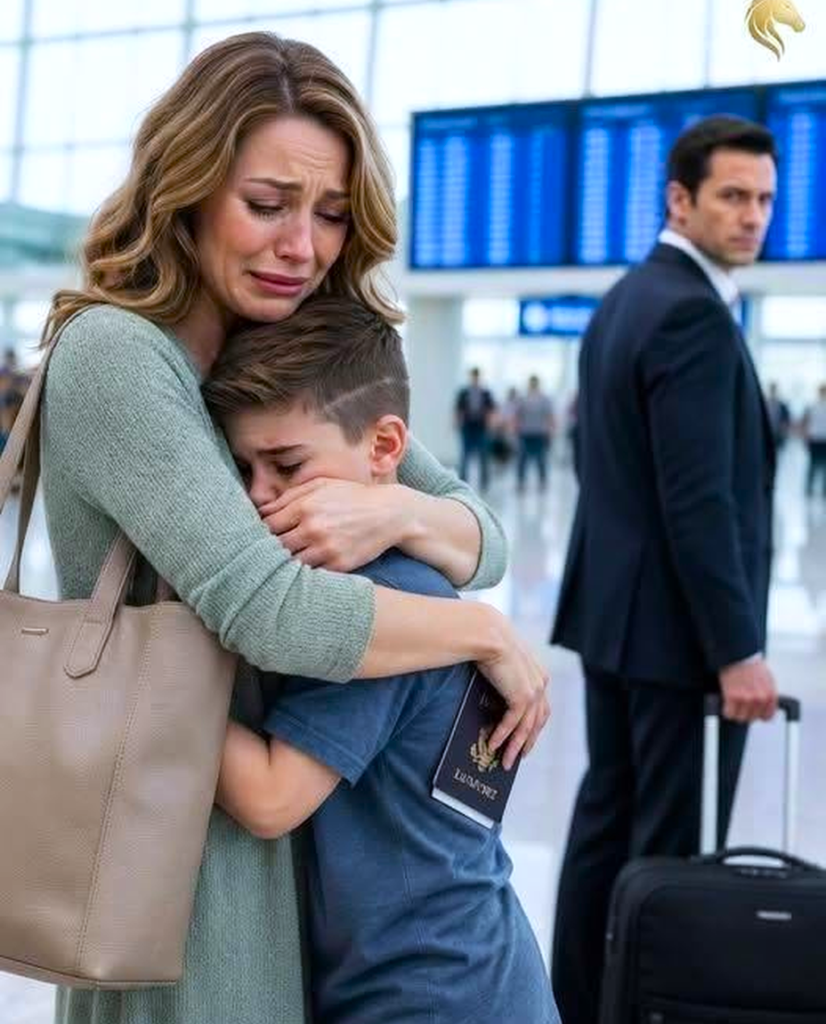
After our divorce hearing, my twelve-year-old son chose to live with his father and told the judge, “Mom can’t give me a future.” I walked away without arguing. But the next morning at the airport, he hugged me, slipped a black card into my pocket, and whispered two words.
“Wait for me.” Minutes later, a message appeared on my phone. There were six million dollars attached to that card. And what my son revealed next made me realize he had never betrayed me at all. He had been pretending because he was terrified of what his father might do if he discovered the truth.
PART 1: THE DAY MY SON BROKE MY HEART
“My son just told the judge he wants to live with his father because I’m incapable of giving him a future.”

Even now, I can remember exactly how those words felt inside my chest.
It happened on a Tuesday morning inside Family Court in Columbus, Ohio.
I was forty-two years old, sitting at a polished wooden table with my hands folded so tightly that my fingers had gone numb.
Across the courtroom sat my husband of fifteen years, Ellis Chappell.
Technically, he was already my ex-husband.
Emotionally, I was still trying to understand how fifteen years of marriage could disappear beneath signatures, financial statements, and carefully rehearsed testimony.
Ellis looked flawless.
Tailored gray suit.
Silver watch.
Perfect haircut.
Calm expression.
He looked like a man attending a business meeting instead of the legal destruction of his family.
Beside him sat our twelve-year-old son, Noah.
My Noah.
The boy who used to climb into my bed during thunderstorms.
The child who once saved half a chocolate bar for three days because he wanted to share it with me.
That morning, he wore a navy blazer Ellis had bought for him.
His hair was neatly combed.
His hands rested on his knees.
And he would not look at me.
Ellis’s attorney spent nearly an hour explaining why Ellis could provide a “superior environment.”
Private school.
International travel.
Financial security.
College connections.
A large house in Upper Arlington.
Then she described me.
No independent income.
No significant assets in my name.
No current career.
Limited financial resources after divorce.
She never explained why.
Fifteen years earlier, I had been an accountant.
I loved my work.
When Noah was born, Ellis convinced me to stay home.
“You raise our son,” he had said. “I’ll take care of everything else.”
I believed him.
So I gave up promotions.
I gave up retirement contributions.
I gave up professional connections.
I packed lunches, attended parent-teacher conferences, scheduled dental appointments, washed uniforms, stayed awake through fevers, and made sure our son never wondered whether somebody would be waiting when he came home from school.
Apparently none of that counted as providing a future.
Then the judge turned toward Noah.
“Noah,” she said gently, “you understand that neither parent will be angry with you for answering honestly?”
He nodded.
“Which parent would you prefer to live with?”
My heart pounded.
I expected hesitation.
Maybe tears.
Maybe he would look at me.
He didn’t.
He stared directly ahead.
“My dad.”
The judge waited.
“Can you tell me why?”
Noah swallowed.
Then he said the sentence that would follow me for years.
“My mom can’t give me anything. Dad can give me a future.”
I felt something inside me break.
Not dramatically.
There was no screaming.
No collapsing.
Sometimes the worst heartbreak is completely silent.
I simply lowered my eyes.
Across the room, Ellis smiled.
It lasted perhaps half a second.
But I saw it.
He had won.
The judge ultimately approved primary residential custody with Ellis, while preserving my visitation rights.
I barely heard the remaining details.
When the hearing ended, I walked outside alone.
“Sabrina.”
Ellis followed me into the parking lot.
I kept walking.
He caught my arm.
“Wait.”
I turned.
He removed a bank card from his wallet.
“There’s two hundred thousand dollars available to you.”
I stared at him.
“For what?”
“Starting over.”
He held it toward me.
“Rent somewhere decent. Buy yourself a car. Take a vacation. Whatever you want.”
“And what do you want?”
His expression hardened.
“For you to make this easy.”
“Easy for whom?”
“For everyone.”
I looked past him.
Noah stood near Ellis’s SUV holding a suitcase.
He wouldn’t meet my eyes.
Ellis lowered his voice.
“Stay out of my life, Sabrina. And stop making Noah feel guilty.”
“He’s my son.”
“He chose.”
I looked at the card in Ellis’s hand.
Then I pushed it back toward him.
“I don’t want your money.”
Ellis laughed.
“You always were sentimental.”
“No. I just finally understand the difference between money and dignity.”
His smile vanished.
Then came the sentence I will never forget.
“You don’t fit into my life anymore. I need a woman who can keep up with me, not someone who spent fifteen years buried in dishes and school uniforms.”
I stared at him.
Then I looked toward Noah.
“Goodbye, sweetheart.”
He said nothing.
I walked away before either of them could see me cry.
That evening, I packed my belongings.
The house was legally Ellis’s under the temporary property arrangement while financial issues were resolved.
So after fifteen years, I left with one old suitcase, three shopping bags, my laptop, and a framed photograph of Noah at age six.
I rented a tiny apartment in Franklinton.
The walls smelled faintly of damp plaster.
The refrigerator rattled.
My bedroom window faced an alley.
That first night, I sat on the floor because I didn’t own a sofa.
And I cried until sunrise.
Not because I had lost the house.
Not because Ellis had humiliated me.
Because Noah had looked at a judge and said I couldn’t give him anything.
For seven days, I barely functioned.
Then Ellis called.
“I’m taking Noah to Atlanta tomorrow.”
“Why?”
“Business.”
“You’re taking a twelve-year-old on a business trip?”
“He’ll be fine.”
“Can I see him first?”
A pause.
Then Ellis sighed.
“If you insist. John Glenn airport. Seven-thirty.”
I arrived at seven.
Ellis was surrounded by two men from his company.
Noah stood several feet away wearing his backpack.
When he saw me, something changed in his expression.
Only for a second.
Then it disappeared.
I walked toward him.
“Hi.”
“Hi, Mom.”
I wanted to ask a thousand questions.
Instead I said, “Are you okay?”
He glanced toward his father.
“Yes.”
Then the boarding announcement sounded.
Ellis called, “Noah.”
My son suddenly wrapped his arms around me.
It was the first real hug he had given me since the divorce began.
He held me so tightly I could feel his heart pounding.
Then something slid into the pocket of my coat.
“Don’t cry, Mom,” he whispered.
I froze.
“Wait for me.”
Before I could respond, he pulled away.
I watched him follow his father toward security.
Inside the taxi, I reached into my pocket.
There was a black bank card.
No logo.
No printed name.
Nothing except a small number on the back.
Then my phone buzzed.
Unknown number.
The message read:
“Mom, there are $6 million in that account. PIN is your birthday. Don’t trust anyone. Don’t call me. Wait for me until I come back.”
I stopped breathing.
Six million dollars?
Noah was twelve.
Where could he possibly get six million dollars?
I typed:
“NOAH, WHAT IS THIS?”
I didn’t send it.
He had specifically told me not to contact him.
Another message arrived.
“Dad cannot know you have it.”
Then another.
“Please trust me like I trust you.”
I stared out the taxi window.
Suddenly, Noah’s behavior in court looked different.
His coldness.
His refusal to look at me.
The rehearsed sentence.
Maybe my son hadn’t abandoned me.
Maybe he had been protecting me.
But from what?
THE SECRET ACCOUNT
I did not touch the money.
Instead, I contacted the one person from my old professional life I still trusted.
Her name was Margaret Bell.
Margaret had been my supervisor when I worked in accounting.
She was sixty-one now and semi-retired.
We met at a quiet coffee shop.
I placed the black card on the table.
“I need you to tell me whether I’m losing my mind.”
She examined it.
“Where did you get this?”
“My son.”
Her eyebrows rose.
I showed her the messages.
She read them twice.
“Sabrina, don’t use this card.”
“I wasn’t planning to.”
“Don’t even check the balance at an ATM.”
“Why?”
“Because if this involves the kind of money your son claims it does, you need an attorney before creating any transaction record.”
She gave me the name of a financial attorney named Daniel Mercer.
I met Daniel the next morning.
He was calm, meticulous, and skeptical.
Exactly what I needed.
After hearing everything, he asked one question.
“What does your husband do?”
“Ellis owns Chappell Strategic Holdings.”
Daniel stopped writing.
“You mean the private investment company?”
“Yes.”
He leaned back.
“Sabrina, your husband handles acquisitions worth tens of millions.”
“I know.”
“Did you ever have access to company records?”
“Years ago. I helped with bookkeeping when he started.”
“Anything unusual?”
I almost said no.
Then I remembered something.
About eight years earlier, Ellis had asked me to sign several documents.
“What are these?” I had asked.
“Tax restructuring.”
“I should read them.”
He kissed my forehead.
“You’re the accountant who decided to become a full-time mother, remember? Let me worry about business.”
I signed.
I had trusted my husband.
Daniel’s expression became serious.
“We need copies of every financial document connected to your marriage.”
That investigation changed everything.
During divorce disclosure, Ellis had claimed that much of his company’s value belonged to outside investors.
But Daniel discovered references to entities I had never heard of.
One name appeared repeatedly.
SC Legacy Trust.
“What does SC stand for?” I asked.
Daniel looked at me.
“Sabrina Chappell.”
My stomach dropped.
The trust had been established thirteen years earlier.
I was listed as the primary beneficiary.
Noah was listed as successor beneficiary.
And six million dollars had recently been transferred from an investment account controlled by the trust.
Suddenly, the black card made sense.
The money wasn’t Noah’s.
It was mine.
But that raised an even more frightening question.
How did my twelve-year-old son know about an account I didn’t know existed?
The answer came three days later.
A package appeared outside my apartment.
No return address.
Inside was an old tablet.
There was one video file.
Noah appeared on screen.
“Mom, if you’re watching this, Dad hasn’t found the tablet.”
My hands began trembling.
He looked frightened.
Not childish frightened.
The controlled fear of someone who had been carrying an adult secret.
“Last month I was using Dad’s office computer because mine stopped working. I was looking for a school file and saw a folder with my name.”
He swallowed.
“I opened it.”
Inside were documents about the trust.
Noah had photographed them.
Then he found emails between Ellis and his attorney discussing the divorce.
One sentence appeared repeatedly:
“Obtain residential custody before restructuring successor control.”
I replayed that sentence.
Again.
And again.
Daniel explained what it meant.
If something happened to me or if certain legal conditions were established, Noah’s custodial parent could potentially exercise enormous influence over assets connected to Noah’s future interest.
Ellis wasn’t fighting for custody only because he wanted his son.
He wanted control.
Noah had understood enough to become terrified.
In the video, he continued.
“I heard Dad talking to Mr. Pike. Dad said once he had custody, you wouldn’t be a problem anymore.”
My blood went cold.
Noah quickly added:
“I don’t know what he meant. Maybe legal stuff. But I got scared.”
So he made a plan only a frightened, intelligent twelve-year-old could have made.
He pretended to choose his father.
Because if Ellis believed Noah hated me, Ellis would stop watching him so closely.
Before the hearing, Noah had discovered that a temporary access card had been issued for the trust account during the restructuring.
He took it.
Then he gave it to me.
“I’m sorry for what I said in court, Mom.”
Noah’s voice broke on the recording.
“I wanted to run to you. But Dad kept asking me what I knew. I thought if I picked you, he’d know I found the files.”
He wiped his eyes.
“You gave me everything. I know that.”
I covered my mouth.
For a week, I had believed my child was ashamed of me.
Instead, he had been trying to save me.
Then came the final sentence.
“Mom, there’s more. Dad isn’t taking me to Atlanta.”
The screen went black.
PART 2: THE FLIGHT THAT NEVER WENT TO ATLANTA
Daniel immediately contacted the appropriate authorities and my custody attorney.
We confirmed the flight information.
Ellis had lied.
Their itinerary connected through Atlanta.
Their final destination was outside the United States.
My attorney filed an emergency motion.
Everything happened quickly after that.
Ellis and Noah had not yet left the country.
They were stopped before the international leg of the trip while the custody issue was reviewed.
I will never forget seeing Noah again.
He entered a private room accompanied by an official.
The moment he saw me, the performance ended.
“Mom!”
He ran toward me.
I dropped to my knees.
He crashed into my arms.
“I’m sorry,” he sobbed.
“No.”
I held his face.
“You have nothing to apologize for.”
“I said those things.”
“I know why.”
“I didn’t mean them.”
“I know.”
He buried his face against my shoulder.
For the first time since the divorce began, my son was simply twelve years old again.
Ellis was furious.
He accused me of manipulating Noah.
He accused Daniel of interfering with private finances.
He accused everyone except himself.
But Ellis had made one mistake.
He underestimated his son.
Noah had saved photographs.
Documents.
Emails.
Dates.
And even a short audio recording of a conversation he had accidentally captured while making a voice memo for school.
None of it alone proved every suspicion.
Together, however, it gave investigators and attorneys enough reason to examine Ellis’s financial history much more carefully.
What they found destroyed the image he had spent years building.
THE TRUTH ABOUT OUR MARRIAGE
Chappell Strategic Holdings had not been built entirely with Ellis’s money.
When we married, my grandmother had left me an inheritance.
It wasn’t enormous.
Around $340,000.
I invested most of it.
Ellis convinced me to let him manage those investments.
Later, when he started his company, some of those assets were used as early collateral and investment capital.
I knew that part.
What I didn’t know was that Ellis had created the SC Legacy Trust on the advice of an accountant when the company began growing.
The trust protected certain assets for me and eventually Noah.
For years, Ellis repeatedly told me that my original investment had been lost during difficult early business periods.
That was false.
It had multiplied.
Dramatically.
The six million dollars represented only one liquid portion of assets connected to the trust.
The full value was substantially greater.
Daniel looked at me across his conference table.
“You were never financially dependent on Ellis in the way he portrayed.”
I laughed bitterly.
“I spent fifteen years asking him whether we could afford new kitchen cabinets.”
Daniel didn’t laugh.
“He knew exactly what he was doing.”
The cruelty of it became clearer every day.
Ellis had allowed me to believe I owned nothing.
He criticized me for not earning money while benefiting from assets that originated with me.
He used his wealth to make me feel small even though part of that wealth existed because I had trusted him with my inheritance.
And then he had walked into family court and portrayed himself as the only parent capable of providing Noah with financial stability.
I had never felt so angry.
But anger wasn’t going to protect Noah.
Evidence would.
So I returned to something I hadn’t done professionally in fifteen years.
Accounting.
I sat with Daniel’s forensic team for hours.
At first, I felt embarrassed.
The terminology seemed unfamiliar.
The software had changed.
The systems were faster.
Then something happened.
My old instincts returned.
Numbers still spoke the same language.
And I noticed something nobody else had.
A recurring transfer.
Small compared with Ellis’s other transactions.
$47,500.
Then $47,500 again.
Then $95,000.
All routed through companies with different names.
“Those aren’t random,” I said.
The forensic accountant looked over.
“What?”
“The dates.”
Every transfer happened within forty-eight hours of distributions from one specific investment fund.
We traced them.
The discovery led to additional accounts that had not been properly disclosed during the divorce.
Suddenly, Ellis wasn’t just facing a custody dispute.
He was facing serious financial and legal scrutiny.
ELLIS CAME TO MY APARTMENT
Three weeks later, someone knocked on my door.
I looked through the peephole.
Ellis.
I called Daniel before opening it.
Then I left the security chain attached.
“What do you want?”
Ellis looked different.
No tailored suit.
No perfect confidence.
He looked exhausted.
“We need to talk.”
“Talk through the door.”
“Sabrina.”
“No.”
He stared at me through the narrow opening.
“You’re destroying everything.”
I almost laughed.
“I’m destroying it?”
“My company employs hundreds of people.”
“Then perhaps you should have thought about them before hiding assets.”
His jaw tightened.
“You don’t understand how complicated this is.”
“I’m beginning to.”
“Who do you think you are?”
There it was.
The Ellis I knew.
I looked directly at him.
“The woman you spent fifteen years convincing she was powerless.”
He lowered his voice.
“Take the six million.”
I said nothing.
“Take it,” he repeated. “I’ll sign it over completely. We settle everything else privately.”
“And Noah?”
“You get primary custody.”
The ease with which he offered our child disgusted me.
Three weeks earlier, he had insisted Noah needed him because I couldn’t provide a future.
Now custody was a bargaining chip.
“No.”
His face hardened.
“Think carefully.”
“I finally am.”
Then I closed the door.
NOAH TOLD THE TRUTH
At the new custody hearing, Noah was allowed to speak privately with professionals appointed to protect his interests.
This time, nobody coached him.
Nobody pressured him.
When the judge later addressed the parties, the atmosphere was completely different from our first hearing.
Evidence showed that Ellis had misrepresented important financial facts.
Evidence also supported concerns surrounding the attempted international travel and his conduct toward Noah during the custody dispute.
The previous custody arrangement was changed.
Noah came home with me.
Not to Upper Arlington.
Not to a mansion.
To my small apartment in Franklinton.
The first evening, I apologized.
“Your room isn’t much.”
Noah looked around at the narrow bedroom.
There was a secondhand desk.
A twin bed.
A lamp I bought from a thrift store.
He dropped his backpack.
Then he smiled.
“It has you.”
I turned away because I didn’t want him to see me cry.
He saw anyway.
“Mom?”
“Yes?”
“You know what I said in court?”
I nodded.
“That you couldn’t give me a future?”
“Yes.”
He looked down.
“I hated myself after I said it.”
I sat beside him.
“Don’t.”
“But—”
“You were scared.”
“I should’ve trusted you.”
“You did trust me. That’s why you gave me the card.”
He leaned against my shoulder.
Then I told him something I wished someone had told me years earlier.
“A future isn’t something another person buys for you, Noah. It’s something you build with the choices you make.”
He was quiet.
“Even if you’re scared?”
“Especially then.”
STARTING AGAIN AT FORTY-TWO
I could have lived comfortably after the financial case was resolved.
I didn’t.
I wanted my life back.
Not the old one.
A new one.
I completed professional courses to update my accounting knowledge.
Then Margaret introduced me to a small firm that needed someone experienced with family-owned businesses.
During my interview, the managing partner looked at the fifteen-year gap on my résumé.
“That’s a long time away from the profession.”
“It is.”
“What were you doing?”
“Raising my son.”
He nodded.
“Do you think your skills survived?”
I smiled.
“Give me a set of books and find out.”
He did.
I got the job.
Six months later, I had my own office.
It wasn’t large.
There was no impressive view.
But the first time my paycheck arrived with my name printed on it, I sat in my car and stared at it for almost five minutes.
It wasn’t about the amount.
It was proof.
I could build something again.
Noah started therapy.
So did I.
Healing was slower than justice.
He sometimes woke from nightmares.
Sometimes he apologized again for the courtroom.
Every time, I gave him the same answer.
“You don’t owe me an apology.”
Eventually, he believed me.
WHAT HAPPENED TO ELLIS
People sometimes expect justice to arrive like it does in movies.
One dramatic moment.
One slammed gavel.
One villain losing everything overnight.
Real justice is slower.
It arrives in documents.
Audits.
Hearings.
Depositions.
Court orders.
Lost credibility.
Questions that can no longer be avoided.
Ellis’s company survived, but his control and reputation did not emerge untouched.
Financial matters connected to our divorce were reopened and corrected through the legal process.
Assets that should have been disclosed were addressed.
The trust was placed under independent professional administration so neither Ellis nor I could manipulate it for personal leverage.
That was my decision.
The money was meant to protect Noah’s future.
I refused to turn it into another weapon between his parents.
The black card was canceled.
I never spent a dollar from it.
Years later, Noah asked me why.
“You could’ve used it,” he said.
“I didn’t know whether I legally had the right to.”
“But once you knew?”
I smiled.
“By then, I had learned something more valuable.”
“What?”
“I didn’t need a black card to prove I could survive.”
FIVE YEARS LATER
Noah was seventeen when we returned to the courthouse.
Not for another custody battle.
He had been invited to participate in a youth program about children navigating difficult family transitions.
Afterward, we walked down the same hallway where, five years earlier, I had heard him say I couldn’t give him a future.
He stopped outside the courtroom.
“Do you remember?”
I smiled sadly.
“I remember everything.”
He leaned against the wall.
“I thought you hated me that day.”
“Never.”
“Even for one second?”
“Not one.”
He looked toward the courtroom doors.
“I was so scared.”
“I know.”
“Dad told me that if I chose you, he’d know I had been looking through his files. I thought he’d take me somewhere you couldn’t find me.”
I reached for his hand.
“You were twelve. You should never have had to carry that.”
He squeezed my fingers.
Then he laughed softly.
“You know the crazy part?”
“What?”
“You actually couldn’t give me what Dad could.”
I raised an eyebrow.
“Excuse me?”
He grinned.
“He could give me expensive schools. First-class flights. Huge houses.”
“And I couldn’t?”
“No.”
He paused.
“But you gave me the one thing he couldn’t.”
“What was that?”
“A place where I didn’t have to pretend.”
I couldn’t answer.
I simply hugged him.
THE MESSAGE I KEPT
I still have a screenshot of the message Noah sent me from the airport.
“Mom, there are six million dollars in that account. The PIN is your birthday. Don’t trust anyone. Wait for me until I come back.”
For years, I thought the important part was the six million dollars.
It wasn’t.
The most important words were:
“Wait for me.”
My son had been asking me not to give up on him.
And somehow, even while my heart was shattered, I didn’t.
Today, Noah is preparing for college.
He wants to study law.
When I asked why, he said, “Because kids should have someone in the room who understands that being quiet doesn’t mean they have nothing to say.”
As for me, I eventually became a partner at the accounting firm.
I bought a modest house outside Columbus.
Nothing like Ellis’s old property.
Three bedrooms.
A little garden.
A porch.
The first evening after we moved in, Noah and I ate pizza on cardboard boxes because our dining table hadn’t arrived.
He looked around.
“Remember your Franklinton apartment?”
“How could I forget?”
“You apologized because my bedroom was small.”
“I remember.”
He smiled.
“I loved that room.”
“Why?”
“Because that was the first place that felt like ours.”
That night, after Noah went upstairs, I stood alone in my kitchen.
For years, Ellis had convinced me that value came from money.
A bigger house meant a better life.
A larger bank account meant a stronger person.
A more expensive education meant a brighter future.
I had believed him long enough to lose sight of myself.
But my twelve-year-old son understood something neither of us had been able to say aloud.
Money can purchase opportunity.
It can buy comfort.
It can open doors.
But it cannot decide who loves you.
And it cannot determine your worth.
The woman who walked out of Family Court that Tuesday believed she had lost everything.
Her marriage.
Her home.
Her son.
Her future.
She had no idea that inside an airport terminal the following morning, a frightened twelve-year-old boy would put his arms around her and secretly return something far more valuable than six million dollars.
The truth.
Noah never chose money over me.
He chose to stand close enough to the man he feared to discover what he was planning.
He made himself appear cold because he believed it would keep me safe.
And when he finally had one opportunity to warn me, he took it.
Sometimes courage doesn’t look like fighting.
Sometimes it looks like a child standing in a courtroom, saying words that break his mother’s heart because he believes those words are the only way to protect her.
And sometimes strength doesn’t look like winning.
Sometimes it looks like a mother walking away with one suitcase, three shopping bags, and absolutely no idea how she will rebuild her life.
I once believed that courtroom was where my life ended.
I was wrong.
It was where Noah and I began again.
Because a child’s future isn’t measured by the size of the house waiting for him.
And a mother’s worth isn’t measured by the balance in her bank account.
A future is built from something much harder to buy.
Trust.
Courage.
Truth.
And the people who wait for us when we finally find our way home.
THE END! Thank you for reading.