 Reading Time: 15 minutes
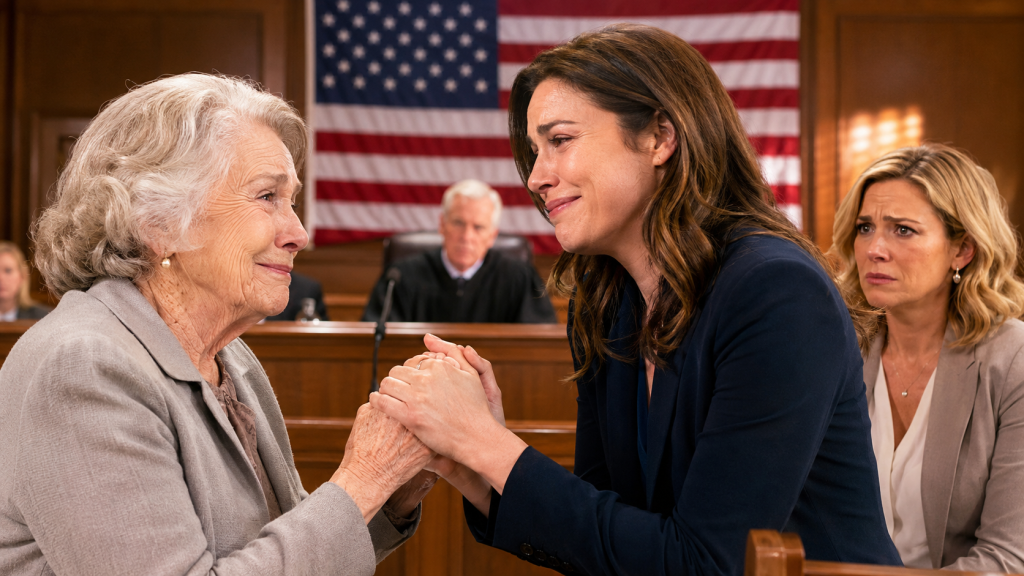
My seventy-three-year-old mother babysat our neighbor’s six-year-old daughter for four straight weeks and never received a single dollar.Every weekday morning, Mom arrived at Claire Dawson’s house before seven. She packed homemade snacks, prepared Sophie’s lunch, brushed the little girl’s hair, washed dishes, folded laundry,
and cleaned whatever mess had been left from the night before. The agreement had been simple.Eighty dollars a day.Claire had approached Mom one afternoon while she was watering the flowers in front of our house.
“My regular sitter quit without warning,” Claire had explained.
“I only need help for a few weeks until I find someone permanent.”
Mom hesitated.
She had retired from the elementary school cafeteria three years earlier,
and although she remained active, ten-hour days caring for a child would not be easy.
Claire must have noticed the concern on her face.
“Sophie already loves you,” she said. “And I’ll pay every Friday.
Eighty dollars a day. That’s four hundred dollars a week.”
Mom agreed because that was who she was.Her name was Ruth Bennett, but every child in our neighborhood called her Grandma Ruth. She kept juice boxes in her pantry, remembered birthdays, and carried adhesive bandages in her purse even when she was only walking to the mailbox.
She was the kind of woman who believed promises were worth more than paperwork.
Claire understood that immediately.
During the first week, Mom arrived at six forty-five each morning. Claire usually rushed out the door carrying coffee, complaining about traffic and promising she would be home by five.
She was rarely home before six thirty.
Mom never complained.
She brought Sophie banana muffins, taught her how to tie her shoes, and helped her practice reading. When Sophie developed a cough, Mom sat beside her all afternoon and made chicken soup.
That first Friday, Claire came home with shopping bags from an expensive department store.
“I’m so sorry,” she said. “Payroll made a mistake. I’ll pay you next Friday for both weeks.”
Mom believed her.
The second Friday, Claire said her bank had placed a hold on her paycheck.
The third Friday, she claimed her child-support payment had not arrived.
By the end of the fourth week, Claire owed Mom sixteen hundred dollars.
That did not include the groceries, snacks, craft supplies, and children’s medicine Mom had purchased with her own money.
I did not know any of this until the final Friday.
I came home from work and found Mom sitting at our kitchen table with her little blue notebook open in front of her.
She had written down every day she worked.
Monday, 6:45 a.m.–6:20 p.m.
Tuesday, 6:50 a.m.–6:35 p.m.
Wednesday, 6:40 a.m.–7:10 p.m.
Beside each entry, she had written eighty dollars.
Twenty days.
Sixteen hundred dollars.
Then she had drawn one careful line through the total.
“What happened?” I asked.
Mom closed the notebook.
“Nothing you need to worry about, Jenna.”
She always said that when something was deeply wrong.
I sat across from her.
“Did Claire pay you?”
Mom looked toward the window.
“No.”
“Why not?”
“She says we never had a proper contract.”
I stared at her.
“You had an agreement.”
“She sees it differently.”
“What exactly did she say?”
Mom’s mouth tightened.
It took several minutes before she finally told me.
That afternoon, she had politely reminded Claire that four weeks had passed.
Claire had been standing in her doorway wearing a new cream-colored coat. Sophie was inside watching television.
“I really do need the money,” Mom had said. “We agreed on eighty dollars a day.”
Claire smiled.
“At your age, Ruth, you really shouldn’t accept jobs without contracts.”
Mom thought she was joking.
“I wrote down every day I worked.”
“A notebook isn’t a contract.”
“You promised to pay me every Friday.”
Claire shrugged.
“Besides, it’s not like you had anything better to do anyway.”
My mother had stood there holding the empty lunch container she had brought from her own kitchen.
Claire added, “You enjoyed spending time with Sophie. Let’s not turn kindness into a business transaction.”
Then she closed the door.
Mom walked home without saying another word.
As she finished telling me, her eyes remained fixed on the table.
“I should have known better,” she whispered.
“No. Claire should have behaved better.”
“I don’t want trouble.”
“She stole sixteen hundred dollars from you.”
“She has a child to support.”
“And you are a seventy-three-year-old widow living on a fixed income.”
Mom reached for the notebook.
“Let it go, Jenna.”
I looked at the line she had drawn through four weeks of work.
My mother had not crossed out the amount because she no longer needed it.
She had crossed it out because Claire had humiliated her for asking.
Something inside me snapped.
Claire thought kindness meant weakness.
She thought my mother’s age made her easy to use.
She thought there would be no consequences because Ruth Bennett was too gentle to demand them.
I stood and walked into our garage.
My father had died five years earlier, but his old green filing cabinet still stood against the back wall beneath a dusty tarp.
Dad had been an accountant for nearly forty years. He saved every receipt, copied every document, and labeled files with a precision that used to drive us crazy.
Mom never threw away paperwork without asking him first.
Even after his death, she continued many of his habits.
I pulled away the tarp and unlocked the bottom drawer.
Inside were folders marked TAXES, INSURANCE, HOUSE REPAIRS, MEDICAL, and NEIGHBORHOOD.
The neighborhood folder contained warranties, property maps, old association notices, and copies of agreements Dad had helped neighbors prepare over the years.
At the back was a large envelope with Claire Dawson’s name written across it.
I carried it into the kitchen.
“What is this?” I asked.
Mom adjusted her glasses.
“Oh. Those are the forms Claire asked me to sign.”
“What forms?”
“She said her employer needed proof that Sophie had childcare.”

My stomach tightened.
I opened the envelope.
Inside were four weekly attendance forms from Claire’s employer, Westbridge Health Systems. Each form listed Mom as the childcare provider.
The forms showed twenty days of care.
They also showed a payment amount.
One hundred and sixty dollars per day.
The signature at the bottom belonged to my mother.
According to the documents, Claire had paid Mom thirty-two hundred dollars.
“Did you write these amounts?” I asked.
“No. The spaces were blank when she gave them to me.”
“You signed blank forms?”
“She said she would complete them at work.”
“Did she give you copies?”
“I used your father’s old copier before I returned them. He always said never to sign anything without keeping a copy.”
The copies Mom had made showed blank payment sections.
The versions in the envelope with the completed amounts were not originals. They were photographs Claire had texted to Mom several days later after asking whether the signatures looked clear enough.
Mom had printed those photographs without understanding their importance.
Claire had filled in double the agreed amount and submitted the forms to her employer.
She had likely received reimbursement for childcare expenses she never paid.
The injustice was worse than I thought.
Claire had not simply refused to pay Mom.
She had used my mother’s name to collect money.
“Did Claire ever send messages about your wages?” I asked.
Mom handed me her phone.
There were dozens.
On the first Thursday, Claire had written: Thank you again! I’ll have your $400 tomorrow.
The following Friday: Payroll issue. I promise I’ll pay all $800 next week.
A week later: Please don’t worry, Ruth. You will receive every dollar.
On the final Thursday: I know I owe you $1,600. Let me get through tomorrow and we’ll settle everything.
Claire had documented the entire agreement herself.
Mom watched my face.
“What are you thinking?”
“I’m thinking Dad’s filing cabinet may have just saved you.”
Her expression became worried.
“Jenna, please don’t do anything cruel.”
“I’m not going to be cruel.”
“What are you going to do?”
“I’m going to make her tell the truth.”
The next morning, I called an attorney named Melissa Grant, who worked at a legal clinic for senior citizens.
I explained the situation and emailed copies of Mom’s notebook, Claire’s messages, the blank forms, and the completed reimbursement documents.
Melissa called back within an hour.
“Your mother has strong evidence of an employment agreement,” she said. “Oral agreements are not automatically meaningless, especially when written messages confirm the terms.”
“What about the reimbursement forms?”
“That may be more serious. Your neighbor appears to have claimed expenses she did not pay.”
“Can we contact her employer?”
“Eventually. First, we preserve everything and give Ms. Dawson an opportunity to resolve the unpaid wages.”
Melissa prepared a formal demand letter.
It listed sixteen hundred dollars in unpaid childcare wages, two hundred and twelve dollars in documented food and supply costs, and one hundred and fifty dollars for the additional hours Claire had repeatedly arrived late.
The total was nineteen hundred and sixty-two dollars.
Claire had ten days to pay.
I delivered the letter by certified mail.
Two hours after she received it, she appeared at our front door.
She pounded so hard that the glass rattled.
I opened the door but did not invite her inside.
“What is this?” she demanded, waving the letter.
“A request for the money you owe my mother.”
“She volunteered.”
“You repeatedly promised to pay her.”
“She misunderstood.”
“Did she also misunderstand the forms you submitted to Westbridge?”
Claire’s face changed.
Only slightly.
But I saw it.
“I don’t know what you’re talking about.”
“You claimed you paid her thirty-two hundred dollars.”
“That is private employment information.”
“You used my mother’s signature.”
“She signed the forms.”
“She signed blank attendance records. We have copies.”
For several seconds, Claire said nothing.
Then she lowered her voice.
“You need to be very careful, Jenna.”
“Is that a threat?”
“It’s advice. Your mother is elderly. People her age become confused.”
I felt anger rush through me, but Melissa had warned me not to argue.
“Pay what you owe,” I said. “You have ten days.”
Claire laughed.
“You really think anyone will believe a senile old woman and her bitter daughter?”
Mom appeared behind me.
She was pale but steady.
“I remember every day I cared for Sophie,” she said. “I remember every promise you made.”
Claire looked past me.
For a moment, shame flickered across her face.
Then it hardened.
“You loved spending time with Sophie.”
“I did,” Mom said. “But loving a child does not give her mother permission to steal from me.”
Claire turned and walked back across the street.
That evening, she posted a long message in the neighborhood social-media group.
She claimed Mom had volunteered to help during a family emergency and later demanded thousands of dollars.
She described my mother as “confused,” “financially desperate,” and “emotionally unstable.”
Several people commented beneath it.
Some supported Claire.
Others wrote that elderly people were often forgetful.
One woman said Mom should be grateful for the opportunity to feel useful.
I wanted to publish every message, every form, and every receipt.
Mom stopped me.
“Do not fight gossip with gossip,” she said.
“She is destroying your reputation.”
“The truth does not need shouting. It needs proof.”
The following afternoon, our neighbor Mrs. Alvarez knocked on the door.
She was sixty-eight and lived three houses away.
“I saw Claire’s post,” she said. “There’s something you should know.”
Two years earlier, Claire had hired Mrs. Alvarez to clean her house every Saturday for three months.
She promised one hundred dollars per visit.
After six weeks, she stopped paying.
“She owed me six hundred dollars,” Mrs. Alvarez said. “When I asked, she told everyone I had broken a vase and stolen jewelry.”
“Did you steal anything?”
“Of course not. But I was embarrassed. I stopped asking.”
Another neighbor, Mr. Collins, had repaired Claire’s fence and never received the final payment.
A teenage boy named Caleb had mowed her lawn for an entire summer. She still owed him two hundred dollars.
Claire had a pattern.
She hired people she believed would not challenge her.
Older neighbors.
Teenagers.
Immigrants.
People who trusted a handshake.
Within three days, five people contacted us.
Melissa advised each of them to preserve their evidence.
Claire responded by becoming more aggressive.
She called my employer and accused me of harassing her.
She told the school that Mom had yelled at Sophie.
She even contacted adult protective services and claimed I was manipulating my mother for money.
A caseworker visited our home.
Mom served her tea and calmly showed her notebook, bank statements, and Claire’s text messages.
The caseworker closed the complaint within a week.
Still, the accusation hurt Mom deeply.
“I fed that child,” she said after the woman left. “I held her when she cried for her father. How could Claire say I harmed her?”
“She is trying to frighten you.”
“It’s working.”
I sat beside her.
“We can stop.”
Mom looked toward the photograph of my father on the mantel.
For most of her life, she had avoided conflict because she believed peace was always the kinder choice.
But peace had not protected her.
It had only made Claire more confident.
“No,” Mom said quietly. “We are not stopping.”
Claire ignored the demand letter.
On the eleventh day, we filed a claim in small-claims court.
The hearing was scheduled for six weeks later.
During that time, something unexpected happened.
Sophie came to our house.
It was nearly eight in the evening when I heard a soft knock.
The little girl stood on the porch wearing pink pajamas beneath an oversized coat.
“Where is your mother?” I asked.
“She’s talking on the phone.”
“Does she know you’re here?”
Sophie shook her head.
Mom came to the door.
The moment Sophie saw her, she began crying.
“Grandma Ruth, are you mad at me?”
Mom knelt slowly.
“Oh, sweetheart, never.”
“Mom said you don’t want to see me anymore because I cost too much money.”
My mother’s face broke.
She pulled Sophie into her arms.
“None of this is your fault.”
Sophie pressed her cheek against Mom’s shoulder.
“I saved my birthday money.”
She opened one small hand.
Inside were three crumpled dollar bills and several coins.
“You can have it,” she whispered.
Mom began crying.
“No, baby. You keep that.”
“But Mom said you only care about getting paid.”
“I care about being treated honestly. I care about you because you are you.”
I called Claire.
She arrived several minutes later, furious.
“You had no right to bring her into your house.”
“She walked here alone.”
Claire grabbed Sophie’s hand.
Before leaving, Sophie looked back at Mom.
“I love you, Grandma Ruth.”
“I love you too.”
Claire pulled her across the street without another word.
That night, Mom sat in the kitchen holding Sophie’s three dollars and forty-seven cents. The child had secretly left the money on the table.
“This is what Claire has done,” Mom said. “She made a six-year-old believe love has a price.”
The next morning, a man named Mark Dawson called me.
He was Sophie’s father and Claire’s former husband.
“I heard about the court case,” he said. “Claire told me your mother was trying to extort her.”
“That isn’t true.”
“I know.”
Mark explained that his custody agreement required him to reimburse Claire for half of Sophie’s childcare expenses.
For the four weeks Mom babysat, Claire had sent him invoices showing one hundred and sixty dollars a day.
Mark had paid sixteen hundred dollars.
My mother had received nothing.
Claire had collected thirty-two hundred dollars from her employer’s reimbursement program and sixteen hundred from Mark.
She had received forty-eight hundred dollars for childcare that cost her nothing.
And she still refused to pay the woman who performed the work.
Mark sent the invoices to Melissa.
He also requested an emergency custody review because Claire had allowed Sophie to walk across the street alone at night, then lied to the child about Mom.
The day before our hearing, Claire came to our house again.
This time, she was not wearing expensive clothes.
Her hair was pulled back, and dark circles surrounded her eyes.
“I want to settle,” she said.
I asked Melissa to join us by phone before continuing.
Claire placed an envelope on the kitchen table.
Inside was sixteen hundred dollars in cash.
“That covers the original agreement,” she said.
“It does not cover expenses or late hours,” I replied.
“I’m not paying extra.”
Mom sat across from her.
“What about the forms?”
Claire’s eyes narrowed.
“What forms?”
“The ones saying you paid me thirty-two hundred dollars.”
“That was an estimate.”
“You also charged Mark for half.”
Claire looked at me.
“You contacted my ex-husband?”
“He contacted us.”
Her composure cracked.
“You have no idea what you’ve done.”
“What did we do?” I asked. “Tell the truth?”
“I could lose my job.”
“You submitted false claims.”
“I was going to pay Ruth eventually.”
“When?”
Claire did not answer.
Mom looked at the cash.
“You told me I had nothing better to do.”
“I was stressed.”
“You called me confused.”
“I was protecting myself.”
“From what?”
Claire’s voice rose.
“From people who think single mothers have endless money!”
Mom remained calm.
“You received more than enough money to pay me.”
“I had bills.”
“So did I.”
Claire looked away.
For the first time, she seemed to understand that my mother was not going to rescue her from the consequences.
“I’m offering sixteen hundred dollars,” she said. “Take it or leave it.”
Mom pushed the envelope back across the table.
“We’ll let the judge decide.”
The hearing took place on a rainy Monday morning.
Claire arrived with an attorney and a folder full of printed social-media posts. She looked polished again, dressed in navy blue with her hair carefully styled.
Mom wore the gray suit she had worn to my father’s funeral.
When our case was called, she walked to the front holding her little blue notebook.
Claire’s attorney argued that no employment relationship existed. He said Mom volunteered because she was fond of Sophie and later invented the payment agreement after becoming resentful.
Then Melissa displayed Claire’s messages on a screen.
I’ll have your $400 tomorrow.
I promise I’ll pay all $800 next week.
I know I owe you $1,600.
The judge read them slowly.
“Ms. Dawson,” he said, “did you send these messages?”
Claire shifted in her seat.
“Yes, but—”
“Did you agree to pay eighty dollars per day?”
“It was discussed.”
“That was not my question.”
“Yes.”
Mom testified for fifteen minutes.
She described her schedule, the meals she prepared, the hours Claire arrived late, and the expenses she paid.
She did not exaggerate.
She did not insult Claire.
She simply told the truth.
Then Melissa introduced the childcare reimbursement documents.
Claire’s attorney objected, but the judge allowed them as evidence related to Claire’s claim that Mom had volunteered.
“Ms. Dawson,” the judge said, “you represented to your employer that you paid Ms. Bennett thirty-two hundred dollars.”
Claire’s face turned pale.
“That amount included projected expenses.”
“You certified that the amount had already been paid.”
“I misunderstood the form.”
“You also submitted invoices to the child’s father?”
Her attorney stood.
“That issue is part of a separate domestic matter.”
The judge looked over his glasses.
“It is relevant because it demonstrates whether Ms. Dawson considered this childcare to be free.”
Mark’s invoices were admitted.
The courtroom became silent.
Claire had collected thousands while telling Mom her paycheck was delayed.
The judge ruled in my mother’s favor.
He awarded her sixteen hundred dollars in unpaid wages, two hundred and twelve dollars in documented expenses, one hundred and fifty dollars for additional hours, court costs, and interest.
The total was just over two thousand dollars.
Then he looked directly at Claire.
“An older person’s failure to demand a written contract does not grant you permission to exploit her,” he said. “Kindness is not consent to unpaid labor.”
Mom squeezed my hand.
Claire stared straight ahead.
But the small-claims judgment was only the beginning.
Westbridge Health Systems opened an internal investigation into Claire’s reimbursement claims.
The company discovered she had submitted altered documents for more than a year, including false invoices from two previous babysitters.
She was terminated and ordered to repay the money.
Mark returned to family court with evidence that Claire had overcharged him for childcare and involved Sophie in the dispute.
He was granted primary custody for six months while Claire completed financial counseling and parenting classes.
Mrs. Alvarez filed her own claim and recovered the six hundred dollars Claire owed her.
Mr. Collins and Caleb were also paid.
Claire eventually sold her luxury SUV and several designer items to satisfy the judgments.
The neighborhood social-media post disappeared.
In its place, Claire published a short statement.
I made inaccurate claims about Ruth Bennett. She provided childcare under a paid agreement, and I failed to honor that agreement. My statements about her memory and character were untrue.
It was not a heartfelt apology.
But it was public.
And it was true.
Several months later, Mark brought Sophie to visit Mom.
The little girl ran through the front door and wrapped her arms around Mom’s waist.
“Grandma Ruth!”
Mom hugged her tightly.
Sophie now lived mostly with her father in a nearby apartment. She seemed calmer. She no longer asked whether Mom was angry with her.
Mark handed Mom an envelope.
Inside was a drawing Sophie had made.
It showed Mom, Sophie, and a large yellow sun.
Across the top, in uneven purple letters, she had written:
KIND PEOPLE ARE STRONG.
Mom framed it and placed it beside my father’s photograph.
She used part of the court settlement to replace her broken washing machine. She donated two hundred dollars to the elementary school lunch fund.
With the rest, she started something she called Grandma Ruth’s Care Circle.
Once a month, older women from the neighborhood met at our kitchen table to learn about simple work agreements, payment records, emergency contacts, and childcare boundaries.
Melissa volunteered to create a one-page contract anyone could understand.
The document included the daily rate, hours, late fees, reimbursement terms, and signatures.
Mom made copies and placed them in Dad’s green filing cabinet.
“Your father would be proud,” she said.
“He would have sent Claire an invoice after the first Friday.”
Mom laughed.
It was the first time the memory felt warm instead of painful.
Nearly a year after the court hearing, Claire approached Mom outside the grocery store.
I was loading bags into the trunk when I saw them speaking.
Claire looked different. Her clothes were simpler, and the arrogance had disappeared from her face.
“I owe you an apology,” she said.
Mom waited.
“I told myself I was desperate,” Claire continued. “But desperate people still know right from wrong. You cared for Sophie better than I did during those weeks, and I repaid you by humiliating you.”
Mom’s expression remained gentle but guarded.
“Why are you telling me this now?”
“Because Sophie keeps asking why she cannot visit you whenever she wants. I told her it was because you and I had a disagreement.”
“It was not a disagreement.”
“I know.”
Claire took a breath.
“I stole from you.”
Mom nodded.
“Yes, you did.”
“I’m sorry.”
For several seconds, neither woman spoke.
Finally, Mom said, “I hope you become the kind of person Sophie believes you are.”
Claire began to cry.
Mom did not hug her.
She did not say everything was forgiven.
She simply returned to the car.
As we drove home, I asked whether she felt better.
“A little,” she said.
“Do you forgive her?”
Mom looked through the window at the passing houses.
“Forgiveness is not pretending something never happened. It is deciding the hurt no longer controls you.”
“Does that mean Claire gets another chance?”
“To become a better person? Yes.”
“To use me again? Never.”
When we reached home, Mom opened her little blue notebook.
The line remained drawn through the original sixteen hundred dollars.
Beneath it, she had written:
Paid in full by court order.
Then she added another sentence.
Kindness should be freely given, but labor should be honestly paid.
She closed the notebook and returned it to the filing cabinet.
Claire had believed my mother was weak because she was old, patient, and compassionate.
She had mistaken silence for surrender.
She had mistaken trust for stupidity.
She had mistaken kindness for permission.
But my mother proved something Claire would never forget.
A gentle person can still set boundaries.
A forgiving person can still demand justice.
And a seventy-three-year-old woman with a handwritten notebook can be far more powerful than a liar with a thousand excuses.
THE END! THANK YOU FOR READING!