 Reading Time: 17 minutes
At my luxury wedding, my parents were shoved onto cheap folding chairs by the kitchen doors. Minutes before the ceremony, I found out my mother-in-law had manipulated my blue-collar dad into emptying his entire life savings to pay for the venue.
She told her elite friends she was “sponsoring” us. When I confronted my groom, he knew. He just didn’t care. So I walked down the aisle, grabbed the microphone, and made sure all two hundred guests witnessed my in-laws’ destruction.
When the officiant asked, “If anyone has reason this marriage should not take place, speak now or forever hold your peace,” I lifted my hand and took the microphone from him. Two hundred guests gasped.
The string quartet stopped so suddenly one violin let out a sharp, ugly note. The entire crystal-draped tent went silent. My groom, Liam Kensington, turned toward me with a confused smile frozen on his face. “Claire?” he whispered. I did not answer him. Not yet.
I looked past the white roses, past the gold chairs, past the aisle runner embroidered with our initials, and found my parents at the very back of the tent.
They were not sitting in the front row.
They were not even sitting with the other family members.
They had been shoved against the swinging doors of the catering kitchen on two cheap folding chairs.
No linen covers.
No flowers.
No reserved sign.
Just my father in his rented suit, holding his cap in his hands like he still felt he should apologize for existing.
And my mother clutching her purse like it was the only thing keeping her from falling apart.
That was the moment my heart stopped being broken and became something sharper.
My name is Claire Donovan.
I grew up in a small brick house outside Pittsburgh, raised by two people who worked harder than anyone I had ever known.
My father, Frank Donovan, poured concrete for thirty-five years.
His hands were permanently rough, cracked in the winter, stained with cement dust no soap ever fully removed.
He left for work before sunrise and came home with aching shoulders, but he never once made me feel like I was a burden.
My mother, Martha, worked part-time at the public library and took care of everyone in our neighborhood like she had been appointed by God.
She made casseroles when people were sick.
She hemmed dresses for free.
She clipped coupons and still found a way to send twenty dollars in every birthday card.
We were not wealthy.
We were not polished.
But our house had warmth.
Then I met Liam Kensington.
Liam was charming in a way that made you forget caution.
He had perfect manners, soft brown eyes, and the kind of confidence that came from never wondering whether a room would accept him.
His family owned hotels, vineyards, and properties along the coast.
The Kensington name appeared on museum wings, charity boards, and old money guest lists.
When Liam first brought me home, his mother looked at me like I was a stain she expected someone else to clean.
Eleanor Kensington was beautiful, elegant, and cold.
She wore pearls at breakfast and could insult you so gently that you only felt the wound later.
“Claire,” she said the first time we met, “Liam tells us your father works in construction.”
“Concrete,” I corrected.
Her smile tightened.
“How honest.”
Liam squeezed my hand under the table.
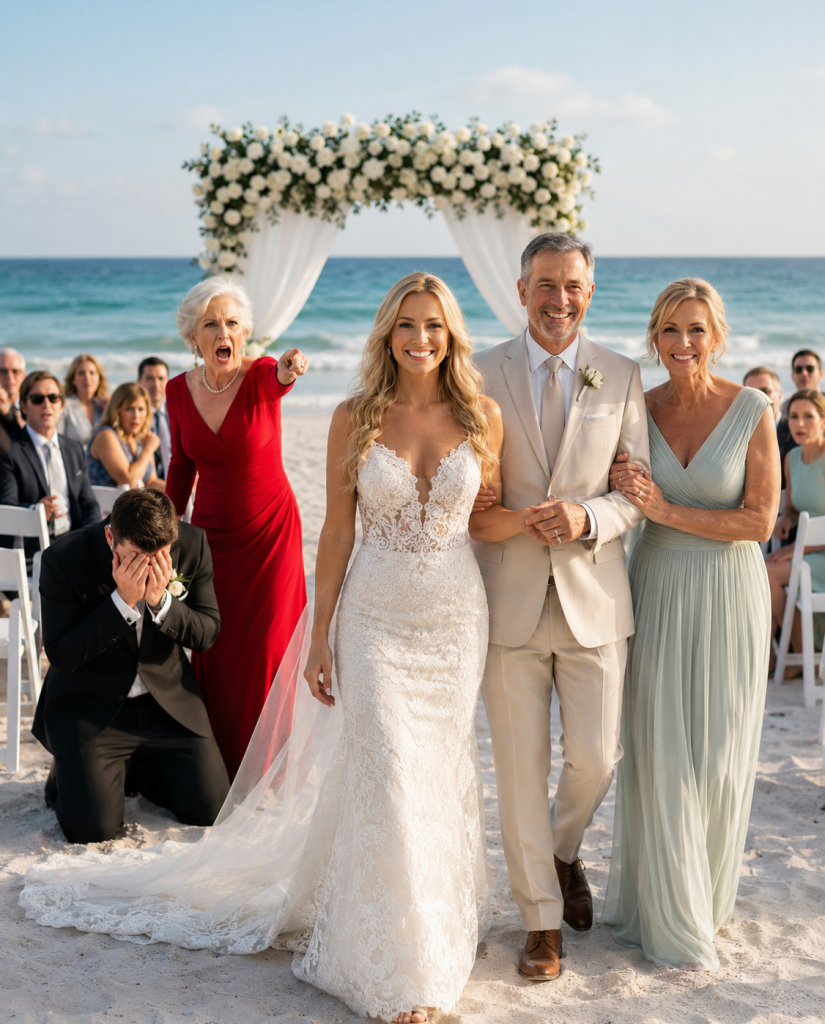
“Mom doesn’t mean anything by it,” he whispered later.
That became his favorite sentence.
She didn’t mean anything.
She’s just traditional.
She’s under stress.
She cares about appearances.
She’ll come around.
For three years, I believed him.
I believed him when Eleanor corrected my pronunciation of wine labels in front of guests.
I believed him when she offered to send my mother “something more appropriate” to wear to our engagement dinner.
I believed him when she said our wedding needed “a certain level of refinement” and then began taking over every decision.
The flowers.
The menu.
The band.
The photographer.
The guest list.
Even my dress.
I pushed back at first.
Then Liam kissed my forehead and said, “Just let her have this. It makes her happy.”
I asked, “What about what makes me happy?”
He laughed softly.
“You’ll be happy when everything is perfect.”
I should have heard the warning in that.
Perfect for whom?
The wedding was held at the Ashbourne Estate, a private venue outside the city with manicured gardens, marble terraces, and a glass pavilion that looked like something from a magazine.
Eleanor told everyone she had arranged it.
She called it “our gift to the children.”
At every bridal luncheon, every family dinner, every phone call with wealthy relatives, she repeated the same line.
“The Kensington family wanted to sponsor a day Claire could never have imagined.”
I hated that sentence.
But my father always told me, “Let people talk, honey. We know who we are.”
Two days before the wedding, he pulled me aside in the kitchen of my childhood home.
He looked nervous.
I had never seen my father nervous around me.
“Claire,” he said, rubbing one thumb over the back of his hand, “you happy?”
I laughed.
“Dad, I’m getting married. I’m supposed to be happy.”
“That’s not what I asked.”
I looked at him then.
Really looked.
His hair had more gray than I remembered.
His shoulders seemed a little more bent.
“I love Liam,” I said.
Dad nodded slowly.
“Then that’s enough for me.”
I hugged him.
He held me tight, almost too tight.
“I just want you respected,” he whispered.
I should have asked him what he meant.
But I was distracted by final fittings, seating charts, and Eleanor sending another message about making sure my parents arrived early enough to be “properly placed.”
Properly placed.
I did not understand until the day of the wedding.
That morning, I woke in the bridal suite at Ashbourne surrounded by silk robes, champagne glasses, and bridesmaids taking pictures for social media.
Everyone kept saying the day was perfect.
The weather was perfect.
The flowers were perfect.
The gown was perfect.
The tent was perfect.
I smiled until my cheeks hurt.
My mother arrived wearing a pale blue dress she had saved for months to buy. She looked beautiful, though nervous.
My father came with her in a rented navy suit.
He had polished his shoes so hard they shone.
When I saw him, my throat tightened.
“Dad,” I said. “You look handsome.”
He laughed awkwardly.
“Feel like I’m pretending to be somebody important.”
“You are important.”
He looked away quickly.
My mother dabbed at her eyes.
“Don’t start,” she said. “I already promised myself I wouldn’t cry before the ceremony.”
I hugged them both.
For a few minutes, everything felt right.
Then Eleanor entered the bridal suite.
Her silver dress caught the light like armor.
Her eyes moved over my parents.
She smiled.
“Martha. Frank. How lovely. The staff will show you where to sit shortly.”
My mother’s smile faltered slightly.
“We thought we’d be in the front with family.”
Eleanor gave a delicate laugh.
“Of course, dear. Everything is arranged.”
That should have settled it.
It did not.
Fifteen minutes before I walked down the aisle, I slipped out of the suite because I wanted one quiet moment with my father.
I found him in a side hallway near the service entrance, standing alone with one hand pressed against the wall.
He looked pale.
“Dad?”
He startled.
“Oh, honey. You should be getting ready.”
“What’s wrong?”
“Nothing.”
He shoved one hand into his pocket too quickly, and something fell out.
A crumpled paper slid across the floor.
I bent down to pick it up.
Dad reached for it at the same time.
“Claire, don’t—”
But I already had it.
It was a wire transfer receipt.
My father’s name was at the top.
Frank Donovan.
The receiving account belonged to Ashbourne Estate Events.
Amount transferred: $86,400.
My hands went cold.
“Dad,” I whispered. “What is this?”
He closed his eyes.
His face collapsed in a way I had never seen before.
“Please don’t be upset today.”
“Did you pay for the venue?”
He looked down.
“Eleanor said there was a problem.”
“What problem?”
“She said Liam was embarrassed. Said the venue deposit had come due and the family didn’t want you feeling like charity. She said if I could help quietly, nobody would have to know.”
My ears rang.
“Help?”
His voice broke.
“She said she’d return it after the wedding. Said it was just for appearances.”
“Dad, where did you get eighty-six thousand dollars?”
He did not answer.
He did not have to.
I already knew.
His retirement.
The small account he had built with decades of overtime, bad knees, and missed vacations.
The money he and my mother were supposed to use when his body finally refused to pour one more driveway.
“You emptied your retirement account,” I said.
His eyes filled.
“I wanted you to have the day you deserved.”
I covered my mouth.
“No.”
“Honey—”
“No, Dad. Eleanor told everyone she was paying.”
He looked confused.
“What?”
“She told everyone the Kensington family sponsored the wedding.”
His face changed slowly.
Not anger at first.
Humiliation.
That was worse.
My mother appeared behind him, her eyes red.
“She told us not to tell you,” she whispered. “She said you’d be embarrassed if people knew your father had to contribute.”
I felt something inside me crack.
Not quietly.
Violently.
“She made you pay and then hid you by the kitchen?”
My father looked away.
“She said the front rows were complicated because of donors and family politics.”
Family politics.
That was what Eleanor called cruelty when it wore perfume.
I turned and lifted my gown with both hands.
“Claire,” my mother said, frightened. “Where are you going?”
“To Liam.”
I rushed down the side corridor toward the groom’s suite, my dress dragging behind me.
I needed Liam to tell me he had no idea.
I needed him to be horrified.
I needed him to choose me.
Before I could turn the brass doorknob, I heard his voice inside.
“Mom handled it,” Liam said. “Claire doesn’t need to know.”
Another man laughed.
One of his groomsmen.
“Her dad actually paid?”
Liam sighed.
“Most of it. Look, Frank wanted to feel useful.”
My heart stopped.
Then Eleanor’s voice answered, calm and pleased.
“Blue-collar men have pride, darling. You simply point it in the right direction.”
Liam said nothing.
Eleanor continued.
“Besides, his contribution solved a problem. Our guests expect a certain experience. We could hardly let the Donovan side look like they were buying their way in.”
Liam muttered, “Claire might be upset if she finds out.”
“She won’t. And if she does, you’ll calm her down. She adores you.”
Then Liam said the words that shattered three years of love and trust into pieces too small to gather.
“Fine. Just make sure her parents stay in the back. If my father’s partners see them up front, Mom will never hear the end of it.”
I stepped away from the door.
For a moment, I could not breathe.
He knew.
He knew my father had emptied his savings.
He knew my parents had been moved to the back.
He knew his mother had lied.
And he chose optics.
Not me.
Not my family.
Optics.
I walked slowly toward the wedding planner’s table near the tent entrance.
She was arranging programs with trembling hands, clearly aware something was wrong.
“What did Eleanor give you regarding seating?” I asked.
Her eyes widened.
“Claire, I don’t think—”
“Give it to me.”
She glanced around, then pulled a folded seating order from her clipboard.
I snatched it from her hand.
There, in Eleanor’s handwriting, was the note beside my parents’ names.
Move Donovan parents to rear by catering entrance. Avoid front-row visibility. Seat Kensington board guests forward.
Front-row visibility.
My father was not a man to Eleanor.
He was a visibility problem.
I folded the paper and tucked it into my bouquet.
Then I stood still for a moment, breathing carefully.
I could have run.
I could have cried.
I could have screamed in the hallway and let them call me hysterical.
But Eleanor had built an entire stage for herself.
So I decided to use it.
When the music began, I walked down the aisle.
Every guest turned.
Gasps of admiration moved through the tent.
I saw chandeliers above me, white roses beside me, cameras flashing, mouths smiling.
I saw Eleanor in the front row, sitting like a queen.
I saw Liam at the altar, handsome and calm, thinking I knew nothing.
Then I saw my parents at the back.
My father tried to smile when our eyes met.
My mother’s chin trembled.
I kept walking.
My arm did not shake.
My smile did not move.
When I reached Liam, he leaned close.
“You look beautiful,” he whispered.
I looked into his eyes and wondered how many lies could live behind something beautiful.
The officiant began.
Dearly beloved.
Sacred union.
Love and commitment.
Family and honor.
Family.
Honor.
The words almost made me laugh.
Then came the moment.
“If anyone has reason this marriage should not take place, speak now or forever hold your peace.”
I lifted my hand.
“I do.”
The officiant froze.
Liam’s smile vanished.
“Claire?”
I took the microphone from the officiant before he could stop me.
The speakers crackled.
The quartet fell silent.
Two hundred guests stared.
Eleanor straightened in her chair.
I turned toward the crowd.
“Look at the back of the room,” I said, my voice echoing through the tent. “My parents were moved because they don’t fit the optics of this family.”
Every head turned.
My mother covered her mouth.
My father lowered his eyes.
A wave of confusion passed through the guests.
Some leaned sideways to see.
Some whispered.
Eleanor sprang to her feet, silver dress flashing under the chandeliers.
“She’s hysterical!” she yelled. “Martha came to me in tears. She begged me to move them because they felt uncomfortable around all these important people.”
From the back of the room, my mother let out a wounded cry.
“No, I didn’t…”
Her voice was small, but everyone heard it.
Eleanor pointed toward her.
“Don’t be ashamed, Martha. There’s no need to lie.”
I stared at her.
She was gaslighting my crying mother in front of hundreds of people.
She thought money and status would force us into silence.
She thought I would stand there and fold neatly into her version of events.
But she did not know what I had tucked inside my bouquet.
Liam reached for my arm.
“Claire, please. Not here.”
I turned to him.
“Not here?”
He lowered his voice.
“I was just trying to keep the peace.”
I looked at the heavy diamond on my finger.
“Whose peace, Liam? Because it certainly wasn’t mine.”
His face went pale.
“Claire—”
I pulled the folded seating order from my bouquet and held it up.
“This is the seating instruction Eleanor gave the wedding planner.”
Eleanor’s eyes widened.
The wedding planner looked like she might faint.
I read aloud.
“Move Donovan parents to rear by catering entrance. Avoid front-row visibility. Seat Kensington board guests forward.”
Gasps swept through the tent.
Someone whispered, “Oh my God.”
Eleanor lifted her chin.
“That was taken out of context.”
I smiled.
“Then let’s add context.”
I reached into the hidden pocket of my gown and removed the crumpled wire transfer receipt.
My father made a choked sound.
I looked back at him.
“I’m sorry, Dad,” I said softly into the microphone. “But they used your dignity as decoration. I won’t let them hide it.”
Then I faced the guests.
“This receipt shows my father transferred eighty-six thousand four hundred dollars to Ashbourne Estate Events to cover this venue.”
The tent exploded with whispers.
I continued before Eleanor could interrupt.
“My father is a concrete worker. He worked thirty-five years. He emptied his retirement account because Eleanor Kensington told him the venue was in danger and that I would be humiliated if he didn’t help quietly.”
Eleanor shouted, “That is absurd!”
“Is it?” I asked. “Then why have you spent the last month telling everyone the Kensington family sponsored the wedding?”
People turned toward Eleanor.
A woman in emerald silk slowly lowered her champagne glass.
Liam’s father, Richard Kensington, sat in the front row, his face pale and stunned.
He had not moved since I began speaking.
Then, unexpectedly, he stood.
“Enough, Eleanor.”
The entire tent froze.
Eleanor turned on him.
“Sit down, Richard.”
But Richard ignored her.
He looked at me instead.
“Claire,” he said, his voice carrying even without a microphone. “Tell them.”
Eleanor’s face twisted.
“Richard, don’t you dare.”
He stepped into the aisle.
“I found out this morning,” he said. “Not from my wife. From accounting.”
Liam’s eyes widened.
“Dad…”
Richard looked at him with disappointment so deep it seemed to age him ten years.
“You knew?”
Liam said nothing.
That silence was a confession.
Richard turned toward my parents at the back.
“Mr. and Mrs. Donovan, I owe you an apology this family may never deserve.”
My father looked up, startled.
Richard continued.
“I reviewed the venue invoice this morning after a discrepancy appeared in our event accounts. Your payment was real. Eleanor never told me. She never intended to repay you from family funds.”
Eleanor shouted, “I was managing the event!”
Richard’s voice hardened.
“You were managing a lie.”
The guests murmured louder.
Eleanor looked around desperately, realizing the room had shifted against her.
That was when Liam grabbed my wrist.
“Claire, stop,” he whispered harshly. “You’re embarrassing everyone.”
I looked at his hand on me.
Then at his face.
“I’m embarrassing everyone?”
He loosened his grip.
“I didn’t mean—”
“No,” I said. “You did.”
I pulled the engagement ring from my finger.
His expression changed.
Fear.
Finally.
“Claire, wait.”
I held the ring between us.
“You knew my parents were shoved by the kitchen. You knew your mother stole their dignity. You knew my father paid for a wedding your family took credit for.”
“I was trying to avoid conflict.”
“You were avoiding responsibility.”
His jaw tightened.
“You’re blowing up our wedding.”
“No,” I said. “I’m stopping myself from marrying into a family that thinks my parents are furniture to be hidden.”
I placed the ring on the altar table.
“There will be no wedding today.”
The words landed like thunder.
For a moment, no one moved.
Then my mother began crying openly.
My father stood slowly.
Not with pride.
Not yet.
With the stunned posture of a man who had spent too long being ashamed of something he had no reason to hide.
Eleanor rushed toward me.
“You stupid girl,” she hissed, forgetting the microphone was still near my mouth. “Do you know what you’re throwing away?”
“Yes,” I said clearly.
The entire tent heard me.
“A man who would let my father go broke to protect his mother’s image.”
Liam flinched.
Eleanor’s face went red.
“You will regret this.”
“No,” I said. “I think I would have regretted marrying him more.”
Richard walked down the aisle toward my father.
The crowd parted for him.
When he reached my parents, he stopped in front of my dad and extended his hand.
“Sir,” Richard said, voice thick with shame, “I will repay every cent by sunset.”
My father stared at his hand.
Then at me.
I nodded through tears.
Only then did he shake it.
“I didn’t do it for repayment,” Dad said quietly.
“I know,” Richard said. “That makes it worse.”
Eleanor shouted my name again, but nobody listened anymore.
Guests were standing.
Some recording.
Some whispering into phones.
Some leaving quietly, unwilling to be associated with the disaster.
The perfect wedding Eleanor had designed became the public trial of her own cruelty.
And she had built the guest list herself.
Liam followed me as I stepped down from the altar.
“Claire, please,” he said. “Can we talk privately?”
I stopped.
“Now you want privacy?”
His face crumpled.
“I love you.”
I wanted those words to hurt more than they did.
Instead, they sounded like something he had pulled from a script.
“No,” I said. “You loved the version of me that would swallow disrespect to make your life easier.”
“That’s not fair.”
“Neither was putting my parents beside the kitchen.”
He looked toward them.
For the first time, he seemed to really see them.
My father in his rented suit.
My mother shaking.
The folding chairs.
The swinging catering doors.
Liam’s face changed.
Maybe shame finally reached him.
Maybe he only realized what it looked like to everyone else.
Either way, it came too late.
I walked past him.
Paige, my maid of honor, met me at the aisle.
Her eyes were wet.
“I have your bag,” she whispered.
Of course she did.
Real friends prepare for emergencies before you admit you are in one.
“Thank you,” I said.
Then I walked to the back of the tent.
My mother stood as I reached her.
“Oh, honey,” she sobbed. “I’m so sorry.”
I hugged her tightly.
“No, Mom. I’m sorry they made you feel small.”
My father’s face had gone gray.
“I ruined your wedding,” he said.
I pulled back and looked at him.
“No, Dad. You saved me from the wrong marriage.”
His eyes filled.
“I just wanted you to have something beautiful.”
I took his rough hands in mine.
“I already did. I had parents who would give everything for me. I just forgot that was worth more than chandeliers.”
He broke then.
Not loudly.
Not dramatically.
He lowered his head and cried into one hand.
My father, who had carried cement bags through storms, who never cried when he broke two ribs at a worksite, who laughed off every ache in his body, cried because rich people had made him feel poor at his daughter’s wedding.
I held him until he could breathe.
Behind us, the tent continued unraveling.
Richard’s voice rose as he confronted Eleanor.
Liam tried to calm guests.
Eleanor sobbed about betrayal.
The wedding planner disappeared behind a curtain.
Cameras flashed.
The string quartet packed up.
I did not look back.
We left through the garden path instead of the main aisle.
My gown caught on rosebushes.
Paige helped lift the train.
My mother held my veil.
My father walked beside me in silence, still clutching the cap he had never put on because he had been afraid it looked too informal.
Outside the tent, sunlight covered the Ashbourne gardens like nothing had happened.
Birds sang.
Fountains sparkled.
The world can be cruel that way.
It does not always darken when your life changes.
Sometimes it stays beautiful and makes you decide whether you will be honest anyway.
At the parking lot, my father stopped.
“I can’t let Richard repay me if it makes trouble,” he said.
“Dad.”
“I mean it. I don’t want to be bought.”
I touched his arm.
“It isn’t being bought. It’s being restored.”
He looked uncertain.
My mother said softly, “Frank, let them make this right.”
He looked at her.
Then at me.
Finally, he nodded.
Richard kept his word.
By six that evening, the money was wired back to my father’s retirement account from Richard’s personal funds.
Not Kensington corporate accounts.
Not Eleanor’s event budget.
His money.
He sent a written apology too.
Not polished.
Not legal.
Human.
Mr. and Mrs. Donovan,
No repayment can undo the humiliation you were made to endure under my family’s name. I am ashamed I did not see it sooner. Your daughter showed more honor today than all of us combined.
Richard Kensington
Dad read it three times.
Then folded it carefully and placed it in his Bible.
Eleanor called me fourteen times that night.
I did not answer.
Liam called twenty-two times.
I answered once.
His voice sounded wrecked.
“Claire,” he said. “I don’t know how this happened.”
That sentence told me everything.
Because I did.
It happened one compromise at a time.
One insult forgiven.
One excuse accepted.
One moment where he asked me to understand his mother instead of asking his mother to respect me.
“I do,” I said.
“I should have stopped her.”
“Yes.”
“I was scared.”
“Of what?”
He was quiet.
“Of disappointing them.”
I closed my eyes.
“And I was supposed to spend my life being punished for that?”
“No.”
“But I would have.”
He did not answer.
I continued.
“Liam, I loved you. But love without courage becomes permission for other people to hurt you.”
His breath caught.
“I can change.”
“Maybe,” I said. “But not as my husband.”
He cried then.
I listened for a moment.
Then I said goodbye.
The weeks after the wedding that never happened were strange.
People called.
Texted.
Sent flowers.
Some apologized for attending and not noticing where my parents were seated.
Some admitted they had heard Eleanor make comments before and should have said something.
One of Liam’s cousins sent me a message that said, “You did what half this family wishes someone had done years ago.”
Eleanor’s social circle cracked around her.
The story spread quickly because rich people love secrets until they become the secret.
Ashbourne Estate refunded part of the event costs after Richard threatened legal action over Eleanor’s misrepresentations.
The wedding planner resigned from Eleanor’s preferred vendor list and sent my mother an apology.
As for Liam, he moved out of his parents’ guesthouse and into an apartment downtown.
He sent one letter.
I kept it for a while but eventually threw it away.
Not because it was cruel.
Because it was too late.
It said he was sorry.
It said he had been weak.
It said he had confused peace with silence.
All true.
But truth discovered after damage does not automatically rebuild trust.
My parents and I went to dinner one month later.
Not at a fancy restaurant.
At a family diner near our old neighborhood.
Dad wore jeans.
Mom wore the pale blue dress from the wedding because she said she wanted to make a better memory in it.
We ordered burgers, fries, and chocolate pie.
At one point, Dad looked at me across the booth.
“You miss him?”
I stirred my iced tea.
“Sometimes.”
He nodded.
“That’s allowed.”
“I don’t miss who he was that day.”
“No.”
“I miss who I thought he was.”
My mother reached across the table and squeezed my hand.
“That’s harder sometimes.”
She was right.
Losing a person hurts.
Losing the person you imagined hurts differently.
For months, I grieved a marriage that never happened and a man who had almost been enough.
Almost kind.
Almost brave.
Almost mine.
But almost is not enough when dignity is on the line.
A year later, I stood in another room full of flowers.
This time, it was my parents’ fortieth anniversary.
We held it in a community hall with paper lanterns, homemade food, and folding chairs that nobody was ashamed to sit on.
My father gave a speech.
He stood at the front in a gray suit he owned this time, not rented.
My mother stood beside him laughing through tears.
Dad lifted his glass.
“To my wife,” he said. “Who made every hard year softer.”
Everyone clapped.
Then he looked at me.
“And to my daughter, who reminded me that no chair at the back of any room could make me less of a father.”
I cried then.
So did half the room.
After dinner, he asked me to dance.
My father never danced unless forced.
But that night, he held out his hand.
“Come on, Claire-bear.”
I laughed.
“You hate dancing.”
“I hated being bad at it. There’s a difference.”
So we danced under paper lanterns while my mother wiped her eyes and Paige cheered from the dessert table.
No chandeliers.
No elite guests.
No string quartet.
Just music from an old speaker and the people who loved us.
It was the most beautiful event I had ever attended.
People still ask me whether I regret exposing everything publicly.
They say I could have handled it privately.
They say weddings are emotional.
They say Eleanor was wrong, but maybe I went too far.
I always ask the same question.
Why is public humiliation acceptable when it happens to quiet people at the back of the room, but public truth becomes improper when spoken into a microphone?
My parents were humiliated publicly.
My father’s sacrifice was exploited publicly.
My mother was gaslit publicly.
Eleanor accepted praise publicly.
Liam chose silence publicly.
So yes.
I told the truth publicly.
I do not regret it.
Not for one second.
That day, I walked down the aisle thinking I was going to become a Kensington.
Instead, I remembered I was already a Donovan.
Daughter of Frank and Martha.
Raised by concrete hands and library kindness.
Loved without conditions.
Protected without performance.
I did not gain a husband that day.
I kept my family.
And when I placed Liam’s ring on the altar table, I was not ending my future.
I was saving it.
Because a wedding is not just flowers and music and photographs.
It is a doorway.
And if the people waiting on the other side require you to shrink your parents, hide your roots, and swallow disrespect for the sake of “peace,” then that doorway does not lead to love.
It leads to a prettier cage.
I chose not to enter.
I chose the microphone.
I chose the truth.
I chose the two people sitting by the kitchen doors who had spent their lives making sure I never felt small.
And when I looked back one final time at that glittering tent, Eleanor’s perfect world was collapsing beneath its own lies.
But my father was standing taller.
My mother was holding my hand.
And I knew I had made the right choice.
THE END! THANK YOU FOR READING!