 Reading Time: 16 minutes
My Stepson Smashed My Eight-Year-Old Son’s Handmade Airplane and Said I Was Not His Real Mom—That Night, I Stopped Being His Bank Account, Chauffeur, and Invisible Safety Net “If I’m not their mother, then I’m not their bank account, chauffeur, or invisible safety net either.”
That was the sentence I finally said to my husband on the night his children humiliated me in front of my own kids and pushed something inside me beyond the point of breaking. My name is Rachel Carter.
I am forty-three years old, and until recently, I believed patience could hold a blended family together if you gave enough of it. I believed love could soften resentment. I believed consistency could build trust.
Most dangerously, I believed that if I absorbed enough disrespect without retaliating, everyone would eventually recognize my kindness and choose to become kinder themselves.
I was wrong.
I lived in Phoenix with my husband, Daniel Carter.
I brought two children into our marriage: Olivia, who was ten, and Ethan, who was eight.
Daniel brought two teenagers from his previous marriage: sixteen-year-old Jason Miller and fourteen-year-old Alyssa Miller.
Their biological mother, Melissa Miller, lived across town in Scottsdale.
Every few weekends, Jason and Alyssa visited her.
They usually returned carrying new clothes, expensive gifts, and sharper opinions about who counted as “real family.”
I never asked them to call me Mom.
I never tried to replace Melissa.
I understood that she was their mother and always would be.
All I wanted was basic respect inside the home I paid for and helped maintain.
When Daniel and I married four years earlier, Jason was twelve and Alyssa was ten.
They were guarded but polite.
Jason loved basketball and science-fiction movies.
Alyssa collected miniature perfume bottles and spent hours drawing fashion designs.
I made an effort without forcing closeness.
I attended their school events.
Kept their favorite snacks in the pantry.
Learned which teachers they liked and which assignments made them anxious.
I remembered birthdays, project deadlines, and practice schedules.
During the first year, Jason occasionally asked me for help with homework.
Alyssa once climbed into my bed during a thunderstorm while Daniel was working late.
Those moments convinced me we were becoming a family.
Then Melissa began making comments.
At first, they reached me indirectly.
Jason mentioned that his mother believed I was “trying too hard.”
Alyssa said Melissa thought the bedrooms in our house were decorated to make them forget where they really belonged.
When I bought Jason new basketball shoes, Melissa accused me of competing with her.
When I paid for Alyssa’s school trip, she said I was using money to purchase affection.
I stopped buying unnecessary gifts.
Then I was accused of treating my children better.
There was no correct choice.
Whatever I did became evidence that I was either interfering or excluding them.
Daniel always asked me to ignore it.
“Melissa is insecure,” he said. “Don’t let her control our home.”
But he never confronted her.
Instead, I became responsible for absorbing the consequences of her resentment.
I bought school clothes.
Winter coats.
Birthday presents.
Sports equipment.
Phones.
I paid for field trips, orthodontist appointments, streaming subscriptions, emergency pharmacy runs, and everything in between.
I drove everyone to practices, games, school events, and friends’ houses.
I memorized the small details.
Alyssa wanted extra pickles on her burgers.
Jason hated raw onions but liked them grilled.
Olivia preferred the hallway light on at night.
Ethan became carsick if he read in the back seat.
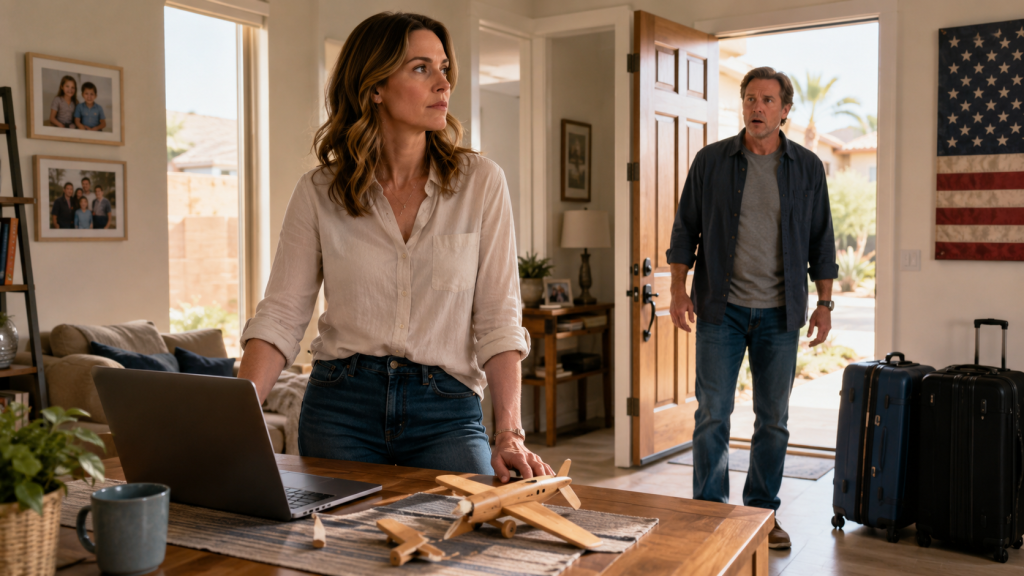
Daniel called me the heart of the household whenever he wanted to praise me in public.
In private, he called my labor “what mothers do.”
But whenever Jason or Alyssa reminded me that I was not their mother, Daniel agreed that I should not take it personally.
Jason was the first to stop pretending.
One evening after dinner, I asked him to help clear the kitchen.
He sat at the table scrolling on his phone.
“Jason, please put the plates in the dishwasher.”
He did not look up.
“You don’t make rules here.”
The room became quiet.
Daniel was standing less than six feet away.
He continued rinsing his glass.
I waited for him to respond.
He did not.
“Jason,” I said, “this is my home too.”
He smirked.
“My dad says it’s his house.”
I looked toward Daniel.
He gave me an exhausted expression.
“Let’s not start something over dishes.”
I should have understood then.
Daniel was not trying to keep peace.
He was teaching Jason that disrespect worked.
Alyssa followed soon afterward.
One afternoon, I reminded her to place her dirty clothes in the laundry basket if she wanted them washed.
She looked directly at me.
“I listen to Dad. Not you.”
Daniel’s response was always the same.
“They’re adjusting.”
“They’re teenagers.”
“Don’t take everything personally.”
“You knew blending families would be difficult.”
Every explanation ended with my responsibility to tolerate more.
So I swallowed words that should have been spoken.
I cleaned dishes Jason left behind.
Replaced toiletries Alyssa used without asking.
Paid bills no one acknowledged.
I told myself I was modeling maturity.
In reality, I was modeling self-erasure.
The disrespect eventually spread to Olivia and Ethan.
Alyssa began taking Olivia’s clothes without permission.
If Olivia complained, Alyssa called her spoiled.
Jason entered Ethan’s room whenever he wanted and borrowed electronics without asking.
Daniel said siblings shared.
But the sharing worked in one direction.
My children were expected to surrender.
His children were permitted to take.
One afternoon, I found Olivia crying at the dining table.
Her art markers were spread across the wood.
Every cap had been left off.
The tips were dry.
I had bought the professional marker set for Christmas after Olivia spent months teaching herself illustration.
“What happened?”
She wiped her cheeks.
“Alyssa used them last night.”
Alyssa walked into the room carrying her phone.
“I forgot to put the caps on.”
“You ruined all of them,” Olivia whispered.
“They’re just markers.”
“They cost nearly two hundred dollars,” I said.
Alyssa shrugged.
“Then buy more.”
I stared at her.
“You will replace them from your allowance.”
Her expression became cold.
“Your mom doesn’t run this house,” she told Olivia. “My dad does.”
That evening, I told Daniel what happened.
He sighed.
“I’ll talk to her.”
“You always say that.”
“What do you want me to do? Ground her for ruining markers?”
“Yes.”
He looked surprised.
“She made a mistake.”
“She refused to take responsibility.”
“Rachel, you’re turning this into a power struggle.”
“No. Alyssa turned it into one when she told my daughter I had no authority in my own home.”
Daniel rubbed his temples.
“I’ve had a long day.”
That ended the conversation.
It always did.
Later that night, Ethan came into my bedroom.
“Mom?”
“Yes?”
“Why are Jason and Alyssa allowed to talk to you like that if I’d get punished for it?”
The question hurt more than any insult.
I did not know how to answer.
What was I supposed to tell him?
That I was preserving peace?
That adults sometimes accepted humiliation because they hoped love would eventually repair it?
That I had built different rules for different children because Daniel’s discomfort frightened me more than injustice?
I kissed Ethan’s forehead.
“They shouldn’t be allowed to.”
“But they are.”
Children understand hypocrisy before adults admit it exists.
Everything finally shattered on a Thursday evening.
I arrived home expecting television noise and dinner smells.
Instead, the house felt strangely quiet.
Ethan sat on the living-room floor holding pieces of his handmade wooden airplane.
The left wing had snapped completely in half.
The propeller hung from a thin wire.
Blue paint was scratched across the body.
We had spent nearly three weeks building that plane together in the garage.
Ethan sanded every piece.
Chose the colors.
Painted a tiny American flag near the tail because he said the airplane was going to carry brave people home.
The model was not expensive.
But to him, it was priceless.
“What happened?”
Ethan wiped his face.
“Jason got mad because I wouldn’t let him use my headphones.”
“Did he break it?”
Ethan nodded.
“He threw it against the wall.”
Something cold settled inside my chest.
I walked into the family room.
Jason sat on the couch playing a combat game on the console I had bought him the previous Christmas.
Flashes of light moved across his face.
“Pause the game.”
He ignored me.
“Jason.”
“I’m in a match.”
I walked to the entertainment console and turned off the television.
He jumped up.
“What is wrong with you?”
“We need to discuss Ethan’s airplane.”
“It was an accident.”
“You threw it.”
“He wouldn’t give me the headphones.”
“So you destroyed something he made?”
Jason folded his arms.
“Maybe he should learn to share.”
“Those headphones belong to him.”
“Everything in this house belongs to the family.”
I looked at the console.
“Does that include this?”
His expression shifted.
“Dad bought that.”
“No. I did.”
He laughed.
“Same difference.”
“No, Jason. It isn’t.”
Finally, he looked directly at me.
Then he smiled.
For one strange second, he looked exactly like Melissa.
“Listen carefully, Rachel. You’re not my mother. I don’t owe you respect, explanations, or anything else. Ethan isn’t even my family. You’re just the woman my dad married.”
The room became silent.
Not around me.
Inside me.
I did not scream.
I did not threaten him.
I did not argue that family was built through care rather than blood.
I simply nodded.
“Got it.”
Then I walked into my office and closed the door.
My hands remained steady as I opened my laptop.
Phone plans.
Canceled.
Streaming subscriptions.
Removed.
Gaming memberships.
Terminated.
Cloud-storage accounts connected to my billing information.
Disconnected.
The credit cards Daniel had given Jason and Alyssa for “emergencies” but paid from my personal account.
Frozen.
The console access registered under my email.
Disabled.
Wi-Fi permissions for their devices.
Revoked.
Then I opened the spreadsheet listing every recurring expense in our home.
Jason’s sports club.
Alyssa’s private art program.
Their ride-share accounts.
The premium music plan.
The designer clothing subscription Melissa had encouraged Alyssa to join using my card.
One by one, I removed my payment information.
I was not punishing children for refusing to call me their mother.
I was ending an arrangement in which I carried parental responsibility without parental respect or authority.
Then I called a locksmith.
“Can you come tonight?”
The man hesitated.
“Is this an emergency?”
“Yes.”
Daniel came home shortly after eight.
He found me in the office reviewing account statements.
“What’s going on with the internet?”
“I changed the password.”
“Jason says his phone has no service.”
“I canceled the line.”
Daniel stared at me.
“Why?”
“Because he explained our relationship clearly.”
“Rachel, he’s sixteen.”
“He destroyed Ethan’s airplane because Ethan refused to give him headphones. Then he said neither Ethan nor I was family.”
Daniel sighed.
“So you canceled his phone?”
“I canceled everything I pay for on behalf of people who believe I have no place in this household.”
He looked toward the hallway.
“Where are Jason and Alyssa?”
“In their rooms.”
“You need to restore the accounts.”
“No.”
His face tightened.
“Do not make decisions about my children without me.”
I almost laughed.
“You have permitted them to make decisions about my role for years.”
“They’re angry teenagers.”
“And I am no longer their financial solution.”
He lowered his voice.
“You knew what you were agreeing to when you married me.”
“I agreed to help raise your children. I did not agree to fund people who treat me and my kids like intruders.”
Daniel leaned over the desk.
“You’re overreacting.”
I turned the laptop toward him.
The screen showed four years of expenses.
School fees.
Phones.
Sports equipment.
Dental care.
Clothing.
Transportation.
Entertainment.
More than ninety thousand dollars had come directly from accounts belonging to me.
“This is what my overreaction has been paying for.”
Daniel stared at the total.
Then the doorbell rang.
The locksmith stood outside.
Daniel followed me into the foyer.
“You are not changing the locks.”
“I am.”
“This is my home.”
I handed him a copy of the deed.
The property had been mine before our marriage, purchased after my first husband died.
Daniel knew that.
But because he lived there, hosted parties there, and called it ours, he gradually began believing legal ownership no longer mattered.
“The house belongs to my trust,” I said. “You and your children have occupied it with my permission.”
“You’re throwing out children?”
“I’m setting conditions.”
“What conditions?”
“Respect. Equal rules. Accountability. If they cannot accept those conditions, they can live with Melissa.”
Jason appeared at the top of the stairs.
“You can’t make us leave.”
“No one is forcing you to leave tonight. But this household changes tonight.”
He laughed.
“Dad won’t let you.”
The locksmith looked uncomfortable.
Daniel pointed toward the door.
“Leave.”
The locksmith looked at me.
“I hired him,” I said. “Please continue.”
That was the first time Daniel understood that I was no longer asking permission.
The following afternoon, Jason and Alyssa returned from school to find their devices disconnected and two packed suitcases near the front door.
I had packed enough clothes for one week.
Their remaining belongings stayed untouched.
Melissa was supposed to collect them for her scheduled weekend.
The suitcases made it clear that the visit could become longer if they refused the new household rules.
Alyssa stared at the bags.
“What is this?”
“Your clothes for your mother’s house.”
“I’m supposed to come back Sunday.”
“That depends on whether everyone agrees to behave respectfully.”
Jason dropped his backpack.
“You’re insane.”
Daniel stepped between us.
“Rachel, remove the bags.”
“No.”
“You cannot threaten my children with homelessness.”
“They have two parents and another home.”
“This is their home.”
“Then they should treat the people inside it like family.”
Jason reached for his phone.
“It still doesn’t work.”
“You told me I wasn’t your mother. That means managing your phone is not my responsibility.”
“I need it.”
“Ask your parents.”
“Dad pays for it.”
“No. I do.”
His confidence slipped slightly.
Then the locksmith returned with four new keys.
One for me.
One for Olivia.
One for emergency access.
The final key remained in my hand.
Daniel stared.
“Where is mine?”
“We’ll discuss that after we discuss why the back-door security code was shared with Melissa without my permission.”
His face changed.
I had discovered the code in messages stored on our shared family tablet.
Melissa had entered my house several times while I was at work.
She claimed she was collecting things for the children.
Security footage showed her opening cabinets, photographing financial statements, and walking through my bedroom.
Jason’s phone connected briefly through the emergency guest Wi-Fi.
Messages began appearing across his screen.
Don’t panic. Rachel always gives in.
Stay angry. Your dad knows what to do.
The messages came from Melissa.
I turned the phone toward Daniel.
“What does she mean?”
He looked away.
“Melissa likes drama.”
More messages arrived.
Remember the plan. She’ll either leave or lose control. Once she’s gone, Dad keeps the house.
Alyssa’s face went pale.
Jason grabbed for the phone.
I stepped back.
“Your mother has been coaching you?”
“No.”
The denial came too quickly.
I opened the tablet.
The message history had synchronized automatically.
There were months of conversations.
Melissa telling Jason that respecting me would betray her.
Melissa encouraging Alyssa to damage Olivia’s things because “Rachel needs to learn she can’t buy her way into the family.”
Instructions to ignore chores.
Refuse rules.
Create arguments.
Make my children uncomfortable.
One message read:
Push her until she explodes. Daniel can use it in the divorce.
I turned toward my husband.
“Divorce?”
He shook his head.
“That isn’t what it looks like.”
I pressed play on a saved voice message.
Daniel’s voice filled the foyer.
“Keep pressure on Rachel. Once she’s gone, the house is ours. She won’t fight if the kids make living here miserable.”
Alyssa covered her mouth.
Jason stared at his father.
Daniel’s face emptied of color.
The recording continued.
Melissa said, “And my share?”
Daniel replied, “You’ll have access through the kids. Rachel’s accounts cover everything now. Once she leaves, I’ll move the payments before she notices.”
The message ended.
For several seconds, nobody spoke.
I looked at Daniel.
“You didn’t fail to stop the disrespect.”
He said nothing.
“You organized it.”
“Rachel, listen to me.”
“No.”
“It was before things improved between us.”
“Things never improved. I simply stopped complaining.”
“I was angry.”
“You planned to use your children to force me from my home.”
“I never meant for anyone to get hurt.”
I looked toward Ethan, who stood in the hallway holding the broken airplane.
“He is hurt.”
Jason saw him and lowered his eyes.
For the first time, shame appeared on his face.
Alyssa began crying.
“Mom said you hated us.”
I looked at her.
“Did my actions ever show hatred?”
She shook her head.
“Then why did you believe her?”
“Because she said if we liked you, Dad wouldn’t need her anymore.”
The cruelty extended beyond me.
Melissa had turned her children’s fear of abandonment into loyalty tests.
Daniel had turned their resentment into a property strategy.
But Jason and Alyssa had still made choices.
Understanding manipulation did not erase the harm.
The doorbell rang again.
This time, my attorney stood outside.
Cynthia Ward entered carrying divorce papers, a temporary occupancy order, and documentation showing that the house and primary financial accounts belonged solely to my trust.
Daniel stared at her.
“You called a lawyer?”
“I called her before the locksmith.”
Cynthia placed the documents on the entry table.
“Mr. Carter, you have been granted seventy-two hours to collect personal belongings. Temporary occupancy of the home is awarded exclusively to Rachel and her minor children pending further proceedings.”
Daniel looked at me.
“You planned this before talking to me.”
“I spent four years talking.”
Melissa arrived ten minutes later.
She walked into the driveway furious until she saw Cynthia and the legal documents.
Then she changed her tone.
“I’m here for my children.”
“Good,” I said.
Jason and Alyssa carried their suitcases outside.
Before leaving, Jason stopped in front of Ethan.
He looked at the broken airplane.
“I’m sorry.”
Ethan held the pieces closer.
“You did it on purpose.”
Jason swallowed.
“I know.”
An apology did not repair the plane.
But admitting the truth was a beginning.
Alyssa approached Olivia.
“I can replace the markers.”
Olivia looked toward me.
I allowed her to answer.
“You can pay me back. But I don’t want you using my things anymore.”
Alyssa nodded.
Melissa watched with open resentment.
“They are children, Rachel.”
“So are mine.”
Daniel packed over the next three days.
He alternated between apologies and accusations.
He said Melissa had manipulated him.
He said financial pressure had made him desperate.
He said he never intended to take the house permanently.
The messages contradicted every version.
He had researched whether marriage created an ownership claim.
He had photographed trust documents.
He had encouraged Melissa to enter the house and search for account information.
Most painfully, he had discussed my children as obstacles.
In one message, he wrote:
Once Rachel leaves, her kids go with her. Then this place finally feels like ours.
I stopped reading after that.
The divorce uncovered more.
Daniel had used my money to pay Melissa beyond the required child support.
He disguised transfers as expenses for Jason and Alyssa.
Some paid Melissa’s rent.
Others financed vacations they took without telling me.
He opened a credit line using household income documents and listed the house as a marital asset even though he had no ownership.
The court froze the disputed accounts.
Daniel lost access to my trust.
The children remained with Melissa while custody arrangements were reviewed.
For several months, Jason refused to speak to me.
Alyssa sent occasional messages.
At first, they asked for passwords and belongings.
Later, they became apologies.
She admitted that Melissa rewarded them whenever they created conflict.
New clothes after refusing chores.
Concert tickets after insulting me.
Extra freedom after upsetting Olivia.
Jason resisted longer.
He had built his identity around protecting his mother.
Admitting she used him meant confronting years of manipulation.
The turning point came when he was suspended from the basketball team because Daniel could no longer pay the club fees and Melissa refused.
He called me.
“I need the payment by Friday.”
I listened.
Then I said, “Your father and mother are responsible for your expenses.”
“Dad says he doesn’t have it.”
“I’m sorry.”
“You always paid.”
“I know.”
“So you’re just going to let me lose the team?”
“I am no longer rescuing your parents from the consequences of their decisions.”
He became angry.
“This is because of the airplane.”
“No. The airplane revealed a much larger problem.”
He hung up.
Two weeks later, he called again.
This time, his voice was different.
“I got a job.”
“At the grocery store?”
“Yes.”
“I’m glad.”
“I’m going to pay part of the club fee.”
“That sounds responsible.”
There was a pause.
“Ethan’s plane… can it be fixed?”
“Some of it.”
“Can I help?”
I did not answer immediately.
Then I said, “You can ask Ethan.”
Jason came to the house on a Saturday afternoon.
He stood in the garage while Ethan examined him carefully.
“I brought wood,” Jason said.
Ethan crossed his arms.
“You don’t know how to build planes.”
“No. But I can learn.”
They worked for three hours.
I stayed nearby but did not interfere.
Jason repaired the wing and replaced the propeller.
The model would never look exactly the same.
A thin line remained where the wood had broken.
Ethan decided not to paint over it.
“That way we remember,” he said.
Jason looked ashamed.
“Remember what?”
“That broken things can be fixed, but you can still see where they broke.”
The divorce became final eleven months later.
I kept the house.
Daniel received no claim to the trust.
He was ordered to repay a portion of the unauthorized transfers.
Melissa faced a civil claim for entering the property and accessing private records.
The case ended with restitution and a permanent no-trespass order.
Daniel moved into an apartment.
Without my money, his lifestyle changed quickly.
So did his relationship with Melissa.
Once there was no house or account to gain, their secret alliance collapsed.
They blamed each other for everything.
Jason and Alyssa began family counseling with both biological parents.
I attended only when the therapist believed it was helpful.
I did not rush to restore the old arrangement.
Forgiveness did not mean returning to unlimited responsibility.
When the teenagers visited, they followed the same rules as Olivia and Ethan.
Chores.
Respectful language.
Permission before borrowing.
Consequences for damaged property.
Jason paid his own phone bill with money from his part-time job.
Alyssa replaced Olivia’s markers over several months.
The first time she handed Olivia twenty dollars, she looked embarrassed.
Olivia accepted it without gloating.
“I’ll mark it on the list.”
The list mattered.
Accountability became specific rather than emotional.
Daniel had spent years calling boundaries cruel because vagueness benefited him.
Clear rules changed everything.
A year after the divorce, we gathered in my garage for Ethan’s school science showcase.
The repaired airplane sat on a wooden stand.
Jason had helped install a small motor.
Olivia painted a new emblem near the wing.
Alyssa created the display board.
The model won second place.
Ethan did not care.
He carried the ribbon around the house as though it were gold.
After everyone left, he placed the airplane on his bedroom shelf.
“Do you trust Jason now?” I asked.
He considered the question.
“A little.”
“That’s okay.”
“He said he was sorry.”
“Yes.”
“But you said sorry doesn’t fix everything.”
“It doesn’t. What someone does afterward matters too.”
Ethan nodded.
That was the lesson I wanted all four children to learn.
Love was not permission to harm people repeatedly.
Family was not a word that erased accountability.
And being generous did not require becoming invisible.
For years, I believed I was holding our blended family together.
In truth, I was financing an arrangement that taught everyone my needs came last.
Daniel called my silence patience.
Melissa called it weakness.
Jason and Alyssa treated it as proof that consequences would never arrive.
Olivia and Ethan watched and learned that kindness meant accepting unequal treatment.
The broken airplane forced me to see what I was teaching.
So I changed the lesson.
I stopped paying for disrespect.
Stopped driving people who treated me like hired help.
Stopped providing comfort to adults who organized cruelty behind my back.
I changed the locks, but more importantly, I changed the rules governing access to my life.
Months later, Jason asked whether I still considered him family.
We were standing in the garage beside Ethan’s repaired plane.
“I care about you,” I said.
“That isn’t what I asked.”
“No. It isn’t.”
He looked down.
“Family is not only about blood,” I continued. “But it also isn’t guaranteed by living under the same roof. It is built by how we treat one another.”
“Can I rebuild it?”
“Yes.”
That answer surprised him.
It surprised me too.
I did not need to become hard to protect myself.
I simply needed to stop confusing endless access with love.
Jason smashed an eight-year-old boy’s airplane and told me I was not his mother.
In one sense, he was right.
I was not his biological mother.
I did not own that title.
But for four years, I had performed nearly every responsibility attached to it while being denied the respect that should accompany any caregiver.
The night he clarified my place, I believed him.
I stopped being the bank account.
The chauffeur.
The emergency contact who was never consulted until someone needed rescue.
The invisible safety net.
And once I stepped away from those roles, the truth appeared.
My stepson’s cruelty had not grown alone.
His mother had fed it.
His father had used it.
And my silence had allowed it to spread.
Changing the locks did not destroy our family.
It exposed that we never had a healthy one to begin with.
What came afterward was smaller.
Less polished.
Sometimes uncomfortable.
But it was honest.
A house with equal rules.
Children learning restitution.
Adults responsible for their own bills.
Trust rebuilt one choice at a time.
The airplane on Ethan’s shelf still carries a visible scar across its wing.
He refuses to hide it.
I understand why.
Some repairs should remain visible.
They remind us that forgiveness does not erase the break.
It proves we survived it—and learned how to build differently afterward.
Thanks for reading❤️ Follow Page For More Real Life Stories.