 Reading Time: 9 minutes
I never told my in-laws that I am the daughter of the Chief Justice of the Supreme Court. And I never needed to. Because I believed love should be enough to protect me. I was wrong.
When I was seven months pregnant, they forced me to cook the entire Christmas dinner alone. My mother-in-law, Sylvia, said it was “tradition.” My husband said it was “not worth arguing about.”
And I told myself it was only one night. But that night became the moment everything inside me began to break.
The house smelled like roasting turkey, melted butter, cinnamon, and pine cleaner.
It was 5:00 a.m. I had been standing in the kitchen for hours.
My feet were swollen. My back ached with every breath.
My baby kicked inside me as if warning me to stop.
But I kept going.
Because Sylvia said:
“If you want to be part of this family, you must learn to serve like one.”
From the dining room, I heard laughter.
Warm.
Comfortable.
Cruel.
My husband David sat at the head of the table with his colleagues.
He looked proud.
Not of me.
Of himself.
Of the image he had built.
A perfect lawyer.
A perfect home.
A perfect life.
Except I was not part of that perfection.
I was the background labor.
The silence behind the success.
The invisible woman cooking in pain.
When I brought out the final tray, I asked softly:
“Can I sit for a moment?”
Sylvia didn’t even look at me.
She slammed her hand on the table.
“Servants don’t sit with guests.”
The words landed heavier than any physical blow.
My husband didn’t move.
Didn’t even glance at me.
He lifted his wine glass and said:
“Listen to my mother, Anna. Don’t embarrass me.”
That was when I realized something terrible.
I was not his wife in this house.
I was his liability.
I turned back toward the kitchen.
My legs shook.
My vision blurred.
I whispered:
“It hurts.”
Sylvia followed me in.
Her heels clicked on the tile like judgment.
“You always exaggerate,” she said. “Pregnancy is not an illness.”
I reached for a chair.
I never made it.
Her hands hit my shoulders.
Hard.
I fell backward into the counter.
Pain exploded through my body.
White light filled my vision.
Then darkness.
My hand flew to my stomach.
Something felt wrong.
Terribly wrong.
“My baby…” I whispered.
I tried to stand.
My legs failed.
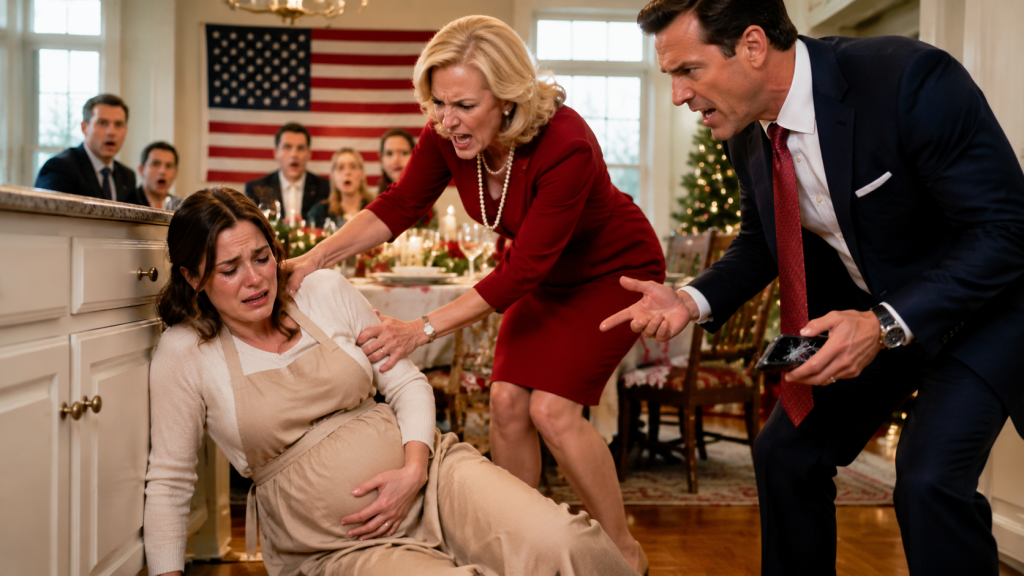
David entered the kitchen.
He looked at me on the floor.
He didn’t rush.
He didn’t panic.
He frowned.
Like I was an inconvenience.
“Anna,” he said coldly, “get up. You’re ruining Christmas.”
I reached for my phone.
My fingers shook.
“Call 911,” I begged.
“I’m bleeding.”
He snatched it from my hand.
Then threw it against the wall.
The sound of breaking glass echoed louder than anything else in the house.
“There will be no ambulance,” he said.
His voice was calm.
Controlled.
Dangerously calm.
“The neighbors will talk. I will not have this scandal.”
I stared at him.
Not believing.
But understanding.
Sylvia crossed her arms.
“She’s dramatic,” she said. “She always is.”
David crouched beside me.
His voice dropped low.
“You are an orphan, Anna. No family. No protection. Don’t forget that.”
That was his mistake.
Because I did have family.
I just never needed to use it.
Until now.
I looked at him through pain and silence.
And said calmly:
“Call my father.”
He laughed.
So did Sylvia.
They thought it was a joke.
A desperate fantasy.
David pulled out his phone.
Dialed the number.
Put it on speaker.
“Let’s hear your imaginary father,” he said.
The call rang once.
Twice.
Then connected.
A voice answered.
Cold.
Controlled.
Powerful.
“Identify yourself.”
David froze slightly.
Then laughed again.
“This is David—your daughter-in-law is overreacting—”
The voice cut through instantly.
“This is the Chief Justice’s private line. State your emergency.”
The room went silent.
Sylvia stopped smiling.
David blinked.
Then straightened.
“Chief Justice?” he said.
He laughed nervously.
“Look, there’s been a domestic misunderstanding—”
The voice sharpened.
“Where is my daughter?”
Silence.
The air changed.
Everything changed.
David’s confidence cracked for the first time.
“Sir… I think there’s been confusion—”
My father spoke again.
“Put her on the phone.”
David hesitated.
For the first time, he looked uncertain.
He handed me the phone.
My hands were shaking.
But my voice was steady.
“Dad…”
There was silence.
Then his voice softened.
“Anna. Are you hurt?”
I swallowed.
“Yes.”
That was all I needed to say.
Because everything after that moved fast.
Too fast for them to stop.
My father’s voice turned sharp again.
“Stay exactly where you are.”
Then he added:
“No one touches my daughter again.”
Twenty-seven minutes later.
The front door exploded open.
Not knocked.
Not opened.
Forced.
Two federal agents entered first.
Then my father.
He didn’t look at Sylvia.
He didn’t look at David.
He looked at me.
On the floor.
And everything in him changed.
“Who did this?” he asked quietly.
No one answered fast enough.
That silence was enough.
Sylvia tried to speak.
“She fell—she’s exaggerating—”
One agent raised a hand.
Silence.
David stepped forward.
“I am a lawyer,” he said quickly. “This is a private matter—”
My father turned his gaze to him.
And David stopped speaking.
Immediately.
Because some people understand authority.
And some people only understand consequences.
My father walked toward me.
Knelt beside me.
For the first time, I saw something I had never seen before.
Not Chief Justice.
Not authority.
Just a father.
“Stay with me,” he said quietly.
“I’m here.”
The ambulance arrived minutes later.
The house filled with silence and panic.
David stood frozen.
Sylvia couldn’t speak.
And I was lifted out of the life I had mistaken for love.
In the hospital, everything blurred.
Doctors.
Monitors.
Voices.
My father never left my side.
At one point, he said softly:
“They thought they could hide behind status.”
I looked at him.
Tears finally falling.
“I believed them,” I whispered.
He shook his head.
“You believed in love.”
A pause.
“That was never your mistake.”
Three days later, everything changed.
Investigation.
Charges.
Evidence.
Statements.
The truth moved faster than their lies ever could.
David tried to explain.
But no explanation survives recorded proof.
Sylvia tried to apologize.
But apology means nothing when harm is already done.
When I finally held my daughter again, she was safe.
Alive.
Small.
Real.
I cried quietly.
Not from pain.
But from understanding.
That I had survived something I should never have had to endure.
Months later, I stood in a different home.
Quiet.
Warm.
Safe.
My father visited often.
Never as Chief Justice.
Always as a man who learned something he didn’t want to know.
That power without protection means nothing.
And silence without safety is just suffering.
I never told anyone again to “call my father.”
Because I never needed to.
They already knew.
And for the first time in my life…
I was no longer the woman who survived their house.
I was the woman who ended it.I never told my in-laws that I am the daughter of the Chief Justice of the Supreme Court.
And I never needed to.
Because I believed love should be enough to protect me.
I was wrong.
When I was seven months pregnant, they forced me to cook the entire Christmas dinner alone.
My mother-in-law, Sylvia, said it was “tradition.”
My husband said it was “not worth arguing about.”
And I told myself it was only one night.
But that night became the moment everything inside me began to break.
The house smelled like roasting turkey, melted butter, cinnamon, and pine cleaner.
It was 5:00 a.m.
I had been standing in the kitchen for hours.
My feet were swollen.
My back ached with every breath.
My baby kicked inside me as if warning me to stop.
But I kept going.
Because Sylvia said:
“If you want to be part of this family, you must learn to serve like one.”
From the dining room, I heard laughter.
Warm.
Comfortable.
Cruel.
My husband David sat at the head of the table with his colleagues.
He looked proud.
Not of me.
Of himself.
Of the image he had built.
A perfect lawyer.
A perfect home.
A perfect life.
Except I was not part of that perfection.
I was the background labor.
The silence behind the success.
The invisible woman cooking in pain.
When I brought out the final tray, I asked softly:
“Can I sit for a moment?”
Sylvia didn’t even look at me.
She slammed her hand on the table.
“Servants don’t sit with guests.”
The words landed heavier than any physical blow.
My husband didn’t move.
Didn’t even glance at me.
He lifted his wine glass and said:
“Listen to my mother, Anna. Don’t embarrass me.”
That was when I realized something terrible.
I was not his wife in this house.
I was his liability.
I turned back toward the kitchen.
My legs shook.
My vision blurred.
I whispered:
“It hurts.”
Sylvia followed me in.
Her heels clicked on the tile like judgment.
“You always exaggerate,” she said. “Pregnancy is not an illness.”
I reached for a chair.
I never made it.
Her hands hit my shoulders.
Hard.
I fell backward into the counter.
Pain exploded through my body.
White light filled my vision.
Then darkness.
My hand flew to my stomach.
Something felt wrong.
Terribly wrong.
“My baby…” I whispered.
I tried to stand.
My legs failed.
David entered the kitchen.
He looked at me on the floor.
He didn’t rush.
He didn’t panic.
He frowned.
Like I was an inconvenience.
“Anna,” he said coldly, “get up. You’re ruining Christmas.”
I reached for my phone.
My fingers shook.
“Call 911,” I begged.
“I’m bleeding.”
He snatched it from my hand.
Then threw it against the wall.
The sound of breaking glass echoed louder than anything else in the house.
“There will be no ambulance,” he said.
His voice was calm.
Controlled.
Dangerously calm.
“The neighbors will talk. I will not have this scandal.”
I stared at him.
Not believing.
But understanding.
Sylvia crossed her arms.
“She’s dramatic,” she said. “She always is.”
David crouched beside me.
His voice dropped low.
“You are an orphan, Anna. No family. No protection. Don’t forget that.”
That was his mistake.
Because I did have family.
I just never needed to use it.
Until now.
I looked at him through pain and silence.
And said calmly:
“Call my father.”
He laughed.
So did Sylvia.
They thought it was a joke.
A desperate fantasy.
David pulled out his phone.
Dialed the number.
Put it on speaker.
“Let’s hear your imaginary father,” he said.
The call rang once.
Twice.
Then connected.
A voice answered.
Cold.
Controlled.
Powerful.
“Identify yourself.”
David froze slightly.
Then laughed again.
“This is David—your daughter-in-law is overreacting—”
The voice cut through instantly.
“This is the Chief Justice’s private line. State your emergency.”
The room went silent.
Sylvia stopped smiling.
David blinked.
Then straightened.
“Chief Justice?” he said.
He laughed nervously.
“Look, there’s been a domestic misunderstanding—”
The voice sharpened.
“Where is my daughter?”
Silence.
The air changed.
Everything changed.
David’s confidence cracked for the first time.
“Sir… I think there’s been confusion—”
My father spoke again.
“Put her on the phone.”
David hesitated.
For the first time, he looked uncertain.
He handed me the phone.
My hands were shaking.
But my voice was steady.
“Dad…”
There was silence.
Then his voice softened.
“Anna. Are you hurt?”
I swallowed.
“Yes.”
That was all I needed to say.
Because everything after that moved fast.
Too fast for them to stop.
My father’s voice turned sharp again.
“Stay exactly where you are.”
Then he added:
“No one touches my daughter again.”
Twenty-seven minutes later.
The front door exploded open.
Not knocked.
Not opened.
Forced.
Two federal agents entered first.
Then my father.
He didn’t look at Sylvia.
He didn’t look at David.
He looked at me.
On the floor.
And everything in him changed.
“Who did this?” he asked quietly.
No one answered fast enough.
That silence was enough.
Sylvia tried to speak.
“She fell—she’s exaggerating—”
One agent raised a hand.
Silence.
David stepped forward.
“I am a lawyer,” he said quickly. “This is a private matter—”
My father turned his gaze to him.
And David stopped speaking.
Immediately.
Because some people understand authority.
And some people only understand consequences.
My father walked toward me.
Knelt beside me.
For the first time, I saw something I had never seen before.
Not Chief Justice.
Not authority.
Just a father.
“Stay with me,” he said quietly.
“I’m here.”
The ambulance arrived minutes later.
The house filled with silence and panic.
David stood frozen.
Sylvia couldn’t speak.
And I was lifted out of the life I had mistaken for love.
In the hospital, everything blurred.
Doctors.
Monitors.
Voices.
My father never left my side.
At one point, he said softly:
“They thought they could hide behind status.”
I looked at him.
Tears finally falling.
“I believed them,” I whispered.
He shook his head.
“You believed in love.”
A pause.
“That was never your mistake.”
Three days later, everything changed.
Investigation.
Charges.
Evidence.
Statements.
The truth moved faster than their lies ever could.
David tried to explain.
But no explanation survives recorded proof.
Sylvia tried to apologize.
But apology means nothing when harm is already done.
When I finally held my daughter again, she was safe.
Alive.
Small.
Real.
I cried quietly.
Not from pain.
But from understanding.
That I had survived something I should never have had to endure.
Months later, I stood in a different home.
Quiet.
Warm.
Safe.
My father visited often.
Never as Chief Justice.
Always as a man who learned something he didn’t want to know.
That power without protection means nothing.
And silence without safety is just suffering.
I never told anyone again to “call my father.”
Because I never needed to.
They already knew.
And for the first time in my life…
I was no longer the woman who survived their house.
I was the woman who ended it.
THE END! THANKS FOR READING!