 Reading Time: 35 minutes
The morning after my son asked when I was finally going to move out, I woke up at 5:12. For a few seconds, I forgot what had happened. Then I heard Renee laughing downstairs.
And I remembered everything. The roast chicken. The silence. The way Daniel had looked at his wife before asking me a question that sounded less like concern and more like an eviction notice.
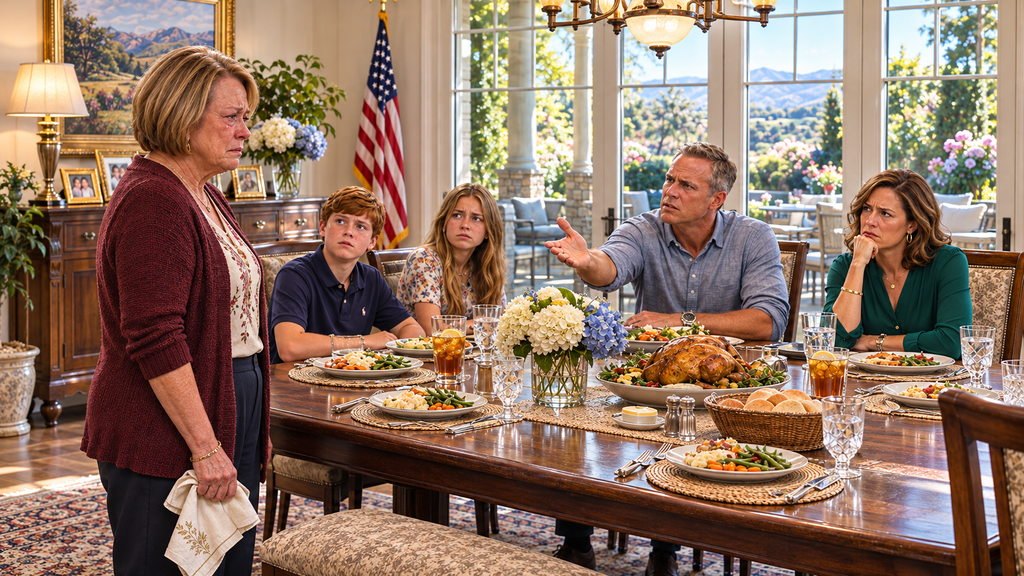
When are you finally going to find somewhere else to live?
I sat on the edge of my bed and stared at the framed photograph of Harold on my nightstand.
He was smiling in that picture.
His silver hair was slightly windblown, his eyes were squinting against the Arizona sunlight, and his arm was wrapped around my shoulders.
We had taken that photograph on our thirty-fifth wedding anniversary.
I touched the glass.
“Oh, Harold,” I whispered. “You wouldn’t believe what our boy has become.”
My throat tightened.
For two years, I had convinced myself that moving into Daniel’s house had been the right decision.
I had told myself I was fortunate.
Fortunate to have family nearby.
Fortunate not to be alone.
Fortunate to be useful.
But that morning, I finally understood something.
Being useful to someone is not the same as being loved by them.
And I had spent far too long confusing the two.
My phone vibrated.
It was a message from my attorney, Adrian Wells.
Good morning, Margaret. I received your voicemail. Please call when convenient.
I looked at the clock.
5:19.
I called him anyway.
He answered on the second ring.
“Mrs. Briggs? Is everything alright?”
“I need to buy a house, Adrian.”
There was a brief pause.
“Of course. We can arrange that.”
“No,” I said quietly. “I mean immediately.”
He heard something in my voice.
“Has something happened?”
I looked at the photograph again.
“Yes,” I replied. “My son has reminded me that I no longer have a home.”
Adrian didn’t interrupt.
Then he said something I would remember for the rest of my life.
“Margaret, you have the financial resources to live almost anywhere you choose. The question isn’t whether you can afford a home.”
He paused.
“The question is where you want to belong.”
I closed my eyes.
And almost immediately, I saw it.
The white porch.
The tall oak trees.
The blue front door.
The Craftsman house on Willow Creek Lane.
The one Daniel and Renee had wanted so desperately.
The one they had been talking about for weeks.
I opened my eyes.
“Adrian?”
“Yes?”
“Find out whether that house on Willow Creek Lane actually sold.”
He promised to have someone investigate.
I hung up.
Then I went downstairs and made breakfast.
Because even on the morning I decided to reclaim my life, old habits were difficult to break.
Renee entered the kitchen at 6:40, wearing her expensive robe and carrying a coffee mug.
“Morning,” she said without looking at me.
“Good morning.”
She opened the refrigerator.
“Did you remember to buy almond milk?”
“Yes. It’s on the second shelf.”
“Good.”
She poured some into her coffee.
Then she looked at the counter.
“Are the children’s lunches ready?”
I stood beside the stove, holding a spatula.
For a moment, I almost answered automatically.
Of course, dear.
Instead, I said, “Not today.”
Renee stopped stirring.
“Excuse me?”
“The children are old enough to help prepare their lunches. I thought they might enjoy doing it themselves.”
She stared at me.
“Margaret, I have a meeting at eight.”
“Then I suggest you get started.”
The kitchen became very quiet.
Renee gave a short, disbelieving laugh.
“Are you upset about last night?”
I turned off the stove.
“Shouldn’t I be?”
She folded her arms.
“Daniel wasn’t trying to hurt your feelings. We simply need our space.”
“I understand.”
“Good. Because we really don’t want this turning into some dramatic family situation.”
I looked directly at her.
“Neither do I.”
Something about my calmness seemed to make her uncomfortable.
She narrowed her eyes.
“Have you started looking at apartments?”
“Yes.”
“Already?”
“Yes.”
Her expression brightened.
“Well. That’s wonderful.”
I smiled.
“It certainly is.”
What Renee didn’t know was that, before the week was over, she would regret every word of that conversation.
And what I didn’t know was that the next telephone call would turn my quiet departure into something neither of us could have imagined.
At 9:17 that morning, Adrian called back.
“Margaret, I have some interesting news.”
I was sitting in my bedroom with a cup of tea.
“What kind of news?”
“The property on Willow Creek Lane is available again.”
My fingers tightened around the cup.
“Are you certain?”
“Quite certain.”
He explained that the original cash buyer had withdrawn after a disagreement over inspection repairs.
The contract had been canceled.
The sellers were frustrated and wanted a clean transaction without months of uncertainty.
The property hadn’t officially returned to the public market.
My heart began beating faster.
“Does my son know?”
“I have no reason to believe he does.”
I looked toward the bedroom door.
Downstairs, I could hear Renee talking loudly on her phone.
“Then let’s make an offer.”
Adrian hesitated.
“Margaret, there’s something I should ask. Are you buying this house because you genuinely want it, or because your son does?”
The question stopped me.
I had expected advice about contracts.
Taxes.
Inspections.
Title insurance.
Not that.
I stood and walked to my window.
Across the street, sunlight was falling on a row of flowering shrubs.
“Both,” I admitted.
Then I thought about Harold.
About the little yellow kitchen I had left behind in Tucson.
About the mornings when my husband used to bring me coffee and say, “There’s no place like our own place.”
I swallowed.
“But mostly,” I continued, “because I haven’t had a place that felt like mine since my husband died.”
Adrian’s voice softened.
“Then I think we should go see it.”
Two hours later, I met a real estate agent named Teresa Navarro outside the house.
I recognized it immediately.
The photographs Renee had taped to the refrigerator hadn’t done it justice.
The property sat behind a low stone wall, with mature trees shading the front lawn.
The wide porch stretched across the front.
White wooden pillars supported the roof.
And beside the walkway stood a rosebush covered in small pink flowers.
I stopped.
Teresa noticed.
“Are you alright?”
I nodded.
“Harold used to grow roses.”
She smiled gently.
“Then I think you might like the backyard.”
Inside, the house smelled faintly of polished wood and fresh paint.
Sunlight spilled through tall windows.
The kitchen had cream-colored cabinets, a deep farmhouse sink, and enough room for a long wooden table.
Upstairs were four bedrooms.
One overlooked the garden.
Another had a window seat beneath a large oak tree.
I could imagine my grandchildren sitting there, reading books on rainy afternoons.
But it was the smallest room that captured my heart.
Its walls were pale yellow.
Not quite the same shade as my old kitchen.
But close.
I stood in the doorway for a long time.
Teresa watched me.
“Would you like a moment alone?”
“Yes, please.”
When she left, I walked to the window.
For the first time in two years, I allowed myself to cry without trying to hide it.
Not because of Daniel.
Not because of Renee.
But because I suddenly realized how much of myself I had abandoned.
I had given up my own home to avoid being lonely.
And somehow, I had become lonelier in a house full of people.
I wiped my cheeks.
Then I went downstairs.
Teresa was waiting near the front door.
“Well?” she asked.
I looked around one final time.
“I’ll take it.”
She blinked.
“You haven’t asked the price.”
“I know approximately what they’re asking.”
“Most buyers want to negotiate.”
“I want a fair transaction. I don’t need to punish the sellers for wanting to move on.”
Teresa smiled.
“Your attorney mentioned that your purchase would be through an LLC?”
“Yes.”
“May I ask the company’s name?”
I took a folded paper from my handbag.
Printed across the top were four words.
H.B. Legacy Holdings, LLC.
Harold Briggs.
My husband’s initials.
The company had been established as part of my financial planning after the lottery win.
Its name had appeared on envelopes delivered to Daniel’s house.
On folders I carried to meetings.
On statements left beside my laptop.
Daniel had seen those words countless times.
He had even picked up one of the envelopes once and asked, “Another pension thing?”
I had answered, “Something I’m handling for the future.”
He hadn’t asked another question.
For months, my son had been so uninterested in my life that he had overlooked the very company that would soon purchase the home he wanted most.
I handed Teresa the paper.
“Please make the offer in that name.”
She nodded.
“And who should I contact about the financial arrangements?”
“My attorney.”
“And the funds?”
I looked around the beautiful room.
“Available.”
Teresa’s professional smile became a little wider.
“How quickly would you like to close?”
I answered without hesitation.
“As quickly as the title company can safely complete everything.”
Six days after my son asked me to leave, the deed was recorded.
The house on Willow Creek Lane belonged to H.B. Legacy Holdings.
And the people who had made me feel homeless still had absolutely no idea.
During those six days, I behaved almost normally.
Almost.
I no longer woke up at five to prepare everyone else’s breakfast.
I stopped washing Daniel’s shirts.
I stopped cleaning Renee’s bathroom.
I stopped canceling my own appointments whenever they needed someone to watch the children.
Instead, I began doing something unfamiliar.
I made plans for myself.
I visited furniture stores.
I met with an interior designer.
I chose a comfortable blue sofa, a walnut dining table, and soft curtains for the bedrooms.
I asked a gardener to prepare a flowerbed for roses.
And I arranged for my belongings to be moved into temporary storage while the house was being prepared.
Every evening, I returned to Daniel’s home.
Every evening, Renee seemed more irritated.
On the third day, she cornered me beside the washing machine.
“Margaret, the laundry has been sitting here all afternoon.”
I glanced at the basket.
“Yes, I noticed.”
“Well?”
“Well, what?”
She stared.
“Are you going to fold it?”
“No.”
Her mouth opened.
Then closed.
“Are you serious?”
“Completely.”
She put her hands on her hips.
“You’ve become very difficult lately.”
I looked at her.
“Have I? Or have I simply stopped doing things you never thanked me for?”
Her face turned pink.
“I don’t appreciate that accusation.”
“Then perhaps you should consider why it sounds familiar.”
She stepped closer.
“Listen, Margaret. We have been very generous letting you stay here.”
Those words struck something deep inside me.
Letting you stay.
As though I had wandered in from the street.
As though the two years of cooking, cleaning, childcare, errands, and financial help had never happened.
I thought of the $48,000 I had given Daniel shortly after moving in.
Money from selling my house.
He had told me they were struggling with repairs and unexpected expenses.
I had transferred it without hesitation.
I had never asked for repayment.
And I had never mentioned it again.
Until now.
“Renee,” I said calmly, “would you like to know how much I have contributed to this household?”
She laughed.
“Please. You don’t even pay rent.”
I nodded slowly.
“That’s what you believe.”
“It’s the truth.”
“No. It’s the part of the truth that’s convenient for you.”
She stared at me.
I continued.
“Two years ago, I gave Daniel forty-eight thousand dollars when your finances were difficult. I’ve paid for groceries, school supplies, children’s activities, household repairs, and more things than I care to remember.”
Renee’s expression changed.
“Daniel said that money was a family gift.”
“It was.”
“Then why are you bringing it up?”
“Because gifts don’t become invisible just because the giver refuses to demand gratitude.”
She said nothing.
For the first time, I watched her struggle to find an answer.
Then she turned away.
“Whatever. Just make sure you’re out before the holidays.”
I watched her leave.
And I realized that my departure wasn’t simply going to surprise her.
It was going to expose something about her that she had worked very hard to hide.
On the fourth evening, my granddaughter Sophie knocked on my bedroom door.
She was fourteen, all long limbs and serious eyes.
“Grandma?”
“Come in, sweetheart.”
She entered carrying a small stack of folded paper.
“Can I ask you something?”
“Anything.”
She sat beside me.
“Are you leaving because of what Dad said?”
My heart tightened.
I considered telling her everything was fine.
Adults have a terrible habit of lying to children because we think the truth will hurt them.
But Sophie wasn’t a little girl anymore.
And she deserved something more honest than a cheerful excuse.
“Partly,” I admitted.
She looked down.
“I heard them talking about it before dinner.”
I waited.
She unfolded the papers in her lap.
“Mom said you needed to go before Christmas because they wanted to turn your room into an office.”
I nodded.
“And Dad said it would be easier if he just asked you directly.”
The words hurt more than I expected.
Not because they were new.
Because they confirmed what I had suspected.
My son hadn’t spoken impulsively.
He had rehearsed that moment.
I looked at Sophie.
“Did they ask you to keep it a secret?”
She nodded.
“Mom said it was grown-up business.”
I took her hand.
“Sweetheart, none of this is your responsibility.”
Her eyes filled.
“But I don’t want you to go.”
“Oh, Sophie.”
I pulled her close.
She wrapped her arms around me.
For a moment, I held her the way I had held Daniel when he was little.
Back when he believed I could fix everything.
“I’ll still be your grandmother,” I whispered. “A different address can’t change that.”
She pulled away.
“Promise?”
“Promise.”
Then she handed me the folded papers.
“What’s this?”
She smiled through her tears.
“It’s a drawing of your old house. The one in Tucson. I made it from the pictures in your album.”
I unfolded the first sheet.
There was the yellow kitchen.
The front porch.
The rosebushes.
And two little figures standing in the doorway.
One was me.
The other was Harold.
Across the top, Sophie had written:
The place where Grandma was happy.
I stared at those words.
Then I covered my mouth.
Sophie looked worried.
“Do you hate it?”
I shook my head.
“No, sweetheart.”
My voice broke.
“I think it’s the most beautiful thing anyone has given me in a very long time.”
That night, after she went to bed, I put the drawing inside my handbag.
It was the first thing I carried into my new home.
The next day brought the first unexpected twist.
At 10:32 in the morning, my attorney called.
“Margaret, there’s a matter we need to discuss.”
I was sitting in a café near the real estate office.
“Is there a problem with the house?”
“No. The closing is progressing well.”
“Then what is it?”
He hesitated.
“Have Daniel or Renee asked you to provide funds for their mortgage application?”
I frowned.
“No.”
“Have you agreed to give them two hundred and fifty thousand dollars?”
My hand went cold.
“What?”
Adrian exhaled.
“A mortgage broker contacted our office after receiving a letter naming you as the proposed source of a substantial down-payment gift.”
For several seconds, I couldn’t speak.
“That’s impossible.”
“The letter wasn’t signed by you. But it stated that you had agreed to provide the funds.”
I stared through the café window.
People were walking past with shopping bags.
A mother was holding a toddler’s hand.
The world continued moving normally while something inside me began to crumble.
“What exactly did they say?”
Adrian read the relevant portion aloud.
It described me as a financially secure parent who intended to make a voluntary, nonrepayable contribution toward the purchase of a primary residence for Daniel and Renee.
Two hundred and fifty thousand dollars.
My son had been discussing a gift of a quarter of a million dollars.
A gift I had never offered.
Then he had asked me when I was moving out.
I pressed my fingers against my forehead.
“Adrian, why would they think I had that money?”
“Do they know what happened to the proceeds from your Tucson home?”
“They know I sold it.”
“Do they know how much remained afterward?”
“No.”
“Then perhaps they assumed.”
I looked down at my coffee.
Suddenly, the conversations of the previous months made terrible sense.
Daniel asking whether my retirement accounts were doing well.
Renee making comments about the price of senior living communities.
The questions about whether I had considered giving the grandchildren early inheritances.
They weren’t only trying to remove me from their house.
They had been hoping to use my savings to buy a better one.
A house where, apparently, I would not be welcome.
“Can they do anything with that letter?” I asked.
“Not without proper verification and documentation. We are informing the lender that you have made no such commitment.”
I took a long breath.
“Please put that in writing.”
“Already underway.”
“And Adrian?”
“Yes?”
“Don’t tell Daniel anything about my finances.”
“Of course.”
I ended the call.
Then I sat there for nearly twenty minutes.
I had thought my son’s question at dinner was the cruelest part of this story.
I was wrong.
Because now I understood that he hadn’t simply forgotten what I had done for him.
He had begun to treat my love as a resource.
Something to withdraw from whenever convenient.
And when I was no longer convenient, I could be moved aside.
I looked at my reflection in the café window.
Seventy-one years old.
Silver hair.
Wrinkles around my eyes.
A widow who had spent two years trying not to be a burden.
And somewhere behind that reflection was a woman who had quietly won eighty-nine million dollars.
I almost laughed.
Not because it was funny.
Because the irony was unbearable.
They were trying to extract a quarter of a million dollars from a woman they considered helpless.
And they had no idea she could have bought the entire neighborhood.
On the sixth day, I signed the final documents.
The closing room was quiet.
Adrian sat beside me.
Teresa stood near the window.
A representative from the title company placed the papers in front of us.
I signed where indicated.
Page after page.
When the final signature was complete, Teresa handed me a small silver key.
“Congratulations, Mrs. Briggs.”
I looked at it in my palm.
Such a small thing.
Just metal.
Teeth cut into one end.
A simple key that could fit inside my closed hand.
Yet I felt as though someone had returned a piece of my soul.
“Thank you,” I whispered.
Teresa smiled.
“Welcome home.”
Two words.
Welcome home.
I hadn’t realized how desperately I needed to hear them.
That afternoon, I drove to Willow Creek Lane alone.
I parked beneath the trees.
Walked up the porch steps.
And unlocked the blue front door.
The house was empty.
My footsteps echoed on the wooden floors.
I walked through the living room.
Into the kitchen.
Up the staircase.
Then back downstairs.
Finally, I stood in the center of the living room and said aloud, “Harold, I did it.”
There was no answer.
Of course there wasn’t.
But sunlight was pouring through the windows, and the air smelled faintly of roses from the garden.
For one impossible moment, I could almost feel him beside me.
I sat on the floor.
At seventy-one years old, wearing expensive shoes and holding the keys to a beautiful house, I sat on the floor like a child.
And cried.
I cried for the home I had sold.
For the husband I had buried.
For the years I had spent trying to earn a place in my own son’s life.
And for the woman I had almost forgotten.
When the tears finally stopped, I wiped my face with a tissue.
Then I opened my handbag and took out Sophie’s drawing.
I placed it on the mantel.
“That’s where we begin,” I whispered.
The following morning, I told Daniel I was leaving.
He was standing in the kitchen, scrolling through messages on his phone.
“Daniel?”
“Yeah, Mom?”
“I found somewhere to live.”
He looked up.
“Really?”
“Yes.”
“When?”
“I’m moving tomorrow.”
His eyebrows rose.
“Tomorrow?”
“Yes.”
He appeared surprised.
Then relieved.
“Well, that’s great.”
I watched his face.
I waited for him to ask where.
Or whether I liked the place.
Or whether I needed help.
He didn’t.
Instead, he said, “Renee will be happy. She’s been trying to get the office plans finalized.”
I felt a small ache.
Even after everything, part of me had hoped he might say something different.
“I see.”
He returned to his phone.
“Did you find a senior community?”
“No.”
“An apartment?”
“No.”
He frowned.
“Then where are you going?”
“A house.”
He looked amused.
“Mom, buying a house at your age is a lot of responsibility.”
I smiled faintly.
“I’ve managed before.”
“Yeah, but things are different now.”
“Are they?”
He sighed.
“Just don’t make any impulsive financial decisions. You know how complicated property ownership can be.”
I looked at him.
My son.
The boy Harold and I had taught to ride a bicycle.
The teenager whose college tuition we had paid.
The young man whose wedding we had helped organize.
And now he was explaining property ownership to me as though I were confused.
“I’ll be careful,” I said.
He nodded.
“Good.”
Then he added, almost casually, “By the way, Mom, have you thought any more about helping us with a down payment when we find another house?”
There it was.
I stood very still.
“What down payment?”
He shifted.
“Well, we’ve talked about it before.”
“No, Daniel. You’ve talked around it. You’ve never asked me directly.”
He looked uncomfortable.
“Renee thought you might want to help us get something bigger. Especially since we’ve supported you for two years.”
I felt something settle inside me.
Not anger.
Not grief.
Clarity.
“Daniel,” I said softly, “would you have asked me to leave if I had given you that money?”
His eyes widened.
“Mom, come on.”
“Answer me.”
He looked toward the hallway.
“Those are two different things.”
“Are they?”
He rubbed the back of his neck.
“We need space. The kids are growing. Renee works from home.”
“And where would I have gone?”
He frowned.
“You said you wanted independence.”
“No. You said I wanted independence.”
“Mom, you’re making this difficult.”
I nodded.
“Then I’ll simplify it.”
I looked directly into his eyes.
“I am not giving you two hundred and fifty thousand dollars.”
He froze.
“How did you—”
He stopped.
And in that unfinished sentence, I had my answer.
He knew exactly what I was talking about.
I turned away.
“Goodbye, Daniel.”
“Mom, wait.”
I stopped.
He swallowed.
“Where exactly did you find this house?”
I looked over my shoulder.
“You’ll find out eventually.”
Then I walked upstairs.
And began packing the last of my clothes.
Moving day arrived beneath a brilliant Arizona sky.
A small moving truck pulled into the driveway at eight.
I had already packed most of my belongings.
Clothes.
Books.
Photographs.
Harold’s wristwatch.
My wedding album.
The old ceramic bowl Sophie had made for me in elementary school.
I left behind the furniture Daniel and Renee had purchased.
The kitchen appliances.
The bedding they had lent me.
I took only what belonged to me.
Renee appeared in the doorway wearing exercise clothes.
“What’s all this?”
“I’m moving.”
“Today?”
“Yes.”
She stared at the truck.
“Where?”
“To my new home.”
She glanced at the movers.
“You actually hired professionals?”
“I thought that would be easier.”
She gave a short laugh.
“Well, I suppose you can spend your savings however you want.”
I didn’t respond.
She watched a mover carry out a small wooden chest.
“Just make sure you don’t accidentally take anything of ours.”
The man stopped.
I felt heat rise in my cheeks.
But I kept my voice steady.
“Everything has been inventoried. Nothing belonging to you is being removed.”
Renee shrugged.
“Just checking.”
Then she looked toward the garage.
“Did you leave the spare house key?”
I reached into my handbag.
Pulled out the key.
And placed it on the entry table.
“Yes.”
For a moment, neither of us spoke.
Then Renee said, “Well. Good luck.”
I looked around one final time.
Two years earlier, I had entered this house carrying suitcases and hope.
I was leaving with fewer possessions.
But something far more valuable.
My dignity.
“Thank you,” I said.
Then I walked outside.
Sophie and her younger brother, Max, were waiting near the driveway.
Max ran to me.
“Grandma!”
He wrapped his arms around my waist.
“Are you really leaving?”
“Yes, darling.”
“Can we still come over?”
“Whenever your parents arrange it and I’m available.”
He looked worried.
“Will you still make pancakes?”
I laughed through the tears gathering in my eyes.
“Of course.”
Sophie hugged me next.
She whispered, “Don’t forget you promised.”
“I haven’t.”
She pressed something into my hand.
A tiny rose-shaped keychain.
“I bought it with my allowance.”
My throat closed.
“Oh, sweetheart.”
“So you’ll always remember us.”
I bent and kissed her forehead.
“As if I ever could forget.”
Then I got into my car.
I did not look back until I reached the corner.
When I did, I saw the children standing together.
Renee had already gone inside.
Daniel wasn’t home.
And somehow, that told me everything.
For the first two days in my new home, the silence was extraordinary.
No one called from upstairs demanding clean socks.
No one asked where the almond milk was.
No one interrupted my breakfast to announce a last-minute appointment.
I slept until eight.
I drank coffee on the porch.
I read half a novel without stopping to prepare lunch.
I planted six rosebushes along the front walkway.
And one morning, I played Harold’s favorite music while making scrambled eggs.
I cried halfway through the second song.
But I kept listening.
Grief, I was discovering, doesn’t disappear when life improves.
It simply becomes something you can carry without allowing it to make every decision.
On the third day, Teresa called.
Her voice sounded strange.
“Margaret, I need to warn you about something.”
I set down my watering can.
“What happened?”
“Your son and daughter-in-law contacted my office.”
My heart gave a hard thump.
“About Willow Creek Lane?”
“Yes.”
Apparently, Renee had been browsing property records and old listings, hoping the house might become available again.
She discovered that the sale had closed.
Six days after the original contract had fallen apart.
The buyer was listed as H.B. Legacy Holdings.
Renee recognized the name.
She had seen it on envelopes at their house.
At first, she assumed it was a financial company helping me with my retirement.
Then Daniel remembered the folders.
The phone calls.
The papers I had occasionally signed at the kitchen table.
And suddenly, they began asking questions.
“Did you tell them anything?” I asked.
“No. I explained that I couldn’t disclose private client information.”
I exhaled.
“Thank you.”
“But Margaret, they seemed very upset.”
I looked out toward my garden.
“I’m sure they were.”
Teresa hesitated.
“Would you like me to have someone contact them?”
“No.”
I smiled faintly.
“I think it’s time they came to the correct address.”
They arrived the following afternoon.
I was sitting on the porch with a glass of iced tea when Daniel’s SUV pulled into the driveway.
Renee climbed out first.
She looked at the house.
Then at me.
Then back at the house.
Her mouth fell open.
Daniel stepped out behind her.
For several seconds, neither spoke.
I took a sip of tea.
“Hello, Daniel.”
He stared.
“Mom?”
“Hello, Renee.”
Renee marched toward the porch.
“What are you doing here?”
I looked at her.
“Enjoying the afternoon.”
“Don’t be ridiculous. Why are you sitting on this porch?”
“Because it’s my porch.”
Silence.
Daniel stopped halfway up the walkway.
“What?”
I set down my glass.
“I bought the house.”
Renee laughed.
It was a sharp, nervous sound.
“No, you didn’t.”
“Yes, I did.”
“This house sold for nearly two million dollars!”
“I know.”
She looked at Daniel.
Then back at me.
“Margaret, you cannot possibly afford this.”
I studied her face.
For two years, she had spoken to me as though I were incapable of managing my own life.
Now she stood on a property she had dreamed of owning, demanding an explanation for why I was there.
“Would you like to sit down?” I asked.
“No!”
Daniel climbed the steps.
“Mom, please tell me what’s going on.”
I folded my hands in my lap.
“Your father and I worked hard all our lives. After he died, I made some financial decisions. Recently, circumstances changed significantly.”
“How significantly?”
I hesitated.
I had planned to keep the lottery confidential for longer.
But looking at my son’s face, I understood that hiding the truth forever would only create another kind of prison.
So I decided to tell him.
Not because he was entitled to know.
But because I was tired of being treated as though my worth depended on what he believed I possessed.
“Three months ago,” I said, “I won the lottery.”
Daniel stared.
Renee stopped moving.
“What lottery?” he asked.
“The state lottery.”
“How much?”
I looked directly at him.
“Eighty-nine million dollars was the advertised prize.”
For a moment, the world seemed to hold its breath.
A bird landed on the stone wall.
A car passed along the street.
Somewhere nearby, a dog barked.
Then Renee whispered, “What?”
I nodded.
“My attorneys have handled the claim, taxes, trusts, and financial arrangements. I am very comfortable.”
Daniel stumbled backward into a porch chair.
“Eighty-nine million?”
“That was the jackpot.”
Renee pressed both hands against her mouth.
Then, astonishingly, she began to smile.
“Oh, Margaret.”
Her voice changed instantly.
The sharpness disappeared.
She sounded almost tender.
“Oh my goodness. Why didn’t you tell us?”
I watched her carefully.
“Would it have changed anything?”
“Of course!”
She took a step toward me.
“We’re family!”
I looked at her.
“Were we not family before?”
Her smile faltered.
Daniel whispered, “Mom, I can’t believe this.”
“Neither could I.”
He stared at the house.
Then at me.
Then at the driveway.
“You bought this property outright?”
“Yes.”
“With cash?”
“Yes.”
Renee let out a breathless laugh.
“Well, that’s incredible.”
She looked around the porch.
“Absolutely incredible.”
Then she said the words I had somehow known were coming.
“So… what’s the plan?”
I tilted my head.
“The plan?”
“Yes. For the house.”
I looked at her.
“I’m going to live in it.”
She blinked.
“Right. Of course. But it’s enormous for one person.”
I said nothing.
She hurried on.
“And you know how much we loved this place.”
“Yes. I remember.”
Daniel looked up.
“Mom, why would you buy the exact house we wanted?”
I considered his question.
Then I answered carefully.
“Because I loved it too. Because it reminded me of the home I lost. And because I finally had the opportunity to choose something for myself.”
Renee shook her head.
“But you knew how badly we wanted it.”
“Yes.”
“Then don’t you think this is a little cruel?”
I stared at her.
Cruel.
The woman who had treated me like an unpaid housekeeper was calling me cruel for purchasing a house with my own money.
I folded my napkin.
The same slow, deliberate motion I had made at the dinner table.
“Renee,” I said, “six days before I bought this house, my son asked me when I was finally going to leave yours.”
Her expression hardened.
“That was different.”
“How?”
“We needed the space!”
“And now you believe I should give you mine?”
Daniel looked between us.
“Mom, nobody said give.”
I turned to him.
“Then what are you asking?”
He looked down.
Renee answered for him.
“Well, surely we could work something out.”
I nodded.
“I see.”
Her eyes brightened.
“Perhaps we could purchase it from you on a family arrangement.”
“A family arrangement?”
“Yes. Something affordable.”
I waited.
She continued.
“You have all that money now. It’s not as though you need to make a profit.”
I looked toward the roses beside the porch.
Then back at her.
“Renee, I didn’t buy this house as an investment in your future.”
Her smile disappeared.
“I bought it because I needed a home.”
Daniel rose slowly.
“Mom, can we talk privately?”
I nodded.
“Of course.”
Renee looked offended.
“Why privately?”
Daniel’s voice sharpened.
“Because I’d like to speak to my mother.”
It was the first time in two years I had heard him defend my right to be something other than useful.
And even then, I wasn’t certain whether he meant it.
We walked into the living room.
Daniel looked around as though he were entering a dream that had somehow gone wrong.
“It’s beautiful,” he said quietly.
“Yes.”
He touched the back of the new blue sofa.
Then he saw Sophie’s drawing on the mantel.
He picked it up.
“Did Sophie make this?”
“Yes.”
He studied it.
For a moment, his face softened.
Then he put it down.
“Mom, why didn’t you tell me you were having such a hard time living with us?”
I almost laughed.
“Would you have listened?”
He looked hurt.
“Of course.”
“Daniel, I told you I was exhausted. I told you I was lonely. I told you I missed having time for myself.”
He frowned.
“I thought you just needed activities.”
“No. I needed to feel like a person.”
He said nothing.
I continued.
“Every time I tried to explain, you told me Renee was under stress. Or the children needed help. Or things would settle down.”
He looked toward the window.
“I didn’t realize it was that bad.”
“That’s because you never asked.”
He swallowed.
Then he said, “You could have told us about the money.”
I stared at him.
“Why?”
“Because we’re family.”
“And what would have happened?”
He hesitated.
I answered for him.
“Renee would have started making plans.”
He didn’t deny it.
“She already has,” I said.
His head snapped toward me.
“What do you mean?”
I walked to a small cabinet and removed a folder Adrian had prepared.
Inside was a copy of the unsigned mortgage gift letter.
I handed it to him.
Daniel looked at the first page.
Then the second.
His face turned pale.
“Where did you get this?”
“The lender wanted confirmation that I had agreed to give you two hundred and fifty thousand dollars.”
He closed his eyes.
“Mom…”
“I never agreed.”
“I know.”
“Then why was my name on that document?”
He sat down heavily.
For a long moment, he said nothing.
Then he whispered, “Renee thought we could ask you after the offer was accepted.”
I stared.
“So you were counting on money you hadn’t asked for.”
He nodded miserably.
“She said you had savings. She thought you’d want to help.”
“Did you?”
He rubbed his face.
“I thought maybe.”
I sat across from him.
“Daniel, I helped you many times. I gave you money when your roof needed repairs. I paid for things the children needed. I rearranged my life to make yours easier.”
His eyes filled.
“I know.”
“Do you?”
He looked at me.
“Because at dinner, when you asked me to leave, you spoke as though I had contributed nothing.”
He lowered his head.
I took a breath.
“I would have helped you move furniture. I would have helped you paint a room. I would have watched the children while you worked. But no one had the right to promise away my savings.”
Daniel wiped his eyes.
“I’m sorry.”
I looked at my son.
I had wanted those words for so long.
But now that they had arrived, they felt strangely incomplete.
“Are you sorry you hurt me?” I asked.
“Of course.”
“Or are you sorry you discovered I have money?”
His face crumpled.
“Mom, that’s not fair.”
“Neither was what you did.”
He looked away.
And for the first time, I did not rush to comfort him.
Renee didn’t take the news well.
When Daniel returned to the porch, she demanded to know what we had discussed.
He told her about the letter.
Her expression changed immediately.
“That was just paperwork.”
I stepped into the doorway.
“It was paperwork involving my money.”
She crossed her arms.
“We were going to ask you.”
“After representing to a lender that I had already agreed?”
Her cheeks flushed.
“You’re making us sound like criminals.”
“No,” I replied. “I’m asking you not to make financial promises in my name.”
Daniel looked exhausted.
“Renee, we shouldn’t have done that.”
She turned on him.
“Oh, now you’re taking her side?”
“It’s not about sides.”
“It certainly seems like it!”
She pointed toward the house.
“This is ridiculous. Your mother has a fortune, and we’re standing here worrying about a down payment.”
I felt the final piece of my old life fall away.
There it was.
Not concern.
Not love.
Not relief that I was safe.
Only calculation.
I walked down one porch step.
“Renee, I want you to listen very carefully.”
She stared.
“My finances are not a family account.”
Her mouth tightened.
“My home is not a reward for treating me kindly.”
I took another step.
“And my grandchildren are not bargaining chips.”
She looked startled.
“I never said they were.”
“Then don’t make them part of a discussion about my money.”
Daniel stood beside her.
“Mom—”
I held up a hand.
“I love you. Both of you are the parents of children I adore. I want our family to be healthy.”
My voice shook.
“But I will never again buy a place at your table.”
Neither spoke.
I continued.
“You are welcome to rebuild a relationship with me. But that relationship must exist independently of what I own.”
Renee gave a bitter laugh.
“So what? We get nothing?”
I looked at her.
And suddenly, I felt terribly sad.
Because she had answered a question I hadn’t even asked.
“That,” I said quietly, “is exactly what you’ve been worried about since you arrived.”
She opened her mouth.
Then closed it.
Daniel took her arm.
“We should go.”
She pulled away.
“Daniel!”
“We’re leaving.”
I watched them walk toward the SUV.
Renee was furious.
Daniel looked like a man carrying something much heavier than disappointment.
Before he reached the car, he turned.
“Mom?”
“Yes?”
“Are we still your family?”
My eyes filled.
“Of course you are.”
His shoulders relaxed slightly.
Then I added, “But being family doesn’t mean you get to decide how much of myself I’m required to give away.”
He nodded.
And drove away.
I stood on the porch until the vehicle disappeared.
Then I went inside.
Locked the door.
And cried.
Not because I regretted what I had said.
But because loving someone doesn’t always protect you from the pain of finally telling them no.
I thought that would be the end of the confrontation.
I was wrong.
Three weeks later, Adrian called with another warning.
“Margaret, Daniel has contacted a lawyer.”
I was arranging roses in a glass vase.
I stopped.
“What about?”
“He has asked questions about whether your recent financial decisions indicate that you need assistance managing your affairs.”
For a moment, I couldn’t understand what he meant.
Then I felt cold.
“Are you saying my son thinks I’m incapable of handling my own money?”
“I’m saying he’s exploring whether there are legal grounds to intervene.”
I sat down.
The room seemed to tilt.
I had expected anger.
Resentment.
Perhaps demands.
But I hadn’t expected this.
“He wants control,” I whispered.
Adrian was careful.
“We don’t know his full intentions. Asking a lawyer questions doesn’t mean he has a valid claim. But we should be prepared.”
I thought of the dinner table.
The way Daniel had spoken to me like a confused old woman.
The way Renee had described my independence as a problem.
And suddenly, a frightening possibility occurred to me.
What if they decided my money was evidence that I had become irresponsible?
What if buying a beautiful house at seventy-one was presented as proof that I couldn’t make sensible decisions?
I looked at the roses.
The sunlight.
The books.
The home I had finally built.
Then I straightened my back.
“What do we do?”
Adrian answered calmly.
“We document everything. We make sure your existing estate plan and financial arrangements are current. And if anyone makes a formal claim, we respond through the appropriate legal process.”
I nodded.
“Good.”
Then I asked one more question.
“Adrian, do you think I’ve made a mistake?”
“With the house?”
“With everything.”
There was a pause.
“Margaret, you sought independent advice, completed appropriate due diligence, and made decisions about your own assets. Nothing you’ve described suggests that you lacked the capacity to do so.”
I swallowed.
“Thank you.”
He continued.
“But I think there’s something more important you need to remember.”
“What?”
“You don’t have to prove you’re a good mother by surrendering control of your life.”
I closed my eyes.
And whispered, “I wish I’d learned that sooner.”
A formal petition never followed.
Adrian’s office sent a clear response to the attorney Daniel had consulted, outlining my position and directing any further legal concerns through counsel.
My financial affairs remained under my control.
But the damage had been done.
For several weeks, I refused to meet Daniel privately.
I continued seeing Sophie and Max through arrangements their parents agreed to.
Sometimes they came for Saturday lunch.
Sometimes we went to museums.
One afternoon, I took them to a botanical garden, where Max spent almost an hour examining cactus flowers.
The children gradually stopped asking why the adults were upset.
And we began discovering a new kind of relationship.
One where I could simply be Grandma.
Not the driver.
Not the cook.
Not the housekeeper.
Just Grandma.
We made pancakes because we wanted to.
We baked cookies when the kitchen was already messy.
And whenever I became tired, I said so.
No one complained.
One Saturday, Sophie found me sitting beside the rose garden.
“Grandma?”
“Yes, sweetheart?”
“Are you happier now?”
I thought about the question.
Then I smiled.
“Yes.”
She sat beside me.
“Even though you live alone?”
I looked toward the house.
“I do get lonely sometimes.”
She nodded thoughtfully.
“Me too.”
I put my arm around her shoulders.
“But there’s a difference between being alone and feeling unwanted.”
She leaned against me.
“I think I understand.”
We sat quietly for a while.
Then she asked something that nearly stopped my heart.
“Grandma, do you think Dad still loves you?”
I looked at the little girl beside me.
And for a moment, I saw Daniel at her age.
Running through our Tucson backyard.
Calling for Harold.
Laughing when the garden hose sprayed him.
I felt tears gather.
“Yes, Sophie,” I said. “I believe he does.”
She looked relieved.
“Then why was he mean?”
I took a breath.
“Sometimes people become so focused on what they want that they forget to consider how their choices hurt others.”
She thought about that.
“Can they change?”
I looked at the roses.
“I hope so.”
The biggest surprise came two months later.
I was sitting in the kitchen reading when someone knocked.
It was Daniel.
Alone.
He stood on the porch holding a brown paper bag.
No Renee.
No expensive car full of demands.
Just my son.
“Hi, Mom.”
“Hello, Daniel.”
He looked nervous.
“Can I come in?”
I considered him.
Then stepped aside.
We sat at the kitchen table.
He placed the bag between us.
“I brought something.”
Inside was a small wooden box.
Old.
Scratched.
Familiar.
I recognized it immediately.
“Where did you find this?”
“In the garage.”
I lifted the lid.
Inside were photographs.
Old postcards.
A few coins.
And a small notebook with Harold’s handwriting on the cover.
My husband’s garden notebook.
I pressed my hand against my mouth.
“I thought this had been lost.”
Daniel nodded.
“It was in one of Dad’s toolboxes.”
I opened the notebook.
There were lists of fertilizer.
Rose varieties.
Planting dates.
Little drawings of the backyard.
On one page, Harold had written:
Margaret says the yellow roses are her favorites. Plant more next spring.
My eyes filled.
“Oh, Harold.”
Daniel watched me.
Then he whispered, “I’m sorry, Mom.”
I didn’t answer immediately.
He continued.
“I’ve been trying to figure out how to say this without making excuses.”
I closed the notebook.
“Then don’t make excuses.”
He nodded.
“I won’t.”
He looked down at his hands.
“When Dad died, I thought bringing you into our house was the right thing.”
“It might have been.”
He swallowed.
“At first, I liked having you there. The kids loved it. You made everything easier.”
I listened.
“And then I started taking it for granted.”
His eyes reddened.
“I didn’t see what Renee and I were asking of you.”
I shook my head.
“You saw it, Daniel. You just stopped thinking about what it cost me.”
He accepted the correction.
“Yes.”
He stared at the table.
“And when Renee wanted the office, I convinced myself you would be happier somewhere else.”
I waited.
“Because that was easier than admitting I wanted the room.”
A tear rolled down his cheek.
I felt my own eyes sting.
“But the worst thing,” he whispered, “was the letter.”
I said nothing.
“I knew we hadn’t asked you about the money. I knew it was wrong to let Renee put that information into the mortgage process.”
He wiped his face.
“I should have stopped it.”
“Yes,” I said. “You should have.”
He nodded.
Then came the words I hadn’t expected.
“And when I found out about the lottery, I got scared.”
I frowned.
“Scared of what?”
“That you wouldn’t need me anymore.”
I stared at him.
He laughed bitterly at himself.
“Isn’t that awful? You spent two years feeling unwanted in my house, and when you finally found somewhere you could be happy, all I could think was that you didn’t need me.”
My throat tightened.
“Daniel…”
He shook his head.
“Then Renee started talking about lawyers and financial protection. I let myself believe maybe you were being taken advantage of.”
“By whom?”
“Your advisers. Anyone.”
“And did you have evidence?”
“No.”
He looked at me.
“I wanted an explanation that made me the responsible son instead of the selfish one.”
I sat very still.
For the first time since Harold died, I saw my son looking at himself without hiding behind excuses.
Then he said something that broke my heart.
“Dad would have been ashamed of me.”
I closed my eyes.
A tear slid down my cheek.
“Your father would have wanted you to do better.”
Daniel nodded.
“I know.”
We sat in silence.
Then I reached across the table.
Not to erase what had happened.
Not to pretend it didn’t matter.
But because he was still my son.
I placed my hand over his.
“I love you, Daniel.”
He began crying.
“I love you too, Mom.”
I squeezed his hand.
“But love isn’t enough if we don’t treat each other with respect.”
He nodded.
“I know.”
“And I need time.”
“I understand.”
He looked toward the window.
Then back at me.
“I’m not here to ask for money.”
“I know.”
“And I’m not here to ask about the house.”
I smiled faintly.
“Good. Because I’m keeping it.”
For the first time in months, he laughed.
A real laugh.
Small.
Embarrassed.
But real.
Then he wiped his face.
“Mom?”
“Yes?”
“Could I come back sometime?”
I looked at him.
“To visit?”
He nodded.
“Just to visit.”
I took a breath.
“I think we could start there.”
Rebuilding our relationship was not easy.
An apology is an opening.
Not an eraser.
Daniel had to learn that I wasn’t available every time he needed something.
I had to learn that refusing a request didn’t make me a bad mother.
And Renee had to learn something she disliked even more.
My boundaries were not temporary.
She called several times.
First to congratulate me.
Then to discuss the children’s future.
Then to mention that a beautiful house had appeared on the market near theirs.
Each conversation eventually returned to money.
So I stopped discussing it.
Eventually, she stopped calling as often.
Daniel and Renee began attending marriage counseling.
I didn’t ask for details.
Their marriage was their responsibility.
My happiness was mine.
Meanwhile, I began making plans of my own.
Through my attorneys, I established education trusts for Sophie and Max.
The money was carefully protected and wasn’t accessible for their parents’ ordinary expenses.
I also created a charitable foundation in Harold’s name.
Its first project provided emergency housing assistance for older adults who had lost a spouse and were struggling to remain independent.
I knew what it felt like to lose the person who made a house feel like home.
I wanted other people to have options I hadn’t known I could ask for.
The foundation’s first grant helped a sixty-eight-year-old widow repair the roof of the home she had lived in for forty years.
When I received her handwritten thank-you note, I cried harder than I had when I saw the lottery ticket.
It said:
Because of your help, I can stay where my memories are.
I placed that letter beside Harold’s photograph.
And whispered, “This is what we should do with it.”
Nearly a year after the dinner that changed my life, I hosted Thanksgiving at Willow Creek Lane.
Not because anyone expected me to.
Because I wanted to.
I invited Sophie and Max.
Daniel.
And Renee.
I also invited two neighbors, my attorney and his wife, and a lovely woman named Evelyn whom I had met through the foundation.
The house smelled of roasted turkey, cinnamon, and fresh bread.
Music played softly in the living room.
The table was covered with a cream-colored cloth and small vases of roses.
I had hired a caterer for most of the cooking.
That was one of the best decisions I made all year.
For the first time in decades, I could sit and enjoy my own Thanksgiving dinner.
Daniel arrived carrying a pumpkin pie.
He kissed my cheek.
“Happy Thanksgiving, Mom.”
“Happy Thanksgiving, sweetheart.”
Sophie and Max raced toward the backyard.
Renee entered behind them.
She looked around the room.
Then said quietly, “The house looks beautiful, Margaret.”
“Thank you.”
For a moment, we stood awkwardly together.
Then she added, “I owe you an apology.”
I studied her.
She looked uncomfortable.
Almost frightened.
“I wasn’t kind to you when you lived with us.”
“No,” I said. “You weren’t.”
She nodded.
“I took advantage of your help.”
I waited.
“And I should never have put your name on that mortgage letter.”
“No,” I agreed. “You shouldn’t have.”
Her eyes filled.
“I’m sorry.”
I believed she was sorry for at least some of what had happened.
But I also knew that trust would take time.
“Thank you for saying that.”
She nodded.
Then asked, “Could I help set the table?”
I smiled.
“If you’d like.”
And that was where we began.
Not with a check.
Not with a gift.
Not with a promise.
With an ordinary task freely offered.
That evening, after everyone had eaten, Daniel stood and tapped his glass.
“Can I say something?”
The room became quiet.
I looked at him.
He glanced toward me.
“Last year, I made a terrible mistake.”
Renee lowered her eyes.
Daniel continued.
“I forgot that my mother was a person with a life of her own.”
My throat tightened.
“I treated her help as something I was entitled to. I treated her presence as an inconvenience when it no longer suited me.”
He paused.
“And I hurt her.”
Sophie reached for my hand beneath the table.
Daniel looked directly at me.
“Mom, I can’t undo what I said that night.”
A tear slid down my cheek.
“But I can spend the rest of my life making sure I never treat you that way again.”
He lifted his glass.
“To my mother.”
Everyone followed.
“To Margaret.”
I couldn’t speak.
So I simply smiled.
And for the first time in a long time, I felt that the people at my table were there because they wanted to share a meal with me.
Not because they needed something from me.
After dinner, the guests drifted into the living room.
Sophie and Max were playing a board game.
Evelyn was laughing with Adrian’s wife.
Daniel stepped onto the porch beside me.
The evening air was cool.
The garden lights illuminated the rosebushes.
For a while, we stood in silence.
Then he said, “Dad would have loved this place.”
I nodded.
“He would.”
Daniel looked toward the trees.
“You know what’s strange?”
“What?”
“I spent months dreaming about buying this house.”
I smiled.
“I remember.”
“I imagined bringing the kids here. Sitting on this porch. Having family dinners.”
He shook his head.
“And now I’m doing all those things.”
I looked at him.
“Just not as the owner.”
He laughed softly.
“Exactly.”
Then he grew serious.
“I think I understand something now.”
“What?”
He looked at the warm light glowing through the windows.
“I was so focused on owning the house that I forgot why I wanted it.”
I waited.
“Because I wanted my family to be happy.”
He turned toward me.
“And I nearly lost my family trying to get it.”
I felt tears rise again.
I reached for his hand.
“Daniel, a house can be bought.”
He squeezed my fingers.
“But a home?”
I looked through the window.
At Sophie laughing.
At Max stealing another cookie.
At the people gathered around the table.
“At home,” I whispered, “you should never have to earn permission to belong.”
He nodded.
And for the first time, I believed he truly understood.
There is one final thing I haven’t told you.
Several months after I moved into Willow Creek Lane, I found a sealed envelope tucked inside Harold’s garden notebook.
It was yellowed slightly at the edges.
Across the front, in his familiar handwriting, were the words:
For Margaret, whenever you need reminding.
My hands trembled as I opened it.
Inside was a short letter.
Harold had written it years before he became ill.
He told me how much he loved our ordinary life.
Our morning tea.
Our arguments about which flowers belonged near the porch.
The way I always remembered everyone’s birthday.
The way I put everyone else’s needs before my own.
Then came a paragraph that made me cover my mouth.
Margaret, you have spent so much of your life making sure everyone else has a place to land. Promise me that, if I ever go before you, you’ll remember that you deserve a place of your own too.
I couldn’t breathe for a moment.
I read the next line through tears.
Our son will always need your love, but he must never mistake it for something he owns.
I sat very still.
It was as though Harold had reached across the years to speak to me.
At the bottom, he had added one final sentence.
If the world ever makes you feel small, plant yourself somewhere you can grow again.
I folded the letter carefully.
Walked outside.
And stood beside the pink roses near the front porch.
Then I looked up at the sky.
“I kept my promise, Harold.”
The wind moved gently through the trees.
And for the first time since he died, I didn’t feel that I had been left behind.
I felt that I was moving forward.
Today, I am seventy-two years old.
I still live in the house on Willow Creek Lane.
I drink tea on the porch every morning.
I grow roses.
I volunteer.
I travel when I feel like it.
I have friends who know nothing about the lottery and care even less.
My grandchildren visit regularly.
Daniel calls every Sunday.
Sometimes we have wonderful conversations.
Sometimes we disagree.
And sometimes I remind him that I am his mother, not a problem he has to manage.
He usually laughs.
And then he listens.
As for the eighty-nine million dollars, it changed my circumstances beyond anything I could have imagined.
It gave me security.
It gave me choices.
It allowed me to help people in meaningful ways.
But the greatest change in my life had nothing to do with the number on that lottery ticket.
It happened at a dinner table.
At 6:18 p.m.
When my own son asked me when I was finally going to move out.
I had believed that question meant I was no longer wanted.
Now I see it differently.
It was the moment I realized I had been waiting for someone else’s permission to live my own life.
The next morning, I stopped waiting.
People sometimes ask whether I bought Willow Creek Lane to get revenge on Daniel and Renee.
I understand why they think that.
After all, it was the exact house they wanted.
The one they dreamed about.
The one they thought had slipped away forever.
And yes, I would be lying if I said there wasn’t a small part of me that appreciated the irony.
But revenge wasn’t what made me happy.
Not really.
The first night I slept in that house, I woke at three in the morning.
The room was unfamiliar.
The sheets smelled new.
Moonlight fell across the floor.
For a moment, I reached instinctively toward the other side of the bed.
Where Harold used to sleep.
Of course, there was no one there.
I lay quietly in the darkness.
Then I heard the leaves moving outside.
I got up.
Walked downstairs.
Made myself a cup of tea.
And sat on the porch wrapped in a soft blanket.
No one needed breakfast.
No one expected me to fold clothes.
No one was waiting to tell me what I should do.
I watched the sky slowly brighten.
And something beautiful happened.
I didn’t feel abandoned.
I didn’t feel unwanted.
I didn’t feel useless.
I felt peaceful.
That was the real prize.
Not the money.
Not the house.
Not even the satisfaction of watching the people who underestimated me discover how wrong they had been.
It was the freedom to wake up in a place where I belonged without having to justify my presence.
Sometimes, late in the afternoon, I still sit beside Harold’s photograph and tell him about my day.
I tell him about Sophie getting excellent grades.
About Max learning to play the guitar.
About the foundation helping another family.
And about Daniel finding his way back to me, slowly, one honest conversation at a time.
I think Harold would be proud.
Not because I became wealthy.
But because I finally learned something he had tried to teach me for nearly forty years.
A loving heart is a wonderful thing.
But it needs boundaries to remain whole.
I used to believe being a good mother meant giving until there was nothing left.
Now I know better.
Being a good mother doesn’t require me to abandon myself.
And growing older doesn’t mean becoming less deserving of dignity, respect, or joy.
I am not simply somebody’s mother.
I am not somebody’s grandmother.
I am not a widow waiting quietly for the world to decide what to do with me.
I am Margaret Briggs.
I am seventy-two years old.
I have loved.
I have lost.
I have been hurt by people I trusted.
And I have found the courage to begin again.
The other evening, Sophie asked me a question while we were watering the roses.
“Grandma, if you could go back, would you change what happened?”
I thought about it for a long time.
Would I erase that dinner?
Would I stop Daniel from asking me to leave?
Would I choose a different house?
Would I tell them about the lottery before everything fell apart?
Finally, I shook my head.
“No, sweetheart.”
She looked surprised.
“Why not?”
I smiled.
“Because sometimes the door someone closes behind you is the very thing that makes you realize you can open another one.”
Sophie considered that.
Then she looked toward the blue front door of my house.
“And this one is yours.”
I laughed softly.
“Yes, darling.”
I put my arm around her.
“This one is mine.”
She smiled.
Then asked, “Can we plant another rosebush?”
I looked at the empty space beside the walkway.
And thought of Harold.
Of the old house in Tucson.
Of the morning I believed my life had become too small to hold anything beautiful.
Then I took the little shovel from her hand.
“Of course we can.”
Together, we dug a hole in the warm Arizona soil.
We lowered the rosebush into the ground.
Covered its roots.
And watered it carefully.
When we were finished, Sophie stood back to admire it.
“What should we call this one, Grandma?”
I looked at the new plant.
Its branches were small.
Its leaves delicate.
It had not yet produced a single flower.
But I knew that, with time, sunlight, and care, it would bloom.
I smiled.
“Second Chances.”
Sophie grinned.
“I like that.”
“So do I.”
And as the evening sun settled behind the trees, I stood beside my granddaughter, looking at the garden of the home I had chosen for myself.
For the first time in years, I was no longer afraid of what tomorrow might bring.
Because tomorrow belonged to me.
And if there is one thing I hope you remember from my story, it is this:
Never confuse the people who need what you provide with the people who truly value who you are.
You can love your family with your whole heart and still refuse to let them take your peace.
And no matter how old you are, how much you have lost, or how long you have spent putting everyone else first, it is never too late to open a new door and finally say:
“This is my life. And I deserve to feel at home in it.”
THE END! THANK YOU FOR READING!❤️