 Reading Time: 22 minutes
For several seconds, I simply knelt there. The concrete floor of Storage Unit 108 pressed cold through the knees of my borrowed jeans. Three years.
Three years of waking up beneath fluorescent prison lights. Three years of hearing steel doors slam behind me.
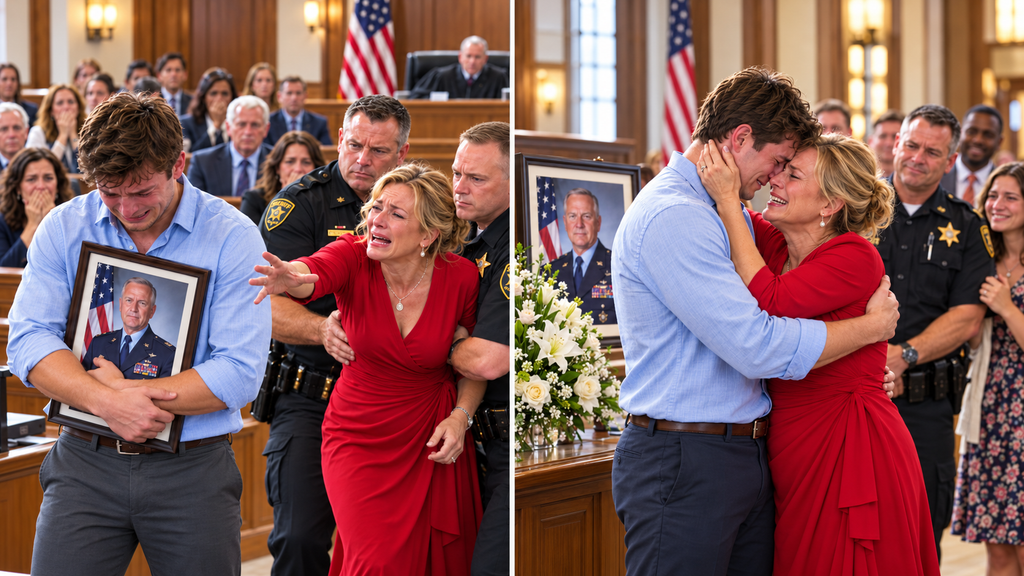
Three years of eating at metal tables with men who had stopped asking whether anyone was innocent.
Three years of wondering whether my father hated me.
And now, sitting inside a dusty storage unit at the edge of town, I was staring at copies of the very documents that had destroyed my life.
My hands began to shake.
I pulled out the first folder.
DENNIS DEVELOPMENT GROUP — INTERNAL TRANSFERS
Underneath it was another.
FINNLEY DENNIS — CRIMINAL CASE
Then another.
CARTER VALE — PRIVATE
My breath caught.
Carter.
I opened that one first.
Inside were bank statements.
Casino withdrawals.
Credit-card records.
Loan documents.
Photographs.
One picture showed Carter walking into a casino two towns over.
Another showed him sitting inside a black sedan with a man I recognized immediately.
Martin Bell.
My father’s former chief financial officer.
The same man who had testified against me.
I could still hear Martin’s voice in the courtroom.
Calm.
Professional.
Convincing.
“Only Mr. Finnley Dennis had the necessary access credentials.”
That sentence had helped put me away.
I turned the photograph over.
My father had written a date on the back.
It was six weeks before my arrest.
I sat down hard on the dusty floor.
“No.”
My voice sounded strange in the empty unit.
I grabbed another document.
Then another.
There were transfers totaling hundreds of thousands of dollars.
The money moved from my father’s company into shell accounts, then disappeared through a series of transactions.
One account had been opened under my name.
Except the signature wasn’t mine.
I knew that immediately.
It looked like mine.
Someone had practiced.
But the F in Finnley curved the wrong way.
I had tried telling the prosecutor that.
Nobody cared.
The jury had seen my name.
My login credentials.
My supposed signature.
And a series of emails that appeared to have come from my work computer.
The evidence had looked perfect.
Too perfect.
I hadn’t understood that then.
My father apparently had.
At the bottom of the box was a small digital voice recorder.
A strip of masking tape had been placed across it.
Dad’s handwriting covered the tape.
PLAY THIS FIRST.
I stared at those words.
Then pressed the button.
Static filled the storage unit.
For a moment, nothing happened.
Then I heard his voice.
My father’s voice.
“Finn.”
I stopped breathing.
It had been more than three years since I had heard him say my name like that.
Not Finnley.
Finn.
The name he used when it was just us.
I closed my eyes.
His voice continued.
“If you’re hearing this, then I failed to fix things before you came home.”
My throat tightened.
“I need you to understand something before anything else.”
There was a pause.
Then he said the words I had waited three years to hear.
“I know you didn’t steal from me.”
I bent forward.
My forehead nearly touched my knees.
Something broke loose inside me.
Not a sob.
Not yet.
Just one terrible breath.
Then another.
I pressed the recorder against my forehead.
“I know, son,” Dad continued. “And I’m sorry it took me so long to prove it.”
That was when I cried.
Quietly.
Alone.
In a storage unit surrounded by cardboard boxes.
Prison had taught me how not to cry.
You didn’t cry when your appeal was rejected.
You didn’t cry when another birthday passed.
You didn’t cry when people stopped writing.
You learned to swallow everything.
But hearing my father say he believed me opened something I had spent three years trying to seal shut.
I let it happen.
Then his voice changed.
“If Reagan told you I’m dead, do not confront her.”
I froze.
The recorder almost slipped from my hand.
I stared at it.
Dad continued.
“Not yet.”
My heart began pounding.
“If she told you I died of cancer, that means she followed exactly the path I expected her to follow.”
I stood so quickly the chair beside me toppled over.
“What?”
My voice echoed through the unit.
I replayed the sentence.
If Reagan told you I’m dead.
Not if you heard I died.
Not if I’m gone.
If Reagan told you I’m dead.
My father had anticipated her exact words.
I pressed play again.
“You probably have a thousand questions. The most important one is whether I’m alive.”
The recording went silent.
I waited.
Then Dad said:
“I was when I made this recording.”
I gripped the desk.
The date on the recorder was eight months old.
Eight months.
He had supposedly died a year ago.
My knees weakened.
Dad continued.
“What happened after that depends on whether Reagan discovered what I was doing. That’s why you cannot trust anyone connected to the house.”
Then the recording ended.
Just like that.
I pressed play again.
Nothing.
That was the entire message.
I stood there staring into the dark storage unit.
My father might be alive.
Or he might actually be dead.
And Reagan had lied either way.
I began opening boxes.
The second contained legal files.
The third held photographs.
The fourth contained copies of correspondence between my father and a private investigator named Marcus Shaw.
One envelope had an address written across the front.
No letter.
Just an address.
I recognized the neighborhood.
Twenty minutes away.
I put every important document into my backpack.
Then I found something else.
A sealed envelope marked:
FOR FINNLEY ONLY — IF REAGAN CLAIMS THE HOUSE
Inside was a single sheet of paper.
It wasn’t from Dad.
It was from an attorney.
Eleanor Voss.
The letter said:
Mr. Dennis, if you receive this material, contact me before taking any legal action regarding the Silver Lake property or Dennis Development Group.
At the bottom was a phone number.
I called immediately.
A woman answered after three rings.
“Voss Legal.”
“My name is Finnley Dennis.”
Silence.
Then:
“Where are you?”
I looked around the storage unit.
“Why?”
“Because if you’re really Finnley Dennis, I have been waiting nearly two years for this call.”
My pulse jumped.
“Did you know my father?”
Another pause.
“Yes.”
“Is he alive?”
She didn’t answer.
“Ms. Voss?”
“I won’t discuss this over the telephone.”
“Then tell me where to go.”
“Not my office.”
That frightened me more than anything else she could have said.
She gave me the address of a diner across town.
“Forty minutes,” she said.
Then she hung up.
I took the recorder.
The documents.
The photographs.
And the forged bank records.
Before leaving, I looked around the storage unit one final time.
That’s when I noticed something scratched into the wooden desk.
Three words.
TRUST THE GROUNDSKEEPER.
I ran my fingers across them.
Dad had carved them deeply.
Deliberately.
I closed the unit.
Locked it.
And left.
Eleanor Voss was already sitting in the back booth when I arrived.
She was probably in her early sixties.
Gray suit.
Short silver hair.
No jewelry except a watch.
She looked at me for several seconds before standing.
“You have Camden’s eyes.”
Nobody had said that to me since before prison.
I sat down.
“Is my father alive?”
She folded her hands.
“Show me what you found.”
“No.”
Her eyebrows lifted.
“I spent three years believing my father thought I was a thief. Today I learned he knew I was innocent. My stepmother says he’s dead. A cemetery groundskeeper gave me a key. I found recordings saying Reagan might lie about his death.”
I leaned forward.
“So I’m asking once more.”
My voice cracked despite my effort to control it.
“Is my father alive?”
Eleanor looked toward the window.
Then back at me.
“I don’t know.”
That answer hurt more than I expected.
She continued quickly.
“But I know he was alive six months after Reagan told people he died.”
I stared at her.
“What?”
“Your father did have cancer.”
“So that part was true?”
“Yes.”
“But?”
“But he didn’t die when Reagan says he did.”
My mouth went dry.
Eleanor opened her briefcase.
“Your father discovered evidence approximately eighteen months after your conviction suggesting that the theft had been orchestrated.”
“By Carter?”
“Carter was involved.”
“Reagan?”
Eleanor hesitated.
“That became complicated.”
“What’s complicated about framing someone?”
“Because Carter wasn’t the person your father initially suspected.”
She slid a photograph across the table.
Martin Bell.
The former CFO.
I nodded.
“He testified against me.”
“Your father hired an investigator after noticing irregularities in several accounts. At first, Camden believed Bell had stolen the money and manipulated evidence to implicate you.”
“That makes sense.”
“It did.”
She slid another photograph toward me.
Reagan.
Standing beside Martin Bell.
They were leaving a restaurant together.
The timestamp was two months before my arrest.
My stomach turned.
“They knew each other?”
“Much better than your father realized.”
Eleanor produced several printed messages.
I read them.
The first was from Reagan.
Finnley remains Camden’s weakness.
Another:
Once he’s gone, Carter becomes the only son in the house.
My fingers tightened around the paper.
The next message was from Martin.
We need something stronger than suspicion.
Then Reagan:
I can get access to Finnley’s office.
I couldn’t read anymore.
I pushed the pages away.
“She framed me.”
Eleanor nodded slowly.
“Your father came to believe Reagan helped create the evidence against you.”
“Why?”
“Money.”
“That’s all?”
“Money is rarely ‘all,’ Mr. Dennis.”
She opened another file.
My father’s company had been valued at approximately forty-three million dollars when I went to prison.
I had known we were wealthy.
I hadn’t known how wealthy.
“Your father’s estate plan originally divided his holdings between you and several charitable trusts.”
“What about Reagan?”
“She received substantial assets.”
“And Carter?”
“Nothing directly.”
I understood.
“If I went to prison…”
“Reagan expected your father to remove you from the estate.”
My stomach twisted.
“And put Carter in?”
“That appears to have been the plan.”
I laughed once.
There was no humor in it.
“So they stole money from my father to make it look like I stole from my father so my father would punish me by giving them more of his money.”
“Yes.”
I looked through the window.
Cars moved past.
People carried groceries.
A couple laughed while walking toward their vehicle.
Normal life.
I had forgotten what normal life looked like.
“Why didn’t Dad tell the police?”
“He intended to.”
“What stopped him?”
“His cancer returned.”
I closed my eyes.
Eleanor’s voice softened.
“He was very sick, Finnley.”
“You saw him?”
“Yes.”
“When?”
“Eight months ago.”
That matched the recording.
“What happened after that?”
“He disappeared.”
I opened my eyes.
“Disappeared?”
“Your father stopped attending appointments. His telephone was disconnected. The investigator couldn’t reach him.”
“And Reagan announced he was dead?”
“Shortly afterward.”
“Was there a funeral?”
“A private memorial.”
“A body?”
“No.”
“Death certificate?”
“I’ve never seen one.”
I stared at her.
“How can someone inherit a house without a death certificate?”
Eleanor’s expression changed.
“She didn’t inherit the house.”
I leaned back.
“What?”
“The Silver Lake house never belonged to Reagan.”
“But she said—”
“I know what she said.”
Eleanor removed another document.
“The house was transferred into the Dennis Family Preservation Trust eleven months before your father’s supposed death.”
“Who controls the trust?”
“You do.”
For the second time that day, I couldn’t speak.
Eleanor pushed the document toward me.
I looked down.
There was my name.
FINNLEY CAMDEN DENNIS — SUCCESSOR TRUSTEE AND SOLE RESIDENTIAL BENEFICIARY
I whispered, “That’s impossible.”
“It isn’t.”
“She threw me off my own property?”
“Legally speaking…”
Eleanor almost smiled.
“Yes.”
Something dark and almost satisfying moved through me.
But it disappeared quickly.
“Then why didn’t you remove her?”
“Your father’s instructions were explicit.”
“What instructions?”
“Do nothing until Finnley comes home.”
I stared at her.
“He knew exactly when my sentence ended.”
“He counted the days.”
That destroyed me.
I looked away before she could see my face.
But she already had.
“He visited you,” she said.
I turned back.
“No.”
“Yes.”
“I would remember.”
“You didn’t see him.”
My heart stopped.
“What?”
“During your second year, Camden traveled to Oakwood.”
I remembered.
A guard had once told me someone came but decided not to visit.
I had assumed it was a mistake.
“He couldn’t make himself go inside,” Eleanor said. “He sat in the parking lot for nearly four hours.”
“Why?”
“Shame.”
The word landed heavily.
“He believed you?”
“By then, yes.”
“Then why didn’t he come in?”
“Because he believed he had failed you.”
I pressed both palms against my eyes.
I saw Dad in that parking lot.
Sitting alone.
Knowing his son was behind those walls.
Knowing he had believed the wrong people.
Three years of anger shifted inside me.
Not gone.
Just changed.
“Where do I find him?”
Eleanor looked at the documents.
“Marcus Shaw.”
“The investigator?”
“He was the last person I know who saw Camden.”
I remembered the address from the storage unit.
“I think Dad left me Shaw’s address.”
“Then go.”
“You’re not coming?”
“No.”
“Why?”
“Because Camden designed this so you could decide whom to trust.”
I stood.
Then stopped.
“One more question.”
“Yes?”
“If Reagan discovers I found that storage unit, what will she do?”
Eleanor’s face became very serious.
“Anything she can.”
Marcus Shaw lived in a small brick house behind a mechanic’s garage.
I knocked twice.
No answer.
I knocked again.
The door opened three inches.
A man in his late fifties stared at me.
“Finnley.”
Everyone seemed to know me.
“Marcus Shaw?”
He opened the door wider.
“Get inside.”
I stepped in.
He immediately locked three separate bolts.
That was reassuring.
“You found the unit?”
“Yes.”
“Did anyone follow you?”
“I don’t think so.”
“That’s not an answer.”
He checked through the blinds.
Then he turned.
“You look like Camden.”
“So everyone keeps telling me.”
“He’ll like that.”
My entire body went still.
“What did you say?”
Marcus realized what he had done.
He sighed.
“Damn it.”
“Say it again.”
He walked toward the kitchen.
I grabbed his arm.
“Is my father alive?”
Marcus looked at my hand.
Then at me.
“Yes.”
Everything inside me stopped.
No dramatic music.
No sudden clarity.
Just silence.
“He’s alive?”
“Yes.”
“Where?”
“Sit down.”
“No.”
“Finnley—”
“Where is my father?”
Marcus studied me.
Then said:
“About ninety miles north of here.”
My legs almost gave out.
I caught the back of a chair.
“He’s alive.”
“Yes.”
“Why didn’t he come get me?”
“That isn’t my story to tell.”
“Three years.”
“I know.”
“He let me sit in prison.”
“No.”
I looked at him.
“What?”
“He didn’t know you were innocent until almost halfway through your sentence.”
“And after that?”
“He spent every day trying to build a case strong enough to clear your name.”
“Why didn’t he just tell me?”
“Because someone tried to kill him.”
Silence.
Marcus lifted his shirt slightly.
A pistol sat in a holster at his waist.
“Now do you understand why I checked whether you were followed?”
My mouth went dry.
“What happened?”
“Camden found the financial trail. Reagan discovered he was investigating. Two days later, his car went off Highway 14.”
“Accident?”
“Brake line.”
I stared at him.
“He survived?”
“Barely.”
“Reagan did it?”
“We couldn’t prove who did.”
“Carter?”
“Maybe.”
“Martin?”
“Maybe.”
“Then why fake Dad’s death?”
Marcus gave me a grim smile.
“Because dead men are difficult to murder twice.”
I sat down.
Finally.
Marcus poured coffee.
I didn’t touch it.
“He used the cancer as cover,” Marcus explained. “He withdrew from public life. Reagan already knew he was sick, so when he disappeared, she told everyone the illness had taken him.”
“And he let her?”
“We needed her comfortable.”
“For what?”
“To see what she would do once she thought she had won.”
I stared at him.
“And?”
Marcus opened a cabinet.
He removed a laptop.
“Everything.”
Emails.
Transfers.
Property documents.
Recorded conversations.
Video.
He showed me footage from inside my father’s former office.
Reagan sat behind Dad’s desk.
Carter paced beside her.
Their voices came through clearly.
“Finnley gets out next year,” Carter said.
“He won’t matter,” Reagan replied.
“What if he contests the estate?”
“There is no estate for him to contest.”
Carter laughed.
Then he said something that made my skin turn cold.
“He still says he didn’t take the money.”
Reagan looked up.
“Of course he didn’t.”
My hands clenched.
Carter smiled.
“Three years for nothing.”
“No,” Reagan replied. “Three years for us.”
Marcus paused the video.
I stared at Reagan’s frozen face.
“That’s enough to reopen my case.”
“It’s part of it.”
“Part?”
“We have Martin.”
“What about him?”
“He talked.”
Marcus opened another recording.
Martin Bell’s voice filled the room.
He described how Carter obtained my password.
How Reagan entered my office while I was away.
How transactions were staged.
How emails were fabricated.
How Carter received a portion of the stolen funds.
Then Martin said:
“Reagan planned everything.”
I leaned back.
My conviction.
My lost years.
My father’s shame.
All of it had been engineered by the woman who had opened the door that morning and told me not to make a scene.
I almost laughed.
She had no idea.
Not yet.
“Why hasn’t this gone to police?”
Marcus closed the laptop.
“Because Martin disappeared three weeks after giving us that statement.”
“What?”
“He vanished.”
“Dead?”
“We don’t know.”
“And the recording?”
“Useful, but Camden wanted enough independent evidence that the case wouldn’t collapse if Martin couldn’t testify.”
I stood.
“I want to see my father.”
Marcus looked at his watch.
“Then we leave now.”
We drove north for almost two hours.
Marcus didn’t tell me the destination.
Eventually we turned onto a narrow road surrounded by pine trees.
A small house appeared near a lake.
My heart started beating so hard I could hear it.
Marcus stopped the car.
“He’s inside.”
I couldn’t move.
Three years.
I had imagined this moment a thousand different ways.
Dad angry.
Dad disappointed.
Dad refusing to see me.
Never this.
I opened the door.
The porch creaked beneath my feet.
Before I could knock, the door opened.
And there he was.
Older.
Thinner.
A scar ran from his left temple toward his ear.
His hair had turned almost completely white.
But it was him.
My father.
Camden Dennis.
Alive.
He stared at me.
I stared at him.
Neither of us spoke.
Then he whispered:
“Finn.”
That was enough.
I crossed the porch.
He met me halfway.
We collided more than embraced.
His arms went around me.
Mine went around him.
And suddenly I was twelve again.
Sixteen.
Twenty.
Every age at once.
I buried my face against his shoulder.
“You’re alive.”
He held me tighter.
“I’m sorry.”
“You’re alive.”
“I know.”
“You’re alive.”
Those were the only words I could say.
Then anger arrived.
I pulled away.
“You knew.”
His eyes filled.
“Finn—”
“You knew I was innocent.”
“Yes.”
“And you left me there.”
His face crumpled.
“I know.”
“You could have written.”
“I know.”
“You could have visited.”
“I know.”
“Stop saying that!”
My voice echoed across the lake.
Marcus quietly walked away.
Dad didn’t defend himself.
That made me angrier.
“I woke up every day wondering whether you hated me.”
“I never hated you.”
“I didn’t know that!”
“I know.”
I shoved him.
Not hard.
But enough.
He stumbled.
Immediately I regretted it.
He steadied himself.
“Do it again if you need to.”
I stared at him.
Then I started crying.
“I needed you.”
His voice broke.
“I know, son.”
“I needed my father.”
He stepped toward me.
This time I let him.
“I was a coward,” he whispered. “At first because I believed the evidence. Later because I couldn’t face what believing it had cost you.”
I held onto his jacket.
“You should have come.”
“Yes.”
“You should have told me.”
“Yes.”
“You don’t get those years back.”
“No.”
“Neither do I.”
“No.”
We stood there crying.
Not fixing anything.
Because some things can’t be fixed.
But for the first time, the truth was standing between us instead of a lie.
Eventually Dad said:
“I can spend whatever time I have left apologizing.”
I looked at him.
“How long?”
He understood.
“The cancer?”
I nodded.
“Doctors gave me six months.”
“When?”
“Fourteen months ago.”
Despite everything, I laughed.
Dad smiled.
“Apparently I’ve always been stubborn.”
“That part I remember.”
We went inside.
For the next three hours, my father told me everything.
Reagan had begun manipulating company finances years earlier.
Carter’s gambling debts gave her the opportunity.
Martin Bell became involved after Carter owed money to people who weren’t willing to wait.
They stole from Dennis Development.
But they needed someone to blame.
Me.
The son Camden trusted with company access.
The son Reagan wanted removed.
The son standing between Carter and the Dennis fortune.
They manufactured the evidence carefully.
Even Dad believed it.
“That is the part I will never forgive myself for,” he said.
“You testified for the prosecution.”
His eyes lowered.
“I did.”
I remembered watching him in court.
The prosecutor asking:
“Do you believe your son had access to these accounts?”
Dad answering:
“Yes.”
That single word had haunted me.
“I hated you for that.”
“You had every right.”
“I don’t want the right.”
He looked at me.
“I wanted my father.”
Dad nodded.
“And I wanted my son back.”
Silence.
Then he slid a folder across the table.
“That’s how we get both.”
Inside were documents for a hearing.
A motion to vacate my conviction.
An affidavit from my father.
Forensic accounting reports.
Digital evidence.
The recording of Reagan.
Everything.
“When?”
“Tomorrow morning.”
I looked up.
“What?”
“The district attorney has had part of the evidence for two weeks.”
“You already contacted them?”
“I was waiting for you.”
“For what?”
“To decide whether you wanted to fight.”
I almost laughed.
“I’ve been fighting for three years.”
Dad smiled faintly.
“Then tomorrow we finish it.”
But we didn’t.
Because at 11:43 that night, Marcus received a call.
He listened for fifteen seconds.
Then his expression changed.
“What happened?” Dad asked.
Marcus lowered the phone.
“Storage Unit 108 was broken into.”
My blood went cold.
“When?”
“Twenty minutes ago.”
Dad stood.
“Did they get anything?”
Marcus looked at me.
“Tell me you didn’t leave the originals there.”
I remembered grabbing the important folders.
“Some.”
“Which ones?”
Before I could answer, headlights appeared through the cabin windows.
Marcus reached for his weapon.
Dad turned off the lights.
My heart slammed against my ribs.
A car stopped outside.
A door opened.
Then another.
Marcus whispered:
“Back room.”
Dad shook his head.
“I’m done hiding.”
“Camden—”
“I said I’m done.”
Footsteps approached the porch.
I stood beside my father.
The knock came three times.
Marcus moved toward the door.
“Who is it?”
A voice answered.
“Someone Finnley needs to meet.”
Marcus froze.
Dad’s eyes widened.
I whispered:
“Who?”
Dad moved past us and opened the door.
A man stood on the porch.
Thin.
Nervous.
Older than I remembered.
But recognizable.
Martin Bell.
The witness who had helped send me to prison.
He looked at me.
“Hello, Finnley.”
I lunged.
Marcus caught me.
“You lying—”
“I know.”
“You put me in prison!”
“I know.”
“Three years!”
“I know.”
“Everybody seems to know except me!”
Martin flinched.
“I came to testify.”
The room went quiet.
“What?”
“Reagan knows Camden is alive.”
Dad’s face changed.
“How?”
“Carter followed Finnley from the cemetery.”
I remembered the groundskeeper.
The storage facility.
The diner.
Marcus’s house.
My stomach dropped.
“They followed me here?”
“No. I stopped Carter.”
“How?”
Martin swallowed.
“I told him Camden was staying somewhere else.”
“Why would he believe you?”
“Because Reagan still thinks I work for her.”
That was the next twist.
Martin had never disappeared.
He had gone back undercover.
For months, he had been feeding Reagan false information while collecting evidence.
“You expect me to trust you?” I asked.
“No.”
Martin looked me directly in the eyes.
“I expect you to hate me.”
“Good.”
“But tomorrow I’ll sit in court and tell them exactly what I did.”
“And then?”
“Then I’ll accept whatever sentence comes.”
I studied him.
“Why?”
He looked at Dad.
“Because Camden gave me something I didn’t give you.”
“What?”
“A second chance.”
Nobody spoke.
Martin placed a flash drive on the table.
“Reagan made one mistake tonight.”
Dad stared at it.
“What mistake?”
“She panicked.”
The drive contained a recording from less than an hour earlier.
Reagan shouting at Carter.
“You were supposed to destroy that unit before Finnley got there!”
Carter answered:
“How was I supposed to know the old man left him a key?”
Then Reagan said:
“If Camden is alive, everything falls apart.”
Martin’s voice followed.
“Then what do you want me to do?”
There was a long pause.
Reagan answered:
“What we should have done before.”
Dad stopped the recording.
Nobody needed to explain.
She wanted him dead.
Again.
The next morning, Reagan Dennis woke believing she was still the owner of Silver Lake.
At 8:12 a.m., she poured coffee.
At 8:27, she called her attorney.
At 8:41, someone rang the doorbell.
She opened it.
Two detectives stood outside.
Carter was still upstairs.
According to the body-camera footage I saw later, Reagan smiled politely.
“Can I help you?”
“Reagan Dennis?”
“Yes.”
“We have a warrant to search the premises.”
Her smile disappeared.
“For what?”
“Financial fraud, conspiracy, obstruction of justice and evidence relating to the wrongful conviction of Finnley Dennis.”
She said nothing.
Then Carter appeared behind her.
He saw the detectives.
And ran.
He made it through the kitchen.
Across the patio.
Over one fence.
He almost cleared the second.
Almost.
A detective tackled him into Mrs. Henderson’s hydrangeas.
I wish I could say I witnessed it.
I didn’t.
But Mrs. Henderson had a security camera.
I watched it seventeen times.
My hearing happened that afternoon.
I wore a suit Dad had bought me that morning.
It didn’t fit perfectly.
I didn’t care.
I walked into the same courthouse where I had once been sentenced.
Every step felt strange.
Dad walked beside me.
Alive.
Marcus followed.
Eleanor carried the files.
Martin Bell entered through another door with his own attorney.
The courtroom filled.
News had already spread.
The judge reviewed the forensic reports.
The recordings.
The fabricated emails.
The forged signature.
Martin’s sworn confession.
My father’s affidavit.
Then the prosecutor stood.
Three years earlier, his office had asked for the maximum sentence.
Now he looked at me.
“Mr. Dennis, on behalf of the state, I acknowledge that a grave injustice occurred.”
I didn’t feel triumphant.
I thought I would.
Instead, I felt tired.
The judge looked directly at me.
“Mr. Dennis, the evidence supporting your conviction has been fundamentally discredited. Your conviction is hereby vacated.”
The gavel came down.
That sound.
One small wooden strike.
Three years disappeared from a computer system.
But not from me.
People turned.
Cameras waited outside.
My father squeezed my shoulder.
“You’re free.”
I looked at him.
“I was free yesterday.”
He seemed confused.
I smiled.
“Yesterday was when I learned you believed me.”
Dad’s eyes filled.
Reagan was charged.
So was Carter.
Martin pleaded guilty to multiple financial crimes and conspiracy charges.
His cooperation reduced his sentence, but it did not erase it.
I respected that.
Not him.
Not yet.
Maybe never.
But I respected the fact that he eventually stopped running from what he’d done.
Carter tried blaming everything on his mother.
Reagan blamed Martin.
Martin admitted his part.
And the evidence blamed all three.
But there was one final secret.
It came three weeks later.
Eleanor asked Dad and me to meet at her office.
She placed a document on the table.
“The Silver Lake house isn’t the biggest issue.”
Dad smiled.
I looked between them.
“What did you do?”
Dad shrugged.
“Prepared.”
Eleanor explained.
Reagan had believed she was slowly taking control of Dennis Development.
She wasn’t.
Two years earlier, Dad had quietly transferred controlling shares into an irrevocable trust.
I was the beneficiary.
I stared at him.
“No.”
“Yes.”
“How much?”
Dad looked at Eleanor.
She answered.
“Current estimated value, including real estate holdings, is approximately fifty-one million dollars.”
I almost choked.
“Fifty-one million?”
Dad smiled.
“Business improved while you were away.”
“You’re insane.”
“Possibly.”
“I don’t want fifty-one million dollars.”
“Good.”
I frowned.
“Good?”
“That means prison didn’t turn you into Carter.”
I laughed.
For the first time, Dad laughed too.
A real laugh.
I hadn’t heard it since childhood.
Then Eleanor slid another document toward me.
There was something more important than money.
My father’s revised will.
I read the first paragraph.
Then the second.
Then I reached the handwritten note attached to it.
Finn,
If money is the only thing I leave you, then I have failed twice.
The first time I failed you was when I believed evidence instead of believing the son I raised.
The second would be believing wealth could repay you for the years that mistake cost.
It cannot.
Nothing can.
So don’t use this money to replace those years.
Use it to make the years ahead belong entirely to you.
I stopped reading.
Dad was watching me.
I folded the letter.
“You could have just said that.”
“I tried.”
“You wrote four pages.”
“I had time.”
We laughed again.
Then I asked:
“What happens to the house?”
Dad looked at me.
“Your house.”
That still sounded strange.
I thought about Reagan standing in the doorway.
This house is mine now.
I thought about Carter calling me an ex-con.
I thought about being threatened with police for stepping onto property legally belonging to me.
“I don’t want it.”
Dad looked surprised.
“You don’t?”
“No.”
That house had too many ghosts.
My mother.
My trial.
Reagan.
Everything.
“So what do you want to do with it?” Eleanor asked.
I knew immediately.
“Sell it.”
Dad nodded.
“And the money?”
I thought about Oakwood.
About men leaving prison with plastic bags containing everything they owned.
Men sleeping at bus stations.
Men returning to prison because nobody would hire them.
Some guilty.
Some innocent.
All trying to start again.
“Build something.”
Dad leaned forward.
“What?”
“A transition center.”
His expression softened.
“For former inmates?”
“For people trying to start over.”
I looked down at my hands.
“Give them somewhere to sleep. Job training. Legal assistance. Counseling. Whatever we can do.”
Dad smiled.
“What will you call it?”
I thought for a moment.
Then I knew.
Second Door.
Because sometimes the first door closes in your face.
Sometimes someone tells you that you don’t belong.
Sometimes the home you dreamed about returning to isn’t your home anymore.
But that doesn’t mean there isn’t another door.
Six months later, Reagan was sentenced.
I attended.
She turned before the deputies took her away.
Our eyes met.
For the first time since I had known her, Reagan looked small.
“Finnley.”
I didn’t answer.
She stepped closer.
“I know you hate me.”
“No.”
That surprised her.
“I don’t.”
Her eyes narrowed.
“You took three years from me,” I said. “You nearly took my father. You destroyed your own son trying to give him what wasn’t his.”
She swallowed.
“But hate would mean carrying you with me.”
I shook my head.
“You’ve already taken enough.”
Then I walked away.
Carter received his sentence two months later.
He never apologized.
Maybe someday he will.
Maybe he won’t.
That isn’t my problem anymore.
Martin went to prison too.
Before he surrendered, he asked to meet me.
We sat across from each other in the same diner where I had met Eleanor.
He looked exhausted.
“I don’t expect forgiveness,” he said.
“Good.”
He nodded.
“I deserve that.”
“You deserve prison.”
“I know.”
I almost laughed.
“Stop saying you know.”
He smiled sadly.
“Fair enough.”
He stood.
Then hesitated.
“Your father never stopped trying.”
I looked at him.
“Neither did I.”
“No.”
Martin nodded.
“You didn’t.”
Then he left.
Dad lived another two years.
Not six months.
Not fourteen.
Two full years.
We spent them badly at first.
Then better.
We argued.
A lot.
We talked about prison.
About my mother.
About Reagan.
About his guilt.
About mine.
Because yes, I had guilt too.
Not for the theft.
For the hatred.
For all the conversations I had imagined having with him.
All the things I had wanted to scream.
He let me scream some of them.
Other nights we sat quietly.
We went fishing once.
Dad hated fishing.
I discovered this only after thirty-two years.
“Why did we do this when I was a kid?”
“Because you liked it.”
“I thought you liked it.”
“I despise fish.”
I laughed so hard I nearly dropped the rod.
Those became my favorite days.
Not the court victory.
Not Reagan’s conviction.
Not getting the company.
Not the money.
Those ordinary afternoons.
Coffee.
Bad television.
Arguments about baseball.
Driving nowhere.
Making up for time even though we both understood time could never truly be made up.
The Second Door Center opened fourteen months after my conviction was overturned.
Dad cut the ribbon.
He was thin by then.
Very thin.
But he stood beside me.
Reporters asked him how he felt.
Dad looked at the building.
Then at me.
“Proud.”
One reporter asked:
“Of the center?”
Dad shook his head.
“My son.”
I had to turn away.
Dad died on a Tuesday morning.
For real this time.
I was beside him.
No lies.
No fake funeral.
No secret cabin.
No unanswered questions.
Just my hand around his.
He opened his eyes shortly before sunrise.
“Finn?”
“I’m here.”
“You okay?”
It was such a ridiculous question.
I laughed through my tears.
“Am I okay?”
He smiled weakly.
“Father’s privilege.”
“I’m okay.”
“Liar.”
“Learned from you.”
His smile widened.
Then faded.
He looked toward the window.
The sky was turning pale.
“Your mother would’ve been proud.”
I swallowed.
“Of you too.”
“Maybe.”
“She would.”
He looked at me.
“Finn?”
“Yeah?”
“Don’t spend your life proving them wrong.”
I leaned closer.
“What?”
“That’s still letting them decide what your life means.”
His breathing became shallow.
“Then what should I do?”
Dad squeezed my hand.
“Build something they never imagined.”
Those were the last words my father ever said to me.
A few minutes later, his hand relaxed.
And Camden Dennis was gone.
This time there was a grave.
This time there was a funeral.
This time I was there.
We buried him beside my mother at Pinecrest Cemetery.
Exactly where he had always wanted to be.
The groundskeeper stood beneath the cypress trees.
The same man who had given me the envelope.
After everyone left, I approached him.
“You knew.”
He smiled.
“Your father was terrible at keeping secrets.”
I laughed.
“Apparently not.”
He looked toward Dad’s grave.
“He talked about you constantly.”
That hurt.
But it was a good kind of hurt.
“Thank you.”
“For what?”
“For waiting.”
The groundskeeper nodded.
“He told me you’d come.”
“How could he know?”
The old man smiled.
“Because he knew his son.”
I stood between my parents’ graves for a long time.
Then I took something from my pocket.
The key.
Storage Unit 108.
I placed it on Dad’s headstone.
For three years, I had believed that key belonged to a place.
It didn’t.
It had unlocked the truth.
Five years have passed.
The Second Door now operates in four cities.
We provide temporary housing, legal aid, vocational training, and counseling.
Hundreds of people have walked through those doors.
Not all of them succeed.
Some disappear.
Some relapse.
Some return to prison.
But many don’t.
Many find jobs.
Apartments.
Families.
Lives.
One afternoon, I was leaving the center when a young man called after me.
“Mr. Dennis?”
He had been released from prison six weeks earlier.
Twenty-four years old.
Nobody in his family would speak to him.
He had started working at a mechanic’s shop.
“What is it?”
He held up a key.
“My apartment.”
I smiled.
“Congratulations.”
“No.”
He shook his head.
“You don’t understand.”
His eyes filled.
“I haven’t had my own key since I was nineteen.”
I stared at that little piece of metal.
And suddenly I was back beneath the cypress trees.
An old groundskeeper.
A yellow envelope.
A storage key.
My father’s handwriting.
I put my hand on the young man’s shoulder.
“Then don’t lose it.”
He laughed.
“I won’t.”
I watched him walk away.
And finally understood something.
Reagan had been wrong that morning.
She had opened the door and told me:
This house is mine now.
At the time, I thought I had lost everything.
My home.
My father.
My reputation.
Three years of my life.
But a house isn’t always a home.
An inheritance isn’t always money.
And freedom isn’t simply walking out of prison.
Sometimes freedom is discovering that the people who lied about you no longer get to define you.
Sometimes justice isn’t watching them lose.
It’s realizing you survived.
Sometimes the most important thing your father leaves you isn’t a company worth millions.
It’s a second chance to know who he really was.
And sometimes…
everything begins with an old key in your pocket.
I still have my father’s first letter.
It sits framed on the wall of my office.
People occasionally ask what it says.
I never show them the whole thing.
Most of it belongs only to Dad and me.
But I tell them the first sentence.
Because that sentence changed my life.
Son, if you’re reading this, Reagan has already started lying to you.
My father was right.
She had lied about everything.
About the money.
About my conviction.
About the house.
About his death.
But there was one thing Reagan could never lie away.
I was Camden Dennis’s son.
He had believed me.
He had fought for me.
And in the end, he had waited long enough for me to find my way home.
Not to Silver Lake.
Not to the gray house with the missing roses.
To him.
That was the home I had really been looking for.
And I found it.
Just in time.
THE END! THANK YOU FOR READING!❤️