 Reading Time: 37 minutes
Laura placed the laboratory report in front of me. And Mark’s secret finally had a name. I stared at the page. For several seconds, the words refused to become sentences.
I could read them individually. Detected. Sedative. Concentration. Consistent. But my mind kept rejecting what they meant when placed together.
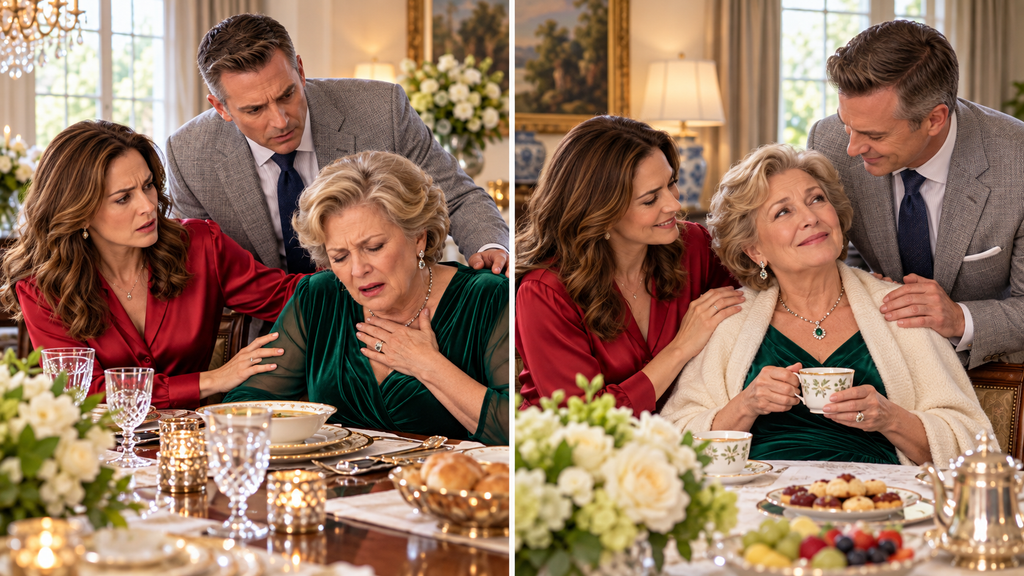
I looked up.
“What exactly are you telling me?”
Laura sat across from me in the small consultation room at the hospital.
The fluorescent lights were too bright.
Everything smelled faintly of disinfectant.
Beyond the closed door, carts rolled along the corridor and nurses spoke in low voices.
Normal hospital sounds.
Normal people living normal evenings.
Mine had stopped being normal somewhere between a bowl of chicken soup and my husband’s terrified face.
Laura leaned forward.
“The preliminary screening found a sedating substance in the soup you gave me.”
I swallowed.
“Enough to make someone sick?”
“Yes.”
“To cause dizziness?”
“Yes.”
“Confusion?”
“Yes.”
She hesitated.
“Memory problems?”
“Yes.”
My fingers tightened around the edge of the report.
Six months.
Six months of forgetting appointments.
Six months of waking exhausted.
Six months of standing in grocery-store aisles unable to remember what I had gone there to buy.
Six months of Mark telling me I was stressed.
Six months of Judith telling me I was becoming dramatic.
Six months of wondering whether something inside my mind was beginning to fail.
I heard my own voice, but it sounded distant.
“My doctor thought it might be hormonal.”
Laura nodded carefully.
“And sometimes it still could have been. We can’t assume every symptom had the same cause without medical evidence.”
“But tonight wasn’t anxiety.”
“No.”
I looked down at the report again.
“Tonight was real.”
“Yes.”
That one word broke something inside me.
I covered my mouth.
Laura came around the table and sat beside me.
I had known her since we were nineteen.
She had seen me drunk once after graduation.
She had seen me furious when my father died.
She had stood beside me at my wedding.
Mark had danced with her.
Twenty-six years earlier.
I suddenly remembered him spinning me beneath strings of white lights while Laura laughed from beside the dance floor.
I remembered thinking I was the luckiest woman alive.
Now Laura was sitting beside me while I learned that the same man might have spent months making me sick.
“I feel stupid,” I whispered.
“No.”
“I slept beside him.”
“That doesn’t make you stupid.”
“I ate food he prepared.”
“Because he was your husband.”
“I let him bring me tea when I was sick.”
Laura became very still.
“What?”
I looked at her.
“He made me tea.”
“How often?”
“I don’t know. A lot.”
“When?”
“Whenever I complained about headaches. Whenever I said I couldn’t sleep.”
Her expression changed.
That frightened me.
“What?”
“Nothing yet.”
“Laura.”
She took a breath.
“Think carefully. During the last six months, was there anything Mark regularly prepared specifically for you?”
My stomach tightened.
Coffee.
Tea.
Soup.
A glass of water beside the bed.
Vitamin drinks.
Sunday dinners.
Little gestures I had interpreted as affection.
Suddenly they looked different.
Not proof.
Not yet.
But different.
“My coffee,” I whispered.
Laura waited.
“He started making it for me.”
“When?”
I tried to remember.
The answer arrived slowly.
“About six months ago.”
Neither of us spoke.
Laura reached for her phone.
“I’m going to make some calls.”
“What happens to Mark?”
“That depends on what investigators establish.”
“He knows I switched the bowls.”
“Yes.”
“And he knows you have the soup.”
“Yes.”
“So he knows I know.”
Laura looked directly at me.
“That’s why you’re not going home.”
I thought about our house.
My house.
The blue shutters Mark and I had painted together one summer.
The maple tree our daughter had planted when she was nine.
The bedroom where I had slept beside him for more than two decades.
Suddenly I was afraid of all of it.
“My clothes are there.”
“We can deal with clothes later.”
“My medication.”
“We can arrange that.”
“My laptop.”
“Later.”
I looked toward the door.
“Where is Mark now?”
Laura checked her phone.
“Still somewhere in the hospital, as far as I know.”
As though summoned by his name, someone knocked.
Three sharp taps.
Laura stood immediately.
“Who is it?”
“Diane?”
Mark.
Every muscle in my body tightened.
“Diane, open the door.”
Laura put one finger to her lips.
I nodded.
Mark knocked again.
“Diane, please.”
I had heard that voice thousands of times.
Calling me to dinner.
Asking where his keys were.
Saying goodnight.
Apologizing after arguments.
Now every familiar note sounded counterfeit.
“Diane, I know you’re in there.”
Laura stepped closer to the door.
“What do you want, Mark?”
Silence.
Then:
“Laura?”
“Yes.”
Another silence.
Longer this time.
“I need to speak with my wife.”
“She doesn’t want to speak with you right now.”
“You don’t get to decide that.”
“I didn’t.”
His voice hardened.
“Diane.”
I stared at the door.
Part of me wanted to remain silent.
Another part wanted to tear it open and demand twenty-six years of answers.
Instead I said:
“What was in the packet?”
Nothing.
Then Mark laughed.
It was a terrible little sound.
Nervous.
Disbelieving.
“Is that what this is about?”
“What was in it?”
“You saw me put something in the soup and decided to poison my mother?”
Laura’s eyes narrowed.
I stood.
“I didn’t put anything in that soup.”
“You switched the bowls.”
“Yes.”
“You deliberately gave Mom something you thought was dangerous.”
“I didn’t know what it was.”
“That’s insane.”
“Then tell me what it was.”
Silence.
“Mark?”
Nothing.
“If it was harmless, tell me.”
His voice changed.
Softened.
“Diane, you’re upset.”
I almost laughed.
There it was.
The voice.
The same calm, patient tone he had used for months.
You’re tired.
You’re confused.
You’re overthinking.
You’re upset.
For half a year, those words had worked.
Tonight they didn’t.
“No,” I said. “I’m finally paying attention.”
Laura glanced at me.
Mark lowered his voice.
“We should discuss this privately.”
“Why?”
“Because we’re married.”
“So?”
“Twenty-six years has to mean something.”
“It does.”
I moved closer to the door.
“It means you owe me the truth.”
A cart squeaked somewhere down the hallway.
Then Mark said something that made my blood turn cold.
“You have no idea what the truth is.”
I waited.
“Then tell me.”
“You wouldn’t understand.”
“Try me.”
He said nothing.
Laura opened the door.
Mark stood three feet away.
His tie was loosened.
His hair was disordered.
His face looked gray.
For the first time in twenty-six years, my husband looked like a stranger wearing Mark’s clothes.
His eyes went immediately to the report in my hand.
Then to Laura.
Then back to me.
“What did you do?” he asked.
I stared at him.
“What did I do?”
“You called the police?”
“I called my friend.”
“She’s a detective.”
“You knew that when you married me.”
His jaw clenched.
“This is ridiculous.”
Laura folded her arms.
“Then explain the packet.”
Mark looked at her.
“I don’t have to explain anything to you.”
“No,” Laura said. “Not to me personally.”
His face tightened.
“Where’s Mom?”
“Being monitored,” I said.
His expression flickered.
“You could have killed her.”
The accusation hit me like a slap.
I stepped forward.
“No. Whatever you put in my bowl could have hurt her.”
“I was trying to help you.”
“With what?”
“You haven’t been yourself.”
“And your solution was secretly putting something into my food?”
“It wasn’t like that.”
“Then what was it like?”
He looked around the hallway.
People were beginning to notice.
A nurse slowed as she passed.
Mark lowered his voice.
“Please.”
I shook my head.
“No more private conversations.”
His eyes sharpened.
“Diane.”
“No.”
“We go home, we sit down, and I explain everything.”
“I’m not going home with you.”
For the first time, real panic crossed his face.
“Don’t do this.”
“You already did it.”
He stepped toward me.
Laura stepped between us.
“Back up.”
Mark stared at her.
Then something strange happened.
His anger disappeared.
Completely.
He looked at me with sadness.
Almost tenderness.
It was so convincing that for one terrible second I remembered the man I had loved.
“Di,” he whispered.
Nobody had called me that except him.
“Please.”
My throat tightened.
“I love you.”
I hated that those words still hurt.
“I have always loved you.”
I felt tears sting my eyes.
“Then tell me what you put in my soup.”
He looked away.
And that was the answer.
Laura guided me back into the room.
She shut the door.
Mark remained outside.
I could see his shadow beneath it.
For nearly a minute, he didn’t move.
Then the shadow disappeared.
I sat down.
My hands were shaking.
Laura crouched in front of me.
“Diane.”
“I’m okay.”
“You don’t have to be.”
“I need to think.”
“Then think.”
I closed my eyes.
And something surfaced.
A memory.
Not from tonight.
Three months earlier.
I had been in the kitchen.
Mark was standing beside the sink.
I had entered unexpectedly.
He had startled.
At the time, I thought he had been looking at his phone.
But now I remembered something else.
A white packet.
Tiny.
Folded between his fingers.
I opened my eyes.
“Laura.”
“What?”
“I’ve seen those packets before.”
Her expression sharpened.
“Where?”
“At home.”
“When?”
“I don’t know exactly. Months ago.”
“What happened?”
“I walked into the kitchen and Mark shoved something into his pocket.”
“Did you ask him?”
“Yes.”
“What did he say?”
I almost smiled at the cruelty of the memory.
“He said it was sweetener.”
Laura stood.
“Did Mark use sweetener?”
“No.”
That night, I didn’t go home.
I stayed with Laura.
At 2:14 in the morning, lying awake in her guest room, I received a text from Mark.
COME HOME.
Nothing else.
At 2:19:
WE CAN FIX THIS.
At 2:27:
MOM IS FINE.
At 2:41:
YOU ARE MAKING THIS WORSE THAN IT NEEDS TO BE.
At 3:06:
PLEASE CALL ME.
Then nothing.
I stared at the ceiling until sunrise.
At 6:32, my phone rang.
My daughter.
Emily.
I nearly dropped it.
She lived two states away with her husband and their four-year-old son.
I had deliberately avoided calling her.
I wanted facts before I frightened her.
But apparently someone else had called first.
“Mom?”
Her voice was trembling.
“Hi, sweetheart.”
“What happened?”
I sat upright.
“What did Dad tell you?”
“That Grandma got sick at dinner and you accused him of poisoning you.”
Of course.
“Emily—”
“He said you switched Grandma’s food.”
“I did.”
“Why?”
“Because I saw your father put something into my bowl.”
Silence.
“What?”
“I saw him open a packet and pour something into my soup.”
“Dad?”
“Yes.”
“No.”
The word came automatically.
I understood it.
Twenty-four hours earlier, I would have said the same thing.
“Emily, listen to me.”
“He said you’re having another episode.”
My stomach turned.
“Another what?”
“He said you’ve been confused for months.”
I closed my eyes.
There it was.
The groundwork.
Already laid.
“What else has he told you?”
“Mom—”
“What else?”
She hesitated.
“He said your doctor was worried.”
“My doctor has been trying to find out why I’ve been dizzy.”
“He said you forgot where you were driving last month.”
“I missed an exit.”
“He said you left the stove on.”
I froze.
“What?”
“He said you nearly started a fire.”
“That never happened.”
Silence.
“Emily, I have never left the stove on.”
“But Dad said—”
“I know what Dad said.”
My voice broke.
“I’m beginning to understand what Dad has been saying.”
Emily became quiet.
I heard a child laughing faintly in the background.
My grandson.
Life continuing somewhere far away.
“Mom, where are you?”
“With Laura.”
“Detective Laura?”
“Yes.”
Another pause.
“Why?”
“Because the soup was tested.”
Emily stopped breathing for a second.
I could hear it.
“What did they find?”
“A sedating substance.”
Silence.
Then:
“Oh my God.”
“I don’t know everything yet.”
“Was Grandma—”
“She’s stable.”
“And Dad?”
“I don’t know.”
“Mom, I’m coming.”
“No.”
“Yes.”
“Emily—”
“You’re my mother.”
Her voice cracked.
“I’m coming.”
She arrived that afternoon.
The moment she walked through Laura’s front door, she wrapped her arms around me.
I hadn’t realized how badly I needed that.
I held my daughter and cried into her shoulder.
Not politely.
Not quietly.
I cried for my marriage.
For the months I had lost.
For the possibility that the man I had trusted most had deliberately made me doubt myself.
Emily cried too.
Eventually she pulled back.
“Tell me everything.”
So I did.
When I finished, she sat silently.
Then she said:
“There’s something I need to tell you.”
I looked at her.
“What?”
“Dad called me three weeks ago.”
A chill moved through me.
“Why?”
“He asked questions about you.”
“What questions?”
“Whether you had ever seemed confused when you visited.”
I stared at her.
“What did you say?”
“I said no.”
She wiped her eyes.
“He kept pushing. He asked whether you repeated stories. Whether you forgot names. Whether you seemed emotional.”
“Why didn’t you tell me?”
“Because he said he was worried about you.”
She looked ashamed.
“I thought he was being a good husband.”
I reached for her hand.
“You had no reason to think otherwise.”
“There’s more.”
Of course there was.
There always seemed to be more.
“He asked me something strange.”
“What?”
Emily looked at Laura.
Then at me.
“He asked whether I thought you should still be managing your own finances.”
The room went silent.
My heart began pounding.
Laura sat forward.
“When exactly did he ask that?”
“Three weeks ago.”
“Did he mention power of attorney?”
Emily frowned.
“Yes.”
I stood so quickly my chair scraped backward.
“No.”
Laura looked at me.
“What?”
“Two months ago, Mark brought home paperwork.”
“What paperwork?”
“He said we needed to update our estate plan.”
“Did you sign anything?”
My mouth went dry.
“Yes.”
Laura’s expression changed.
“What?”
“I don’t know.”
“Diane.”
“He put tabs where I needed to sign.”
Emily covered her mouth.
Laura stood.
“We need copies.”
I felt sick.
“I signed them.”
“We don’t know what they were yet.”
“I signed whatever he put in front of me.”
“Because you trusted your husband.”
I walked toward the window.
The morning sunlight looked offensively beautiful.
“He was making me sick.”
My voice trembled.
“And while I was confused, he was putting papers in front of me.”
Nobody answered.
That silence was worse than agreement.
By noon, Laura had connected me with an attorney named Rebecca Sloan.
Rebecca was in her fifties, with silver hair, calm eyes, and the unnerving habit of listening without interrupting.
After I explained everything, she asked one question.
“Who controls your finances?”
“Both of us.”
“Major accounts?”
“Joint.”
“Retirement?”
“Separate.”
“Property?”
“The house is jointly owned.”
“Other assets?”
I hesitated.
“My father left me property.”
Mark knew about it.
Everyone knew about it.
But nobody had ever considered it important because, for years, it wasn’t.
My father had owned farmland outside the city.
After he died, I inherited seventeen acres.
For years, it produced modest lease income.
Then the city expanded.
Developers came.
Roads were built.
Commercial projects followed.
Three years earlier, a development company offered me $1.8 million.
I refused.
Mark had been furious.
At the time, I thought he was frustrated because he believed it was a good offer.
Rebecca leaned forward.
“What is the property worth now?”
“I don’t know.”
“Approximately?”
“Maybe three million.”
Emily whispered:
“Mom.”
Rebecca’s expression remained calm.
“Who inherits it if you die?”
I stared at her.
“Emily.”
“Does Mark have any ownership?”
“No.”
“Are you certain?”
“Yes. It was inherited property.”
“Have you signed anything relating to it recently?”
My stomach dropped.
“I don’t know.”
Rebecca’s eyes sharpened.
“We find out today.”
It took six hours.
Six hours of calls.
Documents.
Emails.
Requests.
Records.
At 6:47 that evening, Rebecca called.
Her voice was different.
“Diane, I need you to sit down.”
I sat.
Emily sat beside me.
Laura stood near the window.
Rebecca continued.
“I found the documents Mark had you sign.”
My hands went cold.
“What were they?”
“One was an updated financial power of attorney.”
I closed my eyes.
“And?”
“Another authorized Mark to negotiate certain transactions involving your inherited property.”
Emily stood.
“He can sell it?”
“Not quite. There are limitations. But he gave himself substantial authority.”
I whispered:
“Why?”
Rebecca didn’t answer.
Instead she said:
“There’s another problem.”
“What?”
“A development company made an offer for your property six weeks ago.”
My eyes opened.
“What company?”
“Blackridge Development.”
“I’ve never heard of them.”
“They offered $4.2 million.”
The room tilted.
I gripped the chair.
“Four million?”
“Two hundred thousand above four.”
“Mark never told me.”
“I know.”
“How?”
“Because he responded.”
I stopped breathing.
Rebecca continued.
“He told them you were experiencing cognitive decline and that he expected to have authority to finalize negotiations soon.”
Emily whispered:
“That son of a—”
She stopped herself.
I couldn’t speak.
Twenty-six years.
Twenty-six Christmas mornings.
Twenty-six anniversaries.
Twenty-six years of shared passwords and grocery lists and arguments about thermostat settings.
And somewhere along the way, my husband had apparently begun describing me to strangers as a woman losing her mind.
Rebecca wasn’t finished.
“He also contacted a physician.”
“My doctor?”
“No.”
That frightened me even more.
“A specialist who evaluates cognitive impairment.”
“I’ve never seen one.”
“I know.”
“He scheduled something?”
“Not exactly. He asked about what would be necessary to establish that a spouse was no longer capable of managing financial affairs.”
Emily started crying.
I didn’t.
Not anymore.
Something colder had replaced tears.
Laura finally spoke.
“Diane, we still need to be careful about what we conclude. Documents establish what he did. They don’t automatically establish why.”
I nodded.
She was right.
Evidence.
Not assumptions.
So we kept looking.
And Mark made his first major mistake.
He went home.
Then he started destroying things.
Investigators had already begun the process of securing evidence connected to the suspected tampering.
When officers arrived, Mark was carrying a garbage bag toward the outside bin.
Inside were shredded papers.
Empty packets.
Medication packaging.
And the remains of a notebook.
He claimed he had simply been cleaning.
At eleven o’clock that night, Laura called me.
“They detained him.”
I sat on the edge of the guest bed.
“For the soup?”
“For now, they’re questioning him about several things.”
“Has he confessed?”
“No.”
“Of course not.”
“Diane.”
“Yes?”
“Judith wants to speak with you.”
I almost laughed.
“Why?”
“She won’t say.”
“No.”
“That’s completely your choice.”
I thought about Judith.
Twenty-six years of little comments.
You worry too much.
Mark needs peace when he gets home.
You’re too sensitive.
You’re lucky he’s patient with you.
Suddenly I wondered how much she knew.
“I’ll talk to her.”
Judith was still in the hospital when I arrived the next morning.
She looked smaller than I remembered.
Without her carefully arranged hair and lipstick, she seemed older.
More fragile.
For once, she didn’t look like the woman who controlled every room she entered.
She looked like someone waiting for judgment.
When I entered, she looked away.
“Close the door.”
I did.
I remained standing.
She gestured toward the chair.
I didn’t sit.
“What do you want, Judith?”
Her mouth tightened.
“Mark has been arrested.”
“I heard.”
“You did this.”
“No.”
Her eyes snapped toward me.
“Don’t play games.”
“I didn’t put anything in that soup.”
“You switched the bowls.”
“Yes.”
“You knew something was wrong with it.”
“I suspected something was wrong.”
“And you gave it to me.”
“I moved bowls because I needed to know whether Mark was watching mine.”
Judith’s face hardened.
“You could have killed me.”
I stared at her.
“And that bothers you?”
“What kind of question is that?”
“The kind I wish someone had asked when it was me.”
She looked away.
There.
A flicker.
Tiny.
But I saw it.
“What did you know?”
“Nothing.”
“Judith.”
“I said nothing.”
“You’re lying.”
She turned toward me.
“How dare you.”
“How long?”
“I don’t know what you’re talking about.”
“How long did you know Mark was giving me something?”
Her face changed.
Barely.
But enough.
I stepped closer.
“You knew.”
“No.”
“You knew.”
“I did not know what it was.”
The words escaped before she could stop them.
Silence swallowed the room.
Judith closed her eyes.
I felt something inside me go still.
“What did you think it was?”
She said nothing.
“What did Mark tell you?”
“Diane—”
“What did he tell you?”
She opened her eyes.
“He said you needed help sleeping.”
I laughed once.
A broken sound.
“So you knew he was secretly putting something in my food.”
“No.”
“You just said—”
“I knew he was giving you something occasionally.”
“Without telling me.”
“He said your doctor knew.”
“My doctor didn’t.”
“I didn’t know that.”
“When?”
“What?”
“When did he tell you?”
She stared at the blanket.
“Months ago.”
“How many?”
“I don’t remember.”
“Try.”
“Five.”
Five months.
Almost the entire period.
I had to sit down.
Judith watched me.
For the first time, she seemed frightened of me.
“Why didn’t you ask me?”
“I believed my son.”
“You watched me become sick.”
“I didn’t understand.”
“You told me I was anxious.”
“You were anxious.”
“Because I thought something was wrong with me!”
My voice rose.
A nurse paused outside.
I lowered it again.
“You watched me question my own mind, Judith.”
“I thought Mark was helping you.”
“No.”
I leaned closer.
“You wanted to think Mark was helping me because that meant you didn’t have to ask uncomfortable questions.”
Her eyes filled with tears.
I had almost never seen Judith cry.
“Do you think this is easy for me?”
I stared at her.
“No.”
I stood.
“But I’m finished making things easy for everyone else.”
“Wait.”
I turned.
Judith looked toward the door.
Then whispered:
“There was a woman.”
My hand froze on the handle.
“What?”
“Mark was seeing someone.”
The floor seemed to disappear.
I turned slowly.
“What did you say?”
Judith began crying.
“I told him to stop.”
“Who?”
“I don’t know her full name.”
“You’re lying again.”
“I swear.”
“Who?”
“Her name is Natalie.”
The name meant nothing.
That somehow made it worse.
“How long?”
“A year. Maybe longer.”
I gripped the chair.
“You knew that too?”
“I found out in March.”
“And said nothing.”
“He promised it was over.”
“Of course he did.”
“He said he was trying to save your marriage.”
I laughed.
This time there was no humor anywhere in it.
“By secretly drugging me?”
“I didn’t know about that.”
“You knew enough.”
Judith covered her face.
I stared at her.
Then a thought occurred to me.
“Why are you telling me now?”
She lowered her hands.
“Because Mark told Natalie about the land.”
The room became silent.
“What?”
“I heard them arguing.”
“When?”
“Three weeks ago.”
“Where?”
“At my house.”
“Mark brought his mistress to your house?”
“No. She came when she thought I wasn’t there.”
My stomach twisted.
“What did you hear?”
Judith swallowed.
“She wanted him to leave you.”
I waited.
“He said he couldn’t yet.”
“Why?”
Judith began crying harder.
“Because of the property.”
There it was.
Money.
Not love.
Not confusion.
Not a marriage falling apart.
Money.
“What exactly did he say?”
Judith shook her head.
“Tell me.”
“He said once everything was settled, you wouldn’t be able to stop the sale.”
My skin went cold.
“And then?”
“He said he would file for divorce afterward.”
I stared at her.
Twenty-six years reduced to a transaction.
Make Diane appear incapable.
Gain control.
Sell the property.
Then leave.
Except something didn’t fit.
“If he divorced me, the inherited property would still be mine.”
Judith looked away.
“What?”
Nothing.
“What aren’t you telling me?”
“I don’t know.”
“You do.”
She shook her head.
“Judith.”
“I heard Natalie ask him what happened if you recovered.”
My heart began hammering.
“And what did Mark say?”
Judith whispered:
“He said you wouldn’t.”
I stopped breathing.
The hospital room disappeared around me.
All I could hear was the hum of the air vent.
“What does that mean?”
“I don’t know.”
“What did he mean?”
“I DON’T KNOW!”
Judith was sobbing now.
“I didn’t ask! I should have. God forgive me, I should have.”
I backed away.
Suddenly the room felt too small.
I opened the door.
“Diane.”
I stopped.
Judith looked at me.
“I am sorry.”
I wanted to hate her.
Maybe part of me did.
But what I felt most was exhaustion.
“You weren’t sorry when I was the one getting sick.”
Then I walked out.
Laura was waiting down the hallway.
One look at my face and she stood.
“What happened?”
“There’s another woman.”
Laura exhaled slowly.
“And Judith heard Mark say something about me.”
“What?”
I told her.
Laura’s expression changed immediately.
Within an hour, investigators were looking for Natalie.
They found her before sunset.
Natalie Cole was forty-two.
Divorced.
No criminal history.
And, according to her attorney, absolutely terrified.
She agreed to cooperate.
What she told investigators changed everything.
Mark had lied to her too.
He told Natalie that our marriage had effectively ended years earlier.
He said I was seriously ill.
He said I was developing early dementia.
He said he stayed only because abandoning a sick wife would destroy his relationship with Emily.
Natalie believed him.
At first.
Then Mark began talking about money.
My land.
A future house.
Travel.
A new life.
He told Natalie that once the property sold, he would finally be free.
She asked why he needed money from property that belonged to me.
Mark said:
“Diane won’t need it.”
Natalie thought he meant I would be placed into long-term care.
Then, two months before the Sunday dinner, Mark said something that frightened her.
He told her:
“By Christmas, she won’t be making decisions anymore.”
Natalie started pulling away.
Mark became angry.
She ended the relationship three weeks before Sunday dinner.
That was the argument Judith overheard.
And Natalie had kept something.
Messages.
Hundreds of them.
Mark had deleted his copies.
Natalie had not.
Most were ordinary.
Affection.
Complaints.
Plans.
Lies about me.
But scattered among them were sentences that became far darker after what happened.
SHE’S GETTING WORSE.
SHE FORGOT AN APPOINTMENT AGAIN.
SOON EVERYONE WILL SEE IT.
EMILY IS STARTING TO ASK QUESTIONS.
I NEED MORE TIME.
Natalie had once responded:
ARE YOU SURE SHE’S ACTUALLY SICK?
Mark wrote:
SHE WILL BE.
That message was six weeks old.
When Laura showed it to me, I had to walk outside.
I stood beneath a tree behind the station and threw up.
Emily held my hair.
Afterward I sat on the curb.
“I married him.”
Emily crouched beside me.
“I know.”
“I had a child with him.”
“I know.”
“How do you live with someone for twenty-six years and not know them?”
Emily looked at me for a long time.
“Maybe you did know Dad.”
I stared at her.
She continued.
“Maybe you knew who he was for twenty-five years.”
Tears filled her eyes.
“And then he became someone else.”
That thought was somehow more painful.
Because I didn’t want my entire marriage to become fake.
There had been real laughter.
Real tenderness.
Real years.
The first time he held Emily.
The night my father died and Mark sat on the bathroom floor with me until sunrise.
The Christmas we had almost no money and gave each other handwritten letters.
Were those lies too?
I would spend months learning that betrayal makes you question not only the person who hurt you.
It makes you interrogate your own memories.
But the investigation didn’t stop.
Neither did the surprises.
Two days later, Rebecca called.
“We found another account.”
“What kind?”
“Bank.”
“In Mark’s name?”
“Yes.”
“How much?”
“Approximately $186,000.”
I stood silently in Laura’s kitchen.
“Where did it come from?”
“That’s what we’re tracing.”
The answer arrived the next day.
Mark had been moving money from our joint accounts.
Small amounts.
Regularly.
Nothing large enough to alarm me.
Especially while I was dizzy.
Especially while I was forgetting things.
Especially while he had taken over paying most of the bills because, as he told me:
“You need to rest.”
He had been preparing.
Financially.
Socially.
Legally.
He had told relatives I was declining.
He had told Emily I was confused.
He had contacted developers.
He had obtained paperwork.
He had moved money.
He had built a story around me.
And every unexplained symptom made the story easier to believe.
The realization was horrifying.
But the worst discovery was still coming.
It arrived inside a blue notebook.
Police recovered portions of it from the garbage Mark had been carrying.
Technicians reconstructed enough pages to understand what it was.
Dates.
My dates.
March 4 — headache.
March 8 — tired.
March 12 — forgot dinner reservation.
March 21 — dizzy afternoon.
April 2 — slept until 10.
April 7 — called Emily twice.
May 16 — doctor appointment.
May 18 — confused after dinner.
June 3 — very tired.
July 11 — forgot keys.
August 9 — argument.
September 27 — Sunday.
He had been documenting me.
For months.
Not as a husband worried about his wife.
As evidence.
When Laura showed me photographs of those pages, I cried harder than I had cried over the affair.
Because beside some dates, Mark had written tiny checkmarks.
Checkmarks.
Like completed tasks.
I asked Laura to put the photographs away.
“I can’t look at that.”
She did.
“What happens now?”
“The case moves forward.”
“How long?”
“Longer than you want.”
“Will he come home?”
“Not to you.”
I nodded.
That evening, I returned to my house for the first time.
I wasn’t alone.
Emily came with me.
So did Rebecca.
The police had finished what they needed for the moment.
I unlocked the front door.
Nothing had changed.
That was the strange part.
The clock still ticked.
A coffee cup sat beside the sink.
Mark’s jacket hung behind the door.
Our wedding photograph stood on the hallway table.
I picked it up.
There we were.
Young.
Ridiculously young.
My hair was huge.
Mark still had the mustache Emily used to laugh at in old photographs.
We looked happy.
Maybe we were.
Emily stood behind me.
“You don’t have to throw everything away today.”
“I know.”
I put the photograph face down.
Then we went upstairs.
Mark’s closet was half empty.
He had apparently packed before police stopped him.
On the top shelf, I found a suitcase.
Inside were clothes.
Cash.
A second phone charger.
And two airline brochures.
Costa Rica.
I sat on the floor.
Emily picked up one brochure.
“Were you planning a vacation?”
“No.”
Inside was a handwritten note.
NATALIE — JANUARY.
Emily closed her eyes.
“He was leaving.”
“Yes.”
“With her.”
“Yes.”
“After Christmas.”
I remembered Natalie’s message.
By Christmas, she won’t be making decisions anymore.
I stared at the suitcase.
Then something occurred to me.
“Why didn’t Natalie know about this?”
Emily looked at me.
“What?”
“She ended things three weeks ago.”
“So?”
“So why is he still packing for January?”
We looked at each other.
I called Laura.
Natalie was questioned again.
She knew nothing about Costa Rica.
She had never agreed to go.
Mark had been planning a future that existed only in his own head.
And that led investigators to another name.
Rachel.
A travel agent.
Not a lover.
A woman Mark had contacted about booking two tickets.
The second passenger wasn’t Natalie.
It was someone named Claire Morgan.
I had never heard of her.
Neither had Natalie.
Neither had Judith.
Claire turned out to be another woman Mark had been seeing.
For eight months.
When I learned that, I laughed.
I actually laughed.
Emily looked horrified.
“Mom?”
“I’m fine.”
“You’re laughing.”
“I know.”
“Why?”
“Because apparently one mistress wasn’t enough.”
The laughter turned into tears.
I wiped them away.
“This man needed a scheduling assistant.”
Emily started laughing too.
It was inappropriate.
It was terrible.
It was exactly what we needed.
We laughed until we cried.
Then we cried until we couldn’t anymore.
Claire’s story was almost identical to Natalie’s.
Mark told her I was terminally ill.
He told her I had perhaps a year.
He told her our marriage had been over emotionally for years.
He told her he was trapped by responsibility.
He told her he expected to be widowed soon.
Widowed.
That word changed the direction of the investigation again.
Claire had messages too.
One in particular.
She had asked:
WILL DIANE BE OKAY IF YOU LEAVE?
Mark responded:
YOU WON’T HAVE TO WORRY ABOUT DIANE.
No explicit confession.
No detailed plan.
But together with the soup, the notebook, the paperwork, the money, the lies and the medical symptoms, investigators now had a pattern they could no longer ignore.
Mark’s attorney insisted everything had innocent explanations.
The substance in the soup?
Mark had supposedly believed it would help me relax.
The financial paperwork?
Estate planning.
The developer?
An investment opportunity.
The notebook?
A worried husband tracking his wife’s health.
The affairs?
Morally wrong, perhaps, but unrelated.
The messages?
Taken out of context.
The money?
Savings.
The suitcase?
A fantasy.
Every individual piece could be explained.
That became Mark’s strategy.
Explain each tree.
Pretend there was no forest.
Then he asked to see me.
I refused.
He asked again.
I refused.
Then he wrote a letter.
Rebecca brought it to me.
“You don’t have to read it.”
“I know.”
I read it.
Diane,
I know you believe terrible things about me.
I understand why.
I made mistakes.
I panicked.
I hid things because I knew you would misunderstand.
But I never wanted to hurt you.
Everything I did was because I was afraid of losing you and afraid of what was happening to our family.
Please remember the man you married, not the version of me everyone is constructing now.
We had twenty-six years.
That cannot disappear because of one terrible misunderstanding.
I still love you.
Mark.
I read it twice.
Then a third time.
Rebecca waited.
“What are you thinking?”
“That he didn’t apologize.”
“No.”
“He said he made mistakes.”
“Yes.”
“But he never said what they were.”
“No.”
“He says everyone is constructing a version of him.”
Rebecca nodded.
I folded the letter.
“He’s still doing it.”
“Doing what?”
“Trying to make me doubt what I know.”
I handed it back.
“I don’t want another letter.”
Three weeks later, I filed for divorce.
Mark contested everything.
Of course he did.
The house.
The accounts.
The money.
He even argued that I lacked the capacity to make major legal decisions.
That argument lasted exactly one hearing.
By then, independent medical evaluations found no evidence supporting the severe cognitive decline Mark had described.
And something remarkable happened after I stopped eating or drinking anything he prepared.
My symptoms improved.
Not instantly.
Not magically.
But steadily.
My concentration returned.
The strange episodes diminished.
My energy came back.
My doctor looked at me during one appointment and said:
“You look different.”
“I feel different.”
“How?”
I thought about it.
“Like someone turned the lights back on.”
He smiled.
“That’s a good description.”
But healing wasn’t linear.
Sometimes I woke at three in the morning convinced Mark was standing downstairs.
Sometimes I checked my coffee three times before drinking it.
Sometimes I forgot something ordinary and panic flooded through me.
Is it happening again?
Then I would stop.
Breathe.
Remember.
For months, I worked with professionals to separate ordinary forgetfulness from fear.
Emily stayed close.
Laura stayed close.
Even Judith called.
I didn’t answer at first.
Then one afternoon, six months after the Sunday dinner, I did.
“Hello?”
Judith started crying immediately.
“I didn’t think you’d answer.”
“I almost didn’t.”
“I wanted to tell you something.”
“What?”
“I’m testifying.”
I sat down.
“Against Mark?”
“Yes.”
“Why?”
“Because it’s true.”
I said nothing.
Judith continued.
“I spent my whole life protecting that boy.”
“Man.”
“What?”
“He’s fifty-three, Judith. He’s not a boy.”
She was silent.
“You’re right.”
That might have been the first time I ever heard Judith admit those words.
“I protected him when he lied in school. When he wrecked Harold’s car. When he lost money. When he cheated on you.”
“You knew about more affairs?”
Silence.
Of course.
“How many?”
“Two before these.”
I closed my eyes.
“Goodbye, Judith.”
“Wait.”
“No.”
“Please.”
“You don’t get to keep unloading secrets onto me because you finally developed a conscience.”
She began sobbing.
“I’m sorry.”
“I believe you.”
She stopped.
“But being sorry doesn’t give you access to me.”
Silence.
“I understand.”
And strangely, I believed that too.
Before hanging up, she said:
“I hope someday you can forgive me.”
I thought carefully.
“Maybe.”
Her breath caught.
“But forgiveness and reconciliation are not the same thing.”
Then I ended the call.
Mark eventually faced the consequences of what investigators could prove.
The process took more than a year.
There were hearings.
Motions.
Delays.
Arguments.
Experts.
Records.
Statements.
The justice system did not move with the satisfying speed of television.
There was no dramatic courtroom confession.
Mark never suddenly stood and admitted everything.
He maintained that he had never intended serious harm.
His lawyers challenged interpretations of the evidence.
Prosecutors relied on the pattern.
The secret substance.
My symptoms.
The financial preparations.
The hidden accounts.
The messages.
The notebook.
The lies.
The attempts to portray me as incapable.
The destruction of potential evidence.
The testimony from Natalie.
Claire.
Judith.
Emily.
And me.
When I finally testified, Mark sat across the courtroom.
I had not seen him in nearly eleven months.
He looked older.
So did I.
For a moment, our eyes met.
Twenty-six years passed between us without a word.
Then I looked away.
Not because I was afraid.
Because I no longer needed to understand his face.
That was one of the greatest freedoms I discovered.
For years, I had studied Mark’s moods.
Was he tired?
Angry?
Worried?
Disappointed?
Did I say something wrong?
Should I apologize?
Should I give him space?
Should I fix dinner?
Should I stop asking questions?
I had spent enormous portions of my life reading one man’s face.
Now I simply looked at the attorney questioning me.
“Mrs. Bennett—”
“Diane is fine.”
“Diane, when did you first suspect your husband was secretly putting something in your food?”
“Sunday, September twenty-seventh.”
“And what did you observe?”
I told them.
Slowly.
Clearly.
No exaggeration.
No drama.
Just facts.
I described the packet.
The soup.
The way Mark checked behind him.
The way he watched me at the table.
The bowl switch.
Judith becoming ill.
Mark looking at me instead of his mother.
Then the attorney asked:
“Why did that expression matter to you?”
I looked at Mark.
This time I didn’t look away.
“Because he wasn’t surprised that someone became sick.”
The courtroom was silent.
“He was surprised that it wasn’t me.”
Mark’s face changed.
Barely.
But I saw it.
The same expression.
For one second, I was back at Judith’s dining table.
Except this time I wasn’t afraid of him.
I continued.
“For six months, I thought something was wrong with my mind. I thought I was getting older too quickly. I thought I was becoming unreliable. My husband repeatedly reinforced those fears.”
The attorney asked:
“What was the effect?”
“I stopped trusting myself.”
My voice shook.
I paused.
Then continued.
“And that was more frightening than being physically ill.”
Mark stared at the table.
“I can recover money.”
I swallowed.
“I can sell a house. I can sign divorce papers. I can rebuild routines. But when someone convinces you that your own memory, judgment and perception cannot be trusted, they take away the place inside yourself where you normally go for safety.”
The courtroom remained silent.
“That is what I am still rebuilding.”
When I stepped down, Emily was waiting outside.
She hugged me.
“You did it.”
“No.”
I looked back toward the courtroom doors.
“I’m doing it.”
There was a difference.
The legal outcomes eventually arrived.
They were complicated.
Less cinematic than revenge stories.
More satisfying than revenge.
Because they were real consequences.
The divorce was finalized.
Mark lost his claim to control my inherited property.
The hidden money was accounted for during the financial proceedings.
The documents he had persuaded me to sign were challenged and neutralized.
The land remained mine.
I didn’t sell it.
Not then.
Instead, I did something Mark would never have expected.
I donated four acres.
Emily thought I was joking.
“You donated land worth that much?”
“Yes.”
“To what?”
“A women’s transitional housing organization.”
She stared at me.
“Mom.”
“What?”
“That’s enormous.”
“I know.”
“Why?”
I looked out the kitchen window.
For years, I had thought money created safety.
Mark had thought control of money created power.
I had learned something different.
“Because I know what it feels like to realize your home isn’t safe anymore.”
Emily cried.
So did I.
The organization eventually built twelve small transitional homes on that property.
I attended the groundbreaking.
Laura came.
Rebecca came.
Emily brought my grandson.
Judith did not come.
I had not invited her.
That wasn’t cruelty.
It was a boundary.
There is a difference.
After the ceremony, my grandson ran across the grass carrying a yellow plastic shovel.
“Grandma!”
“What?”
“I’m building your house!”
I laughed.
“I already have a house.”
“This one has a dinosaur room.”
“Well, in that case.”
He grabbed my hand.
“Come see.”
I let him pull me across the field.
The sky was enormous above us.
For the first time in years, the future felt larger than the past.
But one final secret remained.
I discovered it eighteen months after Sunday dinner.
By then, I had sold the old house.
I couldn’t live there.
Too many memories.
Too many questions.
I bought a smaller place near Emily.
White siding.
A little porch.
A ridiculous amount of sunlight in the kitchen.
One Saturday morning, I was unpacking the last boxes from storage.
At the bottom of a carton labeled DAD’S PAPERS, I found an envelope.
My father’s handwriting was on the front.
DIANE — PROPERTY.
Inside were old deeds.
Maps.
Tax records.
And a letter.
I sat on the floor and opened it.
My father had written it shortly before he died.
Diane,
If you are reading this, I probably forgot to tell you something important again.
The land is yours.
Not because I think land matters more than people, but because I want you always to have something that belongs entirely to you.
Marriage is partnership.
Family is love.
But every person should have one place in this world where they can stand and know nobody else gave them permission to be there.
Keep it if you need it.
Sell it if you want.
Give it away if that makes you happy.
Just don’t let anyone convince you that you need their permission.
Love,
Dad.
I sat on the floor for a long time.
Then I laughed through my tears.
“You stubborn old man.”
My father had been dead twelve years.
And somehow he had still managed to arrive exactly when I needed him.
I folded the letter carefully.
Then I called Emily.
“You busy?”
“Trying to convince your grandson that pants are required at the grocery store.”
“A difficult legal question.”
“Extremely.”
“Come over later.”
“Everything okay?”
I looked around my new home.
Sunlight across the floor.
Coffee on the counter.
My coffee.
Made by me.
Everything was okay.
Not perfect.
Okay.
“Yes.”
Then I smiled.
“Everything is finally okay.”
Two years after the Sunday dinner, I saw Mark again.
Not in court.
Not through attorneys.
At Harold’s funeral.
Mark’s father died quietly after a short illness.
Emily wanted to attend.
I went with her.
Judith sat in the first row.
She looked ten years older.
Mark was escorted in under circumstances that made conversation impossible.
But for a moment, before the service, our eyes met.
There was no hatred inside me.
That surprised me.
There was no love either.
There was simply distance.
He had once been the center of my world.
Now he was a person I used to know.
After the service, Judith approached me.
“Diane.”
“Hello, Judith.”
She looked at Emily.
Then at me.
“Thank you for coming.”
“We came for Harold.”
“I know.”
She hesitated.
“You look well.”
“I am.”
She nodded.
“I’m glad.”
For once, there was no hidden criticism.
No manipulation.
Just an old woman speaking to another woman.
She looked toward Mark.
“I keep asking myself where I went wrong.”
I considered saying nothing.
Then I said:
“You didn’t make every decision he made.”
She looked surprised.
“But I protected him from consequences too often.”
“Yes.”
Tears appeared in her eyes.
“I thought loving your child meant standing beside them no matter what.”
“Sometimes loving someone means refusing to help them lie.”
She nodded slowly.
“I understand that now.”
Emily touched my arm.
“We should go.”
I nodded.
Judith looked at me.
“Diane?”
“Yes?”
“I meant what I said before.”
“I know.”
“I am sorry.”
This time I smiled gently.
“I know that too.”
I walked away.
Outside, autumn leaves covered the church steps.
Emily linked her arm through mine.
“You okay?”
I thought about it.
“Yes.”
“Really?”
“Really.”
We walked toward the car.
Then someone called my name.
“Diane!”
I turned.
Mark stood near the church doors.
For reasons related to the service arrangements, he had a brief moment before being taken away again.
Someone remained close beside him.
He looked at me.
“Can I talk to you?”
Emily stiffened.
I squeezed her hand.
“It’s okay.”
I walked several steps closer.
Not too close.
“What?”
Mark stared at me.
“I heard about the land.”
“What about it?”
“The housing project.”
“Yes.”
“You gave it away.”
“Some of it.”
His face twisted.
“That land was worth millions.”
I almost smiled.
Of course.
After everything, that was what he wanted to discuss.
“You never understood it,” I said.
“What?”
“The land.”
“I understood exactly what it was worth.”
“No.”
I shook my head.
“You understood the price.”
He stared at me.
“You never understood what it was worth.”
His expression hardened.
“You destroyed our family.”
There it was.
The old Mark.
The old trick.
For a moment, I almost admired his consistency.
I stepped closer.
“No.”
His jaw tightened.
“You turned Emily against me.”
“No.”
“You brought Laura into our lives.”
“No.”
“You gave my mother poisoned food.”
“No.”
His voice rose.
“You ruined everything!”
People turned.
I remained calm.
“Mark.”
“What?”
“You put something in my soup.”
Silence.
“You lied about my health.”
His face changed.
“You hid money.”
“Diane—”
“You had affairs.”
“That’s not—”
“You tried to gain control over property that wasn’t yours.”
“You signed—”
“You documented symptoms you were helping create.”
His mouth closed.
“You told people I couldn’t trust my own mind.”
He stared at me.
“And then, when I finally saw you clearly, you blamed me for looking.”
Mark’s face went pale.
I stepped back.
“That doesn’t work anymore.”
For the first time in twenty-eight years of knowing him, Mark had absolutely nothing to say.
I turned away.
“Diane.”
I stopped.
His voice was quieter.
“Did you ever love me?”
That question nearly broke me.
Not because I didn’t know the answer.
Because I did.
I turned around.
“Yes.”
Mark looked startled.
“Yes,” I repeated. “I loved you completely.”
His eyes filled with tears.
“Then how can you walk away like this?”
I looked at the man I had once promised to grow old beside.
“Because loving who you were doesn’t require me to surrender to who you became.”
He lowered his eyes.
I walked back to Emily.
This time, Mark didn’t call after me.
Three years passed.
I turned sixty.
Emily organized a birthday dinner.
Small.
Eight people.
Laura was there.
Rebecca came.
Emily and her husband.
My grandson, now old enough to make complicated Lego structures and explain them for forty-five minutes.
A few friends.
No enormous celebration.
No performance.
No pretending.
Emily made chicken soup.
When she placed the bowl in front of me, she suddenly froze.
“Oh my God.”
Everyone looked at her.
“What?” I asked.
She stared at the soup.
Then at me.
“I didn’t even think.”
The table became silent.
I understood.
Chicken soup.
Sunday dinner.
The bowl.
For half a second, the old fear returned.
Then I looked at my daughter.
Her worried face.
Her flour-covered shirt.
My grandson beside her attempting to steal bread.
Laura trying not to smile.
My beautiful, imperfect, safe little life.
I picked up my spoon.
Emily whispered:
“Mom, I can bring you something else.”
“No.”
“Are you sure?”
I dipped the spoon into the soup.
Steam curled upward.
Then I tasted it.
Emily watched me.
“Well?”
I pretended to consider it.
“Needs pepper.”
Everyone laughed.
So did I.
And something inside me finally loosened.
Later that evening, after everyone went home, I stood alone in the kitchen.
There were dishes everywhere.
Half a birthday cake remained on the counter.
Cards covered the table.
My grandson had forgotten one shoe.
I poured myself a glass of water.
Then I noticed something beside the sink.
A tiny white packet.
My heart stopped.
For one terrible second, I was back there.
Judith’s dining room.
Mark at the counter.
The packet tearing open.
The spoon stirring.
My pulse thundered.
Then I picked it up.
Sugar.
Ordinary sugar.
Emily had brought packets for coffee.
I stared at it.
Then started laughing.
Quietly at first.
Then harder.
I laughed until tears rolled down my cheeks.
Not because it was funny.
Because fear had just knocked on the door of my life.
And for once, I had answered it without letting it inside.
I threw the packet into the trash.
Then I walked onto my porch.
The night was warm.
Somewhere down the street, a dog barked.
A car passed.
Wind moved through the trees.
Nothing dramatic happened.
And I realized that was exactly what I wanted.
For years, I had mistaken predictability for safety.
Then I learned safety was something different.
Safety was knowing I could trust myself.
Safety was being allowed to ask questions.
Safety was saying no without being punished.
Safety was knowing love did not require surrender.
And safety was understanding that sometimes the person who saves you isn’t a detective.
Or a lawyer.
Or a doctor.
Sometimes the person who saves you is the version of yourself who finally notices something is wrong and refuses to look away.
People occasionally ask me why I switched the bowls instead of confronting Mark immediately.
I don’t have a perfect answer.
I was frightened.
Confused.
Desperate for certainty.
I made a decision in seconds.
I would never tell another person to make the same choice.
But I understand the woman who made it.
She had spent six months doubting herself.
That night, for the first time, she trusted what she saw.
And that changed everything.
Mark thought the secret was inside the packet.
It wasn’t.
The real secret was everything surrounding it.
The hidden accounts.
The documents.
The affairs.
The lies.
The property.
The notebook.
The carefully constructed story about my supposed decline.
The months of making me wonder whether I could trust my own memory.
The packet simply opened the door.
Once that door opened, every lie he had stacked behind it came tumbling through.
People imagine betrayal arrives like an explosion.
Sometimes it does.
Mine arrived quietly.
A tiny white packet.
A spoon turning through soup.
A husband glancing over his shoulder.
And one bowl moved several inches across a dining table.
That was all.
Several inches.
Yet those few inches divided my life into two parts.
Before.
And after.
Before, I believed trust meant never questioning someone you loved.
After, I learned healthy trust survives questions.
Before, I believed keeping a marriage together was always a victory.
After, I learned some endings are rescues.
Before, I thought losing Mark would leave me alone.
After, I discovered how lonely I had already become while sitting beside him.
And before, I thought my story was about a husband who betrayed his wife.
It wasn’t.
Not really.
It was about a woman who had slowly stopped trusting herself.
And then started again.
On the fourth anniversary of that Sunday dinner, I drove to the housing project built partly on my father’s land.
All twelve homes were occupied.
Children’s bicycles lay in driveways.
Flowers grew beside porches.
Someone had hung wind chimes from a tree.
A woman named Maria recognized me.
She lived in the third house with her two daughters.
She walked over.
“Diane?”
“Yes.”
“I’ve wanted to meet you.”
She hugged me before I could respond.
“Thank you.”
“You don’t need to thank me.”
“Yes, I do.”
She pointed toward the little house.
“You gave us somewhere to start over.”
I looked at the building.
Then at her daughters drawing with chalk on the sidewalk.
One had drawn a huge yellow sun.
Underneath it, in purple chalk, she had written:
OUR HOME.
My throat tightened.
“My father gave me this land.”
Maria smiled.
“He must have been a good man.”
“He was stubborn.”
“So was mine.”
We laughed.
Before leaving, I walked to the edge of the property.
Four acres.
Mark had looked at those acres and seen money.
My father had looked at them and seen independence.
I had finally learned to see possibility.
I took Dad’s letter from my handbag.
I carried a copy with me sometimes.
Not because I needed the reminder anymore.
Because I liked having his handwriting close.
Every person should have one place in this world where they can stand and know nobody else gave them permission to be there.
I looked around.
Then whispered:
“I found mine, Dad.”
A breeze moved through the grass.
I smiled.
When I returned home that evening, Emily called.
“What are you doing?”
“Making dinner.”
“Anything exciting?”
“Soup.”
She groaned dramatically.
“Mom.”
I laughed.
“I’m kidding.”
“You’re terrible.”
“You inherited that.”
“From Dad?”
The question escaped before she could stop it.
Silence.
For years, Mark’s name had created a strange emptiness between us.
This time, I answered differently.
“Probably.”
Emily laughed softly.
“So I’m allowed to have something good from him?”
The question hurt.
I turned off the stove.
“Sweetheart.”
“Yeah?”
“You’re allowed to remember whatever was good.”
She became quiet.
“I sometimes feel guilty.”
“For what?”
“For missing him.”
I closed my eyes.
“Don’t.”
“How can I not?”
“Because he was your father before he became the man who hurt me.”
She started crying.
“I hate what he did.”
“I know.”
“But sometimes I remember him teaching me to ride my bike.”
“I remember.”
“He ran behind me for three blocks.”
“Four.”
“And fell into Mrs. Patterson’s hedge.”
I laughed.
“That was a very good day.”
“Was that real?”
Her question broke my heart.
“Yes.”
I answered immediately.
“It was real.”
“How do you know?”
“Because we were there.”
I sat at my kitchen table.
“What Mark did later doesn’t get to steal every good thing that happened before.”
Emily sniffed.
“I needed to hear that.”
“So did I.”
That conversation gave me something I had been searching for since the beginning.
Permission to keep the past without returning to it.
I didn’t have to burn twenty-six years to prove that the ending was terrible.
I didn’t have to pretend Mark had always been a monster.
I didn’t know exactly when greed, resentment, entitlement and dishonesty became stronger than whatever love he once had.
Maybe there wasn’t a single moment.
Maybe people rarely change all at once.
Maybe they compromise themselves inch by inch until one day they look back and can no longer see where the first line was crossed.
That was Mark’s question to answer.
Not mine.
My question was simpler.
What do I do with the life I still have?
My answer changes every day.
Sometimes I travel.
Sometimes I babysit my grandson.
Sometimes I volunteer.
Sometimes I sit on my porch and do absolutely nothing.
I have discovered doing nothing can be glorious when nobody is monitoring you.
I take long baths.
I leave books on the stairs.
I buy expensive coffee.
I occasionally eat cereal for dinner.
I painted my bedroom green because Mark hated green.
Then I discovered I didn’t particularly like green either.
So I painted it blue.
That made me laugh for three days.
Freedom, I learned, is not always dramatic.
Sometimes freedom is repainting a bedroom twice because nobody gets to complain.
Sometimes it is turning your phone off.
Sometimes it is saying:
“No, I don’t want to.”
Without explaining.
Sometimes it is drinking coffee you made yourself.
And sometimes it is sitting across from your daughter while she asks:
“Mom, are you happy?”
And realizing you don’t have to lie.
“Yes.”
Not every day.
Not every minute.
But yes.
I am happy.
I am sixty-two now.
There are mornings when my knees hurt.
I occasionally walk upstairs and forget what I wanted.
Every time it happens, I smile.
Because forgetting why you entered a room doesn’t automatically mean someone has taken your mind from you.
Sometimes it means you are sixty-two and left your glasses in the refrigerator.
Yes.
That actually happened.
Emily laughed for ten minutes.
I laughed too.
I no longer treat every imperfect moment as evidence against myself.
That might be the greatest thing Mark accidentally gave me.
He tried so hard to make me question my mind that, after escaping him, I learned to understand it better than ever.
I know what fear feels like.
I know what confusion feels like.
I know what manipulation feels like.
And I know what clarity feels like.
Clarity does not always shout.
Sometimes it whispers:
Look again.
That Sunday evening, standing outside Judith’s kitchen, something inside me whispered exactly that.
Look again.
So I did.
I watched Mark tear open the packet.
I watched him stir my soup.
I watched him glance over his shoulder.
Then, at the table, I watched him watch me.
And finally, after six months of looking everywhere except at the person beside me, I looked directly at my husband.
Really looked.
That was the beginning.
Not the bowl switch.
Not the laboratory report.
Not the police investigation.
The beginning was the moment I believed my own eyes.
Four years later, I still have Dad’s letter.
I still have the wedding photograph too.
People are surprised when I tell them that.
It sits inside a box.
Not displayed.
Not destroyed.
Just kept.
Because the woman smiling in that photograph deserves to exist.
She wasn’t foolish.
She wasn’t weak.
She loved someone.
She trusted someone.
Those are not crimes.
What happened afterward belongs to Mark.
What happens next belongs to me.
Tonight, I’m sitting on my porch while my grandson draws dinosaurs in chalk across my driveway.
Emily is inside making lemonade.
Laura is coming for dinner.
Rebecca promised she might stop by.
There will probably be too much food.
Someone will complain about mosquitoes.
My grandson will refuse bedtime.
Emily will threaten to leave him with me.
I will pretend to object.
Ordinary life.
Beautiful, ordinary life.
My grandson suddenly runs toward me.
“Grandma!”
“Yes?”
“Look!”
He holds up a tiny white packet.
For half a heartbeat, the world becomes silent.
Then he grins.
“Sugar!”
I look toward the table.
Lemonade.
Of course.
I take the packet from him.
Four years ago, something identical would have terrified me.
Today, I tear it open.
I pour it into my own glass.
I stir.
Once.
Twice.
Three times.
Then I take a sip.
Sweet.
Cold.
Perfect.
Emily watches from the doorway.
Our eyes meet.
She understands.
She smiles.
So do I.
I raise the glass toward her.
“To Sunday dinner.”
She laughs.
“Seriously?”
“Seriously.”
Laura walks through the gate carrying dessert.
“To Sunday dinner,” she repeats.
Emily shakes her head.
“You two are impossible.”
“No,” I say.
I look around at the people I love.
At the home I chose.
At the life nobody controls but me.
“We’re still here.”
And that is the ending people never expect.
They expect revenge.
They expect me to say I destroyed Mark.
I didn’t.
Mark destroyed the life he had built by deciding that the people inside it were things he could control.
I simply stopped helping him hide the damage.
I stopped protecting his reputation.
I stopped doubting my memory.
I stopped accepting explanations that contradicted what I could see.
I stopped confusing forgiveness with permission.
Most importantly, I stopped believing that losing a marriage meant losing myself.
Because I hadn’t lost myself.
I had been buried beneath fear.
And little by little, I came back.
The first piece returned beside a bowl of soup.
The next returned inside a hospital room.
Another returned when I told Mark I wasn’t coming home.
Another when I signed the divorce papers.
Another when I testified.
Another when I donated the land.
Another when I painted my bedroom blue.
And another is returning right now as I sit beneath the evening sky, listening to my daughter laugh.
Maybe that is what healing really is.
Not one triumphant moment.
A thousand small returns.
A thousand ordinary choices.
A thousand times saying:
I believe myself.
I choose myself.
I am still here.
My grandson climbs into my lap.
“Grandma?”
“Yes?”
“Why are you crying?”
I wipe my cheek.
“Because I’m happy.”
He considers this with the profound seriousness only a child can manage.
“That’s weird.”
I laugh.
“Yes.”
He rests his head against my shoulder.
“Can I have cake?”
“Absolutely.”
Emily shouts from inside:
“Mom!”
“What?”
“No cake before dinner!”
I whisper to him:
“Wait five minutes.”
He giggles.
And I realize something.
For twenty-six years, I thought the greatest proof of love was staying.
I was wrong.
Sometimes the greatest proof of love is leaving.
Sometimes it is telling the truth.
Sometimes it is allowing consequences to happen.
Sometimes it is protecting your child from being forced to choose sides.
Sometimes it is forgiving yourself for not recognizing danger sooner.
And sometimes love is simply sitting on a porch, holding your grandson while the people who truly care about you argue cheerfully over dinner inside.
No fear.
No secret packets.
No watching someone’s expression for clues.
No wondering whether your own mind can be trusted.
Just life.
My life.
A life I almost allowed someone else to define.
The sun sinks behind the trees.
Lights come on inside the house.
Emily calls us to dinner.
My grandson jumps from my lap and races toward the door.
I stand more slowly.
At sixty-two, dignity sometimes requires cooperation from your knees.
I pick up my glass.
Before going inside, I look once toward the darkening sky.
I think about the woman I was four years ago.
Sitting at Judith’s table.
Staring into a bowl of soup.
Terrified.
Confused.
But watching.
I wish I could reach backward through time and touch her shoulder.
I would not tell her everything will be easy.
It won’t.
I would not tell her she won’t lose anything.
She will.
Her marriage.
Her home.
Friends who choose Mark.
Family traditions.
Years of assumptions.
The future she thought she had.
But I would tell her this:
Diane, keep watching.
Trust what you saw.
The truth is going to hurt.
But confusion is hurting you more.
And one day, years from now, you will stand on a porch that belongs entirely to you.
Your daughter will be laughing inside.
Your grandson will be stealing cake.
Your friends will be setting the table.
You will drink from a glass without wondering what someone put inside it.
And for the first time in longer than you can remember, your own life will feel like home.
I step through the doorway.
Emily hands me a plate.
Laura opens the dessert.
My grandson already has frosting on his face, proving my five-minute plan was unnecessary.
Everyone begins talking at once.
I close the door behind me.
And I don’t look back.
Because the most important thing Mark ever taught me was something he never intended to teach at all:
When someone spends months convincing you that you cannot trust yourself, the most powerful thing you can do is begin believing yourself again.
One observation.
One question.
One boundary.
One decision at a time.
That Sunday, Mark thought he was placing a bowl of soup in front of a confused woman he could control.
He was wrong.
He placed it in front of the woman who was finally going to see him clearly.
And once I did—
he never controlled my life again.
THE END! THANK YOU FOR READING!❤️