 Reading Time: 38 minutes
But the biggest mistake was believing the meeting had started when I walked into the room. It hadn’t. For me, it had started eleven days earlier.
And before the night was over, every person sitting around that mahogany table was going to understand exactly what that meant. My mother pushed the folder closer.
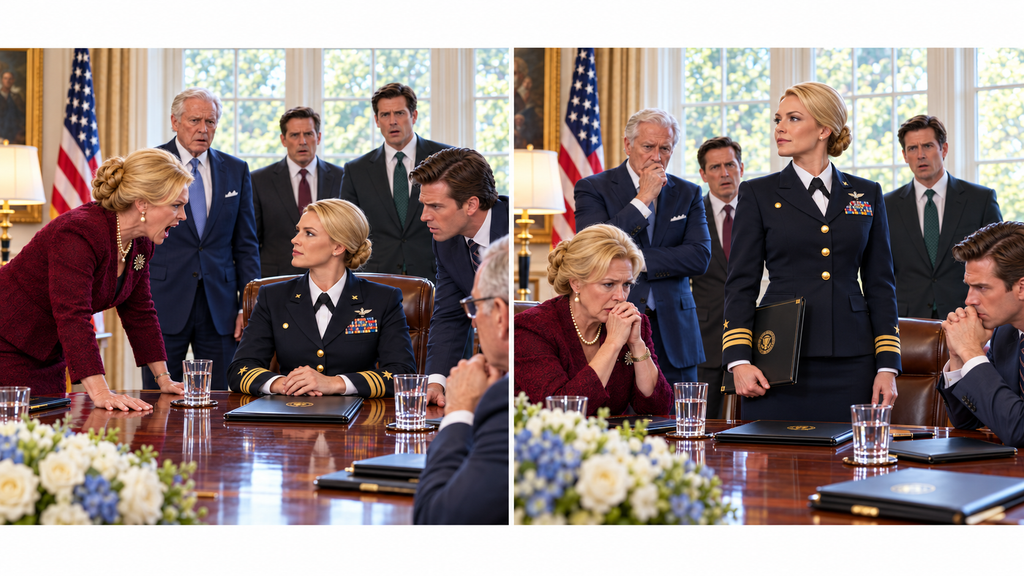
“Sign it, Maya.”
I looked down at the signature line.
Then at her.
“No.”
For several seconds, nobody spoke.
Julian finally gave a short laugh.
“Seriously?”
“Very.”
Mother folded her arms.
“You haven’t even read it.”
“I read enough.”
One of the attorneys cleared his throat.
He was perhaps sixty, silver-haired, expensive watch, navy suit.
“Colonel Sterling, perhaps we should begin again.”
“Maya,” my mother corrected sharply.
The attorney ignored her.
“My name is Daniel Mercer. I represent Mrs. Sterling regarding certain questions involving your father’s estate.”
“Certain questions?”
“Yes.”
“Then let’s discuss them.”
Mother’s expression changed.
She had expected resistance.
She hadn’t expected cooperation.
I pulled out a chair.
But I didn’t sit where they wanted me.
There was one chair positioned at the end of the table with the documents directly in front of it.
Instead, I took the chair beside the window.
From there, I could see everyone.
The doorway.
The hall.
The reflections in the glass.
Old habits.
Marcus shifted.
Julian noticed.
Mother did not.
“Fine,” she said. “Discuss it. Then sign.”
I looked at Mercer.
“What exactly is your legal theory?”
He paused.
Mother blinked.
“My what?”
I kept my eyes on him.
“You want me to surrender assets transferred to me under my father’s will. Your client claims he lacked testamentary capacity. So I’m asking what evidence supports that claim.”
Mercer leaned back slightly.
“The family has concerns regarding Arthur’s mental condition during his final months.”
“What concerns?”
“Forget this legal nonsense,” Mother interrupted. “Your father was sick.”
“No, Eleanor.”
Everyone looked at me.
I almost never called her by her first name.
Her lips parted.
I continued.
“You brought five attorneys into this house. You put a legal waiver in front of me. You don’t get to switch back to emotional blackmail when legal questions become inconvenient.”
Julian muttered something under his breath.
I heard it anyway.
“Always has to be the smartest person in the room.”
I turned toward him.
“No. I learned a long time ago that the person trying hardest to look smartest is usually the person you should watch most carefully.”
His face hardened.
Mother pointed at the papers.
“Your father left you nearly eleven million dollars in property and investments.”
“Approximately.”
“And Julian?”
“According to the copy of the will I received, Dad left Julian the Stamford property, a trust valued at approximately two million, and his minority interest in Sterling Regional Construction.”
Julian leaned forward.
“Minority interest.”
“Yes.”
“He gave you controlling shares.”
“Yes.”
“He gave you Boston.”
“Yes.”
“He gave you the Greenwich commercial property.”
“Yes.”
His jaw tightened.
“Why?”
That was the first honest question anyone had asked all evening.
And I knew the answer.
But I wasn’t ready to give it to him.
“Ask Dad.”
“He’s dead.”
“I noticed.”
Mother slapped the table.
“Enough!”
The sound cracked through the room.
“Enough with the attitude. Enough with the uniform. Enough with this superiority you’ve carried around since you were eighteen.”
“I’m not wearing a uniform.”
“You know what I mean.”
Actually, I did.
She had hated the Army long before she understood anything about it.
When I was nineteen, she told her friends I was “going through a rebellious phase.”
When I graduated from officer training, she didn’t attend.
Dad did.
When I made major, she sent a thumbs-up emoji.
When I made lieutenant colonel, she asked whether I was “still doing that government thing.”
And when I was promoted to colonel, she found out from my father.
Her response had been:
“That’s nice. Julian is opening his second restaurant.”
I had stopped trying after that.
Dad hadn’t.
Dad called after every promotion.
Every transfer.
Every difficult assignment he was allowed to know about.
He never asked questions I couldn’t answer.
He just said the same thing.
“I don’t need to understand everything you do to understand why you do it.”
That sentence had carried me through places my mother would never know existed.
Now I was sitting in the house where he’d taught me to ride a bicycle.
And five attorneys were watching his widow try to erase his final decisions.
Mercer opened another folder.
“Your father amended his estate plan fourteen months before his death.”
“I know.”
“The changes were substantial.”
“I know.”
“Mrs. Sterling believes—”
“Mrs. Sterling?”
I looked at my mother.
“Interesting.”
Her eyes narrowed.
“What?”
“Dad’s estate attorney didn’t represent you?”
Silence.
Just a fraction too long.
But long enough.
I looked back at Mercer.
“Who prepared these documents?”
“I did.”
“No. I mean who provided the financial schedules attached to the waiver?”
Another pause.
The attorney beside him looked down.
That was lawyer number two.
Rebecca Sloan.
I knew her name already.
I knew all five names.
That was another thing my mother didn’t know.
I had researched every person in that room before I entered it.
Daniel Mercer specialized in estate litigation.
Rebecca Sloan specialized in tax disputes.
Thomas Bell handled corporate restructuring.
Gerald Pike practiced commercial litigation.
And the youngest attorney, sitting quietly near the fireplace, was Evan Cole.
Probate.
Five lawyers.
Five specialties.
That wasn’t a family meeting.
It was an operation.
Mercer answered carefully.
“We received financial information from Mrs. Sterling and Mr. Vale.”
Marcus.
My stepfather.
I looked toward him.
He smiled.
“You’re making this more dramatic than necessary.”
“Am I?”
“Yes.”
“Then help me understand something.”
I opened the waiver.
Page one.
Page two.
Page three.
Then I reached page eleven.
I tapped a paragraph.
“This document says I acknowledge that all transfers made from Sterling Regional Construction during the twenty-four months before Dad’s death were authorized by him.”
Nobody moved.
I looked at Mercer.
“Why would I need to acknowledge that?”
Mother’s face changed.
Barely.
But I saw it.
There.
That was the moment.
Not fear.
Recognition.
I continued.
“If this is simply about me surrendering my inheritance, why am I being asked to retroactively certify transactions from Dad’s company?”
Mercer glanced at Marcus.
There it was again.
Tiny.
Fast.
But real.
The room had shifted.
I leaned back.
“Interesting.”
Julian frowned.
“What are you talking about?”
I turned another page.
“And here. Paragraph twenty-two. I waive any right to demand an independent forensic accounting of Sterling Regional Construction.”
Julian looked at Mother.
“Mom?”
She ignored him.
I turned another page.
“Paragraph twenty-eight. I release Eleanor Sterling, Marcus Vale, Julian Sterling, and any affiliated entities from claims involving transfers, distributions, loans, advances, reimbursements, management fees, consulting fees, or other transactions executed before Dad’s death.”
I closed the folder.
“That isn’t an inheritance waiver.”
Nobody answered.
I looked directly at Mercer.
“That’s a liability release.”
His face remained professionally blank.
But his fingers stopped moving.
Mother stood.
“You don’t understand what you’re reading.”
That almost made me smile.
For most of my life, whenever I understood something she didn’t want me to understand, she told me I was confused.
At sixteen, when I realized she had emptied the college account Grandma opened for me:
“You don’t understand finances.”
At twenty-three, when I asked why she hadn’t told Dad about the loan she’d taken against the house:
“You don’t understand marriage.”
At thirty-one, when Julian wrecked a car while drunk and she asked me to tell the police I’d been driving:
“You don’t understand family.”
And now, at forty-two, sitting across from five lawyers:
“You don’t understand what you’re reading.”
I placed both hands on the table.
“I understand perfectly.”
Mother’s voice lowered.
“Then sign.”
“No.”
Marcus moved away from the window.
“Maya.”
Something about his tone made Julian look at him.
Marcus had married my mother four years after my parents divorced.
Dad had never liked him.
He never said much.
That was Dad.
He rarely accused anyone without proof.
But once, two Christmases ago, Marcus left dinner early, and Dad watched his car disappear down the driveway.
Then he said something strange.
“Some men think money belongs to whoever can reach it.”
I hadn’t understood.
Now I did.
Marcus approached the table.
“You’ve spent your entire adult life away from this family. You don’t know what happened here.”
“Then explain it.”
“Arthur was deteriorating.”
“Medically?”
“Yes.”
“Diagnosis?”
He hesitated.
Mother answered for him.
“Stress. Confusion. Memory problems.”
“Doctor?”
“What?”
“Name his physician.”
“Why?”
“Because you just claimed a dead man lacked mental capacity. I’m asking which physician documented it.”
Her mouth tightened.
“His doctors aren’t your concern.”
“They became my concern when you used his alleged incapacity as the basis for trying to overturn his will.”
Mercer raised a hand.
“Colonel—”
“Maya is fine.”
He nodded.
“Maya, nobody is attempting to force you.”
I looked toward the closed dining-room door.
“Really?”
Marcus glanced at it.
So did Julian.
Mercer followed my eyes.
I said quietly, “Then open the door.”
Nobody moved.
Mother frowned.
“What?”
“The door.”
“Maya, don’t be ridiculous.”
“I tried it when I came in.”
That was true.
After Julian closed it behind me, I heard the old brass lock turn.
A tiny sound.
Most people wouldn’t have noticed.
I did.
“Open it.”
Mother looked at Julian.
Julian looked at Marcus.
And there it was.
The first crack.
Julian hadn’t known.
“Marcus?”
Marcus gave an irritated sigh.
“For God’s sake.”
He walked over and unlocked it.
Click.
Nobody spoke.
I stared at him.
“You locked it?”
“It was to prevent interruptions.”
“You could have asked.”
“This is a private discussion.”
“You locked a grieving beneficiary inside a room with five attorneys and presented her with a waiver releasing all of you from financial liability.”
Mercer immediately stood.
“Mrs. Sterling, I was not informed the door had been locked.”
Mother’s face went pale.
“Daniel, sit down.”
“No.”
That was the first time one of her lawyers disobeyed her.
And it changed everything.
Mercer looked at me.
“For the record, my firm did not advise anyone to restrict your ability to leave.”
“Noted.”
Mother stared at him.
“What are you doing?”
“Protecting the record.”
“The record?”
She laughed nervously.
“There is no record.”
I said nothing.
But something in my expression made Rebecca Sloan slowly raise her eyes.
She looked at my blouse.
Then my hands.
Then the room.
“Maya,” she said carefully, “are you recording this conversation?”
My mother froze.
I answered truthfully.
“No.”
Relief flashed across her face.
Then I added:
“I don’t need to.”
Marcus narrowed his eyes.
“What does that mean?”
“It means I’ve already got what I came for.”
Mother laughed.
It sounded forced.
“You came here to sign.”
“No.”
I reached into my handbag.
Julian immediately stepped forward.
“What are you doing?”
“Relax.”
I removed a thin blue folder.
Nothing dramatic.
No badge.
No classified documents.
No secret military authorization.
Just paper.
I placed it on the table.
My mother’s eyes dropped to it.
“What is that?”
“The reason Dad changed his will.”
Nobody breathed.
Julian moved first.
“What?”
I looked at him.
“I said it’s the reason Dad changed his will.”
“You told me to ask Dad.”
“I did.”
His face reddened.
“Dad’s dead.”
“Yes.”
“Then how do you know?”
“Because he told me.”
Mother went completely still.
“When?”
“Sixteen days before he died.”
Her chair scraped the floor.
“You didn’t see him.”
“I did.”
“No.”
“Yes.”
“You were in Virginia.”
“I was in Virginia the week before.”
“You told me—”
“I told you I couldn’t attend your charity dinner.”
“That isn’t the same thing.”
“No. It isn’t.”
Dad had called me at 11:43 on a Wednesday night.
I still remembered the exact minute.
“Maya?”
His voice sounded tired.
“Dad?”
“I need you to come up.”
“Is something wrong?”
A long silence.
Then:
“I think I’ve been a coward.”
My father had never spoken like that.
I flew to Connecticut the next afternoon.
I didn’t tell Mother.
Dad asked me not to.
We met at a small diner twenty miles from Greenwich.
The same diner where he’d taken me after my high-school graduation.
He sat in a corner booth wearing an old gray sweater.
No chauffeur.
No assistant.
No Marcus.
He had a notebook beside his coffee.
Dad always trusted paper.
When I sat down, he didn’t hug me immediately.
He just looked at me.
Then he said:
“I need you to promise you won’t react until I finish.”
That was the kind of sentence people said when they were about to destroy your understanding of something.
So I listened.
For forty-seven minutes.
And by the end, I understood why my father had changed his will.
Back in the dining room, Mother whispered:
“What did he tell you?”
I opened the blue folder.
“Dad discovered money was disappearing.”
Julian frowned.
“From where?”
“Sterling Regional Construction.”
Marcus laughed.
“That’s absurd.”
“Is it?”
“Arthur was semi-retired. He barely understood the current books.”
“That isn’t what the accountants said.”
His smile vanished.
Mother looked at me.
“What accountants?”
“Dad hired an outside forensic accounting firm.”
Silence.
Even the attorneys looked surprised.
That mattered.
I watched Mercer carefully.
“You didn’t know.”
He shook his head once.
“No.”
Marcus spoke quickly.
“Arthur hired consultants constantly.”
“Not these consultants.”
I removed the first document.
“Over thirty-one months, approximately $3.8 million moved through a series of consulting agreements, vendor payments, short-term loans, reimbursements, and transfers.”
Julian stared.
“Three point eight million?”
“Approximately.”
“Where did it go?”
I looked at Marcus.
He didn’t blink.
“To companies connected to people Dad trusted.”
Mother sat down.
“You’re lying.”
I slid the document toward Mercer.
He didn’t touch it immediately.
Then he pulled it closer.
His eyes moved across the page.
Rebecca leaned over.
Marcus spoke sharply.
“That’s confidential corporate material.”
I looked at him.
“How would you know?”
He stopped.
A beautiful little silence followed.
I let it grow.
Five seconds.
Six.
Seven.
Then Julian turned.
“Marcus?”
“I mean obviously corporate records are confidential.”
“No,” I said. “You said ‘that.’ You recognized the document.”
“I recognized what you claimed it was.”
“Did you?”
Mother suddenly reached for the paper.
Mercer pulled it away.
“Mrs. Sterling, please.”
“Give it to me.”
“I’d like to review it first.”
“You work for me.”
Mercer looked at her.
“Yes.”
Then he glanced at Marcus.
“But I’m beginning to think I may not have been given complete information.”
Mother’s face hardened.
“Daniel.”
“Eleanor.”
His voice was calm.
“You told us this was a disputed testamentary-capacity matter.”
“It is.”
“You did not tell us there was an existing forensic review of corporate transfers.”
“Because there isn’t.”
I removed another document.
Then another.
Then another.
Copies.
Not originals.
Never originals.
Dad had taught me that too.
The first showed transfers to Vale Strategic Advisory.
Marcus’s company.
The second showed payments to Harbor Hospitality Development.
A company partly controlled by Julian.
The third showed a series of transfers to an entity I’d never heard of before Dad’s call.
Blackthorn Holdings.
$184,000.
$212,000.
$96,500.
$430,000.
Again.
Again.
Again.
Rebecca Sloan whispered:
“Oh my God.”
Mother snapped toward her.
“What?”
Rebecca pointed at one line.
“This entity.”
Mother looked.
And for the first time that evening, I watched my mother’s mask disappear.
Not crack.
Disappear.
Her skin drained of color.
Her eyes widened.
She looked at Marcus.
Marcus looked at the paper.
Julian looked between them.
“What?”
Nobody answered.
“What is Blackthorn Holdings?”
I already knew.
But I wanted them to say it.
Mother stood.
“This meeting is over.”
I stayed seated.
“Sit down, Eleanor.”
Her head snapped toward me.
Never in my life had I spoken to her that way.
Maybe that’s why she obeyed.
Slowly, she lowered herself back into the chair.
I pulled out the next page.
“Blackthorn Holdings was incorporated six years ago.”
Mercer read silently.
“Registered agent,” he murmured.
Then stopped.
Julian leaned over.
“What?”
Mercer looked at Mother.
“Eleanor Sterling.”
Julian laughed.
Not because anything was funny.
Because sometimes the brain produces the wrong sound when reality arrives too quickly.
“Mom?”
She shook her head.
“It’s an investment vehicle.”
“For what?”
“Family investments.”
“Whose family?”
“Julian.”
“Enough.”
“No.”
He stood.
“You dragged me into this room. You told me Maya stole my inheritance. You told me Dad had been manipulated.”
“He was.”
“You said she was taking what belonged to me.”
“She is!”
I watched my brother.
For years, Julian had been Mother’s favorite weapon.
He was handsome, charming, impulsive, and desperate for approval.
She praised him when he obeyed.
Rescued him when he failed.
And whenever consequences appeared, she found someone else to blame.
Usually me.
But something was changing in his face.
He was finally realizing that he might not be sitting on her side of the table.
He might be sitting in front of it.
He pointed at the documents.
“Did you take money from Dad’s company?”
Mother looked offended.
“Your father and I were married for thirty-two years.”
“That isn’t an answer.”
“Everything we built—”
“Did you?”
Marcus stepped in.
“Julian, calm down.”
Julian spun toward him.
“Don’t tell me to calm down.”
“Your mother doesn’t need to be interrogated in her own home.”
“This was Dad’s home.”
The words hit harder than Julian probably intended.
Mother stared at him.
Then she said quietly:
“After everything I’ve done for you.”
There it was.
The leash.
Julian heard it too.
I could tell.
His shoulders lowered.
For a second, I thought he’d sit.
Then he surprised me.
“So tell me the truth.”
Mother said nothing.
Julian’s voice cracked.
“Just once.”
The room went silent.
I almost felt sorry for him.
Almost.
Because Julian had hurt me too.
He had mocked my career.
Borrowed money and never repaid it.
Told relatives I was “emotionally defective” because I wasn’t married.
After Dad died, he sent me one message.
Mom says you’re making things difficult. Don’t be greedy.
But I also knew what it was like to spend a lifetime chasing Eleanor Sterling’s approval.
The difference was that I had stopped.
Julian hadn’t.
Until now.
Mercer removed his glasses.
“Maya, what exactly did your father tell you?”
I looked at him.
“He said he suspected unauthorized transfers. He said he’d confronted Marcus privately. Marcus denied everything.”
Marcus shook his head.
“Arthur was confused.”
“Dad anticipated you’d say that.”
I removed a small envelope.
Mother stared at it.
“What is that?”
“A letter.”
“To you?”
“No.”
I slid it to Julian.
“To him.”
My brother didn’t move.
“Dad wrote me a letter?”
“Yes.”
“When?”
“The night before I met him.”
Mother reached across the table.
“Give me that.”
Julian snatched it first.
“No.”
“Julian.”
“No.”
His hands trembled as he opened it.
I had never read the original.
Dad had given me a sealed copy and another to his attorney.
I only knew what Dad told me it contained.
Julian unfolded two pages.
His eyes moved across the first lines.
Then stopped.
His face changed.
“Read it,” Mother said.
He didn’t.
“Julian.”
“Stop.”
“What does it say?”
He looked at her.
There were tears in his eyes.
“You told him I knew.”
Mother’s lips parted.
“What?”
“You told Dad I knew about the transfers.”
Nobody moved.
Julian looked at me.
“He thought I was part of it.”
“I know.”
“I wasn’t.”
“I know.”
“How?”
“Because Dad found that out too.”
He looked back at the letter.
His mouth twisted.
“He says he was sorry.”
My throat tightened.
Dad had spent his final months discovering ugly things about people he loved.
But even then, he had worried about being unfair.
Julian kept reading.
Then his face collapsed.
Not dramatically.
Quietly.
Like something inside him had finally given way.
“He says he left me the trust because he wanted me to have a chance to build something without her.”
Mother stood.
“That’s enough.”
Julian kept reading.
“He says Maya gets the controlling interest because she was the only person he trusted not to sell the company or use it as collateral.”
“Julian.”
“He says…”
His voice failed.
He swallowed.
“He says he loves me.”
That broke something in me too.
I looked toward the window.
For one second, I wasn’t Colonel Maya Sterling.
I wasn’t an intelligence officer.
I wasn’t the woman who had spent eleven days preparing for an ambush.
I was Arthur Sterling’s daughter.
And I missed my father.
I missed his terrible coffee.
His handwritten birthday cards.
The way he called every Sunday at precisely 7:30 and always pretended it was coincidence.
I would have traded every building, every stock certificate, every dollar in his estate to hear him say my name one more time.
But grief doesn’t negotiate.
It only collects.
Julian wiped his face angrily.
Then he read the last paragraph.
And stopped.
“What?”
Mother’s voice was barely audible.
Julian looked at her.
“Dad knew.”
The room changed again.
Marcus whispered:
“Knew what?”
Julian handed the letter to Mercer.
“Read the last paragraph.”
Mercer hesitated.
Then he did.
His eyebrows lifted.
Rebecca leaned closer.
“What?”
Mercer looked at me.
I nodded.
He read aloud.
“Should there be any attempt to challenge this will on grounds of incapacity, coercion, or undue influence, my attorneys are instructed to release the accompanying medical evaluations and financial review to all beneficiaries and appropriate legal counsel.”
Nobody moved.
Mother’s lips trembled.
“No.”
I reached into the folder.
“And here’s the medical evaluation.”
I placed it down.
“Dad had himself independently assessed by two physicians eleven days before signing the final amendment.”
Mercer picked it up.
“Neuropsychological evaluation?”
“Yes.”
He read.
“Fully oriented. No evidence of cognitive impairment sufficient to compromise independent financial or testamentary decision-making.”
Mother stared at the table.
Her entire strategy had just died in one sentence.
But we weren’t finished.
Not even close.
Marcus recovered first.
“A medical report doesn’t prove those transfers were improper.”
“No.”
I looked at him.
“It doesn’t.”
He smiled faintly.
That was what he’d been waiting for.
A weakness.
An opening.
People like Marcus didn’t need to win every argument.
They only needed one door.
He stepped toward the table.
“Arthur authorized those transactions. He understood the corporate structure. Some were consulting fees. Some were investments. Some were loans. Business isn’t theft simply because Maya doesn’t understand it.”
I nodded.
“Correct.”
He blinked.
“You agree?”
“Completely.”
His confidence returned.
“Then this theatrical nonsense is finished.”
“No.”
I opened the last section of my folder.
“Because Dad didn’t stop with bank records.”
Marcus stared at me.
I watched the realization begin.
Slowly.
Like dawn.
“He had access logs reviewed.”
Marcus’s face became expressionless.
Mother whispered:
“Maya.”
I continued.
“Several transfers were approved through Dad’s executive credentials.”
Marcus said nothing.
“The problem is that on at least four of those dates, Dad wasn’t in Connecticut.”
Still nothing.
“He wasn’t even in the United States.”
Julian frowned.
“Where was he?”
“Portugal.”
I looked at Marcus.
“Dad and I were there together for four days.”
His jaw tightened.
“A password can be used remotely.”
“Correct.”
“So?”
“So Dad didn’t take his laptop.”
Silence.
“He deliberately left it in his Greenwich office.”
Marcus’s face finally changed.
Just slightly.
But enough.
“And someone logged in locally.”
I placed a page in front of Mercer.
“From the executive office.”
Rebecca inhaled.
“Who had access?”
“Three people.”
I held up one finger.
“Dad.”
A second.
“His longtime executive assistant, Caroline Webb.”
A third.
“And Marcus.”
Mother whispered:
“Stop.”
I didn’t.
“Caroline was in Florida attending her daughter’s wedding.”
Marcus shook his head.
“That’s circumstantial.”
“Yes.”
“Anyone could have entered the office.”
“Yes.”
“Then you have nothing.”
I looked at him.
And smiled.
“You really should have asked why Dad installed a new security system.”
Marcus stopped breathing.
Mother closed her eyes.
Julian whispered:
“What security system?”
I didn’t answer him.
I watched Marcus.
He knew.
Not everything.
But enough.
Dad’s office had been burglarized seven months before his death.
Nothing valuable disappeared.
But Dad became paranoid about sensitive corporate documents.
He installed cameras.
Not hidden cameras.
Ordinary commercial security cameras.
Legally installed in his own office suite.
The footage had been preserved.
And on one of the dates an authorization supposedly came from Arthur Sterling…
Arthur Sterling was 3,400 miles away.
Marcus Vale was sitting at his desk.
Mercer leaned back.
“Do you have that footage?”
“Yes.”
“Here?”
“No.”
That answer disappointed Mother for half a second.
Then I continued.
“My attorney does.”
Her eyes snapped toward me.
“Your attorney?”
“Yes.”
“You came here with a lawyer?”
“No.”
I looked at the five around her table.
“You already had enough.”
Nobody laughed.
I checked my watch.
7:42.
Right on schedule.
Mother noticed.
“What are you waiting for?”
I looked at her.
“The question I’ve been asking myself since I arrived.”
“What question?”
“Why five?”
She stared.
“Five what?”
“Attorneys.”
I gestured around the table.
“You only needed an estate litigator to challenge a will.”
Mercer said nothing.
“You brought a tax attorney.”
Rebecca shifted.
“A corporate restructuring attorney.”
Bell looked down.
“A commercial litigator.”
Pike crossed his arms.
“And a probate specialist.”
Cole watched me.
“So either Eleanor has suddenly become extraordinarily cautious…”
I paused.
“…or different people in this room were told different versions of the problem.”
Nobody moved.
Then I looked at the youngest lawyer.
“Mr. Cole?”
He swallowed.
“Yes?”
“What were you told?”
Mother snapped:
“Don’t answer that.”
Mercer turned toward her.
“Eleanor.”
She ignored him.
“I hired all of you. Attorney-client privilege—”
Mercer interrupted.
“Privilege does not mean you control what independent counsel says about the scope of their engagement.”
The room became very still.
Cole looked at me.
“I was told there were concerns about probate irregularities.”
“What kind?”
“That certain testamentary documents may have been substituted.”
Julian stared.
“Substituted?”
I looked at Mother.
Interesting.
Very interesting.
“What documents?”
Cole hesitated.
“A later will.”
My heart stopped.
For the first time that evening, something surprised me.
I turned fully toward him.
“What later will?”
Mother stood so quickly her chair fell backward.
“There isn’t one.”
Cole looked confused.
“Mrs. Sterling, you told me—”
“I said there might be.”
“No,” he replied. “You said Arthur executed a later testamentary instrument approximately five weeks before his death.”
Mercer turned to Mother.
“You never told me this.”
“Because Evan misunderstood.”
“I did not.”
Cole opened his briefcase.
Mother moved.
Fast.
Too fast.
She reached for the papers.
Julian caught her wrist.
“Mom!”
“Give me that!”
“Let him speak!”
“Let go of me!”
Marcus headed toward the door.
I stood.
“Marcus.”
He stopped.
I didn’t block him.
I didn’t need to.
“You’re free to leave.”
He stared at me.
“Then why say my name?”
“Because if you leave now, you’ll spend the rest of the night wondering what’s in Cole’s briefcase.”
His hand remained on the doorknob.
Then slowly dropped.
I sat again.
Cole removed a photocopy.
“This was emailed to me twelve days ago.”
“By whom?” Mercer asked.
Cole looked at Mother.
“Mrs. Sterling.”
She shook her head.
“That’s privileged.”
Mercer ignored her.
Cole continued.
“She said it had recently been discovered among Arthur’s personal papers.”
He slid it onto the table.
I looked down.
LAST WILL AND TESTAMENT OF ARTHUR JAMES STERLING.
Dated thirty-five days before his death.
My pulse changed.
The signature looked like Dad’s.
Very much like Dad’s.
Under its terms, almost everything went to Mother.
Control of the company.
Boston.
The commercial properties.
Investment accounts.
Julian and I received modest trusts.
Marcus received nothing directly.
At first glance, it made sense.
Too much sense.
Mother looked at me.
And despite everything that had happened, she smiled.
“There.”
Her voice trembled with triumph.
“There it is.”
I stared at the signature.
For the first time that evening, she believed she’d won.
“Your father changed his mind.”
I said nothing.
“He realized what he’d done.”
Still nothing.
“He wanted his wife protected.”
I picked up the document.
Julian looked devastated.
“Is that real?”
Mother answered immediately.
“Yes.”
I didn’t.
I studied page one.
Page two.
Page three.
Dad’s initials appeared at the bottom of each.
Page seven carried the signature.
Two witnesses.
A notary.
Everything looked proper.
Mother leaned toward me.
“Your little performance is over.”
I kept reading.
“Maya.”
I turned back to page one.
Something bothered me.
Not the signature.
Not the date.
Not the legal language.
Something smaller.
Something ordinary.
I heard Dad’s voice in my head.
Details aren’t small when someone worked hard to put them there.
I looked at Cole.
“You received this electronically?”
“Yes.”
“Do you have the original?”
“No.”
“Have you seen it?”
“No.”
Mother interrupted.
“The original is safe.”
“Where?”
“With someone I trust.”
“Who?”
“That isn’t your business.”
I smiled.
“Actually, that’s probably the most important business in the room.”
I looked at the document again.
Then I saw it.
The address.
Arthur James Sterling, residing at 18 Hawthorne Crest, Greenwich, Connecticut.
I read it twice.
Then a third time.
And laughed.
Not loudly.
Just once.
Mother stared.
“What?”
I turned the document toward Mercer.
“Dad didn’t live at 18 Hawthorne Crest.”
Mother frowned.
“Yes, he did.”
“No.”
“Of course he did.”
“Not for the last two years of his life.”
Silence.
Dad had moved his legal residence to Massachusetts.
The Boston house had been Grandma’s.
He renovated it and began spending most of his time there after retiring.
More importantly, eighteen months before his death, his estate attorney formally changed his domicile for estate-planning reasons.
Every legitimate document after that used the Boston address.
Mercer immediately understood.
Mother didn’t.
“People use old addresses all the time.”
“Yes.”
I tapped the page.
“But Dad’s estate attorney didn’t.”
I looked at Cole.
“Who drafted this?”
He examined the document.
“It purports to have been prepared by Howard Levin.”
That name made my stomach tighten.
Howard Levin had been Dad’s attorney for twenty-seven years.
He was also the man I’d called eleven days ago.
I took out my phone.
Mother’s eyes widened.
“Who are you calling?”
“Nobody.”
I opened an email.
Printed copies were already in my folder, but I wanted her to see the timestamp.
I slid the phone to Mercer.
“Howard Levin sent me that six days ago.”
Mercer read.
His expression changed.
“What?”
Mother demanded.
“What does it say?”
Mercer looked at her.
“Mr. Levin states he prepared no testamentary documents for Arthur Sterling after the amendment dated fourteen months before his death.”
Cole turned pale.
Mother’s lips parted.
“He’s lying.”
“Why?”
“Because Maya got to him.”
I laughed.
There it was.
The conspiracy had expanded.
First Dad was confused.
Then the notary was wrong.
Then the doctors were irrelevant.
Now a lawyer with almost forty years of practice was apparently participating in my plot.
Julian stared at the supposed will.
“Then who made this?”
Mother said nothing.
“Mom.”
Nothing.
“Who made it?”
Marcus spoke.
“We don’t know that it’s false.”
I turned toward him.
“You’re right.”
He seemed surprised.
“It’s suspicious. That isn’t the same thing as proving forgery.”
His shoulders relaxed.
I continued.
“Which is why Dad’s attorney sent a copy to a forensic document examiner yesterday.”
Mother’s breathing changed.
“He can’t do that.”
“He can examine a copy.”
“And?”
I looked at her.
“And the preliminary opinion identified several inconsistencies.”
She gripped the table.
“What inconsistencies?”
“The signature may have been digitally reproduced.”
“No.”
“The witness signatures appear on other documents associated with a company registered at a mailbox in White Plains.”
“No.”
“And the notary commission number belongs to a woman whose commission expired three years ago.”
The room went dead.
Julian sat down.
Mother whispered:
“No.”
I watched her.
Not with triumph.
Not anymore.
Because suddenly I understood something.
She hadn’t created the document.
I had watched enough interrogations to recognize the difference between fear of discovery and shock at discovery.
My mother was terrified.
But she was also surprised.
I turned toward Marcus.
He was already looking at me.
And that was when everything clicked.
The waiver.
The corporate release.
The supposed later will.
Blackthorn Holdings.
Mother had participated in something.
Absolutely.
But perhaps not everything.
“Eleanor,” I said softly.
She looked at me.
“Where did you get that will?”
Marcus immediately interrupted.
“Don’t answer.”
I ignored him.
“Mom.”
She flinched at the word.
It was the first time I’d called her that all evening.
“Where did you get it?”
Her eyes moved toward Marcus.
Just once.
That was enough.
Julian saw it too.
“Marcus?”
He stepped backward.
Mother whispered:
“He found it.”
The silence afterward was enormous.
Marcus laughed.
“This is insane.”
Mother stared at him.
“You said Arthur had kept it from me.”
“Eleanor.”
“You said you found it in the safe.”
“Stop talking.”
“You said Howard must have forgotten.”
“Eleanor!”
His voice exploded through the room.
Everyone froze.
He realized immediately what he’d done.
For years, Marcus had perfected calm.
Cultured voice.
Expensive suits.
Measured smiles.
But underneath it was something else.
And now we’d seen it.
Mother stared at him.
“You told me it was real.”
He lowered his voice.
“It is.”
“You told me Arthur changed everything back.”
“He did.”
“You said—”
“Stop.”
“No.”
Her voice broke.
“You said if Maya challenged it, we’d make her sign the waiver first and then—”
Mercer stood.
“Mrs. Sterling.”
She stopped.
He spoke very carefully.
“I strongly recommend that you say nothing further until you have independent counsel.”
Mother stared at him.
“Aren’t you my counsel?”
“Not for what this may have become.”
That sentence landed harder than any accusation.
Mother looked around the room.
At five lawyers.
At Julian.
At Marcus.
At me.
And finally she understood.
She had filled the room with attorneys because she thought numbers meant power.
Instead, she’d created five professional witnesses to the collapse of her own plan.
Marcus picked up his jacket.
“I’m leaving.”
Nobody stopped him.
He walked toward the door.
Then the doorbell rang.
Once.
The sound echoed through the house.
Marcus stopped.
Mother looked at me.
I checked my watch.
8:03.
Exactly twenty-one minutes later than I’d expected.
Julian whispered:
“Who is that?”
I stood.
“My attorney.”
Mother looked confused.
“You said you came alone.”
“I did.”
The bell rang again.
I walked into the hall.
Nobody followed for three seconds.
Then everyone did.
I opened the front door.
Claire Donovan stood on the porch.
Fifty-eight.
Gray coat.
Leather briefcase.
No dramatic entourage.
No police.
No federal agents.
Just one woman.
Dad’s litigation attorney.
And the most prepared person I knew outside the military.
She looked at me.
“You all right?”
“Yes.”
Then she looked over my shoulder.
At the small crowd gathered in the hall.
“I see dinner went well.”
I almost smiled.
Mother pushed forward.
“Why are you here?”
Claire entered.
“Because Colonel Sterling asked me to come if she hadn’t called me by eight.”
Mother stared at me.
“You planned this.”
“Yes.”
“All of it?”
“No.”
I looked at Marcus.
“The fake will was a surprise.”
Claire’s expression changed.
“Fake will?”
I handed her the copy.
She read the first page.
Then looked at Marcus.
Interesting.
She knew something.
“What?” I asked.
Claire didn’t answer immediately.
Instead, she opened her briefcase.
“I was going to wait until tomorrow.”
“For what?”
She removed an envelope.
“Arthur left instructions with my firm.”
Mother laughed bitterly.
“Apparently Arthur left instructions with everyone except his wife.”
Claire looked at her.
“He left instructions regarding you too.”
Mother stopped laughing.
Claire handed the envelope to me.
My name was written across the front.
Dad’s handwriting.
Maya.
Nothing else.
My hands suddenly felt cold.
I had handled sensitive material without shaking.
I’d briefed rooms where one bad sentence could change careers.
I’d stood beside families waiting for news that would alter their lives.
But seeing my father’s handwriting nearly brought me to my knees.
“When?” I whispered.
“Seven months before he died.”
“Why didn’t you give me this?”
“His instructions were explicit.”
“What instructions?”
Claire looked around the room.
“You were to receive it only if someone attempted to force, coerce, threaten, or improperly induce you to surrender your inheritance.”
Mother whispered:
“Arthur…”
I opened the envelope.
Inside was a letter.
And a small brass key.
I recognized the key immediately.
Dad’s private safe-deposit box.
I unfolded the letter.
Maya,
If Claire is giving you this, then I was right about at least one thing, and I am sorry for that.
I stopped.
My vision blurred.
I blinked until the words returned.
I hope I was wrong about the rest.
You will be angry with me for keeping things from you. You have every right.
But there are battles a father wants to finish before his child ever learns they began.
I failed to finish this one.
So now I need you to do something harder than fighting.
I need you to learn the truth without letting anger choose it for you.
Trust evidence.
Not grief.
Not loyalty.
Not me.
Evidence.
I pressed my lips together.
That was Dad.
Of course it was.
Even from the grave, he wasn’t asking me to avenge him.
He was telling me not to become careless.
I continued.
The key opens box 417 at First Atlantic Trust in Boston.
Claire has the authorization.
Inside is the complete record.
Whatever you find, remember one thing.
I did not leave you control of the company because I loved Julian less.
I left it to you because when everyone else in this family wanted something from me, you were the only person who never asked.
Take care of your brother if he lets you.
Take care of yourself whether he does or not.
Dad.
I couldn’t speak.
Julian was crying openly now.
Mother turned away.
Even Claire gave me a moment.
Finally Julian whispered:
“What complete record?”
Claire answered.
“We find out tomorrow.”
Marcus headed toward the door again.
This time Mother spoke.
“Where are you going?”
He didn’t turn.
“Home.”
“This is your home.”
Something ugly crossed his face.
“No, Eleanor.”
He looked around at the paintings, marble floor, chandelier, antique staircase.
“This was always Arthur’s.”
Mother recoiled.
Then Marcus walked out.
The front door closed.
For perhaps ten seconds, nobody moved.
Then Mother whispered:
“Maya.”
I looked at her.
She seemed twenty years older.
“I didn’t know.”
I folded Dad’s letter.
“About the forged will?”
“Yes.”
“I believe you.”
Her eyes filled.
Relief appeared.
Too early.
“I believe you didn’t know the will was forged.”
Her relief disappeared.
“But you knew about Blackthorn.”
She looked down.
“You knew money was moving.”
Silence.
“You knew Dad was investigating.”
Silence.
“And you brought me here to sign away my right to demand an accounting.”
She began to cry.
Not loudly.
Mother never cried loudly.
Even grief had to be elegant with Eleanor Sterling.
“I was scared.”
“So was Dad.”
“Marcus said we’d lose everything.”
“There it is.”
“What?”
“Everything.”
I looked around the mansion.
“You keep saying that word.”
She stared at me.
“Everything.”
I pointed toward the dining room.
“The house?”
Then the artwork.
“The money?”
Then the staircase.
“The club membership? The cars? The apartment in Manhattan?”
My voice shook.
“Dad was dying while you were protecting everything.”
“I loved your father.”
“Then why didn’t you protect him?”
She covered her mouth.
I didn’t shout.
I wanted to.
God, I wanted to.
But rage would have made it easier for her.
She knew how to fight anger.
She could call it disrespect.
Cruelty.
Instability.
She had done it my entire life.
So I gave her something she couldn’t fight.
The truth.
“You didn’t bring me here because Julian needed help.”
She said nothing.
“You didn’t bring me here because Dad was confused.”
Nothing.
“You brought me here because you were afraid that once I controlled the company, I’d look at the books.”
Her shoulders began trembling.
“And you were right.”
I walked past her.
At the dining-room entrance, I stopped.
“I’m going to look at everything.”
The next morning, Claire and I drove to Boston.
Julian came too.
I hadn’t invited him.
He simply appeared outside my hotel at 6:40 wearing yesterday’s clothes.
“I want to know.”
That was all he said.
So I let him come.
For most of the drive, nobody spoke.
Rain followed us north.
Julian stared through the window.
Halfway through Massachusetts, he finally said:
“Did you really know I wasn’t involved?”
“Yes.”
“How?”
“Dad showed me enough.”
“Then why didn’t you tell me?”
I looked at him.
“Would you have believed me?”
He opened his mouth.
Then closed it.
“No.”
“That’s why.”
He rubbed both hands over his face.
“I treated you like garbage.”
“Yes.”
“You could soften that a little.”
“No.”
For the first time in weeks, he laughed.
It lasted maybe two seconds.
Then he became serious again.
“I thought you looked down on me.”
“I didn’t.”
“Mom said—”
“I know what Mom said.”
“She said Dad gave you everything because you convinced him I was irresponsible.”
“I didn’t.”
“She said you hated my restaurants.”
“I’ve eaten at two of them.”
He looked surprised.
“You did?”
“Yes.”
“When?”
“Opening month in Stamford.”
“You never told me.”
“You didn’t invite me.”
He stared out the window again.
After a while, he whispered:
“I would’ve invited you.”
“No, Julian.”
I watched the highway.
“You wouldn’t have.”
That hurt him.
Good.
Some truths should.
But I wasn’t trying to punish him anymore.
I was simply finished protecting him from reality.
At 9:18, we entered First Atlantic Trust.
Claire presented the authorization.
The bank manager took us downstairs.
Box 417 was longer than I expected.
The manager inserted his key.
I inserted Dad’s.
Two locks clicked.
Then he left us alone.
I lifted the lid.
Inside were six black notebooks.
Three external drives.
A sealed envelope.
Bank statements.
Corporate ledgers.
And a photograph.
The photograph stopped me.
Dad and me.
I was twenty-two.
Second lieutenant.
Fresh uniform.
Terrible haircut.
Dad stood beside me outside Fort Huachuca, grinning like he’d personally won a war.
On the back he’d written:
The first Sterling who chose duty before comfort.
Julian read it over my shoulder.
He didn’t say anything.
Beneath the photograph was another envelope.
FOR MAYA AND JULIAN TOGETHER.
I looked at him.
He nodded.
I opened it.
Inside was a single page.
Children,
If you are reading this together, then perhaps there is still hope for the one thing I handled worst.
You.
I spent years allowing your mother to turn every difference between you into a competition.
Maya was “difficult.”
Julian was “spoiled.”
Those labels were convenient because they kept me from doing the harder work of being your father.
I should have defended Maya more.
I should have rescued Julian less.
I am sorry to both of you.
Julian sat down.
I kept reading.
There is money missing.
I believe Marcus took much of it.
I believe Eleanor knew more than she admitted.
I do not believe Julian understood the source of several investments made in his businesses.
That does not excuse carelessness.
But carelessness and conspiracy are not the same thing.
Find the truth.
Do not manufacture villains because grief wants them.
And please do not inherit our mistakes along with our money.
A.
For a long time, the only sound in the room was the ventilation system.
Then Julian said:
“He knew.”
“Yes.”
“He knew I didn’t know.”
“Yes.”
He pressed his fist against his mouth.
“I thought he hated me.”
“He didn’t.”
“He stopped calling.”
“He was angry.”
“Same thing.”
“No.”
I folded the letter carefully.
“It’s not.”
Julian looked at me.
“How would you know?”
“Because he was angry with me plenty.”
That earned another broken laugh.
Then Claire opened the first notebook.
And the story became worse.
Much worse.
Dad had documented everything.
Dates.
Amounts.
Meetings.
Questions.
Suspicions.
Names.
He had spent nearly a year tracing money through companies and partnerships.
Blackthorn Holdings was only one.
There were seven.
Some legitimate.
Some questionable.
Two appeared to exist solely to move money.
But the biggest shock wasn’t Marcus.
It was Julian’s restaurant company.
Nearly $900,000 had entered it through an investment vehicle.
Julian went white.
“I thought that came from Mom.”
Claire looked at him.
“Did you sign documents?”
“Yes.”
“Did you read them?”
He didn’t answer.
Claire repeated:
“Did you read them?”
“No.”
I closed my eyes.
There it was.
Dad’s sentence.
Carelessness and conspiracy are not the same thing.
Julian hadn’t stolen from our father.
But he’d been so accustomed to being rescued that he’d stopped asking where rescue came from.
He looked sick.
“I’ll give it back.”
Claire replied calmly.
“First we determine what legally happened.”
“I don’t care. I’ll give it back.”
“It may not be that simple.”
“I said I’ll—”
“Julian.”
I put a hand on his arm.
He stopped.
“We do this correctly.”
He stared at me.
Then nodded.
That afternoon, we met Dad’s forensic accountants.
By evening, we had a clearer picture.
And Marcus had a much bigger problem.
The accountants believed more than four million dollars had been diverted through transactions requiring further investigation.
Some transfers had legitimate documentation.
Others did not.
Several bore Dad’s electronic authorization during periods when records suggested he had not personally made them.
Blackthorn had received hundreds of thousands.
And from Blackthorn, money had moved elsewhere.
Including accounts associated with Mother.
When I saw that, I sat back.
Julian whispered:
“She knew.”
Claire answered carefully.
“She received money. That’s not automatically the same as knowing its source.”
I looked at her.
She was right.
Evidence.
Not grief.
Not loyalty.
Not me.
Evidence.
Dad’s instruction.
So I didn’t decide Mother was guilty.
I decided to find out.
Three days later, she called.
I answered.
“Maya.”
Her voice sounded small.
“Mom.”
“Marcus is gone.”
I sat upright.
“Gone where?”
“I don’t know.”
“What happened?”
“He took clothes. His passport. Some documents.”
“When?”
“Last night.”
“Did you call your attorney?”
“Yes.”
“Which one?”
“Daniel.”
“Good.”
She began crying.
“Maya, I’m frightened.”
For one dangerous second, I became twelve again.
My mother was afraid.
Therefore I had to fix it.
Then I remembered the locked door.
The waiver.
The lie about Dad’s mind.
Compassion did not require surrender.
“Listen to Daniel.”
“Can you come?”
“No.”
Silence.
“Please.”
“I can’t be your rescuer and investigate what happened at the same time.”
“You’re investigating me?”
“I’m reviewing Dad’s records.”
“I’m your mother.”
“And he was my father.”
She inhaled sharply.
I continued.
“If you didn’t knowingly participate, evidence matters.”
“And if I did?”
I closed my eyes.
“Then evidence still matters.”
She hung up.
Marcus didn’t disappear for long.
His attorney contacted Claire two days later.
He denied wrongdoing.
He claimed Arthur had authorized all transactions.
He claimed the supposed later will had been provided to him by an unknown intermediary.
He claimed he had merely shown it to Mother.
Every questionable act, apparently, had happened around Marcus without ever involving Marcus.
It was almost impressive.
Almost.
Then Dad’s third external drive changed everything.
There was an audio file.
Not secret surveillance.
A recording Dad himself had made during a meeting, with his attorney’s advice regarding applicable law.
The date was eight months before his death.
Arthur Sterling and Marcus Vale.
Dad’s voice came first.
“I asked you once. I’m asking again.”
Marcus answered.
“You’re becoming paranoid.”
“Did you authorize payments to Blackthorn?”
“No.”
“Did Eleanor?”
“No.”
“Did Julian?”
“No.”
“Then someone used my credentials.”
“I don’t know anything about that.”
Dad was quiet.
Then:
“I changed the password yesterday.”
Silence.
“You what?”
“I changed it.”
“So?”
“A transfer attempt was made this morning using the old password.”
Another silence.
Then Marcus said something that ultimately mattered more than everything else.
“You’re making a mistake, Arthur.”
Dad replied:
“No, Marcus. I think I finally stopped making one.”
The recording ended.
I sat there staring at the laptop.
Julian whispered:
“Jesus.”
Claire closed it.
“That goes to counsel.”
“What happens now?” I asked.
“Now we stop playing family detective.”
She looked at both of us.
“We preserve evidence. Your civil counsel handles the estate and corporate claims. If the evidence indicates crimes, it goes through the proper civilian authorities.”
That distinction mattered.
My rank didn’t make me a prosecutor.
My command didn’t give me authority to arrest my stepfather.
Military intelligence wasn’t my personal revenge machine.
And I would never use it that way.
What my career had given me was something simpler.
Discipline.
Patience.
And the ability to sit across from someone who desperately wanted me to react…
and wait.
The appropriate civilian authorities received relevant material through counsel.
Corporate litigation followed.
Probate proceedings followed.
And then came the part my mother never expected.
Discovery.
Emails.
Bank records.
Messages.
Documents.
People think secrets are safest inside conversations.
They aren’t.
Secrets become fragile the moment someone writes them down.
Marcus had written too much.
So had Mother.
One message between them was especially damaging to her version of events.
Eleanor:
If Arthur finds out about Blackthorn, he’ll change everything.
Marcus:
Then make sure Maya doesn’t start asking questions.
Eleanor:
She always asks questions.
Marcus:
Then give her a reason not to.
The date was nine months before Dad died.
When Claire showed it to me, I felt something inside me go quiet.
Not break.
Quiet.
For months, I’d wondered whether Mother had simply been manipulated.
That message didn’t prove every allegation.
But it proved something personal.
She knew there was something to hide.
And she knew I was a threat because I might look.
The locked-room meeting hadn’t been born from grief.
It had been the continuation of a plan.
Weeks later, Mother asked to see me.
Not at the estate.
Not with lawyers.
A coffee shop.
Public.
Neutral.
I agreed.
She arrived early.
No pearls.
No perfect makeup.
No expensive coat.
Just my mother.
For once.
She looked at me.
“You look like your father.”
I sat down.
“You used to say I didn’t.”
“I was angry when I said that.”
“You said it for thirty years.”
She looked away.
“I don’t know how to talk to you anymore.”
“Try the truth.”
Her eyes filled.
“I knew about Blackthorn.”
I waited.
“I didn’t know everything Marcus was doing.”
I said nothing.
“But I knew money was moving.”
“How much?”
“I don’t know.”
“Mom.”
“I don’t.”
“Did Dad confront you?”
“Yes.”
“When?”
“Ten months before he died.”
“What did you tell him?”
“That he was imagining things.”
My throat tightened.
“You knew he wasn’t.”
“Yes.”
“Why?”
She stared into her coffee.
Then she said the saddest thing I had ever heard her say.
“Because I was afraid he’d leave me with nothing.”
I looked at her.
“You had millions.”
“I know.”
“You had houses.”
“I know.”
“You had investments.”
“I know.”
“What did ‘nothing’ mean?”
She started crying.
And finally I understood.
Nothing had never meant poverty to my mother.
Nothing meant losing control.
Losing status.
Losing the life that told everyone Eleanor Sterling mattered.
She wiped her face.
“Marcus said Arthur was planning to divorce me.”
“Was he?”
“I don’t know.”
“Did Dad say that?”
“No.”
“Then Marcus said it.”
“Yes.”
“And you believed him.”
“I wanted to.”
That answer surprised me.
At least it was honest.
She continued.
“Marcus told me Arthur was moving money away from me. He said your father was preparing to give everything to you.”
“So you helped Marcus move it first.”
Her face crumpled.
“I told myself it was mine.”
“But it wasn’t.”
“I know.”
“Did you know about the forged will?”
“No.”
I believed her.
Not because she was my mother.
Because the evidence supported it.
“Did you know Marcus had accessed Dad’s office?”
“No.”
“Did you tell Marcus Dad’s passwords?”
She closed her eyes.
There it was.
“Yes.”
I leaned back.
“When?”
“Several times.”
“Why?”
“He said he needed access to tax documents.”
“You didn’t ask Dad?”
“No.”
I stared at her.
Then she whispered:
“I spent my entire life believing the worst thing that could happen was losing everything.”
She looked around the coffee shop.
“At some point, I stopped noticing what everything actually was.”
I thought about Dad.
Julian.
Me.
Then I said:
“And now?”
She looked at me.
“Now I lost it anyway.”
I didn’t comfort her.
That was difficult.
But necessary.
Consequences are not cruelty.
Sometimes love means refusing to erase them.
The estate dispute ended months later.
The purported later will was not admitted as valid.
Dad’s documented estate plan remained controlling.
Corporate and financial claims took longer.
Some disputed funds were recovered through settlements and other proceedings.
Julian sold one restaurant location.
He didn’t have to.
He wanted to.
He used part of the proceeds to resolve money that had entered his business through questionable transactions.
For the first time in his life, nobody rescued him.
And something unexpected happened.
He became better.
Not overnight.
Real people don’t transform overnight.
He still interrupted.
Still spent too much money.
Still had the irritating habit of saying “technically” before statements that were not remotely technical.
But he started reading contracts.
He hired an independent accountant.
He stopped asking Mother for money.
And one Sunday afternoon, he called me.
“Can I ask you something?”
“What?”
“Did Dad really think I could build something?”
I looked at the photograph from Fort Huachuca sitting on my desk.
“Yes.”
“How do you know?”
“Because he left you enough to try.”
Julian was quiet.
“And he left you control.”
“Yes.”
“Because he trusted you.”
“Yes.”
Another silence.
Then:
“I hated you for that.”
“I know.”
“I think I hated you because he trusted you in ways he didn’t trust me.”
“That wasn’t my decision.”
“I know.”
He exhaled.
“I’m trying to become someone he could’ve trusted.”
That sentence stayed with me.
A year after Dad died, Sterling Regional Construction held its annual board meeting.
I attended in uniform because I had come directly from an official ceremony.
Nothing theatrical.
No medals displayed for revenge.
No entourage.
Just me.
When I entered the conference room, Julian was already there.
He looked at my uniform.
Then smiled.
“Colonel.”
I raised an eyebrow.
“Don’t start.”
“I’m being respectful.”
“You’ve never tried it before. It doesn’t suit you.”
He laughed.
Then became serious.
“Dad would’ve liked seeing you here.”
I looked at the empty chair at the head of the table.
For years, that chair had been his.
I could almost see him there.
Notebook open.
Coffee going cold.
Listening more than speaking.
“No,” I said.
Julian frowned.
“No?”
“He’d complain the meeting started three minutes late.”
Julian laughed so hard he had to sit down.
And somehow that was the moment I finally cried.
Not at the funeral.
Not when I opened the safe-deposit box.
Not when I read Dad’s letter.
There.
In a conference room.
Beside the brother I’d spent half my life resenting.
I covered my face.
Julian stopped laughing.
Then, awkwardly, he put an arm around me.
Neither of us said anything.
We didn’t need to.
Some grief doesn’t want words.
It just wants someone who remembers the same person.
Mother eventually sold the Greenwich estate.
Partly because of financial consequences.
Partly because she said she couldn’t walk through the dining room anymore.
The last time I visited, the house was nearly empty.
No paintings.
No rugs.
No giant table.
Just pale rectangles on walls where expensive things had once hung.
Mother stood in the dining room.
“Do you remember that night?”
“Yes.”
“I thought I had you trapped.”
I looked at the doorway.
The old brass lock was still there.
“Yes.”
She gave a sad smile.
“You weren’t frightened at all.”
I thought about that.
Then shook my head.
“That’s not true.”
She looked surprised.
“I was frightened.”
“You didn’t look frightened.”
“Training doesn’t remove fear.”
“Then what does it do?”
I looked at the empty room.
“It teaches you not to let fear make decisions for you.”
She absorbed that.
Then asked:
“Did you hate me?”
I could have lied.
“No.”
That wasn’t true either.
So I gave her the answer Dad would have demanded.
Evidence.
Truth.
“I did for a while.”
She nodded.
“And now?”
I looked at my mother.
She had hurt me.
Manipulated me.
Helped conceal things from Dad.
Tried to pressure me into surrendering rights he deliberately left me.
But she was also a human being who had built her entire identity around fear and control until both consumed her.
Forgiveness did not mean pretending none of that happened.
And love did not require giving her access to hurt me again.
“I don’t hate you.”
She began crying.
“But we’re not going back to what we were.”
Her tears stopped.
“What does that mean?”
“It means boundaries.”
“Maya—”
“It means no financial entanglements. No using Julian to communicate with me. No surprise visits. No rewriting what happened.”
“I said I was sorry.”
“And I heard you.”
“Isn’t that enough?”
“No.”
She looked wounded.
Maybe once that would have destroyed me.
It didn’t anymore.
“Sorry is the beginning,” I said. “Not the price of admission back into someone’s life.”
She looked toward the windows.
“I wish your father were here.”
“So do I.”
“He would know how to fix this.”
I shook my head.
“No.”
She looked at me.
“Dad spent too much of his life fixing things for us.”
I touched the back of the chair where he’d once sat.
“Maybe that’s part of why everything broke.”
Mother didn’t answer.
When I left the house, she didn’t follow.
Outside, the air smelled like rain.
My car waited near the circular driveway.
The same place I’d parked the night of the meeting.
For a moment, I remembered myself walking toward that house months earlier.
Black trousers.
White blouse.
Hair tied back.
Dress uniform hanging inside the car.
Five attorneys waiting.
A locked door.
A mother convinced she knew exactly who her daughter was.
I opened the back door.
The garment bag was there again.
Different ceremony.
Same uniform.
I touched the fabric.
All my life, my family thought the uniform was the important part.
It wasn’t.
Rank hadn’t saved me.
Power hadn’t saved me.
The Army hadn’t descended on Greenwich because someone threatened my inheritance.
There had been no squad of soldiers outside.
No classified operation.
No dramatic military arrest.
What saved me was something much less cinematic.
Preparation.
Documentation.
Patience.
The willingness to ask one more question when everyone else wanted me to stop.
Dad had understood that.
Maybe before I did.
My phone rang.
Julian.
I answered.
“What?”
“Wow. Hello to you too.”
“What do you want?”
“Dinner.”
“No.”
“You don’t even know what I’m asking.”
“You said dinner.”
“Dinner tomorrow.”
“I have work.”
“You always have work.”
“Correct.”
He sighed.
“Mom called me.”
I became quiet.
“What did she say?”
“That you visited.”
“Yes.”
“She sounds different.”
“She is.”
“Good different?”
“I don’t know yet.”
He accepted that.
Then he said:
“I found something.”
My hand tightened around the phone.
“What?”
“Relax, Colonel. Not another secret company.”
“Julian.”
“Dad’s old recipe notebook.”
I blinked.
“What?”
“The blue one.”
Dad cooked exactly three meals.
Chili.
Pancakes.
And something he called “Sunday chicken,” which was mostly garlic.
He wrote every recipe in a blue notebook and then ignored the measurements every time.
“You found it?”
“Yeah.”
“Where?”
“In a box from Boston.”
I smiled.
Julian continued.
“So I’m making Sunday chicken.”
“You’ll ruin it.”
“Probably.”
“Dad always burned the onions.”
“I know.”
“You have to burn them.”
“I know.”
“And too much garlic.”
“Maya.”
“What?”
“I know how Dad made chicken.”
I smiled again.
“Fine.”
“Seven?”
“Seven-thirty.”
“Seven.”
“Seven-fifteen.”
“Deal.”
I started to hang up.
“Maya?”
“Yes?”
“Bring the photograph.”
I knew exactly which one.
Fort Huachuca.
Dad and me.
“Why?”
“I’ve got one too.”
“Of what?”
“Dad and me at my first restaurant.”
I’d never seen it.
“He kept it?”
“Apparently.”
Something tightened in my throat.
“Yeah,” Julian said quietly. “Apparently he was proud of both of us.”
I looked back at the empty house.
“Yes.”
Then I said the thing neither of us had understood soon enough.
“He was.”
The next evening, I arrived at Julian’s apartment at 7:13.
He opened the door wearing an apron that said KISS THE CHEF.
I stared at it.
“No.”
“What?”
“Take that off.”
“You’ve been here four seconds.”
“Four seconds too long.”
He laughed and let me inside.
The chicken smelled almost right.
Almost.
On the dining table were two photographs.
Mine.
Dad standing beside a twenty-two-year-old second lieutenant.
And Julian’s.
Dad standing in front of a restaurant beside a twenty-six-year-old son wearing a chef’s jacket.
In both photographs, Dad wore exactly the same expression.
Pride.
Not more for one.
Less for another.
Just pride.
I sat down.
Julian poured water.
“No wine?”
“You’re driving.”
“Look at you being responsible.”
“Don’t make it weird.”
We ate.
The onions were burned.
The garlic was excessive.
The chicken was dry.
It was perfect.
Halfway through dinner, Julian lifted his glass.
“To Dad.”
I lifted mine.
“To Dad.”
Then he hesitated.
“And maybe…”
I raised an eyebrow.
“To not hating each other?”
I considered it.
“That’s ambitious.”
“Maya.”
I smiled.
“Fine.”
We touched glasses.
“To not hating each other.”
He laughed.
And for the first time since our father died, the sound didn’t hurt.
Months passed.
Then a year.
Then another.
The company stabilized.
Julian’s remaining restaurants became profitable.
Mother moved into a smaller home near Westport.
Our relationship remained complicated.
Maybe it always would.
She called on birthdays.
Sometimes I answered.
Sometimes I didn’t.
She learned not to punish me for that.
Or at least she learned that punishment no longer worked.
One afternoon, she mailed me a package.
Inside was Dad’s old wristwatch.
No note except:
He wanted you to have this.
I sat at my kitchen table for a long time holding it.
The leather strap was worn.
The face scratched.
It wasn’t worth much compared with everything he’d left behind.
But it was the first inheritance that made me cry immediately.
I wore it the next day.
One of my officers noticed.
“New watch, ma’am?”
I looked at the scratched face.
“No.”
I smiled.
“Very old.”
Years earlier, Dad had once told me something after I lost a school debate.
I had been furious because I knew I’d made the stronger argument.
He found me sitting on the porch steps.
“You know what your problem is?” he asked.
I glared at him.
“I lost?”
“No.”
He sat beside me.
“You think winning means making the other person admit you were right.”
“What else does it mean?”
He smiled.
“Sometimes winning is simply walking away with the truth still intact.”
At sixteen, I thought that was stupid.
At forty-two, I finally understood.
My mother had locked me in a room because she believed pressure created truth.
Marcus had moved money because he believed access created ownership.
Julian had accepted every rescue because he believed love meant never facing consequences.
And for years, I had believed strength meant needing nobody.
We had all been wrong.
The truth survived us anyway.
It survived forged papers.
It survived missing money.
It survived grief.
It survived a locked door and five attorneys and a family determined to make reality bend around what they needed.
Dad understood something none of us did.
Eventually, facts become heavier than lies.
You can delay them.
Hide them.
Threaten people around them.
Put them inside safes.
Move money across accounts.
Hire lawyers.
Lock doors.
But eventually somebody opens the ledger.
Somebody checks the date.
Somebody notices the wrong address.
Somebody asks why five attorneys are sitting around a table when one should have been enough.
And then the lie has to carry the full weight of itself.
Most can’t.
Three years after Dad’s death, I returned to Boston alone.
Grandma’s house belonged to me now.
Legally.
But I’d never thought of it that way.
It was still Grandma’s house.
Then Dad’s.
Maybe one day it would feel like mine.
I went upstairs to his old study.
His desk remained beside the window.
I’d kept almost everything.
The notebooks.
The lamp.
The ugly brass paperweight shaped like an eagle.
I opened the bottom drawer.
Inside was the blue notebook.
Julian had returned it after copying the recipes.
I flipped through the pages.
Chili.
Pancakes.
Sunday chicken.
Then, near the back, I found handwriting I’d never noticed before.
Not a recipe.
Just four lines.
Maya fights because she thinks she has to.
Julian runs because he thinks someone will catch him.
Eleanor controls because she is afraid.
And I keep quiet because I call silence peace.
I sat down.
There was one final line beneath it.
Maybe we’re all just frightened people choosing different disguises.
I read it three times.
Then I closed the notebook.
Dad had known.
Not everything.
Nobody knows everything.
But enough.
He had known his silence had cost us.
He had tried, in his final year, to repair what he could.
Not perfectly.
Not heroically.
Just honestly.
I walked to the window.
Boston stretched beyond the glass.
My phone buzzed.
A message from Julian.
Sunday dinner?
I typed:
Your place?
Three dots appeared.
Absolutely not. You criticized my chicken for twenty minutes last time.
I smiled.
Mine, then.
His response came immediately.
7?
I wrote:
7:15.
He sent:
Dad would say you’re late.
I looked at the old blue notebook.
Then typed:
Dad isn’t here.
Julian replied:
I know.
A second message appeared.
Wish he was.
I stared at those words.
Then wrote:
Me too.
That evening, before leaving the house, I stopped at Dad’s desk.
For years, I’d imagined closure as something dramatic.
A verdict.
A confession.
An apology.
Someone finally admitting I had been right.
But closure wasn’t any of those things.
Marcus’s legal problems didn’t bring Dad back.
Mother’s confession didn’t erase thirty years.
The inheritance didn’t heal childhood.
Even the truth couldn’t reverse what happened.
Closure was quieter.
It was knowing which parts of the story belonged to me.
And which ones I could finally put down.
I touched Dad’s watch.
Then turned off the lamp.
At the doorway, I looked back once.
“Goodnight, Dad.”
Silence answered.
But it didn’t feel empty anymore.
I closed the door.
And walked downstairs.
Years before, my mother had locked me in a room with five lawyers because she believed she had finally cornered the daughter she never understood.
She thought I would panic.
She thought I would sign.
She thought authority came from numbers, money, expensive suits, and closed doors.
But she had misunderstood me in the same way she had misunderstood my father.
I didn’t need to be louder.
I didn’t need to threaten anyone.
I didn’t need to announce what I knew.
I only needed to wait long enough for everyone else to reveal what they didn’t.
That night in Greenwich, I counted five lawyers.
My mother thought I was counting the people against me.
I wasn’t.
I was counting witnesses.
And by the time she finally understood the difference…
the door she’d locked to keep me in had become the very door through which her secrets escaped.
I never signed the waiver.
I never surrendered my father’s inheritance.
But the most valuable thing Arthur Sterling left me wasn’t the company.
It wasn’t the Boston house.
It wasn’t the investments.
It wasn’t even his watch.
It was one sentence written in a letter from a dead father to the daughter he’d trusted with the truth:
Don’t let anger choose it for you.
So I didn’t.
I chose evidence.
I chose patience.
I chose boundaries.
Eventually, I even chose forgiveness where forgiveness was possible.
But I never again confused forgiveness with permission.
And I never again allowed anyone—not my mother, not my brother, not a room full of attorneys—to tell me that protecting myself made me selfish.
My father had spent his final months uncovering the truth.
My job wasn’t to avenge him.
It was to make sure the truth survived.
It did.
And so did I.
THE END! THANK YOU FOR READING!❤️