 Reading Time: 31 minutes
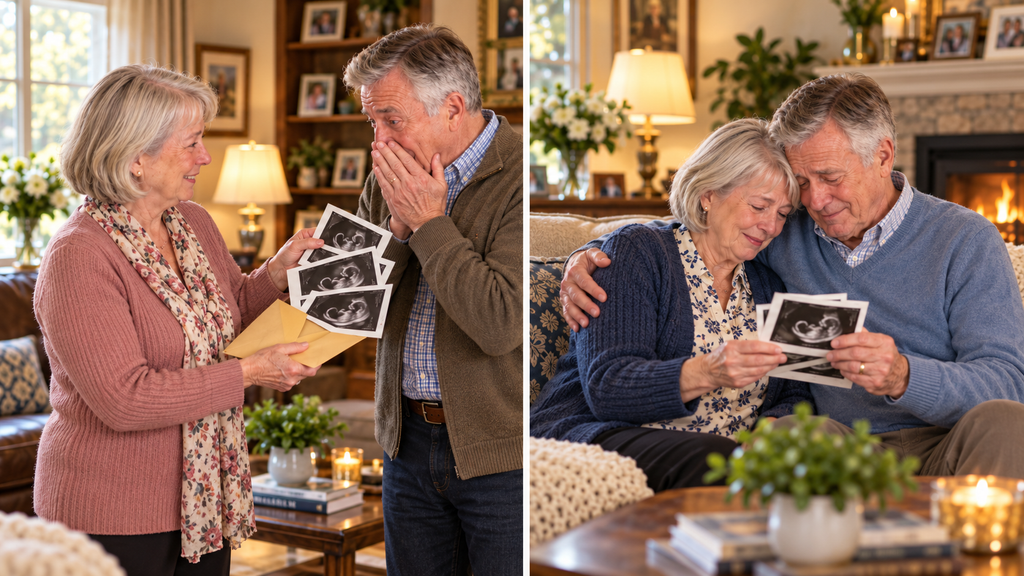
Dr. Evans did not answer me immediately. That frightened me more than anything she could have said. She removed the ultrasound probe, set it carefully in its holder, and pulled the paper sheet higher over my legs.
Then she rolled her stool closer. “Susan,” she said, “I’m going to ask you again because I need you to think very carefully before you answer.” My mouth had gone dry.
“Okay.”
“Have you ever had abdominal surgery?”
“No.”
“Laparoscopic surgery?”
“No.”
“A procedure involving your reproductive organs?”
“No.”
“A miscarriage that required surgery?”
I shook my head.
“An ectopic pregnancy?”
“No.”
“Tubal surgery?”
“No.”
She looked back at the monitor.
I felt something cold move through my chest.
“What are you seeing?”
Dr. Evans folded her hands.
“There are changes that are consistent with a previous surgical procedure.”
I stared at her.
“That’s impossible.”
“I understand why you’re saying that.”
“No. I mean literally impossible. I’ve never had surgery.”
She turned the screen slightly toward me.
I saw shadows.
Gray shapes.
Black spaces.
Nothing that meant anything to me.
She pointed carefully.
“This is your uterus.”
I nodded even though I barely understood what I was looking at.
“And here—”
She moved her finger.
“—there is scarring around the left fallopian tube. I can also see what appears to be surgical material.”
My heart began pounding.
“Surgical material?”
“Possibly clips.”
I laughed.
Not because anything was funny.
It was the strange little laugh people make when reality becomes too absurd to accept.
“You must have the wrong patient.”
“We confirmed your identity before the scan.”
“Then the machine is wrong.”
“Susan.”
“I’ve never had surgery.”
“I believe that you don’t remember having surgery.”
Those words hit differently.
I sat up.
“What does that mean?”
Dr. Evans hesitated.
Then she asked the question that changed the temperature of the room.
“You told me you were hospitalized in 2008.”
“Yes.”
“After an overdose.”
“Yes.”
“Were you unconscious for any significant period?”
“I don’t know.”
“Do you remember arriving at the hospital?”
“No.”
“Do you remember the first night?”
“No.”
“The second?”
I tried to think.
The memories were old and fragmented.
A ceiling.
A nurse.
A plastic cup of water.
Michael sitting beside me.
My hand inside his.
Pain.
So much pain.
And Michael telling me—
Don’t worry.
The pain is just from the stomach pumping.
I stopped breathing.
Dr. Evans saw it happen.
“What did you remember?”
I looked at her.
“My abdomen hurt.”
“How badly?”
“I thought it was normal.”
“Why?”
“Because Michael told me it was.”
Silence.
“What exactly did he tell you?”
I could hear his voice as clearly as if he were standing beside the examination table.
Don’t worry. The pain is just from the stomach pumping.
I repeated the words.
Dr. Evans’ expression hardened.
Not dramatically.
Not accusingly.
But enough.
“What?”
She stood.
“I want additional imaging.”
“Why?”
“Because I don’t want to speculate from one ultrasound.”
“Speculate about what?”
“I’d rather confirm exactly what was done before telling you.”
“Done?”
My voice cracked.
“You keep saying that word.”
Dr. Evans pulled her stool back toward me.
“Susan, listen to me. I can see evidence suggesting that you underwent a procedure at some point in the past. I cannot tell you from this image alone exactly what procedure occurred, why it occurred, or under what circumstances.”
“But you think it happened in 2008.”
“I think the timing you’ve described makes that hospitalization something we need to investigate.”
I stared at the screen.
For eighteen years, I had believed I knew the worst thing that happened in 2008.
I had cheated on my husband.
He discovered it.
I attempted to end my life.
Our marriage died.
Simple.
Ugly.
But simple.
Suddenly there was a locked door in the middle of that story.
And I had never known it existed.
“Can you access the hospital records?”
“Possibly. Records that old may be archived, incomplete, or held under a different system.”
“I need them.”
“I agree.”
I reached for my clothes.
My fingers were shaking so badly I dropped my blouse.
Dr. Evans picked it up.
“Susan.”
“I need to go home.”
“I don’t think you should confront anyone until we know more.”
I froze.
“I didn’t say I was going to confront anyone.”
“No.”
She held my blouse out to me.
“But your face did.”
I took it.
“He knew.”
“We don’t know that.”
“He was there.”
“That doesn’t necessarily mean he knew everything.”
“He told me the pain was from the stomach pumping.”
“He may have misunderstood.”
I looked at her.
Neither of us believed that explanation enough to find comfort in it.
Still, she was careful.
A doctor.
Evidence first.
Conclusions later.
I had spent eighteen years doing the opposite.
I had started with guilt and built every conclusion around it.
Michael was cold because I deserved coldness.
Michael avoided me because I deserved rejection.
Michael refused marriage counseling because I had destroyed the marriage.
Michael stayed because he was honorable.
Michael’s silence was mercy.
Every answer had been shaped around one unquestioned belief:
I was the guilty one.
Dr. Evans touched my arm.
“Please let me order the imaging before you make assumptions.”
“When?”
“I’ll mark it urgent.”
“How long?”
“Hopefully only a few days.”
A few days.
I had waited eighteen years without knowing there was a question.
Now a few days felt impossible.
I dressed.
Before leaving, Dr. Evans said one final thing.
“Susan?”
I turned.
“Whatever we find, don’t punish yourself for not remembering something that happened while you were medically incapacitated.”
I swallowed.
Then I walked out.
Michael was trimming the hedge when I got home.
Of course he was.
That was Michael.
The world could end at noon and at twelve-fifteen he would still remember the recycling.
He was seventy-one now.
His hair had gone almost completely white, though he still had the broad shoulders of the man I married.
For one terrible second, I saw him as he had been thirty years earlier.
Standing outside our first apartment.
Paint on his jeans.
Holding a pizza box.
Laughing because we had spent all our money on furniture and forgotten to buy plates.
We ate pizza from paper towels that night.
We made love on the living-room floor because the bed frame hadn’t arrived.
Once, there had been so much tenderness between us that I thought we would drown in it.
Then I destroyed it.
Or at least that was the story I had told myself.
Michael turned off the hedge trimmer when he saw me.
“How was the doctor?”
The question was ordinary.
So was his face.
I studied him.
For eighteen years, I had become an expert at reading what Michael refused to say.
Or I thought I had.
“Fine.”
He nodded.
“Good.”
That was all.
He reached for the hedge trimmer again.
“Michael.”
He looked back.
“Do you remember the hospital?”
His hand stopped.
Not much.
Half an inch.
But I saw it.
“What hospital?”
“The one in 2008.”
His face became empty.
Michael had always been good at that.
“What about it?”
“I was thinking about it today.”
“Why?”
“My doctor asked.”
Now he turned completely toward me.
“Asked what?”
“What happened.”
His eyes stayed on mine.
“After the pills?”
“Yes.”
He wiped his hands on his jeans.
“What does that have to do with a retirement physical?”
There it was.
Not concern.
Not confusion.
A question designed to gather information.
I felt the first crack open inside me.
“She asked if I’d ever had surgery.”
Michael’s face did not change.
But the color left his lips.
It happened so quickly that I might have missed it eighteen years ago.
I didn’t miss it now.
I stepped closer.
“Michael.”
He looked down.
And in that moment I knew.
Not what had happened.
But that he knew something.
“What happened to me in that hospital?”
He picked up the hedge trimmer.
“Nothing.”
“Look at me.”
“Susan, I’m in the middle of—”
“LOOK AT ME.”
The shout startled both of us.
I could not remember the last time I had raised my voice at him.
Maybe 2008.
Maybe before.
Michael slowly raised his head.
“My doctor found surgical scarring.”
Nothing.
“Michael?”
Nothing.
“She found what looks like surgical clips.”
His jaw tightened.
“What happened to me?”
He walked toward the garage.
I followed.
“Michael.”
He put the trimmer on the workbench.
“Michael!”
“I heard you.”
“Then answer me.”
“I don’t remember.”
“You remember everything.”
“It was eighteen years ago.”
“You remember which mechanic overcharged us in 1997.”
He said nothing.
“You remember the license plate of the car Jake learned to drive.”
Nothing.
“You remember exactly what I was wearing the night you found out about Daniel.”
His shoulders stiffened.
There it was.
Daniel.
The name we had not spoken in eighteen years.
The man I had slept with.
The man who helped destroy my marriage.
Michael turned around.
“Don’t.”
“Don’t what?”
“Bring him into this house.”
“He hasn’t been in this house for eighteen years.”
“He’s been in this house every day.”
His voice remained quiet.
That made it worse.
“He sat at our dinner table every time I looked at you. He slept between us every night. Every time Jake asked why his parents weren’t like other parents, Daniel was standing in the room.”
I felt the old shame rise automatically.
The old instinct to lower my eyes.
Apologize.
Retreat.
But then I remembered the ultrasound.
“No.”
Michael blinked.
“No?”
“You don’t get to do that today.”
His expression changed.
“I admitted what I did. I apologized until the words stopped meaning anything. I begged you to go to counseling. I begged you to divorce me if you couldn’t forgive me. You chose neither.”
“I stayed for Jake.”
“Maybe.”
“I did.”
“But we aren’t talking about my affair.”
“Aren’t we?”
“No.”
I stepped toward him.
“We are talking about my body.”
His eyes moved away.
That was when fear became certainty.
“What happened?”
“Susan—”
“What did they do to me?”
His eyes closed.
For perhaps three seconds.
Then he said:
“You were very sick.”
My knees almost weakened.
“What did they do?”
“You took almost an entire bottle.”
“I know what I did.”
“You nearly died.”
“I know.”
“No, you don’t.”
He suddenly looked furious.
“You woke up and saw me holding your hand and thought that was the story. You don’t know what those two nights were like.”
“Then tell me.”
“I watched them put tubes into you. I watched your heart rate crash. I listened to doctors tell me they didn’t know if you would wake up.”
Tears appeared in his eyes.
I had not seen Michael cry since his mother’s funeral.
“I sat beside a woman who had betrayed me and prayed to God not to take her.”
His voice broke.
“I hated you, Susan.”
I whispered, “I know.”
“No.”
He shook his head.
“You don’t.”
I waited.
“I hated you, and I loved you, and I hated myself for loving you.”
The garage seemed to shrink around us.
“But that still doesn’t answer my question.”
Michael wiped his face.
“No.”
“What happened to me?”
He looked toward the house.
Then toward the street.
Anywhere except at me.
Finally he said:
“There was bleeding.”
My stomach dropped.
“What bleeding?”
“Internal.”
“From the pills?”
“No.”
“Then from what?”
He sat down heavily on an old wooden stool.
“The doctors found something else.”
“What?”
He covered his mouth.
And suddenly I saw something I had never seen in Michael.
Fear.
Not guilt.
Not anger.
Fear.
“What did they find?”
He whispered:
“A pregnancy.”
I stopped breathing.
The garage disappeared.
The shelves.
The lawn mower.
The smell of gasoline.
Everything vanished.
“What?”
“You were pregnant.”
I stared at him.
“No.”
“You were.”
“No.”
“Susan—”
“That’s impossible.”
“It wasn’t.”
“I would have known.”
“You were only a few weeks along.”
I grabbed the edge of the workbench.
The room tilted.
“No.”
“You were unconscious when they discovered it.”
“Whose?”
The word came out before I could stop it.
Michael looked at me.
That was the cruelest answer possible.
Because I saw that he had asked himself the same question.
Eighteen years earlier.
Over and over.
“I didn’t know,” he said.
My hand went over my mouth.
Daniel.
Michael.
The dates.
I tried desperately to calculate something that had happened nearly two decades earlier.
“I don’t know either.”
“I know.”
“What happened to the baby?”
Michael stared at the concrete floor.
“There was no baby to save.”
I felt my legs weaken.
He stood instinctively and reached toward me.
I stepped back.
His hand stopped in midair.
“What does that mean?”
“It was ectopic.”
I knew the word.
Everyone knew the word.
But understanding arrived slowly.
“The pregnancy was in your fallopian tube.”
My lower abdomen seemed to ache with an eighteen-year-old pain.
“You were bleeding internally. The doctor said the tube had ruptured.”
I stared at him.
“They operated?”
“Yes.”
“While I was unconscious?”
“Yes.”
“They had to.”
“Yes.”
I sank into the folding chair near the wall.
For several seconds, I could hear only my breathing.
Then I looked at him.
“Why didn’t you tell me?”
Michael’s eyes closed.
That was the question.
Not the operation.
Not the scar.
Not even the pregnancy.
Why?
Why had eighteen years passed without one sentence?
“You were barely alive emotionally.”
“That’s not an answer.”
“You tried to kill yourself.”
“I know.”
“The psychiatrist said you were fragile.”
“So you lied?”
“I thought I was protecting you.”
“For eighteen years?”
He said nothing.
I stood.
“For eighteen years, Michael?”
“At first, I thought I’d tell you when you were stronger.”
“When was that?”
“I don’t know.”
“A month later?”
Silence.
“A year?”
Silence.
“Five years?”
“Susan—”
“Ten?”
“I couldn’t.”
“Why?”
His voice dropped.
“Because of what I did afterward.”
The garage went completely still.
I looked at him.
“What did you do?”
He sat again.
This time he seemed older.
Not seventy-one.
Ninety.
“What did you do, Michael?”
“The surgeon removed the damaged tube.”
I waited.
“That saved my life.”
“Yes.”
“So what did you do?”
He pressed his palms together.
“There was another procedure.”
My heartbeat became so loud I could hear it.
“What procedure?”
He could not say it.
“Michael.”
“I was angry.”
“What did you do?”
“I was not thinking like myself.”
“What did you do?”
His voice was barely audible.
“I signed something.”
I stared at him.
“What?”
“There were forms.”
“What forms?”
He rubbed his forehead.
“I thought you would try again.”
“Try what again?”
“To leave.”
“Leave you?”
“To leave everything.”
He looked at me.
“To die.”
The hairs on my arms rose.
“And I thought if there was ever another pregnancy…”
He stopped.
I felt sick.
“What did you authorize?”
“I thought I was preventing something worse.”
“WHAT DID YOU AUTHORIZE?”
His answer was a whisper.
“A sterilization procedure.”
I stared at him.
Then I laughed.
Again.
That terrible, disbelieving laugh.
“No.”
“Susan—”
“No.”
“I’m sorry.”
“No.”
“I have been sorry—”
“YOU HAD ME STERILIZED?”
My scream echoed through the garage.
A dog barked somewhere down the street.
Michael stood.
“I thought—”
“You thought?”
“I wasn’t rational.”
“You had doctors alter my body while I was unconscious?”
“It wasn’t exactly—”
“Don’t.”
I raised one finger.
“Do not soften that sentence.”
He stopped.
“Did I consent?”
Silence.
“Did I?”
“You couldn’t.”
“Then who did?”
“I signed.”
My stomach turned.
I rushed outside and vomited beside the hydrangeas.
Michael followed.
“Susan.”
“Stay away from me.”
“I can explain.”
“You have had eighteen years to explain.”
“I know.”
“Eighteen years!”
I wiped my mouth with the back of my hand.
“You let me believe that pain was from having my stomach pumped.”
“Yes.”
“You watched me recover.”
“Yes.”
“You watched me wonder why my cycles changed afterward.”
He looked down.
I remembered.
God.
I remembered.
The irregular bleeding.
The doctor appointments I canceled because I was too ashamed to leave the house.
The early menopause I thought stress had triggered.
The years of assuming my body was simply aging strangely.
“How much did you know?”
“Most of it.”
I slapped him.
The sound shocked me.
Michael did not move.
Neither did I.
My hand trembled.
I had never struck him before.
He touched his cheek.
“You should go,” I whispered.
He looked at me.
“This is my house too.”
“Then I’ll go.”
“Susan—”
I walked inside.
He followed.
“Please.”
I climbed the stairs.
“Susan.”
I entered the guest bedroom.
The room I had slept in for eighteen years.
Suddenly I saw it differently.
Not as the room I deserved.
As the room where silence had kept me contained.
I pulled a suitcase from the closet.
“What are you doing?”
“Leaving.”
“Where?”
“I don’t know.”
“Please don’t drive like this.”
“I’ll call Jake.”
That stopped him.
“No.”
I turned.
“No?”
“Don’t involve Jake.”
I stared at him.
For eighteen years, Michael had controlled the temperature of our home with silence.
For the first time, I saw how powerful that silence had been.
He had decided what was discussed.
What was buried.
What Jake knew.
What I was allowed to remember.
“Call him,” I said.
“What?”
“Call Jake.”
“Susan.”
“Tell him yourself.”
“This is between us.”
“No.”
“It has nothing to do with him.”
“He grew up thinking his mother destroyed his parents’ marriage and his father nobly stayed.”
“I never told him that.”
“You didn’t have to.”
Michael’s face tightened.
“Don’t do this.”
I picked up my phone.
He stepped forward.
“Please.”
I froze.
That word.
Please.
How many times had I used it with him?
Please talk to me.
Please come to counseling.
Please tell me whether you still love me.
Please tell me whether you want a divorce.
Please tell me what I can do.
Please.
Please.
Please.
Now it belonged to him.
I called our son.
Jake answered on the third ring.
“Hey, Mom.”
Hearing his voice nearly broke me.
“Jake.”
He immediately knew.
“What’s wrong?”
“Can you come over?”
“Right now?”
“Yes.”
A pause.
“Is Dad okay?”
I looked at Michael.
“No.”
Then I added:
“Neither am I.”
Jake arrived forty minutes later.
He was forty now.
Forty.
The same age Michael had been when our marriage collapsed.
That realization hit me when he walked through the front door.
He looked like his father around the eyes.
Like me around the mouth.
“What happened?”
Michael was sitting at the dining-room table.
I stood by the window.
Jake looked between us.
“Mom?”
“Sit down.”
He did.
Nobody spoke.
Finally Jake said, “You’re scaring me.”
I looked at Michael.
“Tell him.”
Michael’s jaw tightened.
“Susan.”
“Tell him.”
Jake frowned.
“Tell me what?”
Michael looked at our son.
Then at me.
He seemed to understand that the silence he had relied on for eighteen years had finally run out.
“Your mother had surgery in 2008.”
Jake looked confused.
“After the overdose?”
“Yes.”
“What kind?”
Michael could not answer.
So I did.
“There was an ectopic pregnancy.”
Jake stared at me.
“What?”
“I didn’t know.”
His face changed.
“You didn’t know you were pregnant?”
“No.”
He looked at his father.
“You knew?”
Michael nodded.
Jake leaned back.
“Okay.”
He was trying to understand.
“So they operated because it was dangerous?”
“Yes,” I said.
“Then why does this feel like there’s something else?”
Neither of us answered.
Jake looked at his father.
“Dad?”
Michael rubbed both hands over his face.
“There was another procedure.”
“What?”
Silence.
Jake’s eyes narrowed.
“What procedure?”
I could not say it again.
Michael finally did.
“Sterilization.”
Jake stared at him.
Then at me.
Then back.
“I don’t understand.”
“Neither did I,” I said. “Until today.”
Jake’s face went pale.
“Mom didn’t know?”
“No,” Michael said.
“Did she agree to it?”
Silence.
Jake stood.
“Dad.”
Michael looked at him.
“Did Mom agree?”
“No.”
Jake stepped away from the table.
I had never seen my son look at his father that way.
Not anger.
Not yet.
Something worse.
Disorientation.
As if a wall he had leaned against his entire life had suddenly moved.
“You signed for it?”
“Yes.”
“Why?”
Michael’s voice cracked.
“I was angry.”
Jake stared at him.
“That’s your answer?”
“No. It’s part of it.”
“Then what’s the rest?”
“I was terrified.”
“Of Mom?”
“Of losing her.”
Jake laughed once.
“You were afraid of losing her, so you did something to her body without telling her?”
“I know how it sounds.”
Jake’s expression changed instantly.
“No.”
He pointed at his father.
“Don’t say that.”
Michael looked stunned.
“You don’t ‘know how it sounds.’ You know what you did.”
“Jake—”
“Did the doctors know she hadn’t consented?”
“I don’t know what they understood.”
“You signed papers.”
“Yes.”
“Where are they?”
“I don’t know.”
“You kept every tax return since 1989.”
Michael looked away.
Jake saw it.
So did I.
“What?” Jake said.
Michael said nothing.
“Dad.”
Nothing.
My heart began pounding again.
“You still have them,” I whispered.
Michael looked at me.
I knew.
“Where?”
“Susan—”
“WHERE?”
He stood.
“Some records are in the basement.”
I walked past him.
He caught my arm.
I jerked away.
“Never touch me again without asking.”
His hand dropped instantly.
I went downstairs.
The basement smelled exactly as it always had.
Laundry detergent.
Dust.
Cardboard.
Michael’s filing cabinets stood against the far wall.
Four gray metal drawers.
Taxes.
Insurance.
House.
Medical.
My fingers shook as I opened the bottom drawer.
Folders.
Hundreds of them.
Alphabetized.
Of course.
I found one marked:
SUSAN — 2008.
I stopped.
Jake stood behind me.
Michael remained on the stairs.
I pulled it out.
It was thick.
Too thick.
Hospital bills.
Insurance statements.
Discharge paperwork.
Psychiatric follow-up notes.
Copies of forms.
I sat on the basement floor.
Then I saw an envelope.
Michael’s handwriting.
DO NOT DISCARD.
Inside was a copy of an operative report.
I read until the words blurred.
Emergency laparoscopy.
Hemorrhage.
Ruptured ectopic pregnancy.
Left salpingectomy.
That part matched what Michael had said.
Then another document.
A second procedure.
I could barely understand the medical terminology.
But I understood my name.
I understood Michael’s signature.
And I understood one handwritten note in the margin.
Spouse requests permanent contraception due to psychiatric concerns.
I looked up.
“You requested it.”
Michael came down one step.
“I told you I did.”
“No.”
I held up the page.
“You requested it.”
Jake took the document.
He read it.
His face hardened.
“There’s more.”
I looked down.
Another sheet.
A physician’s note.
And there, buried halfway down the page, was something neither Michael nor I expected.
PATIENT UNABLE TO CONSENT.
SPOUSE REQUESTS ADDITIONAL PROCEDURE.
RECOMMEND DEFER UNTIL PATIENT REGAINS CAPACITY.
I read it twice.
Then a third time.
My hands began shaking.
“Michael.”
He looked confused.
“What?”
“The doctor refused.”
Michael went still.
Jake took the page.
His eyes moved quickly.
Then he looked at his father.
“Dad?”
Michael came closer.
“That wasn’t the final surgeon.”
The sentence fell into the room like a stone.
I stared at him.
“What did you say?”
Michael realized too late what he had revealed.
“That wasn’t the final surgeon.”
Jake whispered, “There was another doctor?”
Michael sat on the basement step.
I felt suddenly cold.
“Tell me everything.”
“I can’t.”
“You will.”
“I can’t.”
“Then I will find out without you.”
He looked at me.
And finally, after eighteen years, Michael broke.
Not a tear.
Not a trembling lip.
He collapsed.
He put his face into his hands and sobbed.
“I wanted him punished.”
I stared at him.
“Who?”
He looked up.
“Daniel.”
My blood turned cold.
“What does Daniel have to do with this?”
Michael wiped his eyes.
“He came to the hospital.”
I stopped breathing.
“What?”
“The second night.”
“Daniel came?”
“He found out what happened.”
“How?”
“I called him.”
“You called Daniel?”
“I wanted him to know what he had done.”
“What HE had done?”
“I wasn’t thinking.”
“You called the man I had an affair with while I was unconscious?”
“Yes.”
“Why?”
“I wanted him to come.”
“Why?”
Michael looked directly at me.
“Because I wanted to see his face when I told him the pregnancy might have been his.”
I could not speak.
Jake muttered, “Jesus.”
Michael continued.
“He came around midnight. He was terrified.”
I remembered nothing.
“He asked if you were going to survive.”
My throat tightened.
“I told him I didn’t know.”
Michael’s voice became distant.
“He started crying.”
Daniel crying.
A man I had spent eighteen years trying to erase.
“He said something I couldn’t forgive.”
“What?”
Michael looked at me.
“He said, ‘If she wakes up, tell her I’m sorry.’”
I closed my eyes.
“And I thought—if she wakes up.”
Michael’s mouth twisted.
“As if he had some claim to your future.”
“You were jealous while I was dying?”
“Yes.”
The honesty stunned me.
“Yes, Susan. I was jealous. Furious. Terrified. Humiliated. I was every ugly thing a human being can be in one night.”
He looked at his hands.
“The surgeon refused the additional procedure.”
“But another one agreed?”
“Yes.”
“How?”
“A doctor I knew.”
I stared at him.
Michael had worked for an insurance company then.
He knew administrators.
Doctors.
Hospital executives.
“You called someone.”
“Yes.”
“Who?”
“Dr. Leonard Price.”
The name meant nothing to me.
“He was a friend of your father’s?” Jake asked.
Michael nodded.
“He owed me a favor.”
I felt physically ill.
“What kind of favor?”
Michael did not answer.
I looked through the papers.
Then found something else.
A letter.
Not medical.
Personal.
Addressed to Michael.
Dated three weeks after my hospitalization.
Michael lunged forward.
“No.”
Jake stepped between us.
“Dad.”
“Give me that.”
I held it tighter.
“Why?”
“It has nothing to do with—”
I opened it.
Michael stopped.
The letter was from Daniel.
Michael,
You told me never to contact Susan again, and I will respect that. But what happened at the hospital was wrong.
I stopped reading.
My eyes lifted.
Michael’s face had gone gray.
“What happened at the hospital?”
He said nothing.
I continued.
She was unconscious.
She could not consent.
Whatever anger you have toward me, direct it at me.
Do not make a permanent decision for her because of what we did.
If she wakes up, she deserves the truth.
My hands began trembling violently.
There was more.
I forced myself to read.
I know you believe the pregnancy was mine.
I do not know that.
Neither do you.
And neither does Susan.
But I heard what you told Dr. Price.
I heard you say you would never risk raising another man’s child.
That sentence destroyed something inside me.
I lowered the paper.
Jake looked at his father.
Michael seemed unable to breathe.
I whispered:
“You told him that?”
Michael said nothing.
“You said you would never risk raising another man’s child?”
“I was angry.”
“Stop saying that.”
“I don’t have another explanation.”
“Then stop trying to explain it.”
I read the final paragraph.
If you go through with this and hide it from her, one day she will find out.
And when she does, whatever she did to your marriage will not excuse what you did to her.
Daniel
I stared at the date.
March 18, 2008.
Eighteen years.
Michael had kept the letter.
Why?
Maybe guilt.
Maybe punishment.
Maybe because some part of him knew the day would come when he would be forced to look at it again.
Jake took it from me.
He read silently.
Then he put it on the washing machine.
“Dad, you need to leave.”
Michael looked at him.
“This is my house.”
Jake’s voice remained calm.
“Then Mom comes with me.”
Michael looked at me.
For the first time in eighteen years, I did not see the judge of my sins.
I saw an old man terrified of consequences.
And something inside me changed.
Not hatred.
Hatred would have been easier.
I remembered Michael teaching Jake to ride a bicycle.
Michael holding my mother’s hand when she died.
Michael driving through a snowstorm to bring me home from work.
Michael making pancakes every Sunday when we were young.
People want monsters to look like monsters.
They rarely do.
Sometimes they remember your coffee order.
Sometimes they replace the furnace filter.
Sometimes they spend eighteen years mowing the lawn outside the bedroom where they buried you.
“I’m leaving,” I said.
Michael stood.
“For how long?”
I looked at him.
“You still think you get to ask that?”
His shoulders dropped.
“No.”
I packed one suitcase.
Jake carried it.
When I reached the front door, Michael stood at the end of the hallway.
The same hallway where, for eighteen years, he had stepped aside whenever we passed so our bodies would not touch.
“Susan.”
I stopped.
“I did love you.”
I looked at him.
“I know.”
His eyes filled.
“That’s what makes this worse.”
Then I left.
I stayed at Jake’s house.
His wife, Emily, asked no questions that first night.
She simply changed the sheets in the spare bedroom, placed clean towels on the dresser, and hugged me.
I stiffened.
Not because I did not want the hug.
Because I had forgotten what uncomplicated affection felt like.
Emily immediately released me.
“Sorry.”
“No.”
I grabbed her hand.
“Please.”
She hugged me again.
And I cried into my daughter-in-law’s shoulder until I could barely stand.
The next morning, Jake found me sitting at the kitchen table.
He poured coffee.
Neither of us spoke for a while.
Finally he said:
“Mom?”
“Yes?”
“I need to ask you something.”
I waited.
“Why did you stay?”
I looked into my coffee.
“Because I thought I deserved it.”
His face tightened.
“I knew Dad was angry with you.”
“I know.”
“I knew about the affair.”
I looked up.
“What?”
“He told me when I was seventeen.”
My heart sank.
“What did he say?”
“That you had been unfaithful.”
“Anything else?”
“He said you were sorry and that you both decided to stay married.”
I almost laughed.
“Decided.”
Jake looked ashamed.
“For years I thought you were lucky he stayed.”
I swallowed.
“So did I.”
He rubbed his eyes.
“I judged you.”
“You were a child.”
“I wasn’t a child forever.”
“No.”
“But you let me think Dad was…”
He stopped.
“Better?”
Jake nodded.
I reached across the table.
“Your father loved you.”
“I know.”
“And whatever happens between him and me does not erase everything he was to you.”
“How can you say that?”
“Because I know what it’s like to have the worst thing you ever did become your entire identity.”
Jake looked at me.
I continued.
“I will not do that to him.”
“Does that mean you forgive him?”
“No.”
“Will you?”
“I don’t know.”
That was the first honest answer I had given about my marriage in eighteen years.
I don’t know.
Not I deserve it.
Not Michael decides.
Not I ruined everything.
I don’t know.
And strangely, uncertainty felt like freedom.
Dr. Evans called two days later.
The additional imaging confirmed old surgical changes.
But she also told me something important.
The current images could not, by themselves, prove every detail contained in the old paperwork or establish exactly how each procedure had been authorized.
If I wanted answers, I needed the complete records.
So I requested them.
The hospital had merged twice since 2008.
Some documents were archived.
Others had been scanned.
It took weeks.
During those weeks, Michael called twice.
I did not answer.
He sent no dramatic messages.
Only one text.
I found more records. I gave them to Jake. I will not destroy anything. I am sorry.
For once, his silence felt appropriate.
Then Jake arrived one evening carrying a box.
“Dad gave me this.”
I stared at it.
“What is it?”
“Everything.”
Inside were documents Michael had kept outside the basement file.
Letters.
Bills.
Notes.
A small notebook.
And one sealed envelope.
My name was written across it.
SUSAN.
The handwriting was not Michael’s.
I opened it.
Inside was another letter.
From Dr. Leonard Price.
Dated 2010.
Two years after the surgery.
Dear Mrs. Carter,
If you are reading this, it means I finally found the courage to do what I should have done much sooner.
I stopped.
Jake sat opposite me.
“What?”
I handed him the letter.
He read.
Then his face changed.
“Mom.”
I took it back.
The letter continued.
Your husband approached me during your hospitalization in 2008 regarding an additional reproductive procedure.
I should never have participated in discussions concerning permanent treatment while you lacked decision-making capacity unless medically necessary.
There were disagreements among the treating physicians.
The emergency operation was necessary to save your life.
The additional procedure was not part of that emergency.
I felt my heartbeat in my fingertips.
I continued.
I allowed personal familiarity with your husband to affect my professional judgment.
I have carried regret about that decision.
I encourage you to obtain independent medical and legal advice.
I stared at the page.
At the bottom was a signature.
Leonard Price, MD.
Jake whispered:
“He admitted it.”
“Almost.”
“Why didn’t you ever get this?”
I turned the envelope over.
There was no stamp.
No postal mark.
Nothing.
“This was never mailed.”
“Then how did Dad get it?”
I knew the answer before I said it.
“Price gave it to him.”
Jake called Michael.
I did not stop him.
Michael answered.
Jake put the phone on speaker.
“Dad.”
“Jake.”
“We found Price’s letter.”
Silence.
“How did you get it?”
Michael took a long time to answer.
“He came to see me.”
“When?”
“2010.”
“Why?”
“He wanted to tell Susan.”
My chest tightened.
“And?”
“I asked him not to.”
Jake looked at me.
I closed my eyes.
Michael continued.
“I told him Susan was finally functioning again. She had gone back to work. She was sleeping. She wasn’t talking about hurting herself anymore.”
“So you stopped him?”
“Yes.”
“He gave you the letter?”
“Yes.”
“To give Mom?”
“Yes.”
“And you kept it for sixteen years?”
“Yes.”
Jake’s jaw clenched.
“Why keep it?”
Michael’s answer surprised me.
“Because I knew one day I would have to give it to her.”
I leaned toward the phone.
“But you didn’t.”
Silence.
Then:
“No.”
“Why?”
“Cowardice.”
For once, Michael did not say anger.
He did not say protection.
He did not say fear.
Cowardice.
It was the first explanation that sounded true.
“I was a coward, Susan.”
I said nothing.
“I convinced myself every year that telling you would only hurt you.”
“Because it was easier for you.”
“Yes.”
“And you watched me apologize to you for eighteen years.”
His voice broke.
“Yes.”
“You watched me live in that guest bedroom.”
“Yes.”
“You let me think I was serving a sentence you had every right to impose.”
“Yes.”
I began crying.
Not loudly.
The tears simply came.
“You could have divorced me.”
“I know.”
“You could have hated me from another house.”
“I know.”
“You could have told Jake the truth about the affair and left.”
“I know.”
“But instead you kept me close enough to punish and far enough away that you never had to forgive me.”
Silence.
Then Michael whispered:
“Yes.”
That was the moment our marriage ended.
Not in 2008.
Not when I slept with Daniel.
Not when Michael discovered the affair.
Not when I swallowed the pills.
Not when he moved me into the guest bedroom.
It ended eighteen years later at my son’s kitchen table when both of us finally stopped lying about what our marriage had become.
“I’m filing for divorce,” I said.
Michael inhaled.
Then:
“I understand.”
“No fight?”
“No.”
“No punishment?”
“No.”
“No telling me I destroyed everything first?”
“No.”
I wiped my face.
“Why?”
His answer came softly.
“Because you asked me to let you go eighteen years ago.”
I closed my eyes.
“And I should have.”
Three months later, I walked into a lawyer’s office.
I was sixty-eight years old.
I had never lived alone.
Never rented an apartment alone.
Never chosen furniture without asking another person whether they liked it.
My attorney asked what I wanted from the divorce.
The question almost made me laugh.
What did I want?
For most of my adult life, I had thought wanting things was dangerous.
“I want what is fair,” I said.
Then I added:
“And I want my medical records.”
We discussed the house.
Retirement accounts.
Savings.
Insurance.
The old records.
Possible legal questions surrounding the 2008 procedure.
I learned quickly that eighteen years changes many things.
Records disappear.
Memories fade.
People retire.
Laws have deadlines.
Evidence becomes complicated.
Real life did not provide the clean courtroom revenge I might once have imagined.
Dr. Price had died six years earlier.
The hospital had changed ownership.
Some documentation was contradictory.
My attorney explained that the emergency surgery and any non-emergency procedure would need to be evaluated separately, and that old consent rules, medical necessity, record authenticity, and time limitations all mattered.
I wanted certainty.
Instead, I got paperwork.
But something strange happened.
I realized I no longer needed a judge to tell me whether I was allowed to feel violated.
I wanted facts.
Accountability where possible.
Truth where accountability was no longer possible.
And then I wanted my life.
Michael did not contest the divorce.
He signed the papers.
He agreed to sell the house.
The day we met to sort our belongings, I walked into the bedroom we had once shared.
His bedroom.
Our old wedding photograph was still inside the dresser.
I had assumed he threw it away years ago.
Instead, he had kept it beneath his sweaters.
I sat on the bed holding it.
Michael appeared in the doorway.
“I wondered when you’d find that.”
I looked at the photograph.
We were twenty-nine.
Ridiculously young.
Michael was looking at me instead of the camera.
“You loved me.”
“Yes.”
“I loved you.”
“I know.”
I looked up.
“Do you know what hurts the most?”
He waited.
“For eighteen years, I thought the opposite of love was hatred.”
He said nothing.
“It isn’t.”
“What is?”
“Control.”
His eyes filled.
I put the photograph down.
“You hated what I did, but instead of leaving, you decided what my life would look like afterward.”
“I know.”
“You decided what I could know about my body.”
“I know.”
“You decided when I had suffered enough.”
He whispered:
“I never thought you had.”
That sentence stopped me.
“What?”
Michael sat in the chair by the window.
“I kept waiting to stop being angry.”
He looked down.
“It never happened.”
“Then why stay?”
“Because leaving felt like letting you escape.”
The honesty was brutal.
I nodded slowly.
“So you wanted me there.”
“Yes.”
“To watch me suffer.”
“At first.”
“And later?”
He looked around the room.
“Later I didn’t know how to live any other way.”
I understood that.
More than I wanted to.
Two people can build a prison together and eventually forget where the door is.
Michael looked at me.
“I know you may never forgive me.”
“I don’t know if I will.”
“I understand.”
“But I need you to hear something.”
He waited.
“What I did to you was wrong.”
His jaw tightened.
“I betrayed you. I lied. I broke your trust. You were entitled to leave me. You were entitled to hate me. You were entitled to tell everyone what I did.”
I stepped closer.
“But my guilt did not give you ownership of my body.”
Michael began crying.
“No.”
“It did not give you permission to hide my medical history.”
“No.”
“It did not mean I owed you eighteen years of punishment.”
“No.”
“And if I had known the truth in 2008, I would have left.”
He nodded.
“I know.”
“That is what you stole from me.”
He looked up.
“The choice.”
“Yes.”
Not motherhood.
I already had Jake.
Not another child I could prove I would have had.
Not a fantasy future.
Choice.
The ability to decide whether I stayed.
Whether I left.
Whether I forgave.
Whether I wanted another relationship.
Whether I wanted intimacy again.
Whether I wanted to spend eighteen years waiting outside the locked door of a marriage that had already ended.
Michael had not stolen every possible future from me.
But he had hidden the crossroads.
That was enough.
The house sold in November.
I bought a small condominium twenty minutes from Jake.
The first night there, I slept on a mattress on the floor because my furniture had not arrived.
At two in the morning, I woke suddenly.
For a few seconds, I did not know where I was.
Then I remembered.
My home.
Mine.
I walked into the kitchen.
Opened the refrigerator.
A carton of milk.
Eggs.
Half a lemon.
A bottle of sparkling water.
Nothing else.
I started laughing.
I laughed so hard I cried.
For eighteen years, every sound in my house had belonged partly to Michael.
His footsteps.
His television.
His coffee grinder.
His garage door.
His silence.
Now there was nothing.
At first the quiet terrified me.
Then I realized something.
Silence is not always punishment.
Sometimes silence is peace.
Christmas came.
Jake and Emily invited both of us.
Separately.
Jake asked me whether that would be okay.
I surprised myself.
“Yes.”
Michael arrived before dinner.
He looked thinner.
Older.
He brought wine for Jake and flowers for Emily.
For me, nothing.
That was appropriate.
We sat at opposite ends of the table.
There was awkwardness.
Of course there was.
But there was also something new.
Honesty.
Nobody pretended we were happily married.
Nobody staged photographs.
Nobody instructed Jake to believe some easier version.
After dinner, Michael approached me.
“Can I ask you something?”
“Yes.”
“How are you?”
The question was so ordinary that I nearly cried.
For decades, “How are you?” had meant “Are you functioning well enough that I don’t have to discuss anything?”
This time, he actually wanted an answer.
“I’m learning.”
He nodded.
“Good.”
“How are you?”
“Learning.”
I almost smiled.
Then he reached into his jacket.
My body stiffened.
He noticed.
He stopped.
“It’s only an envelope.”
“Okay.”
He placed it on the table rather than handing it to me.
“You don’t have to read it.”
“What is it?”
“Something I should have written a long time ago.”
I took it home.
For three days, I left it unopened.
On the fourth morning, I made coffee and sat by the window.
Then I opened it.
Susan,
There is no version of this letter that repairs what I did.
So I am not writing to ask forgiveness.
I spent eighteen years believing your betrayal gave me the moral authority to decide what happened next.
It did not.
I was hurt.
I was humiliated.
I was afraid.
Those things explain my state of mind.
They do not excuse my choices.
You asked me many times to either forgive you or release you.
I did neither.
I kept you in a marriage I had emotionally abandoned because part of me believed your unhappiness balanced mine.
That was cruelty.
I stopped reading.
The word hit me.
Cruelty.
Michael had never called it that.
Neither had I.
I continued.
The decision I participated in while you could not speak for yourself is something I cannot undo.
The secrecy afterward compounded it.
I told myself I was protecting you from another breakdown.
The truth is that I was also protecting myself from your reaction.
I was afraid that if you knew everything, you would leave.
That is the contradiction I have finally understood.
I behaved as if I wanted you gone while arranging my life so you could never fully choose to go.
I am sorry.
Not because our marriage ended.
It should have ended long ago.
I am sorry because I confused being wounded with being entitled.
You were wrong to betray me.
I was wrong to violate your autonomy and hide the truth.
Both can be true.
You do not have to make one smaller to acknowledge the other.
I hope the years you have left belong entirely to you.
Michael
I folded the letter.
Then I cried.
Not because I wanted him back.
I did not.
Not because the letter erased anything.
It could not.
I cried because for eighteen years, I had wanted Michael to say one thing:
You have suffered enough.
But sitting there in my own apartment, I finally understood that I had been waiting for permission from the wrong person.
I did not need Michael to release me.
I needed to release myself.
Spring arrived.
Then summer.
I joined a gardening club.
That sounds insignificant.
It wasn’t.
For the first meeting, I nearly turned around in the parking lot.
Everyone would know I was alone.
Everyone would ask whether I was married.
Everyone would see me.
Then a woman named Ruth waved from a picnic table.
“You new?”
“Yes.”
“Good. Sit here. Half of us don’t know what we’re doing.”
I laughed.
And sat.
That was how life restarted.
Not with fireworks.
With tomatoes.
Coffee.
A woman named Ruth who talked too much.
A pottery class where every bowl I made leaned to the left.
Lunch with Emily.
Sunday phone calls with Jake.
Walking through the grocery store and buying food only because I liked it.
Then, almost a year after the ultrasound, something happened that I never expected.
A man asked me to dinner.
His name was Thomas.
He was seventy.
Widowed.
Retired teacher.
We had met through the gardening group.
When he asked, I panicked.
“I don’t think I’m ready.”
He smiled.
“For dinner?”
“For whatever dinner might mean.”
“It can mean soup.”
I laughed.
“Soup?”
“I know a place with excellent soup.”
I went.
Nothing dramatic happened.
He did not kiss me.
He did not ask about my marriage.
He did not tell me I looked beautiful in a way that demanded something in return.
He ate soup.
I ate salad.
We argued about whether old movies were better than new ones.
At the end, he walked me to my car.
“May I hug you?”
The question nearly broke my heart.
May I.
Two tiny words.
I had forgotten how beautiful a question could be.
“Yes.”
He hugged me.
I cried all the way home.
Not because I was falling in love.
I wasn’t.
Because someone had asked.
That was all.
Someone had asked before touching me.
Months later, Thomas and I were still seeing each other occasionally.
Slowly.
Carefully.
No promises.
No dramatic declarations.
At sixty-nine, I discovered I did not need every relationship to become permanent.
Some people enter your life simply to show you that gentleness still exists.
Michael moved to another state.
Closer to his sister.
Jake visited him.
I encouraged that.
One afternoon, Jake asked if it bothered me.
“No.”
“He hurt you.”
“Yes.”
“So why don’t you hate that I still love him?”
I looked at my son.
“Because he’s your father.”
“But after everything—”
“Jake.”
I took his hand.
“Love is not a courtroom verdict.”
He became quiet.
“You can love your father and condemn what he did.”
Tears filled his eyes.
“You can love me and still acknowledge what I did to him.”
He nodded.
“You do not have to simplify either of us so that your feelings make sense.”
He hugged me.
And for the first time, I felt we were no longer protecting him from the truth.
We were trusting him with it.
Two years after that first ultrasound, I returned to Dr. Evans.
She smiled when she walked into the examination room.
“Susan.”
“Hello.”
“You look different.”
“Better or worse?”
She laughed.
“Different.”
“I’ll take it.”
The examination was routine.
Nothing alarming.
Nothing mysterious.
When she finished, she sat across from me.
“How have you been?”
“Good.”
“Really?”
I thought about it.
“Yes.”
Then I laughed.
“Actually, I think this might be the first time in my life I mean that.”
She smiled.
“Good.”
I gathered my purse.
Then I stopped at the door.
“Dr. Evans?”
“Yes?”
“Do you remember what you said to me the first day?”
“I say a lot of things.”
“You told me to ask my husband what happened to me in 2008.”
Her expression softened.
“I remember.”
“I spent months thinking that question ruined my life.”
“And now?”
I looked out the window.
There were trees beyond the parking lot.
Bright green leaves moving in the wind.
“Now I think it gave part of my life back.”
She nodded.
I walked outside.
Thomas was waiting near the entrance.
He had offered to drive me.
He opened the passenger door.
“You okay?”
“Yes.”
“Sure?”
I looked at him.
“I’m sure.”
He smiled.
“Lunch?”
“Soup?”
“Obviously.”
I laughed.
Before getting into the car, I looked back at the medical building.
It was strange.
For eighteen years, I believed my life had ended because of one terrible choice I made in 2008.
Then I discovered Michael had made terrible choices too.
For a while, I wanted that revelation to reverse our roles.
I wanted to become innocent.
I wanted him to become guilty.
But life refused to become that simple.
I had betrayed my husband.
That remained true.
Michael had been devastated by what I did.
That remained true.
I had lied.
True.
He had every right to leave me.
True.
But Michael had also made decisions involving my body while I could not speak for myself, and he had hidden important truths from me afterward.
That was true too.
One wrong did not erase another.
Pain did not become permission.
Betrayal did not become ownership.
Guilt did not require lifelong surrender.
And forgiveness, I eventually learned, did not mean returning.
Michael and I spoke once more on the telephone that year.
It was our old anniversary date.
Neither of us mentioned that at first.
Then Michael said:
“Thirty-nine years ago today.”
“I know.”
“I almost called yesterday instead.”
“Why?”
“Thought today might hurt.”
“It doesn’t.”
There was a pause.
“I’m glad.”
“How are you?”
“Okay.”
He hesitated.
“Jake says you’re seeing someone.”
I smiled.
“Sometimes.”
“Is he good to you?”
The question surprised me.
“Yes.”
“Good.”
Silence.
Then Michael said:
“Susan?”
“Yes?”
“Were there good years?”
I closed my eyes.
I saw the pizza on paper towels.
Jake’s first Christmas.
Camping trips.
Michael dancing badly at my sister’s wedding.
The kitchen we painted yellow and immediately hated.
The night we stayed awake until sunrise choosing baby names.
The morning Michael held our newborn son and whispered, “How did we make something this perfect?”
“Yes,” I said.
“There were.”
He began crying quietly.
“So it wasn’t all ruined?”
“No.”
“That matters to me.”
“It matters to me too.”
Another silence.
Then he said:
“I’m sorry.”
“I know.”
This time I did not tell him I forgave him.
I did not know whether forgiveness was a single decision.
Maybe it was something quieter.
Maybe forgiveness was simply reaching the point where another person’s wrongdoing no longer occupied every room inside you.
“I hope you find peace, Michael.”
“You too.”
“I think I have.”
He breathed out slowly.
“I’m glad.”
“Goodbye, Michael.”
“Goodbye, Susan.”
I ended the call.
Then I sat alone on my balcony as evening settled over the city.
For a long time, I watched the lights appear in windows across the street.
Families eating dinner.
A woman watering plants.
Someone arguing on a telephone.
Someone laughing.
Ordinary lives.
Complicated lives.
Lives filled with mistakes nobody outside those windows would ever understand.
I thought about the woman I had been in 2008.
Ashamed.
Terrified.
Certain one mistake had disqualified her from happiness forever.
I wished I could sit beside her hospital bed.
I wished I could take her hand before Michael did.
I wished I could tell her:
You did something wrong.
But you are still a person.
You are still allowed to know what happens to your body.
You are still allowed to leave.
You are still allowed to heal.
You are still allowed to become someone beyond the worst thing you ever did.
Most of all, I would tell her that punishment and accountability are not the same thing.
Accountability asks you to face what you did.
Punishment can convince you that you must stop being human because of it.
I spent eighteen years confusing the two.
I would not spend another day doing it.
My phone buzzed.
A message from Thomas.
Soup tomorrow?
I smiled.
Then typed:
Only if I choose the restaurant.
His answer came immediately.
Deal.
I put the phone down.
The sun was disappearing.
For most of my marriage, sunsets made me anxious.
Another day gone.
Another conversation Michael and I had avoided.
Another night in separate bedrooms.
Another twenty-four hours of waiting for something to change.
Now the darkness did not frighten me.
Tomorrow belonged to me too.
I went inside.
Before closing the balcony door, I caught my reflection in the glass.
Gray hair.
Lines around my eyes.
A scar on my abdomen I finally understood.
For years, I might have looked at that scar and seen only what had been taken from me.
Now I saw something else.
Evidence that I survived.
Not because Michael saved me.
Not because a doctor eventually uncovered the truth.
Not because another man came along and treated me gently.
I survived because, even after eighteen years of believing my story was already finished, I finally allowed myself to write another chapter.
I turned off the balcony light.
Then I walked through my own home.
Past photographs I had chosen.
Past furniture I had chosen.
Toward a bedroom where nobody slept unless I invited them.
At the doorway, I stopped.
Eighteen years earlier, Michael had moved me into a guest room and closed a door between us.
For nearly two decades, I had waited for him to open it.
I finally understood.
It had never been his door to open.
I stepped inside.
And this time—
I closed the door myself.
Not because I was being punished.
Not because I was ashamed.
Not because someone had decided where I belonged.
I closed it because I was home.
And for the first time in eighteen years, that word belonged entirely to me.
THE END! THANK YOU FOR READING!❤️