 Reading Time: 36 minutes
“Sir…” Judge Okafor’s voice was quiet. Almost too quiet. “Do you know what your daughter is?” For the first time all morning, my father’s expression slipped.
Only slightly. A tightening near the corner of his mouth. A faint crease between his eyebrows. But I saw it.
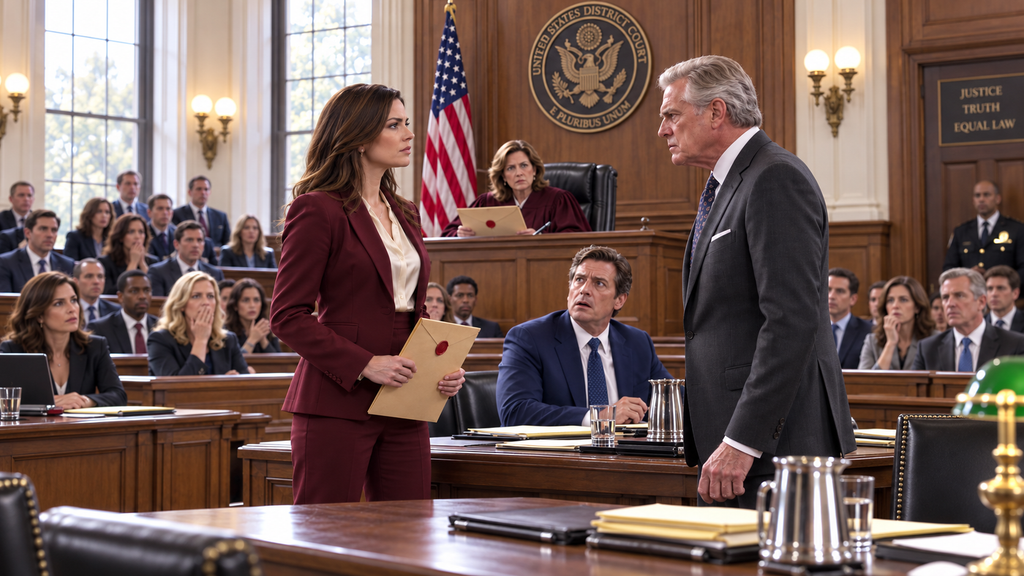
Gerald Foss saw it too. My father slowly turned his head toward me, as if he expected me to explain the question for him.
Then he looked back at the judge.
“She’s my daughter,” he said.
His voice still carried that polished confidence.
That same tone he had used for decades whenever he believed the room belonged to him.
Judge Okafor didn’t blink.
“I’m aware of that.”
Dad shifted in his chair.
Foss leaned toward him and whispered something.
Judge Okafor lifted one hand.
“Counsel, don’t.”
Foss immediately stopped.
The courtroom became so silent that I could hear the faint mechanical hum of the ventilation system above us.
Judge Okafor looked down at the document again.
Then she turned one page.
Another.
Her eyes moved slowly.
Carefully.
When she finally looked at me, there was something in her expression I hadn’t seen from anyone in my family for most of my life.
Recognition.
Not pity.
Not surprise.
Recognition.
“Colonel White,” she said.
My father’s head snapped toward me.
Lauren stopped breathing.
Even Foss stared.
I remained standing beside the defense table.
“Yes, Your Honor.”
Dad actually laughed.
It was short.
Sharp.
Disbelieving.
“Colonel?”
No one answered him.
He looked around the courtroom as though someone was supposed to explain the joke.
Then he looked directly at me.
“You told us you were still working in operations.”
“I am.”
“That’s not—”
Judge Okafor interrupted him.
“Mr. White, you will not speak unless addressed.”
Dad’s face darkened.
But he obeyed.
Barely.
Judge Okafor lifted the document.
“This certification was issued by the Department of Defense?”
“Yes, Your Honor.”
“And the identification number on page two can be independently verified?”
“Yes.”
She turned toward the clerk.
The clerk nodded.
Already verified.
Judge Okafor’s eyes returned to the file.
Then she said the words that changed the entire atmosphere in that courtroom.
“This court has received confirmation that Colonel Evelyn White is a highly decorated active-duty officer whose assignments during several of the dates cited in the plaintiff’s complaint are documented by official federal records.”
Dad’s lawyer went completely still.
My father didn’t understand yet.
Not fully.
But Foss did.
I saw it happen.
The moment the attorney realized that the case he thought he had already won had just developed a very serious problem.
Judge Okafor continued.
“The plaintiff alleges that Colonel White personally pressured her grandmother into altering estate documents on March 14th.”
She looked at Dad.
“Correct?”
Foss slowly stood.
“Your Honor, that is one of several allegations—”
“It is allegation seventeen.”
Foss swallowed.
“Yes, Your Honor.”
Judge Okafor looked at the document again.
“According to independently authenticated military records, Colonel White was approximately seven thousand miles away on March 14th.”
Nobody moved.
“She was deployed.”
My father blinked.
Once.
Twice.
Judge Okafor continued.
“Not in North Carolina.”
She paused.
“Not in the United States.”
Another pause.
“She was participating in an operation whose location remained classified until eighteen months ago.”
I watched Dad’s fingers curl against the table.
For years, he had joked about my deployments.
Called them camping trips.
Called my military career a government paycheck for people who couldn’t make it in business.
Whenever relatives asked what I did, he would wave his hand.
“Nothing exciting. Logistics or something.”
I stopped correcting him years ago.
Because I had learned something about my father.
Facts only mattered to him when they made him larger.
Anything that made someone else larger had to be reduced.
So I let him believe I carried boxes.
I let him tell people I was a clerk.
I let him laugh.
Until today.
Judge Okafor turned another page.
“The plaintiff also alleges that Colonel White personally transported Mrs. Eleanor White to Attorney Samuel Greene’s office on April 2nd, where she supposedly coerced her into signing estate documents.”
She looked toward Foss.
“That allegation appears three times in your filing.”
Foss glanced down at the complaint.
“Yes.”
Judge Okafor’s face hardened.
“Colonel White was still overseas on April 2nd.”
Dad whispered something.
I couldn’t hear him.
The judge did.
“What was that, Mr. White?”
Dad cleared his throat.
“I said records can be wrong.”
The entire courtroom seemed to change temperature.
Judge Okafor leaned back.
“Military deployment records?”
“My daughter has friends.”
Judge Okafor stared at him.
He continued.
“She knows people. She’s obviously arranged—”
“Stop.”
One word.
That was all.
But Dad stopped.
Judge Okafor closed the folder halfway.
“You accused your daughter in a federal filing of falsifying military documents.”
Foss rose again.
“Your Honor, my client was relying on information available to him at the time—”
“And what information was that?”
Foss hesitated.
Dad answered for him.
“My daughter lies.”
That sentence should have hurt.
Maybe twenty years earlier it would have.
Maybe even ten.
But sitting there that morning, I felt something unexpected.
Nothing.
No sting.
No desperate need to defend myself.
No little girl inside me begging her father to see her differently.
Nothing.
For most of my life, Dad’s opinion had functioned like gravity.
Even when I hated him for it, some part of me still revolved around it.
His approval.
His contempt.
His silence.
His disappointment.
His imaginary standards.
I had spent years pretending I didn’t care.
But pretending not to care and truly becoming free are very different things.
That morning, when he looked across the courtroom and called me a liar, I realized something had finally broken.
Not in me.
Between us.
The final thread.
And strangely, it felt peaceful.
Judge Okafor opened the folder again.
“There is considerably more here than deployment verification.”
That was when Foss looked at me.
Really looked at me.
His confidence was gone.
He had spent months treating me like some frightened soldier who had wandered into a legal battle she couldn’t understand.
Every email from his office had been condescending.
Every deposition question had carried the same implication.
You don’t belong here.
You cannot afford this.
You cannot outlast us.
Eventually, you will surrender.
Foss adjusted his tie.
“Your Honor, may I request a short recess so counsel can review this material?”
“No.”
His face changed.
“Your Honor—”
“You were provided notice during discovery that the defense disputed the authenticity of several records submitted by the plaintiff.”
“Yes, but—”
“You declined additional verification.”
“We believed—”
“You believed your client.”
Foss stopped.
Judge Okafor looked toward my father.
“That may prove unfortunate.”
My father’s cheeks had started turning red.
“What is she claiming now?”
The judge ignored the tone.
“She is not claiming.”
She raised the folder.
“She is documenting.”
Those four words hit harder than anything I could have said myself.
Dad looked at me again.
I met his eyes.
No anger.
No smile.
Nothing.
And somehow that seemed to disturb him more.
Because Dad understood rage.
He understood fear.
He understood begging.
He could work with emotion.
Emotion created leverage.
Silence gave him nowhere to push.
Judge Okafor turned to me.
“Colonel White, explain how you obtained the remaining documents.”
I stood.
“Through discovery, public records requests, forensic review, and records provided by my grandmother’s estate attorney.”
Foss immediately spoke.
“Objection to characterization—”
“Overruled.”
I continued.
“After my command received anonymous allegations accusing me of financial exploitation, document fraud, and conduct unbecoming an officer, an internal review was initiated.”
My father stared straight ahead.
“The review temporarily affected my access to certain assignments,” I said.
My voice almost cracked there.
Not because of Dad.
Because I remembered it.
Walking through the corridor at headquarters.
People becoming quiet when I approached.
My access badge suddenly denying entry to rooms I had worked inside for years.
A major who had once asked me to mentor his daughter suddenly pretending to study his phone when we passed each other.
The humiliation wasn’t loud.
That was what made it worse.
Nobody called me guilty.
They just stopped acting certain that I wasn’t.
I continued.
“My command completed the review.”
Judge Okafor asked, “Outcome?”
“Unsubstantiated.”
Dad’s jaw tightened.
“All allegations?”
“Yes, Your Honor.”
“And your status?”
“Fully restored.”
The judge nodded.
“But during the investigation, questions arose about the materials attached to the anonymous complaints.”
Now Foss turned toward Dad.
Slowly.
Dad didn’t look at him.
I continued.
“Some of those materials were documents only three people outside the military should have possessed.”
Judge Okafor looked at me.
“Who?”
“Myself.”
I paused.
“My attorney.”
Another pause.
“And my father.”
Lauren’s hand flew toward her mouth.
Dad finally spoke.
“That doesn’t prove anything.”
Judge Okafor’s eyes moved to him.
“I did not invite you to speak.”
He leaned back.
But the color in his face deepened.
I opened my second folder.
Dad noticed it.
And for the first time that morning, I saw fear.
Not panic.
Not yet.
Just fear.
A small amount.
Enough.
I removed three sheets.
“During discovery,” I said, “the plaintiff produced an audio recording he claimed showed me threatening him.”
Foss closed his eyes.
Just for a second.
He knew what was coming now.
Dad did not.
He smiled again.
“There.”
He pointed toward me.
“Play that.”
Judge Okafor’s expression remained unreadable.
I continued.
“The recording submitted by the plaintiff was forty-one seconds long.”
“Yes,” Dad said.
“It clearly showed what you are.”
Judge Okafor turned toward him.
“Mr. White.”
He shut his mouth.
I placed another document on the table.
“The forensic examination found that the forty-one-second recording was exported from a longer file.”
Foss whispered, “Richard…”
Dad didn’t respond.
“The original recording was eighteen minutes and thirteen seconds.”
That smile disappeared.
For good.
My father looked at Foss.
Then at me.
Then back at Foss.
“You said—”
Foss stood instantly.
“Your Honor, I need to confer with my client.”
Judge Okafor’s voice was cold.
“You may sit down.”
“But—”
“Sit.”
He sat.
I could hear Lauren breathing behind them.
Fast.
Shallow.
I had heard that breathing before.
When we were children.
Whenever Dad was about to explode.
She used to disappear into her room.
I used to stand my ground.
That was the difference between us.
Not courage.
Survival style.
Judge Okafor addressed me.
“Was the original recovered?”
“Yes, Your Honor.”
“How?”
“The plaintiff produced the recording device during discovery after using portions of recordings as evidence. The device had not been securely wiped. A forensic specialist recovered deleted files.”
Foss looked like he might be sick.
Dad whispered, “That’s illegal.”
“No,” Judge Okafor said.
“It isn’t.”
He stared at her.
She looked toward the clerk.
“Has the audio already been marked?”
The clerk checked.
“Yes, Your Honor. Defense Exhibit 44.”
Judge Okafor looked at me.
“Play the relevant portion.”
My heart beat once.
Hard.
Then I nodded.
The clerk started the audio.
For three seconds there was nothing except muffled movement.
Then my father’s voice filled the courtroom.
Not angry.
Not emotional.
Relaxed.
Almost amused.
“Once the command suspends her clearance, she’ll panic.”
The blood drained from Dad’s face.
Someone in the gallery shifted.
Then another voice.
Lauren’s.
“Dad, what if they investigate?”
The recording continued.
My father laughed.
“They won’t find anything. They don’t need to. The accusation only needs to slow her down long enough.”
Lauren’s breathing in the courtroom stopped.
On the recording she whispered:
“You said the letters were anonymous.”
“They are.”
“What about the medical records?”
“Gerald has what he needs.”
Foss shot to his feet.
“Your Honor!”
The judge slammed the gavel.
“Sit down!”
For the first time, Foss looked genuinely frightened.
The audio continued.
Dad’s voice.
Cold.
Certain.
The voice I knew better than any other.
“She has one weakness.”
Lauren asked, “What?”
“She still wants to prove herself.”
A pause.
“She always has.”
My fingers curled against the edge of the defense table.
The audio continued.
“So you keep pressure on the military side. I keep pressure on the estate side. Eventually she’ll decide the house isn’t worth losing her career.”
Then came a sound.
Ice dropping into a glass.
My father chuckled.
“And if she doesn’t?”
Lauren asked.
Dad answered immediately.
“Then I destroy the career too.”
The clerk stopped the recording.
Nobody moved.
Not even Dad.
Especially Dad.
I had heard the audio before.
Many times.
The forensic team had warned me before they played it.
My attorney had offered to stay in the room.
I told him I was fine.
I wasn’t.
The first time I heard those words, I went home and sat on Gran’s porch until after midnight.
No lights.
No television.
No tears for almost an hour.
Then they came.
Not because I had learned something new about my father.
That was the worst part.
I already knew what he was capable of.
I cried because some stupid, stubborn part of me had still been holding onto the possibility that somewhere underneath everything, he loved me.
Badly.
Imperfectly.
Cruelly.
But loved me.
That recording ended the argument.
He wasn’t trying to teach me a lesson.
He wasn’t trying to make me stronger.
He wasn’t a damaged father who didn’t know how to show affection.
He had deliberately tried to destroy something I had spent my entire adult life building.
Because he wanted a house.
Because I had something he believed belonged to him.
That was all.
Judge Okafor stared at Dad.
He opened his mouth.
Nothing came out.
Then he found his voice.
“That is taken out of context.”
No one laughed.
Which somehow made it worse.
Judge Okafor leaned toward him.
“What context, precisely, would improve that statement?”
Dad looked toward Foss.
Foss wasn’t looking back.
“That conversation had nothing to do with military complaints.”
Lauren suddenly spoke.
“Yes, it did.”
Dad turned.
The sound that came out of his chair was sharp as his body twisted toward her.
“What?”
Lauren was pale.
Her hands were shaking against the table.
But this time she didn’t lower her eyes.
She looked at him.
“Yes, it did.”
Dad stared at her.
“Lauren.”
Just her name.
But I knew the warning inside it.
So did she.
Her shoulders instinctively pulled inward.
For one second she looked twelve years old again.
Then she looked at me.
And something shifted.
She stood.
Foss said quickly, “Ms. White, do not make any statements without—”
“I already made statements.”
Her voice trembled.
“I lied.”
The courtroom erupted into whispers.
Judge Okafor struck the gavel.
“Order.”
Dad’s face went white.
Lauren started crying.
Not dramatically.
No sobbing.
Just tears slipping silently down her face.
“I lied in my affidavit.”
Dad pushed his chair back.
“Sit down.”
Judge Okafor rose slightly.
“Mr. White!”
Lauren flinched.
Dad froze.
The judge’s eyes sharpened.
“You do not direct witnesses in my courtroom.”
Lauren wiped her face.
Dad leaned close to Foss.
Foss refused to meet his eyes.
Judge Okafor looked at Lauren.
“You understand that you are currently under oath?”
“Yes.”
“You understand the seriousness of what you just said?”
“Yes.”
Lauren nodded again.
“I lied.”
She looked at me.
“I’m sorry.”
I said nothing.
Not because I hated her.
Not because I wanted her to suffer.
But some apologies need more than five seconds before they can enter the place where the damage lives.
Lauren turned back toward the judge.
“Grandma wasn’t confused when she changed the estate documents.”
Dad closed his eyes.
Lauren kept going.
“She knew exactly what she was doing.”
“Lauren,” Dad whispered.
Judge Okafor lifted the gavel.
He stopped.
Lauren clasped her hands together.
“Grandma told me almost a year before she died that the house would go to Evelyn.”
My lungs tightened.
That part was new.
I hadn’t known.
Lauren looked toward me again.
“She said Evelyn was the only person in the family who loved the house instead of its value.”
I looked down.
Suddenly the courtroom blurred.
Gran.
Her kitchen.
Her flour-covered hands.
The old radio playing softly while she baked peach cobbler.
The porch swing Dad wanted replaced because it looked cheap.
The vegetable garden Lauren hated because mosquitoes gathered near it.
The tiny marks inside the pantry door where Gran had measured us as children.
Evelyn, age 8.
Lauren, age 11.
Evelyn, age 13.
Lauren, age 16.
Dad saw acreage.
I saw fingerprints.
I saw Sunday mornings.
I saw the only place in my childhood where I hadn’t felt like an invoice.
Lauren continued.
“Grandma said Dad would sell it within six months.”
Dad’s lips tightened.
“She said he’d cut down the back trees and divide the land.”
Dad finally shouted.
“That old woman had no idea what she was talking about!”
The words slammed into the courtroom.
Silence followed.
Absolute silence.
My father realized what he had said.
Too late.
Judge Okafor stared at him.
Lauren’s face crumpled.
I closed my eyes.
For just one heartbeat.
Then opened them again.
Dad tried to recover.
“I mean toward the end. She was sick.”
Lauren shook her head.
“No.”
“Lauren.”
“No.”
Her voice grew stronger.
“She wasn’t.”
Dad stared at his favorite child as if she had transformed into a stranger.
Lauren inhaled shakily.
“The doctor’s letter saying Grandma had advanced cognitive impairment was false.”
Foss’s head snapped toward her.
“What?”
Lauren looked at him.
“You didn’t know?”
Foss didn’t answer.
That answer told everyone enough.
Lauren reached into her purse.
Dad moved.
Only slightly.
But two courtroom security officers instantly stepped closer.
Lauren removed an envelope.
“I brought this because I didn’t know what I was going to do.”
She held it with both hands.
“I’ve had it for six weeks.”
The clerk approached.
Lauren surrendered the envelope.
Judge Okafor examined it.
“What is this?”
“A copy of an email Dad sent me.”
My father exploded.
“She stole private correspondence!”
Judge Okafor struck the gavel again.
“Enough!”
Her voice filled the courtroom.
Dad sat down.
Lauren’s tears kept falling.
“He asked me to delete it.”
The judge looked at the envelope.
“Why didn’t you?”
“Because…”
Lauren looked at Dad.
Then me.
“Because for once I thought Evelyn might be telling the truth.”
I almost smiled.
Not because it was funny.
Because that sentence summarized our entire childhood.
For once.
Maybe Evelyn was telling the truth.
Judge Okafor reviewed the page.
Her expression hardened.
She handed it toward the clerk.
Foss leaned forward.
“Your Honor, counsel requests access.”
“You’ll receive it.”
“What does it say?”
The judge looked directly at him.
“You may wish to ask your client.”
Foss turned toward Dad.
“What did you send her?”
Dad’s nostrils flared.
“Nothing relevant.”
Lauren whispered:
“He told me to stick to the timeline.”
Foss’s eyes narrowed.
“What timeline?”
“The one he gave me.”
I watched Foss slowly pull his chair away from my father.
Only a few inches.
But it was unmistakable.
Distance.
The kind people create when they realize the fire beside them is spreading.
Lauren continued.
“He told me what dates to say Grandma was confused.”
Judge Okafor asked, “Did you personally witness those incidents?”
Lauren shook her head.
“No.”
“How many?”
“None.”
Dad’s entire case began collapsing in real time.
Not dramatically.
Not with shouting.
Piece by piece.
Like a building losing support beams.
The forged timeline.
The false accusation.
The edited recording.
The anonymous complaints.
The deployment contradiction.
The medical claim.
The affidavit.
Every weapon he had built to destroy me was now lying on the table between us.
Judge Okafor called a recess.
Dad immediately stood.
He turned toward Lauren.
“You stupid little—”
Two officers stepped between them.
I had never seen him look like that.
Not at her.
He had looked at me that way countless times.
But never Lauren.
She recoiled.
I moved without thinking.
One second I was beside the defense table.
The next I was standing between my sister and our father.
Dad stared at me.
I stared back.
The bailiff approached.
“Colonel White.”
“I’m fine.”
Dad laughed bitterly.
“There she is.”
His eyes traveled over me.
“The hero.”
I said nothing.
His voice lowered.
“You’ve been waiting your whole life for this.”
I still said nothing.
“For me to fall.”
“No.”
It was the first word I had spoken directly to him all day.
Dad stopped.
I looked at him.
“I spent my whole life waiting for you to stand up.”
Something changed in his face.
I continued.
“I waited for you to come to one ceremony and mean it when you said congratulations.”
His jaw flexed.
“I waited for you to ask what I actually did instead of telling everyone what you decided I did.”
People nearby had gone silent.
I didn’t care anymore.
“I waited for you to stop measuring Lauren and me against each other.”
Lauren lowered her eyes.
“I waited for you to talk about Mom without turning her death into proof that you suffered more than everyone else.”
Dad whispered, “Don’t bring your mother into this.”
“Why?”
My voice didn’t rise.
That surprised even me.
“She’s the beginning of this.”
His face changed.
I stepped closer.
“When Mom died, you decided grief gave you ownership of everyone around you.”
He shook his head.
“You know nothing about my grief.”
“You’re right.”
I nodded.
“I don’t.”
Then I looked directly into his eyes.
“Because you never let anyone else have any.”
That landed.
His mouth opened.
Closed.
I continued.
“You lost a wife.”
My throat tightened.
“We lost our mother.”
Lauren started crying harder.
“You never asked how we were doing.”
Dad looked away.
“You just decided Lauren would become the daughter who made you look successful…”
Lauren covered her mouth.
“…and I would become the daughter you blamed whenever the world didn’t cooperate.”
Dad turned back toward me.
“I gave you everything.”
There it was.
The sentence he had used all my life.
I almost laughed.
Instead I asked:
“Did you?”
His face twisted.
“You had a roof.”
“You invoiced me for it.”
“You had food.”
“You billed me for groceries at sixteen.”
“That was to teach responsibility.”
“You sent a sixteen-year-old girl a tax itemized bill for toothpaste.”
“That made you strong.”
“No.”
My voice hardened.
“It made me tired.”
He fell silent.
I felt something hot behind my eyes.
“That’s the difference you never understood.”
I swallowed.
“You keep taking credit for everything I became despite you.”
He stared at me.
“I survived you, Dad.”
My voice cracked slightly.
“I was not created by you.”
Silence.
Then I added:
“And there’s one more thing you should understand before this day ends.”
His expression tightened.
I looked at him.
“I do not need to be your pride.”
His face went blank.
For decades, those words would have destroyed me.
You’ll never make me proud.
He had used them after high school.
After officer training.
After my first promotion.
After my divorce.
After almost every major moment when another parent might have said something kind.
I smiled faintly.
Not cruelly.
Almost sadly.
“You were right about one thing.”
Dad stared.
“I’ll never be your pride.”
I nodded.
“And I’m finally okay with that.”
Then I walked away.
The recess lasted forty-seven minutes.
When we returned, Gerald Foss entered without my father.
That caused immediate whispers.
Dad appeared several minutes later with another attorney.
A younger man I had never seen before.
Foss remained at the original table.
But not beside Dad.
Judge Okafor entered.
Everyone stood.
When we sat, Foss rose.
“Your Honor, in light of information presented this morning, I am requesting permission to withdraw as counsel for the plaintiff.”
Dad spun toward him.
“What?”
Foss did not look at him.
Judge Okafor did.
“Basis?”
Foss inhaled.
“Professional considerations that I am not presently at liberty to discuss in detail.”
Dad pushed himself to his feet.
“You work for me.”
“Mr. White—”
“I paid you.”
The judge raised her voice.
“Sit down.”
Dad ignored her.
“You said we had her.”
Foss went pale.
My stomach tightened.
Dad pointed across the courtroom at me.
“You told me the military nonsense wouldn’t matter.”
Foss whispered:
“Stop talking.”
“You said the judge would never—”
“Richard.”
“—look behind the medical records if Lauren backed the timeline.”
Every person in the room heard it.
Foss closed his eyes.
Dad finally understood.
He stopped speaking.
Too late.
Judge Okafor stared at both men.
Then she looked toward the court reporter.
“Please ensure the record reflects the plaintiff’s statement.”
The reporter nodded.
Foss sat down slowly.
His career was no longer the biggest problem in the room.
Dad’s new attorney whispered furiously in his ear.
Dad shook him off.
Judge Okafor turned toward Lauren.
“Ms. White, given your testimony, I strongly suggest you obtain independent counsel before making additional statements.”
Lauren nodded.
“Yes, Your Honor.”
Then the judge looked at me.
“Colonel White.”
“Yes?”
“There are additional exhibits in your submission.”
“Yes, Your Honor.”
“One concerns the deed itself.”
“It does.”
Dad closed his eyes again.
Judge Okafor removed another page.
“The property was transferred into an irrevocable trust approximately eleven months before Mrs. Eleanor White’s death.”
“Yes.”
The judge looked toward Dad.
“Meaning this house was not transferred through the will in the manner suggested in several plaintiff filings.”
Foss looked at the floor.
Dad’s new attorney quickly began reading.
Judge Okafor continued.
“The trust names Colonel White as the beneficiary upon Mrs. White’s death.”
“Yes.”
“And the trust was prepared by independent counsel?”
“Yes.”
“Witnessed?”
“Yes.”
“Notarized?”
“Yes.”
“Was Colonel White present?”
“No.”
Dad’s attorney stopped reading.
Judge Okafor looked at me.
“Where were you?”
“Germany.”
Another silence.
Dad whispered:
“This is ridiculous.”
The judge continued.
“The trust paperwork also contains a letter from Mrs. White explaining her decision.”
That I knew about.
But I had never read it.
Gran’s lawyer had sealed it with the trust documents.
He told me it might become necessary if anyone challenged her mental capacity.
Until Dad sued, I had no reason to open it.
Even during the case, I asked my attorney not to show me.
I wanted the court to receive it exactly as Gran left it.
Untouched.
Judge Okafor opened the letter.
My heart began pounding.
She read silently at first.
Then she looked at me.
“Have you read this?”
“No, Your Honor.”
That surprised her.
“Never?”
“No.”
“Why?”
I swallowed.
“Because my grandmother wrote it for this situation.”
I looked toward Dad.
“I didn’t want my emotions affecting how I handled the case.”
Judge Okafor studied me for several seconds.
Then she asked:
“Do you object to the court reading portions aloud?”
My throat tightened.
“No.”
The judge unfolded the page.
Gran’s handwriting had been shaky near the end.
But still recognizable.
Judge Okafor began.
“My son Richard will likely believe this decision was made against him.”
Dad stared at the table.
The judge continued.
“It was not.”
My eyes burned.
“I am not leaving Evelyn my home because I love Richard less.”
The room disappeared around me.
I could almost hear Gran’s voice.
Soft.
Slow.
That slight Appalachian warmth she never lost no matter how long she lived in the city.
“I am leaving Evelyn my home because Richard has spent much of his life believing love and ownership are the same thing.”
Dad looked up.
His face was rigid.
Judge Okafor continued.
“He believes that what belongs to family eventually belongs to him.”
My chest tightened.
“He does not understand Evelyn because she has never allowed him to own her.”
I lowered my head.
One tear landed on the back of my hand.
I left it there.
The judge read on.
“People may confuse Evelyn’s quietness for coldness.”
My lips trembled.
“They should not.”
Another tear.
“She has one of the gentlest hearts I know.”
I closed my eyes.
For a moment I was twenty-two again.
Sitting at Gran’s kitchen table after Dad refused to attend my commissioning ceremony.
Gran had reached over, squeezed my hand, and said:
“Some people only recognize gold after somebody else tells them it’s valuable.”
I hadn’t understood.
Maybe I did now.
Judge Okafor continued.
“She has spent too many years believing strength means needing nothing.”
I covered my mouth.
Lauren cried openly.
“Strength is not needing nothing.”
The judge paused.
“It is knowing what deserves protecting.”
The courtroom blurred.
“And Evelyn protects.”
My shoulders shook once.
“She protected her sister when they were children.”
Lauren made a broken sound behind me.
“She protected her father’s reputation long after he stopped protecting her heart.”
Dad closed his eyes.
“She protects strangers because she believes service matters even when no one applauds.”
I could barely breathe.
“And she protected me from loneliness in the years when my own son mostly remembered me when property or money was involved.”
Dad’s eyes opened.
The judge lowered the letter slightly.
No one moved.
Then she continued.
“The house is hers.”
Simple.
Final.
“The land is hers.”
Dad stared forward.
“The trees are hers.”
My tears came faster.
“The porch where she used to fall asleep beside me during summer storms is hers.”
I smiled through the tears.
I remembered.
I had forgotten that.
Gran hadn’t.
“The kitchen where she learned to make biscuits is hers.”
A few people in the gallery were crying now.
“And the pantry door with the marks measuring two little girls as they grew is hers.”
Lauren bent forward and sobbed.
Judge Okafor took a breath.
“If Richard fights this, please understand that he is not fighting over a house.”
She looked directly at my father.
“He is fighting because he cannot tolerate a decision he did not control.”
Dad’s eyes filled with something I had almost never seen.
Tears.
One.
Only one.
It slid down his cheek.
He quickly wiped it away.
The judge finished:
“My final gift to Evelyn is not the property.”
She paused.
“It is permission to stop earning a place in a family where her place should never have required payment.”
I broke.
Completely.
Not loudly.
I simply sat down because my knees suddenly stopped cooperating.
My hands covered my face.
Thirty-six years.
Thirty-six years of proving.
Working.
Achieving.
Serving.
Surviving.
Pretending.
And all it took was one letter from a dead woman to tell me what I had never been able to tell myself.
I didn’t have to earn belonging.
Lauren moved toward me.
Stopped.
She didn’t know whether she had the right.
Maybe she didn’t.
I looked at her.
She whispered:
“Can I?”
I nodded.
My sister wrapped her arms around me.
At first I remained stiff.
Then something inside me gave way.
I held her too.
We cried quietly while our father sat twelve feet away.
Alone.
For once, he was the one outside the circle.
And no one had pushed him there.
He had built that distance himself.
One choice at a time.
Judge Okafor did not issue every ruling that afternoon.
Some matters were too serious.
The allegations concerning falsified documents, manipulated evidence, and interference with my military career were referred for additional review.
Foss’s conduct was referred to the appropriate professional authorities.
Whether he had knowingly participated in Dad’s scheme or simply stopped asking questions when the answers benefited his client would be decided elsewhere.
Lauren was advised to retain counsel regarding her false affidavit.
She did.
And for the first time in her life, she refused to let Dad select the attorney.
As for the house?
The challenge failed.
Completely.
Judge Okafor found no credible evidence that Gran lacked capacity when she created the trust.
Quite the opposite.
Multiple witnesses had met with her independently.
Her physician had documented normal cognitive function near the time the papers were signed.
The supposedly devastating medical letter Dad had produced was dated months later and referred to temporary confusion caused by an infection.
Not dementia.
Not incapacity.
Dad had taken one episode, stripped away the medical context, and built an entire story around it.
The court also found that he had made several claims that were contradicted by records already available to him.
The case was dismissed.
The trust remained intact.
The house remained mine.
When Judge Okafor finished, Dad didn’t move.
Everyone else began gathering papers.
Chairs scraped.
People whispered.
The clerk collected documents.
Foss left without speaking to my father.
Lauren stood beside me.
Dad remained seated.
Finally, I closed my briefcase.
The latch clicked.
The same sound that had started everything.
Dad looked up.
“Evelyn.”
I stopped.
Lauren tensed.
I turned.
He looked older.
Not twenty years older.
Not dramatically transformed.
Just smaller somehow.
The courtroom that had once made him look powerful now made him look like exactly what he was.
A man.
Not a king.
Not a judge.
Not the measure of my worth.
Just a man who had made terrible choices and spent years convincing everyone else those choices were authority.
He glanced at Lauren.
Then at me.
“Your grandmother turned you against me.”
I almost sighed.
Even then.
Even after everything.
Someone else had to be responsible.
Gran.
Me.
Lauren.
The military.
The judge.
Anyone but him.
“No.”
I adjusted the strap of my bag.
“She told the truth about you.”
Dad stood.
“And you think you’re better than me now?”
There was a time when that question would have trapped me.
If I said yes, I was arrogant.
If I said no, he remained superior.
I finally understood that some questions are cages.
You don’t answer them.
You walk past them.
So I did.
He grabbed my arm.
Not hard.
But enough.
Every security officer in the room noticed.
So did I.
I looked down at his hand.
Then up at him.
“Let go.”
Dad did.
Immediately.
Maybe it was my expression.
Maybe it was the officers.
Maybe, for the first time, he realized there would be consequences for touching me simply because he was angry.
He whispered:
“I am still your father.”
I nodded.
“Yes.”
His face softened slightly.
Then I finished.
“But that is a fact.”
I looked into his eyes.
“Not a permission slip.”
He stared at me.
I walked away.
Outside the courthouse, rain had started.
Soft September rain.
The kind that barely seemed to fall.
It simply existed in the air.
Reporters weren’t waiting.
This wasn’t some famous national trial.
To the rest of the world, it was a property dispute between members of a family most people had never heard of.
But to me, it felt like a war ending.
Not because I had defeated my father.
I hadn’t.
Victory implies you wanted the battle.
I would have traded every piece of evidence in that courtroom for a father who had simply come to one graduation, hugged me, and said:
“I’m proud of you.”
That was the tragedy.
I had won something I never wanted to fight for.
Lauren followed me down the courthouse steps.
“Evelyn.”
I stopped beneath the stone awning.
She wrapped her arms around herself.
Her mascara had run beneath her eyes.
For once, she didn’t look like Dad’s perfect daughter.
She looked exhausted.
Human.
My sister.
“I don’t expect you to forgive me.”
I watched the rain.
She continued.
“I signed that affidavit.”
“Yes.”
“I knew parts of it weren’t true.”
“Yes.”
Her chin trembled.
“I told myself Dad must know something I didn’t.”
I said nothing.
She laughed bitterly.
“I always tell myself that.”
I turned toward her.
Lauren wiped her face.
“You know what the worst part is?”
I waited.
“I liked being the favorite.”
There it was.
Not an excuse.
Truth.
She inhaled.
“I knew what he did to you.”
My chest tightened.
“Not everything.”
“No.”
She shook her head.
“But enough.”
Her voice cracked.
“When he compared us, I knew it hurt you.”
I looked away.
“When he bought me the car and gave you that ridiculous Christmas invoice…”
She closed her eyes.
“I laughed.”
I remembered.
She had been seventeen.
I was fourteen.
Dad had called it a teaching moment.
Lauren opened diamond earrings.
I opened an itemized list.
New winter coat: $68.
School shoes: $42.
Dental copay: $35.
Electricity allocation: $21.
At the bottom:
Amount currently owed to household: $412.
Lauren had laughed because she thought Dad was joking.
Then she realized he wasn’t.
She still wore the earrings.
“I remember,” I said.
“I’m sorry.”
“I know.”
She looked surprised.
“Does that mean you forgive me?”
“No.”
The word landed between us.
She nodded slowly.
Tears filled her eyes again.
I continued.
“But it means I heard you.”
She looked at me.
“I need time.”
“Okay.”
“And if we ever rebuild this…”
I paused.
“It can’t be based on pretending.”
She nodded quickly.
“It won’t.”
“No more Dad said.”
“Yes.”
“No more Dad thinks.”
“Yes.”
“No more asking me to swallow something cruel because keeping the peace is easier.”
Lauren started crying again.
“Yes.”
I stepped closer.
“And if he asks you to choose sides…”
She looked frightened.
I understood.
Dad had made sides the architecture of our family.
I reached for her hand.
“Choose yourself.”
Her face crumpled.
I squeezed her fingers.
“For once, Lauren.”
She nodded.
“I’ll try.”
I almost smiled.
“Trying is a start.”
Six weeks later, I returned to Gran’s house alone.
I had avoided sleeping there during the lawsuit.
My attorney told me there was no legal reason to stay away.
But every room felt contaminated by the case.
Photographs.
Invoices.
Depositions.
Accusations.
Dad had turned my safest childhood place into Exhibit A.
I needed the courtroom to end before the house could become a home again.
So one October evening, I drove out after work.
The maple trees were beginning to turn.
Leaves covered the long gravel driveway.
The house appeared exactly as I remembered.
White siding.
Deep green shutters.
Brick chimney.
The porch swing hanging from two heavy chains.
I parked.
For several minutes, I couldn’t get out.
I just sat behind the steering wheel.
Then I laughed softly.
“Come on, Colonel.”
Gran used to tease me with that whenever I hesitated over something simple.
You can brief generals but you can’t pick wallpaper?
Come on, Colonel.
I stepped out.
The key turned easily.
Inside, the house smelled faintly of cedar and dust.
I flipped on the hall light.
Nothing dramatic happened.
No music.
No revelation.
Just light.
Warm yellow light.
I walked through the living room.
Gran’s piano remained against the far wall.
Family photographs covered the shelves.
There was one of Lauren in a graduation gown.
One of Mom holding both of us at the beach.
One of Dad as a young man standing beside Gran.
Then I found mine.
I wore a military uniform.
Twenty-four years old.
Sunburned.
Tired.
Smiling.
Behind the picture frame was a folded piece of paper.
My heart stopped.
I pulled it free.
Three words.
Gran’s handwriting.
Still becoming yourself.
I sat on the floor.
And laughed.
Then cried.
Then laughed again.
Of course.
Even dead, the woman refused to let me become too serious.
I carried the note into the kitchen.
The pantry door was still there.
Dad once tried convincing Gran to replace it.
“It makes the house look old,” he complained.
Gran answered:
“The house is old.”
That ended the discussion.
I opened the door.
The pencil marks remained.
Lauren — 10.
Evelyn — 7.
Lauren — 12.
Evelyn — 9.
At the bottom was one newer mark.
I frowned.
Evelyn — 35.
Beside it Gran had written:
Still stubborn.
I laughed so loudly it echoed through the empty kitchen.
That was the moment the house became mine.
Not when the judge ruled.
Not when Dad lost.
Not when the trust survived.
Then.
Standing in an old kitchen, looking at a pencil mark made by a woman who knew exactly who I was.
The military investigation ended several months later.
My record was cleared completely.
The anonymous complaints were officially categorized as malicious and unsupported.
My access was restored without limitation.
A senior officer called me into his office one morning.
Major General Hart rarely wasted words.
He pushed a chair toward me.
“Sit.”
I sat.
He looked at my record.
Then at me.
“Why didn’t you tell anyone what was happening?”
“I did when required.”
“That’s not what I asked.”
I knew.
I looked down.
“I didn’t want special treatment.”
He leaned back.
“You almost lost your career because your father tried to weaponize our review process.”
“Yes, sir.”
“And you were worried about appearing needy?”
Put that way, it sounded absurd.
“Yes, sir.”
Hart removed his glasses.
“You know, White, there is a fine line between resilience and refusing help because you think pain is a private obligation.”
Gran’s letter flashed through my mind.
Strength is not needing nothing.
I swallowed.
“Yes, sir.”
He studied me.
“You might want to learn that before you become responsible for even more people.”
I frowned.
He slid a folder across the desk.
I opened it.
Promotion recommendation.
For several seconds I couldn’t speak.
Hart smiled faintly.
“Apparently malicious accusations are not a substitute for performance evaluations.”
I looked at him.
“Sir…”
“You earned it.”
Three words.
You earned it.
For once, those words felt good.
Because they weren’t followed by a bill.
Dad’s life didn’t collapse overnight.
Real life rarely works that way.
There was no dramatic scene where police dragged him screaming from a mansion.
No television cameras.
No cinematic handcuffs.
Consequences arrived much more quietly.
And, in some ways, that seemed to affect him more.
His civil claims were dismissed.
He became responsible for significant legal expenses.
Separate proceedings examined the false submissions and the interference connected to the complaints against me.
His business partners began asking questions.
The country club stopped feeling friendly.
People who once laughed at every joke became suddenly busy.
Invitations disappeared.
Not because the entire world discovered he was evil.
Most people never know everything about anyone.
But reputation is a strange kind of currency.
Dad had spent decades building his.
Then he gambled it on destroying mine.
And lost.
Foss eventually withdrew permanently from representing him.
Months later, I received notice that professional disciplinary proceedings had been opened relating to his handling of evidence.
I never learned every detail.
I didn’t need to.
I had spent enough years letting Dad’s life take up space inside mine.
I stopped checking.
That might have been the most important victory of all.
Lauren changed more slowly.
At first she called too often.
Then not enough.
Then she finally found a rhythm that didn’t feel like guilt trying to impersonate love.
We started with coffee.
Public places.
Forty minutes.
No Dad.
No childhood.
Just two women talking about work, weather, books, and her daughter.
Then one afternoon she brought my niece, Sophie, to Gran’s house.
Sophie ran straight toward the pantry.
“Mom says our heights are on here!”
“They are.”
She stared at the marks.
“Can we do mine?”
I froze.
Lauren looked at me.
“We don’t have to.”
I crouched beside Sophie.
“No.”
I smiled.
“We absolutely do.”
Sophie stood against the wood.
Bare feet together.
Chin forward.
I placed a pencil mark above her head.
Sophie — age 8.
She looked delighted.
“Am I taller than Aunt Evelyn was?”
“Unfortunately.”
“Unfortunately?”
“I had hoped to remain the family giant.”
Sophie laughed.
Lauren laughed too.
For a second, we sounded like children again.
Not Dad’s favorite and Dad’s disappointment.
Just sisters.
Later, while Sophie played outside, Lauren and I sat on the porch swing.
She stared across the yard.
“Dad calls me.”
I didn’t respond immediately.
“How often?”
“Almost every day.”
“What does he want?”
“To explain.”
I smiled sadly.
“Of course.”
Lauren looked at me.
“He says everyone misunderstood him.”
I nodded.
“He says Foss gave bad advice.”
“Of course.”
“He says Grandma manipulated you.”
“Of course.”
“He says I betrayed him.”
I looked toward her.
“And what do you say?”
Lauren took a slow breath.
“Nothing.”
I raised an eyebrow.
She smiled.
“I’m learning.”
I nudged her shoulder.
“Apparently.”
Then she became serious.
“He asked me for money.”
That surprised me.
“How much?”
“Enough.”
I waited.
“What did you do?”
“I said no.”
Her eyes filled.
“That was the first time I’ve ever said no to him.”
I understood why she was crying.
People imagine boundaries feel powerful when you first set them.
Sometimes they don’t.
Sometimes they feel like betrayal.
Especially when you’ve been trained to confuse obedience with love.
I reached across the swing and held her hand.
Lauren whispered:
“I thought I’d feel better.”
“You will.”
“When?”
I smiled faintly.
“When your nervous system figures out you survived saying it.”
She laughed.
“You sound like my therapist.”
“Good.”
“You have a therapist?”
I stared ahead.
“Now I do.”
Lauren’s mouth fell open.
“You?”
“Yes.”
“Colonel I-Can-Handle-Everything White?”
I groaned.
“Don’t start.”
She laughed.
It was the first easy laugh between us in years.
Dad came to the house the following spring.
I saw his car through the front window.
For several seconds, I considered not answering.
Then I did.
Not because he was entitled to access.
Because I wanted to know whether seeing him still made me afraid.
I opened the door.
He stood on the porch holding no briefcase.
No papers.
No expensive attorney.
Just a man in his late sixties wearing a navy coat.
He looked thinner.
“Hello, Evelyn.”
“Dad.”
His eyes moved past me into the house.
“Can I come in?”
“No.”
He stiffened.
The old reflex appeared immediately.
Offense.
Disbelief.
Then he controlled it.
“All right.”
We stood beneath the porch roof.
Rain clouds gathered over the trees.
Dad looked toward the swing.
“My mother loved that thing.”
“Yes.”
“She wouldn’t let me replace it.”
“I remember.”
Silence.
Then he said:
“You changed the locks.”
“Yes.”
“That wasn’t necessary.”
“Yes, it was.”
His jaw tightened.
For a second I saw the old man.
Then it disappeared.
“I came to talk.”
“We’re talking.”
He looked directly at me.
“I made mistakes.”
I waited.
That was more than he had ever admitted.
But we both knew it wasn’t enough.
Dad rubbed his palms together.
“I was angry when your grandmother changed the estate.”
“I know.”
“I believed the house should come to me.”
“I know.”
“I thought you influenced her.”
“No.”
He looked away.
“I know that now.”
Something inside me shifted.
Very slightly.
He continued.
“But you have to understand how it looked.”
There it was.
The door opening toward an excuse.
I shut it.
“No.”
He frowned.
“No?”
“I don’t have to understand.”
His face hardened.
“I came here to apologize.”
“Then apologize.”
Dad stared at me.
I think he had expected my help.
Expected me to make it easier.
Maybe say:
I know you were grieving.
I know Gran’s decision hurt.
I know you didn’t mean everything.
I wasn’t going to write the apology for him.
He swallowed.
“I’m sorry.”
I waited.
“For the lawsuit.”
I kept waiting.
“For the complaint.”
Still waiting.
His eyes dropped.
“For trying to damage your career.”
I nodded.
“And?”
He looked irritated.
I didn’t move.
He finally said:
“For the affidavit.”
“That was Lauren.”
“I pressured her.”
“Yes.”
Another pause.
“And?”
Dad laughed once.
Not happily.
“You’re really going to make me list everything?”
“No.”
I looked at him.
“You can leave whenever you want.”
That silenced him.
He looked past me.
Into the house.
Toward the hallway where Gran’s photographs still hung.
Then he said:
“I’m sorry for the way I treated you when you were growing up.”
My throat tightened.
Dad kept speaking.
“I thought pressure would make you successful.”
“It almost destroyed me.”
His eyes moved to mine.
“I know.”
“No.”
I shook my head.
“I don’t think you do.”
He waited.
“When I graduated from high school, you told me the ceremony wasn’t worth leaving work early.”
His face tightened.
“When I commissioned, you came and told everyone I joined because I couldn’t compete in the real world.”
“I shouldn’t have said that.”
“When I made captain, you asked why it took so long.”
He closed his eyes.
“When my marriage ended, you said my husband probably got tired of living with a woman who thought she was a man.”
Dad looked ashamed.
Good.
Not because I enjoyed it.
Because shame was finally pointing in the correct direction.
“When I came home after my first difficult deployment…”
My voice faltered.
“You asked whether I was going to spend the whole visit being dramatic.”
Dad’s eyes filled.
I continued anyway.
“You didn’t know I was sleeping two hours a night.”
“I didn’t know.”
“You didn’t ask.”
He looked down.
“I know.”
“And when Gran died, I needed my father.”
My voice broke.
“You gave me a lawsuit.”
A tear slid down his cheek.
This time he didn’t wipe it away.
I inhaled slowly.
“That’s what you need to understand.”
He nodded.
“I do.”
“No.”
I shook my head.
“You’re beginning to.”
He accepted that.
We stood silently.
Finally he asked:
“Can you ever forgive me?”
I thought about it.
Really thought.
Then answered truthfully.
“I don’t know.”
Pain crossed his face.
I didn’t rush to soothe him.
Forgiveness wasn’t another bill I owed.
Dad nodded slowly.
“Fair enough.”
He turned toward the stairs.
Then stopped.
“Evelyn.”
I waited.
He looked over his shoulder.
“For what it’s worth…”
His voice cracked.
“I am proud of you.”
There it was.
The sentence I had waited most of my life to hear.
The sentence that sixteen-year-old me would have traded almost anything for.
The sentence twenty-two-year-old me had imagined while scanning the audience at my commissioning ceremony.
The sentence thirty-year-old me pretended she didn’t need.
My father stood on Gran’s porch and finally gave it to me.
Twenty-five years late.
I expected something dramatic.
Healing.
Vindication.
Maybe tears.
Instead I felt something softer.
Sadness.
Because I finally understood that I had outgrown the need before he learned how to give it.
I smiled faintly.
“Thank you.”
Dad looked surprised.
Maybe he expected more.
I didn’t give more.
He started down the steps.
“Dad.”
He turned.
I walked to the porch rail.
“You know what Gran wrote?”
His expression tightened.
“I heard.”
“She said her final gift wasn’t the house.”
He nodded.
“I remember.”
I looked at him.
“She was right.”
Dad’s eyes lowered.
“I hope someday you understand why.”
He stood there for several seconds.
Then walked away.
I watched his car disappear between the trees.
I did not chase him.
I did not collapse.
I did not regret opening the door.
I simply went inside.
Three months later, I stood in an auditorium in uniform.
Rows of officers filled the seats.
Flags stood behind the stage.
My name was announced.
I walked forward.
Promotion ceremonies always contain strange little moments where time folds in on itself.
As I stood there, I remembered being nine years old after Mom died.
Fourteen years old holding a Christmas invoice.
Sixteen carrying plates at the diner because Dad charged rent.
Twenty-two standing in dusty boots while he mocked my first uniform.
Thirty-something walking through a military corridor after his anonymous accusations made coworkers question whether they knew me.
And then I thought of Gran.
Still becoming yourself.
The officer conducting the ceremony asked who would pin my new insignia.
I looked toward the front row.
Lauren stood.
Beside her was Sophie.
My niece looked so nervous she might faint.
I smiled.
“Sophie.”
Her eyes widened.
“Me?”
People laughed softly.
I nodded.
“You.”
She hurried toward the stage.
Lauren covered her mouth.
Sophie carefully attached the insignia while another officer helped guide her hand.
Then she stepped back.
She saluted me.
Completely wrong.
Elbow too low.
Fingers crooked.
I almost burst out laughing.
Instead I returned the salute.
Perfectly.
Sophie whispered:
“Did I do it right?”
“No.”
Her eyes widened.
I leaned closer.
“But Gran would have loved it.”
She grinned.
After the ceremony, Lauren hugged me.
“I’m proud of you.”
I smiled.
“Thank you.”
And unlike Dad’s words, hers didn’t arrive carrying decades of debt.
They were simply words.
Love offered.
Love received.
Maybe that was how it was always supposed to work.
That summer, we held a family dinner at Gran’s house.
Not the old kind.
No seating charts based on status.
No speeches about achievement.
No Dad deciding whose life deserved applause.
Just food.
Children.
Neighbors.
A few military friends.
Lauren brought potato salad.
It was terrible.
I told her so.
She threatened to dump it on my head.
Sophie ran through the backyard with three other children.
Someone turned on music.
The porch lights came on as the sun disappeared behind the trees.
I stood alone in the kitchen for a moment.
Watching.
Listening.
Living.
On the wall beside the pantry, I had framed Gran’s final letter.
Not the entire thing.
Just one sentence.
Strength is not needing nothing.
It is knowing what deserves protecting.
Below it, I placed the three-word note I had found behind my photograph.
Still becoming yourself.
I heard Lauren call from outside.
“Evelyn!”
“What?”
“Your niece is climbing the tree!”
“She has a mother!”
“She says you outrank me!”
I laughed.
“Sophie!”
A guilty little face appeared outside the window.
“Yes, Colonel?”
“Get down!”
“Yes, ma’am!”
Everyone laughed.
I stepped onto the porch.
Warm evening air touched my face.
And for one impossible second, I imagined Gran sitting on the swing.
Not as a ghost.
Not literally.
Just memory.
Apron.
Silver hair.
Cup of tea.
That amused little smile.
Watching us turn her house back into something worth inheriting.
Not property.
Home.
I sat on the porch steps.
Sophie dropped beside me.
She leaned against my shoulder.
“Aunt Evelyn?”
“Hmm?”
“Is Grandpa Richard coming?”
The question didn’t hurt as much as I expected.
“No.”
“Why?”
Children never understand adult answers that hide behind complexity.
So I gave her the simplest truth I could.
“Because sometimes people have to learn how to be safe around each other before they can be close.”
Sophie considered this.
“Is he learning?”
I looked toward the driveway.
Maybe.
Maybe not.
“I hope so.”
She nodded.
Then she asked:
“Are you still mad at him?”
I thought about that too.
“No.”
“Really?”
“Really.”
“Then you forgive him?”
Children.
Always finding the question adults spend decades avoiding.
I looked at her.
“Forgiveness and trust aren’t the same thing.”
She frowned.
“What does that mean?”
“It means I don’t want to carry anger forever.”
I touched her nose.
“But I also don’t have to pretend nothing happened.”
She thought about it.
“That sounds complicated.”
“It is.”
“Being grown-up sounds terrible.”
I laughed.
“It has bad reviews.”
She smiled.
Then ran back toward the yard.
I remained on the steps.
For years, I had imagined freedom as something dramatic.
A door slamming.
A final speech.
A courtroom victory.
A person apologizing.
But real freedom had turned out to be quieter.
It was sitting on a porch without wondering what Dad would think.
It was letting my sister become a person instead of permanently freezing her as the girl who had hurt me.
It was allowing myself to need friends.
Therapy.
Family.
Rest.
It was understanding that strength didn’t require permanent armor.
Most of all, freedom was realizing that my father’s inability to value me had never been evidence that I lacked value.
It had been evidence of his limitations.
Nothing more.
Nothing less.
Almost a year after the trial, an envelope arrived.
No return address.
But I recognized the handwriting.
Dad.
I almost threw it away.
Instead, I left it unopened on my desk for four days.
Then one Sunday morning I carried it onto the porch.
Inside was a single sheet.
No excuses.
No explanations.
No accusations.
Just a letter.
Evelyn,
I have rewritten this many times because every version somehow became an argument.
You were right.
That is difficult for me to write, which probably tells you more about me than I would like.
I have spent most of my life believing respect meant obedience.
I believed providing money made me a good father.
I believed criticizing you would make you stronger.
I believed Lauren’s compliance meant she loved me more.
I believed your independence meant you loved me less.
I was wrong about all of it.
Your grandmother saw things in me that I refused to see.
I hated her final letter because I knew she was telling the truth.
I cannot undo what I did.
I cannot undo the lawsuit.
I cannot undo the complaints.
I cannot give you back the years when you needed encouragement and received criticism instead.
You said I was beginning to understand.
I hope that is true.
I have started speaking with someone.
Lauren calls it therapy.
I dislike it.
Apparently that is not a valid reason to stop.
I smiled despite myself.
That sounded like him.
The letter continued.
I am not asking you to answer this.
I am not asking to visit.
I am trying, for perhaps the first time in my life, to say something without attaching a demand.
I am sorry.
You were never a disappointment.
I simply could not tolerate that you became someone I could not control.
That was my failure.
Not yours.
Richard
Not Dad.
Richard.
I read the letter twice.
Then folded it.
I didn’t cry.
I didn’t call him.
Not that day.
I placed the letter in a drawer beneath Gran’s.
Two people.
Two truths.
One had loved me well.
One was learning too late.
Both were part of my story.
Neither would be allowed to write the rest of it for me.
A few weeks later, I drove to the cemetery.
Gran and Mom were buried thirty feet apart beneath old maple trees.
I brought fresh flowers.
At Mom’s grave, I sat for a long time.
“I wish you had stayed.”
The words surprised me.
I had never said them aloud.
“I know you didn’t choose to leave.”
My throat tightened.
“But I wish you had stayed.”
Wind moved through the leaves.
I smiled faintly.
“Lauren’s okay.”
Another pause.
“I’m okay too.”
That was when I realized it was true.
Not perfect.
Not healed in some magical permanent way.
But okay.
Actually okay.
I walked to Gran’s grave next.
Placed flowers beside the stone.
Then sat.
“Well.”
I smiled.
“You caused a lot of trouble with that house.”
A bird called somewhere above me.
I could almost hear Gran answering:
Good.
I laughed.
Then touched the carved letters of her name.
“You were right.”
My voice cracked.
“I kept trying to earn it.”
The breeze moved through the grass.
“I’m stopping.”
That promise felt more sacred than any oath I had ever taken.
“I’m going to keep the house.”
My eyes filled.
“Not because Dad wanted it.”
I wiped my cheek.
“Because you loved it.”
Another tear.
“And because I do too.”
I sat there until the afternoon sun dropped lower.
Before leaving, I touched the headstone once more.
“Thank you for seeing me.”
Two years after the trial, the porch still stood.
The pantry marks multiplied.
Sophie grew another three inches.
Lauren finally learned to make edible potato salad.
Dad and I spoke occasionally.
Carefully.
On neutral ground.
There was no miraculous reunion.
No pretending.
Sometimes he slipped into old habits.
When he did, I ended the conversation.
At first he became furious.
Then defensive.
Then quiet.
Eventually, he learned.
Or began learning.
Maybe people are always still becoming themselves.
Even fathers who wasted decades refusing to change.
He never moved back into the center of my life.
That space no longer belonged to him.
But one afternoon, he came to Sophie’s school concert.
He sat three rows behind us.
He didn’t demand we save a seat.
He didn’t complain.
Afterward, he hugged Sophie.
Then he approached me.
“I enjoyed seeing you.”
I nodded.
“You too.”
He started to say something else.
Stopped.
Then simply smiled.
Small.
Uncertain.
Human.
It was the healthiest conversation we had ever had.
Six words.
No control.
No debt.
No performance.
Sometimes progress is embarrassingly ordinary.
People occasionally ask what happened in that courtroom.
Usually they want the dramatic version.
The judge dropping her pen.
The Pentagon file.
The recording.
Lauren confessing.
Dad’s attorney trying to withdraw.
The trust.
Gran’s letter.
They want to know whether Dad went pale.
Whether he begged.
Whether I smiled when I won.
But those details aren’t what I remember most.
I remember the question.
“Sir… do you know what your daughter is?”
For months afterward, I thought about how Dad might have answered if he had truly known me.
Colonel.
Officer.
Soldier.
Decorated service member.
Homeowner.
Granddaughter.
Sister.
Survivor.
Any of those could have been correct.
But none of them were the answer I needed anymore.
Because I finally knew what I was.
I was the little girl who survived being treated like an expense.
I was the teenager who worked for a bedroom she should never have been charged to occupy.
I was the young woman who learned to stand straight even when the person who should have lifted her up kept trying to make her feel small.
I was the granddaughter loved by a woman wise enough to see that control and love are opposites.
I was the sister learning that reconciliation does not require amnesia.
I was an officer who discovered that asking for help does not cancel strength.
I was a woman who had finally stopped confusing someone else’s approval with evidence of her worth.
And I was the owner of an old white house with deep green shutters, a stubborn porch swing, a pantry door covered in pencil marks, and enough memories inside its walls to remind me that some inheritances cannot be measured in dollars.
Dad once told me I would never be his pride.
For most of my life, I heard that as a sentence.
A judgment.
A verdict.
But he had been wrong about one thing.
He was never the judge.
Not of my career.
Not of my courage.
Not of my value.
And certainly not of my life.
The real judge had looked at the evidence.
My grandmother had looked at my heart.
And eventually, I learned to look at myself.
That turned out to be enough.
More than enough.
One evening, long after the lawsuit became something people rarely mentioned, I sat on Gran’s porch watching a summer storm roll across the horizon.
Lightning flashed far beyond the trees.
The porch swing creaked behind me.
Lauren was inside arguing with Sophie about bedtime.
Someone had left lemonade on the railing.
Fireflies flickered over the lawn.
I held Gran’s old letter in my lap.
Not because I still needed reassurance.
I simply liked having her handwriting nearby.
The storm moved closer.
Thunder rolled softly.
I thought about the courthouse.
My father leaning toward me.
“You’ll never be my pride.”
And then I remembered the woman sitting silently across from him.
Me.
Hands flat beside a closed leather briefcase.
No begging.
No explaining.
No need to persuade him.
He had mistaken that silence for weakness.
What he never understood was that by then, I had already survived every version of him.
The angry father.
The disappointed father.
The controlling father.
The grieving father.
The powerful businessman.
The man with lawyers.
The man with accusations.
The man determined to convince the world his daughter was small.
And after surviving all of those versions, I finally discovered the only version that truly mattered.
Mine.
I stood.
Carried Gran’s letter inside.
Before closing the front door, I looked once more toward the darkening sky.
Then I smiled.
Not because I had won the house.
Not because Dad had lost the case.
Not because a judge had finally forced him to face the truth.
I smiled because the girl who once opened a Christmas envelope and found a bill for being part of her own family had finally learned something no courtroom could award and no father could take away.
I belonged.
I always had.
I closed the door behind me.
And for the first time in my life, I didn’t need anyone’s permission to call that place home.
THE END! THANK YOU FOR READING!❤️