 Reading Time: 9 minutes
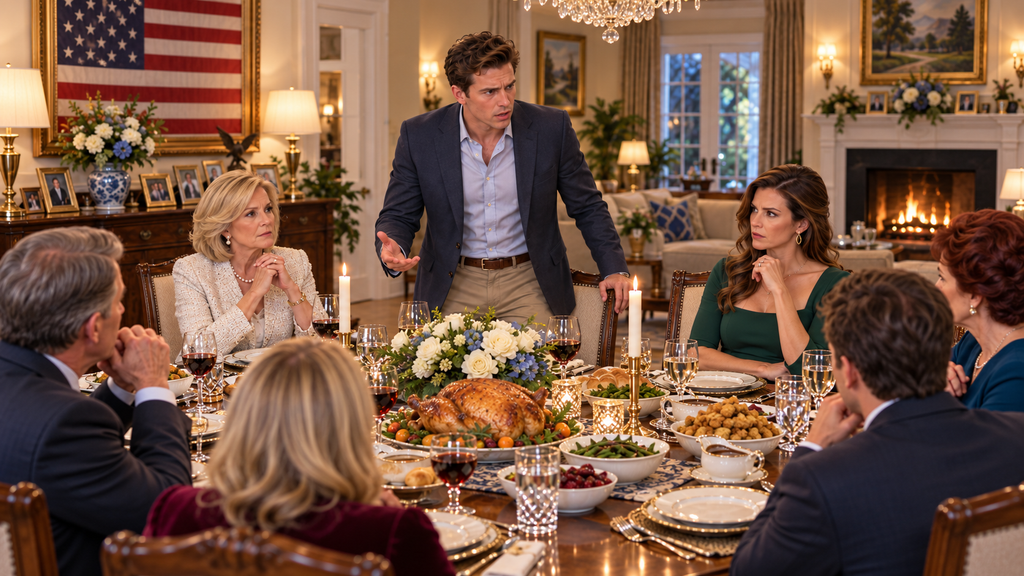
For several seconds, nobody moved. David stared at me as if he had stopped understanding English. Sarah looked from the paper to my face and then back again.
“You have thirty days.” My voice was calm. That seemed to frighten them more than shouting ever could. David finally pushed back his chair.
“You’re serious?”
“Yes.”
“Mom, this is insane.”
“No, David. What’s insane is living in someone else’s home for eight months without paying rent, using her money, eating her food, driving her car when yours is in the garage, and then deciding she is the burden.”
His face tightened.
“That’s not what I meant.”
“It is exactly what you meant.”
Sarah crossed her arms.
“You’re twisting everything.”
I turned toward her.
“Am I?”
I opened the drawer beside my chair and removed the Sunset Pines brochure.
I placed it in the middle of the table.
Linda looked at it.
Then she looked at Sarah.
“Sarah?”
Sarah’s cheeks turned red.
“It was just an option.”
“An option for whom?” I asked.
She didn’t answer.
I leaned forward slightly.
“For me?”
Silence.
“Or for you?”
Richard rubbed his forehead.
David looked angry now.
Not embarrassed.
Not ashamed.
Angry.
That hurt more than I expected.
He was my son.
The little boy who used to crawl into my bed during thunderstorms.
The teenager whose broken heart I had listened to at midnight when his first girlfriend left him.
The young man whose college tuition Arthur and I had paid without hesitation.
I remembered sitting beside his hospital bed when he had his appendix removed.
I remembered cheering at his graduation.
I remembered Arthur standing beside me with tears in his eyes, whispering, “We did good, Teresa.”
For years, I had believed we had.
Looking at David now, I wondered when gratitude had quietly turned into entitlement.
“Sit down,” I said.
David remained standing.
“Why?”
“Because I’m not finished.”
Something in my voice made him obey.
I reached for another envelope.
Sarah stared at it.
“What’s that?”
“A notice.”
David opened it.
His eyes moved quickly across the page.
Then his jaw dropped.
“You hired an attorney?”
“I did.”
“You actually had a lawyer draft an eviction notice?”
“I asked him to make sure everything was done legally.”
Sarah’s chair scraped backward.
“This is unbelievable.”
“No,” I said. “What’s unbelievable is that I needed a lawyer to protect myself from my own son.”
David looked wounded.
For one brief moment, I almost apologized.
Almost.
That instinct had controlled me for years.
Make things easier.
Smooth things over.
Keep the peace.
Arthur used to tease me about it.
“Teresa,” he would say, “you could apologize to a chair after bumping into it.”
Maybe he had been right.
But Arthur was gone.
And somewhere between grief and loneliness, I had mistaken being needed for being loved.
After he died, the house became painfully quiet.
So when David called eight months earlier and said he and Sarah were struggling with rent, I had welcomed them without hesitation.
I thought their footsteps upstairs would make the house feel alive again.
I thought family around the dinner table would help fill the empty chair Arthur had left behind.
Instead, I had slowly disappeared inside my own home.
They had taken the garage.
Then the kitchen.
Then the living room.
Then my routines.
Then my money.
And finally, they had begun discussing taking the house itself.
That realization broke something inside me.
But sometimes, when something breaks, it doesn’t leave you weaker.
Sometimes it makes room for something stronger.
I looked at David.
“I love you.”
His eyes flickered.
“Mom—”
“No. Listen.”
I swallowed.
“I love you because you are my son. Nothing you do will erase the thirty-two years I have spent loving you.”
His expression softened.
“But love does not mean access.”
He went completely still.
“Love does not mean you get unlimited access to my house, my money, my time, my labor, or my dignity.”
Sarah looked away.
“And love does not require me to destroy myself so you can be comfortable.”
David opened his mouth.
I raised my hand.
“I spent most of my life believing that being a good mother meant giving.”
My voice shook now.
Not because I was afraid.
Because I meant every word.
“I gave you my time. I gave you opportunities. Your father and I sacrificed vacations to pay your tuition. I worked overtime when you needed braces. When you totaled your first car, we helped replace it. When your wedding went over budget, I paid the difference.”
David stared at the table.
“I never kept score.”
I paused.
“Until you looked me in the eye and called me a burden.”
His face changed.
For the first time that evening, the anger disappeared.
“Mom…”
“That word told me something I should have realized months ago.”
I blinked back tears.
“You stopped seeing what I gave you as kindness.”
My voice dropped.
“You started seeing it as something you were owed.”
The silence became unbearable.
Linda wiped the corner of one eye.
Richard stared hard at his son-in-law.
Sarah looked uncomfortable.
Then Linda spoke.
“Sarah, did you really expect Teresa to leave her own house?”
Sarah turned toward her mother.
“That’s not fair.”
“It’s a simple question.”
Sarah hesitated.
“We thought it would make sense eventually.”
“Eventually?”
Linda’s eyebrows rose.
“Your father and I are sixty-seven.”
Sarah stiffened.
“What does that have to do with anything?”
Linda gave a sad laugh.
“Apparently quite a lot.”
Sarah looked confused.
Her mother continued.
“If sixty-four is old enough to be moved into assisted living because someone younger wants the house, should your father and I start worrying?”
“Mom, stop.”
“No.”
Linda’s voice sharpened.
“You stop.”
Everyone stared.
“I raised you better than this.”
Sarah’s eyes widened.
“You don’t understand what we’ve been dealing with.”
“What exactly have you been dealing with?”
Linda asked.
“Free housing?”
Sarah said nothing.
“Free utilities?”
Still nothing.
“Free food?”
Sarah’s mouth tightened.
Linda shook her head.
“You weren’t struggling, Sarah. You were comfortable.”
Richard finally spoke.
“And you confused comfort with ownership.”
David rubbed both hands over his face.
“This whole dinner has turned into an attack.”
“No,” I said quietly.
“It’s an ending.”
He looked at me.
“What does that mean?”
I tapped the listing agreement.
“It means Marcus is putting the house on the market next week.”
David stared.
“You’re really selling it?”
“Yes.”
“Why?”
The question almost made me laugh.
“Because I want to.”
He looked genuinely stunned.
That was the moment I understood just how deeply the problem ran.
My son had forgotten that I was allowed to want things.
I smiled faintly.
“I’ve spent forty years making decisions based on what everyone else needed.”
I looked around the dining room.
“At sixty-four, I’ve decided to make a few based on what I need.”
“And what’s that?”
“A smaller house.”
I took another sip of wine.
“Near the coast.”
Sarah blinked.
“The coast?”
“Yes.”
“I’ve always wanted to live near the ocean.”
David stared at me.
“You never said that.”
“I did.”
His brow furrowed.
“When?”
“Several times.”
He couldn’t remember.
That hurt too.
But this time, I let the pain pass through me instead of swallowing it.
“Your father remembered.”
My eyes drifted toward the empty chair at the end of the table.
Arthur had always wanted to retire near the sea.
We used to talk about it late at night.
A little cottage.
A garden.
Morning walks.
Coffee on a porch where we could hear the waves.
Cancer stole that future before we could reach it.
But maybe I could still reach some version of it alone.
“I think he’d want me to go,” I whispered.
David’s face softened.
For the first time all evening, he looked less like an angry man and more like my little boy.
“Mom, I’m sorry.”
I looked at him.
He swallowed.
“I shouldn’t have called you a burden.”
“No.”
“You shouldn’t have.”
“I was frustrated.”
“That doesn’t excuse it.”
“I know.”
He stared down at his hands.
“I think Sarah and I got too comfortable.”
Sarah looked at him sharply.
“David.”
He ignored her.
“We kept telling ourselves we were saving for a house.”
He gave a bitter laugh.
“But the more you gave us, the easier it became to spend money elsewhere.”
I said nothing.
“We started treating your help like… income.”
The honesty surprised me.
Sarah stood.
“I’m not sitting here while everyone blames me.”
Linda looked at her daughter.
“Nobody forced David to say what he said.”
Sarah grabbed her purse.
“Come on, David.”
He didn’t move.
She stared at him.
“David.”
“I’m talking to my mother.”
That sentence changed the room.
Sarah’s face hardened.
“So now I’m the villain?”
“No.”
David looked exhausted.
“But Mom isn’t either.”
Sarah’s eyes filled with tears.
“You’re choosing her over me.”
David shook his head.
“That’s not what this is.”
“It feels like it.”
He sighed.
“We made a mistake, Sarah.”
“You made a mistake.”
“No.”
His voice became firm.
“We did.”
She stared at him.
Then she left the room.
Seconds later, the front door slammed.
David closed his eyes.
“I should go.”
I nodded.
He stood slowly.
At the doorway, he stopped.
“Thirty days?”
“Yes.”
He nodded.
Then he looked at me.
“Will you still talk to me?”
That question broke my heart.
“Of course.”
His shoulders dropped slightly.
“But things are going to be different.”
“I know.”
He walked out.
Linda hugged me before she left.
A real hug.
Not polite.
Not performative.
She whispered into my ear.
“I’m sorry.”
I nodded.
Richard squeezed my hand.
“You’re doing the right thing for yourself.”
Then they followed their daughter.
I stood alone in the dining room.
The candles had nearly burned down.
Six plates sat around the table.
Half-empty glasses.
Cold food.
Crumbs scattered over the tablecloth.
For years, I thought scenes like that represented family.
People around a table.
Noise.
Conversation.
Togetherness.
But family without respect is just proximity.
I began collecting the dishes.
Then I stopped.
I looked at the pile.
And I laughed.
I left every plate exactly where it was.
The next morning, David loaded the dishwasher.
It was the first time I had ever seen him do it.
The thirty days passed quietly.
Not peacefully.
Quietly.
Sarah barely spoke to me.
David became distant but polite.
They found a two-bedroom apartment twenty minutes away.
It was smaller than they wanted.
More expensive than they expected.
And completely theirs.
On moving day, David carried the final box toward the door.
Then he stopped.
“Mom?”
“Yes?”
He looked around the house.
“I didn’t realize how much you did.”
I smiled sadly.
“Most people don’t notice invisible work until nobody is doing it anymore.”
He nodded.
Then he hugged me.
For a second, I almost became the old Teresa again.
The woman who would say, “Stay as long as you need.”
The woman who would solve everything.
But I didn’t.
I hugged my son.
Then I let him go.
The house sold six weeks later.
A young couple bought it.
They had two little girls who raced through the hallway during the showing.
One of them stood in the kitchen and asked her father if they could put Christmas cookies on the counter.
I had to turn away so they wouldn’t see me cry.
Not because I regretted selling.
Because I suddenly remembered David at that age.
Tiny sneakers.
Sticky fingers.
Arthur carrying him on his shoulders.
A lifetime had happened inside those walls.
Selling the house did not erase it.
It simply closed the door.
I bought a small cottage outside Wilmington.
Two bedrooms.
White shutters.
A narrow porch.
Hydrangeas along the walkway.
And, if I stood at the end of the street, I could see the ocean.
The first night there, I sat on my porch wrapped in Arthur’s old sweater.
I opened a bottle of pinot noir.
Only enough for one person.
And for the first time, that didn’t feel lonely.
It felt peaceful.
Three months later, David visited.
He arrived alone.
He brought groceries.
Actual groceries.
Paid for with his own money.
I almost laughed.
We cooked dinner together.
Afterward, he washed the dishes without being asked.
Then we sat on the porch.
“Sarah and I started counseling,” he said.
I nodded.
“We’ve been arguing a lot.”
“I’m sorry.”
“We needed it.”
He looked out toward the water.
“I think we forgot how to be adults.”
“That happens when someone else keeps making adulthood easier.”
He smiled.
“I deserved that.”
“I wasn’t trying to insult you.”
“I know.”
He was quiet for a while.
Then he asked something I didn’t expect.
“Do you forgive me?”
I looked at my son.
The moonlight caught the same eyes I had known since the day he was born.
“Yes.”
His shoulders relaxed.
“But forgiveness doesn’t mean we go back.”
He nodded slowly.
“I understand.”
And I believed him.
That was the real difference.
Before, David heard boundaries as rejection.
Now he understood them as reality.
We rebuilt our relationship from there.
Slowly.
Carefully.
He called without asking for money.
He visited without expecting dinner.
When my birthday came, he drove three hours just to take me to lunch.
Sarah came too.
She was quieter.
More cautious.
Before leaving, she stood awkwardly beside my car.
“I owe you an apology.”
I waited.
“I treated your generosity like an obligation.”
Her eyes lowered.
“And the brochure was wrong.”
I nodded.
“It was.”
“I’m sorry.”
I believed she meant it.
That didn’t erase what happened.
But apologies aren’t erasers.
They’re doors.
You decide whether to open them.
I opened mine a little.
Not all the way.
Just enough.
A year after that Sunday dinner, I woke before sunrise and walked down to the beach.
The sky was pale pink.
The water stretched endlessly in front of me.
I removed my shoes and let the waves wash over my feet.
For the first time in decades, every decision in my life belonged entirely to me.
No mortgage.
No dependent child.
No husband to care for.
No adult children living upstairs.
No one reaching into my wallet.
No one rearranging my furniture.
No one telling me where I should live.
I thought about the word David had used.
Burden.
For days, it had hurt me.
Then it had angered me.
Eventually, it freed me.
Because once someone calls you a burden after spending years benefiting from everything you do, you begin to ask an important question.
What would happen if I stopped carrying everyone?
I discovered the answer.
They learned to carry themselves.
And I finally became light enough to carry only me.
I stood there as the sun rose over the water.
Somewhere behind me, my phone rang.
David.
I smiled but didn’t answer immediately.
Instead, I watched the sunrise for another minute.
Because I had spent too many years interrupting my life whenever someone else called.
When I finally answered, David said,
“Morning, Mom.”
“Morning.”
“You busy?”
I looked at the ocean.
“Yes.”
He laughed.
“Doing what?”
I smiled.
“Living.”
There was a pause.
Then he said quietly,
“Good.”
I looked toward the rising sun.
“Yes,” I said.
“It really is.”
And for the first time in my life, being needed wasn’t the same thing as being loved.
I had finally learned the difference.
More importantly, so had my son.
THE END! THANK YOU FOR READING!❤️