 Reading Time: 37 minutes
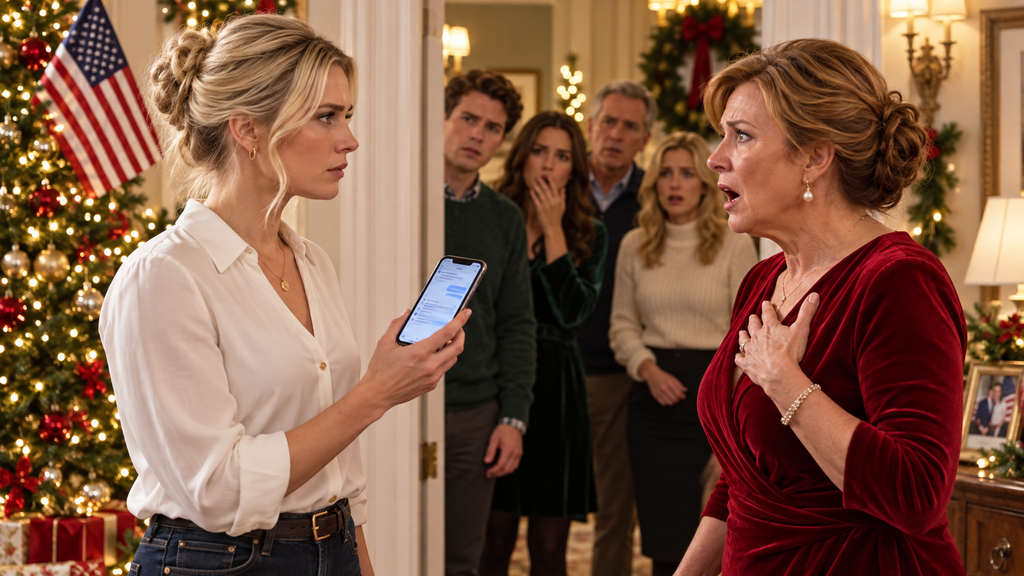
My thumb hovered over the blue arrow. Mom was still talking. Still explaining. Still rewriting what had happened while it was happening.
“You always do this, Olivia,” she said. “You take one little comment and turn it into some enormous personal attack.” I stared at the screenshot on my phone.
Account holder: Olivia Bennett.
Original purpose: Education.
Balance when I was eighteen: $84,760.
Balance when I was twenty-three: $0.
Below that was the withdrawal authorization.
Margaret Bennett.
Olivia Bennett.
Except I had never signed it.
My mother had spent my entire life telling me I remembered things wrong.
This time I had a document.
“No one needs you to come,” she repeated. “We’ll be just fine without you.”
Something inside me became completely still.
Not angry.
Not dramatic.
Not even hurt anymore.
Just finished.
I pressed send.
The screenshot appeared in the family Christmas group.
For three seconds, nothing happened.
Then I typed beneath it.
“Since Mom keeps bringing up how much she sacrificed for my education, I thought everyone might be interested in seeing the education account that existed when I was told we couldn’t afford for me to stay in college.”
I stopped.
My hand trembled once.
Then I added:
“I also never signed this withdrawal.”
Send.
Mom stopped speaking.
I knew she had seen it because I heard the faint vibration of her phone through our call.
A second later another vibration sounded.
Then another.
Then another.
Her breathing changed.
“Olivia.”
For the first time that day, my mother said my name without authority.
There was fear underneath it.
“What did you just do?”
I leaned against the kitchen counter.
“I stopped helping you tell the story.”
She hung up.
Almost instantly, the family group exploded.
Aunt Karen replied first.
“What is this?”
Then Uncle James.
“Margaret, is that Olivia’s college account?”
My cousin Emily sent:
“Wait. What?”
Grandma didn’t type anything.
She called me.
I stared at her name for a moment before answering.
“Hi, Grandma.”
Her voice was quiet.
Too quiet.
“Olivia, where did you get that statement?”
“I found it in old documents Mom emailed me years ago. It was buried in a folder.”
Silence.
Then she asked, “What was the original account number?”
I read the last four digits.
Grandma inhaled sharply.
“Oh, sweetheart.”
There are moments when you realize the worst part of a secret is not discovering it.
It is hearing someone else recognize it.
“You know what this is?” I asked.
“Yes.”
My knees suddenly felt weak.
I pulled out a chair and sat down.
Grandma continued carefully.
“Your grandfather and I opened that account when you were a baby.”
The kitchen disappeared around me.
“What?”
“We started it with five thousand dollars. Your grandfather added to it every birthday. Every Christmas. Every year he got a bonus. Your father contributed too before his business started having trouble.”
I pressed my fingers against my forehead.
“Mom always said she paid for college.”
Grandma went silent again.
Then she said, “Your mother didn’t put that money there.”
I closed my eyes.
All those years.
All those speeches.
All those reminders.
After every argument.
After every request.
After every moment when I tried to set a boundary.
I paid for you.
I sacrificed for you.
You have no idea what I gave up for you.
Except apparently the biggest thing she claimed to have given me had never been hers.
Grandma continued.
“Your grandfather was very specific. That money was for your education. He worried because your brother needed so much help growing up, and he didn’t want your future getting lost in everyone else’s emergencies.”
That sentence hurt more than I expected.
Because Grandpa had seen it.
Long before I had words for it.
He had known exactly what my place in the family could become.
The child expected to understand.
The child expected to wait.
The child expected to sacrifice because someone else needed more.
“What happened when I was eighteen?” I asked.
Grandma hesitated.
“I thought you had decided college wasn’t for you.”
My throat tightened.
“No.”
“I was told you wanted to leave.”
“I left because Mom told me the family couldn’t afford another semester.”
Grandma made a small sound.
Not quite a gasp.
Not quite a sob.
“Oh, Olivia.”
I stared at the old scar on my kitchen table where I had accidentally set down a hot pan two years earlier.
I remembered packing my dorm room.
My roommate asking why I was leaving.
Me smiling and saying money was tight.
My mother telling me on the drive home that life didn’t always give people what they wanted.
I remembered watching Ryan remain at his private university.
I remembered congratulating him at graduation.
I remembered helping Mom organize his party.
I remembered carrying six trays of food from the car while she told relatives how proud she was that both of her children had “found their paths.”
I had found my path because she had quietly blocked the other one.
Grandma asked, “How much was in the account when you started school?”
I looked again.
“More than eighty thousand.”
She went completely silent.
I could hear the ticking clock in her living room through the phone.
Then she said something I had never heard from her before.
“Your mother lied to me.”
Not misunderstood.
Not forgot.
Not meant well.
Lied.
And somehow hearing Grandma say it gave me permission to believe what I was seeing.
Another call came through.
Ryan.
I ignored it.
Then Mom.
I ignored that one too.
Grandma said, “Do you know where the money went?”
“Not exactly.”
“You said Ryan had some financial trouble.”
“That’s what he accidentally told me.”
“What kind?”
“Five years ago he had that failed restaurant investment.”
Grandma sighed.
Everyone in the family remembered it.
Ryan had invested money with two friends in a trendy little restaurant in Santa Monica.
It lasted eight months.
When it collapsed, he had debts everywhere.
Mom called it “a terrible business lesson.”
Within weeks, however, everything seemed to disappear.
The creditors stopped calling.
Ryan moved into a new apartment.
Six months later he bought a new SUV.
Whenever anyone asked how he recovered so quickly, Mom said Dad had “moved some investments around.”
At the time I hadn’t questioned it.
Why would I?
Ryan’s disasters always seemed to find cushions.
Mine always became character-building opportunities.
My phone buzzed again.
Ryan.
Then again.
Then a text.
CALL ME NOW.
I looked at it.
For once, I didn’t obey urgency just because someone else had created it.
“I think I need to find out exactly what happened,” I told Grandma.
“You do.”
“Are you still coming Christmas Eve?”
There was a pause.
Then Grandma said, “Wherever you are, that’s where I’ll be.”
I covered my mouth.
The tears came before I could stop them.
Not loud.
Not dramatic.
Just two warm lines running down my cheeks.
“Okay.”
“And Olivia?”
“Yes?”
“Your grandfather would be furious.”
I laughed through the tears.
“I can imagine.”
“No,” Grandma said softly. “You really can’t.”
That made me laugh harder.
For the first time that day, it didn’t hurt.
Ryan called seven times.
Mom called eleven.
Then Dad called.
I almost didn’t answer.
My father, Thomas, had spent most of my childhood avoiding conflict by becoming invisible.
He loved us.
I believe that.
But love without courage can still leave a child unprotected.
Whenever Mom and I fought, Dad’s favorite sentence had been:
“You know how your mother is.”
As if her behavior were weather.
Something unfortunate but natural.
Something the rest of us were simply expected to dress appropriately for.
I answered.
“Hi, Dad.”
He sounded exhausted.
“Olivia, what is going on?”
“I was hoping you could tell me.”
“I just saw the bank statement.”
“So did I.”
He paused.
“Where did you get it?”
“Old records.”
Another pause.
Then he asked, “Did you sign that withdrawal?”
“No.”
This time the silence lasted longer.
“I didn’t think so,” he said.
My stomach twisted.
“Why?”
“Because you weren’t involved.”
I stood up.
“What does that mean?”
He exhaled slowly.
“Liv…”
“No. Don’t Liv me. What does that mean?”
“I knew money was taken from an account.”
I gripped the edge of the counter.
“You knew?”
“I didn’t know it was that account.”
“What account did you think it was?”
“Your mother told me it was one of her investment accounts.”
I laughed once.
There was no humor in it.
“She doesn’t have investment accounts.”
“She did then. Or I thought she did.”
“Dad.”
“I’m telling you what I knew.”
“And what exactly did you know?”
He hesitated.
That hesitation gave me the answer before he spoke.
“Ryan owed people money.”
“How much?”
“About sixty-seven thousand.”
The number on the withdrawal statement was $67,400.
My heart started pounding.
I asked, “Did Mom give him sixty-seven thousand four hundred dollars?”
Another silence.
“Yes.”
There it was.
Simple.
Clean.
Ugly.
“And you never asked where it came from?”
“I did.”
“And?”
“She said it was hers.”
I stared at the wall.
“When I left college, you told me there was no money.”
“I thought there wasn’t.”
“There was over eighty thousand dollars in an education account with my name on it.”
“I didn’t know the balance.”
“But you knew the account existed?”
“I knew your grandparents had started something when you were little. Your mother handled most of the finances.”
I closed my eyes.
That was Dad’s version of responsibility.
He didn’t know.
He hadn’t asked.
He had let someone else manage it.
Therefore the consequences belonged somewhere else.
Except I had been the consequence.
“Did you ever wonder why Ryan got to finish school and I didn’t?”
“Of course I did.”
“Apparently not enough.”
“That’s not fair.”
I nearly laughed.
Of all the words he could have chosen.
Fair.
“No,” I said. “It really isn’t.”
“Olivia, I am not defending this.”
“You always say that right before you defend her.”
“I’m not.”
“Then don’t explain her to me.”
He went quiet.
I continued.
“I spent ten years believing there wasn’t enough money for me. I worked three jobs at one point. I slept in my car twice because I was too embarrassed to tell anyone I couldn’t make rent. Mom knew that account existed.”
My voice cracked.
I hated that.
I wanted to stay calm.
But some truths had waited too long to come out politely.
“She watched me struggle,” I said. “And then five years later she took the money and handed it to Ryan.”
Dad whispered, “I’m sorry.”
I stared through my window at the Los Angeles traffic below.
Tiny headlights.
Tiny taillights.
Thousands of strangers going somewhere.
For most of my life, an apology from my father would have meant everything.
Now it sounded very small.
“Did she forge my signature?”
“I don’t know.”
“Dad.”
“I honestly don’t know.”
“Did you see the paperwork?”
“No.”
“Did you ask?”
“No.”
There it was again.
No.
No.
No.
The architecture of my childhood built entirely from things my father had chosen not to know.
He asked, “What are you going to do?”
I looked at the screenshot.
“I’m going to find out the truth.”
“Can we keep this within the family?”
I actually laughed.
There he was.
My father.
Same man.
Different crisis.
“Dad, this happened within the family.”
“I just mean before lawyers or banks get involved—”
“It’s my account.”
“I understand.”
“No, you don’t. I don’t need permission to investigate money that was taken from me.”
“I’m not trying to control you.”
“Then stop asking me to protect the people who hurt me from the consequences of hurting me.”
He went silent.
That sentence hung between us.
It was probably the most honest thing I had ever said to him.
Finally he replied, “You’re right.”
I waited for the qualifier.
There wasn’t one.
He said it again.
“You’re right.”
And for the first time in my life, my father didn’t add anything after it.
Mom finally texted at 9:16 that night.
DELETE THAT SCREENSHOT.
A minute later:
YOU HAVE NO IDEA WHAT YOU’RE TALKING ABOUT.
Then:
YOUR GRANDFATHER GAVE ME AUTHORITY OVER THAT MONEY.
Then:
RYAN NEEDED HELP.
Then:
WE WILL DISCUSS THIS PRIVATELY.
Then:
YOU HAVE HUMILIATED ME IN FRONT OF THE ENTIRE FAMILY.
That last one told me everything.
Not:
I’m sorry.
Not:
There’s an explanation.
Not:
Please let me tell you what happened.
Her biggest concern was that other people knew.
I didn’t answer.
At 9:41, she sent:
And I EXPECT you to undo the Christmas mess you created.
I stared at the screen.
Then I opened the folder labeled CHRISTMAS.
For years, Mom had insisted I use my own accounts to book everything because she “hated dealing with websites.”
The catering reservation?
Mine.
The bakery order?
Mine.
The rental tables and extra chairs?
Mine.
The floral arrangements?
Mine.
The family photographer Mom loved taking credit for finding?
Mine.
The shuttle I had booked for Grandma and Aunt Karen?
Mine.
Even the outdoor heaters for Mom’s patio belonged to a rental contract in my name.
Every year, Mom reimbursed me afterward.
Sometimes.
Eventually.
Usually after I reminded her three or four times.
This year the total deposits were nearly $2,300.
My money.
My contracts.
My responsibility.
Apparently my absence was wanted.
My labor was not.
I opened the catering reservation first.
Cancel.
A warning appeared.
DEPOSIT REFUNDABLE UNTIL DECEMBER 20.
It was December 18.
Confirm cancellation?
I pressed yes.
Then the bakery.
Cancel.
The tables.
Cancel.
The florist.
Cancel.
The photographer.
Cancel.
I kept the shuttle.
Grandma still needed a ride.
Just not to Mom’s house.
One by one, the things that magically appeared every Christmas because I made them appear disappeared.
At 10:03, I took a screenshot of the cancellations.
I sent it to Mom privately.
Her reply came so fast I almost laughed.
WHAT DID YOU DO?
I wrote:
“You said no one needs me to come.”
Three dots appeared.
Disappeared.
Appeared again.
Then:
I DIDN’T SAY CANCEL EVERYTHING.
I replied:
“You don’t get my work without me.”
She called.
I declined it.
She called again.
Declined.
Then she sent:
YOU ARE RUINING CHRISTMAS OVER A TEMPER TANTRUM.
I stared at those words.
I thought about all the Christmases I had rescued.
The Christmas Eve I drove forty minutes each way because Mom forgot cranberry sauce.
The year I spent six hours decorating while Ryan watched football.
The year I cleaned the kitchen until 2:00 a.m. while Mom sat with relatives and accepted compliments about “all the work she’d done.”
The year I missed half of dinner because Grandma’s medication had been left at her apartment and Mom said I was “better with traffic.”
The year I spent my entire bonus replacing gifts after a porch theft because Mom said everyone would be disappointed.
She had called all of that family.
Now, the first year I stopped doing it, she called it sabotage.
I typed:
“No, Mom. I’m just no longer saving it.”
Then I turned off my phone.
The next morning, I woke to forty-three messages.
The family group had transformed overnight.
At first, everyone wanted explanations.
Then people started remembering things.
Aunt Karen wrote that Grandpa had once told her Olivia’s education “was handled.”
Uncle James remembered contributing $500 to the account for my sixteenth birthday.
My cousin Emily remembered Mom telling people I had “lost interest in school.”
Then Grandma finally wrote.
It was only four sentences.
“George and I opened Olivia’s college account. Margaret knew its purpose. Olivia did not voluntarily give up that money. I will not participate in pretending otherwise.”
No emojis.
No exclamation points.
No drama.
Grandma had never needed volume to make people listen.
Mom left the group ten minutes later.
Ryan remained.
He didn’t say anything.
At 8:30, someone knocked on my apartment door.
I looked through the peephole.
Ryan.
Of course.
I almost ignored him.
Then he knocked again.
“Liv, I know you’re in there.”
I opened the door but left the chain on.
He looked terrible.
His hair was uncombed.
His eyes were red.
“What?”
“Can I come in?”
“No.”
He flinched.
I had never said no to him that quickly.
“What do you want?”
“I want to talk.”
“So talk.”
He glanced down the hallway.
“Seriously?”
“Yes.”
He rubbed both hands over his face.
“Mom is losing it.”
“That sounds difficult.”
“Olivia.”
“What?”
“This isn’t funny.”
“I know.”
“She barely slept.”
“Neither did I when I found out my college money paid your debts.”
His face changed.
So fast.
Guilt.
Real guilt.
Not confusion.
Not surprise.
Recognition.
That hurt almost as much as the document.
“You knew.”
“No.”
“You knew.”
“I knew she used money.”
“What money?”
“I didn’t know it was yours.”
The answer matched Dad’s.
I opened the door wider but kept the chain.
“How much did you know?”
Ryan looked down.
“After the restaurant failed, I was in serious trouble.”
“I remember.”
“You don’t know how serious.”
“Then tell me.”
“One of the partners had signed agreements without telling us. There were personal guarantees. Vendor debt. Back taxes. I was getting collection notices.”
“And?”
“I asked Mom and Dad for help.”
“Mom gave you sixty-seven thousand four hundred dollars.”
He looked up.
“Yes.”
“Did you ask where it came from?”
“She said family money.”
“Family money.”
“That’s what she said.”
“And that was enough for you?”
“At the time?”
He laughed bitterly.
“I was drowning, Olivia. If someone had thrown me a rope made out of stolen diamonds, I probably would’ve grabbed it.”
“At least that’s honest.”
“I’m not proud of it.”
“No. You’re just five years late being ashamed.”
He closed his eyes.
“That’s fair.”
I almost corrected him.
Almost told him none of this was fair.
But I was too tired.
Ryan continued.
“Yesterday when you asked about the fund, I remembered something.”
“What?”
“Mom said after she helped me that I should never bring the money up with you.”
My fingers tightened around the door.
“Why?”
“She said you were jealous.”
I stared at him.
“She said you had chosen not to go to school, and you’d twist it into some thing about favoritism.”
I couldn’t speak.
For twenty-eight years, my mother had not just controlled the story she told me.
She had been telling a different version to everyone else.
To Ryan, I was jealous.
To Grandma, I had lost interest.
To Dad, there was no money.
To relatives, Mom had sacrificed for my education.
And to me?
I was ungrateful.
Every version protected her.
Ryan looked miserable.
“I should’ve asked more questions.”
“Yes.”
“I should’ve paid attention.”
“Yes.”
“I’m sorry.”
I didn’t answer.
He swallowed.
“I mean it.”
“I know.”
“You don’t have to forgive me.”
That surprised me.
Ryan had spent most of his life treating apologies like vending machines.
Insert sorry.
Receive forgiveness.
This was the first time I had heard him acknowledge that the machine might be broken.
He reached into his jacket and pulled out an envelope.
“What’s that?”
“Everything I have liquid right now.”
I stared at him.
“No.”
“Liv—”
“No.”
“It’s twelve thousand.”
“I don’t want your money in an envelope.”
“It was used for me.”
“It was stolen from me.”
He flinched.
I continued.
“If you genuinely want to make this right, then you can tell the truth when someone asks.”
“I will.”
“You can stop translating Mom for me.”
He looked confused.
“What?”
“‘She didn’t mean it.’ ‘She’s stressed.’ ‘You know how she is.’ ‘Just make it easier.’ I’m done hearing those sentences.”
His eyes dropped.
“Okay.”
“And you can stop expecting me to solve problems because I’m the reliable one.”
“Okay.”
“And when this gets ugly, because it probably will, don’t call me and ask me to make Mom feel better.”
He nodded.
“Okay.”
I looked at the envelope.
“Keep it.”
“I don’t want to.”
“Then put it somewhere and don’t touch it until we know what the bank says.”
He slid it back into his jacket.
Before he turned away, he asked, “Are you really having Christmas here?”
“Yes.”
“Am I invited?”
That question caught me off guard.
My instinct was to say no.
To punish him.
To let him feel what exclusion tasted like.
But revenge wasn’t what I wanted.
I wanted choice.
For the first time, I wanted the freedom to decide who came into my home based on how they treated me now, not on what role they had always occupied.
“You can come,” I said.
He looked relieved.
“But there’s one condition.”
“What?”
“You don’t bring Mom.”
His face tightened.
“Liv.”
I started closing the door.
“No translation, remember?”
He stopped.
Then nodded.
“Right.”
I closed the door.
My hands started shaking the second the lock clicked.
Sometimes strength does not feel powerful.
Sometimes it feels like leaning against your own front door afterward and trying not to throw up.
At ten that morning, I called the bank.
I expected confusion.
Forms.
Transfers.
Hold music.
Instead, the woman I eventually reached became very serious when I explained the authorization.
“Ms. Bennett, are you stating that the signature on the beneficiary authorization is not yours?”
“Yes.”
“Were you physically present when this withdrawal was made?”
“No.”
“Did you grant anyone power of attorney?”
“No.”
“Did you authorize your mother to sign for you?”
“No.”
She paused.
“Then we need to open a formal investigation.”
Hearing those words changed something.
Formal investigation.
Until that moment, a small part of me still thought this was family drama.
Ugly.
Painful.
Private.
But bank fraud did not become less real because the person who did it packed your school lunches.
I answered her questions.
Dates.
Addresses.
Old phone numbers.
Where I lived in 2021.
Where Mom lived.
Whether I had copies of my signature from that year.
“Yes,” I said.
I had signed a lease.
A tax return.
A new employment contract.
All three looked exactly like my handwriting.
None looked like the signature on the withdrawal.
The bank representative gave me a case number.
Then she said something I wrote down word for word.
“Do not destroy or alter any records, and do not allow anyone involved to persuade you to withdraw your complaint before you understand your options.”
I stared at the sentence.
Even a stranger at a bank knew what my family was about to do.
Persuade Olivia.
Calm Olivia.
Reason with Olivia.
Remind Olivia about family.
Translate Olivia’s pain into an inconvenience everyone else deserved relief from.
Not this time.
I thanked her and hung up.
Then I called an attorney.
Not because I wanted Mom arrested.
Not because I wanted revenge.
Because for the first time in my life, I wanted advice from someone whose job did not depend on keeping Margaret comfortable.
By December 20, Christmas had become two completely different events.
Mom was determined to hold hers.
I was quietly building mine.
The family group Mom had left became unexpectedly cheerful.
Aunt Karen volunteered to make ham.
Uncle James claimed mashed potatoes.
Emily offered dessert.
Grandma insisted on bringing her famous green bean casserole, despite everyone begging her not to lift anything heavy.
My apartment was not built for twenty people.
That became part of the fun.
I borrowed folding chairs from my neighbor.
Ryan brought two card tables.
Aunt Karen found a secondhand tree stand after mine cracked.
Emily showed up with paper snowflakes and announced that my walls were “too adult for Christmas.”
For the first time, nobody was waiting for me to assign them jobs.
They simply saw things that needed doing and did them.
I nearly cried when Uncle James took the trash out without being asked.
That sounds ridiculous.
It wasn’t.
When you have spent years being the invisible labor behind family joy, watching someone carry a full trash bag to the dumpster can feel like a love letter.
Meanwhile, Mom’s Christmas started collapsing.
The caterer confirmed cancellation.
So did the florist.
The photographer booked another family.
The rental company released the chairs.
Mom called Aunt Karen demanding she “fix” the catering.
Karen said she was already cooking for my apartment.
Mom called Uncle James.
He told her he had plans.
Mom called Ryan.
He didn’t answer.
Then she called Grandma.
Grandma answered.
I know because Grandma told me later.
Mom apparently started crying.
She said everyone was abandoning her.
Grandma let her finish.
Then she said, “Margaret, exclusion feels terrible, doesn’t it?”
Mom hung up.
When Grandma told me, I almost choked on my coffee.
“Grandma.”
“What?”
“That was brutal.”
“I’m eighty-one. I don’t have time for long speeches.”
Two days before Christmas, Mom came to my apartment.
No call.
No warning.
I opened the door and found her standing in the hallway wearing a camel-colored coat and the expression she used at funerals.
Controlled sorrow.
Public sorrow.
The kind of sorrow designed to be witnessed.
“May I come in?”
I should have said no.
Instead, I stepped aside.
Maybe some small part of me still wanted an explanation.
Not an excuse.
Not a performance.
An explanation that could somehow make the last decade hurt less.
She walked into my apartment and looked around.
Boxes of decorations covered the floor.
Wrapped gifts sat beneath the tree.
Extra chairs were stacked near the wall.
Her face tightened.
“So you really are doing this.”
“Yes.”
“You’re hosting Christmas.”
“Yes.”
“In this apartment.”
I looked at her.
“What’s wrong with my apartment?”
“Nothing. I just mean there isn’t enough room.”
“We’ll manage.”
“You always say that.”
The sentence landed strangely.
Because it was true.
I always had.
We’ll manage.
I’ll figure it out.
I’ll take care of it.
Somehow those words had become the bars of my cage.
Mom took off her gloves.
“I came to talk about the bank account.”
“Okay.”
“I want you to understand the situation before you turn this into something unforgivable.”
I almost smiled.
“Something unforgivable already happened.”
“You don’t know what happened.”
“Then tell me.”
She walked toward my kitchen table.
I remained standing.
She sat.
I didn’t.
For the first time, that difference mattered.
She folded her hands.
“Your grandfather was obsessed with fairness.”
I stared at her.
“That’s your opening?”
“I’m trying to give you context.”
“He created a college account for me.”
“Yes.”
“You told me there was no money for college.”
“There wasn’t enough.”
“There was eighty-four thousand dollars.”
“That would not have paid for four full years.”
“So instead it paid for zero?”
She looked irritated.
“It wasn’t that simple.”
“It actually is.”
“You wanted an expensive school.”
“I went to a state university.”
“You wanted housing.”
“Because it was two hours from home.”
“You could have commuted.”
“Four hours a day?”
“You always make everything sound impossible.”
I laughed.
There she was.
I had wondered how long it would take.
The courtroom in her head had opened.
I was the defendant again.
“Keep going,” I said.
Her eyes narrowed.
“We had problems that year.”
“Whose problems?”
“Family problems.”
“That usually means Ryan.”
“That is exactly the attitude I’m talking about.”
“What attitude?”
“You resented your brother for needing help.”
“No. I resented being required to need less.”
She stared at me.
I continued.
“There’s a difference.”
She looked away.
For half a second, something passed over her face.
Maybe guilt.
Maybe memory.
Then it disappeared.
“Ryan was in a fragile place.”
“He always was.”
“He struggled.”
“So did I.”
“You were stronger.”
There it was.
The sentence every dependable child eventually learns to hate.
You were stronger.
As if resilience were permission to hurt someone.
As if the reward for surviving neglect was more neglect.
I pulled out the chair across from her and sat.
“You told me there was no money because you thought I could handle disappointment.”
“I knew you would land on your feet.”
“And Ryan wouldn’t?”
“He needed more support.”
“So I paid for being capable.”
“That’s not what I said.”
“It’s exactly what you said.”
Mom rubbed her temple.
“You are determined to make me the villain.”
“No. I’m asking you what happened to my money.”
“It was family money.”
“No.”
“You were a child when it was created.”
“It had my name on it.”
“I managed it.”
“Until I became an adult.”
She said nothing.
I leaned forward.
“Did you sign my name?”
Her face changed.
Tiny.
But enough.
“Mom.”
“I handled paperwork.”
“Did you sign my name?”
“The bank knew I was your mother.”
“That wasn’t my question.”
“You’re being unnecessarily aggressive.”
“Did you forge my signature?”
“Do not use that word with me.”
“Which word would you prefer?”
She stood.
“After everything I have done for you—”
I stood too.
“No.”
She stopped.
“No more invoices from my childhood.”
Her mouth opened.
I continued.
“You don’t get to charge me for being raised. You chose to have me.”
“You have no idea how much I sacrificed.”
“Then tell me something you sacrificed that belonged to you.”
Her face went white.
That was the first time I saw the sentence truly hit her.
I pointed toward my phone.
“That money wasn’t yours.”
“I saved this family.”
“You saved Ryan.”
“He is part of this family.”
“So am I.”
“You didn’t need it the way he did.”
“I needed it for college.”
“You survived without college.”
“You don’t get credit because I survived what you caused.”
She stared at me.
Her eyes filled.
For one dangerous second, I almost softened.
Old reflex.
Old Olivia.
See Mom cry.
Fix it.
Apologize.
Make tea.
Find the sentence that allows everyone to go home comfortable.
I did none of those things.
Mom whispered, “You really hate me.”
“No.”
My answer surprised both of us.
“I don’t hate you.”
She looked at me.
“I’m just finally seeing you clearly.”
That hurt her more.
I could tell.
She sat down again.
Her voice dropped.
“When Ryan’s business failed, he called me one night and said he didn’t want to be alive anymore.”
Everything inside me stopped.
I stared at her.
Mom looked down at her hands.
“He had creditors calling. His relationship had ended. He thought he had destroyed his life.”
I didn’t speak.
“That’s why I gave him the money.”
The room felt suddenly smaller.
Some of my anger shifted.
Not disappeared.
Shifted.
Because pain can explain a decision without excusing what came after it.
“You should have helped him,” I said.
She looked up quickly.
“You think so?”
“Yes.”
Her shoulders lowered slightly.
Then I added:
“With your money.”
Her face hardened again.
“There wasn’t enough.”
“Then you should have asked me.”
“You would have said no.”
“You don’t know that.”
“I know you.”
“No, Mom. You knew the version of me that never got asked.”
She looked away.
I continued.
“If Ryan was in danger, I would have helped.”
“You were twenty-three.”
“I was an adult.”
“You didn’t understand responsibility.”
“My name was on the account.”
“I made a decision as your mother.”
“No. You made a decision as Ryan’s mother and sent the bill to me.”
That sentence stayed between us.
Mom started crying.
This time it seemed real.
Not theatrical.
Not controlled.
She wiped at her face angrily.
“I thought I could replace it.”
I sat down again.
That was new.
“What?”
“The money.”
She swallowed.
“I thought your father’s business would recover. He had a contract pending. If it came through, we were going to put everything back.”
“But it didn’t.”
“No.”
“So why didn’t you tell me?”
“Because by then you weren’t in school.”
I stared at her.
“I wasn’t in school because you told me we couldn’t afford it.”
“I know.”
The words were barely audible.
For the first time since this began, my mother admitted the circle.
The trap.
I had left because she said there was no money.
She later used the money because I had left.
And somehow she had lived with that logic for ten years.
“Why didn’t you tell me I could go back?”
She cried harder.
“I don’t know.”
“Yes, you do.”
She shook her head.
“You do.”
“I was ashamed.”
There it was.
Not love.
Not necessity.
Not family.
Shame.
The force that had governed nearly every choice Margaret Bennett made.
She cared desperately about how things looked because she could not tolerate how they felt.
She couldn’t admit the money was gone.
So she changed the story.
Olivia didn’t want college.
Olivia was difficult.
Olivia had another path.
Margaret had sacrificed.
Margaret had tried.
Margaret had done everything.
Anything except say:
I hurt my daughter.
I looked at her and felt something inside me break open.
Not because I finally understood her.
Because I finally understood that understanding her was not the same as freeing her from responsibility.
“I could have forgiven you for asking,” I said.
She looked up.
“I might even have forgiven you for taking it if you had come to me afterward and told me the truth.”
Her lips trembled.
“But you watched me struggle and let me believe I had failed.”
“I never thought you failed.”
“You let me think it.”
“I was trying to protect the family.”
“No. You were protecting yourself from being seen as someone who made a terrible choice.”
She stood again.
“I said I was ashamed.”
“That’s not an apology.”
Her face tightened.
“I came here, didn’t I?”
“Yes.”
“What more do you want?”
The question was so familiar I almost laughed.
What more do you want?
As if the truth were excessive.
As if accountability were greed.
“I want you to say what you did.”
“I just explained it.”
“No. You explained why.”
She stared at me.
“Say what you did.”
“Olivia.”
“Say it.”
Her mouth opened.
Closed.
I waited.
Finally she whispered, “I took the money.”
“Whose money?”
Her eyes flashed.
“Do we really need to do this?”
“Yes.”
She looked toward the window.
Then back at me.
“Yours.”
My throat tightened.
“And?”
She knew.
“I signed the form.”
“How?”
Her face collapsed.
“I signed your name.”
There it was.
Ten years of confusion reduced to nine words.
I took your money.
I signed your name.
I sat very still.
Mom wiped her cheeks.
“Are you happy now?”
The question stunned me.
“Happy?”
“You got me to say it.”
“Do you think this is winning for me?”
She didn’t answer.
“I lost something too.”
“You have a good life.”
“That doesn’t replace the life I might have chosen.”
“You can still go back to school.”
“I know.”
“Then why are you acting like everything was stolen from you?”
“Because choice was.”
She looked confused.
So I explained.
“You keep thinking this is about a diploma.”
I pressed my hand against my chest.
“It’s about the fact that I made ten years of decisions based on a lie you created. Every job I took. Every time I told myself college just wasn’t possible. Every time I felt stupid sitting beside people with degrees because I thought I hadn’t been worth the money.”
“You were never stupid.”
“But you let me feel disposable.”
“I never wanted that.”
“Intent does not erase impact.”
She shook her head.
“You’ve been reading therapy quotes.”
I laughed.
There it was again.
She could not stay vulnerable for more than thirty seconds without reaching for a weapon.
I stood.
“You should go.”
“Olivia.”
“I mean it.”
“What about the bank investigation?”
“It continues.”
Her face changed.
“I admitted it.”
“Yes.”
“To you.”
“Yes.”
“Doesn’t that count for something?”
“It counts as truth.”
“So call the bank.”
“And tell them what?”
“That we worked it out.”
“We haven’t.”
“I’m your mother.”
“That is not a legal defense.”
Her face turned cold.
“You would really do this to me?”
I stared at her.
“No.”
My voice was calm.
“You did this.”
She grabbed her coat.
At the door, she turned.
“Your grandfather would hate seeing this family torn apart.”
I almost couldn’t believe she had said it.
“Grandpa created the account.”
She said nothing.
“He tried to make sure there would be something that was mine.”
I opened the door.
“If you want to honor Grandpa, start there.”
She left without another word.
Christmas Eve arrived with rain.
Los Angeles rain always feels like the city has forgotten what weather is supposed to do.
Cars crawled.
People complained.
My windows fogged while the apartment filled with the smell of ham, cinnamon, coffee, and something burning that Ryan insisted was “probably fine.”
It was not fine.
He had destroyed an entire tray of rolls.
Grandma arrived at four wearing the same red scarf she had worn every Christmas for fifteen years.
The moment she stepped inside, she hugged me.
Not one of her quick shoulder hugs.
A real one.
She held the back of my head like I was twelve.
“I’m sorry,” she whispered.
“For what?”
“For not asking questions.”
I closed my eyes.
“You didn’t know.”
“I should have.”
“No.”
I pulled back.
“We’re not doing that anymore.”
“Doing what?”
“Taking responsibility for other adults’ choices.”
She smiled.
“Fair enough.”
Then she held up her casserole.
“I did, however, take responsibility for ruining everyone’s appetite.”
I laughed.
“Put it beside the rolls Ryan cremated.”
From the kitchen, Ryan shouted, “They were artisanal.”
Grandma shouted back, “They’re charcoal.”
It was the first Christmas in years that laughter did not feel scheduled.
People arrived carrying too much food.
Aunt Karen brought ham and three bottles of sparkling cider.
Emily showed up in a sweater covered with battery-powered lights.
Uncle James brought folding chairs and somehow also a karaoke machine.
My cousin Marcus brought his new girlfriend, who took one look at the crowded apartment and whispered, “Is it always like this?”
Emily answered, “No. This is the healthy version.”
I nearly spit out my drink.
Dad arrived at five-thirty.
Alone.
I opened the door.
For a second neither of us spoke.
He held a pie.
Store-bought.
Still in the plastic container.
“I brought dessert.”
“Emily brought enough dessert to feed a military base.”
“I panicked.”
That made me smile despite myself.
“Come in.”
He stepped inside, then stopped.
“I need to say something first.”
People behind me were talking loudly, but somehow the hallway felt quiet.
Dad looked older than he had a week earlier.
“I spent a lot of years thinking staying neutral meant I wasn’t hurting anybody.”
I said nothing.
He continued.
“I was wrong.”
My throat tightened.
“I knew your mother was harder on you because you were easier to reason with. I knew Ryan got more help. I kept telling myself it balanced out because you were independent.”
His eyes filled.
“But independence wasn’t something you were born with. We forced it on you.”
I looked down.
That sentence went somewhere deep.
Somewhere I didn’t have language for.
Dad continued.
“I should have protected you better.”
I swallowed.
“Yes.”
He nodded.
No defensiveness.
No excuse.
“I know.”
He handed me the pie.
“I’m sorry.”
I took it.
“I’m not ready to make all of this okay.”
“I know.”
“But you can come in.”
He smiled weakly.
“That’s more than I deserve.”
“Don’t turn this into self-punishment either.”
He blinked.
“I’m learning.”
“Good.”
He walked inside.
Ryan handed him a drink.
Grandma immediately asked why he had brought a terrible grocery-store pie when there were perfectly good desserts already there.
Dad said, “Merry Christmas to you too, Mom.”
For a while, the evening became beautifully ordinary.
That mattered more than I expected.
Nobody discussed the bank account.
Nobody discussed Mom.
We ate.
We argued over music.
We opened presents.
Grandma complained that every candle I owned smelled “like a lumberjack’s sweater.”
Uncle James tried karaoke and permanently damaged our relationship with “Sweet Caroline.”
Emily took photographs.
Not arranged photographs.
Real ones.
Ryan laughing with his mouth full.
Grandma asleep in a chair.
Dad washing dishes.
Me standing in the kitchen holding a spoon while three people argued behind me about whether Die Hard counted as a Christmas movie.
At 8:17, my phone buzzed.
Mom.
A text.
I stared at it before opening.
The message contained a photograph.
Her dining room.
The long polished table.
The perfect tree.
The crystal glasses.
The expensive centerpiece she must have bought after I canceled the florist.
Twelve place settings.
No people.
Beneath it she wrote:
“I hope you’re happy.”
I stared at the image.
For years, that room had represented Christmas to me.
The beautiful house.
The table.
The candles.
The work.
The obligation.
The fear of disappointing her.
Now it just looked empty.
Ryan walked up behind me.
“You okay?”
I handed him the phone.
He read the message.
His jaw tightened.
“What are you going to say?”
I thought about it.
Then I typed:
“There’s food here if you’re hungry.”
Ryan looked at me.
“That’s it?”
“That’s it.”
“You’re inviting her?”
“I’m offering her dinner.”
“Do you want her here?”
I considered the question.
“No.”
“Then why?”
“Because I don’t want to become cruel just because I stopped being obedient.”
He handed back the phone.
“That’s annoyingly mature.”
“I hate it too.”
Mom read the message.
No reply.
Twenty minutes passed.
Then forty.
At nine, someone knocked.
The apartment went quiet.
I knew before I opened the door.
Mom stood there.
Alone.
No coat this time.
No perfect makeup.
No expression prepared in advance.
She held a foil-covered tray.
“I brought potatoes.”
I stared at her.
Of course she had brought potatoes.
A peace offering in the language of people who had no idea how to apologize.
Behind me, Grandma appeared.
She looked at Mom.
Mom looked at Grandma.
Neither spoke.
Finally Grandma said, “Are they scalloped?”
Mom nodded.
“With Gruyère.”
Grandma stepped aside.
“Well, don’t stand in the hallway.”
That was it.
No dramatic reunion.
No speech.
No instant forgiveness.
Mom entered.
The room changed.
Of course it did.
People became careful.
Ryan stopped laughing.
Dad looked down.
Aunt Karen suddenly found napkins fascinating.
Mom placed the potatoes on the counter.
Then she looked at me.
“Where should I sit?”
I pointed to an empty chair.
“There.”
She sat.
No one rushed to make her comfortable.
No one asked me to.
For the first fifteen minutes, she barely spoke.
Then Grandma asked her to pass the cider.
Mom did.
Emily asked whether anyone wanted cake.
Mom said yes.
Dad brought her a plate.
The world did not end.
That surprised me.
Because all my life, keeping Mom comfortable had felt necessary to prevent catastrophe.
Yet here she was.
Uncomfortable.
And alive.
We were all alive.
Around ten, Uncle James turned on the karaoke machine again.
Mom groaned.
Ryan laughed.
Then something strange happened.
Mom laughed too.
Small.
Reluctant.
But real.
For one minute, I saw the mother I remembered from childhood.
The woman who danced while making pancakes.
The woman who used to leave notes in my lunchbox.
The woman who taught me how to braid my own hair.
People are complicated that way.
Someone can love you.
Someone can hurt you.
Someone can do both so thoroughly that separating the two becomes impossible.
Growing up does not always mean deciding whether a parent was good or bad.
Sometimes it means accepting that love does not erase damage.
And damage does not mean there was never love.
Mom stayed until eleven.
At the door, she hugged Grandma.
She hugged Dad.
She hesitated beside Ryan.
Then hugged him too.
Finally she looked at me.
“Merry Christmas.”
“Merry Christmas.”
She waited.
I knew what she wanted.
A hug.
A sign.
A little emotional receipt proving we were going to be okay.
I wasn’t ready.
I think she understood.
Because for once, she didn’t demand it.
She simply nodded.
Then she left.
The bank investigation took seven weeks.
Those seven weeks changed my family more than Christmas did.
Documents surfaced.
Old statements.
Forms.
Emails.
Transfers.
The truth became less emotional and more precise.
Grandpa and Grandma had opened the education account when I was six months old.
By the time I turned eighteen, years of contributions and investment growth had brought the balance to $84,760.
During my first semester of college, only $6,100 had been withdrawn for tuition, housing, and expenses.
Mom then told me the money was gone.
It wasn’t.
The remaining balance continued growing.
Five years later, when Ryan’s business failed, Mom transferred $67,400 from the account after submitting a beneficiary authorization bearing my name.
The bank’s investigators compared the signature with authenticated samples.
They determined it was inconsistent.
Very inconsistent.
My attorney was less diplomatic.
“She signed your name.”
Mom eventually stopped denying it.
What shocked me most was what came next.
There had been another withdrawal.
$9,800.
Two years before Ryan’s crisis.
I stared at that number in the attorney’s office.
“What was that for?”
He slid the statement toward me.
The transfer had gone to an account belonging to Margaret Bennett.
I called Mom.
“What was the $9,800?”
She knew immediately.
Silence.
“Mom?”
“Your father and I were behind on the mortgage.”
I closed my eyes.
There was always a reason.
Always an emergency.
Always something more urgent than me.
“You told me the account was empty.”
“I know.”
“You were taking money from it while telling me it didn’t exist.”
“I know.”
I hated those words.
I know.
As if knowledge itself were accountability.
“Was there anything else?”
“No.”
“Are you sure?”
“Yes.”
“Because if I find another surprise in these records, I’m not calling you first.”
“There isn’t anything else.”
For once, there wasn’t.
The final numbers were devastating in their simplicity.
Almost everything Grandpa had saved for me had been used to stabilize everyone except me.
When the attorney asked what outcome I wanted, I surprised myself.
“I want the money restored.”
“Anything else?”
“I want the record corrected.”
“Criminal complaint?”
I stared at the paperwork.
That question had kept me awake for nights.
People imagine justice feels clean.
It doesn’t.
When the person who harmed you is your mother, every option carries grief.
If I pushed as far as the law allowed, I might destroy her retirement.
If I did nothing, I would teach myself one more time that my losses mattered less than everyone else’s comfort.
So I chose something between revenge and surrender.
“I want restitution,” I said.
“Full?”
“Yes.”
“With interest?”
I thought about Grandpa.
“Yes.”
“And acknowledgment in writing that I did not authorize those withdrawals.”
“Yes.”
“Anything else?”
I looked at him.
“No private version of the truth.”
He understood.
The settlement negotiations lasted another month.
Mom sold investments.
Dad voluntarily contributed money because some of the mortgage withdrawal had helped preserve the house he lived in.
Ryan insisted on contributing the twelve thousand dollars he had offered me.
Then he sold his SUV and contributed another eighteen.
I told him he didn’t have to.
He said, “I know.”
That meant more than if he had said he owed me.
Eventually, the full amount was restored.
Principal.
Interest.
Fees.
Everything.
I did not become rich.
The money had once been intended to buy something much more valuable than cash.
Choice.
You can return money.
You cannot return ten years.
But I could decide what the next ten looked like.
That mattered.
Three months after Christmas, I drove to Mom’s house.
Not because she summoned me.
Because I chose to go.
The difference felt enormous.
She had changed the dining room.
The giant family portrait that used to hang above the sideboard was gone.
In its place was a landscape painting.
I noticed immediately.
“Where’s the picture?”
“In the closet.”
“Why?”
She shrugged.
“I got tired of looking at us pretending.”
That was the most self-aware thing I had ever heard her say.
We sat at the kitchen table.
No flowers.
No perfect centerpiece.
No audience.
Mom poured coffee.
“I signed the settlement papers.”
“I know.”
“Your attorney emailed mine.”
“Okay.”
She looked down.
Then said, “I started seeing someone.”
I raised an eyebrow.
“A boyfriend?”
She almost smiled.
“A therapist.”
“Oh.”
“Don’t sound so shocked.”
“I’m trying very hard.”
She laughed once.
Then became serious.
“She asked me why I cared so much about what the family thought of me.”
“What did you say?”
“That my mother cared.”
Grandma.
I said nothing.
Mom continued.
“You think I was hard on you.”
“I don’t think it.”
She nodded.
“Right.”
That tiny correction mattered.
“My mother was hard on me too,” she said.
I stiffened.
I knew this road.
Pain becomes excuse.
Excuse becomes absolution.
But Mom surprised me.
“I used to think that explained everything.”
She looked at the coffee.
“Now I think it only explains where I learned it.”
I stared at her.
She continued.
“My mother always praised whichever child needed less. So I became the child who needed nothing.”
I almost laughed at the irony.
“Sounds familiar.”
“Yes.”
She looked directly at me.
“I did it to you.”
There was no defense after the sentence.
No but.
No because.
No context.
Just truth.
I felt tears sting my eyes.
She spoke again.
“I resented how capable you were.”
That shocked me.
“What?”
“You made things look easy.”
“They weren’t.”
“I know that now.”
She rubbed her thumb against the mug.
“When Ryan struggled, I knew how to help him because his problems were visible.”
“And mine?”
“You hid yours.”
“I learned to.”
She nodded.
“From me.”
We sat quietly.
Outside, someone was mowing a lawn.
A truck passed.
A dog barked.
Ordinary sounds.
Ordinary afternoon.
Extraordinary honesty.
Mom said, “When you were little, you used to come into my room every morning before school and ask me to braid your hair.”
I smiled faintly.
“I remember.”
“Then one day you stopped asking.”
“I learned to do it myself.”
“I remember feeling proud.”
She looked at me.
“Now I wonder whether I should have been sad.”
That did it.
The tears came.
I looked away.
Mom cried too.
Neither of us moved toward the other.
That was important.
We were allowed to feel something without immediately turning it into reconciliation.
After a while, she said, “I am sorry.”
I wiped my cheek.
“For what?”
She inhaled.
“For telling you there was no money when there was.”
I waited.
“For making you leave school.”
Another breath.
“For using your account without permission.”
Another.
“For signing your name.”
Her voice broke.
“For helping Ryan with something that belonged to you.”
She wiped her face.
“For using what I gave you as a mother as leverage every time you disagreed with me.”
My chest tightened.
“For teaching you that being useful was the same thing as being loved.”
I covered my mouth.
That one almost broke me.
She kept going.
“For letting the family praise me for things you did.”
I closed my eyes.
“And for telling you no one needed you at Christmas when the truth was…”
She stopped.
I looked at her.
“What?”
She cried silently for several seconds.
Then whispered:
“I depended on you so much that I started resenting you for seeing how much I needed you.”
I stared at her.
There it was.
The sentence underneath all the others.
Mom had not excluded me because I was unnecessary.
She had excluded me because my presence exposed how much of her perfect image rested on my labor.
The more capable I became, the more dependent she became.
And the more dependent she became, the more she needed to pretend I was the needy one.
I looked down at my hands.
“Thank you for saying that.”
She nodded.
“I don’t expect this to fix anything.”
“It doesn’t.”
“I know.”
“But it matters.”
She cried harder.
I reached across the table.
Not because she demanded it.
Because I wanted to.
I took her hand.
Only for a moment.
Then let go.
Sometimes forgiveness is not a bridge you cross all at once.
Sometimes it is one plank placed carefully over water.
And sometimes you discover you don’t even need to reach the other side.
You just need somewhere safe to stand.
In August, I enrolled in school.
Not full-time.
Not because I needed to prove something.
I spent weeks asking myself whether I truly wanted to return or whether I was chasing the ghost of the twenty-year-old version of me who never got the chance.
Eventually I found an answer.
I wanted one class.
So I took one.
Introduction to Organizational Psychology.
Tuesday and Thursday nights.
The first evening, I stood outside the classroom holding a notebook and feeling ridiculous.
Most of the students looked younger than me.
A few were older.
Nobody cared.
That was the funny part.
I had spent ten years imagining returning to school as some giant statement about failure and redemption.
Then I arrived and discovered everyone was mostly worried about parking.
I chose a seat near the middle.
At 6:02, the professor began.
I opened my notebook.
My hands shook.
At the top of the first page, I wrote the date.
Then beneath it:
I am here because I chose to be.
I stared at the sentence until the letters blurred.
The girl beside me glanced over.
“You okay?”
I laughed softly.
“Yeah.”
And for once, that was true.
Ryan changed too.
Not dramatically.
People rarely do.
He still forgot birthdays.
Still bought expensive things he didn’t need.
Still called me occasionally with problems he could have solved himself.
The first time he did it after Christmas, his dishwasher started leaking.
“Liv, what do I do?”
I almost gave him the number for the repair company.
Then I stopped.
“What do you think you should do?”
Silence.
“Are you serious?”
“Yes.”
“Call someone?”
“There you go.”
“You’re enjoying this.”
“Immensely.”
He called a plumber.
He survived.
We both did.
Over time, something strange happened.
Without me constantly rescuing him, Ryan became more competent.
Without constantly rescuing me from Mom, he became more honest.
He apologized to me again about the college fund.
Not once.
Several times.
I eventually told him, “You don’t need to keep apologizing.”
He said, “I know. I’m reminding myself.”
That was different.
He started therapy too.
Apparently emotional accountability was contagious.
Grandma claimed credit for all of it.
Naturally.
Dad moved into a small apartment six months later.
Not because of me.
Not entirely.
He and Mom had been unhappy for years.
Once everyone stopped protecting appearances, they had to confront what remained underneath.
They separated quietly.
Not bitterly.
Dad told me one afternoon:
“I think your mother and I were married to the performance of our marriage longer than we were married to each other.”
I understood exactly what he meant.
They remained friendly.
Sometimes they even had dinner.
But they stopped pretending.
That became the strange gift hidden inside the disaster.
Once one lie came down, everyone became less willing to maintain the others.
The following December, Mom sent me a text.
“Are you planning Christmas?”
I stared at the message for a long time.
One year earlier, that question would have meant:
Are you handling everything?
Are you making the list?
Are you booking dinner?
Are you organizing gifts?
Are you making sure nobody gets upset?
Are you protecting me from the labor of the holiday while making it look effortless?
This time I replied:
“No.”
Three dots appeared.
Then:
“Good.”
I actually laughed.
A minute later she added:
“I thought we could do potluck at my house. Everyone handles one thing. No photographer. No matching clothes. No formal table.”
I typed:
“Who are you and what have you done with my mother?”
She replied:
“Therapy is expensive. I’m trying to get my money’s worth.”
I laughed so loudly my coworker looked over.
Mom followed with:
“Would you like to come?”
I stared at those words.
Not:
We need you.
Not:
You should come.
Not:
Everyone expects you.
Would you like to come?
Choice.
Such a small thing.
Such an enormous thing.
I typed:
“Yes.”
Then:
“But I’m only bringing cookies.”
She replied:
“Fine.”
Thirty seconds later:
“Store-bought is acceptable.”
I knew exactly how hard that sentence had been for her.
I smiled.
Christmas that year was imperfect.
Perfectly imperfect.
Ryan forgot the ice.
Dad brought the same terrible grocery-store pie.
Grandma complained that Mom’s mashed potatoes lacked salt.
Uncle James arrived forty minutes late.
Emily’s toddler knocked over a bowl of cranberry sauce.
Nobody wore matching colors.
The tree leaned slightly left.
The ham was dry.
The dishwasher broke halfway through dinner.
At one point, Mom stood in the kitchen surrounded by dirty dishes.
I saw the old panic appear in her face.
That familiar need to control everything before anyone could see disorder.
Then she looked at me.
Old habit.
For one second, I knew exactly what she was about to say.
Olivia, can you—
She stopped herself.
Took a breath.
Then shouted into the living room:
“Anyone who ate food gets a dish towel.”
Everyone groaned.
Everyone came.
Ryan washed.
Dad dried.
I stacked plates.
Emily wiped counters.
Grandma supervised despite doing absolutely nothing.
Mom stood beside me at the sink.
She handed me a wet plate.
I dried it.
Neither of us spoke.
We didn’t need to.
Later, after everyone had opened gifts, Mom tapped a glass.
The room quieted.
I immediately became nervous.
Old instincts.
Mom looked around.
“I want to say something.”
Ryan leaned toward me and whispered, “Should we run?”
I elbowed him.
Mom continued.
“Last Christmas, I thought the holiday fell apart.”
She looked at me.
“It turned out I was the one falling apart.”
The room stayed silent.
She swallowed.
“For many years, Olivia did most of the work that made our family gatherings happen, and I accepted most of the credit.”
My eyes burned.
Mom continued.
“That was wrong.”
Nobody moved.
“I also hurt her in ways that were much more serious than Christmas.”
She took a breath.
“She didn’t owe me silence about that.”
Grandma nodded once.
Mom raised her glass.
“So this year I’m grateful she came because she wanted to.”
Her voice shook.
“Not because we made her responsible for everyone else.”
She looked directly at me.
“Merry Christmas, Liv.”
I lifted my glass.
“Merry Christmas, Mom.”
No applause.
Thank God.
I would have died.
Ryan immediately ruined the moment by saying:
“Since we’re acknowledging labor, I’d like recognition for washing seven plates.”
Grandma replied:
“You missed a spot.”
Everyone laughed.
And just like that, the moment passed.
Which was exactly how I wanted it.
Later that evening, I stepped onto the back porch.
The California air was cold enough that I could see a faint cloud when I breathed.
Through the window, I could see my family.
Dad arguing with Uncle James.
Ryan helping Emily’s toddler build something out of wrapping paper tubes.
Grandma asleep in Mom’s chair.
Mom carrying coffee.
Not perfect.
Not healed.
Not transformed into people who would never hurt one another again.
Just more honest.
Mom opened the door behind me.
“You’re going to freeze.”
“I’m fine.”
She stepped outside.
For a while we stood side by side.
Then she said, “Do you remember what you said last year?”
I smiled.
“Which part?”
“Everything will be canceled.”
I laughed.
“Oh.”
“You terrified me.”
“I know.”
“I thought you meant Christmas.”
“I did.”
She looked at me.
Then I shook my head.
“No. Actually, I thought I did.”
“What do you mean?”
I looked through the window.
“At first, I meant the catering. The rentals. The decorations. All the things I handled.”
She nodded.
“But something bigger got canceled.”
Mom waited.
“The arrangement.”
Her expression changed.
“The version of our family where I had to earn my place by being useful.”
Mom looked down.
“The version where Ryan got to need everything.”
Through the window, Ryan accidentally knocked over a stack of cups.
We both watched.
He stared at the mess.
Then started picking them up himself.
I smiled.
“The version where Dad could stay neutral.”
Dad bent down to help Ryan.
“And the version where you got to decide what the truth was because everyone else was too uncomfortable to challenge you.”
Mom flinched.
But she nodded.
“Yeah.”
I wrapped my arms around myself.
“That’s what got canceled.”
Mom was quiet.
Then she asked, “Do you miss the old version?”
I thought about it.
The perfect table.
The flowers.
The photographs.
The compliments.
The exhaustion.
The feeling of standing in a room full of relatives and somehow being invisible.
“No.”
Mom smiled sadly.
“Neither do I.”
We stood there for another minute.
Then she opened the door.
“You coming inside?”
“In a second.”
She hesitated.
“Okay.”
That word still surprised me sometimes.
Okay.
No guilt.
No demand.
No punishment.
She went inside.
I remained on the porch.
My phone buzzed.
It was an email from my university.
My final grade for the semester had been posted.
I opened it.
A.
I stared at the screen.
Then laughed.
Not because the grade proved anything.
Not because it fixed the years I had lost.
It simply belonged to me.
I heard the door open again.
Ryan stuck his head outside.
“Mom says dessert.”
“I’m coming.”
“Grandma says if you don’t hurry she’s taking your slice.”
“That woman is eighty-two years old. Tell her I can still outrun her.”
Grandma shouted from inside:
“I heard that!”
I laughed.
Ryan disappeared.
I took one last breath of cold air.
For twenty-eight years, I had believed being needed was the closest thing I was going to get to being loved.
So I made myself indispensable.
I remembered birthdays.
Fixed emergencies.
Smoothed arguments.
Paid deposits.
Changed plans.
Carried boxes.
Washed dishes.
Forgave quickly.
Asked for little.
And when the people I loved became used to receiving all of that, I mistook their dependence for proof that I mattered.
Then my mother told me no one needed me.
At the time, I thought those words were cruel.
They were.
But they also gave me something I didn’t know I needed.
Permission to stop proving my value through exhaustion.
The strange truth was this:
I didn’t want my family to need me anymore.
I wanted them to know me.
I wanted them to invite me instead of assign me.
To ask instead of assume.
To hear no without turning it into betrayal.
To accept help without believing they owned the person who gave it.
And most of all, I wanted to know who I was when nobody was asking me to save Christmas.
It turned out I was still Olivia.
I was still funny.
Still capable.
Still stubborn.
Still generous.
Still someone who loved too deeply sometimes.
I was a woman who could return to school at twenty-eight.
A woman who could investigate a bank account.
A woman who could tell her brother no.
A woman who could hear her mother cry without abandoning herself.
A woman who could forgive pieces of the past without handing anyone permission to repeat it.
A woman whose value existed before the first favor and remained after the last one.
I looked through the window again.
Mom caught my eye.
She lifted my dessert plate.
Then pointed toward Grandma, who was already trying to steal something from it.
I opened the door.
“Grandma!”
She looked completely innocent.
“What?”
“That’s mine.”
“I’m old.”
“That’s not a legal defense.”
Dad burst out laughing.
Ryan nearly dropped his drink.
Even Mom laughed.
I walked inside.
The room was crowded.
The table was messy.
Someone had changed the playlist to terrible eighties music.
There were dishes everywhere.
No photographer.
No perfect centerpiece.
No performance.
Just my family.
Changed.
Unfinished.
Trying.
Mom handed me my plate.
“Here.”
“Thanks.”
Then, very quietly, she added:
“I’m glad you came.”
A year earlier, I might have answered:
Of course.
Because that was what I always said.
Of course I’ll come.
Of course I’ll help.
Of course I’ll fix it.
Of course I’ll understand.
Of course I’ll forgive you.
Of course.
That little phrase had erased me for years.
So instead, I looked at her and smiled.
“I’m glad I came too.”
Because this time, I had chosen it.
And that made all the difference.
I took my plate and joined the others.
No one asked me to organize anything.
No one asked me to rescue the evening.
No one asked me to make Christmas perfect.
And for the first time in my life, I understood something my grandfather had apparently understood long before I did.
A family should not love you because of what you can provide.
A family should not make belonging something you have to earn.
And when someone tells you that you are not needed, sometimes the answer is not to fight harder for your place.
Sometimes you simply stop doing all the things they assumed would continue without you.
You stop carrying what was never yours.
You stop protecting secrets that hurt you.
You stop confusing silence with peace.
You stop mistaking being useful for being valued.
And then you watch very carefully.
Because the people who truly love you will eventually learn how to meet you without all the things you used to carry.
The others will only miss the labor.
That Christmas, I finally learned the difference.
And everything really was canceled.
The catering.
The perfect photographs.
The fake stories.
The stolen credit.
The guilt.
The old rules.
The version of me who believed love had to be earned.
All of it.
Canceled.
What remained was smaller.
Messier.
Less impressive.
And finally—
mine.
THE END! THANK YOU FOR READING!❤️