
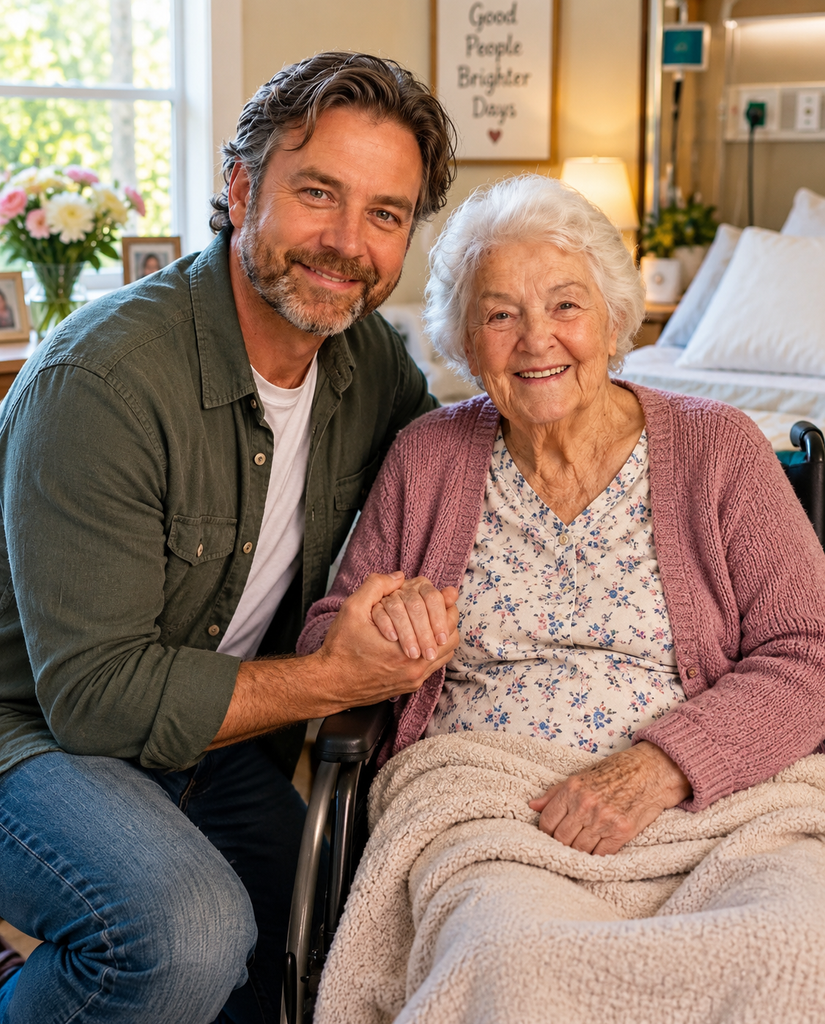
My husband visited his mother in the hospital alone because she “needed peace.” That was what Michael told me. For almost a month, I believed him. I believed him because Patricia was his mother. I believed him because she had suffered a stroke.
I believed him because marriage, at least the way I understood it, meant trusting the person who slept beside you every night.
But trust can be a blindfold.
And mine was tied so tightly, I did not notice the truth standing right in front of me.
Patricia had never been an easy woman.
She was proud, sharp-tongued, and difficult to please.
From the first day Michael brought me home, she looked me up and down as though I were a coat he had chosen badly.
“You’re very quiet,” she said that day.
I smiled politely.
“I’m just nervous.”
She gave a small laugh.
“Nervous women usually hide something.”
That was Patricia.
Cold on the outside.
Harder underneath.
But after I married Michael, I tried.
I brought her soup when she was sick.
I remembered her birthday.
I invited her for holidays even when she criticized my cooking, my curtains, my weight, and once, the way I folded napkins.
Michael always said, “Don’t take it personally. Mom is like that with everyone.”
So I learned not to take it personally.
Or at least I pretended I had learned.
Then the stroke happened.
It was a rainy Tuesday evening.
Michael and I were eating dinner when his phone rang.
His face changed before he even said hello.
By the time he hung up, his hands were shaking.
“Mom collapsed,” he said.
We drove to the hospital in silence.
Patricia was alive, but barely awake.
Her face drooped slightly on one side.
Her words came slowly.
The doctor explained that she needed close monitoring, therapy, and time.
“She’s lucky,” he said. “But recovery will not be simple.”
For the first few visits, I went with Michael.
I sat beside Patricia’s bed.
I adjusted her blanket.
I spoke softly even when she turned her face away.
Sometimes she looked at me with a strange expression.
Not kindness.
Not anger either.
Almost like warning.
But she could barely speak, so I told myself I was imagining things.
Then, suddenly, Michael stopped letting me come.
The first time, I was already putting on my coat when he placed a hand on my arm.
“Not today, honey.”
I looked at him.
“Why?”
He sighed, tired and gentle.
“Mom needs peace and quiet right now. The doctor says too many visitors upset her.”
“I’m not too many visitors,” I said. “I’m your wife.”
“I know,” he replied, kissing my forehead. “But she’s fragile. The hospital is far too. I’ll check on her and come straight back.”
I wanted to argue.
But he looked exhausted.
So I nodded.
That became the pattern.
Every other day, Michael drove to the hospital alone.
Sometimes he was gone for three hours.
Sometimes six.
Sometimes he came home smelling faintly of hospital soap and cafeteria coffee.
He would drop his keys into the bowl by the door and say, “Mom was tired today.”
Or, “She barely spoke.”
Or, “Physical therapy is draining her.”
I would ask, “Did she ask about me?”
He always paused before answering.
“Not really. She’s confused.”
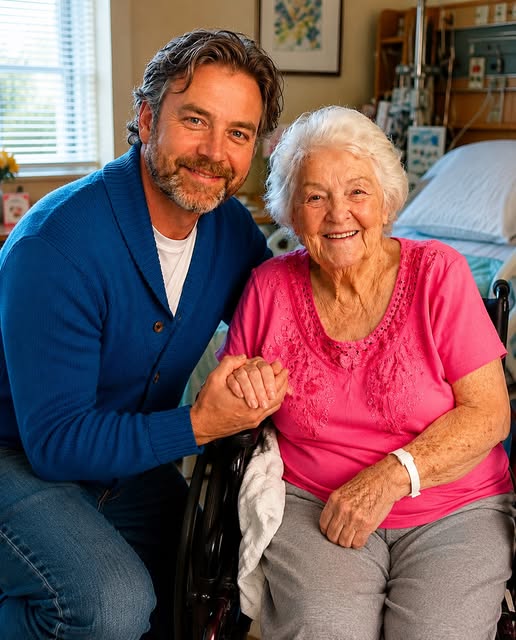
That hurt more than I admitted.
Still, I sent flowers.
I cooked meals for Michael to bring.
I even gave him money to help with Patricia’s hospital bills.
Her insurance wasn’t covering everything, he said.
“The rehabilitation wing is expensive,” he told me one night, rubbing his face.
“How much do you need?”
He hesitated.
“Only if we can manage it.”
“How much, Michael?”
“Three thousand for now.”
I transferred it that same evening.
He hugged me so tightly I could barely breathe.
“You’re helping save my mother’s life,” he whispered.
Those words made me cry.
Because despite everything, I wanted Patricia to recover.
I wanted Michael to have his mother.
I wanted our family to survive this hard season.
For nearly a month, I lived inside his version of the truth.
I packed his lunches.
I washed his shirts.
I asked about his mother every night.
And every night, he gave me just enough answers to keep me quiet.
Then Michael left on a three-day business trip.
He kissed me goodbye in the driveway with his suitcase beside him.
“I hate leaving while Mom is still recovering,” he said.
“I can visit her while you’re gone,” I offered immediately.
His expression tightened.
Then softened too quickly.
“No, honey. Please. The doctors still want limited visitors. I’ll call the hospital from the hotel.”
“Are you sure?”
“I’m sure.”
He smiled.
I believed him again.
The next day, I received a call from a number I did not recognize.
“Is this Mrs. Bennett?” a woman asked.
“Yes.”
“This is Dr. Elaine Morris from St. Catherine Medical Center. I’m calling about Patricia Bennett.”
My stomach dropped.
“Is she okay?”
There was a short silence.
“Her condition has suddenly worsened. We tried reaching your husband several times, but he isn’t answering. You need to come immediately.”
I did not think.
I grabbed my purse, ran to the car, and drove like the world was ending.
The hospital was nearly an hour away, but that day it felt farther.
My hands gripped the steering wheel until my fingers ached.
I kept calling Michael.
No answer.
Again.
No answer.
Again.
Voicemail.
By the time I reached St. Catherine, I was breathless.
I rushed through the front doors, past the information desk, and down the long white corridors toward the rehabilitation wing.
I was searching for Patricia’s room when a nurse stepped in front of me.
She was young, maybe early thirties, with tired eyes and a badge that read “Nora.”
“Mrs. Bennett?” she whispered.
“Yes. Where is Patricia?”
Instead of answering, she pressed a folded note into my hand.
Her fingers were cold.
“I’m the one who called you,” she said quickly. “Read this immediately. Your husband is lying to you.”
My body went numb.
“What?”
“Please,” she whispered. “Read it. Not here.”
I looked down at the paper.
My hands were already shaking before I opened it.
Inside, in uneven handwriting, were the words:
Go to Room 120. I’ll show you the security camera footage. Please stay calm and don’t tell anyone.
I stared at the note.
For a moment, the hospital sounds faded.
The beeping monitors.
The rolling carts.
The distant voices.
Everything became one dull roar inside my head.
“Nora,” I whispered, “what is going on?”
Her eyes filled with pity.
“Room 120,” she said. “Please.”
I followed her.
Room 120 was not a patient room anymore.
It had been converted into a small staff office with old cabinets, a desk, and a security monitor.
Nora closed the door behind us.
Another woman sat inside wearing a cardigan over scrubs.
Dr. Morris.
She stood when she saw me.
“I’m sorry,” she said.
Those two words frightened me more than anything else.
Nora motioned for me to sit.
I did not.
She turned the monitor toward me and clicked on a video file.
“This is from three weeks ago,” she said.
The footage showed Patricia’s hallway.
The angle was high, grainy, and silent.
I saw Michael enter the frame holding flowers.