 Reading Time: 25 minutes
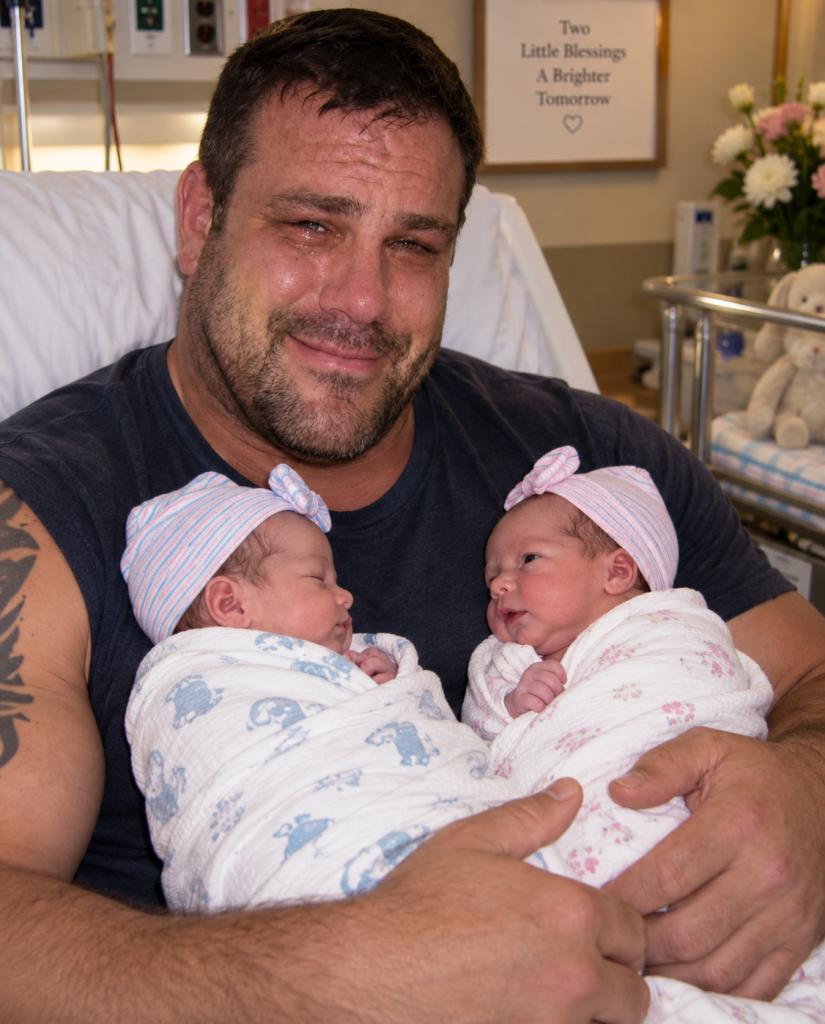
Our daughter was born with a twin sister who survived only a short time after birth. For eighteen years, we never told her.
Then, at her eighteenth birthday celebration, my husband suddenly disappeared into the garage. When he returned, he was carrying something I had never seen before.
It was a wooden chest.
He set it down gently in front of our daughter and said, “I started this the night we lost Rosie.”
That was the moment I realized my husband had been keeping a secret too.
Not from our daughter.
From me.
And unlike my secret, his had been built out of love.

TWO DAUGHTERS
Rosie was born eleven minutes after Hannah.
Hannah arrived first, red-faced and furious, announcing herself to the entire delivery room with a cry so loud that one of the nurses laughed.
“That one has opinions already,” she said.
I remember laughing too.
I was exhausted, frightened, overwhelmed, and happier than I had ever been.
David stood beside me wearing blue hospital scrubs that were too large for him. His eyes were wet.
“She’s perfect,” he kept saying.
Then Rosie arrived.
She was smaller than Hannah.
Much smaller.
She had dark hair pressed against her tiny head and a delicate crease beside her left eye.
I remember noticing that crease immediately.
It sounds strange now, but when you become a mother, you memorize details without realizing you are doing it.
Ten fingers.
Ten toes.
Dark hair.
Tiny nose.
That little crease.
For a brief moment, David and I were parents to two daughters.
We had spent months preparing for them.
Two cribs.
Two car seats.
Two sets of blankets.
Two names painted on wooden letters that David had carefully mounted above their beds.
HANNAH.
ROSIE.
We had argued about the names for weeks.
David wanted traditional names.
I wanted names that sounded warm.
Rosie had been his suggestion.
“My grandmother’s name,” he said.
I pretended not to like it at first because I enjoyed making him defend his choices.
But secretly, I loved it.
When the nurse placed Rosie close to me, I touched her cheek with one finger.
“Hello, Rosie,” I whispered.
I had no idea how little time I would have to say her name.
Something went wrong soon afterward.
The room changed.
That is what I remember most.
People sometimes imagine tragedy arriving dramatically, but ours arrived through expressions.
A nurse stopped smiling.
A doctor stepped closer.
Someone moved Hannah away.
Another nurse began speaking quickly.
David was asked to step aside.
Machines sounded different.
I kept asking what was happening.
Nobody gave me an answer I could understand.
I remember David standing near the wall with both hands over his mouth.
I remember someone saying they were doing everything they could.
And then I remember silence.
The kind of silence that divides your life into before and after.
Rosie lived only a short time.
Long enough for us to meet her.
Long enough for us to love her.
Not long enough for us to bring her home.
THE EMPTY CRIB
When I returned from the hospital, there were two cribs waiting in the nursery.
I could not look at them.
Hannah slept in a bassinet beside our bed during those first weeks, which meant the nursery remained mostly untouched.
Every time I passed its doorway, I saw those two identical cribs.
One would eventually hold our daughter.
The other never would.
People brought food.
They left casseroles on our porch.
My mother washed laundry.
My sister stayed overnight twice.
Neighbors whispered condolences.
Everyone tried to help.
But grief is strange.
People can cook for you.
They can clean your house.
They can hold your baby while you shower.
They can sit beside you.
But they cannot enter the place where grief lives.
That place belongs only to you.
One afternoon, David left the house to handle arrangements.
I was alone.
Hannah was sleeping.
I walked into the nursery.
I stared at the second crib.
Then I began taking it apart.
I did not think about what I was doing.
I found the little wrench David had used to assemble it and started removing bolts.
My hands shook.
I cried so hard at one point that I had to sit on the floor.
But I kept going.
Piece by piece.
Rail by rail.
Until the crib was gone.
I carried everything into the garage and leaned the pieces against the wall.
When David came home, he walked into the nursery and stopped.
“You took it down?”
I was folding one of Hannah’s blankets.
“I couldn’t keep looking at it.”
He stood there for several seconds.
Then he nodded.
That was all.
No argument.
No conversation.
No discussion about what should happen to the wood.
Neither of us knew how to talk about what we had lost.
So we became experts at talking about everything else.
Diapers.
Feeding schedules.
Doctor appointments.
Bills.
Sleep.
Groceries.
Anything except Rosie.
Eventually, we made a decision that seemed easier at the time.
Hannah was far too young to understand what had happened.
We would tell her when she was older.
It sounded reasonable.
Responsible, even.
But “when she was older” became one of those promises that moved farther away every time we approached it.
THE SECRET GROWS
When Hannah was five, I decided she was too young.
How could a five-year-old understand that she had entered the world beside another little girl who had not stayed?
When she was eight, she became frightened of death after our elderly neighbor passed away.
I told David we should wait.
At twelve, she was having a difficult year at school.
She was shy and struggling to make friends.
Again, I said we should wait.
At fifteen, grades and friendships consumed her.
Then came driving lessons.
College applications.
Scholarships.
There was always another reason.
David occasionally challenged me.
Usually it happened when we were alone in the car.
“She should know,” he would say.
I always had an answer.
“Know what?”
He would stare through the windshield.
“That she had a sister.”
“She had a sister for a few hours, David. She doesn’t remember.”
“That doesn’t mean Rosie didn’t exist.”
I hated hearing that.
Not because he was wrong.
Because he was right.
I would cross my arms.
“What exactly do you want Hannah to do with that information?”
“I don’t know.”
“Then why tell her?”
“Because it’s hers.”
That sentence bothered me for years.
It’s hers.
I didn’t want to believe that.
I wanted Rosie’s story to belong to David and me because we were the ones who remembered the hospital.
We were the ones who remembered holding her.
We were the ones who had buried dreams alongside a daughter.
Hannah had been an infant.
Surely she had been spared the loss.
That was what I told myself.
But perhaps I was really trying to spare myself.
My mother quietly removed an old hospital photograph from her hallway before Hannah became old enough to notice it.
There were two babies in the picture.
My sister stopped mentioning Rosie around her.
Relatives understood without being told.
Eventually, everyone in the family became part of the silence.
Nobody lied directly.
We simply removed evidence.
Photographs disappeared.
Conversations stopped when Hannah entered rooms.
Rosie’s name became something spoken only quietly.
Every September 9, we celebrated Hannah.
Cake.
Presents.
Friends.
Balloons.
Laughter.
But in my heart, September 9 always belonged to two daughters.
One whose birthday we celebrated loudly.
And one we remembered in silence.
DAVID’S GARAGE
Every year after Hannah’s birthday dinner, David disappeared into the garage.
Usually for about an hour.
Sometimes longer.
I never asked why.
I assumed he needed time alone.
I had my own ritual.
After everyone went to bed, I would sit in the living room with the lights off and allow myself to remember.
I would think about dark hair.
Tiny fingers.
That little crease beside Rosie’s eye.
Then I would wipe my face, go upstairs, and become Hannah’s mother again.
David’s grief looked different.
He had always been a man who needed to do something with his hands.
If a cabinet door squeaked, he fixed it.
If a chair wobbled, he repaired it.
If something broke, David believed there must be a tool somewhere capable of making it whole.
But there are no tools for certain things.
I assumed the garage gave him somewhere to be alone with that truth.
I never went looking for him.
That was another mistake.
Marriage can survive many silences.
But sometimes two people can live beside each other for decades without realizing how lonely the other person has been.
EIGHTEEN
Then Hannah turned eighteen.
We invited around thirty people.
Family.
Neighbors.
Friends from school.
Her best friend, Kayla, arrived carrying a ridiculous balloon shaped like the number eighteen.
My sister brought potato salad.
David grilled hamburgers.
My mother sat beneath an umbrella telling anyone who would listen stories about Hannah when she was little.
We had folding tables across the backyard and a store-bought cake with Hannah’s name written across the top in blue icing.
But the biggest surprise was parked around the corner.
A used silver Honda.
Nothing fancy.
David and I had saved for almost a year.
After cake, he disappeared briefly and returned jingling the keys.
Hannah stared at them.
“No.”
David smiled.
“Yes.”
“Dad.”
“Yes.”
“Are you serious?”
He tossed her the keys.
She screamed.
Then she wrapped both arms around him.
I stood nearby watching them.
She looked completely happy.
That mattered to me.
For eighteen years, protecting that happiness had been the reason I gave myself for keeping the truth from her.
I looked at Hannah laughing with her friends and thought, See? We made the right choice.
She was happy.
She was safe.
She was loved.
Why place an old sorrow in her hands now?
But apparently David had decided eighteen years was long enough.
After the presents were finished, he stood beside the table.
“Could everyone give us a few minutes?”
People looked confused.
My stomach tightened.
I knew.
Somehow, before he said another word, I knew.
I stepped close to him.
“No,” I whispered.
He finally met my eyes.
“Today.”
“David.”
“She deserves to know.”
“Not like this.”
“There will never be a perfect way.”
I glanced toward Hannah.
She was watching us.
“What are you guys talking about?”
David didn’t answer.
Instead, he asked everyone to go inside for a few minutes.
My sister looked at me.
She understood immediately.
So did my mother.
One by one, people gathered their plates and moved into the house.
Soon, only Hannah, David, and I remained outside.
Then David walked toward the garage.
“Dad?”
He didn’t answer.
About a minute later, he returned carrying a wooden chest.
I had never seen it before.
Not once.
We had lived in that house for eighteen years.
I knew almost every box in that garage.
Or I thought I did.
But somehow he had kept this hidden.
The chest was beautiful.
Not perfect.
Handmade.
Dark polished wood with brass hinges and small carved flowers around the edges.
On the lid was a single carved letter.
R.
David placed it carefully on the table.
Hannah ran her fingertips across the carving.
“Dad, what is this?”
He sat across from her.
Then he took a slow breath.
“There’s something your mother and I should have told you years ago.”
Hannah looked from him to me.
“What?”
My throat closed.
David continued.
“You weren’t born by yourself.”
She frowned.
“What does that mean?”
“You had a twin sister.”
Hannah became completely still.
I watched her face.
For eighteen years, I had imagined this moment.
I expected tears.
Anger.
Confusion.
But Hannah simply stared at her father.
“Her name was Rosie,” he said.
The backyard seemed to disappear around us.
“She was born eleven minutes after you. She was very small. And we only got a short time with both of you.”
Hannah looked at me.
“Mom?”
I couldn’t speak at first.
Finally, I nodded.
“Yes.”
Her eyes moved back toward the chest.
“You had another daughter?”
“We had two daughters,” David said.
Had.
The word landed hard.
Hannah rested both hands on the wooden lid.
Then David said quietly, “I started making this the night we lost her.”
I stared at him.
“What?”
He looked at me.
For the first time in eighteen years, I understood what he had been doing in that garage.
He hadn’t been trying to forget Rosie.
He had been remembering her.
Quietly.
Year after year.
All along.
THE FIRST PIECE
David reached toward the chest but didn’t open it.
Instead, he looked at me.
“Do you remember taking the crib apart?”
Of course I remembered.
“I couldn’t throw it away,” he said.
I stared at the chest.
Then at him.
“No.”
He nodded.
“Yes.”
My hand went to my mouth.
The wood.
The chest had been made from Rosie’s crib.
David ran his palm across the lid.
“The first night after you took it apart, I went into the garage and cut one small piece.”
I couldn’t stop staring.
“I didn’t know what I was making,” he continued. “I just knew I couldn’t let it disappear.”
Hannah looked between us.
“So this was her crib?”
“Part of it.”
David opened the chest.
Inside were envelopes.
Photographs.
Small boxes.
A pink hospital bracelet.
A folded baby blanket.
And eighteen letters tied together with a faded ribbon.
Hannah inhaled sharply.
“What are those?”
David touched the letters.
“One for every birthday.”
I looked at him.
“You wrote to her?”
He shook his head.
“To both of them.”
LETTER NUMBER ONE
Hannah picked up the first envelope.
On the front, in David’s handwriting, were two names.
Hannah & Rosie.
Underneath:
September 9 — One Year Old.
Her fingers trembled.
“Can I read it?”
David nodded.
She opened the envelope carefully.
The paper inside had yellowed slightly.
Hannah began reading silently.
After several lines, she stopped.
“What did you write?” I asked.
She looked at her father.
Then she read part of it aloud.
“Today your sister smashed cake into her hair and laughed when your mother tried to clean her face. She took three steps by herself last week. I wish I could know which of you would have walked first.”
David lowered his head.
I started crying.
Not because the letter was dramatic.
Because it wasn’t.
He had written about ordinary things.
First steps.
Cake.
A new tooth.
The ordinary childhood Rosie never had.
Every year, he had recorded Hannah’s life while imagining the sister who should have been growing beside her.
Hannah opened another.
Age five.
“Today Hannah started kindergarten. She wore a yellow backpack and refused to let us walk her all the way to the classroom. I stood in the parking lot wondering whether you would have been brave like her or whether you would have held my hand.”
Another.
Age ten.
“Hannah says she wants to become a veterinarian this week. Last month she wanted to be an astronaut. Your mother says I encourage her too much. I don’t think that’s possible.”
Another.
Age sixteen.
“Hannah learned to drive today. I aged approximately twenty years in forty minutes. If you were here, I suppose I’d have to teach two teenage girls at once. Maybe life spared me that particular terror.”
Hannah laughed.
Then immediately covered her mouth as tears filled her eyes.
David smiled through his own tears.
“I wanted the letters to have some happiness.”
“You did this every year?” she asked.
“Yes.”
“Why?”
He looked at her for a long moment.
“Because I was afraid if nobody said Rosie’s name, eventually it would feel like she had never been here.”
That sentence broke something open inside me.
For eighteen years, I had believed silence protected us.
David had spent eighteen years fighting against that silence.
HANNAH’S ANGER
Hannah didn’t finish opening the chest that afternoon.
After the fourth letter, she stood abruptly.
“I need a minute.”
She walked into the house.
I started to follow.
David stopped me.
“Give her time.”
“You should have warned me.”
“I tried for eighteen years.”
His words weren’t cruel.
That made them hurt more.
“This wasn’t your decision to make alone.”
“And keeping it from her wasn’t yours.”
“I was protecting her.”
“Were you?”
I stared at him.
He immediately softened.
“I’m not trying to hurt you.”
“Well, congratulations.”
I walked away.
The birthday party ended awkwardly.
Nobody knew what to say.
My sister hugged Hannah before leaving.
My mother cried.
Kayla whispered something to Hannah that I couldn’t hear.
By eight o’clock, the backyard was empty.
Paper plates remained on the tables.
A few balloons floated against the fence.
Half the cake sat untouched in the kitchen.
Hannah had gone upstairs.
David was cleaning outside.
I stood at the sink washing dishes that were already clean.
Then Hannah came downstairs.
“Mom?”
I turned.
Her eyes were swollen.
“Why didn’t you tell me?”
There are questions parents spend years fearing.
Sometimes, when they finally arrive, every carefully prepared answer sounds ridiculous.
“I thought I was protecting you.”
“From what?”
“From grief.”
“Whose grief?”
I stared at her.
She waited.
“Mine,” I finally whispered.
Hannah’s expression changed.
That was the first completely honest thing I had said about Rosie in years.
I sat at the kitchen table.
Hannah sat across from me.
“When you were little,” I said, “I kept thinking there would be a better age. Then every year there was another reason not to tell you.”
“But everyone knew?”
I hesitated.
“Most of the family.”
“Grandma?”
“Yes.”
“Aunt Lisa?”
“Yes.”
“Dad obviously knew.”
“Yes.”
She looked away.
“So I’ve been the only person who didn’t know something about my own life.”
I had no defense.
“Yes.”
“That hurts.”
“I know.”
“No, Mom. I don’t think you do.”
She stood.
Then she walked upstairs.
I didn’t follow her.
For once, I let her have the right to be angry.
THE PHOTOGRAPH
The next morning, Hannah came downstairs carrying one of David’s letters.
She didn’t speak to me.
She poured cereal and sat at the counter.
David entered a few minutes later.
“Morning.”
“Morning.”
The silence was unbearable.
Finally Hannah looked at him.
“Do we have pictures?”
David glanced toward me.
“Yes.”
“Can I see them?”
I wanted to say no.
The instinct arrived immediately.
Protect her.
Protect yourself.
Hide.
But I forced myself to nod.
I went upstairs.
At the back of my closet was a small blue box.
I had not opened it in years.
Inside were hospital photographs.
Two bracelets.
A card with Rosie’s footprints.
A lock of dark hair.
And one picture I had almost forgotten.
David was sitting in a hospital chair holding both girls.
Hannah was wrapped in white.
Rosie was wrapped in pink.
David looked terrified and proud.
I brought the box downstairs.
Hannah touched the photograph.
“That’s her?”
“Yes.”
“She looks like me.”
I smiled despite myself.
“You were almost identical.”
She studied the picture.
“Why didn’t you ever look at these?”
“I did at first.”
“What happened?”
“It hurt too much.”
Hannah looked at me.
“Doesn’t hiding them hurt too?”
I didn’t answer.
Because suddenly I understood that it did.
WHAT THE CHEST CONTAINED
Over the following week, Hannah explored the chest slowly.
She didn’t consume the past all at once.
She opened one envelope before breakfast.
Another after school.
Sometimes she asked questions.
Sometimes she disappeared upstairs.
The chest contained eighteen letters.
But that wasn’t all.
David had saved tiny pieces of our family history.
A photograph from Hannah’s first Christmas.
A ribbon from her kindergarten graduation.
A ticket from the first baseball game we attended together.
A program from her fifth-grade school play.
A dried flower from her sixteenth birthday.
A copy of the hospital identification card bearing Rosie’s name.
Each object had a note explaining why David had saved it.
The chest wasn’t a shrine to death.
It was a record of life.
Both the life that happened and the life we imagined might have happened.
That distinction mattered.
One evening, Hannah sat on the living-room floor with photographs spread around her.
“Dad?”
“Yes?”
“Did you imagine her growing up?”
David sat beside her.
“All the time.”
“What did she look like?”
He smiled sadly.
“It changed.”
“What do you mean?”
“When you were six, I imagined another six-year-old who looked like you but maybe had shorter hair. When you were twelve, I imagined her at twelve. When you turned sixteen, I wondered if she’d be taller than you.”
Hannah smiled.
“Everyone is taller than me.”
“True.”
She nudged him.
Then she looked at me.
“Did you imagine her?”
I had spent years refusing to answer that question even inside my own head.
“Yes.”
“What did you imagine?”
I sat beside them.
“I wondered whether she would have been quiet.”
“Why?”
“You were loud enough for two babies.”
Hannah laughed.
For the first time since her birthday, all three of us laughed together.
And somehow Rosie’s name remained in the room afterward.
Nothing terrible happened.
The walls didn’t collapse.
Hannah didn’t break.
Neither did I.
THE QUESTION I FEARED MOST
A few days later, Hannah asked the question I had always feared.
“Was it because of me?”
I froze.
“What?”
“Rosie dying.”
“No.”
I answered so quickly that Hannah jumped.
“No. Absolutely not.”
She looked down.
“I’ve been reading about twins.”
I moved beside her.
“Hannah, listen to me. Nothing that happened was your fault.”
“But if—”
“No.”
David joined us.
“The doctors never said anything like that.”
Hannah rubbed her hands together.
“I know it sounds stupid.”
“It doesn’t,” David said.
She started crying.
“I just keep thinking I was there.”
I wrapped my arms around her.
For eighteen years, I had convinced myself that telling Hannah about Rosie would create unnecessary grief.
Now I understood something I should have realized long ago.
Truth can hurt.
But secrecy creates its own pain.
Hannah wasn’t only grieving a sister.
She was rebuilding the story of her own beginning.
And we had given her no preparation.
“I am so sorry,” I whispered.
She cried against my shoulder.
“I should have told you.”
She didn’t tell me it was okay.
And I didn’t ask her to.
Some apologies should not demand immediate forgiveness.
DAVID’S SECRET
Later that night, after Hannah went to bed, I found David in the garage.
The chest was no longer hidden.
For the first time, I noticed a shelf behind his workbench.
Eighteen small wooden pieces sat there.
“What are those?”
He looked embarrassed.
“Leftovers.”
“From the crib?”
He nodded.
I picked up one piece.
“You kept everything?”
“Almost.”
“Why didn’t you tell me?”
David gave a quiet laugh.
“You wouldn’t even say her name.”
That hurt.
But again, it was true.
“I thought talking about her would keep us trapped.”
“I thought not talking about her would erase her.”
We stood there surrounded by eighteen years of misunderstanding.
“I was angry at you,” he admitted.
“When?”
“After you took the crib apart.”
I stared at him.
“You never said anything.”
“You were barely functioning. You had Hannah. You were grieving. What was I supposed to say?”
“You could have told me.”
“So could you.”
Fair.
I sat on the old stool near his workbench.
“How did you start the chest?”
He leaned against the table.
“The night after you took the crib apart, I came out here because I couldn’t sleep. I picked up one of the rails. I thought about throwing everything away.”
He paused.
“But I couldn’t.”
“So you built a chest?”
“Not exactly.”
He smiled.
“The first version was terrible.”
Despite myself, I laughed.
“How terrible?”
“Very.”
He opened a cabinet and pulled out a crooked wooden panel.
I stared.
“You kept that too?”
“I have trouble throwing things away.”
“That much is becoming obvious.”
We both laughed.
Then he grew serious.
“Every year, I worked on it a little. Sometimes I replaced something. Sometimes I carved something. Sometimes I just came out here and sat beside it.”
“On Hannah’s birthday.”
“Yes.”
“Why didn’t you tell me about the letters?”
“Because they were the only place I could talk about Rosie without feeling like I was hurting you.”
I closed my eyes.
For eighteen years, we had both been trying to protect each other.
And in doing so, we had grieved alone.
GRANDMA’S STORY
The following Sunday, my mother came over.
She brought the photograph she had removed from her hallway years earlier.
Hannah noticed immediately.
“You hid that because of me?”
My mother looked ashamed.
“Your mom asked me to.”
Hannah glanced at me.
I nodded.
Grandma placed the photograph on the table.
It showed her holding both babies.
“I’ve missed seeing this picture,” she said.
Hannah studied her.
“You missed Rosie too?”
“Oh, sweetheart.”
My mother’s eyes filled.
“She was my granddaughter.”
That simple statement changed the room.
For years, I had thought of Rosie’s death as something that happened primarily to David and me.
But my mother had lost a granddaughter.
My sister had lost a niece.
Our family had lost someone too.
And because of my silence, everyone had been grieving carefully around me.
Hannah reached for my mother’s hand.
“Tell me about that day.”
So my mother did.
She told Hannah things I had forgotten.
How David had called her at 4:12 in the morning.
How she had driven to the hospital wearing two different shoes.
How Hannah had grabbed her finger.
How Rosie had opened her eyes briefly when Grandma spoke.
“Really?” Hannah asked.
My mother nodded.
“I told her I was her grandma.”
Hannah started crying.
So did my mother.
And for once, I didn’t try to stop the conversation.
THE NAME ON THE WALL
A month later, Hannah came home from school carrying a small paper bag.
“I bought something.”
She removed wooden letters.
R.
O.
S.
I.
E.
I stared at them.
“What are those for?”
“The nursery.”
“What nursery?”
She smiled.
“My room.”
Hannah’s bedroom had once been the nursery.
Years earlier, we had removed the baby decorations and painted everything pale gray.
But she knew.
She had figured it out from the photographs.
“This was our room, wasn’t it?”
I nodded.
She climbed onto a chair.
“What are you doing?”
“Putting her name back.”
My chest tightened.
“Hannah—”
She stopped.
“If you don’t want me to—”
“No.”
I surprised myself.
“Put it up.”
So she did.
Not above her bed.
On a small section of wall beside her bookshelf.
Five wooden letters.
ROSIE.
I expected seeing the name to hurt.
It did.
But underneath the pain was something else.
Relief.
For eighteen years, I had worked so hard to remove Rosie’s name from our home.
Now my daughter had put it back with five nails and a hammer.
And somehow the house felt more complete.
COLLEGE
That spring, Hannah was accepted into a university three hours away.
She had talked about leaving home for years.
When the acceptance letter arrived, she screamed.
David danced terribly around the kitchen.
I cried.
Normal family happiness returned.
But Rosie was part of it now.
Not constantly.
Not dramatically.
Just naturally.
Sometimes Hannah joked about her.
“I bet Rosie would’ve gotten Dad’s height.”
Or:
“She definitely would’ve stolen my clothes.”
At first, every casual mention startled me.
Eventually, it became comforting.
Rosie was no longer a forbidden subject.
She had become what she always should have been.
Part of our family story.
A few weeks before graduation, Hannah asked David for something unexpected.
“Can I take the chest to college?”
He blinked.
“The whole chest?”
“Yes.”
I immediately said, “Absolutely not.”
Hannah laughed.
“Why?”
“Because your dorm room will be approximately the size of our pantry.”
David agreed.
They compromised.
She would take three letters and one photograph.
The chest would remain at home.
LETTER EIGHTEEN
The night before Hannah left for college, she asked us to sit with her.
She brought out the final letter.
Eighteen.
She had deliberately saved it.
“I want to read this one with both of you.”
David looked nervous.
“Why?”
“Because I think we should.”
We sat together on the living-room sofa.
Hannah opened the envelope.
The letter was longer than the others.
David had written it several weeks before her birthday.
She began reading aloud.
“Dear Hannah and Rosie,
Tomorrow you turn eighteen.
I have written that sentence several times because technically only one of you will blow out candles tomorrow, and yet in my mind September 9 has always belonged to both of you.”
Hannah’s voice trembled.
She continued.
“Hannah, if you are reading this, then I finally found the courage to tell you about your sister.
Rosie, if somehow love travels farther than we understand, then I hope you know we never forgot you.”
I covered my mouth.
David stared at the floor.
Hannah continued.
“I have spent eighteen years wondering what our family would have looked like with both of you in it.
Two backpacks by the door.
Two arguments about curfew.
Two college applications.
Twice the noise.
Twice the worry.
Twice the joy.
But imagining the life we didn’t have should never make us less grateful for the life we did.”
Hannah stopped.
She wiped her eyes.
Then continued.
“Your mother loved both of you so fiercely that losing one of you frightened her into protecting the other from every piece of sadness she could.
Please don’t mistake her silence for forgetting.
She remembered every day.”
I looked at David.
He finally met my eyes.
The letter continued.
“I hope someday we can say Rosie’s name without feeling like doing so betrays the happiness Hannah brought into our lives.
Love is not divided that way.
Remembering one daughter does not diminish loving the other.
There was always room for both.”
Hannah couldn’t continue.
She handed me the letter.
“Finish it.”
My hands shook.
I read the final paragraph.
“So on your eighteenth birthday, I hope we stop hiding from the beginning of our family’s story.
Hannah, live enough life for yourself.
You do not owe your sister a life she didn’t get.
You owe yourself the freedom to live the one you have.
And Rosie, wherever love goes when someone leaves us too soon, know that your name remained here.
Love,
Dad.”
Nobody spoke for a long time.
Then Hannah leaned against David.
I leaned against Hannah.
And the three of us sat together with the eighteenth letter resting across our knees.
GOODBYE
The following morning, we loaded Hannah’s car.
Boxes.
Clothes.
Books.
A lamp.
Far too many shoes.
David checked the tires three times.
I packed enough snacks to feed an entire dormitory.
Finally, Hannah stood beside the driver’s door.
“You guys know I’m only three hours away, right?”
“No,” David said. “We assumed you were crossing the Atlantic.”
She hugged him.
Then she hugged me.
Before getting into the car, she reached into her backpack.
The hospital photograph was inside.
The one of David holding both babies.
“You’re taking that?”
“Yes.”
I touched the edge.
For years, I had hidden that photograph.
Now my daughter was taking it into the next chapter of her life.
“Mom?”
“Yes?”
“I’m not taking it because I’m sad.”
“I know.”
“I’m taking it because she’s part of where I came from.”
I nodded.
That was enough.
She drove away.
I cried for twenty minutes.
David pretended he wasn’t crying.
Then we walked back inside.
The house felt enormous.
THE GARAGE DOOR
That evening, I found myself standing outside the garage.
For eighteen years, that room had belonged to David’s grief.
I had rarely entered unless I needed something.
But that night, I opened the door.
He was sitting at his workbench.
The chest was beside him.
“What are you doing?”
He shrugged.
“Nothing.”
I sat beside him.
For several minutes, neither of us spoke.
Then I picked up one of the leftover pieces of crib wood.
“Can you make something with this?”
“What?”
“I don’t know.”
He considered it.
“A picture frame?”
I smiled.
“For the hospital photo?”
“We’d need another copy.”
“We can make one.”
So we did.
Not that night.
But over the following weekend.
David showed me how to sand the wood.
I was terrible at it.
He complained that I was sanding unevenly.
I reminded him his first chest panel looked like something built during an earthquake.
Eventually, we made a small wooden frame.
We placed a copy of the photograph inside.
David holding Hannah and Rosie.
Then we hung it in the hallway.
Not hidden in a closet.
Not stored in a box.
Not turned toward the wall.
In the hallway.
Where anyone entering our home could see it.
SEPTEMBER 9
The next year, Hannah came home from college for her nineteenth birthday.
She brought two friends.
My mother came.
My sister brought dessert.
David grilled too much food as usual.
There was laughter in the backyard.
Cake.
Music.
Presents.
Everything looked almost exactly like the birthdays before.
Except for one thing.
After dinner, Hannah disappeared into the kitchen.
She returned carrying a tiny cupcake.
One candle stood in the center.
She placed it beside her birthday cake.
Nobody spoke.
Hannah looked at me.
“Is this okay?”
A year earlier, I might have fallen apart.
Instead, I walked toward her.
“Yes.”
She lit the candle.
“For Rosie,” she said.
My mother began crying immediately.
David wrapped an arm around me.
Hannah smiled.
Not sadly.
Just gently.
We didn’t sing another birthday song.
We didn’t turn the moment into something enormous.
We simply allowed the candle to burn beside Hannah’s cake.
Two daughters.
One present.
One remembered.
Both loved.
YEARS LATER
Time continued moving, as it always does.
Hannah graduated from college.
She changed her career plans three times.
She eventually became a physical therapist, which surprised all of us because she had spent most of high school insisting she would never work in healthcare.
She moved to another city.
She fell in love with a man named Michael.
The first time she brought him home, he stopped in the hallway.
He looked at the framed hospital photograph.
“Is that you?”
Hannah nodded.
“And my sister.”
There was no hesitation.
No whisper.
No awkward glance toward me.
Just truth.
“My twin sister Rosie.”
Michael looked at the photograph.
“I didn’t know you were a twin.”
“I am.”
Not was.
Am.
That word stayed with me.
Later that evening, after they left, I stood in front of the picture.
For years, I had thought Rosie belonged only to the past.
Hannah had taught me otherwise.
Some relationships do not disappear simply because one person is no longer physically present.
They change shape.
That doesn’t make them imaginary.
THE WEDDING
When Hannah married Michael at twenty-eight, she asked David to build something for the ceremony.
“What?”
“A small table.”
“For what?”
“You’ll see.”
He used the remaining crib wood.
Not all of it.
He still couldn’t bring himself to use every piece.
The table was simple and beautiful.
At the wedding, it stood near the entrance.
On top was a framed photograph.
The hospital picture.
Beside it was a small card:
For those we carry with us, even when they cannot walk beside us.
Rosie’s name wasn’t written.
It didn’t need to be.
Our family knew.
Before walking down the aisle, Hannah stood beside the table.
She touched the frame.
Then she looked at me.
I walked over.
“You okay?” I asked.
“Yeah.”
She smiled.
“I just wanted her here somehow.”
“She is.”
For the first time in my life, I could say those words without immediately crying.
ANOTHER SEPTEMBER
Several years later, Hannah called me early one September morning.
“Mom?”
Something in her voice frightened me.
“What happened?”
“Nothing bad.”
I sat down anyway.
“What?”
She laughed.
“I’m pregnant.”
I screamed so loudly David came running from the garage.
“What happened?”
I put the phone on speaker.
“Tell him.”
Hannah laughed again.
“Dad, you’re going to be a grandpa.”
David sat down immediately.
He cried before I did.
Months later, when the ultrasound confirmed Hannah was expecting a daughter, she called again.
“We picked a name.”
I smiled.
“What is it?”
There was a pause.
“Rose.”
I stopped breathing.
“Hannah.”
“Not Rosie,” she said quickly. “Rose. Michael and I both love it.”
“You don’t have to do that.”
“I know.”
“I don’t want you feeling obligated.”
“Mom.”
“Yes?”
“I want to.”
I cried then.
Not the desperate tears I had cried eighteen years earlier.
These were different.
They carried sadness.
But they also carried gratitude.
When Rose was born, David held his granddaughter and stared at her for a very long time.
“She has Hannah’s nose,” he said.
I laughed.
“She has Michael’s nose.”
“No. Definitely Hannah.”
Hannah watched us from the hospital bed.
Then she smiled.
“Maybe she has Rosie’s.”
Nobody became uncomfortable.
Nobody changed the subject.
We simply allowed the possibility to sit among us.
THE CHEST RETURNS
When Rose turned five, Hannah asked for the wooden chest.
This time, we gave it to her.
David loaded it into our car himself.
We drove to Hannah’s house.
Rose watched curiously as her grandfather carried it inside.
“What’s that?”
“A family box,” Hannah said.
Rose touched the carved R.
“R for me?”
Hannah smiled.
“Sort of.”
She looked at us.
“She’s too young for the whole story.”
I nodded.
For one terrifying second, I thought history was repeating itself.
Then Hannah continued.
“But I don’t want to hide it either.”
She knelt beside her daughter.
“You know Mommy has a sister?”
Rose shook her head.
“Her name was Rosie. She died when we were babies.”
Rose considered this with the straightforward acceptance children sometimes have.
“Was she your friend?”
Hannah smiled.
“I think she would’ve been.”
Rose nodded.
Then she ran outside because she had spotted a butterfly.
That was it.
No trauma.
No catastrophe.
No childhood destroyed by truth.
I looked at Hannah.
She looked back at me.
Neither of us needed to say anything.
For eighteen years, I had feared a conversation that took my granddaughter less than a minute to accept.
WHAT I FINALLY UNDERSTOOD
I am older now.
David’s hair is mostly gray.
My hands look increasingly like my mother’s.
Hannah has a family of her own.
And the wooden chest sits in her house.
Sometimes Rose puts toys on top of it.
Once, I saw a plastic dinosaur sitting directly over the carved R.
I almost laughed.
There was a time when I would have treated that chest like something sacred.
But perhaps this is better.
It isn’t a monument.
It’s furniture in a living home.
That’s what David wanted all along.
He didn’t build the chest because he wanted our family trapped in grief.
He built it because he understood something I didn’t.
Remembering is not the opposite of moving forward.
Sometimes remembering is how we move forward.
For eighteen years, I believed silence was protection.
I thought if Hannah never knew she had lost a sister, she would never experience that loss.
But the truth was more complicated.
Rosie’s absence had shaped our family whether Hannah knew her name or not.
It shaped the way I worried.
The way I held Hannah too tightly.
The way I panicked when she became sick.
The way David disappeared into the garage every September.
The way relatives became quiet around certain photographs.
Children notice the shape of silence even when they don’t know what caused it.
Eventually, Hannah told me something I have never forgotten.
We were sitting on her porch one summer evening.
Rose was playing in the yard.
“Mom?”
“Yes?”
“I used to think there was something about my childhood nobody wanted to tell me.”
I turned toward her.
“What?”
“I couldn’t explain it. Sometimes people would look at me strangely on my birthday. Grandma especially.”
My heart sank.
“You noticed?”
“Not enough to understand. But enough to feel something.”
I stared across the yard.
All those years, I had congratulated myself for protecting her.
But children often sense what adults work hardest to conceal.
“I’m sorry,” I said.
Hannah reached over and squeezed my hand.
“I know.”
This time, unlike the night of her eighteenth birthday, she was ready to say more.
“I understand why you did it.”
That did not mean she believed it had been the right decision.
Neither do I.
But forgiveness doesn’t require rewriting the past.
Sometimes it simply means understanding the frightened person who made the mistake.
THE LAST PIECE OF WOOD
On our fortieth wedding anniversary, David gave me a small wrapped package.
“What is this?”
“Open it.”
Inside was a wooden heart.
Simple.
Smooth.
On the back, he had carved four names.
David.
Margaret.
Hannah.
Rosie.
I stared at it.
“Is this—”
“The last piece of the crib.”
I looked up.
“You used it?”
He nodded.
For decades, he had kept one final piece.
“Why now?”
He smiled.
“Because I don’t need the wood to remember anymore.”
That sentence brought me back to the hospital.
To the nursery.
To the afternoon I dismantled a crib because I believed removing it might somehow remove the pain.
To the garage where my husband quietly gathered the pieces.
To eighteen letters.
To a wooden chest.
To a birthday candle.
To a wedding table.
To a granddaughter named Rose.
I held the wooden heart against my chest.
“I wish I’d gone into the garage with you.”
“When?”
“All those years.”
David took my hand.
“So do I.”
Then he smiled.
“But you’re here now.”
THE TWO NAMES
The wooden heart sits on our mantel today.
Visitors sometimes ask about the four names.
For years, I would have avoided answering.
Now I simply tell them.
“We have two daughters.”
If they ask more, I explain.
One grew up.
One didn’t.
One filled our house with shoes, homework, slammed doors, laughter, college boxes, wedding plans, and grandchildren.
The other stayed with us differently.
For a long time, I thought saying that somehow diminished Hannah.
It doesn’t.
Love is not a pie divided into pieces.
Remembering Rosie never meant loving Hannah less.
If anything, finally acknowledging both daughters allowed me to love Hannah without asking her to unknowingly carry the weight of everything we refused to say.
Sometimes I think about that eighteenth birthday.
The folding tables.
The balloons.
The half-eaten cake.
Hannah sitting beneath the afternoon sun with both hands resting on a wooden chest.
I remember the expression on David’s face when he finally said:
“You had a twin sister.”
For years afterward, I wondered whether I would change that moment if I could.
I would.
But not by stopping David.
I would change the eighteen years before it.
I would say Rosie’s name sooner.
I would show Hannah the photograph.
I would explain gently, when she was old enough to understand, that she entered this world beside someone else.
I would tell her that joy and grief sometimes arrive together.
I would tell her that knowing sadness exists does not destroy happiness.
And most importantly, I would tell myself the same thing.
Because grief does not disappear when you lock it away.
It waits.
Sometimes in a closet.
Sometimes inside a photograph.
Sometimes in pieces of an old crib leaning against a garage wall.
And sometimes someone who loves you quietly gathers those pieces and spends eighteen years turning them into something you can finally hold.
David thought he was building a chest.
But looking back, I think he was building something else.
A place for our family to put the truth until we were brave enough to open it.
And when we finally did, we didn’t find only sorrow inside.
We found photographs.
Letters.
Memories.
Laughter.
Forgiveness.
A sister.
A daughter.
A name we had been afraid to speak.
Rosie.
For eighteen years, I believed keeping her name out of our home would help us heal.
I know better now.
Healing began the day her name came back.
And it has never left again.
THE END