 Reading Time: 22 minutes
For several seconds, I forgot how to breathe. “Frank was my real father?” The words sounded ridiculous coming out of my mouth. Impossible.
Frank had been my stepfather. That was the one fact about my childhood I had never questioned. He married my mother when I was four. He raised me after she died.
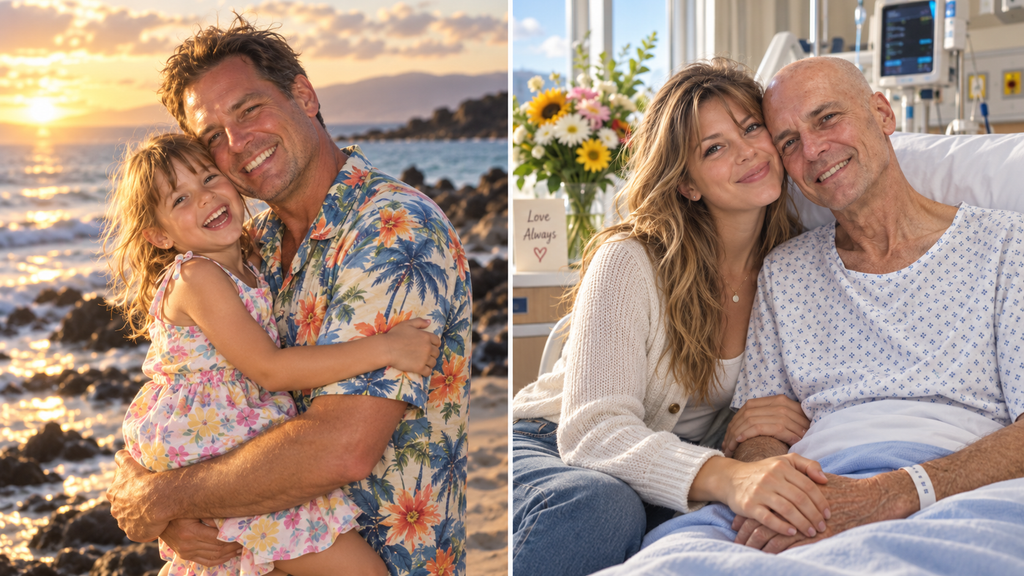
He stayed when he could have walked away.
That was the story I had carried for almost forty years.
The woman standing across from me wiped tears from her cheeks.
“No,” she whispered. “That was the story they gave you.”
I looked again at the photograph.
My mother was young.
Painfully young.
Her hair fell over one shoulder, and she was smiling in that soft, crooked way I remembered from the few photographs I still had of her.
Frank stood beside her.
And the other man—
Daniel—
was holding me.
I looked no older than six months.
Daniel was smiling at the camera as if I belonged in his arms.
My stomach twisted.
“If Frank was my biological father, then who was Daniel?”
The woman lowered herself into a chair.
For the first time, I noticed how badly her hands were trembling.
“My brother.”
I stared at her.
“Daniel was your brother?”
She nodded.
“My name is Margaret. Daniel was my younger brother.”
I looked toward the front door.
Part of me wanted to run.
Frank was dying.
Maybe already dead.
And I was standing inside a stranger’s house listening to her dismantle my entire childhood one sentence at a time.
“I don’t understand.”
“You weren’t supposed to.”
Something in her voice frightened me.
She stood and walked toward an old wooden cabinet.
From the bottom drawer, she removed a faded blue box.
My name was written across the top.
ANNA.
Not printed.
Handwritten.
I recognized the handwriting immediately.
Frank’s.
My knees weakened.
Margaret placed the box on the table between us.
“He gave this to me seventeen years ago.”
“Why?”
“He said if he ever became too sick to tell you the truth himself, I was supposed to keep it safe.”
“Seventeen years?”
“Yes.”
“He knew he was going to tell me someday?”
Margaret looked down.
“I think he hoped he would.”
That hurt more than I expected.
Because suddenly I could imagine Frank sitting alone somewhere, year after year, wondering whether tomorrow would finally be the day he destroyed the story he had built around my life.
I touched the box.
“What’s inside?”
“The reason he lied.”
My fingers froze.
Margaret pushed it gently toward me.
“You should open it.”
I lifted the lid.
Inside were photographs.
Letters.
Documents.
A hospital bracelet.
And beneath everything else, a small silver necklace.
I recognized it instantly.
My mother wore it in almost every photograph from my childhood.
I picked it up.
My hands started shaking.
“I thought this was lost.”
“It wasn’t.”
Margaret’s voice cracked.
“Frank took it from her the night she died.”
I closed my fist around it.
For years, I had remembered my mother’s death only in fragments.
Rain against a window.
Adults whispering.
A neighbor holding me while I cried.
Frank kneeling in front of me.
His face swollen from crying.
Then the funeral.
After that, memories blurred together.
Frank making breakfast.
Frank brushing tangles from my hair because he had no idea what he was doing.
Frank learning how to sew badly enough to repair my stuffed rabbit.
Frank sitting outside my bedroom during thunderstorms.
Frank becoming Dad.
I looked at Margaret.
“Tell me everything.”
She inhaled slowly.
“Your mother met Frank when she was nineteen.”
My heart pounded.
“They fell in love almost immediately. Frank wanted to marry her.”
“Then why didn’t he?”
“Because your grandmother hated him.”
I frowned.
“My grandmother?”
“Yes.”
I remembered my mother’s mother only vaguely.
She had died when I was eleven.
A stern woman.
Perfect hair.
Perfect clothes.
A woman who rarely hugged me but always corrected my posture.
Margaret continued.
“Your grandmother thought Frank wasn’t good enough for her daughter. He was twenty-two, working construction, barely earning enough to pay rent. Your mother came from a family with money.”
That part I knew.
My mother had grown up comfortably.
Frank had not.
“Your grandmother threatened to cut your mother off completely if she stayed with him.”
I stared at the photograph.
“So Mom left him?”
“For a while.”
Margaret hesitated.
“Then she discovered she was pregnant.”
My chest tightened.
“With me.”
“Yes.”
The room became unbearably quiet.
“Did Frank know?”
“Not immediately.”
Margaret reached into the box and removed a folded letter.
The paper had yellowed.
She handed it to me.
My mother’s handwriting covered the page.
I recognized it from old birthday cards.
I unfolded it carefully.
Frank,
I tried to tell you today.
I stood outside your apartment for almost twenty minutes, but I was afraid.
Mom says you will ruin your life trying to take care of me.
She says you will give up everything because that is the kind of person you are.
Maybe she is right.
But there is something you deserve to know.
The baby is yours.
I stopped reading.
The letters blurred.
I pressed the page against my mouth.
The baby is yours.
Me.
I had existed inside my mother while Frank believed she had left him.
“Did he get this?”
Margaret shook her head.
“No.”
“Why?”
“Your grandmother intercepted it.”
I stared at her.
“How do you know?”
“Because she admitted it years later.”
Anger rose through my grief.
“She stole it?”
“She intercepted several letters.”
I looked inside the box.
There were more.
Five.
Ten.
Maybe twenty.
All addressed to Frank.
Some unopened.
Some returned.
My mother had tried again and again.
“Then how did Daniel become involved?”
Margaret closed her eyes briefly.
“My brother loved your mother too.”
I felt suddenly cold.
“Daniel knew she was pregnant?”
“Yes.”
“And he knew the baby wasn’t his?”
“Yes.”
I stood abruptly.
The chair scraped against the floor.
“So everybody knew except Frank?”
“Not everybody.”
“But Daniel knew.”
“Yes.”
“And he agreed to pretend I was his daughter?”
Margaret’s eyes filled with tears.
“At first, he believed he was protecting your mother.”
I laughed once.
It came out bitter.
“Protecting her?”
“Your grandmother told your mother that Frank wanted nothing to do with the baby.”
I stopped.
“What?”
“She lied to both of them.”
The room seemed to shrink.
“She told Frank your mother had chosen Daniel. She told your mother that Frank had been informed about the pregnancy and refused responsibility.”
“No.”
“I’m sorry.”
“No.”
I walked toward the window.
My reflection stared back at me.
A woman who suddenly didn’t know where half her life had come from.
“Frank would never have abandoned me.”
“I know.”
“No. You don’t understand.”
My voice broke.
“He stayed after Mom died. He stayed when he thought I wasn’t even his.”
Margaret’s face crumpled.
“That is exactly why your mother loved him.”
I turned around.
“When did he find out?”
Margaret looked toward the blue box.
“Your first birthday.”
I froze.
“What happened?”
“Daniel disappeared.”
That word struck strangely.
“Disappeared?”
“He left.”
“Why?”
Margaret swallowed.
“My brother was not a bad man, Anna. But he was a weak one.”
She stared at the photograph.
“He loved the idea of rescuing your mother. He thought if he married her, eventually she would love him the way she had loved Frank.”
“Did she?”
“No.”
The answer came immediately.
“Your mother tried. She really did. But you cannot force love.”
Margaret paused.
“Daniel became angry. Jealous. He knew every time she looked at you, she saw Frank.”
My stomach turned.
“One night, they had a terrible argument. Daniel said things he regretted. Your mother finally told him she would never stop loving Frank.”
“What did Daniel do?”
“He left.”
“Just like that?”
“He emptied their bank account and disappeared.”
I sat down again.
I had spent my entire life believing Daniel died before I was old enough to remember him.
That was what I had been told.
“He didn’t die?”
“No.”
My voice was barely audible.
“Where did he go?”
Margaret hesitated.
“California.”
I stared at her.
“He was alive?”
“For another twenty-six years.”
Something inside me cracked.
Twenty-six years.
A man I had mourned in some abstract childhood way had been alive for most of my life.
“Did he ever try to contact me?”
Margaret’s silence answered before her words did.
“Once.”
My heart hammered.
“When?”
“When you were sixteen.”
I remembered sixteen.
My first serious boyfriend.
My first driving lesson.
Frank sitting in the passenger seat gripping the door handle while pretending not to be terrified.
“What happened?”
“He wrote Frank.”
“Why Frank?”
“Because by then Frank was raising you.”
I stared at her.
“How did that happen?”
Margaret gave a sad smile.
“Because after Daniel left, your mother finally found Frank.”
My eyes filled.
“She found him?”
“Yes.”
“She told him?”
“Everything.”
My heart stopped.
“The pregnancy?”
“Yes.”
“The letters?”
“Yes.”
“Daniel?”
“Yes.”
“And Frank learned I was his?”
Margaret nodded.
“He learned you were his daughter when you were thirteen months old.”
I covered my face.
Thirteen months.
Frank had known.
All those years.
He had known.
“Then why did everyone tell me he met Mom when I was four?”
“Because that was when they legally married.”
I lowered my hands.
Margaret continued quietly.
“Your mother was terrified Daniel would return. Legally, he was still listed as your father.”
“On my birth certificate.”
“Yes.”
I remembered seeing it once.
Daniel Thomas Hale.
Father.
“Your grandmother begged them not to expose the truth. She was afraid of scandal. Afraid people would discover what she had done.”
“So Frank agreed to pretend?”
“Not at first.”
Margaret almost smiled.
“Apparently, Frank wanted to stand in the middle of town with a megaphone and announce that you were his daughter.”
Despite everything, a broken laugh escaped me.
That sounded exactly like Frank.
“He wanted his name on your birth certificate. He wanted to marry your mother immediately. He wanted everything corrected.”
“What stopped him?”
“Your mother.”
That surprised me.
“Why?”
“Fear.”
Margaret leaned forward.
“Daniel was still legally her husband.”
My eyes widened.
“They were married?”
“Yes.”
“And when he disappeared, he refused to sign divorce papers.”
I stared at the table.
“So Mom couldn’t marry Frank.”
“Not until years later.”
Pieces began clicking into place.
Frank “married” my mother when I was four because that was when Daniel finally signed the divorce papers.
Not because Frank entered our lives then.
He had already been there.
My entire childhood timeline had been rewritten.
“Why lie to me?”
Margaret’s expression changed.
This was the part she dreaded.
“Because Daniel came back.”
My heartbeat stumbled.
“When?”
“Shortly before your mother died.”
I felt the room tilt again.
“No.”
“He had gotten into serious trouble.”
“What kind?”
“Gambling. Debt. People looking for him.”
Margaret folded her hands.
“He discovered your mother and Frank had built a life together. He also discovered Frank had started a successful contracting company.”
Frank had rarely talked about those early years.
By the time I was ten, his business employed dozens of people.
“He wanted money?”
“Yes.”
“How much?”
“A lot.”
“And if they refused?”
“He threatened to take you.”
My blood turned cold.
“Take me?”
“Legally, Daniel was still named as your father on several documents. Your grandmother had helped maintain the story for years. Daniel threatened to claim Frank had interfered with his family.”
“But Frank was my biological father.”
“Which would have required proving everything publicly.”
“So?”
Margaret looked at me.
“Your mother was afraid.”
I thought of my mother.
Young.
Already sick, though perhaps nobody knew how sick yet.
Trying to protect her child.
“What did Frank do?”
“He paid Daniel.”
Of course he did.
“How much?”
“Everything he could access.”
My eyes burned.
“He bought me?”
“No.”
Margaret’s voice became firm.
“He bought time.”
I looked at her.
“Frank told Daniel he could have the money if he signed papers giving up every claim and disappeared permanently.”
“Did he?”
“Yes.”
“Then why keep lying after that?”
Margaret looked down.
“Because your mother made Frank promise.”
“Promise what?”
“That you would never know.”
I shook my head.
“Why would she want that?”
“Because she was dying.”
Silence.
The word landed differently now.
I had always been told my mother became suddenly ill.
Apparently, that was another softened version of the truth.
“She knew?”
“For months.”
My throat tightened.
“She knew she was dying?”
“Yes.”
Margaret’s voice trembled.
“And she knew you were about to lose her.”
I closed my eyes.
“She didn’t want you to lose your father too.”
“But Frank wasn’t going anywhere.”
“No.”
Margaret reached across the table.
“That was exactly the point.”
I opened my eyes.
“Your mother believed that if you knew Frank was your biological father, eventually you would learn everything else. The lies. Daniel. Your grandmother. The threats. She thought it would poison your childhood.”
“So she asked him to pretend to be my stepfather?”
“Yes.”
“That makes no sense.”
“It made sense to a dying mother trying to simplify a terrible story for a four-year-old.”
Tears spilled down my cheeks.
“She told Frank, ‘Let her believe you chose her.’”
My breath caught.
Margaret’s voice cracked.
“She thought there was something beautiful about that. She said biology would only make you think Frank stayed because he had to.”
I covered my mouth.
All my life, that had been the thing I loved most about Frank.
He stayed.
He had no obligation.
No blood connection.
No legal reason.
Yet he chose me.
Every Father’s Day card I ever wrote him contained some version of the same sentence.
Thank you for choosing me.
And every single time—
he knew.
I suddenly remembered one Father’s Day when I was twelve.
I had made him a terrible card from construction paper.
Inside, I had written:
YOU DIDN’T HAVE TO BE MY DAD, BUT YOU DECIDED TO BE.
Frank had gone into the garage afterward.
I thought he was embarrassed because he was crying.
Now I understood.
“Oh, Dad.”
My voice collapsed.
I bent forward and sobbed.
Not politely.
Not quietly.
I cried like the four-year-old girl I had once been.
Margaret moved beside me and placed a hand on my back.
“He wanted to tell you so many times.”
“Then why didn’t he?”
“Because he promised your mother.”
“She was dead.”
“Yes.”
“But I was alive.”
“I know.”
“He should have told me.”
“Yes.”
For some reason, her agreement made me cry harder.
“He should have told me.”
“Yes.”
“I deserved to know.”
“Yes.”
“I could have told him it didn’t matter.”
Margaret’s hand tightened around mine.
“I think that was what frightened him most.”
I looked at her.
“What?”
“That you would forgive him.”
I stared.
“He had punished himself for the lie for so long that I think part of him believed forgiveness would hurt worse.”
I looked down at the blue box.
There was one envelope at the bottom.
Unlike the others, this one looked newer.
My name was written across it.
Anna.
I reached for it.
“Did Frank write this?”
Margaret nodded.
“Three months ago.”
My fingers trembled as I opened it.
The first line destroyed me.
My Annie,
If you are reading this, then I was a coward until almost the very end.
I stopped.
Annie.
Nobody else had ever called me that.
Only Frank.
I forced myself to continue.
There are a thousand ways I could explain why I lied to you.
I could blame your grandmother.
I could blame Daniel.
I could blame your mother’s last request.
But I was a grown man, and every year after you became old enough to understand, I made the decision again.
I told myself I was protecting you.
Sometimes I was.
Sometimes I was protecting myself.
Because you once told me that the greatest thing I ever did was choose to become your father.
And I was ashamed to tell you that I had been your father all along.
I pressed the letter against my chest.
Margaret quietly left the room.
Perhaps she understood that the rest belonged only to Frank and me.
I kept reading.
Do you remember when you were seven and you broke Mrs. Henderson’s kitchen window with that baseball?
You blamed the neighbor’s dog.
There was no universe in which a dog could have thrown a baseball through a second-story window, but you defended that story like a lawyer.
I knew you were lying.
I also knew why.
You were afraid I would send you away.
That night you asked me whether stepfathers could “quit.”
I told you no.
You asked, “Even if the kid is bad?”
I said, “Especially then.”
What I wanted to tell you was this:
There was nowhere you could ever be sent where I would not come looking for you.
Because you were mine.
You had always been mine.
I laughed through my tears.
I remembered that window.
I remembered Frank staring at the baseball lodged between Mrs. Henderson’s curtains.
Then looking at the dog.
Then looking at me.
“Strong dog,” he had said.
I had nodded solemnly.
“Very.”
He made me apologize the next morning.
I continued.
When you graduated high school, I almost told you.
When you left for college, I almost told you.
The morning of your wedding, I almost told you.
When I held your daughter for the first time, I almost told you.
Every time, I heard your mother asking me to protect the version of your childhood that made you happy.
Maybe I protected it too long.
Maybe love can become cowardice when we use it to justify silence.
If so, forgive me.
Then came the sentence that made me stop breathing.
There is one more thing you need to know.
I looked toward the hallway.
“Margaret?”
She returned.
“There’s more.”
Her face changed.
“Yes.”
“What?”
She sat down slowly.
“Read it.”
I continued.
Daniel contacted me again when you were sixteen.
He wanted to meet you.
I said no.
That decision was mine.
Not your mother’s.
Not your grandmother’s.
Mine.
You may hate me for it.
Maybe you should.
But before you decide, read the letter beneath this one.
I searched inside the envelope.
There was another folded page.
Different handwriting.
Daniel’s.
Frank,
I’m not asking for forgiveness.
I’m asking for one hour.
I want to meet Anna.
I know what you think of me.
Most of it is deserved.
But I have been sober for two years.
I have a job.
I am trying to repair what I can.
I know she is your daughter.
I know I surrendered any right to call myself her father.
I only want to tell her I’m sorry.
Please.
Daniel.
I looked at Margaret.
“He wanted to meet me.”
“Yes.”
“And Frank refused.”
“Yes.”
Anger flashed through me.
For the first time that night, real anger.
Hot.
Sharp.
“He had no right.”
“No.”
“He made that decision for me.”
“Yes.”
“Stop agreeing with me!”
Margaret flinched.
Immediately, I regretted shouting.
“I’m sorry.”
“You don’t have to apologize.”
I stood and paced.
“Why would Frank do that?”
“Read the rest.”
I didn’t want to.
But I did.
Frank’s letter continued.
I told Daniel to stay away from you.
I wish I could tell you it was entirely because I wanted to protect you.
It wasn’t.
I was jealous.
There. That is the ugliest truth.
I had raised you.
I had sat beside your bed through fevers.
I had taught you to ride a bicycle.
I had attended every school play, including the one where you were a tree and had no lines but somehow still forgot when to walk onstage.
I had earned the name Dad one ordinary day at a time.
And I was terrified that Daniel could walk back into your life and take some piece of that from me.
I hated myself for being afraid.
But I was.
So I sent him away.
My anger softened.
Not disappeared.
But changed.
Frank had always seemed enormous to me.
Steady.
Certain.
Unbreakable.
Yet inside him had lived the same frightened human weaknesses as everyone else.
He had been afraid of losing me.
I kept reading.
Three years later, Daniel died.
Cancer.
Margaret called me from California.
Before he died, he gave her something for you.
I told her not to send it.
That was another mistake.
She still has it.
My eyes moved toward Margaret.
She was crying again.
“He left me something?”
She nodded.
Slowly, she reached into the box.
A small cassette tape.
I stared at it.
“You still have this?”
“I promised him I would keep it.”
“Can we play it?”
Margaret stood.
“I kept the recorder too.”
Minutes later, an old cassette player sat between us.
My finger hovered over the button.
I had never heard Daniel’s voice.
A man I had believed was my father.
Then believed was a stranger.
A man who had participated in the lie but later tried to return.
I pressed PLAY.
Static filled the room.
Then a man inhaled.
“Hello, Anna.”
My entire body went still.
His voice was deeper than Frank’s.
Uncertain.
“God, I don’t know how to do this.”
He laughed nervously.
“I’ve recorded this six times.”
A pause.
“You probably know who I am if you’re hearing this.”
Another breath.
“I’m Daniel.”
My eyes closed.
“I was there when you were born. And for the first year of your life, I let people call me your father.”
His voice trembled.
“But I wasn’t.”
Static crackled.
“Frank was.”
I gripped the edge of the table.
“I hated him for that.”
Daniel continued.
“Not because he did anything wrong. Because your mother loved him in a way she never loved me.”
There was a long silence.
“I thought if I gave her enough, she would eventually choose me.”
His voice became quieter.
“That was my first mistake. Thinking love was something you could earn and then possess.”
I glanced at Frank’s letter.
“I left because I was angry. Then I stayed away because I was ashamed.”
Daniel coughed.
“When I came back asking for money, Frank could have destroyed me.”
A pause.
“He didn’t.”
My eyes opened.
“He gave me what I asked for. More than I deserved.”
Daniel’s voice cracked.
“But he made me promise never to hurt you.”
I swallowed.
“I broke many promises in my life, Anna. I kept that one.”
The tape hissed.
“When I got sober, I wanted to meet you.”
“I thought maybe I could explain.”
“Frank said no.”
My chest tightened.
“I was furious.”
Another pause.
“But now…”
Daniel coughed harder.
“I’m dying.”
Silence.
“And dying makes some things look smaller.”
I covered my mouth.
“Frank was afraid I would confuse you.”
“He was probably right.”
“He was afraid I would hurt you.”
“He was definitely right to worry.”
“But mostly…”
Daniel laughed softly.
“He was afraid you might call me Dad.”
I started crying.
“I wish I could tell him he never needed to worry.”
The next words shattered me.
“Because I saw him with you once.”
I froze.
“After you turned sixteen.”
My heart hammered.
“I drove to your town anyway.”
“I know I shouldn’t have.”
“I parked across the street from your school.”
“You came out carrying a backpack and yelling about something.”
Despite myself, I smiled.
“That sounds like me,” I whispered.
Daniel continued.
“Frank was waiting beside his truck.”
“He had two milkshakes.”
My breath caught.
I remembered.
Chocolate.
After my chemistry final.
I had been convinced I failed.
Frank showed up with milkshakes.
“You ran toward him.”
Daniel’s voice cracked.
“And before you even reached him, you yelled, ‘Dad!’”
I pressed both hands against my face.
“He smiled.”
A long pause.
“I knew then.”
“He had won nothing.”
“I had lost nothing.”
“There had never been a competition.”
“He was simply your father.”
The tape hissed.
“I drove away.”
Daniel’s breathing became uneven.
“I hope he was good to you.”
I sobbed.
“He was.”
Margaret reached for my hand.
“I hope you were good to him.”
“I tried.”
“And I hope someday you understand that the people who love us are often imperfect.”
Daniel paused.
“Sometimes terribly imperfect.”
“I’m sorry I was one of them.”
Then came his final words.
“Goodbye, Anna.”
Click.
The tape stopped.
Neither of us moved.
Outside, rain had begun tapping softly against the windows.
Just like the rain in my earliest memory of my mother’s death.
I sat there holding the necklace she had worn and the letter Frank had written.
Two fathers.
One by blood.
One by legal fiction.
Except somehow those definitions had been backward all along.
Eventually, my phone rang.
I looked at the screen.
The hospital.
I knew before answering.
“Hello?”
A nurse spoke softly.
“Anna?”
“Yes.”
“I’m very sorry.”
My eyes closed.
“Your father passed away about twenty minutes ago.”
Your father.
Not stepfather.
Not biological father.
Not anything complicated.
My father.
I whispered, “Was he alone?”
“No.”
I waited.
“One of the nurses was with him.”
Tears rolled silently down my face.
“She said he kept looking toward the door.”
My heart broke.
He had been waiting for me.
“I’m coming.”
I hung up.
Margaret looked at me.
“He’s gone?”
I nodded.
For a moment, she simply stared at the floor.
Then she whispered, “I’m sorry.”
I gathered the letters.
The photographs.
The cassette.
My mother’s necklace.
Then I stopped.
“Margaret.”
“Yes?”
“Why did Frank trust you?”
Her eyes lifted.
A strange expression crossed her face.
“There’s something else.”
I almost laughed.
“Of course there is.”
She reached into the box one final time.
A photograph.
Frank and Margaret.
Much younger.
Standing beside a hospital bed.
My mother lay in it.
And beside her—
Daniel.
All four of them.
“What is this?”
“The night before your mother died.”
My hands trembled.
“Daniel came back?”
“For one night.”
I stared at her.
“He came to say goodbye.”
“But you said—”
“I know.”
Margaret’s eyes filled.
“Your mother asked to see him.”
“Why?”
“To forgive him.”
I shook my head.
“She forgave him?”
“She told him she didn’t want to die carrying hatred.”
I looked at the photograph again.
My mother looked impossibly thin.
Frank stood beside her.
Daniel stood at the foot of the bed.
No one looked happy.
But no one looked angry either.
“What happened that night?”
Margaret smiled through tears.
“Your mother made all three of us promise something.”
“What?”
“That whatever happened after she was gone, nobody would make you pay for the mistakes the adults had made.”
My throat tightened.
“She said you deserved a childhood that wasn’t built around our guilt.”
I touched my mother’s face in the photograph.
For the first time in decades, I felt close to her.
Not to the saintly version people had given me.
To the real woman.
A frightened young mother.
Imperfect.
Desperate.
Loving.
Wrong about some things.
Right about others.
Human.
I drove back to the hospital.
The rain grew heavier.
Frank was still in the room when I arrived.
Someone had removed the machines.
The room looked strangely peaceful without their lights and alarms.
I stood in the doorway.
He looked smaller.
I had never thought Frank could look small.
He had always filled every room.
At six foot two, he had carried me on his shoulders until I was almost too tall.
At my wedding, he had whispered before walking me down the aisle:
“If that boy hurts you, remember I own a shovel.”
I had laughed.
Frank had not.
Now he lay completely still.
I walked to the bed.
Sat beside him.
And took his hand.
It was cold.
“Hi, Dad.”
My voice broke.
“I went.”
Silence.
“I found Margaret.”
I placed my mother’s necklace beside his hand.
“She told me.”
I tried to laugh.
“You really made a mess of this one.”
Tears dropped onto the blanket.
“You should have told me.”
My throat closed.
“You should have trusted me.”
I squeezed his hand.
“I’m angry with you.”
For the first time in my life, saying those words to him felt unbearable.
“But I don’t hate you.”
I bent over his hand.
“I could never hate you.”
My shoulders shook.
“You idiot.”
A sob escaped me.
“You spent your whole life afraid I would stop loving you if I knew you were actually my father?”
I wiped my face.
“Do you know how ridiculous that is?”
I looked at him.
“Blood doesn’t explain the pancakes.”
A broken laugh.
“It doesn’t explain sitting outside my bedroom when I had nightmares.”
“It doesn’t explain driving six hours because my college roommate dumped my birthday cake on the floor and I called you crying.”
“It doesn’t explain learning how to braid hair.”
I laughed again through tears.
“You were terrible at braiding hair.”
I squeezed his fingers.
“You weren’t my father because of biology.”
I leaned closer.
“You were my father because you showed up.”
My voice fell to a whisper.
“Every single time.”
I stayed with him until sunrise.
Three days later, we buried Frank beside my mother.
The church was overflowing.
Former employees.
Neighbors.
Friends.
People I had never met.
A man who said Frank had secretly paid his rent after he lost his job.
A woman whose roof Frank repaired for free after her husband died.
A former employee who told me Frank once drove through a snowstorm to bring him home from rehab.
I had known Frank was good.
I had not known how far his goodness traveled when nobody was watching.
At the funeral, I carried two letters in my purse.
Frank’s.
And Daniel’s.
I read neither aloud.
Some truths belonged to families.
Some belonged to graves.
But when it was my turn to speak, I walked to the front of the church.
For several seconds, I stared at Frank’s coffin.
Then I faced everyone.
“My father lied to me.”
The church became silent.
“He lied to me for almost my entire life.”
I heard someone shift uncomfortably.
I continued.
“And I am angry about that.”
My voice trembled.
“But the strange thing about discovering a lie at the end of someone’s life is that suddenly you have to decide whether the lie defines everything that came before it.”
I looked toward my daughter.
She was crying.
“I don’t think it does.”
I breathed deeply.
“When I was four years old, I believed Frank became my stepfather.”
“That story was wrong.”
“He had actually been my biological father from the beginning.”
Whispers moved through the church.
I smiled through tears.
“But strangely, learning that changed less than you might imagine.”
“Because fatherhood was never the secret.”
“Fatherhood was breakfast.”
A few people smiled.
“It was waiting outside school.”
“It was fixing bicycles.”
“It was answering the phone at two in the morning.”
“It was showing up when showing up was inconvenient.”
“It was staying.”
My voice cracked.
“And Frank stayed.”
I looked at his coffin.
“Dad, you spent your life believing the greatest thing you ever did was hide the truth to protect me.”
I shook my head.
“You were wrong.”
“The greatest thing you ever did was much simpler.”
“You loved me.”
I stepped away from the microphone.
Then stopped.
“One more thing.”
Everyone looked up.
“When I was twelve, I gave Frank a Father’s Day card that said, ‘Thank you for choosing me.’”
My throat tightened.
“For years, I thought discovering the truth meant that sentence was no longer true.”
I looked at him one last time.
“But I understand now.”
“Biology may have made me his daughter.”
“Love made him choose me every day afterward.”
I returned to my seat.
After the funeral, my daughter found me outside.
She was twenty-three then.
Old enough to recognize when her mother was pretending to be strong.
She wrapped her arms around me.
“Mom?”
“Yes?”
“Are you okay?”
I looked toward the cemetery.
“No.”
She waited.
“But I think I will be.”
She nodded.
Then asked the question I had been avoiding.
“Does this change who Grandpa was?”
I looked at her.
“No.”
The answer surprised me with how certain it felt.
“It changes what I know about him.”
I took her hand.
“But not who he was.”
Months passed.
I spent countless nights reading the letters inside the blue box.
Some made me angry.
Some made me cry.
Some made me laugh.
I learned that my mother had once thrown a shoe at Frank during an argument.
I learned Frank proposed to her three separate times.
The first time, she said no.
The second time, she cried.
The third time, she apparently said:
“If you ask me again, Frank, I swear I’ll marry you just to make you stop.”
He asked again.
She married him.
I found photographs of myself as a baby in Frank’s arms.
Hundreds.
Evidence of a childhood I had lived but somehow never been allowed to remember correctly.
One photograph became my favorite.
I was perhaps eighteen months old.
Frank was asleep on a couch.
I was asleep on his chest.
My tiny fist was tangled in his shirt.
Someone had written on the back.
She finally knows where she belongs.
The handwriting was my mother’s.
I framed it.
Then one afternoon, nearly six months after Frank died, I returned to his house.
I had delayed cleaning his bedroom.
I kept telling myself I was busy.
The truth was simpler.
I wasn’t ready.
His slippers still sat beside the bed.
His reading glasses rested on the nightstand.
A half-finished crossword puzzle lay beside them.
I sat on the mattress.
Then I noticed something underneath the bed.
A shoebox.
Of course.
Frank had apparently spent his entire life hiding emotionally devastating objects inside boxes.
I pulled it out.
Inside were cards.
Every card I had ever given him.
Birthday cards.
Christmas cards.
Father’s Day cards.
Even childish drawings.
And there it was.
The construction-paper card from when I was twelve.
YOU DIDN’T HAVE TO BE MY DAD, BUT YOU DECIDED TO BE.
I opened it.
Something had been written underneath my childhood message.
Frank’s handwriting.
Tiny.
Almost hidden.
You have no idea how true this is.
I stared at the sentence.
Then laughed.
Then cried.
Then did both at once.
I carried the card home.
Today, it sits framed beside the photograph of Frank sleeping with baby me on his chest.
People sometimes ask whether I wish he had told me sooner.
The answer is yes.
Absolutely.
Love does not erase dishonesty.
Good intentions do not automatically excuse taking away someone else’s right to know their own story.
Frank was wrong to keep the truth from me for so long.
My mother was wrong to ask him to.
My grandmother was wrong to manipulate everyone.
Daniel was wrong to participate in the deception.
Nobody in that story was perfect.
That became perhaps the most important truth of all.
Because as a child, I believed adults were either heroes or villains.
As an adult, I learned something harder.
Most families are built by imperfect people making decisions with incomplete information, carrying fears they rarely admit, sometimes hurting the people they are desperately trying to protect.
Forgiveness does not mean pretending those choices were right.
It means deciding what you will carry forward.
I carried Frank’s love.
I carried my mother’s necklace.
I carried Daniel’s apology.
And I left their shame behind.
Years later, my daughter had a son.
They named him Franklin.
I cried when she told me.
The first time I held him, he wrapped his tiny fingers around mine.
For one impossible second, I remembered Frank’s hand closing around my wrist in that hospital room.
Promise you’ll listen before you decide to hate me.
I looked down at my grandson.
And finally, after all those years, I answered the question Frank had been too frightened to ask directly.
“No, Dad.”
My daughter looked at me.
“What?”
I smiled through tears.
“Nothing.”
I kissed little Franklin’s forehead.
Then I whispered the words I wished Frank had lived long enough to hear.
“I know everything now.”
I paused.
“And I still choose you.”
Because that was the final truth.
Frank had been wrong about one thing.
He believed blood was the secret that would redefine our relationship.
It wasn’t.
The secret told me where I came from.
But love told me where I belonged.
Frank had been my biological father from the day I was born.
He became my dad every morning afterward.
Every apple pancake.
Every scraped knee.
Every school play.
Every argument.
Every Christmas morning.
Every phone call.
Every ordinary Tuesday when nothing important happened except that he was there.
That was fatherhood.
Not the name written on a certificate.
Not DNA.
Not the story adults invented to make a painful past easier to explain.
It was presence.
It was sacrifice.
It was staying when staying was difficult.
And maybe that was why, in the end, Frank’s greatest secret did not change the most important thing about my life.
I had always known who my father was.
I just hadn’t known why.
And whenever I make apple pancakes for my grandson now, I still use Frank’s old recipe.
Three scoops of flour.
Two eggs.
Too much cinnamon.
Thin slices of apple.
And one completely unnecessary spoonful of brown sugar that Frank always insisted was “the secret.”
The first time little Franklin tasted them, his eyes widened.
“These are really good, Grandma.”
I laughed.
“My dad taught me.”
My daughter looked across the kitchen at me.
For a moment, neither of us spoke.
Then she smiled.
And I realized I could finally say those words without grief swallowing everything behind them.
My dad taught me.
Not my stepdad.
Not the man who raised me.
Not the man who secretly turned out to be my biological father.
Just—
my dad.
The man who loved me imperfectly.
The man who lied when he should have trusted me.
The man who stayed when leaving would have been easier.
The man who carried a promise far longer than he should have.
And the man who, with his final strength, finally gave me the truth.
Sometimes the last thing someone tells you changes everything you thought you knew about them.
And sometimes—
it changes everything except the thing that mattered most.
I loved Frank before I knew the truth.
I loved him after I learned it.
And if there is somewhere beyond this life where the people we lose can somehow hear us, I hope he finally understands what I couldn’t tell him before he closed his eyes.
He never needed to be afraid.
He never needed the lie.
He never needed biology to prove anything.
He had already earned the only name that mattered.
Dad.
And nothing hidden in the past could ever take that away.
THE END! THANK YOU FOR READING!❤️