 Reading Time: 36 minutes
The lawyer slid the wooden box toward me. “He made sure you got exactly what you deserved.” For several seconds, nobody moved.
Russell’s daughter, Vanessa, gave a small laugh from the chair across from me. It wasn’t a happy laugh. It was the kind of laugh people make when they believe they’re about to watch someone else be humiliated.
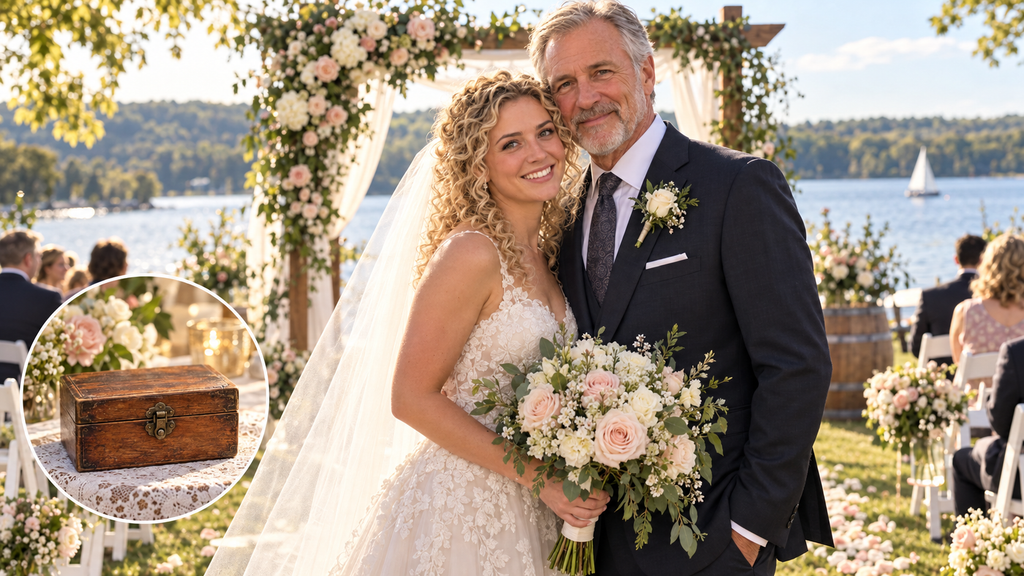
“Oh, this should be good,” she murmured.
Her brother, Mark, leaned back beside her.
He folded his arms across his chest.
Neither of them had spoken to me at the funeral beyond a few cold words.
Now, for the first time all day, they looked almost excited.
I stared at the box.
It was dark walnut.
Old.
Polished smooth around the edges.
There was nothing luxurious about it.
No gold clasp.
No engraving.
No expensive lock.
Just a small wooden box that looked as though it could have been purchased at a flea market.
My stomach tightened.
I looked at Russell’s attorney.
“Mr. Hale…”
He gave me a gentle nod.
“Open it.”
Vanessa immediately smiled.
“Please do.”
I could hear the satisfaction in her voice.
For years, she had believed I was waiting for exactly this moment.
The funeral.
The attorney.
The inheritance.
The money.
She had once told one of Russell’s friends, not realizing I was standing within earshot, that I probably checked Russell’s pulse every morning hoping today would finally be payday.
I never told Russell she said that.
I couldn’t.
He loved his children.
Whatever problems existed between them, I never wanted to become the reason they stopped speaking entirely.
So I swallowed those words.
Just like I had swallowed so many others.
I placed my hands on the box.
They were trembling.
I hated that.
I hated giving Vanessa the satisfaction of seeing me nervous.
The lid creaked softly when I opened it.
I looked inside.
And stopped breathing.
There was no cash.
No jewelry.
No stock certificate.
No property deed.
There was a shoe.
An old black shoe.
Cheap.
Scuffed.
Worn almost completely through at the heel.
For one second, I didn’t understand what I was seeing.
Then my hand flew to my mouth.
“Oh my God.”
Vanessa frowned.
Mark leaned forward.
“What is that?”
I reached into the box with shaking fingers.
I knew that shoe.
Of course I knew it.
I had worn it the night I met Russell.
The charity dinner.
I had been standing for nearly seven hours by the time Russell approached my section.
My feet had been killing me.
Those shoes were two sizes cheaper than anything designed for comfort.
I had bought them at a discount store because the catering company required black dress shoes and I couldn’t afford anything better.
By the end of the evening, one heel had split.
I remembered limping while carrying a tray of champagne.
I remembered trying desperately to hide it because if my supervisor saw me struggling, she might send me home.
And I desperately needed that shift.
Three hundred dollars.
Three hundred dollars had meant the difference between making rent and falling short.
Russell had looked at me that night and asked my name.
Then he glanced down and said,
“Are your feet hurting?”
Nobody else noticed.
Not the event organizers.
Not the wealthy guests.
Not my coworkers.
Russell did.
I had laughed and said,
“I’ll survive.”
He had looked at my shoes again.
Then at me.
“You shouldn’t have to suffer quietly just because everyone around you is too busy to notice.”
At the time, I thought it was merely a kind thing an older gentleman had said.
I had no idea those words would change my entire life.
And now…
One of those shoes was sitting in the box.
I lifted it carefully.
There was an envelope underneath it.
My name was written across the front.
Not typed.
Written.
In Russell’s handwriting.
ANNA.
My vision blurred immediately.
“Oh…”
My voice broke.
Vanessa’s expression changed.
Only slightly.
But I saw it.
“What is that?” she asked.
I didn’t answer.
I touched Russell’s handwriting with my fingertips.
Suddenly, I wasn’t sitting in a lawyer’s office.
I was sitting beside Russell’s hospital bed four weeks earlier.
His body had become frighteningly thin.
His skin almost gray.
His hands cold.
He had looked at me one evening and said,
“Anna?”
“Yes?”
“Do you regret marrying me?”
I had forced a smile.
“What kind of question is that?”
“A serious one.”
I squeezed his fingers.
“No.”
He studied my face.
Russell had always done that.
He didn’t merely listen to words.
He watched your eyes while you said them.
Then he whispered,
“You know, I never blamed you.”
“For what?”
“For wanting to feel safe.”
I had stared at him.
He smiled weakly.
Then closed his eyes.
I didn’t understand what he meant.
Not then.
Now, sitting in the lawyer’s office, I suddenly wondered whether I was about to understand everything.
Mr. Hale spoke quietly.
“Russell asked that you read the letter aloud.”
Vanessa scoffed.
“Of course he did.”
Mr. Hale looked at her.
His expression hardened.
“Your father was very specific.”
That silenced her.
I opened the envelope.
Inside were several sheets of thick cream-colored paper.
Russell’s handwriting filled every page.
I unfolded the first sheet.
My throat tightened so badly that the first words barely came out.
“Anna…”
I stopped.
My eyes filled.
Mr. Hale waited.
Nobody rushed me.
I swallowed and started again.
“Anna.
“If you’re reading this, then I finally managed to leave a room before you did.
“I always hated doing that.”
My lips trembled.
I could hear Russell saying it.
That dry humor.
That quiet voice.
That little smile that came whenever he knew he had said something clever.
I continued.
“You spent six years telling me I snored.
“I spent six years denying it.
“Now I suppose you win that argument permanently.”
A sound escaped me somewhere between a laugh and a sob.
Mark looked down.
Vanessa didn’t.
She stared straight at me.
I kept reading.
“There is something I should have told you while I was alive.
“I knew.”
The room seemed to become very still.
I read the next line.
“I knew why you married me.”
Vanessa’s eyes widened.
Then she sat back.
A slow smile appeared.
There it was.
The moment she had been waiting for.
I felt the blood drain from my face.
Russell continued.
“I knew before the wedding.
“I knew before I proposed.
“And Anna, if my children are sitting in the room right now, I imagine Vanessa has suddenly become very interested in this letter.”
Vanessa’s smile disappeared.
Mark turned toward her.
Mr. Hale lowered his eyes, almost hiding a reaction.
Despite myself, I laughed softly.
Russell.
Even dead, he somehow knew exactly how that room would look.
I continued.
“Vanessa, please allow Anna to finish before you begin yelling.
“You will have plenty of time afterward.”
Vanessa’s jaw clenched.
I kept reading.
“When I met Anna, she was frightened.
“She hid it well.
“Most people would never have noticed.
“But loneliness teaches you to notice things other people miss.
“I saw the way she checked her phone whenever she thought no one was looking.
“I saw the banking notification she quickly swiped away.
“I saw her put leftover bread from the catering table into a napkin at the end of the night.
“I saw the broken heel on her shoe.
“And I recognized something in her.
“Fear.”
My eyes burned.
I remembered that night.
I remembered taking those rolls home.
Two dinner rolls and half a piece of chicken.
That had been my breakfast the following morning.
Russell had noticed.
Of course he had.
I continued.
“When you have been wealthy for a long time, people assume you cannot recognize financial fear.
“They are wrong.
“My father lost his hardware store when I was thirteen.
“For eleven months, my family lived in my aunt’s basement.
“I remember watching my mother count coins on the kitchen table.
“I remember pretending I wasn’t hungry because I knew there wasn’t enough food.
“I remember the sound of fear in my parents’ voices when they thought the children were asleep.
“So yes.
“I knew why financial security mattered to Anna.”
Vanessa interrupted.
“So he admits it.”
Mr. Hale immediately raised one hand.
“Your father requested no interruptions.”
“But—”
“No interruptions.”
Vanessa glared at me.
I looked back at the letter.
“I knew Anna was relieved when she discovered I was wealthy.
“I knew that my financial position influenced her decision to accept my invitation to dinner.
“I knew it influenced her decision to continue seeing me.
“And yes, I knew it influenced her decision to marry me.”
My hands began shaking harder.
Hearing the truth written so plainly hurt more than I expected.
Because it was true.
At thirty-two, I hadn’t been dreaming about romance.
I had been dreaming about sleeping through one night without worrying.
I had owed nearly $48,000.
Medical bills from my mother’s final illness.
Credit cards I used when I had no other choice.
A personal loan with an interest rate that made me sick every time I looked at it.
Rent.
Utilities.
Car repairs.
Life.
Russell knew.
I continued.
“Anna once asked me whether it bothered me that people assumed she married me for money.
“I told her no.
“That wasn’t entirely true.
“It bothered me because I knew part of it was true.
“But what bothered me more was that everyone acted as though wanting security made her evil.
“People marry for dozens of reasons.
“Loneliness.
“Family expectations.
“Pregnancy.
“Comfort.
“Fear of being alone.
“Status.
“Habit.
“Some even marry because the other person is beautiful and they enjoy looking at them.
“No one seems particularly shocked by those things.
“But when a poor woman admits that financial safety mattered to her, suddenly everyone becomes deeply moral.”
Vanessa shifted uncomfortably.
Mark stared at the carpet.
I continued.
“I was sixty-two.
“Anna was thirty-two.
“I was not confused.
“I was not senile.
“I did not believe a beautiful thirty-two-year-old waitress had fallen madly in love with me during the twelve minutes it took me to finish a glass of champagne.
“I knew exactly what the arrangement looked like.
“What my children never understood was that I had reasons for marrying Anna too.”
That line made me stop.
My heart thudded.
Russell had reasons?
I kept reading.
“I was lonely.
“Desperately lonely.
“The house everyone thought Anna wanted so badly felt like a tomb before she moved into it.
“After Margaret died, there were mornings when I would walk downstairs and realize I had not spoken aloud in two days.
“I had money.
“Cars.
“Properties.
“Investments.
“Employees who answered my calls within two rings.
“And nobody to ask whether I slept well.
“Nobody cared whether I ate dinner.
“Nobody noticed if I spent an entire Sunday sitting in the library.
“My children loved me.
“I know they did.
“But they had lives.
“And somewhere along the way, our conversations became mostly about schedules, business, trust accounts, tuition, mortgages and holidays.”
Mark closed his eyes.
Vanessa stared at the wall.
Russell continued.
“Anna wanted safety.
“I wanted companionship.
“We were both getting something.
“That is the truth.
“And perhaps that is not the romantic beginning people prefer.
“But beginnings are not endings.”
I stopped again.
A tear fell onto the page.
I wiped it away quickly.
Russell’s handwriting blurred.
I knew what came next before I read it.
I could feel it.
“At first, Anna slept carefully on her side of the bed.
“She always thanked the housekeeper.
“She asked before eating anything expensive from the pantry.
“For the first three months, she kept every receipt because she believed I might ask what she had spent.
“She once apologized for buying a seventeen-dollar bottle of shampoo.”
My face crumpled.
I remembered that.
Russell had laughed so hard.
Seventeen dollars had felt extravagant to me then.
He had opened the bathroom cabinet the following morning and placed four bottles inside.
I accused him of being ridiculous.
He told me,
“No woman living in this house will ever apologize to me over shampoo.”
The memory destroyed me.
I covered my mouth and tried to breathe.
The office disappeared behind tears.
Mr. Hale pushed a box of tissues toward me.
I took one.
Vanessa remained silent.
I read.
“Then something changed.
“I don’t know exactly when.
“Maybe it was the morning I caught influenza and Anna slept on the bathroom floor because I refused to go to the hospital and she was afraid I would fall.
“Maybe it was when she learned how to make Margaret’s Christmas pudding because she knew I missed it.
“Maybe it was when she started leaving crossword puzzles beside my coffee every Sunday morning.
“Maybe love does not always announce itself.
“Maybe sometimes it simply enters a room quietly and starts putting your medicine beside a glass of water.”
I cried openly then.
I couldn’t stop myself.
Six years of memories crashed through me.
Russell falling asleep in his reading chair.
Russell dancing badly in our kitchen.
Russell pretending not to like reality television and then secretly watching the episodes I missed.
Russell buying birdseed even though he complained constantly about birds waking him up.
Russell holding my hand beneath the table during uncomfortable dinners with his children.
Russell calling me from the grocery store because he couldn’t remember what kind of yogurt I liked.
Russell.
My husband.
Not my wealthy husband.
Not my old husband.
Not the man people whispered about.
Just Russell.
I forced myself to continue.
“By the time I became sick, I knew something else too.
“If Anna had married me only for my money, she had already earned every dollar.”
Vanessa stiffened.
The letter continued.
“During the last year, I watched my wife become my nurse.
“I watched her learn medication schedules.
“I watched her argue with insurance companies even though we did not need the money, simply because she believed people shouldn’t be charged incorrectly.
“I watched her sleep in hospital chairs.
“I watched her wash my hair when I became too weak to stand in the shower.
“I watched her feed me soup by teaspoon when swallowing hurt.
“And I watched her turn away every time she cried because she did not want me to see how frightened she was.”
I lowered the paper.
I couldn’t continue.
Not yet.
My entire body shook.
Those final six weeks had been unbearable.
Russell had been diagnosed with aggressive pancreatic cancer.
By the time doctors discovered it, it had already spread.
There were treatments.
There were discussions.
There were specialists.
There were phone calls at midnight.
There was always another option until suddenly there wasn’t.
And through all of it, I kept pretending I believed he was going to survive.
Not because I was stupid.
Because saying the truth aloud felt like killing him early.
One night, three weeks before he died, Russell woke me around two in the morning.
“Anna?”
I sat up instantly.
“What’s wrong?”
“I need you to promise me something.”
“Anything.”
“When this is over, don’t let them convince you it wasn’t real.”
I had started crying.
“What are you talking about?”
“Us.”
“Russell…”
“Promise me.”
I pressed my forehead against his hand.
“It was real.”
He smiled.
“I know.”
At the time, I thought he was frightened of dying.
Now I realized he had been preparing me for this room.
I picked up the letter again.
“Vanessa and Mark…”
My voice cracked.
Both of them looked at me.
“This next part is addressed to you.”
Vanessa crossed her arms.
I continued.
“I know you believed Anna was waiting for me to die.
“I know because both of you told me.”
Mark flinched.
Vanessa’s face went pale.
“You also warned me repeatedly that she would disappear the moment caring for me became unpleasant.
“You were wrong.
“When the doctors told me I had weeks rather than years, I gave Anna an opportunity to leave.”
I looked sharply at Mr. Hale.
He nodded.
My mind flew back to a conversation I had tried very hard to forget.
Russell had called me into his study shortly after the diagnosis.
Mr. Hale had been there.
So had another attorney I didn’t know.
On the desk was a document.
Russell told me he had created an account containing two million dollars.
The money would become mine immediately if I wanted to end the marriage.
No argument.
No shame.
No questions.
He said he didn’t want me spending the next months watching him die if that wasn’t the life I wanted.
I had become furious.
I tore the unsigned document in half.
Then tore it again.
Then threw the pieces at him.
I didn’t speak to Russell for almost six hours.
That night, he came into the bedroom.
He sat beside me.
“I’m sorry.”
“You should be.”
“I needed to know.”
“That’s cruel.”
“Yes.”
“Did you think I was going to take it?”
“I didn’t know.”
I had looked at him then.
Really looked at him.
The fear underneath everything.
Not fear that I would take his money.
Fear that I wouldn’t stay.
I put my hand on his cheek.
“You stupid man.”
He smiled.
“I’ve been called worse.”
“You’re stuck with me.”
And Russell cried.
It was the first time I had ever seen him cry.
Now his letter revealed the rest.
“Anna refused the money.
“She did not ask whether refusing would affect her inheritance.
“She did not ask what she would receive in my will.
“She did not even read the document.
“She tore it into four pieces, called me an arrogant old bastard, and refused to speak to me until dinner.”
Mark looked at me.
“You really did that?”
I wiped my face.
“He left out a few words.”
For the first time, Mark almost smiled.
Even Vanessa looked startled.
I returned to the letter.
“I deserved every word.
“After that day, I never doubted her again.
“And neither should anyone else.”
Vanessa suddenly stood.
“This is ridiculous.”
Mr. Hale looked up.
“Vanessa.”
“No.”
Her eyes were wet now.
But her anger was stronger.
“No. Dad was sick. He was emotional. She was there every day. Of course he started believing whatever she told him.”
I stared at her.
“I never asked him for anything.”
She looked at me.
“You didn’t have to.”
“Vanessa—”
“You were thirty-two!”
Her voice echoed through the office.
“He was sixty-two!”
“I know.”
“You expect me to believe you loved him?”
I stood slowly.
“I don’t expect you to believe anything.”
Her breathing grew ragged.
“All those years you were waiting.”
“For what?”
“This!”
She pointed toward the box.
“The house. The money. The accounts. Everything.”
Something inside me finally snapped.
Not loudly.
Not violently.
I simply became tired of apologizing for something that had stopped being true years ago.
So I looked at her and said the words I had never said.
“Yes.”
Vanessa froze.
Mark stared at me.
Even Mr. Hale looked surprised.
I continued.
“Yes. Money was part of the reason I married your father.”
Vanessa’s expression twisted in triumph.
“I knew it.”
“I was terrified.”
She stopped.
“I was thirty-two years old and drowning.
“I had collection agencies calling me almost every day.
“My landlord had increased the rent.
“My mother had died owing medical bills I had put on credit cards because I couldn’t stand watching her go without medication.
“My car barely ran.
“I worked doubles.
“I skipped meals.
“I had $114 in savings the week I met your father.”
My voice shook.
“But I never pretended money didn’t matter.”
Vanessa opened her mouth.
I raised my hand.
“You asked whether I loved him.”
The room became silent.
“I didn’t love him when I married him.”
Mark inhaled sharply.
“I liked him.
“I respected him.
“I felt safe around him.
“And yes, I knew marrying him meant I would never have to choose between rent and groceries again.”
Tears filled my eyes.
“But somewhere between our wedding and losing him…
“I fell completely in love with your father.”
Vanessa looked away.
I kept going.
“I loved how he hummed when he cooked even though he couldn’t carry a tune.
“I loved the way he pretended he hated my cat and then bought her a heated bed.
“I loved how he cut the crusts off his sandwiches like a six-year-old.
“I loved that he kept peppermints in every coat pocket.
“I loved that he called everyone under forty ‘kid’ even when they were doctors.”
Mark’s eyes dropped.
I smiled through tears.
“I loved that he left the bathroom light on every single night because he knew I hated walking through a dark hallway.
“I loved that whenever we argued, he would come back twenty minutes later and ask whether I wanted tea as if tea was some kind of international peace treaty.”
Mark suddenly laughed.
A broken little laugh.
“Yeah.”
I looked at him.
“He did that with Mom too.”
For the first time since Russell’s funeral, Mark and I looked at each other without hostility.
“He told me,” I whispered.
Mark wiped his eyes.
Vanessa turned away.
I continued.
“And I loved him when money could no longer save him.
“That was the part none of you saw.
“Do you know what your father asked for the night before he died?”
Neither answered.
“Orange juice.”
Vanessa looked at me.
“He hadn’t been able to eat in almost two days.
“Suddenly, at eleven thirty that night, he said he wanted orange juice.
“I ran downstairs like a lunatic.
“I opened the refrigerator and realized we were out.”
My voice broke.
“So I drove to a twenty-four-hour store.
“I bought six different kinds because I didn’t know which one he would want.”
Mark covered his mouth.
“I came home.
“I poured a glass.
“I put a straw in it.
“And by then he couldn’t drink.”
Silence.
“He apologized to me.”
I laughed through tears.
“Can you imagine?
“He was dying and he apologized because I had gone to the store for nothing.”
Vanessa’s face had changed completely.
“He said, ‘Sorry, sweetheart.’
“And I told him it was okay.
“I told him I would drink it.”
I wiped my cheeks.
“There are still five cartons of orange juice in our refrigerator.”
That did it.
Mark began crying.
Not quietly.
He bent forward and put his face in his hands.
Vanessa stood completely still.
Her eyes were red.
But she still wouldn’t look at me.
I sat down.
Nobody spoke for nearly a minute.
Finally, Mr. Hale cleared his throat.
“There is more.”
I looked at the letter.
I had almost forgotten.
I continued reading.
“If the three of you have finished arguing, I would like to discuss my estate.”
Despite everything, a stunned laugh escaped Mark.
“That sounds like Dad.”
I nodded.
It did.
I continued.
“I signed my current estate plan fourteen months before my diagnosis.
“My health was good.
“I underwent an independent capacity evaluation at the request of counsel.
“So before anyone spends money challenging this document, understand that I anticipated the possibility.”
Vanessa looked at Mr. Hale.
He nodded.
“Your father did.”
She sat slowly.
I kept reading.
“Mark and Vanessa, neither of you has been disinherited.”
Vanessa’s expression softened slightly.
“You each received substantial trusts when you turned thirty.
“I paid for your education.
“I assisted with your homes.
“I transferred minority shares of the family company to each of you years ago.
“You are not poor.
“You are not abandoned.
“And you are not being punished.”
Mark wiped his eyes.
“But you are adults.
“And my death is not meant to become the final financial transaction between us.”
I took another breath.
“Mark, you will receive my collection of vintage cars because you are the only person who ever pretended to enjoy listening to me discuss carburetors for three consecutive hours.”
Mark laughed again.
“And because I know you secretly loved that ridiculous green Jaguar even though you called it an old man’s toy.”
Mark’s eyes widened.
“The Jag?”
Mr. Hale nodded.
“All six vehicles.”
Mark whispered something I couldn’t hear.
I continued.
“Vanessa, your mother’s jewelry belongs to you.”
Vanessa went completely still.
Every trace of anger left her face.
“I know you believed I might give it to Anna.
“I never intended to.
“Those pieces belonged to your mother.
“One day, if you choose, they should belong to your daughter.”
Vanessa lowered her head.
The first tear dropped from her face.
“And before you become angry at Anna for receiving something else, know that she repeatedly told me the jewelry should remain yours.”
Vanessa looked at me.
I said nothing.
It was true.
Russell once offered me Margaret’s sapphire earrings for our anniversary.
I refused.
I told him those earrings belonged to Vanessa’s memories of her mother.
Three days later, Russell bought me earrings I liked far more.
Small silver stars.
They cost less than Margaret’s sapphires by several thousand dollars.
I wore them almost every day.
Vanessa stared at me for several seconds.
Then looked down again.
I continued reading.
“The controlling shares of my company will transfer to the Russell Mercer Foundation under the governance structure already established.
“No individual family member will control it.
“I built that company with thousands of employees.
“I refuse to have their futures determined by an inheritance dispute.”
Mr. Hale removed a folder from his desk.
Vanessa frowned.
“So who gets the money?”
Mr. Hale answered.
“A substantial portion of your father’s investment assets will also transfer to the foundation.”
Her eyes widened.
“How substantial?”
Mr. Hale didn’t answer immediately.
“Approximately forty-two million dollars at current valuation.”
Vanessa stared at him.
“Forty-two million?”
“Yes.”
“To charity?”
“To the foundation.”
Mark leaned back.
“Dad always said…”
Mr. Hale nodded.
“He meant it.”
Vanessa looked overwhelmed.
Then her eyes moved toward me.
“What does she get?”
The question hung in the air.
There it was.
The question everyone had been circling from the beginning.
What did I get?
The gold digger.
The young wife.
The woman who supposedly spent six years waiting for payday.
Mr. Hale looked at me.
Then at the box.
“Continue reading.”
My heart began pounding.
I looked at Russell’s final page.
“Anna…”
I whispered.
“Now we come to you.”
My fingers tightened around the paper.
“You once told me the thing you wanted most in life was to stop being afraid.”
I closed my eyes.
I remembered.
It was one of our first dates.
Russell had asked what I would do if I suddenly had enough money to do anything.
Travel?
Buy a mansion?
Open a business?
I told him none of those things.
I said,
“I think I’d just stop being scared.”
He had looked confused.
“Scared of what?”
“Everything.”
“What does that mean?”
“It means I’d like to know that if my car breaks, I can fix it.
“If I get sick, I can go to a doctor.
“If the refrigerator stops working, I can replace it.
“If I lose my job, I won’t lose my home thirty days later.
“I don’t want diamonds.
“I want one year where nothing ordinary has the power to destroy my life.”
Russell never forgot.
I read the next line.
“So that is what I am leaving you.
“Not wealth.
“Freedom from fear.”
My throat closed.
“The house is yours.”
Vanessa inhaled sharply.
I stopped.
The house.
The enormous stone house everyone assumed I had coveted from the beginning.
Our house.
The breakfast table where Russell did crosswords.
The library where we danced badly on our first anniversary.
The bedroom where I held him while he died.
I continued.
“The property is owned without debt.
“All taxes and maintenance costs for the next twenty years have been funded through a separate trust.”
I started crying again.
“In addition, Anna will receive my personal investment portfolio outside the foundation.”
Vanessa looked immediately at Mr. Hale.
“How much?”
Mr. Hale answered quietly.
“At yesterday’s valuation, approximately eleven point eight million dollars.”
Nobody spoke.
I stared at him.
I genuinely believed I had misheard.
“Excuse me?”
“Approximately eleven million eight hundred thousand dollars.”
My hands went cold.
“No.”
Mr. Hale looked surprised.
“What?”
“No.”
I shook my head.
“No, that can’t be right.”
Vanessa laughed bitterly.
“Oh, come on.”
I ignored her.
I looked at Mr. Hale.
“Russell told me most of his money was going to the foundation.”
“It is.”
“That’s…”
I couldn’t even form the sentence.
Eleven million dollars.
I had once cried in a grocery store parking lot because my debit card declined over $27.
Eleven million dollars did not feel like a number.
It felt like someone describing the distance between planets.
Mr. Hale nodded toward the letter.
“Keep reading.”
I looked down.
“I can already hear you saying it is too much.
“So let me save you the trouble.
“No.”
A laugh burst through my tears.
Mr. Hale smiled.
Mark did too.
Russell continued.
“You are not giving it back.
“You are not apologizing for it.
“You are not allowing anyone to make you ashamed of receiving it.
“And if you donate every dollar the day after probate closes, I will personally haunt you.”
I laughed so hard I had to lower the letter.
Mark laughed with me.
Even Mr. Hale smiled.
Vanessa didn’t.
But she wasn’t glaring anymore.
I continued.
“That money is not payment for being my wife.
“It is not payment for caring for me.
“And it is not a prize for passing some moral test.
“It is simply part of what we built together, and I want you to have it.
“You entered our marriage wanting security.
“You gave me something money could never buy.
“You made my house a home again.”
My vision blurred completely.
“You made me laugh again.
“You made me angry.
“You made me eat vegetables.
“You made me attend a ridiculous pottery class where I produced what remains the ugliest bowl in North America.”
I laughed.
That bowl was still in our kitchen.
Russell refused to throw it away.
He insisted it had “character.”
It looked like an ashtray hit by a truck.
“You convinced me to travel places I would never have gone.
“You brought music back into rooms that had been quiet too long.
“You remembered Margaret’s birthday every year and never once became jealous that part of me still loved her.”
Vanessa raised her head.
I read more slowly.
“That mattered more than you knew.”
Vanessa covered her mouth.
I continued.
“And when dying stripped away every comfortable thing my money could buy, you stayed.
“When I smelled like medicine, you stayed.
“When I became frightened, you stayed.
“When I became difficult, you stayed.
“When I no longer looked like the wealthy man who walked into that charity dinner, you stayed.”
My voice failed.
I pressed the letter against my chest.
I couldn’t breathe.
Mr. Hale gave me time.
Finally, I looked down again.
“There is one last thing in the box.”
My eyes moved toward it.
Beneath the letter was a small brass key.
I picked it up.
I knew it immediately.
“The lake house,” I whispered.
Mark looked at me.
“What?”
I stared at the key.
Russell owned a small cabin about three hours outside the city.
Compared to his other properties, it was nothing.
Two bedrooms.
Old wooden floors.
A dock.
A kitchen that hadn’t been remodeled since the 1990s.
No staff.
No security gate.
No marble.
No heated pool.
Russell loved it.
So did I.
We spent our first Christmas alone there.
We burned dinner.
The power went out during a snowstorm.
We drank wine beside the fireplace and ate peanut butter crackers.
Russell later told me it was the best Christmas of his adult life.
I unfolded the final paragraph.
“The lake house is also yours.
“Not because it is valuable.
“It isn’t, comparatively.
“But because it is where you finally told me you loved me.”
I covered my face.
I remembered every second.
We had been married nearly ten months.
Russell was standing barefoot in the kitchen, trying unsuccessfully to flip pancakes.
He burned one.
Then another.
He looked so offended by the frying pan that I started laughing.
“What?”
“Nothing.”
“You’re laughing at me.”
“I am not.”
“You absolutely are.”
Then he smiled.
And I said it.
Without planning.
Without thinking.
“I love you.”
The room became silent.
Russell froze.
I froze.
He stared at me.
“What did you say?”
I panicked.
“Nothing.”
“Anna.”
“I said your pancake is burning.”
“You absolutely did not.”
Then he crossed the kitchen.
He held my face in both hands.
And for the first time since we married, Russell kissed me like a man who believed I was truly his wife.
I read his final lines.
“That cabin is where I understood you no longer stayed because you were afraid of being poor.
“You stayed because leaving would hurt.
“Keep it.
“Sell the big house if it becomes too full of ghosts.
“Keep the cabin if you can.
“The sunsets are better there anyway.”
My tears fell onto the paper.
“And now, Anna…
“We have finally reached the answer.
“What do you deserve?”
I waited.
The room waited.
“You deserve the same thing every frightened person deserves.
“A chance to stop living in fear.
“You deserve the same thing every lonely person deserves.
“To know you mattered to someone.
“You deserve to know that I understood exactly how our story began…
“And loved you completely because of how it ended.”
I pressed one hand against my mouth.
The last lines were written shakier than the rest.
Russell must have written them near the end.
“I did not rescue you, Anna.
“Do not let anyone tell you that.
“You rescued yourself long before I arrived.
“I simply had the privilege of giving you somewhere safe to rest.
“And you did something far greater for me.
“You gave an old man another life after he believed the best parts of his first one were already over.
“That was your gift to me.
“This is mine to you.
“Live.
“Spend some money.
“Take ridiculous vacations.
“Buy the expensive shampoo.
“Feed the cat too much.
“Keep arguing with people when you know you’re right.
“Fall in love again someday if you can.
“Yes, I mean that.
“I will be dead, not unreasonable.”
A sound somewhere between a sob and a laugh escaped me.
“Most importantly, stop apologizing for surviving.
“You have done enough of that.
“I love you.
“Exactly as you are.
“Russell.”
The letter slipped from my hands.
I broke.
There is no elegant way to describe grief like that.
I didn’t cry beautifully.
I didn’t wipe away a single dignified tear.
I folded forward in the chair and sobbed.
Deep, ugly sobs tore through my chest.
For six weeks, I had been strong because Russell needed me strong.
Then I had been strong for the funeral.
Strong while people whispered.
Strong while Vanessa looked at me like I had stolen something from her.
Strong while strangers watched me to see whether my grief looked convincing enough.
But there, with Russell’s final words lying in my lap, I couldn’t be strong anymore.
I felt someone touch my shoulder.
At first, I assumed it was Mr. Hale.
Then I looked up.
It was Mark.
He stood beside me with tears streaming down his face.
“I’m sorry,” he whispered.
I stared at him.
He swallowed.
“I’m so sorry.”
That nearly broke me again.
Mark knelt beside the chair.
“I should have come more.”
I shook my head.
“Mark—”
“No.”
His voice cracked.
“I kept telling myself Dad had you.
“So I didn’t need to go.”
He wiped his face roughly.
“Every time you called and said he was tired, I thought there would be another weekend.”
“There wasn’t much time.”
“I know.”
He looked devastated.
“I thought we had years.”
“So did I.”
Mark lowered his head.
“I was angry at you because it was easier.”
I didn’t understand.
He looked up.
“When Mom died, Dad changed.
“You came along and suddenly he was traveling again.
“Laughing again.
“He stopped calling me every Sunday because he wasn’t sitting home alone anymore.”
His face twisted.
“And some part of me hated you for that.”
I whispered,
“Why?”
“Because I thought you replaced us.”
My heart hurt.
“Oh, Mark.”
“I know it sounds stupid.”
“It doesn’t.”
“I kept thinking, ‘Who is this woman? Why does she get this new version of Dad?’
“And then when he got sick…”
He struggled to continue.
“I convinced myself you were going to benefit from the worst thing that ever happened to us.”
I reached for his hand.
“But you lost him too.”
He looked at me.
“Yes.”
“That’s the part I refused to see.”
We sat like that for several seconds.
Then Vanessa’s voice came from across the room.
“Did he ever ask for me?”
Everything stopped.
I looked at her.
She was still sitting in the chair.
But she looked nothing like the angry woman who had entered the office.
She looked like a daughter who had just buried her father.
Small.
Lost.
“Did he?”
I swallowed.
“Yes.”
Her lips trembled.
“When?”
“Almost every day.”
She turned her face away.
“He knew I was angry.”
“Yes.”
“Did he know why?”
“I think so.”
Vanessa wiped one tear angrily.
“I told him not to marry you.”
“I know.”
“I told him he was embarrassing himself.”
“I know.”
Her voice became smaller.
“I said terrible things.”
I didn’t answer.
Because that was true too.
She stared at her hands.
“I thought you were using him.”
“I know.”
“Maybe part of me still thinks…”
She stopped.
I waited.
Finally she said,
“I don’t know what I think.”
“That’s okay.”
She looked at me sharply.
“Why are you being nice to me?”
I almost laughed.
“I’m not trying to be nice.”
“Then what?”
“I’m tired, Vanessa.”
That answer seemed to surprise her.
“I buried my husband this morning.
“I don’t have the energy to win a fight against his daughter.”
She looked down.
“I hated you.”
“I know.”
“Sometimes I still do.”
“I know.”
“You took so much of his time.”
I felt something ache in my chest.
“Maybe.”
“I would call and he’d say you two were traveling.
“Or having dinner.
“Or going somewhere.”
Her mouth trembled.
“And I kept thinking he had forgotten us.”
I leaned forward.
“He never forgot you.”
“You don’t know that.”
“Yes, I do.”
“How?”
“Because your pictures were everywhere.”
She blinked.
“He kept the drawing you made when you were seven in his desk.”
Her face changed.
“What drawing?”
“The house with the purple roof.”
Vanessa stared at me.
“He still had that?”
“Yes.”
“In his desk?”
“Yes.”
She started crying.
“He said you were furious because he told you roofs weren’t purple and your mother yelled at him for criticizing a seven-year-old artist.”
Vanessa laughed through her tears.
“She did.”
“He told that story at least ten times.”
She covered her eyes.
“He loved you, Vanessa.”
I waited.
“Even when you were angry.
“Even when he was angry.
“You never stopped being his daughter.”
She cried quietly.
Then she asked,
“Was he scared?”
That question hit me harder than everything else.
I thought about lying.
Russell would have hated that.
“Yes.”
Vanessa’s face crumpled.
“Near the end?”
“Yes.”
“Did it hurt?”
“Sometimes.”
She covered her mouth.
“But he wasn’t alone.”
I moved closer.
“I promise you.
“He was never alone.”
Vanessa looked directly at me.
“I was holding his hand when he died.”
Her entire body shook.
“I told him you loved him.”
She made a sound like something inside her had broken.
“I told him Mark loved him.
“I told him nobody was angry anymore.
“I told him he could stop fighting.”
Vanessa stared at me through tears.
“Why?”
“Because that’s what he needed to hear.”
She stood.
For one uncomfortable second, I had no idea what she was going to do.
Then she crossed the room.
And hugged me.
It wasn’t graceful.
It wasn’t planned.
She collapsed against me and sobbed into my shoulder.
“I’m sorry.”
I wrapped my arms around her.
She cried harder.
“I’m sorry.”
I didn’t say everything was fine.
Because it wasn’t.
Six years of cruelty do not disappear because someone cries in a lawyer’s office.
But grief has a strange way of opening doors pride keeps locked.
So I held Russell’s daughter while she mourned her father.
And for that moment, it was enough.
Mr. Hale quietly left the room.
He gave us privacy.
For almost twenty minutes, the three of us stayed there.
Russell’s wife.
Russell’s son.
Russell’s daughter.
Not enemies.
Not exactly family either.
Just three people sitting in the wreckage left behind when someone important disappears.
Eventually, Vanessa pulled away.
She wiped her face.
“I said some awful things at the funeral.”
“Yes.”
She looked startled by my answer.
Then I smiled weakly.
“You did.”
She laughed through her tears.
“I guess I deserved that.”
“No.”
I shook my head.
“We’ve probably had enough discussions about what people deserve for one day.”
That made Mark smile.
Vanessa looked toward the wooden box.
“The shoe.”
I followed her gaze.
“What about it?”
“Why would Dad keep your old shoe?”
I laughed softly.
“I don’t know.”
Mark picked it up.
“It’s awful.”
“It cost nineteen dollars.”
“Nineteen?”
“It was on sale.”
Vanessa looked at the split heel.
“You wore these while working?”
“For months.”
She stared at me.
Something about that shoe seemed to make my old life more real to her than anything I had said.
Maybe because poverty looks different when you can hold it in your hands.
“I didn’t know,” she whispered.
“You never asked.”
The words came out sharper than I intended.
She flinched.
I almost apologized.
Then stopped.
Some truths didn’t need softening.
Vanessa nodded slowly.
“No.
“I didn’t.”
Mr. Hale returned a few minutes later carrying three glasses of water.
He sat down.
“There is one more document Russell asked me to show you.”
Vanessa groaned weakly.
“Dad really planned this whole performance, didn’t he?”
Mr. Hale almost smiled.
“Extensively.”
He opened a folder.
“Anna, approximately eight months ago, Russell established another account.”
I frowned.
“What account?”
“The Mercer Second Start Fund.”
I stared at him.
“The what?”
“He instructed that you would determine how it is used.”
Mr. Hale slid a document toward me.
The balance made my eyes widen.
Two million dollars.
“What is this?”
“A charitable fund.”
“For what?”
Mr. Hale handed me a second sheet.
At the top was Russell’s handwriting.
For people wearing broken shoes.
I started crying again.
“Oh, Russell.”
Mark leaned over.
“What does that mean?”
I read the instructions.
The fund was intended to help working people facing short-term financial crises.
Rent.
Medical bills.
Car repairs.
Utility shutoffs.
Childcare emergencies.
The ordinary disasters that become catastrophic when someone has no financial cushion.
Exactly the things I had feared before meeting Russell.
The instructions were simple.
Not glamorous.
Not complicated.
Help people before one emergency destroys their lives.
At the bottom, Russell had written one sentence.
Anna will know who needs it because once, she was one of them.
I touched the words.
That money meant more to me than the house.
More than the investment accounts.
Possibly more than everything else.
I looked at Mr. Hale.
“Can I rename it?”
He blinked.
“Technically, yes.”
I already knew the name.
“The Margaret and Russell Mercer Second Start Fund.”
Vanessa stared at me.
“Margaret?”
I nodded.
“Your mother.”
Her eyes filled again.
“You don’t have to do that.”
“I want to.”
“Why?”
“Because Russell’s life didn’t begin when he met me.”
She looked at me for a long time.
Then whispered,
“Thank you.”
I went home alone that evening.
For the first time since the funeral, the house was completely quiet.
People had filled it for days.
Friends.
Lawyers.
Florists.
Caterers.
Neighbors.
Family.
Now everyone was gone.
I stepped inside.
The silence hit me like a physical force.
For six years, I had loved that house.
That night, I hated it.
Russell’s jacket was still hanging beside the door.
His reading glasses were on the side table.
One of his coffee mugs sat beside the sink.
A newspaper from the week before his hospitalization remained folded on the kitchen counter.
I walked into the refrigerator.
Five cartons of orange juice sat on the bottom shelf.
I stared at them.
Then I sank onto the kitchen floor.
I cried until there was nothing left.
Money could not fix that.
Eleven million dollars could not make the bedroom less empty.
Forty-two million dollars could not put Russell back in his chair.
A mansion could not answer when I called his name.
That was when I finally understood something I should have understood years earlier.
Money solves many problems.
Real problems.
Terrifying problems.
Anyone who says money doesn’t matter has probably never had to choose which bill not to pay.
But money has limits.
It can buy medicine.
It cannot guarantee healing.
It can buy a house.
It cannot make someone come home.
It can buy food.
It cannot make a dying man able to swallow orange juice.
It can buy time from work.
It cannot buy one more morning with the person you love.
I sat on the floor for almost an hour.
Eventually, my cat wandered into the kitchen.
She looked at me.
Then climbed into my lap.
“You miss him too?”
She started purring.
I laughed weakly.
“He told me to overfeed you.”
She blinked.
“Don’t get excited.”
Three months passed.
Probate moved forward.
The newspapers briefly became interested when the foundation received Russell’s company shares.
There were headlines about the businessman who left tens of millions to charity.
A few articles mentioned me.
Some called me his “much younger widow.”
One called me his “former waitress wife.”
Another wrote that I had “received a fortune despite speculation over the marriage.”
I stopped reading.
Russell had already told me what mattered.
I no longer needed strangers to approve of my grief.
I also discovered something surprising.
The big house became unbearable.
Every room felt like a museum.
So six months after Russell died, I sold it.
Vanessa was shocked.
“You’re selling?”
“Yes.”
“But Dad left it to you.”
“I know.”
“People will say—”
I smiled.
“I’m finished living according to what people say.”
That silenced her.
I kept some furniture.
Russell’s reading chair.
The kitchen table.
His ridiculous pottery bowl.
His old record player.
And the little silver clock from our bedroom.
Then I moved.
Not to another mansion.
To the lake house.
The place where I first told Russell I loved him.
I renovated the kitchen.
Not too much.
I kept the wooden floors.
I kept the old fireplace.
I kept Russell’s favorite chair facing the lake.
And above the fireplace, I placed one framed item.
Not one of Russell’s awards.
Not a photograph of our wedding.
The shoe.
My old nineteen-dollar black waitress shoe.
People always asked why.
I usually smiled and said,
“It’s a long story.”
The Second Start Fund became my work.
Real work.
I didn’t want to sit on a board and pose for photographs while other people made decisions.
I wanted to read the applications.
I wanted to understand the stories.
A nurse whose transmission failed three days before payday.
A single father who missed work after his son broke his arm.
A waitress facing eviction after her restaurant suddenly closed.
An elderly couple choosing between heating oil and medication.
A woman escaping a marriage with two children and less than two hundred dollars.
We didn’t save everyone.
No charity can.
But we helped thousands of people survive the moment that might otherwise have destroyed them.
Sometimes $900 changed a life.
Sometimes $300.
Sometimes a repaired car meant someone kept a job.
Sometimes one month of rent meant a child remained in the same school.
Sometimes paying a medical bill gave someone enough room to breathe.
Every time I approved one of those grants, I thought about the woman I used to be.
The woman counting dollars in a grocery store.
The woman hiding overdue notices.
The woman wearing broken shoes while carrying champagne for people who could spend her monthly rent on dinner.
Russell had noticed her.
Now I noticed others.
Mark started visiting occasionally.
At first, conversation was awkward.
Then it became easier.
One Sunday, he arrived driving the green Jaguar.
I heard the engine from inside the house and laughed before I even reached the door.
“You actually kept it?”
Mark stepped out wearing sunglasses.
“I hate this car.”
“Obviously.”
“It handles terribly.”
“Of course.”
“It smells like Dad’s cologne.”
We both became quiet.
Then Mark touched the hood.
“I’m never selling it.”
I nodded.
“I know.”
We drank coffee on the dock.
He told me stories about Russell as a young father.
Stories I had never heard.
Russell coaching terrible Little League.
Russell assembling a bicycle backward.
Russell crying secretly when Mark left for college.
I gave Mark stories too.
The later ones.
The years he hadn’t always been there to see.
In that way, we slowly gave each other pieces of the man we both missed.
Vanessa took longer.
Almost a year passed before she visited the lake house.
She called first.
“I’m nearby.”
She wasn’t.
She lived nearly two hours away.
But I didn’t challenge her.
“Come over.”
When she arrived, she carried a small velvet box.
We sat at the kitchen table.
She pushed it toward me.
“What’s this?”
“Open it.”
Inside were the sapphire earrings that had belonged to her mother.
I immediately shook my head.
“No.”
“I want you to have them.”
“Vanessa—”
“Please.”
I closed the box.
“Your father left these to you.”
“I know.”
“And your mother—”
“I know.”
She swallowed.
“But Dad gave Mom those earrings on their twentieth anniversary.”
I waited.
“She wore them constantly.”
“I know.”
“I found a photograph.”
Vanessa took out her phone.
She showed me a picture of Margaret.
Beautiful.
Laughing.
Russell stood beside her.
Margaret wore the sapphires.
“She looks happy,” I whispered.
“She was.”
Vanessa looked at me.
“So were you.”
I didn’t know what to say.
She pushed the box toward me again.
“I’m not giving them away.
“I’m sharing them.”
My eyes filled.
“One day my daughter gets them.”
“Absolutely.”
“But until then…
“I think Dad would like seeing you wear them once.”
I touched her hand.
“I’ll wear them at the foundation dinner.”
Vanessa smiled.
“Good.”
Then her eyes moved toward the fireplace.
She saw the shoe.
“You framed it?”
I laughed.
“Yes.”
“My father would think that was hilarious.”
“He would.”
She walked closer.
For a moment she simply stared.
Then she said,
“I owe you something.”
“You don’t.”
“I do.”
She turned around.
“I spent years believing the worst thing about you because it made everything simpler.”
I remained silent.
“If you were a gold digger, then Dad was a victim.
“And if Dad was a victim, I didn’t have to admit that maybe he chose a life I didn’t understand.”
She looked down.
“I also didn’t have to admit I wasn’t around enough.”
“Vanessa…”
“I should have been.”
I walked toward her.
“Guilt is very good at rewriting history.”
She looked at me.
“You loved your father.
“You were angry.
“You were busy.
“You thought there would be more time.
“Those things can all be true.”
She nodded.
“I still wish I’d come more.”
“I know.”
“Do you hate me for it?”
“No.”
“Did Dad?”
“No.”
“How can you know?”
“Because he told me.”
She blinked.
“When?”
“About a week before he died.”
Her breathing stopped.
“What did he say?”
I smiled through tears.
“He said, ‘Vanessa inherited my temper, which is unfortunate for everyone around her.’”
She laughed.
“That sounds like him.”
“Then he said, ‘She’ll come around when she’s ready. Don’t punish her if I’m not here to see it.’”
Vanessa’s face crumpled.
I hugged her.
A year earlier, I never would have imagined holding her like that.
But grief changes family boundaries.
Sometimes it destroys families.
Sometimes it rebuilds them into shapes nobody expected.
Two years after Russell died, we held the annual foundation dinner at the same hotel where he first met me.
I almost refused when the event coordinator suggested it.
Then I decided Russell would find the symmetry amusing.
Hundreds of people attended.
Business leaders.
Doctors.
Teachers.
Former recipients of the fund.
Employees from Russell’s company.
Mark came in the green Jaguar.
Vanessa wore her mother’s pearl necklace.
I wore the sapphire earrings.
And before the dinner began, I slipped away.
I walked into the ballroom while staff were still preparing tables.
Servers moved quickly between chairs.
Champagne glasses glittered beneath the lights.
For a moment, I could see myself six years earlier.
Thirty-two.
Exhausted.
Broke.
Terrified.
Smiling because I needed tips.
I watched a young waitress adjusting a tray near the wall.
She shifted her weight uncomfortably.
I looked down.
Her shoes were cheap.
I almost laughed.
Russell would have noticed immediately.
I walked over.
“Hi.”
She straightened.
“Ma’am?”
“Are your feet hurting?”
She looked embarrassed.
“A little.”
I smiled.
“What’s your name?”
“Kayla.”
“I’m Anna.”
She looked confused.
Then recognized me from the event program.
“Oh! Mrs. Mercer, I’m sorry. Is something wrong?”
“No.”
I reached into my purse.
Then stopped.
For one ridiculous second, I had the urge to hand her money.
But I remembered Russell.
Concern first.
Money second.
“How long have you been working?”
“Since eleven.”
It was nearly seven.
“Have you eaten?”
She hesitated.
That told me everything.
I found the catering manager.
I made sure the staff had a proper break rotation.
Food.
Seats.
And after the event, I quietly arranged for the foundation to create an emergency assistance program specifically for hospitality workers in the city.
Not because every waitress needed saving.
I certainly hadn’t.
But because sometimes people need one person to notice.
That night, I gave a speech.
I stood at the podium beneath enormous lights.
Hundreds of faces looked back at me.
Mark sat at one table.
Vanessa beside him.
Mr. Hale near the front.
Behind me was a photograph of Russell.
He was laughing.
Not posing.
Just laughing.
It was my favorite picture of him.
I took a breath.
“Six years before my husband died, he met a waitress at a charity dinner.”
The room became quiet.
“She was thirty-two.
“She was in debt.
“She was frightened.
“And she was wearing very bad shoes.”
People laughed softly.
“I know because I was that waitress.”
I told them the truth.
Not the polished version.
Not the romantic version people usually tell after someone dies.
The real one.
“I did not marry Russell because money meant nothing to me.
“Money meant a great deal to me.
“Because I had spent most of my adult life without enough of it.”
The room remained silent.
“Security mattered.
“Anyone who has ever feared eviction, skipped medication, ignored a toothache because they couldn’t afford a dentist, or watched a bank balance drop toward zero understands why.”
I looked at Russell’s photograph.
“But something unexpected happened.
“I married a wealthy man because I wanted safety.
“And then I discovered the wealthiest thing about him had nothing to do with money.”
My voice softened.
“He noticed people.”
I saw Mark lower his head.
“He noticed when someone was lonely.
“He noticed when someone was frightened.
“He noticed when someone’s shoes hurt.”
I paused.
“When Russell died, he left me far more money than the woman I used to be could ever have imagined.
“But the most important thing he left me was permission to stop being ashamed of surviving.”
My throat tightened.
“He wrote that I deserved freedom from fear.”
I looked across the room.
“I wish we lived in a world where people didn’t need millions of dollars to feel safe.
“We don’t.
“But we can still give one another smaller freedoms.
“One month of rent.
“One repaired transmission.
“One childcare payment.
“One medical bill.
“One chance to get back on your feet.”
I smiled.
“Sometimes dignity costs less than we think.”
When I finished, the room stood.
I didn’t expect that.
The applause became deafening.
But I wasn’t looking at the crowd.
I was looking at Mark.
He was crying.
And Vanessa was standing beside him wearing her mother’s pearls, clapping with both hands.
For one impossible second, I imagined Russell sitting between them.
Smiling.
Probably complaining that the speech was too long.
That night, after everyone left, I drove back to the lake house alone.
The road was dark.
Quiet.
I parked beside the cabin and walked toward the water.
The moon reflected across the lake.
Russell had loved nights like that.
I sat on the dock.
For a while, I said nothing.
Then I whispered,
“We helped 1,842 people this year.”
The lake answered with gentle water against wood.
“Mark still has the Jaguar.”
I smiled.
“He pretends to hate it.”
A breeze moved through the trees.
“Vanessa wore Margaret’s pearls tonight.”
My eyes filled.
“She looked beautiful.”
I waited.
Then laughed softly.
“And yes.
“I bought the expensive shampoo.”
That finally made me cry.
Three years had passed.
Grief had changed.
At first, it was an ocean.
I couldn’t stand anywhere without drowning.
Then it became weather.
Some days clear.
Some days impossible.
Eventually, it became something quieter.
A scar.
A photograph.
An empty chair you no longer expect someone to fill.
I still missed Russell.
I always would.
But I finally understood what he meant when he told me to live.
Living did not betray the dead.
Joy did not erase love.
Moving forward did not mean leaving someone behind.
I reached into my coat pocket.
There was one thing I carried whenever I visited the dock.
Russell’s final letter.
The paper had softened along the folds.
I knew every sentence by heart.
But I opened it anyway.
I read the last paragraph once more beneath the moonlight.
“You deserve to know that I understood exactly how our story began…
“And loved you completely because of how it ended.”
I pressed the letter against my chest.
For years, strangers had decided what our marriage was.
They saw thirty years between us.
They saw money.
They saw the mansion.
They saw the waitress and the millionaire.
They saw an old man and a younger woman.
And from those facts, they created a story simple enough to understand.
She wanted his fortune.
Maybe that was how our story started.
I can admit that now.
I am no longer ashamed of the woman I was.
She was frightened.
She was exhausted.
She wanted somewhere safe to sleep.
She wanted groceries without panic.
She wanted a life where one broken car did not mean financial disaster.
And when Russell offered her security, she accepted it.
But people forget something important.
Why you enter someone’s life is not always why you remain.
I stayed when his hands started shaking.
I stayed when hospital rooms replaced vacations.
I stayed when his hair thinned.
I stayed when he became angry because dying frightened him.
I stayed when his money became useless against the one thing he wanted most.
More time.
And Russell stayed too.
He stayed when my old fears made me difficult.
He stayed when I hid receipts.
He stayed when I apologized for spending money that was ours.
He stayed through nightmares, grief over my mother, insecurity, and every moment I wondered whether I truly belonged in his world.
Maybe neither of us entered the marriage for perfectly romantic reasons.
Maybe most people don’t.
But love found us anyway.
And by the time death arrived, there was nothing transactional left.
Only a husband.
Only a wife.
Only two people desperately wishing for one more ordinary morning.
One more cup of coffee.
One more argument about the thermostat.
One more terrible pancake.
One more chance to say,
I love you.
The world thought Russell left me a fortune.
They were wrong.
The money was valuable.
The houses mattered.
The investments changed my life.
But those were not the greatest things he left behind.
He left me the knowledge that someone had seen every ugly, frightened, imperfect part of me…
And stayed.
He left his children a way back to me.
He left thousands of strangers a second chance.
He left a ridiculous pottery bowl in my kitchen.
A worn black shoe above my fireplace.
Five unopened cartons of orange juice I eventually forced myself to throw away.
And one sentence I will carry until the day I die.
You are allowed to stop being afraid.
I folded the letter.
The wind moved softly across the lake.
For just a second, I closed my eyes.
And I could almost hear him.
Not clearly.
Not like a ghost.
Just memory.
Warm.
Familiar.
Russell standing in our kitchen.
Russell pretending he wasn’t snoring.
Russell laughing when I complained about him leaving cabinet doors open.
Russell saying,
“Buy the shampoo, Anna.”
I smiled.
Then I whispered into the darkness,
“You really did give me exactly what I deserved.”
I stood and walked back toward the house.
The porch light was glowing.
I always left it on now.
Russell used to leave the bathroom light on for me because he knew I hated darkness.
Maybe that was love more than diamonds ever could be.
Small lights left burning so the person you love can find their way home.
I reached the door.
Before going inside, I looked back at the lake one final time.
“Goodnight, Russell.”
The trees rustled.
The water moved.
And for once, the silence didn’t feel empty.
It felt peaceful.
I went inside.
On the fireplace wall hung the old black shoe.
Below it, in a simple frame, were Russell’s handwritten words:
**I knew how our story began.
I loved you because of how it ended.**
And beneath that was something I had added myself.
Just one sentence.
For anyone who ever judged us.
For anyone who thought love had to begin perfectly to become real.
For the frightened thirty-two-year-old waitress I once was.
And for the lonely sixty-two-year-old man who noticed her limping across a crowded ballroom.
It read:
**Some people enter your life because they need something.
Sometimes, if you’re very lucky, they stay because they found something neither of you knew you were looking for.**
Russell had promised I would get exactly what I deserved.
For years, everyone assumed he meant money.
He didn’t.
What he gave me was far more valuable.
He gave me security when I was afraid.
Love when I least expected it.
A family I thought would never accept me.
A purpose bigger than the life I had imagined.
And finally…
He gave me permission to live after him.
So I did.
And every time someone walks through the doors of the Margaret and Russell Mercer Second Start Fund wearing worn-out shoes and trying desperately not to look frightened…
I notice.
Because once upon a time, in a crowded ballroom full of wealthy people, one lonely man noticed me.
And that small act of kindness changed both of our lives forever.
THE END! THANK YOU FOR READING!❤️