 Reading Time: 39 minutes
At four minutes, Daniel finally pushed back his chair. For one hopeful second, I thought he had chosen me. Then he hissed, “You will not embarrass me in front of my family.”
My father stood slowly. “Son, she didn’t embarrass you.” Daniel’s father slammed his palm on the table. “Stay out of this.” Madison crossed her arms. “Claire always acts like she owns everything.”
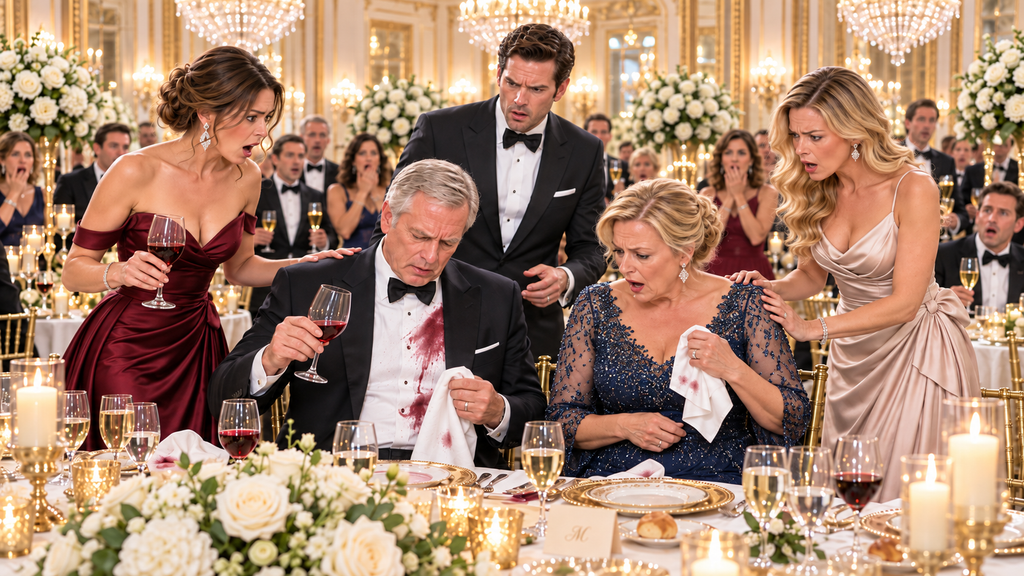
I turned to her. “Interesting choice of words.”
Her smile faltered.
Daniel laughed bitterly. “What is that supposed to mean?”
My phone timer chimed.
Five minutes.
I looked at my parents. “We’re leaving.”
Daniel grabbed my wrist.
“Sit down.”
I looked at his hand until he released me.
Then I placed a folded document beside his plate.
His father picked it up first.
His face changed.
“What the hell is this?”
“A notice,” I said. “The bank’s risk committee receives the full package at nine tomorrow morning.”
Daniel snatched the pages. His eyes raced over the first paragraph.
Madison stopped smiling.
For months, Daniel had told everyone I was merely the “numbers person” at Harrington Logistics. In reality, when the company nearly collapsed two years earlier, I used an inheritance from my grandmother as collateral to secure emergency financing. I also negotiated a covenant giving me the right to withdraw my personal guarantee if financial misconduct materially increased the company’s risk.
The audit proved exactly that.
Daniel looked up, pale. “You wouldn’t.”
“I already signed the withdrawal.”
His mother shot to her feet. “You vindictive little—”
“My lawyer has copies of every forged reimbursement Madison submitted,” I continued. “Including the hotel in Miami, the jewelry purchases, and the $11,600 ‘client dinner’ that happened on a yacht.”
Madison’s mouth fell open.
Daniel turned on her. “What did you do?”
She pointed at me. “She’s lying!”
“I have receipts, security footage, and the card authorization logs.”
Daniel’s father reached for the papers with shaking hands. “If the guarantee is pulled, the bank can freeze the revolving line.”
“Yes.”
“Our payroll clears Friday.”
“I know.”
His arrogance vanished so quickly it was almost quiet.
Daniel stared at me as if seeing a stranger. “Claire, we can talk at home.”
“We did talk at home. Every time I asked you to defend me, you said I was too sensitive.”
His mother stepped closer. “Your parents came here looking like charity cases and now you want to destroy us because Madison spilled wine?”
My mother flinched.
That was the moment I stopped feeling any guilt.
I opened my phone and forwarded one email.
“Not because of the wine,” I said. “Because the wine proved none of you planned to stop.”
Daniel’s phone buzzed.
So did his father’s.
Their attorney had just received my formal notice.
Around us, the restaurant had gone silent.
Madison reached for her purse.
“Where are you going?” Daniel demanded.
She stared at him.
I answered for her. “Probably somewhere without cameras.”
My father put on his stained glasses.
“Claire,” he said, “we’re ready.”
So was I.
PART 3 — THE FIVE MINUTES THAT ENDED EVERYTHING
My father put on his stained glasses.
“Claire,” he said quietly, “we’re ready.”
So was I.
I took my mother’s hand.
She was still trembling.
Red wine had soaked through the shoulder of her white blouse and spread down the front in an uneven stain that looked almost black beneath the restaurant’s golden lights.
For three years, I had watched Daniel’s family make her feel small.
Tonight, they had finally made the mistake of doing it in front of the woman she had raised.
Me.
I picked up my purse.
Daniel rose so quickly his chair scraped backward.
“Claire.”
I didn’t stop.
“Claire, wait.”
Behind me, I heard his father say something under his breath.
Then Madison.
Then Daniel again.
But I kept walking.
My mother held my hand tighter.
My father walked beside us.
We were almost at the restaurant entrance when Daniel caught up.
“Claire.”
I turned.
He looked different now.
Ten minutes earlier, he had been irritated.
Five minutes earlier, he had been embarrassed.
Now he looked afraid.
Not afraid of losing me.
Not yet.
Afraid of losing the company.
That distinction hurt more than I wanted it to.
“Come home,” he said.
“No.”
“We need to talk.”
“I’ve been asking you to talk for three years.”
“This is different.”
I looked at him.
“Because now it costs you something?”
His face tightened.
“That isn’t fair.”
I almost laughed.
Fair.
My mother was standing five feet away with wine dripping from the ends of her hair.
My father’s suit jacket was stained across one shoulder.
Madison was still inside trying to decide whether she should run before the family attorney started asking questions.
And Daniel wanted to talk about fairness.
“Go back to your family,” I said.
“You are my family.”
The words came so quickly that for half a second, they almost worked.
Half a second.
Then I remembered every Thanksgiving when he had laughed nervously instead of defending me.
Every Christmas when Madison had handed my mother discount-store perfume while receiving designer jewelry from us.
Every birthday dinner where Daniel’s father made a joke about my parents’ neighborhood.
Every drive home when I sat staring through the passenger window while Daniel explained why keeping peace mattered more than confronting cruelty.
“You had three years to act like it,” I said.
His mouth opened.
Nothing came out.
My father stepped forward.
Not aggressively.
My father had never needed volume to make people listen.
Thirty-four years as a school principal had taught him how to quiet a room without raising his voice.
“Daniel,” he said, “take care of your side of the table. I’m taking my wife home.”
Daniel’s face reddened.
“I’m trying to save my marriage.”
My father looked at him for a long moment.
“No,” he said.
“You’re trying to save everything except the reason your marriage is ending.”
Daniel went still.
My father turned away.
And for once, Daniel didn’t have an answer.
The valet brought my car around.
My mother climbed into the back seat, and my father sat beside her.
I drove.
For the first ten minutes, nobody spoke.
The silence wasn’t uncomfortable.
It was exhausted.
The kind of silence that comes after people have spent too many years pretending something doesn’t hurt.
Streetlights passed across the windshield.
Red.
Gold.
Darkness.
Red.
Gold.
Darkness.
My mother finally whispered, “I’m sorry.”
I gripped the steering wheel.
“For what?”
“For tonight.”
I looked at her in the rearview mirror.
Her face broke my heart.
She was embarrassed.
Not because someone had humiliated her.
Because she thought her humiliation had caused trouble for me.
“Mom.”
“I should have ignored Madison. Your father and I could have just left. You didn’t have to—”
“Yes, I did.”
She stopped.
“I should have done it sooner.”
My father looked out the window.
After a moment, he said, “Your mother and I never wanted to be the reason there was tension in your marriage.”
“You weren’t.”
“We knew they didn’t like us.”
I swallowed.
“Dad—”
“We knew.”
His voice was calm.
That somehow made it worse.
“We knew when they stopped inviting us to Christmas brunch after the first year.”
I said nothing.
“We knew when Madison asked your mother whether she had ever owned a dress that wasn’t on clearance.”
My mother stared at her hands.
“We knew when Daniel’s father introduced us to those people at the golf club as ‘Claire’s folks from the other side of town.’”
My throat tightened.
Why hadn’t they told me?
Then I knew.
Because they loved me.
Because they thought silence was protecting my marriage.
The exact same mistake I had been making.
“I’m sorry,” I whispered.
My father looked at me through the mirror.
“For what?”
“For letting it happen.”
His expression softened.
“You didn’t spill that wine.”
“No. But I kept bringing you back to people who treated you like you were lucky to be in the room.”
My mother leaned forward.
“Claire, listen to me.”
Her voice was gentle.
“The shame belongs to the person who behaves badly, not the person who gives them too many chances.”
I pressed my lips together.
Tears blurred the road.
I blinked them away.
My father cleared his throat.
“And for the record…”
I glanced at him.
He touched the stained lapel of his suit.
“This thing was getting tight around the middle anyway.”
My mother let out a startled laugh.
I laughed too.
It came out half broken.
Half crying.
But for the first time that night, the sound didn’t hurt.
I took my parents to my house.
Not Daniel’s house.
Mine.
That distinction mattered now.
The property had originally belonged to my grandmother.
When she died, she left it to me.
Daniel had spent years calling it “our house,” which was fine while I believed “ours” meant partnership.
Legally, the deed had remained in my name alone.
Another detail Daniel had never cared about because, until that night, he assumed I never would either.
My mother showered upstairs.
I found her an old sweatshirt and a pair of yoga pants.
My father tried to clean his suit in the laundry room while insisting he knew what he was doing.
He did not.
At eleven twenty-three, headlights swept across the front windows.
I already knew who it was.
Daniel had called seventeen times.
Texted eleven.
I hadn’t answered.
My father looked toward the window.
“You want me to stay down here?”
“No.”
“You sure?”
“Yes.”
He studied my face.
Then nodded.
“I’ll be upstairs.”
When he reached the stairs, I said, “Dad?”
He turned.
“Thank you.”
“For what?”
“For not telling me what to do.”
He smiled sadly.
“You’re not twelve anymore, sweetheart.”
Then he went upstairs.
Daniel knocked.
I opened the door but didn’t move aside.
He stared at me.
His tie was gone.
The first two buttons of his shirt were open.
His hair, usually perfectly arranged, had been pushed back with both hands so many times it stood unevenly.
“You changed the alarm code.”
“Yes.”
“Why?”
I almost smiled.
“Why do you think?”
His jaw clenched.
“Can I come in?”
“No.”
His eyes widened.
“Claire, this is my home.”
“It’s my property.”
“I live here.”
“Until tonight.”
He stared at me.
I had expected anger.
Instead, something almost like panic crossed his face.
“Where am I supposed to go?”
That question told me more than he intended.
Not:
Can we fix this?
Not:
Are you okay?
Not:
How are your parents?
Where am I supposed to go?
I folded my arms.
“Your parents have seven bedrooms.”
“That’s not funny.”
“I wasn’t joking.”
He looked past me into the hallway.
“Please.”
I hesitated.
Then stepped outside and closed the door behind me.
We stood on the porch.
There was a time when I had loved that porch.
Daniel and I drank coffee there every Sunday morning when we were newly married.
We planted herbs in wooden boxes.
We talked about having children.
We planned trips.
We once sat out there during a thunderstorm, wrapped in one blanket, laughing because the power had gone out while dinner was in the oven.
Those memories were real.
That was the cruelest part.
Daniel had not always been the man standing in front of me.
Or maybe he had been.
Maybe comfort had simply revealed pieces of him that love once helped me overlook.
He exhaled.
“The bank can’t get that letter.”
“It already has.”
His eyes shut.
“Claire.”
“My lawyer submitted it electronically at ten fifty-six.”
“You said nine tomorrow.”
“I said the risk committee receives the full package at nine tomorrow. The notice was delivered tonight.”
He turned away and dragged a hand over his face.
“You don’t understand what this could do.”
That almost made me angry.
“I wrote the financing package.”
“I know.”
“I negotiated the emergency credit facility.”
“I know.”
“I spent six months convincing regional lenders your company could survive.”
“I know.”
“I personally guaranteed seven figures against assets I inherited before we married.”
“I know.”
I stepped closer.
“Then don’t tell me I don’t understand what this could do.”
He looked at me.
Silence.
I continued.
“The bank won’t automatically close the company tomorrow. They’ll review the exposure. They’ll likely suspend discretionary draws. They may require replacement collateral. They may demand an independent audit. What happens after that depends on how much of Madison’s spending your father knew about.”
His face changed.
I noticed.
“What?”
“Nothing.”
“Daniel.”
“Nothing.”
I stared at him.
After twelve years together, I knew his tells.
The muscle in his cheek.
The way his eyes shifted half an inch to the left.
The sudden stiffness in his shoulders.
“What does your father know?”
Daniel said nothing.
A cold feeling moved through me.
“Daniel.”
He lowered his voice.
“Dad knew she had used the card a few times.”
I felt something inside me become very still.
“How many times?”
“I don’t know.”
“That is not an answer.”
“He knew she had made some personal purchases.”
“How much?”
“Claire.”
“How much?”
Daniel looked toward the street.
“Maybe ten or fifteen thousand.”
I laughed once.
No humor.
“Twenty-eight thousand on that account alone.”
“I didn’t know it was that much.”
“And the forged mileage claims?”
He looked at me.
“The fake vendor?”
Nothing.
“The consulting payments to a company registered to her college roommate?”
Still nothing.
My stomach dropped.
“You knew.”
“No.”
“You knew something.”
“I knew Dad had been covering some things.”
I stepped backward.
For months, I had been asking myself how nobody noticed.
How a logistics company with multiple accountants could repeatedly approve expenses that didn’t match operations.
How reimbursement reports kept passing through before eventually landing on my desk.
How Madison seemed so certain no one would challenge her.
Now I knew.
Somebody had.
And somebody higher up had made sure it disappeared.
“Your father protected her.”
Daniel’s silence answered.
“For how long?”
“I don’t know.”
“For how long?”
“A year. Maybe longer.”
I stared at him.
“And you knew?”
“Not the details.”
“That’s not what I asked.”
He shook his head.
“I knew Dad had cleaned up some expenses because Madison was going through a difficult time.”
“A difficult time?”
“She was getting divorced.”
“So she bought jewelry with company money?”
“I didn’t say it was right.”
“She spent eleven thousand six hundred dollars on a yacht.”
“I know.”
“No, Daniel. You know now because I found it.”
He snapped, “What do you want me to say?”
The question echoed across the porch.
I stared at him.
There it was.
The Daniel I had been waiting for all night.
Not remorse.
Frustration.
He was angry because consequences had arrived faster than his excuses.
“I wanted you to say something three years ago.”
He looked away.
“I wanted you to tell your sister to stop humiliating my mother.”
Silence.
“I wanted you to tell your father that my parents’ income didn’t make them inferior.”
Silence.
“I wanted you to stand beside me when I was the only person keeping your company’s lenders calm.”
Silence.
“I wanted you to act like my husband without needing a five-minute deadline.”
He looked at me again.
His eyes were wet now.
For years, I had imagined that seeing Daniel cry would soften me immediately.
It didn’t.
Because grief and accountability were not the same thing.
“I’m sorry,” he whispered.
I waited.
“I’m sorry about tonight.”
“Only tonight?”
He flinched.
“I’m sorry about all of it.”
“All of what?”
His mouth tightened.
I could see how badly he wanted me to make this easier.
To accept the phrase.
To fill in the details myself.
I didn’t.
“All of what, Daniel?”
He looked down.
“I should have defended your parents.”
“Yes.”
“I should have stopped Madison.”
“Yes.”
“I should have taken you more seriously.”
“Yes.”
“And I should have told you what I knew about the company accounts.”
There it was.
I closed my eyes.
When I opened them, I asked, “How long have you known?”
“Claire—”
“How long?”
“Four months.”
The night seemed to tilt.
Four months.
The forensic accountant had been working for six.
Daniel had known almost the entire time.
Four months of watching me stay late.
Four months of hearing me say something was wrong.
Four months of pretending confusion.
Four months of sleeping beside me.
I suddenly remembered one night in May.
I had been at the dining room table surrounded by transaction reports.
Daniel had kissed the top of my head.
“You work too hard,” he said.
Then he poured himself a glass of water and went upstairs.
I had thought it was affection.
Now I wondered whether he had been checking how close I was to finding everything.
“You knew I was investigating.”
“Yes.”
“And you didn’t tell me.”
“I was trying to protect the company.”
“No.”
I shook my head.
“You were trying to protect your family.”
“The company is my family.”
“And what was I?”
His face collapsed.
I waited.
He had no answer.
That was my answer.
The bank called at 7:08 the next morning.
I was already awake.
I hadn’t slept.
Neither had Daniel, judging by the thirty-two unread messages on my phone.
I sat at the kitchen table wearing one of my father’s old university sweatshirts while my mother made coffee.
The bank’s regional risk director, Patricia Greene, was direct.
“We received counsel’s notice.”
“I assumed you would.”
“We’ll need the audit material.”
“You’ll have it by nine.”
“Does company management know?”
“They do now.”
A pause.
“Claire, I’m going to ask you something carefully.”
“Go ahead.”
“Are you alleging criminal conduct?”
I looked toward the window.
Morning light was creeping across the backyard.
“I’m alleging financial misconduct supported by documentation. The legal classification is for your counsel and the appropriate authorities to determine.”
Patricia understood.
“Fair enough.”
She paused again.
“Your guarantee has been material to the facility.”
“I know.”
“Without it, the bank will need replacement security.”
“I understand.”
“If that isn’t provided…”
“I understand.”
She softened slightly.
“You don’t sound happy about this.”
“I’m not.”
And I wasn’t.
People like Madison would later tell everyone I had smiled while destroying the family company.
She needed that version.
It made me easier to hate.
The truth was less satisfying.
I loved that company once.
I had spent two years saving it.
I knew the warehouse supervisors by name.
I knew which dispatch manager had twin girls.
I knew one of the mechanics was caring for his wife through chemotherapy.
I knew eighty-three employees depended on those paychecks.
I had no desire to burn the company down.
I simply refused to hold it up with my personal assets while the people controlling it stole from it and mocked the family that had taught me to work hard enough to save it.
“I don’t want innocent employees hurt,” I said.
“I understand.”
“If possible, I’d like any transition to preserve payroll while you assess management.”
“I can’t promise anything.”
“I know.”
“But I’ll note it.”
“Thank you.”
When I hung up, my mother placed a coffee beside me.
“You still care about those people.”
“Yes.”
“Even after what Daniel’s family did.”
“The employees didn’t do it.”
She sat across from me.
“That’s why I’m proud of you.”
I looked down.
“Mom, I might destroy a company.”
“No.”
I looked at her.
“You’re refusing to be used as the foundation of one.”
I let that settle.
Then my phone buzzed.
Daniel.
Again.
This time, I answered.
“What?”
His voice came fast.
“The bank froze the card system.”
“Discretionary corporate cards.”
“Dad is losing his mind.”
“I’m sure.”
“They suspended the revolving draw.”
“I expected that.”
“Claire, payroll is in three days.”
“I told Patricia to prioritize payroll.”
“Patricia?”
“The regional risk director.”
Silence.
“You spoke to her directly?”
“Yes.”
“When?”
“Seven minutes ago.”
Another silence.
Then, more quietly:
“Dad wants a meeting.”
“No.”
“Claire.”
“No.”
“He wants to talk about replacing your guarantee.”
“He can talk to the bank.”
“He wants you there.”
“I resigned as company controller at six this morning.”
Silence.
“What?”
“The letter is in your email.”
“You resigned?”
“Yes.”
“You can’t.”
“I can.”
“But you run everything.”
“That sounds like a management problem.”
He exhaled sharply.
“You’re being cruel.”
My mother heard him.
I saw the pain cross her face.
Something in me hardened.
“No, Daniel. Cruel was watching your sister pour wine on my mother and worrying more about whether I was embarrassing you.”
“She said it was an accident.”
I stared at the phone.
“You still believe that?”
“I didn’t say I believe it.”
“You just defended it.”
“I’m trying to explain—”
“Goodbye, Daniel.”
“Claire, don’t—”
I hung up.
My mother reached across the table.
“Are you all right?”
“No.”
That answer surprised both of us.
For years, I had said yes automatically.
Yes, I’m fine.
Yes, don’t worry.
Yes, Daniel and I are good.
Yes, Madison is just difficult.
Yes, his parents mean well.
Yes.
Yes.
Yes.
It had become a language of self-erasure.
So I said it again.
“No, Mom.”
She stood, walked around the table, and wrapped her arms around me.
And that was when I cried.
Not at the restaurant.
Not on the drive home.
Not when Daniel admitted he had known.
I cried at my kitchen table while my mother held me.
I cried for the marriage I thought I had.
For the children we never had.
For Sunday coffee on the porch.
For the man who used to slow dance with me while pasta boiled.
For the husband who became a spectator every time loving me required disappointing someone else.
I cried because ending something toxic does not erase the parts that were once beautiful.
Sometimes that makes leaving harder.
Not easier.
My mother stroked my hair.
“I loved him,” I whispered.
“I know.”
“I really loved him.”
“I know.”
“I wanted him to choose me.”
She held me tighter.
“Then he should have.”
At nine fifteen, the Harrington family discovered what an independent forensic audit looked like.
By nine thirty, three lawyers were involved.
By ten, Madison had stopped answering calls.
At ten twenty-two, her corporate access was suspended.
At eleven fourteen, Daniel’s father, Charles Harrington, called me personally.
I let it go to voicemail.
He called again.
And again.
At eleven thirty, my attorney called.
“Charles wants a settlement meeting.”
“About the marriage?”
“No.”
That almost made me laugh.
“Of course not.”
“He wants to discuss the financing.”
“Tell him I’m not reinstating my guarantee.”
“He’s prepared to offer you an increased equity position.”
“No.”
“Board control.”
“No.”
“He mentioned thirty percent.”
“He could offer me the chandelier from last night.”
My attorney was silent.
Then she laughed.
It was the first time I had heard her do that.
“I’ll phrase it more professionally.”
“Please.”
She became serious.
“Claire, there’s something else.”
“What?”
“The audit team found another payment stream.”
I sat straighter.
“How much?”
“Potentially one hundred eighty-six thousand over twenty-one months.”
My stomach dropped.
“To Madison?”
“Not directly.”
“To whom?”
“A vendor called MT Consulting.”
“I saw that.”
“The registered agent is apparently Madison’s former roommate.”
“I know.”
“The roommate gave a statement this morning.”
I stood.
“What statement?”
“She says Madison paid her two thousand dollars to register the company and open an account.”
My hands went cold.
“And the rest?”
“She says Madison controlled the debit card.”
I closed my eyes.
One hundred eighty-six thousand.
The twenty-eight thousand had only been the first layer.
“Does Daniel know?”
“Not from us.”
“What about Charles?”
“He’s claiming ignorance.”
I almost said something.
Then stopped.
“Do you believe him?” my attorney asked.
“I don’t know anymore.”
“That may be the safest answer.”
She paused.
“There may also be tax implications.”
“How bad?”
“Potentially significant.”
I sat back down.
“What happens next?”
“The bank has engaged outside counsel.”
“And Madison?”
“That depends on what the bank and the company decide to report.”
I looked through the kitchen window.
My father was outside attempting to remove a wine stain from his suit jacket with something he had found on the internet.
He was losing.
Badly.
And suddenly the absurdity of it hit me.
While Madison had allegedly moved nearly two hundred thousand dollars through a fake vendor, my father was outside fighting a twelve-dollar bottle of stain remover because he didn’t want to spend money on another suit.
“Claire?”
“I’m here.”
“You okay?”
“No.”
“Do you want to stop for today?”
“No.”
I watched my father scrub at the fabric.
“Keep going.”
Madison arrived at my house at twelve forty-eight.
No warning.
No call.
She pounded on the door like she owned it.
My father reached the hallway first.
I stepped past him.
“Let me.”
He didn’t argue.
I opened the door.
Madison stood there in oversized sunglasses despite the cloudy sky.
Her hair was pulled into a tight ponytail.
No makeup.
No designer coat.
For the first time in years, she looked less like a Harrington and more like a frightened woman.
Then she opened her mouth.
And ruined any sympathy I might have felt.
“You psycho.”
I stared at her.
“Good morning, Madison.”
“You planned this.”
“No.”
“You’ve been waiting for an excuse.”
“No.”
“You humiliated my entire family.”
I blinked.
“You poured wine on my parents.”
Her expression twisted.
“Oh, please. That was nothing.”
My father heard it.
I knew because I saw his shoulders shift behind me.
I didn’t look back.
“Then why are you here?”
“You need to call the bank.”
“No.”
“You need to tell them this was a misunderstanding.”
“It wasn’t.”
“Claire.”
“No.”
She ripped off her sunglasses.
Her eyes were swollen.
Whether from crying or not sleeping, I didn’t know.
“Do you know what Dad said to me this morning?”
“No.”
“He said if the company collapses, it’s my fault.”
I said nothing.
“And Daniel won’t even look at me.”
Still nothing.
“My mother is having a panic attack.”
Still nothing.
Madison’s voice rose.
“You did this.”
I looked at her for a long moment.
“Did I create MT Consulting?”
Her face changed.
Tiny.
Almost invisible.
But enough.
“Did I tell your roommate to register it?”
“I don’t know what you’re talking about.”
“Did I spend one hundred eighty-six thousand dollars?”
Silence.
My father inhaled sharply behind me.
Madison’s lips parted.
“You have no proof.”
There it was.
Not:
That didn’t happen.
Not:
You’re mistaken.
You have no proof.
I almost felt sorry for her.
Almost.
“Your roommate gave a statement this morning.”
Every trace of color left Madison’s face.
For the first time in three years, she had nothing cruel to say.
She just stared at me.
Then whispered, “She wouldn’t.”
“She did.”
“That lying—”
“Careful.”
Madison stepped forward.
“You think you’re better than us.”
“No.”
“You always have.”
“No.”
“You walked into this family acting like you were smarter than everyone because you could read spreadsheets.”
I nearly laughed.
“You mean the spreadsheets that kept your family company alive?”
She shook her head furiously.
“My grandfather built that company.”
“And you treated it like your personal wallet.”
“I was entitled to some of that money.”
“According to whom?”
“I’m family.”
That sentence.
There it was.
The philosophy behind everything.
Family doesn’t need permission.
Family doesn’t need accountability.
Family can mock outsiders.
Family can take.
Family can lie.
Family can steal.
And anyone who objects is disloyal.
I stepped closer.
“My parents are my family too.”
Madison rolled her eyes.
Even then.
Even with everything collapsing around her.
She still couldn’t help herself.
“They’re not Harringtons.”
My father moved.
I held up one hand.
He stopped.
I looked Madison directly in the eyes.
“No,” I said.
“They’re not.”
For the first time that sentence felt like a compliment.
“They would never behave the way you did.”
She laughed bitterly.
“Your mother shops with coupons.”
I smiled.
“My mother raised three children while working evenings at a community library.”
Madison’s smile disappeared.
“My father spent thirty-four years in public education.”
I stepped forward.
“He bought one good suit because he wanted to honor your parents’ anniversary.”
Madison looked away.
“And you poured wine on him because you thought his dignity cost less than your entertainment.”
“I said it was an accident.”
“No.”
My voice stayed calm.
“That glass left your hand at shoulder height.”
Her eyes snapped toward mine.
“You aimed it.”
Silence.
My father looked at me.
Madison swallowed.
“You can’t prove that.”
I almost smiled.
“You really should stop saying that sentence.”
Her face tightened.
“What does that mean?”
“The restaurant has cameras.”
She froze.
I had not even known whether they did.
Not until my attorney called the restaurant at eight that morning.
There were two ceiling cameras covering our section.
One captured Madison reaching past the centerpiece.
Another caught her wrist turning.
The footage had already been preserved.
Her lips trembled.
“It was a joke.”
My father closed his eyes.
I stared at her.
“A joke?”
“She was being so smug.”
“My mother?”
“She kept talking about you.”
I frowned.
“What?”
“She wouldn’t shut up about how proud she was of you. How you saved the company. How hard you worked.”
For the first time, I understood.
This wasn’t random.
Madison hadn’t spilled wine because my mother was beneath her.
She spilled it because my mother had reminded everyone at that table of something Madison couldn’t stand.
My value.
“She said the company was lucky to have me.”
Madison’s face twisted.
“You act like you built everything.”
“I never said that.”
“You didn’t have to. Dad listened to you more than Daniel.”
I felt something click into place.
All those comments.
All those little digs.
The resentment whenever Charles asked my opinion at meetings.
The jokes about me being “the calculator.”
Madison’s cruelty had never simply been classism.
It was insecurity wearing expensive shoes.
“You hated that I mattered,” I said.
She scoffed.
“You wish.”
“No.”
I shook my head.
“I actually wish I’d understood sooner.”
She stared at me.
Then her anger collapsed.
Not completely.
Just enough to show the fear underneath.
“Claire.”
Her voice changed.
For the first time, she sounded like someone asking.
Not demanding.
“Please.”
I said nothing.
“If they investigate everything…”
“You should get a lawyer.”
Her eyes filled.
“I could lose my kids.”
That hit me.
Madison had two children.
Sophie was nine.
Ethan was six.
They were innocent.
I thought of Sophie drawing pictures at Thanksgiving.
Ethan chasing bubbles at the Fourth of July.
My chest tightened.
Madison saw it.
She stepped closer.
“Please.”
I hated what came next.
Because compassion is easier when the person asking for it hasn’t spent years trying to crush yours.
“I don’t decide what happens to you,” I said.
“You started this.”
“No.”
I shook my head.
“You did.”
She started crying.
Actually crying.
Her shoulders shook.
Mascara that hadn’t been visible before somehow darkened beneath one eye.
“I made mistakes.”
“One hundred eighty-six thousand dollars is not a mistake.”
“I was going to pay it back.”
“With what?”
She said nothing.
“Madison.”
Nothing.
“Where did the money go?”
She looked at the driveway.
“Things.”
“What things?”
“Credit cards.”
“What else?”
“My divorce.”
“What else?”
“Trips.”
“What else?”
Her face crumpled.
“Gambling.”
The word was barely audible.
I stared at her.
My father did too.
“What?”
She covered her face.
“I lost money.”
“How much?”
“I don’t know.”
“You know.”
“Claire—”
“How much?”
Her hands dropped.
“Maybe seventy.”
“Seventy thousand?”
She nodded.
I took a slow breath.
The cruelty didn’t disappear.
The theft didn’t disappear.
But suddenly I could see the hole she had been feeding.
Debt.
Panic.
Shame.
Then more lies to cover the first lies.
It didn’t excuse anything.
But it explained the desperation.
“Have you told Daniel?”
“No.”
“Your father?”
“No.”
“Your mother?”
“No.”
“Then start there.”
She stared at me.
“That’s it?”
“What do you want me to do?”
“Help me.”
I almost couldn’t believe the words.
“Help you?”
“You fix things.”
My heart broke a little.
Not for Madison.
For myself.
Because that sentence described the trap I had lived inside for years.
Claire fixes things.
Claire handles the lender.
Claire covers payroll.
Claire smooths over Christmas.
Claire apologizes.
Claire keeps the peace.
Claire understands.
Claire forgives.
Claire absorbs.
Everyone gets to break things because Claire knows how to repair them.
“No,” I said.
Madison stared.
“I’m not fixing this.”
Her tears stopped.
Just like that.
“You selfish bitch.”
My father stepped forward.
I touched his arm.
“I’ve got it.”
Madison glared at me.
And somehow, that insult freed me.
Because there it was again.
The moment my usefulness ended, I became the enemy.
I opened the door wider.
“Leave.”
“You’ll regret this.”
“No.”
“You will.”
“I regret not doing it sooner.”
She stared at me.
Then at my father.
For one second, something like shame crossed her face.
She left.
I closed the door.
My father stood beside me.
“You okay?”
I exhaled.
“Ask me tomorrow.”
He nodded.
Then he looked down at the front of his suit.
“I think I ruined this.”
I laughed.
A real laugh this time.
“Dad.”
“What?”
“You’re still wearing it?”
“I paid eight hundred dollars for this suit.”
“In 2009.”
“That is not relevant.”
I hugged him.
He went stiff for half a second.
Then wrapped both arms around me.
“I’m sorry they treated you that way,” I whispered.
He kissed the top of my head.
“I survived middle school cafeterias for thirty-four years.”
I pulled back.
“You were a principal.”
“Exactly. I’ve been insulted by professionals.”
I laughed again.
And for a moment, the house felt like mine again.
Daniel came back that evening.
This time, he didn’t knock.
He sat in his car at the curb.
For almost twenty minutes.
Then he texted me.
CAN YOU COME OUTSIDE?
I almost ignored it.
Then another message arrived.
I’M NOT HERE ABOUT THE COMPANY.
I stared at the words.
For some reason, that made me go.
Daniel stood beside his car when I walked outside.
He looked exhausted.
There were dark circles beneath his eyes.
He held an envelope.
“What is that?”
“Our marriage certificate.”
I frowned.
He gave a sad laugh.
“I found it in the lockbox at Mom and Dad’s.”
“Why was it there?”
“Mom keeps copies of everything.”
Of course she did.
He looked at the paper.
“Twelve years.”
“Yes.”
“I keep thinking about our wedding.”
I said nothing.
“You remember it rained?”
“Yes.”
“The forecast said sunshine.”
“It poured.”
“You were furious because the reception was supposed to be outside.”
“I wasn’t furious.”
“You locked yourself in the bathroom.”
“Because my hair looked terrible.”
He smiled.
Despite myself, I almost did too.
“I told you I didn’t care.”
“You said I looked beautiful.”
“You did.”
The softness between us hurt.
Because love doesn’t vanish simply because trust does.
Sometimes love stays behind like furniture in a house after the owners have moved.
Still recognizable.
Still carrying memories.
No longer enough to make the place home.
Daniel looked at me.
“I loved you.”
I swallowed.
“Loved?”
He closed his eyes.
“I love you.”
I looked away.
“Then why did you let them treat me like that?”
“I don’t know.”
“Yes, you do.”
He was quiet.
“I was afraid.”
I looked back at him.
“Of Madison?”
“Of all of them.”
I frowned.
Daniel rubbed his hands together.
“You met my family when we were adults. You didn’t grow up there.”
“I know.”
“No. You don’t.”
His voice was softer now.
“Dad controlled everything. Money. School. Cars. College. Jobs. If you disagreed with him, he froze you out until you apologized.”
I said nothing.
“Mom’s way of surviving was agreeing with him.”
“And Madison?”
“She learned that if she caused enough chaos, everyone would eventually give her what she wanted just to make it stop.”
I thought about that.
“And you?”
He laughed bitterly.
“I learned to disappear.”
For the first time, I could see the scared boy inside my forty-two-year-old husband.
I hated that I could.
It would have been easier if he were a monster.
Monsters are simple.
Broken people who hurt you are much harder.
“Then I married you,” he continued.
“And you didn’t disappear.”
“No.”
“You challenged Dad.”
“Yes.”
“You told Madison no.”
“Yes.”
“You made the bank listen.”
“Yes.”
He shook his head.
“I admired you for it.”
“Until it made your family angry.”
His face tightened.
“Yes.”
The honesty surprised me.
He looked at me.
“I kept thinking if I stayed neutral, everyone would calm down.”
“You weren’t neutral.”
“I know that now.”
“You chose the person causing harm every time you asked the person being hurt to tolerate it.”
He nodded.
A tear slid down his cheek.
“I know.”
I watched him wipe it away.
“What happened at the company today?”
He looked surprised.
“You said you weren’t here about the company.”
“I’m not. I’m asking.”
He exhaled.
“Dad resigned as CEO.”
I stared at him.
“What?”
“The bank required temporary independent management if they were going to leave the payroll facility open.”
I hadn’t expected it that quickly.
“Who’s acting CEO?”
“Martin Blake.”
The chief operations officer.
I knew him.
Good man.
Quiet.
Competent.
Often ignored by Charles.
“That’s probably smart.”
Daniel nodded.
“Madison admitted everything.”
I froze.
“Everything?”
“The fake vendor. The cards. Gambling.”
“She came here.”
His head snapped up.
“When?”
“This afternoon.”
“Why?”
“She wanted me to fix it.”
Daniel gave a hollow laugh.
“That sounds like her.”
“She told you?”
“She told all of us.”
“How did Charles react?”
Daniel looked away.
“I’ve never seen him cry before.”
I almost felt sorry for the man.
Almost.
“What about your mother?”
“She blamed you for ten minutes.”
“Of course.”
“Then Dad told her to stop.”
That surprised me more than the resignation.
“He did?”
“Yes.”
Daniel gave a tired smile.
“I think something broke in him today.”
“Or opened.”
“Maybe.”
He held the envelope tighter.
“Madison’s lawyer is arranging for her to cooperate.”
“With the bank?”
“And investigators, if it gets that far.”
I nodded.
“She needs help for the gambling too.”
“She checked herself into a treatment program tonight.”
I looked toward the dark street.
That was more accountability than I had expected.
“I’m glad.”
Daniel studied me.
“You mean that?”
“Yes.”
“She poured wine on your mother.”
“That doesn’t mean I want her children to lose their mother.”
He looked down.
“You were always better than us.”
“No.”
“Yes.”
“No, Daniel.”
I stepped closer.
“My family just taught me that being ashamed of doing wrong is more useful than being ashamed of getting caught.”
His eyes closed.
That landed somewhere deep.
When he opened them, they were wet again.
“I want to change.”
“I hope you do.”
“I started calling therapists.”
“Good.”
“I told Dad I’m stepping away from the company.”
I stared at him.
“For how long?”
“I don’t know.”
“What will you do?”
“I don’t know.”
For Daniel, that admission was enormous.
He had spent his entire adult life inside the structure his father built.
Same company.
Same family.
Same expectations.
Same hierarchy.
“I need to figure out who I am when I’m not trying to keep everyone happy.”
I nodded.
“You should.”
He looked at me.
“I want to do that with you.”
There it was.
The sentence I knew was coming.
My chest tightened.
“Daniel…”
“Please.”
He stepped forward.
“Don’t decide tonight.”
“I decided months ago.”
His face fell.
“You didn’t know it.”
“I did.”
I shook my head.
“Maybe not consciously. But something in me knew.”
“Claire.”
“The night I hired the forensic accountant, I opened a separate bank account.”
He stared at me.
“I changed the beneficiary on my grandmother’s investment trust.”
His face went pale.
“I met with a divorce attorney.”
He looked as if I had slapped him.
“You were planning to leave me?”
“I was planning to understand my options.”
“Six months ago?”
“Yes.”
“Why didn’t you tell me?”
The irony was so sharp I almost laughed.
“Why didn’t you tell me you knew your sister was misusing company funds?”
His mouth closed.
I continued.
“Because we had both stopped trusting each other.”
“I was trying to protect my family.”
“And I was trying to protect myself.”
“You’re my wife.”
“And you were my husband.”
The past tense hurt both of us.
Daniel lowered his head.
“I don’t want this to be over.”
My eyes filled.
“I didn’t either.”
“Then don’t end it.”
I shook my head.
“Wanting something not to be over is not the same as knowing how to repair it.”
“I’ll do anything.”
“That’s what people say when consequences arrive.”
“I mean it.”
“I believe you.”
He looked surprised.
“I believe that you mean it tonight.”
His face crumpled.
“But I needed you to mean it when Madison mocked my mother.”
I took a shaky breath.
“I needed you to mean it when your father belittled my dad.”
Another breath.
“When I found the first missing money.”
Another.
“When I told you I felt alone in this marriage.”
Tears slid down my face now.
“I needed you before you were afraid of losing me.”
Daniel started crying too.
For a while, neither of us spoke.
Cars moved at the far end of the street.
A dog barked somewhere.
The world kept going.
It felt unfair.
How could traffic continue when a twelve-year marriage was ending on a driveway?
“I’m sorry,” he said.
This time, I believed him.
That was almost worse.
“I know.”
“I love you.”
“I know.”
“Do you love me?”
I closed my eyes.
There are questions people ask because they want truth.
And questions they ask because they hope truth will rescue them.
When I opened my eyes, I gave him the only answer I had left.
“Yes.”
He inhaled sharply.
“But I don’t trust you.”
His shoulders dropped.
“And I don’t know how to be married to someone I have to threaten with divorce before he protects me.”
He wiped his face.
“So this is it.”
“I think it has to be.”
He nodded slowly.
Then looked at the house.
“Can I get my things?”
“Not tonight.”
He accepted that.
“Tomorrow?”
“I’ll pack essentials. The rest can be handled through attorneys.”
He nodded again.
Then held out the marriage certificate.
I didn’t take it.
“Keep it.”
His face twisted.
“Why?”
“Because it happened.”
He looked confused.
“It mattered.”
I swallowed.
“Ending badly doesn’t mean every day was a lie.”
Daniel looked down at the certificate.
Then pressed it against his chest.
I walked back toward the house.
“Claire.”
I stopped.
“I am sorry about your parents.”
I turned.
“Tell them.”
He nodded.
“I will.”
And for the first time in our marriage, I walked away without waiting to see whether Daniel was okay.
He apologized to my parents two days later.
Not at my request.
Not through me.
He drove to their house alone.
My mother told me afterward.
“He brought flowers,” she said.
“That sounds like Daniel.”
“I told him flowers weren’t necessary.”
“What did Dad say?”
My mother smiled.
“Your father made him sit at the kitchen table.”
I groaned.
“Oh no.”
“What?”
“That’s Principal Alvarez.”
Apparently, Daniel sat across from my father for almost two hours.
No lawyers.
No Harringtons.
No Claire.
Just two men at a kitchen table.
My father asked one question.
“Why did you laugh?”
Daniel had protested.
“I never laughed.”
My father shook his head.
“You did every time you stayed silent.”
Daniel cried.
My father didn’t comfort him.
He didn’t punish him either.
He just listened.
When Daniel finished apologizing, my mother said something I later wrote down.
“An apology is not a key that lets you back into the room. Sometimes it is simply proof that you finally understand why the door closed.”
Daniel thanked her.
Then he left.
My parents forgave him eventually.
I did too.
Forgiveness was not reconciliation.
That distinction saved me.
The company survived.
Barely.
For the first six weeks, everyone assumed it wouldn’t.
The bank cut the revolving credit facility by almost forty percent.
Three expansion projects were cancelled.
The Harringtons sold a vacation property in South Carolina.
Charles liquidated a securities account to provide replacement collateral.
Daniel sold his Porsche.
Madison sold almost everything she had that could legally be sold.
Designer bags.
Jewelry.
A luxury SUV.
Two watches.
Even the diamond bracelet her mother had given her for her thirtieth birthday.
The funds didn’t cover everything.
But the effort mattered when restitution was discussed.
Because Madison cooperated early, entered treatment, and provided records, the legal process became complicated and slower than everyone expected.
There was no dramatic police raid.
No handcuffs at breakfast.
Real consequences are rarely as cinematic as people imagine.
There were attorneys.
Interviews.
Bank records.
Tax amendments.
Settlement negotiations.
Restitution schedules.
Sleepless nights.
And shame.
A great deal of shame.
The company filed a civil claim.
Later, an agreement was reached that required Madison to repay a significant amount while surrendering any management role or access to corporate funds.
There were additional legal consequences I deliberately stopped following.
Not because I didn’t care.
Because eventually I realized that keeping track of Madison’s punishment was another way of keeping her in my life.
So I stopped.
I heard she stayed in treatment.
I heard she attended meetings.
I heard she became quieter.
I also heard she told someone, months later, that the worst part hadn’t been losing the money.
It had been Sophie asking:
“Mommy, did Aunt Claire leave because of you?”
I never asked whether that story was true.
Some things don’t need verification.
My divorce petition was filed twelve days after the anniversary dinner.
Daniel didn’t fight it.
That surprised his family.
It surprised me more.
There was no contest over my grandmother’s property.
No attempt to claim my inheritance.
No effort to punish me financially.
My attorney said Daniel’s lawyer had been unusually cooperative.
I didn’t know whether that was remorse or strategy.
Maybe both.
Human beings are rarely one thing.
During mediation, Daniel sat across from me at a long conference table.
Between us were folders containing the arithmetic of a marriage.
Savings.
Cars.
Furniture.
Insurance.
Retirement accounts.
Twelve years reduced to columns.
It was strange seeing our life assigned dollar values.
The dining table we bought after our third anniversary.
The painting from Santa Fe.
The sectional sofa we argued about for an hour because Daniel wanted gray and I wanted cream.
The camping equipment we used exactly twice.
At one point, the mediator asked who wanted the espresso machine.
Daniel and I both answered at once.
“Her.”
We looked at each other.
And laughed.
Just once.
Quietly.
It was the first time we had laughed together since the restaurant.
For a moment, we were ourselves again.
Then the moment passed.
That’s what divorce was like for me.
Not one clean break.
A thousand small acknowledgments that something familiar was becoming history.
Three months after filing, I received a handwritten letter.
No return address.
I recognized Madison’s handwriting immediately.
For two days, I didn’t open it.
On the third night, I sat at my kitchen table and did.
Claire,
I’ve written this six times.
Every version sounded like I was trying to explain myself.
My counselor says explanations can become another form of avoiding responsibility, so I am going to try not to do that.
I stole.
I lied.
I treated you badly because your competence made me feel insecure.
I treated your parents badly because I thought people with less money had less power, and I wanted someone around me to feel smaller than I did.
I poured the wine intentionally.
You already knew that.
Your mother had spent ten minutes telling my mother how proud she was of you.
I hated hearing it.
Not because she was bragging.
Because nobody talked about me that way anymore.
That is ugly to admit.
But it’s true.
I wanted to humiliate her because I was jealous of what she felt for you.
I am ashamed.
I am also sorry for what I did to the company and to my children.
I don’t expect forgiveness.
I just wanted to stop lying about what happened.
Madison.
I read the letter twice.
Then I folded it.
I didn’t cry.
I didn’t call her.
I didn’t write back.
But I put it in a drawer instead of throwing it away.
That was all I could offer at the time.
Sometimes forgiveness begins as simply refusing to carry hatred another day.
Four months after the dinner, Daniel called.
Not texted.
Called.
I almost let it go.
Then I answered.
“Hello?”
“Hi.”
His voice sounded different.
Lighter somehow.
Not happy.
Just less guarded.
“Hi.”
“Is this a bad time?”
“No.”
There was a pause.
“I got a job.”
That surprised me.
“Where?”
“A regional construction supplier.”
I smiled.
“Doing what?”
“Operations.”
“Not family-owned?”
He laughed.
“Absolutely not family-owned.”
I laughed too.
“So you’re really doing it.”
“I’m trying.”
“I’m glad.”
Another pause.
“I rented an apartment.”
“Good.”
“It has terrible countertops.”
“You’ll survive.”
“I don’t know. They’re fake marble.”
I smiled despite myself.
Then he became serious.
“I started therapy.”
“You mentioned you were going to.”
“I go every Tuesday.”
“How is it?”
“Awful.”
I laughed.
He did too.
Then he said, “Useful.”
“I’m glad.”
“My therapist said something that made me think of you.”
I waited.
“He said avoiding conflict is still a choice.”
My chest tightened.
“Yes.”
“I spent my whole life telling myself I was the peacemaker.”
“You were.”
“No.”
He exhaled.
“I was the person who let the loudest person win.”
I said nothing.
“I’m sorry.”
“You’ve apologized.”
“I know.”
There was something freeing in the way he said it.
He wasn’t asking me to erase anything.
He was simply naming it.
Then he said:
“The company asked me to come back.”
“What did you say?”
“No.”
I sat straighter.
“Really?”
“Yes.”
“Why?”
“Because Dad still wants me to become CEO eventually.”
“And you don’t?”
“I don’t know.”
I smiled.
“That sounds healthier than pretending you do.”
“I thought you might say that.”
A pause.
Then:
“Claire?”
“Yes?”
“Are you happy?”
The question caught me off guard.
I looked around the kitchen.
My kitchen.
There were fresh flowers on the table.
A stack of consulting proposals beside my laptop.
My mother’s homemade soup in the refrigerator.
My father’s repaired suit jacket hanging over a chair because he still hadn’t picked it up.
Was I happy?
Not completely.
But I was peaceful.
For the first time in years, my home did not require me to shrink before entering it.
“I’m getting there,” I said.
Daniel was quiet.
“So am I.”
I smiled.
“I’m glad.”
And I meant it.
The divorce became final seven months after the wine incident.
People expected me to celebrate.
Madison’s former friends expected champagne.
My coworkers expected a party.
One of my cousins sent me a cake topper showing a bride throwing a groom into a trash can.
I laughed.
But I didn’t throw a party.
Instead, I went to my parents’ house.
My mother made chicken with lemon and garlic.
My father opened a bottle of red wine.
When he placed it on the table, all three of us stared at it.
Then burst out laughing.
Mom pointed at him.
“Don’t you dare.”
Dad looked offended.
“I have excellent coordination.”
“You ruined an eight-hundred-dollar suit with stain remover.”
“It was a flawed fabric.”
“It was wool.”
“Exactly.”
I laughed so hard I cried.
And then, because grief does strange things, I actually started crying.
My mother noticed first.
“Oh, honey.”
“I’m okay.”
This time, it was true.
Mostly.
I wiped my eyes.
“It’s just weird.”
“What is?”
“My marriage is officially over.”
My father poured three glasses.
He handed one to me.
“You don’t have to hate the chapter to turn the page.”
I looked at him.
“That’s annoyingly wise.”
“I’m retired. I have time.”
Mom rolled her eyes.
We raised our glasses.
“To Claire,” my father said.
I shook my head.
“No.”
They looked at me.
I turned toward my mother.
“To the coupon queen.”
Her mouth fell open.
My father nearly spit out his wine.
Then Mom laughed so hard she had to put her glass down.
“To laminated menus,” Dad added.
“To eight-hundred-dollar suits from 2009,” I said.
“Excellent vintage,” he replied.
We laughed until our stomachs hurt.
And for the first time, that terrible dinner belonged to us.
Not them.
We had taken the memory back.
I didn’t return to Harrington Logistics.
Not once.
Martin Blake called after the company stabilized.
“Come back,” he said.
“You know I can’t.”
“You could run finance.”
“No.”
“CFO.”
“No.”
“Name your salary.”
I laughed.
“Martin.”
“I’m serious.”
“So am I.”
“Then at least consult.”
That made me pause.
Not for the Harringtons.
For the employees.
I agreed to a ninety-day transition contract with strict boundaries.
No guarantee.
No equity.
No family involvement in my work.
Payment upfront every thirty days.
Martin accepted before I finished speaking.
During those three months, I rebuilt the financial controls.
Dual approval for executive expenses.
Independent vendor verification.
Automated audit flags.
Quarterly outside review.
No one person could ever again create a fake company and quietly feed it money.
On my final day, eighty-three employees surprised me in the warehouse.
I walked in expecting a budget meeting.
Instead, everyone was standing there.
Drivers.
Dispatchers.
Mechanics.
Accounting staff.
Warehouse workers.
Even Martin.
Someone had made a banner.
THANK YOU, CLAIRE.
I stopped walking.
“Oh no.”
Martin laughed.
“Oh yes.”
“You promised no ceremony.”
“I lied.”
A woman named Denise from payroll handed me an envelope.
Inside were handwritten notes.
Dozens.
Thank you for protecting our jobs.
Thank you for staying long enough to fix things.
My daughter starts college because payroll didn’t stop.
Thank you for seeing the employees, not just the owners.
I made it halfway through before I cried.
Then Martin handed me a small box.
Inside was a calculator.
A cheap black office calculator.
On the back, they had engraved:
THE NUMBERS PERSON WHO SAVED US TWICE.
I laughed through my tears.
That calculator still sits on my desk.
Not because I need it.
Because sometimes the insult someone gives you becomes beautiful once you stop letting them define what it means.
A year passed.
Then eighteen months.
My life grew quietly.
That surprised me.
I had expected freedom to feel dramatic.
Instead, it felt like sleeping through the night.
It felt like grocery shopping without checking whether Daniel’s mother had scheduled a family dinner I was expected to attend.
It felt like choosing where to spend Christmas.
It felt like leaving my phone in another room.
It felt like inviting my parents over without wondering whether someone would make a joke about their clothes.
I started my own financial consulting firm.
At first, I worked from my dining room.
Then from a small office downtown.
Within a year, I had six employees.
We specialized in privately held businesses with family ownership problems.
My attorney joked that I had found a niche through trauma.
She wasn’t entirely wrong.
I became very good at recognizing companies where nobody wanted to question the founder’s daughter.
Or the founder’s son.
Or the founder himself.
I learned that businesses and families often fail for the same reason.
People confuse loyalty with silence.
They are not the same.
Two years after the anniversary dinner, I ran into Daniel at a coffee shop.
Literally.
I turned too quickly with my drink.
He stepped sideways.
Coffee hit his sleeve.
For half a second, both of us stared at the stain.
Then he looked at me.
I looked at him.
And we both started laughing.
“You have five minutes,” he said.
I laughed so hard I had to put my cup down.
“That’s not funny.”
“It’s a little funny.”
He looked good.
Not richer.
Not more successful.
Good.
Healthy.
His face looked less tense.
There was gray at his temples now.
He was carrying a paperback book and wearing jeans instead of the polished business clothes I associated with him.
“How are you?” he asked.
“Good.”
“Really?”
“Really.”
He smiled.
“Me too.”
We stood there awkwardly for a moment.
Then he said, “I heard your company’s doing well.”
“From who?”
“Martin.”
“Of course.”
“He brags about hiring you before anyone else knew what you were capable of.”
“He did not hire me.”
“I know. Don’t ruin his story.”
I smiled.
“How’s work?”
“Good. I’m still at the supplier.”
“You like it?”
“I do.”
“What about Harrington Logistics?”
He shrugged.
“Dad finally sold a minority stake.”
“That must have nearly killed him.”
“Emotionally? Yes.”
I laughed.
“Martin’s still running it?”
“Yes.”
“Good.”
Daniel looked down at his coffee.
“Madison is three years without gambling.”
I blinked.
“That’s good.”
“She works at a nonprofit now.”
“Really?”
“Financial education.”
I raised an eyebrow.
“Life has a sense of humor.”
“She’d agree.”
He hesitated.
“She asks about you sometimes.”
“What do you tell her?”
“That you’re doing well.”
I nodded.
“Tell her I’m glad she is too.”
“I will.”
There was a pause.
Then Daniel smiled differently.
Nervously.
“I’m seeing someone.”
Something inside me shifted.
Not pain exactly.
Not jealousy.
More like closing a door gently and hearing the latch catch.
“I’m happy for you.”
“Her name’s Rebecca.”
“Does she know about us?”
“All of it.”
I laughed.
“All of it?”
“She met my family. She needed warning.”
“Fair.”
He smiled.
Then looked at me.
“What about you?”
I thought of Thomas.
A quiet, patient architect I had been dating for five months.
A man who had met my parents on our fourth date and spent forty minutes talking to my father about old baseball stadiums.
A man who once watched someone interrupt my mother at dinner and said, calmly:
“Elena wasn’t finished.”
Three words.
That was all.
No shouting.
No five-minute timer.
No threat.
He simply noticed disrespect and corrected it.
The first time it happened, I almost cried in the restaurant bathroom.
“I’m seeing someone,” I told Daniel.
His face shifted.
Then settled.
“Good.”
“His name is Thomas.”
“Does he deserve you?”
I smiled.
“So far.”
Daniel nodded.
“I hope he does.”
“I hope Rebecca deserves you too.”
He looked surprised.
Then smiled.
“Thank you.”
We stood there for another moment.
Two people who once thought they would grow old together.
Two people who had hurt each other.
Loved each other.
Lost each other.
And survived.
Daniel extended his hand.
I looked at it.
Then hugged him.
He froze.
Only for a second.
Then hugged me back.
It wasn’t romantic.
It wasn’t a beginning.
It wasn’t an invitation.
It was goodbye without anger.
When we separated, Daniel’s eyes were wet.
“Take care of yourself, Claire.”
“You too.”
I picked up my coffee.
He glanced at the stain on his sleeve.
“You know, this is an expensive shirt.”
I pointed toward the napkins.
“Some people just don’t belong around expensive things.”
He stared at me.
Then laughed so loudly that half the coffee shop turned around.
I walked out smiling.
Three months later, Thomas invited my parents to dinner.
At my house.
He cooked.
Or tried to.
My mother quietly took over the sauce halfway through.
My father opened wine.
Again.
I watched him pour.
“Dad.”
He held the bottle dramatically far from everyone.
“I have learned.”
My mother laughed.
Thomas looked confused.
“Inside joke?”
“Long story,” I said.
“Very long,” Dad added.
We ate outside on the porch.
The same porch where Daniel and I had ended our marriage.
For a long time, I thought I would need to sell the house.
Too many memories.
Too many ghosts.
But one summer afternoon, while Thomas helped my father repair a loose railing, I realized something.
The house didn’t belong to the memories.
The memories belonged to me.
That meant I got to decide what came next.
After dinner, my mother helped me carry dishes inside.
Thomas and Dad stayed outside talking.
Mom glanced through the window.
“I like him.”
“I know.”
“No, I mean I really like him.”
“I know.”
“He listens.”
“I know.”
“He doesn’t look at his phone when people talk.”
“Mom.”
“And he asked your father for his barbecue recipe.”
“Mom.”
“What?”
I laughed.
“You’re interviewing him.”
“I interviewed Daniel too.”
“You liked Daniel.”
“Yes.”
That stopped me.
Mom dried a plate.
Then she said gently, “Good people can fail you.”
I leaned against the counter.
“And bad people?”
“Sometimes they change.”
I thought about Madison.
Daniel.
Charles.
Even Daniel’s mother.
I had heard she was quieter now.
No longer chaired every family event.
No longer controlled every holiday invitation.
She and Madison were apparently attending family counseling.
Life had not transformed them into saints.
It had simply made denial more expensive.
Mom continued.
“The point isn’t finding someone who will never make a mistake.”
She set the plate down.
“It’s finding someone who doesn’t require you to bleed before they admit you’ve been hurt.”
I looked through the window at Thomas.
He had thrown his head back laughing at something Dad said.
A peaceful warmth moved through me.
“I think I finally understand that.”
Mom smiled.
“Good.”
On the third anniversary of the restaurant dinner, I received a package at work.
No return address.
Inside was a white blouse.
Beautiful.
Simple.
Exactly my mother’s size.
Beneath it was a note.
Claire,
I don’t expect you to respond.
I wanted to replace something I destroyed, even though I understand the blouse was never the important part.
Three years today.
Still sober from gambling.
Still paying restitution.
Still learning.
Please give this to your mother if she wants it.
If she doesn’t, donate it.
Madison.
I sat at my desk for a long time.
Then called my mother.
“Are you busy?”
“I’m deciding whether your father needs another jacket.”
“Why?”
“He says corduroy is coming back.”
“Stop him.”
“I’m trying.”
I laughed.
“Mom, Madison sent you something.”
Silence.
“What?”
“A blouse.”
Another pause.
“White?”
“Yes.”
Mom laughed softly.
“That girl always did have a strange sense of drama.”
“What do you want me to do with it?”
She was quiet.
Then:
“Bring it Sunday.”
“You want it?”
“I want to see it.”
Sunday afternoon, I gave her the package.
She read the note.
Twice.
My father read it over her shoulder.
Neither said anything for a while.
Then Mom took out the blouse.
She ran her fingers over the fabric.
“What do you think?” I asked.
She looked at me.
“I think it took her three years to understand she spilled more than wine.”
I nodded.
“Are you going to wear it?”
She smiled.
“Eventually.”
A month later, she did.
To my company’s second anniversary dinner.
She walked into the room wearing the white blouse beneath a navy blazer.
My father wore a new suit.
Not the old one.
A new one.
When I teased him, he looked offended.
“A man must evolve.”
“You complained about the price for six weeks.”
“Growth is complicated.”
Thomas laughed beside me.
Mom hugged me.
“You look beautiful,” I said.
She touched the white sleeve.
“I know.”
And there it was.
Not revenge.
Not humiliation.
Not watching the Harringtons lose money.
That was never the victory.
The victory was seeing my mother wear white again without shame.
Later that night, after everyone had gone, I stood alone in my office.
The city lights glowed beyond the windows.
On my desk sat the engraved calculator from Harrington Logistics.
Beside it was a framed picture.
Me.
Mom.
Dad.
Taken that evening.
Mom in white.
Dad in his new suit.
Me between them.
All three smiling.
Thomas had taken the photo.
I picked it up.
And suddenly I thought about that night three years earlier.
The chandelier.
The laughter.
The red wine.
Daniel staring at his plate.
My phone glowing in my hand.
Five minutes.
At the time, I believed I was giving my husband five minutes to save our marriage.
I wasn’t.
I was giving myself five minutes to finally stop abandoning myself.
Daniel could have stood up.
He could have apologized.
He could have told Madison enough.
Maybe the marriage would still have failed eventually.
Maybe not.
I would never know.
But those five minutes revealed something years of conversation had hidden.
When respect becomes optional, love eventually becomes irrelevant.
Love without protection is only sentiment.
Love without honesty becomes performance.
Love without courage asks one person to absorb every wound so the other person can avoid discomfort.
I had mistaken endurance for commitment.
Silence for maturity.
Forgiveness for obligation.
And keeping the peace for keeping a marriage.
They were not the same.
Not even close.
My phone buzzed.
A message from Thomas.
OUTSIDE. FORGOT MY KEYS.
I smiled.
Then another message appeared.
ALSO YOUR FATHER SAYS I STOLE HIS WINE OPENER.
I laughed.
I picked up my purse and turned off the office lights.
Before leaving, I looked one last time at the photo.
My mother’s white blouse almost glowed beneath the frame glass.
For years, the Harringtons thought money was what separated our families.
They thought expensive restaurants meant class.
They thought tailored clothes meant dignity.
They thought wealth gave them permission to decide who belonged at the table.
They were wrong.
My parents had less money.
But my mother knew how to make another person feel welcome.
My father knew how to correct someone without humiliating them.
They knew how to apologize.
How to work.
How to love without making the person beside them earn basic respect.
Madison had once laughed and said some people didn’t belong around expensive things.
In the end, she was right.
Just not about my parents.
Some people can stand beneath chandeliers wearing diamonds and still bring nothing valuable into the room.
And some people can arrive in a fifteen-year-old suit, carrying grocery-store flowers, and possess more dignity than everyone seated at the table.
I turned off the final light.
Three years earlier, I had walked out of a restaurant believing my family had been humiliated.
I know better now.
My parents had never been the ones who should have felt ashamed.
And neither was I.
The elevator doors opened.
Thomas stood downstairs beside his car, smiling when he saw me.
My father was apparently already texting him accusations about the missing wine opener.
My mother had sent me a photograph of Dad searching kitchen drawers with the caption:
PRINCIPAL ALVAREZ HAS OPENED AN INVESTIGATION.
I laughed out loud.
Thomas opened the passenger door.
“Good day?”
I looked back at the building that now carried my name on the directory.
At the life that had grown from a moment I once thought would destroy me.
“Yes.”
I got into the car.
Thomas glanced at me.
“You sure?”
I smiled.
This time, there was no performance in the answer.
No hiding.
No pretending.
No swallowing pain to protect someone else’s comfort.
“Yes.”
I reached for his hand.
“I’m sure.”
And as we drove home, I realized something I wish I had understood long before that glass of wine ever left Madison’s hand.
Walking away had never been the part that destroyed my marriage.
The destruction happened slowly.
Every time disrespect entered the room and my husband asked me to tolerate it.
Every time a lie appeared and someone called it loyalty.
Every time I made myself smaller so other people wouldn’t have to confront what they were doing.
Walking away didn’t destroy me.
It stopped the destruction.
And those five minutes I gave Daniel?
They were never really his.
They were mine.
Five minutes to see clearly.
Five minutes to stop begging.
Five minutes to remember whose daughter I was.
My mother had taught me kindness.
My father had taught me dignity.
And finally, after years of confusing kindness with surrender, I understood how to carry both.
I never needed the Harringtons to respect my parents.
My parents already had something no insult, no chandelier, no family name, and no spilled glass of wine could take from them.
Self-respect.
It just took me a little longer to remember that I had inherited it too.
THE END! THANK YOU FOR READING!❤️