 Reading Time: 36 minutes
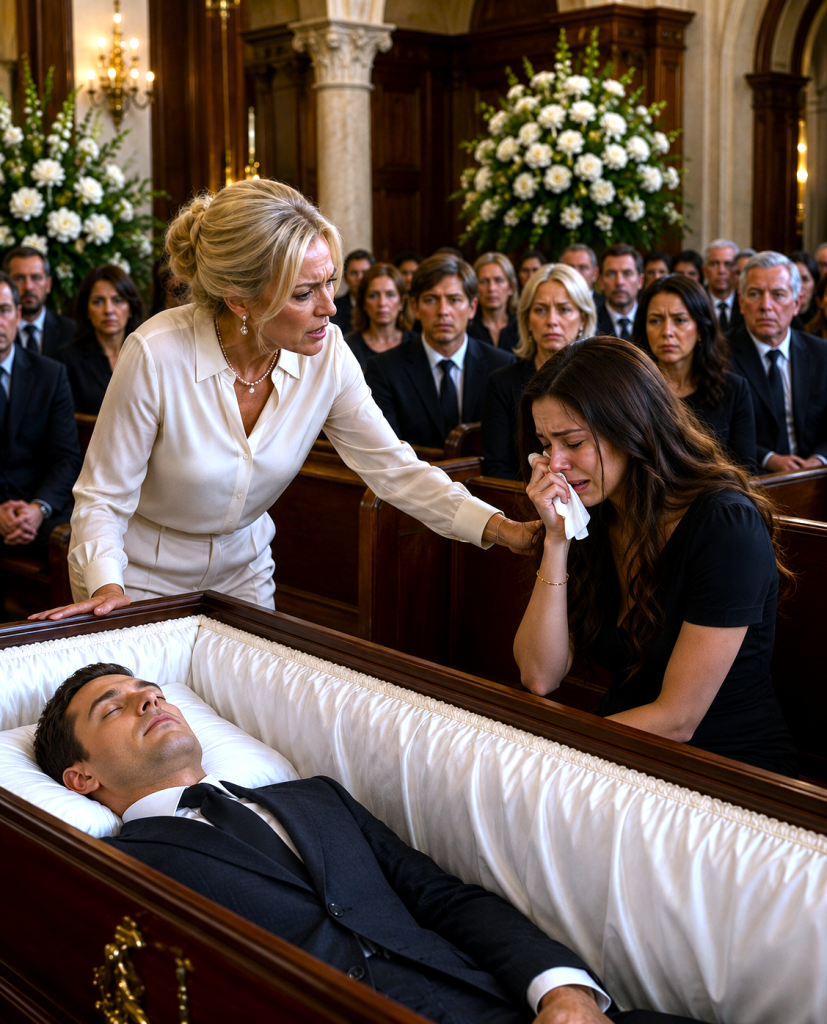
PART 3 — THE FUNERAL THAT WAS NEVER A FUNERAL
Three months before the funeral, Luca had discovered an unauthorized forty-million-dollar wire transfer routed through Sterling Global’s research and development division. When he confronted Flynn Vance, the company’s chief financial officer and his mother Wendy’s younger brother, Flynn claimed it was a confidential acquisition fee connected to a medical patent.
Luca didn’t believe him. He brought the encrypted digital ledgers home to me that same night.
By two in the morning, I had found the first shell corporation.
By four, I had found seven more.
By sunrise, I knew my husband’s family had been stealing from him for years.
The money had passed through consulting firms in Delaware, licensing companies in Nevada, holding corporations in the Cayman Islands, and eventually into accounts controlled by Flynn and Wendy.
Some of the transactions had been disguised as research grants.
Others were listed as international patent-development expenses.
Several were recorded as charitable donations to foundations that did not actually exist.
Forty million dollars was only what Luca had noticed.
The real number was much higher.
When I completed the preliminary audit, I turned my laptop toward him.
“Luca.”
He was standing by the kitchen window with a cup of coffee he had forgotten to drink.
“How bad?”
I swallowed.
“Almost eighty-seven million.”
His expression didn’t change at first.
Then he sat down.
For the next thirty seconds, my husband said absolutely nothing.
Finally, he whispered, “My mother?”
I nodded.
“And Flynn?”
“Yes.”
He looked toward the framed photograph on the counter.
It had been taken during our wedding.
Wendy stood beside him, one hand proudly resting on her son’s shoulder.
Flynn stood behind us smiling.
Luca stared at the photograph for a long time.
Then he said something I would never forget.
“I spent my whole life protecting people who were stealing from me.”
That was when everything changed.
Luca refused to confront them immediately.
Instead, we contacted Special Agent Marcus Hale, a federal financial-crimes investigator I had worked with years earlier.
Marcus arrived at our house the following evening without a government vehicle.
We closed the blinds.
We shut off our phones.
And for almost six hours, Luca explained everything.
Marcus listened without interrupting.
When Luca finished, Marcus leaned back in his chair.
“You understand what happens next?”
Luca nodded.
“If we proceed,” Marcus continued, “your mother and uncle cannot know they’re being investigated.”
“They won’t.”
“And you don’t confront them alone.”
“I understand.”
Marcus looked at me.
“You especially understand?”
I almost laughed.
“I used to investigate people like Flynn for a living.”
“That isn’t what I asked.”
I knew what he meant.
Cases involving money became dangerous when suspects believed prison was inevitable.
“I understand.”
For the next five weeks, Luca behaved as if nothing had happened.
He attended board meetings.
He ate dinner with Wendy.
He listened patiently while Flynn complained about quarterly projections.
He even allowed his mother to criticize me during Sunday lunch.
According to Wendy, I was “too independent.”
Apparently, a wife who worked, understood financial statements, and occasionally disagreed with her husband represented a threat to the Sterling family tradition.
I smiled politely.
Luca squeezed my hand under the table.
Every evening afterward, we documented another piece of evidence.
Bank transfers.
False invoices.
Forged signatures.
Property purchases.
Offshore records.
Then I discovered something worse.
The theft had not begun with Luca.
It had begun with his father.
Luca’s father, Vincent Sterling, had died eleven years earlier after suffering what doctors described as a sudden cardiac event.
According to the corporate records, massive unauthorized transfers had accelerated during the final eighteen months of Vincent’s life.
I noticed something else.
A private nurse hired by Wendy had received three unexplained payments from one of Flynn’s shell companies.
The nurse had disappeared overseas shortly after Vincent’s funeral.
When I showed Luca, he went pale.
“You think they killed my father?”
“I don’t know.”
“But you think it’s possible.”
I closed the laptop.
“I think we need Marcus.”
That discovery expanded the investigation overnight.
The federal team began examining Vincent’s medical records.
Nothing immediately proved murder.
But the circumstances were suspicious enough for prosecutors to request additional warrants.
Then Wendy made her first mistake.
She entered our home while Luca and I were supposedly attending a charity dinner.
She did not know we had installed cameras.
She went straight to Luca’s study.
Flynn arrived twelve minutes later.
They searched the drawers.
They opened the safe.
They photographed documents.
And then Wendy said the sentence that changed the entire investigation.
“If Luca gives Jessi those files, we’ll have the same problem we had with Vincent.”
Flynn froze.
“Don’t say that here.”
Wendy stared at him.
“Why? Nobody’s home.”
Flynn lowered his voice.
“Because I’m not doing that again.”
Again.
That single word was enough to turn a fraud investigation into something far darker.
Marcus replayed the recording three times.
Then he looked at us.
“Nobody leaves this house alone from now on.”
Two weeks later, Luca collapsed.
It happened after dinner.
We had been sitting on the back terrace when he suddenly pressed a hand against his chest.
“Jessi.”
I looked up.
His face had gone gray.
The glass slipped from his hand and shattered against the stone.
I reached him before he hit the ground.
“Luca!”
His breathing became shallow.
His pulse slowed.
I called emergency services while shouting his name.
Then I noticed the bottle of mineral water beside his chair.
I had watched Wendy hand it to him less than an hour earlier when she stopped by unexpectedly.
The paramedics arrived within minutes.
Luca was rushed to the hospital.
His heart stopped once inside the ambulance.
Doctors revived him.
For twelve hours, I sat outside intensive care convinced I was about to lose the man I loved.
Marcus arrived before sunrise.
“What happened?”
I told him about the water.
The bottle was collected.
Laboratory testing later found traces of a powerful prescription medication capable of causing a dangerous cardiac rhythm when given in concentrated amounts.
The medication had been prescribed to Wendy several months earlier.
That was the moment prosecutors decided we had enough.
But arresting Wendy immediately would have left too many questions unanswered.
Flynn would deny involvement.
Other conspirators might destroy evidence.
The offshore money might disappear.
And we still needed to know exactly what had happened to Vincent Sterling eleven years earlier.
Then Luca woke up.
His first word was my name.
His second was, “Don’t tell them.”
The doctors thought he was confused.
I knew immediately what he meant.
Wendy believed the poisoning had worked.
We could use that.
The idea that followed did not come from me.
It came from Luca.
And when he first explained it, I told him absolutely not.
“You nearly died.”
“I know.”
“You want to climb into a coffin?”
“A monitored coffin.”
“That sentence does not make this better.”
Marcus stood near the hospital window, clearly trying not to interfere in a marital argument.
Luca reached for my hand.
“If my mother believes I’m alive, she’ll destroy everything.”
“Then arrest her.”
“And Flynn?”
“Arrest him too.”
“With what? Fraud and conspiracy?”
“That’s enough!”
“For eighty-seven million dollars, maybe. But not for Dad.”
I stopped.
Luca’s eyes filled.
“She knows what happened to my father.”
I sat back down.
He continued quietly.
“If she believes I’m dead, she’ll relax. Flynn will relax. They’ll start talking. They’ll fight over the money. They’ll expose each other.”
Marcus finally spoke.
“The operation would be tightly controlled.”
I stared at him.
“You’re seriously considering this?”
“We already have evidence of attempted homicide. The prosecutor believes additional admissions could connect the historical case.”
“And if something goes wrong?”
“We have medical personnel present.”
I looked at Luca.
He gave me the smallest smile.
“Trust me.”
That was how my husband’s funeral became the strangest federal operation I had ever witnessed.
Only nine people knew Luca was alive.
Me.
Marcus.
Two prosecutors.
Three agents.
A physician.
And the funeral director.
Everyone else believed Luca Sterling had died after complications from a sudden cardiac event.
The public announcement devastated employees.
Business journalists published tributes.
Relatives flew in from around the country.
Wendy gave interviews about losing her “beloved only son.”
She cried beautifully for television cameras.
At home, Luca watched one of those interviews from a secured medical apartment and turned off the television halfway through.
“She practiced that.”
“What?”
“That expression.”
I looked at him.
He gave a tired laugh.
“She used the same expression at Dad’s funeral.”
On the morning of the staged funeral, Luca was transferred through a private service entrance.
A medical monitor had been concealed beneath his clothing.
His skin was covered with specialized makeup.
His breathing had been slowed with physician supervision, and the coffin had been modified so that he had airflow and could communicate if necessary.
The most important instruction was simple.
Luca was not supposed to move.
Unless he heard something important.
Then he could use our signal.
Two taps.
Pause.
One tap.
Keep quiet.
Trust me.
Standing beside that coffin while Wendy accused me of destroying him was one of the hardest performances of my life.
Not because the lies hurt.
Because I wanted to scream that my husband was alive.
I wanted to pull him out of that coffin and take him home.
Instead, I listened while his own mother celebrated what she believed was his death.
“He was ashamed of you,” Wendy told me.
I lowered my eyes.
She smiled.
Then Flynn whispered about burning the accounting files.
Wendy answered, “There won’t be anything left for anyone to find.”
Luca tapped the coffin.
Twice.
Pause.
Once.
I stayed silent.
Flynn moved closer to his sister.
“We need her signature today.”
“You’ll get it.”
“What about the board?”
“The board will follow me once I control Luca’s shares.”
“And the patent division?”
“After the estate transfers.”
Flynn lowered his voice.
“You promised me twenty million.”
Wendy’s expression hardened.
“Not here.”
“You said once Luca was gone—”
“Enough.”
Gone.
The chapel microphone captured everything.
Then Wendy made the mistake prosecutors had been waiting for.
She looked directly at Flynn and whispered, “Your problem is that you panic afterward. You did it after Vincent, and you’re doing it again.”
Flynn’s face changed.
Even from where I stood, I saw the blood drain from it.
“Shut up.”
“You shut up.”
“I told you I never wanted anyone hurt.”
Wendy gave a quiet laugh.
“You cashed the money.”
“That was different.”
“You bought the medication.”
Flynn stared at her.
“I bought it because you said you needed it.”
“And Luca drank it because you helped me switch the bottles.”
My entire body went cold.
For weeks, we had suspected Flynn knew about the poisoning.
Now we had his sister saying it aloud.
Flynn grabbed Wendy’s arm.
“You told me it would only make him sick!”
The chapel doors opened.
Everyone turned.
Special Agent Marcus Hale walked inside.
Six officers followed him.
The room erupted.
Wendy froze.
Flynn stumbled backward.
Marcus held up his badge.
“Federal agents. Nobody leave the chapel.”
Wendy recovered faster than anyone.
“This is outrageous!”
Marcus kept walking.
“Wendy Sterling, step away from the coffin.”
“What is the meaning of this?”
“You are being detained in connection with an ongoing federal investigation.”
Relatives began shouting.
Several reporters rushed toward the aisle.
Wendy pointed at me.
“This is her doing! That woman killed my son!”
Marcus didn’t even look at me.
“Mrs. Sterling, place your hands where officers can see them.”
She laughed.
It was an ugly sound.
“You people are insane. My son is lying dead right there.”
That was when Luca’s fingers moved.
Wendy saw them.
Her mouth opened.
At first, she made no sound.
Then Luca slowly lifted one hand.
The chapel became completely silent.
His eyes opened.
An elderly aunt screamed.
Flynn fell backward into the front pew.
Wendy stumbled away from the coffin.
“No.”
Luca pushed himself upright.
The funeral makeup made him look ghostlike, but his eyes were clear.
Very clear.
“Hello, Mother.”
Wendy stared at him as though the dead had actually returned.
“No.”
Luca swung his legs carefully over the side of the coffin.
The physician moved forward, but Luca raised one hand.
“I’m fine.”
Wendy’s knees nearly buckled.
“This is impossible.”
“No,” Luca said. “What’s impossible is spending my entire life believing you loved me.”
She looked toward the chapel doors.
Two officers blocked them.
Then she looked at Flynn.
Flynn had begun crying.
Not loudly.
Not dramatically.
He simply covered his face with both hands and whispered, “Oh God.”
Wendy suddenly pointed at me.
“She planned this!”
I finally spoke.
“Yes.”
Wendy’s eyes burned with hatred.
“You filthy little—”
“And every word you said today was recorded.”
Her expression changed.
I continued.
“So was the conversation in our study six weeks ago.”
Flynn looked up.
“What conversation?”
Luca answered him.
“The one where you said you weren’t doing to me what you did to Dad.”
Flynn stared at Wendy.
“You said the house was clean.”
“I thought it was!”
Marcus stepped between them.
“That will be enough.”
He read Wendy her rights.
For the first time in all the years I had known her, Wendy Sterling looked genuinely afraid.
Not embarrassed.
Not angry.
Afraid.
The officer reached for her wrists.
Wendy pulled away.
“You cannot arrest me at my son’s funeral!”
Luca stood beside the coffin.
“It isn’t my funeral.”
The handcuffs clicked shut.
“And you’re not taking my company.”
That was when Wendy finally lost control.
“You ungrateful child!”
The entire chapel heard her.
“I gave you everything!”
Luca’s face went still.
“You gave me fear.”
“I built that family!”
“My father built it.”
“I protected it!”
“You poisoned me.”
Wendy looked around desperately.
“No.”
“We recorded you.”
“No!”
“You just admitted Flynn switched the bottle.”
“I was upset!”
“You said the same thing happened with Dad.”
Wendy’s mouth opened.
No words came.
Flynn suddenly stood.
“She killed Vincent.”
Wendy spun toward him.
“Flynn!”
Marcus raised a hand.
“Mr. Vance, do not say another word unless you intend to waive your right to counsel.”
Flynn pointed at Wendy anyway.
“She told me it was medication for his heart.”
“Shut your mouth!”
“She said Vincent had changed the trust!”
“Flynn!”
“She said if he lived, he’d expose everything!”
Wendy lunged toward him.
The officers restrained her.
Flynn started sobbing.
“I didn’t know she was going to kill him.”
Luca did not move.
I reached for his hand.
His fingers were cold.
Flynn looked at him.
“Luca, I swear.”
“Don’t.”
“I swear I didn’t know.”
“Don’t use my name.”
Flynn stopped.
Luca looked at the man who had attended his childhood birthdays, taught him to drive, stood beside him at his wedding, and stolen millions from his company.
“You knew enough to hide it.”
Flynn lowered his head.
Police led him away moments later.
Wendy continued screaming until the chapel doors closed behind her.
Then there was silence.
No one knew what to say.
The relatives who had nodded when Wendy blamed me suddenly found the floor fascinating.
One aunt quietly removed herself from the front row.
A cousin lowered the phone he had been using to record my humiliation.
Luca looked around the chapel.
“These proceedings are over.”
Nobody moved.
Then he added, “And for anyone wondering, my wife never cheated on me. She never stole from me. She never damaged Sterling Global.”
His eyes moved across the relatives.
“She saved my life.”
I hadn’t expected him to say that.
My throat closed.
Luca squeezed my hand.
“And if any of you repeat the lies my mother spread about her, you’ll hear from our attorneys.”
That emptied the chapel quickly.
Within ten minutes, only investigators, medical staff, Luca and I remained.
I stared at the coffin.
Then at my husband.
Then back at the coffin.
Luca raised an eyebrow.
“What?”
I hit him lightly on the arm.
He laughed for the first time in weeks.
“You promised you wouldn’t sit up until the agents entered.”
“They were late.”
“They were four seconds late!”
“I improvised.”
“You were supposed to be dead.”
“I was excellent.”
“You moved your fingers.”
“That was our signal.”
“You nearly gave me a heart attack.”
He wrapped both arms around me.
The anger disappeared immediately.
I buried my face against his chest.
His heart was beating.
That was all I cared about.
“You’re alive,” I whispered.
“I’m alive.”
For several seconds, neither of us said anything.
Then he kissed my hair.
“And we’re going home.”
But we didn’t go home that day.
Because the investigation was only beginning.
THE TRUTH ABOUT VINCENT STERLING
Flynn asked for a lawyer within an hour of reaching federal custody.
Then he asked for a deal.
By midnight, prosecutors had one.
Flynn agreed to provide complete financial records, passwords, offshore account information, and testimony concerning both Luca’s poisoning and Vincent Sterling’s death.
In exchange, prosecutors agreed only to consider his cooperation when sentencing.
They did not promise leniency.
Flynn talked anyway.
According to his confession, Wendy’s financial problems had begun nearly fifteen years earlier.
She invested heavily in luxury developments through a private company she concealed from Vincent.
The investments collapsed during a market downturn.
Instead of admitting she had lost millions, she began taking money from Sterling Global.
At first, the amounts were relatively small.
Two hundred thousand.
Five hundred thousand.
Then several million.
Flynn helped disguise the transactions.
Vincent eventually discovered discrepancies.
He told Wendy he intended to remove Flynn from the company and revise their marital trust.
Wendy panicked.
Vincent had also planned to leave controlling voting shares directly to Luca.
According to Flynn, Wendy feared losing everything.
So she began interfering with Vincent’s medication.
Slowly.
Carefully.
Enough to make his existing heart condition appear worse.
Flynn claimed he did not initially understand what she was doing.
But he knew before Vincent died.
And he remained silent.
That silence bought him access to millions.
The private nurse had helped Wendy obtain medication and had later been paid to leave the country.
Federal investigators located her living in Portugal under her married name.
When confronted with banking records, she agreed to cooperate.
Her testimony matched Flynn’s.
Eleven years after Vincent Sterling’s funeral, the truth finally emerged.
His death had not been natural.
The revelation destroyed Luca.
Not publicly.
Publicly, he was composed.
Privately, he barely slept.
One night I found him sitting in his father’s old study at three in the morning.
He was holding a photograph.
Vincent and Luca fishing together when Luca was probably twelve years old.
“I should have known.”
I sat beside him.
“How?”
“She hated when Dad and I spent time together.”
“That doesn’t mean you could have known.”
“He changed during that last year.”
“He was sick.”
“No.”
Luca stared at the photograph.
“He was scared.”
I put my hand over his.
“My father was scared in his own house, Jessi.”
His voice broke.
“And I didn’t see it.”
“You were his son. You weren’t his investigator.”
“I could have asked questions.”
“You were twenty-six years old.”
“I could have done something.”
“No.”
He looked at me.
“You don’t get to rewrite the past just to make yourself guilty.”
That stopped him.
I continued.
“Your father hid what was happening because he was trying to protect you. You cannot punish yourself for believing your parents were safe people.”
Luca looked down.
For a moment, he seemed like a little boy rather than the forty-one-year-old CEO thousands of employees depended on.
“I miss him.”
“I know.”
“I want five minutes.”
“With him?”
“Just five minutes.”
I squeezed his hand.
“I know.”
We sat there until sunrise.
THE FAMILY CHOOSES SIDES
The Sterling relatives did exactly what wealthy families often do when scandal threatens them.
They divided into camps.
Some called Luca immediately.
They apologized.
They said Wendy had manipulated them.
They claimed they had never truly believed the affair story.
Luca listened politely.
Then he asked one question.
“When she accused Jessi at my funeral, why didn’t you defend her?”
Most had no answer.
Aunt Eleanor tried.
“We were grieving.”
“You were gossiping.”
“We didn’t know what to believe.”
“You believed the cruelest version because it was entertaining.”
Eleanor began crying.
Luca remained calm.
“I don’t hate you. But you will not be part of my wife’s life again.”
He hung up.
Others defended Wendy.
One cousin posted online that the entire investigation was “an elaborate corporate coup” engineered by me.
That post stayed online for forty-three minutes.
Then our attorney sent a preservation notice.
It disappeared.
Another relative told a reporter Luca had been “brainwashed by his wife.”
Two days later, publicly filed bank records showed that same relative had received nearly nine hundred thousand dollars in unexplained transfers from Wendy over six years.
He stopped giving interviews.
The board of Sterling Global held an emergency meeting.
I attended beside Luca.
The atmosphere was uncomfortable.
Several directors had attended the funeral.
Two had quietly believed Wendy’s accusations.
One had already discussed replacing Luca as chairman because he assumed Luca was dead.
Now Luca walked into the boardroom very much alive.
Nobody joked about it.
He stood at the head of the table.
“I’ll make this simple.”
The directors looked at him.
“My mother and Flynn Vance used Sterling Global to finance personal debts, shell companies, bribery, and other crimes currently under federal investigation.”
He placed a folder on the table.
“Every transaction has been independently audited.”
Nobody spoke.
“Effective immediately, all financial authority previously granted to either of them is permanently revoked.”
One director raised his hand slightly.
“Luca, no one disputes that.”
“Good.”
“However, given the publicity surrounding the investigation—”
Luca looked at him.
“The publicity surrounding my attempted murder?”
The director cleared his throat.
“Yes.”
“Continue.”
“We need stability.”
“So do our employees.”
“And leadership.”
“You have it.”
The director leaned back.
Then Luca surprised everyone.
“My wife will oversee an independent forensic review of every company-controlled entity.”
Several heads turned toward me.
I hadn’t known he planned to announce that.
Neither had Marcus.
Neither had our attorney.
I looked at Luca.
He smiled faintly.
The director frowned.
“Isn’t that a conflict?”
I answered before Luca could.
“Yes.”
The room went quiet.
I continued.
“Which is why I won’t be employed by Sterling Global and I won’t report to Luca.”
I pulled a document from my folder.
“The review will be conducted through an independent accounting firm. I will serve as an external consultant reporting to a special committee composed exclusively of directors with no family or financial connection to the suspected transactions.”
The director looked at the document.
Then at me.
“You prepared this already?”
“I’ve met boards before.”
Someone at the opposite end of the table laughed.
The tension finally broke.
The motion passed unanimously.
Over the next four months, we found another thirty-one million dollars in improper transactions.
Most was recoverable.
Some was not.
But the company survived.
More importantly, nearly twelve thousand employees who had done absolutely nothing wrong kept their jobs.
That mattered to Luca more than the money.
WENDY’S FIRST COURT APPEARANCE
Wendy refused every plea agreement.
She insisted she was innocent.
Her attorney described the funeral recording as emotionally manipulative.
He argued she had been grieving.
He claimed her statements were taken out of context.
The judge was unimpressed.
At her first major hearing, Wendy entered the courtroom wearing a navy suit and pearls.
No handcuffs in front of the cameras.
She looked exactly like she had at charity luncheons.
Polished.
Elegant.
Controlled.
Until she saw me.
Her expression hardened.
I sat behind the prosecution table beside Luca.
Wendy leaned toward her attorney.
He whispered something.
She looked away.
The prosecutor began presenting evidence regarding bail.
Offshore accounts.
Property transfers.
Foreign contacts.
The private nurse in Portugal.
A second residence in Switzerland that Wendy had never disclosed.
The prosecutor argued Wendy represented a serious flight risk.
Her attorney objected.
“She is sixty-seven years old.”
The judge responded, “Sixty-seven-year-old people can board airplanes.”
A few people laughed.
Wendy did not.
Then the prosecutor mentioned the poisoning.
Wendy’s attorney stood.
“My client vigorously denies attempting to harm her son.”
The prosecutor looked toward Luca.
“We have recorded admissions.”
“Ambiguous statements.”
“We have the bottle.”
“No reliable chain—”
“We have surveillance footage showing Mrs. Sterling carrying the bottle into her son’s residence.”
Wendy whispered furiously to her attorney.
He stopped talking.
The judge denied bail.
That was the first moment Wendy’s composure cracked.
“No.”
The judge looked at her.
“Mrs. Sterling.”
“I have never been arrested in my life.”
“That is not a legal argument.”
“I am a respected member of this community.”
The judge’s expression remained neutral.
“You are presently charged with serious federal offenses and state prosecutors are separately reviewing evidence regarding the death of your husband.”
Wendy turned toward Luca.
“This is what she wanted!”
The courtroom froze.
The judge warned her.
Wendy ignored him.
She pointed at me.
“She wanted my family!”
Luca stood before anyone could stop him.
“No.”
His voice was quiet.
“My wife wanted me alive.”
Wendy stared at him.
Luca continued.
“You should try understanding the difference.”
Her face twisted.
For a second, I saw the woman beneath the pearls and polished manners.
Not a grieving mother.
Not a wealthy widow.
A person furious that she had finally lost control.
Marshals led her away.
THE LETTER
Two weeks later, Luca received a handwritten letter from his mother.
He left it unopened on his desk for three days.
On the fourth morning, he handed it to me.
“You read it.”
“I don’t think I should.”
“I want you to.”
“Why?”
“Because if I read it first, I’ll hear her voice instead of the words.”
I opened the envelope.
Wendy had written six pages.
The first page blamed Flynn.
The second blamed Vincent.
The third blamed financial pressure.
The fourth blamed me.
Apparently, I had “entered the family with ambitions Wendy recognized immediately.”
I stopped.
Luca looked at me.
“Keep going.”
The fifth page was worse.
Wendy claimed everything she had done was for Luca.
She said Vincent planned to “leave the family vulnerable.”
She insisted the money belonged to the Sterling bloodline.
She said Luca would eventually understand.
The final paragraph read:
One day, when this woman has taken everything from you, you will remember that your mother tried to protect you. I forgive you for what you have done to me. I only hope you learn the truth before it is too late.
I lowered the letter.
Luca gave a humorless laugh.
“She forgives me.”
I folded the pages.
“What do you want to do with it?”
“Keep it.”
“For evidence?”
“No.”
He looked through the window toward the garden.
“For the next time I start remembering the mother I wish she was.”
That answer broke my heart more than the letter did.
FLYNN’S TESTIMONY
Flynn became the prosecution’s most damaging witness.
Not because jurors liked him.
They didn’t.
He admitted stealing millions.
He admitted forging documents.
He admitted helping Wendy conceal financial crimes.
He admitted knowing Vincent’s medication was being manipulated.
He admitted helping Wendy replace Luca’s water bottle.
His defense attorney repeatedly emphasized that Flynn believed Luca would only become ill.
The prosecutor asked him one question.
“If you believed nothing dangerous was happening, why did you delete your messages afterward?”
Flynn stared at the floor.
“I was scared.”
“Of what?”
“Of Wendy.”
“Why?”
“Because people who got in her way had a way of disappearing.”
The courtroom went silent.
Wendy stared straight ahead.
The prosecutor approached.
“Did that include Vincent Sterling?”
Flynn began crying.
“Yes.”
“Did you tell anyone?”
“No.”
“Why not?”
“Because she said I would go to prison too.”
“And did you continue stealing money afterward?”
“Yes.”
“How much did you personally receive?”
“About twenty-three million.”
The prosecutor paused.
“So despite believing your sister had contributed to her husband’s death, you remained silent for eleven years because you were financially benefiting?”
Flynn closed his eyes.
“Yes.”
I looked at Luca.
His jaw tightened.
The prosecutor continued.
“Then when Luca Sterling discovered the fraud, what did Wendy tell you?”
“That he was becoming a problem.”
“What did that mean?”
“I knew what she meant.”
“Did you help her?”
Flynn took a long breath.
“Yes.”
I felt Luca’s fingers close around mine.
Flynn looked toward us.
“I’m sorry.”
The prosecutor immediately said, “Please answer the question rather than addressing spectators.”
Flynn looked down.
But I had seen his face.
I believed he was sorry.
I also believed it was eleven years too late.
Remorse does not erase choice.
MY TURN ON THE WITNESS STAND
I testified for almost six hours.
Wendy’s attorney tried to portray me as an ambitious outsider who had manipulated Luca against his family.
“Mrs. Sterling, you are a forensic accountant?”
“Yes.”
“You previously worked for the attorney general?”
“Yes.”
“So you know how to construct a financial narrative.”
“I know how to follow money.”
“Isn’t it true that you never had a good relationship with my client?”
“I tried.”
“That wasn’t my question.”
“No. We did not have a good relationship.”
“Because she distrusted you?”
“You would have to ask her.”
“Did she accuse you of marrying Luca for money?”
“Repeatedly.”
“And that angered you?”
“Sometimes.”
“So you had motive to damage her reputation.”
I looked at the attorney.
“She attempted to kill my husband.”
He frowned.
“The jury will determine that.”
“Yes.”
“Please answer my question.”
“I had no reason to damage her reputation. She handled that herself.”
The judge hid a smile.
Wendy’s attorney changed direction.
“You participated in creating a fake funeral.”
“I cooperated with law enforcement.”
“You stood beside a coffin containing your living husband while my client believed her son was dead.”
“Yes.”
“Did you enjoy deceiving her?”
“No.”
“You expect us to believe that?”
“I spent most of that funeral terrified my husband would stop breathing.”
He paused.
“Yet you allowed mourners to believe he had died.”
“Yes.”
“Including my client.”
“Yes.”
“Would you describe that as emotionally cruel?”
I looked at Wendy.
She was watching me.
For the first time since the trial began, I answered her rather than her attorney.
“Cruel was watching my husband nearly die on our terrace.”
The attorney interrupted.
“Mrs. Sterling—”
“Cruel was learning his father had been afraid inside his own home.”
“Your Honor—”
“Cruel was standing beside that coffin while his mother smiled after telling an entire chapel that he was better off dead.”
The judge looked at me.
“Mrs. Sterling, answer counsel’s questions directly.”
I nodded.
“Of course.”
Wendy’s attorney waited.
Then he asked quietly, “Was the funeral cruel?”
“Yes.”
The answer surprised him.
I continued.
“It was also necessary.”
LUCA FACES HIS MOTHER
Luca’s testimony lasted two days.
He described his childhood.
His father.
The company.
The missing money.
The poisoning.
The hospital.
The staged funeral.
Then the prosecutor played the chapel recording.
Wendy’s own voice filled the courtroom.
“It’s better for him to die now than to live with the humiliation she brought upon him.”
I watched the jurors.
Several looked at Wendy.
Then came Flynn’s voice.
“Once she signs the waiver, burn the remaining accounting files in the study.”
Wendy:
“There won’t be anything left for anyone to find.”
Then later:
“You did it after Vincent, and you’re doing it again.”
Flynn:
“I told you I never wanted anyone hurt.”
Wendy:
“You bought the medication.”
Flynn:
“I bought it because you said you needed it.”
Wendy:
“And Luca drank it because you helped me switch the bottles.”
When the recording ended, nobody moved.
Wendy’s attorney approached Luca.
“Mr. Sterling, your mother made those statements under extraordinary emotional conditions.”
“My mother thought she had successfully killed me.”
“Objection.”
“Sustained.”
The attorney frowned.
“Please limit yourself to facts.”
Luca nodded.
“My mother believed I was dead after drinking a contaminated bottle she delivered to my house.”
The attorney stared at him.
“Were you present when she allegedly contaminated that bottle?”
“No.”
“So you cannot say who placed anything inside it.”
“I can say she brought it.”
“You can say she carried it.”
“Yes.”
“And your uncle testified he switched bottles.”
“Yes.”
“Flynn Vance is an admitted thief and liar.”
“Yes.”
“Yet you believe him?”
“I believe the surveillance footage, banking records, laboratory analysis and recorded conversations.”
The attorney changed direction.
“Mr. Sterling, isn’t it true your relationship with your mother deteriorated after you married Jessi?”
“Yes.”
“Why?”
“Because my wife has boundaries.”
A few jurors smiled.
“Meaning?”
“She does not confuse obedience with respect.”
The attorney glanced at his notes.
“Did your mother approve of your marriage?”
“No.”
“Did that upset you?”
“Yes.”
“So resentment existed long before this investigation.”
“Resentment isn’t evidence.”
“I’m asking about your feelings.”
“Then yes. I resented how she treated my wife.”
The attorney nodded.
“Could that resentment have influenced how you interpreted your mother’s actions?”
Luca looked directly at Wendy.
“For years, it influenced me in the opposite direction.”
The attorney paused.
“What do you mean?”
“I made excuses for her.”
Luca’s voice softened.
“I told Jessi, ‘That’s just how Mom is.’ I told myself she was protective. Traditional. Difficult. Lonely after Dad died.”
He looked toward the jury.
“I spent years translating cruelty into love because admitting the truth about my mother was harder.”
No one moved.
Luca continued.
“So if anything, my feelings delayed the moment I finally saw what was happening.”
Wendy looked down.
It was the first time I had seen her do that during the entire trial.
THE VERDICT
The jury deliberated for nine hours across two days.
We waited in a small conference room.
Luca paced.
I tried reading.
Neither of us spoke much.
At 3:17 in the afternoon, the clerk entered.
“They have a verdict.”
My hands went cold.
We returned to the courtroom.
Wendy entered through the side door.
She looked thinner than she had during the funeral.
But she still held her chin high.
The jury filed in.
The foreperson stood.
On conspiracy to commit wire fraud:
Guilty.
On multiple counts of wire fraud:
Guilty.
On money laundering:
Guilty.
On obstruction:
Guilty.
On attempted murder in connection with Luca’s poisoning:
Guilty.
Wendy’s face lost all color.
Then came the charges related to Vincent.
The prosecution had not been able to pursue the strongest possible homicide charge because too much time had passed and some physical evidence no longer existed.
But Wendy faced conspiracy, unlawful administration of medication, financial crimes connected to Vincent’s estate, obstruction, and additional serious state charges supported by Flynn and the nurse.
Guilty.
Guilty.
Guilty.
When the final verdict was read, Wendy sat down.
Her attorney put a hand on her shoulder.
She pushed it away.
Then she turned around.
She looked directly at Luca.
For one second, I thought she might cry.
Instead she mouthed two words.
Her fault.
Meaning me.
Luca saw it.
He shook his head.
“No, Mother.”
The judge ordered Wendy remanded pending sentencing.
As officers approached, she finally started crying.
Not quietly.
She reached toward Luca.
“Please.”
He remained seated.
“Luca.”
He did not move.
“I’m your mother.”
The words echoed through the courtroom.
Luca’s eyes filled.
But his voice remained steady.
“And I was your son.”
The officers led her away.
SENTENCING DAY
Three months later, Wendy returned for sentencing.
Several people submitted statements.
Employees.
Investors.
Former family friends.
Flynn.
Me.
Luca wrote one but nearly decided not to read it.
That morning, he stood outside the courthouse holding the folded pages.
“I don’t know if I want to give her anything else.”
“You don’t owe her a speech.”
“She’ll think silence means she won.”
“No.”
He looked at me.
“What does silence mean?”
“Whatever you choose it to mean.”
He smiled slightly.
“That sounds like something an accountant would say.”
“We enjoy flexibility.”
He eventually decided to speak.
When his name was called, Luca walked to the lectern.
Wendy sat beside her attorney.
He unfolded the pages.
Then he set them aside.
“Eleven years ago, I stood at my father’s funeral and watched my mother receive condolences.”
Wendy closed her eyes.
“I believed she was grieving harder than anyone.”
He paused.
“I spent years worrying about her. Inviting her to dinner. Calling her when she was lonely. Making sure she had everything she needed.”
His voice tightened.
“I did that because I thought she had lost the love of her life.”
Wendy began crying.
Luca continued.
“Now I know my father’s final months were filled with fear. I know he was trying to protect me and his employees. And I know the person he should have trusted most was helping destroy him.”
He took a breath.
“Then history almost repeated itself.”
He looked briefly at me.
“My wife saw what I couldn’t. She followed the evidence even when I didn’t want to believe it.”
Wendy shook her head.
Luca turned toward her.
“You spent years telling me Jessi wanted my money.”
Wendy whispered something to her attorney.
Luca continued.
“She was the one person in the room who never cared about controlling it.”
He looked at the judge.
“I am alive because my wife refused to ignore what made her uncomfortable.”
Then back to Wendy.
“I don’t hate you.”
Wendy looked up.
“I thought I would.”
His eyes filled.
“But hatred would keep you in my life.”
Wendy began sobbing.
“So I’m giving you something you never gave Dad.”
Luca paused.
“An ending.”
He returned to his seat.
Wendy received a sentence that would almost certainly keep her incarcerated for the majority of the rest of her life.
Flynn received a substantial prison sentence as well, though his cooperation reduced it.
Neither would control Sterling Global again.
Neither would touch Vincent’s estate.
Neither would decide Luca’s future.
For the first time in generations, the Sterling family money stopped being a weapon.
WHAT HAPPENED TO THE MONEY
Over one hundred million dollars in assets were eventually traced to accounts, properties, shell corporations, luxury investments and trusts connected to Wendy and Flynn.
Not all of it belonged to Sterling Global.
Some represented their own investments.
Some came from legitimate inheritance.
Sorting everything required nearly two years.
But Luca made one decision almost immediately.
He refused to keep any money recovered directly from schemes connected to Vincent’s death.
Instead, he established the Vincent Sterling Foundation.
The foundation supports elder financial-abuse investigations, whistleblowers, families dealing with coercive control, and nonprofit organizations helping older adults protect themselves from exploitation.
When Luca told me the plan, I smiled.
“Your father would like that.”
“I hope so.”
“He would.”
“How do you know?”
“Because you’re his son.”
Luca looked away quickly.
He still became emotional whenever anyone compared him to Vincent.
The foundation’s first major project funded additional forensic accounting resources for agencies investigating elder exploitation.
I volunteered as an adviser.
Not because Luca asked.
Because I wanted to.
The irony was not lost on either of us.
Wendy had spent years accusing me of wanting Sterling money.
In the end, the only Sterling money I deliberately touched was money used to help strangers keep theirs.
THE HOUSE
For months after the trial, Luca refused to return to the terrace where he had collapsed.
He never said he was afraid.
He simply avoided it.
Breakfast moved indoors.
Dinner moved to the kitchen.
When guests visited, we used the library.
Then one Sunday morning, I found him standing outside alone.
He held two cups of coffee.
“You coming?”
I stepped onto the terrace.
The chair where he had collapsed was gone.
He had replaced the furniture.
New table.
New chairs.
New plants.
Everything different.
“You redecorated.”
“I reclaimed.”
I smiled.
“Very dramatic.”
“I married you.”
“Fair point.”
We sat down.
For a while, we listened to birds in the garden.
Then Luca said, “I’ve been thinking about selling this house.”
I looked at him.
“You love this house.”
“I did.”
“Do you want to leave because of what happened?”
“Maybe.”
“Then wait.”
“Why?”
“Because selling it because you want something new is one thing. Selling it because your mother poisoned you here gives her one more thing.”
He stared at me.
“I hate when you’re right.”
“No, you don’t.”
“I strongly dislike how frequently it happens.”
We kept the house.
Two months later, Luca planted a maple tree beside the terrace.
There was no plaque.
No explanation.
Just a tree.
When I asked why, he said, “I wanted something living where I almost died.”
That was Luca.
He never needed monuments.
He needed meaning.
THE APOLOGY I NEVER EXPECTED
Almost a year after the funeral, I received a letter from Luca’s Aunt Eleanor.
Not a phone call.
Not an email.
A handwritten letter.
She did not make excuses.
She wrote:
I stood in that chapel and allowed Wendy to humiliate you because challenging her would have required courage I did not have. I told myself I was grieving. The truth is I was afraid of becoming her next target. My silence made me part of what happened to you. I am sorry.
I read the letter twice.
Then I gave it to Luca.
“What do you think?”
He read it.
“She means it.”
“I think so too.”
“Are you going to answer?”
“I don’t know.”
He handed the letter back.
“You don’t owe anyone forgiveness.”
“No.”
“But?”
“But maybe forgiveness isn’t the same as letting someone back inside.”
Luca smiled.
“Look at you.”
“What?”
“Emotionally mature.”
“Don’t ruin it.”
I eventually wrote Eleanor back.
I told her I accepted her apology.
I did not invite her to dinner.
We exchanged occasional holiday cards.
That was enough.
Boundaries do not have to be punishment.
Sometimes they are simply the distance required for peace.
FLYNN’S LAST CONFESSION
Two years after the staged funeral, Flynn asked to speak with Luca.
Luca initially refused.
Then Flynn’s attorney explained that he wanted to disclose something concerning Vincent.
We traveled to the federal prison together.
Flynn looked twenty years older.
His hair had gone almost completely gray.
He sat behind the glass and picked up the phone.
Luca did the same.
I sat beside him.
Flynn looked at me first.
“Thank you for coming.”
I said nothing.
He looked at Luca.
“I lied about one thing.”
Luca’s face hardened.
“What?”
“The night your father died.”
Luca gripped the phone.
Flynn continued.
“I told prosecutors I wasn’t there.”
“You weren’t?”
“I was.”
Everything inside me tightened.
Luca spoke slowly.
“Explain.”
Flynn looked down.
“Your mother called me around eleven.”
His hands trembled.
“She said Vincent had stopped responding.”
Luca did not move.
“When I arrived, he was still conscious.”
I looked at Luca.
His eyes had gone completely still.
Flynn continued.
“He asked me to call an ambulance.”
Luca whispered, “Did you?”
“No.”
I closed my eyes.
Flynn started crying.
“Wendy told me if paramedics came, Vincent would tell them what we’d been doing.”
“You let him die.”
“I was terrified.”
“You let my father die.”
“Yes.”
Luca stood so quickly the chair fell backward.
A guard moved closer.
I touched Luca’s arm.
He looked at me.
I shook my head.
Not because Flynn deserved protection.
Because Luca deserved not to lose himself.
He slowly sat again.
Flynn pressed the phone against his forehead.
“I hear him every night.”
Luca’s voice shook.
“Good.”
Flynn looked up.
“He kept saying your name.”
Luca closed his eyes.
I immediately wished Flynn had not said it.
“He said, ‘Tell Luca I’m sorry.’”
A tear moved down Luca’s cheek.
Flynn continued.
“I don’t know what he was sorry for.”
“I do.”
“What?”
Luca looked through the glass.
“He was sorry he hadn’t protected me sooner.”
Flynn lowered his head.
Luca stood again.
This time calmly.
He placed the phone back on its hook.
Flynn tapped the glass.
Luca stopped.
Flynn mouthed, “I’m sorry.”
Luca stared at him for several seconds.
Then he walked away.
Outside the prison, he made it halfway across the parking lot before breaking down.
I held him.
He cried against my shoulder for his father.
For the twenty-six-year-old version of himself who had unknowingly attended a murdered man’s funeral.
For the eleven years stolen by lies.
For the final ambulance call that never came.
There are some wounds justice cannot close.
It can only stop them from being inflicted again.
WE RETURNED TO THE CHAPEL
Three years after the day my husband climbed out of his own coffin, Luca asked me to drive somewhere with him.
He refused to tell me where.
When we turned onto the road leading toward St. Matthew’s Chapel, I understood.
The chapel had changed owners.
The stained glass remained.
The pews had been restored.
The funeral home no longer operated there.
It had become a small community music hall used for weddings, memorial services and local performances.
The manager recognized Luca immediately.
Everyone did.
Our funeral footage had become impossible to escape online, though court orders prevented several recordings from being commercially used.
The manager gave us privacy.
We walked toward the front.
For a moment I could see everything again.
Wendy standing beside the coffin.
Flynn whispering.
Luca’s fingers moving.
Police entering.
The coffin opening.
I shivered.
Luca noticed.
“You okay?”
“Yes.”
He stood where the coffin had once rested.
“I hated this room.”
“So did I.”
“I dreamed about it for months.”
“You never told me.”
“I know.”
He looked around.
“Now it just looks like a room.”
I understood.
Trauma does that.
It turns ordinary places into monsters.
Healing does not erase the memory.
It simply makes the room become a room again.
Luca reached for my hand.
“You know what I remember most?”
“What?”
“Your face when I sat up.”
I stared at him.
“You were supposed to wait.”
He started laughing.
“I knew you were going to say that.”
“You nearly killed your supposedly grieving widow.”
“You looked furious.”
“I was furious.”
“You also looked relieved.”
“I was mostly furious.”
He kissed my forehead.
“Liar.”
We sat in the front pew.
Sunlight moved slowly through the stained glass.
For the first time, I remembered something beautiful about that day.
Not Wendy’s cruelty.
Not Flynn’s confession.
Not the handcuffs.
The heartbeat beneath Luca’s suit when I hugged him after everyone left.
Alive.
Alive.
Alive.
THE QUESTION EVERYONE ASKED
Whenever people learned who we were, they asked the same question.
“How did you know something was wrong?”
They expected me to mention a complicated accounting formula.
A secret forensic technique.
An advanced software tool.
Sometimes I explained the shell companies.
The duplicate invoices.
The irregular transfers.
But the real answer was simpler.
Something didn’t make sense.
And I refused to ignore that feeling.
The numbers said one thing.
Wendy said another.
Luca’s father’s records raised questions.
Flynn behaved differently when certain accounts were mentioned.
Wendy became aggressive whenever Luca talked about outside auditors.
None of those details alone proved anything.
Together, they created a pattern.
Abuse often survives because everyone is encouraged to examine each incident separately.
That insult was just an insult.
That lie was just a misunderstanding.
That missing money was just an accounting error.
That threat was just anger.
That suspicious death was just unfortunate timing.
But patterns tell stories.
And sometimes survival begins when someone finally reads the whole story.
FOUR YEARS LATER
Four years after the fake funeral, Sterling Global held its annual foundation dinner.
Luca almost canceled the event.
He hated galas.
I reminded him that we had literally invented our secret hand signal because he hated galas.
That made him laugh.
So we went.
The ballroom was filled with nonprofit directors, accountants, investigators, company employees and families the foundation had helped.
At one table sat an eighty-two-year-old woman whose nephew had attempted to transfer her home into his own name.
At another sat a retired teacher whose caretaker had stolen nearly three hundred thousand dollars.
A young accountant approached me during dinner.
“You’re the reason I went into forensic accounting.”
I laughed.
“I’m sorry.”
She smiled.
“I’m serious.”
“So am I.”
She told me she had watched one of my lectures about elder financial exploitation.
Her team had recently helped recover funds for twelve victims.
“That’s wonderful.”
She hesitated.
“Can I ask you something?”
“Of course.”
“Were you scared at the funeral?”
I looked across the ballroom.
Luca was speaking with Marcus Hale.
His hair had begun graying slightly at the temples.
He caught me looking and raised two fingers.
Tap.
Tap.
Then one.
Our signal.
I smiled.
“Yes.”
“How did you stay calm?”
“I didn’t.”
She looked surprised.
“You looked calm.”
“That isn’t the same thing.”
I leaned closer.
“Courage is often just fear with instructions.”
She laughed.
Then wrote the sentence down on her phone.
Across the room, Luca was still watching me.
I lifted my glass.
He lifted his.
LUCA’S FINAL DECISION ABOUT WENDY
Wendy wrote regularly from prison.
Birthdays.
Christmas.
The anniversary of Vincent’s death.
The anniversary of the funeral.
Luca stopped opening the letters after the first year.
We stored them in a locked box in case they ever became legally relevant.
Then, during the fourth year, one arrived with unfamiliar handwriting on the envelope.
Wendy’s attorney had written the address.
Inside was a short note explaining Wendy had developed serious health problems.
She was requesting a visit.
Luca read the letter in silence.
“What do you want to do?” I asked.
“I don’t know.”
“You don’t have to decide today.”
He looked at me.
“She’s still my mother.”
“Yes.”
“I hate that sentence.”
“I know.”
“What would you do?”
“I won’t decide for you.”
“Jessi.”
“No.”
He frowned.
“You always have opinions.”
“I have many.”
“Usually several at once.”
“Yes.”
“But not now?”
“Not about this.”
He sighed.
“Why?”
“Because whatever happens afterward, you need to know the choice was yours.”
Three weeks later, Luca visited her.
I drove him to the prison but stayed outside.
He was gone for forty minutes.
When he returned, he sat in the passenger seat without speaking.
I waited.
Finally, he said, “She looks old.”
I started the car.
He stared through the windshield.
“She apologized.”
I looked at him.
“Really?”
“She said she was sorry I misunderstood why she did everything.”
I almost laughed.
Luca did.
“That’s not an apology.”
“No.”
“She asked me to help get her transferred.”
“What did you say?”
“No.”
I nodded.
He looked at me.
“Then she cried.”
“Did that change anything?”
“No.”
A few seconds passed.
“I told her I forgave her.”
That surprised me.
Luca saw my expression.
“Not because she deserved it.”
“I know.”
“I told her forgiveness wasn’t freedom. It wasn’t trust. It wasn’t reconciliation.”
“What was it?”
He looked out the window.
“It was me deciding she doesn’t get to live in my head anymore.”
I reached across the console and squeezed his hand.
Then Luca smiled.
“She hated that.”
I laughed.
“Of course she did.”
“She asked when I would visit again.”
“What did you say?”
“I said I wouldn’t.”
We drove home.
He never visited her again.
THE PHOTO ON OUR MANTEL
There are only three Sterling family photographs displayed in our home now.
One is from our wedding.
One shows Luca and Vincent fishing when Luca was twelve.
And one was taken on a completely ordinary Sunday afternoon several years after the trial.
No designer clothes.
No corporate board.
No gala.
No reporters.
Luca is standing beside me in the garden holding pruning shears.
I’m laughing because he had accidentally cut the wrong branch off my rose bush.
Behind us stands the maple tree he planted after the poisoning.
It is taller now.
Strong.
Every autumn, its leaves turn brilliant orange.
Visitors sometimes ask why we don’t display photographs of Wendy.
Luca usually answers simply.
“Because photographs are for memories we want to visit.”
I think that explains healing better than anything else.
You do not have to destroy every memory.
You do not have to pretend terrible things never happened.
You simply become more careful about which rooms of the past you continue entering.
WHAT HAPPENED TO EVERYONE
Flynn remained in federal prison.
Over the years, he continued cooperating with investigators on unrelated financial cases involving some of the offshore networks he had used.
His information helped recover millions belonging to other victims.
That did not erase what he did.
But perhaps accountability is supposed to produce something useful whenever possible.
Aunt Eleanor eventually became one of the foundation’s largest private donors.
She never asked to be publicly recognized.
I respected that.
Several Sterling relatives disappeared from our lives entirely.
A few rebuilt relationships slowly.
Not because they shared Luca’s blood.
Because they demonstrated change.
Sterling Global recovered.
The independent audit led to major governance reforms.
No family member could hold unilateral financial authority again.
All large transactions required multi-level independent approval.
Whistleblowers gained direct access to an outside compliance office.
Luca stepped down as chief executive several years later but remained chairman.
He finally learned how to take vacations.
Mostly.
Marcus retired from federal service and became the foundation’s investigative director.
At his retirement dinner, he looked at Luca and said, “You are still the only witness I’ve ever had to complain about coffin upholstery.”
Luca responded, “It was terrible.”
I told Marcus, “Do not encourage him.”
The entire table laughed.
As for me, I returned to the work I had once believed I left behind.
Not full-time.
I didn’t want that life again.
But I began teaching.
Forensic accounting.
Financial coercion.
Family-controlled corporate fraud.
I told students that the most dangerous financial criminals are not always strangers hiding behind computers.
Sometimes they share your last name.
Sometimes they sit across from you at Thanksgiving.
Sometimes they call what they are doing “protecting the family.”
THE LAST TIME I SAW WENDY STERLING
Wendy died seven years after the funeral.
Luca received the call early on a Tuesday morning.
We were eating breakfast.
He listened quietly.
Then said, “Thank you for telling me.”
He ended the call.
I waited.
“My mother died.”
I put down my coffee.
“I’m sorry.”
He looked at me strangely.
“For what?”
“For whatever you’re feeling.”
That made his eyes fill.
He nodded.
For the rest of the morning, he wandered around the house.
He opened the garden doors.
He stood beneath the maple tree.
He went into his father’s study.
At noon, he finally spoke.
“I thought I’d feel relieved.”
“What do you feel?”
“Sad.”
I nodded.
“Not for who she was.”
“I understand.”
“For who she could have been.”
That was the final grief Wendy left him.
Not losing the mother he had.
Mourning the mother he should have had.
Her attorney informed us that Wendy had left Luca several personal possessions.
Jewelry.
Letters.
Family photographs.
A small wooden box that had belonged to Vincent.
Luca accepted only the box.
Inside was his father’s wristwatch.
Vincent had worn it almost every day.
Wendy had kept it after his death.
Luca sat at our kitchen table holding the watch in both hands.
Then he turned it over.
On the back was a tiny engraving.
For Luca, someday.
His father had intended the watch for him all along.
Luca covered his face.
I sat beside him.
After a while, he put the watch on.
It fit.
He still wears it.
HER FUNERAL
People expected Luca to attend Wendy’s funeral.
He did.
So did I.
There was no open coffin.
No reporters.
No police.
No corporate directors.
Only a small group of relatives and a minister.
The chapel was different from the one where Luca had staged his death.
Still, when I entered, I instinctively looked toward his hands.
He noticed.
“Checking if I’m alive?”
“Habit.”
He smiled.
Wendy’s funeral was quiet.
Nobody gave dramatic speeches about what a perfect mother she had been.
Nobody rewrote history.
The minister spoke about human imperfection, consequence, mercy and the choices that shape a life.
When the service ended, people placed flowers near Wendy’s photograph.
Luca remained seated.
“Do you want a minute?” I asked.
He nodded.
I walked outside.
Ten minutes later, he joined me.
He carried no flower.
“What did you say?”
“Nothing.”
“Nothing?”
“I spent years wishing she would listen.”
He looked back at the chapel.
“I finally realized I had nothing left to explain.”
We walked to the car together.
Halfway across the parking lot, Luca stopped.
“What?”
He held out two fingers.
Tapped them against his leg twice.
Paused.
Tapped once.
I stared at him.
“Seriously?”
He grinned.
Keep quiet.
Trust me.
I shook my head.
“You’re impossible.”
“You married me.”
“That defense has expired.”
He took my hand.
And we kept walking.
YEARS LATER
People still occasionally recognize us because of the funeral story.
Someone will approach Luca in an airport and whisper, “Are you the man who sat up in his coffin?”
He usually says, “Unfortunately.”
Once, a flight attendant stared at him for nearly thirty seconds before asking.
He admitted it.
She looked at me.
“And you’re the wife?”
“Yes.”
She shook her head.
“I would have killed him myself for doing that.”
I pointed at her.
“Exactly.”
Luca spent the rest of the flight claiming he felt unsafe.
But behind the strange headlines and viral clips was a truth strangers rarely understood.
The coffin was never the important part.
Neither were the handcuffs.
Or the money.
Or even the trial.
The important part happened much earlier.
It happened when Luca carried those first suspicious financial records home instead of hiding his fear.
It happened when I told him the numbers did not make sense.
It happened when he chose truth over protecting the image of his family.
Because that is the choice people like Wendy depend on you never making.
They depend on shame.
Silence.
Family loyalty used as a weapon.
They tell you exposing wrongdoing will destroy the family.
But the wrongdoing already destroyed it.
Truth merely turns on the light.
THE ANNIVERSARY
Every year on the anniversary of Luca’s fake funeral, we do something completely ordinary.
The first year, we ordered pizza.
The second, we went hiking.
The third, we stayed home and watched terrible detective movies.
The fourth, we planted tomatoes.
One year, Luca suggested buying a coffin-shaped cake.
I refused.
He ordered one anyway.
It arrived decorated with chocolate roses.
Written across the top in white icing were the words:
STILL ALIVE.
I stared at him.
“You need professional help.”
He cut himself a slice.
“I had professional help. Marcus approved.”
I called Marcus immediately.
He denied everything.
We laughed until our stomachs hurt.
There is something rebellious about laughing in the place where fear used to live.
THE QUESTION LUCA ASKED ME ONE NIGHT
Years after everything ended, Luca and I were sitting beneath the maple tree when he asked something unexpected.
“If you had known what marrying me would bring into your life, would you still have done it?”
I pretended to think.
“That depends.”
He looked offended.
“On what?”
“Do I still have to attend your mother’s Sunday lunches?”
He laughed.
“Jessi.”
I looked at him.
“Yes.”
“Even knowing everything?”
“Yes.”
“Why?”
“Because Wendy isn’t our marriage.”
He grew quiet.
“Flynn isn’t our marriage. Sterling Global isn’t our marriage. The money isn’t our marriage.”
I touched his hand.
“You are.”
His eyes softened.
“And if we had lost everything?”
“Then you would have had to learn to shop without asking whether the grocery store has valet parking.”
“That happened once.”
“Twice.”
“Once.”
“Luca.”
“Fine. Twice.”
We sat quietly.
Then he asked, “What do you think Dad would say if he could see us?”
I looked toward the tree.
“I think he’d say you took long enough.”
Luca laughed.
Then became serious.
“I hope he’d be proud.”
“He would.”
“You always say that.”
“Because it’s true.”
THE WHITE ROSE
I kept the white rose from Luca’s funeral.
Not the real flower.
That dried out years ago.
But before throwing it away, I pressed one petal inside an old accounting textbook.
For years I forgot it existed.
Then while preparing a lecture, I opened the book and found it.
The petal was thin and almost transparent.
Beside it, I had written the date.
I carried it downstairs.
Luca was making coffee.
“Look.”
He stared at the petal.
“Is that from…?”
“Yes.”
He took it carefully.
“You kept it?”
“Apparently.”
“Why?”
“I don’t remember.”
He studied it.
Then smiled.
“We should frame it.”
“You want funeral evidence on the wall?”
“It’s not funeral evidence.”
“What is it?”
He looked at me.
“Proof the day ended differently than they expected.”
So we framed it.
It hangs in my office now.
No explanation beneath it.
Just one fragile white petal.
Sometimes my students notice it.
Most never ask.
But whenever I see it, I remember standing alone in that chapel while Wendy Sterling told the world I had destroyed her son.
I remember relatives nodding.
I remember phones recording.
I remember the coffin.
And then I remember two fingers moving against white satin.
Tap.
Tap.
Pause.
Tap.
Keep quiet.
Trust me.
Wendy believed silence meant she had won.
She never understood that sometimes silence is not surrender.
Sometimes silence means evidence is still being collected.
Sometimes silence means the truth is preparing to stand up.
And sometimes, if you are very lucky, the person everyone thinks has been buried opens his eyes, sits upright, looks directly at the people who betrayed him and finally gets to speak for himself.
My husband walked out of his own funeral alive.
But that was not the greatest miracle of that day.
The greater miracle was that he finally walked out of the family prison he had lived inside his entire life.
No more guilt.
No more fear.
No more confusing control with love.
No more sacrificing truth to protect a family name.
Wendy Sterling had spent decades believing money made her powerful.
She was wrong.
Money gave her access.
Fear gave her control.
Silence gave her protection.
The moment those three things disappeared, so did her empire.
And in the end, she lost exactly what she had tried so desperately to possess.
Her company.
Her freedom.
Her reputation.
And her son.
Not because I stole him from her.
Not because investigators turned him against her.
Not because the courts destroyed their family.
She lost him because one day Luca finally understood something every child of a controlling parent eventually has to learn:
Love that requires your blindness is not love.
Loyalty that demands your silence is not loyalty.
And family that survives only by hiding the truth is already broken.
Today, when Luca and I sit beneath the maple tree outside our home, we rarely talk about Wendy.
We talk about ordinary things.
Dinner.
Travel.
Foundation projects.
My students.
His terrible gardening.
Sometimes his father.
Often the future.
That is what freedom finally looked like for us.
Not revenge.
Not headlines.
Not watching Wendy led away in handcuffs.
Freedom was the ordinary life she had almost taken from us.
A quiet breakfast.
A shared joke.
A heartbeat beside me in bed.
A husband who no longer flinched when his phone displayed his mother’s name.
A home where no one needed permission to tell the truth.
Years ago, Wendy stood beside Luca’s coffin and told me it was better for him to die than live with the humiliation I had supposedly brought upon him.
She had it exactly backward.
Luca did not need to die because of humiliation.
The shame was never his.
And it was never mine.
The shame belonged to the people who believed love gave them permission to steal, manipulate, threaten and destroy.
They tried to bury the truth.
Instead, the truth sat up.
And this time, everyone was watching.
THE END
MORAL OF THE STORY
Never confuse silence with weakness, and never mistake family loyalty for permission to tolerate betrayal. Lies may control a room for a while, but once truth has evidence behind it, even the most powerful people eventually have to answer for what they have done.
The greatest victory is not revenge. It is surviving what was meant to destroy you, protecting the people you love, and building a peaceful life where fear no longer gets a seat at the table.